MEMORY IN BLUE: Jan van Leeuwen

Jan van Leeuwen- Barbed Wire Number 1- Matthews Gallery Blog

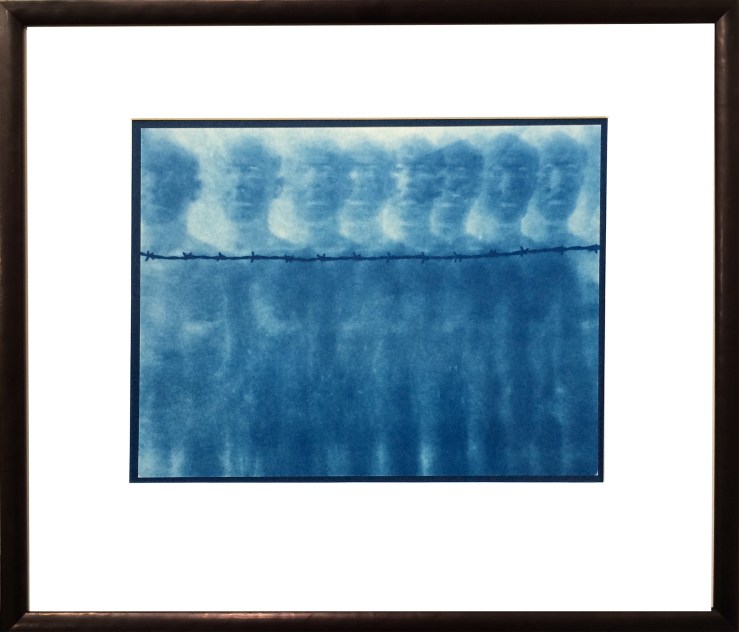
Jan van Leeuwen, Barbed Wire No. 1 (Cyanotype), Matthews Gallery

What color is memory? Is the human soul tinted by life’s great joys and sorrows?

Jan van Leeuwen‘s darkest recollections are a deep blue tide. His self-portraits take shape much like memories do. It’s a long process with details fading in and out of focus, projecting visions of the self that never feel quite complete. It took a lifetime for the photographer to discover his medium, but when he did the images came spilling out.
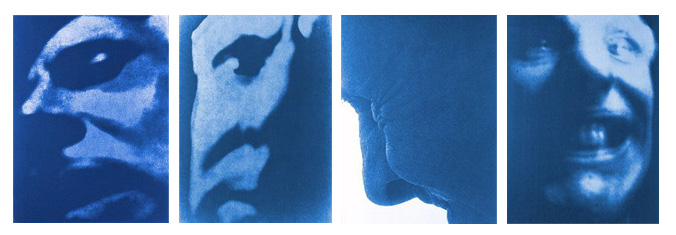
Jan van Leeuwen- Cyanotype Portraits- Matthews Gallery Blog

Leeuwen was born in Amsterdam in 1932. In 1940, when the artist was 8 years old, the Dutch surrendered to the Nazis and Leeuwen watched as his community fell apart. Jewish neighbors and schoolmates fled or were taken. Over the course of the four-year occupation, the young boy’s confusion turned to anger, frustration and guilt.

Leeuwen’s first career was as a kitchen wares distributor, and he learned how to work a camera by photographing the products. He took his first serious stab at the medium in 1986 when he was in his 50’s, mostly so he’d have something to do when he retired.
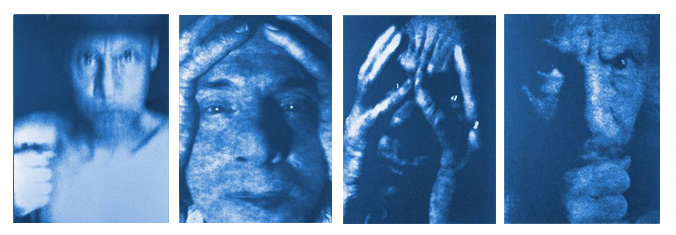
Jan Van Leeuwen- Cyanotype Portraits- Matthews Gallery Blog

Drawing inspiration from the innovative spirit of the Dutch Renaissance masters, Leeuwen developed his own method of producing photographs. He uses a 100-year-old wood camera to capture an image on resin-coated paper, creates a negative and then makes a contact print using a UV-B lightbox.

The process of capturing and transferring the images echoes the artist’s struggles with the trauma he experienced in his youth and the impact it has had on his identity. For the cyanotype in our collection, the artist used a long exposure to fracture himself into eight meshed figures. The only thing starker than their furrowed brows is the strand of barbed wire that stands in their way.

Jan Van Leeuwen- Cyanotype Portraits- Matthews Gallery Blog

Leeuwen created Barbed Wire No. 1 in 1993. A year later he quit his job to pursue photography full-time. Since then he’s had a stellar contemporary art career, with shows across the world and artwork in The Photo Review, Art in America and many other publications.

The artist’s success hasn’t dampened the intimacy of his self-portraits, or lightened the burden of his memories. However, Leeuwen reminds us that sadness is accompanied by beauty, and creation always surmounts the pain of destruction.

Learn more about Jan van Leeuwen’s art and life on the Matthews Gallery homepage, and connect with us on Facebook, Twitter and Pinterest for more gallery news.
PICASSO GETS BURNED: 5 strange facts about the Vollard Suite

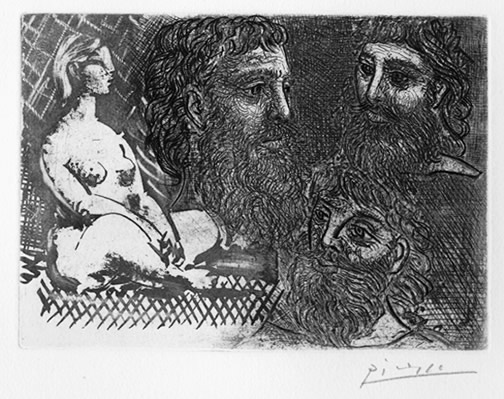
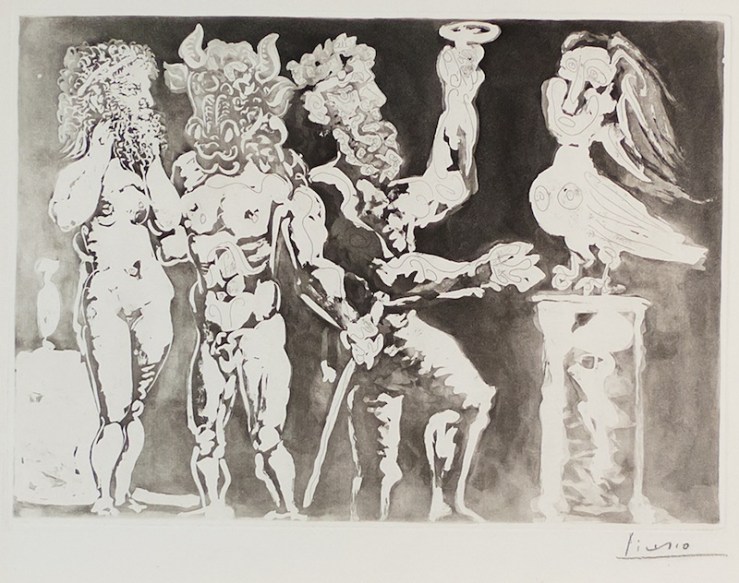
Pablo Picasso- Personnages Masques et Femme Oiseau- Matthews Gallery blog

Pablo Picasso, Personnages Masques et Femme Oiseau, aquatint and etching

When it came to marketing himself, art dealer Ambroise Vollard (1866-1939) was a pro. He had a knack for scouting out young artists with rockstar potential and he wasn’t afraid to ask for favors later on. Vollard gave Pablo Picasso his very first gallery show in 1901. By 1930, Picasso was world-famous and Vollard enlisted him for a special commission. In exchange for paintings by Renoir and Cezanne, Picasso would create a series of 100 etchings ending with three portraits of Vollard.

What better way to immortalize yourself? Picasso completed the Vollard Suite over the next seven years, and it would become one of his most famous print suites. The first etchings in the series are in the neoclassical style and show a sculptor in the studio with his beautiful muse. As World War II set in, Picasso turned to darker subject matter culled from Greek mythology. A friendly minotaur appears, but soon grows agitated and violent. By the end of the series the minotaur has lost his vision and wanders aimlessly.

At Matthews Gallery we have the 24th print from the series, titled “Masked Characters and Bird Woman“. In our research on the print, we’ve discovered some pretty weird facts about the Vollard Suite. Five things you (almost surely) didn’t know:

1.  Armed Art Critics Attack! 

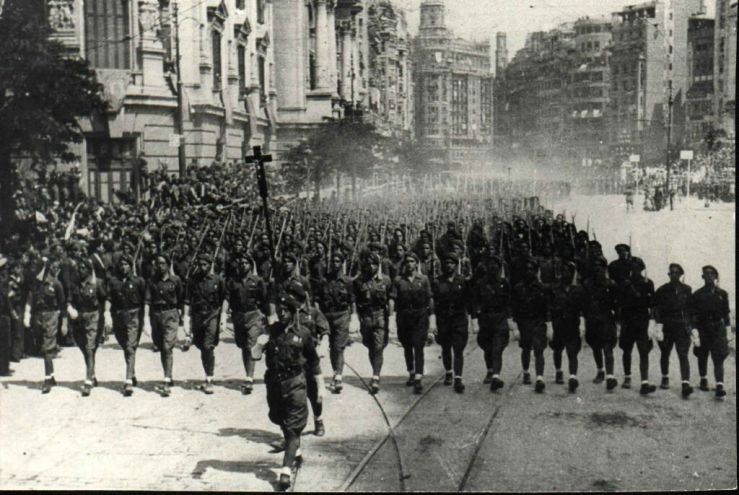
Guerrilleros de Cristo Rey tear down Picasso's Vollard Suite- Matthews Gallery Blog

Spanish paramilitary group Guerrilleros de Cristo Rey on the march

Aside from Steve Wynn 0r Olga Dogaru, Picasso’s most violent critics might just be fascist paramilitary group Guerrilleros de Cristo Rey. Picasso finished the Vollard Suite in 1937, but Vollard’s untimely death in 1939 and World War II prevented the prints from going on the market until the 1950s. In the 1970s, the series starred in a short-lived exhibition in Madrid. In protest of Picasso’s political views on the Spanish Civil War the Guerrilleros stormed the show, tore down the prints and burned them with acid. Ouch.

2. Death by Foot

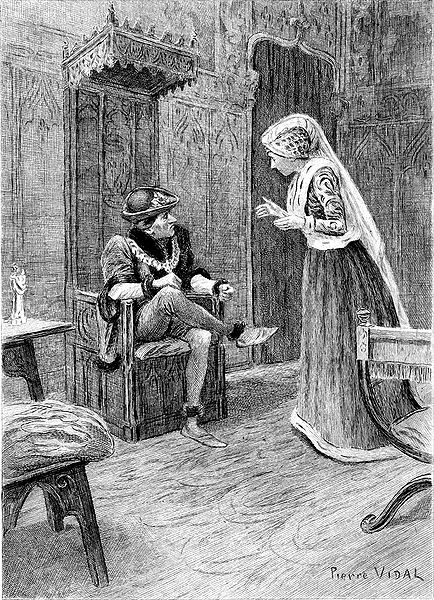
Honore de Balzac's The Unknown Masterpiece inspired Picasso's Vollard Suite- Matthews Gallery Blog

Image from Honore de Balzac’s The Unknown Masterpiece

Sometimes, art kills. Scholars have tied the Vollard Suite to Honore de Balzac’s short story “The Unknown Masterpiece.” The tragic tale chronicles an artist’s frustration at his inability to capture a model’s supreme beauty on canvas. He manages to paint her foot, but soon gives up and commits suicide in despair. Picasso explores similar themes in his etchings. His lover Marie-Therese Walter appears throughout the series, at first as his adoring model and then as a girlish guide to the blind minotaur. The artist has lost his power to capture his model in his art, and now she nimbly leads him toward death.

3. Sweet Art

Pablo Picasso used a sugar life aquatint technique in his Vollard Suite- Matthews Gallery Blog

Sugar lift aquatint from the Vollard Suite

It seems Picasso had a sweet tooth. The ever innovative artist experimented with new printmaking techniques for the Vollard commission, including dry point and aquatinting. The latter method allows the artist to create varying tones on the print using particles of rosin and an acid. Sugar lift aquatinting is a sweet variation. A layer of sugar syrup is applied to parts of the print and then burned off with acid to create dark fields on a white ground (see the dark patches in the image above).

4. Clairvoyant Pablo

Was Pablo Picasso psychic? - Matthews Gallery Blog

Picasso possessed many artistic talents, but was he also a fortune-teller? One of the Vollard prints shows a model who is a doppelgänger for Picasso’s lover Francoise Gilot, though it prefigures their relationship by over ten years. Third eye or not, the artist noted Gilot’s resemblance to his archetypal female figures when he met her. It made quite the flattering pick-up line.

5. Vollarchitecture

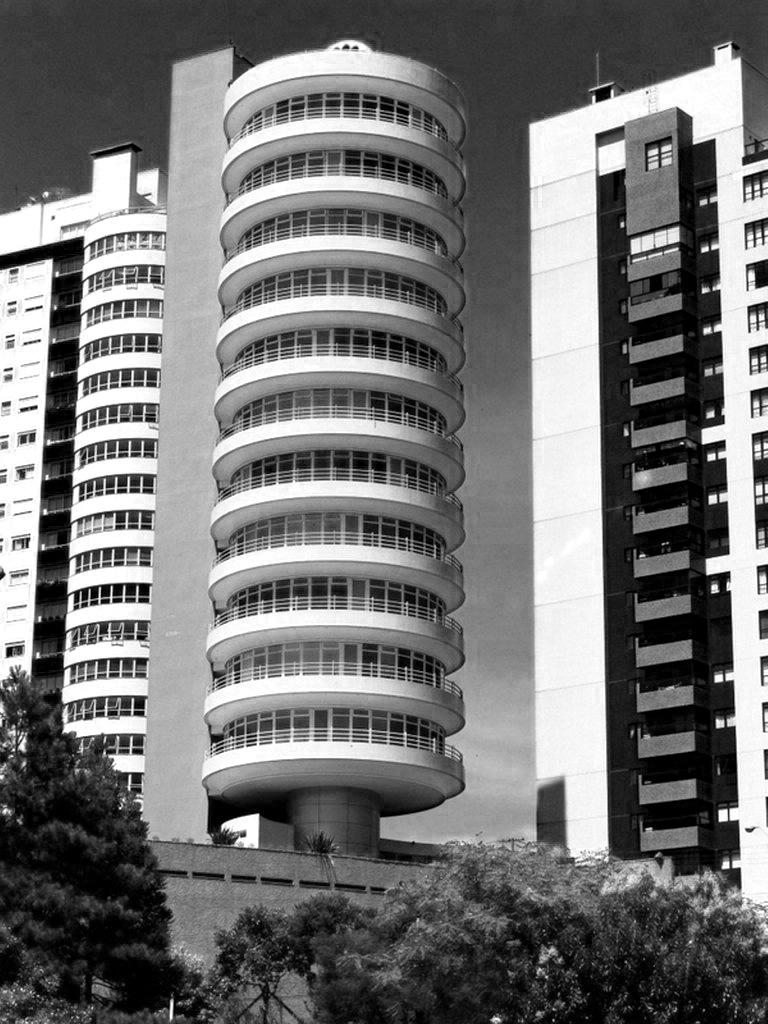
Vollard Suite in Brazil named after Picasso Print Series - Matthews Gallery

The Vollard Suite in Curitiba, Brazil

In more recent news, the world’s first rotating building is named after the Vollard Suite. The futuristic residential complex in Brazil opened in 2001 with an exhibition of Picasso’s prints. Its design resembles a Greek pillar, a reference to Picasso’s neoclassical style in the suite (check out the bird lady’s perch in our print). The skyscraper’s $400,000 apartments turn 360 degrees every hour. It might sound dizzying, but something tells us the extravagant artist would approve.

Learn more about our Vollard print here, and connect with us on Facebook, Twitter and Pinterest for more news from Matthews Gallery!

ONE WORK OF ART: Marc Chagall’s “Paris L’Opera”

Marc Chagall- Paris L'Opera- Matthews Gallery Blog

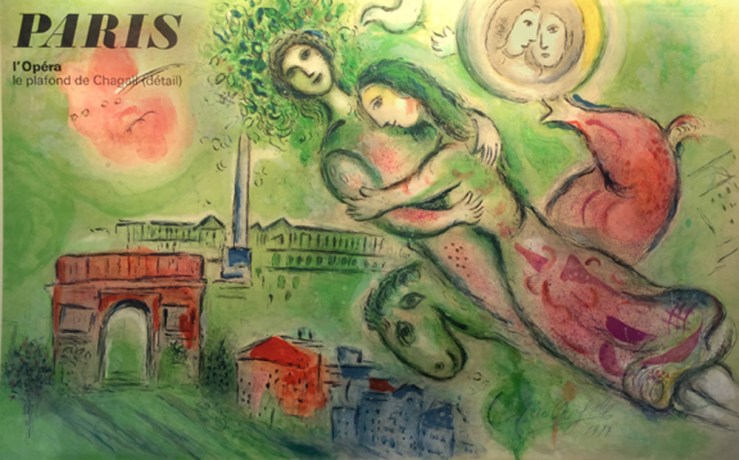
Marc Chagall, Paris L’Opera poster, Color Lithograph

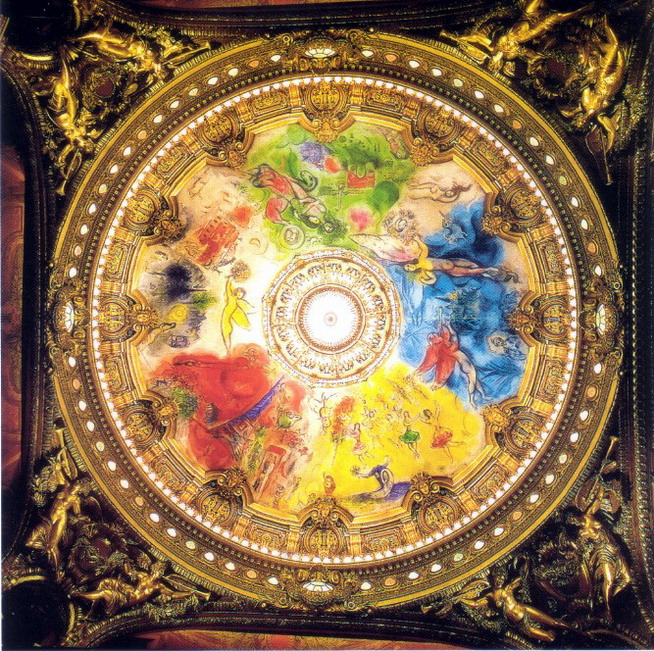
When Marc Chagall (1887-1985) was commissioned to redo the ceiling of the Paris Opera in 1963, not everyone in the City of Lights was happy about it. The Russian-Jewish artist didn’t have a drop of French blood, and he was also a modernist. Critics worried that his vibrant palette and “primitive” style would clash with the pseudo-classical interior of the building. It was sure to be “die Faust auf’s Auge“—a punch in the eye—for cultured opera fans.  
Chagall might not have been everyone’s favorite, but he certainly had good credentials. Before moving from Russia to Paris in 1910, he studied under a well-known theatre designer in St. Petersburg. Years later in 1958 the Paris Opera hired him to design the sets and costumes for Maurice Ravel’s ballet Daphnis et Chloe. That same year, he embarked on his monumental stained glass project for the Metz Cathedral
Paris Opera- Marc Chagall's Ceiling- Matthews Gallery Blog
Paris Opera
After he saw a performance of Daphnis et Chloe, French minister of culture Andre Malraux had no doubt Chagall was capable of covering the 560-square-meter stretch of ceiling surrounding the opera house’s crystal chandelier. Ignoring the bluster of the arterati, he set Chagall to work painting panels for an enormous removable frame that would cover the original Baroque-style mural by Jules-Eugene Lenepvue. 
Chagall divided the space into several color zones and wove together scenes and characters from the most beloved operas and ballets. The mural would honor the works of fourteen composers, from Mussorgsky to Mozart and Beethoven to Tchaikovsky.
Chagall’s ceiling (or, in French, le plafond de Chagall) was unveiled on September 23, 1964 during the finale of a Mozart symphony, the artist’s favorite composer. As the music swelled the great chandelier lit up to reveal the mural. Et voilà:
Marc Chagall's Ceiling at the Paris Opera- Matthews Gallery Blog
Chagall’s critics were (for the moment) struck dumb as opera goers first set eyes on what is now considered one of the great marvels of Paris.
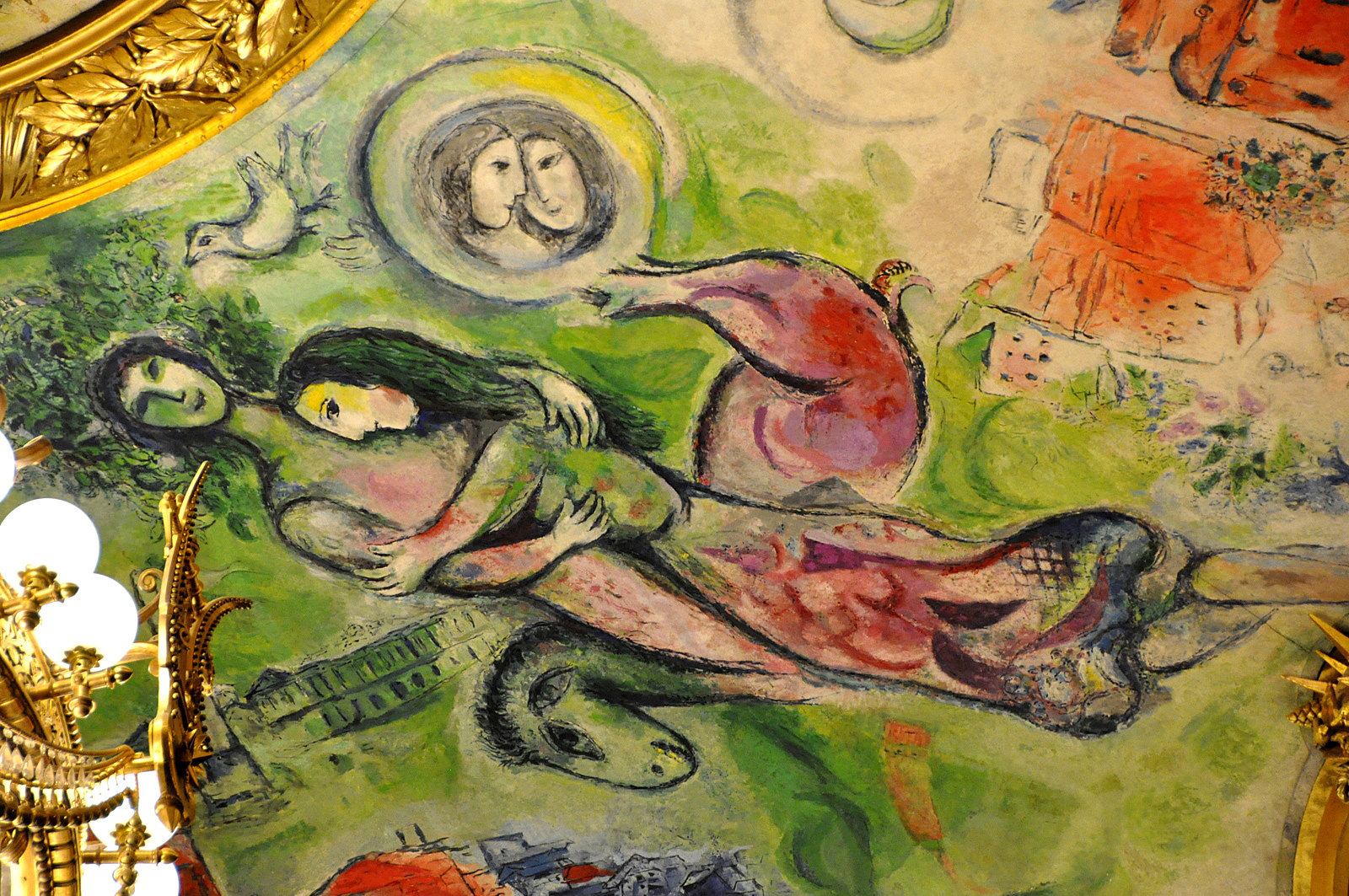
The mural was quite a novel sight, but there’s one portion of the work that Parisians would’ve found familiar. The opera house also asked Chagall to design a limited edition poster for the ceiling’s debut. The artist based the poster on a portion of the mural featuring Tchaikovsky’s Romeo and Juliet. The famous lovers hover in the air above Paris, perhaps locked in a heavenly embrace after their tragic deaths.
Marc Chagall's Ceiling detail- Paris Opera- Matthews Gallery Blog
Detail of Chagall’s Ceiling showing Romeo and Juliet
Just 5,000 “Paris L’Opera” prints were made. The poster at Matthews Gallery is signed in pencil by Chagall himself.
To get this artwork for your sweetheart, make sure to contact us before February 7 so we can ship it in time for Valentine’s Day. Connect with us on Twitter, Facebook and Pinterest for more gallery news!
*Special thanks to our friend and fellow art lover Paul, who gave us this idea and provided some of the images*