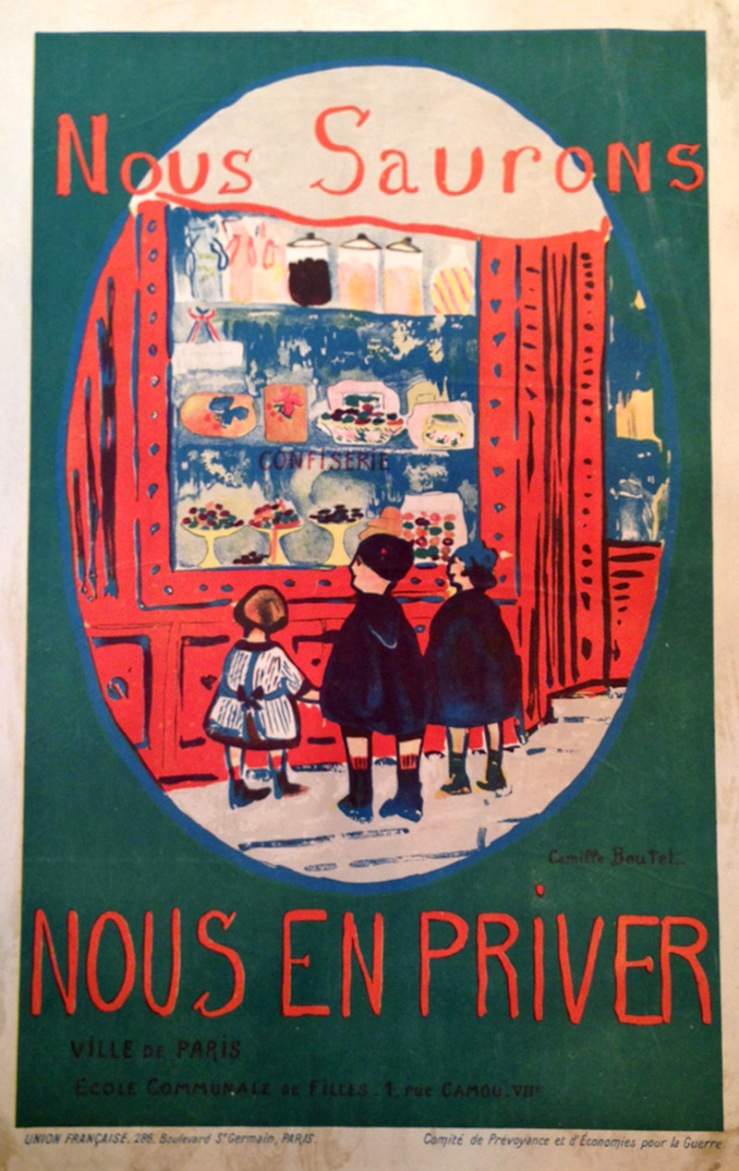
START YOUR BIDDING: Colorful lots from our fall online auction

Matthews Art Auctions- Camille Boutet- Artfact

Our European, American and Southwestern Art Auction just started on Artfact.com, and it features a particularly vibrant line-up of lots. The charming image above is a color lithograph from turn of the century France by Camille Boutet. It shows three children peering longingly into a confectioner’s shop, and would make a lovely holiday gift. The best part? Bidding starts at $50. Read about more of our offerings below, and make sure to bid before the auction ends on November 17.

Frank Morbillo- Arched Axe- Artfact Auctions

Lot 41: Frank Morbillo- Arched Axe
Starting bid: $350
Estimated value: $450-$900

Arched Axe” is from Frank Morbillo’s sculpture series inspired by the simple, elegant lines of prehistoric hand tools. Several other glass and bronze works from the set appear in the sale, including “Ceremonial Serpent Axe“, which features an intricate floral motif, and the swanlike “Honing Axe“.

Bertram Hartman- Still Life- Artfact Auctions

Lot 59: Bertram Hartman (1882-1996)- Still Life
Starting bid: $250
Estimated value: $350-$750

Bertram Hartman (1882-1960) was born in Kansas and received training at the Art Institute of Chicago. He continued his studies at the Royal Academy in Munich and Paris, drawing inspiration from Impressionism and other modernist movements. His European influences are clear in this impeccable impasto still life.
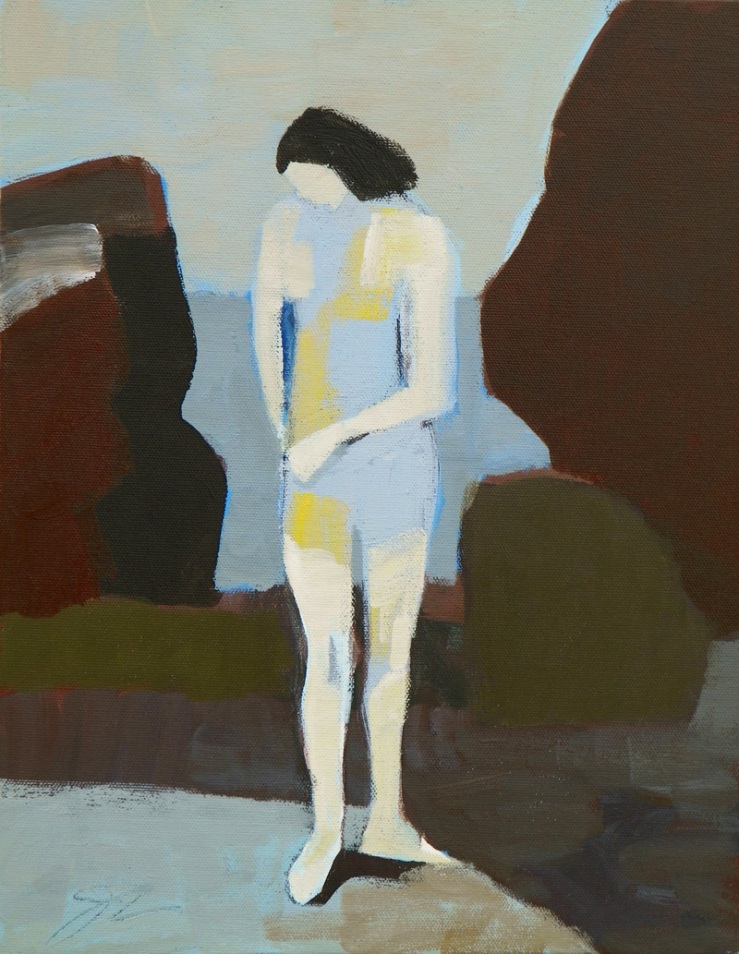
Jamie Chase- Bather by the Sea- Artfact Auctions

Lot 70: Jamie Chase- Bather by the Sea
Starting bid: $400
Estimated price: $600-$900

Jamie Chase’s well-known figurative work and his latest experiments with landscape painting combine in “Bather by the Sea“. An abstracted nude  stands on the shore, and the surrounding landscape seems to radiate her serene mood. Jamie’s “Seen” and “Iconic II” are also up for sale in the auction.
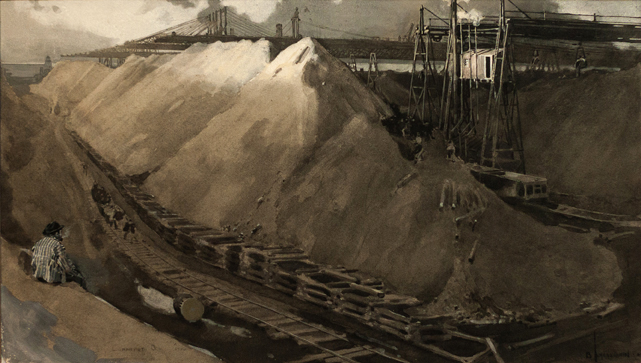
Ernest Blumenschein on Artfact

Lot 86: Ernest Blumenschein (1874-1960)- Loading
Starting bid: $700
Estimated price: $2,000-$3,500

Ernest L. Blumenschein (1874-1960) was a founding member of the Taos Society of Artists, and is known for his stunning portrayals of the Southwestern landscape and people. In “Loading” the artist pays homage to his home state of Ohio. A lone figure smokes a cigarette and watches the activity at the Conneaut Mill across the tracks.
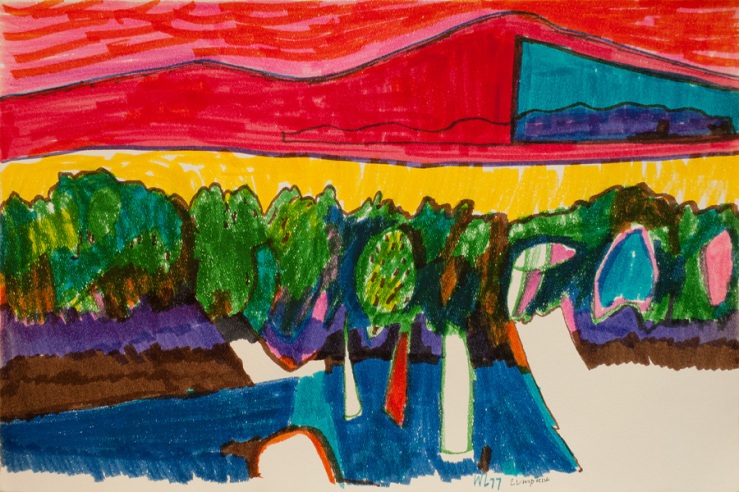
William Lumpkins- The Red Sky- Artfact Auctions

Lot 91: William Lumpkins (1909-2000)- The Red Sky
Starting bid: $400
Estimated price: $600-$1,000
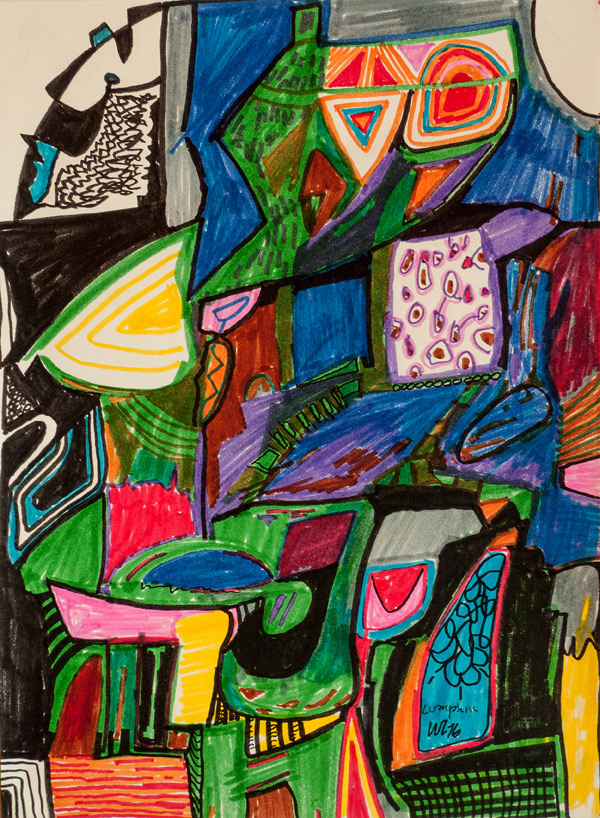
William Lumpkins- Pink Handle- Artfact Auctions

Lot 97: William Lumpkins (1909-2000)- Pink Handle
Starting bid: $400
Estimated price: $600-$1,000

The Red Sky” and “Pink Handle” are from a series of never-before-seen artworks by legendary Santa Fe modernist William Lumpkins (1909-2002). The work was recently released from the collection of a Lumpkins family member, and also features a series of serigraphs.
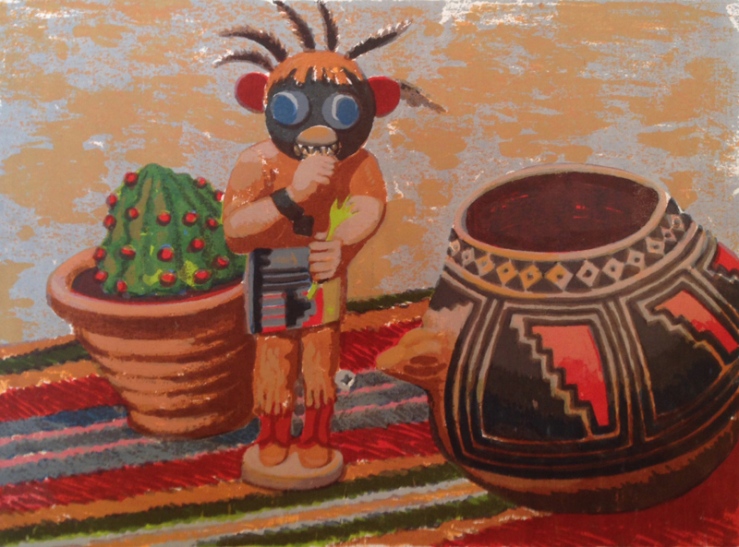
Ed Levin- Kachina- Artfact Auctions

Lot 102: Eli Levin- Kachina (after Louie Ewing)
Starting bid: $175
Estimated value: $400-$600

Contemporary Southwestern painter and printmaker Eli Levin pays tribute to legendary Santa Fe printmaker Louie Ewing (1908-1983) in this silkscreen of a Pueblo kachina doll. In the 1930s, Ewing received a grant from the WPA’s Federal Art Project to pursue printmaking, and is largely responsible for the enduring popularity of printmaking among contemporary Southwestern artists.

Bettina Steinke- Santa Clara Dancer- Artfact Auctions

Lot 106: Bettina Steinke (1913-1999)- Santa Clara Dancer
Starting bid: $50
Estimated value: $400-$500

Bettina Steinke (1913-1999) moved to Taos in the 1950s, where she opened a gallery with her husband and mentored young artists. She moved to Santa Fe in the 1970s. The artist was known for her vivid portraits of the Pueblo people, and was particularly interested in traditional Native dancers. Other historic New Mexico artists featured in the auction include Fremont Ellis, John McHugh and Hannah Holliday Stewart.

Check out the European, American and Southwestern Art Auction on Artfact to browse all 116 lots, and connect with us on Facebook, Twitter and Pinterest to see more highlights from the sale. The auction ends on November 17 at 7:00 pm.

ART ON PAPER: A (Brief) Visual History of Printmaking

A Visual History of Printmaking on the Matthews Gallery blog

Prehistoric handprints on a cave wall, a Sumerian cylinder seal from ancient Mesopotamia, a woodblock print from the Chinese Diamond Sutra, a page of the Gutenberg Bible, a woodcut from the Ars moriendi, an etching by Albrecht Durer, a stencil print on silk from the Japanese Edo Period, an intaglio print by Rembrandt, a lithograph of Aloys Senefelder, an etching by Whistler, an offset lithograph by the New York Times company and an aquatint and etching by Pablo Picasso!

What does it all mean? Come to Matthews Gallery’s ART ON PAPER: Fine Art Prints reception on Friday, October 25 from 5-7 pm to find out.

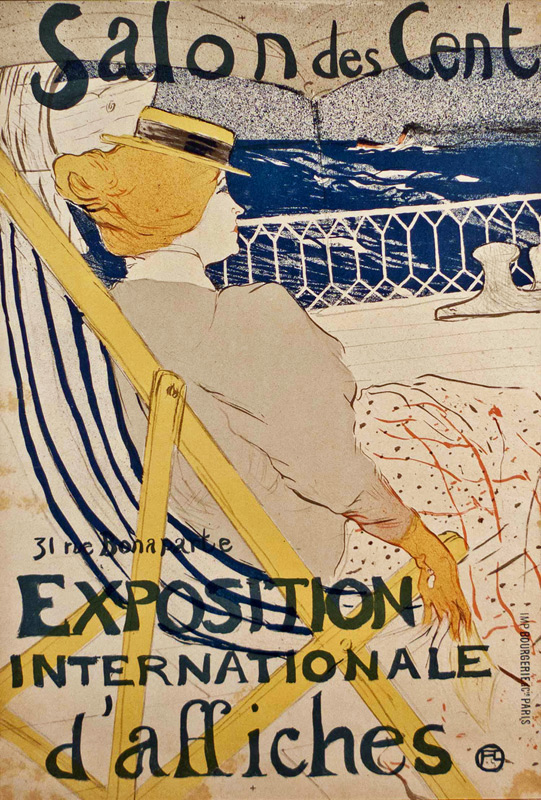
ONE WORK OF ART: Toulouse-Lautrec’s Heartbreak

Henri de Toulouse-Lautrec- La Passagere du 54- Matthews Gallery

“Love is when the desire to be desired takes you so badly that you feel you could die of it,” said Henri de Toulouse-Lautrec. It’s a strange perspective on the matter, but not a surprising one when you consider the artist’s difficult life. His parents were nobles and first cousins, a pairing that probably gave Lautrec a rare congenital abnormality called osteogenesis imperfecta. He was particularly prone to bone fractures and broke both of his legs as a teen. Bedridden and bored, Lautrec’s only way to escape his misery was drawing.

By the time Lautrec moved to Paris to study art at 18, his legs had stopped growing and he struggled to support his regularly sized torso. He battled deep insecurities about his appearance, but never dropped an abrasive air of superiority. His first relationship with 17-year-old model Marie Charlet was short and tumultuous, and his second serious lover Suzanne Valadon attempted suicide.

Lautrec immersed himself in the booze-soaked world of Paris’ cabarets and brothels to numb his pain, where he was inspired to produce some of the era’s most innovative images. Many of his works tell tales of longing and lost love, including our lithograph La Passagere du 54. Here’s a sad story from our archives about the 1895 boat voyage that inspired the print:

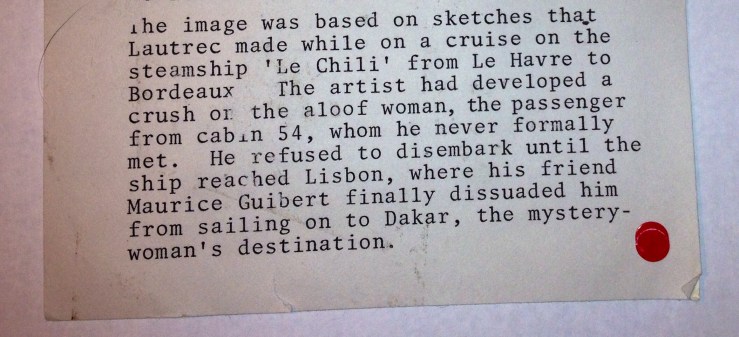
The story of Henri de Toulouse Lautrec's "La Passagere du 54"- Matthews Gallery blog

No wonder the woman on the poster is giving the viewer the cold shoulder. Most of Lautrec’s sketches must have been completed from this angle, as his haughty subject never gave him a second glance.

Lautrec’s artistic career only lasted a little over a decade, and though he gained considerable fame for his work, his romantic prospects never improved. He died at 36 from alcoholism and syphilis, but left behind a body of work that eternally capture the spirit of the City of Lights.

Do you agree with Lautrec’s definition of love? Sound off in the comments below, or through our Facebook, Twitter or Pinterest profiles.

LEGENDS OF THE LOTS: Matthews Gallery Online Art Auction

March Chagall- L'Opera Poster (1964)- Matthews Gallery auction
L’Opera Poster, Marc Chagall

We’re very excited to announce the European Masters, American and Southwestern Art Auction, an online-only Matthews Gallery event running July 25-29. It’s our very first auction, and we’ve been working on it for more than a year. Of course, the works we’re putting on the block have stories behind them that are much older than that. Click here to browse the diverse catalogue, and read on to learn the legends behind four of the lots.

Henri de Toulouse-Lautrec- La Passagere du 54- Matthews Gallery auction
La Passagere du 54, Henri de Toulouse-Lautrec

Lautrec was on a steamship cruise from Le Havre to Bordeaux when a beautiful woman who was staying in cabin 54 caught his eye. He became infatuated with her but she was so aloof that he never got a chance to introduce himself. Lautrec refused to disembark until the ship reached Lisbon, where his friend Maurice Guibert finally dissuaded him from sailing on to Dakar, the mystery woman’s destination. The sketches he made of her on the boat would inspire La Passagere du 54.

Lithograph, on wove paper, Wittrock’s third (final) state, the full sheet, with green lettering. 

Click here to see this work in the catalogue.

Joan Miro- Dog Barking at the Moon- Matthews Gallery auction
Dog Barking at the Moon, Joan Miro

This lithograph has one of the longest titles of any of Miró’s art works. In french it is: “Le chien aboyant à la lune reveille le coq le chant du coq picote le crane du fermier Catalan posé sur la table à coté du pourron”. In English: “The dog barking at the moon wakes the cock, the song of the cock pecks at the head of the Catalan farmer resting on the table by the flask of wine”. Joan Miró (1893-1983) was a leading pioneer and proponent of surrealism. His work has a childlike style that at its heart is a sophisticated play of color, line and forms. Miro was a consummate master printmaker and over his lifetime he completed more than 1,000 fine art prints.

Lithograph in colors, number 12 from the edition of 80.

Click here to see this work in the catalogue.

Pablo Picasso- Untitled (From the 156 Suite, 16 mai 1971)- Matthews Gallery auction
Untitled (From the 156 Suite, 16 mai 1971), Pablo Picasso

Degas visits a brothel in this etching by the legendary Spanish modernist.

Number 23 from the edition of 50.

Click here to see this work in the catalogue.

Paul Gauguin- Mahana Atua (Noa Noa woodblock)- Matthews Gallery auction
Mahana Atua, Paul Gauguin

Gauguin sailed from France to Tahiti in 1891 and didn’t return home until two years later. He went there in search of an untouched beauty far away from “everything that is artificial and conventional”. Upon his return to Europe, he carved a series of ten woodblocks to illustrate a written account of his travels called Noa Noa. The prints, which were only his second attempt at printmaking, are considered some of his most innovative work. “Gauguin’s current effort will tomorrow provoke a complete revolution in the art of printmaking,” wrote critics Julien Leclerq and Charles Morice. This is presumed to be a proof apart from the signed and numbered edition of 100 published by the artist’s son, Pola Gauguin in Copenhagen in 1921.

Woodcut, 1894-5, on chine

Click here to see this work in the catalogue.

Make sure to check out the entire auction catalogue here, and connect with us on Facebook and Twitter for more legends behind the lots!

ONE WORK OF ART: Paul Gauguin’s l’Univers est Cree

Paul Gauguin at the Matthews Gallery
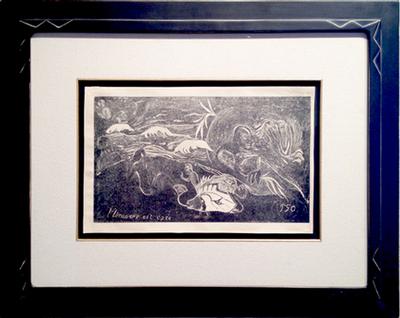
Paul Gauguin, l’Univers est Cree

Paul Gauguin’s memoir chronicling his first trip to Tahiti is called Noa Noa, which means “fragrant scent”. It’s a reference not to the sweet smell of flowering tropical flora, but the “mingled perfume, half animal, half vegetable” of the Tahitian women.

Paul Gauguin- L'Univers est Cree (detail)- Matthews Gallery
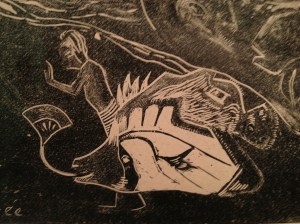
Fish-man

Gauguin embarked on his famous voyage in 1891, fleeing from financial ruin and harsh criticism of his art. He put 30 of his works up for sale to pay for the trip and set off in search of an untouched beauty far away from “everything that is artificial and conventional.”

Upon his return to France in 1893 the artist finished writing Noa Noa and illustrated it with ten woodblock prints, including l’Univers est Cree (The Creation of the Universe). The journal tells largely fictional stories of an idyllic island life, but its title hints at the true nature of Gauguin’s odyssey. In Tahiti, the wandering artist found a culture shattered by colonialism, and couldn’t shake an all-consuming sexual desire that would eventually kill him. There’s more than a hint of this darkness in the print that hangs on our wall.

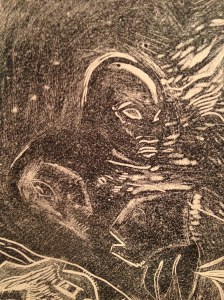
Gauguin and his son produced multiple versions of l’Univers, a primordial beach scene featuring a bizarre cast of creatures: a male torso, a distorted female figure, a fish-man and a levitating cluster of monstrous faces. The Noa Noa series was the artist’s first try at woodblock printmaking, and he was determined to approach the medium in as primitive a manner as possible. He used needles and sandpaper to etch the block and applied it to the paper by hand.

Paul Gauguin- L'Univers est Cree (detail)- Matthews Gallery
Monstrous heads

The facture of l’Univers is so rough that authors Alastair Wright and Calvin Brown said that Princeton’s version “hovers at the edge of illegibility”, but the Matthews Gallery’s print was pulled with a more delicate touch. From the tumbling waves to the lines that mark out fierce winds, each feature of the strange landscape stands starkly from the black ink.

Even with Gauguin’s creation story spread so clearly before us, it’s difficult to guess at the meaning behind it. “It’s a surrealist work before surrealism,” Lawrence likes to say. Perhaps this subconscious sandbox, built from dreams and nightmares, sits on the line between the artist’s high hopes for life in Tahiti (rebirth, beaches, beautiful woman) and the reality that he faced when he got there (tumult, deformation, death).

The artist never would have let this tension slip into his fanciful writing or his sunny paintings of Tahiti, but something more ominous emerged when faced with the challenge of hacking his utopian scenes into wood. Gauguin’s paradise was as ephemeral as a fragrant scent.

To learn more, check out our other print from the Noa Noa series and read about it in this blog post. For daily gallery news, connect with us on Facebook, Twitter and Pinterest.