NEW HORIZONS: Landscape Art Speaks

NEW HORIZONS- Focus on Landscapes- Matthews Gallery

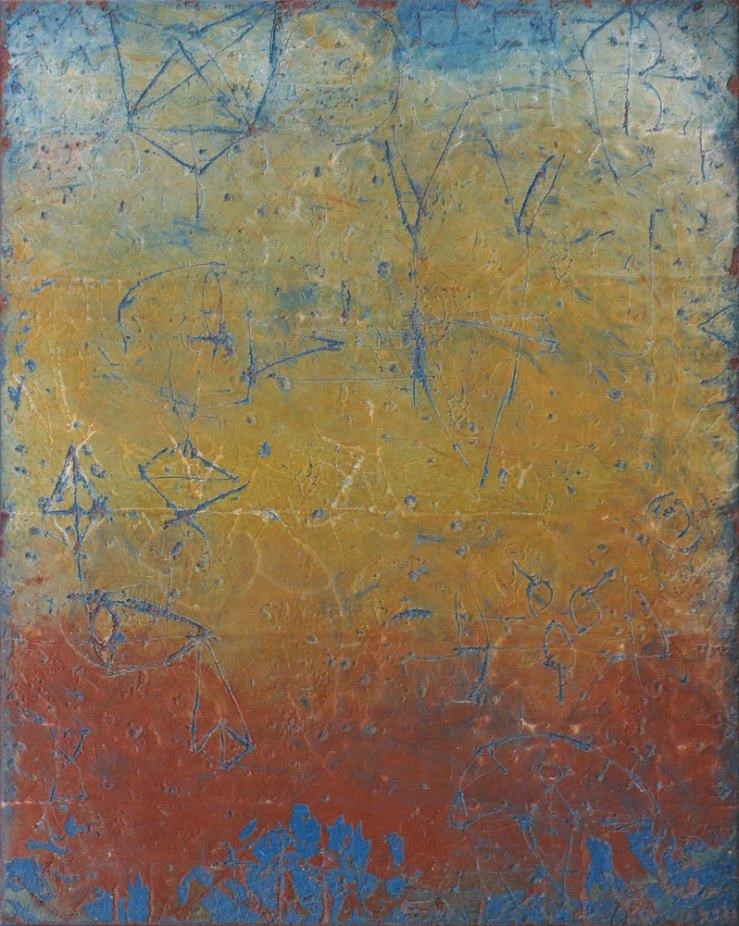
For our NEW HORIZONS: Focus on Landscapes show, running now through October 27, Tesuque sculptor Frank Morbillo‘s latest body of work engages with our diverse collection of contemporary landscape art. Throughout the exhibition, you’ll find observations by Morbillo and seven other artists, many of whom are inspired by the same severe desert expanses and infinite skies. Below is a selection of works and quotes from the show:

Sprung- Frank Morbillo- Matthews Gallery

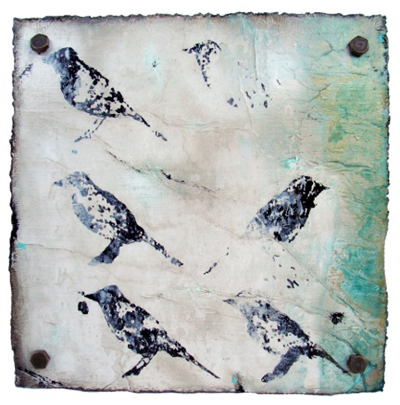
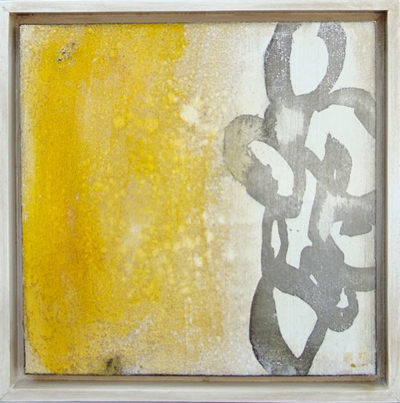
Kate Rivers- Reflections- Matthews Gallery

PATTERN

Frank Morbillo finds patterns wherever he looks in the natural world.
Kate Rivers uses manufactured patterns to form fractured reflections of nature.

“What’s a pattern? Something that might be predictable. When I observe things, that’s what I see. As an artist, you take all of these different things and see how they work together.”

-Frank Morbillo

 “I’m using this history of text and image as something that is beautiful, and weaving the words together.”

-Kate Rivers

Frank Morbillo- Cool Encounter- Matthews Gallery

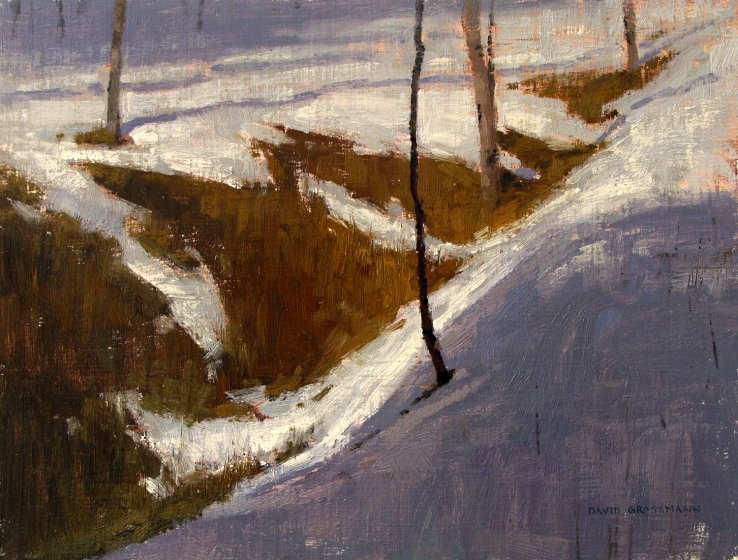
David Grossmann- Snow Rhythms- Matthews Gallery

RHYTHM

David Grossmann abstracts his landscapes to lay bare underlying rhythms.
Frank Morbillo traces the formation and disruption of natural rhythms.

“My paintings… are simplified rhythms of color, light, and shape. On the surface they are quiet whispers, but I hope that they convey a depth of emotion to anyone who takes the time to stop and listen.”

-David Grossmann

“Entropy is the introduction of chaos and disorder. That’s a root of what I’ve done over the years. You take something that could be highly organized, and understand that everything, all things, are subject to entropy. As much as we feel like we’ve created something that defies that, there’s no chance. Everything is subject to it.”

-Frank Morbillo
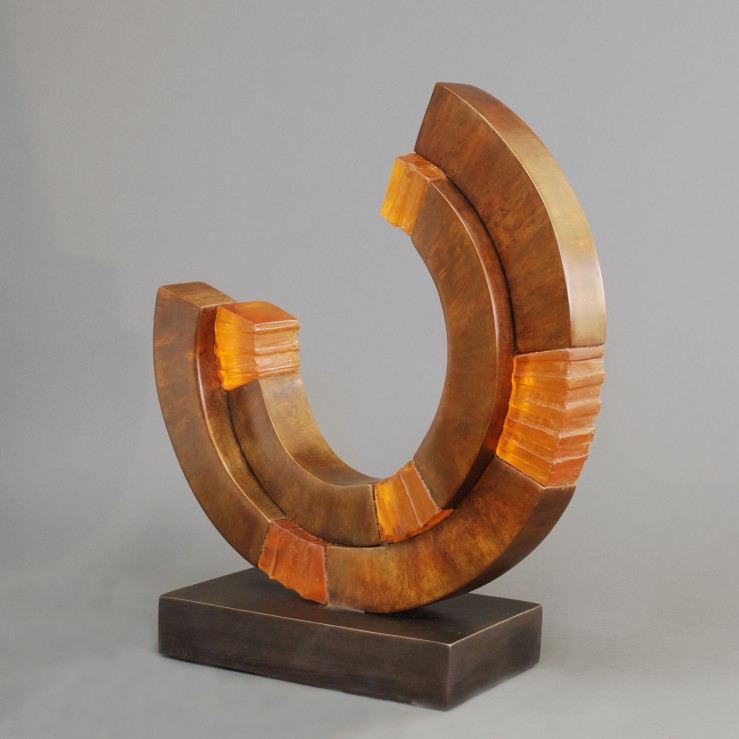
Frank Morbillo- Unraveling- Matthews Gallery

Terry Craig- Burning Questions- Matthews Gallery

TEXTURE

Terry Craig blends materials to mimic natural textures.
Frank Morbillo places materials with contrasting textures side-by-side.

“It took a long time… to develop the formulas and get the materials to do what I wanted them to do. You can scrape into it and get all sorts of these wonderful organic qualities.”
-Terry Craig

“Glass is a beautiful material that sets up this nice contrast with the metal. If you add texture to it, it takes on a different color. The light behaves differently going through it.”
-Frank Morbillo
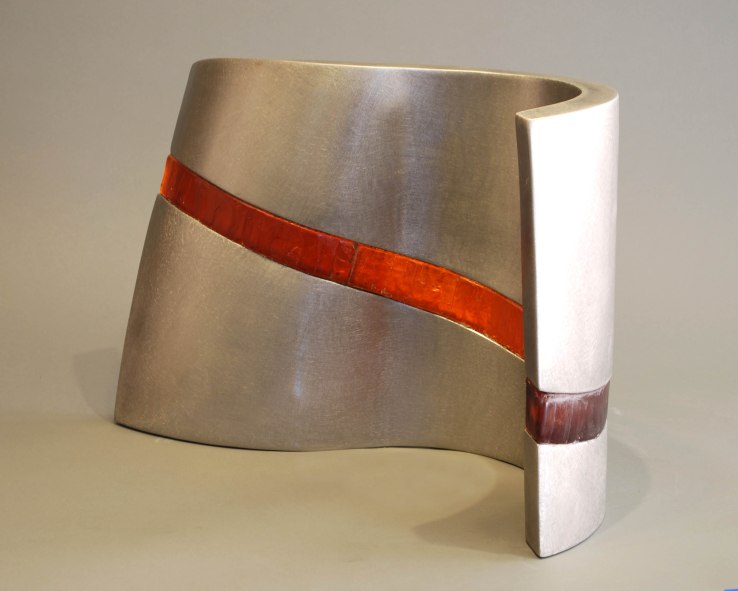
Frank Morbillo- Traverse II- Matthews Gallery

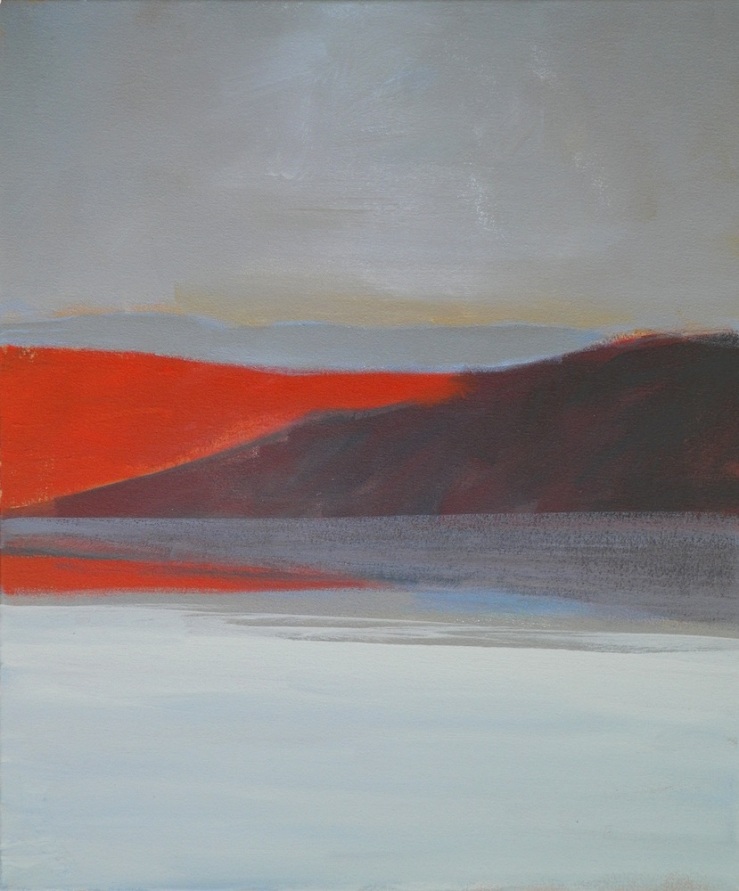
Jamie Chase- Two-Horizons- Matthews Gallery

COLOR

Jamie Chase uses multiple layers of paint to reveal and obscure different hues.
Frank Morbillo relies on the properties of glass to enhance his palette.

“There are so many narratives underneath the final painting. It starts out as something really dark or really dramatic in contrasting colors, and by the end it’s almost neutral colors, but there’s something moving under the surface.”
-Jamie Chase

“The glass introduced color into the work that really isn’t achievable in metal. The cobalt blues and reds and ambers have a quality that you can’t get with any of the metals.”
-Frank Morbillo

See NEW HORIZONS: Focus on Landscapes now through October 27 at Matthews Gallery. Connect with us on Facebook, Twitter and Pinterest to see more material from the show.
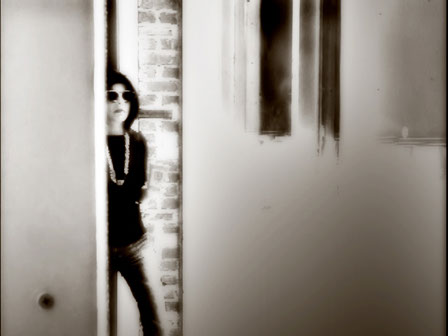
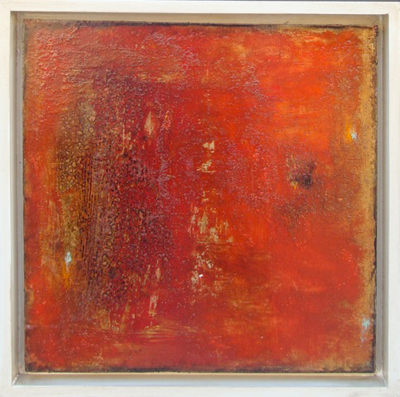
ACID JAZZ AND WABI-SABI: Michelle Y Williams

Artist Michelle Y Williams- Matthews Gallery- Santa Fe, New Mexico
Michelle Y Williams

Being “cloistered in” may be key to Michelle Y Williams’ process, but that doesn’t mean she’s a recluse. Solitude is what the Houston, Texas artist needs to focus her mind and  tune in to her subconscious. Her mixed media works are equally inspired by measured decisions and the pure emptiness of the blank surfaces before her. They’re conglomerations of the figurative and the abstract, and boast a subdued palette that echoes the artist’s fascination with rust, crumbling concrete and peeling paint.

When Williams isn’t in her studio, she’s not afraid to step into the spotlight. In September she’ll be featured in Luxe Magazine, and last week she granted an interview to the Matthews Gallery. Michelle told us about everything from her many materials to the Japanese aesthetic of wabi-sabi, a worldview that has taught her to accept her flaws and create with abandon. Here’s what she had to say:

Michelle Y Williams- Petit 28- Matthews Gallery
Petit 28, Michelle Y Williams

You write in your artist statement, “Inspiration for my work is both selective and completely random.” Is the same true for your choice of materials for a particular piece? How do you select a medium? 

The primary medium in my work is acrylic (very quickly after I began as a painter using oils, I realized I have an aversion to cleaning brushes). Pigmented inks have also proven to be an often used medium for me (applied with a dropper, then floated across the canvas using my palette knife).

The choice for other materials, indeed, comes more randomly. Whether I incorporate sand or oil bar or even attaching a piece of torched metal with wax string to the canvas happens naturally & intuitively as the work progresses.

You also talk about a “relationship that develops” between you and your work. Does this change your notion of when a work is completed? Is it sad to say goodbye?  

I suppose it’s more of a short-term relationship…shall we call it a fling.  I invest energy into a piece which is then reciprocated upon completion, but the real gratification comes when someone has made a connection with my work, which couldn’t happen unless I surrendered it readily.

Michelle Y Williams- Cut 12-532- Matthews Gallery
Cut 12-532, Michelle Y Williams

You prefer to work in solitude. What are some other important parts of your process? Do you listen to music? Do you work on multiple pieces at a time, or just one?

My preference for sequestration is actually paramount – in order to maintain the integrity and authenticity of my work, I eliminate most outside influences that could dull my own creative process. Diverse genres of music can be heard in my studio – from acid jazz to classic rock to classical – while I move between several pieces in various stages of completion.

You mention the importance of seeking a balance in your work. How does that connect with the tenets of wabi-sabi, the Japanese aesthetic that embraces the transient self?

Rather than trying to exert control over a painting, my pursuit of aesthetic balance, (while maintaining my penchant for asymmetry), transpires more instinctively. The absence of obsessing over that quest for balance and the capacity to “let go”, relates to the principles of wabi-sabi.

Michelle Y Williams- Petit 18- Matthews Gallery
Petit 18, Michelle Y Williams

I found this part of your bio particularly beautiful: “In a stain, we find understanding; in a dent, our ability to heal; in a blemish, an unchained beauty.” Embracing your flaws can be a difficult process. How does your work help you do this? 

Quite simply, the alternative to embracing flaws requires far too much negative energy. For me, perfection is boring and I truly find immense beauty in flaws – chips & cracks in tea bowls used in Japanese tea ceremonies or uncut & unpolished rough just-mined diamonds – these things excite and inspire me.

I hear you’re quite the humanitarian. What projects are you involved with? 

I am an “equal opportunity donator”, giving my work with abandon to many different charitable organizations throughout the year.

Click here to see more of Michelle’s art, and connect with us on Facebook, Twitter and Pinterest for updates on her latest work.