Fine art conservator Matt Horowitz will appear at our COLLECTOR’S FORUM workshops
on October 17 and 24. The free events are for anyone who’s ever considered buying, selling or caring for fine art and has questions about the inner workings of the art world. To reserve a seat, make sure to contact us!
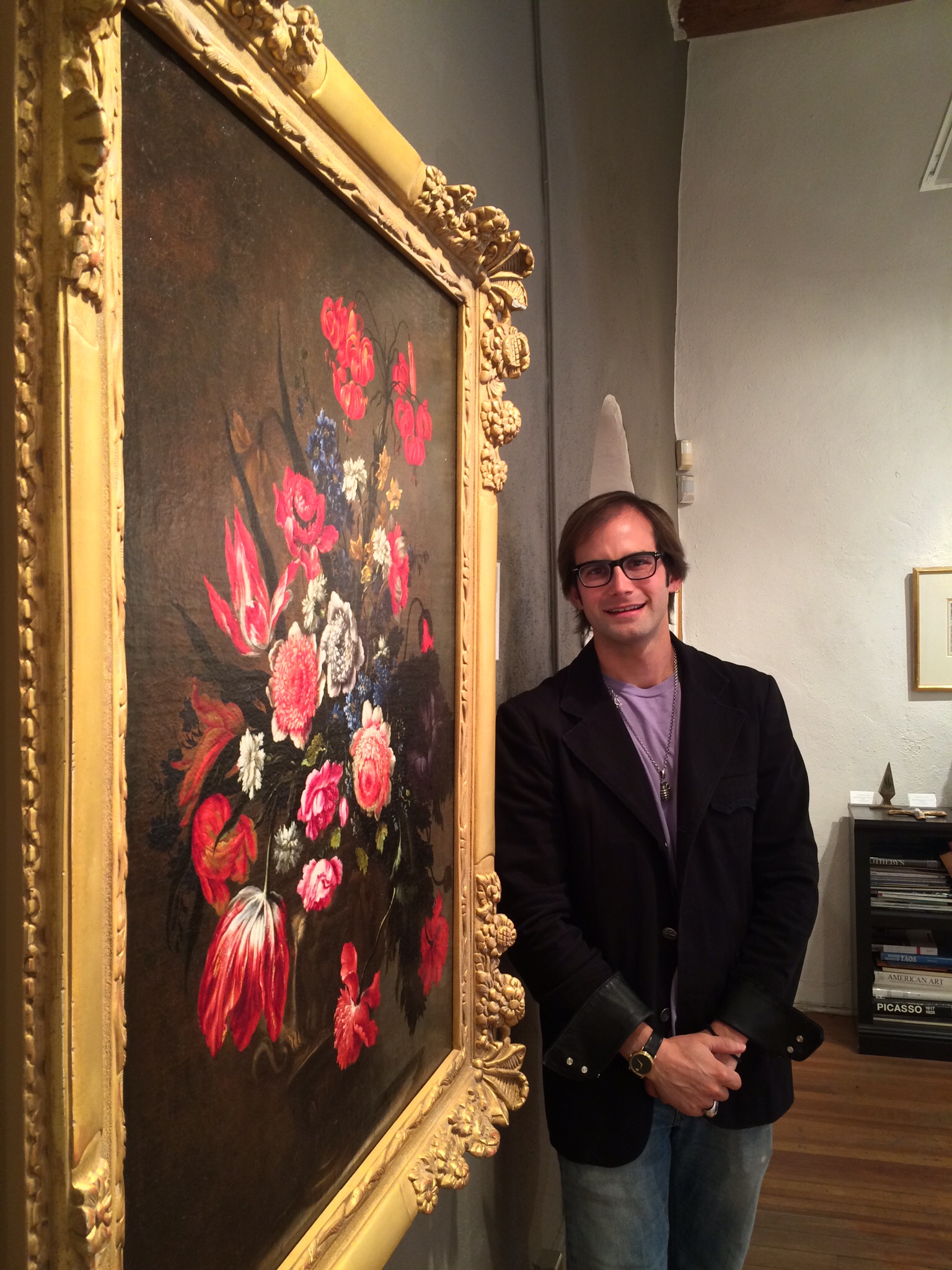
Conservator Matt Horowitz with a 17th century painting he restored for Matthews Gallery
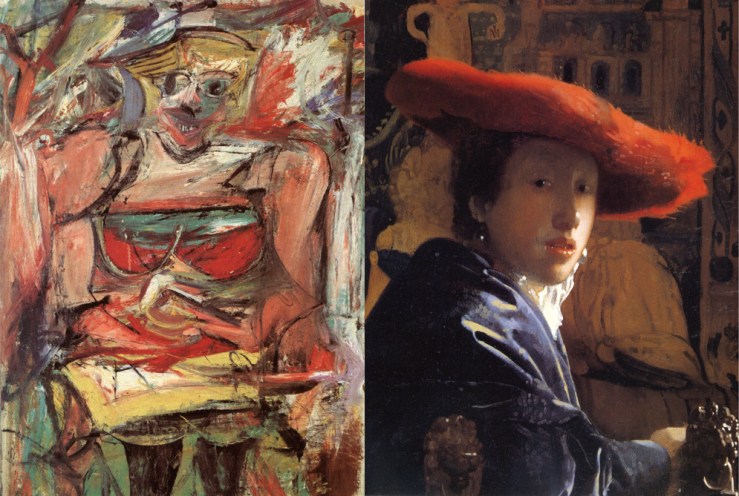
“I came in and they gave me a de Kooning,” says Matt Horowitz. He’s telling the story of his arrival in Manhattan at 24 years old to work for a famed art restoration firm. If he failed this audition, there would be dire art historical consequences.
“A piece of the white paint had chipped away, which is the hardest thing to match, because white is never really white,” Horowitz says, nervously twisting the ring on his finger. “I was like, ‘You don’t even know who the hell I am, and you just gave me a de Kooning and you want me to fix it.'” At the end of the painstaking task, Horowitz had a new job. Eight years later he sits in Matthews Gallery’s front room among paintings he’s restored for us, with a budding reputation as a rare young master in his field.
Horowitz grew up in Santa Fe, where his father Marty founded Goldleaf Framemakers in 1988. One summer in high school he got bored with the family business and asked local art conservator Steven Prins to teach him the tricks of the trade.
After receiving his BFA in painting and drawing at the University of New Mexico, Horowitz returned to Santa Fe to work with Prins, but he’d always dreamed of living in New York. When he got a job offer from Lowy Frame & Restoration Company in Manhattan, he took the leap.
 Horowitz at work
“I didn’t go and get my masters degree in conservation because I went for a ‘apprenticeship to working commercially’ route,” Horowitz says. “I prefer it because when you go to school it’s a very different environment. It’s very intellectual.” At Lowy he got hands-on experience with diverse museum-quality work: paintings by Degas, Dali and other legends.
Horowitz had a great job and an apartment in Manhattan, but he was far away from his family. “Things had gotten really rough after the recession,” he recalls. “My dad calls and says, ‘Would you be interested in coming back and helping your old man out?'” It was a difficult decision, but Horowitz left New York behind.
His first winter back in Santa Fe was hard work. Horowitz lived in the family shop and turned out beautifully restored artwork on tight deadlines, building a successful new wing of the business. It’s been four years since his return and a decade since he started working as a professional art conservator, and business is booming.
 Untitled still life by Jean-Baptiste Monnoyer, impeccably restored by Horowitz
“Now that I’ve been doing it for 10 years, I really push that,” Horowitz says. “I’ve definitely come up against the ageism, and the people who say, ‘How could you know what you’re doing? You’re too young.'” That’s why he jumped at the chance to collaborate with us on our Art Matters event, COLLECTOR’S FORUM. During our free workshops on October 17 and 24, he’ll discuss the fine points of maintaining and restoring artwork in your collection and tell fascinating stories from his career, including the tale of restoring one of Matthews Gallery’s oldest works of art.
“It’s kind of like being a detective,” he says. “It’s exciting. Something comes in and it’s not always totally straightforward, there’s a combination of things. It can be stressful but it’s exciting. You have to follow the clues and figure it all out.”
Learn more about COLLECTOR’S FORUM on our exhibition page, and connect with us on Facebook, Twitter and Instagram for daily gallery updates.
 MATTHEWS GALLERY BLOG