NEW IN THE GALLERY: The evolution of David Grossmann

David Grossmann, Matthews Gallery
“Almost” by David Grossmann

David Grossmann always knew he wanted to be an artist. Even before his first painting lessons with his grandmother at 10 years old, he was an avid sketcher, filling notebooks with intricate drawings of dragons and the floor plans of medieval castles. By 16, David was taking portrait commissions and doing book illustrations for a publishing company. Still, he couldn’t quite discern a path that would turn his passion into something more.

“I didn’t know how to get there as far as making a living as a professional artist,” the 29-year-old says. Finding that bridge would take a while, but it’s safe to say that he’s officially crossed it. We’re proud to be the first gallery to represent David and his work. It’s just the latest high point in an already impressive artistic career.

David was born in the United States and moved to Chile when he was two years old. It’s a place of stunning, harsh natural beauty that would inspire in David a lifelong passion for the outdoors. His grandmother was a landscape painter who lived in El Paso, Texas. When they saw each other, she would teach him oil painting techniques with a brush and palette knife.

When David was 14, the family decided to relocate to Colorado. It was a move that the teenager fiercely resisted.

“When we left, I didn’t say goodbye because I hadn’t accepted that we weren’t going back,” he says. “I’m sure for anyone, being 14 is probably a tough age. On top of that, adjusting to a new culture and new everything was really difficult.”
David Grossmann, Matthews Gallery
“Away” by David Grossmann

The move marked a big shift in David’s art. Not long after he arrived the young artist started receiving requests for commissions, and he enrolled in his first formal drawing classes with artist Valorie Snyder. His grandmother was an art director of a Christian publishing company and gave him a job illustrating Bible study curriculums.

“It became more of an outlet for me than it had been before,” David says. “It was a lot more serious, a lot more figurative works. I also started drawing more landscapes at that point.”

Despite his early success, David still didn’t see art as a viable career. In college he studied business and Spanish, focusing primarily on his studies instead of his artwork. During his last year at university, struck by the fear of being trapped in a cubicle, he finally committed to giving art school a shot.
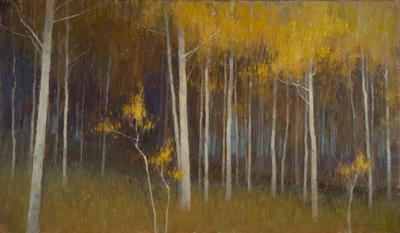
David Grossmann, Matthews Gallery
“When Leaves are Falling”, David Grossmann

At the Colorado Academy of Art, David learned classical painting techniques and took his first plein air painting class.

“I’ve always loved the outdoors, but until I took that class I felt like I couldn’t contain the landscape. It’s so huge, and I didn’t know how to make it into a composition,” he says. After he learned how to capture the beauty of nature on canvas, he knew that he’d be doing little else in his work. “That combination of being outdoors and painting, which were two of my favorite things, were just perfect for me,” he says.

Three years after David enrolled at the art academy, it abruptly closed. The artist once again found himself full of doubt; he’d learned a lot about painting, but he wasn’t sure how to sell his work. That’s when he started an apprenticeship with artist Jay Moore.

“In art school, my training was very much based on technique but not a lot on the professional side of things,” David says. Being in Moore’s studio gave him a window into the life of a working artist, and showed him that a fine art career was possible. “I didn’t know how long it would take to get there, but I knew that I could get there,” he says. “I remember being so excited. I’d been thinking about and dreaming about this for most of my life.”
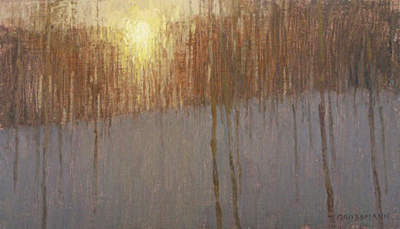
David Grossmann, Matthews Gallery
“Over the Aspens”, David Grossmann

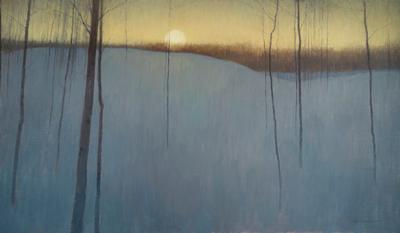
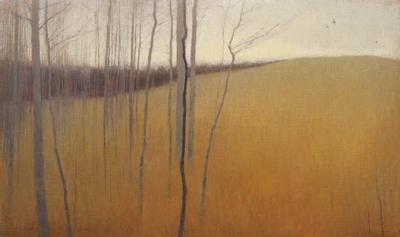
Since then, David has developed a unique style that the artist calls “visual poetry”. Using a gentle, glowing palette, he paints abstracted visions of forests that are melodic in their focus on rhythm and symmetry. Sprawling swaths of landscape transform into flat, smooth planes while scattered trees lend a profound sense of depth. These contrasting perspectives set the works slightly off-balance, sending the eye on an endless quest to consolidate them. The compositions may seem serene, but they contain the same mysterious kinetic energy that tugs our eye from one stanza of a poem to the next.

“I think both poetry and paintings can capture an essence of something and stir emotion and imagination at a very deep level,” David says. “In some ways it’s very simplified and thought out, but hopefully it reaches to that level that connects with someone’s heart.”

David has since shown his work in many exhibitions, including national shows sponsored by Oil Painters of America, the American Impressionist Society, and Salon International. Southwest Art Magazine featured him as an “Artist to Watch” and his work has been featured in Plein Air Magazine and American Art Collector Magazine.

The artist is also an avid traveler, and has journeyed with sketchbook in hand through the Western United States, Eastern Europe, Africa and Central America. In 2011, he finally had the chance to return to Chile. He saw old friends and spent 11 days backpacking through Patagonia in Southern Chile. It was the first time he’d brought along a full painting set on a trip.

“It’s very rugged country and I was carrying a backpack that weighed over 60 pounds,” David says. “Having to paint under those circumstances where there’s just forceful gusts of wind nonstop, it really made me appreciate that every painting is a miracle. It brought out a new level of confidence in my work.”

David had come full circle. He left Chile as a child and returned as an artist.

Click here to see more of David Grossmann’s work, and follow us on Facebook, Twitter and Pinterest for subsequent updates.
The 10 Artists Who Changed Art History Forever, Pt. 2

To top off our list of art history’s most influential players (click here for part 1), we had to make some tough decisions. Would Monet still be known today if not for a fateful trip to the seashore with Boudin? Who had a greater influence on abstract expressionism: Pollock or De Kooning? Browse our choices and let us know if you agree or disagree in comments below or on Facebook, Twitter and Pinterest.

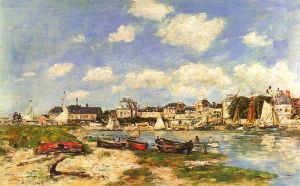
Eugene Boudin, click the image to read the Matthews Gallery blog
Trouville, Eugene Boudin

 6. Eugene Boudin (1824-1898)

French painter Eugene Boudin grew up riding across the English Channel on his father’s steamboat between his home village of Honfleur and the city of Le Havre. Boudin’s mother put an end to the voyages when the young boy nearly drowned, and the family moved to Le Havre to open a picture frame shop. Perhaps it was these early years at sea—and that terrifying dip in the tumbling waves—that drove Boudin to create the small but dynamic compositions that would directly inspire Impressionism.

As a young man Boudin opened his own framing shop and showed work by artists such as Constant Troyon and Jean-Francois Millet. At 22 he started painting full-time, capturing coastal scenes with an impeccable eye for light and a keen interest in the social interactions of beach-goers. He was greatly influenced by the 16th century Dutch masters, and was one of the first French painters to work in the outdoors.

Boudin moved to Paris on a scholarship when he was 23 and soon met the teenage Claude Monet. Monet was working as a caricaturist on the streets of Paris, but Boudin convinced him to travel to Normandy and paint en plein air. In 1874 Boudin showed work in the first Impressionist exhibition alongside Monet’s pivotal Impression, Sunrise, which was painted in Le Havre and inspired the name of the new movement. Without Boudin’s encouragement, Monet may never have moved past charcoal.

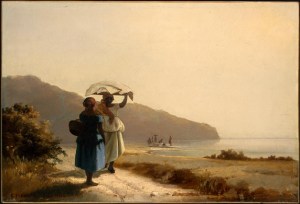
Pissarro, click the image to read the Matthews Gallery blog
Two Women Chatting by the Sea”, Camille Pissarro

 7. Camille Pissarro (1830-1903) 

Picasso and Matisse called Paul Cezanne “the father of us all”, but there’s always a mentor behind a master. Cezanne was heavily influenced by Danish-French Impressionist and Neo-Impressionist painter Camille Pissarro. “He was a father for me,” Cezanne said. “A man to consult and a little like the good Lord.”

Pissarro grew up on the island of St. Thomas in the Danish West Indies and attended a boarding school near Paris. In school he studied the French masters and excelled at drawing and painting. He moved to Paris in 1855 to apprentice with Anton Melbye and Jean-Baptiste-Camille Corot. While Corot worked on his paintings in the studio, Pissarro insisted on painting en plein air and often finished works in one sitting.

The artist was criticized for his technique, which often exposed the rougher, less picturesque side of the French landscape, but his quick, intuitive methods attracted a small group of artists who would soon be known as the Impressionists. Pissarro became their patriarch, and was the only artist to participate in all eight Impressionist exhibitions. However, it was his switch to Neo-Impressionism at 54 and his great influence on Post Impressionism that landed him on this list. Pissarro’s impulse to look deeper into the landscape and trace every rough edge would inspire Seurat, van Gogh, Gauguin and Cezanne in their revolutionary explorations of perspective that would fracture (and eventually completely dissolve) the classical picture plane.

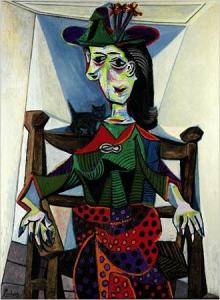
Pablo Picasso, click the image to read the Matthews Gallery blog
Dora Maar au Chat, Pablo Picasso

 8. Pablo Picasso (1881-1973) 

Pablo Picasso is arguably the most famous—and prolific—artist of the 20th century. He created roughly 13,500 paintings and hundreds of thousands more prints, engravings, illustrations and sculptures over the course of his 75-year career. Though he’s famous for co-developing Cubism, it was his explorations into all corners of the plastic arts that made him so influential. No matter the medium or style, Picasso had a hand in radically changing it all.

The artist was born in Malaga, Spain. His father was a professor of art who began formally training his son from a very young age. By 16, Picasso had gained entrance to the prestigious Royal Academy of San Fernando. In the early 1900s he moved to Paris, where he met art collector Gertrude Stein and many of the most famous artists of the time. He started working with Georges Braque in 1909, and the close friends developed a style that pushed Cezanne’s explorations of multiple perspectives to new extremes.

Cubism encouraged artists to analyze objects and break them into thousands of pieces, and similarly shattered the art world into myriad Modernist movements from Futurism to Constructivism.

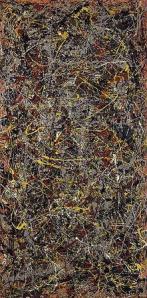
Pollock, click the image to read the Matthews Gallery blog
No. 5, 1948, Jackson Pollock

9. Jackson Pollock (1912- 1956) 

Jackson Pollock was called “Jack the Dripper” and “The Worst Living Artist in America” by the media, and a large slice of the public saw him as a reclusive drunkard who dealt the killing blow to order and sense in art. Sometimes when you’re drumming up an art revolution, things have to get messy.

Pollock grew up the youngest of five brothers in Arizona and California. He and his brother Charles moved to New York City in 1930, where he studied at the Art Students League and worked for the WPA Federal Art Project. In 1936 he took an experimental workshop on liquid paint that would later influence his famous drip paintings. Under the watchful eyes of collector Peggy Guggenheim, art critic Clement Greenberg and his wife Lee Krasner, who he married in 1947, Pollock would become the figurehead of the Abstract Expressionist movement and radically change the world’s definition of art.

Greenberg saw Abstract Expressionism as the final step in painting’s inevitable reduction to its most essential elements. There was an unmatched purity to Pollock’s atmospheric, gravity free color fields that only the eye could traverse. “Jackson was the greatest painter this country has produced,” Greenberg mused. Whether you agree with the critic or not, Pollock undoubtedly subverted figurative painting in an unprecedented way, and changed art history in the process.

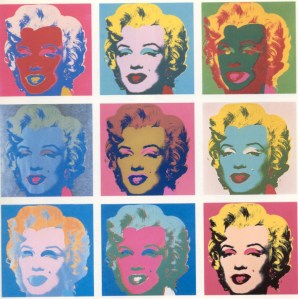
Andy Warhol, click here to read the Matthews Gallery blog
Marilyn Monroe, Andy Warhol

10. Andy Warhol (1928-1987) 

Andy Warhol was born in Pittsburgh, Pennsylvania to Austro-Hungarian immigrants. In third grade he developed Sydenham’s Cholera, a disorder of the nervous system that left him bedridden for months at a time. Isolated from his peers, the shy child became a voracious student of pop culture. Just a few years later he would build his own towering pedestal using the very figures and symbols that he pinned on his bedroom walls.

Warhol graduated from high school in 1945 and attended the Carnegie Institute of Technology for commercial art. In 1949 he moved to New York City, where he worked in the publishing and advertising industries and got his Bachelor of Fine Arts degree in pictorial design. In the 1950’s RCA records hired Warhol as a designer, where he pioneered innovations in various image-making techniques, most notably in screen printing. At the same time he was using similar processes—and subject matter—in his fine art, which he showed in galleries around New York. It was an approach to art that offended many critics at the time, who accused Warhol of succumbing to the homogenizing forces of consumerism.

This was Warhol’s true impact on art history: to show contemporary artists that they couldn’t avoid or ignore the foundational social changes affected by the mass media. Whether he was exploring identity, vanity, sexuality, fame or nothing at all, Warhol was molding the mercurial landscapes of Modern and Postmodern art.

Don’t forget to read part 1 of this series, and connect with us on FacebookTwitter and Pinterest to let us know who you would choose!

THE MATTHEWS GALLERY: Arc of Art History

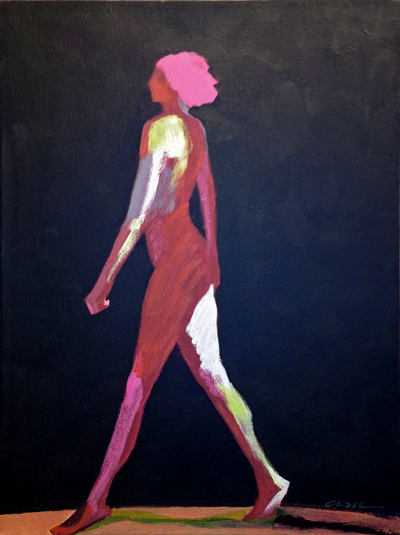
"Stride", Jamie Chase, Matthews Gallery
“Stride”

When Santa Fe visitors step into the Matthews Gallery, they often mention that something feels different. Our gallery location is in a historic adobe on Canyon road just like many of the other galleries so we have a hunch that the novelty they’re sensing is our devotion to carefully curating every wall of our gallery.

We show work from the 19th, 20th and 21st centuries. Our curatorial direction is to exhibit a variety of work from these eras that relate to the artistic development from impressionism to contemporary art. Here are some of the names that you won’t see anywhere else on Canyon Road—or even elsewhere in Santa Fe:

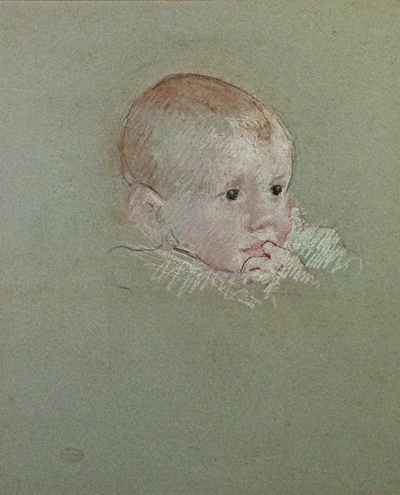
Head of Baby with Finger in Mouth, Mary Cassatt, Matthews Gallery
“Head of Baby with Finger in Mouth”, Mary Cassatt

Mary Cassatt (1844-1926) ~ The American painter and printmaker was refused entry to the Ecole des Beaux-Arts, so she studied the masters on her own at the Louvre. She would become a master herself, named one of “les trois grandes dames” of Impressionism by Gustave Geffroy.

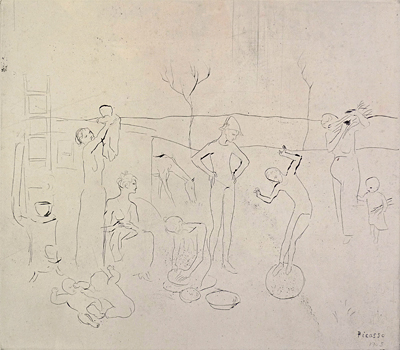
"Les Saltimbanque", Pablo Picasso, Matthews Gallery
“Les Saltimbanque” by Pablo Picasso

Pablo Picasso (1881-1973) ~ Several works by the most influential artist of the 20th century have passed through the Matthews Gallery. Our most notable current work by Picasso is “Les Saltimbanque”. The drypoint etching the artist created as a teenager shows the harlequin, a personal symbol that would recur in his work throughout his career.

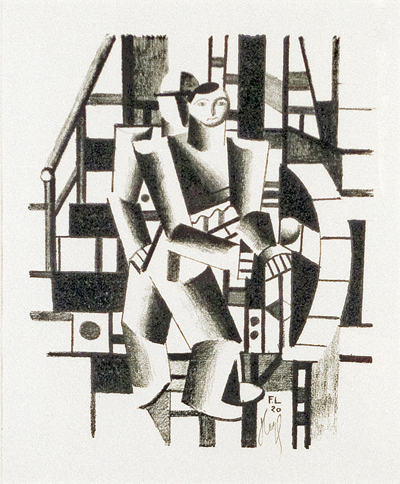
"Composition aux deux Personnages", Fernand Leger, Matthews Gallery
“Composition aux deux Personnages” by Fernand Leger

Fernand Leger (1881-1955) ~ The painter, sculptor and filmmaker’s lithograph “Composition aux deux Personnages” marked a shift in his oeuvre from Cubism to bold figurative works that would later identify him as a forerunner of Pop Art. As is the fate of all art movements, Picasso and Braque’s Cubism were irrevocably fractured.

"Blue Nude", Harold Frank, Matthews Gallery
“Blue Nude” by Harold Frank

Harold Frank (1917-1995) ~ Born in Southampton, England, Frank’s family moved to New York when he was a child. You can see influences from both shores in his colorful canvases that take cues from modernism and abstract expressionism.

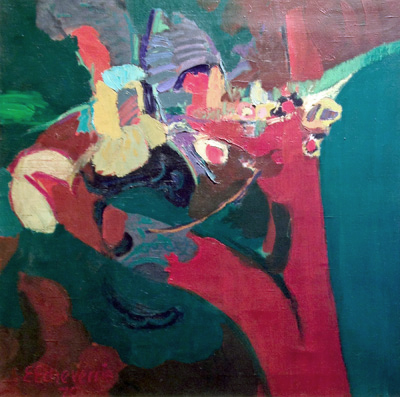
"Alic", Enrique Echeverria, Matthews Gallery
“Alic” by Enrique Echeverria

Enrique Echeverria (1923-1972) ~ Echeverria and his contemporaries brought the ideas of modern European art movements to Mexico and subverted the traditional figurative painting style. They became known as the Generacion de la Ruptura, the Rupture Generation.

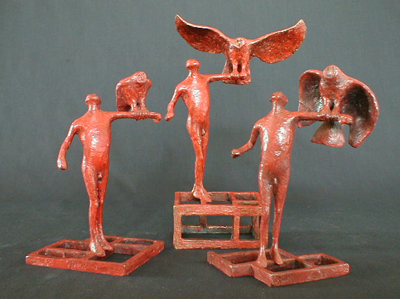
"Avian Keepers", Robert W. Hinds, Matthews Gallery
“Avian Keepers” by Robert W. Hinds

Robert W. Hinds (1924- present) ~ This World War II veteran was born a year after Echeverria. He had a successful graphics career for years before moving to Europe to study casting techniques in Italy and Bologna. Now he produces figurative bronze sculptures that are collected throughout the world.

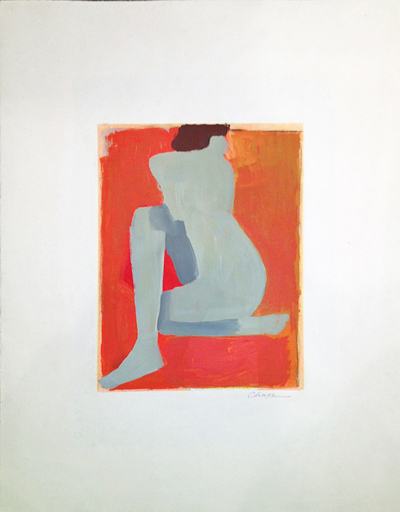
"Untitled Grey Nude on Orange", Jamie Chase, Matthews Gallery
“Untitled Grey Nude on Orange” by Jamie Chase

Jamie Chase (1954- present) ~ The painter and graphic novelist was born in California, and traveled to Europe to educate himself on the work of the masters. He moved to Santa Fe in 1980, where he’s now known for his non-objective paintings, abstract landscapes and abstracted figurative paintings.

Browse all of the artists we represent here, and follow our Facebook and Twitter accounts for updates on their work. 

Hannah Holliday Stewart (1924 – 2010) A Sculptor Who Forged The Way

Hannah Holliday Stewart (1924 – 2010) had her sculpture exhibited in over 40 venues including The Smithsonian, Washington, DC; the San Francisco Museum of Art; the High Museum of Art, Atlanta, Georgia; the Dallas Museum of Fine Arts and others. Her work and her career were instrumental to the increased recognition of women sculptors in the United States. The International Sculpture magazine wrote :

“(She) forged the way for serious women sculptors. Uniting Greek mythology and contemporary energy concepts … (her) work fuses both primitive and futuristic sensibilities.”

At a time when the art world marginalized women artists, she chose to create her own world from metal and stone and helped lead the way for a generation of women sculptors. Though she had achieved a high level of success and recognition, she eventually turned her back on the art establishment and continued to work in isolation for the last twenty years of her life. After her death in 2010, sculptures, consisting of work that spanned her entire career, were discovered in her studio – from pieces that are only a few inches tall to one bronze that is over nine feet.

A written statement discovered in one of her notebooks eloquently records her own thoughts on the origins and principles underlying her art work:

When I was eight years old, I asked my mother what the wind really looked like. I remember spending hours … days … sitting with my hands open wide or running with my lightning-bug jar, hoping to catch the wind. I wanted to SEE the wind, that magical force that could bend the huge oak tree in a summer storm, gently caress me on a hot summer day or sing to me as it played through a tree or around the house.

This early interest in natural forces has sustained me throughout my life as a sculptor. My goal is to render visible the hidden realities of pent-up contained energy. The direct fields of reference are Sacred Geometry, Astronomy, Myth & Physics … Each Sculpture is an energy form, the movement arrested in space, a form sustaining an energy. My work is a response to these patterns and delineations and communicates with viewers through the universality of symbolism and form.

The Matthews Gallery is pleased to show this pioneering artist and reacquaint the world with her work. If you would like to learn more about Hannah Holliday Stewart, we have created a website dedicated to her life and work which includes a 163 page online catalog of her work. Click Here to visit the site.