ONE WORK OF ART: Charles Partridge Adams


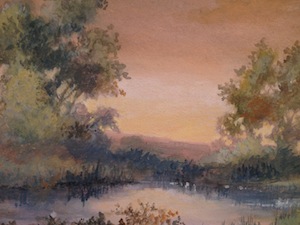
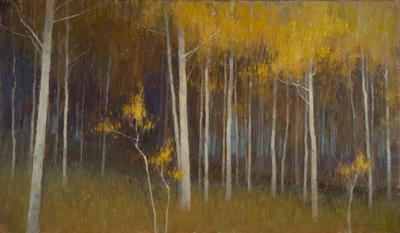
Charles Partridge Adams- Untitled Landscape- Matthews Gallery

When Charles Partridge Adams moved from Vermont to Denver in 1876, it had nothing to do with art. The 18-year-old’s family hoped Colorado’s arid climate could save his sister from tuberculosis. The girl died, but Adams discovered unexpected beauty in the tragic situation.

The teen fell in love with the Rocky Mountains, enrolling in art classes a year after his arrival so he could learn to capture their majesty. It was his first and last formal training. For the rest of his days, Adams developed his skills on intrepid painting expeditions across Colorado and the American West.

Charles Partridge Adams and Alexander Phimister Proctor in Colorado, early 1880s“I saw the Rocky Mountains as I had dreamed of them before I came West,” Adams wrote of a horseback ride in Estes Park in 1881. “Towering above a great valley filled with afternoon mists, their summits glistening with the pure white of winter snows. They formed an entrancing sight that I can never forget.”

Adams started out as a realist, but by the 1890s he was removing details and loosening his brushstrokes. He developed a bright, impressionistic style and took cues from tonalism, carefully detailing the thin mists that cleave to the foothills of the Rockies in the morning and the almost opaque storm clouds that crown their peaks in the afternoon.

The artist’s influences are clear in “Untitled (Landscape)”, a serene watercolor of a still lake under a sunset sky. Splashy clusters of brushstrokes form wild foliage that contrasts with the crystalline water, and the sky above fills the air with a rosy haze. Adams was known for his bold palette, but here he used muted colors in thin layers to mimic the atmospheric effects of dusk. His touch is so delicate that the lightest ribbon of color in the sky isn’t paint but bare white paper.

Charles Partridge Adams- Untitled Landscape Detail- Matthews Gallery“He was… sophisticated in his use of watercolor,” says Thomas Smith, director of the Denver Art Museum’s Petrie Institute of Western American Art, which organized an exhibition of Adams’ work last year. “This was a self-taught artist, but he really grew up and he really taught himself things about the medium.”

“Untitled (Landscape)” may measure just 6 1/2 by 10 1/4 inches, but Adams had the loftiest intentions no matter the size of the paper. “At his best, the landscapist is able through the grandest, as well as the humblest forms of earth and sky and sea, to at least suggest the grandeur, poetry, mystery and beauty of this natural world,” he wrote. It was with these noble ambitions that Adams would become one of Colorado’s most beloved landscape painters of all time.

Come see Charles Partridge Adams’ “Untitled (Landscape)” in our NEW HORIZONS: Focus on Landscapes show. If you’d like to inquire about the piece, don’t hesitate to call the Matthews Gallery at 505-992-2882 or connect with us through Facebook or Twitter.

NEW HORIZONS: Landscape Art Speaks

NEW HORIZONS- Focus on Landscapes- Matthews Gallery

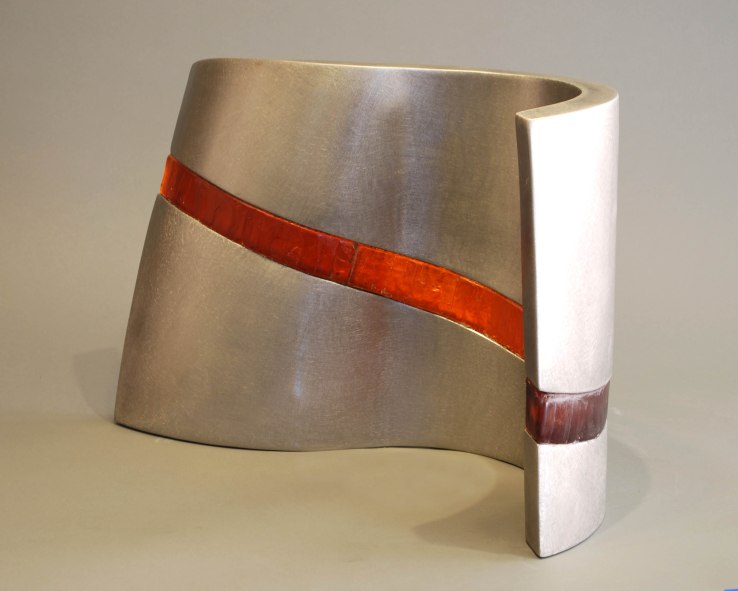
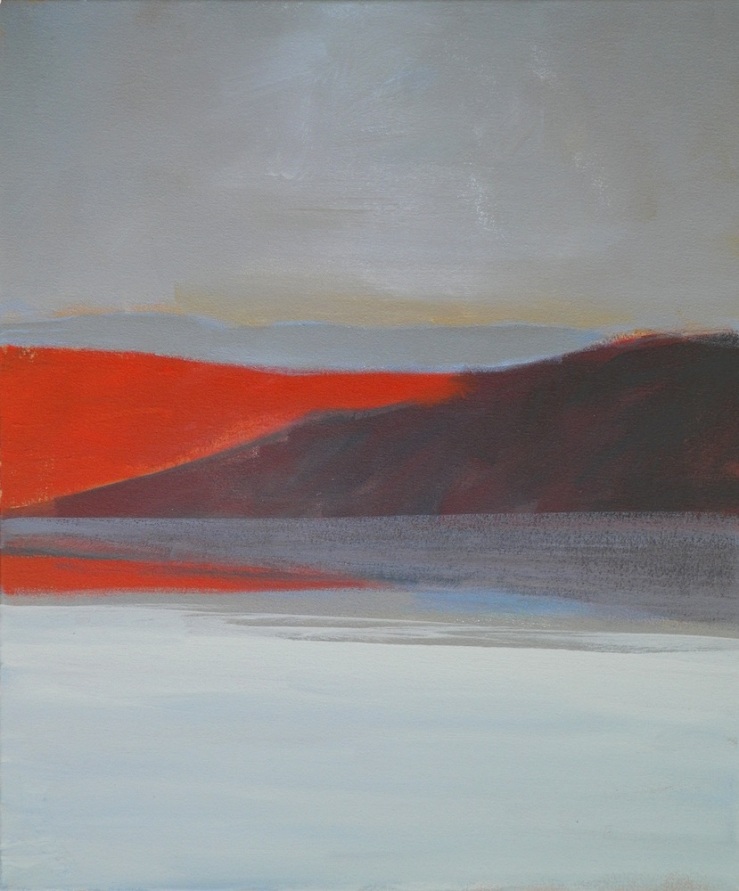
For our NEW HORIZONS: Focus on Landscapes show, running now through October 27, Tesuque sculptor Frank Morbillo‘s latest body of work engages with our diverse collection of contemporary landscape art. Throughout the exhibition, you’ll find observations by Morbillo and seven other artists, many of whom are inspired by the same severe desert expanses and infinite skies. Below is a selection of works and quotes from the show:

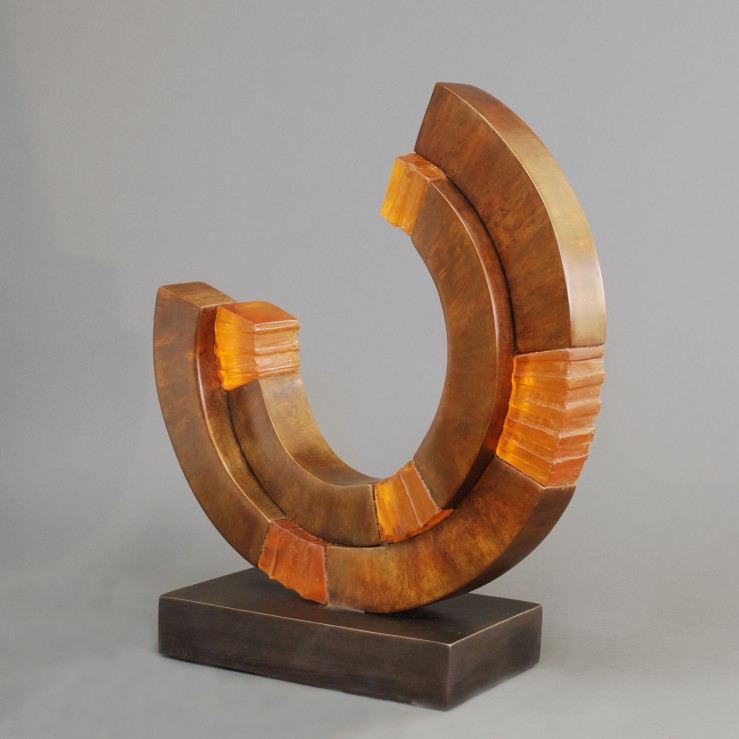
Sprung- Frank Morbillo- Matthews Gallery

Kate Rivers- Reflections- Matthews Gallery

PATTERN

Frank Morbillo finds patterns wherever he looks in the natural world.
Kate Rivers uses manufactured patterns to form fractured reflections of nature.

“What’s a pattern? Something that might be predictable. When I observe things, that’s what I see. As an artist, you take all of these different things and see how they work together.”

-Frank Morbillo

 “I’m using this history of text and image as something that is beautiful, and weaving the words together.”

-Kate Rivers

Frank Morbillo- Cool Encounter- Matthews Gallery

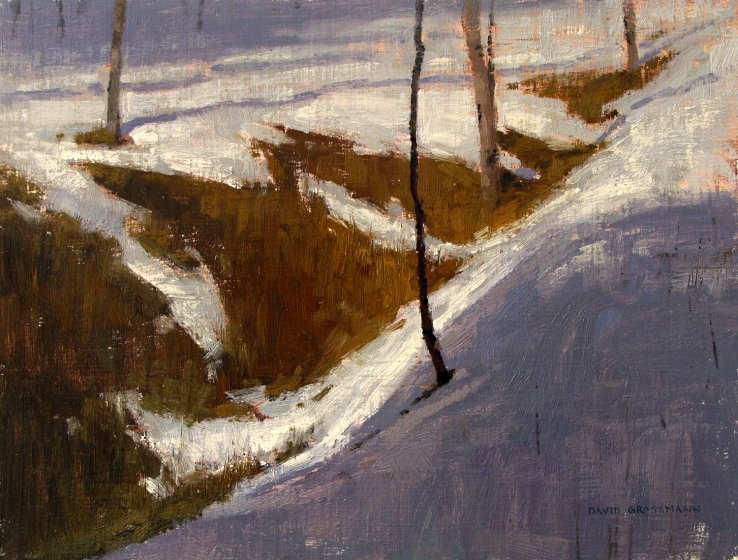
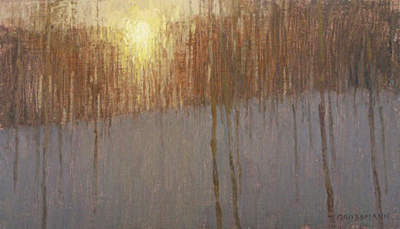
David Grossmann- Snow Rhythms- Matthews Gallery

RHYTHM

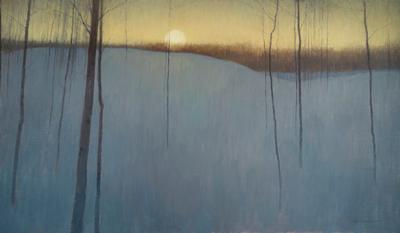
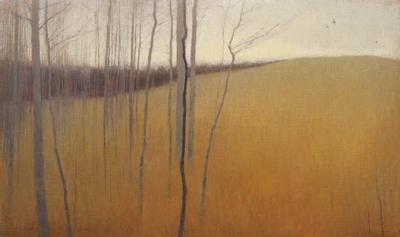
David Grossmann abstracts his landscapes to lay bare underlying rhythms.
Frank Morbillo traces the formation and disruption of natural rhythms.

“My paintings… are simplified rhythms of color, light, and shape. On the surface they are quiet whispers, but I hope that they convey a depth of emotion to anyone who takes the time to stop and listen.”

-David Grossmann

“Entropy is the introduction of chaos and disorder. That’s a root of what I’ve done over the years. You take something that could be highly organized, and understand that everything, all things, are subject to entropy. As much as we feel like we’ve created something that defies that, there’s no chance. Everything is subject to it.”

-Frank Morbillo

Frank Morbillo- Unraveling- Matthews Gallery

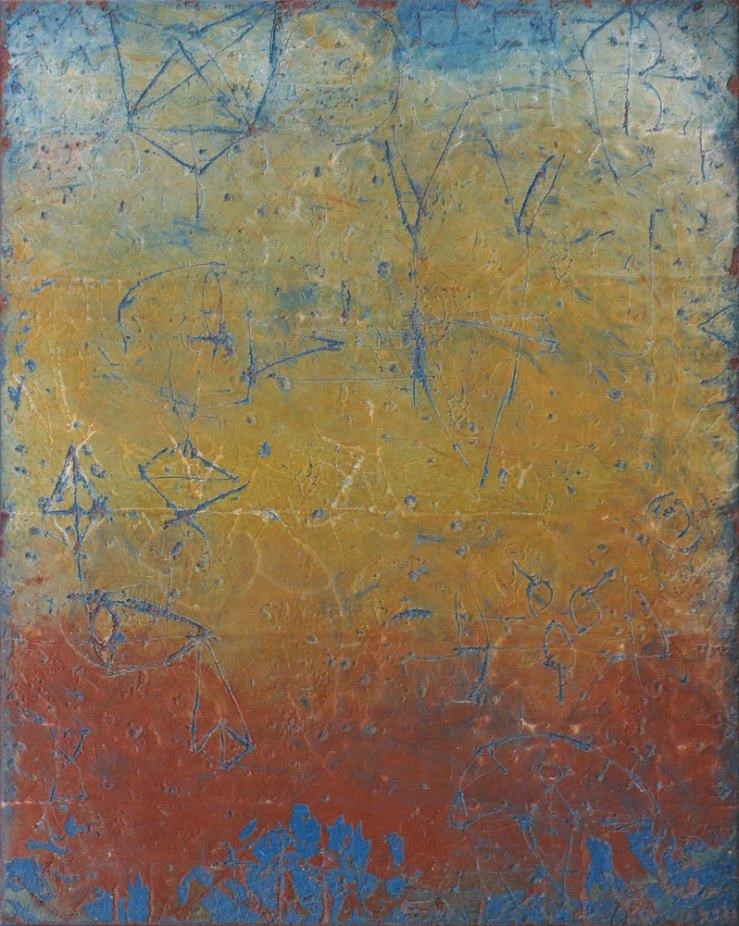
Terry Craig- Burning Questions- Matthews Gallery

TEXTURE

Terry Craig blends materials to mimic natural textures.
Frank Morbillo places materials with contrasting textures side-by-side.

“It took a long time… to develop the formulas and get the materials to do what I wanted them to do. You can scrape into it and get all sorts of these wonderful organic qualities.”
-Terry Craig

“Glass is a beautiful material that sets up this nice contrast with the metal. If you add texture to it, it takes on a different color. The light behaves differently going through it.”
-Frank Morbillo

Frank Morbillo- Traverse II- Matthews Gallery

Jamie Chase- Two-Horizons- Matthews Gallery

COLOR

Jamie Chase uses multiple layers of paint to reveal and obscure different hues.
Frank Morbillo relies on the properties of glass to enhance his palette.

“There are so many narratives underneath the final painting. It starts out as something really dark or really dramatic in contrasting colors, and by the end it’s almost neutral colors, but there’s something moving under the surface.”
-Jamie Chase

“The glass introduced color into the work that really isn’t achievable in metal. The cobalt blues and reds and ambers have a quality that you can’t get with any of the metals.”
-Frank Morbillo

See NEW HORIZONS: Focus on Landscapes now through October 27 at Matthews Gallery. Connect with us on Facebook, Twitter and Pinterest to see more material from the show.

10 Women Who Changed Art History Forever, Pt. 2

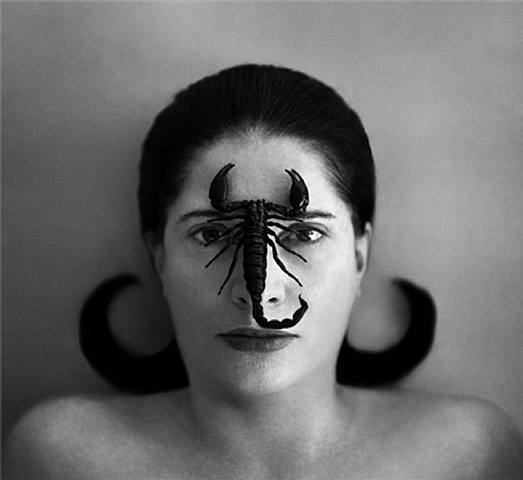
Marina Abramovic- 10 Women Who Changed Art History- Matthews Gallery blog

Click here to read the first part of this blog post.

How do you measure influence? It’s easy to focus on art’s brightest stars and most famous imagery, but zoom in on the tapestry of art history and you’ll see that its fibers are often woven from close personal relationships and direct channels of inspiration. We tend to remember names like Caravaggio, Picasso and Pollock and overlook the other fish in their schools. The following women might not have received as much attention as their male contemporaries, but that doesn’t mean they had a lesser hand in directing the grand flow of things. Check out our picks, and let us know who would be on your list in the comments.

Georgia O'Keeffe- Ten Women Who Changed Art History- Matthews Gallery blog

6. Georgia O’Keeffe (1887-1986)

It was 1908, and a young O’Keeffe had just won a prize from the Art Students League for her still life Dead Rabbit with Copper Pot when she gave up painting all together. The artist was worried that she’d never truly distinguish herself in the realm of realism. Three years later she started fresh, enrolling in an art class taught by Arthur Wesley Down, who encouraged his students to let their emotions guide them.

“I found that I could say things with color and shapes that I couldn’t say any other way—things I had no words for,” O’Keeffe said. The artist created a series of innovative abstract charcoal drawings that caught the eye of her future husband, New York photographer and gallerist Alfred Stieglitz. She would continue throughout her career to build an emotional vocabulary of abstracted forms, strongly influencing her modernist contemporaries and later inspiring feminist artists like Judy Chicago. She’s now considered the Mother of American Modernism.
Peggy Guggenheim- Ten Women Who Changed Art History Forever- Matthews Gallery blog

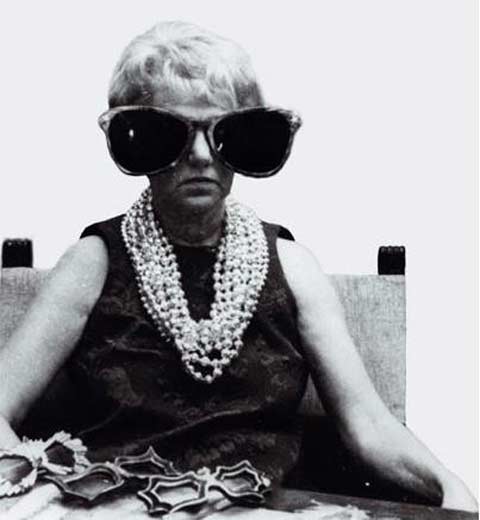
7. Peggy Guggenheim (1898-1979)

Guggenheim was born with the promise of a healthy inheritance. Her father died on the Titanic when she was a teenager, and at 21 she inherited more than $30 million in today’s currency. What to do with so much money? Guggenheim’s passion was art. Her first job was at the Sunwise Turn bookstore in New York, a bohemian hotspot that inspired her to move to Paris in 1920. There she met Man Ray, Constantin Brancusi, Marcel Duchamp and other influential modernists. By 1938 she’d opened a modernist gallery in London, where she showed the likes of Kandinsky, Calder, Ernst and Picasso.

The gallery got lots of attention from the public but lost money in its first year, so Guggenheim decided to open a museum instead. When World War II forced her to delay her plans, she focused on a buying “one picture a day” for her future museum collection. Ten Picassos, forty Ernsts, eight Miros, four Magrittes, three Dalis and one Chagall later, Guggenheim had one of the most important collections of 20th century art in existence. Her influence endures in the rich archives of the Solomon R. Guggenheim Foundation and the Peggy Guggenheim Collection.

Frida Kahlo- Ten Women Who Changed Art History- Matthews Gallery blog

8. Frida Kahlo (1907-1954)

Kahlo was born to a German father and Amerindian and Spanish mother in 1907, but she always claimed she was born in 1910 at the beginning of the Mexican Revolution. That might have been a slight distortion of the truth, but her life and art certainly mirrored the pain and the passion of Mexico’s modern rebirth. When she was a teenager, Kahlo was involved in a bus crash that left her in a full body cast. In the months afterward she took up painting to combat loneliness and boredom.

“I am the subject I know best,” Kahlo said. She drew influences from traditional Mexican folk art and American and European modernism in her colorful self portraits and still lifes, building new links between cultures and art movements but tightly focusing her subject matter on her own health and relationship struggles. During her lifetime, Kahlo was mostly known in Mexico as the on-again, off-again wife of muralist Diego Rivera, but in 1938 she had a solo show in the United States and a year later she exhibited in Paris, where the Louvre acquired one of her paintings.

Andre Breton called Kahlo a surrealist and others saw her work as Naive Art, but the artist defied labels. “I never painted dreams,” she said. “I painted my own reality.” Kahlo opened the door for women artists to openly explore their most personal experiences in their work, something that surely influenced the next artist on our list.
Louise Bourgeois- 10 Women Who Changed Art History- Matthews Gallery

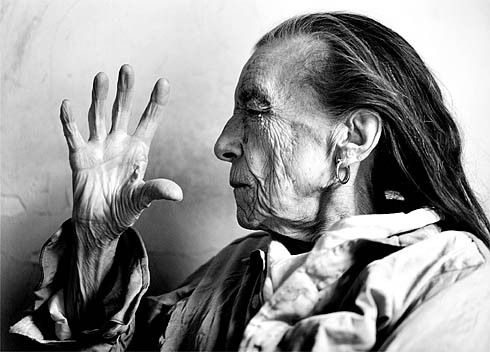
9. Louise Bourgeois (1911-2010)

Bourgeois’ artistic journey began in 1924 when she discovered that her father and her English tutor were having an affair. Her mother turned a blind eye, but Bourgeois spent the rest of her life staring the betrayal full in the face. A born and raised Parisian, she started studying art after her mother’s death in 1932 and met Fernand Leger soon after, who told her she was more of a sculptor than a painter.

After gaining some notoriety in Europe, Bourgeois moved to New York City in 1938 and hit a wall. Though she was respected among artists like Willem de Kooning, Mark Rothko and Jackson Pollock, her work wasn’t well known outside avante-garde circles. She was brutally honest in her explorations of memory, sexuality and family power dynamics, erecting monstrous spiders in sculpture gardens and immersing her viewers in scenes of violent patricide.

In 1982 the 70-year-old artist mounted her first retrospective at the Museum of Modern Art and finally told the story of her father’s infidelity to the public. She identified her body of work as the genesis of a genre called “confessional art”. Every piece in her oeuvre is autobiographical, a retelling of the trauma she’d experienced as a child and the effect it’d had on her life thereafter. By the time she died in 2010, she’d captured the imagination of a new generation of artists and scholars.
Marina Abramovic- Ten Women Who Changed Art History- Matthews Gallery blog

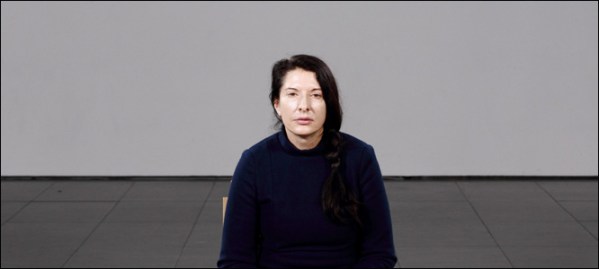
10. Marina Abramovic (born 1946)

Considering the ephemerality of Abramovic’s work, the performance artist’s rise to become one of the contemporary art world’s most notorious and polarizing figures is a remarkable story. Abramovic was born and raised in Belgrade, Serbia. Her mother kept tight control over her life through her early 20s, and she completed some of her first performance art pieces before her curfew at 10:00 pm. In her early work, she explored consciousness and the limits of the body within the context of performance art, pushing herself to exhaustion in various endurance tests.

Abramovic moved to Amsterdam in 1976, where she began a close relationship and artistic collaboration with performance artist Ulay Laysiepen. The duo continued to test their psychic limits, and also explored the idea of combining their identities into a single entity. They separated in 1988.

In 2005, Abramovic did a series of performances at the Guggenheim, and in 2010 she mounted a retrospective at the Museum of Modern Art. There she performed a 736-hour piece called The Artist is Present that was the subject of a documentary and received global attention.

Abramovic has been accused of chasing fame and creating a cult of personality. No matter her motives, the artist is a thought-provoking figure who’s impossible to ignore. She’s not a part of art history just yet, but she certainly makes a good future candidate.

Check out the first part of this blog post here, and follow us on Facebook, Twitter and Pinterest for more art news.

NEW IN THE GALLERY: The evolution of David Grossmann

David Grossmann, Matthews Gallery
“Almost” by David Grossmann

David Grossmann always knew he wanted to be an artist. Even before his first painting lessons with his grandmother at 10 years old, he was an avid sketcher, filling notebooks with intricate drawings of dragons and the floor plans of medieval castles. By 16, David was taking portrait commissions and doing book illustrations for a publishing company. Still, he couldn’t quite discern a path that would turn his passion into something more.

“I didn’t know how to get there as far as making a living as a professional artist,” the 29-year-old says. Finding that bridge would take a while, but it’s safe to say that he’s officially crossed it. We’re proud to be the first gallery to represent David and his work. It’s just the latest high point in an already impressive artistic career.

David was born in the United States and moved to Chile when he was two years old. It’s a place of stunning, harsh natural beauty that would inspire in David a lifelong passion for the outdoors. His grandmother was a landscape painter who lived in El Paso, Texas. When they saw each other, she would teach him oil painting techniques with a brush and palette knife.

When David was 14, the family decided to relocate to Colorado. It was a move that the teenager fiercely resisted.

“When we left, I didn’t say goodbye because I hadn’t accepted that we weren’t going back,” he says. “I’m sure for anyone, being 14 is probably a tough age. On top of that, adjusting to a new culture and new everything was really difficult.”

David Grossmann, Matthews Gallery
“Away” by David Grossmann

The move marked a big shift in David’s art. Not long after he arrived the young artist started receiving requests for commissions, and he enrolled in his first formal drawing classes with artist Valorie Snyder. His grandmother was an art director of a Christian publishing company and gave him a job illustrating Bible study curriculums.

“It became more of an outlet for me than it had been before,” David says. “It was a lot more serious, a lot more figurative works. I also started drawing more landscapes at that point.”

Despite his early success, David still didn’t see art as a viable career. In college he studied business and Spanish, focusing primarily on his studies instead of his artwork. During his last year at university, struck by the fear of being trapped in a cubicle, he finally committed to giving art school a shot.

David Grossmann, Matthews Gallery
“When Leaves are Falling”, David Grossmann

At the Colorado Academy of Art, David learned classical painting techniques and took his first plein air painting class.

“I’ve always loved the outdoors, but until I took that class I felt like I couldn’t contain the landscape. It’s so huge, and I didn’t know how to make it into a composition,” he says. After he learned how to capture the beauty of nature on canvas, he knew that he’d be doing little else in his work. “That combination of being outdoors and painting, which were two of my favorite things, were just perfect for me,” he says.

Three years after David enrolled at the art academy, it abruptly closed. The artist once again found himself full of doubt; he’d learned a lot about painting, but he wasn’t sure how to sell his work. That’s when he started an apprenticeship with artist Jay Moore.

“In art school, my training was very much based on technique but not a lot on the professional side of things,” David says. Being in Moore’s studio gave him a window into the life of a working artist, and showed him that a fine art career was possible. “I didn’t know how long it would take to get there, but I knew that I could get there,” he says. “I remember being so excited. I’d been thinking about and dreaming about this for most of my life.”

David Grossmann, Matthews Gallery
“Over the Aspens”, David Grossmann

Since then, David has developed a unique style that the artist calls “visual poetry”. Using a gentle, glowing palette, he paints abstracted visions of forests that are melodic in their focus on rhythm and symmetry. Sprawling swaths of landscape transform into flat, smooth planes while scattered trees lend a profound sense of depth. These contrasting perspectives set the works slightly off-balance, sending the eye on an endless quest to consolidate them. The compositions may seem serene, but they contain the same mysterious kinetic energy that tugs our eye from one stanza of a poem to the next.

“I think both poetry and paintings can capture an essence of something and stir emotion and imagination at a very deep level,” David says. “In some ways it’s very simplified and thought out, but hopefully it reaches to that level that connects with someone’s heart.”

David has since shown his work in many exhibitions, including national shows sponsored by Oil Painters of America, the American Impressionist Society, and Salon International. Southwest Art Magazine featured him as an “Artist to Watch” and his work has been featured in Plein Air Magazine and American Art Collector Magazine.

The artist is also an avid traveler, and has journeyed with sketchbook in hand through the Western United States, Eastern Europe, Africa and Central America. In 2011, he finally had the chance to return to Chile. He saw old friends and spent 11 days backpacking through Patagonia in Southern Chile. It was the first time he’d brought along a full painting set on a trip.

“It’s very rugged country and I was carrying a backpack that weighed over 60 pounds,” David says. “Having to paint under those circumstances where there’s just forceful gusts of wind nonstop, it really made me appreciate that every painting is a miracle. It brought out a new level of confidence in my work.”

David had come full circle. He left Chile as a child and returned as an artist.

Click here to see more of David Grossmann’s work, and follow us on Facebook, Twitter and Pinterest for subsequent updates.

The 10 Artists Who Changed Art History Forever, Pt. 2

To top off our list of art history’s most influential players (click here for part 1), we had to make some tough decisions. Would Monet still be known today if not for a fateful trip to the seashore with Boudin? Who had a greater influence on abstract expressionism: Pollock or De Kooning? Browse our choices and let us know if you agree or disagree in comments below or on Facebook, Twitter and Pinterest.

Eugene Boudin, click the image to read the Matthews Gallery blog
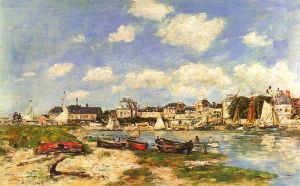
Trouville, Eugene Boudin

 6. Eugene Boudin (1824-1898)

French painter Eugene Boudin grew up riding across the English Channel on his father’s steamboat between his home village of Honfleur and the city of Le Havre. Boudin’s mother put an end to the voyages when the young boy nearly drowned, and the family moved to Le Havre to open a picture frame shop. Perhaps it was these early years at sea—and that terrifying dip in the tumbling waves—that drove Boudin to create the small but dynamic compositions that would directly inspire Impressionism.

As a young man Boudin opened his own framing shop and showed work by artists such as Constant Troyon and Jean-Francois Millet. At 22 he started painting full-time, capturing coastal scenes with an impeccable eye for light and a keen interest in the social interactions of beach-goers. He was greatly influenced by the 16th century Dutch masters, and was one of the first French painters to work in the outdoors.

Boudin moved to Paris on a scholarship when he was 23 and soon met the teenage Claude Monet. Monet was working as a caricaturist on the streets of Paris, but Boudin convinced him to travel to Normandy and paint en plein air. In 1874 Boudin showed work in the first Impressionist exhibition alongside Monet’s pivotal Impression, Sunrise, which was painted in Le Havre and inspired the name of the new movement. Without Boudin’s encouragement, Monet may never have moved past charcoal.

Pissarro, click the image to read the Matthews Gallery blog
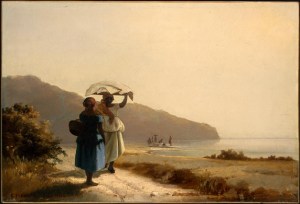
Two Women Chatting by the Sea”, Camille Pissarro

 7. Camille Pissarro (1830-1903) 

Picasso and Matisse called Paul Cezanne “the father of us all”, but there’s always a mentor behind a master. Cezanne was heavily influenced by Danish-French Impressionist and Neo-Impressionist painter Camille Pissarro. “He was a father for me,” Cezanne said. “A man to consult and a little like the good Lord.”

Pissarro grew up on the island of St. Thomas in the Danish West Indies and attended a boarding school near Paris. In school he studied the French masters and excelled at drawing and painting. He moved to Paris in 1855 to apprentice with Anton Melbye and Jean-Baptiste-Camille Corot. While Corot worked on his paintings in the studio, Pissarro insisted on painting en plein air and often finished works in one sitting.

The artist was criticized for his technique, which often exposed the rougher, less picturesque side of the French landscape, but his quick, intuitive methods attracted a small group of artists who would soon be known as the Impressionists. Pissarro became their patriarch, and was the only artist to participate in all eight Impressionist exhibitions. However, it was his switch to Neo-Impressionism at 54 and his great influence on Post Impressionism that landed him on this list. Pissarro’s impulse to look deeper into the landscape and trace every rough edge would inspire Seurat, van Gogh, Gauguin and Cezanne in their revolutionary explorations of perspective that would fracture (and eventually completely dissolve) the classical picture plane.

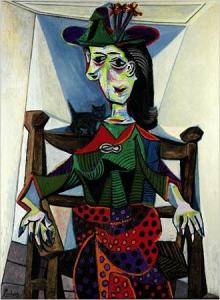
Pablo Picasso, click the image to read the Matthews Gallery blog
Dora Maar au Chat, Pablo Picasso

 8. Pablo Picasso (1881-1973) 

Pablo Picasso is arguably the most famous—and prolific—artist of the 20th century. He created roughly 13,500 paintings and hundreds of thousands more prints, engravings, illustrations and sculptures over the course of his 75-year career. Though he’s famous for co-developing Cubism, it was his explorations into all corners of the plastic arts that made him so influential. No matter the medium or style, Picasso had a hand in radically changing it all.

The artist was born in Malaga, Spain. His father was a professor of art who began formally training his son from a very young age. By 16, Picasso had gained entrance to the prestigious Royal Academy of San Fernando. In the early 1900s he moved to Paris, where he met art collector Gertrude Stein and many of the most famous artists of the time. He started working with Georges Braque in 1909, and the close friends developed a style that pushed Cezanne’s explorations of multiple perspectives to new extremes.

Cubism encouraged artists to analyze objects and break them into thousands of pieces, and similarly shattered the art world into myriad Modernist movements from Futurism to Constructivism.

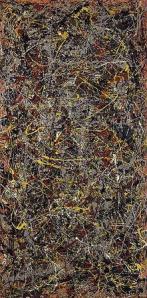
Pollock, click the image to read the Matthews Gallery blog
No. 5, 1948, Jackson Pollock

9. Jackson Pollock (1912- 1956) 

Jackson Pollock was called “Jack the Dripper” and “The Worst Living Artist in America” by the media, and a large slice of the public saw him as a reclusive drunkard who dealt the killing blow to order and sense in art. Sometimes when you’re drumming up an art revolution, things have to get messy.

Pollock grew up the youngest of five brothers in Arizona and California. He and his brother Charles moved to New York City in 1930, where he studied at the Art Students League and worked for the WPA Federal Art Project. In 1936 he took an experimental workshop on liquid paint that would later influence his famous drip paintings. Under the watchful eyes of collector Peggy Guggenheim, art critic Clement Greenberg and his wife Lee Krasner, who he married in 1947, Pollock would become the figurehead of the Abstract Expressionist movement and radically change the world’s definition of art.

Greenberg saw Abstract Expressionism as the final step in painting’s inevitable reduction to its most essential elements. There was an unmatched purity to Pollock’s atmospheric, gravity free color fields that only the eye could traverse. “Jackson was the greatest painter this country has produced,” Greenberg mused. Whether you agree with the critic or not, Pollock undoubtedly subverted figurative painting in an unprecedented way, and changed art history in the process.

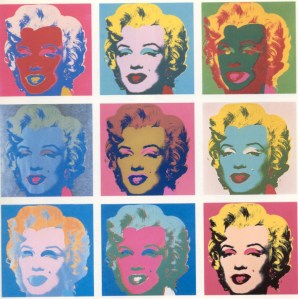
Andy Warhol, click here to read the Matthews Gallery blog
Marilyn Monroe, Andy Warhol

10. Andy Warhol (1928-1987) 

Andy Warhol was born in Pittsburgh, Pennsylvania to Austro-Hungarian immigrants. In third grade he developed Sydenham’s Cholera, a disorder of the nervous system that left him bedridden for months at a time. Isolated from his peers, the shy child became a voracious student of pop culture. Just a few years later he would build his own towering pedestal using the very figures and symbols that he pinned on his bedroom walls.

Warhol graduated from high school in 1945 and attended the Carnegie Institute of Technology for commercial art. In 1949 he moved to New York City, where he worked in the publishing and advertising industries and got his Bachelor of Fine Arts degree in pictorial design. In the 1950’s RCA records hired Warhol as a designer, where he pioneered innovations in various image-making techniques, most notably in screen printing. At the same time he was using similar processes—and subject matter—in his fine art, which he showed in galleries around New York. It was an approach to art that offended many critics at the time, who accused Warhol of succumbing to the homogenizing forces of consumerism.

This was Warhol’s true impact on art history: to show contemporary artists that they couldn’t avoid or ignore the foundational social changes affected by the mass media. Whether he was exploring identity, vanity, sexuality, fame or nothing at all, Warhol was molding the mercurial landscapes of Modern and Postmodern art.

Don’t forget to read part 1 of this series, and connect with us on FacebookTwitter and Pinterest to let us know who you would choose!

The 10 Artists Who Changed Art History Forever, Pt. 1

Over the next two weeks, we’re paying tribute to 10 painters who changed the course of art history. Our first five picks range from Il Divino to the “painter of light”. Who do you think we missed? Connect with us on Facebook, Twitter and Pinterest to join the discussion, and click here to read part 2!

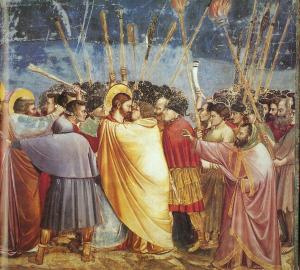
Giotto, "The Kiss of Judas"
Giotto, The Kiss of Judas

1. Giotto (1266/7-1337)

The Italian painter and architect was most likely born in Florence, the city where he would live and work for his entire life. Legend has it that the young Giotto was herding sheep and stopped to sketch the animals on a rock when famous Tuscan painter Cimabue strolled by and took him as an apprentice. One of art history’s most passionate debates centers on whether Giotto completed parts of Cimabue’s frescoes at Assisi. Regardless, it was Giotto’s break from the traditions of Cimabue and his contemporaries that helped spark the Italian Renaissance.

In Giotto’s frescoes at the Scrovegni Chapel, the stylized Byzantine figures that were popular at the time are nowhere in sight. His figures are solid and sculptural, their robes draping naturally from their frames. This is a painter who drew inspiration from what his eyes could see. 16th century biographer Giorgio Vasari wrote that Giotto started “the great art of painting as we know it today, introducing the technique of drawing accurately from life, which had been neglected for more than two hundred years.”

The Matthews Gallery, Michelangelo
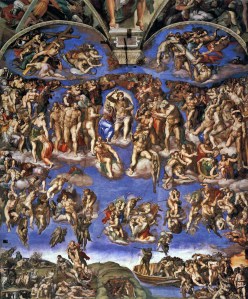
Michelangelo, The Last Judgment

2. Michelangelo (1475-1564) 

In contrast with Giotto, this prolific sculptor, painter, architect, poet and engineer left behind a paper trail that makes him one of the most well-documented artists of his time. Michelangelo completed the Pieta and David before he turned 30 and redesigned part of St. Peter’s Basilica at 74. In between, he completed the ceiling frescoes of the Sistine Chapel, spent 40 years creating Pope Julius II’s tomb and worked on a multitude of other projects. Even in his time he was known as Il Divino, “the divine one”.

The Last Judgment fresco on the altar wall of the Sistine Chapel, one of Michelangelo’s final works, is the fulfillment of Giotto’s artistic legacy. His massive figures seem to press from the wall with all of the terriblita (awe-inspiring grandeur) of living giants. Giorgio Vasari, who wrote a biography of Michelangelo during his lifetime, called the artist’s works the apex of the Renaissance. They also inspired Mannerism, the movement that proceeded the Renaissance in Western art.

The Matthews Gallery, Caravaggio
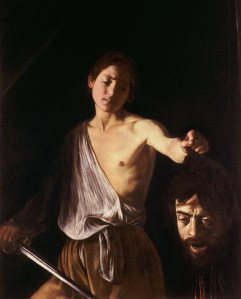
Caravaggio, David with the Head of Goliath

3. Caravaggio (1571-1610) 

It’s no secret that Caravaggio was an unpleasant guy. A public notice from 1604 accused him of crashing gatherings armed with a sword, “ever ready to engage in a fight or an argument, so that it is most awkward to get along with him.” Perhaps that’s why he was swiftly forgotten after his death in 1610 and wasn’t recognized for his great influence on art history until three centuries later.

The artist was born in Milan and grew up in the city of Caravaggio. His parents were both dead by his teen years so he started an apprenticeship with painter Simone Peterzano, who was Titian’s pupil. He moved to Rome in 1592 and rose to fame as he developed the style that would come to define Baroque painting. His figures were incredibly realistic, their skin pocked, their feet dirty and their faces full of emotion. They were illuminated by high key chiaroscuro lighting. Caravaggio fearlessly placed the common people in the spotlight, a coup that would serve the Counter-Reformation well.

The Matthews Gallery, Velazquez
Velazquez, Las Meninas

4. Velazquez (1599- 1660) 

Diego Velazquez’ oeuvre mostly consists of pompous portraits of the Spanish royal family and other powerful and privileged Europeans. It was a twisty play on this genre that would secure his place in art history. Velazquez was born in Seville and educated well. He worked his way up the ranks of painters in his hometown and then hopped to Madrid, where a connection with the king’s chaplain and the timely death of the Spanish royal court painter helped him land the coveted position in 1624.

Four years before his death, Velazquez painted his masterpiece Las Meninas. The painting shows Spanish princess Margaret Theresa standing next to the painter himself, who’s working on a large canvas. In a mirror behind them are the faces of the king and queen. The sophisticated work’s bifurcating viewpoints throw its true subject into question and place Velazquez far ahead of his time. More than two hundred years later the painter’s work would inspire the Realists, the Impressionists and the Modernists.

The Matthews Gallery, JMW Turner
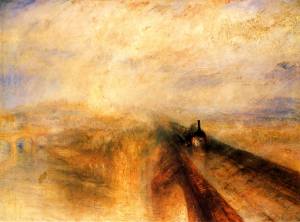
JMW Turner, Rain, Steam and Speed

5. Turner (baptized 1775-1851) 

JMW Turner was known as the “painter of light”, but the artist with the ethereal subject matter had a very solid impact on art history. The Romantic landscape painter was born in London to a barber and wig maker. He showed his drawings in his father’s shop as a young boy, and studied under architects and a draftsman before enrolling in the Royal Academy of Art as a 14-year-old. His reputation swiftly grew, and he had his own studio by 18. However, when he verged away from picturesque landscapes in favor of stormier subject matter, Protestant society was shocked.

In his famous oil Rain, Steam and Speed, Turner depicts a locomotive as a surging pillar of tumbling air with a black smokestack as its only identifying characteristic. As details melted away and Turner focused on the continuous flux of air and light, critics started turning against the artist. An 1802 review called his works “too indeterminate and wild”, and writers were keen to tie his chaotic paintings to radical new political and social movements. Turner became increasingly isolated from society and often refused to sell his paintings, but his work had an undeniable influence across Europe, inspiring Claude Monet and other French artists in their steps toward Impressionism.

Sound off on FacebookTwitter and Pinterest and tell us who we missed, and click over to part 2 for our last five picks.