Gustave Courbet, Self-Portrait (The Desperate Man)
We all know that Vincent Van Gogh left this world with 1.5 ears and a (probably) self-inflicted gunshot wound in his chest, but when you go on a hunt for the craziest artistic geniuses, the fou-rouxstarts seeming positively rational.
After all, Michelangelo was so averse to bathing or changing his clothes that his long-suffering assistant once wrote, “He has sometimes gone so long without taking (his shoes) off that then the skin came away, like a snake’s, with the boots.” The Renaissance master would wander off in the middle of conversations and refused to attend his brother’s funeral.
Gustave Courbet went a little nuts after he tangled with the French government and exiled himself to Switzerland, painting several “self-portraits” of bleeding, mangled fish. You surely have to be a bit bonkers to drive so many lovers insane, so Pablo Picasso deserves a spot in the art sanitarium as well. Then there’s Paul Gauguin, who made up romantic, insanely elaborate lies about his dismal trips to Tahiti.
Lesser-known prodigies only suffer more, it seems. French painter Leon Bonvin was found dangling from a tree after a dealer refused to show his paintings. Dutch artist Abraham van der Doort, who was Charles I’s art conservationist, thought he’d lost one of the king’s favorite pieces and offed himself. Dutch painter Herman Kruyder ended it all in a psychiatric ward, and Polish writer Stanislaw Ignacy Witkierwicz fed his lover poison and slit his wrists after the Second Army invaded Poland.
Does true artistic brilliance come hand in hand with insanity? Perhaps to see things in revolutionary ways, you have to take a trip off the edge. What do you think? Join the discussion on our Facebook and Twitter pages, or in the comments section below.
Being “cloistered in” may be key to Michelle Y Williams’ process, but that doesn’t mean she’s a recluse. Solitude is what the Houston, Texas artist needs to focus her mind and tune in to her subconscious. Her mixed media works are equally inspired by measured decisions and the pure emptiness of the blank surfaces before her. They’re conglomerations of the figurative and the abstract, and boast a subdued palette that echoes the artist’s fascination with rust, crumbling concrete and peeling paint.
When Williams isn’t in her studio, she’s not afraid to step into the spotlight. In September she’ll be featured in Luxe Magazine, and last week she granted an interview to the Matthews Gallery. Michelle told us about everything from her many materials to the Japanese aesthetic of wabi-sabi, a worldview that has taught her to accept her flaws and create with abandon. Here’s what she had to say:
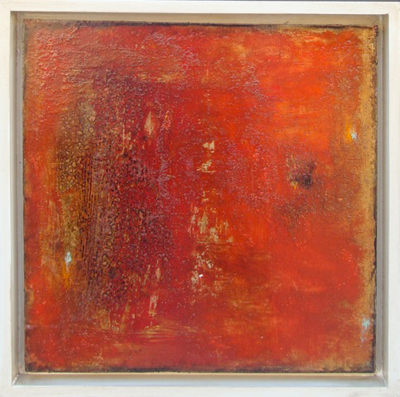
Petit 28, Michelle Y Williams
You write in your artist statement, “Inspiration for my work is both selective and completely random.” Is the same true for your choice of materials for a particular piece? How do you select a medium?
The primary medium in my work is acrylic (very quickly after I began as a painter using oils, I realized I have an aversion to cleaning brushes). Pigmented inks have also proven to be an often used medium for me (applied with a dropper, then floated across the canvas using my palette knife).
The choice for other materials, indeed, comes more randomly. Whether I incorporate sand or oil bar or even attaching a piece of torched metal with wax string to the canvas happens naturally & intuitively as the work progresses.
You also talk about a “relationship that develops” between you and your work. Does this change your notion of when a work is completed? Is it sad to say goodbye?
I suppose it’s more of a short-term relationship…shall we call it a fling. I invest energy into a piece which is then reciprocated upon completion, but the real gratification comes when someone has made a connection with my work, which couldn’t happen unless I surrendered it readily.
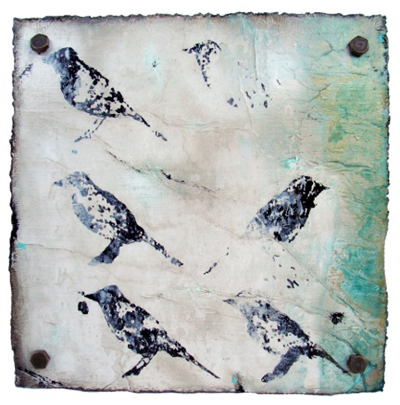
Cut 12-532, Michelle Y Williams
You prefer to work in solitude. What are some other important parts of your process? Do you listen to music? Do you work on multiple pieces at a time, or just one?
My preference for sequestration is actually paramount – in order to maintain the integrity and authenticity of my work, I eliminate most outside influences that could dull my own creative process. Diverse genres of music can be heard in my studio – from acid jazz to classic rock to classical – while I move between several pieces in various stages of completion.
You mention the importance of seeking a balance in your work. How does that connect with the tenets of wabi-sabi, the Japanese aesthetic that embraces the transient self?
Rather than trying to exert control over a painting, my pursuit of aesthetic balance, (while maintaining my penchant for asymmetry), transpires more instinctively. The absence of obsessing over that quest for balance and the capacity to “let go”, relates to the principles of wabi-sabi.
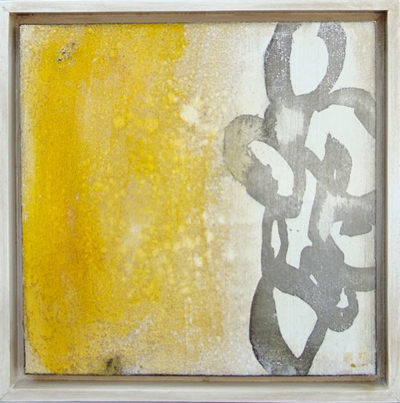
Petit 18, Michelle Y Williams
I found this part of your bio particularly beautiful: “In a stain, we find understanding; in a dent, our ability to heal; in a blemish, an unchained beauty.” Embracing your flaws can be a difficult process. How does your work help you do this?
Quite simply, the alternative to embracing flaws requires far too much negative energy. For me, perfection is boring and I truly find immense beauty in flaws – chips & cracks in tea bowls used in Japanese tea ceremonies or uncut & unpolished rough just-mined diamonds – these things excite and inspire me.
I hear you’re quite the humanitarian. What projects are you involved with?
I am an “equal opportunity donator”, giving my work with abandon to many different charitable organizations throughout the year.
When Santa Fe visitors step into the Matthews Gallery, they often mention that something feels different. Our gallery location is in a historic adobe on Canyon road just like many of the other galleries so we have a hunch that the novelty they’re sensing is our devotion to carefully curating every wall of our gallery.
We show work from the 19th, 20th and 21st centuries. Our curatorial direction is to exhibit a variety of work from these eras that relate to the artistic development from impressionism to contemporary art. Here are some of the names that you won’t see anywhere else on Canyon Road—or even elsewhere in Santa Fe:
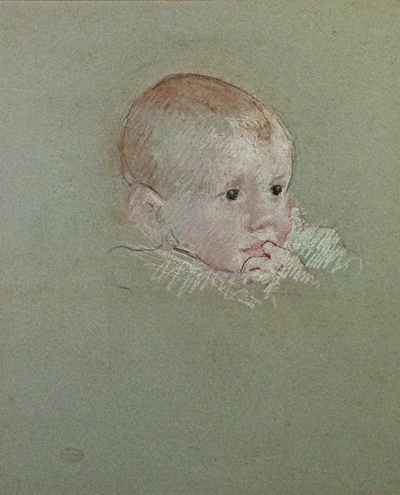
“Head of Baby with Finger in Mouth”, Mary Cassatt
Mary Cassatt (1844-1926) ~ The American painter and printmaker was refused entry to the Ecole des Beaux-Arts, so she studied the masters on her own at the Louvre. She would become a master herself, named one of “les trois grandes dames” of Impressionism by Gustave Geffroy.
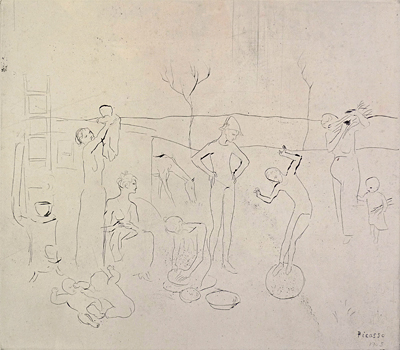
“Les Saltimbanque” by Pablo Picasso
Pablo Picasso (1881-1973) ~ Several works by the most influential artist of the 20th century have passed through the Matthews Gallery. Our most notable current work by Picasso is “Les Saltimbanque”. The drypoint etching the artist created as a teenager shows the harlequin, a personal symbol that would recur in his work throughout his career.
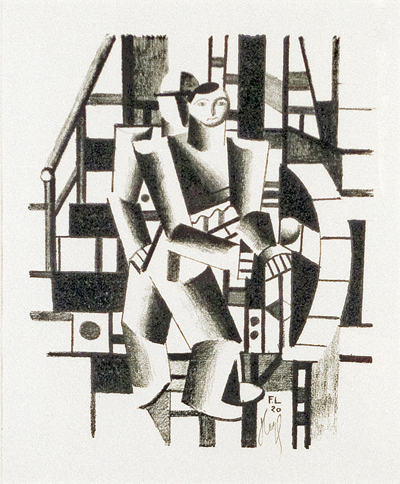
“Composition aux deux Personnages” by Fernand Leger
Fernand Leger (1881-1955) ~ The painter, sculptor and filmmaker’s lithograph “Composition aux deux Personnages” marked a shift in his oeuvre from Cubism to bold figurative works that would later identify him as a forerunner of Pop Art. As is the fate of all art movements, Picasso and Braque’s Cubism were irrevocably fractured.
“Blue Nude” by Harold Frank
Harold Frank (1917-1995) ~ Born in Southampton, England, Frank’s family moved to New York when he was a child. You can see influences from both shores in his colorful canvases that take cues from modernism and abstract expressionism.
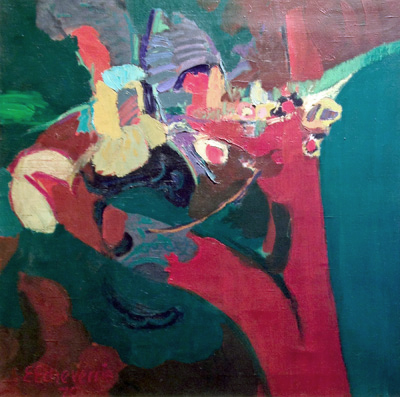
“Alic” by Enrique Echeverria
Enrique Echeverria (1923-1972) ~ Echeverria and his contemporaries brought the ideas of modern European art movements to Mexico and subverted the traditional figurative painting style. They became known as the Generacion de la Ruptura, the Rupture Generation.
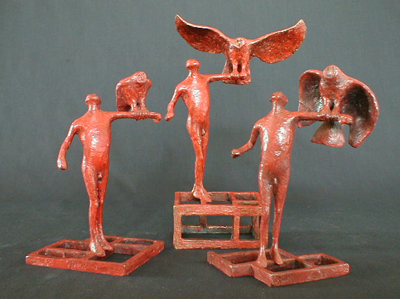
“Avian Keepers” by Robert W. Hinds
Robert W. Hinds (1924- present) ~ This World War II veteran was born a year after Echeverria. He had a successful graphics career for years before moving to Europe to study casting techniques in Italy and Bologna. Now he produces figurative bronze sculptures that are collected throughout the world.
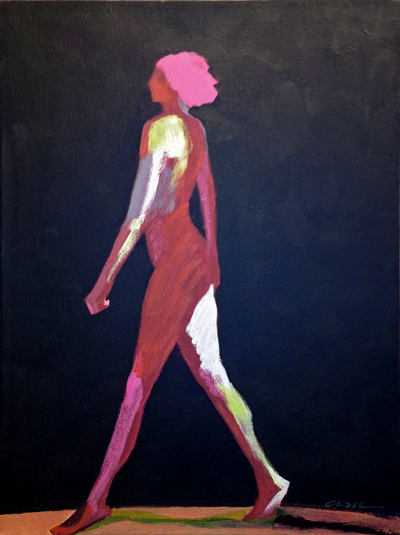
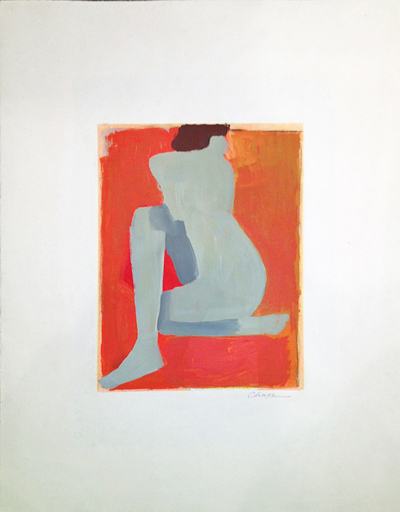
“Untitled Grey Nude on Orange” by Jamie Chase
Jamie Chase (1954- present) ~ The painter and graphic novelist was born in California, and traveled to Europe to educate himself on the work of the masters. He moved to Santa Fe in 1980, where he’s now known for his non-objective paintings, abstract landscapes and abstracted figurative paintings.
Browse all of the artists we represent here, and follow our Facebook and Twitter accounts for updates on their work.
The very first artists who came to work in New Mexico found themselves on a harsh frontier. Harold Elderkin and his wife moved to Santa Fe in 1886 to run a gallery and teach painting lessons, but left for El Paso two years later. An artist named George Stanley tried the same thing in 1897 and failed even faster.
The 1920s saw an influx of artists who had already established their careers on the East Coast. The Southwestern landscapes they sent home would build this region’s reputation for stunning natural beauty and great art. Nowadays, Santa Fe is one of the nation’s largest art markets and New Mexico is a magnet for artists from across the globe.
Though New Mexico has changed a lot since those first creative pioneers settled here, the independent spirit of the frontier lives on through art. Our April 5-18 exhibition “State of the Art”showcases the work of seven recognized contemporary masters who work in New Mexico. Their art may be as diverse as our desert sunsets, but it’s all influenced by the Land of Enchantment.
Jamie Chase moved to Santa Fe in 1980 from his home state of California. He initially found success here painting traditional landscapes, but started exploring other styles and subject matter as he developed his own visual vocabulary. His current work includes non-objective paintings, abstract landscapes and abstracted figurative paintings. “State of the Art” will feature his elegantly abstracted female figures, who roam among dazzling color fields in search of transcendence.
The landscape-based abstract paintings of Terry Craig are literally rooted in the earth. He uses powdered pigment, marble dust and other materials to explore the tension between careful geometric order and wild gestural strokes. The Albuquerque artist draws inspiration from colors and patterns he sees in nature, but when he puts brush to surface he surrenders to his subconscious.
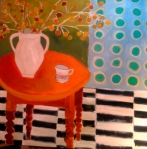
Annie O’Brien Gonzaleswas born and raised in Oklahoma and got her BFA in painting and art history at Oregon State University. She pursued fiber arts for many years but recently switched back to painting. You can still see traces of her fiber work in the bold patterns and colors she incorporates into her still life paintings.
“Form and line, and observation, are the tools of the passage of my self-discovery,” says 89-year-old Santa Fe artist Robert W. Hinds. The sculptor worked as an illustrator and graphic designer before deciding to explore the third dimension. His bronze sculptures are of animals and people, and often show surreal interactions between them. Hinds’ abstracted style is contemporary, but the stories he tells through his sculptures recall Classical myths.
Frank Morbillo was raised on Long Island, but moved to Montana and then Santa Fe as a young adult. His sculptures speak the same language of entropy and change as New Mexico’s majestic rock formations, with an added element of political dialogue that you’ll find in his inquisitive titles. “I often find myself walking the line between artist and activist,” he says.
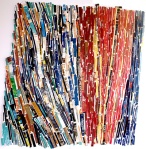
You’ll find old letters, candy wrappers, bits of string and other flotsam and jetsam in Kate Rivers‘ mixed media works. The artist, who grew up in Ohio and now lives in Santa Fe, uses these often overlooked objects to investigate memory and metaphor. Her most recent works are enormous collages made of dozens of stitched-together book bindings. Fragments of titles jumble together, encouraging new associations between the stories and characters behind them.
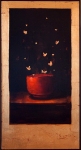
Diane Whitemay be well versed in traditional still life techniques, but a closer look at her serene paintings of ceramic pots and other vessels will lead to fantastical discoveries. The Santa Fe artist, who worked for many years as a potter before studying painting at the Loveland Art Academy, weaves elements of magical realism into her works right under the viewer’s nose. Magical realism is a literary genre made famous by writers like Gabriel Garcia Marquez that illustrates extraordinary events in the context of a quotidian setting. Pay attention to every detail in White’s work and you’re sure to discover something supernatural, from a leaf transforming into a butterfly to a bouquet of lilies melding with the night sky above it.
“State of the Art” opens Friday, April 5 from 5-7 pm and runs through April 18, 2013. Check out our Facebook and Twitter pages for more information.
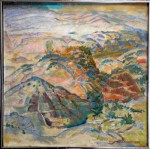
Untitled (New Mexico Landscape) ~ signed Baumann-McHugh
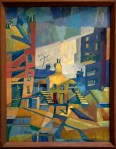
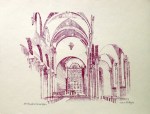
St. Francis Cathedral, John McHugh
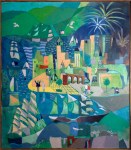
Untitled (Port Scene), John McHugh
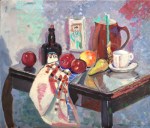
Untitled (Still Life with Fruit), John McHugh
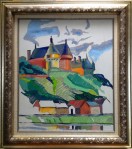
Untitled (The Castle), John McHugh
Untitled (Exterior), John McHugh
If you’ve spent any time in Santa Fe, you’ve probably seen something John McHugh made. The young architect was passing through Santa Fe on a cross-country road trip in 1946 when his Ford broke down.
He took a job at a local architecture firm so he could earn enough to fix it. Ten years and several cars later, he started his own company with Van Dorn Hooker and won commissions for the first Santa Fe Opera House, the remodeling of the parish hall at St. Anne’s Church and the Kearny School, among many others.
While John’s largest works are still viewed by thousands of people each year (save the opera house, which burned down and was reconstructed), some of his most colorful creations have been hidden away since his death in 1995.
“Come in, come in,” says John’s widow Gillian when she opens the door to the home they shared. She points me past the living room where a Gustave Baumann painting hangs and down a hallway that leads to a sprawling room. Leaning against every vertical surface are dozens of canvases that will soon grace the walls of the Matthews Gallery.
“When we first moved here, he converted the garage into his studio right away,” Gillian says. There are still traces of the artist all around the room. Tins full of brushes sit on a tabletop, a near-empty cigar box is perched on the mantle and one painting is still on its easel. Hidden in a stack of dusty pictures next to the window is an old invitation to an exhibition of John’s work at St. John’s College, one of the only shows he ever had. Most of the paintings in our exhibition of his work, starting Friday, March 15, have never been seen by the public.
“I felt that it was extremely important to have a show,” Gillian says. “These paintings shouldn’t just be gathering dust.”
John’s path was always architecture, but art naturally came along with it. He was orphaned at 7 years old and spent the rest of his childhood under the care of his aunts in Springfield, Ohio. Though money was tight, he used his earnings as a paperboy to plant a garden in his yard. He graduated cum laude in architecture from the University of Notre Dame in the 1941, and took an apprenticeship in Ohio before serving in the Air Force.
When John returned, he taught in the art department at Notre Dame for two years before heading off on the fateful road trip that would land him in Santa Fe. Gillian and John met in 1953 and married a year later. She’s an acclaimed pianist who was born in Great Britain and traveled to Santa Fe with the International Scouting organization in the early 1950s. While Gillian practiced for hours at her piano, she remembers John spending every spare moment with brush or pencil in hand.
“He would come back from the office and go in the studio. It was very simple,” she says. “He loved painting. He would stand there the entire evening at his easel. He loved the shapes and patterns and colors.”
John’s oeuvre is captivating in its diversity. As I explore his studio, I find landscapes and abstract paintings, a work that was inspired by cubism and another that looks to have been done with Cezanne in mind. One dramatic landscape is signed Baumann-McHugh, and was started by the former and finished by the latter. The thread that ties it all together was John’s strong emphasis on the framework of whatever he was portraying. You can see the hand of an architect in the bold patterns he employed again and again.
“I think the architecture does enter into his paintings a good deal, because of the form and shape that he was always working with, and the fascination with that,” Gillian says. “It could be from anything. It could be something growing by the wayside or it could be a giant building.”
On drives around New Mexico, John would often park the car and pull out his sketchbook. “He’d stop in the middle of nowhere,” Gillian remembers. “If there was a telephone pole that he liked, he’d get out and say, ‘Do you mind if I just draw this?’ All of a sudden half an hour later… something really wonderful would come out of the shape or color.”
All of John’s creative endeavors came to an abrupt halt in 1985, when he suffered a severe left hemisphere stroke. “After the stroke, he was trying to come back to being whole again. He would work in very small ways,” says Gillian.
John could see Sandia Mountain from the windows of St. John’s Hospital, and he challenged himself to learn to draw it again. “Sandia was really his lifeline. The mountain called to him. He was eventually able to draw the whole thing, which took a long, long time. This was a lovely beginning to his route back to health.” Later on, John did a lecture series on art at St. John’s College that further built his confidence. He continued painting and sketching until the very end of his life.
Gillian folds up her walker and takes a seat in the living room next to her piano. One of John’s aspen paintings hangs above her head. She’s 89 years old, but when Gillian talks about John’s upcoming retrospective at our gallery, she seems full of energy. The works are close to her heart, as is the cause that the show will be supporting.
“When I heard about the wonderful work that the Bob Woodruff Foundation was doing for soldiers returning from Iraq and Afghanistan, I was fascinated,” she says. “My brother had been a prisoner of war under a different situation. I thought perhaps…. some of the paintings that John did could be used, and some of the proceeds could be given to this foundation.”
I ask Gillian something I’ve been wondering the whole time I’ve been there: how did John have the time and energy to accomplish all of this?
Gillian shakes her head and smiles. “It wasn’t really hard work, you see. It was total love,” she says. “Architecture and art were his life.”
The Matthews Gallery will present an exhibition of the art of John McHugh from March 15th through March 28, 2013. Gillian McHugh will be in attendance during the opening reception on Friday March 15th from 5-7 pm. A portion of the proceeds of the sales of the artwork will be donated to the Bob Woodruff Foundation. Click here for more information, and follow our Twitter and Facebook feeds for updates.
Film gives us the invigorating opportunity to see long dried canvases shine bright and wet again. Telling a beloved artist’s story to the world’s satisfaction is more than just a process of retracing her brushstrokes, though. Our first five selections for best art movie are willing to take as many creative risks as the artists they profile.
Frida (2002)– This biopic of the Mexican surrealist was stalled for years until Salma Hayek took the helm as producer and lead. Hayek and director Julie Taymor paint the story of an artist who suffered through crippling physical mutilation and bottomless heartache with the most vivid palette. That was Kahlo’s outlet and weapon, after all, even as she lay in bed while her sometime husband Diego Rivera gained global notoriety for his own work. It helps to know the story’s true ending, even if it would be a bit capitalistic for Kahlo’s tastes. It’s not Rivera’s face you’ll find in the window of every Santa Fe gift shop.
Lust for Life (1956)– A bearded, bedraggled Kirk Douglas is mesmerizing as Vincent van Gogh in this classic portrait filmed in Holland and France. It’s a career highlight for Douglas, but Anthony Quinn steals the show in his Oscar-winning turn as Paul Gauguin, who admires Van Gogh’s work but finds that he can’t stand the man himself. Some of the film’s best scenes are in its quieter moments, when the famously volatile Van Gogh picks up a brush and pours out his emotions on canvas.
Modigliani (2004)– “The future of art is in a woman’s face. Tell me, Picasso, how do you make love to a cube?” sneers Modigliani, waving a rose in the air. It’s Modigliani‘s best moment, and it really happened. The rest of director Mick Davis’ high energy film bends the truth a bit, but it all works in the way Woody Allen’s Midnight in Paris did. Famous figures are always dropping by for self-aware bit parts that keep the film light on its feet. It’s the artist’s story told in the manner that Parisians must have gossiped about it just after his death at 35. All of the pieces are there, but their order gets more muddled with each delicious glass of absinthe.
Pollock (2000)– Director Ed Harris’ film is as much about Jackson Pollock’s alcoholism as his art, and though we know that the artist’s addiction will win in the end, all of the tension of his controversial rise, tumultuous personal life and tragic death in a drunk driving accident holds us captive. Harris, who plays Pollock, and Marcia Gay Harden as Lee Krasner are so driven in their portrayal of abstract expressionism’s royal couple that when the paint starts flying, you’ll believe it’s really Pollock holding the brush.
Artemisia (1997) – Italian Baroque painter Artemisia Gentileschi’s long, extraordinary artistic career is often eclipsed by the events surrounding her rape as an 18-year-old. Director Agnes Merlet chooses to tell only that small piece of her story in Artemisia, and fudges the details a bit by turning it into a love story. The film’s saving grace is Valentina Cervi, who plays Gentileschi with fierce passion. When Cervi’s face fills the screen, as it often does, her expressive eyes tell the whole story.
Check out our final five picks for best art film, and follow our Twitter and Facebook feeds for more art meditations.
When the art and publishing worlds work in harmony, imagery merges with typography and innovative formats give us unexpected views of famous works. Through images and prose, our final five picks for 2012’s best art books gave us new eyes:
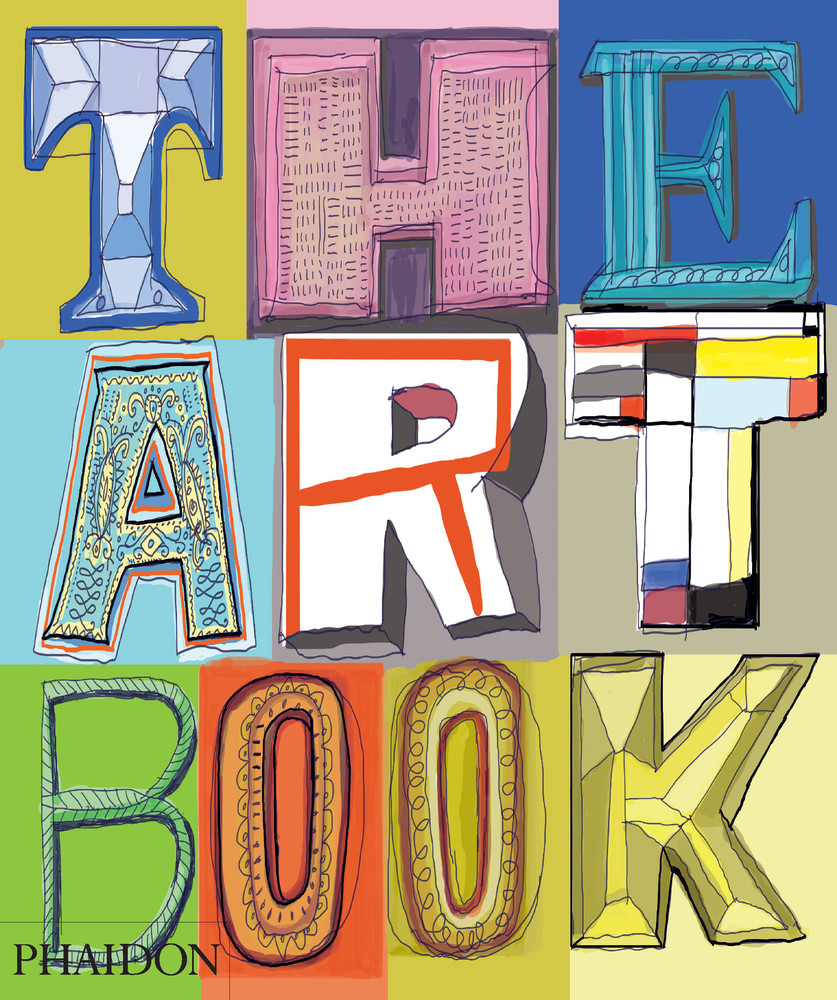
The Art Book, Phaidon- First published by Phaidon in 1994, The Art Book is as intriguingly tangled as ever in its 2012 edition. It’s an art history book made for creatives, its artists presented in alphabetical rather than chronological order. Seventy new artists join the pantheon, encouraging the crackling connections that only The Art Book could provoke. Where else would you find Duccio next to Duchamp or Manet in dialogue with Mangold?
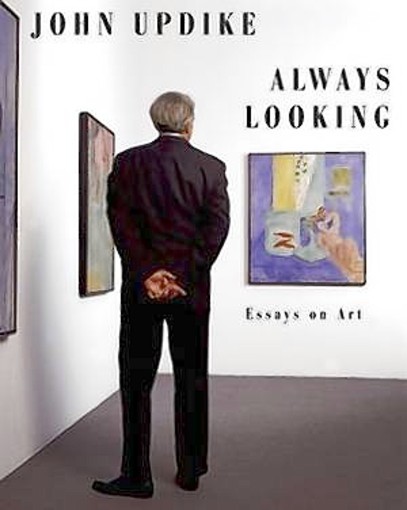
Always Looking: Essays on Art, John Updike- John Updike wasn’t an art critic, but the third, posthumous volume in his Looking series guides us through the crowds at notable exhibitions and along the arc of art history with signature elegance. The collection starts with Updike’s 2008 lecture on American art “The Clarity of Things” and includes 14 essays Updike wrote for The New York Review of Books and other publications.
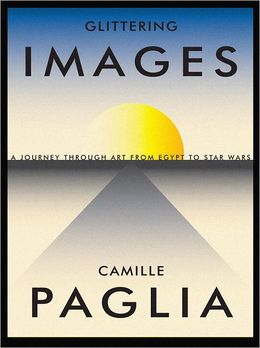
Glittering Images: A Journey Through Art from Egypt to Star Wars, Camille Paglia- Paglia kicks off Glittering Images by declaring her intent to help the masses, hypnotized by technology and riddled daily with thousands of disconnected images, understand and appreciate art’s compelling historical sweep. You can’t trust the inflammatory culture warrior for a minute, but that’s what makes the proceedings so fun. Paglia picks 29 of her favorite artworks, from Egyptian funerary imagery to George Lucas’ “Revenge of the Sith”, and presents them as pinnacles of humanity’s artistic legacy. Her selections are mostly confined to the West and heavily weighted to the 20th century, but her arguments are entertaining whether you agree with them or not.
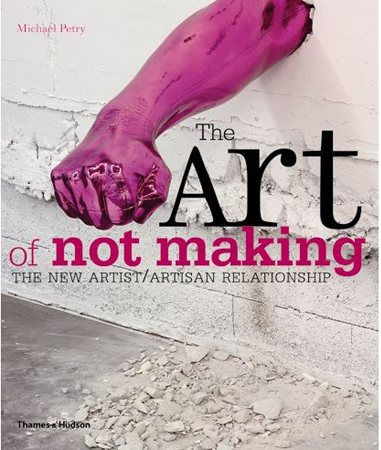
The Art of Not Making: The New Artist/Artisan Relationship, Michael Petry- Jeff Koons, Damien Hirst, Murakami Takashi, Ai WeiWei. They’re some of the biggest names in contemporary art, but could you call them artists? Petry examines the Renaissance-old dependence between art and craft—and the questions of authorship that it raises—with images from 115 contemporary artists who don’t always have a hand in creating their work. The book’s five chapters are intriguingly organized by material, a nod to the industries that brought these objects into existence.
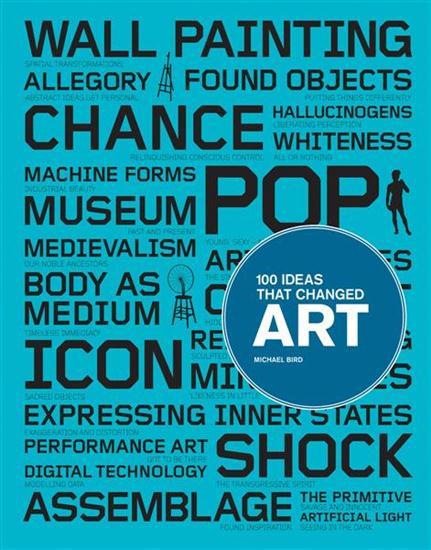
100 Ideas that Changed Art, Michael Bird- Art historian and broadcaster Bird is quick to caution that his numbered list of artistic turning points, from “narrative” (#7) to “street art” (#94), is anything but concrete in its essential properties. “No sooner has an idea changed art that art reformulates that idea, allowing it to recognize itself,” he writes. This collection of 500-word essays is particularly fascinating for the playful lines it draws between modern and contemporary art and works of old. Bird doesn’t shy away from party tricks like comparing Byzantine icons with Andy Warhol’s Marilyn Monroe images, and the results are charming for dilettantes and art experts alike.
Browse our first five selections here, and check out our Twitter and Facebook feeds for more insight.
Our favorite art books of 2012 span centuries and movements, and include names both new and familiar. Follow the adventures of Paul Cezanne, meet Vivian Maier and her many subjects, and discover the (real) secrets of Leonardo Da Vinci in our first five selections:
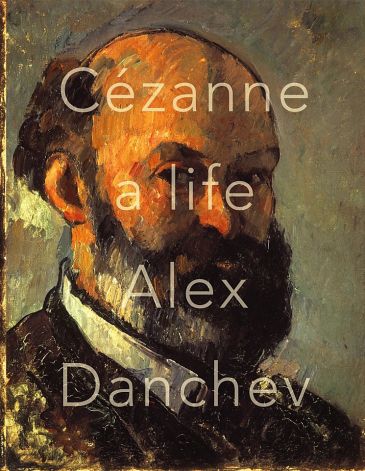
Cezanne: A Life, Alex Danchev- Critics called Paul Cezanne’s paintings unfinished, but the artist himself insisted they were “unresolved.” A biographer who wishes to capture the spirit of the revolutionary post-impressionist must play to the distinction. Danchev doesn’t try to solve the riddle of the man who diagnosed himself mad, who hid his wife and child from his family until he was 40, and who spent his final years in wild seclusion. With the aid of more than 100 images—including a series of self portraits—and excerpts from Cezanne’s favorite readings, the raconteur gives us a beautiful, perplexing glimpse through one of the most influential sets of eyes of the 19th century and beyond.
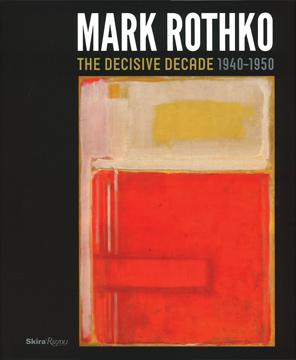
Mark Rothko: The Decisive Decade: 1940-1950; Todd Herman, Christopher Rothko and David Anfam- Though Mark Rothko’s journey from the figurative to the abstract happened rather rapidly, The Decisive Decade presents it as a careful, scientific evolution. An early canvas showing a trio of figures begets a painting of three figures merged into one, which bears a fascinating resemblance to the horizontal planes of color for which Rothko gained renown. The full sweep is a tribute to the artist’s deliberate genius.
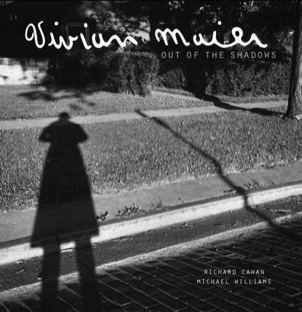
Vivian Maier: Out of the Shadows, Richard Cahan and Michael Williams- Amateur street photographerVivian Maier’s now famous body of work was discovered before her death in 2009, when the contents of a storage locker she couldn’t pay for were auctioned off. It wasn’t until her obituary appeared in the Chicago Tribune that real estate agent John Maloof, who had purchased thousands of her negatives, discovered her identity. Cahan and Williams shine some light on the mysterious artist through interviews with Maier’s confidantes, but it’s the work itself, mostly captured on the streets of New York and Chicago in the 1950s and 1960s, that bring her into full focus.
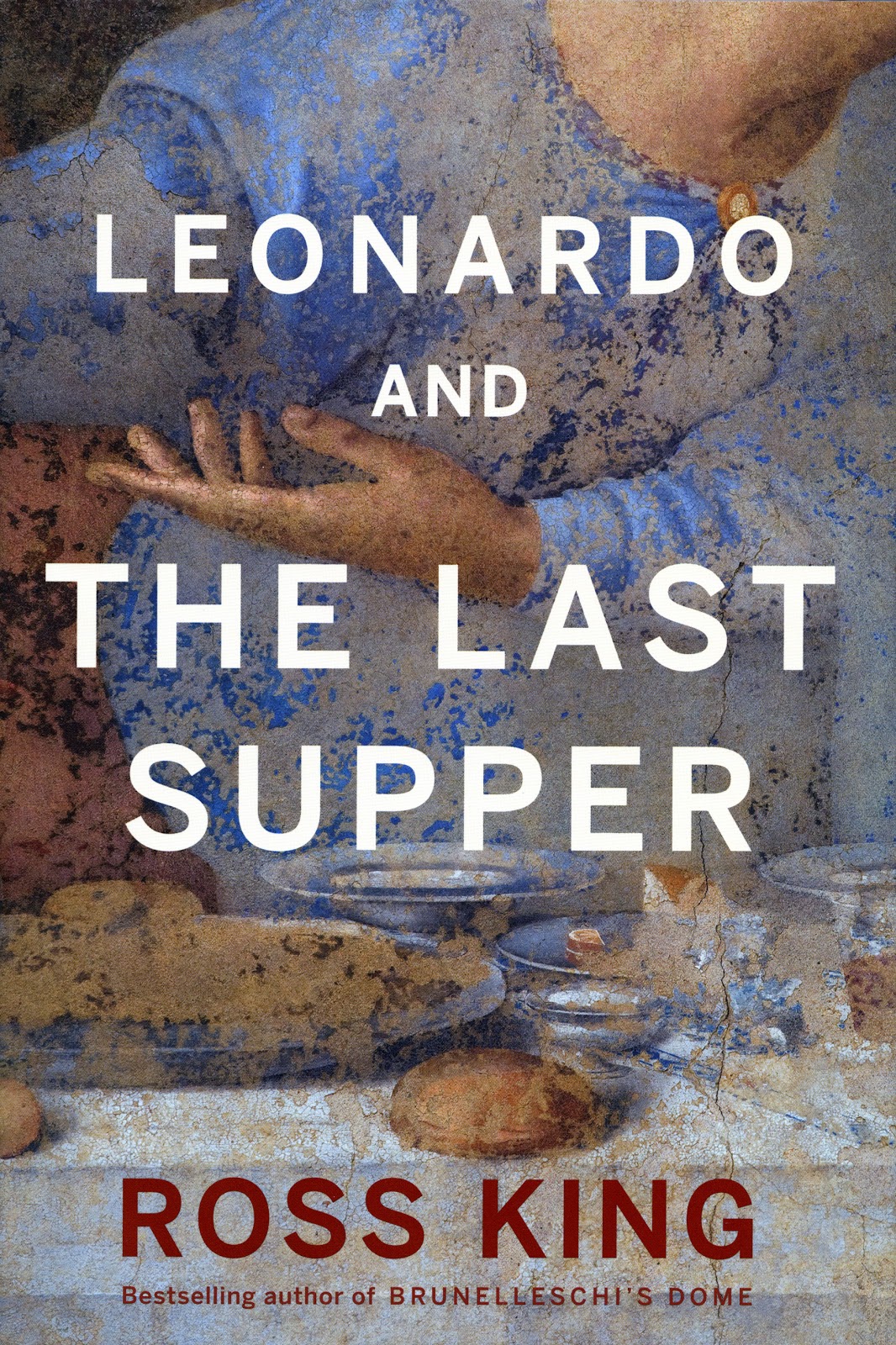
Leonardo and the Last Supper, Ross King- Perhaps the most shocking secret of The Da Vinci Code is that, had Dan Brown done more digging, he wouldn’t have needed to rely so much on fiction. King introduces us to an aging, depressed Leonardo and the seemingly impossible project he took on at the Convent of Santa Maria della Grazie. There are many secrets to uncover, from the true identities of the Apostle models to the significance of the food Leonardo chose for the table. No symbologist needed.
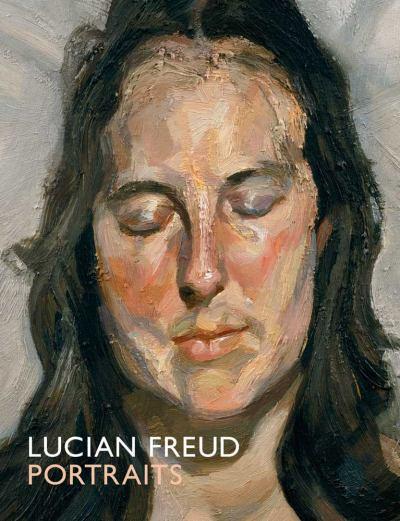
Lucian Freud Portraits, Sarah Howgate with Michael Auping and John Richardson- As ever, the severe portraits of Lucian Freud cast a captivating spell in this new collection. New to the game is a series of rare, revelatory interviews on everything from the artist’s process to his famous grandfather, conducted in the last years of his life.
Click here to browse our next five selections, and check out our Twitter and Facebook pages for more art musings.




 MATTHEWS GALLERY BLOG