BURST OF BRILLIANCE: Adolph Gottlieb’s Southwestern Epiphany

“It was like being at sea,” said Adolph Gottlieb. The artist had just spent a year in the Desert Southwest- from 1937 to 1938- and returned to his hometown of New York City with a radically altered style. “There’s… a tremendous clarity of light and at night the clouds seem very close,” he continued. This was a very different type of “sea” than the one that carried Gottlieb on his inaugural artistic journey. When he was 17 he dropped out of high school and caught a merchant ship to Europe. He spent two years there, including six months in Paris where he audited art classes and visited the Louvre every day. Back in New York, he studied at The Art Students League and befriended Barnett Newman, Mark Rothko and Milton Avery. Together they founded the abstract expressionism movement, working to develop color field painting and other innovations. They remained close until Gottlieb decided to strike out on his own to Tucson, Arizona. It was an endeavor that would markedly separate him from his contemporaries, even after his return to the East. Gottlieb’s New York friends called the style he had developed in Arizona simplistic, but the artist refused to look back. He distanced himself from his colleagues and focused on developing a Surrealist style. Experiments with automatism and surrealist biomorphism helped him create an abstract symbol system for his gridded Pictographs series. Finally, in the 1950’s, he started work on two series that would become his most well-known work. Both series are represented in our collection, and their very existence seems linked to the bare, elegant vistas of the Desert Southwest.

IMAGINARY LANDSCAPES

Around 1950-51… I was finally getting away from the pictographs and looking for something… So it was necessary to find other forms, a different changed concept. So finally after a certain period of transition I hit on dividing the canvas into two parts, which then became like an imaginary landscape… What I was really trying to do when I got away from the pictographs was to make this notion of the kind of polarity clearer and more extreme. So the most extreme thing that I could think of doing at the time was dividing the canvas in half, make two big divisions and put something in the upper division and something in the lower section.

The color and texture of the land mass in “Green Foreground” recalls Gottlieb’s sea simile. In this period the artist was consolidating surrealist and abstract expressionist theories by approaching the two movements as different sides of the same coin (hence a “polarity”). Our lithograph implies a fantastical landscape, but works just as well as a flat, wholly abstract composition. If we imagine ourselves exploring this terrain, it would look much like Gottlieb’s surroundings in the Southwest, albeit with a greener tint.

BURSTS

After doing the imaginary landscapes until say 1956, in ’57 I came out with the first Burst painting… There was a different type of space than I had ever used and it was a further clarification of what I was trying to do. The thing that was interesting that it was a return to a focal point, but it was a focal point with the kind of space that existed in traditional painting. Because this was like a solitary image or two images that were just floating in the canvas space. They had to hold the space and they also had to create all the movement – that took place within the rectangle.

Gottlieb’s Bursts are Imaginary Landscapes that have further dissolved into abstraction, though their compositions still root them somewhat in reality. In “Crimson Ground” two discs rise (or set) like a sun and moon from a monochrome tangle with the most ephemeral of horizon lines.

When I started doing the Bursts I began to do part of the painting horizontally. It was necessary to do that because I was working with a type of paint which had a particular viscosity, which flowed, and if it were on a vertical surface it would just run. If it were on a horizontal surface, I could control it… I was using a combination of brushes and knives, palette knives… and spatulas… I’ve tried everything, rollers, rags, I’ve put paint on with everything.

“Crimson Ground” isn’t a painting, but it still has a painterly quality to it. The edges of the discs are uneven and textured, and the forms below are as splattered as a Pollock drip painting. This further highlights the polarity between the surreal landscape and an abstract expressionist painting. One is focused on depth, the other focuses solely on the surface. Learn more about Adolph Gottlieb on our website, and connect with us on Facebook, Twitter and Pinterest for to-the-minute gallery updates!
THE MATTHEWS GALLERY: Arc of Art History

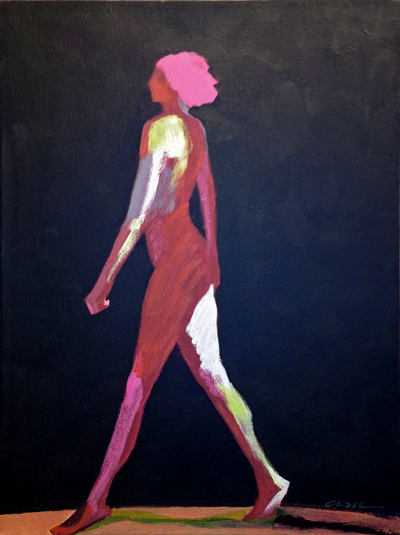
"Stride", Jamie Chase, Matthews Gallery
“Stride”

When Santa Fe visitors step into the Matthews Gallery, they often mention that something feels different. Our gallery location is in a historic adobe on Canyon road just like many of the other galleries so we have a hunch that the novelty they’re sensing is our devotion to carefully curating every wall of our gallery.

We show work from the 19th, 20th and 21st centuries. Our curatorial direction is to exhibit a variety of work from these eras that relate to the artistic development from impressionism to contemporary art. Here are some of the names that you won’t see anywhere else on Canyon Road—or even elsewhere in Santa Fe:

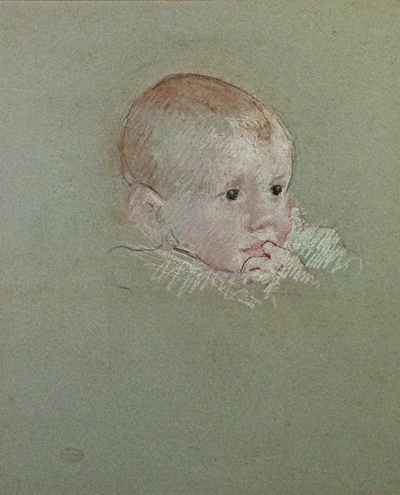
Head of Baby with Finger in Mouth, Mary Cassatt, Matthews Gallery
“Head of Baby with Finger in Mouth”, Mary Cassatt

Mary Cassatt (1844-1926) ~ The American painter and printmaker was refused entry to the Ecole des Beaux-Arts, so she studied the masters on her own at the Louvre. She would become a master herself, named one of “les trois grandes dames” of Impressionism by Gustave Geffroy.

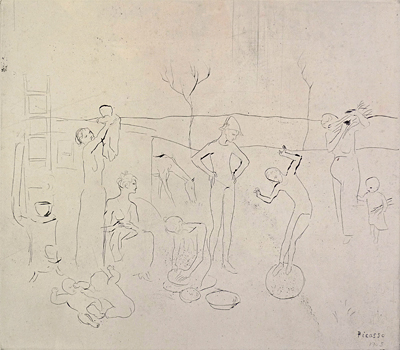
"Les Saltimbanque", Pablo Picasso, Matthews Gallery
“Les Saltimbanque” by Pablo Picasso

Pablo Picasso (1881-1973) ~ Several works by the most influential artist of the 20th century have passed through the Matthews Gallery. Our most notable current work by Picasso is “Les Saltimbanque”. The drypoint etching the artist created as a teenager shows the harlequin, a personal symbol that would recur in his work throughout his career.

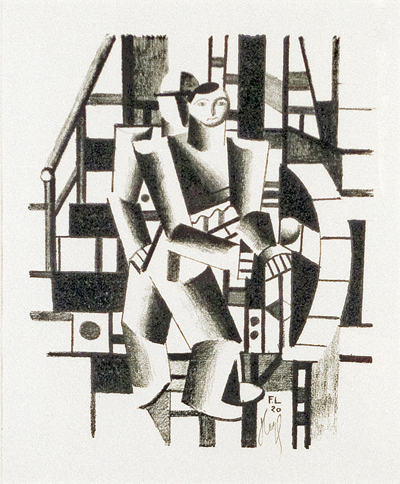
"Composition aux deux Personnages", Fernand Leger, Matthews Gallery
“Composition aux deux Personnages” by Fernand Leger

Fernand Leger (1881-1955) ~ The painter, sculptor and filmmaker’s lithograph “Composition aux deux Personnages” marked a shift in his oeuvre from Cubism to bold figurative works that would later identify him as a forerunner of Pop Art. As is the fate of all art movements, Picasso and Braque’s Cubism were irrevocably fractured.

"Blue Nude", Harold Frank, Matthews Gallery
“Blue Nude” by Harold Frank

Harold Frank (1917-1995) ~ Born in Southampton, England, Frank’s family moved to New York when he was a child. You can see influences from both shores in his colorful canvases that take cues from modernism and abstract expressionism.

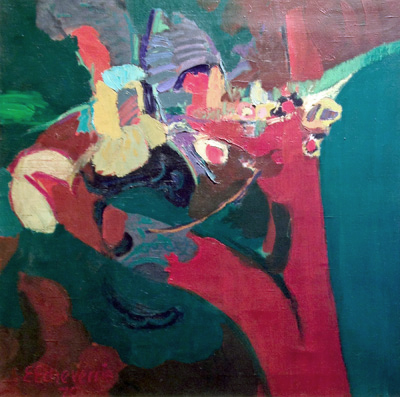
"Alic", Enrique Echeverria, Matthews Gallery
“Alic” by Enrique Echeverria

Enrique Echeverria (1923-1972) ~ Echeverria and his contemporaries brought the ideas of modern European art movements to Mexico and subverted the traditional figurative painting style. They became known as the Generacion de la Ruptura, the Rupture Generation.

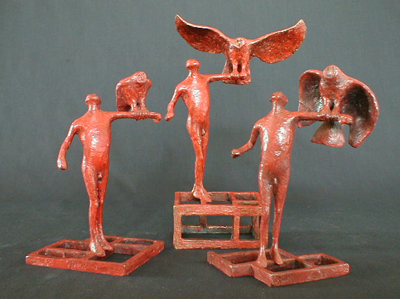
"Avian Keepers", Robert W. Hinds, Matthews Gallery
“Avian Keepers” by Robert W. Hinds

Robert W. Hinds (1924- present) ~ This World War II veteran was born a year after Echeverria. He had a successful graphics career for years before moving to Europe to study casting techniques in Italy and Bologna. Now he produces figurative bronze sculptures that are collected throughout the world.

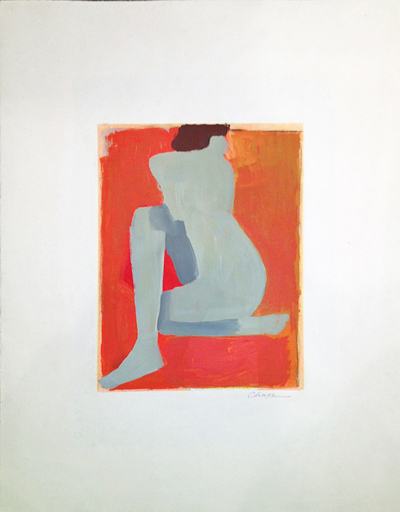
"Untitled Grey Nude on Orange", Jamie Chase, Matthews Gallery
“Untitled Grey Nude on Orange” by Jamie Chase

Jamie Chase (1954- present) ~ The painter and graphic novelist was born in California, and traveled to Europe to educate himself on the work of the masters. He moved to Santa Fe in 1980, where he’s now known for his non-objective paintings, abstract landscapes and abstracted figurative paintings.

Browse all of the artists we represent here, and follow our Facebook and Twitter accounts for updates on their work. 

Top 10 Art Books of 2012, Part 2

When the art and publishing worlds work in harmony, imagery merges with typography and innovative formats give us unexpected views of famous works. Through images and prose, our final five picks for 2012’s best art books gave us new eyes: 

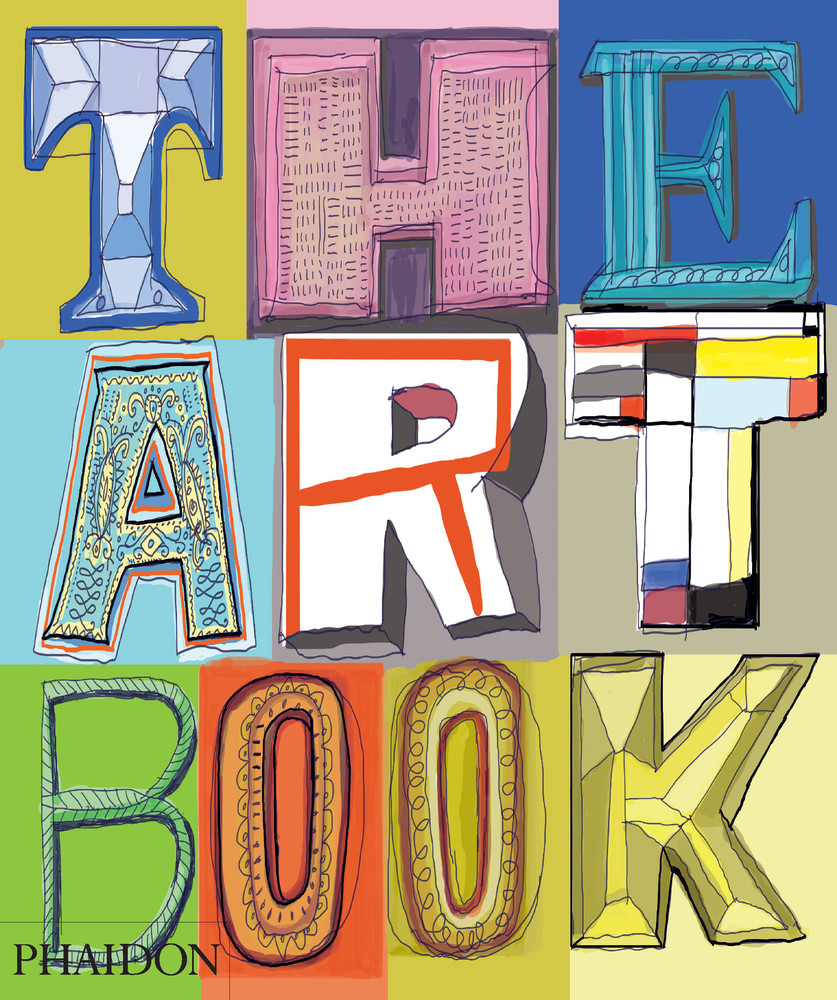
slide_268476_1854924_free

The Art Book, Phaidon- First published by Phaidon in 1994, The Art Book is as intriguingly tangled as ever in its 2012 edition. It’s an art history book made for creatives, its artists presented in alphabetical rather than chronological order. Seventy new artists join the pantheon, encouraging the crackling connections that only The Art Book could provoke. Where else would you find Duccio next to Duchamp or Manet in dialogue with Mangold?

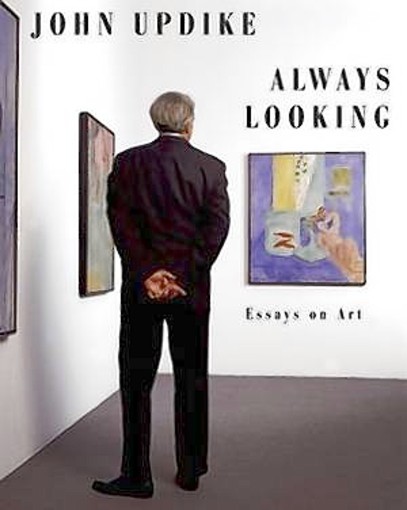
cover of "always looking"

Always Looking: Essays on Art, John Updike- John Updike wasn’t an art critic, but the third, posthumous volume in his Looking series guides us through the crowds at notable exhibitions and along the arc of art history with signature elegance. The collection starts with Updike’s 2008 lecture on American art “The Clarity of Things” and includes 14 essays Updike wrote for The New York Review of Books and other publications.

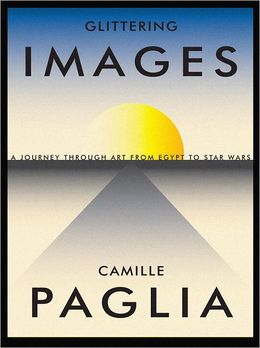
9780375424601_p0_v1_s260x420

Glittering Images: A Journey Through Art from Egypt to Star Wars, Camille Paglia- Paglia kicks off Glittering Images by declaring her intent to help the masses, hypnotized by technology and riddled daily with thousands of disconnected images, understand and appreciate art’s compelling historical sweep. You can’t trust the inflammatory culture warrior for a minute, but that’s what makes the proceedings so fun. Paglia picks 29 of her favorite artworks, from Egyptian funerary imagery to George Lucas’ “Revenge of the Sith”, and presents them as pinnacles of humanity’s artistic legacy. Her selections are mostly confined to the West and heavily weighted to the 20th century, but her arguments are entertaining whether you agree with them or not.

Screen Shot 2013-01-16 at 3.00.40 PM

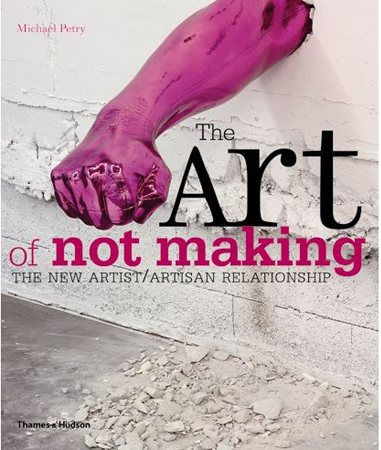
The Art of Not Making: The New Artist/Artisan Relationship, Michael Petry- Jeff Koons, Damien Hirst, Murakami Takashi, Ai WeiWei. They’re some of the biggest names in contemporary art, but could you call them artists? Petry examines the Renaissance-old dependence between art and craft—and the questions of authorship that it raises—with images from 115 contemporary artists who don’t always have a hand in creating their work. The book’s five chapters are intriguingly organized by material, a nod to the industries that brought these objects into existence.

100-ideas-that-changed-art

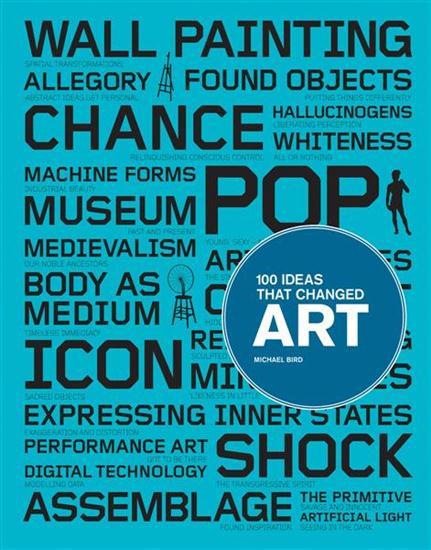
100 Ideas that Changed Art, Michael Bird- Art historian and broadcaster Bird is quick to caution that his numbered list of artistic turning points, from “narrative” (#7) to “street art” (#94), is anything but concrete in its essential properties. “No sooner has an idea changed art that art reformulates that idea, allowing it to recognize itself,” he writes. This collection of 500-word essays is particularly fascinating for the playful lines it draws between modern and contemporary art and works of old. Bird doesn’t shy away from party tricks like comparing Byzantine icons with Andy Warhol’s Marilyn Monroe images, and the results are charming for dilettantes and art experts alike.

Browse our first five selections here, and check out our Twitter and Facebook feeds for more insight.