FOCUS ON THE FIGURE: The good, the bad and the body

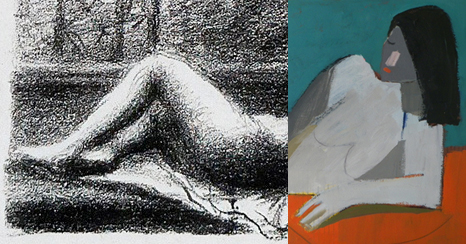
Two Odalisques by Pierre-Auguste Renoir and Jamie Chase- Matthews Gallery blog

Two Odalisques by Pierre-Auguste Renoir (left) and Jamie Chase (right)

No matter their preferred medium or subject matter, one of the first things young art students are challenged to do is pick up a pencil and draw from life.

“It’s only by drawing often, drawing everything, drawing incessantly, that one fine day you discover to your surprise, that you have rendered something in its true character,” said Camille Pissarro, mentor to the Impressionists.

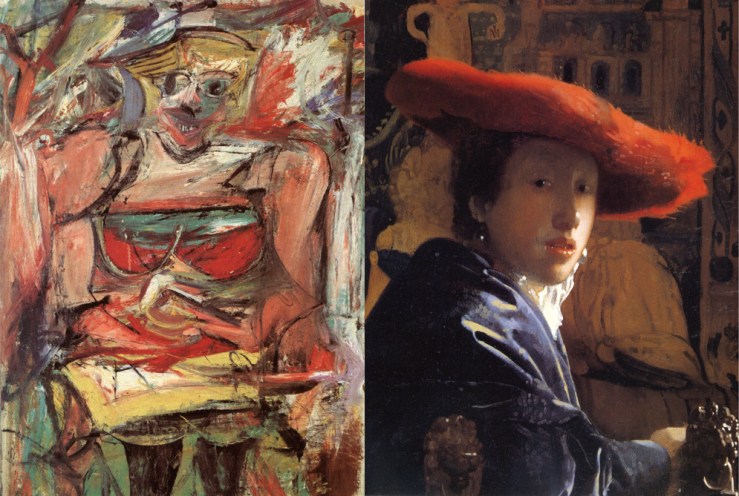
Of course, Pissarro had a different idea of what it meant to evoke something’s “true character” than, say, Paul Gauguin. As we discussed in our last post, Vermeer and de Kooning painted female figures in oil to highly divergent ends.

Our FOCUS ON THE FIGURE survey show, running now through the end of December, has us pondering the artist’s eye for the human body. History’s verdict on the success or failure of a particular depiction is often entirely based on the culture that first viewed it. Even in the hands of the most technically talented artists, the human body has a unique capacity to spark fiery controversies. Here are some notorious offending body parts:

SKIN
Michelangelo- The Last Judgment detail- Matthews Gallery blog

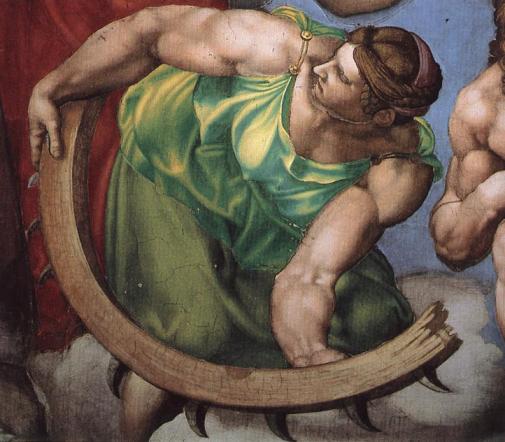
The Last Judgment (detail), Michelangelo

Believe it or not, that’s a woman in the image above. Michelangelo (1475-1564) had a hard time depicting feminine grace, probably because he used massive body builders as models. That’s not the reason the artist’s Last Judgment mural in the Sistine Chapel drew the ire of the church, though. Michelangelo left many of his buff bodies unclothed and the clergy was afraid they would provoke sinful titillation. After the artist’s death, fig leaves were swiftly deployed.

TEETH

Elisabeth Vigee Le Brun- Self Portrait- Matthews Gallery

Self portrait, Elizabeth Vigee Le Brun

As chronicled in our blog series 10 Women Who Changed Art History Forever, even fully clothed models (with frilly collars) could show too much. When Marie Antoinette’s court painter Elisabeth Vigee Le Brun (1755-1842) dared to flash a smile for this self-portrait she was roundly condemned for diverging from the style of “the Ancients”. Read what one gossip columnist had to say about it here.

EARS

John Singer Sargent- Madame X- Matthews Gallery blogMadame X, John Singer Sargent

Top Paris socialite and legendary beauty Virginie Amelie Avegno Gautreau couldn’t resist John Singer Sargent’s (1856-1925) offer to paint her portrait in 1883. When conservative viewers at the Paris Salon were scandalized by Gautreau’s bare white shoulder and bright red ear in the painting, Sargent attempted some damage control by painting in a shoulder strap and renaming the painting Madame X. Alas, Gautreau’s reputation was forever damaged.

FACES
Pablo Picasso- Les Demoiselles dAvignon- Matthews Gallery blog

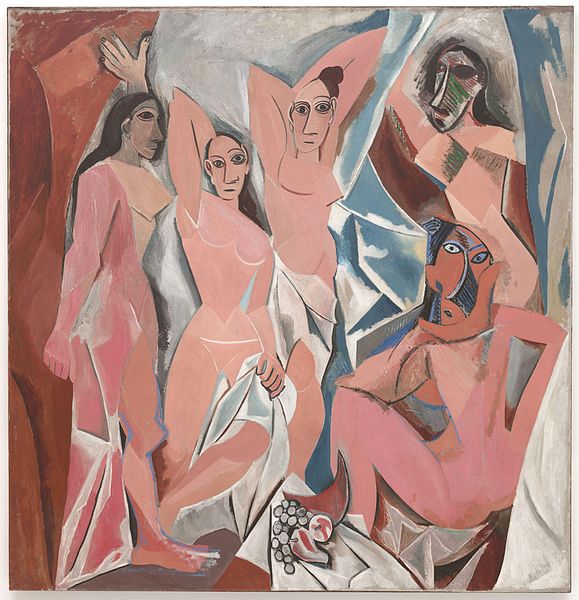
Les Demoiselles d’Avignon, Pablo Picasso

Pablo Picasso (1881-1973) always referred to his seminal painting of a group of Spanish prostitutes as The Brothel of Avignon. The canvas sat in his studio for years before he exhibited it under the title Les Demoiselles d’Avignon (The Young Ladies of Avignon) in 1916. Even after its rebranding, the painting caused a stir because the women’s faces—influenced by traditional Iberian art, African tribal masks and the art of Oceania—were considered savage and their postures barbaric and aggressive.

After the show, the work was rolled up and stored away for years. It wouldn’t be recognized for its visual innovations until later, when designer Jacques Doucet bought it for 25,000 francs in 1924. “It is a work which to my mind transcends painting; it is the theater of everything that has happened in the last 50 years,” Doucet said.

Our FOCUS ON THE FIGURE show features art by Jamie Chase, Kate Rivers, Eric G. Thompson, Pierre-Auguste Renoir, Harold Frank, Pablo Picasso and more. Connect with us on Facebook, Twitter and Pinterest for more news about the exhibition.
FOCUS ON THE FIGURE: A Daub of Flesh

Vermeer and de Kooning - Matthews Gallery blog

“Flesh was the reason oil painting was invented,” said Willem de Kooning. The quote is a nod to the Dutch masters, who developed the medium to accurately evoke the semi-translucent glow of human skin in the crisp light of 17th century Delft.

By the mid-1900s, de Kooning was using the same medium to very different ends. His nudes unraveled across the canvas, their mottled flesh mimicking the dark tones of a bruised peach or the sickly hues of a jaundiced child.

The abstract expressionist encoded in painted skin the darkest sexual desires and terrors of the modern world, but he wasn’t blind to the way the inherent qualities of oil linked him to a much different time and place.

Our new exhibition FOCUS ON THE FIGURE, running December 2 to 9, holds a similar philosophy at its heart. The use of figures in art stretches back to prehistory, and new explorations into the subject have always looked to the past in one way or another.

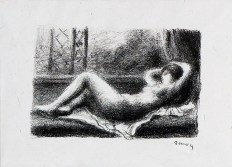
Pierre Auguste Renoir - Odalisque - Matthews GalleryPierre-Auguste Renoir’s (1841-1919) etching Odalisque refers to Turkish concubines, but that wasn’t necessarily the artist’s intended title. Renoir submitted a painting of a nude called Diana to the Paris Salon in 1867. The erotic depiction of the Roman goddess offended the judges and the painting was rejected.

Three years later the artist used the same model for a painting called Odalisque and made sure she was fully clothed. The second work, stripped of its mythological significance and given an exotic twist, was accepted to the Salon.

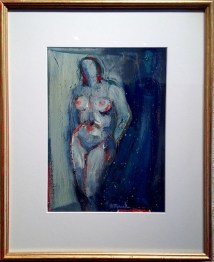
Harold Frank - Blue Nude - Matthews Gallery

In this etching with the same title Renoir refuses to hold back. The nude Odalisque is so tenderly rendered her skin looks as soft as butter. “When I’ve painted a woman’s bottom so that I want to touch it, then [the painting] is finished,” the artist said.

Harold Frank (1917-1995) was born in England and grew up in New York, where he drew inspiration from American modernism and abstract expressionism. His take on the female figure in Blue Nude features quick, expressive brushwork that was no doubt inspired by de Kooning.

Both artists incorporated drips and splatters of paint into their compositions to create spacial ambiguities in the picture plane. Is Frank’s nude standing in a corner or floating in a color field? The answer seems to change with every glance.

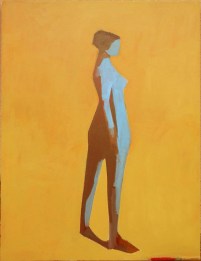
Jamie Chase - Turning Points - Matthews GalleryJamie Chase immerses a figure in a vibrant yellow atmosphere in Turning PointIt brings to mind both Mark Rothko and Nathan Oliveira, but Chase’s influences stretch farther back in art history.

Chase grew up in San Francisco and attended art school there for a short time before dropping out to travel Europe. He lived in various cities and educated himself on the masters before returning to San Francisco in the early 1970s. There he painted murals for a bookstore, drawing inspiration from ancient Egyptian art, European cave paintings and Native American art.

Come trace the history of the artist’s impulse to capture the figure at the exhibition this December, and connect with us on Facebook, Twitter and Pinterest for more news from the gallery.

SMALL TREASURES: Can’t-miss lots from our fall auction


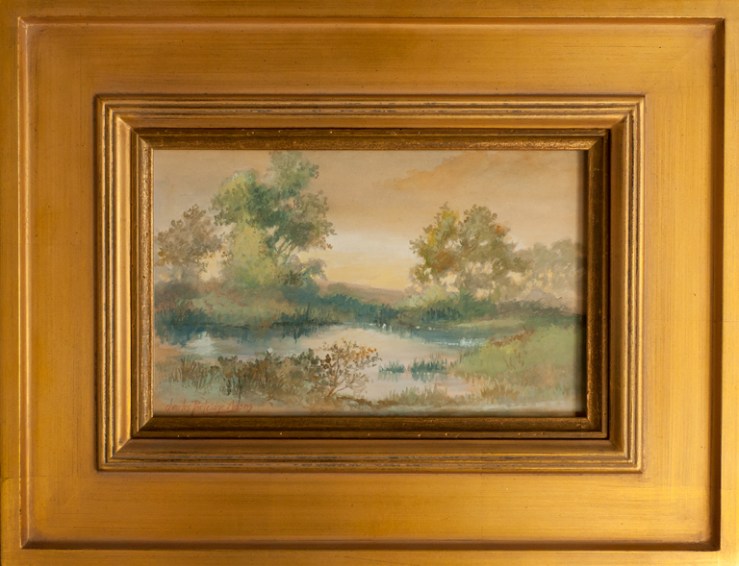
Charles Partridge Adams- Untitled (Landscape)- Matthews Art Auctions

We picked a particularly electrifying time in the art world to throw an auction. A triptych by Francis Bacon just flew off the block for a record-breaking $142.2 million, and the highest-valued Andy Warhol painting ever sold for $102 million. Our European, American and Southwestern Art Auction doesn’t feature price tags that are quite as high, but there are gems throughout the catalogue that would fit into the finest collection. The image above is a watercolor by legendary Colorado landscape painter Charles Partridge Adams (1858-1942) that measures just 13.5 x 17.5 inches and starts at $1,700 in our sale. Check out more lots below, and make sure to place your bids before the auction ends on November 17.
Jack Merriott- Untitled (Boat Dock Scene)- Matthews Art Auctions

Lot 16: Jack Merriott- Untitled (Boat Dock Scene) 
Starting bid: $1,700
Estimated value: $2,200-$3,200

English artist Jack Merriott (1902-1968) is best known for his travel posters commissioned by British railway companies that were displayed in train compartments. This watercolor shows the illustrator’s softer side. Click here to view the lot and register to bid.

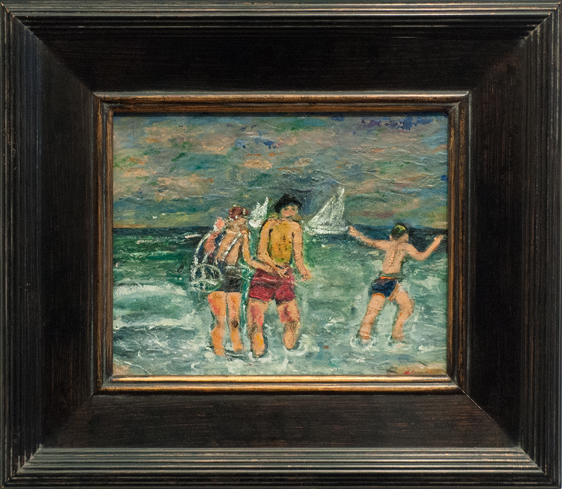
Francesco Spicuzza- Children at Beach- Matthews Art Auctions

Lot 60: Francesco Spicuzza- Children at Beach
Current bid: $250
Estimated value: $350-$750

Francesco Spicuzza (1883-1962) was a talented lithographer and painter, and is one of the most prolific artists ever in his home state of Wisconsin. In this 13.5 x 15.5 in. gouache painting on board, three small figures frolic through the waves on a beach day. Click here to view the lot and register to bid.

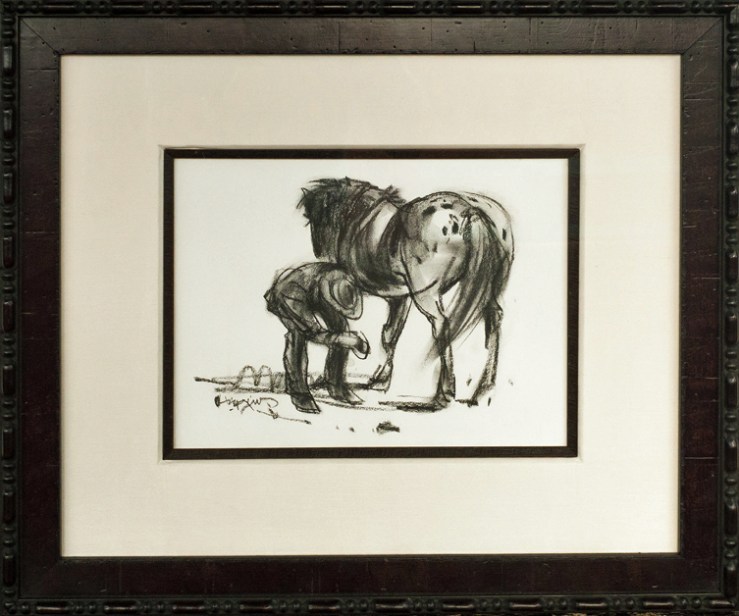
Doug Higgins- Horse & Cowboy- Matthews Art Auctions


Lot 107: Doug Higgins- Horse & Cowboy
Starting bid: $850
Estimated value: $1,200-$1,750

Santa Fe, New Mexico artist Doug Higgins (born 1939) uses simple, elegant lines to depict a cowboy tending to his horse in this charcoal drawing. Click here to view the lot and register to bid.

Don’t forget to bid in our auction before 7 pm on November 17, and browse more highlights in our blog post START YOUR BIDDING: Colorful lots from our fall auction. Connect with us on Facebook, Twitter and Pinterest for gallery news.

MANY LIVES: Early and late works by famous artists

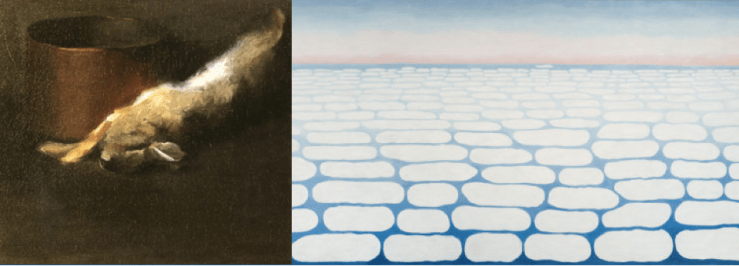
Early and Late Works: Georgia O'Keeffe's "Untitled (Dead Rabbit with Copper Pot)" (1908) and "Sky Above Clouds IV" (1965)

“When I look over the photographs Stieglitz took of me—some of them more than sixty years ago—I wonder who that person is,” said Georgia O’Keeffe. “It is as if in my one life I have lived many lives.”

Look through O’Keeffe’s diverse body of work, and you’ll see just what she meant. “Untitled (Dead Rabbit with Copper Pot)” is a humble realist work she painted as an art student in her early 20s.  She completed the abstracted, ephemeral landscape “Sky Above Clouds IV”, which is over 20 feet long, when she was almost 80. When they’re side-by-side it’s hard to believe that one artist created both.

The same is true for works that bookend any great artist’s career. Constant evolution is perhaps the most important ingredient to genius, as you’ll see in the images below. While you browse the early and late works of four legendary artists, ponder their differences. Does youthful enthusiasm and bold experimentation move you, or do you prefer a sure hand and a fully realized aesthetic? Join the conversation in the comments section below, or on our Facebook and Twitter pages.

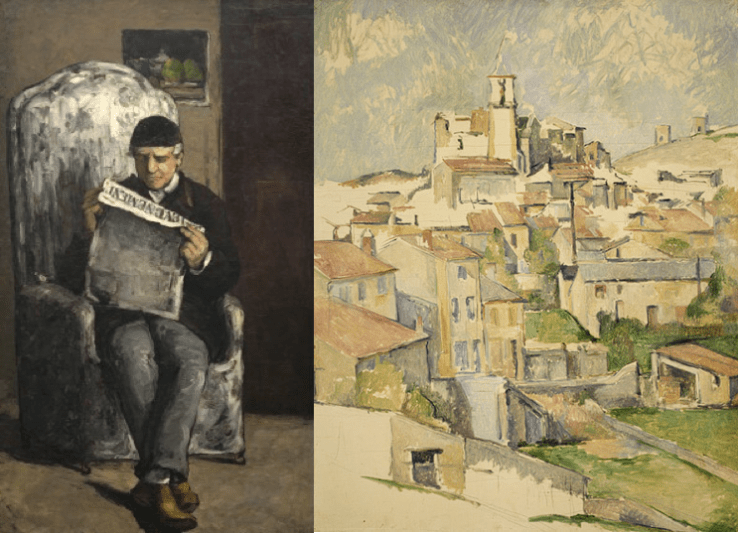
Early and Late Works: Paul Cezanne's "The Artist's Father, Reading 'L'Événement'" (1866) and "Gardanne" (1885-86)

Paul Cezanne painted “Artist’s Father, Reading ‘L’Événement'” when he was in his early 20s and still partially under the thumb of his disapproving parent. The paper his father is reading—a liberal publication that the old man wouldn’t have deigned to open—and the still life painting hanging in the background hint at the artist’s growing confidence in his chosen path. Flash forward to the radical perspectival experimentation of “Gardanne”, completed when Cezanne was in his late 40s. The multi-layered cityscape would later inspire Picasso and Braque in their development of Cubism.

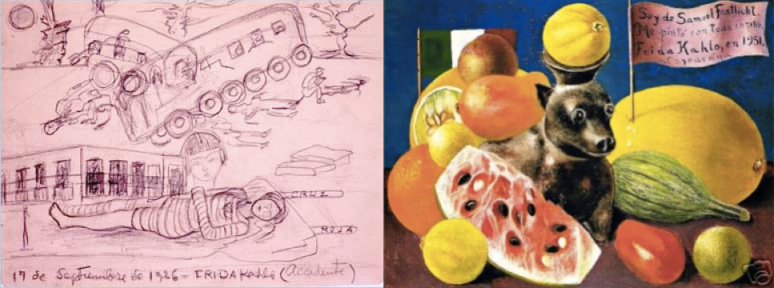
Early and Late Works: Frida Kahlo's "The Accident" (1926) and "Still Life" (1951)

When Frida Kahlo was 19 years old she was in a trolley crash that left her in a full body cast. A year after the accident she created the pencil sketch on the left, drawing from the tradition of Mexican ex-voto paintings that blend text and images. A lifetime later, Kahlo was still suffering from chronic pain caused by the accident and drawing influences from folk art, but she’d discovered a subtler way to express her suffering. She painted “Still Life 1951” just three years before her death, when her body was giving out and she no longer favored self portraiture. The fleshy, congealing watermelon nestled among fresh fruits says it all. “I hope the exit is joyful — and I hope never to return,” she wrote just before her death.

Early and Late Works: Pablo Picasso's "Les Saltimbanques" (1905) and "Untitled (From the 156 Suite, 16 mai 1971)"

“Les Saltimbanques” is a drypoint that Pablo Picasso created in his early 20s. The group of frolicking figures are characters from an opera-comique about a circus troupe. Countless artistic transformations later, Picasso etched out “Untitled (From the 156 Suite)“, an image that shows a tangle of prostitutes engaged in a very different acrobatic routine. Innocence is lost, but genius found.

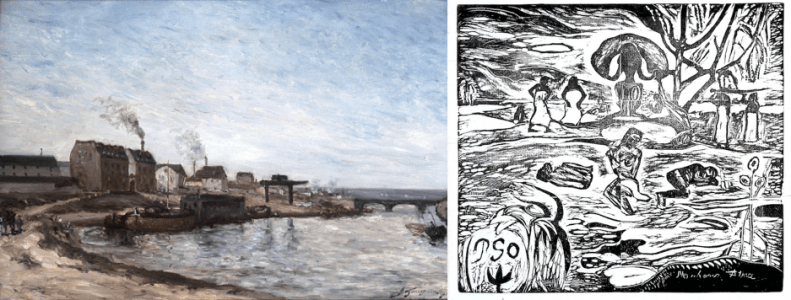
Early and Late Works: Paul Gauguin's "La Seine au Pont de Grenelle" (   ) and "Mahana Atua (The Day of God)" (   )

Paul Gauguin was a 27-year-old family man working as a stockbroker and hanging out at the Impressionists’ favorite cafes when he painted “La Seine au Pont de Grenelle”. By his mid-40s, he’d abandoned his family and job and exiled himself to Tahiti, where he drew inspiration for woodblock print “Mahana Atua (The Day of God)“. The artist learned from one revolutionary movement and then struck off on his own to inspire several others, from Primitivism to Symbolism.

How many lives can one artist live? What do you like better, the earlier or later work? Connect with us on Facebook, Twitter or Pinterest and sound off!

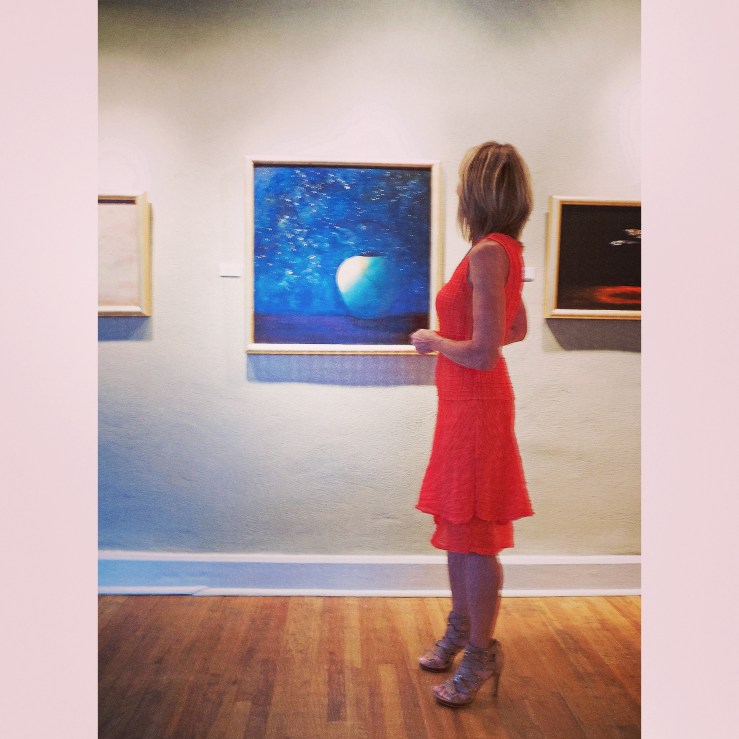
Diane White: Magical Realism

Diane White- Magical Realism- Matthews Gallery

As the reception for Diane White’s “Magical Realism” show begins, the artist stands alone in the middle of the Matthews Gallery’s front room, her shoulders squared and her hands clasped together. She looks around at the paintings she’s created over the past year and gives a little smile, but her posture doesn’t waver. She’s ready to greet her visitors.

One of the first folks through the door is Diane’s husband Steve, who’s just taken a stroll along Canyon Road and has something clutched in his hand. He presents it to Diane and she looks down inquisitively. It’s a small grey rock in the shape of a heart.

“Oh, thank you! Oh, that’s wonderful,” she says, beaming and leaning back to rest for a minute in Steve’s arms. “He’s my man.”

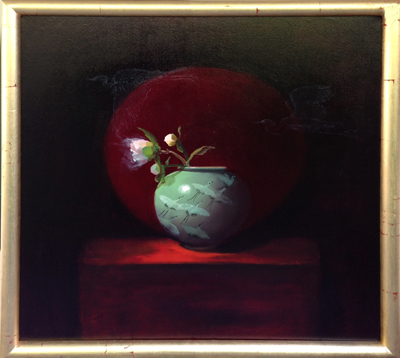
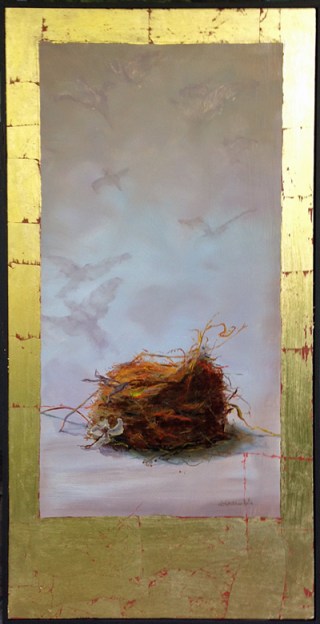
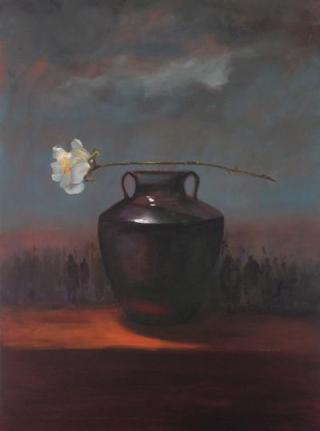
The moment reminds me of Diane’s work, which is imbued with equal measures of brave composure and romantic tenderness. The classically trained painter is inspired by magical realism, a literary genre that is rooted in the real world but incorporates magical characters and occurrences. In her impeccably detailed still lifes, glowing flowers hover above ceramic pots and ghostly birds rise from empty nests. The objects’ histories unfold around them, at first as subtle as a distant memories and then as vivid as a dreams.

With the heart rock pressed to her chest, Diane answered some questions about her new work, her process and her message:

White Majesty, Diane White, Matthews Gallery

What drew you to magical realism? 

I had a traditional still life that I was working on, and I was struck with the desire to do something else with it. It was steam coming out of a teapot with a dragon on it, and I made the steam into a dragon as well. Larry and Linda went, ‘What’s that?’ And I said, ‘Well, it just happened.’ That was five or six years ago.

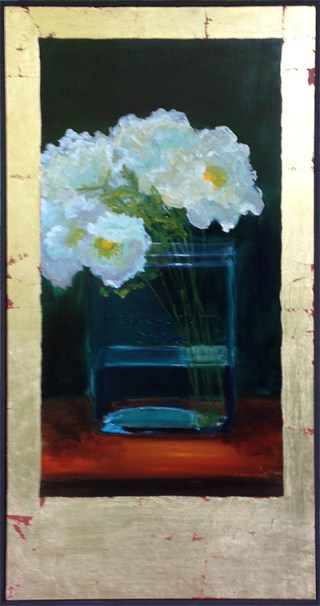
White Ruffled Tulips, Diane White, Magical Realism

What were you thinking about while you were working on this show? 

I don’t start with one thought process, I start with one piece that I’m painting and I focus on that. I don’t concentrate on a body of work. When you look at my work, they’re all very different. Some of them are aggressive with warriors in the background, and others have some angels. I just take it one painting at a time, and try to have them tell a story. Usually it’s an uplifting story—a lot of flight, a lot of action.

Dreams of Flying, Diane White, Matthews Gallery

Several of the paintings show intricate nests. What inspired you to use them in your work? 

I have done nests before, but probably not for three years.  I have horses now at my farm in Vermont, and I was out in this area with huge pine trees where they hang out when I found a nest that was made of horse hair. It had twigs and things too, but inside I could see the hair of the different horses. I thought, “I have to paint a nest.” It was so magical for me to find that.

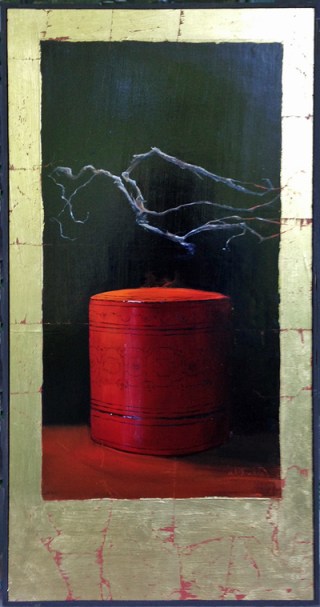
Spirit of the Red Box, Diane White, Matthews Gallery

 How do you strike a balance between the real elements in your paintings and the magical ones? 

I don’t want it to hit people in the face. I don’t want it to be Salvador Dali with a melting clock. I want it to be fairly subtle, and maybe something that the person looking at the painting discovers. On second glance you say, “Well, wait a minute. That’s not just steam. There’s something in there.” You kind of get involved with the painting.

Order of the Rose, Diane White, Matthews Gallery

 Sometimes you paint groups of figures in the backgrounds of your still lifes. Who are they? 

They’re the warriors in all of us, the strength. There’s usually beauty in my paintings—perhaps a flower—and there’s strength. I don’t make it try to be pretty, but I want it to be strong. They’re warriors, and that’s what we all have in us, this strength.

Learn more about Diane White’s August 16-29 “Magical Realism” exhibition here, and check out more photos from the opening reception here. Connect with us on Facebook, Twitter and Pinterest for more art news.

ERIC’S WORLD: Breaking Through with Light

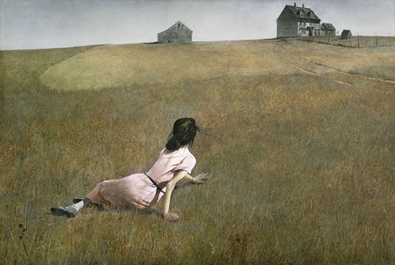
Andrew Wyeth- Christina's World- Matthews Gallery blog
Christina’s World, Andrew Wyeth

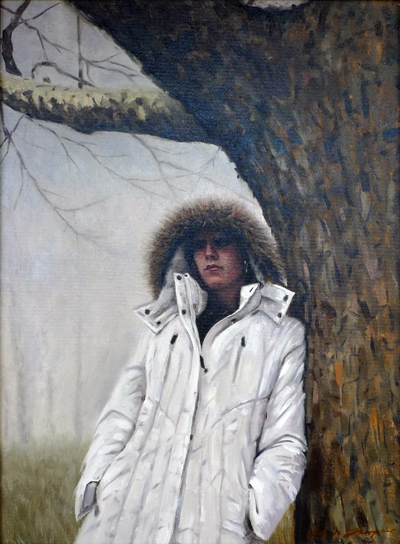
One of our Facebook fans recently drew a line between our artist Eric G. Thompson and revered American realist painter Andrew Wyeth.  That’s a common observation among visitors to the Matthews Gallery: both artists have muted palettes, a reverence for the even glow of the early morning and late afternoon sun, and, of course, a keen eye for the smallest of details.

Perhaps the element that best ties the two men together is their approach to the portrait. Their subjects stare pensively into the distance, lost in bittersweet memories as they lounge about in windswept landscapes. You can enter Eric’s Wyethian worlds this Friday from 5-7 pm at the opening for his new show “Breaking Through with Light“. Scroll down for a preview of the works in the exhibition, with accompanying quotes by Thompson and Wyeth:

Autumn Solace, Eric G. Thompson, Matthews Gallery
Autumn Solace, Eric G. Thompson

“As a child, I would search out a patch of light entering the room and sit there forever in total bliss”

-Eric G. Thompson

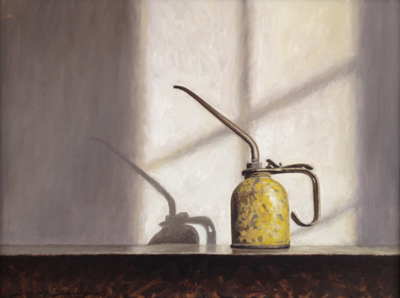
Lunch Break, Eric G. Thompson, Matthews Gallery

Lunch Break, Eric G. Thompson

“It’s a moment that I’m after, a fleeting moment, but not a frozen moment.”

-Andrew Wyeth

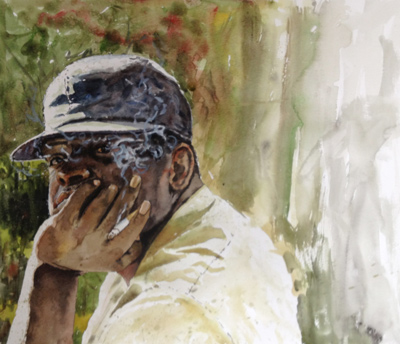
Pondering, Eric G. Thompson, Matthews Gallery
Pondering, Eric G. Thompson

 “In a world of pop culture that seems to be anti-silence, people seek the stillness they need without even realizing it.”

-Eric G. Thompson

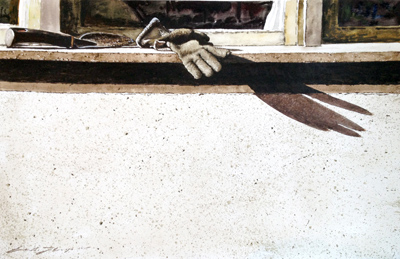
Shadow Play, Eric G. Thompson, Matthews Gallery
Shadow Play, Eric G. Thompson

“I search for the realness, the real feeling of a subject, all the texture around it… I always want to see the third dimension of something… I want to come alive with the object.”

-Andrew Wyeth

Evan, Eric G. Thompson, Matthews Gallery
Evan, Eric G. Thompson

“I feel that every one of my paintings is essentially a study of light or lack thereof—light coming into a room, light hitting an object, stretching a shadow, lighting an edge. All of this can be very powerful and moving in a painting,”

-Eric G. Thompson

Learn more about Eric G. Thompson’s “Breaking Through with Light” here, and connect with us on Facebook, Twitter and Pinterest for updates on his show.

NEW TRADITIONS: Matthews Gallery Online Art Auction

History of the art auction- Matthews Gallery blog

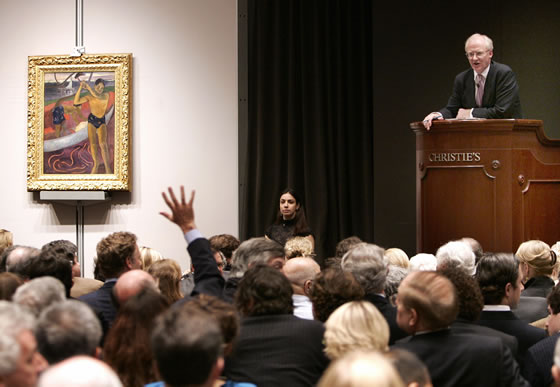
The world’s oldest auction house opened in Stockholm, Sweden in 1674. Art auctions in Great Britain gained popularity a few decades later when the Earl of Oxford’s collection appeared on the block in 1742. That particular sale featured the full range of odd and valuable items you might find in a dusty old castle, from a bust of an unknown bishop (five shillings) to a series of van Dyck paintings (165 guineas).

The beat of the auction mallet has marked the rhythm of the secondary market ever since. It’s a tradition that’s full of strange pageantry and heart pumping excitement. Auction kingpins Christie’s and Sotheby’s, which were both founded in mid-18th century England, often draw the ire of art world players for their tightly controlled sales. “They know exactly how many people will be bidding on a work and exactly who they are,” wrote art critic Jerry Saltz in 2012 after a version of Edvard Munch’s The Scream sold at Sotheby’s for $119.5 million. “In a gallery, works of art need only one person who wants to pay for them.”

Online auctions have meanwhile been swiftly democratizing the centuries-old process, and that’s where the Matthews Gallery decided to jump in. We launched the EUROPEAN MASTERS, AMERICAN AND SOUTHWESTERN ART AUCTION on July 25 and it runs through July 29. Come browse our virtual auktionsverk of art and, if you’re inspired, make a bid. You’ll find art by European modernists such as Pablo Picasso and Joan Miro, Southwestern legends including Emil Bisttram and Alfred Morang, and notable contemporary artists like Jamie Chase, Eric G. Thompson and Kate Rivers among the lots. Here are some notable pieces from the catalogue:

EUROPEAN MASTERS 

This slideshow requires JavaScript.

Click to see the works on our auction site:

HISTORIC SOUTHWESTERN ART

This slideshow requires JavaScript.

Click to see the works on our auction site:

  •  Untitled (Landscape #1), Emil Bisttram
  • Untitled (Landscape #2), Emil Bisttram
  • Untitled (Landscape #3), Emil Bisttram
  • Untitled (Santa Fe Landscape), Alfred Morang
  • Riders at Sundown, Gene Kloss
  • Return of the Wood Gatherers, Gene Kloss

CONTEMPORARY ART 

This slideshow requires JavaScript.

See more lots from the auction here, and connect with us on Facebook, Twitter and Pinterest for auction updates all week!

LEGENDS OF THE LOTS: Matthews Gallery Online Art Auction

March Chagall- L'Opera Poster (1964)- Matthews Gallery auction
L’Opera Poster, Marc Chagall

We’re very excited to announce the European Masters, American and Southwestern Art Auction, an online-only Matthews Gallery event running July 25-29. It’s our very first auction, and we’ve been working on it for more than a year. Of course, the works we’re putting on the block have stories behind them that are much older than that. Click here to browse the diverse catalogue, and read on to learn the legends behind four of the lots.

Henri de Toulouse-Lautrec- La Passagere du 54- Matthews Gallery auction
La Passagere du 54, Henri de Toulouse-Lautrec

Lautrec was on a steamship cruise from Le Havre to Bordeaux when a beautiful woman who was staying in cabin 54 caught his eye. He became infatuated with her but she was so aloof that he never got a chance to introduce himself. Lautrec refused to disembark until the ship reached Lisbon, where his friend Maurice Guibert finally dissuaded him from sailing on to Dakar, the mystery woman’s destination. The sketches he made of her on the boat would inspire La Passagere du 54.

Lithograph, on wove paper, Wittrock’s third (final) state, the full sheet, with green lettering. 

Click here to see this work in the catalogue.

Joan Miro- Dog Barking at the Moon- Matthews Gallery auction
Dog Barking at the Moon, Joan Miro

This lithograph has one of the longest titles of any of Miró’s art works. In french it is: “Le chien aboyant à la lune reveille le coq le chant du coq picote le crane du fermier Catalan posé sur la table à coté du pourron”. In English: “The dog barking at the moon wakes the cock, the song of the cock pecks at the head of the Catalan farmer resting on the table by the flask of wine”. Joan Miró (1893-1983) was a leading pioneer and proponent of surrealism. His work has a childlike style that at its heart is a sophisticated play of color, line and forms. Miro was a consummate master printmaker and over his lifetime he completed more than 1,000 fine art prints.

Lithograph in colors, number 12 from the edition of 80.

Click here to see this work in the catalogue.

Pablo Picasso- Untitled (From the 156 Suite, 16 mai 1971)- Matthews Gallery auction
Untitled (From the 156 Suite, 16 mai 1971), Pablo Picasso

Degas visits a brothel in this etching by the legendary Spanish modernist.

Number 23 from the edition of 50.

Click here to see this work in the catalogue.

Paul Gauguin- Mahana Atua (Noa Noa woodblock)- Matthews Gallery auction
Mahana Atua, Paul Gauguin

Gauguin sailed from France to Tahiti in 1891 and didn’t return home until two years later. He went there in search of an untouched beauty far away from “everything that is artificial and conventional”. Upon his return to Europe, he carved a series of ten woodblocks to illustrate a written account of his travels called Noa Noa. The prints, which were only his second attempt at printmaking, are considered some of his most innovative work. “Gauguin’s current effort will tomorrow provoke a complete revolution in the art of printmaking,” wrote critics Julien Leclerq and Charles Morice. This is presumed to be a proof apart from the signed and numbered edition of 100 published by the artist’s son, Pola Gauguin in Copenhagen in 1921.

Woodcut, 1894-5, on chine

Click here to see this work in the catalogue.

Make sure to check out the entire auction catalogue here, and connect with us on Facebook and Twitter for more legends behind the lots!

HOW TO BE AN ARTISTIC GENIUS: Go bonkers.

Gustave Courbet- Self-Portrait (The Desperate Man)- Matthews Gallery blog
Gustave Courbet, Self-Portrait (The Desperate Man)

We all know that Vincent Van Gogh left this world with 1.5 ears and a (probably) self-inflicted gunshot wound in his chest, but when you go on a hunt for the craziest artistic geniuses, the fou-roux starts seeming positively rational.

After all, Michelangelo was so averse to bathing or changing his clothes that his long-suffering assistant once wrote, “He has sometimes gone so long without taking (his shoes) off that then the skin came away, like a snake’s, with the boots.” The Renaissance master would wander off in the middle of conversations and refused to attend his brother’s funeral.

Gustave Courbet went a little nuts after he tangled with the French government and exiled himself to Switzerland, painting several “self-portraits” of bleeding, mangled fish. You surely have to be a bit bonkers to drive so many lovers insane, so Pablo Picasso deserves a spot in the art sanitarium as well. Then there’s Paul Gauguin, who made up romantic, insanely elaborate lies about his dismal trips to Tahiti.

Lesser-known prodigies only suffer more, it seems. French painter Leon Bonvin was found dangling from a tree after a dealer refused to show his paintings. Dutch artist Abraham van der Doort, who was Charles I’s art conservationist, thought he’d lost one of the king’s favorite pieces and offed himself. Dutch painter Herman Kruyder ended it all in a psychiatric ward, and Polish writer Stanislaw Ignacy Witkierwicz fed his lover poison and slit his wrists after the Second Army invaded Poland.

Does true artistic brilliance come hand in hand with insanity? Perhaps to see things in revolutionary ways, you have to take a trip off the edge. What do you think? Join the discussion on our Facebook and Twitter pages, or in the comments section below.

ACID JAZZ AND WABI-SABI: Michelle Y Williams

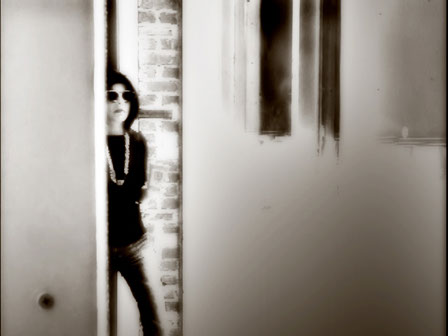
Artist Michelle Y Williams- Matthews Gallery- Santa Fe, New Mexico
Michelle Y Williams

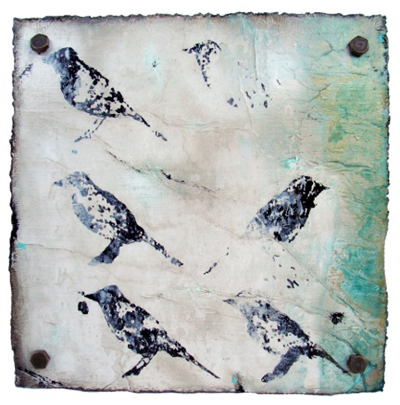
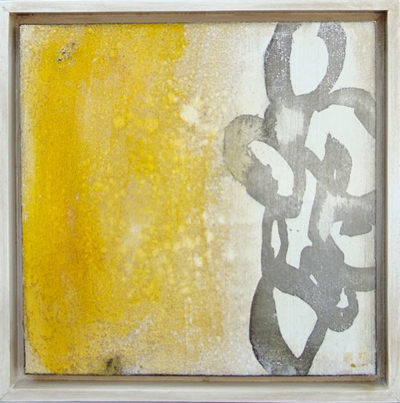
Being “cloistered in” may be key to Michelle Y Williams’ process, but that doesn’t mean she’s a recluse. Solitude is what the Houston, Texas artist needs to focus her mind and  tune in to her subconscious. Her mixed media works are equally inspired by measured decisions and the pure emptiness of the blank surfaces before her. They’re conglomerations of the figurative and the abstract, and boast a subdued palette that echoes the artist’s fascination with rust, crumbling concrete and peeling paint.

When Williams isn’t in her studio, she’s not afraid to step into the spotlight. In September she’ll be featured in Luxe Magazine, and last week she granted an interview to the Matthews Gallery. Michelle told us about everything from her many materials to the Japanese aesthetic of wabi-sabi, a worldview that has taught her to accept her flaws and create with abandon. Here’s what she had to say:

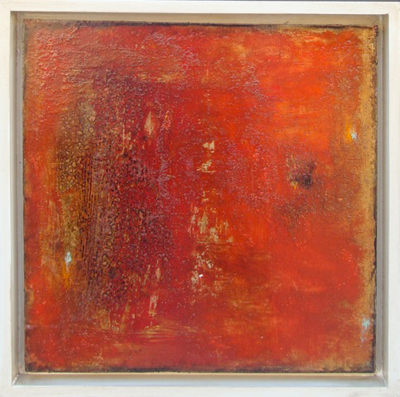
Michelle Y Williams- Petit 28- Matthews Gallery
Petit 28, Michelle Y Williams

You write in your artist statement, “Inspiration for my work is both selective and completely random.” Is the same true for your choice of materials for a particular piece? How do you select a medium? 

The primary medium in my work is acrylic (very quickly after I began as a painter using oils, I realized I have an aversion to cleaning brushes). Pigmented inks have also proven to be an often used medium for me (applied with a dropper, then floated across the canvas using my palette knife).

The choice for other materials, indeed, comes more randomly. Whether I incorporate sand or oil bar or even attaching a piece of torched metal with wax string to the canvas happens naturally & intuitively as the work progresses.

You also talk about a “relationship that develops” between you and your work. Does this change your notion of when a work is completed? Is it sad to say goodbye?  

I suppose it’s more of a short-term relationship…shall we call it a fling.  I invest energy into a piece which is then reciprocated upon completion, but the real gratification comes when someone has made a connection with my work, which couldn’t happen unless I surrendered it readily.

Michelle Y Williams- Cut 12-532- Matthews Gallery
Cut 12-532, Michelle Y Williams

You prefer to work in solitude. What are some other important parts of your process? Do you listen to music? Do you work on multiple pieces at a time, or just one?

My preference for sequestration is actually paramount – in order to maintain the integrity and authenticity of my work, I eliminate most outside influences that could dull my own creative process. Diverse genres of music can be heard in my studio – from acid jazz to classic rock to classical – while I move between several pieces in various stages of completion.

You mention the importance of seeking a balance in your work. How does that connect with the tenets of wabi-sabi, the Japanese aesthetic that embraces the transient self?

Rather than trying to exert control over a painting, my pursuit of aesthetic balance, (while maintaining my penchant for asymmetry), transpires more instinctively. The absence of obsessing over that quest for balance and the capacity to “let go”, relates to the principles of wabi-sabi.

Michelle Y Williams- Petit 18- Matthews Gallery
Petit 18, Michelle Y Williams

I found this part of your bio particularly beautiful: “In a stain, we find understanding; in a dent, our ability to heal; in a blemish, an unchained beauty.” Embracing your flaws can be a difficult process. How does your work help you do this? 

Quite simply, the alternative to embracing flaws requires far too much negative energy. For me, perfection is boring and I truly find immense beauty in flaws – chips & cracks in tea bowls used in Japanese tea ceremonies or uncut & unpolished rough just-mined diamonds – these things excite and inspire me.

I hear you’re quite the humanitarian. What projects are you involved with? 

I am an “equal opportunity donator”, giving my work with abandon to many different charitable organizations throughout the year.

Click here to see more of Michelle’s art, and connect with us on Facebook, Twitter and Pinterest for updates on her latest work.