ONE WORK OF ART: Jean-Pierre Jouffroy

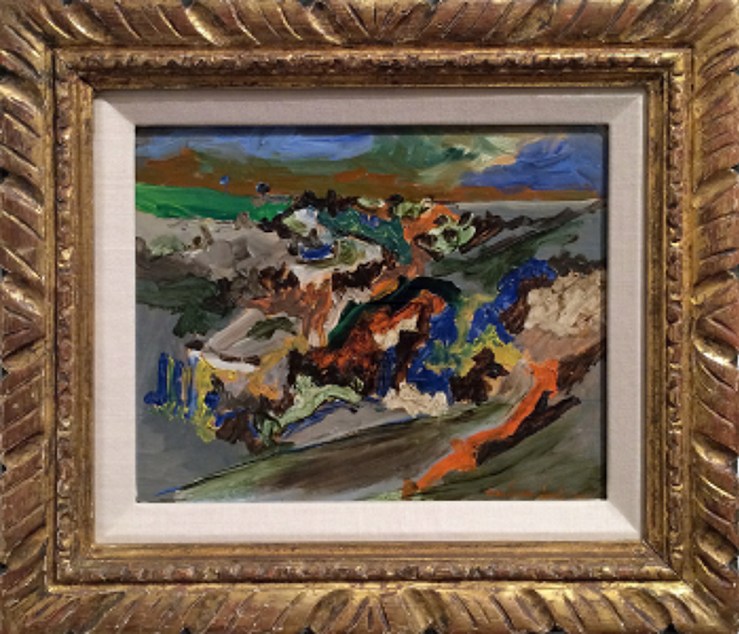
Jean-Pierre Jouffroy- Untitled Modernist Landscape- Matthews Gallery Blog
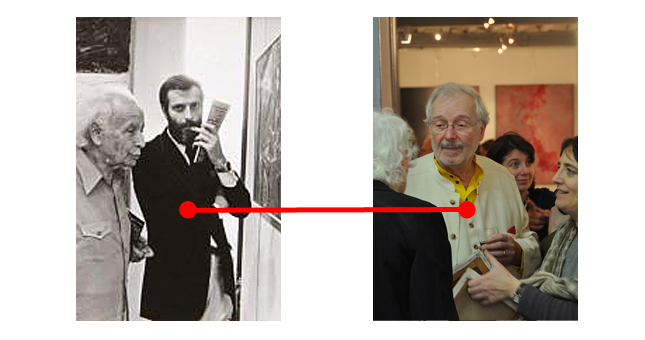
Two photographs.

Jean-Pierre Jouffroy - Matthews Gallery BlogOne shows a young artist with a determined look in his eyes, and the other an older gentleman at the opening of an 80-year retrospective of his artwork. What happened in the span between the shots?

Sometimes art by Picasso or Gauguin finds its way to our gallery, but other times we get our hands on an exquisite work that bears a name we’ve never heard before. Such was the case with this lovely 1940’s painting by a man named Jean-Pierre Jouffroy, which reminded us of the artwork of James Brooks and other lyrical abstractionists.

Thank goodness for Google. An image search of the artist’s name brought up these two photos, and some French-to-English translating revealed the fascinating story behind them.

Jean-Pierre Jouffroy was born in Paris in 1933. When he was 11 years old, he saw the work of Wassily Kandinsky and Nicolas de Staël in a gallery and fell in love with modernism. “As a young boy, I dreamed of covering the surface of the earth in paint,” Jouffroy recalls.

Early in his career, the artist created purely abstract work that was heavily influenced by Staël. Then, in the late 1950’s, Jouffroy had an artistic epiphany.

“An abstract painting always shows something, like it or not,” he explains. “The painting is the image of an internal battle. This fight is itself a metaphor for our relationships in the social sphere.” Based on this realization, Jouffroy decided to incorporate the visual vocabulary of abstraction into representational work.

The shift sent the artist on a journey that traced the innovations of modernists like Picasso and Cezanne in reverse. Just like those artists, Jouffroy was experimenting with abstracted figures and landscapes, but he was coming from a wholly nonrepresentational world that his predecessors never explored. In tributes to Cezanne, Gauguin, Manet and Braque, he brought great artists of the past into harmony with a movement they all, in one way or another, helped to inspire.

Jouffroy’s new explorations caught the eye of the art world, and he exhibited at Paris’ Museum of Modern Art, the Art Institute of Chicago and other renowned institutions. Though he was focused on figurative work, he was often associated with lyrical abstraction (as we suspected) because of his background, his loose brushwork and his inventive use of color.

Our Jouffroy painting represents an interesting phase in the artist’s evolution. Though it predates his representational work, it has undeniable elements of landscape. Perhaps it’s the first sign of the transformation that would send Jouffroy’s career in a spectacular new direction. You can see echoes of the work’s palette and brushwork throughout the artist’s retrospective at the Place du Colonel Fabien that opened in November.

Check out Jean-Pierre Jouffroy’s “Untitled (Modernist Landscape)” on our website, and connect with us on Facebook and Twitter for more gallery news.
SHOOTING SPARKS: Frank Morbillo’s Elemental Process

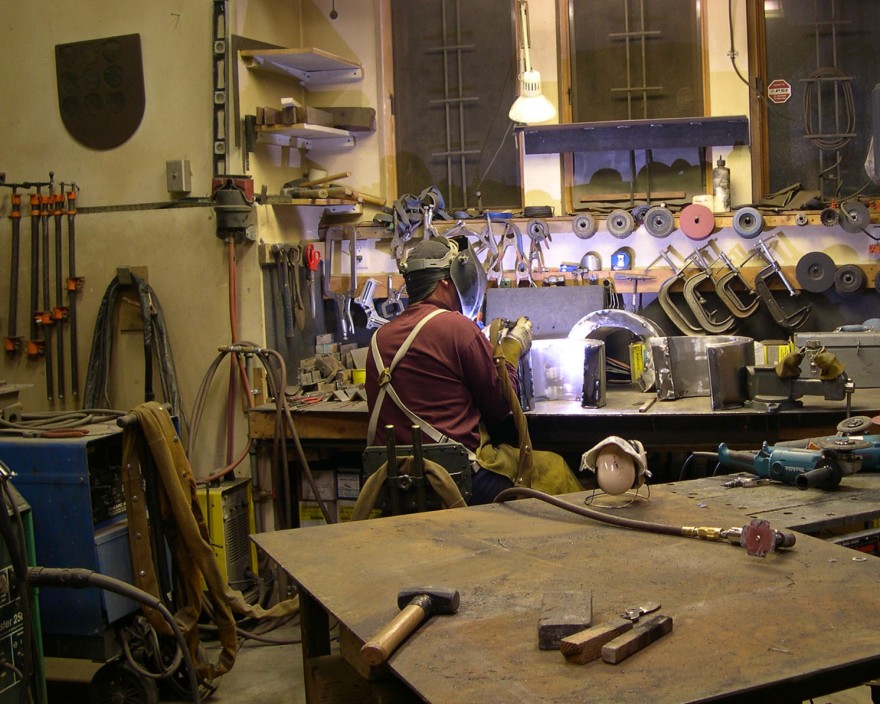
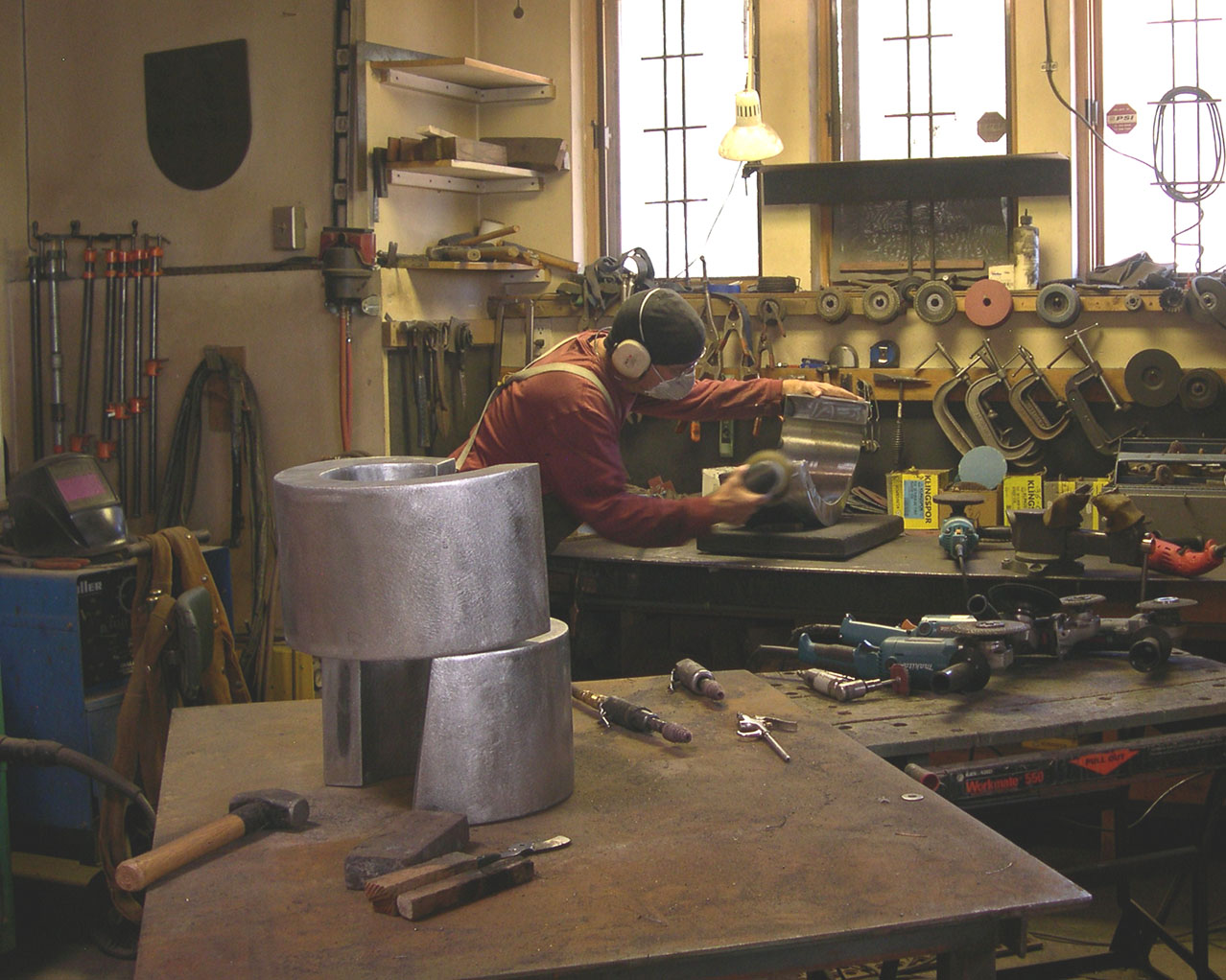
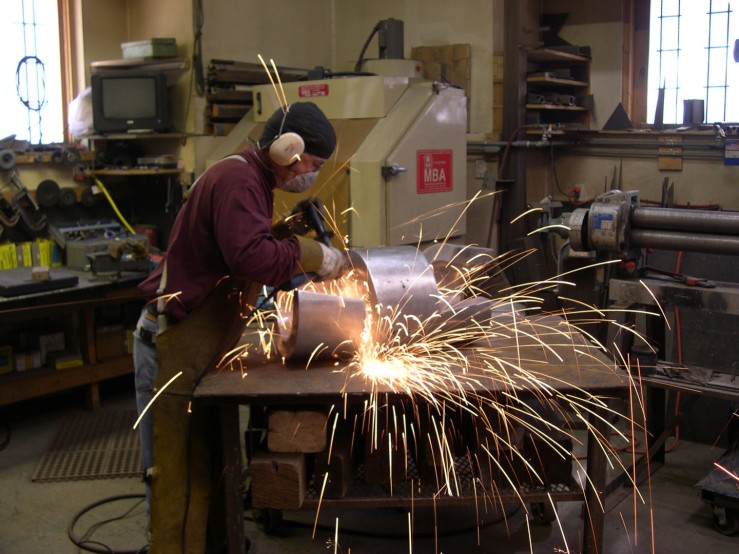
Frank Morbillo Sanding a Sculpture- Matthews Gallery Blog

Frank Morbillo sanding his sculpture Sprung

As we learned in his NEW HORIZONS show, sculptor Frank Morbillo is inspired by the way the elements carve the canyon lands of the American West. It’s fitting that his process is just as elemental. He bends and twists flat pieces of steel and bronze and then welds them into seamless three-dimensional forms, first creating smaller studies and working up to towering sculptures that possess the same gravitas as the rock formations he loves.

Witness the fiery birth of Frank’s sculpture Sprung and read quotes from the artist about his process and influences in this photo montage:

Process Photo of Sculptor Frank Morbillo's Sprung- Matthews Gallery blog

Fitting fabrication

“When you’re working with steel, you can work pretty inexpensively to generate an idea and get proportions down, and then make it a little bit bigger. Eventually this can go to the scale of the piece outside the Matthews Gallery.”

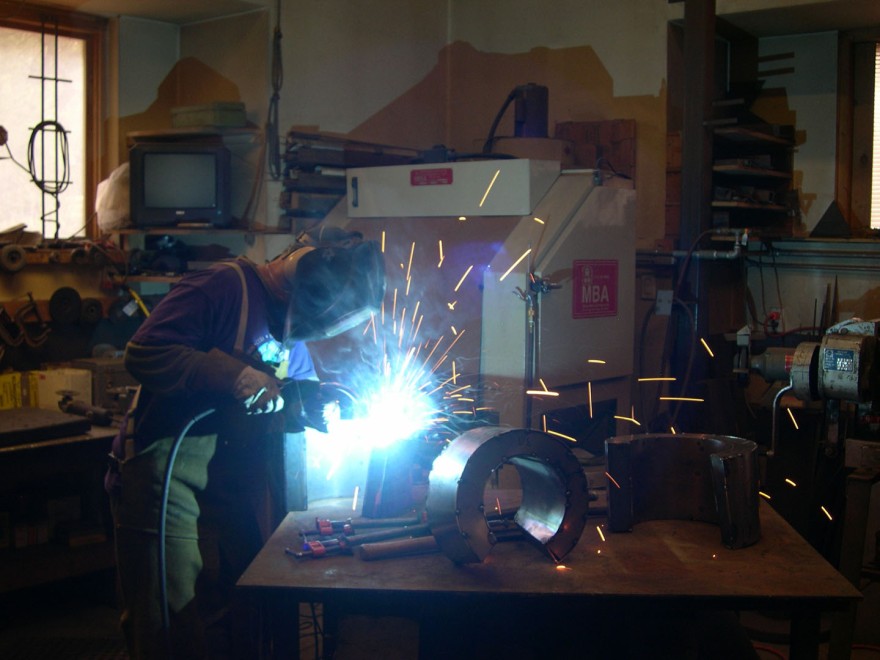
Frank Morbillo TIG Welding a Sculpture- Matthews Gallery Blog

TIG welding

“My background was in ceramics when I first started. For two years of college I thought my major was going to be ceramics, but in my sophomore year I took a blacksmithing class on forging and fabricating metal. I was like, ‘You can heat the stuff up and move it like clay? Oh my God!’”

Frank Morbillo Welding a Sculpture- Matthews Gallery blog

Welding

“You knock a piece of clay off the table and it breaks on the floor. You knock a piece of metal off and it dents the floor.”

fine sanding on Sprung-1

Fine sanding

“A lot of the pieces come from hiking canyons and experiencing the paths that you take in a canyon. If you look at a topo of a canyon, you can see its meandering course. When you’re down in a canyon and you see how it’s been eroded and shaped by water and wind, it takes on another shape.”

Frank Morbillo Adding a Patina to a Sculpture- Matthews Gallery blog

 Patina

“When I was in the foundry business doing patina work for different artists, we always used to talk about the translucency of bronze. They always wanted that, to where if you put this really nice golden brown patina over metal, you could see the metal coming through.”

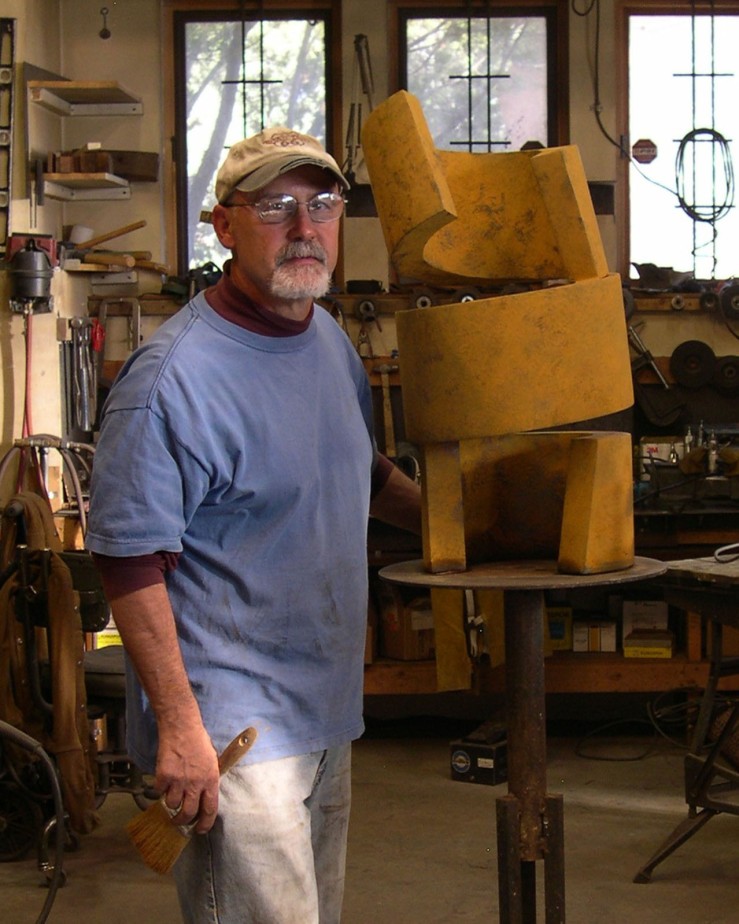
Tesuque Artist Frank Morbillo with his Sculpture Sprung- Matthews Gallery blog

Almost there…

“One of the nice things about being out in nature is that all of the things we connect ourselves with are gone. Where does that take you? I think we need to do that still in our lives.”

See Frank’s finished sculpture here and learn more about the Tesuque sculptor on our Facebook, Twitter and Pinterest pages.

LET THE HUNT BEGIN…

This slideshow requires JavaScript.

“Where did you get that?”

That’s a common question among Canyon Road visitors when they see historic work by Henri de Toulouse-Lautrec, Paul Gauguin, Salvador Dali and other famous artists on our walls.

There’s no supermarket for art like this. Finding and authenticating it is an elaborate process, and the treasure hunt often begins where you’d least expect it. If you’ve ever wondered about the value of that painting or print on your wall (or in your attic), we might be able to help.

We’ve been in the fine art business for over 15 years, and have assisted hundreds of clients in selling their historic and vintage art. Whether you own a Renoir lithograph or an exquisite painting by a little-known American modernist, a sculpture by Arnaldo Pomodoro or a watercolor by an anonymous 19th century artist, we’d be delighted to take a look at it.

We’re primarily interested in art from four categories: European, American, Southwest and Contemporary. It could be a single work or a collection within any price range. If you’re looking to sell or consign, we offer fair prices.

Contact us at info@thematthewsgallery.com to get the process started, and check out our website and Facebook page to learn more about us.

Matthews Art Group- Sell your historic and vintage art

ONE WORK OF ART: Salvador Dali’s “Frontispiece for Goya Suite”

Salvador-Dali-Goya-SuiteMaster

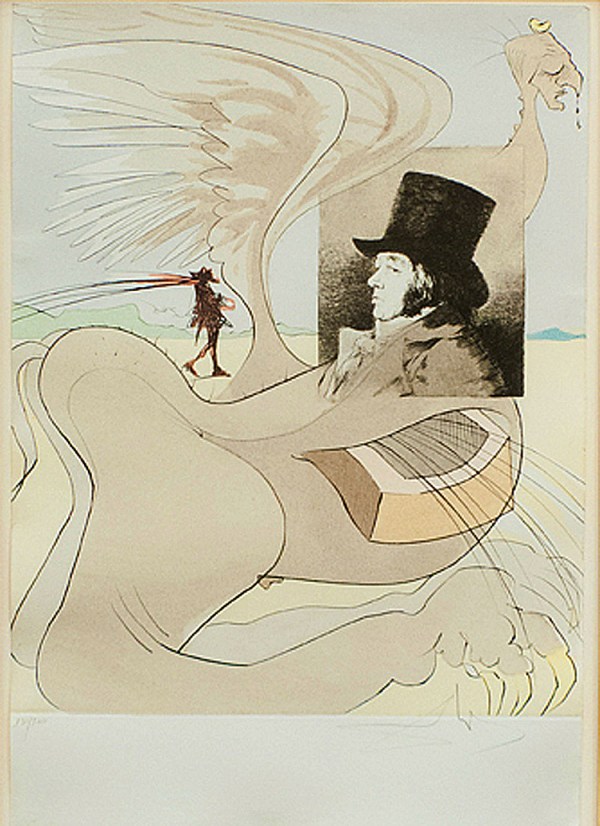
Salvador Dali, Frontispiece for Goya Suite (1973), multi-plate etching

You can see rare prints by Francisco Goya at the New Mexico Museum of Art’s Renaissance to Goya: Prints and Drawings from Spain, the only U.S. stop of a special traveling exhibition from the British Museum. Learn about Salvador Dali’s twist on one of Goya’s most famous works below, and come see it at Matthews Gallery on Canyon Road. 
In 1797, Francisco Goya embarked on a political art project that almost brought him up against the Spanish Inquisition. In a series of 80 aquatints entitled Los Caprichos (The Whims) he outlined the “innumerable foibles and follies to be found in any civilized societies.”
The hardly whimsical opus was a critique of 18th century Spain, which Goya depicted as full of deformed monsters and foolish beasts. The artist avoided punishment at the hands of the ruling class when the king spoke up for him, but the prints were still withdrawn from public sale in 1799.

426px-Museo_del_Prado_-_Goya_-_Caprichos_-_No._43_-_El_sueño_de_la_razon_produce_monstruos

174 years later, The Sleep of Reason Produces Monsters (left) from Los Caprichos was considered one of Goya’s most iconic works, and another Spaniard by the name of Salvador Dali decided to create a Surrealist tribute to the series. In the etching Frontispiece for Goya Suite Dali used the first image from Los Caprichos, a self-portrait of Goya in a top hat. 

2cb338d5fe19d368d2ee3639caf7a649Dali drops Goya into a universe even more bizarre than that of the original Caprichos, stitching his predecessor’s visage atop the body of a dragon-like beast. A second, more monstrous head with a drippy nose and lumpy halo emerges from behind Goya, and a shadowy figure in the distance leaves a trail like a comet. 
Is Dali’s remix another critique of Spanish society, refreshed for the weird world of 1973? The artist drops a slippery hint in this work’s alternate title, Lenguado Menguado. Lenguado could mean “flat-fish” or “sole”, and menguado is either “well-dressed” or “diminished”.
So, Dali could be calling Goya a stylish fish or a diminished one. The title might refer to the worn—or fashionable—shoes of the pedestrian in the background. In any case, the artist seems to be commenting on Spain’s obsession with appearances, a theme first explored in several of Goya’s Caprichos. Of course, Dali was himself an offender when it came to sartorial dalliances, but that adds some spice to the criticism.
View Dali’s bizarre reworking of a classic Goya print at Matthews Gallery, and connect with us on Facebook, Twitter and Pinterest for more news from Canyon Road.

FOCUS ON THE FIGURE: The good, the bad and the body

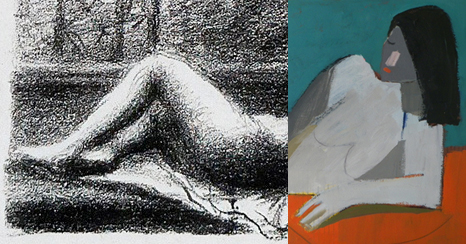
Two Odalisques by Pierre-Auguste Renoir and Jamie Chase- Matthews Gallery blog

Two Odalisques by Pierre-Auguste Renoir (left) and Jamie Chase (right)

No matter their preferred medium or subject matter, one of the first things young art students are challenged to do is pick up a pencil and draw from life.

“It’s only by drawing often, drawing everything, drawing incessantly, that one fine day you discover to your surprise, that you have rendered something in its true character,” said Camille Pissarro, mentor to the Impressionists.

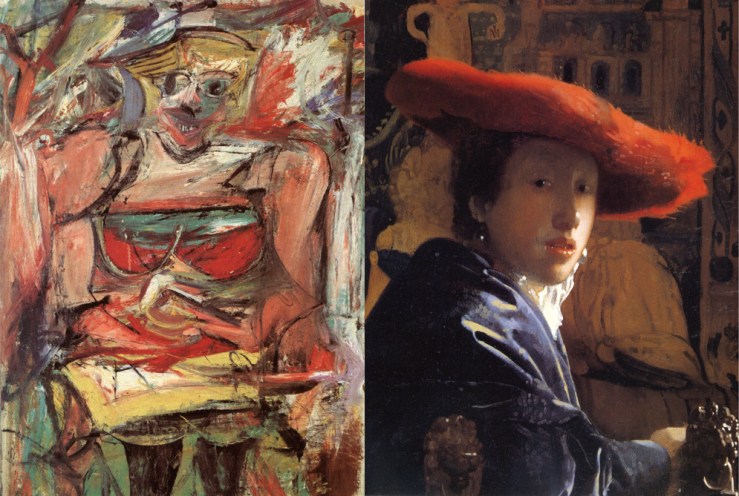
Of course, Pissarro had a different idea of what it meant to evoke something’s “true character” than, say, Paul Gauguin. As we discussed in our last post, Vermeer and de Kooning painted female figures in oil to highly divergent ends.

Our FOCUS ON THE FIGURE survey show, running now through the end of December, has us pondering the artist’s eye for the human body. History’s verdict on the success or failure of a particular depiction is often entirely based on the culture that first viewed it. Even in the hands of the most technically talented artists, the human body has a unique capacity to spark fiery controversies. Here are some notorious offending body parts:

SKIN

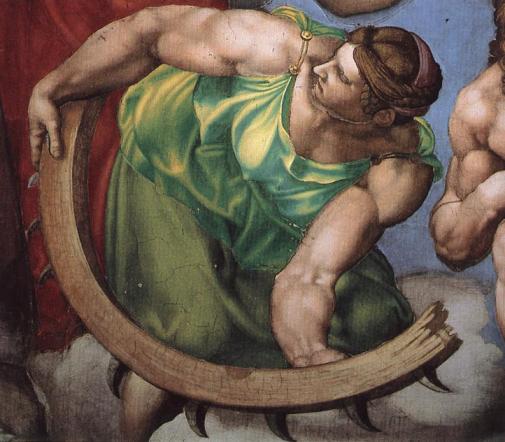
Michelangelo- The Last Judgment detail- Matthews Gallery blog

The Last Judgment (detail), Michelangelo

Believe it or not, that’s a woman in the image above. Michelangelo (1475-1564) had a hard time depicting feminine grace, probably because he used massive body builders as models. That’s not the reason the artist’s Last Judgment mural in the Sistine Chapel drew the ire of the church, though. Michelangelo left many of his buff bodies unclothed and the clergy was afraid they would provoke sinful titillation. After the artist’s death, fig leaves were swiftly deployed.

TEETH

Elisabeth Vigee Le Brun- Self Portrait- Matthews Gallery

Self portrait, Elizabeth Vigee Le Brun

As chronicled in our blog series 10 Women Who Changed Art History Forever, even fully clothed models (with frilly collars) could show too much. When Marie Antoinette’s court painter Elisabeth Vigee Le Brun (1755-1842) dared to flash a smile for this self-portrait she was roundly condemned for diverging from the style of “the Ancients”. Read what one gossip columnist had to say about it here.

EARS

John Singer Sargent- Madame X- Matthews Gallery blogMadame X, John Singer Sargent

Top Paris socialite and legendary beauty Virginie Amelie Avegno Gautreau couldn’t resist John Singer Sargent’s (1856-1925) offer to paint her portrait in 1883. When conservative viewers at the Paris Salon were scandalized by Gautreau’s bare white shoulder and bright red ear in the painting, Sargent attempted some damage control by painting in a shoulder strap and renaming the painting Madame X. Alas, Gautreau’s reputation was forever damaged.

FACES

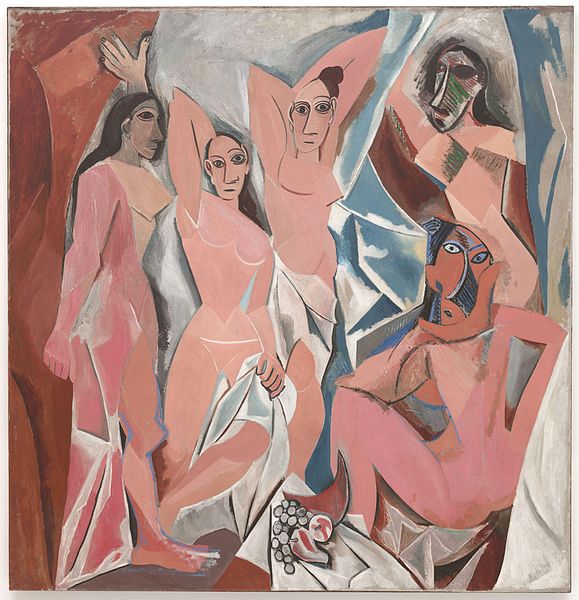
Pablo Picasso- Les Demoiselles dAvignon- Matthews Gallery blog

Les Demoiselles d’Avignon, Pablo Picasso

Pablo Picasso (1881-1973) always referred to his seminal painting of a group of Spanish prostitutes as The Brothel of Avignon. The canvas sat in his studio for years before he exhibited it under the title Les Demoiselles d’Avignon (The Young Ladies of Avignon) in 1916. Even after its rebranding, the painting caused a stir because the women’s faces—influenced by traditional Iberian art, African tribal masks and the art of Oceania—were considered savage and their postures barbaric and aggressive.

After the show, the work was rolled up and stored away for years. It wouldn’t be recognized for its visual innovations until later, when designer Jacques Doucet bought it for 25,000 francs in 1924. “It is a work which to my mind transcends painting; it is the theater of everything that has happened in the last 50 years,” Doucet said.

Our FOCUS ON THE FIGURE show features art by Jamie Chase, Kate Rivers, Eric G. Thompson, Pierre-Auguste Renoir, Harold Frank, Pablo Picasso and more. Connect with us on Facebook, Twitter and Pinterest for more news about the exhibition.

FOCUS ON THE FIGURE: A Daub of Flesh

Vermeer and de Kooning - Matthews Gallery blog

“Flesh was the reason oil painting was invented,” said Willem de Kooning. The quote is a nod to the Dutch masters, who developed the medium to accurately evoke the semi-translucent glow of human skin in the crisp light of 17th century Delft.

By the mid-1900s, de Kooning was using the same medium to very different ends. His nudes unraveled across the canvas, their mottled flesh mimicking the dark tones of a bruised peach or the sickly hues of a jaundiced child.

The abstract expressionist encoded in painted skin the darkest sexual desires and terrors of the modern world, but he wasn’t blind to the way the inherent qualities of oil linked him to a much different time and place.

Our new exhibition FOCUS ON THE FIGURE, running December 2 to 9, holds a similar philosophy at its heart. The use of figures in art stretches back to prehistory, and new explorations into the subject have always looked to the past in one way or another.

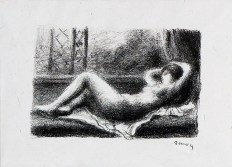
Pierre Auguste Renoir - Odalisque - Matthews GalleryPierre-Auguste Renoir’s (1841-1919) etching Odalisque refers to Turkish concubines, but that wasn’t necessarily the artist’s intended title. Renoir submitted a painting of a nude called Diana to the Paris Salon in 1867. The erotic depiction of the Roman goddess offended the judges and the painting was rejected.

Three years later the artist used the same model for a painting called Odalisque and made sure she was fully clothed. The second work, stripped of its mythological significance and given an exotic twist, was accepted to the Salon.

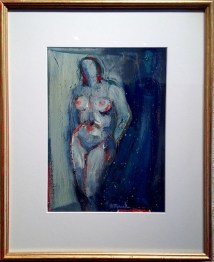
Harold Frank - Blue Nude - Matthews Gallery

In this etching with the same title Renoir refuses to hold back. The nude Odalisque is so tenderly rendered her skin looks as soft as butter. “When I’ve painted a woman’s bottom so that I want to touch it, then [the painting] is finished,” the artist said.

Harold Frank (1917-1995) was born in England and grew up in New York, where he drew inspiration from American modernism and abstract expressionism. His take on the female figure in Blue Nude features quick, expressive brushwork that was no doubt inspired by de Kooning.

Both artists incorporated drips and splatters of paint into their compositions to create spacial ambiguities in the picture plane. Is Frank’s nude standing in a corner or floating in a color field? The answer seems to change with every glance.

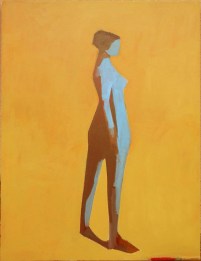
Jamie Chase - Turning Points - Matthews GalleryJamie Chase immerses a figure in a vibrant yellow atmosphere in Turning PointIt brings to mind both Mark Rothko and Nathan Oliveira, but Chase’s influences stretch farther back in art history.

Chase grew up in San Francisco and attended art school there for a short time before dropping out to travel Europe. He lived in various cities and educated himself on the masters before returning to San Francisco in the early 1970s. There he painted murals for a bookstore, drawing inspiration from ancient Egyptian art, European cave paintings and Native American art.

Come trace the history of the artist’s impulse to capture the figure at the exhibition this December, and connect with us on Facebook, Twitter and Pinterest for more news from the gallery.

SMALL TREASURES: Can’t-miss lots from our fall auction


Charles Partridge Adams- Untitled (Landscape)- Matthews Art Auctions

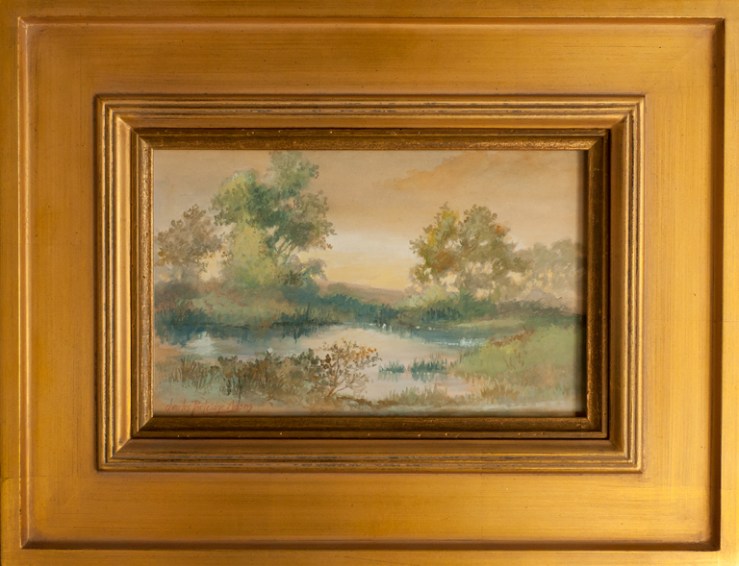
We picked a particularly electrifying time in the art world to throw an auction. A triptych by Francis Bacon just flew off the block for a record-breaking $142.2 million, and the highest-valued Andy Warhol painting ever sold for $102 million. Our European, American and Southwestern Art Auction doesn’t feature price tags that are quite as high, but there are gems throughout the catalogue that would fit into the finest collection. The image above is a watercolor by legendary Colorado landscape painter Charles Partridge Adams (1858-1942) that measures just 13.5 x 17.5 inches and starts at $1,700 in our sale. Check out more lots below, and make sure to place your bids before the auction ends on November 17.

Jack Merriott- Untitled (Boat Dock Scene)- Matthews Art Auctions

Lot 16: Jack Merriott- Untitled (Boat Dock Scene) 
Starting bid: $1,700
Estimated value: $2,200-$3,200

English artist Jack Merriott (1902-1968) is best known for his travel posters commissioned by British railway companies that were displayed in train compartments. This watercolor shows the illustrator’s softer side. Click here to view the lot and register to bid.

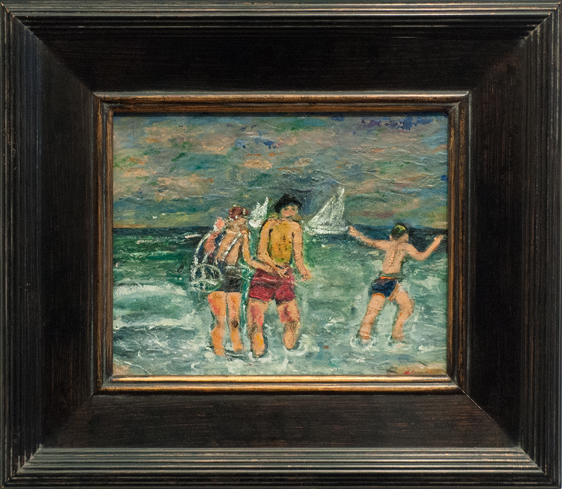
Francesco Spicuzza- Children at Beach- Matthews Art Auctions

Lot 60: Francesco Spicuzza- Children at Beach
Current bid: $250
Estimated value: $350-$750

Francesco Spicuzza (1883-1962) was a talented lithographer and painter, and is one of the most prolific artists ever in his home state of Wisconsin. In this 13.5 x 15.5 in. gouache painting on board, three small figures frolic through the waves on a beach day. Click here to view the lot and register to bid.

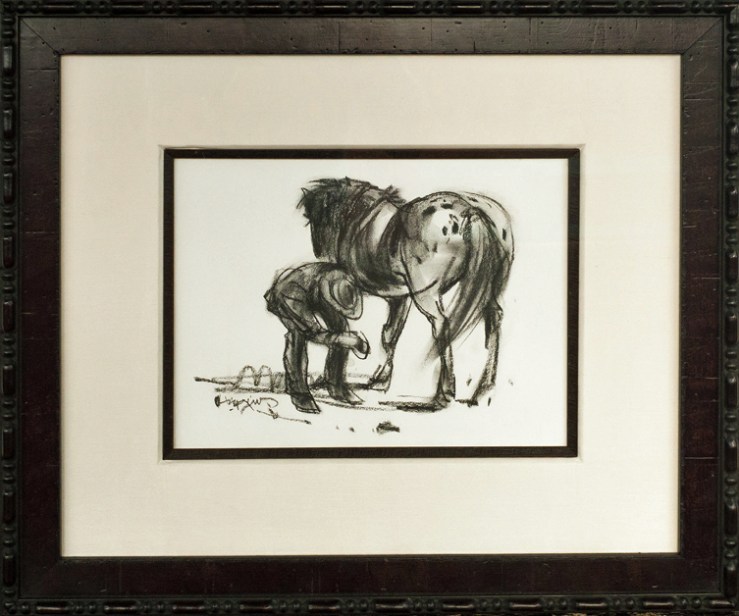
Doug Higgins- Horse & Cowboy- Matthews Art Auctions


Lot 107: Doug Higgins- Horse & Cowboy
Starting bid: $850
Estimated value: $1,200-$1,750

Santa Fe, New Mexico artist Doug Higgins (born 1939) uses simple, elegant lines to depict a cowboy tending to his horse in this charcoal drawing. Click here to view the lot and register to bid.

Don’t forget to bid in our auction before 7 pm on November 17, and browse more highlights in our blog post START YOUR BIDDING: Colorful lots from our fall auction. Connect with us on Facebook, Twitter and Pinterest for gallery news.

Hannah Holliday Stewart (1924 – 2010) A Sculptor Who Forged The Way

Hannah Holliday Stewart (1924 – 2010) had her sculpture exhibited in over 40 venues including The Smithsonian, Washington, DC; the San Francisco Museum of Art; the High Museum of Art, Atlanta, Georgia; the Dallas Museum of Fine Arts and others. Her work and her career were instrumental to the increased recognition of women sculptors in the United States. The International Sculpture magazine wrote :

“(She) forged the way for serious women sculptors. Uniting Greek mythology and contemporary energy concepts … (her) work fuses both primitive and futuristic sensibilities.”

At a time when the art world marginalized women artists, she chose to create her own world from metal and stone and helped lead the way for a generation of women sculptors. Though she had achieved a high level of success and recognition, she eventually turned her back on the art establishment and continued to work in isolation for the last twenty years of her life. After her death in 2010, sculptures, consisting of work that spanned her entire career, were discovered in her studio – from pieces that are only a few inches tall to one bronze that is over nine feet.

A written statement discovered in one of her notebooks eloquently records her own thoughts on the origins and principles underlying her art work:

When I was eight years old, I asked my mother what the wind really looked like. I remember spending hours … days … sitting with my hands open wide or running with my lightning-bug jar, hoping to catch the wind. I wanted to SEE the wind, that magical force that could bend the huge oak tree in a summer storm, gently caress me on a hot summer day or sing to me as it played through a tree or around the house.

This early interest in natural forces has sustained me throughout my life as a sculptor. My goal is to render visible the hidden realities of pent-up contained energy. The direct fields of reference are Sacred Geometry, Astronomy, Myth & Physics … Each Sculpture is an energy form, the movement arrested in space, a form sustaining an energy. My work is a response to these patterns and delineations and communicates with viewers through the universality of symbolism and form.

The Matthews Gallery is pleased to show this pioneering artist and reacquaint the world with her work. If you would like to learn more about Hannah Holliday Stewart, we have created a website dedicated to her life and work which includes a 163 page online catalog of her work. Click Here to visit the site.