NOT A POP ARTIST: Five Sides of Jim Dine

Jim Dine Rainbow- Matthews Gallery Blog


78-year-old artist Jim Dine has earned his place in any good post-war art history textbook. Picking exactly when to spotlight the artist must be a difficult task for scholars. The painter, sculptor, illustrator, printmaker, stage designer and performance artist has a way of diverging from the status quo and ending up at the forefront of new art movements. Just when things get established, he’s off on his own again.

A mixed media drawing  by Dine recently found its way to Matthews Gallery, so we took the opportunity to explore 5 manifestations of the chameleonic artist:

Fluxus Performer

Dine grew up in Cincinatti and got his BFA from Ohio University. When he arrived in New York in 1958, the art world was fixated on a type of work you couldn’t sell in a gallery. Some critics called them “wacky nightmares“, others described them as “a three-ringed circus with undertones of group therapy“, but Dine and his friends Claes Oldenberg, Allan Kaprow and John Cage dubbed their performance art pieces “Happenings”.

Happenings were designed to be as ephemeral and unpredictable as day-to-day life—but a little weirder. Battles between ballerinas and roller-skaters, reenactments of the Lincoln assassination, bikini stripteases and blue ice cream feasts were all passionately performed, often in rapid sequence. Whether you call it though-provoking or senseless, the Fluxus movement was one-of-a-kind. For Dine, all the world was a stage until…

Pop Progenitor
Jim Dine- Robe Diptych- Matthews Gallery Blog


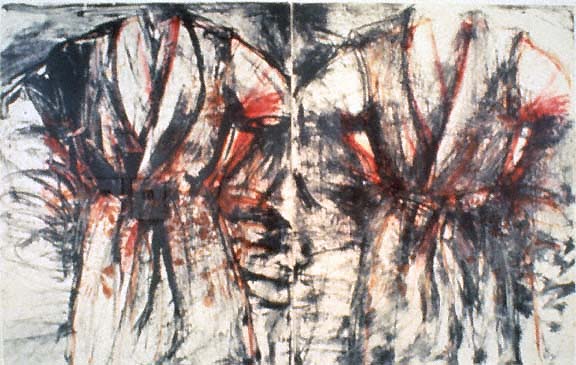
Jim Dine, Red and Black Diptych Robe, 1980

In 1962, Dine’s paintings appeared alongside work by Andy Warhol, Roy Lichtenstein, Ed Ruscha and others in the Pasadena Art Museum’s show New Painting of Common Objects. Curated by Walter Hopps of Ferus Gallery (site of Warhol’s first solo show), the exhibition was a seminal moment for a new movement: Pop Art.

Dine’s inclusion in the exhibition made perfect sense at the time. He was experimenting with serial imagery of familiar objects and symbols like bathrobes, hearts and tools. However, the artist’s expressive style and often tender subject matter clashed with the postmodern angst of other Pop progenitors. Soon enough, he was plotting his escape…

Modernist
Jim Dine- Paris- Matthews Gallery Blog

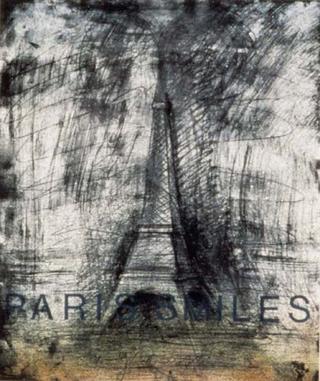
Jim Dine, Paris Smiles in Darkness, 1976

Dine moved to London in 1967, a strange decision considering his controversial history with the United Kingdom. A year before his solo exhibition at London’s Fraser Gallery was raided by police and the owner was fined for showing “indecent” images.

The artist defiantly continued to his relationship with Fraser and used his time in Europe to study the work of Van Gogh, Picasso, Matisse and other modernists. In 1971 he returned to the United States, ready to chart a new course…

Neo-Expressionist
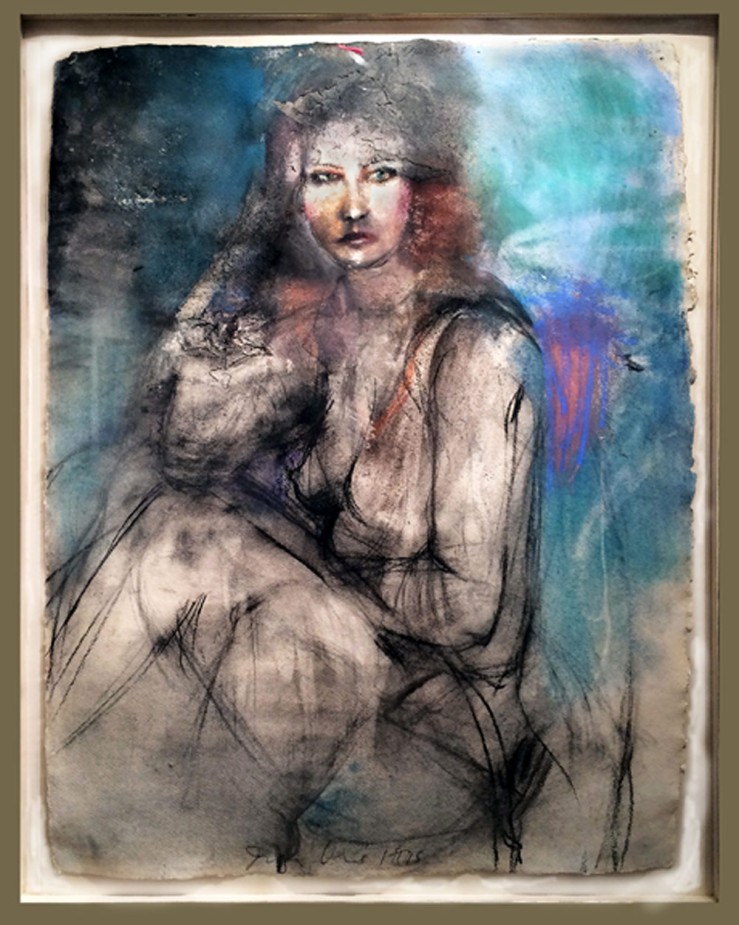
Jim Dine- A Lady Sitting Drawing- Matthews Gallery Blog

 Jim Dine, A Lady Sitting, Mixed Media, 1975

Minimalism was en vogue when Dine arrived in New York, but the artist wasn’t interested. Instead he focused on figure drawing, refining his skills in various mediums and earning a reputation as a master draftsman. The mixed media drawing in our collection is from this period. A stunningly realistic face painted in oil is framed by confident charcoal marks and a glowing crayon color field.

In the years to come Dine’s figurative work would mark him as a founder of Neo-Expressionism, but critics could never assign the artist a particular label for long…

Modern Individualist

2008_JimDine_23220011

Installation shot, Jim Dine: Poet Singing (The Flowering Sheets)

 Perhaps Dine’s artistic identity is best summed up by MoMA:

This commitment to a personally invested, image-dictated content and a continuing interest in the technical and expressive potential of every medium has characterized Dine’s work as a whole. Thus, Dine has often been out-of-step with the major movements of the post-World War II period and must be considered a modern individualist.

It’s a bit of a non-title, but Dine defies labels at every turn. The almost-octogenarian is still working his way into new chapters of art history.

Check out our website for more on Jim Dine, and connect with us on Facebook, Twitter and Flickr for to-the-minute gallery news.

BURST OF BRILLIANCE: Adolph Gottlieb’s Southwestern Epiphany

“It was like being at sea,” said Adolph Gottlieb. The artist had just spent a year in the Desert Southwest- from 1937 to 1938- and returned to his hometown of New York City with a radically altered style. “There’s… a tremendous clarity of light and at night the clouds seem very close,” he continued. This was a very different type of “sea” than the one that carried Gottlieb on his inaugural artistic journey. When he was 17 he dropped out of high school and caught a merchant ship to Europe. He spent two years there, including six months in Paris where he audited art classes and visited the Louvre every day. Back in New York, he studied at The Art Students League and befriended Barnett Newman, Mark Rothko and Milton Avery. Together they founded the abstract expressionism movement, working to develop color field painting and other innovations. They remained close until Gottlieb decided to strike out on his own to Tucson, Arizona. It was an endeavor that would markedly separate him from his contemporaries, even after his return to the East. Gottlieb’s New York friends called the style he had developed in Arizona simplistic, but the artist refused to look back. He distanced himself from his colleagues and focused on developing a Surrealist style. Experiments with automatism and surrealist biomorphism helped him create an abstract symbol system for his gridded Pictographs series. Finally, in the 1950’s, he started work on two series that would become his most well-known work. Both series are represented in our collection, and their very existence seems linked to the bare, elegant vistas of the Desert Southwest.

IMAGINARY LANDSCAPES

Around 1950-51… I was finally getting away from the pictographs and looking for something… So it was necessary to find other forms, a different changed concept. So finally after a certain period of transition I hit on dividing the canvas into two parts, which then became like an imaginary landscape… What I was really trying to do when I got away from the pictographs was to make this notion of the kind of polarity clearer and more extreme. So the most extreme thing that I could think of doing at the time was dividing the canvas in half, make two big divisions and put something in the upper division and something in the lower section.

The color and texture of the land mass in “Green Foreground” recalls Gottlieb’s sea simile. In this period the artist was consolidating surrealist and abstract expressionist theories by approaching the two movements as different sides of the same coin (hence a “polarity”). Our lithograph implies a fantastical landscape, but works just as well as a flat, wholly abstract composition. If we imagine ourselves exploring this terrain, it would look much like Gottlieb’s surroundings in the Southwest, albeit with a greener tint.

BURSTS

After doing the imaginary landscapes until say 1956, in ’57 I came out with the first Burst painting… There was a different type of space than I had ever used and it was a further clarification of what I was trying to do. The thing that was interesting that it was a return to a focal point, but it was a focal point with the kind of space that existed in traditional painting. Because this was like a solitary image or two images that were just floating in the canvas space. They had to hold the space and they also had to create all the movement – that took place within the rectangle.

Gottlieb’s Bursts are Imaginary Landscapes that have further dissolved into abstraction, though their compositions still root them somewhat in reality. In “Crimson Ground” two discs rise (or set) like a sun and moon from a monochrome tangle with the most ephemeral of horizon lines.

When I started doing the Bursts I began to do part of the painting horizontally. It was necessary to do that because I was working with a type of paint which had a particular viscosity, which flowed, and if it were on a vertical surface it would just run. If it were on a horizontal surface, I could control it… I was using a combination of brushes and knives, palette knives… and spatulas… I’ve tried everything, rollers, rags, I’ve put paint on with everything.

“Crimson Ground” isn’t a painting, but it still has a painterly quality to it. The edges of the discs are uneven and textured, and the forms below are as splattered as a Pollock drip painting. This further highlights the polarity between the surreal landscape and an abstract expressionist painting. One is focused on depth, the other focuses solely on the surface. Learn more about Adolph Gottlieb on our website, and connect with us on Facebook, Twitter and Pinterest for to-the-minute gallery updates!

CURATE THIS, CURATE THAT: Place your votes!

Collectors-Choice-Social1

The selection process for our social media-curated show COLLECTOR’S CHOICE is underway, and fans on Facebook, Instagram, TwitterTumblr and other networks have placed their votes. It’s time for some tie breakers on WordPress! Check out the match-ups below and vote for your favorites in the comments section. From January 31 to February 5, we’ll unveil your selections in the gallery and online.

JAMIE CHASE

Jamie Chase- Collector's Choice- Matthews Gallery blog

ROUND 1! Jamie Chase is known for his figurative work like image #1, and also his abstracted landscapes like #2. Which one should appear in the show? Take the curatorial reins!

WILLIAM LUMPKINS

William Lumpkins- Collector's Choice Show- Matthews Gallery Blog

Do you prefer William Lumpkins‘ careful watercolor brushstrokes (#1) or experimental wild felt-tip pen marks (#2)? Read more about the influential Santa Fe modernist here before you decide…

KATE RIVERS

Kate Rivers- Collector's Choice Show- Matthews Gallery

Curate this! Should we feature a Kate Rivers book collage in the show, or one of her nests? Read about her mixed media work in this blog post, and vote for #1 or #2 in the comments.

HANNAH HOLLIDAY STEWART

Hannah Holliday Stewart- Collector's Choice- Matthews Gallery Blog

These tall, spindly bronzes might be very different, but they’re both by powerhouse feminist sculptor Hannah Holliday Stewart. Figurative or abstract? Curate that!

PAUL GAUGUIN

Paul-Gauguin-Collectors-Choice

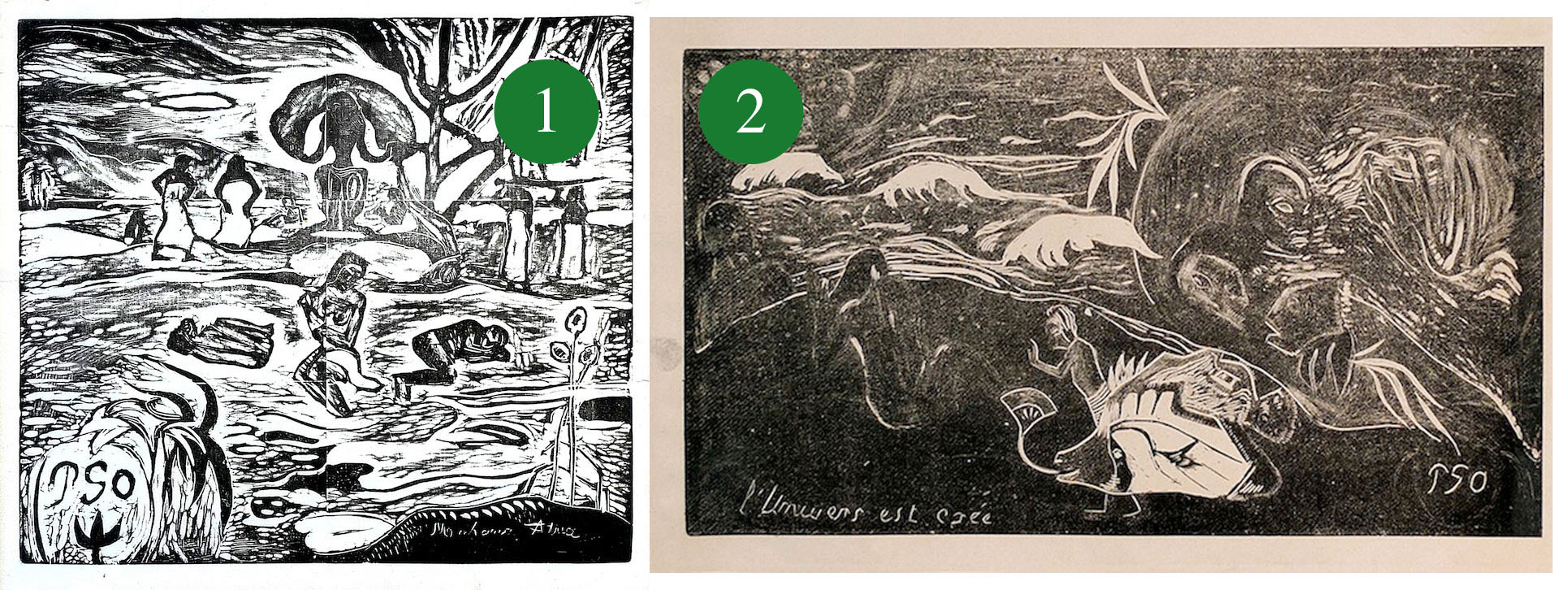
Two Tahitian myths inspired these woodblock prints by Paul Gauguin. Which do you prefer? Read about them in this blog post, and vote now!

Thanks for participating in COLLECTOR’S CHOICE! To place your vote on other social networks, connect with us through the links on our About Page.

LET THE HUNT BEGIN…

This slideshow requires JavaScript.

“Where did you get that?”

That’s a common question among Canyon Road visitors when they see historic work by Henri de Toulouse-Lautrec, Paul Gauguin, Salvador Dali and other famous artists on our walls.

There’s no supermarket for art like this. Finding and authenticating it is an elaborate process, and the treasure hunt often begins where you’d least expect it. If you’ve ever wondered about the value of that painting or print on your wall (or in your attic), we might be able to help.

We’ve been in the fine art business for over 15 years, and have assisted hundreds of clients in selling their historic and vintage art. Whether you own a Renoir lithograph or an exquisite painting by a little-known American modernist, a sculpture by Arnaldo Pomodoro or a watercolor by an anonymous 19th century artist, we’d be delighted to take a look at it.

We’re primarily interested in art from four categories: European, American, Southwest and Contemporary. It could be a single work or a collection within any price range. If you’re looking to sell or consign, we offer fair prices.

Contact us at info@thematthewsgallery.com to get the process started, and check out our website and Facebook page to learn more about us.

Matthews Art Group- Sell your historic and vintage art

START YOUR BIDDING: Colorful lots from our fall online auction

Matthews Art Auctions- Camille Boutet- Artfact

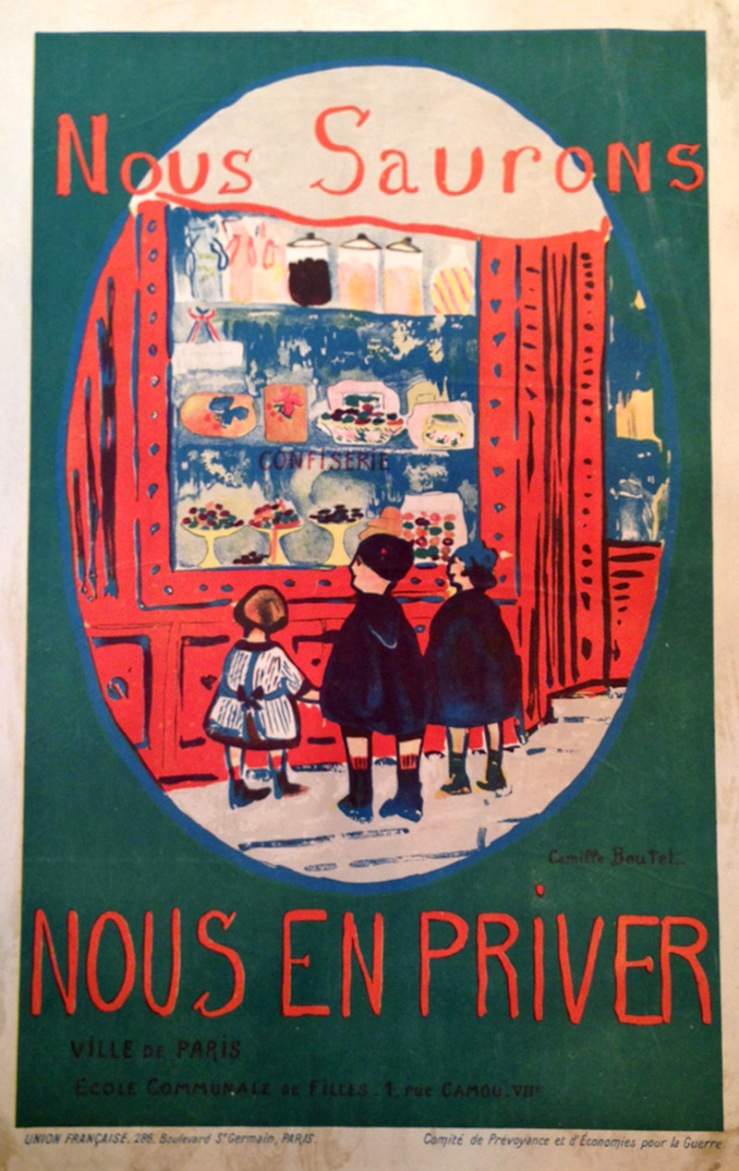
Our European, American and Southwestern Art Auction just started on Artfact.com, and it features a particularly vibrant line-up of lots. The charming image above is a color lithograph from turn of the century France by Camille Boutet. It shows three children peering longingly into a confectioner’s shop, and would make a lovely holiday gift. The best part? Bidding starts at $50. Read about more of our offerings below, and make sure to bid before the auction ends on November 17.

Frank Morbillo- Arched Axe- Artfact Auctions

Lot 41: Frank Morbillo- Arched Axe
Starting bid: $350
Estimated value: $450-$900

Arched Axe” is from Frank Morbillo’s sculpture series inspired by the simple, elegant lines of prehistoric hand tools. Several other glass and bronze works from the set appear in the sale, including “Ceremonial Serpent Axe“, which features an intricate floral motif, and the swanlike “Honing Axe“.

Bertram Hartman- Still Life- Artfact Auctions

Lot 59: Bertram Hartman (1882-1996)- Still Life
Starting bid: $250
Estimated value: $350-$750

Bertram Hartman (1882-1960) was born in Kansas and received training at the Art Institute of Chicago. He continued his studies at the Royal Academy in Munich and Paris, drawing inspiration from Impressionism and other modernist movements. His European influences are clear in this impeccable impasto still life.

Jamie Chase- Bather by the Sea- Artfact Auctions

Lot 70: Jamie Chase- Bather by the Sea
Starting bid: $400
Estimated price: $600-$900

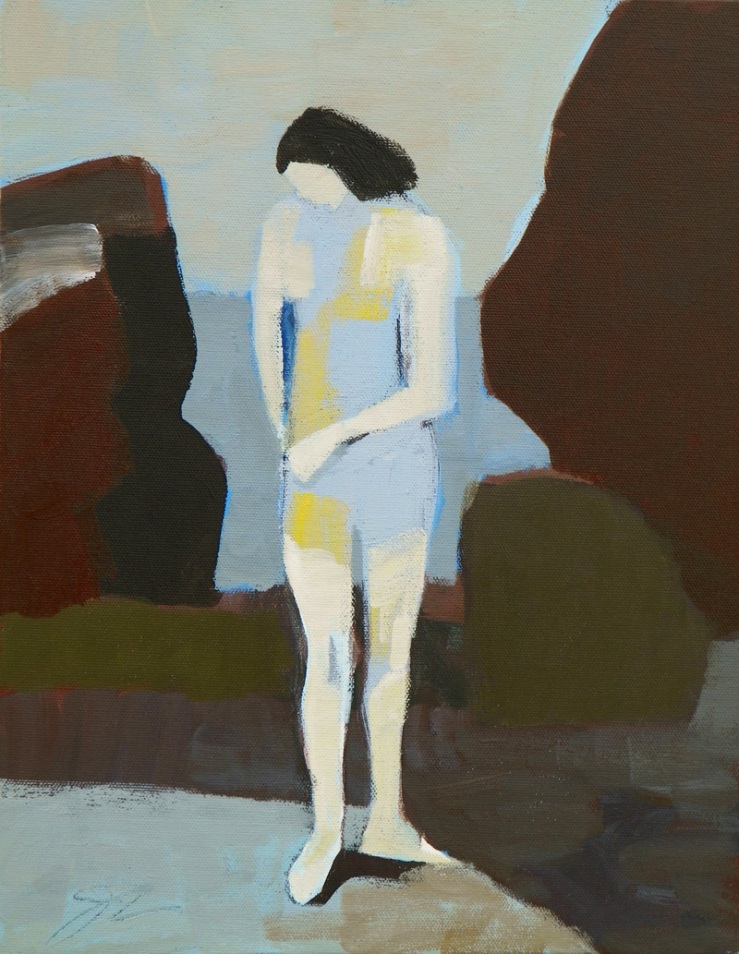
Jamie Chase’s well-known figurative work and his latest experiments with landscape painting combine in “Bather by the Sea“. An abstracted nude  stands on the shore, and the surrounding landscape seems to radiate her serene mood. Jamie’s “Seen” and “Iconic II” are also up for sale in the auction.

Ernest Blumenschein on Artfact

Lot 86: Ernest Blumenschein (1874-1960)- Loading
Starting bid: $700
Estimated price: $2,000-$3,500

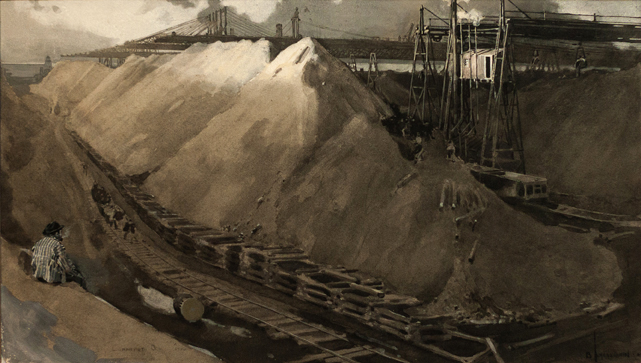
Ernest L. Blumenschein (1874-1960) was a founding member of the Taos Society of Artists, and is known for his stunning portrayals of the Southwestern landscape and people. In “Loading” the artist pays homage to his home state of Ohio. A lone figure smokes a cigarette and watches the activity at the Conneaut Mill across the tracks.

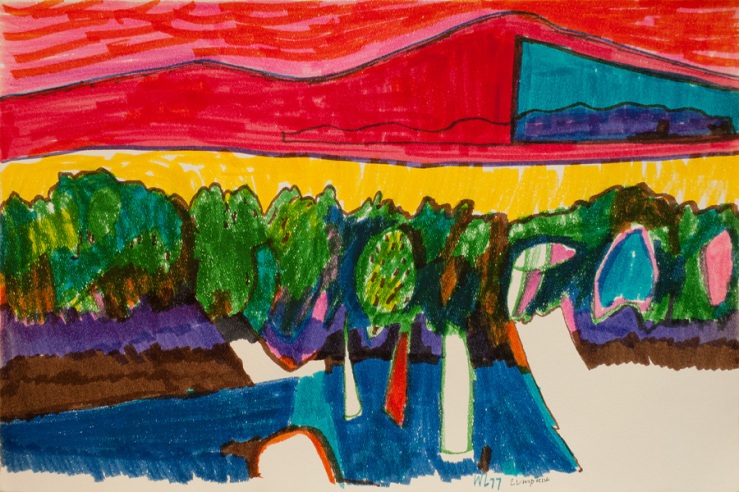
William Lumpkins- The Red Sky- Artfact Auctions

Lot 91: William Lumpkins (1909-2000)- The Red Sky
Starting bid: $400
Estimated price: $600-$1,000

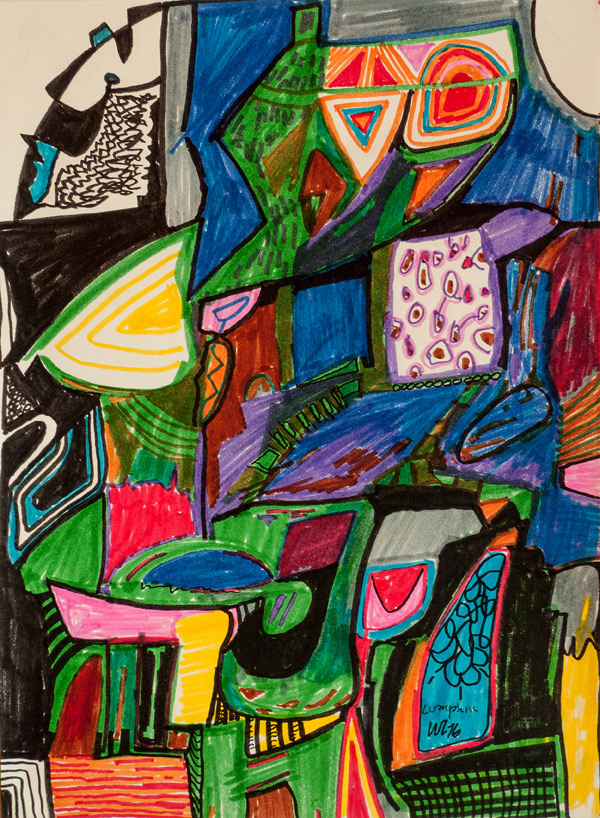
William Lumpkins- Pink Handle- Artfact Auctions

Lot 97: William Lumpkins (1909-2000)- Pink Handle
Starting bid: $400
Estimated price: $600-$1,000

The Red Sky” and “Pink Handle” are from a series of never-before-seen artworks by legendary Santa Fe modernist William Lumpkins (1909-2002). The work was recently released from the collection of a Lumpkins family member, and also features a series of serigraphs.

Ed Levin- Kachina- Artfact Auctions

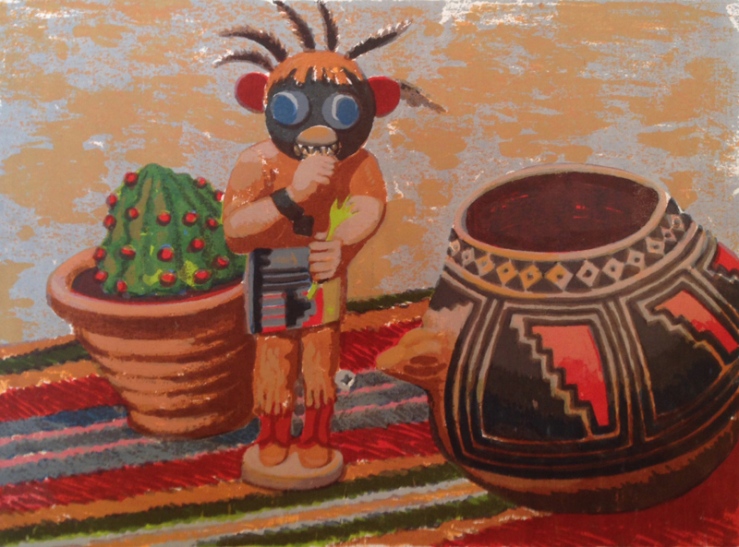
Lot 102: Eli Levin- Kachina (after Louie Ewing)
Starting bid: $175
Estimated value: $400-$600

Contemporary Southwestern painter and printmaker Eli Levin pays tribute to legendary Santa Fe printmaker Louie Ewing (1908-1983) in this silkscreen of a Pueblo kachina doll. In the 1930s, Ewing received a grant from the WPA’s Federal Art Project to pursue printmaking, and is largely responsible for the enduring popularity of printmaking among contemporary Southwestern artists.

Bettina Steinke- Santa Clara Dancer- Artfact Auctions

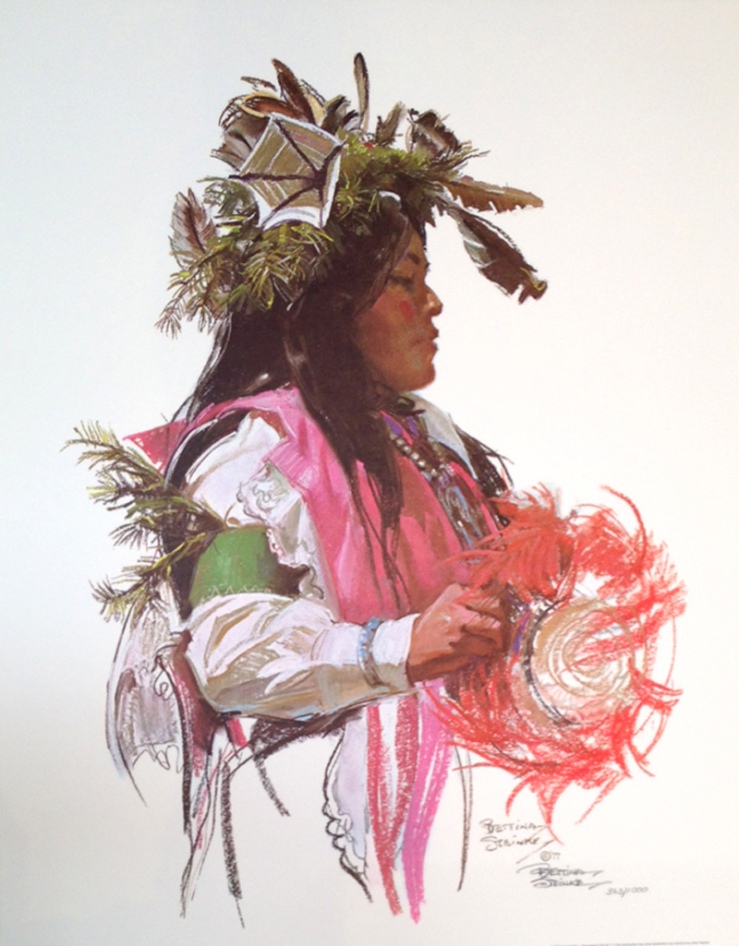
Lot 106: Bettina Steinke (1913-1999)- Santa Clara Dancer
Starting bid: $50
Estimated value: $400-$500

Bettina Steinke (1913-1999) moved to Taos in the 1950s, where she opened a gallery with her husband and mentored young artists. She moved to Santa Fe in the 1970s. The artist was known for her vivid portraits of the Pueblo people, and was particularly interested in traditional Native dancers. Other historic New Mexico artists featured in the auction include Fremont Ellis, John McHugh and Hannah Holliday Stewart.

Check out the European, American and Southwestern Art Auction on Artfact to browse all 116 lots, and connect with us on Facebook, Twitter and Pinterest to see more highlights from the sale. The auction ends on November 17 at 7:00 pm.

10 Women Who Changed Art History Forever, Pt. 2

Marina Abramovic- 10 Women Who Changed Art History- Matthews Gallery blog

Click here to read the first part of this blog post.

How do you measure influence? It’s easy to focus on art’s brightest stars and most famous imagery, but zoom in on the tapestry of art history and you’ll see that its fibers are often woven from close personal relationships and direct channels of inspiration. We tend to remember names like Caravaggio, Picasso and Pollock and overlook the other fish in their schools. The following women might not have received as much attention as their male contemporaries, but that doesn’t mean they had a lesser hand in directing the grand flow of things. Check out our picks, and let us know who would be on your list in the comments.

Georgia O'Keeffe- Ten Women Who Changed Art History- Matthews Gallery blog

6. Georgia O’Keeffe (1887-1986)

It was 1908, and a young O’Keeffe had just won a prize from the Art Students League for her still life Dead Rabbit with Copper Pot when she gave up painting all together. The artist was worried that she’d never truly distinguish herself in the realm of realism. Three years later she started fresh, enrolling in an art class taught by Arthur Wesley Down, who encouraged his students to let their emotions guide them.

“I found that I could say things with color and shapes that I couldn’t say any other way—things I had no words for,” O’Keeffe said. The artist created a series of innovative abstract charcoal drawings that caught the eye of her future husband, New York photographer and gallerist Alfred Stieglitz. She would continue throughout her career to build an emotional vocabulary of abstracted forms, strongly influencing her modernist contemporaries and later inspiring feminist artists like Judy Chicago. She’s now considered the Mother of American Modernism.

Peggy Guggenheim- Ten Women Who Changed Art History Forever- Matthews Gallery blog

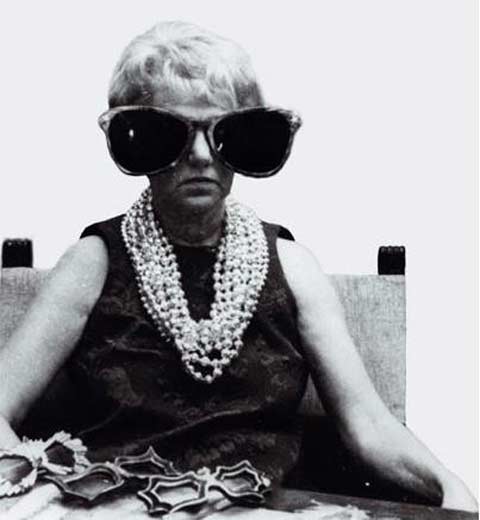
7. Peggy Guggenheim (1898-1979)

Guggenheim was born with the promise of a healthy inheritance. Her father died on the Titanic when she was a teenager, and at 21 she inherited more than $30 million in today’s currency. What to do with so much money? Guggenheim’s passion was art. Her first job was at the Sunwise Turn bookstore in New York, a bohemian hotspot that inspired her to move to Paris in 1920. There she met Man Ray, Constantin Brancusi, Marcel Duchamp and other influential modernists. By 1938 she’d opened a modernist gallery in London, where she showed the likes of Kandinsky, Calder, Ernst and Picasso.

The gallery got lots of attention from the public but lost money in its first year, so Guggenheim decided to open a museum instead. When World War II forced her to delay her plans, she focused on a buying “one picture a day” for her future museum collection. Ten Picassos, forty Ernsts, eight Miros, four Magrittes, three Dalis and one Chagall later, Guggenheim had one of the most important collections of 20th century art in existence. Her influence endures in the rich archives of the Solomon R. Guggenheim Foundation and the Peggy Guggenheim Collection.

Frida Kahlo- Ten Women Who Changed Art History- Matthews Gallery blog

8. Frida Kahlo (1907-1954)

Kahlo was born to a German father and Amerindian and Spanish mother in 1907, but she always claimed she was born in 1910 at the beginning of the Mexican Revolution. That might have been a slight distortion of the truth, but her life and art certainly mirrored the pain and the passion of Mexico’s modern rebirth. When she was a teenager, Kahlo was involved in a bus crash that left her in a full body cast. In the months afterward she took up painting to combat loneliness and boredom.

“I am the subject I know best,” Kahlo said. She drew influences from traditional Mexican folk art and American and European modernism in her colorful self portraits and still lifes, building new links between cultures and art movements but tightly focusing her subject matter on her own health and relationship struggles. During her lifetime, Kahlo was mostly known in Mexico as the on-again, off-again wife of muralist Diego Rivera, but in 1938 she had a solo show in the United States and a year later she exhibited in Paris, where the Louvre acquired one of her paintings.

Andre Breton called Kahlo a surrealist and others saw her work as Naive Art, but the artist defied labels. “I never painted dreams,” she said. “I painted my own reality.” Kahlo opened the door for women artists to openly explore their most personal experiences in their work, something that surely influenced the next artist on our list.

Louise Bourgeois- 10 Women Who Changed Art History- Matthews Gallery

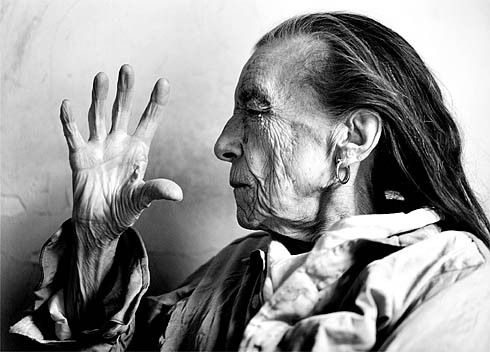
9. Louise Bourgeois (1911-2010)

Bourgeois’ artistic journey began in 1924 when she discovered that her father and her English tutor were having an affair. Her mother turned a blind eye, but Bourgeois spent the rest of her life staring the betrayal full in the face. A born and raised Parisian, she started studying art after her mother’s death in 1932 and met Fernand Leger soon after, who told her she was more of a sculptor than a painter.

After gaining some notoriety in Europe, Bourgeois moved to New York City in 1938 and hit a wall. Though she was respected among artists like Willem de Kooning, Mark Rothko and Jackson Pollock, her work wasn’t well known outside avante-garde circles. She was brutally honest in her explorations of memory, sexuality and family power dynamics, erecting monstrous spiders in sculpture gardens and immersing her viewers in scenes of violent patricide.

In 1982 the 70-year-old artist mounted her first retrospective at the Museum of Modern Art and finally told the story of her father’s infidelity to the public. She identified her body of work as the genesis of a genre called “confessional art”. Every piece in her oeuvre is autobiographical, a retelling of the trauma she’d experienced as a child and the effect it’d had on her life thereafter. By the time she died in 2010, she’d captured the imagination of a new generation of artists and scholars.

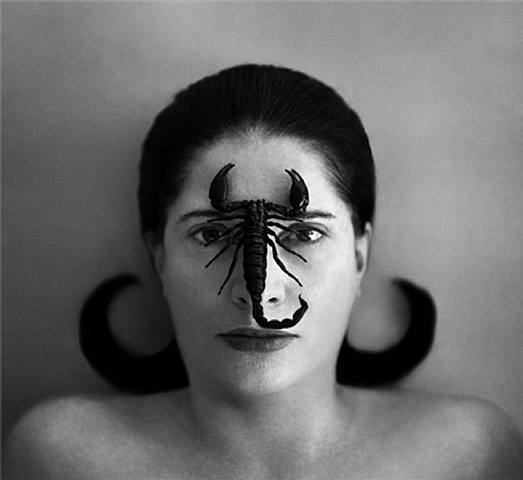
Marina Abramovic- Ten Women Who Changed Art History- Matthews Gallery blog

10. Marina Abramovic (born 1946)

Considering the ephemerality of Abramovic’s work, the performance artist’s rise to become one of the contemporary art world’s most notorious and polarizing figures is a remarkable story. Abramovic was born and raised in Belgrade, Serbia. Her mother kept tight control over her life through her early 20s, and she completed some of her first performance art pieces before her curfew at 10:00 pm. In her early work, she explored consciousness and the limits of the body within the context of performance art, pushing herself to exhaustion in various endurance tests.

Abramovic moved to Amsterdam in 1976, where she began a close relationship and artistic collaboration with performance artist Ulay Laysiepen. The duo continued to test their psychic limits, and also explored the idea of combining their identities into a single entity. They separated in 1988.

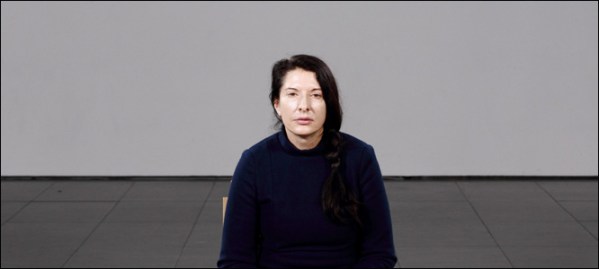
In 2005, Abramovic did a series of performances at the Guggenheim, and in 2010 she mounted a retrospective at the Museum of Modern Art. There she performed a 736-hour piece called The Artist is Present that was the subject of a documentary and received global attention.

Abramovic has been accused of chasing fame and creating a cult of personality. No matter her motives, the artist is a thought-provoking figure who’s impossible to ignore. She’s not a part of art history just yet, but she certainly makes a good future candidate.

Check out the first part of this blog post here, and follow us on Facebook, Twitter and Pinterest for more art news.
10 Women Who Changed Art History Forever, Pt. 1

Self portrait, Louise Elisabeth Vigee Le Brun, Matthews Gallery blog
Self portrait, Louise Elisabeth Vigee Le Brun

Click here to read the second part of this blog post.

Let’s be honest, the art establishment has always been a boy’s club, and women are most often honored in art history for overcoming gender-related cultural and societal obstacles. It’s easy to look past the artistic innovations of female artists when we’re sorting their work into a different category from that of their male contemporaries, or focusing solely on the glass ceilings they broke.
Of course, ignoring the gargantuan efforts of female creatives to gain respect and recognition in a male dominated world is a mistake as well, as is looking at innovation as a competition between artists of different genders.

Art history is an elaborate web of influence, and analyzing any artist’s place in it is a balancing act. One thing’s for sure: many women have formed vital links in the chain. Here’s why 5 female artists deserve recognition.

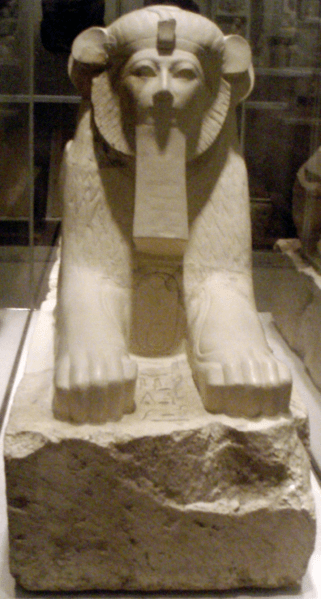
Sphinx of Hatshepsut, Matthews Gallery blog
Sphinx of Hatshepsut

1. Queen Hatshepsut (1508-1458 BC)

The fifth pharaoh of Ancient Egypt’s 18th dynasty probably wasn’t an artist herself, but as one of the most successful Egyptian rulers ever, she had a huge influence on art history. In her 22-year reign Hatshepsut brought great wealth to the empire through new trade networks and expeditions, and she was very good at promoting her accomplishments through art. Her many building projects were the envy of her successors, and statuary from her reign abounds.

Statues representing Hatshepsut sometimes sport the ceremonial attire of a pharaoh (including a traditional false beard), but she’s most often depicted in the feminine clothing that she probably wore at court. As a skilled warrior, she took the lioness deity Sekhmet as a symbol of the throne.

After Hatshepsut’s death many statues of the ruler were defaced, and later pharaohs tried to take credit for her building projects, but her influence on subsequent Egyptian styles is undeniable. Work from her reign is in nearly every major museum collection, and has helped shape modern interpretations of Ancient Egyptian art.

Self portrait, Artemisia Gentileschi, Matthews Gallery blog
Self portrait, Artemisia Gentileschi

2. Artemisia Gentileschi (1593-1656)

For years Italian Baroque painter Artemisia Gentileschi was mostly known for the events surrounding her rape as a teenager. She was assaulted by her private painting tutor Tassi, who said he would marry her but later reneged on the promise. Gentileschi’s father successfully sued Tassi for taking his daughter’s virginity in a publicly humiliating trial during which Gentileschi was tortured with thumbscrews and given a gynecological examination.

Soon after the court case Gentileschi married another painter and moved from Rome to Florence. It was the beginning of a stellar career, with coveted commissions from the Medici family and a spot as the first female in the Accademia delle Arti del Disegno.

Simplistic interpretations that relate Gentileschi’s work to her rape have dominated the attention of scholars, but the artist’s bold painting style and compositions make her one of the most innovative Baroque painters after Caravaggio. She took new angles on Bible stories to explore the complex emotional experiences of her subjects, and would often place a central figure in the extreme foreground to heighten the drama of her scenes and pull her viewers into the middle of the action.

Self portrait, Louise Elisabeth Vigee Le Brun, Matthews Gallery
Self portrait, Louise Elisabeth Vigee Le Brun

3. Louise Elisabeth Vigee Le Brun (1755-1842)

The French Neoclassical and Rococo painter was born in Paris and opened her own portrait studio in her early teens, scoring commissions from high profile nobles and rubbing elbows with masters of the day. When she lost her studio for lack of a license, she tricked the Academie de Saint Luc into showing her work and eventually gained official membership.

Vigee Le Brun is best known for her work as the portraitist of Marie Antoinette, who commissioned more than two dozen works from the artist. Her vivid, rosy depictions of the doomed queen in the Rococo style made Louise the most famous female painter of the 18th century. She’d ceded the title of royal court painter by the time of the French Revolution, but she still fled France during the conflict and took portrait commissions from nobles across Europe. However, the canvas that landed her on this list is a painting of the artist herself.

The self portrait, painted in 1787, was an image of Vigee Le Brun sporting a full, toothy grin. It was such a divergence from painting conventions thus far that it caused an uproar in the art world. “An affectation which artists, art-lovers and persons of taste have been united in condemning, and which finds no precedent among the Ancients, is that in smiling,” spewed one gossip columnist. “[Vigee Le Brun] shows her teeth.” The painting briefly made Louise’s smile as notorious as the Mona Lisa’s, and shattered a tradition that stretched back to the Greeks.

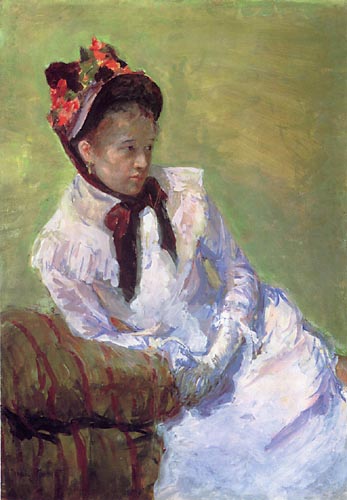
Self portrait, Mary Cassatt, Matthews Gallery blog
Self portrait, Mary Cassatt

4. Mary Cassatt (1844-1926)

Mary Cassatt was born in Allegheny City, Pennsylvania and attended the Pennsylvania Academy of Fine Arts, where most of the female students saw art not as a profession but as a privilege of high society. She left the Academy for Paris in 1866, frustrated with her teachers’ attitudes toward female artists and determined to study the masters on her own.

In France, Cassatt enlisted various private tutors and copied works in the Louvre to develop her skill. Impressionism was just beginning to rock the foundations of the Parisian art world, but it didn’t catch Cassatt’s fancy until after an unsuccessful stint in Chicago and a return to Paris in 1871. That’s when she met Edgar Degas, who introduced her to Impressionists and offered to show her work in one of their exhibitions.

Cassatt would become a hugely influential figure in the fledgling movement, and would later be named one of “les trois grandes dames” of Impressionism by art critic Gustave Geffroy.

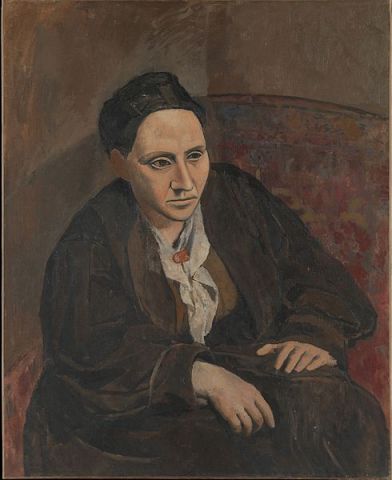
Portrait of Gertrude Stein, Pablo Picasso, Matthews Gallery blog
Portrait of Gertrude Stein, Pablo Picasso

Gertrude Stein (1874-1946)

“I always wanted to be historical from almost a baby on, I felt that way about it,” Gertrude Stein once declared. If anyone called into doubt the American modernist writer’s genius, Stein was the first to speak up about it.

Stein’s influence on the history of visual art is partly tied to her radical writing style, which helped define modernism and was crafted in close dialogue with the visual arts. Her significance also rests in her expansive art collection, which populated the walls of her Parisian home where influential modernists like Pablo Picasso, Henri Matisse, Ernest Hemingway and F. Scott Fitzgerald often congregated.

As the often stern den mother of the “Lost Generation” carefully curated her collection and cultivated close friendships with the artists she liked, she was shaping a radical revolution that would forever change the history of art.

Connect with us on Facebook and Twitter for more insight on the women who changed art history forever, and click here to read the second part of this blog post.

LEGENDS OF THE LOTS: Matthews Gallery Online Art Auction

March Chagall- L'Opera Poster (1964)- Matthews Gallery auction
L’Opera Poster, Marc Chagall

We’re very excited to announce the European Masters, American and Southwestern Art Auction, an online-only Matthews Gallery event running July 25-29. It’s our very first auction, and we’ve been working on it for more than a year. Of course, the works we’re putting on the block have stories behind them that are much older than that. Click here to browse the diverse catalogue, and read on to learn the legends behind four of the lots.

Henri de Toulouse-Lautrec- La Passagere du 54- Matthews Gallery auction
La Passagere du 54, Henri de Toulouse-Lautrec

Lautrec was on a steamship cruise from Le Havre to Bordeaux when a beautiful woman who was staying in cabin 54 caught his eye. He became infatuated with her but she was so aloof that he never got a chance to introduce himself. Lautrec refused to disembark until the ship reached Lisbon, where his friend Maurice Guibert finally dissuaded him from sailing on to Dakar, the mystery woman’s destination. The sketches he made of her on the boat would inspire La Passagere du 54.

Lithograph, on wove paper, Wittrock’s third (final) state, the full sheet, with green lettering. 

Click here to see this work in the catalogue.

Joan Miro- Dog Barking at the Moon- Matthews Gallery auction
Dog Barking at the Moon, Joan Miro

This lithograph has one of the longest titles of any of Miró’s art works. In french it is: “Le chien aboyant à la lune reveille le coq le chant du coq picote le crane du fermier Catalan posé sur la table à coté du pourron”. In English: “The dog barking at the moon wakes the cock, the song of the cock pecks at the head of the Catalan farmer resting on the table by the flask of wine”. Joan Miró (1893-1983) was a leading pioneer and proponent of surrealism. His work has a childlike style that at its heart is a sophisticated play of color, line and forms. Miro was a consummate master printmaker and over his lifetime he completed more than 1,000 fine art prints.

Lithograph in colors, number 12 from the edition of 80.

Click here to see this work in the catalogue.

Pablo Picasso- Untitled (From the 156 Suite, 16 mai 1971)- Matthews Gallery auction
Untitled (From the 156 Suite, 16 mai 1971), Pablo Picasso

Degas visits a brothel in this etching by the legendary Spanish modernist.

Number 23 from the edition of 50.

Click here to see this work in the catalogue.

Paul Gauguin- Mahana Atua (Noa Noa woodblock)- Matthews Gallery auction
Mahana Atua, Paul Gauguin

Gauguin sailed from France to Tahiti in 1891 and didn’t return home until two years later. He went there in search of an untouched beauty far away from “everything that is artificial and conventional”. Upon his return to Europe, he carved a series of ten woodblocks to illustrate a written account of his travels called Noa Noa. The prints, which were only his second attempt at printmaking, are considered some of his most innovative work. “Gauguin’s current effort will tomorrow provoke a complete revolution in the art of printmaking,” wrote critics Julien Leclerq and Charles Morice. This is presumed to be a proof apart from the signed and numbered edition of 100 published by the artist’s son, Pola Gauguin in Copenhagen in 1921.

Woodcut, 1894-5, on chine

Click here to see this work in the catalogue.

Make sure to check out the entire auction catalogue here, and connect with us on Facebook and Twitter for more legends behind the lots!

The 10 Artists Who Changed Art History Forever, Pt. 2

To top off our list of art history’s most influential players (click here for part 1), we had to make some tough decisions. Would Monet still be known today if not for a fateful trip to the seashore with Boudin? Who had a greater influence on abstract expressionism: Pollock or De Kooning? Browse our choices and let us know if you agree or disagree in comments below or on Facebook, Twitter and Pinterest.

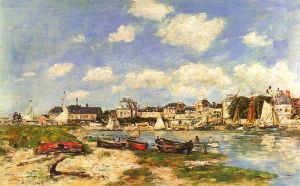
Eugene Boudin, click the image to read the Matthews Gallery blog
Trouville, Eugene Boudin

 6. Eugene Boudin (1824-1898)

French painter Eugene Boudin grew up riding across the English Channel on his father’s steamboat between his home village of Honfleur and the city of Le Havre. Boudin’s mother put an end to the voyages when the young boy nearly drowned, and the family moved to Le Havre to open a picture frame shop. Perhaps it was these early years at sea—and that terrifying dip in the tumbling waves—that drove Boudin to create the small but dynamic compositions that would directly inspire Impressionism.

As a young man Boudin opened his own framing shop and showed work by artists such as Constant Troyon and Jean-Francois Millet. At 22 he started painting full-time, capturing coastal scenes with an impeccable eye for light and a keen interest in the social interactions of beach-goers. He was greatly influenced by the 16th century Dutch masters, and was one of the first French painters to work in the outdoors.

Boudin moved to Paris on a scholarship when he was 23 and soon met the teenage Claude Monet. Monet was working as a caricaturist on the streets of Paris, but Boudin convinced him to travel to Normandy and paint en plein air. In 1874 Boudin showed work in the first Impressionist exhibition alongside Monet’s pivotal Impression, Sunrise, which was painted in Le Havre and inspired the name of the new movement. Without Boudin’s encouragement, Monet may never have moved past charcoal.

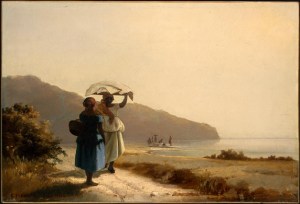
Pissarro, click the image to read the Matthews Gallery blog
Two Women Chatting by the Sea”, Camille Pissarro

 7. Camille Pissarro (1830-1903) 

Picasso and Matisse called Paul Cezanne “the father of us all”, but there’s always a mentor behind a master. Cezanne was heavily influenced by Danish-French Impressionist and Neo-Impressionist painter Camille Pissarro. “He was a father for me,” Cezanne said. “A man to consult and a little like the good Lord.”

Pissarro grew up on the island of St. Thomas in the Danish West Indies and attended a boarding school near Paris. In school he studied the French masters and excelled at drawing and painting. He moved to Paris in 1855 to apprentice with Anton Melbye and Jean-Baptiste-Camille Corot. While Corot worked on his paintings in the studio, Pissarro insisted on painting en plein air and often finished works in one sitting.

The artist was criticized for his technique, which often exposed the rougher, less picturesque side of the French landscape, but his quick, intuitive methods attracted a small group of artists who would soon be known as the Impressionists. Pissarro became their patriarch, and was the only artist to participate in all eight Impressionist exhibitions. However, it was his switch to Neo-Impressionism at 54 and his great influence on Post Impressionism that landed him on this list. Pissarro’s impulse to look deeper into the landscape and trace every rough edge would inspire Seurat, van Gogh, Gauguin and Cezanne in their revolutionary explorations of perspective that would fracture (and eventually completely dissolve) the classical picture plane.

Pablo Picasso, click the image to read the Matthews Gallery blog
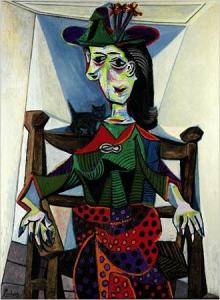
Dora Maar au Chat, Pablo Picasso

 8. Pablo Picasso (1881-1973) 

Pablo Picasso is arguably the most famous—and prolific—artist of the 20th century. He created roughly 13,500 paintings and hundreds of thousands more prints, engravings, illustrations and sculptures over the course of his 75-year career. Though he’s famous for co-developing Cubism, it was his explorations into all corners of the plastic arts that made him so influential. No matter the medium or style, Picasso had a hand in radically changing it all.

The artist was born in Malaga, Spain. His father was a professor of art who began formally training his son from a very young age. By 16, Picasso had gained entrance to the prestigious Royal Academy of San Fernando. In the early 1900s he moved to Paris, where he met art collector Gertrude Stein and many of the most famous artists of the time. He started working with Georges Braque in 1909, and the close friends developed a style that pushed Cezanne’s explorations of multiple perspectives to new extremes.

Cubism encouraged artists to analyze objects and break them into thousands of pieces, and similarly shattered the art world into myriad Modernist movements from Futurism to Constructivism.

Pollock, click the image to read the Matthews Gallery blog
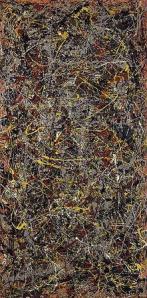
No. 5, 1948, Jackson Pollock

9. Jackson Pollock (1912- 1956) 

Jackson Pollock was called “Jack the Dripper” and “The Worst Living Artist in America” by the media, and a large slice of the public saw him as a reclusive drunkard who dealt the killing blow to order and sense in art. Sometimes when you’re drumming up an art revolution, things have to get messy.

Pollock grew up the youngest of five brothers in Arizona and California. He and his brother Charles moved to New York City in 1930, where he studied at the Art Students League and worked for the WPA Federal Art Project. In 1936 he took an experimental workshop on liquid paint that would later influence his famous drip paintings. Under the watchful eyes of collector Peggy Guggenheim, art critic Clement Greenberg and his wife Lee Krasner, who he married in 1947, Pollock would become the figurehead of the Abstract Expressionist movement and radically change the world’s definition of art.

Greenberg saw Abstract Expressionism as the final step in painting’s inevitable reduction to its most essential elements. There was an unmatched purity to Pollock’s atmospheric, gravity free color fields that only the eye could traverse. “Jackson was the greatest painter this country has produced,” Greenberg mused. Whether you agree with the critic or not, Pollock undoubtedly subverted figurative painting in an unprecedented way, and changed art history in the process.

Andy Warhol, click here to read the Matthews Gallery blog
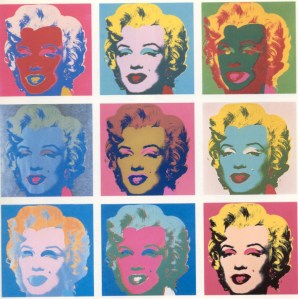
Marilyn Monroe, Andy Warhol

10. Andy Warhol (1928-1987) 

Andy Warhol was born in Pittsburgh, Pennsylvania to Austro-Hungarian immigrants. In third grade he developed Sydenham’s Cholera, a disorder of the nervous system that left him bedridden for months at a time. Isolated from his peers, the shy child became a voracious student of pop culture. Just a few years later he would build his own towering pedestal using the very figures and symbols that he pinned on his bedroom walls.

Warhol graduated from high school in 1945 and attended the Carnegie Institute of Technology for commercial art. In 1949 he moved to New York City, where he worked in the publishing and advertising industries and got his Bachelor of Fine Arts degree in pictorial design. In the 1950’s RCA records hired Warhol as a designer, where he pioneered innovations in various image-making techniques, most notably in screen printing. At the same time he was using similar processes—and subject matter—in his fine art, which he showed in galleries around New York. It was an approach to art that offended many critics at the time, who accused Warhol of succumbing to the homogenizing forces of consumerism.

This was Warhol’s true impact on art history: to show contemporary artists that they couldn’t avoid or ignore the foundational social changes affected by the mass media. Whether he was exploring identity, vanity, sexuality, fame or nothing at all, Warhol was molding the mercurial landscapes of Modern and Postmodern art.

Don’t forget to read part 1 of this series, and connect with us on FacebookTwitter and Pinterest to let us know who you would choose!

The 10 Artists Who Changed Art History Forever, Pt. 1

Over the next two weeks, we’re paying tribute to 10 painters who changed the course of art history. Our first five picks range from Il Divino to the “painter of light”. Who do you think we missed? Connect with us on Facebook, Twitter and Pinterest to join the discussion, and click here to read part 2!

Giotto, "The Kiss of Judas"
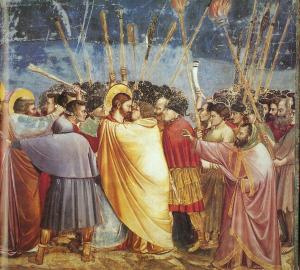
Giotto, The Kiss of Judas

1. Giotto (1266/7-1337)

The Italian painter and architect was most likely born in Florence, the city where he would live and work for his entire life. Legend has it that the young Giotto was herding sheep and stopped to sketch the animals on a rock when famous Tuscan painter Cimabue strolled by and took him as an apprentice. One of art history’s most passionate debates centers on whether Giotto completed parts of Cimabue’s frescoes at Assisi. Regardless, it was Giotto’s break from the traditions of Cimabue and his contemporaries that helped spark the Italian Renaissance.

In Giotto’s frescoes at the Scrovegni Chapel, the stylized Byzantine figures that were popular at the time are nowhere in sight. His figures are solid and sculptural, their robes draping naturally from their frames. This is a painter who drew inspiration from what his eyes could see. 16th century biographer Giorgio Vasari wrote that Giotto started “the great art of painting as we know it today, introducing the technique of drawing accurately from life, which had been neglected for more than two hundred years.”

The Matthews Gallery, Michelangelo
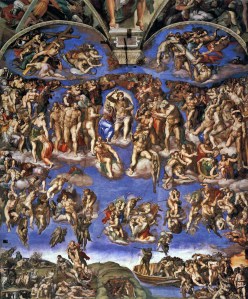
Michelangelo, The Last Judgment

2. Michelangelo (1475-1564) 

In contrast with Giotto, this prolific sculptor, painter, architect, poet and engineer left behind a paper trail that makes him one of the most well-documented artists of his time. Michelangelo completed the Pieta and David before he turned 30 and redesigned part of St. Peter’s Basilica at 74. In between, he completed the ceiling frescoes of the Sistine Chapel, spent 40 years creating Pope Julius II’s tomb and worked on a multitude of other projects. Even in his time he was known as Il Divino, “the divine one”.

The Last Judgment fresco on the altar wall of the Sistine Chapel, one of Michelangelo’s final works, is the fulfillment of Giotto’s artistic legacy. His massive figures seem to press from the wall with all of the terriblita (awe-inspiring grandeur) of living giants. Giorgio Vasari, who wrote a biography of Michelangelo during his lifetime, called the artist’s works the apex of the Renaissance. They also inspired Mannerism, the movement that proceeded the Renaissance in Western art.

The Matthews Gallery, Caravaggio
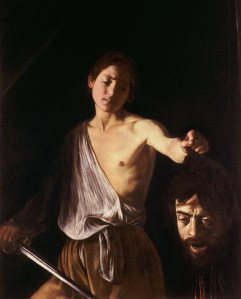
Caravaggio, David with the Head of Goliath

3. Caravaggio (1571-1610) 

It’s no secret that Caravaggio was an unpleasant guy. A public notice from 1604 accused him of crashing gatherings armed with a sword, “ever ready to engage in a fight or an argument, so that it is most awkward to get along with him.” Perhaps that’s why he was swiftly forgotten after his death in 1610 and wasn’t recognized for his great influence on art history until three centuries later.

The artist was born in Milan and grew up in the city of Caravaggio. His parents were both dead by his teen years so he started an apprenticeship with painter Simone Peterzano, who was Titian’s pupil. He moved to Rome in 1592 and rose to fame as he developed the style that would come to define Baroque painting. His figures were incredibly realistic, their skin pocked, their feet dirty and their faces full of emotion. They were illuminated by high key chiaroscuro lighting. Caravaggio fearlessly placed the common people in the spotlight, a coup that would serve the Counter-Reformation well.

The Matthews Gallery, Velazquez
Velazquez, Las Meninas

4. Velazquez (1599- 1660) 

Diego Velazquez’ oeuvre mostly consists of pompous portraits of the Spanish royal family and other powerful and privileged Europeans. It was a twisty play on this genre that would secure his place in art history. Velazquez was born in Seville and educated well. He worked his way up the ranks of painters in his hometown and then hopped to Madrid, where a connection with the king’s chaplain and the timely death of the Spanish royal court painter helped him land the coveted position in 1624.

Four years before his death, Velazquez painted his masterpiece Las Meninas. The painting shows Spanish princess Margaret Theresa standing next to the painter himself, who’s working on a large canvas. In a mirror behind them are the faces of the king and queen. The sophisticated work’s bifurcating viewpoints throw its true subject into question and place Velazquez far ahead of his time. More than two hundred years later the painter’s work would inspire the Realists, the Impressionists and the Modernists.

The Matthews Gallery, JMW Turner
JMW Turner, Rain, Steam and Speed

5. Turner (baptized 1775-1851) 

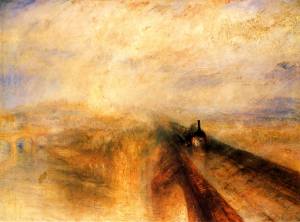
JMW Turner was known as the “painter of light”, but the artist with the ethereal subject matter had a very solid impact on art history. The Romantic landscape painter was born in London to a barber and wig maker. He showed his drawings in his father’s shop as a young boy, and studied under architects and a draftsman before enrolling in the Royal Academy of Art as a 14-year-old. His reputation swiftly grew, and he had his own studio by 18. However, when he verged away from picturesque landscapes in favor of stormier subject matter, Protestant society was shocked.

In his famous oil Rain, Steam and Speed, Turner depicts a locomotive as a surging pillar of tumbling air with a black smokestack as its only identifying characteristic. As details melted away and Turner focused on the continuous flux of air and light, critics started turning against the artist. An 1802 review called his works “too indeterminate and wild”, and writers were keen to tie his chaotic paintings to radical new political and social movements. Turner became increasingly isolated from society and often refused to sell his paintings, but his work had an undeniable influence across Europe, inspiring Claude Monet and other French artists in their steps toward Impressionism.

Sound off on FacebookTwitter and Pinterest and tell us who we missed, and click over to part 2 for our last five picks.