The Boundless Moment: All Together Now

Eric-Thompson-Artist-Family

Eric G. Thompson’s ‘The Boundless Moment
opens Friday, August 15 from 5-7 pm
and closes August 28.

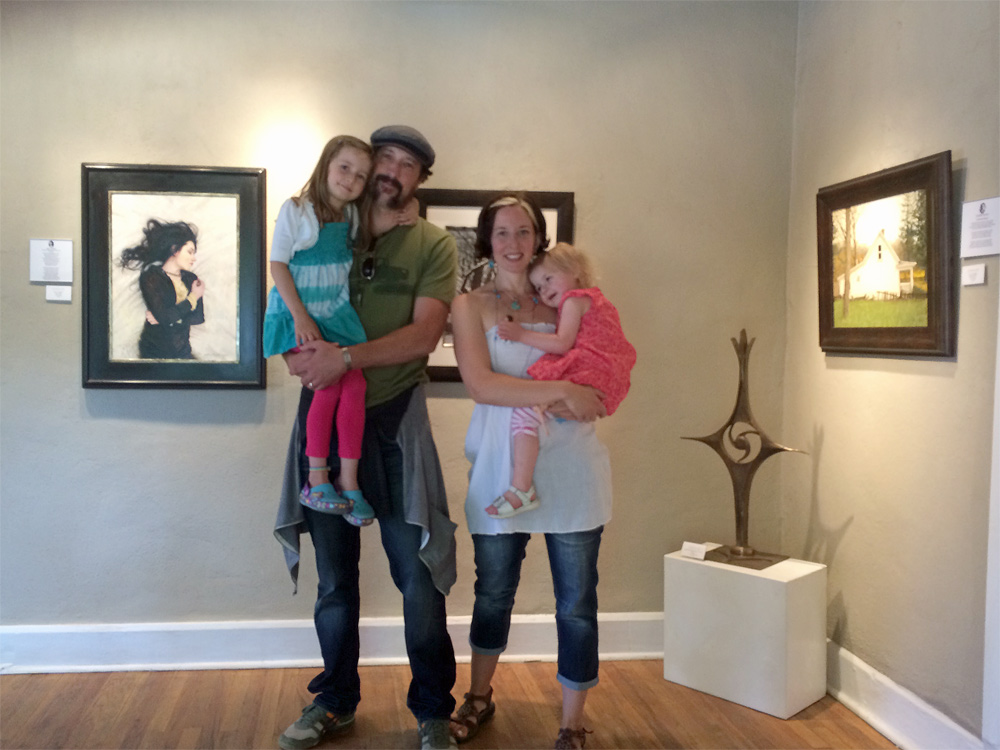
Eric and Hilary Thompson’s daughters dash around Matthews Gallery, exploring their father’s new solo exhibition ‘The Boundless Moment.’ They’ve just finished a long car ride from Salt Lake City but they’re bursting with energy.

Over the past year the children have grown alongside these canvases and panels, watching as thousands of brushstrokes transformed into rolling landscapes and rosy skin. Now these familiar images have magically appeared in our lofty, brightly lit space, sparking the girls’ curiosity. They stop before each work, craning their necks to get a good look.

The girls’ vivacity matches Hilary’s temperament. She keeps an eye on them as she chats and laughs with us. Eric is a quieter presence. He strolls around the gallery, analyzing the arrangement of the work and reading the legendary poems we paired with them. Eric likes to think of his paintings as ‘visual haikus,’ which inspired us to select writings by Frost, Dickinson, Lowell and others to display during the show.

‘The Boundless Moment’ is something of a family act. Hilary was Eric’s model for the painting ‘Morning Cup,’ and wrote an accompanying poem that will debut at the opening reception. ‘The Chiseled Mother’ is a passionate meditation on parenthood and aging. As Eric cradles one of his daughters in his arms, you can tell that he’s just as inspired by the radiant spirit of his children. 

Read Hilary’s poem below, and make sure to attend Eric’s artist reception on Friday, August 15 from 5-7 pm.
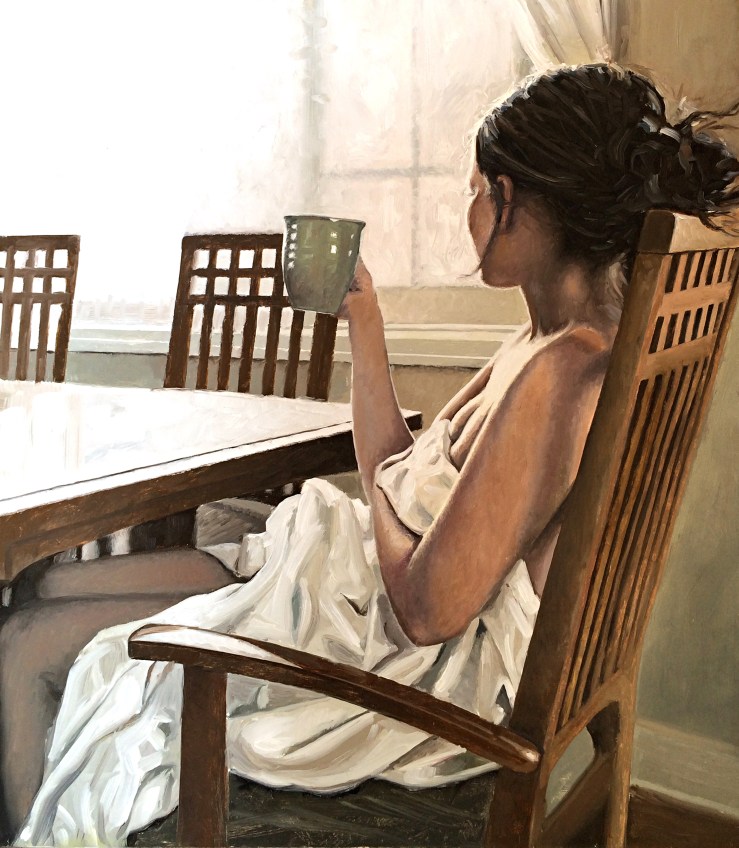
Eric G. Thompson- Morning Cup- Matthews Gallery blog Eric G. Thompson, Morning Cup, Oil on Panel

From Hilary Thompson:

The Chiseled Mother

I honor this body
This matryoshka

The delicate lines of my eyes
Like tissue paper
Crinkled from sun beams
Washboards slow the momentum
of tears

These ears, these conches
That entombed the beeping screaming alarms
Echoing endlessly on exhausted drives home
Mercifully quieting with age
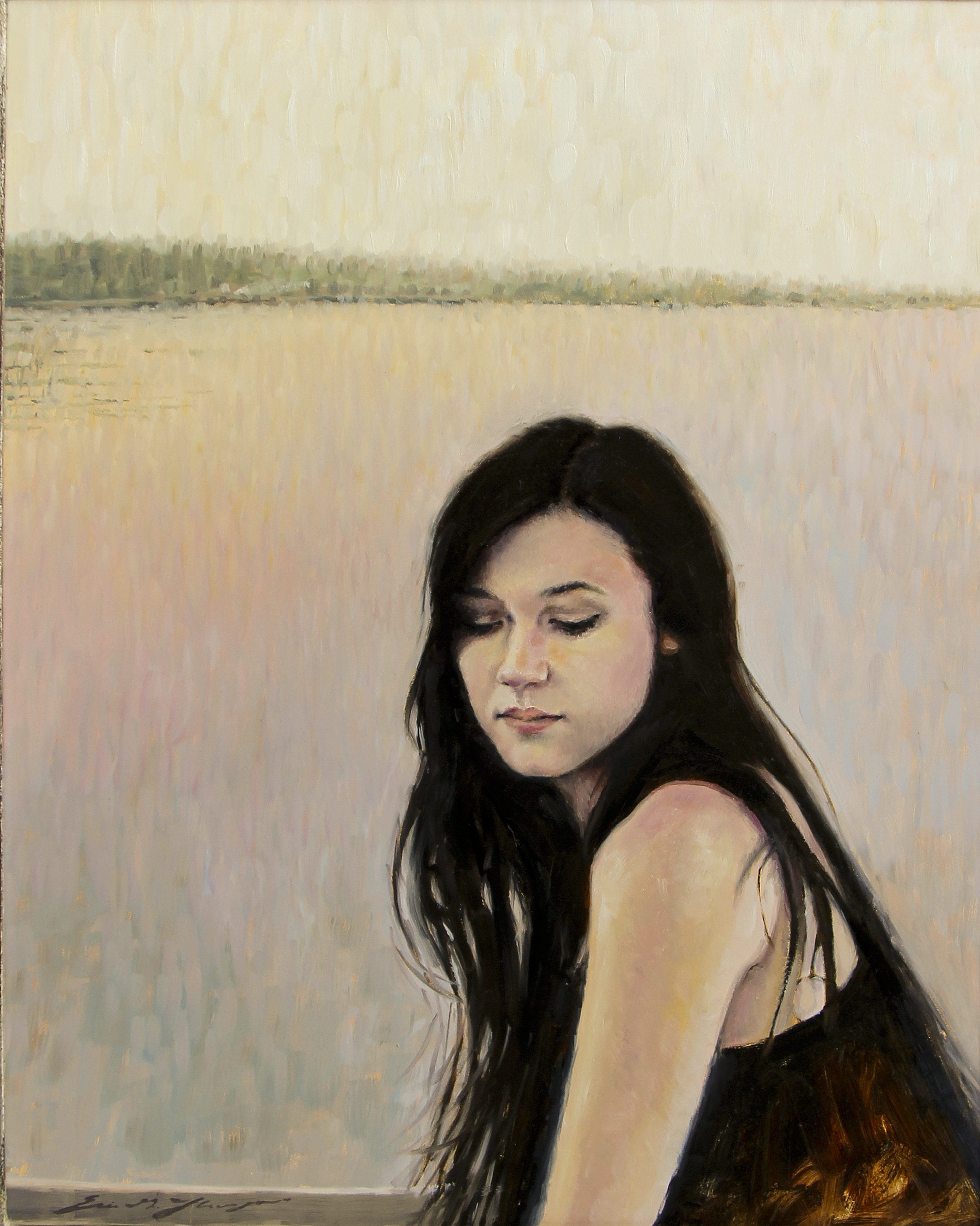
Eric G. Thompson- Waiting for a Song- Matthews Gallery blog


Eric G. Thompson, Waiting for a Song, Oil on Panel

This mouth
Which broadcasts comforts, screeches, praise
Fractures the tightrope of vexation

These beautiful, perfect arms
That embraced defeat
Carried a child to the surgeon’s knife
Willing arms
That waved, furrowed, aching
Sturdy farewells

This heart that beats out
The anthem of the womb
I Am
I Am
I Am
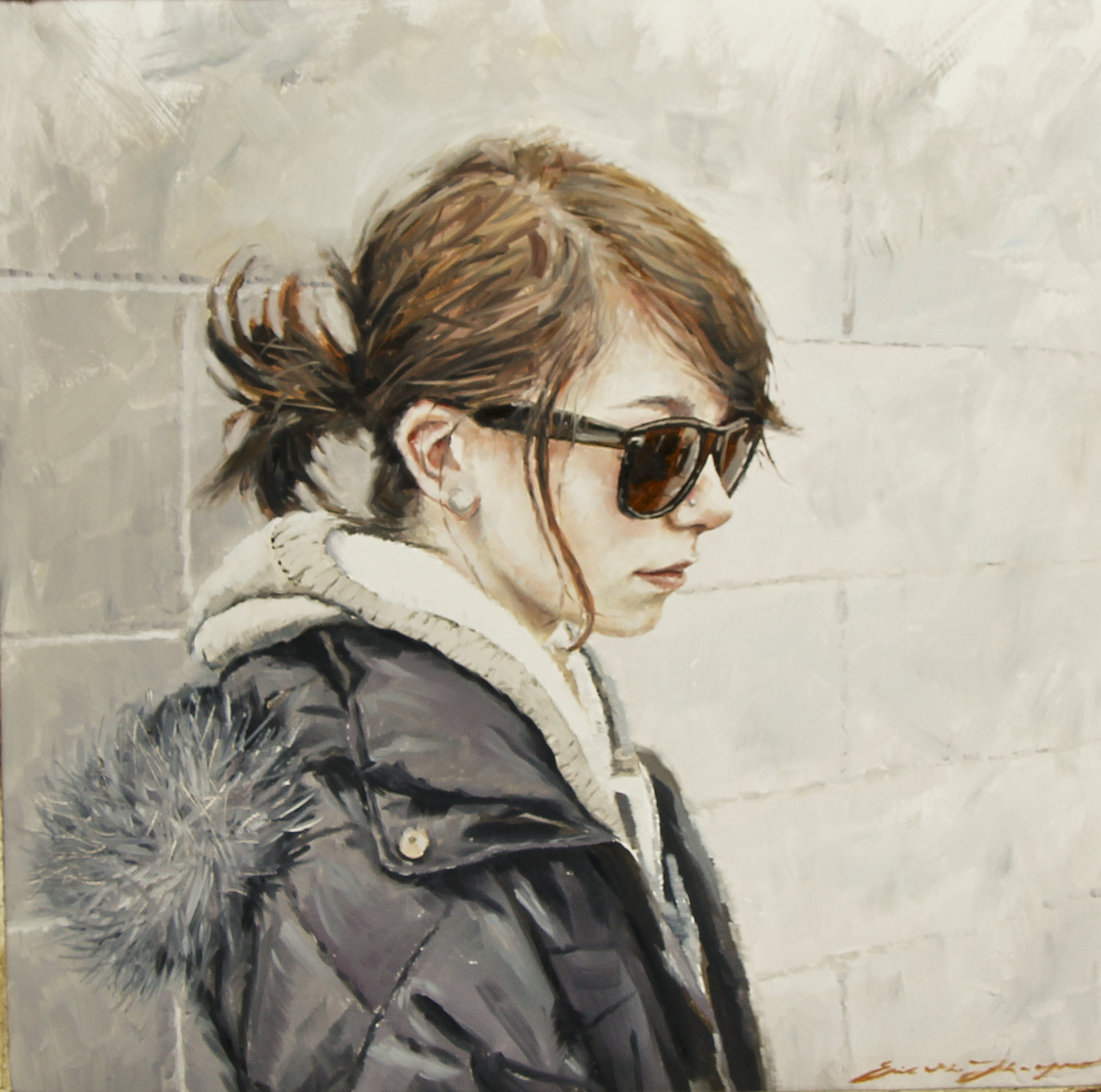
Eric-Thompson-Art-CoffeeshopGirl

Eric G. Thompson, Coffee Shop Girl, Oil on Panel

A womb
That is the definition of Creation
Bringing forth what does not exist
Into existence
Torn out of me
With upheaval and sanguine waves of nurture

These knees that caught me
When my frame buckled
Unable to support my grief

These marks, stretched
Yawning tiger stripes
Where my body gave room
Shimmer as silver reminders of a past shape
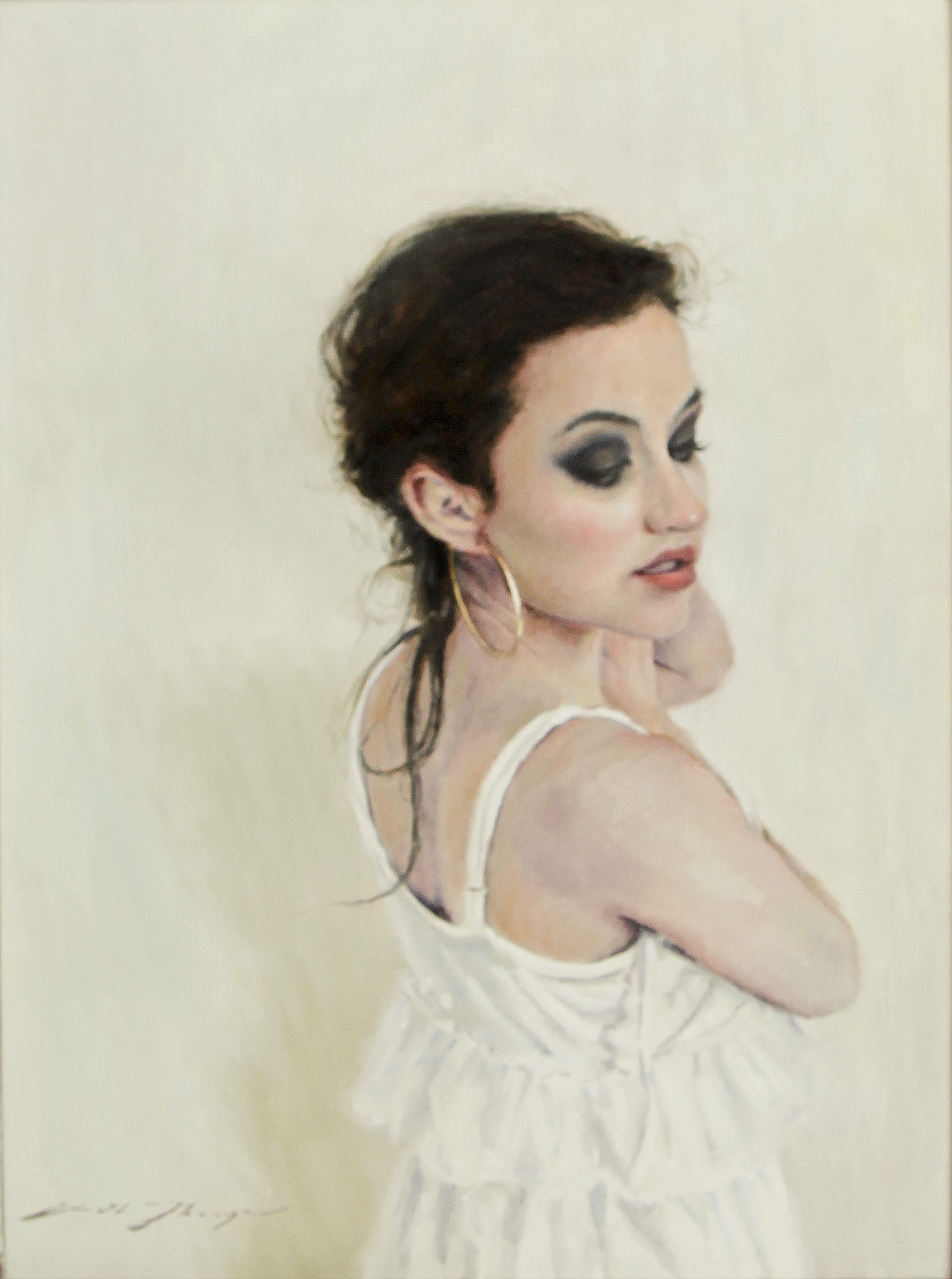
EricGThompson-Art-Evening

Eric G. Thompson, Evening, Oil on Panel

These feet
Planted.  Supporting.
Rooted even in motion, substantial
Pacing halls, hospital rooms
Threshing carpets bare-threaded

I am the red rock slot canyon
Worn smooth, fissured, curved
Sculpted
By this flawed life

This body is a shrine
A Holy place, a pilgrimage
A masterpiece painted stroke by stroke
By the breathtakingly exquisite nourishment
Of not getting what I want.

Breathe that in,
Chiseled edifice of the Mother,
Slather it like salve into your stripes,
You silver tiger.

 Connect with us on Facebook, Twitter and Instagram to learn more about Eric G. Thompson.
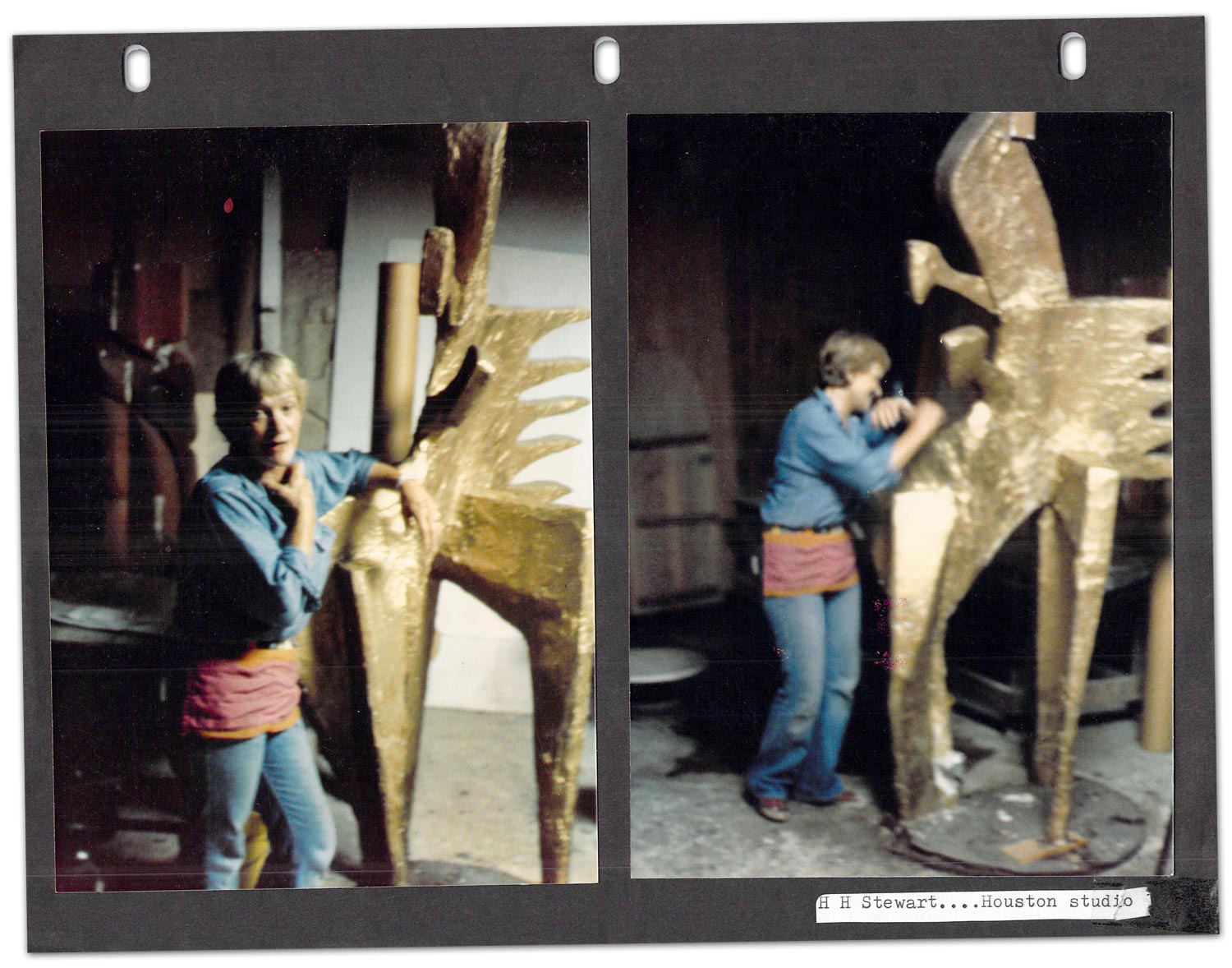
Hannah Holliday Stewart: The Messengers

Hannah-Stewart-Blog1

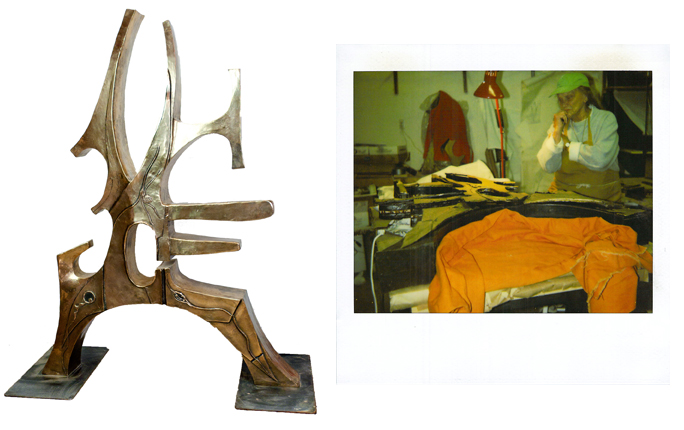
Candid shots of the secretive artist with her sculpture “Survivor“, Hannah Holliday Stewart archives

At last Friday’s opening for Hannah Holliday Stewart: An Artistic Legacy Rediscovered, art enthusiasts who saw the press coverage for the show came armed with a diverse array of questions.

“What was her family like?”

“Where did the full-scale models in those photos end up?”

“What’s ‘Ockum’s Razor‘ ?”

“Who’s Brad?”

Of course, the most frequent question was also Stewart’s most impenetrable mystery: why did the sculptor abruptly leave Houston, the launching point and epicenter of her nationally renowned artistic career? In our explorations of Stewart’s archives over the past few weeks, we’ve stirred up as many questions as answers.

Stewart was resolutely private, preferring to tightly focus on her artwork in interviews, exhibition materials and even her diaries. A catalog for her 1975-6 solo exhibition at the Houston Contemporary Arts Museum provides little more information on Stewart’s personal life than a birth year and a brief sketch of her educational history.

“Hannah was a very private person with a lot going on in her head,” close friend Dayton Smith told us. “I learned when to be around her and when not.”

Many of Stewart’s works, on the other hand, were always in the public eye. Kids lounged in the crook of her 11-foot sculpture in Hermann Park, students at St. Thomas University studied under her concrete-and-steel work on campus, and politicians were often photographed beside her “Libertad” fountain as they passed through the courtyard of Houston’s World Trade Center building.

For this week’s blog, we’re taking cues from Stewart’s ghost and focusing on the rich universe of her sculptures. Look below for new insight on five artworks, with behind-the-scenes materials from the artist’s files.

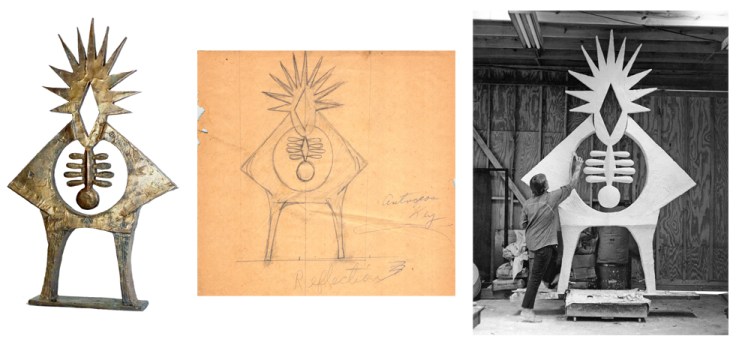
Hannah Stewart- Atropos Key Sculpture with Preparatory Sketch and Full-Scale Model- Matthews Gallery Blog


 Preparatory sketch for ‘Atropos Key’ and full-scale plaster model in Stewart’s studio

Atropos Key’ remains Hannah Holliday Stewart’s most well-known sculpture in Houston. Our maquette’s monumental counterpart stands on a hill in Hermann Park, measuring at 11 feet tall and 1,200 pounds. It debuted to much fanfare in 1972. From the Houston Chronicle’s August 11, 1972 edition:

“Out on the hill beyond Miller Theatre the blanket lollers who tune in to night concerts and shows from a horizontal position will have fresh ‘company.’ Overlooking the stage, now, is a bronze vertical figure.

‘Atropos Key,’ the title of which derived from one of the three fates in Greek mythology, was given to the city by Mrs. Patricia S. Woodward of Houston.

Strollers in the park may well stare at it and wonder what it all means…. Miss Stewart’s piece, in its new location, deserves the looking at, the ‘experiencing’ and the consideration of its meaning for you. Is it birth and, more encompassing than that, renewal?”

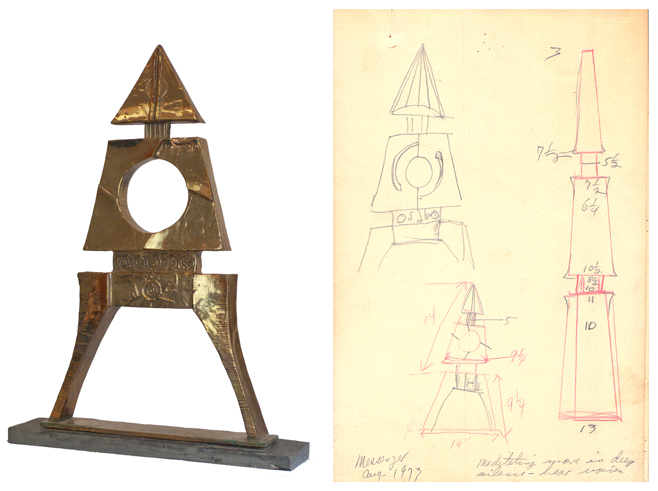
Hannah Stewart- Messenger Sculpture with Preparatory Sketch- Matthews Gallery BlogPreparatory sketch for ‘Messenger’ dated August 1973

Stewart’s ‘Messenger’ appeared on the cover of Houston Arts Magazine’s performing arts edition in October, 1982. Stewart was a fan of Russian composer Alexander Scriabin, and often listened to classical music in her studio.

A blurb inside the magazine traces the musical roots of ‘Messenger’:

“Sculptor Hannah Stewart… sees her work as an artist’s shorthand using symbols to communicate complex and abstract ideas— like a composer uses the symbols of musical notes to convey a spiritual idea in a sensuous form.

In Messenger… Stewart sees a parallel between the structure-strength-shapes interplay of her work and compositions played by Nathan Milstein and Bella Davidovich.”

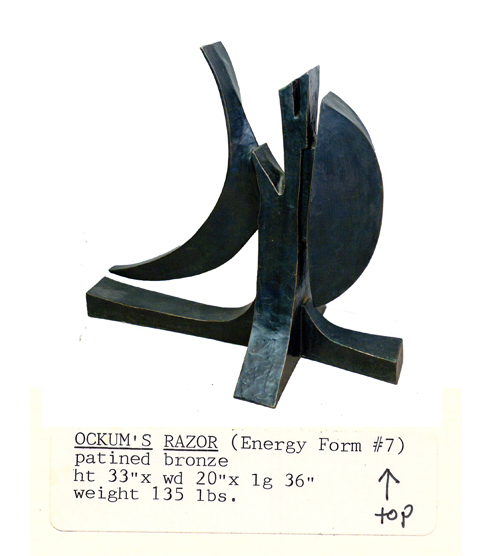
Hannah Holliday Stewart- Ockum's Razor Sculpture with Original Typewritten Label- Matthews Gallery BlogOriginal typewritten label for ‘Ockum’s Razor’

Stewart was known for her mythology-inspired artwork, but that was far from the only subject she explored.

“Her studies in literature, mythology, metaphysics, esoteric philosophy, religion, science, astrology, dance and yoga suffuse her output, revealing in form and textures,” wrote Stewart’s friend Dayton Smith in a letter to the gallery.

In ‘Ockum’s Razor’, Stewart turned to science for inspiration. The title refers to a problem-solving principle devised by 14th century logician and Franciscan friar William of Ockham (c. 1287-1347). The principle states that “Entities should not be multiplied unnecessarily.” In other words, the simplest path to an answer is the best one.

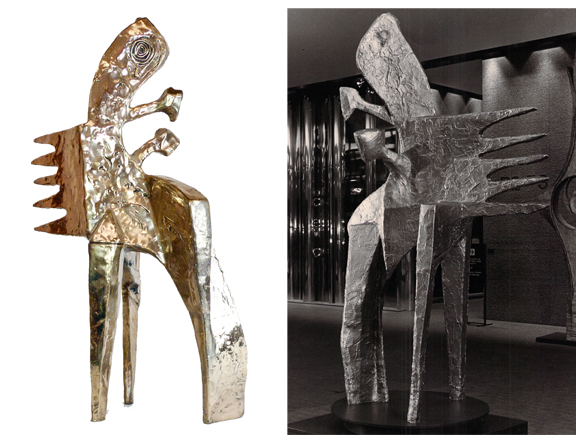
Hannah Holliday Stewart- Maquette and Full-Scale Survivor Sculptures- Matthews Gallery blog


 Maquette and full-scale versions of ‘Survivor’

An article about Stewart’s work appeared in the local paper of her childhood home of Birmingham in 1994. In the story, Stewart explains the inspiration for ‘Survivor‘. From the August 1, 1994 edition of the Birmingham Post-Herald:

“I was teaching welding at the university, and I’d go to the welding studio and talk to friends of mine, and there were a lot of men coming down from Detroit who’d lost their jobs, and they were so tense and angry about having to reform themselves, to learn to do welding or something else at the age of 55, after having been an auto worker. I reacted to that force within them, and the drastic changes people have to make to survive.”

 Hannah Holliday Stewart- Einsteins Song and Polaroid of Hannah Holliday Stewart working on the sculpture in her studio- Matthews Gallery blog

Polaroid of Hannah Holliday Stewart in her Albuquerque studio working on ‘Einstein’s Song’

Stewart was 80 years old in the Polaroid above and still hard at work on her bronze forms, though she never exhibited again in her lifetime.

Here’s an excerpt from a typewritten artist statement Stewart wrote a year later:

“For me, the image should be an intellectual and emotional symbol plucked from the fringe of the imagination, it should suggest a classic truth and not be confused with social comment. The image at its most successful strikes a common chord of sensations in every viewer, and yet leaves each viewer with his/her own particular interpretation.”

See Hannah Holliday Stewart: An Artistic Legacy Rediscovered through July 18, and connect with us on Facebook, Twitter and Instagram for more information on the artist.

NEW IN THE GALLERY: The evolution of David Grossmann

David Grossmann, Matthews Gallery
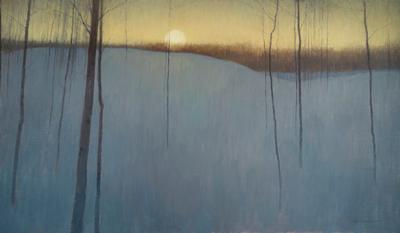
“Almost” by David Grossmann

David Grossmann always knew he wanted to be an artist. Even before his first painting lessons with his grandmother at 10 years old, he was an avid sketcher, filling notebooks with intricate drawings of dragons and the floor plans of medieval castles. By 16, David was taking portrait commissions and doing book illustrations for a publishing company. Still, he couldn’t quite discern a path that would turn his passion into something more.

“I didn’t know how to get there as far as making a living as a professional artist,” the 29-year-old says. Finding that bridge would take a while, but it’s safe to say that he’s officially crossed it. We’re proud to be the first gallery to represent David and his work. It’s just the latest high point in an already impressive artistic career.

David was born in the United States and moved to Chile when he was two years old. It’s a place of stunning, harsh natural beauty that would inspire in David a lifelong passion for the outdoors. His grandmother was a landscape painter who lived in El Paso, Texas. When they saw each other, she would teach him oil painting techniques with a brush and palette knife.

When David was 14, the family decided to relocate to Colorado. It was a move that the teenager fiercely resisted.

“When we left, I didn’t say goodbye because I hadn’t accepted that we weren’t going back,” he says. “I’m sure for anyone, being 14 is probably a tough age. On top of that, adjusting to a new culture and new everything was really difficult.”

David Grossmann, Matthews Gallery
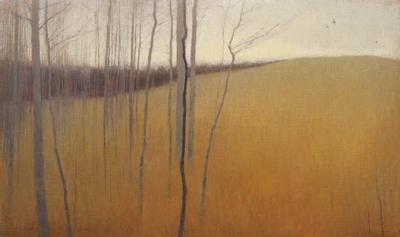
“Away” by David Grossmann

The move marked a big shift in David’s art. Not long after he arrived the young artist started receiving requests for commissions, and he enrolled in his first formal drawing classes with artist Valorie Snyder. His grandmother was an art director of a Christian publishing company and gave him a job illustrating Bible study curriculums.

“It became more of an outlet for me than it had been before,” David says. “It was a lot more serious, a lot more figurative works. I also started drawing more landscapes at that point.”

Despite his early success, David still didn’t see art as a viable career. In college he studied business and Spanish, focusing primarily on his studies instead of his artwork. During his last year at university, struck by the fear of being trapped in a cubicle, he finally committed to giving art school a shot.

David Grossmann, Matthews Gallery
“When Leaves are Falling”, David Grossmann

At the Colorado Academy of Art, David learned classical painting techniques and took his first plein air painting class.

“I’ve always loved the outdoors, but until I took that class I felt like I couldn’t contain the landscape. It’s so huge, and I didn’t know how to make it into a composition,” he says. After he learned how to capture the beauty of nature on canvas, he knew that he’d be doing little else in his work. “That combination of being outdoors and painting, which were two of my favorite things, were just perfect for me,” he says.

Three years after David enrolled at the art academy, it abruptly closed. The artist once again found himself full of doubt; he’d learned a lot about painting, but he wasn’t sure how to sell his work. That’s when he started an apprenticeship with artist Jay Moore.

“In art school, my training was very much based on technique but not a lot on the professional side of things,” David says. Being in Moore’s studio gave him a window into the life of a working artist, and showed him that a fine art career was possible. “I didn’t know how long it would take to get there, but I knew that I could get there,” he says. “I remember being so excited. I’d been thinking about and dreaming about this for most of my life.”

David Grossmann, Matthews Gallery
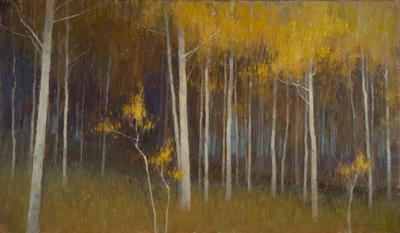
“Over the Aspens”, David Grossmann

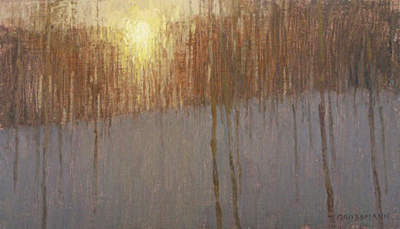
Since then, David has developed a unique style that the artist calls “visual poetry”. Using a gentle, glowing palette, he paints abstracted visions of forests that are melodic in their focus on rhythm and symmetry. Sprawling swaths of landscape transform into flat, smooth planes while scattered trees lend a profound sense of depth. These contrasting perspectives set the works slightly off-balance, sending the eye on an endless quest to consolidate them. The compositions may seem serene, but they contain the same mysterious kinetic energy that tugs our eye from one stanza of a poem to the next.

“I think both poetry and paintings can capture an essence of something and stir emotion and imagination at a very deep level,” David says. “In some ways it’s very simplified and thought out, but hopefully it reaches to that level that connects with someone’s heart.”

David has since shown his work in many exhibitions, including national shows sponsored by Oil Painters of America, the American Impressionist Society, and Salon International. Southwest Art Magazine featured him as an “Artist to Watch” and his work has been featured in Plein Air Magazine and American Art Collector Magazine.

The artist is also an avid traveler, and has journeyed with sketchbook in hand through the Western United States, Eastern Europe, Africa and Central America. In 2011, he finally had the chance to return to Chile. He saw old friends and spent 11 days backpacking through Patagonia in Southern Chile. It was the first time he’d brought along a full painting set on a trip.

“It’s very rugged country and I was carrying a backpack that weighed over 60 pounds,” David says. “Having to paint under those circumstances where there’s just forceful gusts of wind nonstop, it really made me appreciate that every painting is a miracle. It brought out a new level of confidence in my work.”

David had come full circle. He left Chile as a child and returned as an artist.

Click here to see more of David Grossmann’s work, and follow us on Facebook, Twitter and Pinterest for subsequent updates.