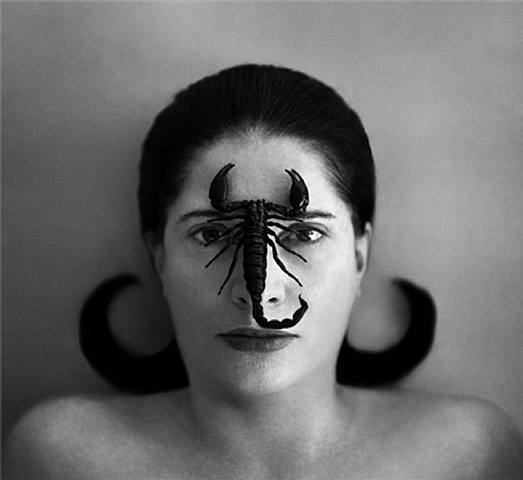
ONE WORK OF ART: Jean-Pierre Jouffroy

Jean-Pierre Jouffroy- Untitled Modernist Landscape- Matthews Gallery Blog
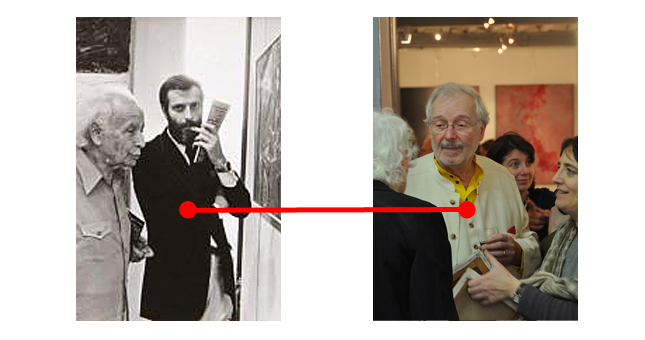
Two photographs.

Jean-Pierre Jouffroy - Matthews Gallery BlogOne shows a young artist with a determined look in his eyes, and the other an older gentleman at the opening of an 80-year retrospective of his artwork. What happened in the span between the shots?

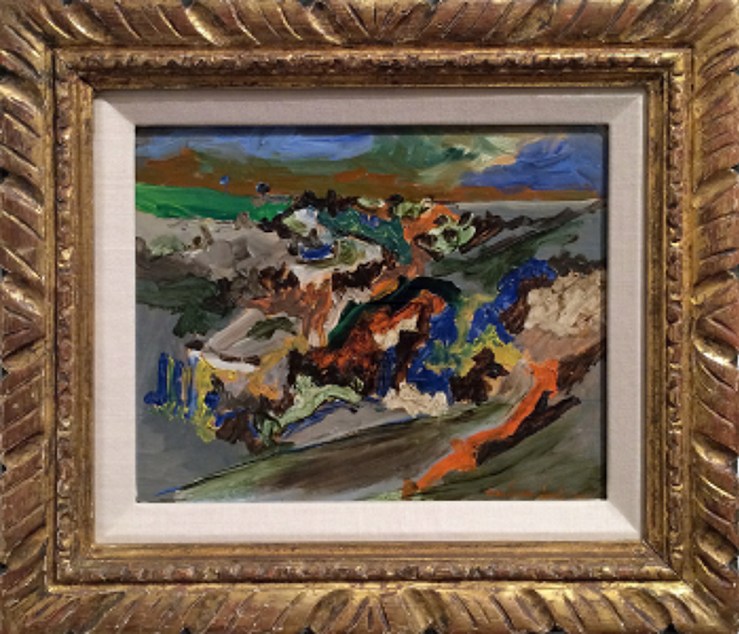
Sometimes art by Picasso or Gauguin finds its way to our gallery, but other times we get our hands on an exquisite work that bears a name we’ve never heard before. Such was the case with this lovely 1940’s painting by a man named Jean-Pierre Jouffroy, which reminded us of the artwork of James Brooks and other lyrical abstractionists.

Thank goodness for Google. An image search of the artist’s name brought up these two photos, and some French-to-English translating revealed the fascinating story behind them.

Jean-Pierre Jouffroy was born in Paris in 1933. When he was 11 years old, he saw the work of Wassily Kandinsky and Nicolas de Staël in a gallery and fell in love with modernism. “As a young boy, I dreamed of covering the surface of the earth in paint,” Jouffroy recalls.

Early in his career, the artist created purely abstract work that was heavily influenced by Staël. Then, in the late 1950’s, Jouffroy had an artistic epiphany.

“An abstract painting always shows something, like it or not,” he explains. “The painting is the image of an internal battle. This fight is itself a metaphor for our relationships in the social sphere.” Based on this realization, Jouffroy decided to incorporate the visual vocabulary of abstraction into representational work.

The shift sent the artist on a journey that traced the innovations of modernists like Picasso and Cezanne in reverse. Just like those artists, Jouffroy was experimenting with abstracted figures and landscapes, but he was coming from a wholly nonrepresentational world that his predecessors never explored. In tributes to Cezanne, Gauguin, Manet and Braque, he brought great artists of the past into harmony with a movement they all, in one way or another, helped to inspire.

Jouffroy’s new explorations caught the eye of the art world, and he exhibited at Paris’ Museum of Modern Art, the Art Institute of Chicago and other renowned institutions. Though he was focused on figurative work, he was often associated with lyrical abstraction (as we suspected) because of his background, his loose brushwork and his inventive use of color.

Our Jouffroy painting represents an interesting phase in the artist’s evolution. Though it predates his representational work, it has undeniable elements of landscape. Perhaps it’s the first sign of the transformation that would send Jouffroy’s career in a spectacular new direction. You can see echoes of the work’s palette and brushwork throughout the artist’s retrospective at the Place du Colonel Fabien that opened in November.

Check out Jean-Pierre Jouffroy’s “Untitled (Modernist Landscape)” on our website, and connect with us on Facebook and Twitter for more gallery news.

FOCUS ON THE FIGURE: The good, the bad and the body

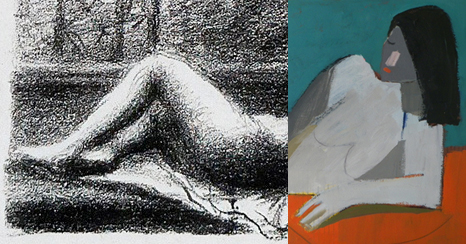
Two Odalisques by Pierre-Auguste Renoir and Jamie Chase- Matthews Gallery blog

Two Odalisques by Pierre-Auguste Renoir (left) and Jamie Chase (right)

No matter their preferred medium or subject matter, one of the first things young art students are challenged to do is pick up a pencil and draw from life.

“It’s only by drawing often, drawing everything, drawing incessantly, that one fine day you discover to your surprise, that you have rendered something in its true character,” said Camille Pissarro, mentor to the Impressionists.

Of course, Pissarro had a different idea of what it meant to evoke something’s “true character” than, say, Paul Gauguin. As we discussed in our last post, Vermeer and de Kooning painted female figures in oil to highly divergent ends.

Our FOCUS ON THE FIGURE survey show, running now through the end of December, has us pondering the artist’s eye for the human body. History’s verdict on the success or failure of a particular depiction is often entirely based on the culture that first viewed it. Even in the hands of the most technically talented artists, the human body has a unique capacity to spark fiery controversies. Here are some notorious offending body parts:

SKIN

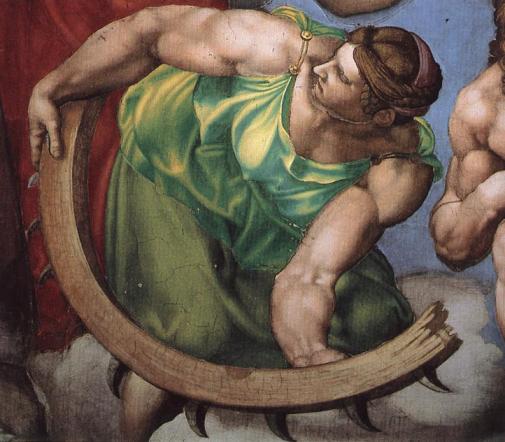
Michelangelo- The Last Judgment detail- Matthews Gallery blog

The Last Judgment (detail), Michelangelo

Believe it or not, that’s a woman in the image above. Michelangelo (1475-1564) had a hard time depicting feminine grace, probably because he used massive body builders as models. That’s not the reason the artist’s Last Judgment mural in the Sistine Chapel drew the ire of the church, though. Michelangelo left many of his buff bodies unclothed and the clergy was afraid they would provoke sinful titillation. After the artist’s death, fig leaves were swiftly deployed.

TEETH

Elisabeth Vigee Le Brun- Self Portrait- Matthews Gallery

Self portrait, Elizabeth Vigee Le Brun

As chronicled in our blog series 10 Women Who Changed Art History Forever, even fully clothed models (with frilly collars) could show too much. When Marie Antoinette’s court painter Elisabeth Vigee Le Brun (1755-1842) dared to flash a smile for this self-portrait she was roundly condemned for diverging from the style of “the Ancients”. Read what one gossip columnist had to say about it here.

EARS

John Singer Sargent- Madame X- Matthews Gallery blogMadame X, John Singer Sargent

Top Paris socialite and legendary beauty Virginie Amelie Avegno Gautreau couldn’t resist John Singer Sargent’s (1856-1925) offer to paint her portrait in 1883. When conservative viewers at the Paris Salon were scandalized by Gautreau’s bare white shoulder and bright red ear in the painting, Sargent attempted some damage control by painting in a shoulder strap and renaming the painting Madame X. Alas, Gautreau’s reputation was forever damaged.

FACES

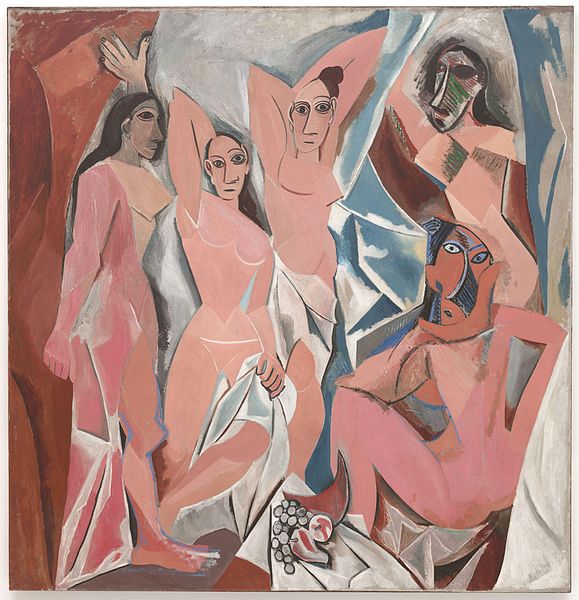
Pablo Picasso- Les Demoiselles dAvignon- Matthews Gallery blog

Les Demoiselles d’Avignon, Pablo Picasso

Pablo Picasso (1881-1973) always referred to his seminal painting of a group of Spanish prostitutes as The Brothel of Avignon. The canvas sat in his studio for years before he exhibited it under the title Les Demoiselles d’Avignon (The Young Ladies of Avignon) in 1916. Even after its rebranding, the painting caused a stir because the women’s faces—influenced by traditional Iberian art, African tribal masks and the art of Oceania—were considered savage and their postures barbaric and aggressive.

After the show, the work was rolled up and stored away for years. It wouldn’t be recognized for its visual innovations until later, when designer Jacques Doucet bought it for 25,000 francs in 1924. “It is a work which to my mind transcends painting; it is the theater of everything that has happened in the last 50 years,” Doucet said.

Our FOCUS ON THE FIGURE show features art by Jamie Chase, Kate Rivers, Eric G. Thompson, Pierre-Auguste Renoir, Harold Frank, Pablo Picasso and more. Connect with us on Facebook, Twitter and Pinterest for more news about the exhibition.

ART ON PAPER: A (Brief) Visual History of Printmaking

A Visual History of Printmaking on the Matthews Gallery blog

Prehistoric handprints on a cave wall, a Sumerian cylinder seal from ancient Mesopotamia, a woodblock print from the Chinese Diamond Sutra, a page of the Gutenberg Bible, a woodcut from the Ars moriendi, an etching by Albrecht Durer, a stencil print on silk from the Japanese Edo Period, an intaglio print by Rembrandt, a lithograph of Aloys Senefelder, an etching by Whistler, an offset lithograph by the New York Times company and an aquatint and etching by Pablo Picasso!

What does it all mean? Come to Matthews Gallery’s ART ON PAPER: Fine Art Prints reception on Friday, October 25 from 5-7 pm to find out.

MANY LIVES: Early and late works by famous artists

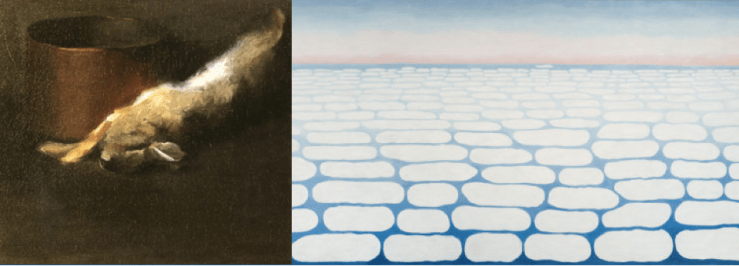
Early and Late Works: Georgia O'Keeffe's "Untitled (Dead Rabbit with Copper Pot)" (1908) and "Sky Above Clouds IV" (1965)

“When I look over the photographs Stieglitz took of me—some of them more than sixty years ago—I wonder who that person is,” said Georgia O’Keeffe. “It is as if in my one life I have lived many lives.”

Look through O’Keeffe’s diverse body of work, and you’ll see just what she meant. “Untitled (Dead Rabbit with Copper Pot)” is a humble realist work she painted as an art student in her early 20s.  She completed the abstracted, ephemeral landscape “Sky Above Clouds IV”, which is over 20 feet long, when she was almost 80. When they’re side-by-side it’s hard to believe that one artist created both.

The same is true for works that bookend any great artist’s career. Constant evolution is perhaps the most important ingredient to genius, as you’ll see in the images below. While you browse the early and late works of four legendary artists, ponder their differences. Does youthful enthusiasm and bold experimentation move you, or do you prefer a sure hand and a fully realized aesthetic? Join the conversation in the comments section below, or on our Facebook and Twitter pages.

Early and Late Works: Paul Cezanne's "The Artist's Father, Reading 'L'Événement'" (1866) and "Gardanne" (1885-86)

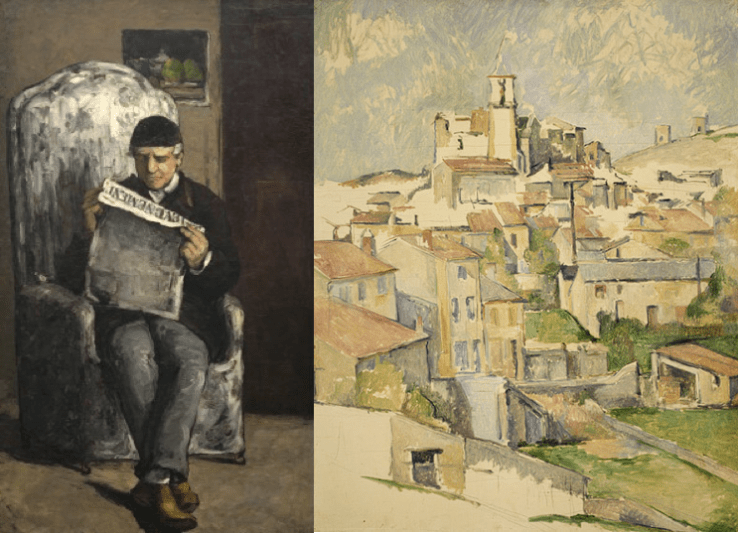
Paul Cezanne painted “Artist’s Father, Reading ‘L’Événement'” when he was in his early 20s and still partially under the thumb of his disapproving parent. The paper his father is reading—a liberal publication that the old man wouldn’t have deigned to open—and the still life painting hanging in the background hint at the artist’s growing confidence in his chosen path. Flash forward to the radical perspectival experimentation of “Gardanne”, completed when Cezanne was in his late 40s. The multi-layered cityscape would later inspire Picasso and Braque in their development of Cubism.

Early and Late Works: Frida Kahlo's "The Accident" (1926) and "Still Life" (1951)

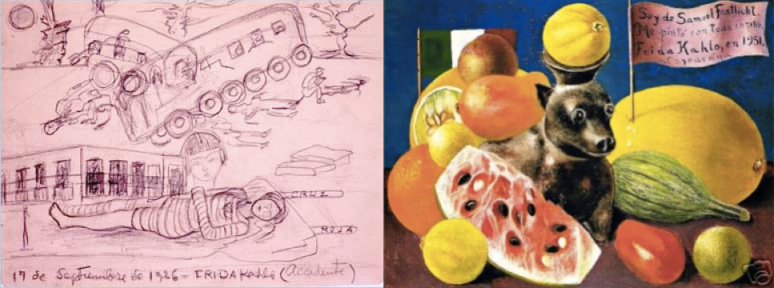
When Frida Kahlo was 19 years old she was in a trolley crash that left her in a full body cast. A year after the accident she created the pencil sketch on the left, drawing from the tradition of Mexican ex-voto paintings that blend text and images. A lifetime later, Kahlo was still suffering from chronic pain caused by the accident and drawing influences from folk art, but she’d discovered a subtler way to express her suffering. She painted “Still Life 1951” just three years before her death, when her body was giving out and she no longer favored self portraiture. The fleshy, congealing watermelon nestled among fresh fruits says it all. “I hope the exit is joyful — and I hope never to return,” she wrote just before her death.

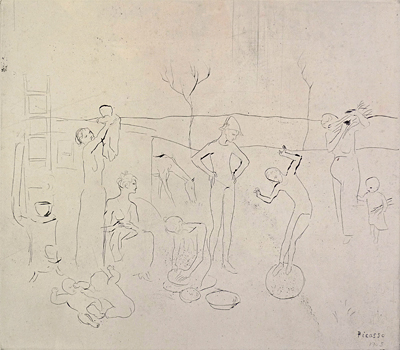
Early and Late Works: Pablo Picasso's "Les Saltimbanques" (1905) and "Untitled (From the 156 Suite, 16 mai 1971)"

“Les Saltimbanques” is a drypoint that Pablo Picasso created in his early 20s. The group of frolicking figures are characters from an opera-comique about a circus troupe. Countless artistic transformations later, Picasso etched out “Untitled (From the 156 Suite)“, an image that shows a tangle of prostitutes engaged in a very different acrobatic routine. Innocence is lost, but genius found.

Early and Late Works: Paul Gauguin's "La Seine au Pont de Grenelle" (   ) and "Mahana Atua (The Day of God)" (   )

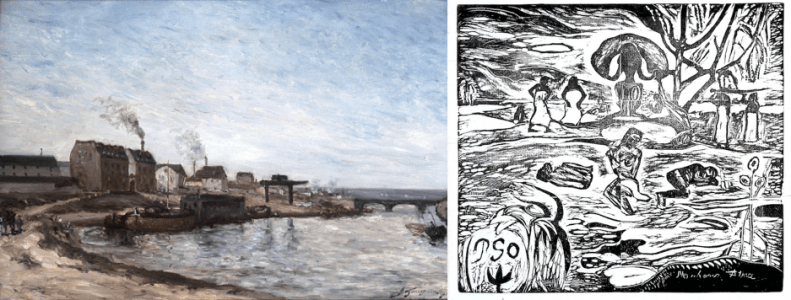
Paul Gauguin was a 27-year-old family man working as a stockbroker and hanging out at the Impressionists’ favorite cafes when he painted “La Seine au Pont de Grenelle”. By his mid-40s, he’d abandoned his family and job and exiled himself to Tahiti, where he drew inspiration for woodblock print “Mahana Atua (The Day of God)“. The artist learned from one revolutionary movement and then struck off on his own to inspire several others, from Primitivism to Symbolism.

How many lives can one artist live? What do you like better, the earlier or later work? Connect with us on Facebook, Twitter or Pinterest and sound off!

10 Women Who Changed Art History Forever, Pt. 2

Marina Abramovic- 10 Women Who Changed Art History- Matthews Gallery blog

Click here to read the first part of this blog post.

How do you measure influence? It’s easy to focus on art’s brightest stars and most famous imagery, but zoom in on the tapestry of art history and you’ll see that its fibers are often woven from close personal relationships and direct channels of inspiration. We tend to remember names like Caravaggio, Picasso and Pollock and overlook the other fish in their schools. The following women might not have received as much attention as their male contemporaries, but that doesn’t mean they had a lesser hand in directing the grand flow of things. Check out our picks, and let us know who would be on your list in the comments.

Georgia O'Keeffe- Ten Women Who Changed Art History- Matthews Gallery blog

6. Georgia O’Keeffe (1887-1986)

It was 1908, and a young O’Keeffe had just won a prize from the Art Students League for her still life Dead Rabbit with Copper Pot when she gave up painting all together. The artist was worried that she’d never truly distinguish herself in the realm of realism. Three years later she started fresh, enrolling in an art class taught by Arthur Wesley Down, who encouraged his students to let their emotions guide them.

“I found that I could say things with color and shapes that I couldn’t say any other way—things I had no words for,” O’Keeffe said. The artist created a series of innovative abstract charcoal drawings that caught the eye of her future husband, New York photographer and gallerist Alfred Stieglitz. She would continue throughout her career to build an emotional vocabulary of abstracted forms, strongly influencing her modernist contemporaries and later inspiring feminist artists like Judy Chicago. She’s now considered the Mother of American Modernism.
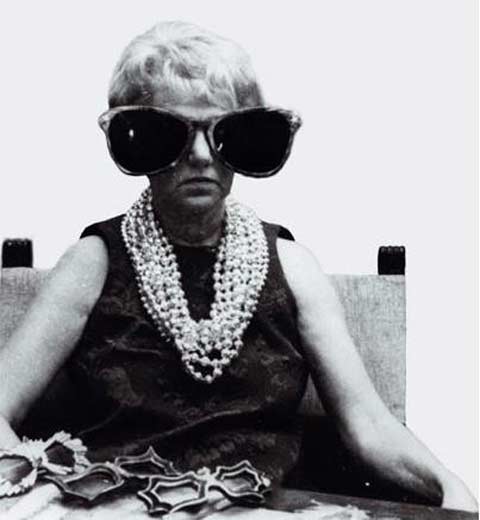
Peggy Guggenheim- Ten Women Who Changed Art History Forever- Matthews Gallery blog

7. Peggy Guggenheim (1898-1979)

Guggenheim was born with the promise of a healthy inheritance. Her father died on the Titanic when she was a teenager, and at 21 she inherited more than $30 million in today’s currency. What to do with so much money? Guggenheim’s passion was art. Her first job was at the Sunwise Turn bookstore in New York, a bohemian hotspot that inspired her to move to Paris in 1920. There she met Man Ray, Constantin Brancusi, Marcel Duchamp and other influential modernists. By 1938 she’d opened a modernist gallery in London, where she showed the likes of Kandinsky, Calder, Ernst and Picasso.

The gallery got lots of attention from the public but lost money in its first year, so Guggenheim decided to open a museum instead. When World War II forced her to delay her plans, she focused on a buying “one picture a day” for her future museum collection. Ten Picassos, forty Ernsts, eight Miros, four Magrittes, three Dalis and one Chagall later, Guggenheim had one of the most important collections of 20th century art in existence. Her influence endures in the rich archives of the Solomon R. Guggenheim Foundation and the Peggy Guggenheim Collection.

Frida Kahlo- Ten Women Who Changed Art History- Matthews Gallery blog

8. Frida Kahlo (1907-1954)

Kahlo was born to a German father and Amerindian and Spanish mother in 1907, but she always claimed she was born in 1910 at the beginning of the Mexican Revolution. That might have been a slight distortion of the truth, but her life and art certainly mirrored the pain and the passion of Mexico’s modern rebirth. When she was a teenager, Kahlo was involved in a bus crash that left her in a full body cast. In the months afterward she took up painting to combat loneliness and boredom.

“I am the subject I know best,” Kahlo said. She drew influences from traditional Mexican folk art and American and European modernism in her colorful self portraits and still lifes, building new links between cultures and art movements but tightly focusing her subject matter on her own health and relationship struggles. During her lifetime, Kahlo was mostly known in Mexico as the on-again, off-again wife of muralist Diego Rivera, but in 1938 she had a solo show in the United States and a year later she exhibited in Paris, where the Louvre acquired one of her paintings.

Andre Breton called Kahlo a surrealist and others saw her work as Naive Art, but the artist defied labels. “I never painted dreams,” she said. “I painted my own reality.” Kahlo opened the door for women artists to openly explore their most personal experiences in their work, something that surely influenced the next artist on our list.
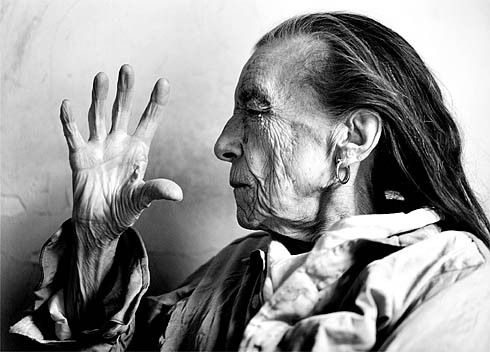
Louise Bourgeois- 10 Women Who Changed Art History- Matthews Gallery

9. Louise Bourgeois (1911-2010)

Bourgeois’ artistic journey began in 1924 when she discovered that her father and her English tutor were having an affair. Her mother turned a blind eye, but Bourgeois spent the rest of her life staring the betrayal full in the face. A born and raised Parisian, she started studying art after her mother’s death in 1932 and met Fernand Leger soon after, who told her she was more of a sculptor than a painter.

After gaining some notoriety in Europe, Bourgeois moved to New York City in 1938 and hit a wall. Though she was respected among artists like Willem de Kooning, Mark Rothko and Jackson Pollock, her work wasn’t well known outside avante-garde circles. She was brutally honest in her explorations of memory, sexuality and family power dynamics, erecting monstrous spiders in sculpture gardens and immersing her viewers in scenes of violent patricide.

In 1982 the 70-year-old artist mounted her first retrospective at the Museum of Modern Art and finally told the story of her father’s infidelity to the public. She identified her body of work as the genesis of a genre called “confessional art”. Every piece in her oeuvre is autobiographical, a retelling of the trauma she’d experienced as a child and the effect it’d had on her life thereafter. By the time she died in 2010, she’d captured the imagination of a new generation of artists and scholars.
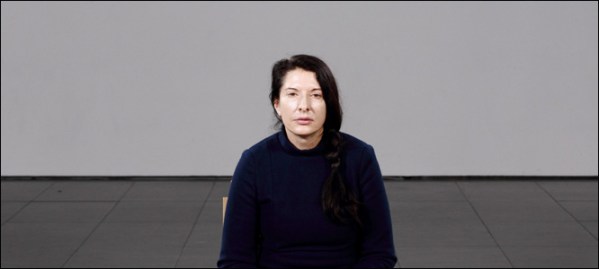
Marina Abramovic- Ten Women Who Changed Art History- Matthews Gallery blog

10. Marina Abramovic (born 1946)

Considering the ephemerality of Abramovic’s work, the performance artist’s rise to become one of the contemporary art world’s most notorious and polarizing figures is a remarkable story. Abramovic was born and raised in Belgrade, Serbia. Her mother kept tight control over her life through her early 20s, and she completed some of her first performance art pieces before her curfew at 10:00 pm. In her early work, she explored consciousness and the limits of the body within the context of performance art, pushing herself to exhaustion in various endurance tests.

Abramovic moved to Amsterdam in 1976, where she began a close relationship and artistic collaboration with performance artist Ulay Laysiepen. The duo continued to test their psychic limits, and also explored the idea of combining their identities into a single entity. They separated in 1988.

In 2005, Abramovic did a series of performances at the Guggenheim, and in 2010 she mounted a retrospective at the Museum of Modern Art. There she performed a 736-hour piece called The Artist is Present that was the subject of a documentary and received global attention.

Abramovic has been accused of chasing fame and creating a cult of personality. No matter her motives, the artist is a thought-provoking figure who’s impossible to ignore. She’s not a part of art history just yet, but she certainly makes a good future candidate.

Check out the first part of this blog post here, and follow us on Facebook, Twitter and Pinterest for more art news.
NEW TRADITIONS: Matthews Gallery Online Art Auction

History of the art auction- Matthews Gallery blog

The world’s oldest auction house opened in Stockholm, Sweden in 1674. Art auctions in Great Britain gained popularity a few decades later when the Earl of Oxford’s collection appeared on the block in 1742. That particular sale featured the full range of odd and valuable items you might find in a dusty old castle, from a bust of an unknown bishop (five shillings) to a series of van Dyck paintings (165 guineas).

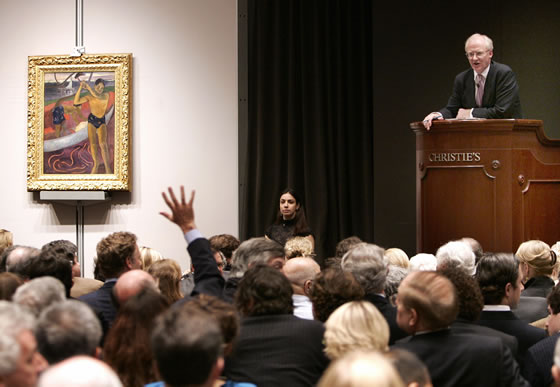
The beat of the auction mallet has marked the rhythm of the secondary market ever since. It’s a tradition that’s full of strange pageantry and heart pumping excitement. Auction kingpins Christie’s and Sotheby’s, which were both founded in mid-18th century England, often draw the ire of art world players for their tightly controlled sales. “They know exactly how many people will be bidding on a work and exactly who they are,” wrote art critic Jerry Saltz in 2012 after a version of Edvard Munch’s The Scream sold at Sotheby’s for $119.5 million. “In a gallery, works of art need only one person who wants to pay for them.”

Online auctions have meanwhile been swiftly democratizing the centuries-old process, and that’s where the Matthews Gallery decided to jump in. We launched the EUROPEAN MASTERS, AMERICAN AND SOUTHWESTERN ART AUCTION on July 25 and it runs through July 29. Come browse our virtual auktionsverk of art and, if you’re inspired, make a bid. You’ll find art by European modernists such as Pablo Picasso and Joan Miro, Southwestern legends including Emil Bisttram and Alfred Morang, and notable contemporary artists like Jamie Chase, Eric G. Thompson and Kate Rivers among the lots. Here are some notable pieces from the catalogue:

EUROPEAN MASTERS 

This slideshow requires JavaScript.

Click to see the works on our auction site:

HISTORIC SOUTHWESTERN ART

This slideshow requires JavaScript.

Click to see the works on our auction site:

  •  Untitled (Landscape #1), Emil Bisttram
  • Untitled (Landscape #2), Emil Bisttram
  • Untitled (Landscape #3), Emil Bisttram
  • Untitled (Santa Fe Landscape), Alfred Morang
  • Riders at Sundown, Gene Kloss
  • Return of the Wood Gatherers, Gene Kloss

CONTEMPORARY ART 

This slideshow requires JavaScript.

See more lots from the auction here, and connect with us on Facebook, Twitter and Pinterest for auction updates all week!

LEGENDS OF THE LOTS: Matthews Gallery Online Art Auction

March Chagall- L'Opera Poster (1964)- Matthews Gallery auction
L’Opera Poster, Marc Chagall

We’re very excited to announce the European Masters, American and Southwestern Art Auction, an online-only Matthews Gallery event running July 25-29. It’s our very first auction, and we’ve been working on it for more than a year. Of course, the works we’re putting on the block have stories behind them that are much older than that. Click here to browse the diverse catalogue, and read on to learn the legends behind four of the lots.

Henri de Toulouse-Lautrec- La Passagere du 54- Matthews Gallery auction
La Passagere du 54, Henri de Toulouse-Lautrec

Lautrec was on a steamship cruise from Le Havre to Bordeaux when a beautiful woman who was staying in cabin 54 caught his eye. He became infatuated with her but she was so aloof that he never got a chance to introduce himself. Lautrec refused to disembark until the ship reached Lisbon, where his friend Maurice Guibert finally dissuaded him from sailing on to Dakar, the mystery woman’s destination. The sketches he made of her on the boat would inspire La Passagere du 54.

Lithograph, on wove paper, Wittrock’s third (final) state, the full sheet, with green lettering. 

Click here to see this work in the catalogue.

Joan Miro- Dog Barking at the Moon- Matthews Gallery auction
Dog Barking at the Moon, Joan Miro

This lithograph has one of the longest titles of any of Miró’s art works. In french it is: “Le chien aboyant à la lune reveille le coq le chant du coq picote le crane du fermier Catalan posé sur la table à coté du pourron”. In English: “The dog barking at the moon wakes the cock, the song of the cock pecks at the head of the Catalan farmer resting on the table by the flask of wine”. Joan Miró (1893-1983) was a leading pioneer and proponent of surrealism. His work has a childlike style that at its heart is a sophisticated play of color, line and forms. Miro was a consummate master printmaker and over his lifetime he completed more than 1,000 fine art prints.

Lithograph in colors, number 12 from the edition of 80.

Click here to see this work in the catalogue.

Pablo Picasso- Untitled (From the 156 Suite, 16 mai 1971)- Matthews Gallery auction
Untitled (From the 156 Suite, 16 mai 1971), Pablo Picasso

Degas visits a brothel in this etching by the legendary Spanish modernist.

Number 23 from the edition of 50.

Click here to see this work in the catalogue.

Paul Gauguin- Mahana Atua (Noa Noa woodblock)- Matthews Gallery auction
Mahana Atua, Paul Gauguin

Gauguin sailed from France to Tahiti in 1891 and didn’t return home until two years later. He went there in search of an untouched beauty far away from “everything that is artificial and conventional”. Upon his return to Europe, he carved a series of ten woodblocks to illustrate a written account of his travels called Noa Noa. The prints, which were only his second attempt at printmaking, are considered some of his most innovative work. “Gauguin’s current effort will tomorrow provoke a complete revolution in the art of printmaking,” wrote critics Julien Leclerq and Charles Morice. This is presumed to be a proof apart from the signed and numbered edition of 100 published by the artist’s son, Pola Gauguin in Copenhagen in 1921.

Woodcut, 1894-5, on chine

Click here to see this work in the catalogue.

Make sure to check out the entire auction catalogue here, and connect with us on Facebook and Twitter for more legends behind the lots!

HOW TO BE AN ARTISTIC GENIUS: Go bonkers.

Gustave Courbet- Self-Portrait (The Desperate Man)- Matthews Gallery blog
Gustave Courbet, Self-Portrait (The Desperate Man)

We all know that Vincent Van Gogh left this world with 1.5 ears and a (probably) self-inflicted gunshot wound in his chest, but when you go on a hunt for the craziest artistic geniuses, the fou-roux starts seeming positively rational.

After all, Michelangelo was so averse to bathing or changing his clothes that his long-suffering assistant once wrote, “He has sometimes gone so long without taking (his shoes) off that then the skin came away, like a snake’s, with the boots.” The Renaissance master would wander off in the middle of conversations and refused to attend his brother’s funeral.

Gustave Courbet went a little nuts after he tangled with the French government and exiled himself to Switzerland, painting several “self-portraits” of bleeding, mangled fish. You surely have to be a bit bonkers to drive so many lovers insane, so Pablo Picasso deserves a spot in the art sanitarium as well. Then there’s Paul Gauguin, who made up romantic, insanely elaborate lies about his dismal trips to Tahiti.

Lesser-known prodigies only suffer more, it seems. French painter Leon Bonvin was found dangling from a tree after a dealer refused to show his paintings. Dutch artist Abraham van der Doort, who was Charles I’s art conservationist, thought he’d lost one of the king’s favorite pieces and offed himself. Dutch painter Herman Kruyder ended it all in a psychiatric ward, and Polish writer Stanislaw Ignacy Witkierwicz fed his lover poison and slit his wrists after the Second Army invaded Poland.

Does true artistic brilliance come hand in hand with insanity? Perhaps to see things in revolutionary ways, you have to take a trip off the edge. What do you think? Join the discussion on our Facebook and Twitter pages, or in the comments section below.

The 10 Artists Who Changed Art History Forever, Pt. 2

To top off our list of art history’s most influential players (click here for part 1), we had to make some tough decisions. Would Monet still be known today if not for a fateful trip to the seashore with Boudin? Who had a greater influence on abstract expressionism: Pollock or De Kooning? Browse our choices and let us know if you agree or disagree in comments below or on Facebook, Twitter and Pinterest.

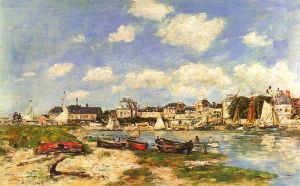
Eugene Boudin, click the image to read the Matthews Gallery blog
Trouville, Eugene Boudin

 6. Eugene Boudin (1824-1898)

French painter Eugene Boudin grew up riding across the English Channel on his father’s steamboat between his home village of Honfleur and the city of Le Havre. Boudin’s mother put an end to the voyages when the young boy nearly drowned, and the family moved to Le Havre to open a picture frame shop. Perhaps it was these early years at sea—and that terrifying dip in the tumbling waves—that drove Boudin to create the small but dynamic compositions that would directly inspire Impressionism.

As a young man Boudin opened his own framing shop and showed work by artists such as Constant Troyon and Jean-Francois Millet. At 22 he started painting full-time, capturing coastal scenes with an impeccable eye for light and a keen interest in the social interactions of beach-goers. He was greatly influenced by the 16th century Dutch masters, and was one of the first French painters to work in the outdoors.

Boudin moved to Paris on a scholarship when he was 23 and soon met the teenage Claude Monet. Monet was working as a caricaturist on the streets of Paris, but Boudin convinced him to travel to Normandy and paint en plein air. In 1874 Boudin showed work in the first Impressionist exhibition alongside Monet’s pivotal Impression, Sunrise, which was painted in Le Havre and inspired the name of the new movement. Without Boudin’s encouragement, Monet may never have moved past charcoal.

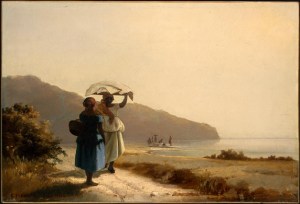
Pissarro, click the image to read the Matthews Gallery blog
Two Women Chatting by the Sea”, Camille Pissarro

 7. Camille Pissarro (1830-1903) 

Picasso and Matisse called Paul Cezanne “the father of us all”, but there’s always a mentor behind a master. Cezanne was heavily influenced by Danish-French Impressionist and Neo-Impressionist painter Camille Pissarro. “He was a father for me,” Cezanne said. “A man to consult and a little like the good Lord.”

Pissarro grew up on the island of St. Thomas in the Danish West Indies and attended a boarding school near Paris. In school he studied the French masters and excelled at drawing and painting. He moved to Paris in 1855 to apprentice with Anton Melbye and Jean-Baptiste-Camille Corot. While Corot worked on his paintings in the studio, Pissarro insisted on painting en plein air and often finished works in one sitting.

The artist was criticized for his technique, which often exposed the rougher, less picturesque side of the French landscape, but his quick, intuitive methods attracted a small group of artists who would soon be known as the Impressionists. Pissarro became their patriarch, and was the only artist to participate in all eight Impressionist exhibitions. However, it was his switch to Neo-Impressionism at 54 and his great influence on Post Impressionism that landed him on this list. Pissarro’s impulse to look deeper into the landscape and trace every rough edge would inspire Seurat, van Gogh, Gauguin and Cezanne in their revolutionary explorations of perspective that would fracture (and eventually completely dissolve) the classical picture plane.

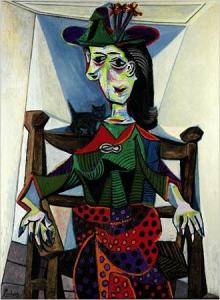
Pablo Picasso, click the image to read the Matthews Gallery blog
Dora Maar au Chat, Pablo Picasso

 8. Pablo Picasso (1881-1973) 

Pablo Picasso is arguably the most famous—and prolific—artist of the 20th century. He created roughly 13,500 paintings and hundreds of thousands more prints, engravings, illustrations and sculptures over the course of his 75-year career. Though he’s famous for co-developing Cubism, it was his explorations into all corners of the plastic arts that made him so influential. No matter the medium or style, Picasso had a hand in radically changing it all.

The artist was born in Malaga, Spain. His father was a professor of art who began formally training his son from a very young age. By 16, Picasso had gained entrance to the prestigious Royal Academy of San Fernando. In the early 1900s he moved to Paris, where he met art collector Gertrude Stein and many of the most famous artists of the time. He started working with Georges Braque in 1909, and the close friends developed a style that pushed Cezanne’s explorations of multiple perspectives to new extremes.

Cubism encouraged artists to analyze objects and break them into thousands of pieces, and similarly shattered the art world into myriad Modernist movements from Futurism to Constructivism.

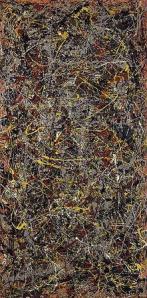
Pollock, click the image to read the Matthews Gallery blog
No. 5, 1948, Jackson Pollock

9. Jackson Pollock (1912- 1956) 

Jackson Pollock was called “Jack the Dripper” and “The Worst Living Artist in America” by the media, and a large slice of the public saw him as a reclusive drunkard who dealt the killing blow to order and sense in art. Sometimes when you’re drumming up an art revolution, things have to get messy.

Pollock grew up the youngest of five brothers in Arizona and California. He and his brother Charles moved to New York City in 1930, where he studied at the Art Students League and worked for the WPA Federal Art Project. In 1936 he took an experimental workshop on liquid paint that would later influence his famous drip paintings. Under the watchful eyes of collector Peggy Guggenheim, art critic Clement Greenberg and his wife Lee Krasner, who he married in 1947, Pollock would become the figurehead of the Abstract Expressionist movement and radically change the world’s definition of art.

Greenberg saw Abstract Expressionism as the final step in painting’s inevitable reduction to its most essential elements. There was an unmatched purity to Pollock’s atmospheric, gravity free color fields that only the eye could traverse. “Jackson was the greatest painter this country has produced,” Greenberg mused. Whether you agree with the critic or not, Pollock undoubtedly subverted figurative painting in an unprecedented way, and changed art history in the process.

Andy Warhol, click here to read the Matthews Gallery blog
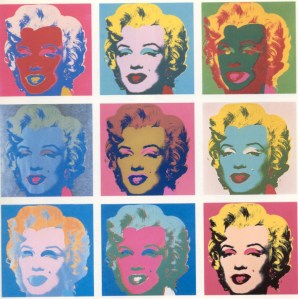
Marilyn Monroe, Andy Warhol

10. Andy Warhol (1928-1987) 

Andy Warhol was born in Pittsburgh, Pennsylvania to Austro-Hungarian immigrants. In third grade he developed Sydenham’s Cholera, a disorder of the nervous system that left him bedridden for months at a time. Isolated from his peers, the shy child became a voracious student of pop culture. Just a few years later he would build his own towering pedestal using the very figures and symbols that he pinned on his bedroom walls.

Warhol graduated from high school in 1945 and attended the Carnegie Institute of Technology for commercial art. In 1949 he moved to New York City, where he worked in the publishing and advertising industries and got his Bachelor of Fine Arts degree in pictorial design. In the 1950’s RCA records hired Warhol as a designer, where he pioneered innovations in various image-making techniques, most notably in screen printing. At the same time he was using similar processes—and subject matter—in his fine art, which he showed in galleries around New York. It was an approach to art that offended many critics at the time, who accused Warhol of succumbing to the homogenizing forces of consumerism.

This was Warhol’s true impact on art history: to show contemporary artists that they couldn’t avoid or ignore the foundational social changes affected by the mass media. Whether he was exploring identity, vanity, sexuality, fame or nothing at all, Warhol was molding the mercurial landscapes of Modern and Postmodern art.

Don’t forget to read part 1 of this series, and connect with us on FacebookTwitter and Pinterest to let us know who you would choose!

THE MATTHEWS GALLERY: Arc of Art History

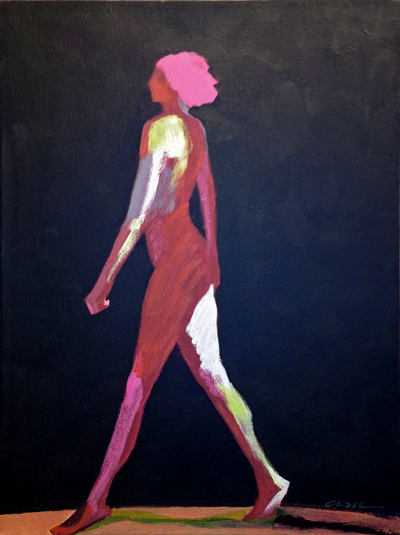
"Stride", Jamie Chase, Matthews Gallery
“Stride”

When Santa Fe visitors step into the Matthews Gallery, they often mention that something feels different. Our gallery location is in a historic adobe on Canyon road just like many of the other galleries so we have a hunch that the novelty they’re sensing is our devotion to carefully curating every wall of our gallery.

We show work from the 19th, 20th and 21st centuries. Our curatorial direction is to exhibit a variety of work from these eras that relate to the artistic development from impressionism to contemporary art. Here are some of the names that you won’t see anywhere else on Canyon Road—or even elsewhere in Santa Fe:

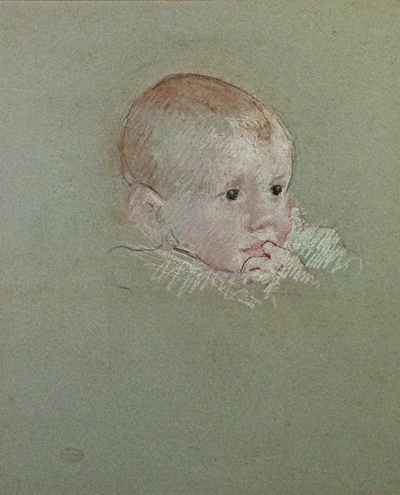
Head of Baby with Finger in Mouth, Mary Cassatt, Matthews Gallery
“Head of Baby with Finger in Mouth”, Mary Cassatt

Mary Cassatt (1844-1926) ~ The American painter and printmaker was refused entry to the Ecole des Beaux-Arts, so she studied the masters on her own at the Louvre. She would become a master herself, named one of “les trois grandes dames” of Impressionism by Gustave Geffroy.

"Les Saltimbanque", Pablo Picasso, Matthews Gallery
“Les Saltimbanque” by Pablo Picasso

Pablo Picasso (1881-1973) ~ Several works by the most influential artist of the 20th century have passed through the Matthews Gallery. Our most notable current work by Picasso is “Les Saltimbanque”. The drypoint etching the artist created as a teenager shows the harlequin, a personal symbol that would recur in his work throughout his career.

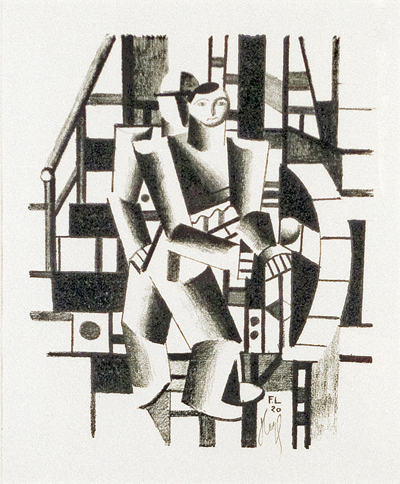
"Composition aux deux Personnages", Fernand Leger, Matthews Gallery
“Composition aux deux Personnages” by Fernand Leger

Fernand Leger (1881-1955) ~ The painter, sculptor and filmmaker’s lithograph “Composition aux deux Personnages” marked a shift in his oeuvre from Cubism to bold figurative works that would later identify him as a forerunner of Pop Art. As is the fate of all art movements, Picasso and Braque’s Cubism were irrevocably fractured.

"Blue Nude", Harold Frank, Matthews Gallery
“Blue Nude” by Harold Frank

Harold Frank (1917-1995) ~ Born in Southampton, England, Frank’s family moved to New York when he was a child. You can see influences from both shores in his colorful canvases that take cues from modernism and abstract expressionism.

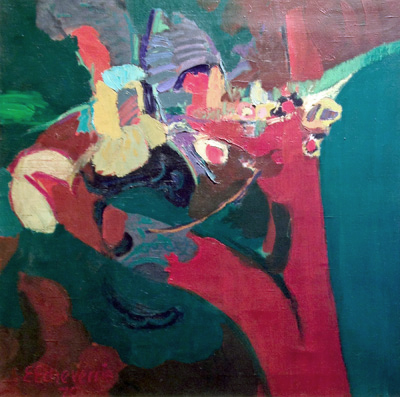
"Alic", Enrique Echeverria, Matthews Gallery
“Alic” by Enrique Echeverria

Enrique Echeverria (1923-1972) ~ Echeverria and his contemporaries brought the ideas of modern European art movements to Mexico and subverted the traditional figurative painting style. They became known as the Generacion de la Ruptura, the Rupture Generation.

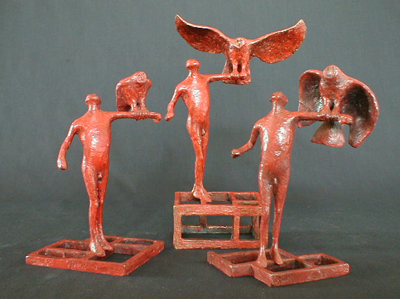
"Avian Keepers", Robert W. Hinds, Matthews Gallery
“Avian Keepers” by Robert W. Hinds

Robert W. Hinds (1924- present) ~ This World War II veteran was born a year after Echeverria. He had a successful graphics career for years before moving to Europe to study casting techniques in Italy and Bologna. Now he produces figurative bronze sculptures that are collected throughout the world.

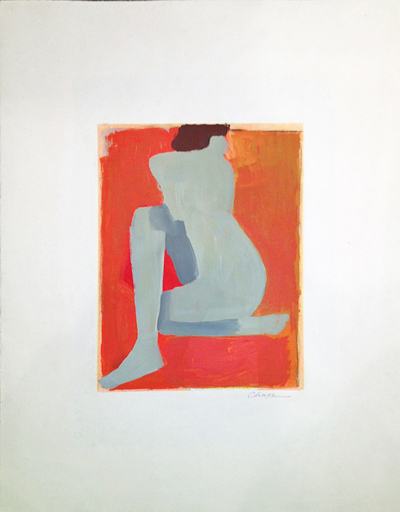
"Untitled Grey Nude on Orange", Jamie Chase, Matthews Gallery
“Untitled Grey Nude on Orange” by Jamie Chase

Jamie Chase (1954- present) ~ The painter and graphic novelist was born in California, and traveled to Europe to educate himself on the work of the masters. He moved to Santa Fe in 1980, where he’s now known for his non-objective paintings, abstract landscapes and abstracted figurative paintings.

Browse all of the artists we represent here, and follow our Facebook and Twitter accounts for updates on their work.