SECRETS OF THE WAREHOUSE: Hannah Holliday Stewart

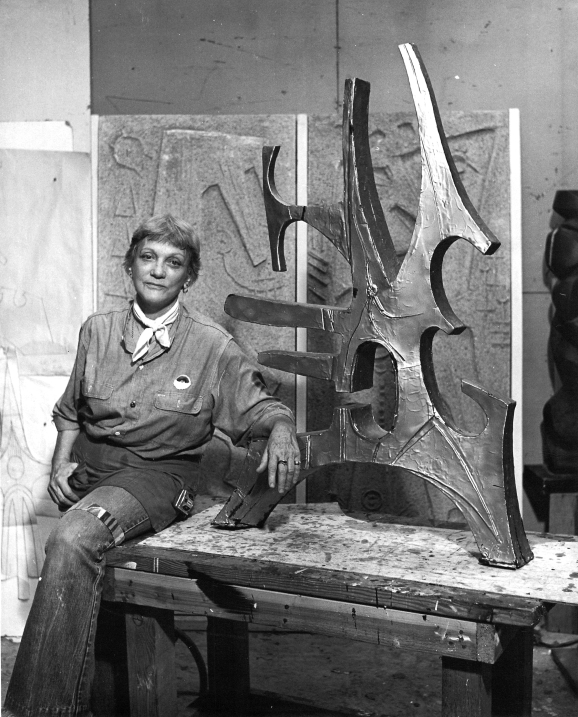
Sculptor Hannah Holliday Stewart, Matthews Gallery

It’s just across town, but the complex that houses our storage unit seems universes away from the cheerful adobe utopia of Canyon Road. We punch in a code and roll through the gate into a desolate world of sharp edges. Seas of asphalt release masses of hot air and long rows of dull aluminum doors form the impenetrable walls of an industrial fortress.
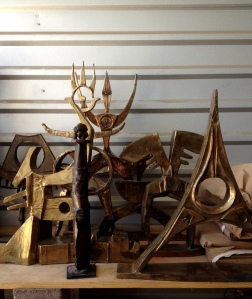
Sculpture by Hannah Holliday Stewart, Matthews GalleryAs the shadows grow longer the sun’s rays swing sideways and those doors become enormous reflectors. The forbidding barrier transforms into a glowing, many-paneled modernist painting—Gerhard Richter’s Strip series in metal. At this time of day, it’s easy to imagine the units as a series of chests concealing mysterious treasures. What secrets hide behind this shimmering force field? Luckily, we have one of the keys.

With one great heave, we send the door to our space skittering up into the ceiling and find ourselves peering into another, much more fanciful, metallic landscape. We’re here to take stock of the life’s work of Hannah Holliday Stewart in preparation for a visit from some interested collectors.

Polished, patined bronzes large and small cluster on shelves, tabletops and patches of cement between stacks of cardboard boxes. They’ve accrued a thin layer of dust since we last visited, but it hardly dampens the strange energy that seems to simmer just beneath their surfaces. Stewart’s graceful abstract forms hold all the power that they possessed when we first laid eyes on them last year in Stewart’s studio, where they’d been sitting quietly since her death in 2010. It’s jamais vu: the feeling of encountering something you’ve never seen before.
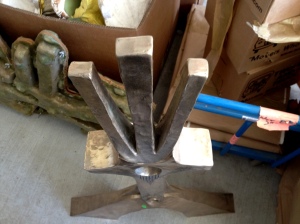
Sculpture by Hannah Holliday Stewart, Matthews GalleryStewart was born in Marion, Alabama in 1924. She received her graduate degree at Cranbrook Academy of Art, moved to Houston and swiftly embarked on rapid rise that was uncommon for female artists at the time. At the crest of a new wave of social changes, Stewart and other artists such as Ana Mendieta and Carolee Schneemann revived old legends and symbols that identified the woman as a powerful creative force capable of crafting her own destiny. Under Stewart’s paradigm, Nefertiti reclaimed her throne, Icarus had feminine curves and the symbol of the Aquarian Age was a densely muscled female torso.

Much of Stewart’s work is in bronze, a medium that set her apart from some of her female contemporaries who worked with fabric, wood and mixed media. It was a material that allowed her to look to the promise of the future as well as the legends of the past. In one corner of our storage space is a stack of boxes filled with overflowing folders. Along with the career-spanning work that was left in Stewart’s studio, the artist’s family gave us access to all of her personal files. That’s how we found an artist statement she once scrawled in a notebook:

[My] early interest in natural forces has sustained me throughout my life as a sculptor. My goal is to render visible the hidden realities of pent-up contained energy. The direct fields of reference are Sacred Geometry, Astronomy, Myth & Physics … Each Sculpture is an energy form, the movement arrested in space, a form sustaining an energy. My work is a response to these patterns and delineations and communicates with viewers through the universality of symbolism and form.
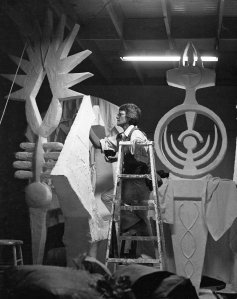
Sculptor Hannah Holliday Stewart, Matthews GalleryTo contain these gargantuan forces, Stewart was often compelled to produce her work at a monumental scale. Photographs in her files show her roaming through a forest of many-legged monoliths in her studio, or manipulating their twisty canopy atop a spindly ladder. In 1972 she was commissioned to create a monumental sculpture for Houston’s Hermann Park, a rare honor for a female sculptor—especially one who was known for her non-objective work.

The spotlight shone bright on Stewart for many years: she exhibited at the Smithsonian, the San Francisco Museum of Art, the High Museum of Art and the Dallas Museum of Fine Arts. Then, 20 years before her death, she abruptly left the Houston art scene without saying goodbye.
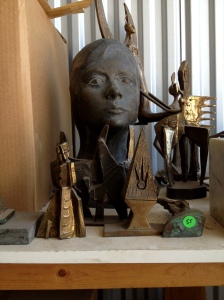
Sculptures by Hannah Holliday Stewart, Matthews GalleryAt a studio in Albuquerque that we would visit after her death, the artist spent the remaining years of her life producing sculptures in solitude. The mystery of her departure from the art world has yet to be cracked. Many of her friends from Houston were still puzzling over it in her obituary.

Perhaps there are clues to the more shadowy parts of Stewart’s life hidden in her files, or in the beautiful invented language that she often etched into her sculptures. It’ll take more dusting than we have time for today to unravel the intricacies of her life and work, but one thing is clear: Stewart helped pave the way for a new generation of women sculptors.

As we reach for the long rope hanging from the door, we take one last look at Stewart’s peculiar menagerie. A bronze self-portrait peers out from a tangle of supernatural creatures on a tabletop, its eyes blazing in a shaft of sunlight. Then the treasure box slams shut.

Click here to see more behind-the-scenes images from the warehouse, and make sure to follow us on Facebook, Twitter and Pinterest for updates on Hannah Holliday Stewart’s work.
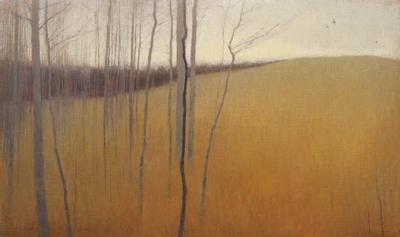
NEW IN THE GALLERY: The evolution of David Grossmann

David Grossmann, Matthews Gallery
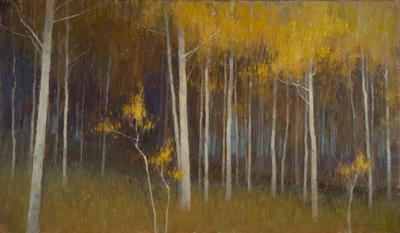
“Almost” by David Grossmann

David Grossmann always knew he wanted to be an artist. Even before his first painting lessons with his grandmother at 10 years old, he was an avid sketcher, filling notebooks with intricate drawings of dragons and the floor plans of medieval castles. By 16, David was taking portrait commissions and doing book illustrations for a publishing company. Still, he couldn’t quite discern a path that would turn his passion into something more.

“I didn’t know how to get there as far as making a living as a professional artist,” the 29-year-old says. Finding that bridge would take a while, but it’s safe to say that he’s officially crossed it. We’re proud to be the first gallery to represent David and his work. It’s just the latest high point in an already impressive artistic career.
David was born in the United States and moved to Chile when he was two years old. It’s a place of stunning, harsh natural beauty that would inspire in David a lifelong passion for the outdoors. His grandmother was a landscape painter who lived in El Paso, Texas. When they saw each other, she would teach him oil painting techniques with a brush and palette knife.

When David was 14, the family decided to relocate to Colorado. It was a move that the teenager fiercely resisted.

“When we left, I didn’t say goodbye because I hadn’t accepted that we weren’t going back,” he says. “I’m sure for anyone, being 14 is probably a tough age. On top of that, adjusting to a new culture and new everything was really difficult.”

David Grossmann, Matthews Gallery
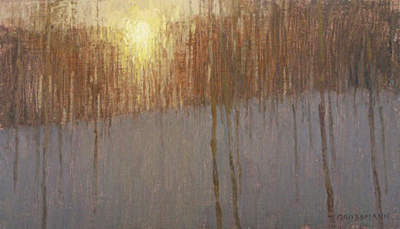
“Away” by David Grossmann

The move marked a big shift in David’s art. Not long after he arrived the young artist started receiving requests for commissions, and he enrolled in his first formal drawing classes with artist Valorie Snyder. His grandmother was an art director of a Christian publishing company and gave him a job illustrating Bible study curriculums.

“It became more of an outlet for me than it had been before,” David says. “It was a lot more serious, a lot more figurative works. I also started drawing more landscapes at that point.”

Despite his early success, David still didn’t see art as a viable career. In college he studied business and Spanish, focusing primarily on his studies instead of his artwork. During his last year at university, struck by the fear of being trapped in a cubicle, he finally committed to giving art school a shot.

David Grossmann, Matthews Gallery
“When Leaves are Falling”, David Grossmann

At the Colorado Academy of Art, David learned classical painting techniques and took his first plein air painting class.

“I’ve always loved the outdoors, but until I took that class I felt like I couldn’t contain the landscape. It’s so huge, and I didn’t know how to make it into a composition,” he says. After he learned how to capture the beauty of nature on canvas, he knew that he’d be doing little else in his work. “That combination of being outdoors and painting, which were two of my favorite things, were just perfect for me,” he says.
Three years after David enrolled at the art academy, it abruptly closed. The artist once again found himself full of doubt; he’d learned a lot about painting, but he wasn’t sure how to sell his work. That’s when he started an apprenticeship with artist Jay Moore.
“In art school, my training was very much based on technique but not a lot on the professional side of things,” David says. Being in Moore’s studio gave him a window into the life of a working artist, and showed him that a fine art career was possible. “I didn’t know how long it would take to get there, but I knew that I could get there,” he says. “I remember being so excited. I’d been thinking about and dreaming about this for most of my life.”

David Grossmann, Matthews Gallery
“Over the Aspens”, David Grossmann

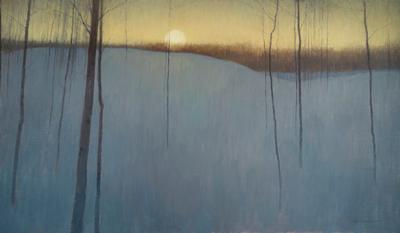
Since then, David has developed a unique style that the artist calls “visual poetry”. Using a gentle, glowing palette, he paints abstracted visions of forests that are melodic in their focus on rhythm and symmetry. Sprawling swaths of landscape transform into flat, smooth planes while scattered trees lend a profound sense of depth. These contrasting perspectives set the works slightly off-balance, sending the eye on an endless quest to consolidate them. The compositions may seem serene, but they contain the same mysterious kinetic energy that tugs our eye from one stanza of a poem to the next.

“I think both poetry and paintings can capture an essence of something and stir emotion and imagination at a very deep level,” David says. “In some ways it’s very simplified and thought out, but hopefully it reaches to that level that connects with someone’s heart.”

David has since shown his work in many exhibitions, including national shows sponsored by Oil Painters of America, the American Impressionist Society, and Salon International. Southwest Art Magazine featured him as an “Artist to Watch” and his work has been featured in Plein Air Magazine and American Art Collector Magazine.

The artist is also an avid traveler, and has journeyed with sketchbook in hand through the Western United States, Eastern Europe, Africa and Central America. In 2011, he finally had the chance to return to Chile. He saw old friends and spent 11 days backpacking through Patagonia in Southern Chile. It was the first time he’d brought along a full painting set on a trip.

“It’s very rugged country and I was carrying a backpack that weighed over 60 pounds,” David says. “Having to paint under those circumstances where there’s just forceful gusts of wind nonstop, it really made me appreciate that every painting is a miracle. It brought out a new level of confidence in my work.”

David had come full circle. He left Chile as a child and returned as an artist.

Click here to see more of David Grossmann’s work, and follow us on Facebook, Twitter and Pinterest for subsequent updates.

The 10 Artists Who Changed Art History Forever, Pt. 2

To top off our list of art history’s most influential players (click here for part 1), we had to make some tough decisions. Would Monet still be known today if not for a fateful trip to the seashore with Boudin? Who had a greater influence on abstract expressionism: Pollock or De Kooning? Browse our choices and let us know if you agree or disagree in comments below or on Facebook, Twitter and Pinterest.

Eugene Boudin, click the image to read the Matthews Gallery blog
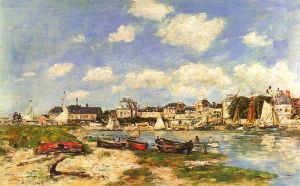
Trouville, Eugene Boudin

 6. Eugene Boudin (1824-1898)

French painter Eugene Boudin grew up riding across the English Channel on his father’s steamboat between his home village of Honfleur and the city of Le Havre. Boudin’s mother put an end to the voyages when the young boy nearly drowned, and the family moved to Le Havre to open a picture frame shop. Perhaps it was these early years at sea—and that terrifying dip in the tumbling waves—that drove Boudin to create the small but dynamic compositions that would directly inspire Impressionism.

As a young man Boudin opened his own framing shop and showed work by artists such as Constant Troyon and Jean-Francois Millet. At 22 he started painting full-time, capturing coastal scenes with an impeccable eye for light and a keen interest in the social interactions of beach-goers. He was greatly influenced by the 16th century Dutch masters, and was one of the first French painters to work in the outdoors.

Boudin moved to Paris on a scholarship when he was 23 and soon met the teenage Claude Monet. Monet was working as a caricaturist on the streets of Paris, but Boudin convinced him to travel to Normandy and paint en plein air. In 1874 Boudin showed work in the first Impressionist exhibition alongside Monet’s pivotal Impression, Sunrise, which was painted in Le Havre and inspired the name of the new movement. Without Boudin’s encouragement, Monet may never have moved past charcoal.

Pissarro, click the image to read the Matthews Gallery blog
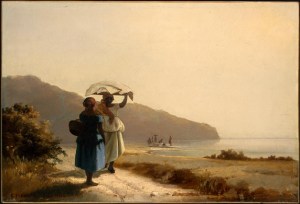
Two Women Chatting by the Sea”, Camille Pissarro

 7. Camille Pissarro (1830-1903) 

Picasso and Matisse called Paul Cezanne “the father of us all”, but there’s always a mentor behind a master. Cezanne was heavily influenced by Danish-French Impressionist and Neo-Impressionist painter Camille Pissarro. “He was a father for me,” Cezanne said. “A man to consult and a little like the good Lord.”

Pissarro grew up on the island of St. Thomas in the Danish West Indies and attended a boarding school near Paris. In school he studied the French masters and excelled at drawing and painting. He moved to Paris in 1855 to apprentice with Anton Melbye and Jean-Baptiste-Camille Corot. While Corot worked on his paintings in the studio, Pissarro insisted on painting en plein air and often finished works in one sitting.

The artist was criticized for his technique, which often exposed the rougher, less picturesque side of the French landscape, but his quick, intuitive methods attracted a small group of artists who would soon be known as the Impressionists. Pissarro became their patriarch, and was the only artist to participate in all eight Impressionist exhibitions. However, it was his switch to Neo-Impressionism at 54 and his great influence on Post Impressionism that landed him on this list. Pissarro’s impulse to look deeper into the landscape and trace every rough edge would inspire Seurat, van Gogh, Gauguin and Cezanne in their revolutionary explorations of perspective that would fracture (and eventually completely dissolve) the classical picture plane.

Pablo Picasso, click the image to read the Matthews Gallery blog
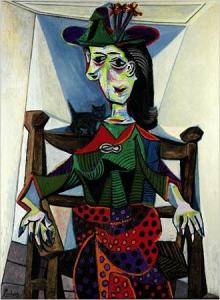
Dora Maar au Chat, Pablo Picasso

 8. Pablo Picasso (1881-1973) 

Pablo Picasso is arguably the most famous—and prolific—artist of the 20th century. He created roughly 13,500 paintings and hundreds of thousands more prints, engravings, illustrations and sculptures over the course of his 75-year career. Though he’s famous for co-developing Cubism, it was his explorations into all corners of the plastic arts that made him so influential. No matter the medium or style, Picasso had a hand in radically changing it all.

The artist was born in Malaga, Spain. His father was a professor of art who began formally training his son from a very young age. By 16, Picasso had gained entrance to the prestigious Royal Academy of San Fernando. In the early 1900s he moved to Paris, where he met art collector Gertrude Stein and many of the most famous artists of the time. He started working with Georges Braque in 1909, and the close friends developed a style that pushed Cezanne’s explorations of multiple perspectives to new extremes.

Cubism encouraged artists to analyze objects and break them into thousands of pieces, and similarly shattered the art world into myriad Modernist movements from Futurism to Constructivism.

Pollock, click the image to read the Matthews Gallery blog
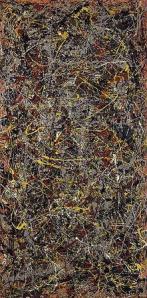
No. 5, 1948, Jackson Pollock

9. Jackson Pollock (1912- 1956) 

Jackson Pollock was called “Jack the Dripper” and “The Worst Living Artist in America” by the media, and a large slice of the public saw him as a reclusive drunkard who dealt the killing blow to order and sense in art. Sometimes when you’re drumming up an art revolution, things have to get messy.

Pollock grew up the youngest of five brothers in Arizona and California. He and his brother Charles moved to New York City in 1930, where he studied at the Art Students League and worked for the WPA Federal Art Project. In 1936 he took an experimental workshop on liquid paint that would later influence his famous drip paintings. Under the watchful eyes of collector Peggy Guggenheim, art critic Clement Greenberg and his wife Lee Krasner, who he married in 1947, Pollock would become the figurehead of the Abstract Expressionist movement and radically change the world’s definition of art.

Greenberg saw Abstract Expressionism as the final step in painting’s inevitable reduction to its most essential elements. There was an unmatched purity to Pollock’s atmospheric, gravity free color fields that only the eye could traverse. “Jackson was the greatest painter this country has produced,” Greenberg mused. Whether you agree with the critic or not, Pollock undoubtedly subverted figurative painting in an unprecedented way, and changed art history in the process.

Andy Warhol, click here to read the Matthews Gallery blog
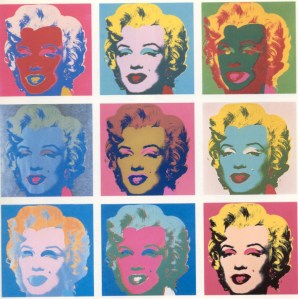
Marilyn Monroe, Andy Warhol

10. Andy Warhol (1928-1987) 

Andy Warhol was born in Pittsburgh, Pennsylvania to Austro-Hungarian immigrants. In third grade he developed Sydenham’s Cholera, a disorder of the nervous system that left him bedridden for months at a time. Isolated from his peers, the shy child became a voracious student of pop culture. Just a few years later he would build his own towering pedestal using the very figures and symbols that he pinned on his bedroom walls.

Warhol graduated from high school in 1945 and attended the Carnegie Institute of Technology for commercial art. In 1949 he moved to New York City, where he worked in the publishing and advertising industries and got his Bachelor of Fine Arts degree in pictorial design. In the 1950’s RCA records hired Warhol as a designer, where he pioneered innovations in various image-making techniques, most notably in screen printing. At the same time he was using similar processes—and subject matter—in his fine art, which he showed in galleries around New York. It was an approach to art that offended many critics at the time, who accused Warhol of succumbing to the homogenizing forces of consumerism.
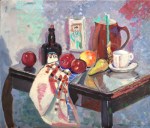
This was Warhol’s true impact on art history: to show contemporary artists that they couldn’t avoid or ignore the foundational social changes affected by the mass media. Whether he was exploring identity, vanity, sexuality, fame or nothing at all, Warhol was molding the mercurial landscapes of Modern and Postmodern art.

Don’t forget to read part 1 of this series, and connect with us on FacebookTwitter and Pinterest to let us know who you would choose!

The 10 Artists Who Changed Art History Forever, Pt. 1

Over the next two weeks, we’re paying tribute to 10 painters who changed the course of art history. Our first five picks range from Il Divino to the “painter of light”. Who do you think we missed? Connect with us on Facebook, Twitter and Pinterest to join the discussion, and click here to read part 2!

Giotto, "The Kiss of Judas"
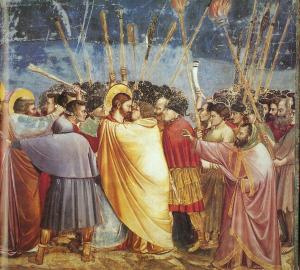
Giotto, The Kiss of Judas

1. Giotto (1266/7-1337)

The Italian painter and architect was most likely born in Florence, the city where he would live and work for his entire life. Legend has it that the young Giotto was herding sheep and stopped to sketch the animals on a rock when famous Tuscan painter Cimabue strolled by and took him as an apprentice. One of art history’s most passionate debates centers on whether Giotto completed parts of Cimabue’s frescoes at Assisi. Regardless, it was Giotto’s break from the traditions of Cimabue and his contemporaries that helped spark the Italian Renaissance.

In Giotto’s frescoes at the Scrovegni Chapel, the stylized Byzantine figures that were popular at the time are nowhere in sight. His figures are solid and sculptural, their robes draping naturally from their frames. This is a painter who drew inspiration from what his eyes could see. 16th century biographer Giorgio Vasari wrote that Giotto started “the great art of painting as we know it today, introducing the technique of drawing accurately from life, which had been neglected for more than two hundred years.”

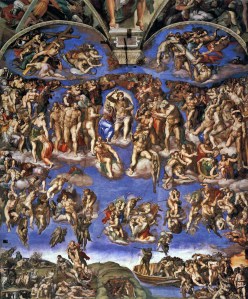
The Matthews Gallery, Michelangelo
Michelangelo, The Last Judgment

2. Michelangelo (1475-1564) 

In contrast with Giotto, this prolific sculptor, painter, architect, poet and engineer left behind a paper trail that makes him one of the most well-documented artists of his time. Michelangelo completed the Pieta and David before he turned 30 and redesigned part of St. Peter’s Basilica at 74. In between, he completed the ceiling frescoes of the Sistine Chapel, spent 40 years creating Pope Julius II’s tomb and worked on a multitude of other projects. Even in his time he was known as Il Divino, “the divine one”.

The Last Judgment fresco on the altar wall of the Sistine Chapel, one of Michelangelo’s final works, is the fulfillment of Giotto’s artistic legacy. His massive figures seem to press from the wall with all of the terriblita (awe-inspiring grandeur) of living giants. Giorgio Vasari, who wrote a biography of Michelangelo during his lifetime, called the artist’s works the apex of the Renaissance. They also inspired Mannerism, the movement that proceeded the Renaissance in Western art.

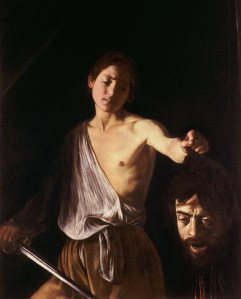
The Matthews Gallery, Caravaggio
Caravaggio, David with the Head of Goliath

3. Caravaggio (1571-1610) 

It’s no secret that Caravaggio was an unpleasant guy. A public notice from 1604 accused him of crashing gatherings armed with a sword, “ever ready to engage in a fight or an argument, so that it is most awkward to get along with him.” Perhaps that’s why he was swiftly forgotten after his death in 1610 and wasn’t recognized for his great influence on art history until three centuries later.

The artist was born in Milan and grew up in the city of Caravaggio. His parents were both dead by his teen years so he started an apprenticeship with painter Simone Peterzano, who was Titian’s pupil. He moved to Rome in 1592 and rose to fame as he developed the style that would come to define Baroque painting. His figures were incredibly realistic, their skin pocked, their feet dirty and their faces full of emotion. They were illuminated by high key chiaroscuro lighting. Caravaggio fearlessly placed the common people in the spotlight, a coup that would serve the Counter-Reformation well.

The Matthews Gallery, Velazquez
Velazquez, Las Meninas

4. Velazquez (1599- 1660) 

Diego Velazquez’ oeuvre mostly consists of pompous portraits of the Spanish royal family and other powerful and privileged Europeans. It was a twisty play on this genre that would secure his place in art history. Velazquez was born in Seville and educated well. He worked his way up the ranks of painters in his hometown and then hopped to Madrid, where a connection with the king’s chaplain and the timely death of the Spanish royal court painter helped him land the coveted position in 1624.

Four years before his death, Velazquez painted his masterpiece Las Meninas. The painting shows Spanish princess Margaret Theresa standing next to the painter himself, who’s working on a large canvas. In a mirror behind them are the faces of the king and queen. The sophisticated work’s bifurcating viewpoints throw its true subject into question and place Velazquez far ahead of his time. More than two hundred years later the painter’s work would inspire the Realists, the Impressionists and the Modernists.

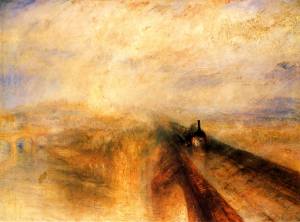
The Matthews Gallery, JMW Turner
JMW Turner, Rain, Steam and Speed

5. Turner (baptized 1775-1851) 

JMW Turner was known as the “painter of light”, but the artist with the ethereal subject matter had a very solid impact on art history. The Romantic landscape painter was born in London to a barber and wig maker. He showed his drawings in his father’s shop as a young boy, and studied under architects and a draftsman before enrolling in the Royal Academy of Art as a 14-year-old. His reputation swiftly grew, and he had his own studio by 18. However, when he verged away from picturesque landscapes in favor of stormier subject matter, Protestant society was shocked.

In his famous oil Rain, Steam and Speed, Turner depicts a locomotive as a surging pillar of tumbling air with a black smokestack as its only identifying characteristic. As details melted away and Turner focused on the continuous flux of air and light, critics started turning against the artist. An 1802 review called his works “too indeterminate and wild”, and writers were keen to tie his chaotic paintings to radical new political and social movements. Turner became increasingly isolated from society and often refused to sell his paintings, but his work had an undeniable influence across Europe, inspiring Claude Monet and other French artists in their steps toward Impressionism.

Sound off on FacebookTwitter and Pinterest and tell us who we missed, and click over to part 2 for our last five picks.

THE MATTHEWS GALLERY: Arc of Art History

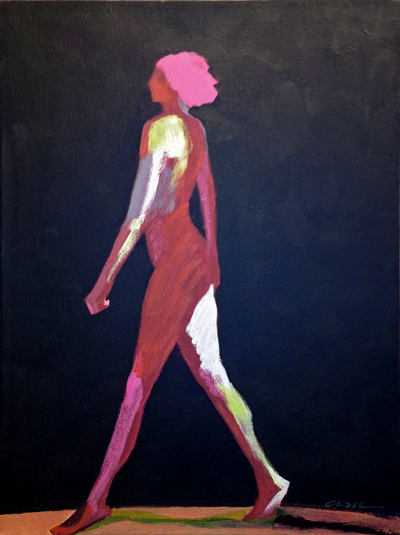
"Stride", Jamie Chase, Matthews Gallery
“Stride”

When Santa Fe visitors step into the Matthews Gallery, they often mention that something feels different. Our gallery location is in a historic adobe on Canyon road just like many of the other galleries so we have a hunch that the novelty they’re sensing is our devotion to carefully curating every wall of our gallery.

We show work from the 19th, 20th and 21st centuries. Our curatorial direction is to exhibit a variety of work from these eras that relate to the artistic development from impressionism to contemporary art. Here are some of the names that you won’t see anywhere else on Canyon Road—or even elsewhere in Santa Fe:

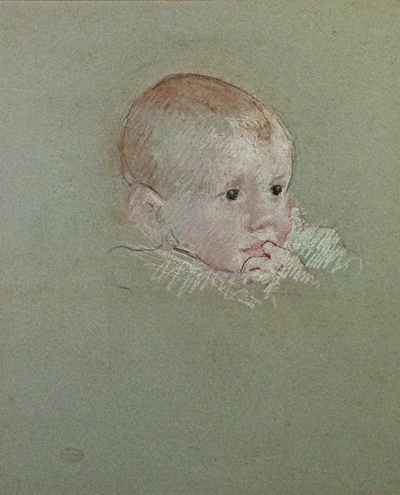
Head of Baby with Finger in Mouth, Mary Cassatt, Matthews Gallery
“Head of Baby with Finger in Mouth”, Mary Cassatt

Mary Cassatt (1844-1926) ~ The American painter and printmaker was refused entry to the Ecole des Beaux-Arts, so she studied the masters on her own at the Louvre. She would become a master herself, named one of “les trois grandes dames” of Impressionism by Gustave Geffroy.

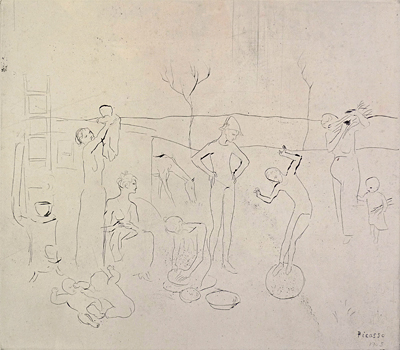
"Les Saltimbanque", Pablo Picasso, Matthews Gallery
“Les Saltimbanque” by Pablo Picasso

Pablo Picasso (1881-1973) ~ Several works by the most influential artist of the 20th century have passed through the Matthews Gallery. Our most notable current work by Picasso is “Les Saltimbanque”. The drypoint etching the artist created as a teenager shows the harlequin, a personal symbol that would recur in his work throughout his career.

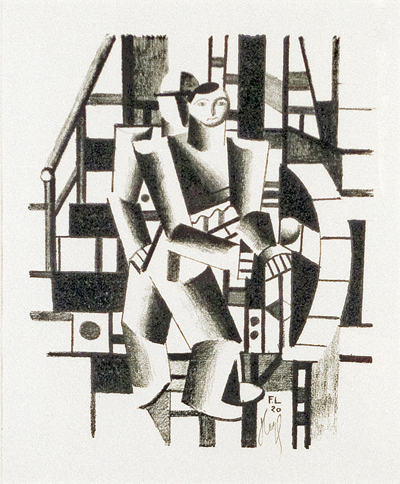
"Composition aux deux Personnages", Fernand Leger, Matthews Gallery
“Composition aux deux Personnages” by Fernand Leger

Fernand Leger (1881-1955) ~ The painter, sculptor and filmmaker’s lithograph “Composition aux deux Personnages” marked a shift in his oeuvre from Cubism to bold figurative works that would later identify him as a forerunner of Pop Art. As is the fate of all art movements, Picasso and Braque’s Cubism were irrevocably fractured.

"Blue Nude", Harold Frank, Matthews Gallery
“Blue Nude” by Harold Frank

Harold Frank (1917-1995) ~ Born in Southampton, England, Frank’s family moved to New York when he was a child. You can see influences from both shores in his colorful canvases that take cues from modernism and abstract expressionism.

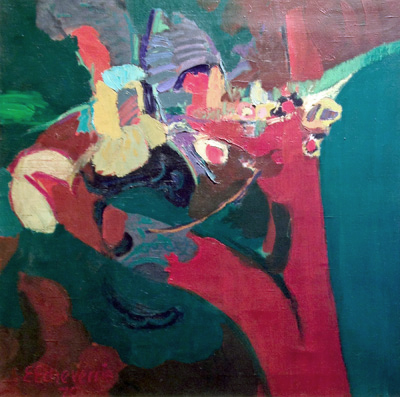
"Alic", Enrique Echeverria, Matthews Gallery
“Alic” by Enrique Echeverria

Enrique Echeverria (1923-1972) ~ Echeverria and his contemporaries brought the ideas of modern European art movements to Mexico and subverted the traditional figurative painting style. They became known as the Generacion de la Ruptura, the Rupture Generation.

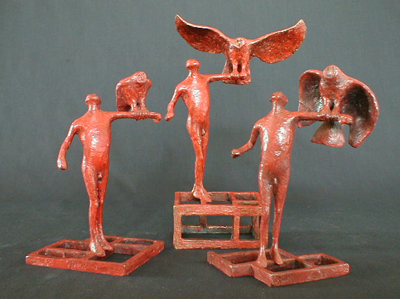
"Avian Keepers", Robert W. Hinds, Matthews Gallery
“Avian Keepers” by Robert W. Hinds

Robert W. Hinds (1924- present) ~ This World War II veteran was born a year after Echeverria. He had a successful graphics career for years before moving to Europe to study casting techniques in Italy and Bologna. Now he produces figurative bronze sculptures that are collected throughout the world.

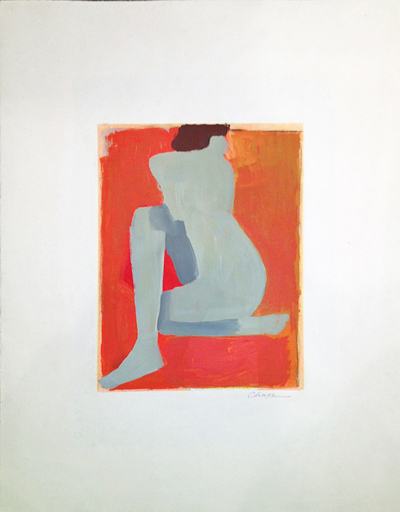
"Untitled Grey Nude on Orange", Jamie Chase, Matthews Gallery
“Untitled Grey Nude on Orange” by Jamie Chase

Jamie Chase (1954- present) ~ The painter and graphic novelist was born in California, and traveled to Europe to educate himself on the work of the masters. He moved to Santa Fe in 1980, where he’s now known for his non-objective paintings, abstract landscapes and abstracted figurative paintings.

Browse all of the artists we represent here, and follow our Facebook and Twitter accounts for updates on their work. 
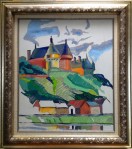
STATE OF THE ART: A Survey of New Mexico Artists

The very first artists who came to work in New Mexico found themselves on a harsh frontier. Harold Elderkin and his wife moved to Santa Fe in 1886 to run a gallery and teach painting lessons, but left for El Paso two years later. An artist named George Stanley tried the same thing in 1897 and failed even faster.

The 1920s saw an influx of artists who had already established their careers on the East Coast. The Southwestern landscapes they sent home would build this region’s reputation for stunning natural beauty and great art. Nowadays, Santa Fe is one of the nation’s largest art markets and New Mexico is a magnet for artists from across the globe.

Though New Mexico has changed a lot since those first creative pioneers settled here, the independent spirit of the frontier lives on through art. Our April 5-18 exhibition “State of the Art”showcases the work of seven recognized contemporary masters who work in New Mexico. Their art may be as diverse as our desert sunsets, but it’s all influenced by the Land of Enchantment.

Jamie Chase moved to Santa Fe in 1980 from his home state of California. He initially found success here painting traditional landscapes, but started exploring other styles and subject matter as he developed his own visual vocabulary. His current work includes non-objective paintings, abstract landscapes and abstracted figurative paintings. “State of the Art” will feature his elegantly abstracted female figures, who roam among dazzling color fields in search of transcendence.

The landscape-based abstract paintings of Terry Craig are literally rooted in the earth. He uses powdered pigment, marble dust and other materials to explore the tension between careful geometric order and wild gestural strokes. The Albuquerque artist draws inspiration from colors and patterns he sees in nature, but when he puts brush to surface he surrenders to his subconscious.

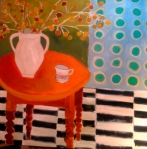
Annie O’Brien Gonzales was born and raised in Oklahoma and got her BFA in painting and art history at Oregon State University. She pursued fiber arts for many years but recently switched back to painting. You can still see traces of her fiber work in the bold patterns and colors she incorporates into her still life paintings.

Form and line, and observation, are the tools of the passage of my self-discovery,” says 89-year-old Santa Fe artist Robert W. Hinds. The sculptor worked as an illustrator and graphic designer before deciding to explore the third dimension. His bronze sculptures are of animals and people, and often show surreal interactions between them. Hinds’ abstracted style is contemporary, but the stories he tells through his sculptures recall Classical myths.

Frank Morbillo was raised on Long Island, but moved to Montana and then Santa Fe as a young adult. His sculptures speak the same language of entropy and change as New Mexico’s majestic rock formations, with an added element of political dialogue that you’ll find in his inquisitive titles. “I often find myself walking the line between artist and activist,” he says.

You’ll find old letters, candy wrappers, bits of string and other flotsam and jetsam in Kate Rivers‘ mixed media works. The artist, who grew up in Ohio and now lives in Santa Fe, uses these often overlooked objects to investigate memory and metaphor. Her most recent works are enormous collages made of dozens of stitched-together book bindings. Fragments of titles jumble together, encouraging new associations between the stories and characters behind them.

Diane White may be well versed in traditional still life techniques, but a closer look at her serene paintings of ceramic pots and other vessels will lead to fantastical discoveries. The Santa Fe artist, who worked for many years as a potter before studying painting at the Loveland Art Academy, weaves elements of magical realism into her works right under the viewer’s nose. Magical realism is a literary genre made famous by writers like Gabriel Garcia Marquez that illustrates extraordinary events in the context of a quotidian setting. Pay attention to every detail in White’s work and you’re sure to discover something supernatural, from a leaf transforming into a butterfly to a bouquet of lilies melding with the night sky above it.

State of the Art” opens Friday, April 5 from 5-7 pm and runs through April 18, 2013. Check out our Facebook and Twitter pages for more information.

The Architect’s Secret

If you’ve spent any time in Santa Fe, you’ve probably seen something John McHugh made. The young architect was passing through Santa Fe on a cross-country road trip in 1946 when his Ford broke down.

He took a job at a local architecture firm so he could earn enough to fix it. Ten years and several cars later, he started his own company with Van Dorn Hooker and won commissions for the first Santa Fe Opera House, the remodeling of the parish hall at St. Anne’s Church and the Kearny School, among many others.

While John’s largest works are still viewed by thousands of people each year (save the opera house, which burned down and was reconstructed), some of his most colorful creations have been hidden away since his death in 1995.

“Come in, come in,” says John’s widow Gillian when she opens the door to the home they shared. She points me past the living room where a Gustave Baumann painting hangs and down a hallway that leads to a sprawling room. Leaning against every vertical surface are dozens of canvases that will soon grace the walls of the Matthews Gallery.

“When we first moved here, he converted the garage into his studio right away,” Gillian says. There are still traces of the artist all around the room. Tins full of brushes sit on a tabletop, a near-empty cigar box is perched on the mantle and one painting is still on its easel. Hidden in a stack of dusty pictures next to the window is an old invitation to an exhibition of John’s work at St. John’s College, one of the only shows he ever had. Most of the paintings in our exhibition of his work, starting Friday, March 15, have never been seen by the public.

“I felt that it was extremely important to have a show,” Gillian says. “These paintings shouldn’t just be gathering dust.”

John’s path was always architecture, but art naturally came along with it. He was orphaned at 7 years old and spent the rest of his childhood under the care of his aunts in Springfield, Ohio. Though money was tight, he used his earnings as a paperboy to plant a garden in his yard. He graduated cum laude in architecture from the University of Notre Dame in the 1941, and took an apprenticeship in Ohio before serving in the Air Force.

When John returned, he taught in the art department at Notre Dame for two years before heading off on the fateful road trip that would land him in Santa Fe. Gillian and John met in 1953 and married a year later. She’s an acclaimed pianist who was born in Great Britain and traveled to Santa Fe with the International Scouting organization in the early 1950s. While Gillian practiced for hours at her piano, she remembers John spending every spare moment with brush or pencil in hand.

“He would come back from the office and go in the studio. It was very simple,” she says. “He loved painting. He would stand there the entire evening at his easel. He loved the shapes and patterns and colors.”

John’s oeuvre is captivating in its diversity. As I explore his studio, I find landscapes and abstract paintings, a work that was inspired by cubism and another that looks to have been done with Cezanne in mind. One dramatic landscape is signed Baumann-McHugh, and was started by the former and finished by the latter. The thread that ties it all together was John’s strong emphasis on the framework of whatever he was portraying. You can see the hand of an architect in the bold patterns he employed again and again.

“I think the architecture does enter into his paintings a good deal, because of the form and shape that he was always working with, and the fascination with that,” Gillian says. “It could be from anything. It could be something growing by the wayside or it could be a giant building.”

On drives around New Mexico, John would often park the car and pull out his sketchbook. “He’d stop in the middle of nowhere,” Gillian remembers. “If there was a telephone pole that he liked, he’d get out and say, ‘Do you mind if I just draw this?’ All of a sudden half an hour later… something really wonderful would come out of the shape or color.”
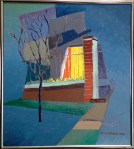
All of John’s creative endeavors came to an abrupt halt in 1985, when he suffered a severe left hemisphere stroke. “After the stroke, he was trying to come back to being whole again. He would work in very small ways,” says Gillian.

John could see Sandia Mountain from the windows of St. John’s Hospital, and he challenged himself to learn to draw it again. “Sandia was really his lifeline. The mountain called to him. He was eventually able to draw the whole thing, which took a long, long time. This was a lovely beginning to his route back to health.” Later on, John did a lecture series on art at St. John’s College that further built his confidence. He continued painting and sketching until the very end of his life.

Gillian folds up her walker and takes a seat in the living room next to her piano. One of John’s aspen paintings hangs above her head. She’s 89 years old, but when Gillian talks about John’s upcoming retrospective at our gallery, she seems full of energy. The works are close to her heart, as is the cause that the show will be supporting.

“When I heard about the wonderful work that the Bob Woodruff Foundation was doing for soldiers returning from Iraq and Afghanistan, I was fascinated,” she says. “My brother had been a prisoner of war under a different situation. I thought perhaps…. some of the paintings that John did could be used, and some of the proceeds could be given to this foundation.”

I ask Gillian something I’ve been wondering the whole time I’ve been there: how did John have the time and energy to accomplish all of this?

Gillian shakes her head and smiles. “It wasn’t really hard work, you see. It was total love,” she says. “Architecture and art were his life.”

The Matthews Gallery will present an exhibition of the art of John McHugh from March 15th through March 28, 2013. Gillian McHugh will be in attendance during the opening reception on Friday March 15th from 5-7 pm. A portion of the proceeds of the sales of the artwork will be donated to the Bob Woodruff Foundation. Click here for more information, and follow our Twitter and Facebook feeds for updates.

Top 10 Art Movies, Part 2

Where can you find a character big enough to fit a charismatic actor’s personality? Try looking in the art world. Our final five selections for best art movie present unique challenges to bright stars, and they deliver.

Our picks:

The Agony and the Ecstasy (1965) ~ Rex Harrison and Charlton Heston were hot property when they signed on as Pope Julius II and Michelangelo for this Carol Reed classic about the painting of the Sistine Chapel. You can feel the actors sizing up each others’ Oscars in the battle of the wills between two of the Renaissance’s biggest egos, and it elevates both of their performances. We know that Michelangelo is destined to finish the monumental project, but we can tell the Warrior Pope means it when he screams, “Michelangelo will paint the ceiling! He will paint or he will hang!”

Basquiat (1996) ~ “No one wants to be part of a generation that ignores another Van Gogh,” says poet Rene Ricard (Michael Wincott) early in Julian Schnabel’s film. The statement is packed with the sort of hysterical hype that made Jean Michel Basquiat incredibly famous, and probably killed him. That’s not to say that Basquiat, played here with comfortable charm by acclaimed stage actor Jeffrey Wright, wasn’t a top talent. The film’s cast and crew is populated by people who witnessed firsthand the artist’s incredible rise and fall, from David Bowie, who briefly collaborated with Basquiat and plays a fantastic Andy Warhol, to visual artist Schnabel, who makes his directorial debut here. These folks know what made Basquiat and his work so special, and keenly understand the power and vanity of the world that devoured him.

Surviving Picasso (1996) ~ Newcomer Natascha McElhone plays Pablo Picasso’s long-suffering lover Francoise Gilot in this project that was blacklisted by both Picasso and Gilot’s estates. Perhaps that’s because the real draw is Picasso’s (Anthony Hopkins) string of fiery mistresses, played by some of Hollywood’s most beloved character actresses. While we’re meant to focus on the moody Gilot, it’s hard not to delight in the antics of Julianne Moore’s Dora Maar and Susannah Harker’s Marie-Therese Walter. It seems that surviving a relationship with the wayward artist was truly a matter of dispensing with sanity.

Girl with a Pearl Earring (2003) ~ Colin Firth plays Johannes Vermeer and Scarlett Johansson his mysterious subject in this slow waltz of a film by documentarian Peter Webber. Vermeer takes notice of his new maid Griet and decides she’ll be his painting assistant and model, much to the consternation of his family. It’s a careful acting exercise for the leads, who must keep their growing interest in each other bubbling under the surface to make way for the film’s real star: the soft grey light of 17th century Delft. The visual vocabulary of Vermeer and his contemporaries rules here, with characters forever pulling back curtains and pausing by glowing windows. It’s simple, spare and gorgeous—much like the painting that inspired it.

The Thomas Crown Affair (1999) ~ A self-made billionaire, bored with riches and romance, takes up art theft in one of the best vehicles ever crafted for the suave Pierce Brosnan. Mr. Bond plays Thomas Crown, who singlehandedly steals a Monet from the MOMA and arouses the suspicions of beautiful detective Catherine Banning (Rene Russo). A very stylish, wonderfully silly game of cat and mouse ensues. One lesson you’ll learn: if you steal a painting, don’t hang it on your wall.

Click here to browse our first five selections, and follow us on Twitter and Facebook for more meditations on art.

Top 10 Art Movies, Part 1

Film gives us the invigorating opportunity to see long dried canvases shine bright and wet again. Telling a beloved artist’s story to the world’s satisfaction is more than just a process of retracing her brushstrokes, though. Our first five selections for best art movie are willing to take as many creative risks as the artists they profile.

http://www.youtube.com/watch?v=N5tSOj-ohuI&feature=youtu.be

Frida (2002)– This biopic of the Mexican surrealist was stalled for years until Salma Hayek took the helm as producer and lead. Hayek and director Julie Taymor paint the story of an artist who suffered through crippling physical mutilation and bottomless heartache with the most vivid palette. That was Kahlo’s outlet and weapon, after all, even as she lay in bed while her sometime husband Diego Rivera gained global notoriety for his own work. It helps to know the story’s true ending, even if it would be a bit capitalistic for Kahlo’s tastes. It’s not Rivera’s face you’ll find in the window of every Santa Fe gift shop.

Lust for Life (1956)– A bearded, bedraggled Kirk Douglas is mesmerizing as Vincent van Gogh in this classic portrait filmed in Holland and France. It’s a career highlight for Douglas, but Anthony Quinn steals the show in his Oscar-winning turn as Paul Gauguin, who admires Van Gogh’s work but finds that he can’t stand the man himself. Some of the film’s best scenes are in its quieter moments, when the famously volatile Van Gogh picks up a brush and pours out his emotions on canvas.

Modigliani (2004)– “The future of art is in a woman’s face. Tell me, Picasso, how do you make love to a cube?” sneers Modigliani, waving a rose in the air. It’s Modigliani‘s best moment, and it really happened. The rest of director Mick Davis’ high energy film bends the truth a bit, but it all works in the way Woody Allen’s Midnight in Paris did. Famous figures are always dropping by for self-aware bit parts that keep the film light on its feet. It’s the artist’s story told in the manner that Parisians must have gossiped about it just after his death at 35. All of the pieces are there, but their order gets more muddled with each delicious glass of absinthe.

http://www.youtube.com/watch?v=HmoUIfcrfIE&feature=youtu.be

Pollock (2000)– Director Ed Harris’ film is as much about Jackson Pollock’s alcoholism as his art, and though we know that the artist’s addiction will win in the end, all of the tension of his controversial rise, tumultuous personal life and tragic death in a drunk driving accident holds us captive. Harris, who plays Pollock, and Marcia Gay Harden as Lee Krasner are so driven in their portrayal of abstract expressionism’s royal couple that when the paint starts flying, you’ll believe it’s really Pollock holding the brush.

Artemisia (1997) – Italian Baroque painter Artemisia Gentileschi’s long, extraordinary artistic career is often eclipsed by the events surrounding her rape as an 18-year-old. Director Agnes Merlet chooses to tell only that small piece of her story in Artemisia, and fudges the details a bit by turning it into a love story. The film’s saving grace is Valentina Cervi, who plays Gentileschi with fierce passion. When Cervi’s face fills the screen, as it often does, her expressive eyes tell the whole story.

Check out our final five picks for best art film, and follow our Twitter and Facebook feeds for more art meditations.

Top 10 Art Books of 2012, Part 2

When the art and publishing worlds work in harmony, imagery merges with typography and innovative formats give us unexpected views of famous works. Through images and prose, our final five picks for 2012’s best art books gave us new eyes: 

slide_268476_1854924_free

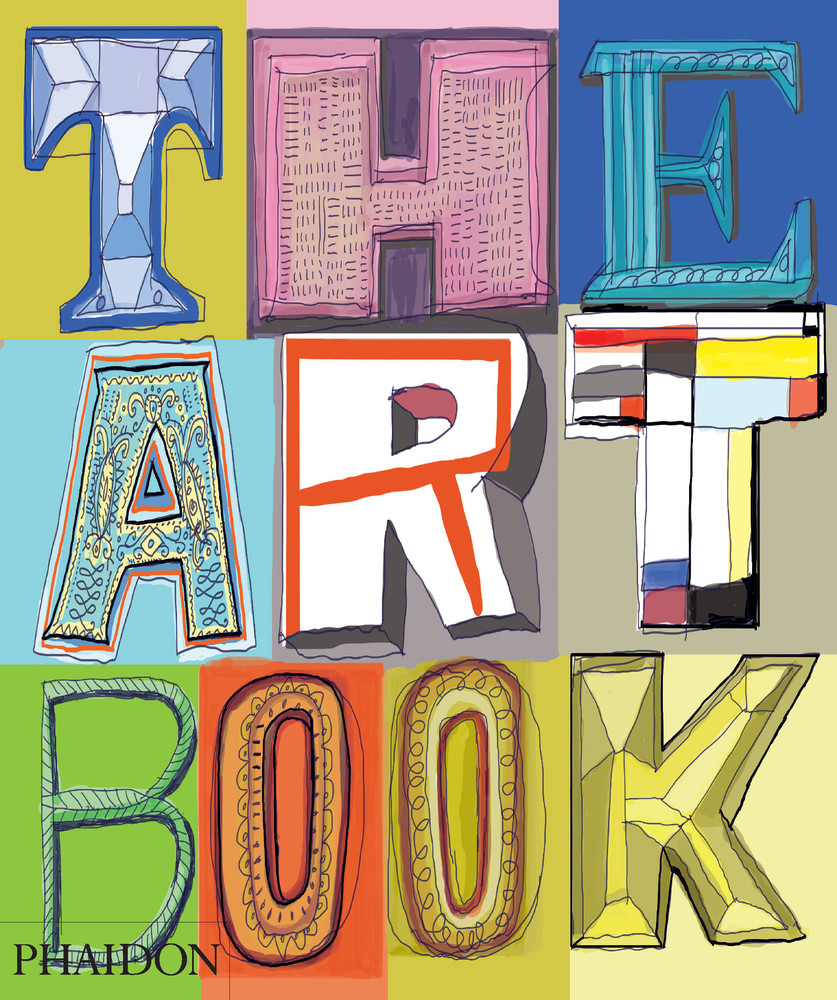
The Art Book, Phaidon- First published by Phaidon in 1994, The Art Book is as intriguingly tangled as ever in its 2012 edition. It’s an art history book made for creatives, its artists presented in alphabetical rather than chronological order. Seventy new artists join the pantheon, encouraging the crackling connections that only The Art Book could provoke. Where else would you find Duccio next to Duchamp or Manet in dialogue with Mangold?

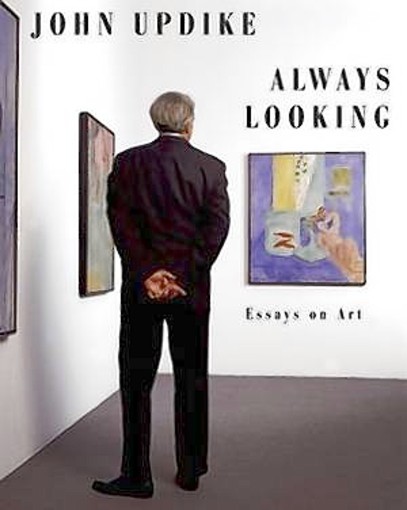
cover of "always looking"

Always Looking: Essays on Art, John Updike- John Updike wasn’t an art critic, but the third, posthumous volume in his Looking series guides us through the crowds at notable exhibitions and along the arc of art history with signature elegance. The collection starts with Updike’s 2008 lecture on American art “The Clarity of Things” and includes 14 essays Updike wrote for The New York Review of Books and other publications.

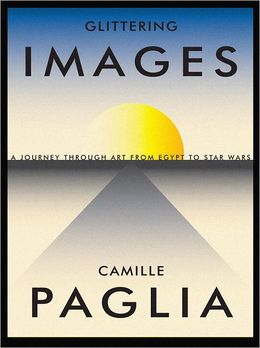
9780375424601_p0_v1_s260x420

Glittering Images: A Journey Through Art from Egypt to Star Wars, Camille Paglia- Paglia kicks off Glittering Images by declaring her intent to help the masses, hypnotized by technology and riddled daily with thousands of disconnected images, understand and appreciate art’s compelling historical sweep. You can’t trust the inflammatory culture warrior for a minute, but that’s what makes the proceedings so fun. Paglia picks 29 of her favorite artworks, from Egyptian funerary imagery to George Lucas’ “Revenge of the Sith”, and presents them as pinnacles of humanity’s artistic legacy. Her selections are mostly confined to the West and heavily weighted to the 20th century, but her arguments are entertaining whether you agree with them or not.

Screen Shot 2013-01-16 at 3.00.40 PM

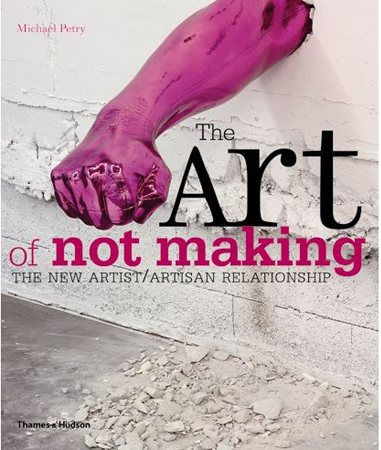
The Art of Not Making: The New Artist/Artisan Relationship, Michael Petry- Jeff Koons, Damien Hirst, Murakami Takashi, Ai WeiWei. They’re some of the biggest names in contemporary art, but could you call them artists? Petry examines the Renaissance-old dependence between art and craft—and the questions of authorship that it raises—with images from 115 contemporary artists who don’t always have a hand in creating their work. The book’s five chapters are intriguingly organized by material, a nod to the industries that brought these objects into existence.

100-ideas-that-changed-art

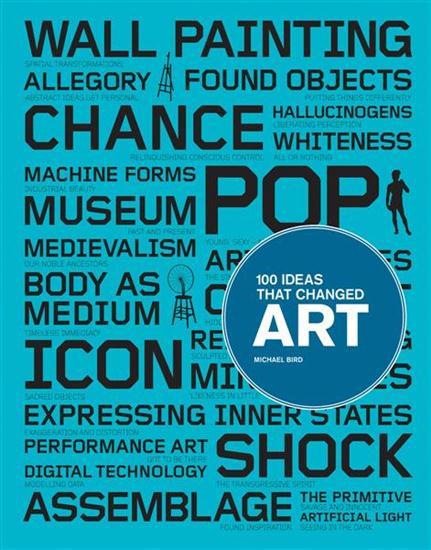
100 Ideas that Changed Art, Michael Bird- Art historian and broadcaster Bird is quick to caution that his numbered list of artistic turning points, from “narrative” (#7) to “street art” (#94), is anything but concrete in its essential properties. “No sooner has an idea changed art that art reformulates that idea, allowing it to recognize itself,” he writes. This collection of 500-word essays is particularly fascinating for the playful lines it draws between modern and contemporary art and works of old. Bird doesn’t shy away from party tricks like comparing Byzantine icons with Andy Warhol’s Marilyn Monroe images, and the results are charming for dilettantes and art experts alike.

Browse our first five selections here, and check out our Twitter and Facebook feeds for more insight.