CURATE THIS, CURATE THAT: Place your votes!

Collectors-Choice-Social1

The selection process for our social media-curated show COLLECTOR’S CHOICE is underway, and fans on Facebook, Instagram, TwitterTumblr and other networks have placed their votes. It’s time for some tie breakers on WordPress! Check out the match-ups below and vote for your favorites in the comments section. From January 31 to February 5, we’ll unveil your selections in the gallery and online.

JAMIE CHASE

Jamie Chase- Collector's Choice- Matthews Gallery blog

ROUND 1! Jamie Chase is known for his figurative work like image #1, and also his abstracted landscapes like #2. Which one should appear in the show? Take the curatorial reins!

WILLIAM LUMPKINS

William Lumpkins- Collector's Choice Show- Matthews Gallery Blog

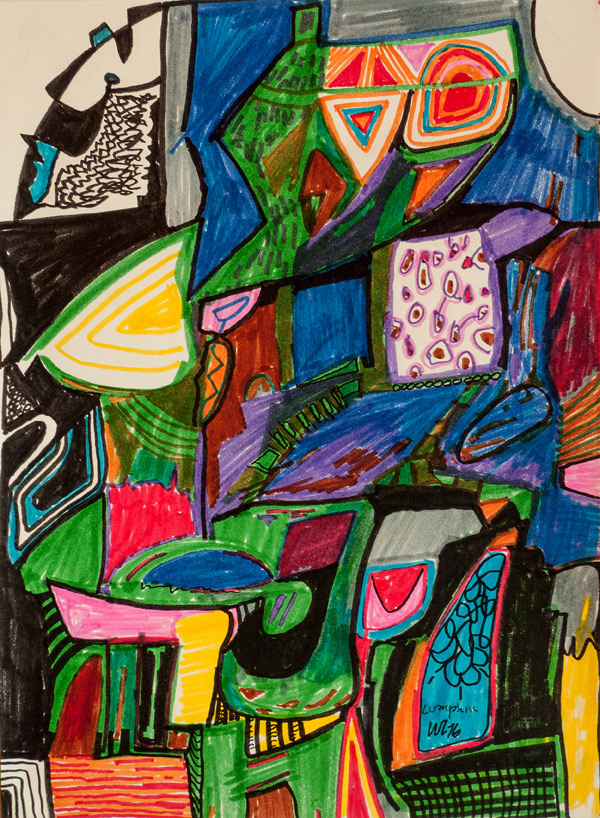
Do you prefer William Lumpkins‘ careful watercolor brushstrokes (#1) or experimental wild felt-tip pen marks (#2)? Read more about the influential Santa Fe modernist here before you decide…

KATE RIVERS

Kate Rivers- Collector's Choice Show- Matthews Gallery

Curate this! Should we feature a Kate Rivers book collage in the show, or one of her nests? Read about her mixed media work in this blog post, and vote for #1 or #2 in the comments.

HANNAH HOLLIDAY STEWART

Hannah Holliday Stewart- Collector's Choice- Matthews Gallery Blog

These tall, spindly bronzes might be very different, but they’re both by powerhouse feminist sculptor Hannah Holliday Stewart. Figurative or abstract? Curate that!

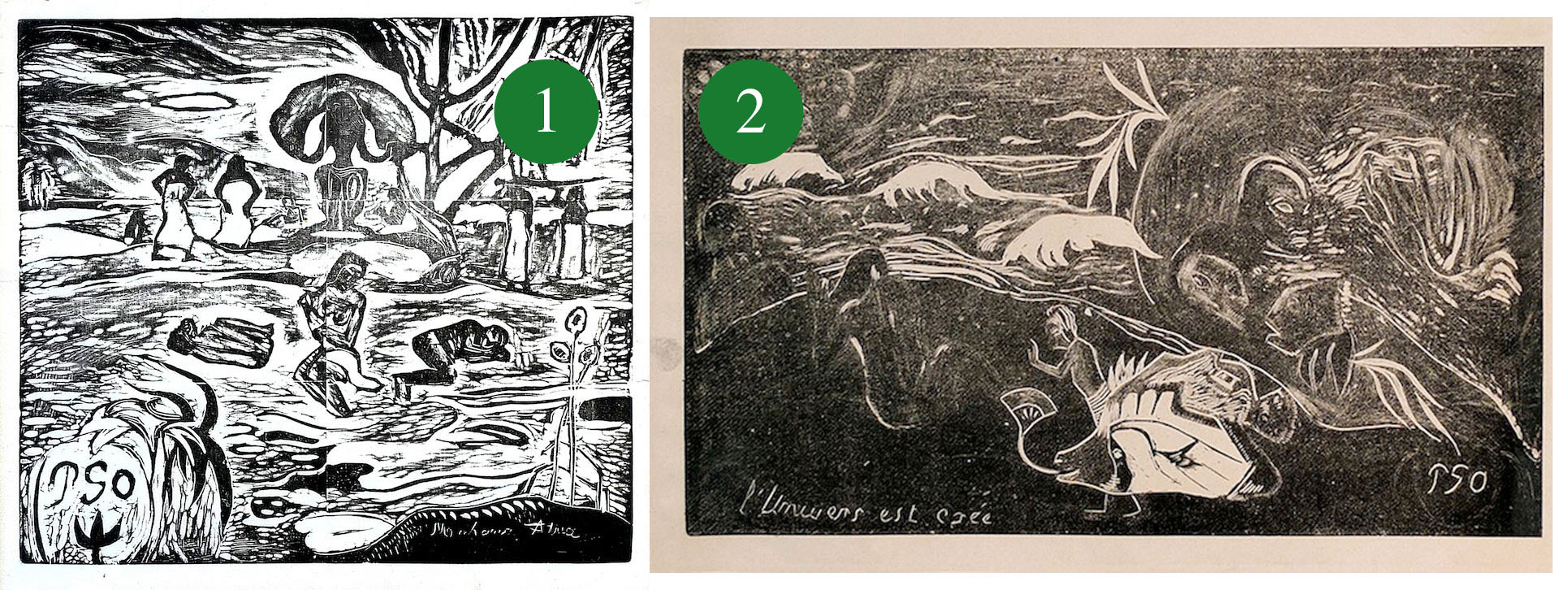
PAUL GAUGUIN

Paul-Gauguin-Collectors-Choice

Two Tahitian myths inspired these woodblock prints by Paul Gauguin. Which do you prefer? Read about them in this blog post, and vote now!

Thanks for participating in COLLECTOR’S CHOICE! To place your vote on other social networks, connect with us through the links on our About Page.

ONE WORK OF ART: Jean-Pierre Jouffroy

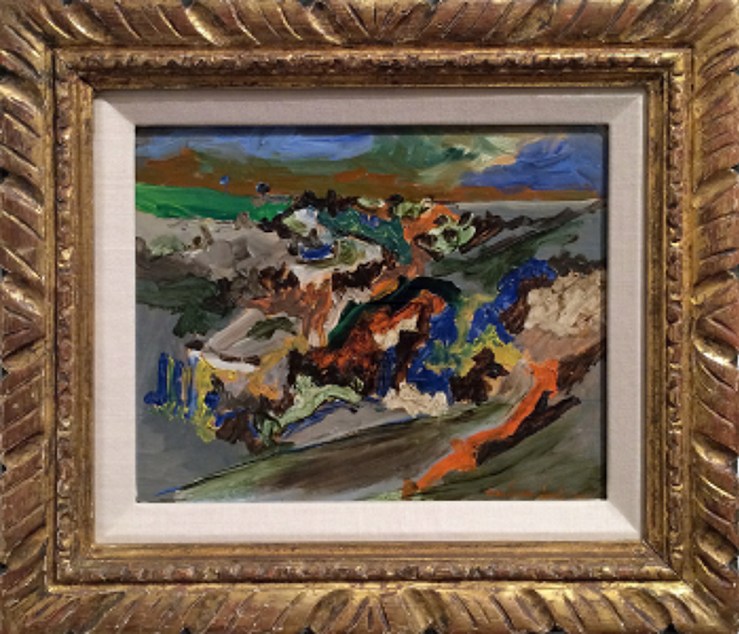
Jean-Pierre Jouffroy- Untitled Modernist Landscape- Matthews Gallery Blog
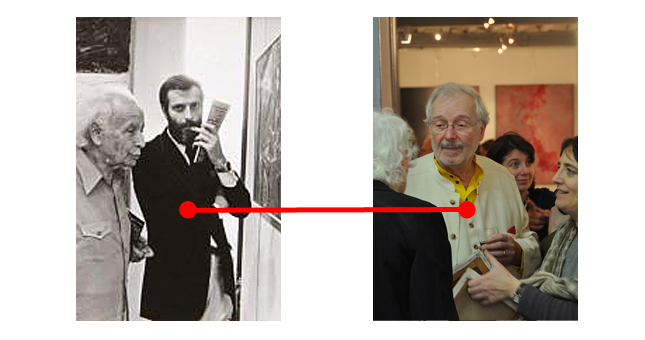
Two photographs.

Jean-Pierre Jouffroy - Matthews Gallery BlogOne shows a young artist with a determined look in his eyes, and the other an older gentleman at the opening of an 80-year retrospective of his artwork. What happened in the span between the shots?

Sometimes art by Picasso or Gauguin finds its way to our gallery, but other times we get our hands on an exquisite work that bears a name we’ve never heard before. Such was the case with this lovely 1940’s painting by a man named Jean-Pierre Jouffroy, which reminded us of the artwork of James Brooks and other lyrical abstractionists.

Thank goodness for Google. An image search of the artist’s name brought up these two photos, and some French-to-English translating revealed the fascinating story behind them.

Jean-Pierre Jouffroy was born in Paris in 1933. When he was 11 years old, he saw the work of Wassily Kandinsky and Nicolas de Staël in a gallery and fell in love with modernism. “As a young boy, I dreamed of covering the surface of the earth in paint,” Jouffroy recalls.

Early in his career, the artist created purely abstract work that was heavily influenced by Staël. Then, in the late 1950’s, Jouffroy had an artistic epiphany.

“An abstract painting always shows something, like it or not,” he explains. “The painting is the image of an internal battle. This fight is itself a metaphor for our relationships in the social sphere.” Based on this realization, Jouffroy decided to incorporate the visual vocabulary of abstraction into representational work.

The shift sent the artist on a journey that traced the innovations of modernists like Picasso and Cezanne in reverse. Just like those artists, Jouffroy was experimenting with abstracted figures and landscapes, but he was coming from a wholly nonrepresentational world that his predecessors never explored. In tributes to Cezanne, Gauguin, Manet and Braque, he brought great artists of the past into harmony with a movement they all, in one way or another, helped to inspire.

Jouffroy’s new explorations caught the eye of the art world, and he exhibited at Paris’ Museum of Modern Art, the Art Institute of Chicago and other renowned institutions. Though he was focused on figurative work, he was often associated with lyrical abstraction (as we suspected) because of his background, his loose brushwork and his inventive use of color.

Our Jouffroy painting represents an interesting phase in the artist’s evolution. Though it predates his representational work, it has undeniable elements of landscape. Perhaps it’s the first sign of the transformation that would send Jouffroy’s career in a spectacular new direction. You can see echoes of the work’s palette and brushwork throughout the artist’s retrospective at the Place du Colonel Fabien that opened in November.

Check out Jean-Pierre Jouffroy’s “Untitled (Modernist Landscape)” on our website, and connect with us on Facebook and Twitter for more gallery news.

ONE WORK OF ART: Salvador Dali’s “Frontispiece for Goya Suite”

Salvador-Dali-Goya-SuiteMaster

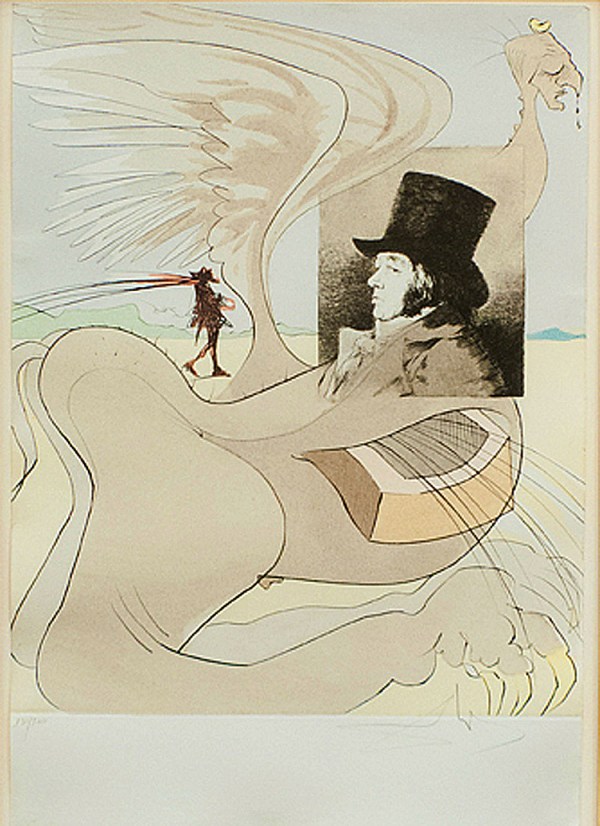
Salvador Dali, Frontispiece for Goya Suite (1973), multi-plate etching

You can see rare prints by Francisco Goya at the New Mexico Museum of Art’s Renaissance to Goya: Prints and Drawings from Spain, the only U.S. stop of a special traveling exhibition from the British Museum. Learn about Salvador Dali’s twist on one of Goya’s most famous works below, and come see it at Matthews Gallery on Canyon Road. 
In 1797, Francisco Goya embarked on a political art project that almost brought him up against the Spanish Inquisition. In a series of 80 aquatints entitled Los Caprichos (The Whims) he outlined the “innumerable foibles and follies to be found in any civilized societies.”
The hardly whimsical opus was a critique of 18th century Spain, which Goya depicted as full of deformed monsters and foolish beasts. The artist avoided punishment at the hands of the ruling class when the king spoke up for him, but the prints were still withdrawn from public sale in 1799.

426px-Museo_del_Prado_-_Goya_-_Caprichos_-_No._43_-_El_sueño_de_la_razon_produce_monstruos

174 years later, The Sleep of Reason Produces Monsters (left) from Los Caprichos was considered one of Goya’s most iconic works, and another Spaniard by the name of Salvador Dali decided to create a Surrealist tribute to the series. In the etching Frontispiece for Goya Suite Dali used the first image from Los Caprichos, a self-portrait of Goya in a top hat. 

2cb338d5fe19d368d2ee3639caf7a649Dali drops Goya into a universe even more bizarre than that of the original Caprichos, stitching his predecessor’s visage atop the body of a dragon-like beast. A second, more monstrous head with a drippy nose and lumpy halo emerges from behind Goya, and a shadowy figure in the distance leaves a trail like a comet. 
Is Dali’s remix another critique of Spanish society, refreshed for the weird world of 1973? The artist drops a slippery hint in this work’s alternate title, Lenguado Menguado. Lenguado could mean “flat-fish” or “sole”, and menguado is either “well-dressed” or “diminished”.
So, Dali could be calling Goya a stylish fish or a diminished one. The title might refer to the worn—or fashionable—shoes of the pedestrian in the background. In any case, the artist seems to be commenting on Spain’s obsession with appearances, a theme first explored in several of Goya’s Caprichos. Of course, Dali was himself an offender when it came to sartorial dalliances, but that adds some spice to the criticism.
View Dali’s bizarre reworking of a classic Goya print at Matthews Gallery, and connect with us on Facebook, Twitter and Pinterest for more news from Canyon Road.

FOCUS ON THE FIGURE: The good, the bad and the body

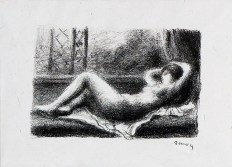
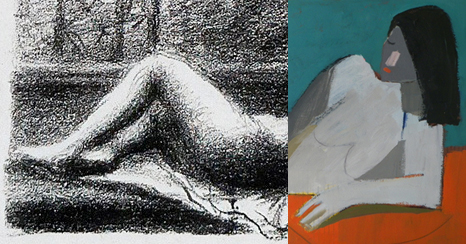
Two Odalisques by Pierre-Auguste Renoir and Jamie Chase- Matthews Gallery blog

Two Odalisques by Pierre-Auguste Renoir (left) and Jamie Chase (right)

No matter their preferred medium or subject matter, one of the first things young art students are challenged to do is pick up a pencil and draw from life.

“It’s only by drawing often, drawing everything, drawing incessantly, that one fine day you discover to your surprise, that you have rendered something in its true character,” said Camille Pissarro, mentor to the Impressionists.

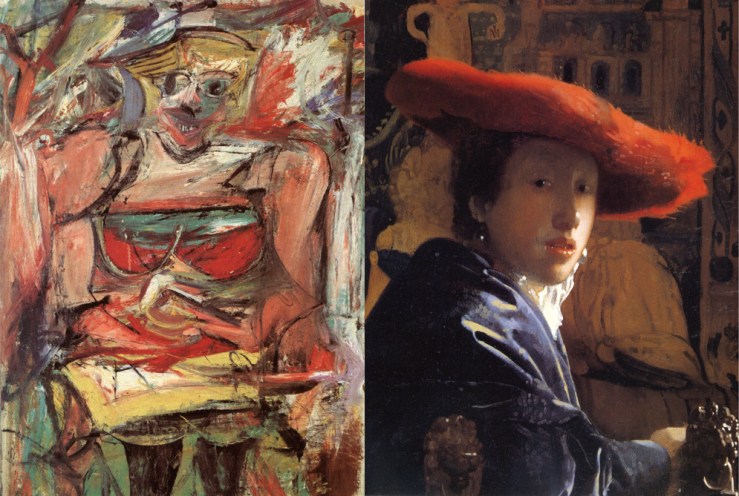
Of course, Pissarro had a different idea of what it meant to evoke something’s “true character” than, say, Paul Gauguin. As we discussed in our last post, Vermeer and de Kooning painted female figures in oil to highly divergent ends.

Our FOCUS ON THE FIGURE survey show, running now through the end of December, has us pondering the artist’s eye for the human body. History’s verdict on the success or failure of a particular depiction is often entirely based on the culture that first viewed it. Even in the hands of the most technically talented artists, the human body has a unique capacity to spark fiery controversies. Here are some notorious offending body parts:

SKIN
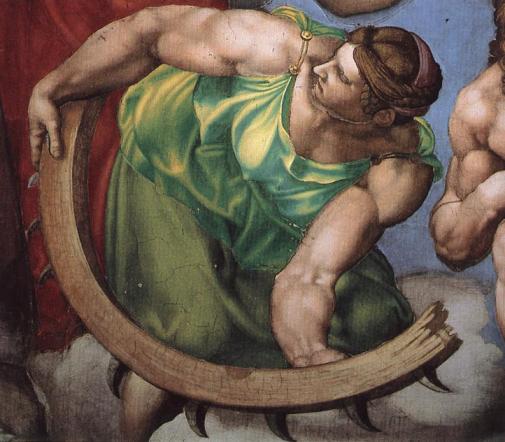
Michelangelo- The Last Judgment detail- Matthews Gallery blog

The Last Judgment (detail), Michelangelo

Believe it or not, that’s a woman in the image above. Michelangelo (1475-1564) had a hard time depicting feminine grace, probably because he used massive body builders as models. That’s not the reason the artist’s Last Judgment mural in the Sistine Chapel drew the ire of the church, though. Michelangelo left many of his buff bodies unclothed and the clergy was afraid they would provoke sinful titillation. After the artist’s death, fig leaves were swiftly deployed.

TEETH

Elisabeth Vigee Le Brun- Self Portrait- Matthews Gallery

Self portrait, Elizabeth Vigee Le Brun

As chronicled in our blog series 10 Women Who Changed Art History Forever, even fully clothed models (with frilly collars) could show too much. When Marie Antoinette’s court painter Elisabeth Vigee Le Brun (1755-1842) dared to flash a smile for this self-portrait she was roundly condemned for diverging from the style of “the Ancients”. Read what one gossip columnist had to say about it here.

EARS

John Singer Sargent- Madame X- Matthews Gallery blogMadame X, John Singer Sargent

Top Paris socialite and legendary beauty Virginie Amelie Avegno Gautreau couldn’t resist John Singer Sargent’s (1856-1925) offer to paint her portrait in 1883. When conservative viewers at the Paris Salon were scandalized by Gautreau’s bare white shoulder and bright red ear in the painting, Sargent attempted some damage control by painting in a shoulder strap and renaming the painting Madame X. Alas, Gautreau’s reputation was forever damaged.

FACES
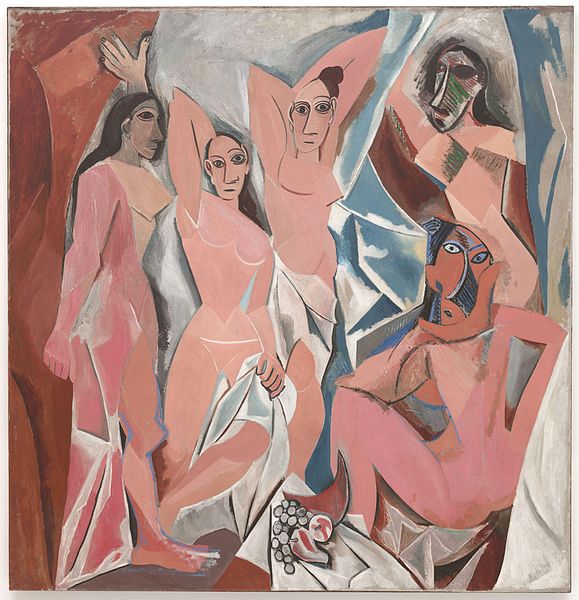
Pablo Picasso- Les Demoiselles dAvignon- Matthews Gallery blog

Les Demoiselles d’Avignon, Pablo Picasso

Pablo Picasso (1881-1973) always referred to his seminal painting of a group of Spanish prostitutes as The Brothel of Avignon. The canvas sat in his studio for years before he exhibited it under the title Les Demoiselles d’Avignon (The Young Ladies of Avignon) in 1916. Even after its rebranding, the painting caused a stir because the women’s faces—influenced by traditional Iberian art, African tribal masks and the art of Oceania—were considered savage and their postures barbaric and aggressive.

After the show, the work was rolled up and stored away for years. It wouldn’t be recognized for its visual innovations until later, when designer Jacques Doucet bought it for 25,000 francs in 1924. “It is a work which to my mind transcends painting; it is the theater of everything that has happened in the last 50 years,” Doucet said.

Our FOCUS ON THE FIGURE show features art by Jamie Chase, Kate Rivers, Eric G. Thompson, Pierre-Auguste Renoir, Harold Frank, Pablo Picasso and more. Connect with us on Facebook, Twitter and Pinterest for more news about the exhibition.

FOCUS ON THE FIGURE: A Daub of Flesh

Vermeer and de Kooning - Matthews Gallery blog

“Flesh was the reason oil painting was invented,” said Willem de Kooning. The quote is a nod to the Dutch masters, who developed the medium to accurately evoke the semi-translucent glow of human skin in the crisp light of 17th century Delft.

By the mid-1900s, de Kooning was using the same medium to very different ends. His nudes unraveled across the canvas, their mottled flesh mimicking the dark tones of a bruised peach or the sickly hues of a jaundiced child.

The abstract expressionist encoded in painted skin the darkest sexual desires and terrors of the modern world, but he wasn’t blind to the way the inherent qualities of oil linked him to a much different time and place.

Our new exhibition FOCUS ON THE FIGURE, running December 2 to 9, holds a similar philosophy at its heart. The use of figures in art stretches back to prehistory, and new explorations into the subject have always looked to the past in one way or another.

Pierre Auguste Renoir - Odalisque - Matthews GalleryPierre-Auguste Renoir’s (1841-1919) etching Odalisque refers to Turkish concubines, but that wasn’t necessarily the artist’s intended title. Renoir submitted a painting of a nude called Diana to the Paris Salon in 1867. The erotic depiction of the Roman goddess offended the judges and the painting was rejected.

Three years later the artist used the same model for a painting called Odalisque and made sure she was fully clothed. The second work, stripped of its mythological significance and given an exotic twist, was accepted to the Salon.

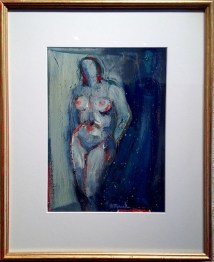
Harold Frank - Blue Nude - Matthews Gallery

In this etching with the same title Renoir refuses to hold back. The nude Odalisque is so tenderly rendered her skin looks as soft as butter. “When I’ve painted a woman’s bottom so that I want to touch it, then [the painting] is finished,” the artist said.

Harold Frank (1917-1995) was born in England and grew up in New York, where he drew inspiration from American modernism and abstract expressionism. His take on the female figure in Blue Nude features quick, expressive brushwork that was no doubt inspired by de Kooning.

Both artists incorporated drips and splatters of paint into their compositions to create spacial ambiguities in the picture plane. Is Frank’s nude standing in a corner or floating in a color field? The answer seems to change with every glance.

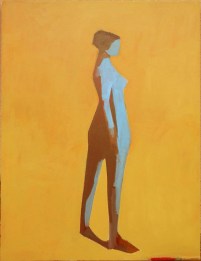
Jamie Chase - Turning Points - Matthews GalleryJamie Chase immerses a figure in a vibrant yellow atmosphere in Turning PointIt brings to mind both Mark Rothko and Nathan Oliveira, but Chase’s influences stretch farther back in art history.

Chase grew up in San Francisco and attended art school there for a short time before dropping out to travel Europe. He lived in various cities and educated himself on the masters before returning to San Francisco in the early 1970s. There he painted murals for a bookstore, drawing inspiration from ancient Egyptian art, European cave paintings and Native American art.

Come trace the history of the artist’s impulse to capture the figure at the exhibition this December, and connect with us on Facebook, Twitter and Pinterest for more news from the gallery.

SMALL TREASURES: Can’t-miss lots from our fall auction


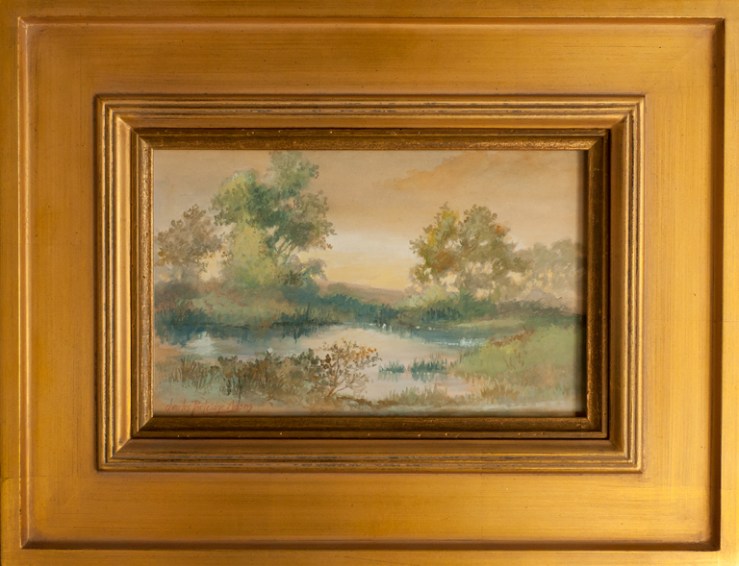
Charles Partridge Adams- Untitled (Landscape)- Matthews Art Auctions

We picked a particularly electrifying time in the art world to throw an auction. A triptych by Francis Bacon just flew off the block for a record-breaking $142.2 million, and the highest-valued Andy Warhol painting ever sold for $102 million. Our European, American and Southwestern Art Auction doesn’t feature price tags that are quite as high, but there are gems throughout the catalogue that would fit into the finest collection. The image above is a watercolor by legendary Colorado landscape painter Charles Partridge Adams (1858-1942) that measures just 13.5 x 17.5 inches and starts at $1,700 in our sale. Check out more lots below, and make sure to place your bids before the auction ends on November 17.

Jack Merriott- Untitled (Boat Dock Scene)- Matthews Art Auctions

Lot 16: Jack Merriott- Untitled (Boat Dock Scene) 
Starting bid: $1,700
Estimated value: $2,200-$3,200

English artist Jack Merriott (1902-1968) is best known for his travel posters commissioned by British railway companies that were displayed in train compartments. This watercolor shows the illustrator’s softer side. Click here to view the lot and register to bid.

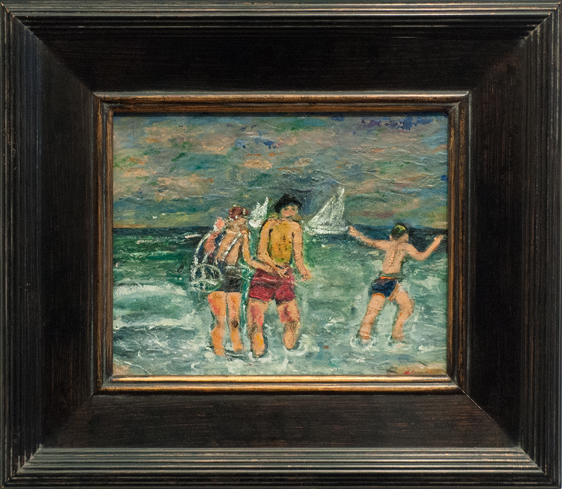
Francesco Spicuzza- Children at Beach- Matthews Art Auctions

Lot 60: Francesco Spicuzza- Children at Beach
Current bid: $250
Estimated value: $350-$750

Francesco Spicuzza (1883-1962) was a talented lithographer and painter, and is one of the most prolific artists ever in his home state of Wisconsin. In this 13.5 x 15.5 in. gouache painting on board, three small figures frolic through the waves on a beach day. Click here to view the lot and register to bid.

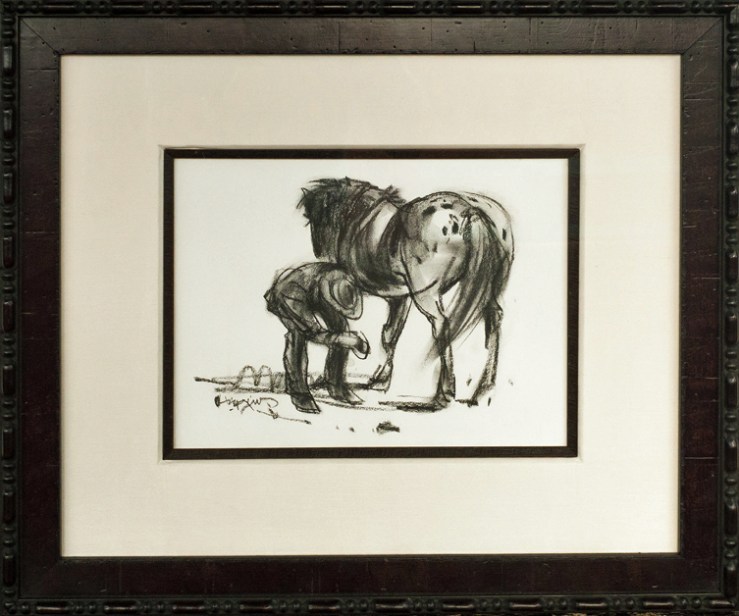
Doug Higgins- Horse & Cowboy- Matthews Art Auctions


Lot 107: Doug Higgins- Horse & Cowboy
Starting bid: $850
Estimated value: $1,200-$1,750

Santa Fe, New Mexico artist Doug Higgins (born 1939) uses simple, elegant lines to depict a cowboy tending to his horse in this charcoal drawing. Click here to view the lot and register to bid.

Don’t forget to bid in our auction before 7 pm on November 17, and browse more highlights in our blog post START YOUR BIDDING: Colorful lots from our fall auction. Connect with us on Facebook, Twitter and Pinterest for gallery news.

START YOUR BIDDING: Colorful lots from our fall online auction

Matthews Art Auctions- Camille Boutet- Artfact

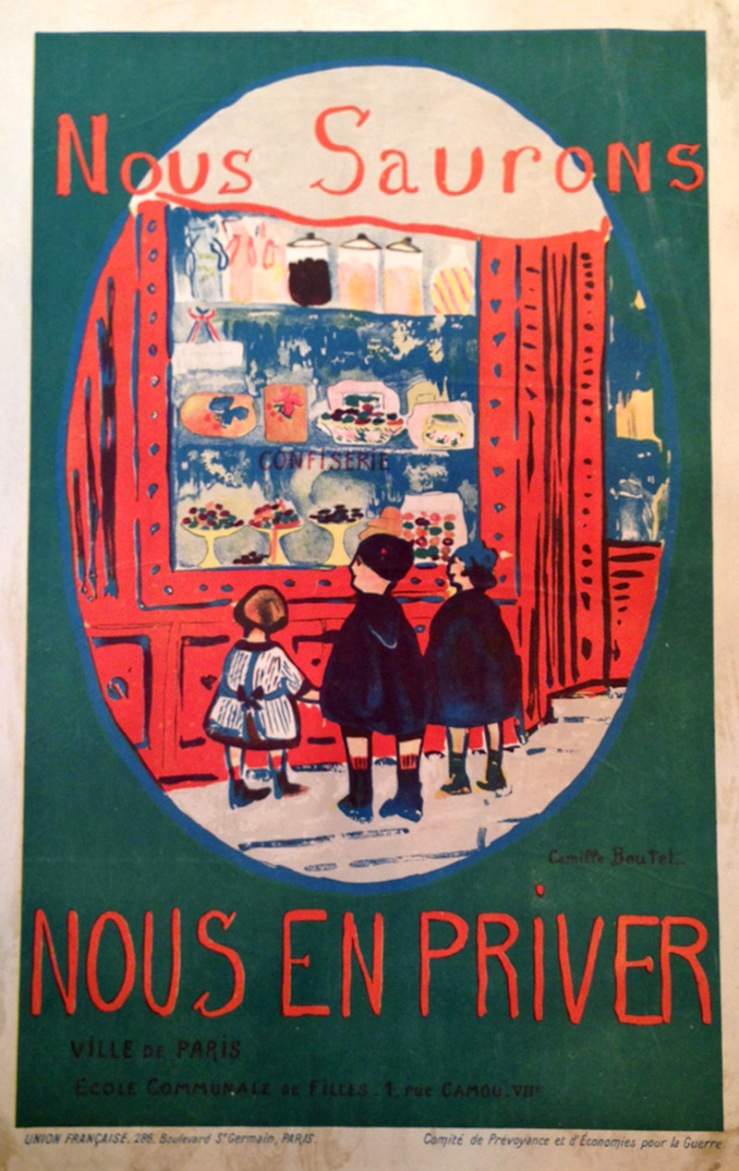
Our European, American and Southwestern Art Auction just started on Artfact.com, and it features a particularly vibrant line-up of lots. The charming image above is a color lithograph from turn of the century France by Camille Boutet. It shows three children peering longingly into a confectioner’s shop, and would make a lovely holiday gift. The best part? Bidding starts at $50. Read about more of our offerings below, and make sure to bid before the auction ends on November 17.

Frank Morbillo- Arched Axe- Artfact Auctions

Lot 41: Frank Morbillo- Arched Axe
Starting bid: $350
Estimated value: $450-$900

Arched Axe” is from Frank Morbillo’s sculpture series inspired by the simple, elegant lines of prehistoric hand tools. Several other glass and bronze works from the set appear in the sale, including “Ceremonial Serpent Axe“, which features an intricate floral motif, and the swanlike “Honing Axe“.

Bertram Hartman- Still Life- Artfact Auctions

Lot 59: Bertram Hartman (1882-1996)- Still Life
Starting bid: $250
Estimated value: $350-$750

Bertram Hartman (1882-1960) was born in Kansas and received training at the Art Institute of Chicago. He continued his studies at the Royal Academy in Munich and Paris, drawing inspiration from Impressionism and other modernist movements. His European influences are clear in this impeccable impasto still life.

Jamie Chase- Bather by the Sea- Artfact Auctions

Lot 70: Jamie Chase- Bather by the Sea
Starting bid: $400
Estimated price: $600-$900

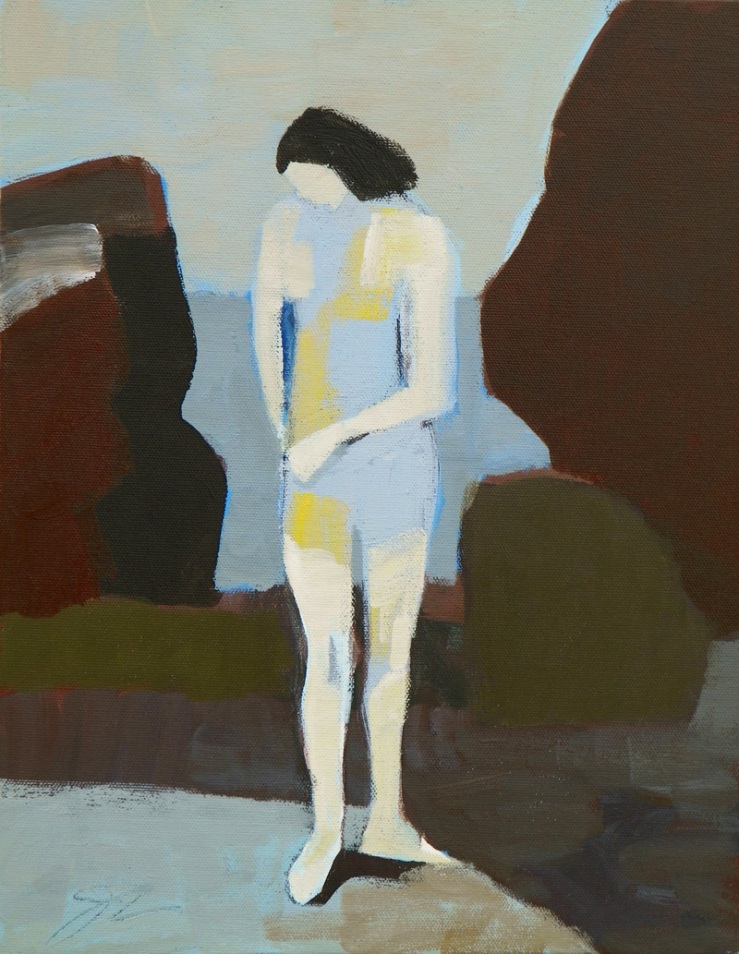
Jamie Chase’s well-known figurative work and his latest experiments with landscape painting combine in “Bather by the Sea“. An abstracted nude  stands on the shore, and the surrounding landscape seems to radiate her serene mood. Jamie’s “Seen” and “Iconic II” are also up for sale in the auction.

Ernest Blumenschein on Artfact

Lot 86: Ernest Blumenschein (1874-1960)- Loading
Starting bid: $700
Estimated price: $2,000-$3,500

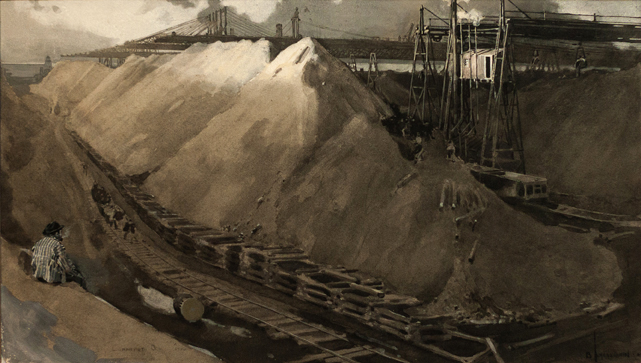
Ernest L. Blumenschein (1874-1960) was a founding member of the Taos Society of Artists, and is known for his stunning portrayals of the Southwestern landscape and people. In “Loading” the artist pays homage to his home state of Ohio. A lone figure smokes a cigarette and watches the activity at the Conneaut Mill across the tracks.

William Lumpkins- The Red Sky- Artfact Auctions

Lot 91: William Lumpkins (1909-2000)- The Red Sky
Starting bid: $400
Estimated price: $600-$1,000

William Lumpkins- Pink Handle- Artfact Auctions

Lot 97: William Lumpkins (1909-2000)- Pink Handle
Starting bid: $400
Estimated price: $600-$1,000

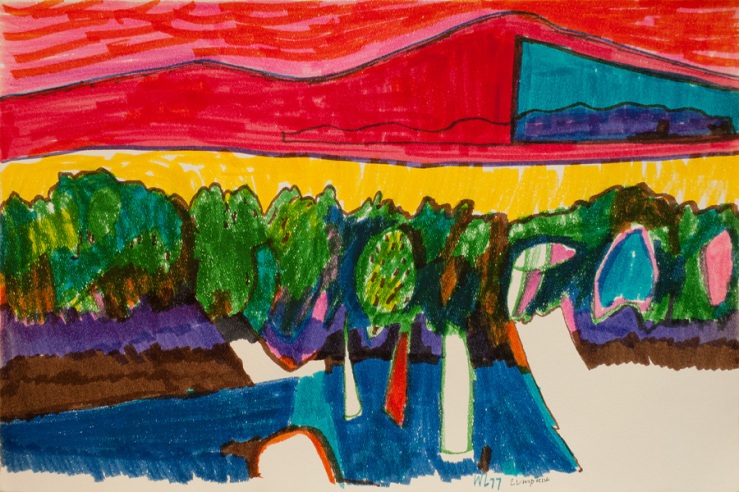
The Red Sky” and “Pink Handle” are from a series of never-before-seen artworks by legendary Santa Fe modernist William Lumpkins (1909-2002). The work was recently released from the collection of a Lumpkins family member, and also features a series of serigraphs.

Ed Levin- Kachina- Artfact Auctions

Lot 102: Eli Levin- Kachina (after Louie Ewing)
Starting bid: $175
Estimated value: $400-$600

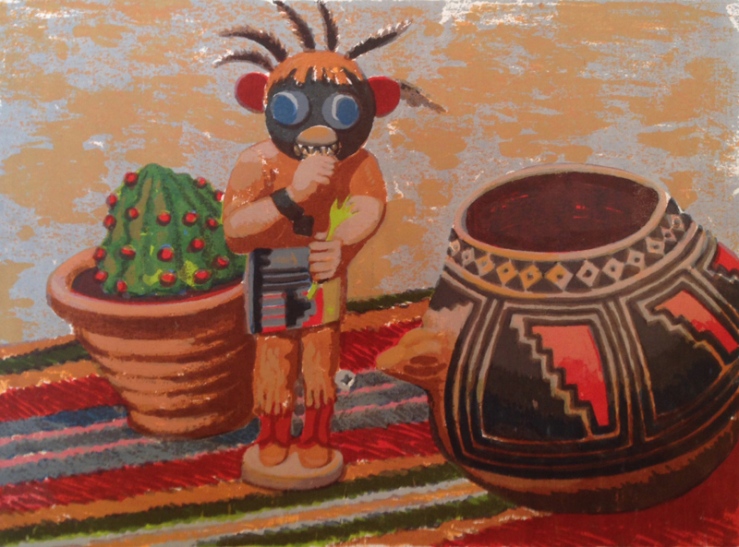
Contemporary Southwestern painter and printmaker Eli Levin pays tribute to legendary Santa Fe printmaker Louie Ewing (1908-1983) in this silkscreen of a Pueblo kachina doll. In the 1930s, Ewing received a grant from the WPA’s Federal Art Project to pursue printmaking, and is largely responsible for the enduring popularity of printmaking among contemporary Southwestern artists.

Bettina Steinke- Santa Clara Dancer- Artfact Auctions

Lot 106: Bettina Steinke (1913-1999)- Santa Clara Dancer
Starting bid: $50
Estimated value: $400-$500

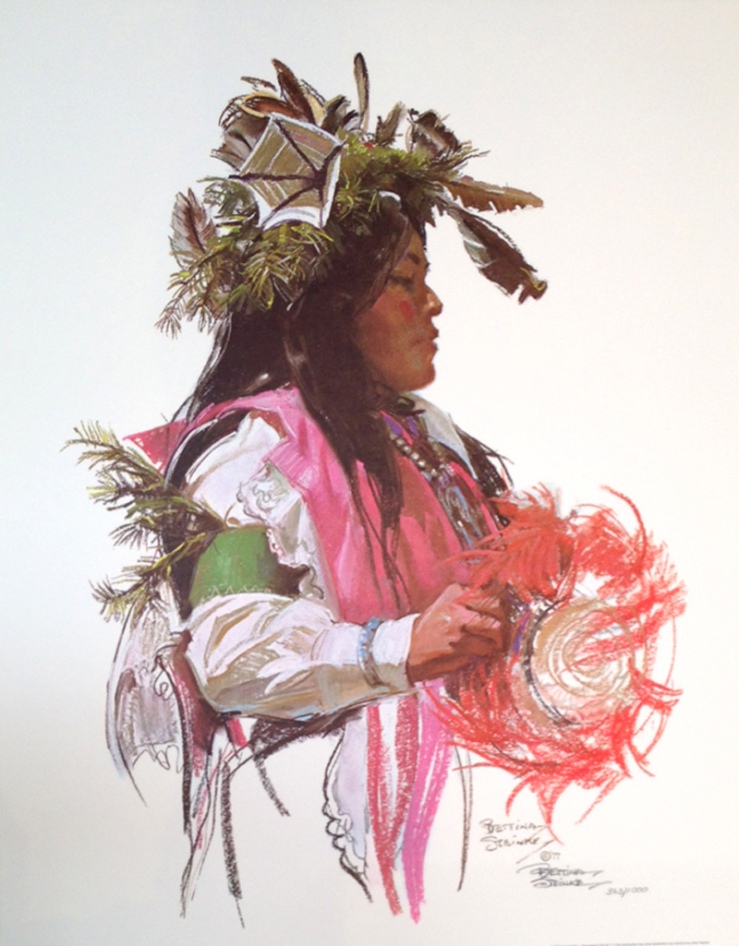
Bettina Steinke (1913-1999) moved to Taos in the 1950s, where she opened a gallery with her husband and mentored young artists. She moved to Santa Fe in the 1970s. The artist was known for her vivid portraits of the Pueblo people, and was particularly interested in traditional Native dancers. Other historic New Mexico artists featured in the auction include Fremont Ellis, John McHugh and Hannah Holliday Stewart.

Check out the European, American and Southwestern Art Auction on Artfact to browse all 116 lots, and connect with us on Facebook, Twitter and Pinterest to see more highlights from the sale. The auction ends on November 17 at 7:00 pm.

ART ON PAPER: A (Brief) Visual History of Printmaking

A Visual History of Printmaking on the Matthews Gallery blog

Prehistoric handprints on a cave wall, a Sumerian cylinder seal from ancient Mesopotamia, a woodblock print from the Chinese Diamond Sutra, a page of the Gutenberg Bible, a woodcut from the Ars moriendi, an etching by Albrecht Durer, a stencil print on silk from the Japanese Edo Period, an intaglio print by Rembrandt, a lithograph of Aloys Senefelder, an etching by Whistler, an offset lithograph by the New York Times company and an aquatint and etching by Pablo Picasso!

What does it all mean? Come to Matthews Gallery’s ART ON PAPER: Fine Art Prints reception on Friday, October 25 from 5-7 pm to find out.

SALON 669: A Historical, Hysterical Salon Glossary

Salon de Madame Geoffrin, where all the good parties went down in 18th century France - Matthews Gallery blog

Ever heard of a ruelle, a visit card or les bas-bleus? In preparation for SALON 669, we’ve compiled a glossary of weird and wonderful terms from literary and art gatherings of the past. Don’t worry though, you don’t have to be a noble, a French speaker or dressed in blue stockings to attend our Oct. 18-27 event series. Just bring a healthy helping of the last term on the list…

  • Age of Conversation: Spans the height of the salon’s popularity, from the 16th to 18th centuries in Italy, France and across Europe.  Some scholars say the intellectual meetings helped spark the French Revolution.
  • Enlightenment: A cultural movement that was spurred in part by the salon, which created an even playing field of ideas that elevated the growing bourgeois class to the level of the nobility. Mme Geoffrin was a pretty powerful lady in 18th century France. Find out why on the Matthews Gallery blog.
  • The Great-Woman: The hosts of salons were commonly women of the bourgeois and noble classes, who threw the gatherings to educate themselves and wield social and political power. Historians have called the most influential of these salonnieres “great-women”, using their stories to reframe misogynistic historical narratives.
  • Greek Symposium: The Athenians invited artists and intellectuals to their homes, providing a safe political space for different classes to mingle. The symposium inspired the Roman banquet, which inspired Italian Renaissance gatherings, which inspired the French to coin the term “salon”.
  • Horace: Roman lyric poet who said his craft aimed “either to please or to educate”.  The salons often followed Horace’s motto, aspiring to foster delightful, stimulating conversation.
  •  Je Ne Sais Quoi: French for “I don’t know what”, a popular way to describe the harmonious feeling of the salons in 17th century France.
  •  Lane: Or, in French, ruelle. Describes the space between the bed and the wall in a lady’s chambers, where 17th century French salon goers sat while their hostess lounged. Not all salons were so intimate though. At Louis XIV’s petit lever (literally “a little lift”), no one was allowed to sit down. Madame Recamier was a "literary lion" and political power player. Find out why on the Matthews Gallery blog.
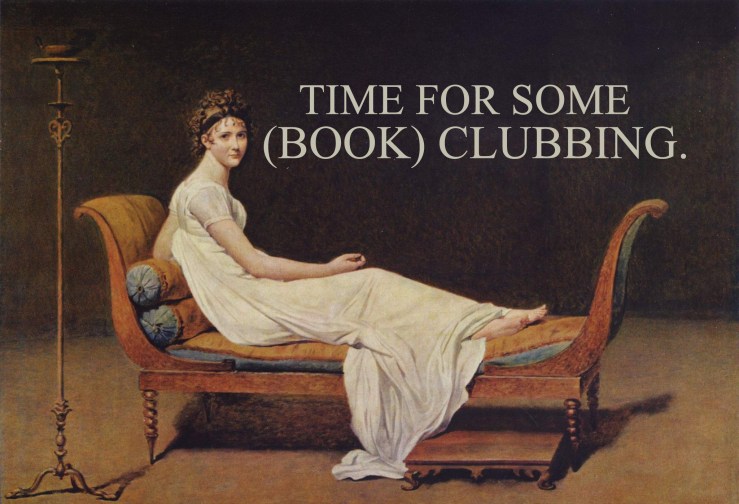
  • Literary Lion: Term for fierce literature enthusiasts who organized salons in the 19th and 20th centuries. Madame Recamier (1777-1849) helmed a powerful literary salon attended by intellectuals who were unpopular at court, snubbed a position as the Empress consort’s lady-in-waiting, and even started a tiff between artists Jacques Louis-David and Francois Gerard over a portrait commission. The hardly humble writer and salon host Gertrude Stein later used the title to describe herself.
  • Les Bas-Bleus: A term that has come to mean “female intellectual”. Madeline de Scudery founded the les bas-bleus (blue-stockings) salon in the 1600s. When salons sprung up across Europe in the 18th century, Elizabeth Montagu founded her own blue-stockings gathering in England. Montagu maintained such a rigid dress code that she once rejected the Duke of Wellington for having the wrong shade of socks.
  • Visit Cards: From the 1800s until the 1930s, visitors to upper class French salons would present a card with their name on it to a servant at the door. If the host didn’t recognize their name, they were booted from the premises.
  • Wit: Throughout the history of salons, cleverness was key. The two most important rules at a salon were that all guests were to be treated equally, and that everyone was expected to make points without provoking confrontation.

Stay tuned for more salon-themed posts, and make sure to attend SALON 669 at the Matthews Gallery from October 18-27.  Connect with us on Facebook, Twitter and Pinterest for more news from the Matthews Gallery!

ONE WORK OF ART: Toulouse-Lautrec’s Heartbreak

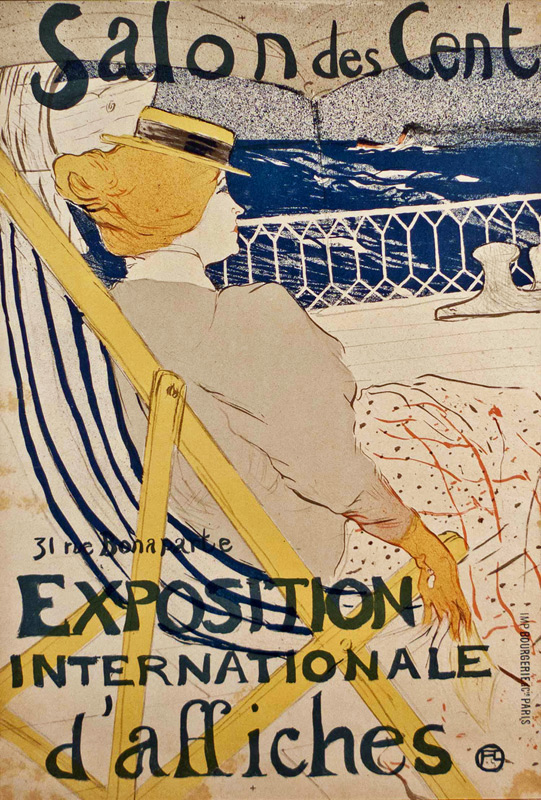
Henri de Toulouse-Lautrec- La Passagere du 54- Matthews Gallery

“Love is when the desire to be desired takes you so badly that you feel you could die of it,” said Henri de Toulouse-Lautrec. It’s a strange perspective on the matter, but not a surprising one when you consider the artist’s difficult life. His parents were nobles and first cousins, a pairing that probably gave Lautrec a rare congenital abnormality called osteogenesis imperfecta. He was particularly prone to bone fractures and broke both of his legs as a teen. Bedridden and bored, Lautrec’s only way to escape his misery was drawing.

By the time Lautrec moved to Paris to study art at 18, his legs had stopped growing and he struggled to support his regularly sized torso. He battled deep insecurities about his appearance, but never dropped an abrasive air of superiority. His first relationship with 17-year-old model Marie Charlet was short and tumultuous, and his second serious lover Suzanne Valadon attempted suicide.

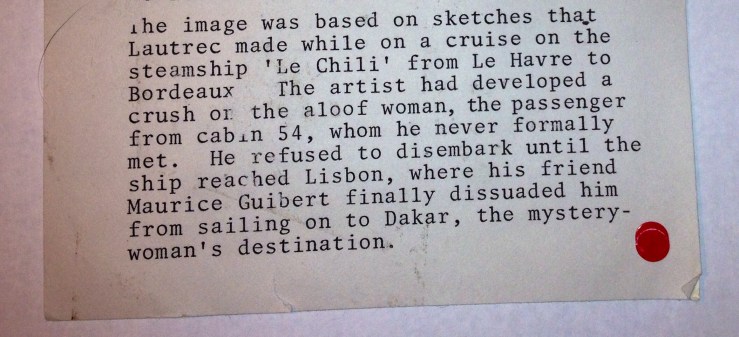
Lautrec immersed himself in the booze-soaked world of Paris’ cabarets and brothels to numb his pain, where he was inspired to produce some of the era’s most innovative images. Many of his works tell tales of longing and lost love, including our lithograph La Passagere du 54. Here’s a sad story from our archives about the 1895 boat voyage that inspired the print:

The story of Henri de Toulouse Lautrec's "La Passagere du 54"- Matthews Gallery blog

No wonder the woman on the poster is giving the viewer the cold shoulder. Most of Lautrec’s sketches must have been completed from this angle, as his haughty subject never gave him a second glance.

Lautrec’s artistic career only lasted a little over a decade, and though he gained considerable fame for his work, his romantic prospects never improved. He died at 36 from alcoholism and syphilis, but left behind a body of work that eternally capture the spirit of the City of Lights.

Do you agree with Lautrec’s definition of love? Sound off in the comments below, or through our Facebook, Twitter or Pinterest profiles.