10 Women Who Changed Art History Forever, Pt. 1

Self portrait, Louise Elisabeth Vigee Le Brun, Matthews Gallery blog
Self portrait, Louise Elisabeth Vigee Le Brun

Click here to read the second part of this blog post.

Let’s be honest, the art establishment has always been a boy’s club, and women are most often honored in art history for overcoming gender-related cultural and societal obstacles. It’s easy to look past the artistic innovations of female artists when we’re sorting their work into a different category from that of their male contemporaries, or focusing solely on the glass ceilings they broke.

Of course, ignoring the gargantuan efforts of female creatives to gain respect and recognition in a male dominated world is a mistake as well, as is looking at innovation as a competition between artists of different genders.

Art history is an elaborate web of influence, and analyzing any artist’s place in it is a balancing act. One thing’s for sure: many women have formed vital links in the chain. Here’s why 5 female artists deserve recognition.
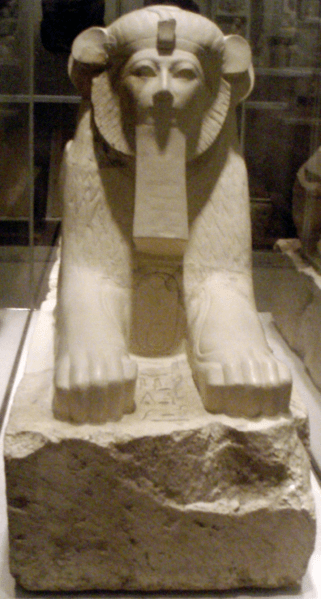
Sphinx of Hatshepsut, Matthews Gallery blog
Sphinx of Hatshepsut

1. Queen Hatshepsut (1508-1458 BC)

The fifth pharaoh of Ancient Egypt’s 18th dynasty probably wasn’t an artist herself, but as one of the most successful Egyptian rulers ever, she had a huge influence on art history. In her 22-year reign Hatshepsut brought great wealth to the empire through new trade networks and expeditions, and she was very good at promoting her accomplishments through art. Her many building projects were the envy of her successors, and statuary from her reign abounds.

Statues representing Hatshepsut sometimes sport the ceremonial attire of a pharaoh (including a traditional false beard), but she’s most often depicted in the feminine clothing that she probably wore at court. As a skilled warrior, she took the lioness deity Sekhmet as a symbol of the throne.

After Hatshepsut’s death many statues of the ruler were defaced, and later pharaohs tried to take credit for her building projects, but her influence on subsequent Egyptian styles is undeniable. Work from her reign is in nearly every major museum collection, and has helped shape modern interpretations of Ancient Egyptian art.

Self portrait, Artemisia Gentileschi, Matthews Gallery blog
Self portrait, Artemisia Gentileschi

2. Artemisia Gentileschi (1593-1656)

For years Italian Baroque painter Artemisia Gentileschi was mostly known for the events surrounding her rape as a teenager. She was assaulted by her private painting tutor Tassi, who said he would marry her but later reneged on the promise. Gentileschi’s father successfully sued Tassi for taking his daughter’s virginity in a publicly humiliating trial during which Gentileschi was tortured with thumbscrews and given a gynecological examination.

Soon after the court case Gentileschi married another painter and moved from Rome to Florence. It was the beginning of a stellar career, with coveted commissions from the Medici family and a spot as the first female in the Accademia delle Arti del Disegno.

Simplistic interpretations that relate Gentileschi’s work to her rape have dominated the attention of scholars, but the artist’s bold painting style and compositions make her one of the most innovative Baroque painters after Caravaggio. She took new angles on Bible stories to explore the complex emotional experiences of her subjects, and would often place a central figure in the extreme foreground to heighten the drama of her scenes and pull her viewers into the middle of the action.

Self portrait, Louise Elisabeth Vigee Le Brun, Matthews Gallery
Self portrait, Louise Elisabeth Vigee Le Brun

3. Louise Elisabeth Vigee Le Brun (1755-1842)

The French Neoclassical and Rococo painter was born in Paris and opened her own portrait studio in her early teens, scoring commissions from high profile nobles and rubbing elbows with masters of the day. When she lost her studio for lack of a license, she tricked the Academie de Saint Luc into showing her work and eventually gained official membership.

Vigee Le Brun is best known for her work as the portraitist of Marie Antoinette, who commissioned more than two dozen works from the artist. Her vivid, rosy depictions of the doomed queen in the Rococo style made Louise the most famous female painter of the 18th century. She’d ceded the title of royal court painter by the time of the French Revolution, but she still fled France during the conflict and took portrait commissions from nobles across Europe. However, the canvas that landed her on this list is a painting of the artist herself.

The self portrait, painted in 1787, was an image of Vigee Le Brun sporting a full, toothy grin. It was such a divergence from painting conventions thus far that it caused an uproar in the art world. “An affectation which artists, art-lovers and persons of taste have been united in condemning, and which finds no precedent among the Ancients, is that in smiling,” spewed one gossip columnist. “[Vigee Le Brun] shows her teeth.” The painting briefly made Louise’s smile as notorious as the Mona Lisa’s, and shattered a tradition that stretched back to the Greeks.
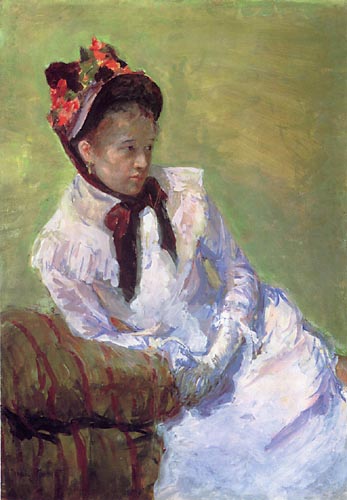
Self portrait, Mary Cassatt, Matthews Gallery blog
Self portrait, Mary Cassatt

4. Mary Cassatt (1844-1926)

Mary Cassatt was born in Allegheny City, Pennsylvania and attended the Pennsylvania Academy of Fine Arts, where most of the female students saw art not as a profession but as a privilege of high society. She left the Academy for Paris in 1866, frustrated with her teachers’ attitudes toward female artists and determined to study the masters on her own.

In France, Cassatt enlisted various private tutors and copied works in the Louvre to develop her skill. Impressionism was just beginning to rock the foundations of the Parisian art world, but it didn’t catch Cassatt’s fancy until after an unsuccessful stint in Chicago and a return to Paris in 1871. That’s when she met Edgar Degas, who introduced her to Impressionists and offered to show her work in one of their exhibitions.

Cassatt would become a hugely influential figure in the fledgling movement, and would later be named one of “les trois grandes dames” of Impressionism by art critic Gustave Geffroy.
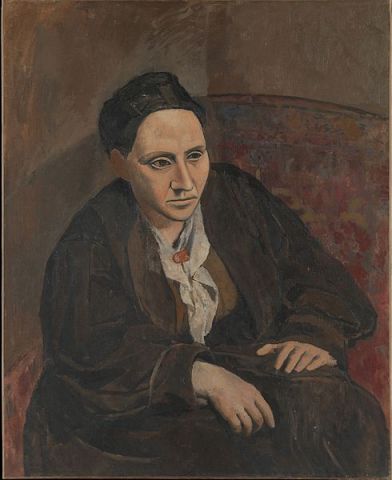
Portrait of Gertrude Stein, Pablo Picasso, Matthews Gallery blog
Portrait of Gertrude Stein, Pablo Picasso

Gertrude Stein (1874-1946)

“I always wanted to be historical from almost a baby on, I felt that way about it,” Gertrude Stein once declared. If anyone called into doubt the American modernist writer’s genius, Stein was the first to speak up about it.

Stein’s influence on the history of visual art is partly tied to her radical writing style, which helped define modernism and was crafted in close dialogue with the visual arts. Her significance also rests in her expansive art collection, which populated the walls of her Parisian home where influential modernists like Pablo Picasso, Henri Matisse, Ernest Hemingway and F. Scott Fitzgerald often congregated.

As the often stern den mother of the “Lost Generation” carefully curated her collection and cultivated close friendships with the artists she liked, she was shaping a radical revolution that would forever change the history of art.

Connect with us on Facebook and Twitter for more insight on the women who changed art history forever, and click here to read the second part of this blog post.
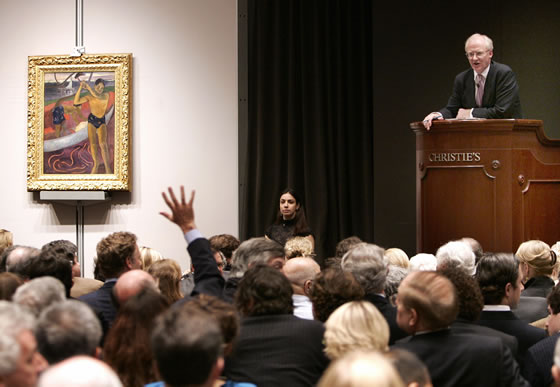
NEW TRADITIONS: Matthews Gallery Online Art Auction

History of the art auction- Matthews Gallery blog

The world’s oldest auction house opened in Stockholm, Sweden in 1674. Art auctions in Great Britain gained popularity a few decades later when the Earl of Oxford’s collection appeared on the block in 1742. That particular sale featured the full range of odd and valuable items you might find in a dusty old castle, from a bust of an unknown bishop (five shillings) to a series of van Dyck paintings (165 guineas).

The beat of the auction mallet has marked the rhythm of the secondary market ever since. It’s a tradition that’s full of strange pageantry and heart pumping excitement. Auction kingpins Christie’s and Sotheby’s, which were both founded in mid-18th century England, often draw the ire of art world players for their tightly controlled sales. “They know exactly how many people will be bidding on a work and exactly who they are,” wrote art critic Jerry Saltz in 2012 after a version of Edvard Munch’s The Scream sold at Sotheby’s for $119.5 million. “In a gallery, works of art need only one person who wants to pay for them.”

Online auctions have meanwhile been swiftly democratizing the centuries-old process, and that’s where the Matthews Gallery decided to jump in. We launched the EUROPEAN MASTERS, AMERICAN AND SOUTHWESTERN ART AUCTION on July 25 and it runs through July 29. Come browse our virtual auktionsverk of art and, if you’re inspired, make a bid. You’ll find art by European modernists such as Pablo Picasso and Joan Miro, Southwestern legends including Emil Bisttram and Alfred Morang, and notable contemporary artists like Jamie Chase, Eric G. Thompson and Kate Rivers among the lots. Here are some notable pieces from the catalogue:

EUROPEAN MASTERS 

This slideshow requires JavaScript.

Click to see the works on our auction site:

HISTORIC SOUTHWESTERN ART

This slideshow requires JavaScript.

Click to see the works on our auction site:

  •  Untitled (Landscape #1), Emil Bisttram
  • Untitled (Landscape #2), Emil Bisttram
  • Untitled (Landscape #3), Emil Bisttram
  • Untitled (Santa Fe Landscape), Alfred Morang
  • Riders at Sundown, Gene Kloss
  • Return of the Wood Gatherers, Gene Kloss

CONTEMPORARY ART 

This slideshow requires JavaScript.

See more lots from the auction here, and connect with us on Facebook, Twitter and Pinterest for auction updates all week!

ONE WORK OF ART: Paul Gauguin’s l’Univers est Cree

Paul Gauguin at the Matthews Gallery
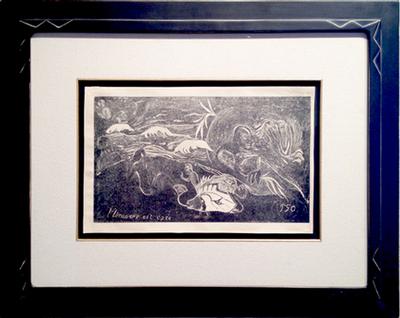
Paul Gauguin, l’Univers est Cree

Paul Gauguin’s memoir chronicling his first trip to Tahiti is called Noa Noa, which means “fragrant scent”. It’s a reference not to the sweet smell of flowering tropical flora, but the “mingled perfume, half animal, half vegetable” of the Tahitian women.

Paul Gauguin- L'Univers est Cree (detail)- Matthews Gallery
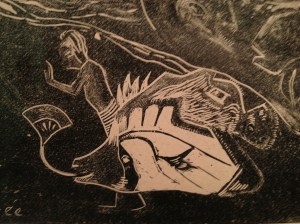
Fish-man

Gauguin embarked on his famous voyage in 1891, fleeing from financial ruin and harsh criticism of his art. He put 30 of his works up for sale to pay for the trip and set off in search of an untouched beauty far away from “everything that is artificial and conventional.”

Upon his return to France in 1893 the artist finished writing Noa Noa and illustrated it with ten woodblock prints, including l’Univers est Cree (The Creation of the Universe). The journal tells largely fictional stories of an idyllic island life, but its title hints at the true nature of Gauguin’s odyssey. In Tahiti, the wandering artist found a culture shattered by colonialism, and couldn’t shake an all-consuming sexual desire that would eventually kill him. There’s more than a hint of this darkness in the print that hangs on our wall.

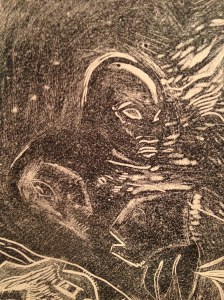
Gauguin and his son produced multiple versions of l’Univers, a primordial beach scene featuring a bizarre cast of creatures: a male torso, a distorted female figure, a fish-man and a levitating cluster of monstrous faces. The Noa Noa series was the artist’s first try at woodblock printmaking, and he was determined to approach the medium in as primitive a manner as possible. He used needles and sandpaper to etch the block and applied it to the paper by hand.

Paul Gauguin- L'Univers est Cree (detail)- Matthews Gallery
Monstrous heads

The facture of l’Univers is so rough that authors Alastair Wright and Calvin Brown said that Princeton’s version “hovers at the edge of illegibility”, but the Matthews Gallery’s print was pulled with a more delicate touch. From the tumbling waves to the lines that mark out fierce winds, each feature of the strange landscape stands starkly from the black ink.

Even with Gauguin’s creation story spread so clearly before us, it’s difficult to guess at the meaning behind it. “It’s a surrealist work before surrealism,” Lawrence likes to say. Perhaps this subconscious sandbox, built from dreams and nightmares, sits on the line between the artist’s high hopes for life in Tahiti (rebirth, beaches, beautiful woman) and the reality that he faced when he got there (tumult, deformation, death).

The artist never would have let this tension slip into his fanciful writing or his sunny paintings of Tahiti, but something more ominous emerged when faced with the challenge of hacking his utopian scenes into wood. Gauguin’s paradise was as ephemeral as a fragrant scent.

To learn more, check out our other print from the Noa Noa series and read about it in this blog post. For daily gallery news, connect with us on Facebook, Twitter and Pinterest.
SECRETS OF THE WAREHOUSE: Hannah Holliday Stewart

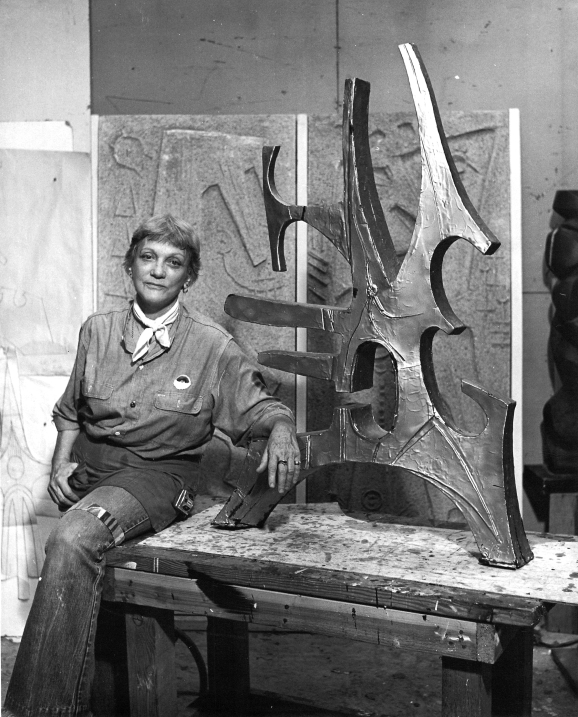
Sculptor Hannah Holliday Stewart, Matthews Gallery

It’s just across town, but the complex that houses our storage unit seems universes away from the cheerful adobe utopia of Canyon Road. We punch in a code and roll through the gate into a desolate world of sharp edges. Seas of asphalt release masses of hot air and long rows of dull aluminum doors form the impenetrable walls of an industrial fortress.

Sculpture by Hannah Holliday Stewart, Matthews GalleryAs the shadows grow longer the sun’s rays swing sideways and those doors become enormous reflectors. The forbidding barrier transforms into a glowing, many-paneled modernist painting—Gerhard Richter’s Strip series in metal. At this time of day, it’s easy to imagine the units as a series of chests concealing mysterious treasures. What secrets hide behind this shimmering force field? Luckily, we have one of the keys.

With one great heave, we send the door to our space skittering up into the ceiling and find ourselves peering into another, much more fanciful, metallic landscape. We’re here to take stock of the life’s work of Hannah Holliday Stewart in preparation for a visit from some interested collectors.

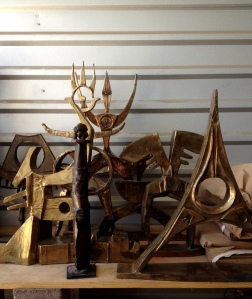
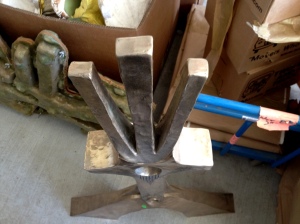
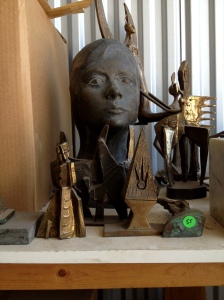
Polished, patined bronzes large and small cluster on shelves, tabletops and patches of cement between stacks of cardboard boxes. They’ve accrued a thin layer of dust since we last visited, but it hardly dampens the strange energy that seems to simmer just beneath their surfaces. Stewart’s graceful abstract forms hold all the power that they possessed when we first laid eyes on them last year in Stewart’s studio, where they’d been sitting quietly since her death in 2010. It’s jamais vu: the feeling of encountering something you’ve never seen before.

Sculpture by Hannah Holliday Stewart, Matthews GalleryStewart was born in Marion, Alabama in 1924. She received her graduate degree at Cranbrook Academy of Art, moved to Houston and swiftly embarked on rapid rise that was uncommon for female artists at the time. At the crest of a new wave of social changes, Stewart and other artists such as Ana Mendieta and Carolee Schneemann revived old legends and symbols that identified the woman as a powerful creative force capable of crafting her own destiny. Under Stewart’s paradigm, Nefertiti reclaimed her throne, Icarus had feminine curves and the symbol of the Aquarian Age was a densely muscled female torso.

Much of Stewart’s work is in bronze, a medium that set her apart from some of her female contemporaries who worked with fabric, wood and mixed media. It was a material that allowed her to look to the promise of the future as well as the legends of the past. In one corner of our storage space is a stack of boxes filled with overflowing folders. Along with the career-spanning work that was left in Stewart’s studio, the artist’s family gave us access to all of her personal files. That’s how we found an artist statement she once scrawled in a notebook:
[My] early interest in natural forces has sustained me throughout my life as a sculptor. My goal is to render visible the hidden realities of pent-up contained energy. The direct fields of reference are Sacred Geometry, Astronomy, Myth & Physics … Each Sculpture is an energy form, the movement arrested in space, a form sustaining an energy. My work is a response to these patterns and delineations and communicates with viewers through the universality of symbolism and form.

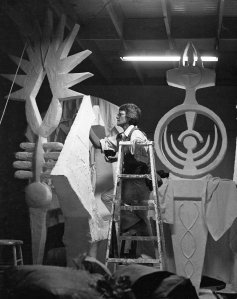
Sculptor Hannah Holliday Stewart, Matthews GalleryTo contain these gargantuan forces, Stewart was often compelled to produce her work at a monumental scale. Photographs in her files show her roaming through a forest of many-legged monoliths in her studio, or manipulating their twisty canopy atop a spindly ladder. In 1972 she was commissioned to create a monumental sculpture for Houston’s Hermann Park, a rare honor for a female sculptor—especially one who was known for her non-objective work.

The spotlight shone bright on Stewart for many years: she exhibited at the Smithsonian, the San Francisco Museum of Art, the High Museum of Art and the Dallas Museum of Fine Arts. Then, 20 years before her death, she abruptly left the Houston art scene without saying goodbye.

Sculptures by Hannah Holliday Stewart, Matthews GalleryAt a studio in Albuquerque that we would visit after her death, the artist spent the remaining years of her life producing sculptures in solitude. The mystery of her departure from the art world has yet to be cracked. Many of her friends from Houston were still puzzling over it in her obituary.

Perhaps there are clues to the more shadowy parts of Stewart’s life hidden in her files, or in the beautiful invented language that she often etched into her sculptures. It’ll take more dusting than we have time for today to unravel the intricacies of her life and work, but one thing is clear: Stewart helped pave the way for a new generation of women sculptors.

As we reach for the long rope hanging from the door, we take one last look at Stewart’s peculiar menagerie. A bronze self-portrait peers out from a tangle of supernatural creatures on a tabletop, its eyes blazing in a shaft of sunlight. Then the treasure box slams shut.

Click here to see more behind-the-scenes images from the warehouse, and make sure to follow us on Facebook, Twitter and Pinterest for updates on Hannah Holliday Stewart’s work.

The 10 Artists Who Changed Art History Forever, Pt. 2

To top off our list of art history’s most influential players (click here for part 1), we had to make some tough decisions. Would Monet still be known today if not for a fateful trip to the seashore with Boudin? Who had a greater influence on abstract expressionism: Pollock or De Kooning? Browse our choices and let us know if you agree or disagree in comments below or on Facebook, Twitter and Pinterest.

Eugene Boudin, click the image to read the Matthews Gallery blog
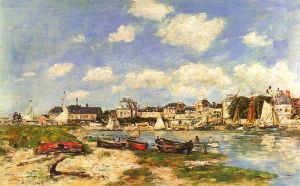
Trouville, Eugene Boudin

 6. Eugene Boudin (1824-1898)

French painter Eugene Boudin grew up riding across the English Channel on his father’s steamboat between his home village of Honfleur and the city of Le Havre. Boudin’s mother put an end to the voyages when the young boy nearly drowned, and the family moved to Le Havre to open a picture frame shop. Perhaps it was these early years at sea—and that terrifying dip in the tumbling waves—that drove Boudin to create the small but dynamic compositions that would directly inspire Impressionism.

As a young man Boudin opened his own framing shop and showed work by artists such as Constant Troyon and Jean-Francois Millet. At 22 he started painting full-time, capturing coastal scenes with an impeccable eye for light and a keen interest in the social interactions of beach-goers. He was greatly influenced by the 16th century Dutch masters, and was one of the first French painters to work in the outdoors.

Boudin moved to Paris on a scholarship when he was 23 and soon met the teenage Claude Monet. Monet was working as a caricaturist on the streets of Paris, but Boudin convinced him to travel to Normandy and paint en plein air. In 1874 Boudin showed work in the first Impressionist exhibition alongside Monet’s pivotal Impression, Sunrise, which was painted in Le Havre and inspired the name of the new movement. Without Boudin’s encouragement, Monet may never have moved past charcoal.

Pissarro, click the image to read the Matthews Gallery blog
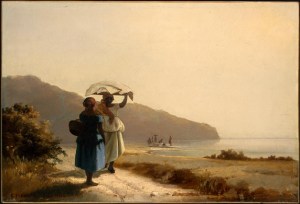
Two Women Chatting by the Sea”, Camille Pissarro

 7. Camille Pissarro (1830-1903) 

Picasso and Matisse called Paul Cezanne “the father of us all”, but there’s always a mentor behind a master. Cezanne was heavily influenced by Danish-French Impressionist and Neo-Impressionist painter Camille Pissarro. “He was a father for me,” Cezanne said. “A man to consult and a little like the good Lord.”

Pissarro grew up on the island of St. Thomas in the Danish West Indies and attended a boarding school near Paris. In school he studied the French masters and excelled at drawing and painting. He moved to Paris in 1855 to apprentice with Anton Melbye and Jean-Baptiste-Camille Corot. While Corot worked on his paintings in the studio, Pissarro insisted on painting en plein air and often finished works in one sitting.

The artist was criticized for his technique, which often exposed the rougher, less picturesque side of the French landscape, but his quick, intuitive methods attracted a small group of artists who would soon be known as the Impressionists. Pissarro became their patriarch, and was the only artist to participate in all eight Impressionist exhibitions. However, it was his switch to Neo-Impressionism at 54 and his great influence on Post Impressionism that landed him on this list. Pissarro’s impulse to look deeper into the landscape and trace every rough edge would inspire Seurat, van Gogh, Gauguin and Cezanne in their revolutionary explorations of perspective that would fracture (and eventually completely dissolve) the classical picture plane.

Pablo Picasso, click the image to read the Matthews Gallery blog
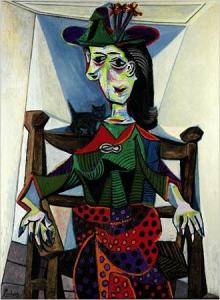
Dora Maar au Chat, Pablo Picasso

 8. Pablo Picasso (1881-1973) 

Pablo Picasso is arguably the most famous—and prolific—artist of the 20th century. He created roughly 13,500 paintings and hundreds of thousands more prints, engravings, illustrations and sculptures over the course of his 75-year career. Though he’s famous for co-developing Cubism, it was his explorations into all corners of the plastic arts that made him so influential. No matter the medium or style, Picasso had a hand in radically changing it all.

The artist was born in Malaga, Spain. His father was a professor of art who began formally training his son from a very young age. By 16, Picasso had gained entrance to the prestigious Royal Academy of San Fernando. In the early 1900s he moved to Paris, where he met art collector Gertrude Stein and many of the most famous artists of the time. He started working with Georges Braque in 1909, and the close friends developed a style that pushed Cezanne’s explorations of multiple perspectives to new extremes.

Cubism encouraged artists to analyze objects and break them into thousands of pieces, and similarly shattered the art world into myriad Modernist movements from Futurism to Constructivism.

Pollock, click the image to read the Matthews Gallery blog
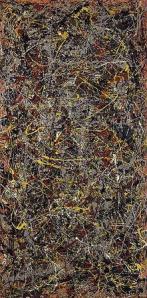
No. 5, 1948, Jackson Pollock

9. Jackson Pollock (1912- 1956) 

Jackson Pollock was called “Jack the Dripper” and “The Worst Living Artist in America” by the media, and a large slice of the public saw him as a reclusive drunkard who dealt the killing blow to order and sense in art. Sometimes when you’re drumming up an art revolution, things have to get messy.

Pollock grew up the youngest of five brothers in Arizona and California. He and his brother Charles moved to New York City in 1930, where he studied at the Art Students League and worked for the WPA Federal Art Project. In 1936 he took an experimental workshop on liquid paint that would later influence his famous drip paintings. Under the watchful eyes of collector Peggy Guggenheim, art critic Clement Greenberg and his wife Lee Krasner, who he married in 1947, Pollock would become the figurehead of the Abstract Expressionist movement and radically change the world’s definition of art.

Greenberg saw Abstract Expressionism as the final step in painting’s inevitable reduction to its most essential elements. There was an unmatched purity to Pollock’s atmospheric, gravity free color fields that only the eye could traverse. “Jackson was the greatest painter this country has produced,” Greenberg mused. Whether you agree with the critic or not, Pollock undoubtedly subverted figurative painting in an unprecedented way, and changed art history in the process.

Andy Warhol, click here to read the Matthews Gallery blog
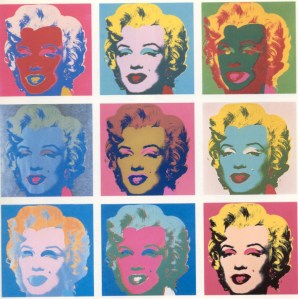
Marilyn Monroe, Andy Warhol

10. Andy Warhol (1928-1987) 

Andy Warhol was born in Pittsburgh, Pennsylvania to Austro-Hungarian immigrants. In third grade he developed Sydenham’s Cholera, a disorder of the nervous system that left him bedridden for months at a time. Isolated from his peers, the shy child became a voracious student of pop culture. Just a few years later he would build his own towering pedestal using the very figures and symbols that he pinned on his bedroom walls.

Warhol graduated from high school in 1945 and attended the Carnegie Institute of Technology for commercial art. In 1949 he moved to New York City, where he worked in the publishing and advertising industries and got his Bachelor of Fine Arts degree in pictorial design. In the 1950’s RCA records hired Warhol as a designer, where he pioneered innovations in various image-making techniques, most notably in screen printing. At the same time he was using similar processes—and subject matter—in his fine art, which he showed in galleries around New York. It was an approach to art that offended many critics at the time, who accused Warhol of succumbing to the homogenizing forces of consumerism.

This was Warhol’s true impact on art history: to show contemporary artists that they couldn’t avoid or ignore the foundational social changes affected by the mass media. Whether he was exploring identity, vanity, sexuality, fame or nothing at all, Warhol was molding the mercurial landscapes of Modern and Postmodern art.

Don’t forget to read part 1 of this series, and connect with us on FacebookTwitter and Pinterest to let us know who you would choose!

STATE OF THE ART: A Survey of New Mexico Artists

The very first artists who came to work in New Mexico found themselves on a harsh frontier. Harold Elderkin and his wife moved to Santa Fe in 1886 to run a gallery and teach painting lessons, but left for El Paso two years later. An artist named George Stanley tried the same thing in 1897 and failed even faster.

The 1920s saw an influx of artists who had already established their careers on the East Coast. The Southwestern landscapes they sent home would build this region’s reputation for stunning natural beauty and great art. Nowadays, Santa Fe is one of the nation’s largest art markets and New Mexico is a magnet for artists from across the globe.

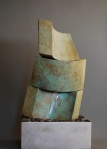
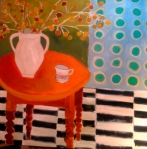
Though New Mexico has changed a lot since those first creative pioneers settled here, the independent spirit of the frontier lives on through art. Our April 5-18 exhibition “State of the Art”showcases the work of seven recognized contemporary masters who work in New Mexico. Their art may be as diverse as our desert sunsets, but it’s all influenced by the Land of Enchantment.

Jamie Chase moved to Santa Fe in 1980 from his home state of California. He initially found success here painting traditional landscapes, but started exploring other styles and subject matter as he developed his own visual vocabulary. His current work includes non-objective paintings, abstract landscapes and abstracted figurative paintings. “State of the Art” will feature his elegantly abstracted female figures, who roam among dazzling color fields in search of transcendence.

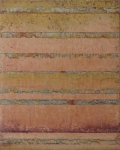
The landscape-based abstract paintings of Terry Craig are literally rooted in the earth. He uses powdered pigment, marble dust and other materials to explore the tension between careful geometric order and wild gestural strokes. The Albuquerque artist draws inspiration from colors and patterns he sees in nature, but when he puts brush to surface he surrenders to his subconscious.

Annie O’Brien Gonzales was born and raised in Oklahoma and got her BFA in painting and art history at Oregon State University. She pursued fiber arts for many years but recently switched back to painting. You can still see traces of her fiber work in the bold patterns and colors she incorporates into her still life paintings.

Form and line, and observation, are the tools of the passage of my self-discovery,” says 89-year-old Santa Fe artist Robert W. Hinds. The sculptor worked as an illustrator and graphic designer before deciding to explore the third dimension. His bronze sculptures are of animals and people, and often show surreal interactions between them. Hinds’ abstracted style is contemporary, but the stories he tells through his sculptures recall Classical myths.

Frank Morbillo was raised on Long Island, but moved to Montana and then Santa Fe as a young adult. His sculptures speak the same language of entropy and change as New Mexico’s majestic rock formations, with an added element of political dialogue that you’ll find in his inquisitive titles. “I often find myself walking the line between artist and activist,” he says.

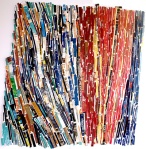
You’ll find old letters, candy wrappers, bits of string and other flotsam and jetsam in Kate Rivers‘ mixed media works. The artist, who grew up in Ohio and now lives in Santa Fe, uses these often overlooked objects to investigate memory and metaphor. Her most recent works are enormous collages made of dozens of stitched-together book bindings. Fragments of titles jumble together, encouraging new associations between the stories and characters behind them.

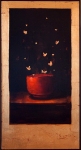
Diane White may be well versed in traditional still life techniques, but a closer look at her serene paintings of ceramic pots and other vessels will lead to fantastical discoveries. The Santa Fe artist, who worked for many years as a potter before studying painting at the Loveland Art Academy, weaves elements of magical realism into her works right under the viewer’s nose. Magical realism is a literary genre made famous by writers like Gabriel Garcia Marquez that illustrates extraordinary events in the context of a quotidian setting. Pay attention to every detail in White’s work and you’re sure to discover something supernatural, from a leaf transforming into a butterfly to a bouquet of lilies melding with the night sky above it.

State of the Art” opens Friday, April 5 from 5-7 pm and runs through April 18, 2013. Check out our Facebook and Twitter pages for more information.

The Architect’s Secret

If you’ve spent any time in Santa Fe, you’ve probably seen something John McHugh made. The young architect was passing through Santa Fe on a cross-country road trip in 1946 when his Ford broke down.

He took a job at a local architecture firm so he could earn enough to fix it. Ten years and several cars later, he started his own company with Van Dorn Hooker and won commissions for the first Santa Fe Opera House, the remodeling of the parish hall at St. Anne’s Church and the Kearny School, among many others.

While John’s largest works are still viewed by thousands of people each year (save the opera house, which burned down and was reconstructed), some of his most colorful creations have been hidden away since his death in 1995.

“Come in, come in,” says John’s widow Gillian when she opens the door to the home they shared. She points me past the living room where a Gustave Baumann painting hangs and down a hallway that leads to a sprawling room. Leaning against every vertical surface are dozens of canvases that will soon grace the walls of the Matthews Gallery.

“When we first moved here, he converted the garage into his studio right away,” Gillian says. There are still traces of the artist all around the room. Tins full of brushes sit on a tabletop, a near-empty cigar box is perched on the mantle and one painting is still on its easel. Hidden in a stack of dusty pictures next to the window is an old invitation to an exhibition of John’s work at St. John’s College, one of the only shows he ever had. Most of the paintings in our exhibition of his work, starting Friday, March 15, have never been seen by the public.

“I felt that it was extremely important to have a show,” Gillian says. “These paintings shouldn’t just be gathering dust.”

John’s path was always architecture, but art naturally came along with it. He was orphaned at 7 years old and spent the rest of his childhood under the care of his aunts in Springfield, Ohio. Though money was tight, he used his earnings as a paperboy to plant a garden in his yard. He graduated cum laude in architecture from the University of Notre Dame in the 1941, and took an apprenticeship in Ohio before serving in the Air Force.

When John returned, he taught in the art department at Notre Dame for two years before heading off on the fateful road trip that would land him in Santa Fe. Gillian and John met in 1953 and married a year later. She’s an acclaimed pianist who was born in Great Britain and traveled to Santa Fe with the International Scouting organization in the early 1950s. While Gillian practiced for hours at her piano, she remembers John spending every spare moment with brush or pencil in hand.

“He would come back from the office and go in the studio. It was very simple,” she says. “He loved painting. He would stand there the entire evening at his easel. He loved the shapes and patterns and colors.”

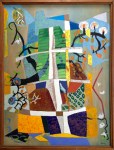
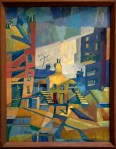
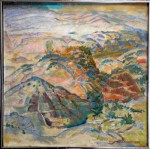
John’s oeuvre is captivating in its diversity. As I explore his studio, I find landscapes and abstract paintings, a work that was inspired by cubism and another that looks to have been done with Cezanne in mind. One dramatic landscape is signed Baumann-McHugh, and was started by the former and finished by the latter. The thread that ties it all together was John’s strong emphasis on the framework of whatever he was portraying. You can see the hand of an architect in the bold patterns he employed again and again.

“I think the architecture does enter into his paintings a good deal, because of the form and shape that he was always working with, and the fascination with that,” Gillian says. “It could be from anything. It could be something growing by the wayside or it could be a giant building.”

On drives around New Mexico, John would often park the car and pull out his sketchbook. “He’d stop in the middle of nowhere,” Gillian remembers. “If there was a telephone pole that he liked, he’d get out and say, ‘Do you mind if I just draw this?’ All of a sudden half an hour later… something really wonderful would come out of the shape or color.”

All of John’s creative endeavors came to an abrupt halt in 1985, when he suffered a severe left hemisphere stroke. “After the stroke, he was trying to come back to being whole again. He would work in very small ways,” says Gillian.

John could see Sandia Mountain from the windows of St. John’s Hospital, and he challenged himself to learn to draw it again. “Sandia was really his lifeline. The mountain called to him. He was eventually able to draw the whole thing, which took a long, long time. This was a lovely beginning to his route back to health.” Later on, John did a lecture series on art at St. John’s College that further built his confidence. He continued painting and sketching until the very end of his life.

Gillian folds up her walker and takes a seat in the living room next to her piano. One of John’s aspen paintings hangs above her head. She’s 89 years old, but when Gillian talks about John’s upcoming retrospective at our gallery, she seems full of energy. The works are close to her heart, as is the cause that the show will be supporting.

“When I heard about the wonderful work that the Bob Woodruff Foundation was doing for soldiers returning from Iraq and Afghanistan, I was fascinated,” she says. “My brother had been a prisoner of war under a different situation. I thought perhaps…. some of the paintings that John did could be used, and some of the proceeds could be given to this foundation.”

I ask Gillian something I’ve been wondering the whole time I’ve been there: how did John have the time and energy to accomplish all of this?

Gillian shakes her head and smiles. “It wasn’t really hard work, you see. It was total love,” she says. “Architecture and art were his life.”

The Matthews Gallery will present an exhibition of the art of John McHugh from March 15th through March 28, 2013. Gillian McHugh will be in attendance during the opening reception on Friday March 15th from 5-7 pm. A portion of the proceeds of the sales of the artwork will be donated to the Bob Woodruff Foundation. Click here for more information, and follow our Twitter and Facebook feeds for updates.

Top 10 Art Books of 2012, Part 2

When the art and publishing worlds work in harmony, imagery merges with typography and innovative formats give us unexpected views of famous works. Through images and prose, our final five picks for 2012’s best art books gave us new eyes: 

slide_268476_1854924_free

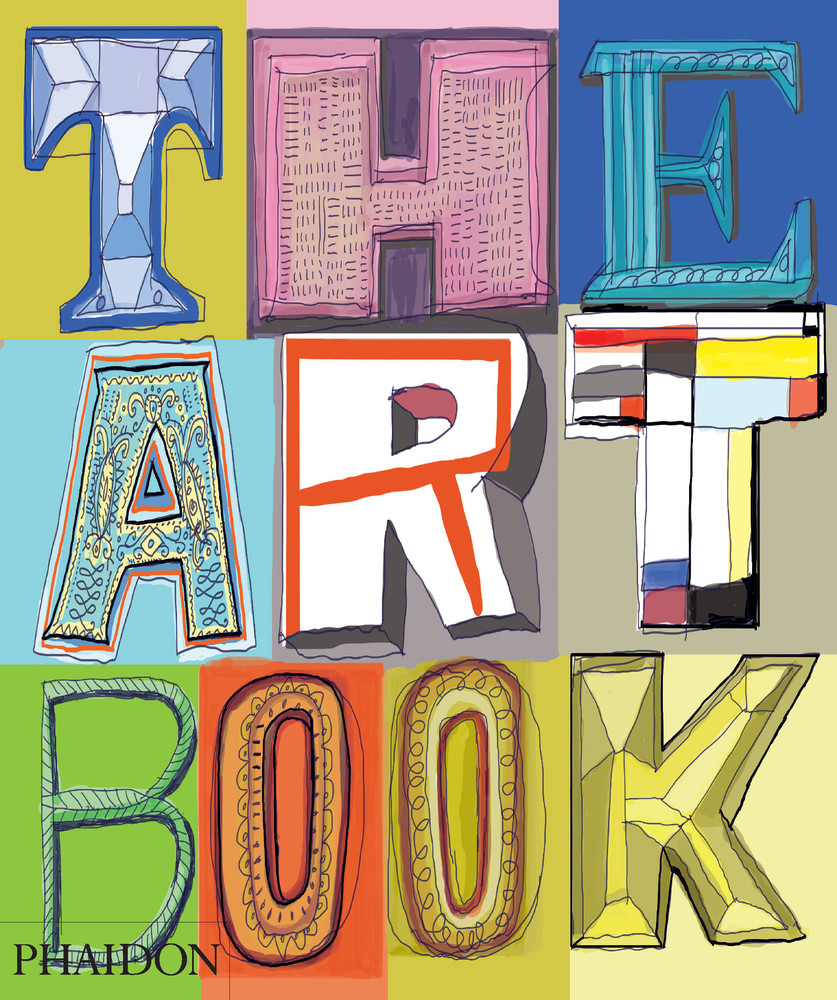
The Art Book, Phaidon- First published by Phaidon in 1994, The Art Book is as intriguingly tangled as ever in its 2012 edition. It’s an art history book made for creatives, its artists presented in alphabetical rather than chronological order. Seventy new artists join the pantheon, encouraging the crackling connections that only The Art Book could provoke. Where else would you find Duccio next to Duchamp or Manet in dialogue with Mangold?

cover of "always looking"

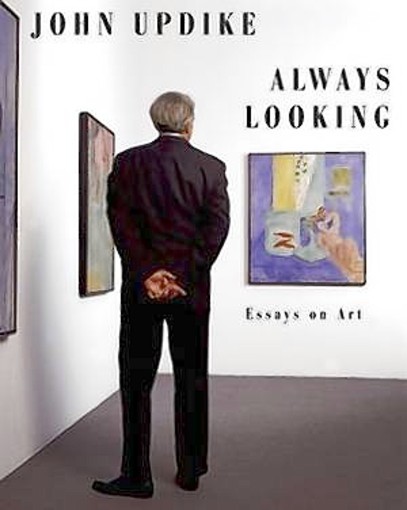
Always Looking: Essays on Art, John Updike- John Updike wasn’t an art critic, but the third, posthumous volume in his Looking series guides us through the crowds at notable exhibitions and along the arc of art history with signature elegance. The collection starts with Updike’s 2008 lecture on American art “The Clarity of Things” and includes 14 essays Updike wrote for The New York Review of Books and other publications.

9780375424601_p0_v1_s260x420

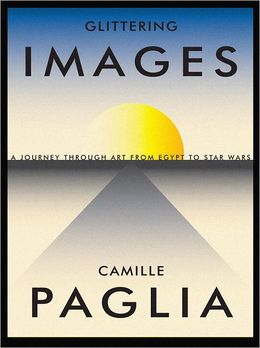
Glittering Images: A Journey Through Art from Egypt to Star Wars, Camille Paglia- Paglia kicks off Glittering Images by declaring her intent to help the masses, hypnotized by technology and riddled daily with thousands of disconnected images, understand and appreciate art’s compelling historical sweep. You can’t trust the inflammatory culture warrior for a minute, but that’s what makes the proceedings so fun. Paglia picks 29 of her favorite artworks, from Egyptian funerary imagery to George Lucas’ “Revenge of the Sith”, and presents them as pinnacles of humanity’s artistic legacy. Her selections are mostly confined to the West and heavily weighted to the 20th century, but her arguments are entertaining whether you agree with them or not.

Screen Shot 2013-01-16 at 3.00.40 PM

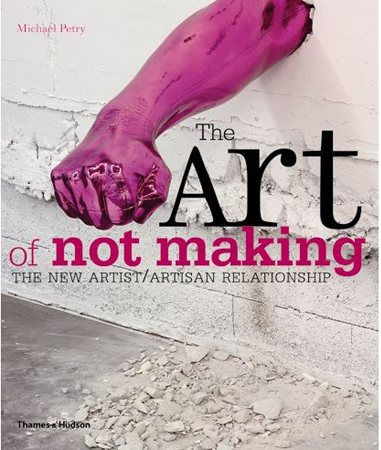
The Art of Not Making: The New Artist/Artisan Relationship, Michael Petry- Jeff Koons, Damien Hirst, Murakami Takashi, Ai WeiWei. They’re some of the biggest names in contemporary art, but could you call them artists? Petry examines the Renaissance-old dependence between art and craft—and the questions of authorship that it raises—with images from 115 contemporary artists who don’t always have a hand in creating their work. The book’s five chapters are intriguingly organized by material, a nod to the industries that brought these objects into existence.

100-ideas-that-changed-art

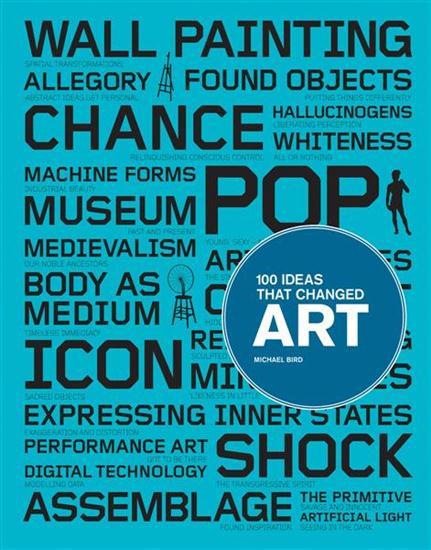
100 Ideas that Changed Art, Michael Bird- Art historian and broadcaster Bird is quick to caution that his numbered list of artistic turning points, from “narrative” (#7) to “street art” (#94), is anything but concrete in its essential properties. “No sooner has an idea changed art that art reformulates that idea, allowing it to recognize itself,” he writes. This collection of 500-word essays is particularly fascinating for the playful lines it draws between modern and contemporary art and works of old. Bird doesn’t shy away from party tricks like comparing Byzantine icons with Andy Warhol’s Marilyn Monroe images, and the results are charming for dilettantes and art experts alike.

Browse our first five selections here, and check out our Twitter and Facebook feeds for more insight.

Top 10 Art Books of 2012, Part 1

Our favorite art books of 2012 span centuries and movements, and include names both new and familiar. Follow the adventures of Paul Cezanne, meet Vivian Maier and her many subjects, and discover the (real) secrets of Leonardo Da Vinci in our first five selections: 

628x471

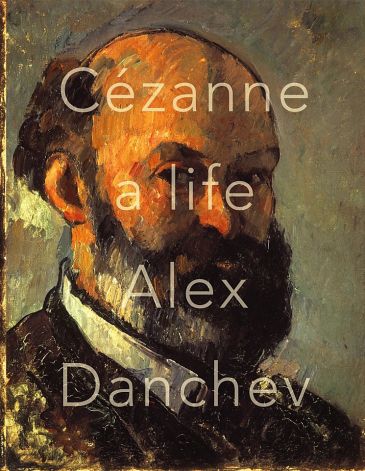
Cezanne: A Life, Alex Danchev- Critics called Paul Cezanne’s paintings unfinished, but the artist himself insisted they were “unresolved.” A biographer who wishes to capture the spirit of the revolutionary post-impressionist must play to the distinction. Danchev doesn’t try to solve the riddle of the man who diagnosed himself mad, who hid his wife and child from his family until he was 40, and who spent his final years in wild seclusion. With the aid of more than 100 images—including a series of self portraits—and excerpts from Cezanne’s favorite readings, the raconteur gives us a beautiful, perplexing glimpse through one of the most influential sets of eyes of the 19th century and beyond.

thumbnail.php

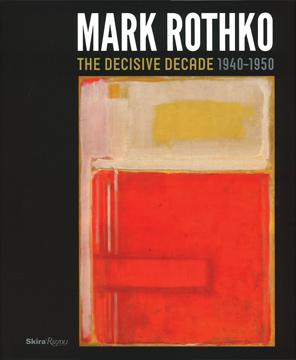
Mark Rothko: The Decisive Decade: 1940-1950; Todd Herman, Christopher Rothko and David Anfam- Though Mark Rothko’s journey from the figurative to the abstract happened rather rapidly, The Decisive Decade presents it as a careful, scientific evolution. An early canvas showing a trio of figures begets a painting of three figures merged into one, which bears a fascinating resemblance to the horizontal planes of color for which Rothko gained renown. The full sweep is a tribute to the artist’s deliberate genius.

vivian-maier-out-of-the-shadows-book-cover

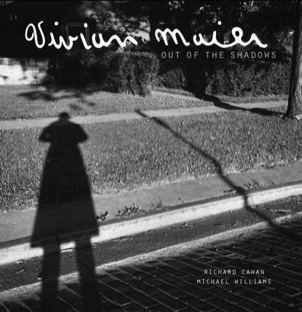
Vivian Maier: Out of the Shadows, Richard Cahan and Michael Williams- Amateur street photographer Vivian Maier’s now famous body of work was discovered before her death in 2009, when the contents of a storage locker she couldn’t pay for were auctioned off. It wasn’t until her obituary appeared in the Chicago Tribune that real estate agent John Maloof, who had purchased thousands of her negatives, discovered her identity. Cahan and Williams shine some light on the mysterious artist through interviews with Maier’s confidantes, but it’s the work itself, mostly captured on the streets of New York and Chicago in the 1950s and 1960s, that bring her into full focus.

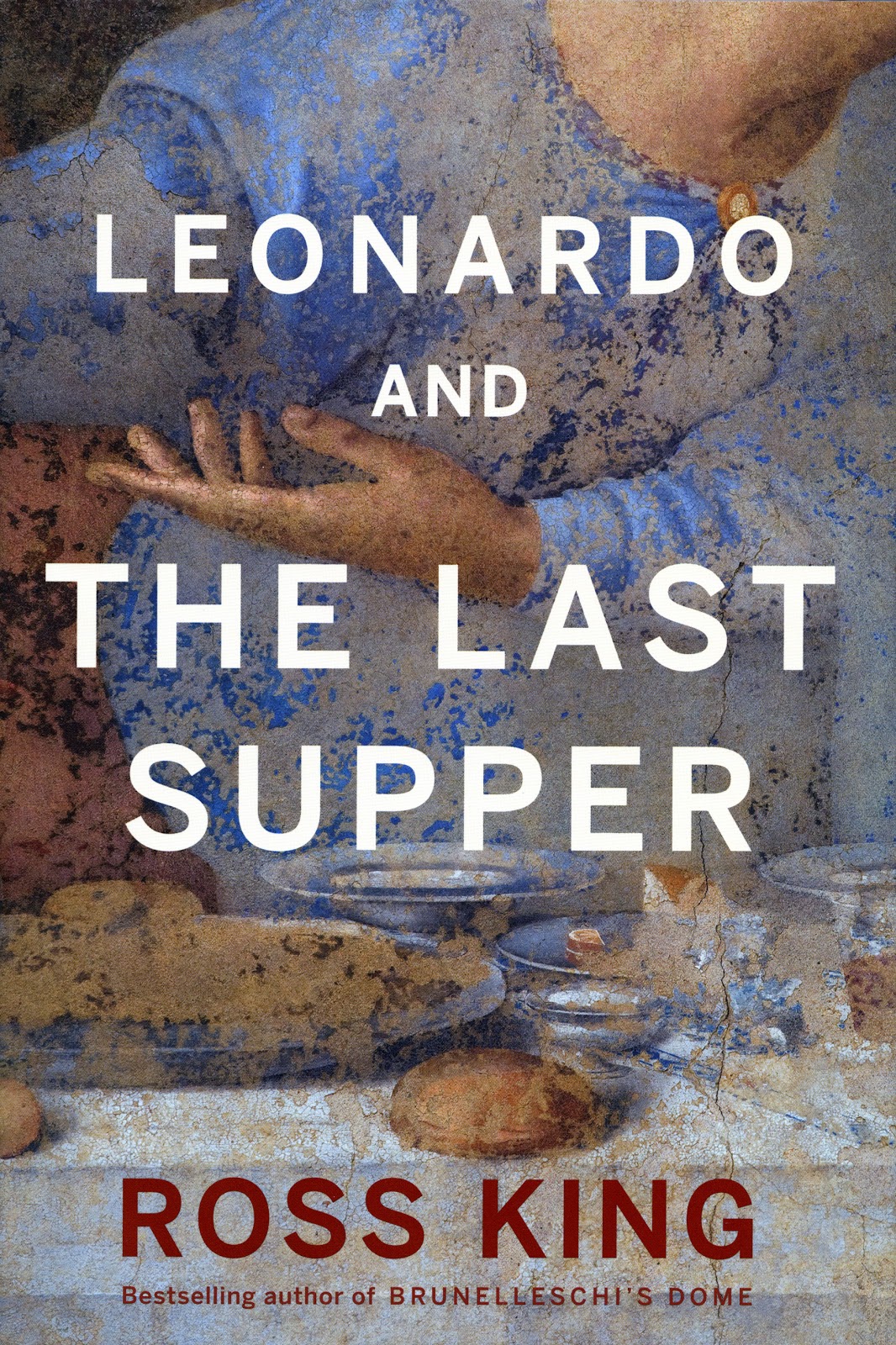
book cover leonardo and the last supper

Leonardo and the Last Supper, Ross King- Perhaps the most shocking secret of The Da Vinci Code is that, had Dan Brown done more digging, he wouldn’t have needed to rely so much on fiction. King introduces us to an aging, depressed Leonardo and the seemingly impossible project he took on at the Convent of Santa Maria della Grazie. There are many secrets to uncover, from the true identities of the Apostle models to the significance of the food Leonardo chose for the table. No symbologist needed.

lucian-freud-portraits

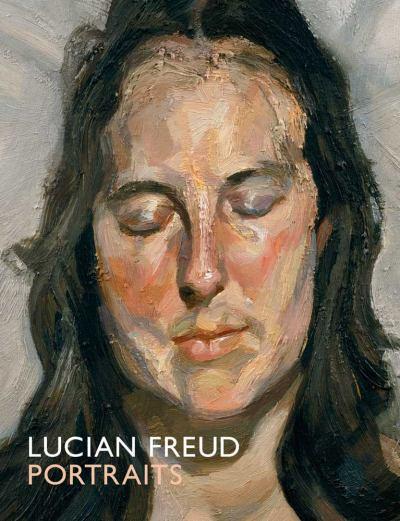
Lucian Freud Portraits, Sarah Howgate with Michael Auping and John Richardson- As ever, the severe portraits of Lucian Freud cast a captivating spell in this new collection. New to the game is a series of rare, revelatory interviews on everything from the artist’s process to his famous grandfather, conducted in the last years of his life.

Click here to browse our next five selections, and check out our Twitter and Facebook pages for more art musings.