START YOUR BIDDING: Colorful lots from our fall online auction

Matthews Art Auctions- Camille Boutet- Artfact

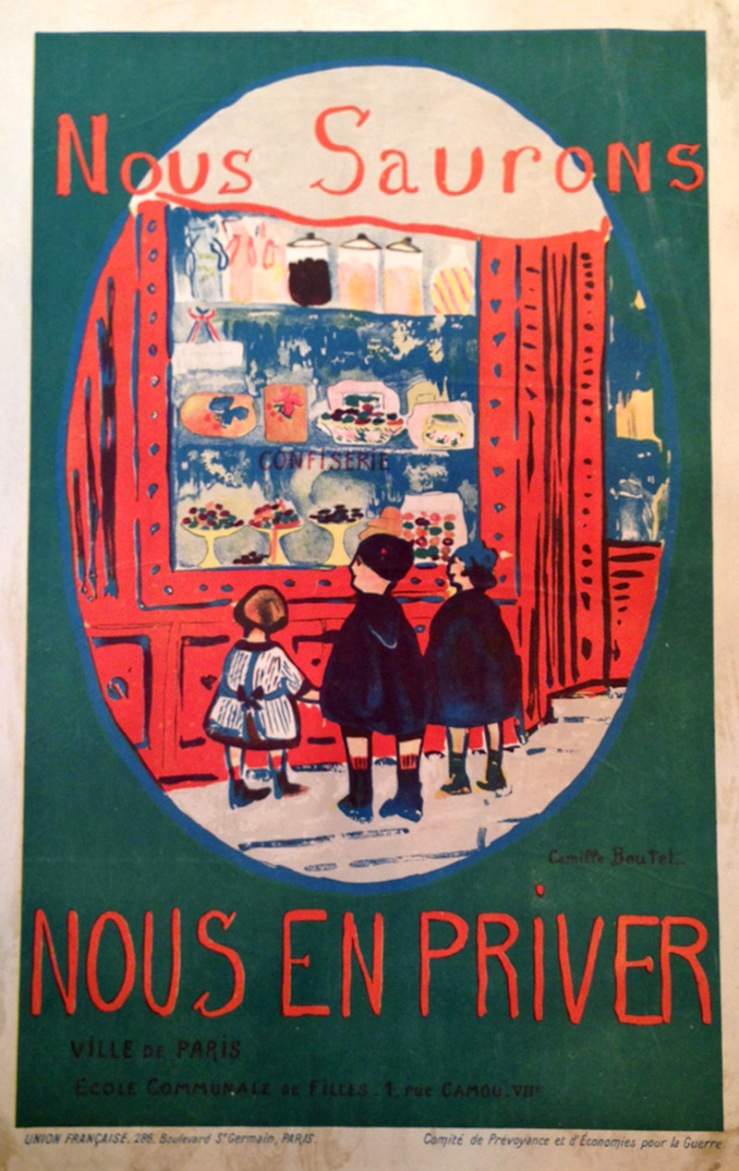
Our European, American and Southwestern Art Auction just started on Artfact.com, and it features a particularly vibrant line-up of lots. The charming image above is a color lithograph from turn of the century France by Camille Boutet. It shows three children peering longingly into a confectioner’s shop, and would make a lovely holiday gift. The best part? Bidding starts at $50. Read about more of our offerings below, and make sure to bid before the auction ends on November 17.

Frank Morbillo- Arched Axe- Artfact Auctions

Lot 41: Frank Morbillo- Arched Axe
Starting bid: $350
Estimated value: $450-$900

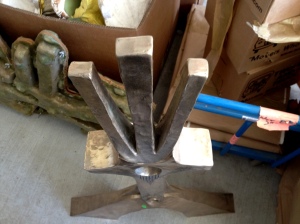
Arched Axe” is from Frank Morbillo’s sculpture series inspired by the simple, elegant lines of prehistoric hand tools. Several other glass and bronze works from the set appear in the sale, including “Ceremonial Serpent Axe“, which features an intricate floral motif, and the swanlike “Honing Axe“.

Bertram Hartman- Still Life- Artfact Auctions

Lot 59: Bertram Hartman (1882-1996)- Still Life
Starting bid: $250
Estimated value: $350-$750

Bertram Hartman (1882-1960) was born in Kansas and received training at the Art Institute of Chicago. He continued his studies at the Royal Academy in Munich and Paris, drawing inspiration from Impressionism and other modernist movements. His European influences are clear in this impeccable impasto still life.
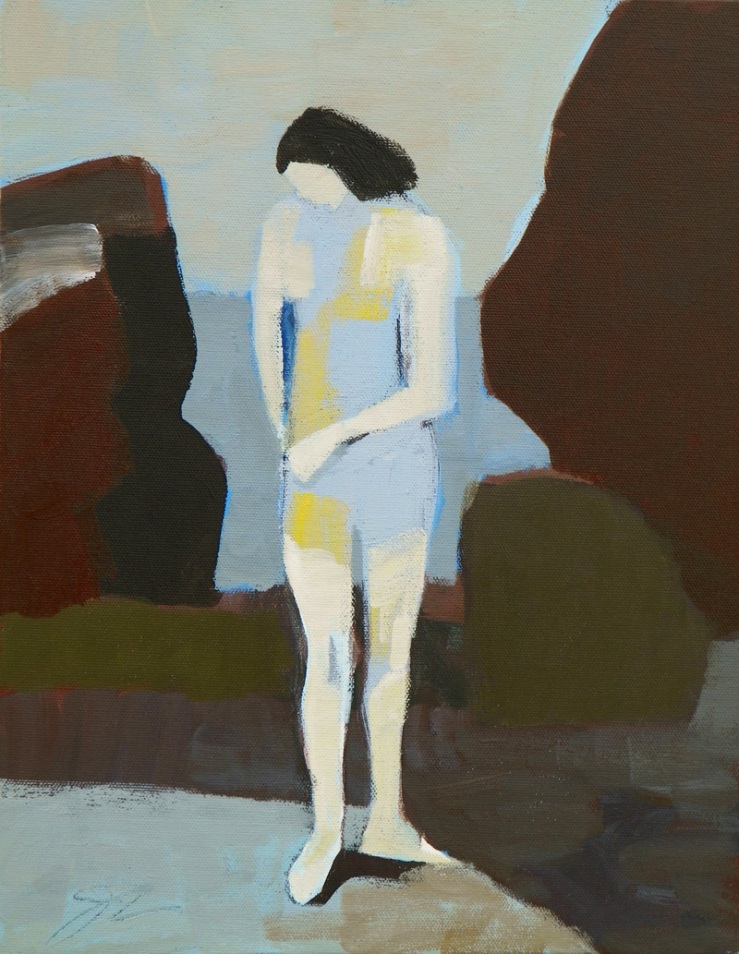
Jamie Chase- Bather by the Sea- Artfact Auctions

Lot 70: Jamie Chase- Bather by the Sea
Starting bid: $400
Estimated price: $600-$900

Jamie Chase’s well-known figurative work and his latest experiments with landscape painting combine in “Bather by the Sea“. An abstracted nude  stands on the shore, and the surrounding landscape seems to radiate her serene mood. Jamie’s “Seen” and “Iconic II” are also up for sale in the auction.
Ernest Blumenschein on Artfact

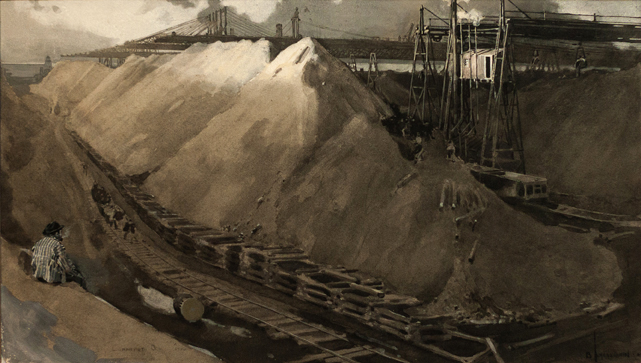
Lot 86: Ernest Blumenschein (1874-1960)- Loading
Starting bid: $700
Estimated price: $2,000-$3,500

Ernest L. Blumenschein (1874-1960) was a founding member of the Taos Society of Artists, and is known for his stunning portrayals of the Southwestern landscape and people. In “Loading” the artist pays homage to his home state of Ohio. A lone figure smokes a cigarette and watches the activity at the Conneaut Mill across the tracks.
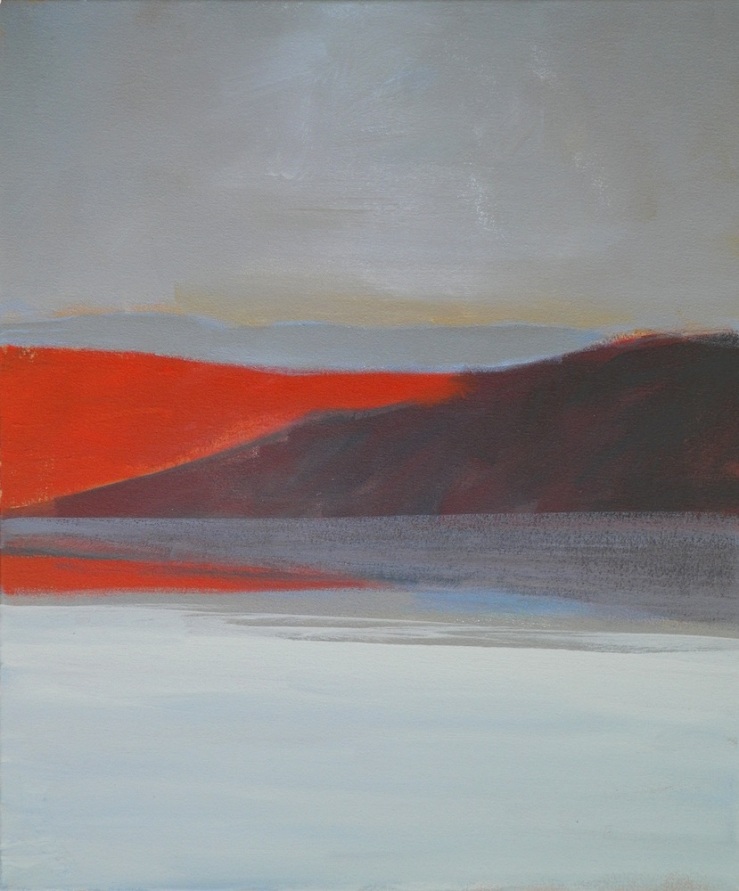
William Lumpkins- The Red Sky- Artfact Auctions

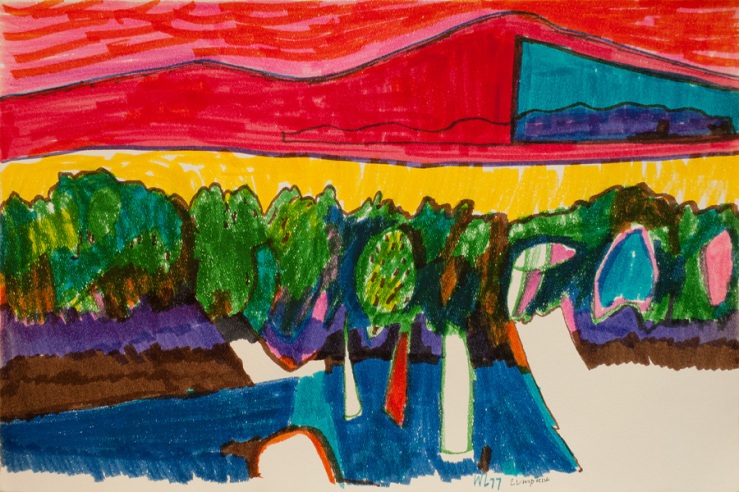
Lot 91: William Lumpkins (1909-2000)- The Red Sky
Starting bid: $400
Estimated price: $600-$1,000
William Lumpkins- Pink Handle- Artfact Auctions

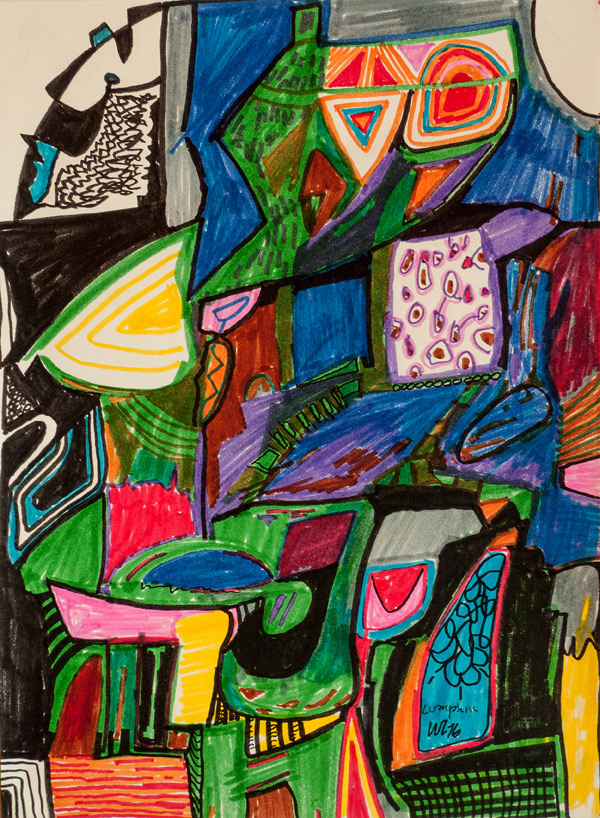
Lot 97: William Lumpkins (1909-2000)- Pink Handle
Starting bid: $400
Estimated price: $600-$1,000

The Red Sky” and “Pink Handle” are from a series of never-before-seen artworks by legendary Santa Fe modernist William Lumpkins (1909-2002). The work was recently released from the collection of a Lumpkins family member, and also features a series of serigraphs.
Ed Levin- Kachina- Artfact Auctions

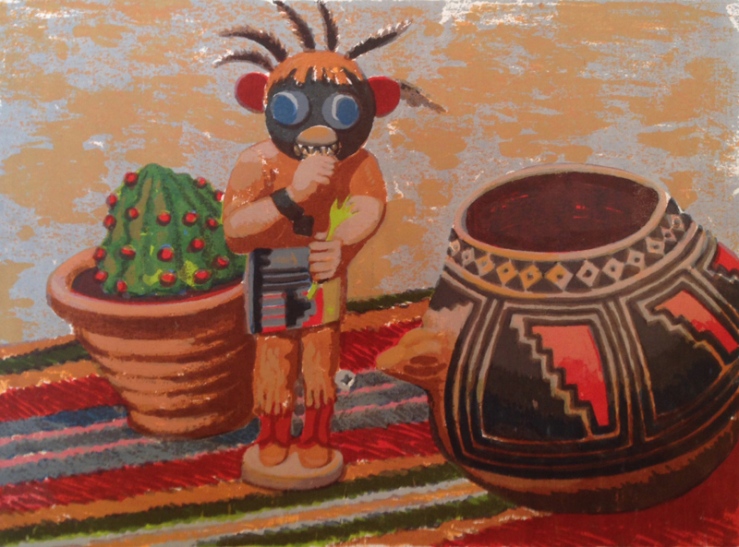
Lot 102: Eli Levin- Kachina (after Louie Ewing)
Starting bid: $175
Estimated value: $400-$600

Contemporary Southwestern painter and printmaker Eli Levin pays tribute to legendary Santa Fe printmaker Louie Ewing (1908-1983) in this silkscreen of a Pueblo kachina doll. In the 1930s, Ewing received a grant from the WPA’s Federal Art Project to pursue printmaking, and is largely responsible for the enduring popularity of printmaking among contemporary Southwestern artists.
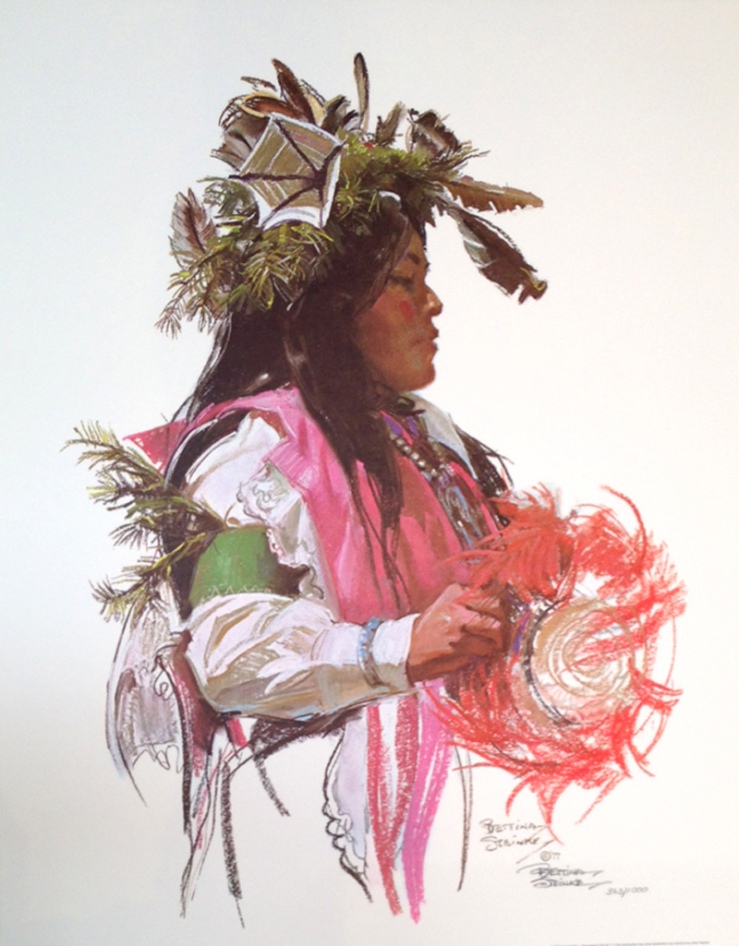
Bettina Steinke- Santa Clara Dancer- Artfact Auctions

Lot 106: Bettina Steinke (1913-1999)- Santa Clara Dancer
Starting bid: $50
Estimated value: $400-$500

Bettina Steinke (1913-1999) moved to Taos in the 1950s, where she opened a gallery with her husband and mentored young artists. She moved to Santa Fe in the 1970s. The artist was known for her vivid portraits of the Pueblo people, and was particularly interested in traditional Native dancers. Other historic New Mexico artists featured in the auction include Fremont Ellis, John McHugh and Hannah Holliday Stewart.

Check out the European, American and Southwestern Art Auction on Artfact to browse all 116 lots, and connect with us on Facebook, Twitter and Pinterest to see more highlights from the sale. The auction ends on November 17 at 7:00 pm.

NEW HORIZONS: Landscape Art Speaks

NEW HORIZONS- Focus on Landscapes- Matthews Gallery

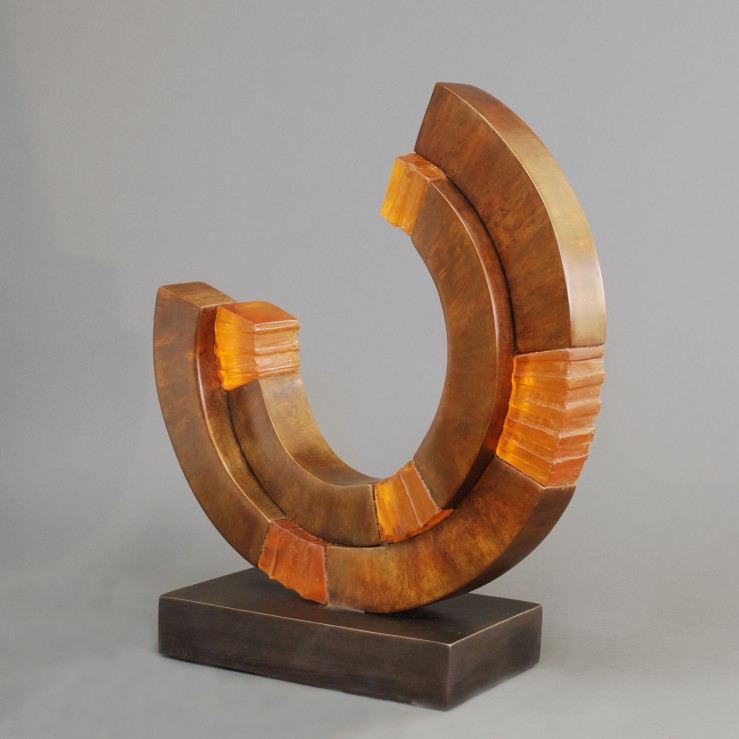
For our NEW HORIZONS: Focus on Landscapes show, running now through October 27, Tesuque sculptor Frank Morbillo‘s latest body of work engages with our diverse collection of contemporary landscape art. Throughout the exhibition, you’ll find observations by Morbillo and seven other artists, many of whom are inspired by the same severe desert expanses and infinite skies. Below is a selection of works and quotes from the show:

Sprung- Frank Morbillo- Matthews Gallery

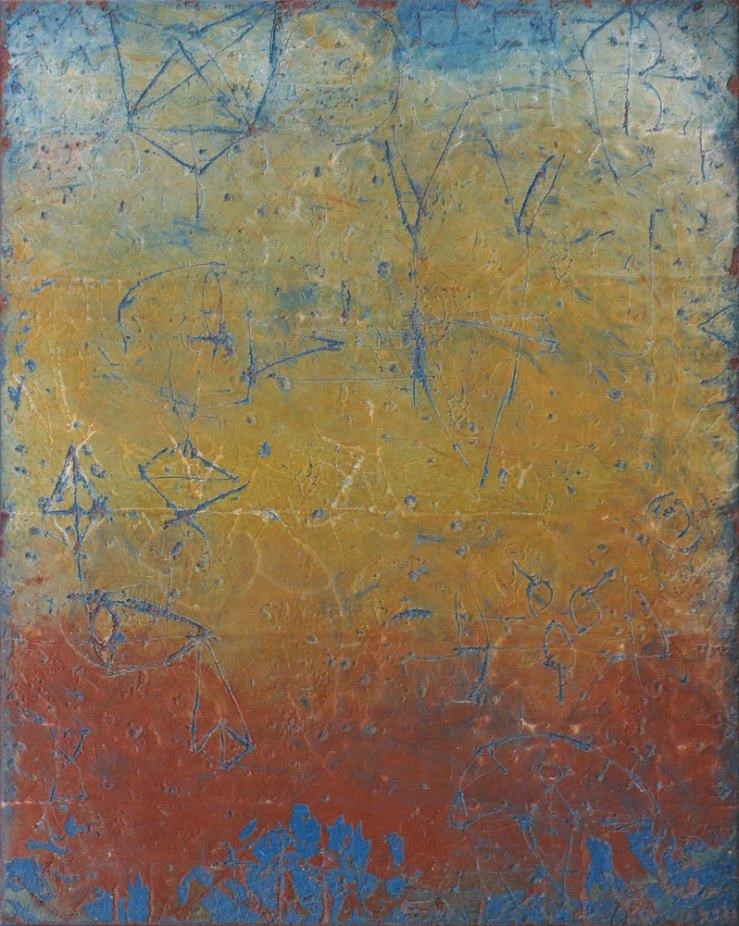
Kate Rivers- Reflections- Matthews Gallery

PATTERN

Frank Morbillo finds patterns wherever he looks in the natural world.
Kate Rivers uses manufactured patterns to form fractured reflections of nature.

“What’s a pattern? Something that might be predictable. When I observe things, that’s what I see. As an artist, you take all of these different things and see how they work together.”

-Frank Morbillo

 “I’m using this history of text and image as something that is beautiful, and weaving the words together.”

-Kate Rivers

Frank Morbillo- Cool Encounter- Matthews Gallery

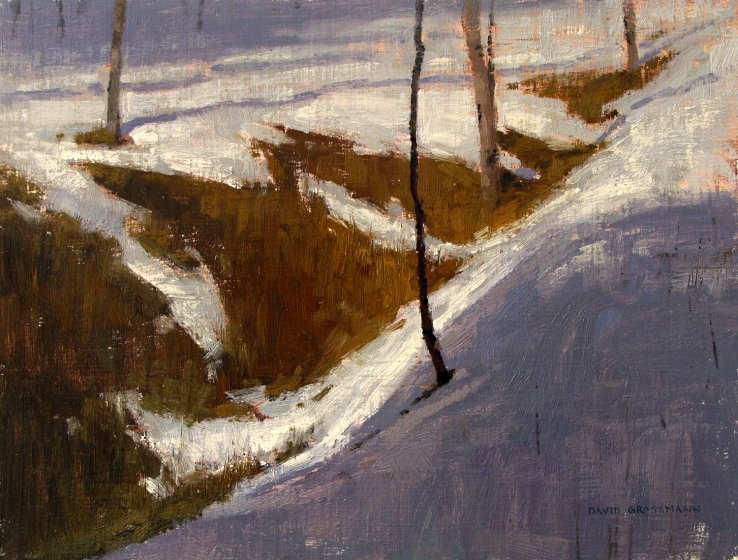
David Grossmann- Snow Rhythms- Matthews Gallery

RHYTHM

David Grossmann abstracts his landscapes to lay bare underlying rhythms.
Frank Morbillo traces the formation and disruption of natural rhythms.

“My paintings… are simplified rhythms of color, light, and shape. On the surface they are quiet whispers, but I hope that they convey a depth of emotion to anyone who takes the time to stop and listen.”

-David Grossmann

“Entropy is the introduction of chaos and disorder. That’s a root of what I’ve done over the years. You take something that could be highly organized, and understand that everything, all things, are subject to entropy. As much as we feel like we’ve created something that defies that, there’s no chance. Everything is subject to it.”

-Frank Morbillo

Frank Morbillo- Unraveling- Matthews Gallery

Terry Craig- Burning Questions- Matthews Gallery

TEXTURE

Terry Craig blends materials to mimic natural textures.
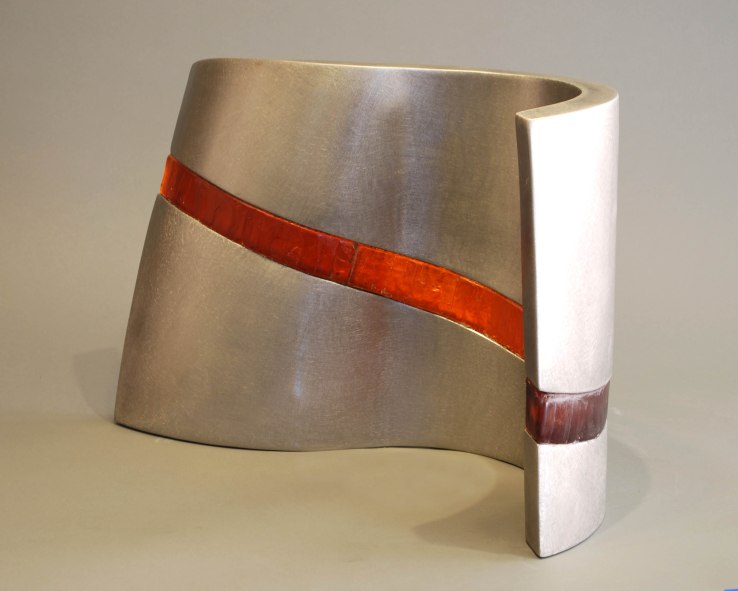
Frank Morbillo places materials with contrasting textures side-by-side.

“It took a long time… to develop the formulas and get the materials to do what I wanted them to do. You can scrape into it and get all sorts of these wonderful organic qualities.”
-Terry Craig

“Glass is a beautiful material that sets up this nice contrast with the metal. If you add texture to it, it takes on a different color. The light behaves differently going through it.”
-Frank Morbillo

Frank Morbillo- Traverse II- Matthews Gallery

Jamie Chase- Two-Horizons- Matthews Gallery

COLOR

Jamie Chase uses multiple layers of paint to reveal and obscure different hues.
Frank Morbillo relies on the properties of glass to enhance his palette.

“There are so many narratives underneath the final painting. It starts out as something really dark or really dramatic in contrasting colors, and by the end it’s almost neutral colors, but there’s something moving under the surface.”
-Jamie Chase

“The glass introduced color into the work that really isn’t achievable in metal. The cobalt blues and reds and ambers have a quality that you can’t get with any of the metals.”
-Frank Morbillo

See NEW HORIZONS: Focus on Landscapes now through October 27 at Matthews Gallery. Connect with us on Facebook, Twitter and Pinterest to see more material from the show.

10 Women Who Changed Art History Forever, Pt. 2

Marina Abramovic- 10 Women Who Changed Art History- Matthews Gallery blog

Click here to read the first part of this blog post.

How do you measure influence? It’s easy to focus on art’s brightest stars and most famous imagery, but zoom in on the tapestry of art history and you’ll see that its fibers are often woven from close personal relationships and direct channels of inspiration. We tend to remember names like Caravaggio, Picasso and Pollock and overlook the other fish in their schools. The following women might not have received as much attention as their male contemporaries, but that doesn’t mean they had a lesser hand in directing the grand flow of things. Check out our picks, and let us know who would be on your list in the comments.

Georgia O'Keeffe- Ten Women Who Changed Art History- Matthews Gallery blog

6. Georgia O’Keeffe (1887-1986)

It was 1908, and a young O’Keeffe had just won a prize from the Art Students League for her still life Dead Rabbit with Copper Pot when she gave up painting all together. The artist was worried that she’d never truly distinguish herself in the realm of realism. Three years later she started fresh, enrolling in an art class taught by Arthur Wesley Down, who encouraged his students to let their emotions guide them.

“I found that I could say things with color and shapes that I couldn’t say any other way—things I had no words for,” O’Keeffe said. The artist created a series of innovative abstract charcoal drawings that caught the eye of her future husband, New York photographer and gallerist Alfred Stieglitz. She would continue throughout her career to build an emotional vocabulary of abstracted forms, strongly influencing her modernist contemporaries and later inspiring feminist artists like Judy Chicago. She’s now considered the Mother of American Modernism.

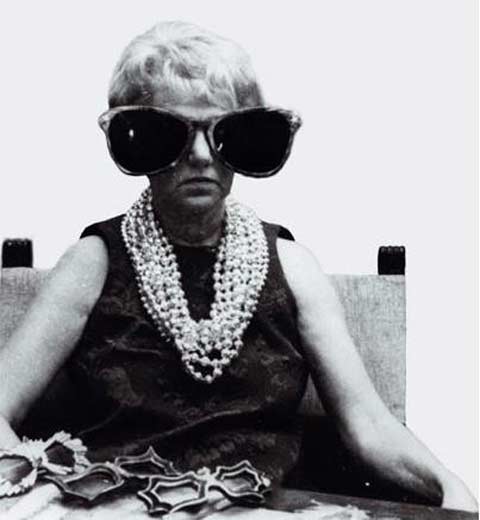
Peggy Guggenheim- Ten Women Who Changed Art History Forever- Matthews Gallery blog

7. Peggy Guggenheim (1898-1979)

Guggenheim was born with the promise of a healthy inheritance. Her father died on the Titanic when she was a teenager, and at 21 she inherited more than $30 million in today’s currency. What to do with so much money? Guggenheim’s passion was art. Her first job was at the Sunwise Turn bookstore in New York, a bohemian hotspot that inspired her to move to Paris in 1920. There she met Man Ray, Constantin Brancusi, Marcel Duchamp and other influential modernists. By 1938 she’d opened a modernist gallery in London, where she showed the likes of Kandinsky, Calder, Ernst and Picasso.

The gallery got lots of attention from the public but lost money in its first year, so Guggenheim decided to open a museum instead. When World War II forced her to delay her plans, she focused on a buying “one picture a day” for her future museum collection. Ten Picassos, forty Ernsts, eight Miros, four Magrittes, three Dalis and one Chagall later, Guggenheim had one of the most important collections of 20th century art in existence. Her influence endures in the rich archives of the Solomon R. Guggenheim Foundation and the Peggy Guggenheim Collection.

Frida Kahlo- Ten Women Who Changed Art History- Matthews Gallery blog

8. Frida Kahlo (1907-1954)

Kahlo was born to a German father and Amerindian and Spanish mother in 1907, but she always claimed she was born in 1910 at the beginning of the Mexican Revolution. That might have been a slight distortion of the truth, but her life and art certainly mirrored the pain and the passion of Mexico’s modern rebirth. When she was a teenager, Kahlo was involved in a bus crash that left her in a full body cast. In the months afterward she took up painting to combat loneliness and boredom.

“I am the subject I know best,” Kahlo said. She drew influences from traditional Mexican folk art and American and European modernism in her colorful self portraits and still lifes, building new links between cultures and art movements but tightly focusing her subject matter on her own health and relationship struggles. During her lifetime, Kahlo was mostly known in Mexico as the on-again, off-again wife of muralist Diego Rivera, but in 1938 she had a solo show in the United States and a year later she exhibited in Paris, where the Louvre acquired one of her paintings.

Andre Breton called Kahlo a surrealist and others saw her work as Naive Art, but the artist defied labels. “I never painted dreams,” she said. “I painted my own reality.” Kahlo opened the door for women artists to openly explore their most personal experiences in their work, something that surely influenced the next artist on our list.

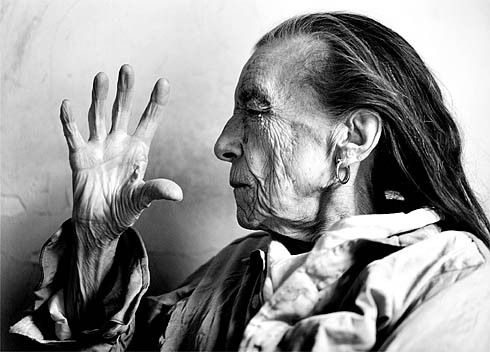
Louise Bourgeois- 10 Women Who Changed Art History- Matthews Gallery

9. Louise Bourgeois (1911-2010)

Bourgeois’ artistic journey began in 1924 when she discovered that her father and her English tutor were having an affair. Her mother turned a blind eye, but Bourgeois spent the rest of her life staring the betrayal full in the face. A born and raised Parisian, she started studying art after her mother’s death in 1932 and met Fernand Leger soon after, who told her she was more of a sculptor than a painter.

After gaining some notoriety in Europe, Bourgeois moved to New York City in 1938 and hit a wall. Though she was respected among artists like Willem de Kooning, Mark Rothko and Jackson Pollock, her work wasn’t well known outside avante-garde circles. She was brutally honest in her explorations of memory, sexuality and family power dynamics, erecting monstrous spiders in sculpture gardens and immersing her viewers in scenes of violent patricide.

In 1982 the 70-year-old artist mounted her first retrospective at the Museum of Modern Art and finally told the story of her father’s infidelity to the public. She identified her body of work as the genesis of a genre called “confessional art”. Every piece in her oeuvre is autobiographical, a retelling of the trauma she’d experienced as a child and the effect it’d had on her life thereafter. By the time she died in 2010, she’d captured the imagination of a new generation of artists and scholars.

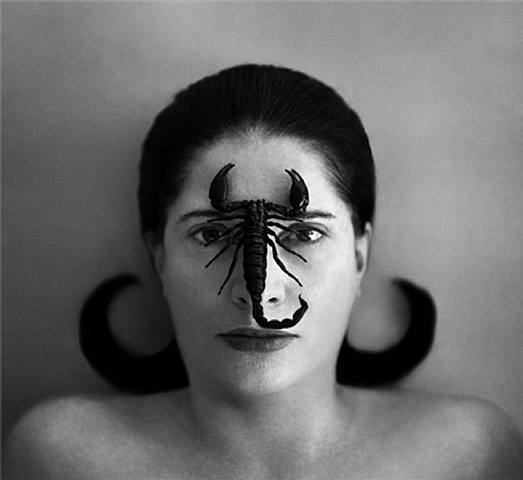
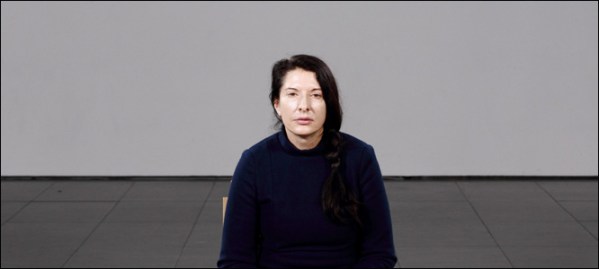
Marina Abramovic- Ten Women Who Changed Art History- Matthews Gallery blog

10. Marina Abramovic (born 1946)

Considering the ephemerality of Abramovic’s work, the performance artist’s rise to become one of the contemporary art world’s most notorious and polarizing figures is a remarkable story. Abramovic was born and raised in Belgrade, Serbia. Her mother kept tight control over her life through her early 20s, and she completed some of her first performance art pieces before her curfew at 10:00 pm. In her early work, she explored consciousness and the limits of the body within the context of performance art, pushing herself to exhaustion in various endurance tests.

Abramovic moved to Amsterdam in 1976, where she began a close relationship and artistic collaboration with performance artist Ulay Laysiepen. The duo continued to test their psychic limits, and also explored the idea of combining their identities into a single entity. They separated in 1988.

In 2005, Abramovic did a series of performances at the Guggenheim, and in 2010 she mounted a retrospective at the Museum of Modern Art. There she performed a 736-hour piece called The Artist is Present that was the subject of a documentary and received global attention.

Abramovic has been accused of chasing fame and creating a cult of personality. No matter her motives, the artist is a thought-provoking figure who’s impossible to ignore. She’s not a part of art history just yet, but she certainly makes a good future candidate.

Check out the first part of this blog post here, and follow us on Facebook, Twitter and Pinterest for more art news.

SECRETS OF THE WAREHOUSE: Hannah Holliday Stewart

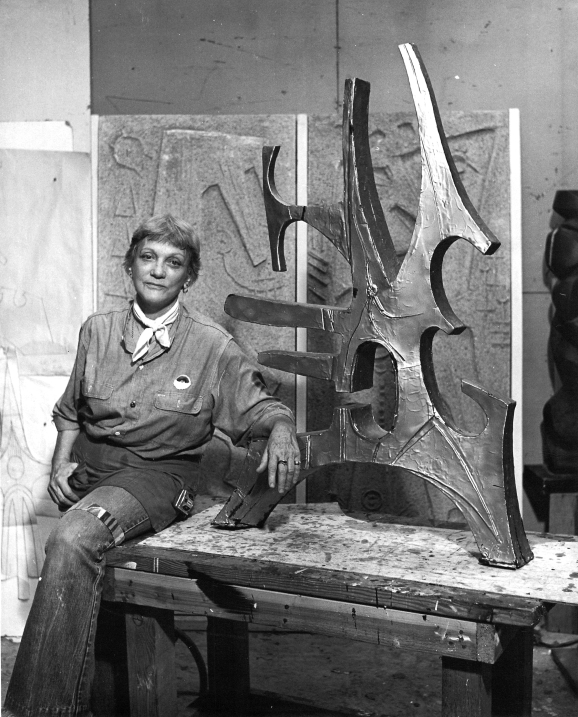
Sculptor Hannah Holliday Stewart, Matthews Gallery

It’s just across town, but the complex that houses our storage unit seems universes away from the cheerful adobe utopia of Canyon Road. We punch in a code and roll through the gate into a desolate world of sharp edges. Seas of asphalt release masses of hot air and long rows of dull aluminum doors form the impenetrable walls of an industrial fortress.

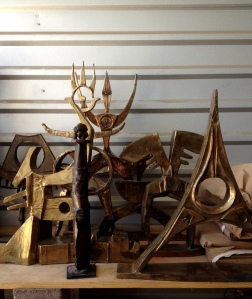
Sculpture by Hannah Holliday Stewart, Matthews GalleryAs the shadows grow longer the sun’s rays swing sideways and those doors become enormous reflectors. The forbidding barrier transforms into a glowing, many-paneled modernist painting—Gerhard Richter’s Strip series in metal. At this time of day, it’s easy to imagine the units as a series of chests concealing mysterious treasures. What secrets hide behind this shimmering force field? Luckily, we have one of the keys.

With one great heave, we send the door to our space skittering up into the ceiling and find ourselves peering into another, much more fanciful, metallic landscape. We’re here to take stock of the life’s work of Hannah Holliday Stewart in preparation for a visit from some interested collectors.

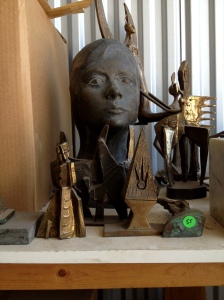
Polished, patined bronzes large and small cluster on shelves, tabletops and patches of cement between stacks of cardboard boxes. They’ve accrued a thin layer of dust since we last visited, but it hardly dampens the strange energy that seems to simmer just beneath their surfaces. Stewart’s graceful abstract forms hold all the power that they possessed when we first laid eyes on them last year in Stewart’s studio, where they’d been sitting quietly since her death in 2010. It’s jamais vu: the feeling of encountering something you’ve never seen before.

Sculpture by Hannah Holliday Stewart, Matthews GalleryStewart was born in Marion, Alabama in 1924. She received her graduate degree at Cranbrook Academy of Art, moved to Houston and swiftly embarked on rapid rise that was uncommon for female artists at the time. At the crest of a new wave of social changes, Stewart and other artists such as Ana Mendieta and Carolee Schneemann revived old legends and symbols that identified the woman as a powerful creative force capable of crafting her own destiny. Under Stewart’s paradigm, Nefertiti reclaimed her throne, Icarus had feminine curves and the symbol of the Aquarian Age was a densely muscled female torso.

Much of Stewart’s work is in bronze, a medium that set her apart from some of her female contemporaries who worked with fabric, wood and mixed media. It was a material that allowed her to look to the promise of the future as well as the legends of the past. In one corner of our storage space is a stack of boxes filled with overflowing folders. Along with the career-spanning work that was left in Stewart’s studio, the artist’s family gave us access to all of her personal files. That’s how we found an artist statement she once scrawled in a notebook:

[My] early interest in natural forces has sustained me throughout my life as a sculptor. My goal is to render visible the hidden realities of pent-up contained energy. The direct fields of reference are Sacred Geometry, Astronomy, Myth & Physics … Each Sculpture is an energy form, the movement arrested in space, a form sustaining an energy. My work is a response to these patterns and delineations and communicates with viewers through the universality of symbolism and form.

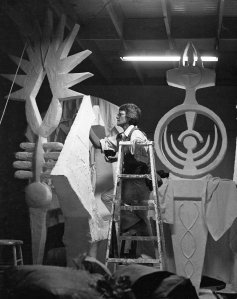
Sculptor Hannah Holliday Stewart, Matthews GalleryTo contain these gargantuan forces, Stewart was often compelled to produce her work at a monumental scale. Photographs in her files show her roaming through a forest of many-legged monoliths in her studio, or manipulating their twisty canopy atop a spindly ladder. In 1972 she was commissioned to create a monumental sculpture for Houston’s Hermann Park, a rare honor for a female sculptor—especially one who was known for her non-objective work.

The spotlight shone bright on Stewart for many years: she exhibited at the Smithsonian, the San Francisco Museum of Art, the High Museum of Art and the Dallas Museum of Fine Arts. Then, 20 years before her death, she abruptly left the Houston art scene without saying goodbye.

Sculptures by Hannah Holliday Stewart, Matthews GalleryAt a studio in Albuquerque that we would visit after her death, the artist spent the remaining years of her life producing sculptures in solitude. The mystery of her departure from the art world has yet to be cracked. Many of her friends from Houston were still puzzling over it in her obituary.

Perhaps there are clues to the more shadowy parts of Stewart’s life hidden in her files, or in the beautiful invented language that she often etched into her sculptures. It’ll take more dusting than we have time for today to unravel the intricacies of her life and work, but one thing is clear: Stewart helped pave the way for a new generation of women sculptors.

As we reach for the long rope hanging from the door, we take one last look at Stewart’s peculiar menagerie. A bronze self-portrait peers out from a tangle of supernatural creatures on a tabletop, its eyes blazing in a shaft of sunlight. Then the treasure box slams shut.

Click here to see more behind-the-scenes images from the warehouse, and make sure to follow us on Facebook, Twitter and Pinterest for updates on Hannah Holliday Stewart’s work.