CURATE THIS, CURATE THAT: Place your votes!

Collectors-Choice-Social1

The selection process for our social media-curated show COLLECTOR’S CHOICE is underway, and fans on Facebook, Instagram, TwitterTumblr and other networks have placed their votes. It’s time for some tie breakers on WordPress! Check out the match-ups below and vote for your favorites in the comments section. From January 31 to February 5, we’ll unveil your selections in the gallery and online.

JAMIE CHASE

Jamie Chase- Collector's Choice- Matthews Gallery blog

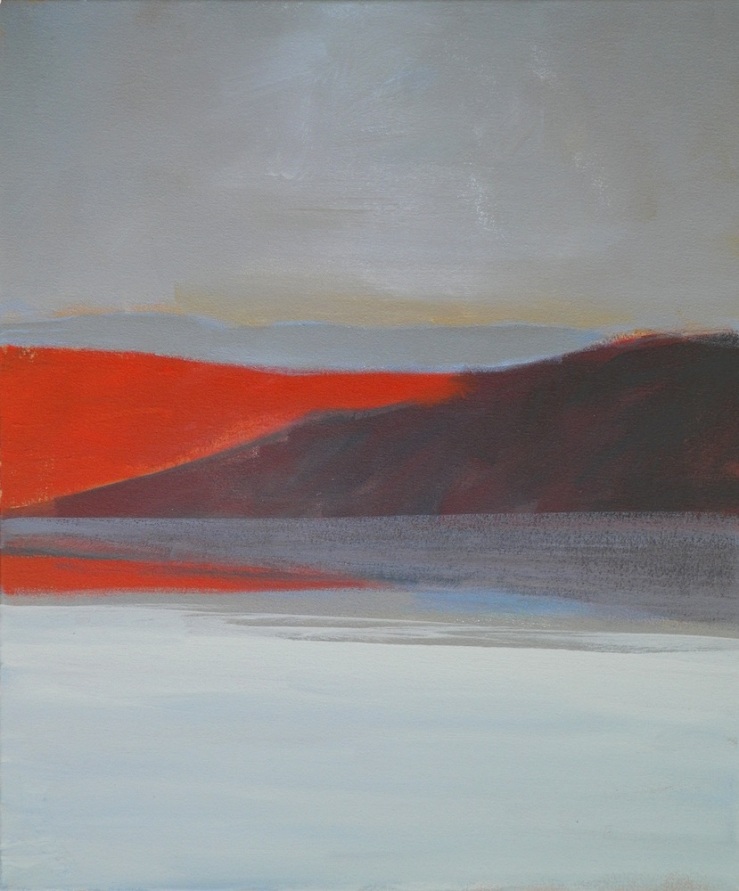
ROUND 1! Jamie Chase is known for his figurative work like image #1, and also his abstracted landscapes like #2. Which one should appear in the show? Take the curatorial reins!

WILLIAM LUMPKINS

William Lumpkins- Collector's Choice Show- Matthews Gallery Blog

Do you prefer William Lumpkins‘ careful watercolor brushstrokes (#1) or experimental wild felt-tip pen marks (#2)? Read more about the influential Santa Fe modernist here before you decide…

KATE RIVERS

Kate Rivers- Collector's Choice Show- Matthews Gallery

Curate this! Should we feature a Kate Rivers book collage in the show, or one of her nests? Read about her mixed media work in this blog post, and vote for #1 or #2 in the comments.

HANNAH HOLLIDAY STEWART

Hannah Holliday Stewart- Collector's Choice- Matthews Gallery Blog

These tall, spindly bronzes might be very different, but they’re both by powerhouse feminist sculptor Hannah Holliday Stewart. Figurative or abstract? Curate that!

PAUL GAUGUIN
Paul-Gauguin-Collectors-Choice

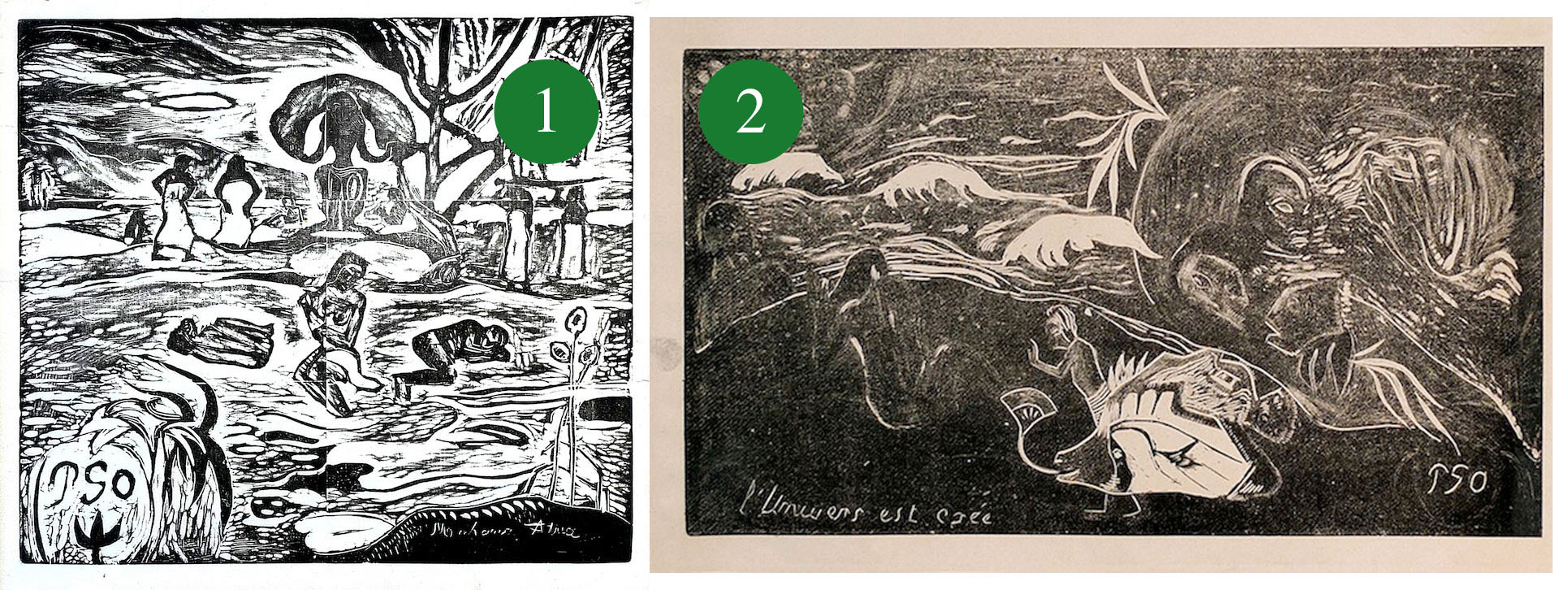
Two Tahitian myths inspired these woodblock prints by Paul Gauguin. Which do you prefer? Read about them in this blog post, and vote now!

Thanks for participating in COLLECTOR’S CHOICE! To place your vote on other social networks, connect with us through the links on our About Page.
BE OUR CURATOR: A Social (Media) Experiment

When we cooked up a full-fledged social media strategy for the gallery early last year, we had no idea what we were in for. Twelve months and countless posts, photos, tweets, likes and pins later, we’ve learned a lot. No offense to professors past, but engaging with our vibrant online community of aesthetes has been the best art course we’ve ever taken. It’s high time we thanked you for your passion, so pull out your CV and add “curator” to the list. Starting tomorrow, we’re giving you the opportunity to help us put together a very special show.

COLLECTOR’S CHOICE: 10 Artworks We Love will feature art chosen by online fans across all of our social media platforms. Keep an eye on Matthews Gallery’s Facebook, Twitter, Pinterest or other networks from Friday, January 17 through January 30 to vote on your favorite work in our collection. From January 31 through February 5, we’ll unveil your selections in the gallery and online.

Join us as we shatter the definition of an art curator and gallery show. There’s no one we’d rather collaborate with! Learn more about the show on the Matthews Gallery website.

SMALL TREASURES: Can’t-miss lots from our fall auction


Charles Partridge Adams- Untitled (Landscape)- Matthews Art Auctions

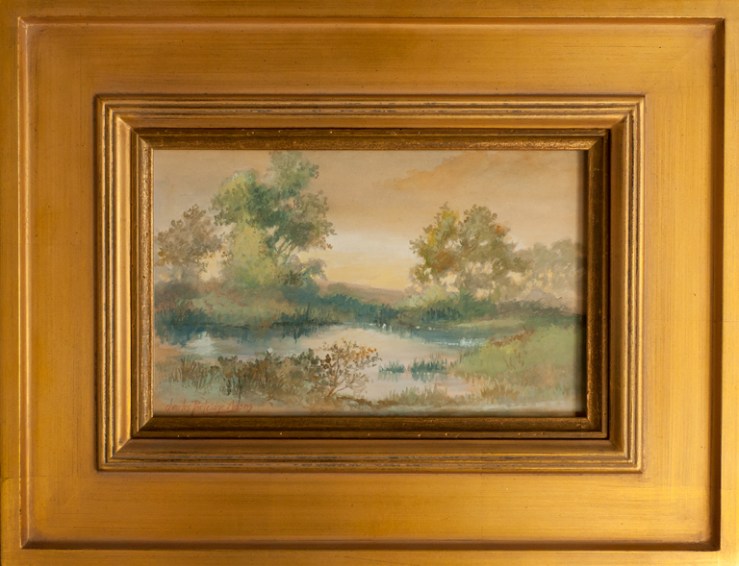
We picked a particularly electrifying time in the art world to throw an auction. A triptych by Francis Bacon just flew off the block for a record-breaking $142.2 million, and the highest-valued Andy Warhol painting ever sold for $102 million. Our European, American and Southwestern Art Auction doesn’t feature price tags that are quite as high, but there are gems throughout the catalogue that would fit into the finest collection. The image above is a watercolor by legendary Colorado landscape painter Charles Partridge Adams (1858-1942) that measures just 13.5 x 17.5 inches and starts at $1,700 in our sale. Check out more lots below, and make sure to place your bids before the auction ends on November 17.

Jack Merriott- Untitled (Boat Dock Scene)- Matthews Art Auctions

Lot 16: Jack Merriott- Untitled (Boat Dock Scene) 
Starting bid: $1,700
Estimated value: $2,200-$3,200

English artist Jack Merriott (1902-1968) is best known for his travel posters commissioned by British railway companies that were displayed in train compartments. This watercolor shows the illustrator’s softer side. Click here to view the lot and register to bid.

Francesco Spicuzza- Children at Beach- Matthews Art Auctions

Lot 60: Francesco Spicuzza- Children at Beach
Current bid: $250
Estimated value: $350-$750

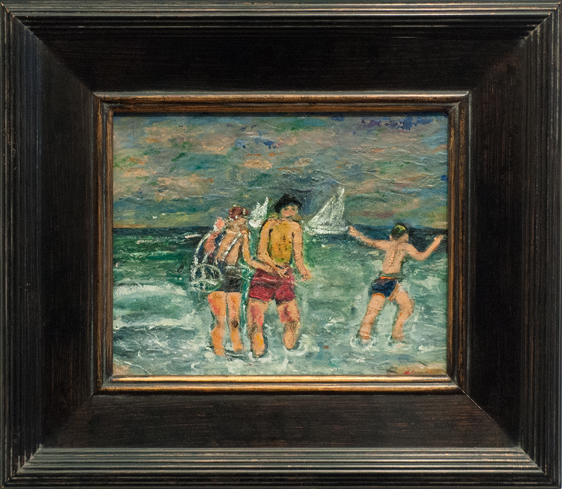
Francesco Spicuzza (1883-1962) was a talented lithographer and painter, and is one of the most prolific artists ever in his home state of Wisconsin. In this 13.5 x 15.5 in. gouache painting on board, three small figures frolic through the waves on a beach day. Click here to view the lot and register to bid.

Doug Higgins- Horse & Cowboy- Matthews Art Auctions


Lot 107: Doug Higgins- Horse & Cowboy
Starting bid: $850
Estimated value: $1,200-$1,750

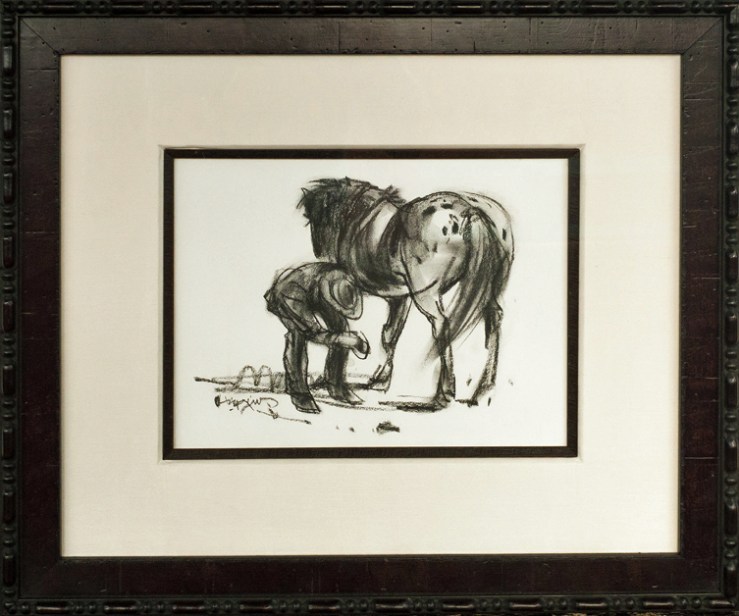
Santa Fe, New Mexico artist Doug Higgins (born 1939) uses simple, elegant lines to depict a cowboy tending to his horse in this charcoal drawing. Click here to view the lot and register to bid.

Don’t forget to bid in our auction before 7 pm on November 17, and browse more highlights in our blog post START YOUR BIDDING: Colorful lots from our fall auction. Connect with us on Facebook, Twitter and Pinterest for gallery news.

START YOUR BIDDING: Colorful lots from our fall online auction

Matthews Art Auctions- Camille Boutet- Artfact

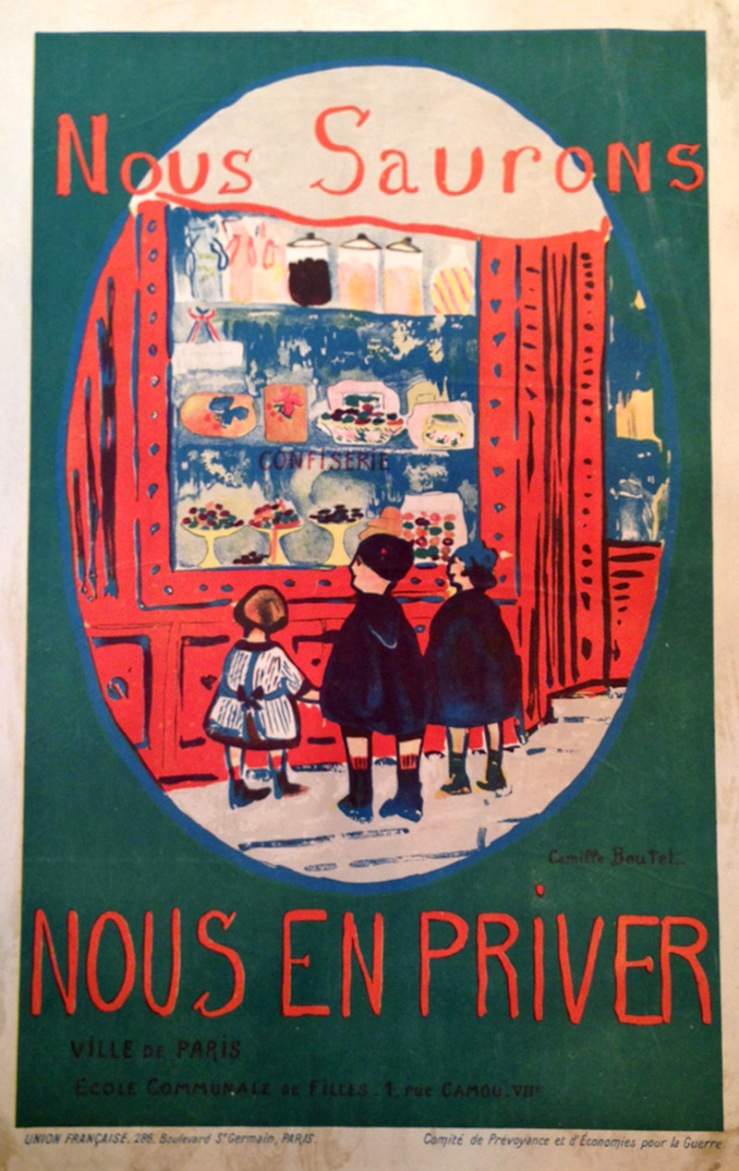
Our European, American and Southwestern Art Auction just started on Artfact.com, and it features a particularly vibrant line-up of lots. The charming image above is a color lithograph from turn of the century France by Camille Boutet. It shows three children peering longingly into a confectioner’s shop, and would make a lovely holiday gift. The best part? Bidding starts at $50. Read about more of our offerings below, and make sure to bid before the auction ends on November 17.

Frank Morbillo- Arched Axe- Artfact Auctions

Lot 41: Frank Morbillo- Arched Axe
Starting bid: $350
Estimated value: $450-$900

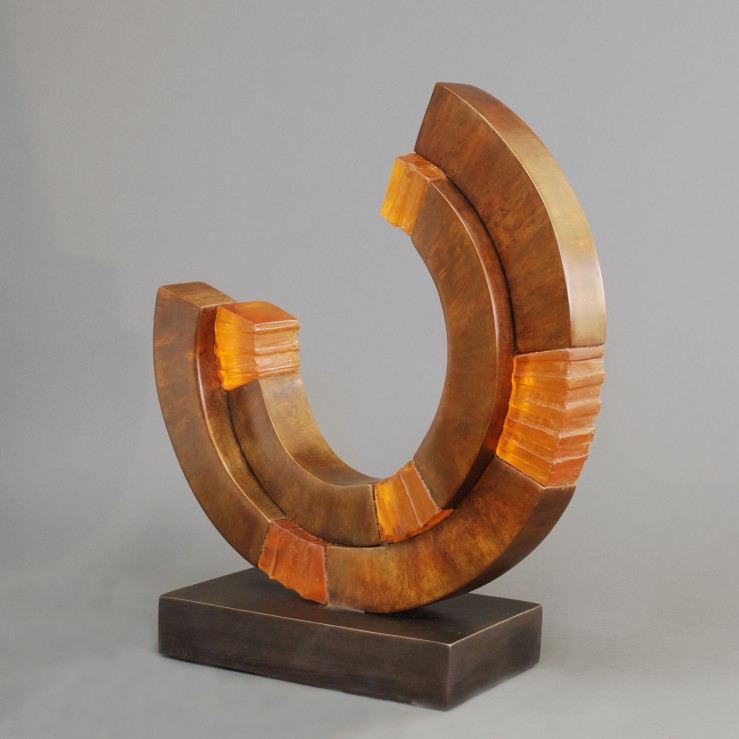
Arched Axe” is from Frank Morbillo’s sculpture series inspired by the simple, elegant lines of prehistoric hand tools. Several other glass and bronze works from the set appear in the sale, including “Ceremonial Serpent Axe“, which features an intricate floral motif, and the swanlike “Honing Axe“.

Bertram Hartman- Still Life- Artfact Auctions

Lot 59: Bertram Hartman (1882-1996)- Still Life
Starting bid: $250
Estimated value: $350-$750

Bertram Hartman (1882-1960) was born in Kansas and received training at the Art Institute of Chicago. He continued his studies at the Royal Academy in Munich and Paris, drawing inspiration from Impressionism and other modernist movements. His European influences are clear in this impeccable impasto still life.

Jamie Chase- Bather by the Sea- Artfact Auctions

Lot 70: Jamie Chase- Bather by the Sea
Starting bid: $400
Estimated price: $600-$900

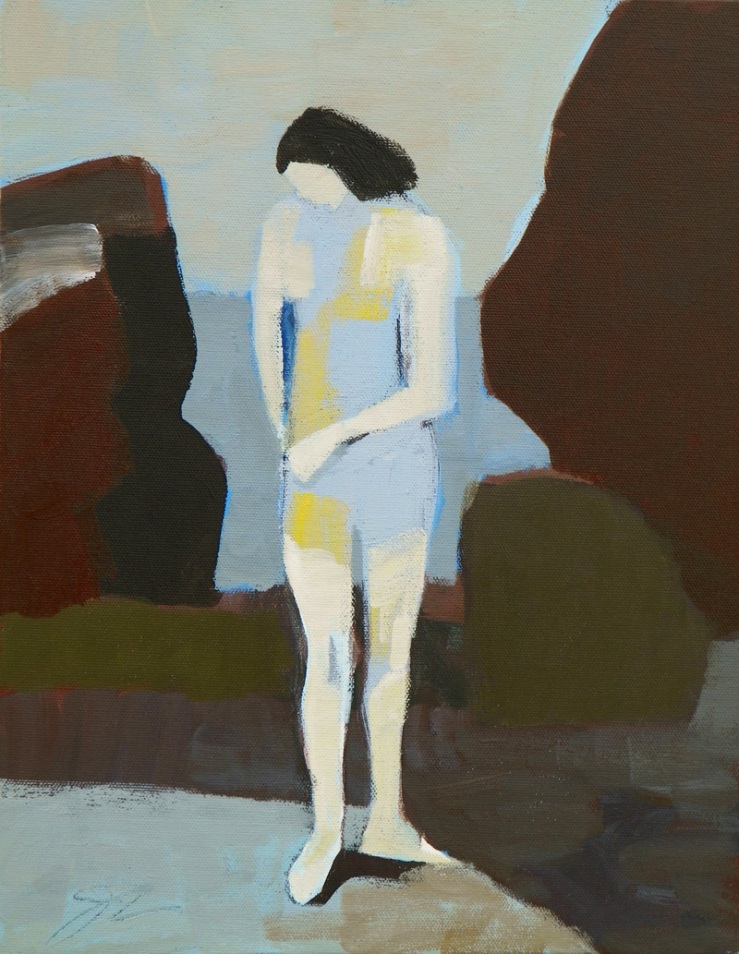
Jamie Chase’s well-known figurative work and his latest experiments with landscape painting combine in “Bather by the Sea“. An abstracted nude  stands on the shore, and the surrounding landscape seems to radiate her serene mood. Jamie’s “Seen” and “Iconic II” are also up for sale in the auction.

Ernest Blumenschein on Artfact

Lot 86: Ernest Blumenschein (1874-1960)- Loading
Starting bid: $700
Estimated price: $2,000-$3,500

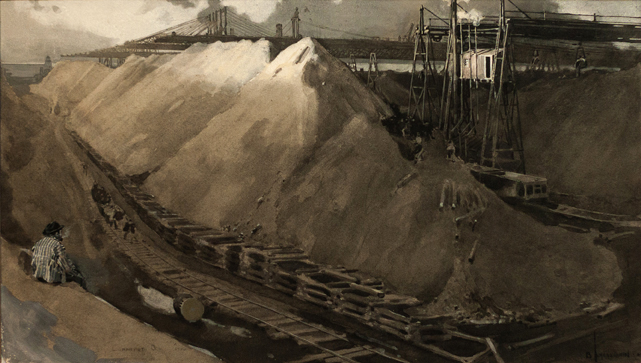
Ernest L. Blumenschein (1874-1960) was a founding member of the Taos Society of Artists, and is known for his stunning portrayals of the Southwestern landscape and people. In “Loading” the artist pays homage to his home state of Ohio. A lone figure smokes a cigarette and watches the activity at the Conneaut Mill across the tracks.

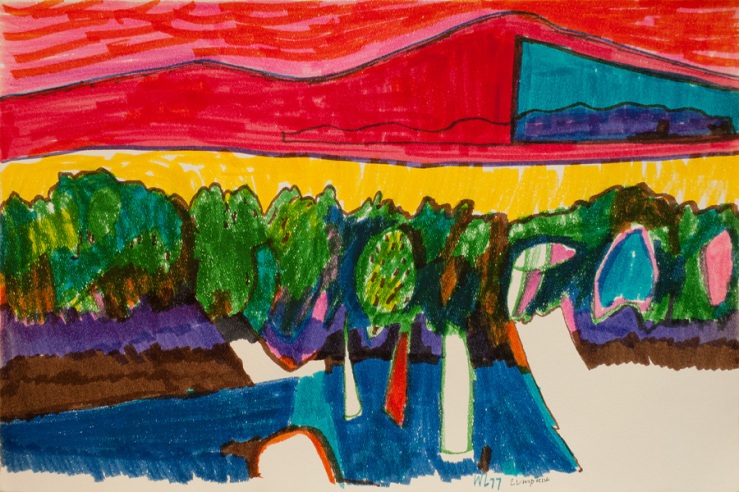
William Lumpkins- The Red Sky- Artfact Auctions

Lot 91: William Lumpkins (1909-2000)- The Red Sky
Starting bid: $400
Estimated price: $600-$1,000

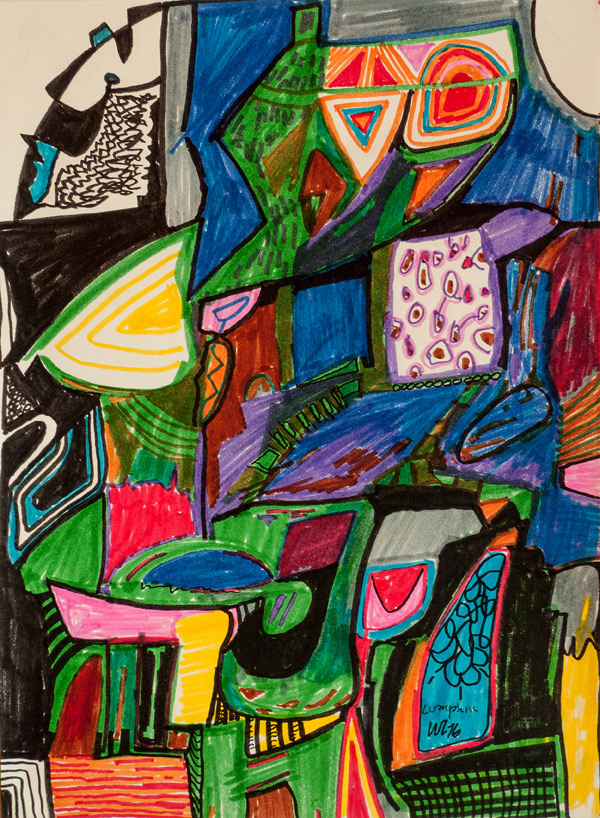
William Lumpkins- Pink Handle- Artfact Auctions

Lot 97: William Lumpkins (1909-2000)- Pink Handle
Starting bid: $400
Estimated price: $600-$1,000

The Red Sky” and “Pink Handle” are from a series of never-before-seen artworks by legendary Santa Fe modernist William Lumpkins (1909-2002). The work was recently released from the collection of a Lumpkins family member, and also features a series of serigraphs.

Ed Levin- Kachina- Artfact Auctions

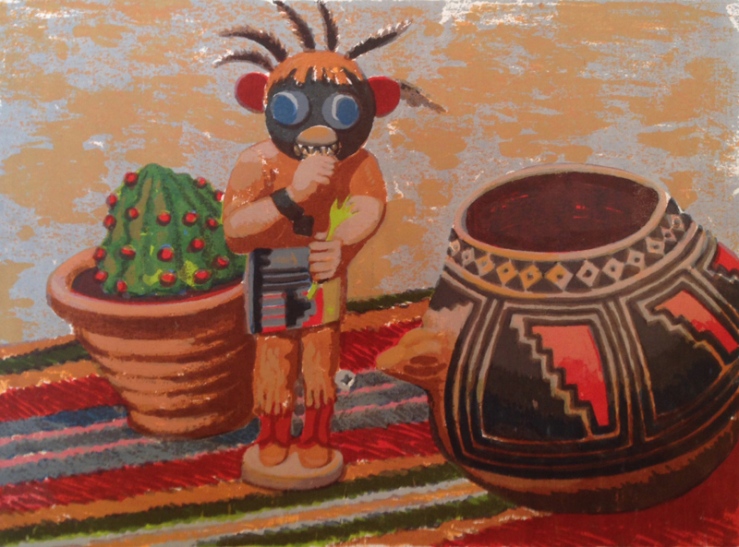
Lot 102: Eli Levin- Kachina (after Louie Ewing)
Starting bid: $175
Estimated value: $400-$600

Contemporary Southwestern painter and printmaker Eli Levin pays tribute to legendary Santa Fe printmaker Louie Ewing (1908-1983) in this silkscreen of a Pueblo kachina doll. In the 1930s, Ewing received a grant from the WPA’s Federal Art Project to pursue printmaking, and is largely responsible for the enduring popularity of printmaking among contemporary Southwestern artists.

Bettina Steinke- Santa Clara Dancer- Artfact Auctions

Lot 106: Bettina Steinke (1913-1999)- Santa Clara Dancer
Starting bid: $50
Estimated value: $400-$500

Bettina Steinke (1913-1999) moved to Taos in the 1950s, where she opened a gallery with her husband and mentored young artists. She moved to Santa Fe in the 1970s. The artist was known for her vivid portraits of the Pueblo people, and was particularly interested in traditional Native dancers. Other historic New Mexico artists featured in the auction include Fremont Ellis, John McHugh and Hannah Holliday Stewart.

Check out the European, American and Southwestern Art Auction on Artfact to browse all 116 lots, and connect with us on Facebook, Twitter and Pinterest to see more highlights from the sale. The auction ends on November 17 at 7:00 pm.

ART ON PAPER: A (Brief) Visual History of Printmaking

A Visual History of Printmaking on the Matthews Gallery blog

Prehistoric handprints on a cave wall, a Sumerian cylinder seal from ancient Mesopotamia, a woodblock print from the Chinese Diamond Sutra, a page of the Gutenberg Bible, a woodcut from the Ars moriendi, an etching by Albrecht Durer, a stencil print on silk from the Japanese Edo Period, an intaglio print by Rembrandt, a lithograph of Aloys Senefelder, an etching by Whistler, an offset lithograph by the New York Times company and an aquatint and etching by Pablo Picasso!

What does it all mean? Come to Matthews Gallery’s ART ON PAPER: Fine Art Prints reception on Friday, October 25 from 5-7 pm to find out.

NEW HORIZONS: Landscape Art Speaks

NEW HORIZONS- Focus on Landscapes- Matthews Gallery

For our NEW HORIZONS: Focus on Landscapes show, running now through October 27, Tesuque sculptor Frank Morbillo‘s latest body of work engages with our diverse collection of contemporary landscape art. Throughout the exhibition, you’ll find observations by Morbillo and seven other artists, many of whom are inspired by the same severe desert expanses and infinite skies. Below is a selection of works and quotes from the show:

Sprung- Frank Morbillo- Matthews Gallery

Kate Rivers- Reflections- Matthews Gallery

PATTERN

Frank Morbillo finds patterns wherever he looks in the natural world.
Kate Rivers uses manufactured patterns to form fractured reflections of nature.

“What’s a pattern? Something that might be predictable. When I observe things, that’s what I see. As an artist, you take all of these different things and see how they work together.”

-Frank Morbillo

 “I’m using this history of text and image as something that is beautiful, and weaving the words together.”

-Kate Rivers

Frank Morbillo- Cool Encounter- Matthews Gallery

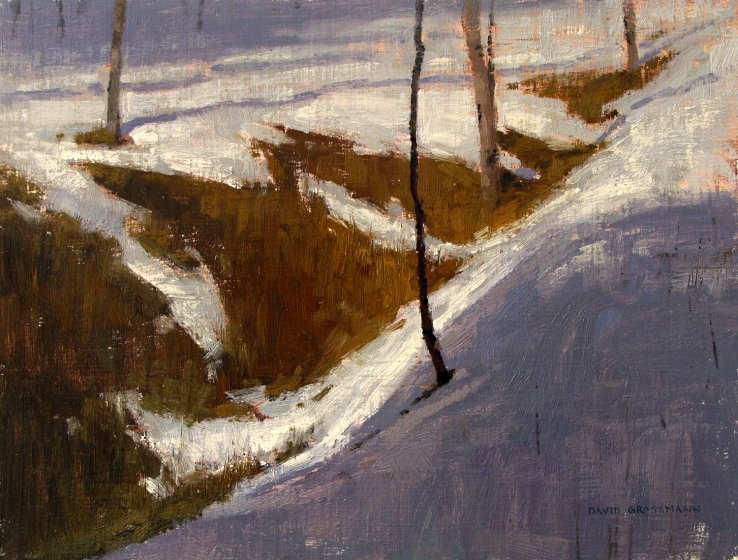
David Grossmann- Snow Rhythms- Matthews Gallery

RHYTHM

David Grossmann abstracts his landscapes to lay bare underlying rhythms.
Frank Morbillo traces the formation and disruption of natural rhythms.

“My paintings… are simplified rhythms of color, light, and shape. On the surface they are quiet whispers, but I hope that they convey a depth of emotion to anyone who takes the time to stop and listen.”

-David Grossmann

“Entropy is the introduction of chaos and disorder. That’s a root of what I’ve done over the years. You take something that could be highly organized, and understand that everything, all things, are subject to entropy. As much as we feel like we’ve created something that defies that, there’s no chance. Everything is subject to it.”

-Frank Morbillo

Frank Morbillo- Unraveling- Matthews Gallery

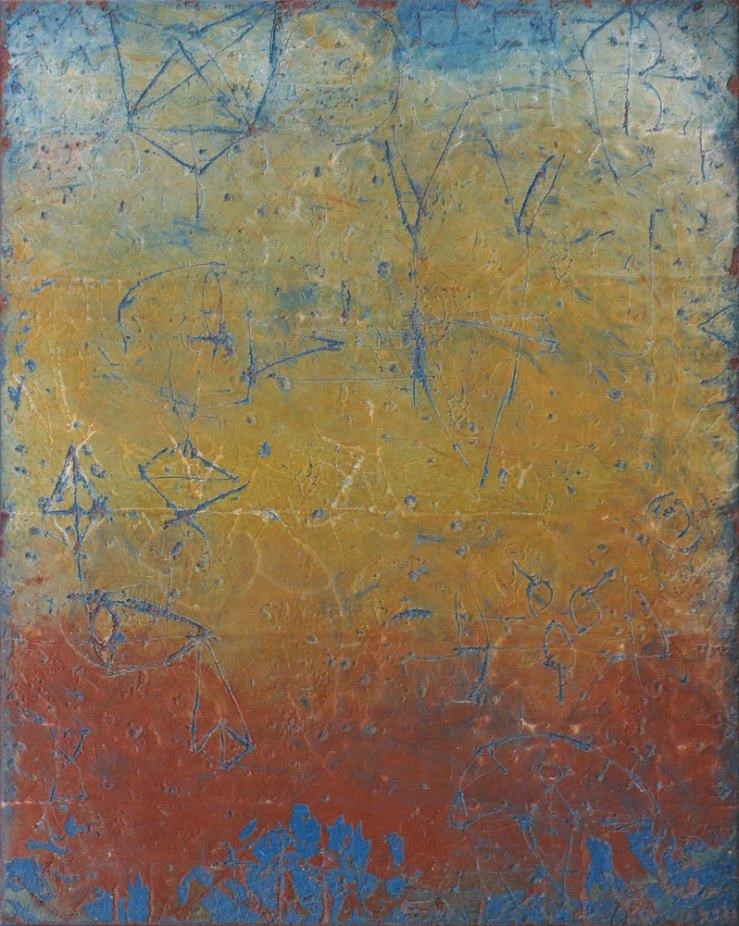
Terry Craig- Burning Questions- Matthews Gallery

TEXTURE

Terry Craig blends materials to mimic natural textures.
Frank Morbillo places materials with contrasting textures side-by-side.

“It took a long time… to develop the formulas and get the materials to do what I wanted them to do. You can scrape into it and get all sorts of these wonderful organic qualities.”
-Terry Craig

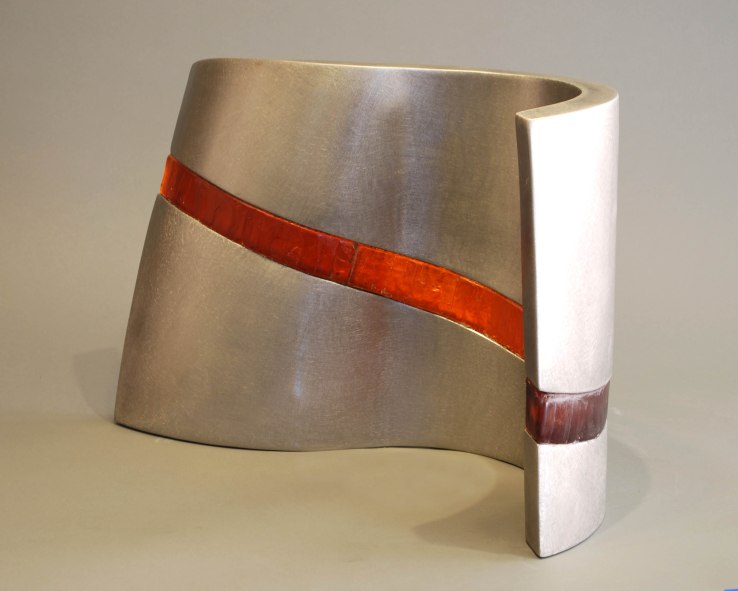
“Glass is a beautiful material that sets up this nice contrast with the metal. If you add texture to it, it takes on a different color. The light behaves differently going through it.”
-Frank Morbillo

Frank Morbillo- Traverse II- Matthews Gallery

Jamie Chase- Two-Horizons- Matthews Gallery

COLOR

Jamie Chase uses multiple layers of paint to reveal and obscure different hues.
Frank Morbillo relies on the properties of glass to enhance his palette.

“There are so many narratives underneath the final painting. It starts out as something really dark or really dramatic in contrasting colors, and by the end it’s almost neutral colors, but there’s something moving under the surface.”
-Jamie Chase

“The glass introduced color into the work that really isn’t achievable in metal. The cobalt blues and reds and ambers have a quality that you can’t get with any of the metals.”
-Frank Morbillo

See NEW HORIZONS: Focus on Landscapes now through October 27 at Matthews Gallery. Connect with us on Facebook, Twitter and Pinterest to see more material from the show.

SALON 669: A Historical, Hysterical Salon Glossary

Salon de Madame Geoffrin, where all the good parties went down in 18th century France - Matthews Gallery blog

Ever heard of a ruelle, a visit card or les bas-bleus? In preparation for SALON 669, we’ve compiled a glossary of weird and wonderful terms from literary and art gatherings of the past. Don’t worry though, you don’t have to be a noble, a French speaker or dressed in blue stockings to attend our Oct. 18-27 event series. Just bring a healthy helping of the last term on the list…

  • Age of Conversation: Spans the height of the salon’s popularity, from the 16th to 18th centuries in Italy, France and across Europe.  Some scholars say the intellectual meetings helped spark the French Revolution.
  • Enlightenment: A cultural movement that was spurred in part by the salon, which created an even playing field of ideas that elevated the growing bourgeois class to the level of the nobility. Mme Geoffrin was a pretty powerful lady in 18th century France. Find out why on the Matthews Gallery blog.
  • The Great-Woman: The hosts of salons were commonly women of the bourgeois and noble classes, who threw the gatherings to educate themselves and wield social and political power. Historians have called the most influential of these salonnieres “great-women”, using their stories to reframe misogynistic historical narratives.
  • Greek Symposium: The Athenians invited artists and intellectuals to their homes, providing a safe political space for different classes to mingle. The symposium inspired the Roman banquet, which inspired Italian Renaissance gatherings, which inspired the French to coin the term “salon”.
  • Horace: Roman lyric poet who said his craft aimed “either to please or to educate”.  The salons often followed Horace’s motto, aspiring to foster delightful, stimulating conversation.
  •  Je Ne Sais Quoi: French for “I don’t know what”, a popular way to describe the harmonious feeling of the salons in 17th century France.
  •  Lane: Or, in French, ruelle. Describes the space between the bed and the wall in a lady’s chambers, where 17th century French salon goers sat while their hostess lounged. Not all salons were so intimate though. At Louis XIV’s petit lever (literally “a little lift”), no one was allowed to sit down. Madame Recamier was a "literary lion" and political power player. Find out why on the Matthews Gallery blog.
  • Literary Lion: Term for fierce literature enthusiasts who organized salons in the 19th and 20th centuries. Madame Recamier (1777-1849) helmed a powerful literary salon attended by intellectuals who were unpopular at court, snubbed a position as the Empress consort’s lady-in-waiting, and even started a tiff between artists Jacques Louis-David and Francois Gerard over a portrait commission. The hardly humble writer and salon host Gertrude Stein later used the title to describe herself.
  • Les Bas-Bleus: A term that has come to mean “female intellectual”. Madeline de Scudery founded the les bas-bleus (blue-stockings) salon in the 1600s. When salons sprung up across Europe in the 18th century, Elizabeth Montagu founded her own blue-stockings gathering in England. Montagu maintained such a rigid dress code that she once rejected the Duke of Wellington for having the wrong shade of socks.
  • Visit Cards: From the 1800s until the 1930s, visitors to upper class French salons would present a card with their name on it to a servant at the door. If the host didn’t recognize their name, they were booted from the premises.
  • Wit: Throughout the history of salons, cleverness was key. The two most important rules at a salon were that all guests were to be treated equally, and that everyone was expected to make points without provoking confrontation.

Stay tuned for more salon-themed posts, and make sure to attend SALON 669 at the Matthews Gallery from October 18-27.  Connect with us on Facebook, Twitter and Pinterest for more news from the Matthews Gallery!

NEW TRADITIONS: Matthews Gallery Online Art Auction

History of the art auction- Matthews Gallery blog

The world’s oldest auction house opened in Stockholm, Sweden in 1674. Art auctions in Great Britain gained popularity a few decades later when the Earl of Oxford’s collection appeared on the block in 1742. That particular sale featured the full range of odd and valuable items you might find in a dusty old castle, from a bust of an unknown bishop (five shillings) to a series of van Dyck paintings (165 guineas).

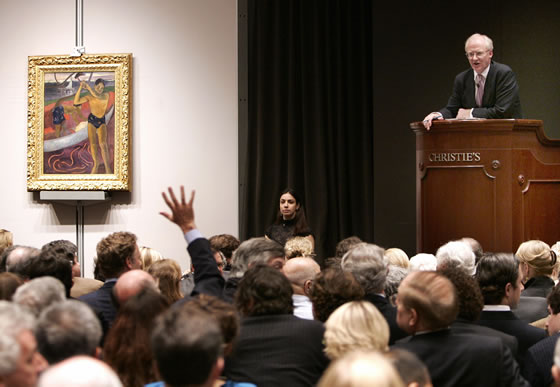
The beat of the auction mallet has marked the rhythm of the secondary market ever since. It’s a tradition that’s full of strange pageantry and heart pumping excitement. Auction kingpins Christie’s and Sotheby’s, which were both founded in mid-18th century England, often draw the ire of art world players for their tightly controlled sales. “They know exactly how many people will be bidding on a work and exactly who they are,” wrote art critic Jerry Saltz in 2012 after a version of Edvard Munch’s The Scream sold at Sotheby’s for $119.5 million. “In a gallery, works of art need only one person who wants to pay for them.”

Online auctions have meanwhile been swiftly democratizing the centuries-old process, and that’s where the Matthews Gallery decided to jump in. We launched the EUROPEAN MASTERS, AMERICAN AND SOUTHWESTERN ART AUCTION on July 25 and it runs through July 29. Come browse our virtual auktionsverk of art and, if you’re inspired, make a bid. You’ll find art by European modernists such as Pablo Picasso and Joan Miro, Southwestern legends including Emil Bisttram and Alfred Morang, and notable contemporary artists like Jamie Chase, Eric G. Thompson and Kate Rivers among the lots. Here are some notable pieces from the catalogue:

EUROPEAN MASTERS 

This slideshow requires JavaScript.

Click to see the works on our auction site:

HISTORIC SOUTHWESTERN ART

This slideshow requires JavaScript.

Click to see the works on our auction site:

  •  Untitled (Landscape #1), Emil Bisttram
  • Untitled (Landscape #2), Emil Bisttram
  • Untitled (Landscape #3), Emil Bisttram
  • Untitled (Santa Fe Landscape), Alfred Morang
  • Riders at Sundown, Gene Kloss
  • Return of the Wood Gatherers, Gene Kloss

CONTEMPORARY ART 

This slideshow requires JavaScript.

See more lots from the auction here, and connect with us on Facebook, Twitter and Pinterest for auction updates all week!

LEGENDS OF THE LOTS: Matthews Gallery Online Art Auction

March Chagall- L'Opera Poster (1964)- Matthews Gallery auction
L’Opera Poster, Marc Chagall

We’re very excited to announce the European Masters, American and Southwestern Art Auction, an online-only Matthews Gallery event running July 25-29. It’s our very first auction, and we’ve been working on it for more than a year. Of course, the works we’re putting on the block have stories behind them that are much older than that. Click here to browse the diverse catalogue, and read on to learn the legends behind four of the lots.

Henri de Toulouse-Lautrec- La Passagere du 54- Matthews Gallery auction
La Passagere du 54, Henri de Toulouse-Lautrec

Lautrec was on a steamship cruise from Le Havre to Bordeaux when a beautiful woman who was staying in cabin 54 caught his eye. He became infatuated with her but she was so aloof that he never got a chance to introduce himself. Lautrec refused to disembark until the ship reached Lisbon, where his friend Maurice Guibert finally dissuaded him from sailing on to Dakar, the mystery woman’s destination. The sketches he made of her on the boat would inspire La Passagere du 54.

Lithograph, on wove paper, Wittrock’s third (final) state, the full sheet, with green lettering. 

Click here to see this work in the catalogue.

Joan Miro- Dog Barking at the Moon- Matthews Gallery auction
Dog Barking at the Moon, Joan Miro

This lithograph has one of the longest titles of any of Miró’s art works. In french it is: “Le chien aboyant à la lune reveille le coq le chant du coq picote le crane du fermier Catalan posé sur la table à coté du pourron”. In English: “The dog barking at the moon wakes the cock, the song of the cock pecks at the head of the Catalan farmer resting on the table by the flask of wine”. Joan Miró (1893-1983) was a leading pioneer and proponent of surrealism. His work has a childlike style that at its heart is a sophisticated play of color, line and forms. Miro was a consummate master printmaker and over his lifetime he completed more than 1,000 fine art prints.

Lithograph in colors, number 12 from the edition of 80.

Click here to see this work in the catalogue.

Pablo Picasso- Untitled (From the 156 Suite, 16 mai 1971)- Matthews Gallery auction
Untitled (From the 156 Suite, 16 mai 1971), Pablo Picasso

Degas visits a brothel in this etching by the legendary Spanish modernist.

Number 23 from the edition of 50.

Click here to see this work in the catalogue.

Paul Gauguin- Mahana Atua (Noa Noa woodblock)- Matthews Gallery auction
Mahana Atua, Paul Gauguin

Gauguin sailed from France to Tahiti in 1891 and didn’t return home until two years later. He went there in search of an untouched beauty far away from “everything that is artificial and conventional”. Upon his return to Europe, he carved a series of ten woodblocks to illustrate a written account of his travels called Noa Noa. The prints, which were only his second attempt at printmaking, are considered some of his most innovative work. “Gauguin’s current effort will tomorrow provoke a complete revolution in the art of printmaking,” wrote critics Julien Leclerq and Charles Morice. This is presumed to be a proof apart from the signed and numbered edition of 100 published by the artist’s son, Pola Gauguin in Copenhagen in 1921.

Woodcut, 1894-5, on chine

Click here to see this work in the catalogue.

Make sure to check out the entire auction catalogue here, and connect with us on Facebook and Twitter for more legends behind the lots!