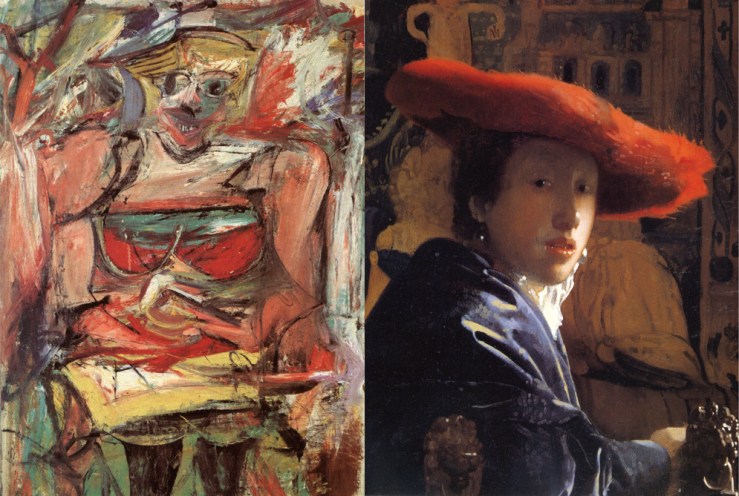
“Flesh was the reason oil painting was invented,” said Willem de Kooning. The quote is a nod to the Dutch masters, who developed the medium to accurately evoke the semi-translucent glow of human skin in the crisp light of 17th century Delft.
By the mid-1900s, de Kooning was using the same medium to very different ends. His nudes unraveled across the canvas, their mottled flesh mimicking the dark tones of a bruised peach or the sickly hues of a jaundiced child.
The abstract expressionist encoded in painted skin the darkest sexual desires and terrors of the modern world, but he wasn’t blind to the way the inherent qualities of oil linked him to a much different time and place.
Our new exhibition FOCUS ON THE FIGURE, running December 2 to 9, holds a similar philosophy at its heart. The use of figures in art stretches back to prehistory, and new explorations into the subject have always looked to the past in one way or another.
Pierre-Auguste Renoir’s (1841-1919) etching Odalisquerefers to Turkish concubines, but that wasn’t necessarily the artist’s intended title. Renoir submitted a painting of a nude called Diana to the Paris Salon in 1867. The erotic depiction of the Roman goddess offended the judges and the painting was rejected.
Three years later the artist used the same model for a painting called Odalisque and made sure she was fully clothed. The second work, stripped of its mythological significance and given an exotic twist, was accepted to the Salon.
In this etching with the same title Renoir refuses to hold back. The nude Odalisque is so tenderly rendered her skin looks as soft as butter. “When I’ve painted a woman’s bottom so that I want to touch it, then [the painting] is finished,” the artist said.
Harold Frank (1917-1995) was born in England and grew up in New York, where he drew inspiration from American modernism and abstract expressionism. His take on the female figure in Blue Nudefeatures quick, expressive brushwork that was no doubt inspired by de Kooning.
Both artists incorporated drips and splatters of paint into their compositions to create spacial ambiguities in the picture plane. Is Frank’s nude standing in a corner or floating in a color field? The answer seems to change with every glance.
Jamie Chase immerses a figure in a vibrant yellow atmosphere in Turning Point. It brings to mind both Mark Rothko and Nathan Oliveira, but Chase’s influences stretch farther back in art history.
Chase grew up in San Francisco and attended art school there for a short time before dropping out to travel Europe. He lived in various cities and educated himself on the masters before returning to San Francisco in the early 1970s. There he painted murals for a bookstore, drawing inspiration from ancient Egyptian art, European cave paintings and Native American art.
Come trace the history of the artist’s impulse to capture the figure at the exhibition this December, and connect with us on Facebook, Twitter and Pinterest for more news from the gallery.
We picked a particularly electrifying time in the art world to throw an auction. A triptych by Francis Bacon just flew off the block for a record-breaking $142.2 million, and the highest-valued Andy Warhol painting ever sold for $102 million. Our European, American and Southwestern Art Auction doesn’t feature price tags that are quite as high, but there are gems throughout the catalogue that would fit into the finest collection. The image above is a watercolor by legendary Colorado landscape painter Charles Partridge Adams (1858-1942) that measures just 13.5 x 17.5 inches and starts at $1,700 in our sale. Check out more lots below, and make sure to place your bids before the auction ends on November 17.
English artist Jack Merriott (1902-1968) is best known for his travel posters commissioned by British railway companies that were displayed in train compartments. This watercolor shows the illustrator’s softer side. Click here to view the lot and register to bid.
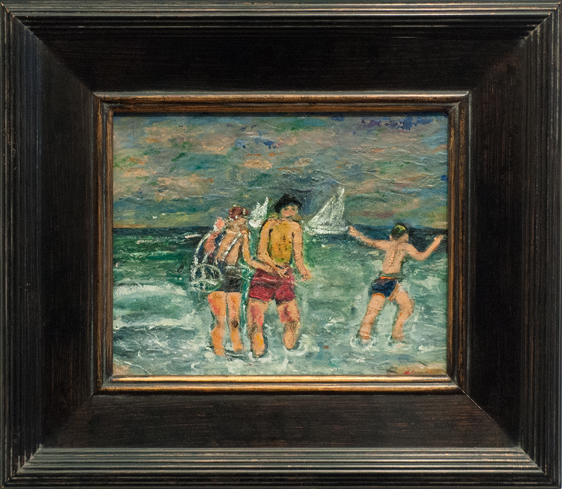
Francesco Spicuzza (1883-1962) was a talented lithographer and painter, and is one of the most prolific artists ever in his home state of Wisconsin. In this 13.5 x 15.5 in. gouache painting on board, three small figures frolic through the waves on a beach day. Click here to view the lot and register to bid.
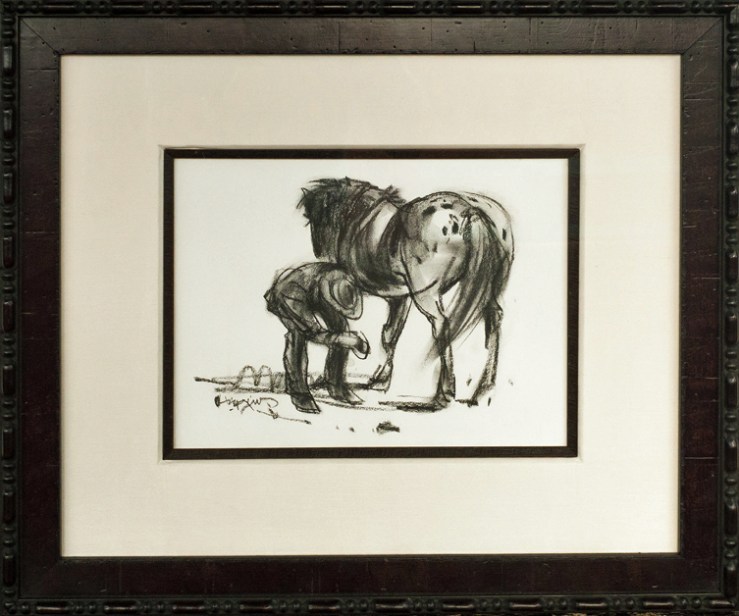
Santa Fe, New Mexico artist Doug Higgins (born 1939) uses simple, elegant lines to depict a cowboy tending to his horse in this charcoal drawing. Click here to view the lot and register to bid.
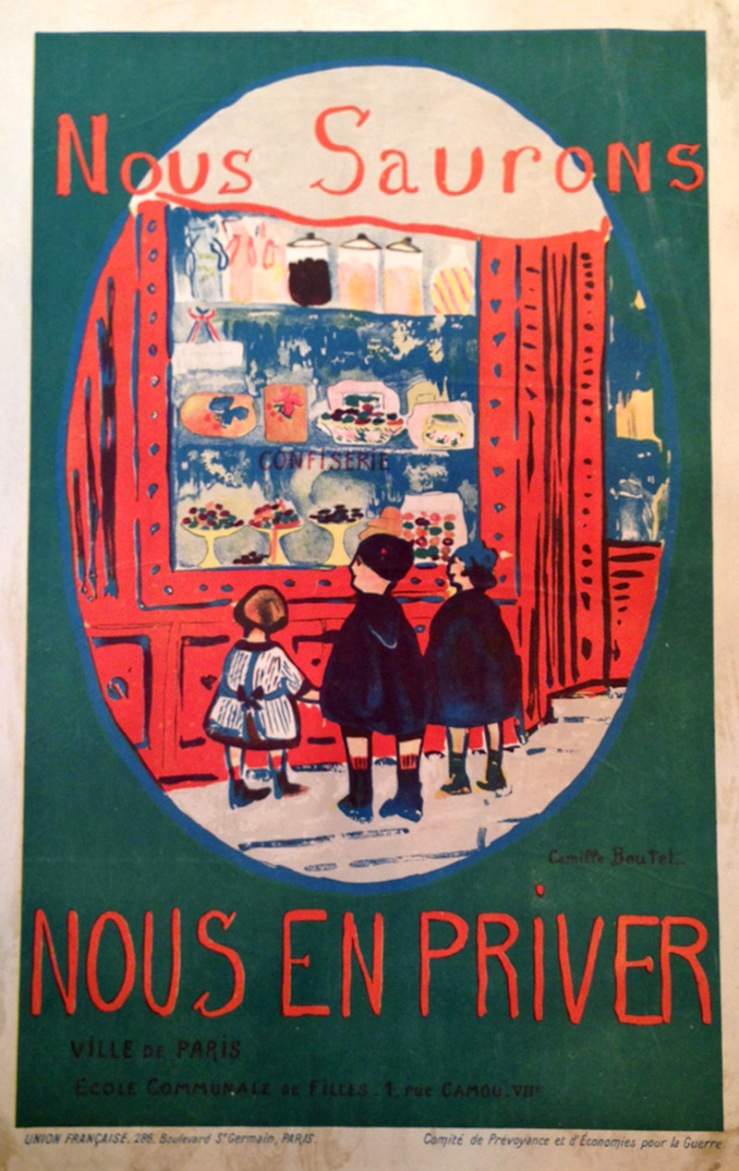
Our European, American and Southwestern Art Auction just started on Artfact.com, and it features a particularly vibrant line-up of lots. The charming image above is a color lithograph from turn of the century France by Camille Boutet. It shows three children peering longingly into a confectioner’s shop, and would make a lovely holiday gift. The best part? Bidding starts at $50. Read about more of our offerings below, and make sure to bid before the auction ends on November 17.
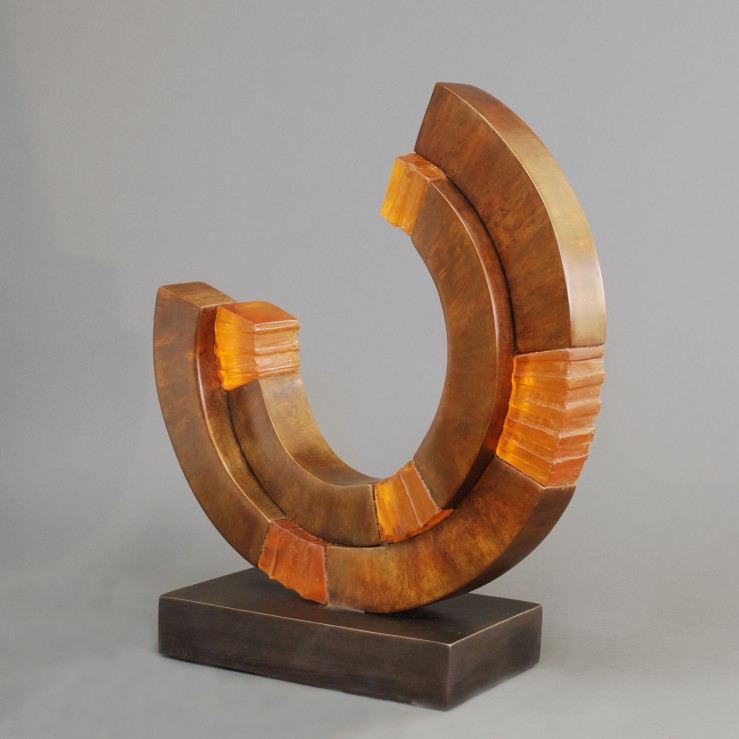
“Arched Axe” is from Frank Morbillo’s sculpture series inspired by the simple, elegant lines of prehistoric hand tools. Several other glass and bronze works from the set appear in the sale, including “Ceremonial Serpent Axe“, which features an intricate floral motif, and the swanlike “Honing Axe“.
Bertram Hartman (1882-1960) was born in Kansas and received training at the Art Institute of Chicago. He continued his studies at the Royal Academy in Munich and Paris, drawing inspiration from Impressionism and other modernist movements. His European influences are clear in this impeccable impasto still life.
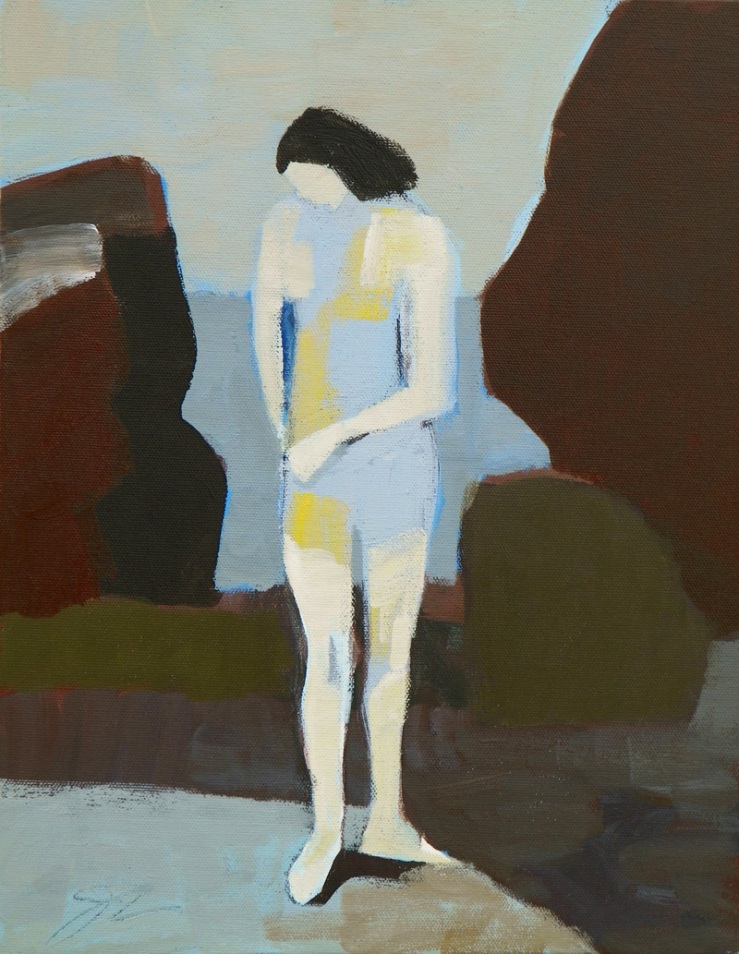
Jamie Chase’s well-known figurative work and his latest experiments with landscape painting combine in “Bather by the Sea“. An abstracted nude stands on the shore, and the surrounding landscape seems to radiate her serene mood. Jamie’s “Seen” and “Iconic II” are also up for sale in the auction.
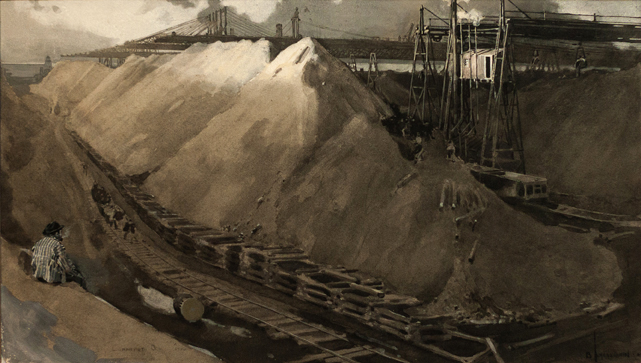
Ernest L. Blumenschein (1874-1960) was a founding member of the Taos Society of Artists, and is known for his stunning portrayals of the Southwestern landscape and people. In “Loading” the artist pays homage to his home state of Ohio. A lone figure smokes a cigarette and watches the activity at the Conneaut Mill across the tracks.
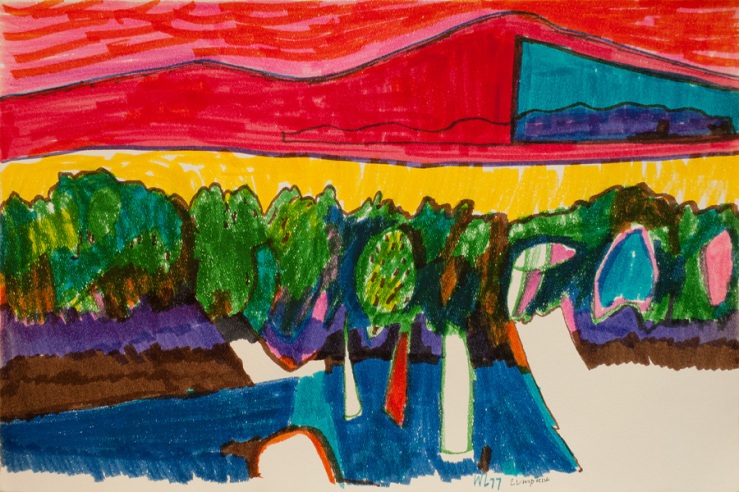
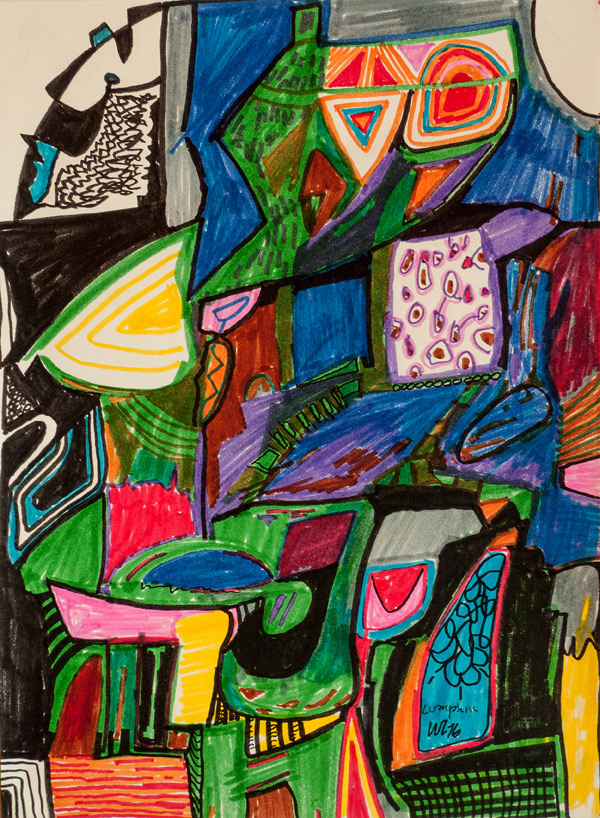
“The Red Sky” and “Pink Handle” are from a series of never-before-seen artworks by legendary Santa Fe modernist William Lumpkins (1909-2002). The work was recently released from the collection of a Lumpkins family member, and also features a series of serigraphs.
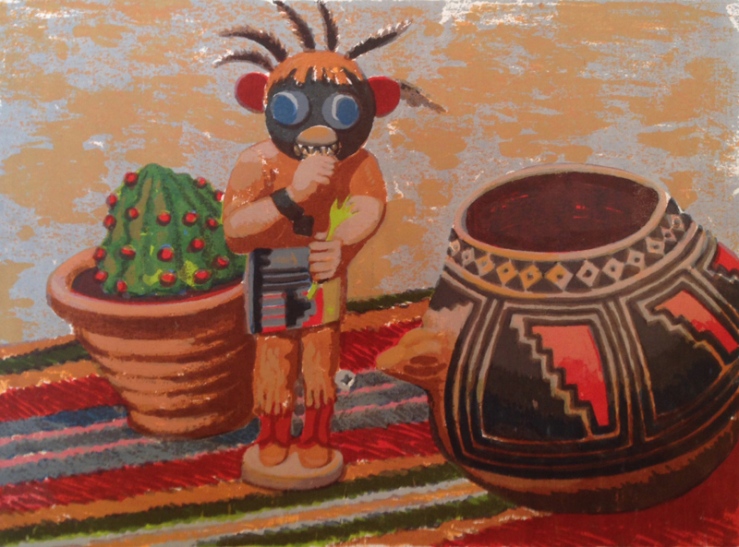
Contemporary Southwestern painter and printmaker Eli Levin pays tribute to legendary Santa Fe printmaker Louie Ewing (1908-1983) in this silkscreen of a Pueblo kachina doll. In the 1930s, Ewing received a grant from the WPA’s Federal Art Project to pursue printmaking, and is largely responsible for the enduring popularity of printmaking among contemporary Southwestern artists.
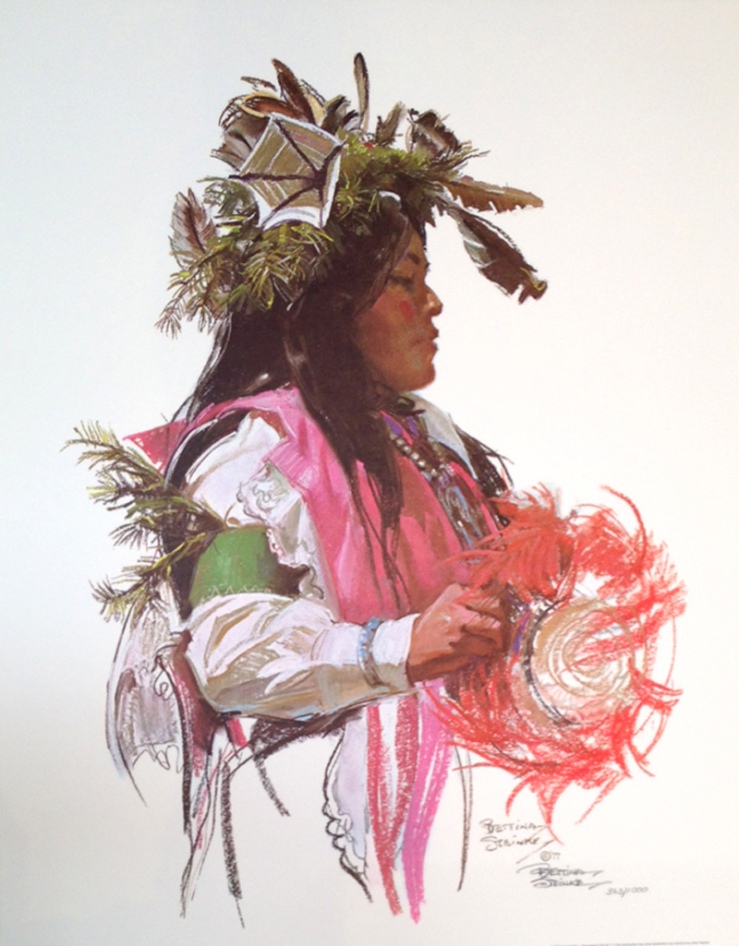
Bettina Steinke (1913-1999) moved to Taos in the 1950s, where she opened a gallery with her husband and mentored young artists. She moved to Santa Fe in the 1970s. The artist was known for her vivid portraits of the Pueblo people, and was particularly interested in traditional Native dancers. Other historic New Mexico artists featured in the auction include Fremont Ellis, John McHugh and Hannah Holliday Stewart.
When Charles Partridge Adams moved from Vermont to Denver in 1876, it had nothing to do with art. The 18-year-old’s family hoped Colorado’s arid climate could save his sister from tuberculosis. The girl died, but Adams discovered unexpected beauty in the tragic situation.
The teen fell in love with the Rocky Mountains, enrolling in art classes a year after his arrival so he could learn to capture their majesty. It was his first and last formal training. For the rest of his days, Adams developed his skills on intrepid painting expeditions across Colorado and the American West.
“I saw the Rocky Mountains as I had dreamed of them before I came West,” Adams wrote of a horseback ride in Estes Park in 1881. “Towering above a great valley filled with afternoon mists, their summits glistening with the pure white of winter snows. They formed an entrancing sight that I can never forget.”
Adams started out as a realist, but by the 1890s he was removing details and loosening his brushstrokes. He developed a bright, impressionistic style and took cues from tonalism, carefully detailing the thin mists that cleave to the foothills of the Rockies in the morning and the almost opaque storm clouds that crown their peaks in the afternoon.
The artist’s influences are clear in “Untitled (Landscape)”, a serene watercolor of a still lake under a sunset sky. Splashy clusters of brushstrokes form wild foliage that contrasts with the crystalline water, and the sky above fills the air with a rosy haze. Adams was known for his bold palette, but here he used muted colors in thin layers to mimic the atmospheric effects of dusk. His touch is so delicate that the lightest ribbon of color in the sky isn’t paint but bare white paper.
“He was… sophisticated in his use of watercolor,” says Thomas Smith, director of the Denver Art Museum’s Petrie Institute of Western American Art, which organized an exhibition of Adams’ work last year. “This was a self-taught artist, but he really grew up and he really taught himself things about the medium.”
“Untitled (Landscape)” may measure just 6 1/2 by 10 1/4 inches, but Adams had the loftiest intentions no matter the size of the paper. “At his best, the landscapist is able through the grandest, as well as the humblest forms of earth and sky and sea, to at least suggest the grandeur, poetry, mystery and beauty of this natural world,” he wrote. It was with these noble ambitions that Adams would become one of Colorado’s most beloved landscape painters of all time.
Come see Charles Partridge Adams’ “Untitled (Landscape)” in our NEW HORIZONS: Focus on Landscapes show. If you’d like to inquire about the piece, don’t hesitate to call the Matthews Gallery at 505-992-2882 or connect with us through Facebook or Twitter.
For our NEW HORIZONS: Focus on Landscapes show, running now through October 27, Tesuque sculptor Frank Morbillo‘s latest body of work engages with our diverse collection of contemporary landscape art. Throughout the exhibition, you’ll find observations by Morbillo and seven other artists, many of whom are inspired by the same severe desert expanses and infinite skies. Below is a selection of works and quotes from the show:
PATTERN
Frank Morbillo finds patterns wherever he looks in the natural world.
Kate Rivers uses manufactured patterns to form fractured reflections of nature.
“What’s a pattern? Something that might be predictable. When I observe things, that’s what I see. As an artist, you take all of these different things and see how they work together.”
-Frank Morbillo
“I’m using this history of text and image as something that is beautiful, and weaving the words together.”
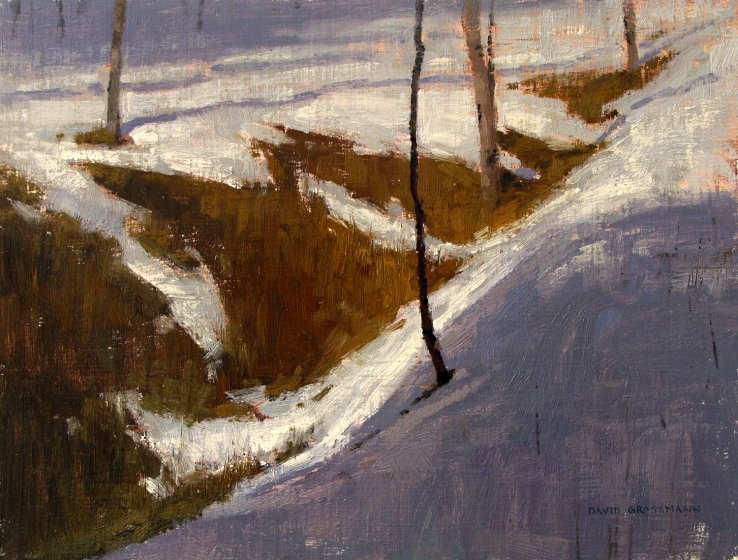
David Grossmann abstracts his landscapes to lay bare underlying rhythms.
Frank Morbillo traces the formation and disruption of natural rhythms.
“My paintings… are simplified rhythms of color, light, and shape. On the surface they are quiet whispers, but I hope that they convey a depth of emotion to anyone who takes the time to stop and listen.”
“Entropy is the introduction of chaos and disorder. That’s a root of what I’ve done over the years. You take something that could be highly organized, and understand that everything, all things, are subject to entropy. As much as we feel like we’ve created something that defies that, there’s no chance. Everything is subject to it.”
-Frank Morbillo
TEXTURE
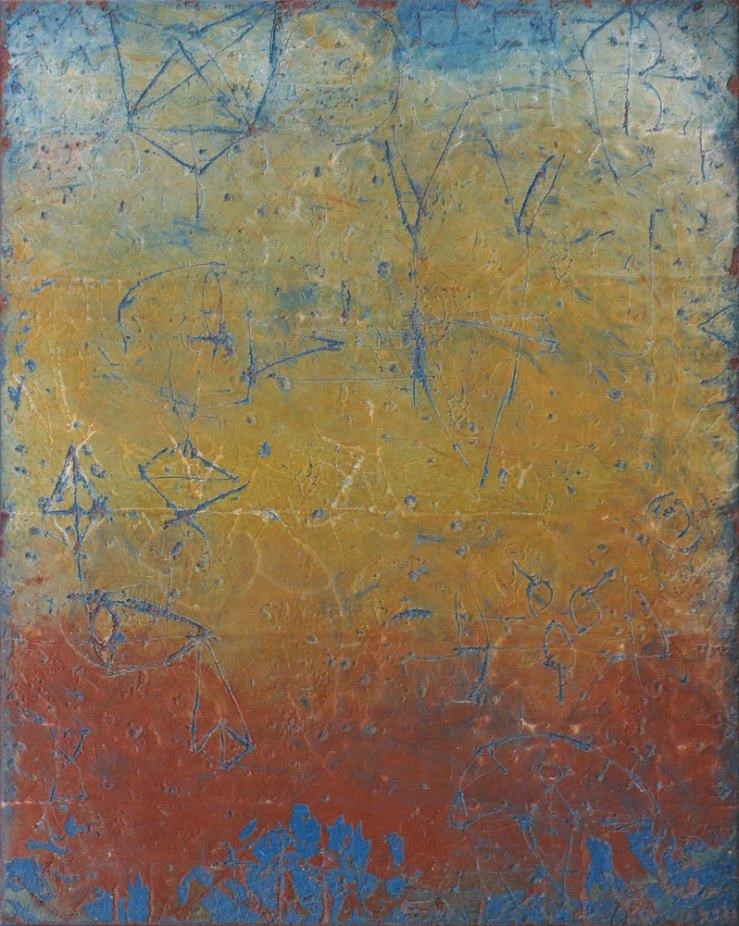
Terry Craig blends materials to mimic natural textures.
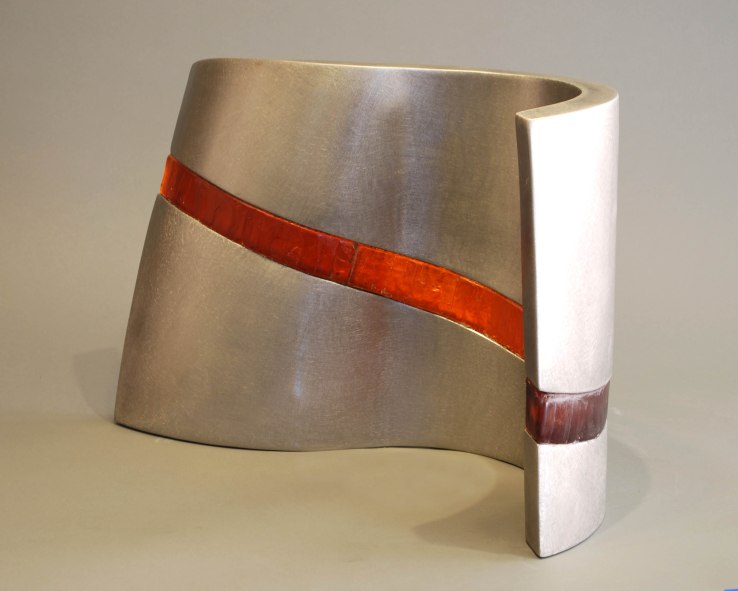
Frank Morbillo places materials with contrasting textures side-by-side.
“It took a long time… to develop the formulas and get the materials to do what I wanted them to do. You can scrape into it and get all sorts of these wonderful organic qualities.” -Terry Craig
“Glass is a beautiful material that sets up this nice contrast with the metal. If you add texture to it, it takes on a different color. The light behaves differently going through it.”
-Frank Morbillo
COLOR
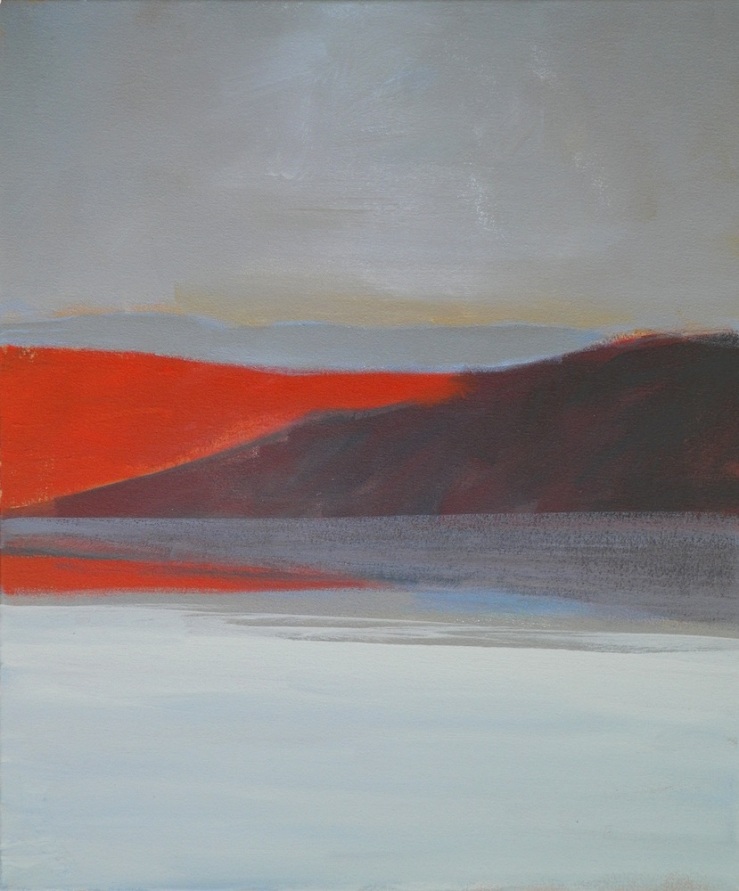
Jamie Chase uses multiple layers of paint to reveal and obscure different hues.
Frank Morbillo relies on the properties of glass to enhance his palette.
“There are so many narratives underneath the final painting. It starts out as something really dark or really dramatic in contrasting colors, and by the end it’s almost neutral colors, but there’s something moving under the surface.” -Jamie Chase
“The glass introduced color into the work that really isn’t achievable in metal. The cobalt blues and reds and ambers have a quality that you can’t get with any of the metals.”
-Frank Morbillo
“Love is when the desire to be desired takes you so badly that you feel you could die of it,” said Henri de Toulouse-Lautrec. It’s a strange perspective on the matter, but not a surprising one when you consider the artist’s difficult life. His parents were nobles and first cousins, a pairing that probably gave Lautrec a rare congenital abnormality called osteogenesis imperfecta. He was particularly prone to bone fractures and broke both of his legs as a teen. Bedridden and bored, Lautrec’s only way to escape his misery was drawing.
By the time Lautrec moved to Paris to study art at 18, his legs had stopped growing and he struggled to support his regularly sized torso. He battled deep insecurities about his appearance, but never dropped an abrasive air of superiority. His first relationship with 17-year-old model Marie Charlet was short and tumultuous, and his second serious lover Suzanne Valadon attempted suicide.
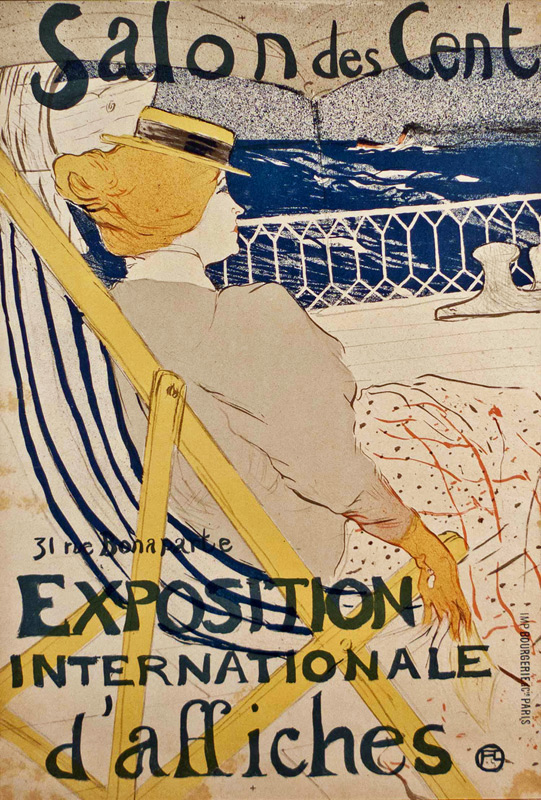
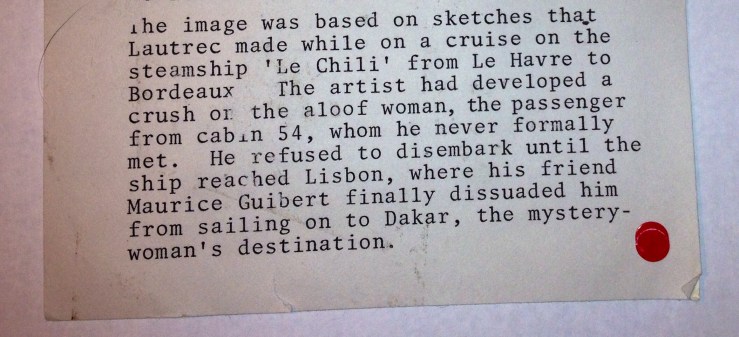
Lautrec immersed himself in the booze-soaked world of Paris’ cabarets and brothels to numb his pain, where he was inspired to produce some of the era’s most innovative images. Many of his works tell tales of longing and lost love, including our lithograph La Passagere du 54. Here’s a sad story from our archives about the 1895 boat voyage that inspired the print:
No wonder the woman on the poster is giving the viewer the cold shoulder. Most of Lautrec’s sketches must have been completed from this angle, as his haughty subject never gave him a second glance.
Lautrec’s artistic career only lasted a little over a decade, and though he gained considerable fame for his work, his romantic prospects never improved. He died at 36 from alcoholism and syphilis, but left behind a body of work that eternally capture the spirit of the City of Lights.
Do you agree with Lautrec’s definition of love? Sound off in the comments below, or through our Facebook, Twitter or Pinterest profiles.
“When I look over the photographs Stieglitz took of me—some of them more than sixty years ago—I wonder who that person is,” said Georgia O’Keeffe. “It is as if in my one life I have lived many lives.”
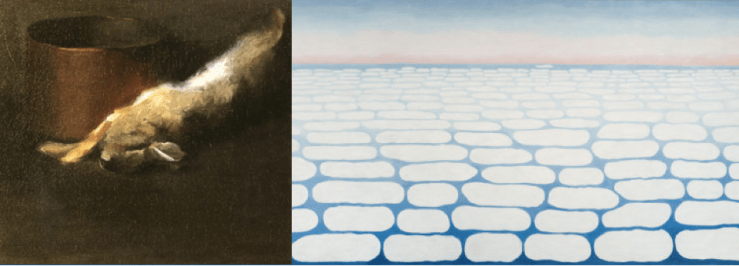
Look through O’Keeffe’s diverse body of work, and you’ll see just what she meant. “Untitled (Dead Rabbit with Copper Pot)” is a humble realist work she painted as an art student in her early 20s. She completed the abstracted, ephemeral landscape “Sky Above Clouds IV”, which is over 20 feet long, when she was almost 80. When they’re side-by-side it’s hard to believe that one artist created both.
The same is true for works that bookend any great artist’s career. Constant evolution is perhaps the most important ingredient to genius, as you’ll see in the images below. While you browse the early and late works of four legendary artists, ponder their differences. Does youthful enthusiasm and bold experimentation move you, or do you prefer a sure hand and a fully realized aesthetic? Join the conversation in the comments section below, or on our Facebook and Twitter pages.
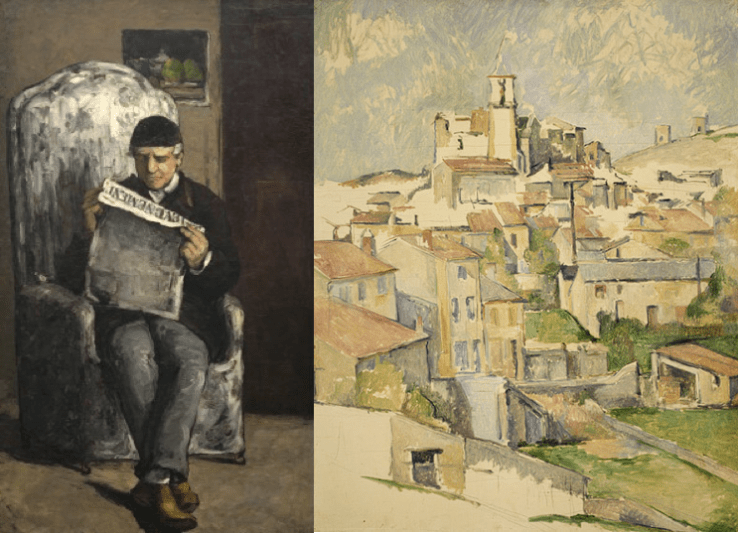
Paul Cezanne painted “Artist’s Father, Reading ‘L’Événement'” when he was in his early 20s and still partially under the thumb of his disapproving parent. The paper his father is reading—a liberal publication that the old man wouldn’t have deigned to open—and the still life painting hanging in the background hint at the artist’s growing confidence in his chosen path. Flash forward to the radical perspectival experimentation of “Gardanne”, completed when Cezanne was in his late 40s. The multi-layered cityscape would later inspire Picasso and Braque in their development of Cubism.
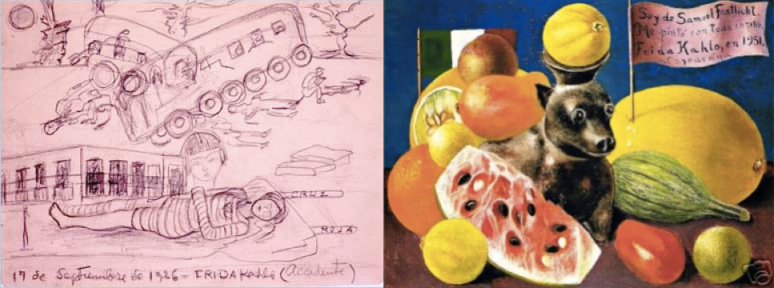
When Frida Kahlo was 19 years old she was in a trolley crash that left her in a full body cast. A year after the accident she created the pencil sketch on the left, drawing from the tradition of Mexican ex-voto paintings that blend text and images. A lifetime later, Kahlo was still suffering from chronic pain caused by the accident and drawing influences from folk art, but she’d discovered a subtler way to express her suffering. She painted “Still Life 1951” just three years before her death, when her body was giving out and she no longer favored self portraiture. The fleshy, congealing watermelon nestled among fresh fruits says it all. “I hope the exit is joyful — and I hope never to return,” she wrote just before her death.
“Les Saltimbanques” is a drypoint that Pablo Picasso created in his early 20s. The group of frolicking figures are characters from an opera-comique about a circus troupe. Countless artistic transformations later, Picasso etched out “Untitled (From the 156 Suite)“, an image that shows a tangle of prostitutes engaged in a very different acrobatic routine. Innocence is lost, but genius found.
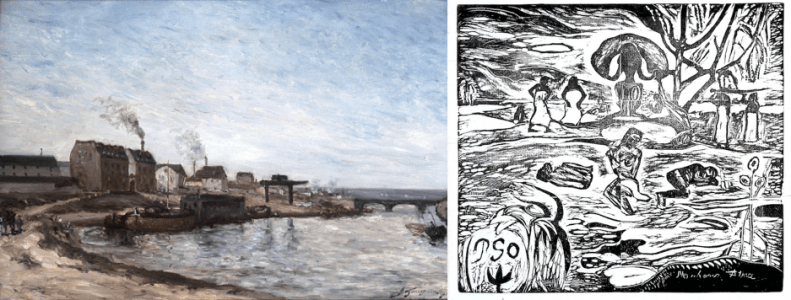
Paul Gauguin was a 27-year-old family man working as a stockbroker and hanging out at the Impressionists’ favorite cafes when he painted “La Seine au Pont de Grenelle”. By his mid-40s, he’d abandoned his family and job and exiled himself to Tahiti, where he drew inspiration for woodblock print “Mahana Atua (The Day of God)“. The artist learned from one revolutionary movement and then struck off on his own to inspire several others, from Primitivism to Symbolism.
How many lives can one artist live? What do you like better, the earlier or later work? Connect with us on Facebook, Twitter or Pinterest and sound off!
Click here to read the second part of this blog post.
Let’s be honest, the art establishment has always been a boy’s club, and women are most often honored in art history for overcoming gender-related cultural and societal obstacles. It’s easy to look past the artistic innovations of female artists when we’re sorting their work into a different category from that of their male contemporaries, or focusing solely on the glass ceilings they broke.
Of course, ignoring the gargantuan efforts of female creatives to gain respect and recognition in a male dominated world is a mistake as well, as is looking at innovation as a competition between artists of different genders.
Art history is an elaborate web of influence, and analyzing any artist’s place in it is a balancing act. One thing’s for sure: many women have formed vital links in the chain. Here’s why 5 female artists deserve recognition.
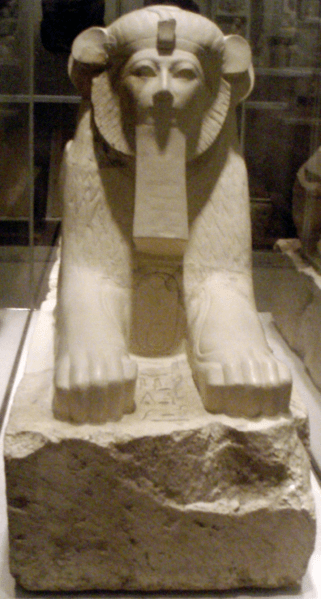
Sphinx of Hatshepsut
1. Queen Hatshepsut (1508-1458 BC)
The fifth pharaoh of Ancient Egypt’s 18th dynasty probably wasn’t an artist herself, but as one of the most successful Egyptian rulers ever, she had a huge influence on art history. In her 22-year reign Hatshepsut brought great wealth to the empire through new trade networks and expeditions, and she was very good at promoting her accomplishments through art. Her many building projects were the envy of her successors, and statuary from her reign abounds.
Statues representing Hatshepsut sometimes sport the ceremonial attire of a pharaoh (including a traditional false beard), but she’s most often depicted in the feminine clothing that she probably wore at court. As a skilled warrior, she took the lioness deity Sekhmet as a symbol of the throne.
After Hatshepsut’s death many statues of the ruler were defaced, and later pharaohs tried to take credit for her building projects, but her influence on subsequent Egyptian styles is undeniable. Work from her reign is in nearly every major museum collection, and has helped shape modern interpretations of Ancient Egyptian art.
Self portrait, Artemisia Gentileschi
2. Artemisia Gentileschi (1593-1656)
For years Italian Baroque painter Artemisia Gentileschi was mostly known for the events surrounding her rape as a teenager. She was assaulted by her private painting tutor Tassi, who said he would marry her but later reneged on the promise. Gentileschi’s father successfully sued Tassi for taking his daughter’s virginity in a publicly humiliating trial during which Gentileschi was tortured with thumbscrews and given a gynecological examination.
Soon after the court case Gentileschi married another painter and moved from Rome to Florence. It was the beginning of a stellar career, with coveted commissions from the Medici family and a spot as the first female in the Accademia delle Arti del Disegno.
Simplistic interpretations that relate Gentileschi’s work to her rape have dominated the attention of scholars, but the artist’s bold painting style and compositions make her one of the most innovative Baroque painters after Caravaggio. She took new angles on Bible stories to explore the complex emotional experiences of her subjects, and would often place a central figure in the extreme foreground to heighten the drama of her scenes and pull her viewers into the middle of the action.
Self portrait, Louise Elisabeth Vigee Le Brun
3. Louise Elisabeth Vigee Le Brun (1755-1842)
The French Neoclassical and Rococo painter was born in Paris and opened her own portrait studio in her early teens, scoring commissions from high profile nobles and rubbing elbows with masters of the day. When she lost her studio for lack of a license, she tricked the Academie de Saint Luc into showing her work and eventually gained official membership.
Vigee Le Brun is best known for her work as the portraitist of Marie Antoinette, who commissioned more than two dozen works from the artist. Her vivid, rosy depictions of the doomed queen in the Rococo style made Louise the most famous female painter of the 18th century. She’d ceded the title of royal court painter by the time of the French Revolution, but she still fled France during the conflict and took portrait commissions from nobles across Europe. However, the canvas that landed her on this list is a painting of the artist herself.
The self portrait, painted in 1787, was an image of Vigee Le Brun sporting a full, toothy grin. It was such a divergence from painting conventions thus far that it caused an uproar in the art world. “An affectation which artists, art-lovers and persons of taste have been united in condemning, and which finds no precedent among the Ancients, is that in smiling,” spewed one gossip columnist. “[Vigee Le Brun] shows her teeth.” The painting briefly made Louise’s smile as notorious as the Mona Lisa’s, and shattered a tradition that stretched back to the Greeks.
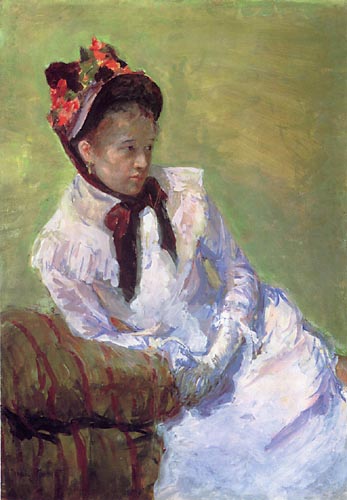
Self portrait, Mary Cassatt
4. Mary Cassatt (1844-1926)
Mary Cassatt was born in Allegheny City, Pennsylvania and attended the Pennsylvania Academy of Fine Arts, where most of the female students saw art not as a profession but as a privilege of high society. She left the Academy for Paris in 1866, frustrated with her teachers’ attitudes toward female artists and determined to study the masters on her own.
In France, Cassatt enlisted various private tutors and copied works in the Louvre to develop her skill. Impressionism was just beginning to rock the foundations of the Parisian art world, but it didn’t catch Cassatt’s fancy until after an unsuccessful stint in Chicago and a return to Paris in 1871. That’s when she met Edgar Degas, who introduced her to Impressionists and offered to show her work in one of their exhibitions.
Cassatt would become a hugely influential figure in the fledgling movement, and would later be named one of “les trois grandes dames” of Impressionism by art critic Gustave Geffroy.
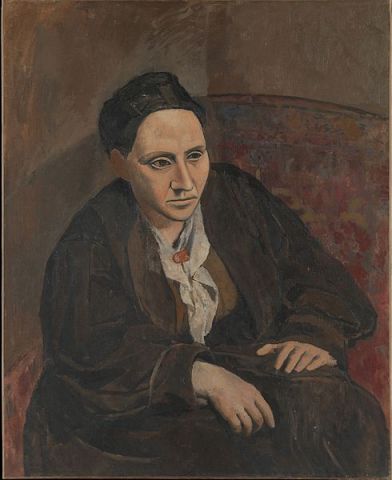
Portrait of Gertrude Stein, Pablo Picasso
Gertrude Stein (1874-1946)
“I always wanted to be historical from almost a baby on, I felt that way about it,” Gertrude Stein once declared. If anyone called into doubt the American modernist writer’s genius, Stein was the first to speak up about it.
Stein’s influence on the history of visual art is partly tied to her radical writing style, which helped define modernism and was crafted in close dialogue with the visual arts. Her significance also rests in her expansive art collection, which populated the walls of her Parisian home where influential modernists like Pablo Picasso, Henri Matisse, Ernest Hemingway and F. Scott Fitzgerald often congregated.
As the often stern den mother of the “Lost Generation” carefully curated her collection and cultivated close friendships with the artists she liked, she was shaping a radical revolution that would forever change the history of art.
Connect with us on Facebook and Twitter for more insight on the women who changed art history forever, and click here to read the second part of this blog post.
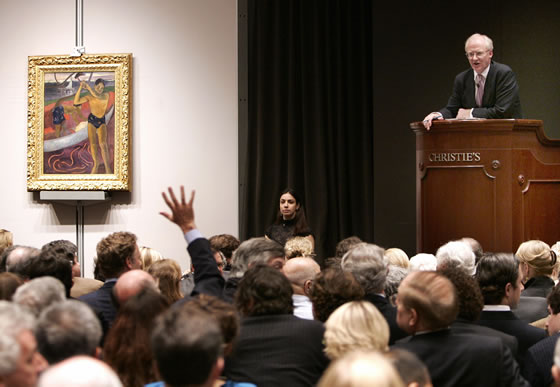
The world’s oldest auction house opened in Stockholm, Sweden in 1674. Art auctions in Great Britain gained popularity a few decades later when the Earl of Oxford’s collection appeared on the block in 1742. That particular sale featured the full range of odd and valuable items you might find in a dusty old castle, from a bust of an unknown bishop (five shillings) to a series of van Dyck paintings (165 guineas).
The beat of the auction mallet has marked the rhythm of the secondary market ever since. It’s a tradition that’s full of strange pageantry and heart pumping excitement. Auction kingpins Christie’s and Sotheby’s, which were both founded in mid-18th century England, often draw the ire of art world players for their tightly controlled sales. “They know exactly how many people will be bidding on a work and exactly who they are,” wrote art critic Jerry Saltz in 2012 after a version of Edvard Munch’s The Scream sold at Sotheby’s for $119.5 million. “In a gallery, works of art need only one person who wants to pay for them.”
Online auctions have meanwhile been swiftly democratizing the centuries-old process, and that’s where the Matthews Gallery decided to jump in. We launched the EUROPEAN MASTERS, AMERICAN AND SOUTHWESTERN ART AUCTION on July 25 and it runs through July 29. Come browse our virtual auktionsverk of art and, if you’re inspired, make a bid. You’ll find art by European modernists such as Pablo Picasso and Joan Miro, Southwestern legends including Emil Bisttram and Alfred Morang, and notable contemporary artists like Jamie Chase, Eric G. Thompson and Kate Rivers among the lots. Here are some notable pieces from the catalogue:
Gustave Courbet, Self-Portrait (The Desperate Man)
We all know that Vincent Van Gogh left this world with 1.5 ears and a (probably) self-inflicted gunshot wound in his chest, but when you go on a hunt for the craziest artistic geniuses, the fou-rouxstarts seeming positively rational.
After all, Michelangelo was so averse to bathing or changing his clothes that his long-suffering assistant once wrote, “He has sometimes gone so long without taking (his shoes) off that then the skin came away, like a snake’s, with the boots.” The Renaissance master would wander off in the middle of conversations and refused to attend his brother’s funeral.
Gustave Courbet went a little nuts after he tangled with the French government and exiled himself to Switzerland, painting several “self-portraits” of bleeding, mangled fish. You surely have to be a bit bonkers to drive so many lovers insane, so Pablo Picasso deserves a spot in the art sanitarium as well. Then there’s Paul Gauguin, who made up romantic, insanely elaborate lies about his dismal trips to Tahiti.
Lesser-known prodigies only suffer more, it seems. French painter Leon Bonvin was found dangling from a tree after a dealer refused to show his paintings. Dutch artist Abraham van der Doort, who was Charles I’s art conservationist, thought he’d lost one of the king’s favorite pieces and offed himself. Dutch painter Herman Kruyder ended it all in a psychiatric ward, and Polish writer Stanislaw Ignacy Witkierwicz fed his lover poison and slit his wrists after the Second Army invaded Poland.
Does true artistic brilliance come hand in hand with insanity? Perhaps to see things in revolutionary ways, you have to take a trip off the edge. What do you think? Join the discussion on our Facebook and Twitter pages, or in the comments section below.
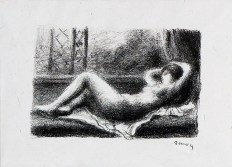 Pierre-Auguste Renoir’s (1841-1919) etching Odalisque refers to Turkish concubines, but that wasn’t necessarily the artist’s intended title. Renoir submitted a painting of a nude called Diana to the Paris Salon in 1867. The erotic depiction of the Roman goddess offended the judges and the painting was rejected.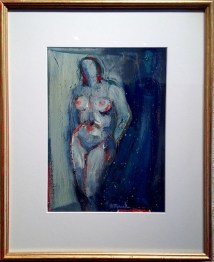
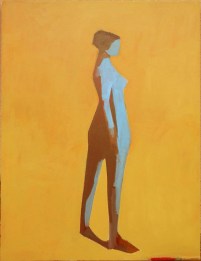 Jamie Chase immerses a figure in a vibrant yellow atmosphere in Turning Point. It brings to mind both Mark Rothko and Nathan Oliveira, but Chase’s influences stretch farther back in art history.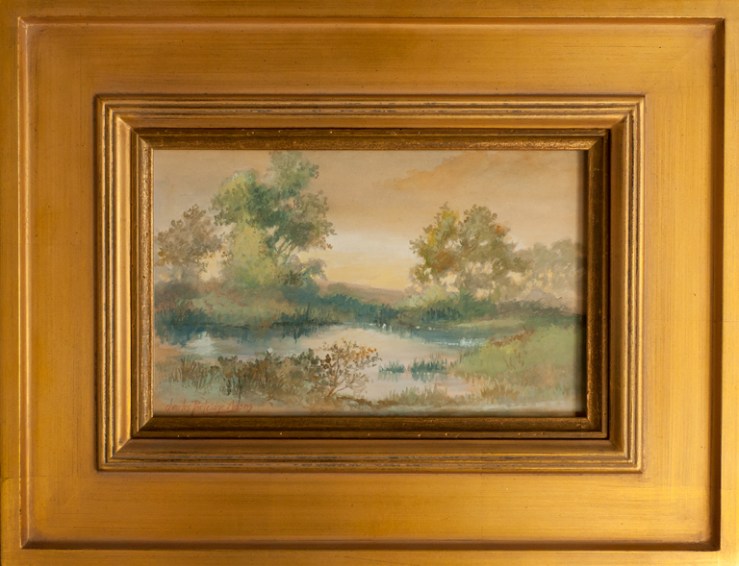












 MATTHEWS GALLERY BLOG