START YOUR BIDDING: Colorful lots from our fall online auction

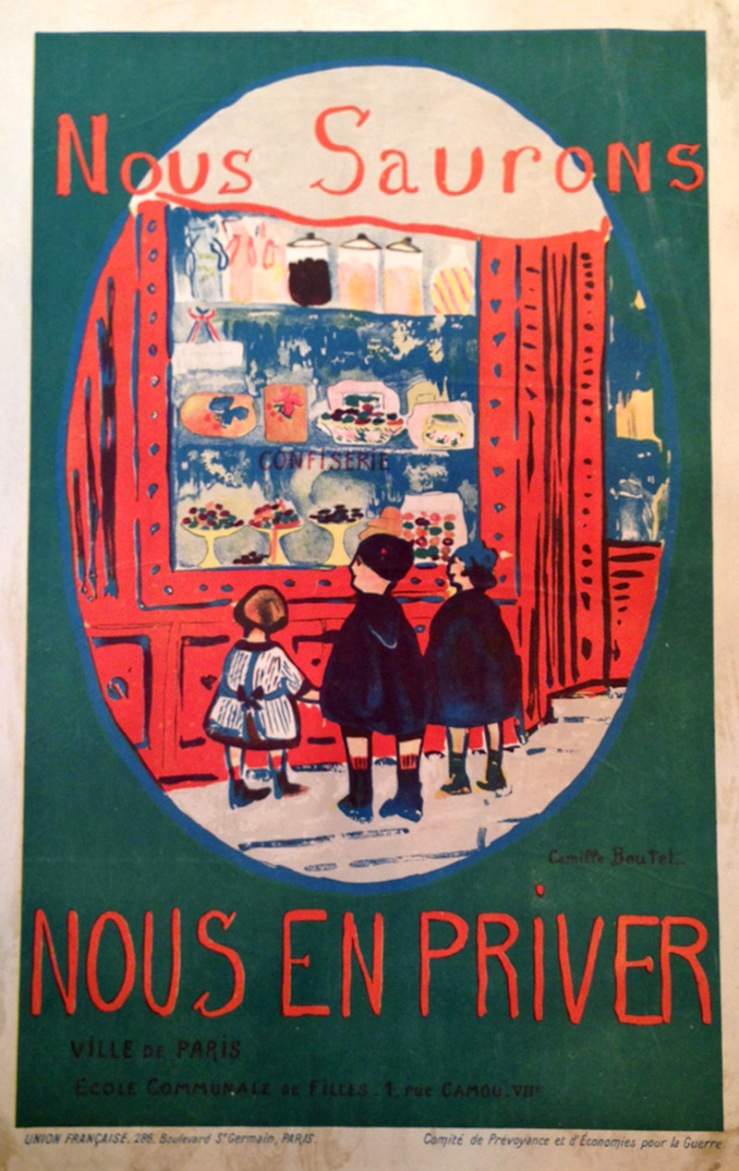
Matthews Art Auctions- Camille Boutet- Artfact

Our European, American and Southwestern Art Auction just started on Artfact.com, and it features a particularly vibrant line-up of lots. The charming image above is a color lithograph from turn of the century France by Camille Boutet. It shows three children peering longingly into a confectioner’s shop, and would make a lovely holiday gift. The best part? Bidding starts at $50. Read about more of our offerings below, and make sure to bid before the auction ends on November 17.

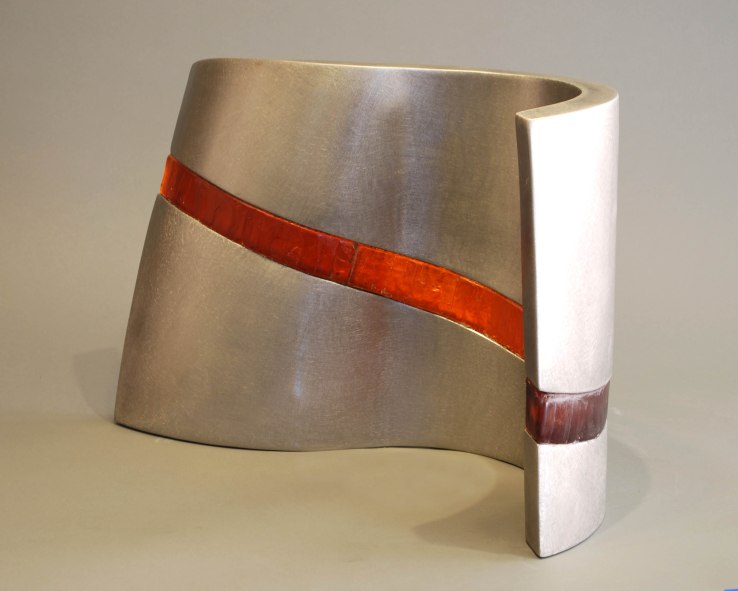
Frank Morbillo- Arched Axe- Artfact Auctions

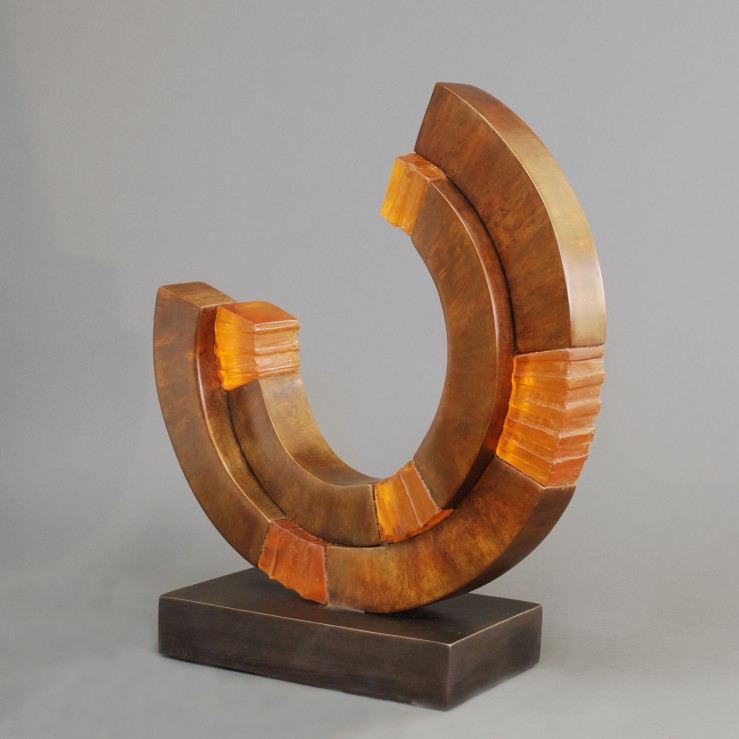
Lot 41: Frank Morbillo- Arched Axe
Starting bid: $350
Estimated value: $450-$900

Arched Axe” is from Frank Morbillo’s sculpture series inspired by the simple, elegant lines of prehistoric hand tools. Several other glass and bronze works from the set appear in the sale, including “Ceremonial Serpent Axe“, which features an intricate floral motif, and the swanlike “Honing Axe“.

Bertram Hartman- Still Life- Artfact Auctions

Lot 59: Bertram Hartman (1882-1996)- Still Life
Starting bid: $250
Estimated value: $350-$750

Bertram Hartman (1882-1960) was born in Kansas and received training at the Art Institute of Chicago. He continued his studies at the Royal Academy in Munich and Paris, drawing inspiration from Impressionism and other modernist movements. His European influences are clear in this impeccable impasto still life.
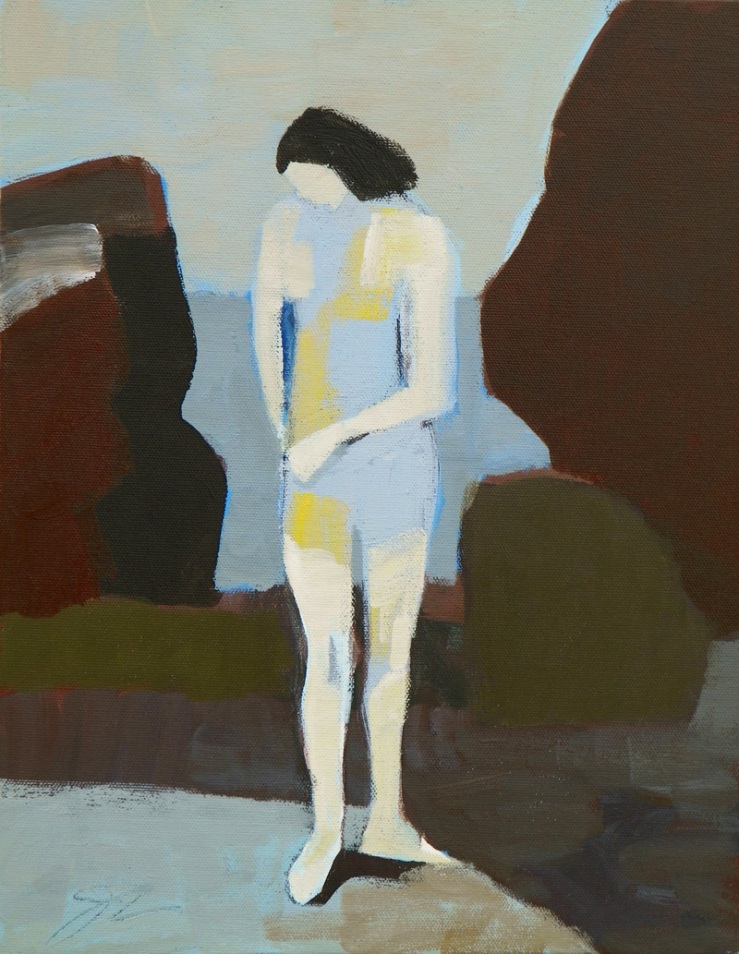
Jamie Chase- Bather by the Sea- Artfact Auctions

Lot 70: Jamie Chase- Bather by the Sea
Starting bid: $400
Estimated price: $600-$900

Jamie Chase’s well-known figurative work and his latest experiments with landscape painting combine in “Bather by the Sea“. An abstracted nude  stands on the shore, and the surrounding landscape seems to radiate her serene mood. Jamie’s “Seen” and “Iconic II” are also up for sale in the auction.
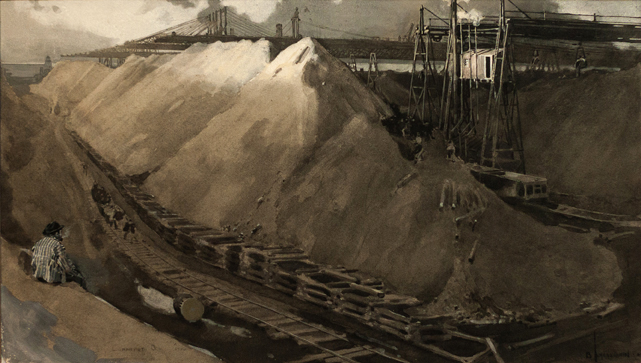
Ernest Blumenschein on Artfact

Lot 86: Ernest Blumenschein (1874-1960)- Loading
Starting bid: $700
Estimated price: $2,000-$3,500

Ernest L. Blumenschein (1874-1960) was a founding member of the Taos Society of Artists, and is known for his stunning portrayals of the Southwestern landscape and people. In “Loading” the artist pays homage to his home state of Ohio. A lone figure smokes a cigarette and watches the activity at the Conneaut Mill across the tracks.
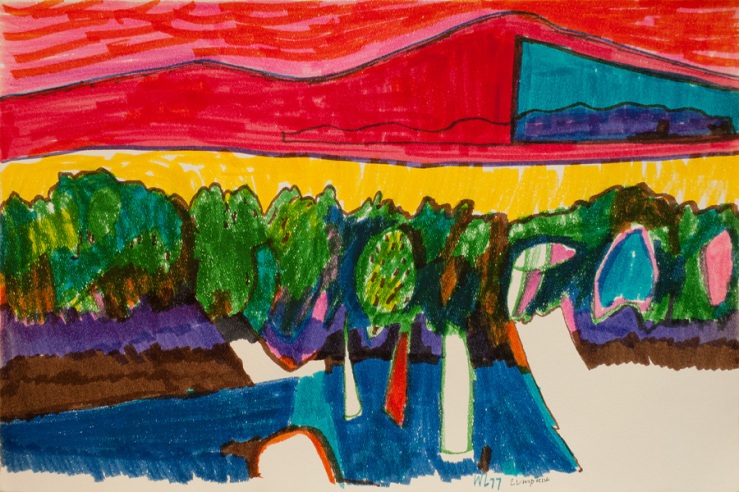
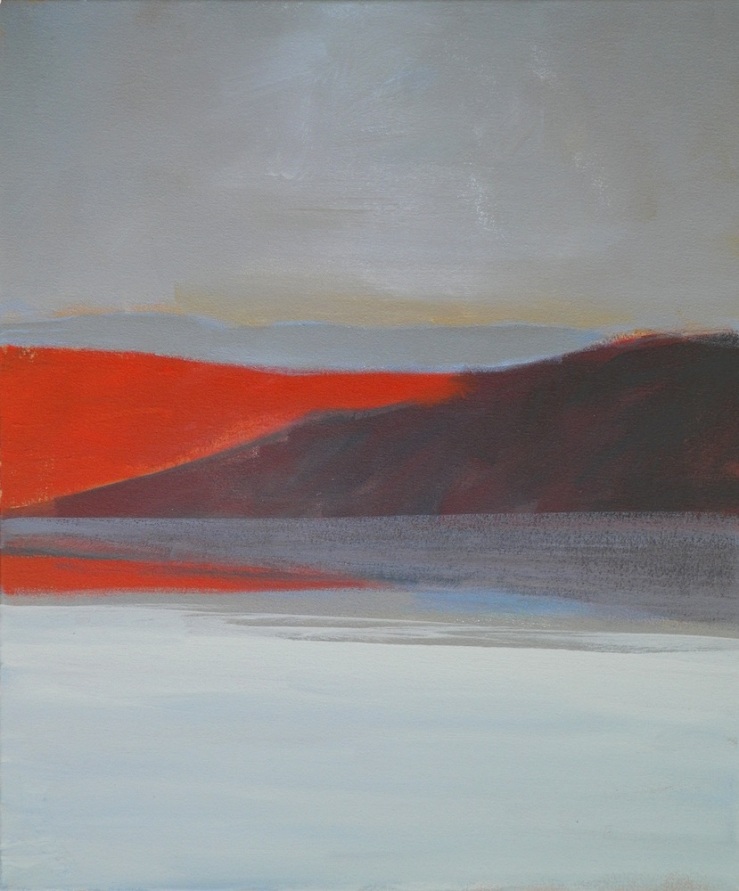
William Lumpkins- The Red Sky- Artfact Auctions

Lot 91: William Lumpkins (1909-2000)- The Red Sky
Starting bid: $400
Estimated price: $600-$1,000
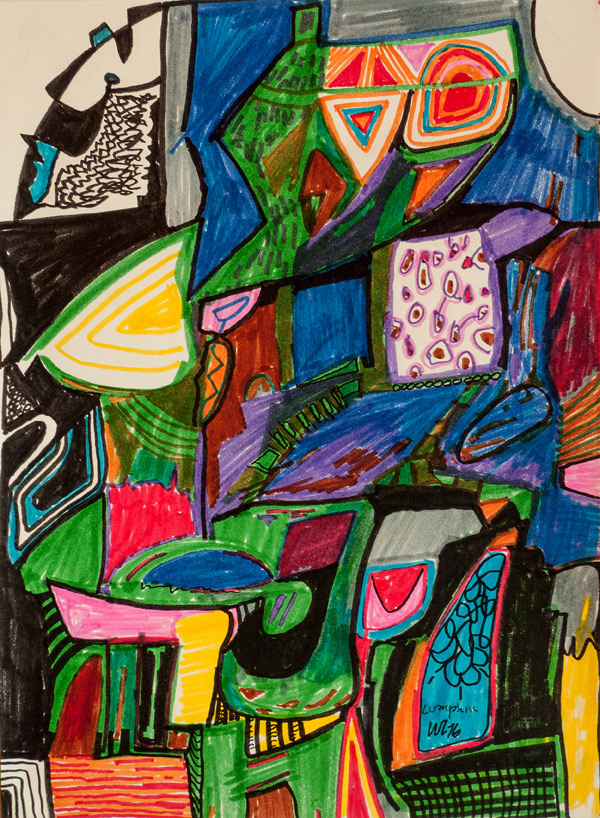
William Lumpkins- Pink Handle- Artfact Auctions

Lot 97: William Lumpkins (1909-2000)- Pink Handle
Starting bid: $400
Estimated price: $600-$1,000

The Red Sky” and “Pink Handle” are from a series of never-before-seen artworks by legendary Santa Fe modernist William Lumpkins (1909-2002). The work was recently released from the collection of a Lumpkins family member, and also features a series of serigraphs.
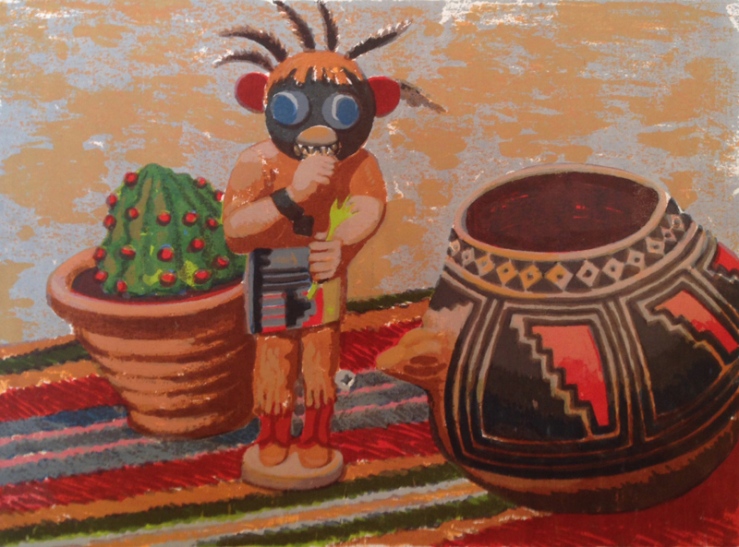
Ed Levin- Kachina- Artfact Auctions

Lot 102: Eli Levin- Kachina (after Louie Ewing)
Starting bid: $175
Estimated value: $400-$600

Contemporary Southwestern painter and printmaker Eli Levin pays tribute to legendary Santa Fe printmaker Louie Ewing (1908-1983) in this silkscreen of a Pueblo kachina doll. In the 1930s, Ewing received a grant from the WPA’s Federal Art Project to pursue printmaking, and is largely responsible for the enduring popularity of printmaking among contemporary Southwestern artists.
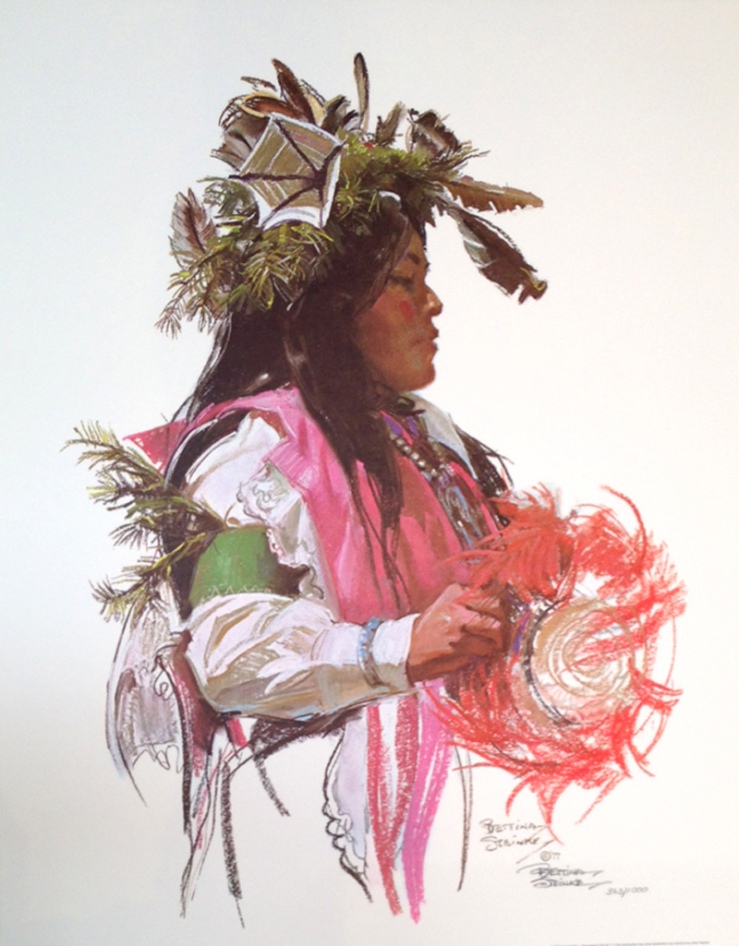
Bettina Steinke- Santa Clara Dancer- Artfact Auctions

Lot 106: Bettina Steinke (1913-1999)- Santa Clara Dancer
Starting bid: $50
Estimated value: $400-$500

Bettina Steinke (1913-1999) moved to Taos in the 1950s, where she opened a gallery with her husband and mentored young artists. She moved to Santa Fe in the 1970s. The artist was known for her vivid portraits of the Pueblo people, and was particularly interested in traditional Native dancers. Other historic New Mexico artists featured in the auction include Fremont Ellis, John McHugh and Hannah Holliday Stewart.

Check out the European, American and Southwestern Art Auction on Artfact to browse all 116 lots, and connect with us on Facebook, Twitter and Pinterest to see more highlights from the sale. The auction ends on November 17 at 7:00 pm.

ONE WORK OF ART: Charles Partridge Adams


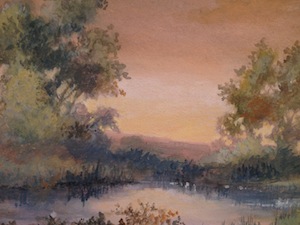
Charles Partridge Adams- Untitled Landscape- Matthews Gallery

When Charles Partridge Adams moved from Vermont to Denver in 1876, it had nothing to do with art. The 18-year-old’s family hoped Colorado’s arid climate could save his sister from tuberculosis. The girl died, but Adams discovered unexpected beauty in the tragic situation.

The teen fell in love with the Rocky Mountains, enrolling in art classes a year after his arrival so he could learn to capture their majesty. It was his first and last formal training. For the rest of his days, Adams developed his skills on intrepid painting expeditions across Colorado and the American West.

Charles Partridge Adams and Alexander Phimister Proctor in Colorado, early 1880s“I saw the Rocky Mountains as I had dreamed of them before I came West,” Adams wrote of a horseback ride in Estes Park in 1881. “Towering above a great valley filled with afternoon mists, their summits glistening with the pure white of winter snows. They formed an entrancing sight that I can never forget.”

Adams started out as a realist, but by the 1890s he was removing details and loosening his brushstrokes. He developed a bright, impressionistic style and took cues from tonalism, carefully detailing the thin mists that cleave to the foothills of the Rockies in the morning and the almost opaque storm clouds that crown their peaks in the afternoon.

The artist’s influences are clear in “Untitled (Landscape)”, a serene watercolor of a still lake under a sunset sky. Splashy clusters of brushstrokes form wild foliage that contrasts with the crystalline water, and the sky above fills the air with a rosy haze. Adams was known for his bold palette, but here he used muted colors in thin layers to mimic the atmospheric effects of dusk. His touch is so delicate that the lightest ribbon of color in the sky isn’t paint but bare white paper.

Charles Partridge Adams- Untitled Landscape Detail- Matthews Gallery“He was… sophisticated in his use of watercolor,” says Thomas Smith, director of the Denver Art Museum’s Petrie Institute of Western American Art, which organized an exhibition of Adams’ work last year. “This was a self-taught artist, but he really grew up and he really taught himself things about the medium.”

“Untitled (Landscape)” may measure just 6 1/2 by 10 1/4 inches, but Adams had the loftiest intentions no matter the size of the paper. “At his best, the landscapist is able through the grandest, as well as the humblest forms of earth and sky and sea, to at least suggest the grandeur, poetry, mystery and beauty of this natural world,” he wrote. It was with these noble ambitions that Adams would become one of Colorado’s most beloved landscape painters of all time.

Come see Charles Partridge Adams’ “Untitled (Landscape)” in our NEW HORIZONS: Focus on Landscapes show. If you’d like to inquire about the piece, don’t hesitate to call the Matthews Gallery at 505-992-2882 or connect with us through Facebook or Twitter.

ART ON PAPER: A (Brief) Visual History of Printmaking

A Visual History of Printmaking on the Matthews Gallery blog

Prehistoric handprints on a cave wall, a Sumerian cylinder seal from ancient Mesopotamia, a woodblock print from the Chinese Diamond Sutra, a page of the Gutenberg Bible, a woodcut from the Ars moriendi, an etching by Albrecht Durer, a stencil print on silk from the Japanese Edo Period, an intaglio print by Rembrandt, a lithograph of Aloys Senefelder, an etching by Whistler, an offset lithograph by the New York Times company and an aquatint and etching by Pablo Picasso!

What does it all mean? Come to Matthews Gallery’s ART ON PAPER: Fine Art Prints reception on Friday, October 25 from 5-7 pm to find out.

NEW HORIZONS: Landscape Art Speaks

NEW HORIZONS- Focus on Landscapes- Matthews Gallery

For our NEW HORIZONS: Focus on Landscapes show, running now through October 27, Tesuque sculptor Frank Morbillo‘s latest body of work engages with our diverse collection of contemporary landscape art. Throughout the exhibition, you’ll find observations by Morbillo and seven other artists, many of whom are inspired by the same severe desert expanses and infinite skies. Below is a selection of works and quotes from the show:

Sprung- Frank Morbillo- Matthews Gallery

Kate Rivers- Reflections- Matthews Gallery

PATTERN

Frank Morbillo finds patterns wherever he looks in the natural world.
Kate Rivers uses manufactured patterns to form fractured reflections of nature.

“What’s a pattern? Something that might be predictable. When I observe things, that’s what I see. As an artist, you take all of these different things and see how they work together.”

-Frank Morbillo

 “I’m using this history of text and image as something that is beautiful, and weaving the words together.”

-Kate Rivers

Frank Morbillo- Cool Encounter- Matthews Gallery

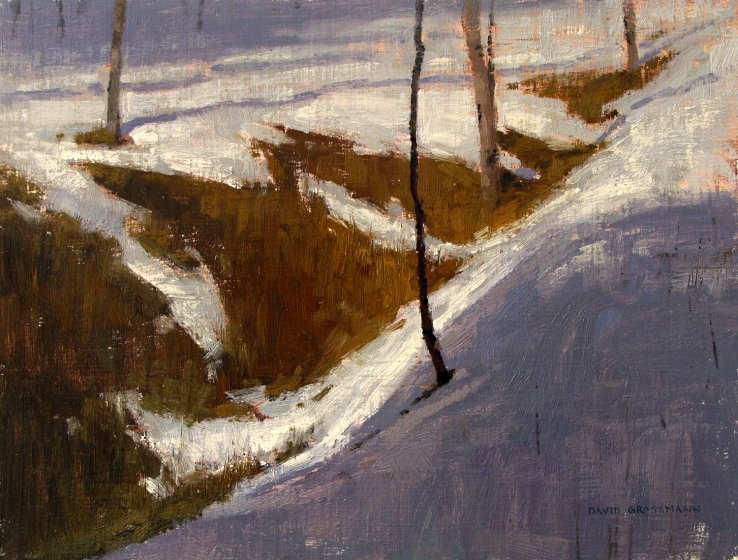
David Grossmann- Snow Rhythms- Matthews Gallery

RHYTHM

David Grossmann abstracts his landscapes to lay bare underlying rhythms.
Frank Morbillo traces the formation and disruption of natural rhythms.

“My paintings… are simplified rhythms of color, light, and shape. On the surface they are quiet whispers, but I hope that they convey a depth of emotion to anyone who takes the time to stop and listen.”

-David Grossmann

“Entropy is the introduction of chaos and disorder. That’s a root of what I’ve done over the years. You take something that could be highly organized, and understand that everything, all things, are subject to entropy. As much as we feel like we’ve created something that defies that, there’s no chance. Everything is subject to it.”

-Frank Morbillo

Frank Morbillo- Unraveling- Matthews Gallery

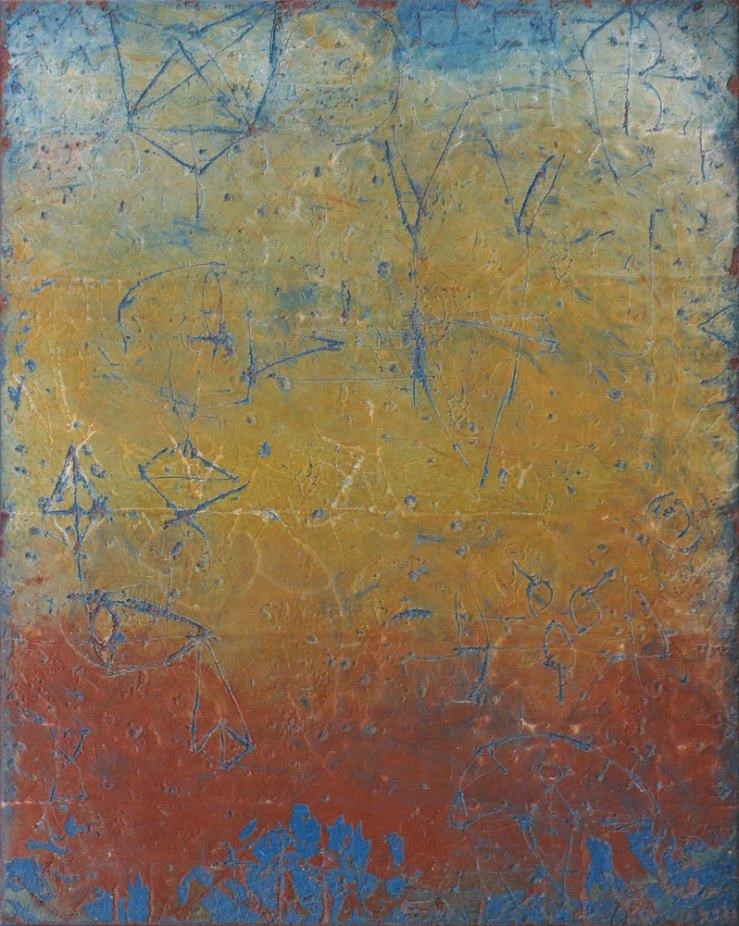
Terry Craig- Burning Questions- Matthews Gallery

TEXTURE

Terry Craig blends materials to mimic natural textures.
Frank Morbillo places materials with contrasting textures side-by-side.

“It took a long time… to develop the formulas and get the materials to do what I wanted them to do. You can scrape into it and get all sorts of these wonderful organic qualities.”
-Terry Craig

“Glass is a beautiful material that sets up this nice contrast with the metal. If you add texture to it, it takes on a different color. The light behaves differently going through it.”
-Frank Morbillo

Frank Morbillo- Traverse II- Matthews Gallery

Jamie Chase- Two-Horizons- Matthews Gallery

COLOR

Jamie Chase uses multiple layers of paint to reveal and obscure different hues.
Frank Morbillo relies on the properties of glass to enhance his palette.

“There are so many narratives underneath the final painting. It starts out as something really dark or really dramatic in contrasting colors, and by the end it’s almost neutral colors, but there’s something moving under the surface.”
-Jamie Chase

“The glass introduced color into the work that really isn’t achievable in metal. The cobalt blues and reds and ambers have a quality that you can’t get with any of the metals.”
-Frank Morbillo

See NEW HORIZONS: Focus on Landscapes now through October 27 at Matthews Gallery. Connect with us on Facebook, Twitter and Pinterest to see more material from the show.

SALON 669: A Historical, Hysterical Salon Glossary

Salon de Madame Geoffrin, where all the good parties went down in 18th century France - Matthews Gallery blog

Ever heard of a ruelle, a visit card or les bas-bleus? In preparation for SALON 669, we’ve compiled a glossary of weird and wonderful terms from literary and art gatherings of the past. Don’t worry though, you don’t have to be a noble, a French speaker or dressed in blue stockings to attend our Oct. 18-27 event series. Just bring a healthy helping of the last term on the list…

  • Age of Conversation: Spans the height of the salon’s popularity, from the 16th to 18th centuries in Italy, France and across Europe.  Some scholars say the intellectual meetings helped spark the French Revolution.
  • Enlightenment: A cultural movement that was spurred in part by the salon, which created an even playing field of ideas that elevated the growing bourgeois class to the level of the nobility. Mme Geoffrin was a pretty powerful lady in 18th century France. Find out why on the Matthews Gallery blog.
  • The Great-Woman: The hosts of salons were commonly women of the bourgeois and noble classes, who threw the gatherings to educate themselves and wield social and political power. Historians have called the most influential of these salonnieres “great-women”, using their stories to reframe misogynistic historical narratives.
  • Greek Symposium: The Athenians invited artists and intellectuals to their homes, providing a safe political space for different classes to mingle. The symposium inspired the Roman banquet, which inspired Italian Renaissance gatherings, which inspired the French to coin the term “salon”.
  • Horace: Roman lyric poet who said his craft aimed “either to please or to educate”.  The salons often followed Horace’s motto, aspiring to foster delightful, stimulating conversation.
  •  Je Ne Sais Quoi: French for “I don’t know what”, a popular way to describe the harmonious feeling of the salons in 17th century France.
  •  Lane: Or, in French, ruelle. Describes the space between the bed and the wall in a lady’s chambers, where 17th century French salon goers sat while their hostess lounged. Not all salons were so intimate though. At Louis XIV’s petit lever (literally “a little lift”), no one was allowed to sit down. Madame Recamier was a "literary lion" and political power player. Find out why on the Matthews Gallery blog.
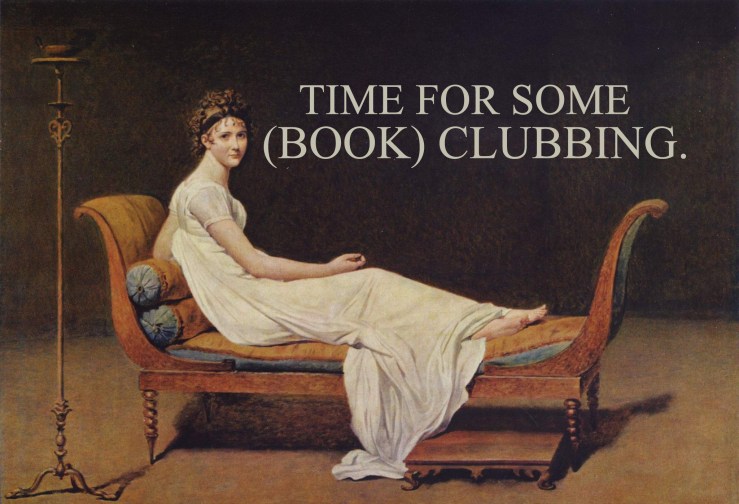
  • Literary Lion: Term for fierce literature enthusiasts who organized salons in the 19th and 20th centuries. Madame Recamier (1777-1849) helmed a powerful literary salon attended by intellectuals who were unpopular at court, snubbed a position as the Empress consort’s lady-in-waiting, and even started a tiff between artists Jacques Louis-David and Francois Gerard over a portrait commission. The hardly humble writer and salon host Gertrude Stein later used the title to describe herself.
  • Les Bas-Bleus: A term that has come to mean “female intellectual”. Madeline de Scudery founded the les bas-bleus (blue-stockings) salon in the 1600s. When salons sprung up across Europe in the 18th century, Elizabeth Montagu founded her own blue-stockings gathering in England. Montagu maintained such a rigid dress code that she once rejected the Duke of Wellington for having the wrong shade of socks.
  • Visit Cards: From the 1800s until the 1930s, visitors to upper class French salons would present a card with their name on it to a servant at the door. If the host didn’t recognize their name, they were booted from the premises.
  • Wit: Throughout the history of salons, cleverness was key. The two most important rules at a salon were that all guests were to be treated equally, and that everyone was expected to make points without provoking confrontation.

Stay tuned for more salon-themed posts, and make sure to attend SALON 669 at the Matthews Gallery from October 18-27.  Connect with us on Facebook, Twitter and Pinterest for more news from the Matthews Gallery!

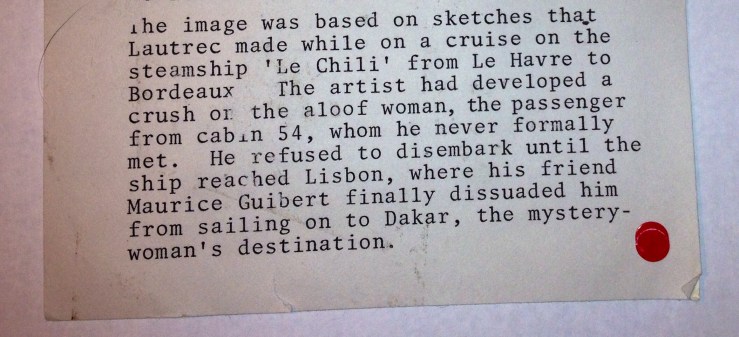
ONE WORK OF ART: Toulouse-Lautrec’s Heartbreak

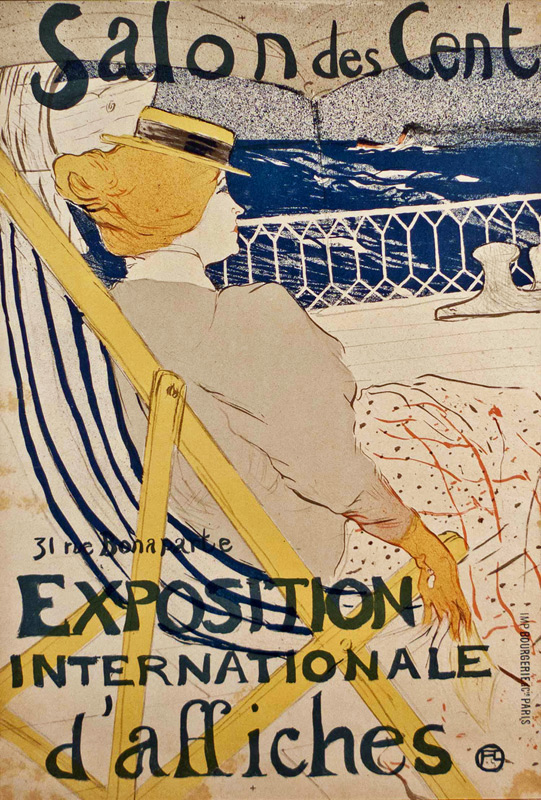
Henri de Toulouse-Lautrec- La Passagere du 54- Matthews Gallery

“Love is when the desire to be desired takes you so badly that you feel you could die of it,” said Henri de Toulouse-Lautrec. It’s a strange perspective on the matter, but not a surprising one when you consider the artist’s difficult life. His parents were nobles and first cousins, a pairing that probably gave Lautrec a rare congenital abnormality called osteogenesis imperfecta. He was particularly prone to bone fractures and broke both of his legs as a teen. Bedridden and bored, Lautrec’s only way to escape his misery was drawing.

By the time Lautrec moved to Paris to study art at 18, his legs had stopped growing and he struggled to support his regularly sized torso. He battled deep insecurities about his appearance, but never dropped an abrasive air of superiority. His first relationship with 17-year-old model Marie Charlet was short and tumultuous, and his second serious lover Suzanne Valadon attempted suicide.

Lautrec immersed himself in the booze-soaked world of Paris’ cabarets and brothels to numb his pain, where he was inspired to produce some of the era’s most innovative images. Many of his works tell tales of longing and lost love, including our lithograph La Passagere du 54. Here’s a sad story from our archives about the 1895 boat voyage that inspired the print:

The story of Henri de Toulouse Lautrec's "La Passagere du 54"- Matthews Gallery blog

No wonder the woman on the poster is giving the viewer the cold shoulder. Most of Lautrec’s sketches must have been completed from this angle, as his haughty subject never gave him a second glance.

Lautrec’s artistic career only lasted a little over a decade, and though he gained considerable fame for his work, his romantic prospects never improved. He died at 36 from alcoholism and syphilis, but left behind a body of work that eternally capture the spirit of the City of Lights.

Do you agree with Lautrec’s definition of love? Sound off in the comments below, or through our Facebook, Twitter or Pinterest profiles.

MANY LIVES: Early and late works by famous artists

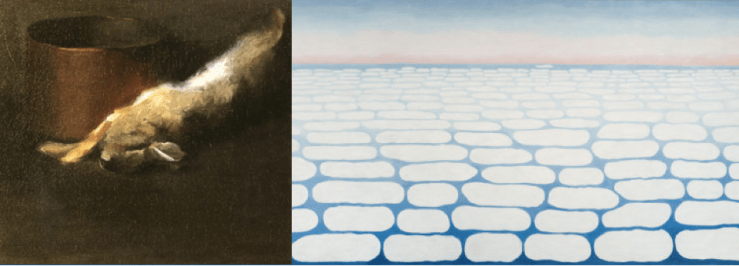
Early and Late Works: Georgia O'Keeffe's "Untitled (Dead Rabbit with Copper Pot)" (1908) and "Sky Above Clouds IV" (1965)

“When I look over the photographs Stieglitz took of me—some of them more than sixty years ago—I wonder who that person is,” said Georgia O’Keeffe. “It is as if in my one life I have lived many lives.”

Look through O’Keeffe’s diverse body of work, and you’ll see just what she meant. “Untitled (Dead Rabbit with Copper Pot)” is a humble realist work she painted as an art student in her early 20s.  She completed the abstracted, ephemeral landscape “Sky Above Clouds IV”, which is over 20 feet long, when she was almost 80. When they’re side-by-side it’s hard to believe that one artist created both.

The same is true for works that bookend any great artist’s career. Constant evolution is perhaps the most important ingredient to genius, as you’ll see in the images below. While you browse the early and late works of four legendary artists, ponder their differences. Does youthful enthusiasm and bold experimentation move you, or do you prefer a sure hand and a fully realized aesthetic? Join the conversation in the comments section below, or on our Facebook and Twitter pages.

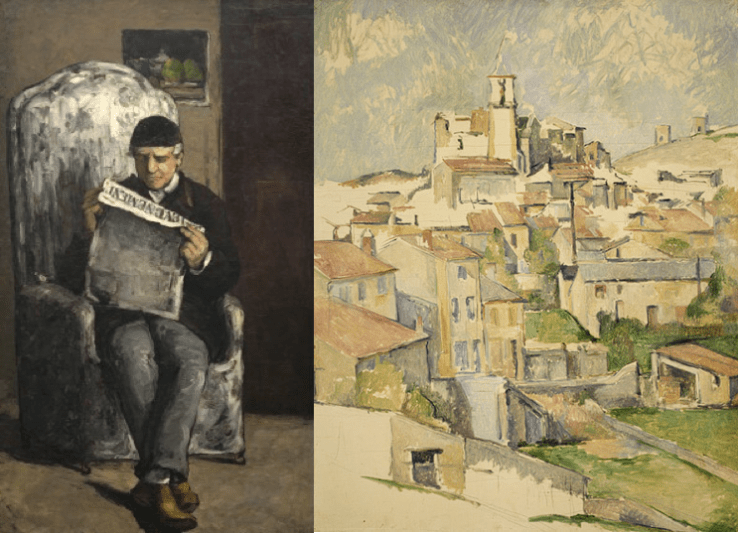
Early and Late Works: Paul Cezanne's "The Artist's Father, Reading 'L'Événement'" (1866) and "Gardanne" (1885-86)

Paul Cezanne painted “Artist’s Father, Reading ‘L’Événement'” when he was in his early 20s and still partially under the thumb of his disapproving parent. The paper his father is reading—a liberal publication that the old man wouldn’t have deigned to open—and the still life painting hanging in the background hint at the artist’s growing confidence in his chosen path. Flash forward to the radical perspectival experimentation of “Gardanne”, completed when Cezanne was in his late 40s. The multi-layered cityscape would later inspire Picasso and Braque in their development of Cubism.

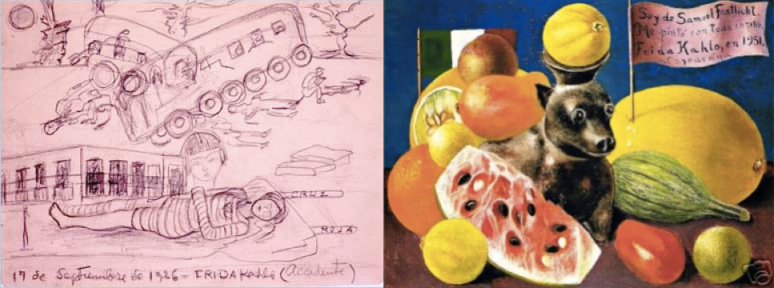
Early and Late Works: Frida Kahlo's "The Accident" (1926) and "Still Life" (1951)

When Frida Kahlo was 19 years old she was in a trolley crash that left her in a full body cast. A year after the accident she created the pencil sketch on the left, drawing from the tradition of Mexican ex-voto paintings that blend text and images. A lifetime later, Kahlo was still suffering from chronic pain caused by the accident and drawing influences from folk art, but she’d discovered a subtler way to express her suffering. She painted “Still Life 1951” just three years before her death, when her body was giving out and she no longer favored self portraiture. The fleshy, congealing watermelon nestled among fresh fruits says it all. “I hope the exit is joyful — and I hope never to return,” she wrote just before her death.

Early and Late Works: Pablo Picasso's "Les Saltimbanques" (1905) and "Untitled (From the 156 Suite, 16 mai 1971)"

“Les Saltimbanques” is a drypoint that Pablo Picasso created in his early 20s. The group of frolicking figures are characters from an opera-comique about a circus troupe. Countless artistic transformations later, Picasso etched out “Untitled (From the 156 Suite)“, an image that shows a tangle of prostitutes engaged in a very different acrobatic routine. Innocence is lost, but genius found.

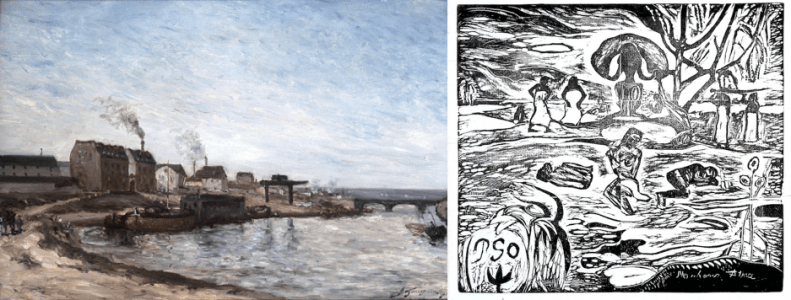
Early and Late Works: Paul Gauguin's "La Seine au Pont de Grenelle" (   ) and "Mahana Atua (The Day of God)" (   )

Paul Gauguin was a 27-year-old family man working as a stockbroker and hanging out at the Impressionists’ favorite cafes when he painted “La Seine au Pont de Grenelle”. By his mid-40s, he’d abandoned his family and job and exiled himself to Tahiti, where he drew inspiration for woodblock print “Mahana Atua (The Day of God)“. The artist learned from one revolutionary movement and then struck off on his own to inspire several others, from Primitivism to Symbolism.

How many lives can one artist live? What do you like better, the earlier or later work? Connect with us on Facebook, Twitter or Pinterest and sound off!

10 Women Who Changed Art History Forever, Pt. 2

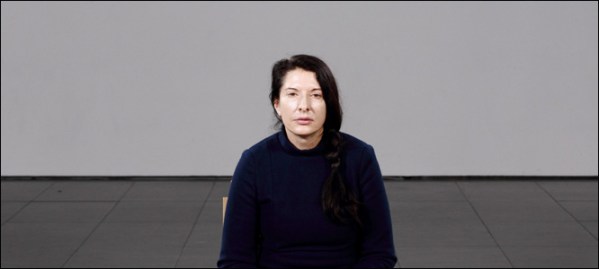
Marina Abramovic- 10 Women Who Changed Art History- Matthews Gallery blog

Click here to read the first part of this blog post.

How do you measure influence? It’s easy to focus on art’s brightest stars and most famous imagery, but zoom in on the tapestry of art history and you’ll see that its fibers are often woven from close personal relationships and direct channels of inspiration. We tend to remember names like Caravaggio, Picasso and Pollock and overlook the other fish in their schools. The following women might not have received as much attention as their male contemporaries, but that doesn’t mean they had a lesser hand in directing the grand flow of things. Check out our picks, and let us know who would be on your list in the comments.

Georgia O'Keeffe- Ten Women Who Changed Art History- Matthews Gallery blog

6. Georgia O’Keeffe (1887-1986)

It was 1908, and a young O’Keeffe had just won a prize from the Art Students League for her still life Dead Rabbit with Copper Pot when she gave up painting all together. The artist was worried that she’d never truly distinguish herself in the realm of realism. Three years later she started fresh, enrolling in an art class taught by Arthur Wesley Down, who encouraged his students to let their emotions guide them.

“I found that I could say things with color and shapes that I couldn’t say any other way—things I had no words for,” O’Keeffe said. The artist created a series of innovative abstract charcoal drawings that caught the eye of her future husband, New York photographer and gallerist Alfred Stieglitz. She would continue throughout her career to build an emotional vocabulary of abstracted forms, strongly influencing her modernist contemporaries and later inspiring feminist artists like Judy Chicago. She’s now considered the Mother of American Modernism.

Peggy Guggenheim- Ten Women Who Changed Art History Forever- Matthews Gallery blog

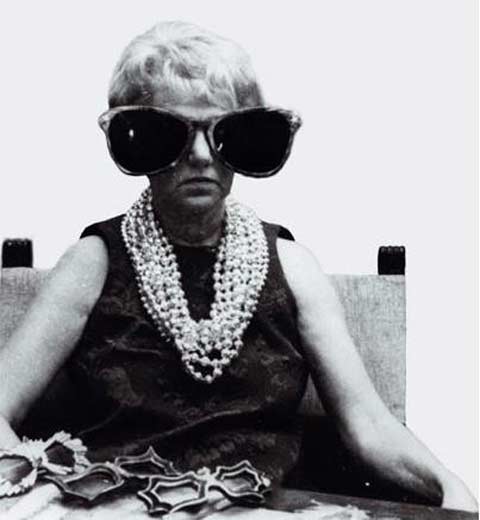
7. Peggy Guggenheim (1898-1979)

Guggenheim was born with the promise of a healthy inheritance. Her father died on the Titanic when she was a teenager, and at 21 she inherited more than $30 million in today’s currency. What to do with so much money? Guggenheim’s passion was art. Her first job was at the Sunwise Turn bookstore in New York, a bohemian hotspot that inspired her to move to Paris in 1920. There she met Man Ray, Constantin Brancusi, Marcel Duchamp and other influential modernists. By 1938 she’d opened a modernist gallery in London, where she showed the likes of Kandinsky, Calder, Ernst and Picasso.

The gallery got lots of attention from the public but lost money in its first year, so Guggenheim decided to open a museum instead. When World War II forced her to delay her plans, she focused on a buying “one picture a day” for her future museum collection. Ten Picassos, forty Ernsts, eight Miros, four Magrittes, three Dalis and one Chagall later, Guggenheim had one of the most important collections of 20th century art in existence. Her influence endures in the rich archives of the Solomon R. Guggenheim Foundation and the Peggy Guggenheim Collection.

Frida Kahlo- Ten Women Who Changed Art History- Matthews Gallery blog

8. Frida Kahlo (1907-1954)

Kahlo was born to a German father and Amerindian and Spanish mother in 1907, but she always claimed she was born in 1910 at the beginning of the Mexican Revolution. That might have been a slight distortion of the truth, but her life and art certainly mirrored the pain and the passion of Mexico’s modern rebirth. When she was a teenager, Kahlo was involved in a bus crash that left her in a full body cast. In the months afterward she took up painting to combat loneliness and boredom.

“I am the subject I know best,” Kahlo said. She drew influences from traditional Mexican folk art and American and European modernism in her colorful self portraits and still lifes, building new links between cultures and art movements but tightly focusing her subject matter on her own health and relationship struggles. During her lifetime, Kahlo was mostly known in Mexico as the on-again, off-again wife of muralist Diego Rivera, but in 1938 she had a solo show in the United States and a year later she exhibited in Paris, where the Louvre acquired one of her paintings.

Andre Breton called Kahlo a surrealist and others saw her work as Naive Art, but the artist defied labels. “I never painted dreams,” she said. “I painted my own reality.” Kahlo opened the door for women artists to openly explore their most personal experiences in their work, something that surely influenced the next artist on our list.

Louise Bourgeois- 10 Women Who Changed Art History- Matthews Gallery

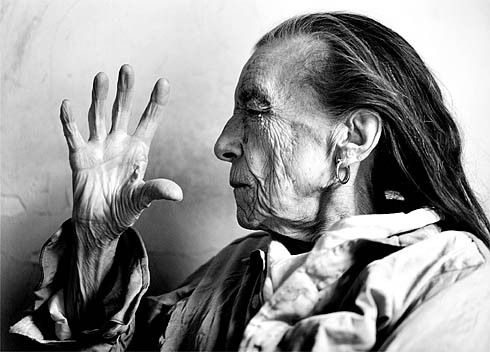
9. Louise Bourgeois (1911-2010)

Bourgeois’ artistic journey began in 1924 when she discovered that her father and her English tutor were having an affair. Her mother turned a blind eye, but Bourgeois spent the rest of her life staring the betrayal full in the face. A born and raised Parisian, she started studying art after her mother’s death in 1932 and met Fernand Leger soon after, who told her she was more of a sculptor than a painter.

After gaining some notoriety in Europe, Bourgeois moved to New York City in 1938 and hit a wall. Though she was respected among artists like Willem de Kooning, Mark Rothko and Jackson Pollock, her work wasn’t well known outside avante-garde circles. She was brutally honest in her explorations of memory, sexuality and family power dynamics, erecting monstrous spiders in sculpture gardens and immersing her viewers in scenes of violent patricide.

In 1982 the 70-year-old artist mounted her first retrospective at the Museum of Modern Art and finally told the story of her father’s infidelity to the public. She identified her body of work as the genesis of a genre called “confessional art”. Every piece in her oeuvre is autobiographical, a retelling of the trauma she’d experienced as a child and the effect it’d had on her life thereafter. By the time she died in 2010, she’d captured the imagination of a new generation of artists and scholars.

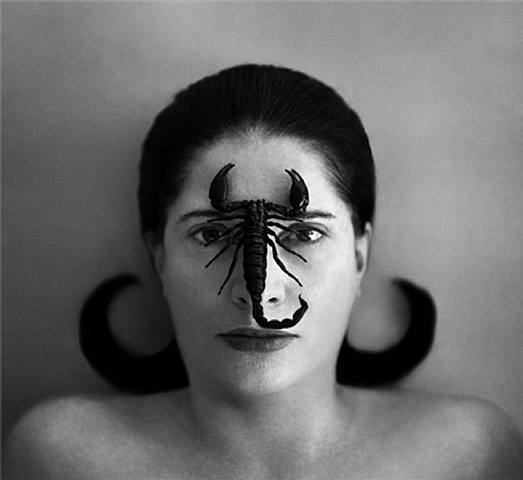
Marina Abramovic- Ten Women Who Changed Art History- Matthews Gallery blog

10. Marina Abramovic (born 1946)

Considering the ephemerality of Abramovic’s work, the performance artist’s rise to become one of the contemporary art world’s most notorious and polarizing figures is a remarkable story. Abramovic was born and raised in Belgrade, Serbia. Her mother kept tight control over her life through her early 20s, and she completed some of her first performance art pieces before her curfew at 10:00 pm. In her early work, she explored consciousness and the limits of the body within the context of performance art, pushing herself to exhaustion in various endurance tests.
Abramovic moved to Amsterdam in 1976, where she began a close relationship and artistic collaboration with performance artist Ulay Laysiepen. The duo continued to test their psychic limits, and also explored the idea of combining their identities into a single entity. They separated in 1988.

In 2005, Abramovic did a series of performances at the Guggenheim, and in 2010 she mounted a retrospective at the Museum of Modern Art. There she performed a 736-hour piece called The Artist is Present that was the subject of a documentary and received global attention.

Abramovic has been accused of chasing fame and creating a cult of personality. No matter her motives, the artist is a thought-provoking figure who’s impossible to ignore. She’s not a part of art history just yet, but she certainly makes a good future candidate.

Check out the first part of this blog post here, and follow us on Facebook, Twitter and Pinterest for more art news.

Diane White: Magical Realism

Diane White- Magical Realism- Matthews Gallery

As the reception for Diane White’s “Magical Realism” show begins, the artist stands alone in the middle of the Matthews Gallery’s front room, her shoulders squared and her hands clasped together. She looks around at the paintings she’s created over the past year and gives a little smile, but her posture doesn’t waver. She’s ready to greet her visitors.

One of the first folks through the door is Diane’s husband Steve, who’s just taken a stroll along Canyon Road and has something clutched in his hand. He presents it to Diane and she looks down inquisitively. It’s a small grey rock in the shape of a heart.

“Oh, thank you! Oh, that’s wonderful,” she says, beaming and leaning back to rest for a minute in Steve’s arms. “He’s my man.”

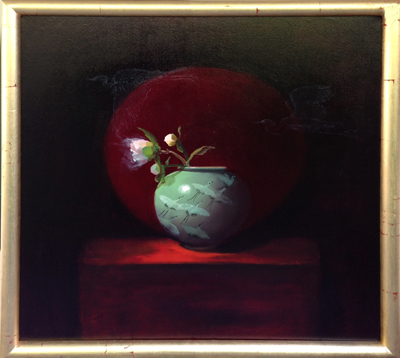
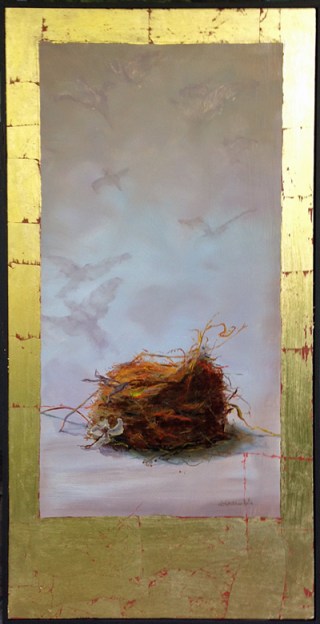
The moment reminds me of Diane’s work, which is imbued with equal measures of brave composure and romantic tenderness. The classically trained painter is inspired by magical realism, a literary genre that is rooted in the real world but incorporates magical characters and occurrences. In her impeccably detailed still lifes, glowing flowers hover above ceramic pots and ghostly birds rise from empty nests. The objects’ histories unfold around them, at first as subtle as a distant memories and then as vivid as a dreams.

With the heart rock pressed to her chest, Diane answered some questions about her new work, her process and her message:

White Majesty, Diane White, Matthews Gallery

What drew you to magical realism? 

I had a traditional still life that I was working on, and I was struck with the desire to do something else with it. It was steam coming out of a teapot with a dragon on it, and I made the steam into a dragon as well. Larry and Linda went, ‘What’s that?’ And I said, ‘Well, it just happened.’ That was five or six years ago.

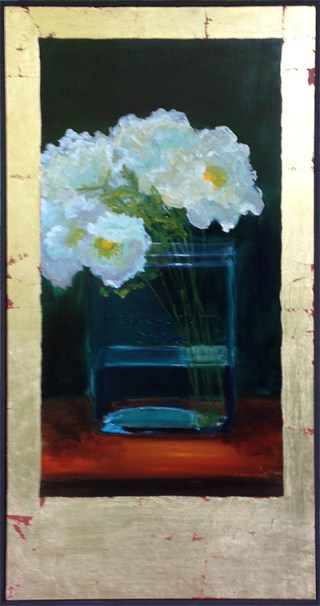
White Ruffled Tulips, Diane White, Magical Realism

What were you thinking about while you were working on this show? 

I don’t start with one thought process, I start with one piece that I’m painting and I focus on that. I don’t concentrate on a body of work. When you look at my work, they’re all very different. Some of them are aggressive with warriors in the background, and others have some angels. I just take it one painting at a time, and try to have them tell a story. Usually it’s an uplifting story—a lot of flight, a lot of action.

Dreams of Flying, Diane White, Matthews Gallery

Several of the paintings show intricate nests. What inspired you to use them in your work? 

I have done nests before, but probably not for three years.  I have horses now at my farm in Vermont, and I was out in this area with huge pine trees where they hang out when I found a nest that was made of horse hair. It had twigs and things too, but inside I could see the hair of the different horses. I thought, “I have to paint a nest.” It was so magical for me to find that.

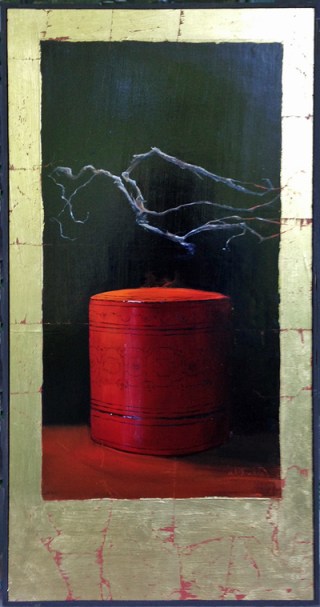
Spirit of the Red Box, Diane White, Matthews Gallery

 How do you strike a balance between the real elements in your paintings and the magical ones? 

I don’t want it to hit people in the face. I don’t want it to be Salvador Dali with a melting clock. I want it to be fairly subtle, and maybe something that the person looking at the painting discovers. On second glance you say, “Well, wait a minute. That’s not just steam. There’s something in there.” You kind of get involved with the painting.
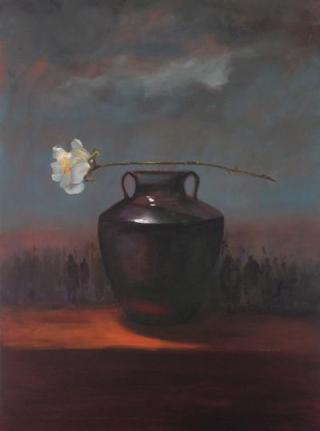
Order of the Rose, Diane White, Matthews Gallery

 Sometimes you paint groups of figures in the backgrounds of your still lifes. Who are they? 

They’re the warriors in all of us, the strength. There’s usually beauty in my paintings—perhaps a flower—and there’s strength. I don’t make it try to be pretty, but I want it to be strong. They’re warriors, and that’s what we all have in us, this strength.

Learn more about Diane White’s August 16-29 “Magical Realism” exhibition here, and check out more photos from the opening reception here. Connect with us on Facebook, Twitter and Pinterest for more art news.

ERIC’S WORLD: Breaking Through with Light

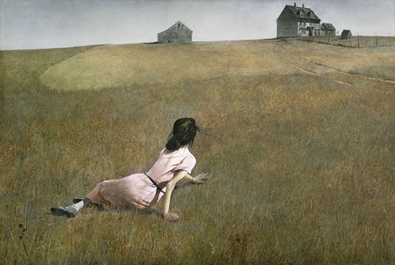
Andrew Wyeth- Christina's World- Matthews Gallery blog
Christina’s World, Andrew Wyeth

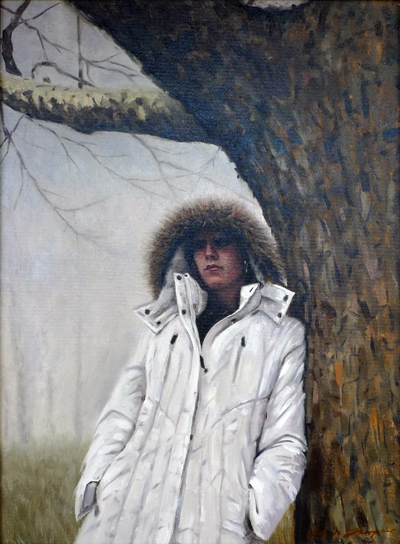
One of our Facebook fans recently drew a line between our artist Eric G. Thompson and revered American realist painter Andrew Wyeth.  That’s a common observation among visitors to the Matthews Gallery: both artists have muted palettes, a reverence for the even glow of the early morning and late afternoon sun, and, of course, a keen eye for the smallest of details.

Perhaps the element that best ties the two men together is their approach to the portrait. Their subjects stare pensively into the distance, lost in bittersweet memories as they lounge about in windswept landscapes. You can enter Eric’s Wyethian worlds this Friday from 5-7 pm at the opening for his new show “Breaking Through with Light“. Scroll down for a preview of the works in the exhibition, with accompanying quotes by Thompson and Wyeth:

Autumn Solace, Eric G. Thompson, Matthews Gallery
Autumn Solace, Eric G. Thompson

“As a child, I would search out a patch of light entering the room and sit there forever in total bliss”

-Eric G. Thompson

Lunch Break, Eric G. Thompson, Matthews Gallery

Lunch Break, Eric G. Thompson

“It’s a moment that I’m after, a fleeting moment, but not a frozen moment.”

-Andrew Wyeth

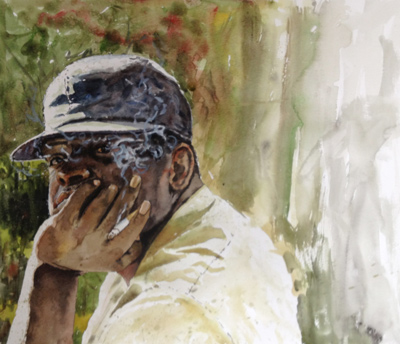
Pondering, Eric G. Thompson, Matthews Gallery
Pondering, Eric G. Thompson

 “In a world of pop culture that seems to be anti-silence, people seek the stillness they need without even realizing it.”

-Eric G. Thompson

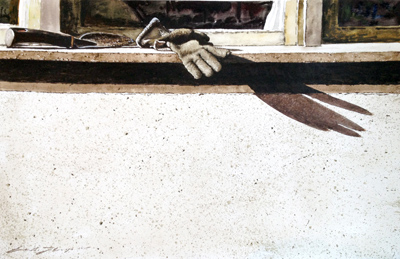
Shadow Play, Eric G. Thompson, Matthews Gallery
Shadow Play, Eric G. Thompson

“I search for the realness, the real feeling of a subject, all the texture around it… I always want to see the third dimension of something… I want to come alive with the object.”

-Andrew Wyeth

Evan, Eric G. Thompson, Matthews Gallery
Evan, Eric G. Thompson

“I feel that every one of my paintings is essentially a study of light or lack thereof—light coming into a room, light hitting an object, stretching a shadow, lighting an edge. All of this can be very powerful and moving in a painting,”

-Eric G. Thompson

Learn more about Eric G. Thompson’s “Breaking Through with Light” here, and connect with us on Facebook, Twitter and Pinterest for updates on his show.