ONE WORK OF ART: Marc Chagall’s “Paris L’Opera”

Marc Chagall- Paris L'Opera- Matthews Gallery Blog

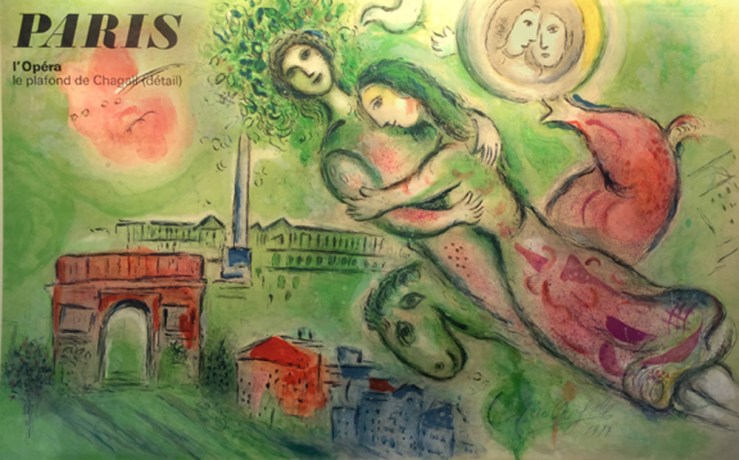
Marc Chagall, Paris L’Opera poster, Color Lithograph

When Marc Chagall (1887-1985) was commissioned to redo the ceiling of the Paris Opera in 1963, not everyone in the City of Lights was happy about it. The Russian-Jewish artist didn’t have a drop of French blood, and he was also a modernist. Critics worried that his vibrant palette and “primitive” style would clash with the pseudo-classical interior of the building. It was sure to be “die Faust auf’s Auge“—a punch in the eye—for cultured opera fans.  
Chagall might not have been everyone’s favorite, but he certainly had good credentials. Before moving from Russia to Paris in 1910, he studied under a well-known theatre designer in St. Petersburg. Years later in 1958 the Paris Opera hired him to design the sets and costumes for Maurice Ravel’s ballet Daphnis et Chloe. That same year, he embarked on his monumental stained glass project for the Metz Cathedral
Paris Opera- Marc Chagall's Ceiling- Matthews Gallery Blog
Paris Opera
After he saw a performance of Daphnis et Chloe, French minister of culture Andre Malraux had no doubt Chagall was capable of covering the 560-square-meter stretch of ceiling surrounding the opera house’s crystal chandelier. Ignoring the bluster of the arterati, he set Chagall to work painting panels for an enormous removable frame that would cover the original Baroque-style mural by Jules-Eugene Lenepvue. 
Chagall divided the space into several color zones and wove together scenes and characters from the most beloved operas and ballets. The mural would honor the works of fourteen composers, from Mussorgsky to Mozart and Beethoven to Tchaikovsky.
Chagall’s ceiling (or, in French, le plafond de Chagall) was unveiled on September 23, 1964 during the finale of a Mozart symphony, the artist’s favorite composer. As the music swelled the great chandelier lit up to reveal the mural. Et voilà:
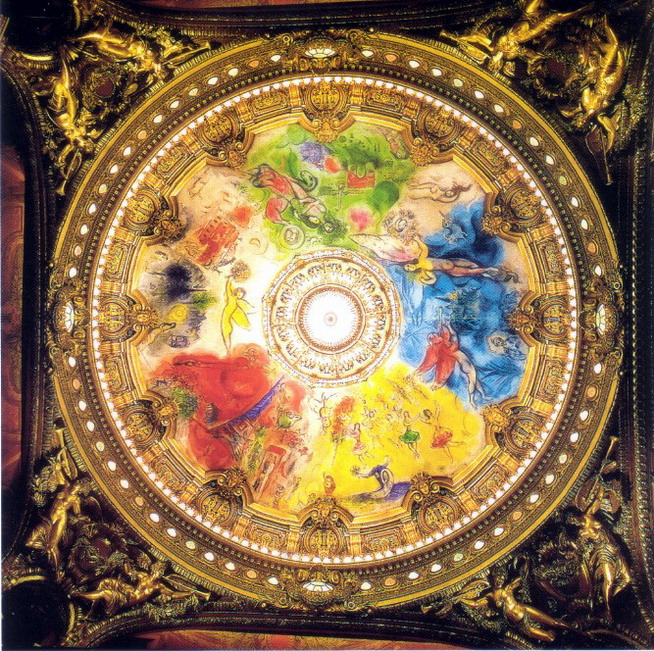
Marc Chagall's Ceiling at the Paris Opera- Matthews Gallery Blog
Chagall’s critics were (for the moment) struck dumb as opera goers first set eyes on what is now considered one of the great marvels of Paris.
The mural was quite a novel sight, but there’s one portion of the work that Parisians would’ve found familiar. The opera house also asked Chagall to design a limited edition poster for the ceiling’s debut. The artist based the poster on a portion of the mural featuring Tchaikovsky’s Romeo and Juliet. The famous lovers hover in the air above Paris, perhaps locked in a heavenly embrace after their tragic deaths.
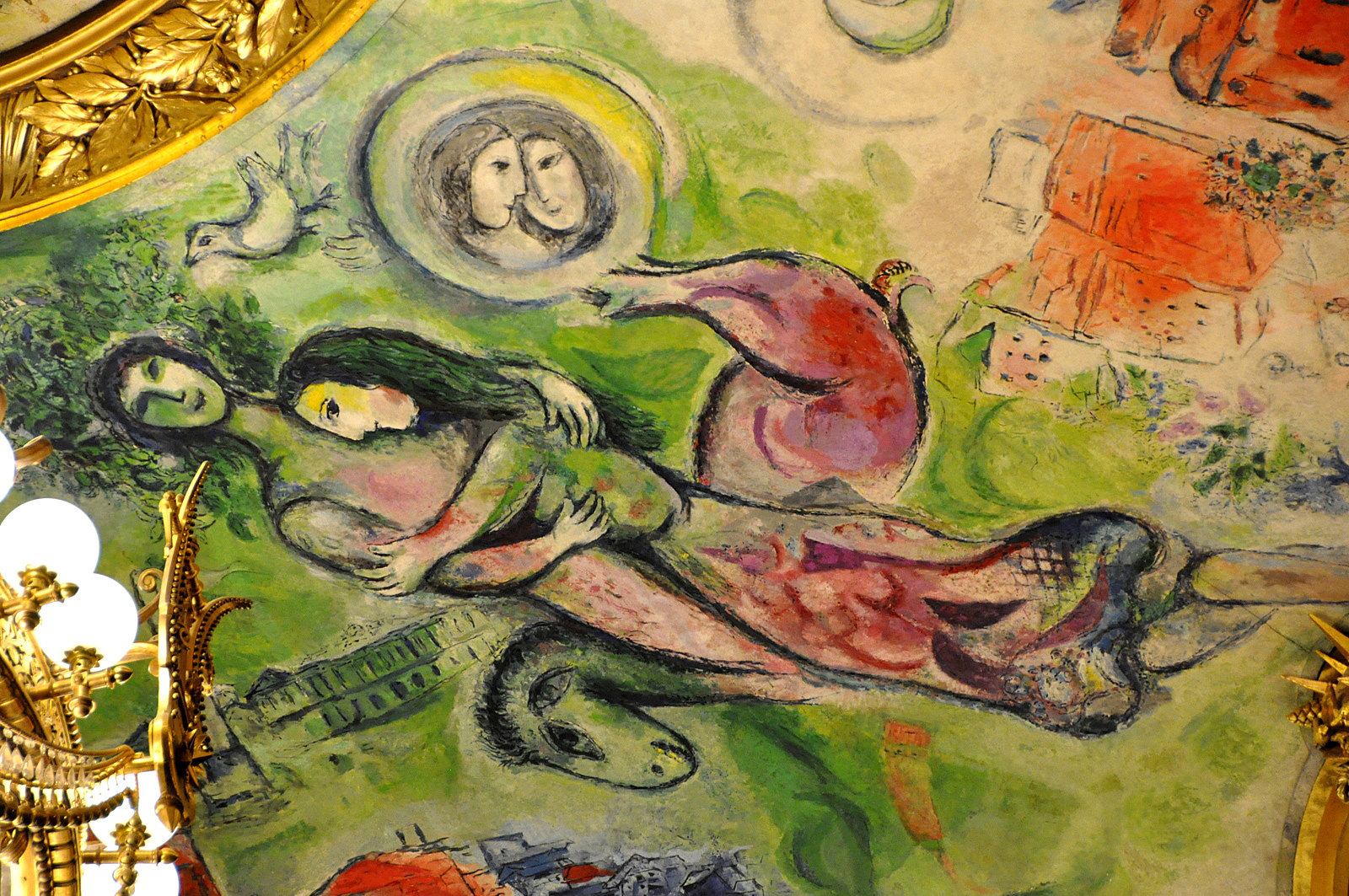
Marc Chagall's Ceiling detail- Paris Opera- Matthews Gallery Blog
Detail of Chagall’s Ceiling showing Romeo and Juliet
Just 5,000 “Paris L’Opera” prints were made. The poster at Matthews Gallery is signed in pencil by Chagall himself.
To get this artwork for your sweetheart, make sure to contact us before February 7 so we can ship it in time for Valentine’s Day. Connect with us on Twitter, Facebook and Pinterest for more gallery news!
*Special thanks to our friend and fellow art lover Paul, who gave us this idea and provided some of the images*

CURATE THIS, CURATE THAT: Place your votes!

Collectors-Choice-Social1

The selection process for our social media-curated show COLLECTOR’S CHOICE is underway, and fans on Facebook, Instagram, TwitterTumblr and other networks have placed their votes. It’s time for some tie breakers on WordPress! Check out the match-ups below and vote for your favorites in the comments section. From January 31 to February 5, we’ll unveil your selections in the gallery and online.

JAMIE CHASE

Jamie Chase- Collector's Choice- Matthews Gallery blog

ROUND 1! Jamie Chase is known for his figurative work like image #1, and also his abstracted landscapes like #2. Which one should appear in the show? Take the curatorial reins!

WILLIAM LUMPKINS

William Lumpkins- Collector's Choice Show- Matthews Gallery Blog

Do you prefer William Lumpkins‘ careful watercolor brushstrokes (#1) or experimental wild felt-tip pen marks (#2)? Read more about the influential Santa Fe modernist here before you decide…

KATE RIVERS

Kate Rivers- Collector's Choice Show- Matthews Gallery

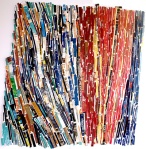
Curate this! Should we feature a Kate Rivers book collage in the show, or one of her nests? Read about her mixed media work in this blog post, and vote for #1 or #2 in the comments.

HANNAH HOLLIDAY STEWART

Hannah Holliday Stewart- Collector's Choice- Matthews Gallery Blog

These tall, spindly bronzes might be very different, but they’re both by powerhouse feminist sculptor Hannah Holliday Stewart. Figurative or abstract? Curate that!

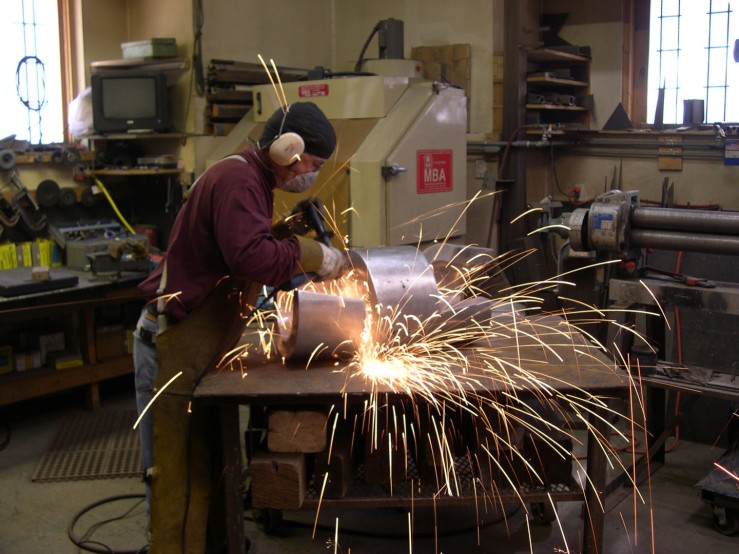
PAUL GAUGUIN

Paul-Gauguin-Collectors-Choice

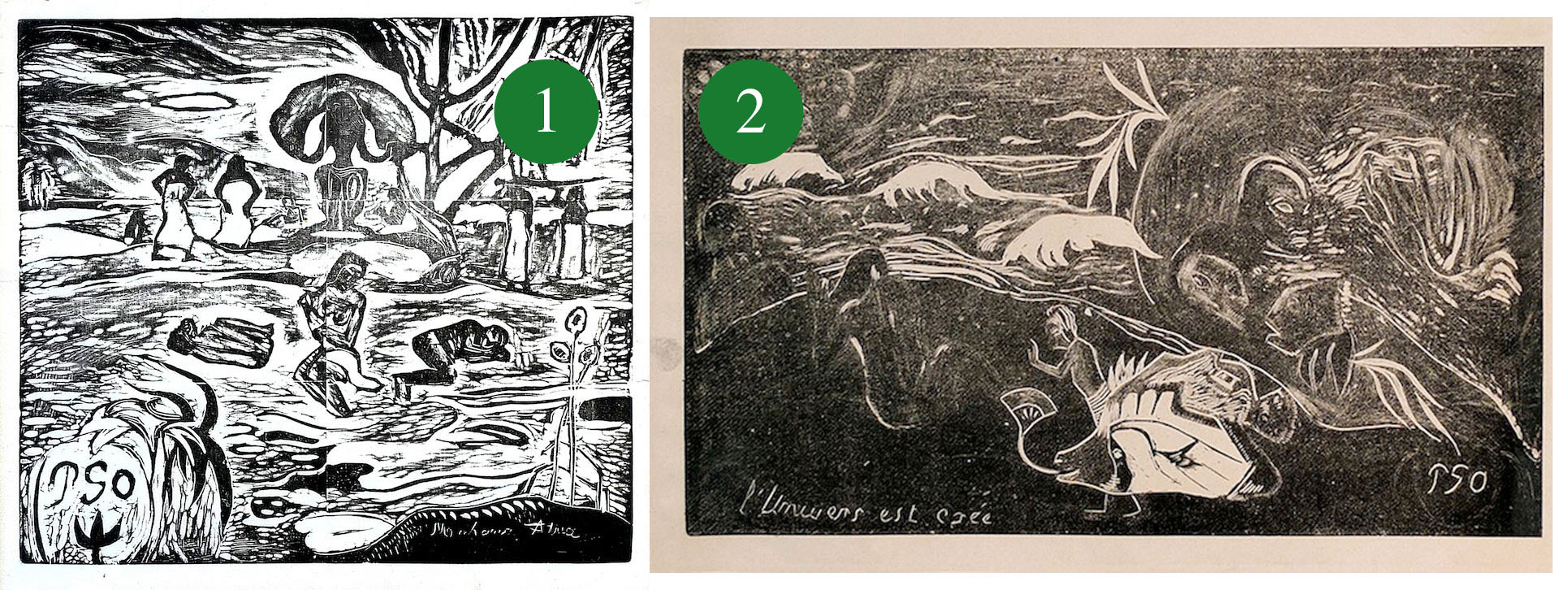
Two Tahitian myths inspired these woodblock prints by Paul Gauguin. Which do you prefer? Read about them in this blog post, and vote now!

Thanks for participating in COLLECTOR’S CHOICE! To place your vote on other social networks, connect with us through the links on our About Page.

SHOOTING SPARKS: Frank Morbillo’s Elemental Process

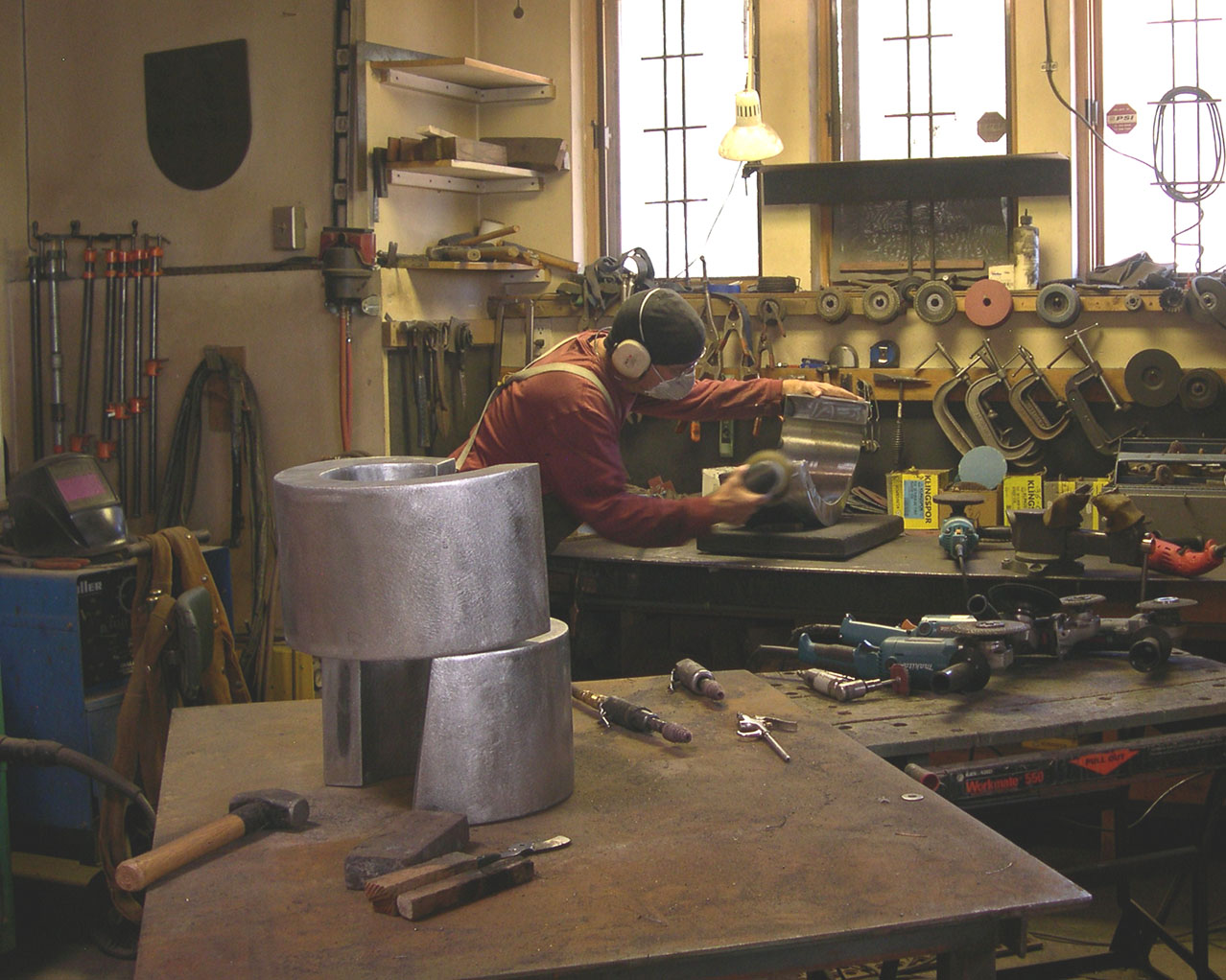
Frank Morbillo Sanding a Sculpture- Matthews Gallery Blog

Frank Morbillo sanding his sculpture Sprung

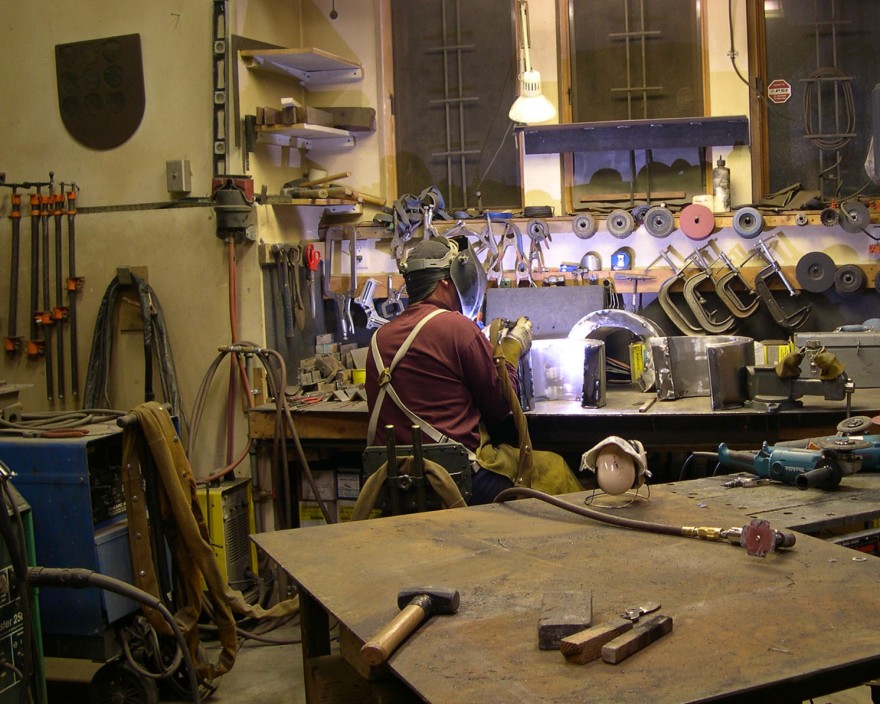
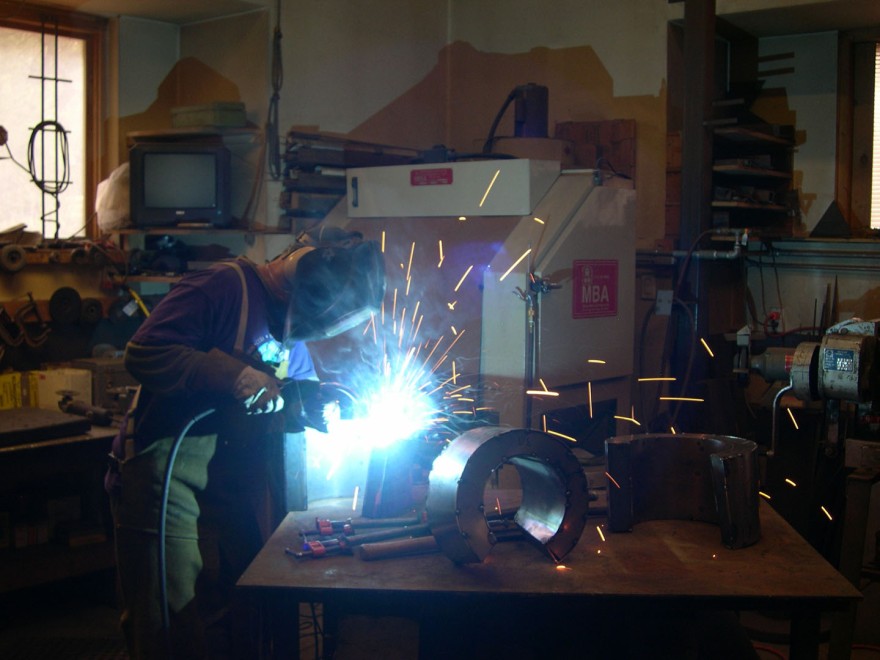
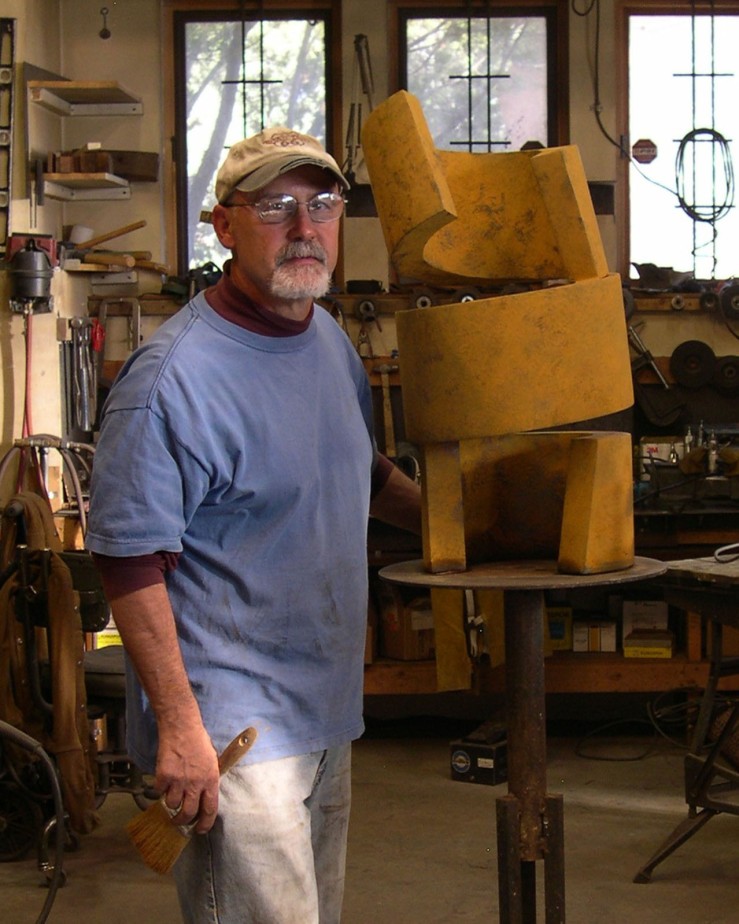
As we learned in his NEW HORIZONS show, sculptor Frank Morbillo is inspired by the way the elements carve the canyon lands of the American West. It’s fitting that his process is just as elemental. He bends and twists flat pieces of steel and bronze and then welds them into seamless three-dimensional forms, first creating smaller studies and working up to towering sculptures that possess the same gravitas as the rock formations he loves.

Witness the fiery birth of Frank’s sculpture Sprung and read quotes from the artist about his process and influences in this photo montage:

Process Photo of Sculptor Frank Morbillo's Sprung- Matthews Gallery blog

Fitting fabrication

“When you’re working with steel, you can work pretty inexpensively to generate an idea and get proportions down, and then make it a little bit bigger. Eventually this can go to the scale of the piece outside the Matthews Gallery.”

Frank Morbillo TIG Welding a Sculpture- Matthews Gallery Blog

TIG welding

“My background was in ceramics when I first started. For two years of college I thought my major was going to be ceramics, but in my sophomore year I took a blacksmithing class on forging and fabricating metal. I was like, ‘You can heat the stuff up and move it like clay? Oh my God!’”

Frank Morbillo Welding a Sculpture- Matthews Gallery blog

Welding

“You knock a piece of clay off the table and it breaks on the floor. You knock a piece of metal off and it dents the floor.”

fine sanding on Sprung-1

Fine sanding

“A lot of the pieces come from hiking canyons and experiencing the paths that you take in a canyon. If you look at a topo of a canyon, you can see its meandering course. When you’re down in a canyon and you see how it’s been eroded and shaped by water and wind, it takes on another shape.”

Frank Morbillo Adding a Patina to a Sculpture- Matthews Gallery blog

 Patina

“When I was in the foundry business doing patina work for different artists, we always used to talk about the translucency of bronze. They always wanted that, to where if you put this really nice golden brown patina over metal, you could see the metal coming through.”

Tesuque Artist Frank Morbillo with his Sculpture Sprung- Matthews Gallery blog

Almost there…

“One of the nice things about being out in nature is that all of the things we connect ourselves with are gone. Where does that take you? I think we need to do that still in our lives.”

See Frank’s finished sculpture here and learn more about the Tesuque sculptor on our Facebook, Twitter and Pinterest pages.

ONE WORK OF ART: Salvador Dali’s “Frontispiece for Goya Suite”

Salvador-Dali-Goya-SuiteMaster

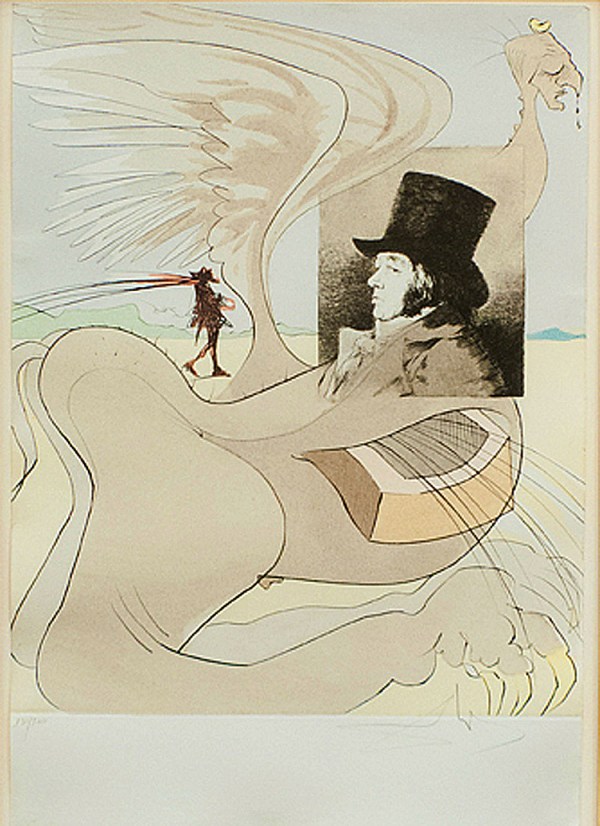
Salvador Dali, Frontispiece for Goya Suite (1973), multi-plate etching

You can see rare prints by Francisco Goya at the New Mexico Museum of Art’s Renaissance to Goya: Prints and Drawings from Spain, the only U.S. stop of a special traveling exhibition from the British Museum. Learn about Salvador Dali’s twist on one of Goya’s most famous works below, and come see it at Matthews Gallery on Canyon Road. 
In 1797, Francisco Goya embarked on a political art project that almost brought him up against the Spanish Inquisition. In a series of 80 aquatints entitled Los Caprichos (The Whims) he outlined the “innumerable foibles and follies to be found in any civilized societies.”
The hardly whimsical opus was a critique of 18th century Spain, which Goya depicted as full of deformed monsters and foolish beasts. The artist avoided punishment at the hands of the ruling class when the king spoke up for him, but the prints were still withdrawn from public sale in 1799.

426px-Museo_del_Prado_-_Goya_-_Caprichos_-_No._43_-_El_sueño_de_la_razon_produce_monstruos

174 years later, The Sleep of Reason Produces Monsters (left) from Los Caprichos was considered one of Goya’s most iconic works, and another Spaniard by the name of Salvador Dali decided to create a Surrealist tribute to the series. In the etching Frontispiece for Goya Suite Dali used the first image from Los Caprichos, a self-portrait of Goya in a top hat. 

2cb338d5fe19d368d2ee3639caf7a649Dali drops Goya into a universe even more bizarre than that of the original Caprichos, stitching his predecessor’s visage atop the body of a dragon-like beast. A second, more monstrous head with a drippy nose and lumpy halo emerges from behind Goya, and a shadowy figure in the distance leaves a trail like a comet. 
Is Dali’s remix another critique of Spanish society, refreshed for the weird world of 1973? The artist drops a slippery hint in this work’s alternate title, Lenguado Menguado. Lenguado could mean “flat-fish” or “sole”, and menguado is either “well-dressed” or “diminished”.
So, Dali could be calling Goya a stylish fish or a diminished one. The title might refer to the worn—or fashionable—shoes of the pedestrian in the background. In any case, the artist seems to be commenting on Spain’s obsession with appearances, a theme first explored in several of Goya’s Caprichos. Of course, Dali was himself an offender when it came to sartorial dalliances, but that adds some spice to the criticism.
View Dali’s bizarre reworking of a classic Goya print at Matthews Gallery, and connect with us on Facebook, Twitter and Pinterest for more news from Canyon Road.

MANY LIVES: Early and late works by famous artists

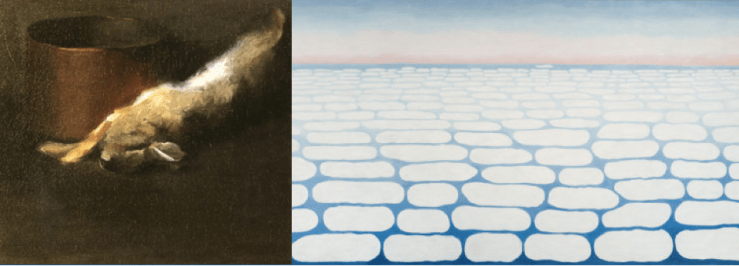
Early and Late Works: Georgia O'Keeffe's "Untitled (Dead Rabbit with Copper Pot)" (1908) and "Sky Above Clouds IV" (1965)

“When I look over the photographs Stieglitz took of me—some of them more than sixty years ago—I wonder who that person is,” said Georgia O’Keeffe. “It is as if in my one life I have lived many lives.”

Look through O’Keeffe’s diverse body of work, and you’ll see just what she meant. “Untitled (Dead Rabbit with Copper Pot)” is a humble realist work she painted as an art student in her early 20s.  She completed the abstracted, ephemeral landscape “Sky Above Clouds IV”, which is over 20 feet long, when she was almost 80. When they’re side-by-side it’s hard to believe that one artist created both.

The same is true for works that bookend any great artist’s career. Constant evolution is perhaps the most important ingredient to genius, as you’ll see in the images below. While you browse the early and late works of four legendary artists, ponder their differences. Does youthful enthusiasm and bold experimentation move you, or do you prefer a sure hand and a fully realized aesthetic? Join the conversation in the comments section below, or on our Facebook and Twitter pages.

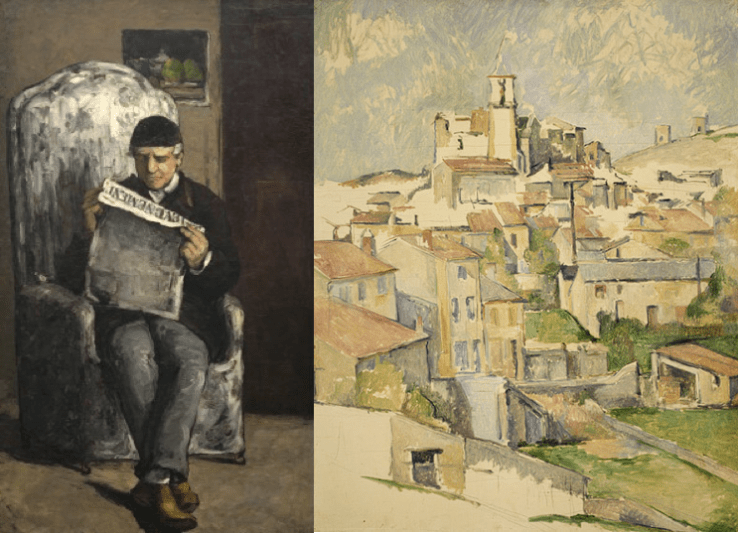
Early and Late Works: Paul Cezanne's "The Artist's Father, Reading 'L'Événement'" (1866) and "Gardanne" (1885-86)

Paul Cezanne painted “Artist’s Father, Reading ‘L’Événement'” when he was in his early 20s and still partially under the thumb of his disapproving parent. The paper his father is reading—a liberal publication that the old man wouldn’t have deigned to open—and the still life painting hanging in the background hint at the artist’s growing confidence in his chosen path. Flash forward to the radical perspectival experimentation of “Gardanne”, completed when Cezanne was in his late 40s. The multi-layered cityscape would later inspire Picasso and Braque in their development of Cubism.

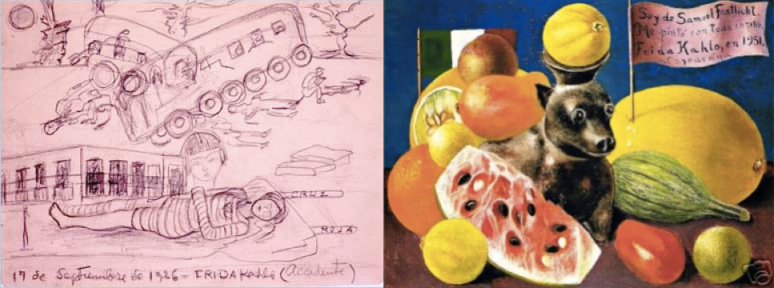
Early and Late Works: Frida Kahlo's "The Accident" (1926) and "Still Life" (1951)

When Frida Kahlo was 19 years old she was in a trolley crash that left her in a full body cast. A year after the accident she created the pencil sketch on the left, drawing from the tradition of Mexican ex-voto paintings that blend text and images. A lifetime later, Kahlo was still suffering from chronic pain caused by the accident and drawing influences from folk art, but she’d discovered a subtler way to express her suffering. She painted “Still Life 1951” just three years before her death, when her body was giving out and she no longer favored self portraiture. The fleshy, congealing watermelon nestled among fresh fruits says it all. “I hope the exit is joyful — and I hope never to return,” she wrote just before her death.

Early and Late Works: Pablo Picasso's "Les Saltimbanques" (1905) and "Untitled (From the 156 Suite, 16 mai 1971)"

“Les Saltimbanques” is a drypoint that Pablo Picasso created in his early 20s. The group of frolicking figures are characters from an opera-comique about a circus troupe. Countless artistic transformations later, Picasso etched out “Untitled (From the 156 Suite)“, an image that shows a tangle of prostitutes engaged in a very different acrobatic routine. Innocence is lost, but genius found.

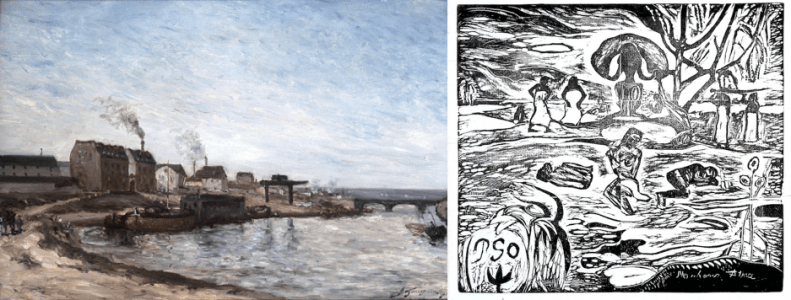
Early and Late Works: Paul Gauguin's "La Seine au Pont de Grenelle" (   ) and "Mahana Atua (The Day of God)" (   )

Paul Gauguin was a 27-year-old family man working as a stockbroker and hanging out at the Impressionists’ favorite cafes when he painted “La Seine au Pont de Grenelle”. By his mid-40s, he’d abandoned his family and job and exiled himself to Tahiti, where he drew inspiration for woodblock print “Mahana Atua (The Day of God)“. The artist learned from one revolutionary movement and then struck off on his own to inspire several others, from Primitivism to Symbolism.

How many lives can one artist live? What do you like better, the earlier or later work? Connect with us on Facebook, Twitter or Pinterest and sound off!

NEW TRADITIONS: Matthews Gallery Online Art Auction

History of the art auction- Matthews Gallery blog

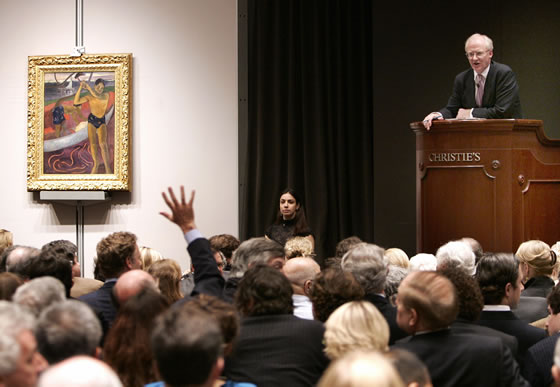
The world’s oldest auction house opened in Stockholm, Sweden in 1674. Art auctions in Great Britain gained popularity a few decades later when the Earl of Oxford’s collection appeared on the block in 1742. That particular sale featured the full range of odd and valuable items you might find in a dusty old castle, from a bust of an unknown bishop (five shillings) to a series of van Dyck paintings (165 guineas).

The beat of the auction mallet has marked the rhythm of the secondary market ever since. It’s a tradition that’s full of strange pageantry and heart pumping excitement. Auction kingpins Christie’s and Sotheby’s, which were both founded in mid-18th century England, often draw the ire of art world players for their tightly controlled sales. “They know exactly how many people will be bidding on a work and exactly who they are,” wrote art critic Jerry Saltz in 2012 after a version of Edvard Munch’s The Scream sold at Sotheby’s for $119.5 million. “In a gallery, works of art need only one person who wants to pay for them.”

Online auctions have meanwhile been swiftly democratizing the centuries-old process, and that’s where the Matthews Gallery decided to jump in. We launched the EUROPEAN MASTERS, AMERICAN AND SOUTHWESTERN ART AUCTION on July 25 and it runs through July 29. Come browse our virtual auktionsverk of art and, if you’re inspired, make a bid. You’ll find art by European modernists such as Pablo Picasso and Joan Miro, Southwestern legends including Emil Bisttram and Alfred Morang, and notable contemporary artists like Jamie Chase, Eric G. Thompson and Kate Rivers among the lots. Here are some notable pieces from the catalogue:

EUROPEAN MASTERS 

This slideshow requires JavaScript.

Click to see the works on our auction site:

HISTORIC SOUTHWESTERN ART

This slideshow requires JavaScript.

Click to see the works on our auction site:

  •  Untitled (Landscape #1), Emil Bisttram
  • Untitled (Landscape #2), Emil Bisttram
  • Untitled (Landscape #3), Emil Bisttram
  • Untitled (Santa Fe Landscape), Alfred Morang
  • Riders at Sundown, Gene Kloss
  • Return of the Wood Gatherers, Gene Kloss

CONTEMPORARY ART 

This slideshow requires JavaScript.

See more lots from the auction here, and connect with us on Facebook, Twitter and Pinterest for auction updates all week!

LEGENDS OF THE LOTS: Matthews Gallery Online Art Auction

March Chagall- L'Opera Poster (1964)- Matthews Gallery auction
L’Opera Poster, Marc Chagall

We’re very excited to announce the European Masters, American and Southwestern Art Auction, an online-only Matthews Gallery event running July 25-29. It’s our very first auction, and we’ve been working on it for more than a year. Of course, the works we’re putting on the block have stories behind them that are much older than that. Click here to browse the diverse catalogue, and read on to learn the legends behind four of the lots.

Henri de Toulouse-Lautrec- La Passagere du 54- Matthews Gallery auction
La Passagere du 54, Henri de Toulouse-Lautrec

Lautrec was on a steamship cruise from Le Havre to Bordeaux when a beautiful woman who was staying in cabin 54 caught his eye. He became infatuated with her but she was so aloof that he never got a chance to introduce himself. Lautrec refused to disembark until the ship reached Lisbon, where his friend Maurice Guibert finally dissuaded him from sailing on to Dakar, the mystery woman’s destination. The sketches he made of her on the boat would inspire La Passagere du 54.

Lithograph, on wove paper, Wittrock’s third (final) state, the full sheet, with green lettering. 

Click here to see this work in the catalogue.

Joan Miro- Dog Barking at the Moon- Matthews Gallery auction
Dog Barking at the Moon, Joan Miro

This lithograph has one of the longest titles of any of Miró’s art works. In french it is: “Le chien aboyant à la lune reveille le coq le chant du coq picote le crane du fermier Catalan posé sur la table à coté du pourron”. In English: “The dog barking at the moon wakes the cock, the song of the cock pecks at the head of the Catalan farmer resting on the table by the flask of wine”. Joan Miró (1893-1983) was a leading pioneer and proponent of surrealism. His work has a childlike style that at its heart is a sophisticated play of color, line and forms. Miro was a consummate master printmaker and over his lifetime he completed more than 1,000 fine art prints.

Lithograph in colors, number 12 from the edition of 80.

Click here to see this work in the catalogue.

Pablo Picasso- Untitled (From the 156 Suite, 16 mai 1971)- Matthews Gallery auction
Untitled (From the 156 Suite, 16 mai 1971), Pablo Picasso

Degas visits a brothel in this etching by the legendary Spanish modernist.

Number 23 from the edition of 50.

Click here to see this work in the catalogue.

Paul Gauguin- Mahana Atua (Noa Noa woodblock)- Matthews Gallery auction
Mahana Atua, Paul Gauguin

Gauguin sailed from France to Tahiti in 1891 and didn’t return home until two years later. He went there in search of an untouched beauty far away from “everything that is artificial and conventional”. Upon his return to Europe, he carved a series of ten woodblocks to illustrate a written account of his travels called Noa Noa. The prints, which were only his second attempt at printmaking, are considered some of his most innovative work. “Gauguin’s current effort will tomorrow provoke a complete revolution in the art of printmaking,” wrote critics Julien Leclerq and Charles Morice. This is presumed to be a proof apart from the signed and numbered edition of 100 published by the artist’s son, Pola Gauguin in Copenhagen in 1921.

Woodcut, 1894-5, on chine

Click here to see this work in the catalogue.

Make sure to check out the entire auction catalogue here, and connect with us on Facebook and Twitter for more legends behind the lots!

STATE OF THE ART: A Survey of New Mexico Artists

The very first artists who came to work in New Mexico found themselves on a harsh frontier. Harold Elderkin and his wife moved to Santa Fe in 1886 to run a gallery and teach painting lessons, but left for El Paso two years later. An artist named George Stanley tried the same thing in 1897 and failed even faster.

The 1920s saw an influx of artists who had already established their careers on the East Coast. The Southwestern landscapes they sent home would build this region’s reputation for stunning natural beauty and great art. Nowadays, Santa Fe is one of the nation’s largest art markets and New Mexico is a magnet for artists from across the globe.

Though New Mexico has changed a lot since those first creative pioneers settled here, the independent spirit of the frontier lives on through art. Our April 5-18 exhibition “State of the Art”showcases the work of seven recognized contemporary masters who work in New Mexico. Their art may be as diverse as our desert sunsets, but it’s all influenced by the Land of Enchantment.

Jamie Chase moved to Santa Fe in 1980 from his home state of California. He initially found success here painting traditional landscapes, but started exploring other styles and subject matter as he developed his own visual vocabulary. His current work includes non-objective paintings, abstract landscapes and abstracted figurative paintings. “State of the Art” will feature his elegantly abstracted female figures, who roam among dazzling color fields in search of transcendence.

The landscape-based abstract paintings of Terry Craig are literally rooted in the earth. He uses powdered pigment, marble dust and other materials to explore the tension between careful geometric order and wild gestural strokes. The Albuquerque artist draws inspiration from colors and patterns he sees in nature, but when he puts brush to surface he surrenders to his subconscious.

Annie O’Brien Gonzales was born and raised in Oklahoma and got her BFA in painting and art history at Oregon State University. She pursued fiber arts for many years but recently switched back to painting. You can still see traces of her fiber work in the bold patterns and colors she incorporates into her still life paintings.

Form and line, and observation, are the tools of the passage of my self-discovery,” says 89-year-old Santa Fe artist Robert W. Hinds. The sculptor worked as an illustrator and graphic designer before deciding to explore the third dimension. His bronze sculptures are of animals and people, and often show surreal interactions between them. Hinds’ abstracted style is contemporary, but the stories he tells through his sculptures recall Classical myths.

Frank Morbillo was raised on Long Island, but moved to Montana and then Santa Fe as a young adult. His sculptures speak the same language of entropy and change as New Mexico’s majestic rock formations, with an added element of political dialogue that you’ll find in his inquisitive titles. “I often find myself walking the line between artist and activist,” he says.

You’ll find old letters, candy wrappers, bits of string and other flotsam and jetsam in Kate Rivers‘ mixed media works. The artist, who grew up in Ohio and now lives in Santa Fe, uses these often overlooked objects to investigate memory and metaphor. Her most recent works are enormous collages made of dozens of stitched-together book bindings. Fragments of titles jumble together, encouraging new associations between the stories and characters behind them.

Diane White may be well versed in traditional still life techniques, but a closer look at her serene paintings of ceramic pots and other vessels will lead to fantastical discoveries. The Santa Fe artist, who worked for many years as a potter before studying painting at the Loveland Art Academy, weaves elements of magical realism into her works right under the viewer’s nose. Magical realism is a literary genre made famous by writers like Gabriel Garcia Marquez that illustrates extraordinary events in the context of a quotidian setting. Pay attention to every detail in White’s work and you’re sure to discover something supernatural, from a leaf transforming into a butterfly to a bouquet of lilies melding with the night sky above it.

State of the Art” opens Friday, April 5 from 5-7 pm and runs through April 18, 2013. Check out our Facebook and Twitter pages for more information.

Top 10 Art Movies, Part 1

Film gives us the invigorating opportunity to see long dried canvases shine bright and wet again. Telling a beloved artist’s story to the world’s satisfaction is more than just a process of retracing her brushstrokes, though. Our first five selections for best art movie are willing to take as many creative risks as the artists they profile.

http://www.youtube.com/watch?v=N5tSOj-ohuI&feature=youtu.be

Frida (2002)– This biopic of the Mexican surrealist was stalled for years until Salma Hayek took the helm as producer and lead. Hayek and director Julie Taymor paint the story of an artist who suffered through crippling physical mutilation and bottomless heartache with the most vivid palette. That was Kahlo’s outlet and weapon, after all, even as she lay in bed while her sometime husband Diego Rivera gained global notoriety for his own work. It helps to know the story’s true ending, even if it would be a bit capitalistic for Kahlo’s tastes. It’s not Rivera’s face you’ll find in the window of every Santa Fe gift shop.

Lust for Life (1956)– A bearded, bedraggled Kirk Douglas is mesmerizing as Vincent van Gogh in this classic portrait filmed in Holland and France. It’s a career highlight for Douglas, but Anthony Quinn steals the show in his Oscar-winning turn as Paul Gauguin, who admires Van Gogh’s work but finds that he can’t stand the man himself. Some of the film’s best scenes are in its quieter moments, when the famously volatile Van Gogh picks up a brush and pours out his emotions on canvas.

Modigliani (2004)– “The future of art is in a woman’s face. Tell me, Picasso, how do you make love to a cube?” sneers Modigliani, waving a rose in the air. It’s Modigliani‘s best moment, and it really happened. The rest of director Mick Davis’ high energy film bends the truth a bit, but it all works in the way Woody Allen’s Midnight in Paris did. Famous figures are always dropping by for self-aware bit parts that keep the film light on its feet. It’s the artist’s story told in the manner that Parisians must have gossiped about it just after his death at 35. All of the pieces are there, but their order gets more muddled with each delicious glass of absinthe.

http://www.youtube.com/watch?v=HmoUIfcrfIE&feature=youtu.be

Pollock (2000)– Director Ed Harris’ film is as much about Jackson Pollock’s alcoholism as his art, and though we know that the artist’s addiction will win in the end, all of the tension of his controversial rise, tumultuous personal life and tragic death in a drunk driving accident holds us captive. Harris, who plays Pollock, and Marcia Gay Harden as Lee Krasner are so driven in their portrayal of abstract expressionism’s royal couple that when the paint starts flying, you’ll believe it’s really Pollock holding the brush.

Artemisia (1997) – Italian Baroque painter Artemisia Gentileschi’s long, extraordinary artistic career is often eclipsed by the events surrounding her rape as an 18-year-old. Director Agnes Merlet chooses to tell only that small piece of her story in Artemisia, and fudges the details a bit by turning it into a love story. The film’s saving grace is Valentina Cervi, who plays Gentileschi with fierce passion. When Cervi’s face fills the screen, as it often does, her expressive eyes tell the whole story.

Check out our final five picks for best art film, and follow our Twitter and Facebook feeds for more art meditations.

Top 10 Art Books of 2012, Part 1

Our favorite art books of 2012 span centuries and movements, and include names both new and familiar. Follow the adventures of Paul Cezanne, meet Vivian Maier and her many subjects, and discover the (real) secrets of Leonardo Da Vinci in our first five selections: 

628x471

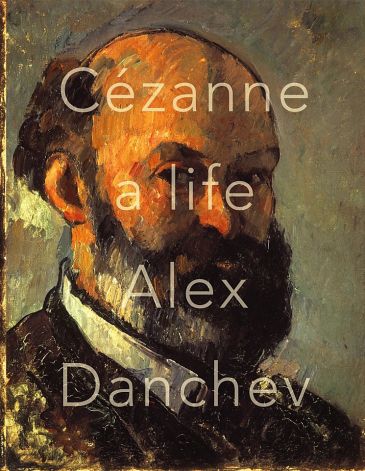
Cezanne: A Life, Alex Danchev- Critics called Paul Cezanne’s paintings unfinished, but the artist himself insisted they were “unresolved.” A biographer who wishes to capture the spirit of the revolutionary post-impressionist must play to the distinction. Danchev doesn’t try to solve the riddle of the man who diagnosed himself mad, who hid his wife and child from his family until he was 40, and who spent his final years in wild seclusion. With the aid of more than 100 images—including a series of self portraits—and excerpts from Cezanne’s favorite readings, the raconteur gives us a beautiful, perplexing glimpse through one of the most influential sets of eyes of the 19th century and beyond.

thumbnail.php

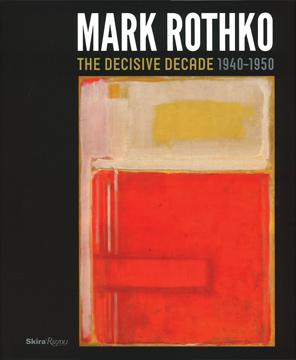
Mark Rothko: The Decisive Decade: 1940-1950; Todd Herman, Christopher Rothko and David Anfam- Though Mark Rothko’s journey from the figurative to the abstract happened rather rapidly, The Decisive Decade presents it as a careful, scientific evolution. An early canvas showing a trio of figures begets a painting of three figures merged into one, which bears a fascinating resemblance to the horizontal planes of color for which Rothko gained renown. The full sweep is a tribute to the artist’s deliberate genius.

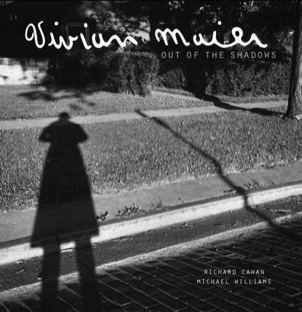
vivian-maier-out-of-the-shadows-book-cover

Vivian Maier: Out of the Shadows, Richard Cahan and Michael Williams- Amateur street photographer Vivian Maier’s now famous body of work was discovered before her death in 2009, when the contents of a storage locker she couldn’t pay for were auctioned off. It wasn’t until her obituary appeared in the Chicago Tribune that real estate agent John Maloof, who had purchased thousands of her negatives, discovered her identity. Cahan and Williams shine some light on the mysterious artist through interviews with Maier’s confidantes, but it’s the work itself, mostly captured on the streets of New York and Chicago in the 1950s and 1960s, that bring her into full focus.

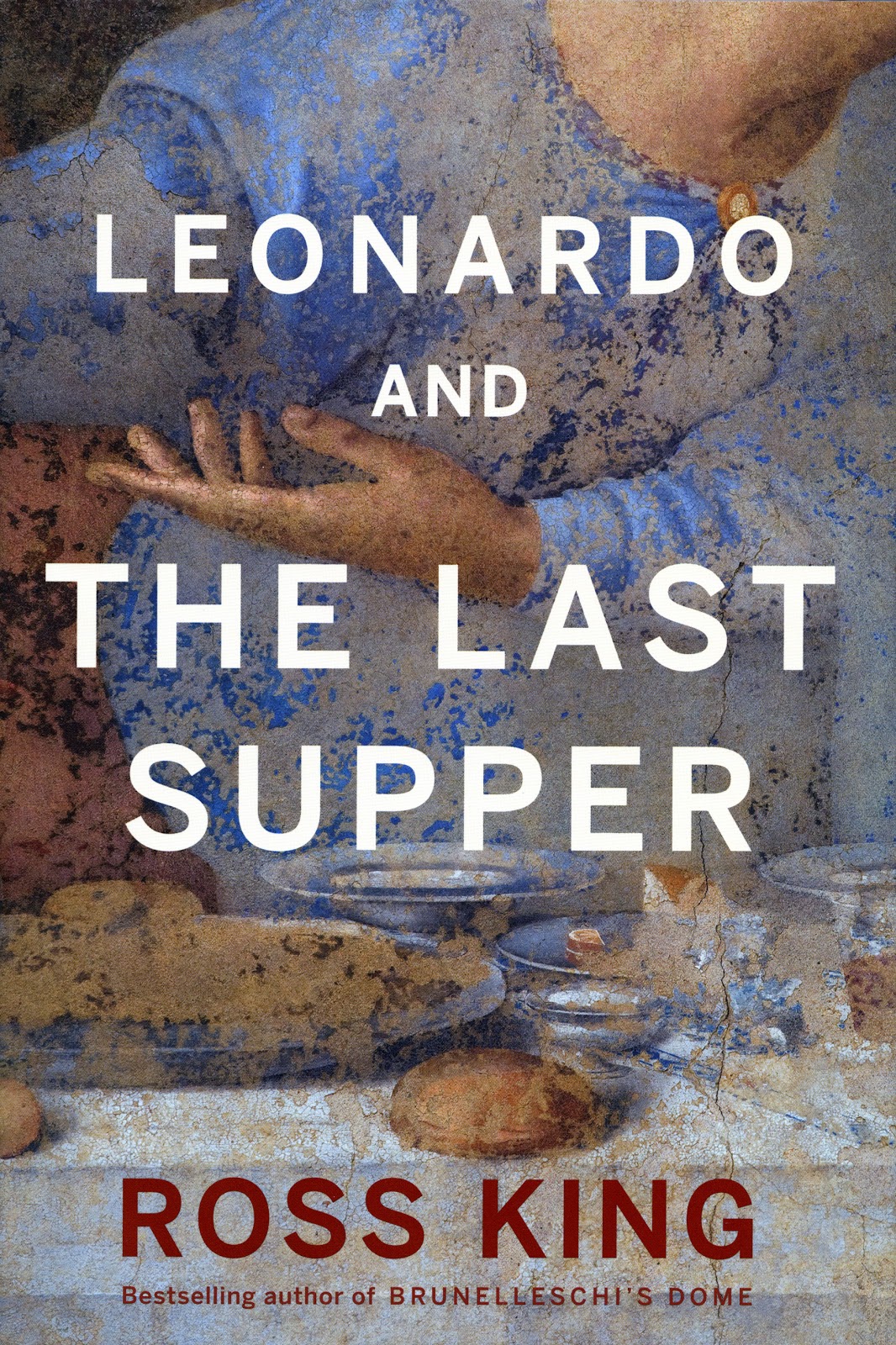
book cover leonardo and the last supper

Leonardo and the Last Supper, Ross King- Perhaps the most shocking secret of The Da Vinci Code is that, had Dan Brown done more digging, he wouldn’t have needed to rely so much on fiction. King introduces us to an aging, depressed Leonardo and the seemingly impossible project he took on at the Convent of Santa Maria della Grazie. There are many secrets to uncover, from the true identities of the Apostle models to the significance of the food Leonardo chose for the table. No symbologist needed.

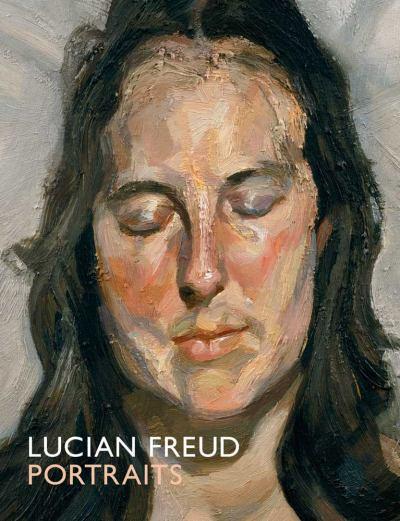
lucian-freud-portraits

Lucian Freud Portraits, Sarah Howgate with Michael Auping and John Richardson- As ever, the severe portraits of Lucian Freud cast a captivating spell in this new collection. New to the game is a series of rare, revelatory interviews on everything from the artist’s process to his famous grandfather, conducted in the last years of his life.

Click here to browse our next five selections, and check out our Twitter and Facebook pages for more art musings.