“Love is when the desire to be desired takes you so badly that you feel you could die of it,” said Henri de Toulouse-Lautrec. It’s a strange perspective on the matter, but not a surprising one when you consider the artist’s difficult life. His parents were nobles and first cousins, a pairing that probably gave Lautrec a rare congenital abnormality called osteogenesis imperfecta. He was particularly prone to bone fractures and broke both of his legs as a teen. Bedridden and bored, Lautrec’s only way to escape his misery was drawing.
By the time Lautrec moved to Paris to study art at 18, his legs had stopped growing and he struggled to support his regularly sized torso. He battled deep insecurities about his appearance, but never dropped an abrasive air of superiority. His first relationship with 17-year-old model Marie Charlet was short and tumultuous, and his second serious lover Suzanne Valadon attempted suicide.
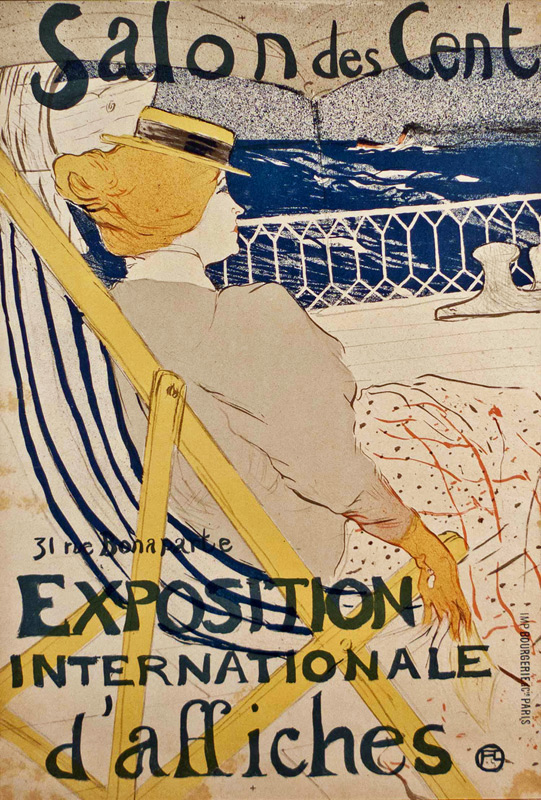
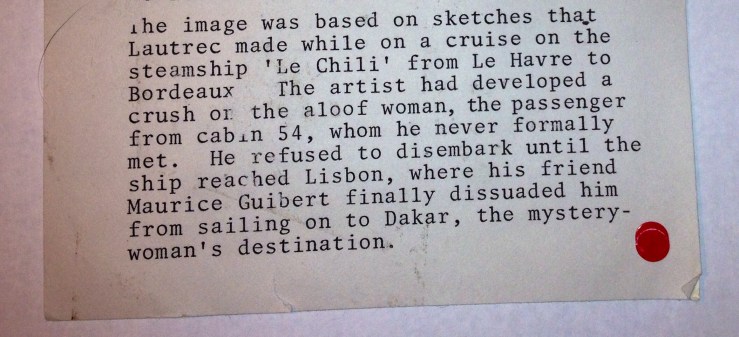
Lautrec immersed himself in the booze-soaked world of Paris’ cabarets and brothels to numb his pain, where he was inspired to produce some of the era’s most innovative images. Many of his works tell tales of longing and lost love, including our lithograph La Passagere du 54. Here’s a sad story from our archives about the 1895 boat voyage that inspired the print:
No wonder the woman on the poster is giving the viewer the cold shoulder. Most of Lautrec’s sketches must have been completed from this angle, as his haughty subject never gave him a second glance.
Lautrec’s artistic career only lasted a little over a decade, and though he gained considerable fame for his work, his romantic prospects never improved. He died at 36 from alcoholism and syphilis, but left behind a body of work that eternally capture the spirit of the City of Lights.
Do you agree with Lautrec’s definition of love? Sound off in the comments below, or through our Facebook, Twitter or Pinterest profiles.
“When I look over the photographs Stieglitz took of me—some of them more than sixty years ago—I wonder who that person is,” said Georgia O’Keeffe. “It is as if in my one life I have lived many lives.”
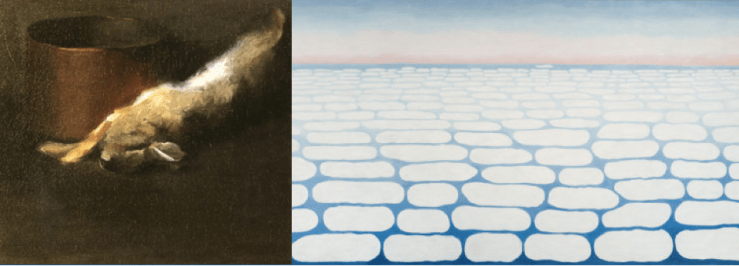
Look through O’Keeffe’s diverse body of work, and you’ll see just what she meant. “Untitled (Dead Rabbit with Copper Pot)” is a humble realist work she painted as an art student in her early 20s. She completed the abstracted, ephemeral landscape “Sky Above Clouds IV”, which is over 20 feet long, when she was almost 80. When they’re side-by-side it’s hard to believe that one artist created both.
The same is true for works that bookend any great artist’s career. Constant evolution is perhaps the most important ingredient to genius, as you’ll see in the images below. While you browse the early and late works of four legendary artists, ponder their differences. Does youthful enthusiasm and bold experimentation move you, or do you prefer a sure hand and a fully realized aesthetic? Join the conversation in the comments section below, or on our Facebook and Twitter pages.
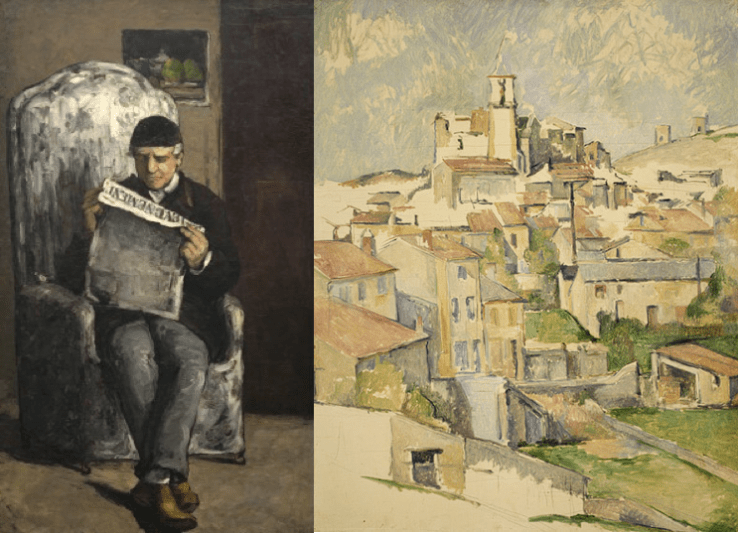
Paul Cezanne painted “Artist’s Father, Reading ‘L’Événement'” when he was in his early 20s and still partially under the thumb of his disapproving parent. The paper his father is reading—a liberal publication that the old man wouldn’t have deigned to open—and the still life painting hanging in the background hint at the artist’s growing confidence in his chosen path. Flash forward to the radical perspectival experimentation of “Gardanne”, completed when Cezanne was in his late 40s. The multi-layered cityscape would later inspire Picasso and Braque in their development of Cubism.
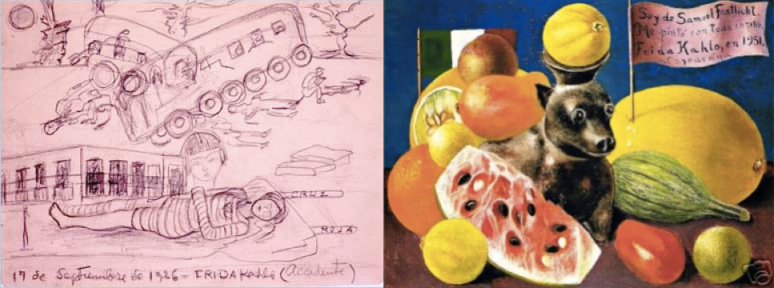
When Frida Kahlo was 19 years old she was in a trolley crash that left her in a full body cast. A year after the accident she created the pencil sketch on the left, drawing from the tradition of Mexican ex-voto paintings that blend text and images. A lifetime later, Kahlo was still suffering from chronic pain caused by the accident and drawing influences from folk art, but she’d discovered a subtler way to express her suffering. She painted “Still Life 1951” just three years before her death, when her body was giving out and she no longer favored self portraiture. The fleshy, congealing watermelon nestled among fresh fruits says it all. “I hope the exit is joyful — and I hope never to return,” she wrote just before her death.
“Les Saltimbanques” is a drypoint that Pablo Picasso created in his early 20s. The group of frolicking figures are characters from an opera-comique about a circus troupe. Countless artistic transformations later, Picasso etched out “Untitled (From the 156 Suite)“, an image that shows a tangle of prostitutes engaged in a very different acrobatic routine. Innocence is lost, but genius found.
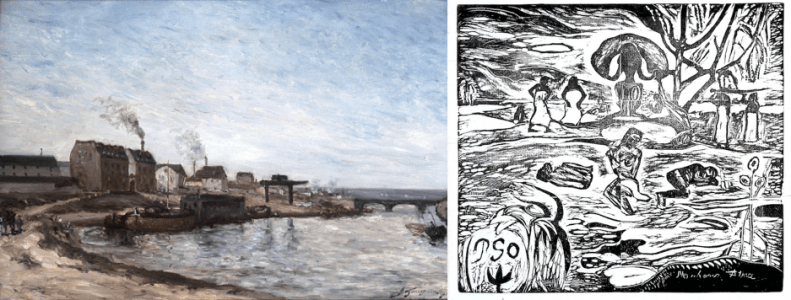
Paul Gauguin was a 27-year-old family man working as a stockbroker and hanging out at the Impressionists’ favorite cafes when he painted “La Seine au Pont de Grenelle”. By his mid-40s, he’d abandoned his family and job and exiled himself to Tahiti, where he drew inspiration for woodblock print “Mahana Atua (The Day of God)“. The artist learned from one revolutionary movement and then struck off on his own to inspire several others, from Primitivism to Symbolism.
How many lives can one artist live? What do you like better, the earlier or later work? Connect with us on Facebook, Twitter or Pinterest and sound off!
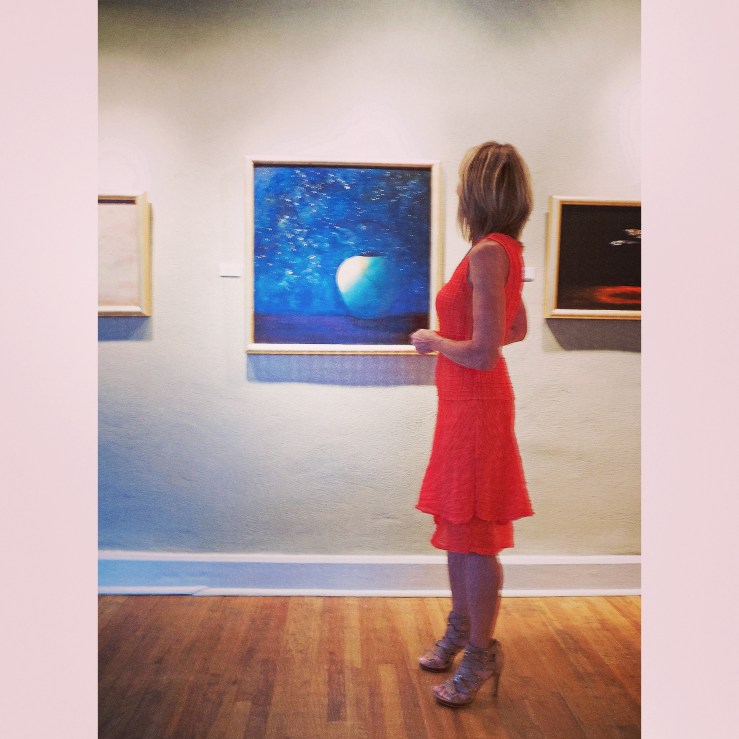
As the reception for Diane White’s “Magical Realism” show begins, the artist stands alone in the middle of the Matthews Gallery’s front room, her shoulders squared and her hands clasped together. She looks around at the paintings she’s created over the past year and gives a little smile, but her posture doesn’t waver. She’s ready to greet her visitors.
One of the first folks through the door is Diane’s husband Steve, who’s just taken a stroll along Canyon Road and has something clutched in his hand. He presents it to Diane and she looks down inquisitively. It’s a small grey rock in the shape of a heart.
“Oh, thank you! Oh, that’s wonderful,” she says, beaming and leaning back to rest for a minute in Steve’s arms. “He’s my man.”
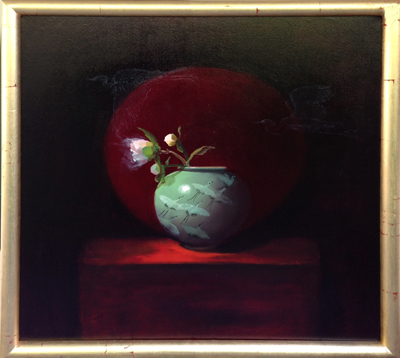
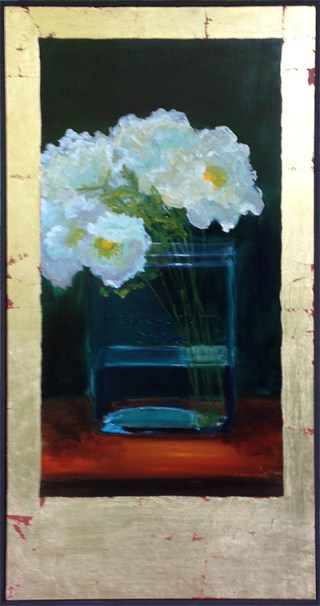
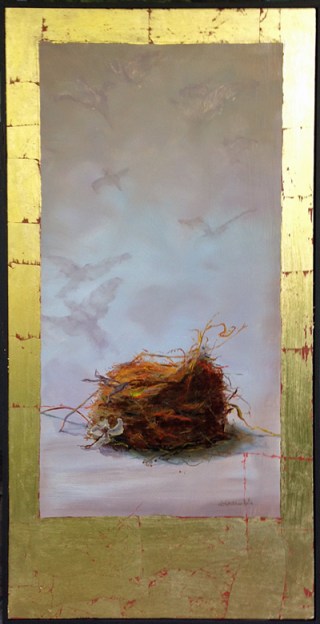
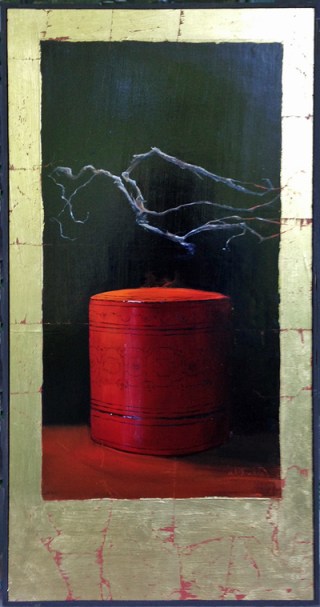
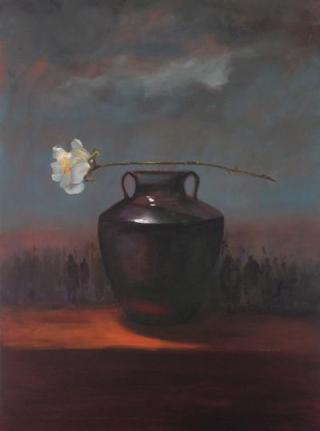
The moment reminds me of Diane’s work, which is imbued with equal measures of brave composure and romantic tenderness. The classically trained painter is inspired by magical realism, a literary genre that is rooted in the real world but incorporates magical characters and occurrences. In her impeccably detailed still lifes, glowing flowers hover above ceramic pots and ghostly birds rise from empty nests. The objects’ histories unfold around them, at first as subtle as a distant memories and then as vivid as a dreams.
With the heart rock pressed to her chest, Diane answered some questions about her new work, her process and her message:
What drew you to magical realism?
I had a traditional still life that I was working on, and I was struck with the desire to do something else with it. It was steam coming out of a teapot with a dragon on it, and I made the steam into a dragon as well. Larry and Linda went, ‘What’s that?’ And I said, ‘Well, it just happened.’ That was five or six years ago.
What were you thinking about while you were working on this show?
I don’t start with one thought process, I start with one piece that I’m painting and I focus on that. I don’t concentrate on a body of work. When you look at my work, they’re all very different. Some of them are aggressive with warriors in the background, and others have some angels. I just take it one painting at a time, and try to have them tell a story. Usually it’s an uplifting story—a lot of flight, a lot of action.
Several of the paintings show intricate nests. What inspired you to use them in your work?
I have done nests before, but probably not for three years. I have horses now at my farm in Vermont, and I was out in this area with huge pine trees where they hang out when I found a nest that was made of horse hair. It had twigs and things too, but inside I could see the hair of the different horses. I thought, “I have to paint a nest.” It was so magical for me to find that.
How do you strike a balance between the real elements in your paintings and the magical ones?
I don’t want it to hit people in the face. I don’t want it to be Salvador Dali with a melting clock. I want it to be fairly subtle, and maybe something that the person looking at the painting discovers. On second glance you say, “Well, wait a minute. That’s not just steam. There’s something in there.” You kind of get involved with the painting.
Sometimes you paint groups of figures in the backgrounds of your still lifes. Who are they?
They’re the warriors in all of us, the strength. There’s usually beauty in my paintings—perhaps a flower—and there’s strength. I don’t make it try to be pretty, but I want it to be strong. They’re warriors, and that’s what we all have in us, this strength.
Learn more about Diane White’s August 16-29 “Magical Realism” exhibition here, and check out more photos from the opening reception here. Connect with us on Facebook, Twitter and Pinterest for more art news.
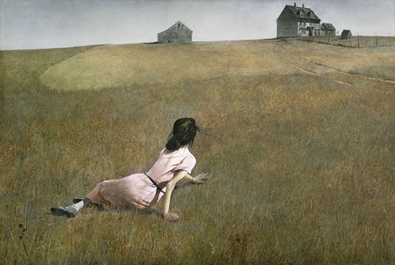
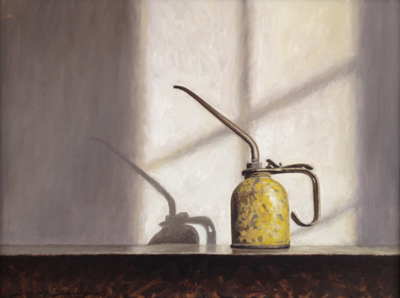
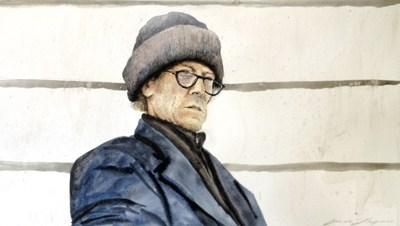
One of our Facebook fans recently drew a line between our artist Eric G. Thompson and revered American realist painter Andrew Wyeth. That’s a common observation among visitors to the Matthews Gallery: both artists have muted palettes, a reverence for the even glow of the early morning and late afternoon sun, and, of course, a keen eye for the smallest of details.
Perhaps the element that best ties the two men together is their approach to the portrait. Their subjects stare pensively into the distance, lost in bittersweet memories as they lounge about in windswept landscapes. You can enter Eric’s Wyethian worlds this Friday from 5-7 pm at the opening for his new show “Breaking Through with Light“. Scroll down for a preview of the works in the exhibition, with accompanying quotes by Thompson and Wyeth:
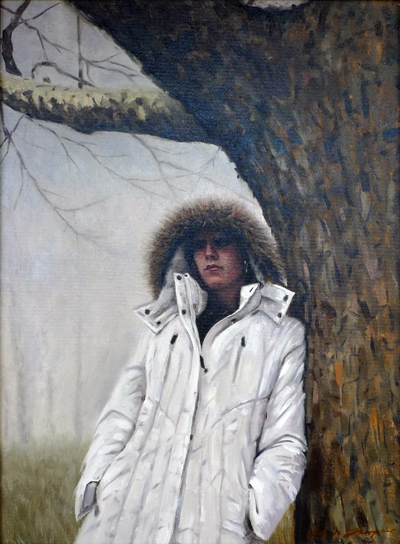
Autumn Solace, Eric G. Thompson
“As a child, I would search out a patch of light entering the room and sit there forever in total bliss”
-Eric G. Thompson
Lunch Break, Eric G. Thompson
“It’s a moment that I’m after, a fleeting moment, but not a frozen moment.”
-Andrew Wyeth
Pondering, Eric G. Thompson
“In a world of pop culture that seems to be anti-silence, people seek the stillness they need without even realizing it.”
-Eric G. Thompson
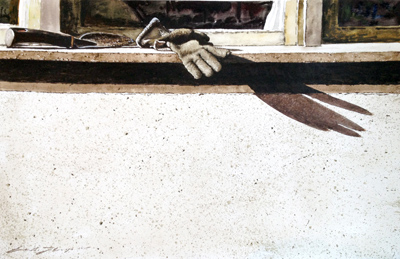
Shadow Play, Eric G. Thompson
“I search for the realness, the real feeling of a subject, all the texture around it… I always want to see the third dimension of something… I want to come alive with the object.”
-Andrew Wyeth
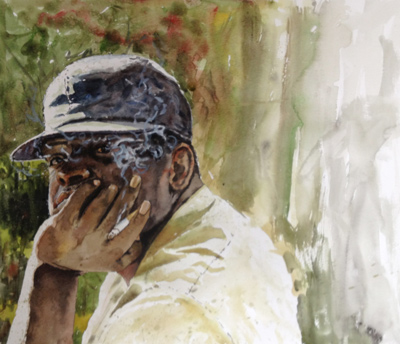
Evan, Eric G. Thompson
“I feel that every one of my paintings is essentially a study of light or lack thereof—light coming into a room, light hitting an object, stretching a shadow, lighting an edge. All of this can be very powerful and moving in a painting,”
-Eric G. Thompson
Learn more about Eric G. Thompson’s “Breaking Through with Light” here, and connect with us on Facebook, Twitter and Pinterest for updates on his show.
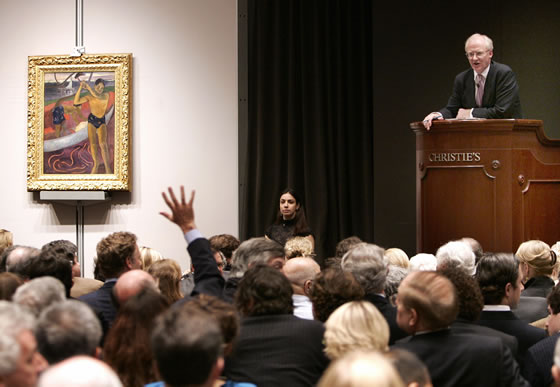
The world’s oldest auction house opened in Stockholm, Sweden in 1674. Art auctions in Great Britain gained popularity a few decades later when the Earl of Oxford’s collection appeared on the block in 1742. That particular sale featured the full range of odd and valuable items you might find in a dusty old castle, from a bust of an unknown bishop (five shillings) to a series of van Dyck paintings (165 guineas).
The beat of the auction mallet has marked the rhythm of the secondary market ever since. It’s a tradition that’s full of strange pageantry and heart pumping excitement. Auction kingpins Christie’s and Sotheby’s, which were both founded in mid-18th century England, often draw the ire of art world players for their tightly controlled sales. “They know exactly how many people will be bidding on a work and exactly who they are,” wrote art critic Jerry Saltz in 2012 after a version of Edvard Munch’s The Scream sold at Sotheby’s for $119.5 million. “In a gallery, works of art need only one person who wants to pay for them.”
Online auctions have meanwhile been swiftly democratizing the centuries-old process, and that’s where the Matthews Gallery decided to jump in. We launched the EUROPEAN MASTERS, AMERICAN AND SOUTHWESTERN ART AUCTION on July 25 and it runs through July 29. Come browse our virtual auktionsverk of art and, if you’re inspired, make a bid. You’ll find art by European modernists such as Pablo Picasso and Joan Miro, Southwestern legends including Emil Bisttram and Alfred Morang, and notable contemporary artists like Jamie Chase, Eric G. Thompson and Kate Rivers among the lots. Here are some notable pieces from the catalogue:
Gustave Courbet, Self-Portrait (The Desperate Man)
We all know that Vincent Van Gogh left this world with 1.5 ears and a (probably) self-inflicted gunshot wound in his chest, but when you go on a hunt for the craziest artistic geniuses, the fou-rouxstarts seeming positively rational.
After all, Michelangelo was so averse to bathing or changing his clothes that his long-suffering assistant once wrote, “He has sometimes gone so long without taking (his shoes) off that then the skin came away, like a snake’s, with the boots.” The Renaissance master would wander off in the middle of conversations and refused to attend his brother’s funeral.
Gustave Courbet went a little nuts after he tangled with the French government and exiled himself to Switzerland, painting several “self-portraits” of bleeding, mangled fish. You surely have to be a bit bonkers to drive so many lovers insane, so Pablo Picasso deserves a spot in the art sanitarium as well. Then there’s Paul Gauguin, who made up romantic, insanely elaborate lies about his dismal trips to Tahiti.
Lesser-known prodigies only suffer more, it seems. French painter Leon Bonvin was found dangling from a tree after a dealer refused to show his paintings. Dutch artist Abraham van der Doort, who was Charles I’s art conservationist, thought he’d lost one of the king’s favorite pieces and offed himself. Dutch painter Herman Kruyder ended it all in a psychiatric ward, and Polish writer Stanislaw Ignacy Witkierwicz fed his lover poison and slit his wrists after the Second Army invaded Poland.
Does true artistic brilliance come hand in hand with insanity? Perhaps to see things in revolutionary ways, you have to take a trip off the edge. What do you think? Join the discussion on our Facebook and Twitter pages, or in the comments section below.
Being “cloistered in” may be key to Michelle Y Williams’ process, but that doesn’t mean she’s a recluse. Solitude is what the Houston, Texas artist needs to focus her mind and tune in to her subconscious. Her mixed media works are equally inspired by measured decisions and the pure emptiness of the blank surfaces before her. They’re conglomerations of the figurative and the abstract, and boast a subdued palette that echoes the artist’s fascination with rust, crumbling concrete and peeling paint.
When Williams isn’t in her studio, she’s not afraid to step into the spotlight. In September she’ll be featured in Luxe Magazine, and last week she granted an interview to the Matthews Gallery. Michelle told us about everything from her many materials to the Japanese aesthetic of wabi-sabi, a worldview that has taught her to accept her flaws and create with abandon. Here’s what she had to say:
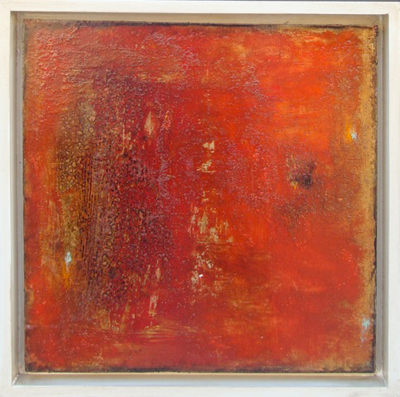
Petit 28, Michelle Y Williams
You write in your artist statement, “Inspiration for my work is both selective and completely random.” Is the same true for your choice of materials for a particular piece? How do you select a medium?
The primary medium in my work is acrylic (very quickly after I began as a painter using oils, I realized I have an aversion to cleaning brushes). Pigmented inks have also proven to be an often used medium for me (applied with a dropper, then floated across the canvas using my palette knife).
The choice for other materials, indeed, comes more randomly. Whether I incorporate sand or oil bar or even attaching a piece of torched metal with wax string to the canvas happens naturally & intuitively as the work progresses.
You also talk about a “relationship that develops” between you and your work. Does this change your notion of when a work is completed? Is it sad to say goodbye?
I suppose it’s more of a short-term relationship…shall we call it a fling. I invest energy into a piece which is then reciprocated upon completion, but the real gratification comes when someone has made a connection with my work, which couldn’t happen unless I surrendered it readily.
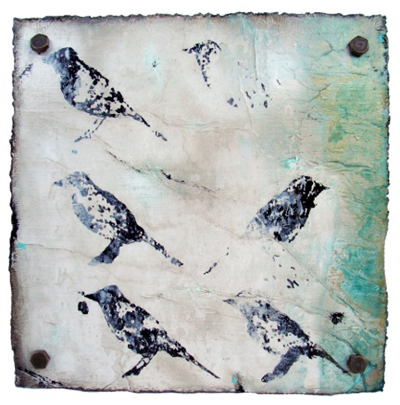
Cut 12-532, Michelle Y Williams
You prefer to work in solitude. What are some other important parts of your process? Do you listen to music? Do you work on multiple pieces at a time, or just one?
My preference for sequestration is actually paramount – in order to maintain the integrity and authenticity of my work, I eliminate most outside influences that could dull my own creative process. Diverse genres of music can be heard in my studio – from acid jazz to classic rock to classical – while I move between several pieces in various stages of completion.
You mention the importance of seeking a balance in your work. How does that connect with the tenets of wabi-sabi, the Japanese aesthetic that embraces the transient self?
Rather than trying to exert control over a painting, my pursuit of aesthetic balance, (while maintaining my penchant for asymmetry), transpires more instinctively. The absence of obsessing over that quest for balance and the capacity to “let go”, relates to the principles of wabi-sabi.
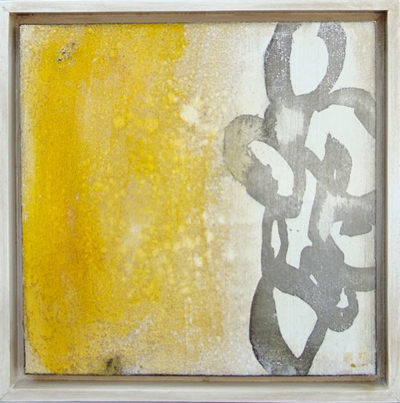
Petit 18, Michelle Y Williams
I found this part of your bio particularly beautiful: “In a stain, we find understanding; in a dent, our ability to heal; in a blemish, an unchained beauty.” Embracing your flaws can be a difficult process. How does your work help you do this?
Quite simply, the alternative to embracing flaws requires far too much negative energy. For me, perfection is boring and I truly find immense beauty in flaws – chips & cracks in tea bowls used in Japanese tea ceremonies or uncut & unpolished rough just-mined diamonds – these things excite and inspire me.
I hear you’re quite the humanitarian. What projects are you involved with?
I am an “equal opportunity donator”, giving my work with abandon to many different charitable organizations throughout the year.
David Grossmann always knew he wanted to be an artist. Even before his first painting lessons with his grandmother at 10 years old, he was an avid sketcher, filling notebooks with intricate drawings of dragons and the floor plans of medieval castles. By 16, David was taking portrait commissions and doing book illustrations for a publishing company. Still, he couldn’t quite discern a path that would turn his passion into something more.
“I didn’t know how to get there as far as making a living as a professional artist,” the 29-year-old says. Finding that bridge would take a while, but it’s safe to say that he’s officially crossed it. We’re proud to be the first gallery to represent David and his work. It’s just the latest high point in an already impressive artistic career.
David was born in the United States and moved to Chile when he was two years old. It’s a place of stunning, harsh natural beauty that would inspire in David a lifelong passion for the outdoors. His grandmother was a landscape painter who lived in El Paso, Texas. When they saw each other, she would teach him oil painting techniques with a brush and palette knife.
When David was 14, the family decided to relocate to Colorado. It was a move that the teenager fiercely resisted.
“When we left, I didn’t say goodbye because I hadn’t accepted that we weren’t going back,” he says. “I’m sure for anyone, being 14 is probably a tough age. On top of that, adjusting to a new culture and new everything was really difficult.”
“Away” by David Grossmann
The move marked a big shift in David’s art. Not long after he arrived the young artist started receiving requests for commissions, and he enrolled in his first formal drawing classes with artist Valorie Snyder. His grandmother was an art director of a Christian publishing company and gave him a job illustrating Bible study curriculums.
“It became more of an outlet for me than it had been before,” David says. “It was a lot more serious, a lot more figurative works. I also started drawing more landscapes at that point.”
Despite his early success, David still didn’t see art as a viable career. In college he studied business and Spanish, focusing primarily on his studies instead of his artwork. During his last year at university, struck by the fear of being trapped in a cubicle, he finally committed to giving art school a shot.
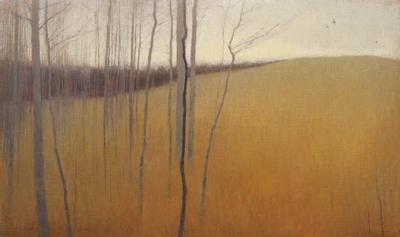
“When Leaves are Falling”, David Grossmann
At the Colorado Academy of Art, David learned classical painting techniques and took his first plein air painting class.
“I’ve always loved the outdoors, but until I took that class I felt like I couldn’t contain the landscape. It’s so huge, and I didn’t know how to make it into a composition,” he says. After he learned how to capture the beauty of nature on canvas, he knew that he’d be doing little else in his work. “That combination of being outdoors and painting, which were two of my favorite things, were just perfect for me,” he says.
Three years after David enrolled at the art academy, it abruptly closed. The artist once again found himself full of doubt; he’d learned a lot about painting, but he wasn’t sure how to sell his work. That’s when he started an apprenticeship with artist Jay Moore.
“In art school, my training was very much based on technique but not a lot on the professional side of things,” David says. Being in Moore’s studio gave him a window into the life of a working artist, and showed him that a fine art career was possible. “I didn’t know how long it would take to get there, but I knew that I could get there,” he says. “I remember being so excited. I’d been thinking about and dreaming about this for most of my life.”
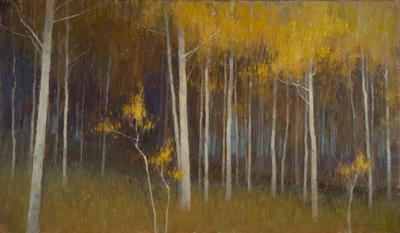
“Over the Aspens”, David Grossmann
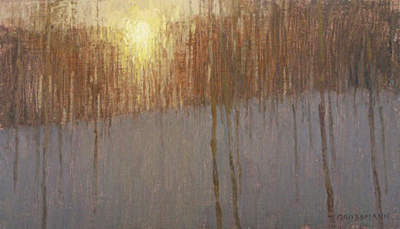
Since then, David has developed a unique style that the artist calls “visual poetry”. Using a gentle, glowing palette, he paints abstracted visions of forests that are melodic in their focus on rhythm and symmetry. Sprawling swaths of landscape transform into flat, smooth planes while scattered trees lend a profound sense of depth. These contrasting perspectives set the works slightly off-balance, sending the eye on an endless quest to consolidate them. The compositions may seem serene, but they contain the same mysterious kinetic energy that tugs our eye from one stanza of a poem to the next.
“I think both poetry and paintings can capture an essence of something and stir emotion and imagination at a very deep level,” David says. “In some ways it’s very simplified and thought out, but hopefully it reaches to that level that connects with someone’s heart.”
David has since shown his work in many exhibitions, including national shows sponsored by Oil Painters of America, the American Impressionist Society, and Salon International. Southwest Art Magazine featured him as an “Artist to Watch” and his work has been featured in Plein Air Magazine and American Art Collector Magazine.
The artist is also an avid traveler, and has journeyed with sketchbook in hand through the Western United States, Eastern Europe, Africa and Central America. In 2011, he finally had the chance to return to Chile. He saw old friends and spent 11 days backpacking through Patagonia in Southern Chile. It was the first time he’d brought along a full painting set on a trip.
“It’s very rugged country and I was carrying a backpack that weighed over 60 pounds,” David says. “Having to paint under those circumstances where there’s just forceful gusts of wind nonstop, it really made me appreciate that every painting is a miracle. It brought out a new level of confidence in my work.”
David had come full circle. He left Chile as a child and returned as an artist.
When Santa Fe visitors step into the Matthews Gallery, they often mention that something feels different. Our gallery location is in a historic adobe on Canyon road just like many of the other galleries so we have a hunch that the novelty they’re sensing is our devotion to carefully curating every wall of our gallery.
We show work from the 19th, 20th and 21st centuries. Our curatorial direction is to exhibit a variety of work from these eras that relate to the artistic development from impressionism to contemporary art. Here are some of the names that you won’t see anywhere else on Canyon Road—or even elsewhere in Santa Fe:
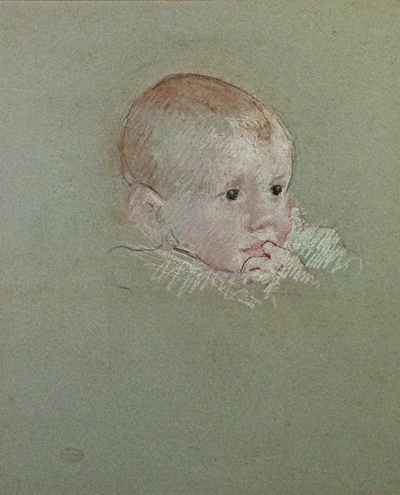
“Head of Baby with Finger in Mouth”, Mary Cassatt
Mary Cassatt (1844-1926) ~ The American painter and printmaker was refused entry to the Ecole des Beaux-Arts, so she studied the masters on her own at the Louvre. She would become a master herself, named one of “les trois grandes dames” of Impressionism by Gustave Geffroy.
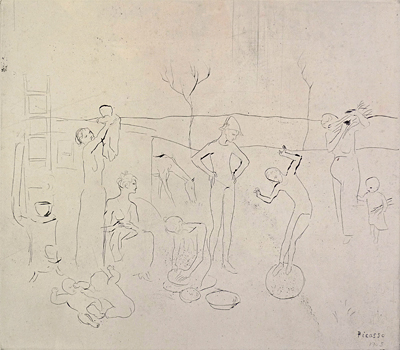
“Les Saltimbanque” by Pablo Picasso
Pablo Picasso (1881-1973) ~ Several works by the most influential artist of the 20th century have passed through the Matthews Gallery. Our most notable current work by Picasso is “Les Saltimbanque”. The drypoint etching the artist created as a teenager shows the harlequin, a personal symbol that would recur in his work throughout his career.
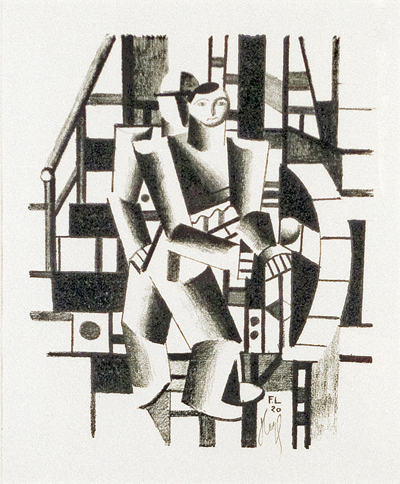
“Composition aux deux Personnages” by Fernand Leger
Fernand Leger (1881-1955) ~ The painter, sculptor and filmmaker’s lithograph “Composition aux deux Personnages” marked a shift in his oeuvre from Cubism to bold figurative works that would later identify him as a forerunner of Pop Art. As is the fate of all art movements, Picasso and Braque’s Cubism were irrevocably fractured.
“Blue Nude” by Harold Frank
Harold Frank (1917-1995) ~ Born in Southampton, England, Frank’s family moved to New York when he was a child. You can see influences from both shores in his colorful canvases that take cues from modernism and abstract expressionism.
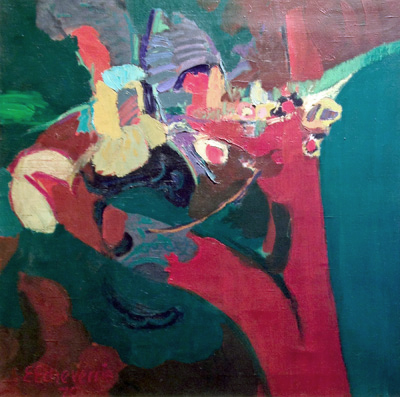
“Alic” by Enrique Echeverria
Enrique Echeverria (1923-1972) ~ Echeverria and his contemporaries brought the ideas of modern European art movements to Mexico and subverted the traditional figurative painting style. They became known as the Generacion de la Ruptura, the Rupture Generation.
“Avian Keepers” by Robert W. Hinds
Robert W. Hinds (1924- present) ~ This World War II veteran was born a year after Echeverria. He had a successful graphics career for years before moving to Europe to study casting techniques in Italy and Bologna. Now he produces figurative bronze sculptures that are collected throughout the world.
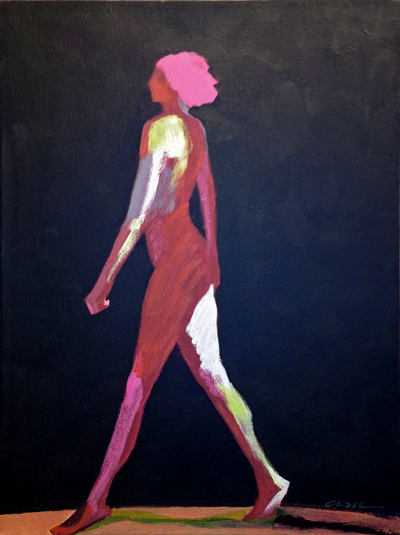
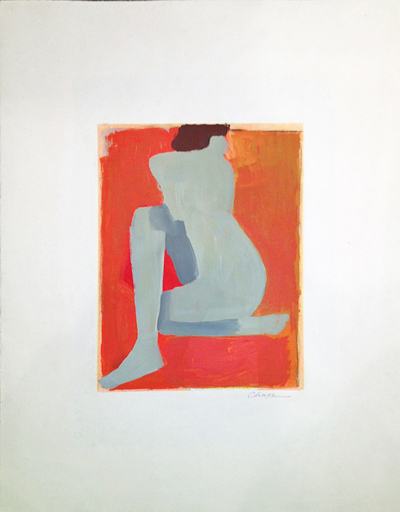
“Untitled Grey Nude on Orange” by Jamie Chase
Jamie Chase (1954- present) ~ The painter and graphic novelist was born in California, and traveled to Europe to educate himself on the work of the masters. He moved to Santa Fe in 1980, where he’s now known for his non-objective paintings, abstract landscapes and abstracted figurative paintings.
Browse all of the artists we represent here, and follow our Facebook and Twitter accounts for updates on their work.
Film gives us the invigorating opportunity to see long dried canvases shine bright and wet again. Telling a beloved artist’s story to the world’s satisfaction is more than just a process of retracing her brushstrokes, though. Our first five selections for best art movie are willing to take as many creative risks as the artists they profile.
Frida (2002)– This biopic of the Mexican surrealist was stalled for years until Salma Hayek took the helm as producer and lead. Hayek and director Julie Taymor paint the story of an artist who suffered through crippling physical mutilation and bottomless heartache with the most vivid palette. That was Kahlo’s outlet and weapon, after all, even as she lay in bed while her sometime husband Diego Rivera gained global notoriety for his own work. It helps to know the story’s true ending, even if it would be a bit capitalistic for Kahlo’s tastes. It’s not Rivera’s face you’ll find in the window of every Santa Fe gift shop.
Lust for Life (1956)– A bearded, bedraggled Kirk Douglas is mesmerizing as Vincent van Gogh in this classic portrait filmed in Holland and France. It’s a career highlight for Douglas, but Anthony Quinn steals the show in his Oscar-winning turn as Paul Gauguin, who admires Van Gogh’s work but finds that he can’t stand the man himself. Some of the film’s best scenes are in its quieter moments, when the famously volatile Van Gogh picks up a brush and pours out his emotions on canvas.
Modigliani (2004)– “The future of art is in a woman’s face. Tell me, Picasso, how do you make love to a cube?” sneers Modigliani, waving a rose in the air. It’s Modigliani‘s best moment, and it really happened. The rest of director Mick Davis’ high energy film bends the truth a bit, but it all works in the way Woody Allen’s Midnight in Paris did. Famous figures are always dropping by for self-aware bit parts that keep the film light on its feet. It’s the artist’s story told in the manner that Parisians must have gossiped about it just after his death at 35. All of the pieces are there, but their order gets more muddled with each delicious glass of absinthe.
Pollock (2000)– Director Ed Harris’ film is as much about Jackson Pollock’s alcoholism as his art, and though we know that the artist’s addiction will win in the end, all of the tension of his controversial rise, tumultuous personal life and tragic death in a drunk driving accident holds us captive. Harris, who plays Pollock, and Marcia Gay Harden as Lee Krasner are so driven in their portrayal of abstract expressionism’s royal couple that when the paint starts flying, you’ll believe it’s really Pollock holding the brush.
Artemisia (1997) – Italian Baroque painter Artemisia Gentileschi’s long, extraordinary artistic career is often eclipsed by the events surrounding her rape as an 18-year-old. Director Agnes Merlet chooses to tell only that small piece of her story in Artemisia, and fudges the details a bit by turning it into a love story. The film’s saving grace is Valentina Cervi, who plays Gentileschi with fierce passion. When Cervi’s face fills the screen, as it often does, her expressive eyes tell the whole story.
Check out our final five picks for best art film, and follow our Twitter and Facebook feeds for more art meditations.




 MATTHEWS GALLERY BLOG