HART & SOUL: Fine Furniture with New Mexican Roots

Roch-Hart-Southwestern-Furniture

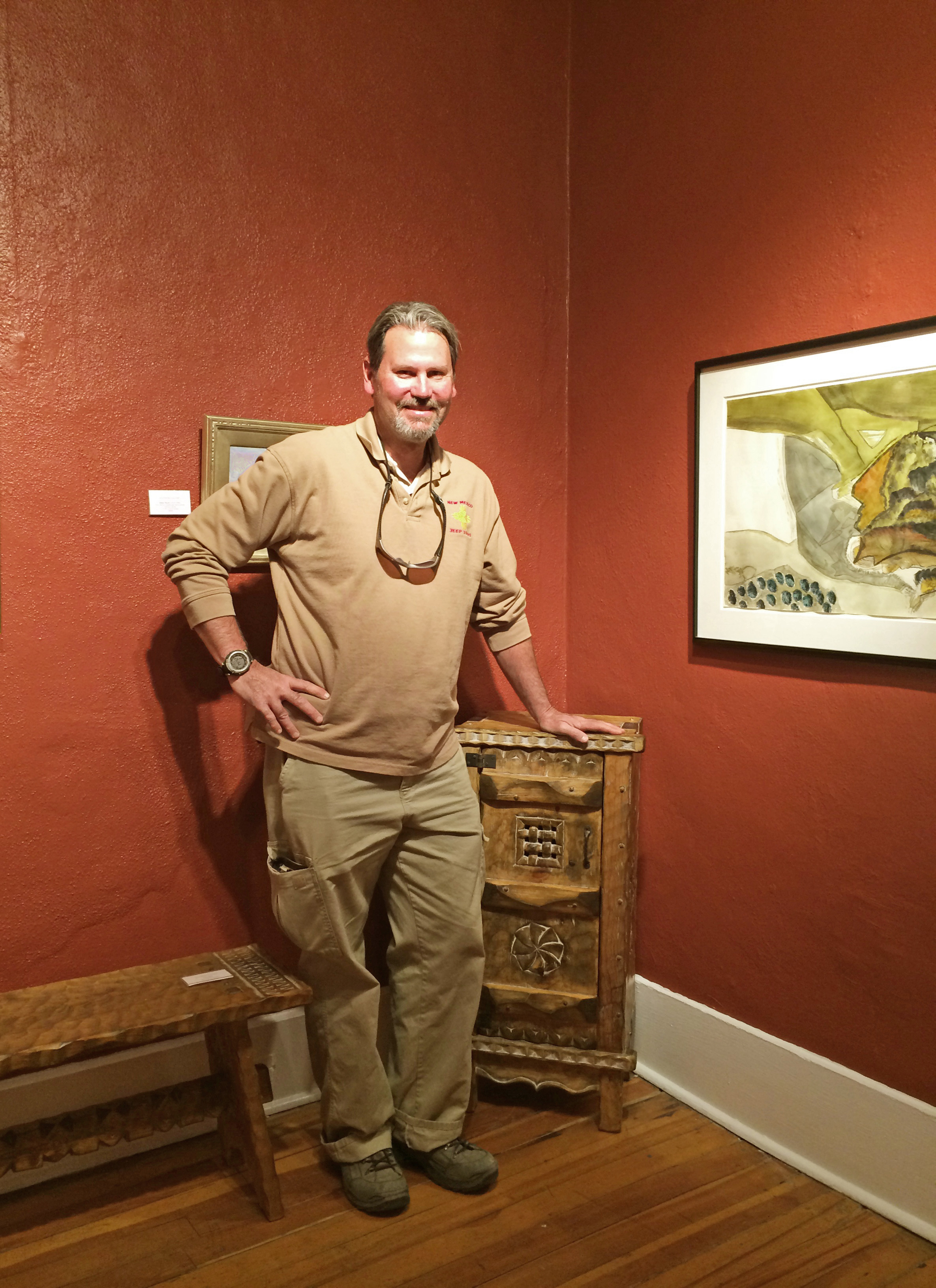
Roch in our Southwestern Art Room with his hand crafted pie safe and bench

Roch Hart‘s first steps into fine furniture making were the result of a big dilemma.

“I fell in love with Spanish colonial furniture. I had to have it, but I couldn’t afford it,” he says. He had never learned a craft before, but he was determined to do something. He started by buying all the books he could find on building furniture.

More than two decades later, Roch pulls up to Matthews Gallery in a big red jeep. He takes two impeccably hand crafted pieces of furniture from the trunk. One is a tall corner table emblazoned with a Cochiti Pueblo-inspired design, and the other is a pie safe with intricate latticework and a special type of dovetail joint in the door. Roch is the very first fine furniture maker to join our stable, and his mastery of the craft is truly spectacular. In a way, these beautiful objects are generations in the making.

Roch’s great grandmother came to Santa Fe in 1881. She was a single 16-year-old woman who braved the Old Santa Fe Trail, probably to escape an arranged marriage. Soon after her arrival she married a German man and they opened a mercantile near Canyon Road.

“She came from an aristocratic family. She had lots of money, but she chose the poor man’s way in,” Roch says. Her daughter, Roch’s grandma, grew up among the local tribespeople and learned their language and lifestyle. “My grandmother would go out and show me edible plants, and she could even butcher things,” Roch explains. “She could take a rabbit, take and a stick and ‘Bang!’ Then she would show you how to prepare it.”

She was also a great admirer of native art. She taught Roch about kachina dolls and paintings she collected. Roch’s mother took it one step further, trying her hand at retablo painting.

Roch took a different path, enrolling at New Mexico State University and then studying to be a police officer. He spent 20 years at the Albuquerque Police Department, but his love for New Mexico’s multicultural history always stuck with him.
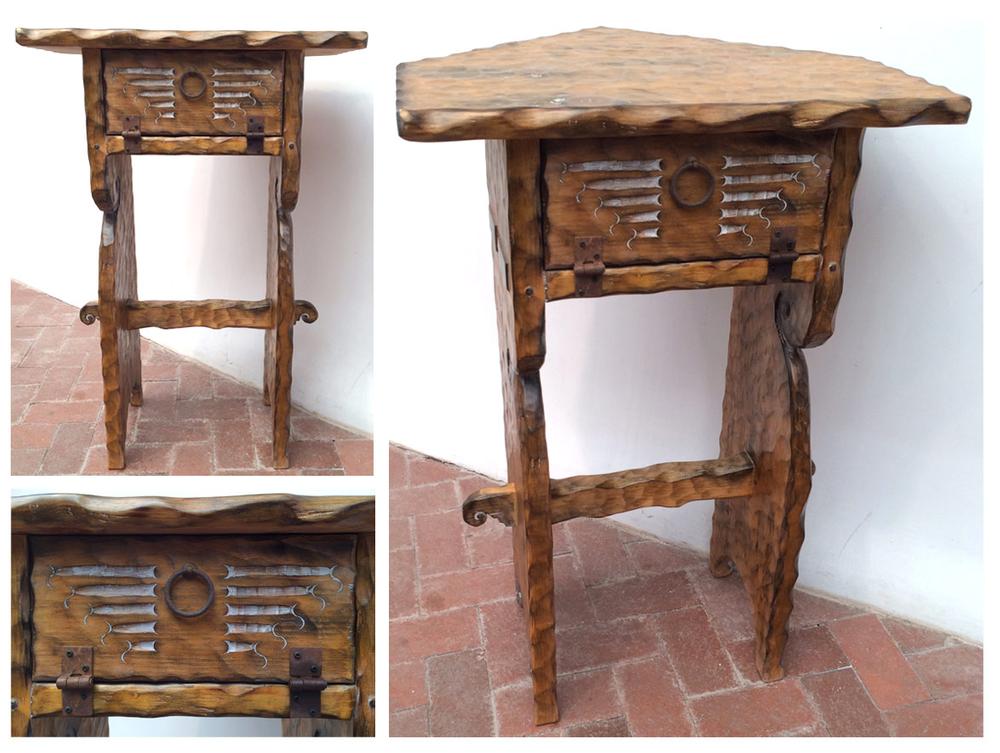
Roch-Hart-Furniture-Corner-Table

Corner table with Cochiti design detail

When he got interested in furniture making in the early 1990’s, Roch started by studying the intricacies of the Spanish colonial style. He learned that a particularly sturdy joint, the mortise and tennen joint, was the only one Spanish colonists were legally allowed to use. He also discovered that the pervasiveness of trasteros (a Southwestern style cabinet) was due to a high colonial tax on closets.

“At the same time that I was learning all this, I realized I wanted to do something different,” Roch says. “I didn’t want to keep replicating colonial.” The budding craftsman’s big breakthrough came on a visit to the Nicolai Fechin House museum in Taos.

Fechin (1881-1955) was a Russian painter and craftsman who settled in New Mexico in 1927. He purchased a two-story adobe home and greatly expanded it over the next few years, carving intricate doors, windows and furniture pieces that were inspired by European and Native American aesthetics.

On that first visit to the museum, Hart was busy crawling on the floor and inspecting every angle of Fechin’s furniture when the artist’s daughter Eya appeared. They started talking, and she recognized his passion for the craft. “She had so much in-depth knowledge, and I didn’t even know who she was,” Hart says. She walked him through the house and pointed out different styles and techniques her father used.

“Fechin blew me away,” Hart says. “He took art and applied it to furniture. I had felt caged in by the things I was learning, but all of a sudden I realized I could do anything I want.” Just as Fechin had drawn from multiple influences in his work, Hart began to use styles and motifs from the different cultures around him.

Roch-Hart-Furniture-Pie-Safe

Pie safe with rosette detail 

Hart carries his latest works through the gallery to our freshly painted Southwestern art room, carefully placing two pieces in opposite corners. He’s eager to point out his stylistic choices. The rosettes on the sides of the pie safe are inspired by Native American metalworking techniques, his choice of joints was influenced by Fechin and the gridded design in the front is all his own. On the front of the corner table, a stepped carving bordered by elegant curves represents a Cochiti blessing.

“I incorporate my love for the Native arts, for the Spanish and for my European ancestry,” Hart says. “I try to tie a little bit of everything into every piece.” The works before us bear clear markings of the artist’s rich ancestry and influences, but they also hold a heaping dose of something else: Hart’s soul.

“I think furniture should be art,” Hart says. “It’s unique and really fits my love for Santa Fe and New Mexico.”

For more news about Roch Hart’s latest work, check out his artist page on our website and connect with Matthews Gallery on Facebook, Twitter and Pinterest.
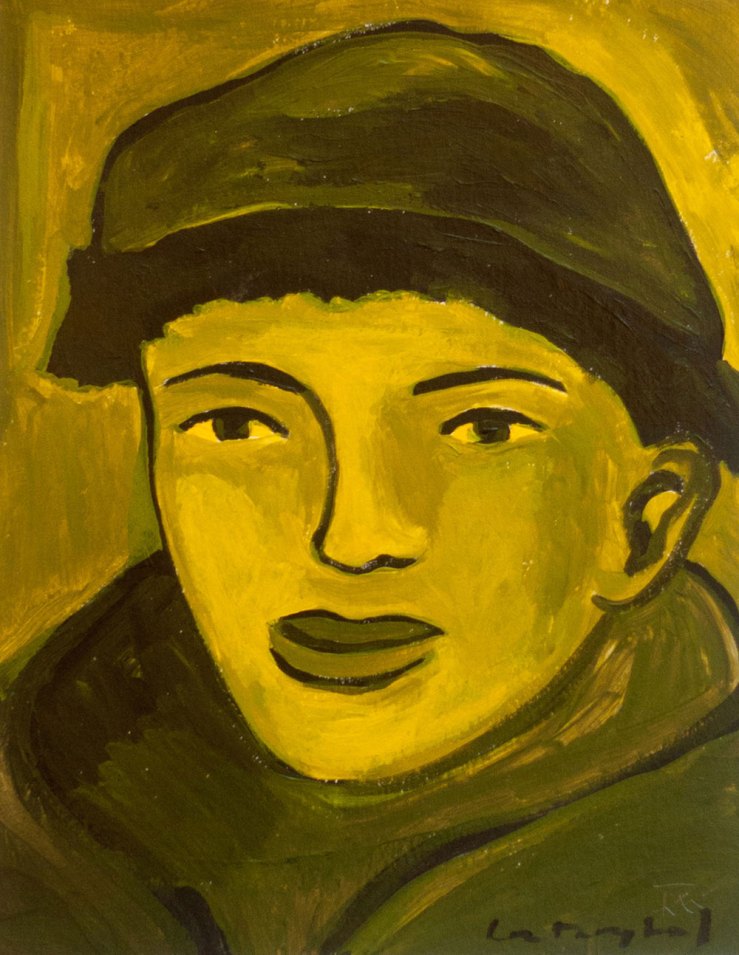
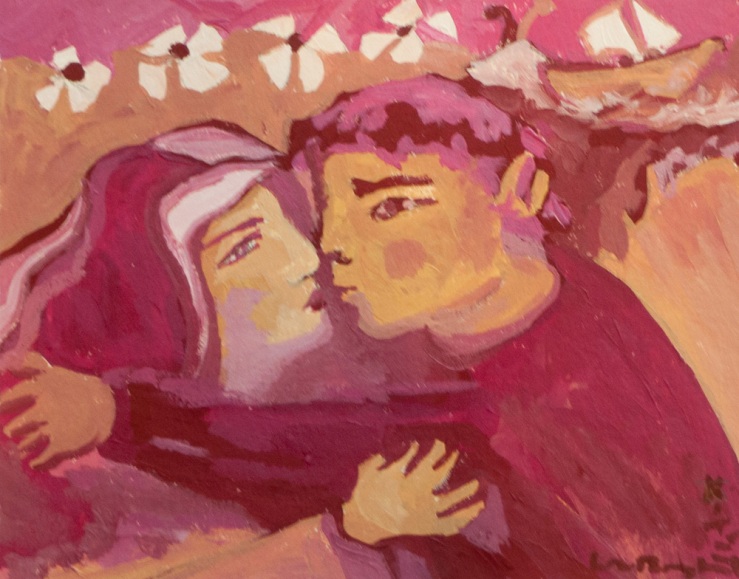
LOR’S LORE: Introducing Artist Lor Roybal

Lor Roybal- Dodge's Disbelief- Matthews Gallery

Lor Roybal, Dodge’s Disbelief, acrylic on paper
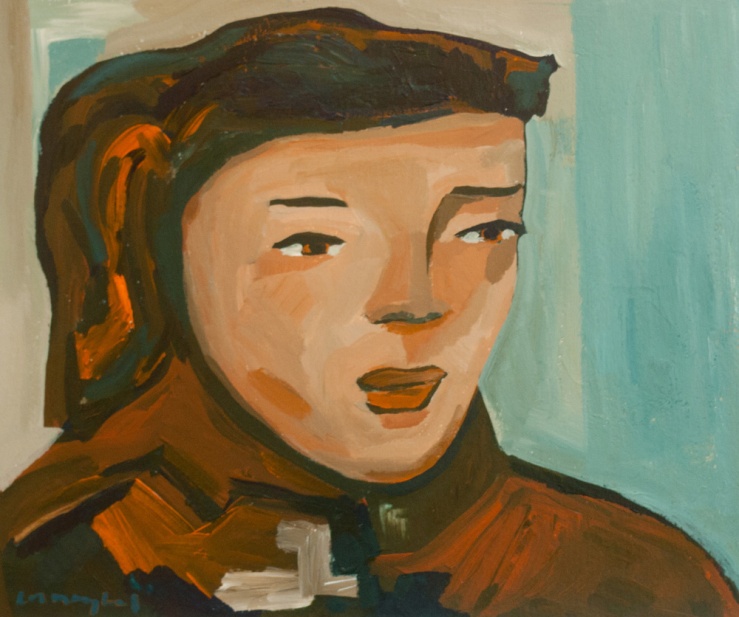
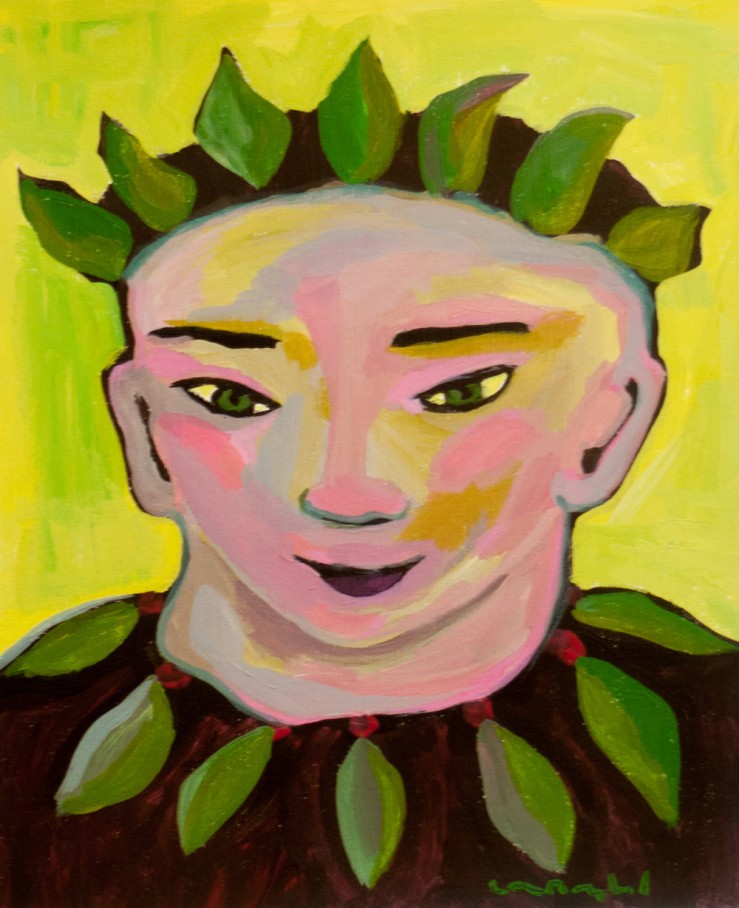
When Lor Roybal‘s big blue van pulls up in front of the gallery, we’re never quite sure what’s in store. She’s a blur of swirling textiles as she bursts through the door with something bright and colorful in tow. Her specialty is portraits, usually of characters from dreams or her vivid imagination. Sometimes she carries a box packed with miniature paintings and other times she holds a large frame in her hands. Once she brought by a loose stack of old sketches and wild free verse poems.

Lor is a familiar face in Santa Fe’s art community, but no one seems to know much about her. She lives somewhere along the Pecos River north of Santa Fe. Her two-room house is off the grid so she heats it using firewood in the winter. Her dog is her closest companion and painting is her favorite pastime. She is a scholar of art history.

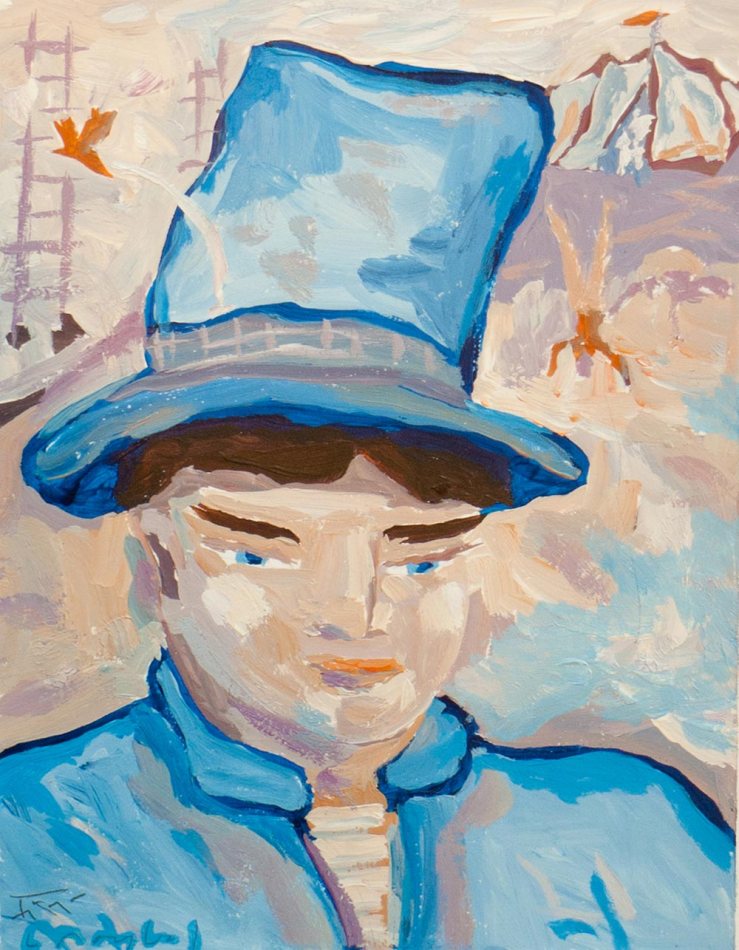
“When I first started showing people my little paintings, I would say, ‘Here’s my treasure chest of gems,'” Lor once told us. There’s definitely something precious about Lor’s colorful faces. Each subject has a name and thorough biography. There are daring circus performers and pensive poets, gossipy grandmothers and mischievous little boys, cherubic elves and long-departed spirits. Some of the figures are intelligent riffs on other artists’ styles, from Picasso to Chagall to Renoir, but all possess a wild twist of Lor’s style.

Lor is now officially part of our stable, and we couldn’t be prouder to represent her. As you’ll see in her latest batch of acrylic paintings on paper, the artist is truly one-of-a-kind. Check out some of the work below, and connect with us on Facebook, Twitter and Pinterest for continued updates.

Lor Roybal- Posi- Matthews Gallery

Lor Roybal, Posi, acrylic on paper

Lor Roybal- Emiles Incredulity- Matthews Gallery blog

Lor Roybal, Emile’s Incredulity, acrylic on paper

Lor Roybal- Stendhals Boat- Matthews Gallery blog

Lor Roybal, Stendhal’s Boat, acrylic on paper

Lor Roybal- Young Clown Lujo- Matthews Gallery blog

Lor Roybal, Young Clown Lujo, acrylic on paper

From MoMA to Matthews: Gauguin’s Metamorphoses

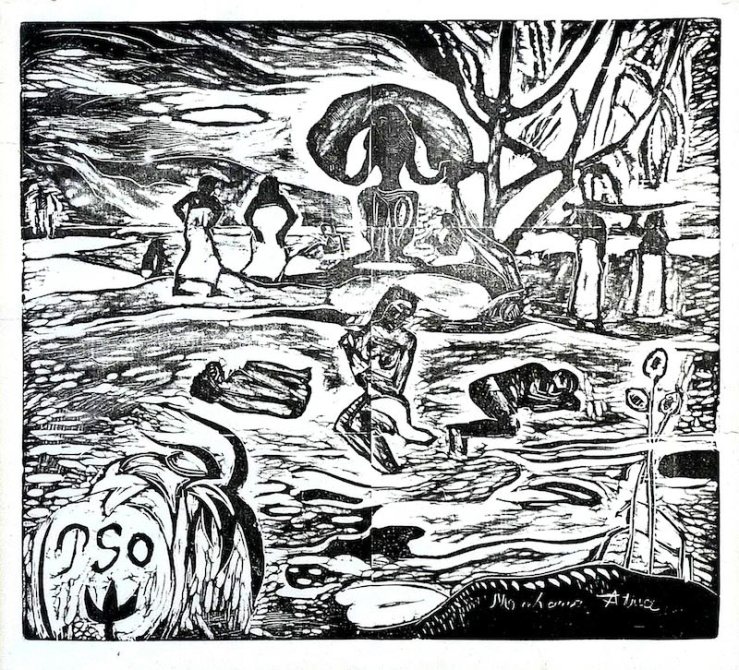
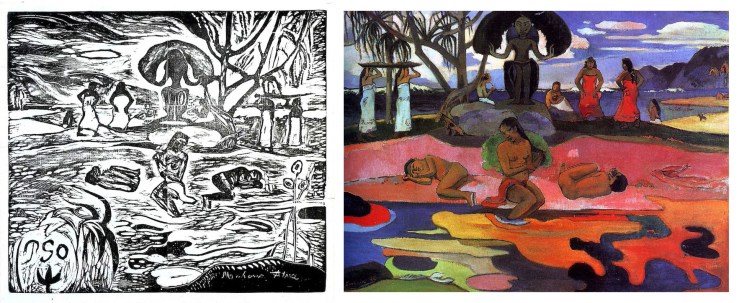
Paul Gauguin - Mahana No Atua - Matthews Gallery Blog

Paul Gauguin, The Day of God (Mahana No Atua), woodcut

There’s no record of what Paul Gauguin’s last lover Marie-Rose Vaeoho thought of him, but their courtship must have been rough. By the time Gauguin reached the Marquesan island of Hiva Oa in 1901, he had eczema, syphilis, malaria, tooth rot, a heart condition and a very bad liver. Local teen Marie-Rose gave birth to his daughter in September of 1902, and he died on May 8, 1903. Gauguin’s body was already rotting in the tropical heat during the burial.

This distasteful finale is an ill-fitting epilogue to Noa Noa, Gauguin’s fanciful (and mostly false) account of his early travels in Polynesia. The artist’s twilight years may have been ruled by destruction and decay, but he clung to themes of rebirth, transformation, divinity and utopia in his art and writing. The New York MoMA’s new exhibition Gauguin: Metamorphoses centers on woodblock prints and other works on paper that he produced between 1889 and the time of his death. At Matthews Gallery we have two Gauguin woodblock prints from the same period that he made to accompany his Noa Noa memoir.

From MoMA:

 These remarkable works on paper reflect Gauguin’s experiments with a range of mediums, [including] radically “primitive” woodcuts that extend from the sculptural gouging of his carved wood reliefs […]. Gauguin’s creative process often involved repeating and recombining key motifs from one image to another, allowing them to evolve and metamorphose over time and across mediums.

For Gauguin, the printmaking process was a natural extension of this mercurial philosophy. It allowed him to mirror and tweak imagery between prints and even in different runs of the same print.

 In New York, you can see several versions of Gauguin’s Noa Noa woodblock prints. In Santa Fe, come track the evolution of the series through two of our works. Here’s a peek—

Paul Gauguin- Mahana No Atua- Woodblock print and painting- Matthews Gallery Blog

The Day of God (Mahana No Atua), our woodblock print and the painting

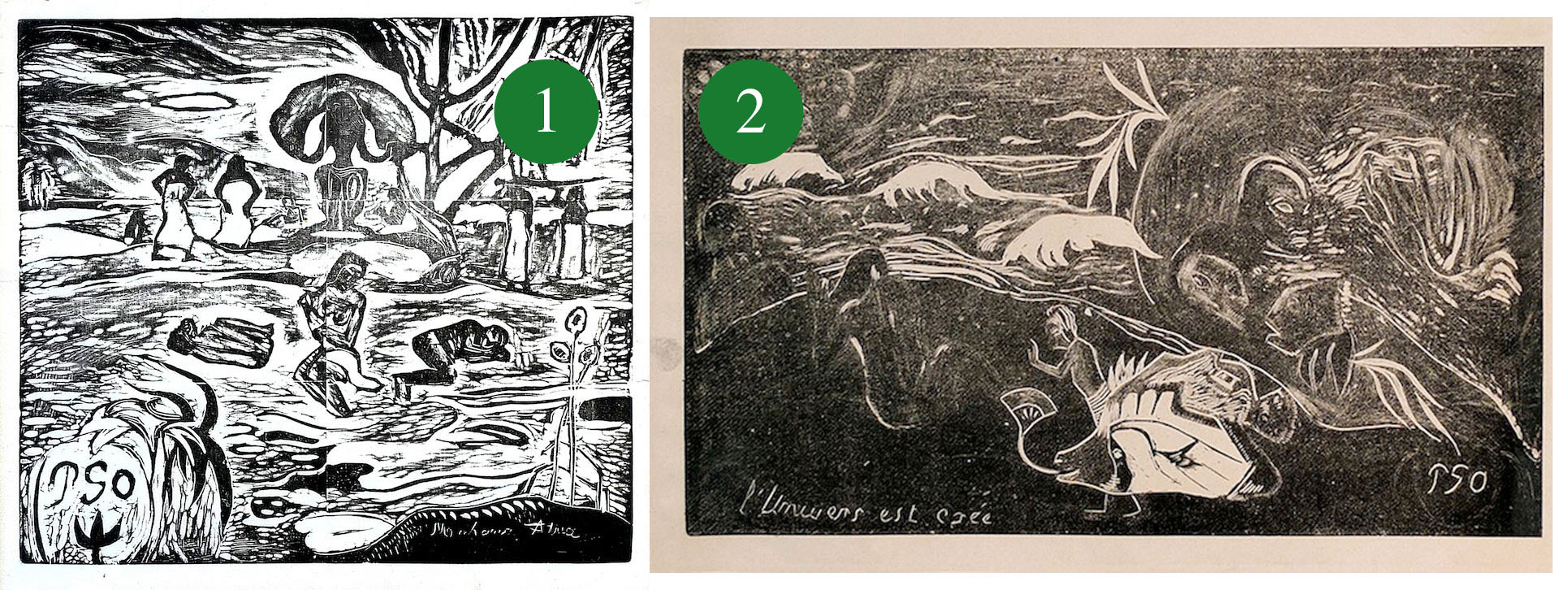
Our woodblock print and its oil counterpart were created around the same time and are close mirror images of each other. Both show three women on a shore with a Polynesian sculpture (based on carved Buddhist reliefs from Java) rising above them. In the painting, our eyes are drawn to the bright colors and wild abstract forms of the water. In the print, the women and the statue stand out as bold graphic elements, highlighting the symmetry of the composition.

Gauguin’s decision to reverse the composition from one work to the other brings up some interesting interpretive questions. The three women in the foreground may represent birth, life and death. If their positions can be so easily flipped, perhaps life’s course isn’t so linear either. Viewed together, the works form a loop that reflect Buddhist beliefs concerning rebirth.

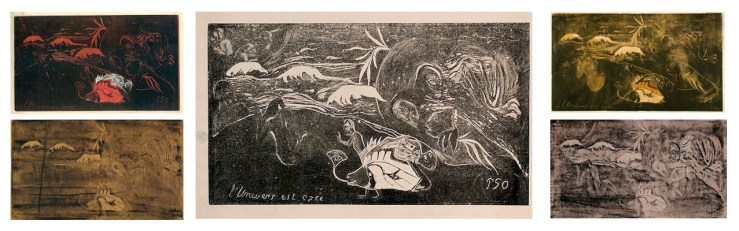
Paul Gauguin- LUnivers Est Cree- 5 Versions- Matthews Gallery Blog

Five versions of Paul Gauguin’s L’Univers Est Cree, including ours (center)

We’ve written about our version of L’Univers Est Cree on the blog before, but Gauguin, his son Pola and artist Louis Roy made several print runs from the block. Some are crisply defined and others are murky with only a few details clearly in view. Some incorporate bright reds and yellows, while others are starkly monochrome.

When Gauguin presented his Noa Noa prints in a private studio show in Paris in 1894, he hung several versions of each print. The decision seems like the artist’s acknowledgment of his futile struggle to embrace a paradaisical version of his island experiences. As scholar Alaistar Wright puts it, the repeated, ever-changing images “allowed him to reflect on the impossibility of having any authentic experience in his dreamed-of Polynesian idyll.”

Visit us at Matthews Gallery to see Paul Gauguin’s incredible woodblock prints. To learn more, read our blog post about “L’Univers Est Cree” and listen to Lawrence’s accompanying podcast.  For daily gallery news, connect with us on Facebook, Twitter and Tumblr.

MEMORY IN BLUE: Jan van Leeuwen

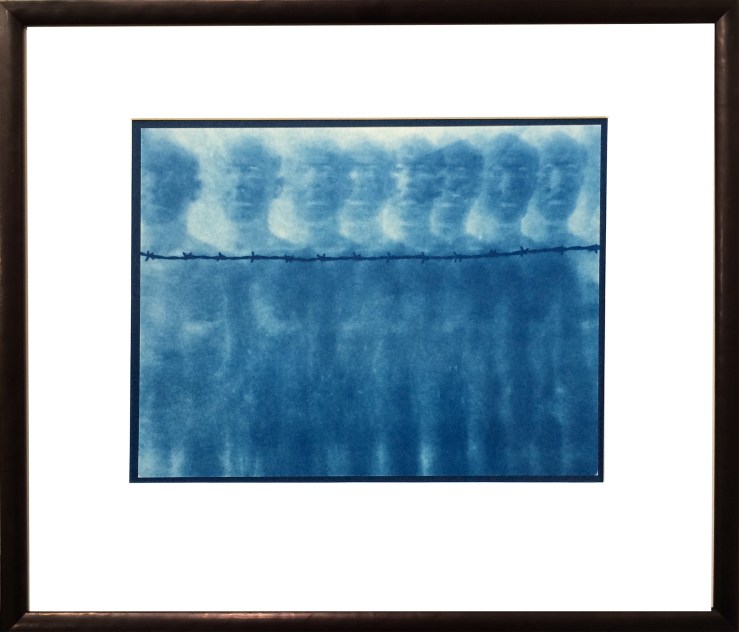
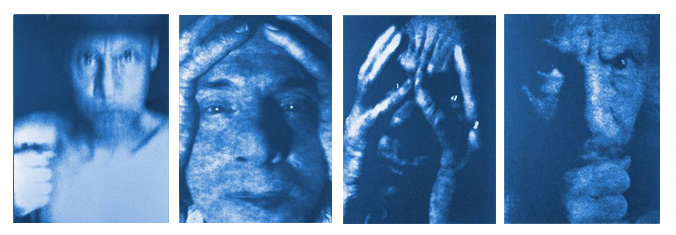
Jan van Leeuwen- Barbed Wire Number 1- Matthews Gallery Blog

Jan van Leeuwen, Barbed Wire No. 1 (Cyanotype), Matthews Gallery

What color is memory? Is the human soul tinted by life’s great joys and sorrows?

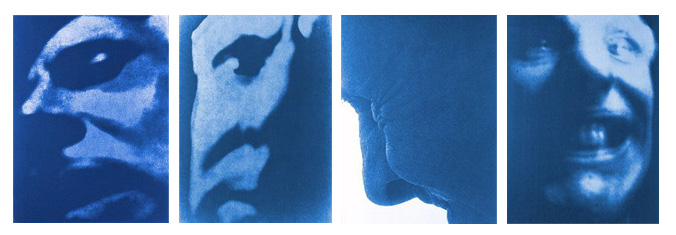
Jan van Leeuwen‘s darkest recollections are a deep blue tide. His self-portraits take shape much like memories do. It’s a long process with details fading in and out of focus, projecting visions of the self that never feel quite complete. It took a lifetime for the photographer to discover his medium, but when he did the images came spilling out.

Jan van Leeuwen- Cyanotype Portraits- Matthews Gallery Blog

Leeuwen was born in Amsterdam in 1932. In 1940, when the artist was 8 years old, the Dutch surrendered to the Nazis and Leeuwen watched as his community fell apart. Jewish neighbors and schoolmates fled or were taken. Over the course of the four-year occupation, the young boy’s confusion turned to anger, frustration and guilt.

Leeuwen’s first career was as a kitchen wares distributor, and he learned how to work a camera by photographing the products. He took his first serious stab at the medium in 1986 when he was in his 50’s, mostly so he’d have something to do when he retired.

Jan Van Leeuwen- Cyanotype Portraits- Matthews Gallery Blog

Drawing inspiration from the innovative spirit of the Dutch Renaissance masters, Leeuwen developed his own method of producing photographs. He uses a 100-year-old wood camera to capture an image on resin-coated paper, creates a negative and then makes a contact print using a UV-B lightbox.

The process of capturing and transferring the images echoes the artist’s struggles with the trauma he experienced in his youth and the impact it has had on his identity. For the cyanotype in our collection, the artist used a long exposure to fracture himself into eight meshed figures. The only thing starker than their furrowed brows is the strand of barbed wire that stands in their way.

Jan Van Leeuwen- Cyanotype Portraits- Matthews Gallery Blog

Leeuwen created Barbed Wire No. 1 in 1993. A year later he quit his job to pursue photography full-time. Since then he’s had a stellar contemporary art career, with shows across the world and artwork in The Photo Review, Art in America and many other publications.

The artist’s success hasn’t dampened the intimacy of his self-portraits, or lightened the burden of his memories. However, Leeuwen reminds us that sadness is accompanied by beauty, and creation always surmounts the pain of destruction.

Learn more about Jan van Leeuwen’s art and life on the Matthews Gallery homepage, and connect with us on Facebook, Twitter and Pinterest for more gallery news.

PICASSO GETS BURNED: 5 strange facts about the Vollard Suite

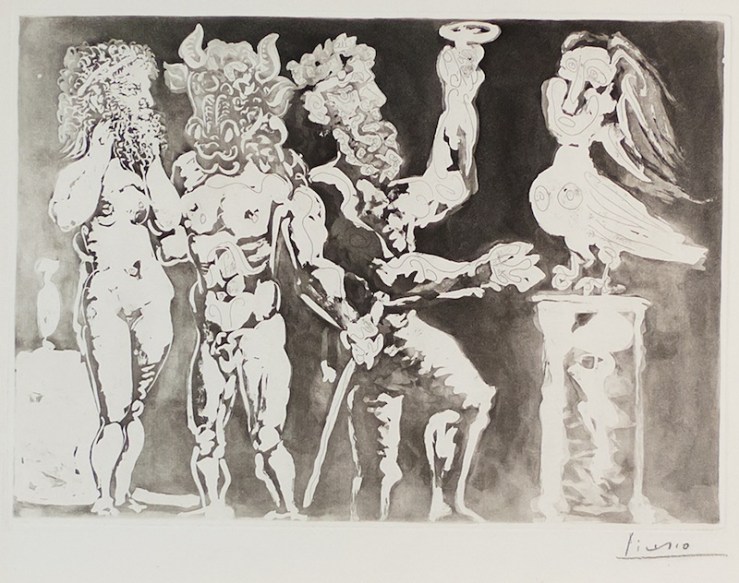
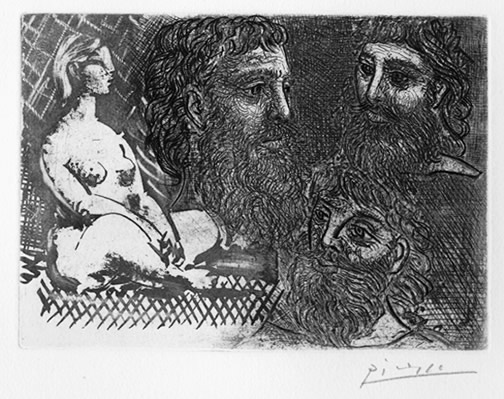
Pablo Picasso- Personnages Masques et Femme Oiseau- Matthews Gallery blog

Pablo Picasso, Personnages Masques et Femme Oiseau, aquatint and etching

When it came to marketing himself, art dealer Ambroise Vollard (1866-1939) was a pro. He had a knack for scouting out young artists with rockstar potential and he wasn’t afraid to ask for favors later on. Vollard gave Pablo Picasso his very first gallery show in 1901. By 1930, Picasso was world-famous and Vollard enlisted him for a special commission. In exchange for paintings by Renoir and Cezanne, Picasso would create a series of 100 etchings ending with three portraits of Vollard.

What better way to immortalize yourself? Picasso completed the Vollard Suite over the next seven years, and it would become one of his most famous print suites. The first etchings in the series are in the neoclassical style and show a sculptor in the studio with his beautiful muse. As World War II set in, Picasso turned to darker subject matter culled from Greek mythology. A friendly minotaur appears, but soon grows agitated and violent. By the end of the series the minotaur has lost his vision and wanders aimlessly.

At Matthews Gallery we have the 24th print from the series, titled “Masked Characters and Bird Woman“. In our research on the print, we’ve discovered some pretty weird facts about the Vollard Suite. Five things you (almost surely) didn’t know:

1.  Armed Art Critics Attack! 

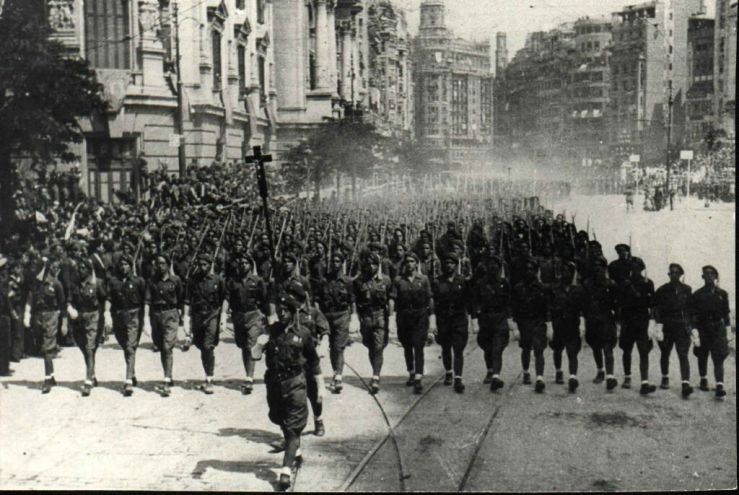
Guerrilleros de Cristo Rey tear down Picasso's Vollard Suite- Matthews Gallery Blog

Spanish paramilitary group Guerrilleros de Cristo Rey on the march

Aside from Steve Wynn 0r Olga Dogaru, Picasso’s most violent critics might just be fascist paramilitary group Guerrilleros de Cristo Rey. Picasso finished the Vollard Suite in 1937, but Vollard’s untimely death in 1939 and World War II prevented the prints from going on the market until the 1950s. In the 1970s, the series starred in a short-lived exhibition in Madrid. In protest of Picasso’s political views on the Spanish Civil War the Guerrilleros stormed the show, tore down the prints and burned them with acid. Ouch.

2. Death by Foot

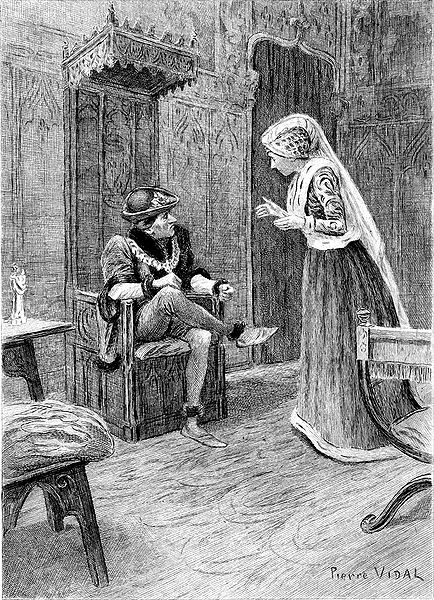
Honore de Balzac's The Unknown Masterpiece inspired Picasso's Vollard Suite- Matthews Gallery Blog

Image from Honore de Balzac’s The Unknown Masterpiece

Sometimes, art kills. Scholars have tied the Vollard Suite to Honore de Balzac’s short story “The Unknown Masterpiece.” The tragic tale chronicles an artist’s frustration at his inability to capture a model’s supreme beauty on canvas. He manages to paint her foot, but soon gives up and commits suicide in despair. Picasso explores similar themes in his etchings. His lover Marie-Therese Walter appears throughout the series, at first as his adoring model and then as a girlish guide to the blind minotaur. The artist has lost his power to capture his model in his art, and now she nimbly leads him toward death.

3. Sweet Art

Pablo Picasso used a sugar life aquatint technique in his Vollard Suite- Matthews Gallery Blog

Sugar lift aquatint from the Vollard Suite

It seems Picasso had a sweet tooth. The ever innovative artist experimented with new printmaking techniques for the Vollard commission, including dry point and aquatinting. The latter method allows the artist to create varying tones on the print using particles of rosin and an acid. Sugar lift aquatinting is a sweet variation. A layer of sugar syrup is applied to parts of the print and then burned off with acid to create dark fields on a white ground (see the dark patches in the image above).

4. Clairvoyant Pablo

Was Pablo Picasso psychic? - Matthews Gallery Blog

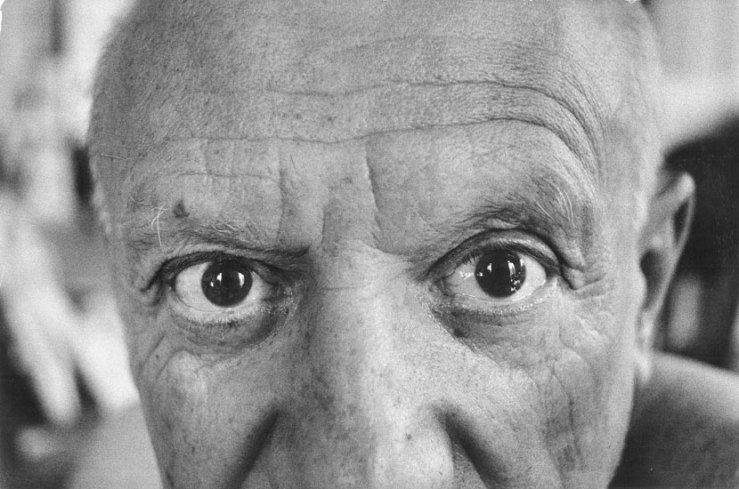
Picasso possessed many artistic talents, but was he also a fortune-teller? One of the Vollard prints shows a model who is a doppelgänger for Picasso’s lover Francoise Gilot, though it prefigures their relationship by over ten years. Third eye or not, the artist noted Gilot’s resemblance to his archetypal female figures when he met her. It made quite the flattering pick-up line.

5. Vollarchitecture

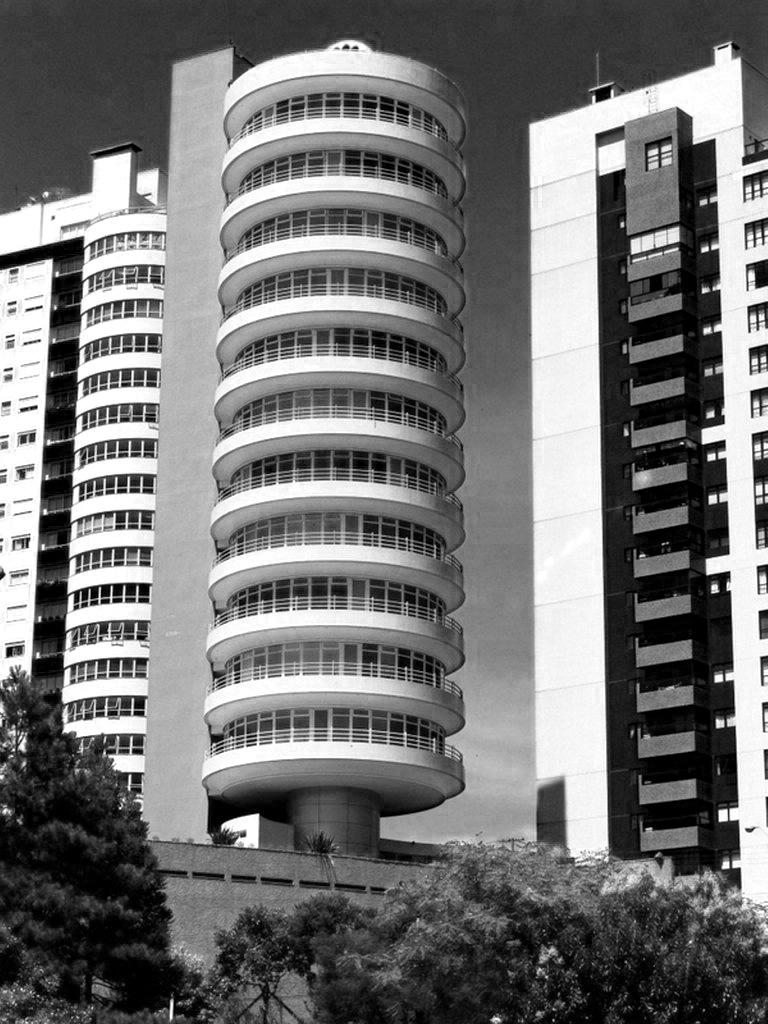
Vollard Suite in Brazil named after Picasso Print Series - Matthews Gallery

The Vollard Suite in Curitiba, Brazil

In more recent news, the world’s first rotating building is named after the Vollard Suite. The futuristic residential complex in Brazil opened in 2001 with an exhibition of Picasso’s prints. Its design resembles a Greek pillar, a reference to Picasso’s neoclassical style in the suite (check out the bird lady’s perch in our print). The skyscraper’s $400,000 apartments turn 360 degrees every hour. It might sound dizzying, but something tells us the extravagant artist would approve.

Learn more about our Vollard print here, and connect with us on Facebook, Twitter and Pinterest for more news from Matthews Gallery!

ONE WORK OF ART: Marc Chagall’s “Paris L’Opera”

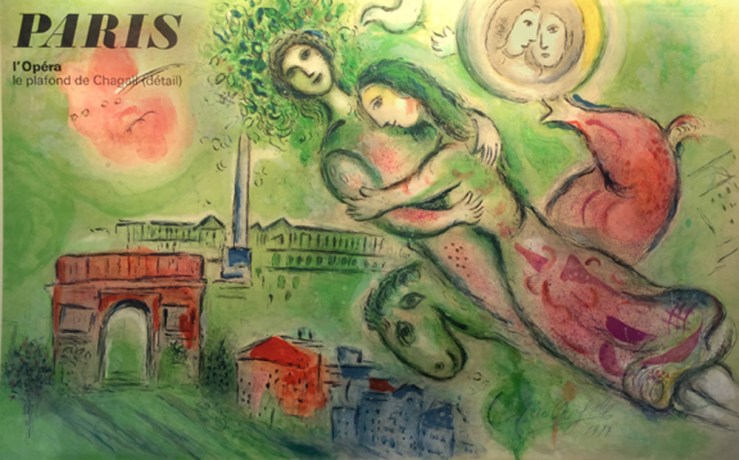
Marc Chagall- Paris L'Opera- Matthews Gallery Blog

Marc Chagall, Paris L’Opera poster, Color Lithograph

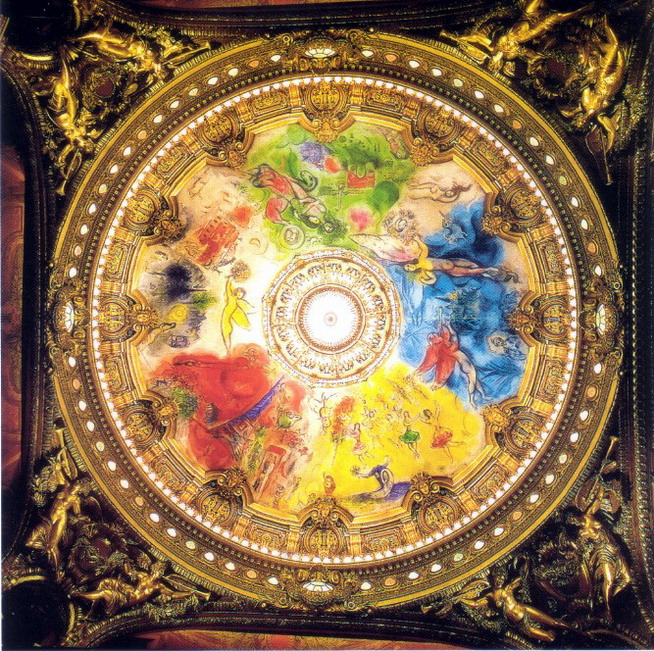
When Marc Chagall (1887-1985) was commissioned to redo the ceiling of the Paris Opera in 1963, not everyone in the City of Lights was happy about it. The Russian-Jewish artist didn’t have a drop of French blood, and he was also a modernist. Critics worried that his vibrant palette and “primitive” style would clash with the pseudo-classical interior of the building. It was sure to be “die Faust auf’s Auge“—a punch in the eye—for cultured opera fans.  
Chagall might not have been everyone’s favorite, but he certainly had good credentials. Before moving from Russia to Paris in 1910, he studied under a well-known theatre designer in St. Petersburg. Years later in 1958 the Paris Opera hired him to design the sets and costumes for Maurice Ravel’s ballet Daphnis et Chloe. That same year, he embarked on his monumental stained glass project for the Metz Cathedral
Paris Opera- Marc Chagall's Ceiling- Matthews Gallery Blog
Paris Opera
After he saw a performance of Daphnis et Chloe, French minister of culture Andre Malraux had no doubt Chagall was capable of covering the 560-square-meter stretch of ceiling surrounding the opera house’s crystal chandelier. Ignoring the bluster of the arterati, he set Chagall to work painting panels for an enormous removable frame that would cover the original Baroque-style mural by Jules-Eugene Lenepvue. 
Chagall divided the space into several color zones and wove together scenes and characters from the most beloved operas and ballets. The mural would honor the works of fourteen composers, from Mussorgsky to Mozart and Beethoven to Tchaikovsky.
Chagall’s ceiling (or, in French, le plafond de Chagall) was unveiled on September 23, 1964 during the finale of a Mozart symphony, the artist’s favorite composer. As the music swelled the great chandelier lit up to reveal the mural. Et voilà:
Marc Chagall's Ceiling at the Paris Opera- Matthews Gallery Blog
Chagall’s critics were (for the moment) struck dumb as opera goers first set eyes on what is now considered one of the great marvels of Paris.
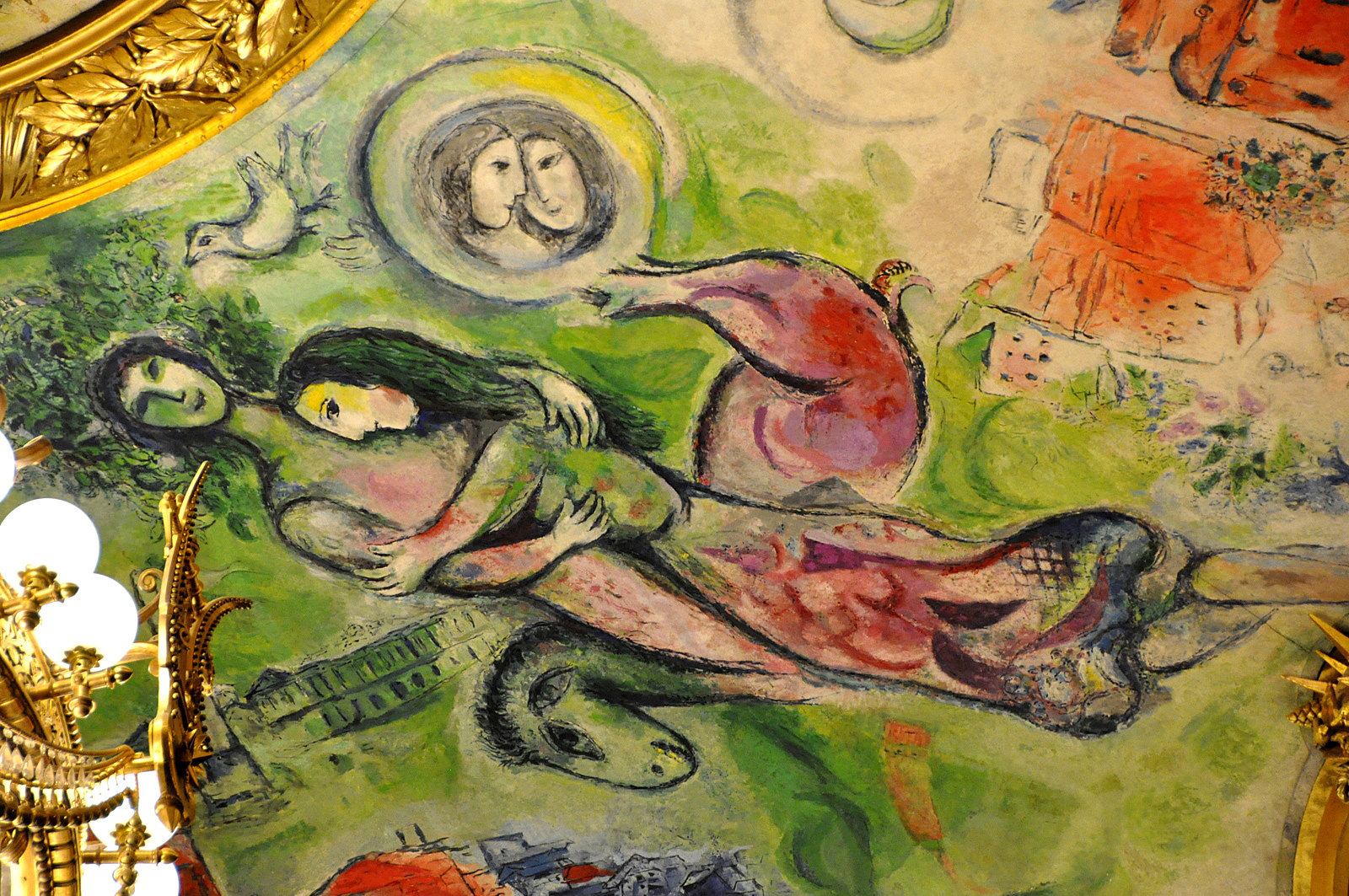
The mural was quite a novel sight, but there’s one portion of the work that Parisians would’ve found familiar. The opera house also asked Chagall to design a limited edition poster for the ceiling’s debut. The artist based the poster on a portion of the mural featuring Tchaikovsky’s Romeo and Juliet. The famous lovers hover in the air above Paris, perhaps locked in a heavenly embrace after their tragic deaths.
Marc Chagall's Ceiling detail- Paris Opera- Matthews Gallery Blog
Detail of Chagall’s Ceiling showing Romeo and Juliet
Just 5,000 “Paris L’Opera” prints were made. The poster at Matthews Gallery is signed in pencil by Chagall himself.
To get this artwork for your sweetheart, make sure to contact us before February 7 so we can ship it in time for Valentine’s Day. Connect with us on Twitter, Facebook and Pinterest for more gallery news!
*Special thanks to our friend and fellow art lover Paul, who gave us this idea and provided some of the images*

CURATE THIS, CURATE THAT: Place your votes!

Collectors-Choice-Social1

The selection process for our social media-curated show COLLECTOR’S CHOICE is underway, and fans on Facebook, Instagram, TwitterTumblr and other networks have placed their votes. It’s time for some tie breakers on WordPress! Check out the match-ups below and vote for your favorites in the comments section. From January 31 to February 5, we’ll unveil your selections in the gallery and online.

JAMIE CHASE

Jamie Chase- Collector's Choice- Matthews Gallery blog

ROUND 1! Jamie Chase is known for his figurative work like image #1, and also his abstracted landscapes like #2. Which one should appear in the show? Take the curatorial reins!

WILLIAM LUMPKINS

William Lumpkins- Collector's Choice Show- Matthews Gallery Blog

Do you prefer William Lumpkins‘ careful watercolor brushstrokes (#1) or experimental wild felt-tip pen marks (#2)? Read more about the influential Santa Fe modernist here before you decide…

KATE RIVERS

Kate Rivers- Collector's Choice Show- Matthews Gallery

Curate this! Should we feature a Kate Rivers book collage in the show, or one of her nests? Read about her mixed media work in this blog post, and vote for #1 or #2 in the comments.

HANNAH HOLLIDAY STEWART

Hannah Holliday Stewart- Collector's Choice- Matthews Gallery Blog

These tall, spindly bronzes might be very different, but they’re both by powerhouse feminist sculptor Hannah Holliday Stewart. Figurative or abstract? Curate that!

PAUL GAUGUIN

Paul-Gauguin-Collectors-Choice

Two Tahitian myths inspired these woodblock prints by Paul Gauguin. Which do you prefer? Read about them in this blog post, and vote now!

Thanks for participating in COLLECTOR’S CHOICE! To place your vote on other social networks, connect with us through the links on our About Page.

BE OUR CURATOR: A Social (Media) Experiment

When we cooked up a full-fledged social media strategy for the gallery early last year, we had no idea what we were in for. Twelve months and countless posts, photos, tweets, likes and pins later, we’ve learned a lot. No offense to professors past, but engaging with our vibrant online community of aesthetes has been the best art course we’ve ever taken. It’s high time we thanked you for your passion, so pull out your CV and add “curator” to the list. Starting tomorrow, we’re giving you the opportunity to help us put together a very special show.

COLLECTOR’S CHOICE: 10 Artworks We Love will feature art chosen by online fans across all of our social media platforms. Keep an eye on Matthews Gallery’s Facebook, Twitter, Pinterest or other networks from Friday, January 17 through January 30 to vote on your favorite work in our collection. From January 31 through February 5, we’ll unveil your selections in the gallery and online.

Join us as we shatter the definition of an art curator and gallery show. There’s no one we’d rather collaborate with! Learn more about the show on the Matthews Gallery website.

ONE WORK OF ART: Jean-Pierre Jouffroy

Jean-Pierre Jouffroy- Untitled Modernist Landscape- Matthews Gallery Blog
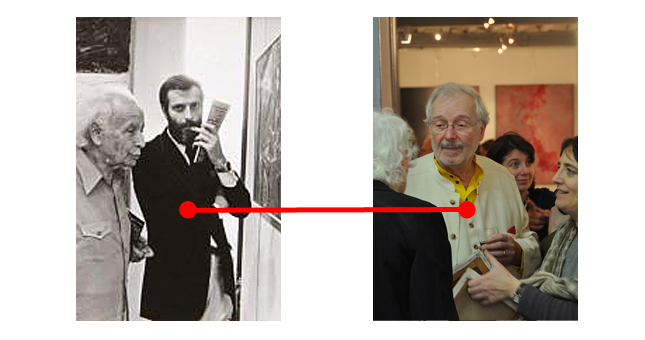
Two photographs.

Jean-Pierre Jouffroy - Matthews Gallery BlogOne shows a young artist with a determined look in his eyes, and the other an older gentleman at the opening of an 80-year retrospective of his artwork. What happened in the span between the shots?

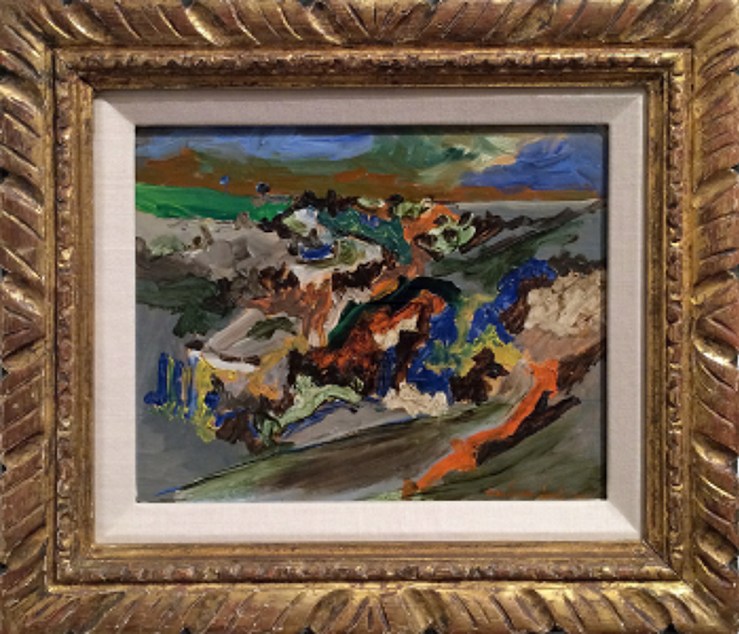
Sometimes art by Picasso or Gauguin finds its way to our gallery, but other times we get our hands on an exquisite work that bears a name we’ve never heard before. Such was the case with this lovely 1940’s painting by a man named Jean-Pierre Jouffroy, which reminded us of the artwork of James Brooks and other lyrical abstractionists.

Thank goodness for Google. An image search of the artist’s name brought up these two photos, and some French-to-English translating revealed the fascinating story behind them.

Jean-Pierre Jouffroy was born in Paris in 1933. When he was 11 years old, he saw the work of Wassily Kandinsky and Nicolas de Staël in a gallery and fell in love with modernism. “As a young boy, I dreamed of covering the surface of the earth in paint,” Jouffroy recalls.

Early in his career, the artist created purely abstract work that was heavily influenced by Staël. Then, in the late 1950’s, Jouffroy had an artistic epiphany.

“An abstract painting always shows something, like it or not,” he explains. “The painting is the image of an internal battle. This fight is itself a metaphor for our relationships in the social sphere.” Based on this realization, Jouffroy decided to incorporate the visual vocabulary of abstraction into representational work.

The shift sent the artist on a journey that traced the innovations of modernists like Picasso and Cezanne in reverse. Just like those artists, Jouffroy was experimenting with abstracted figures and landscapes, but he was coming from a wholly nonrepresentational world that his predecessors never explored. In tributes to Cezanne, Gauguin, Manet and Braque, he brought great artists of the past into harmony with a movement they all, in one way or another, helped to inspire.

Jouffroy’s new explorations caught the eye of the art world, and he exhibited at Paris’ Museum of Modern Art, the Art Institute of Chicago and other renowned institutions. Though he was focused on figurative work, he was often associated with lyrical abstraction (as we suspected) because of his background, his loose brushwork and his inventive use of color.

Our Jouffroy painting represents an interesting phase in the artist’s evolution. Though it predates his representational work, it has undeniable elements of landscape. Perhaps it’s the first sign of the transformation that would send Jouffroy’s career in a spectacular new direction. You can see echoes of the work’s palette and brushwork throughout the artist’s retrospective at the Place du Colonel Fabien that opened in November.

Check out Jean-Pierre Jouffroy’s “Untitled (Modernist Landscape)” on our website, and connect with us on Facebook and Twitter for more gallery news.

SHOOTING SPARKS: Frank Morbillo’s Elemental Process

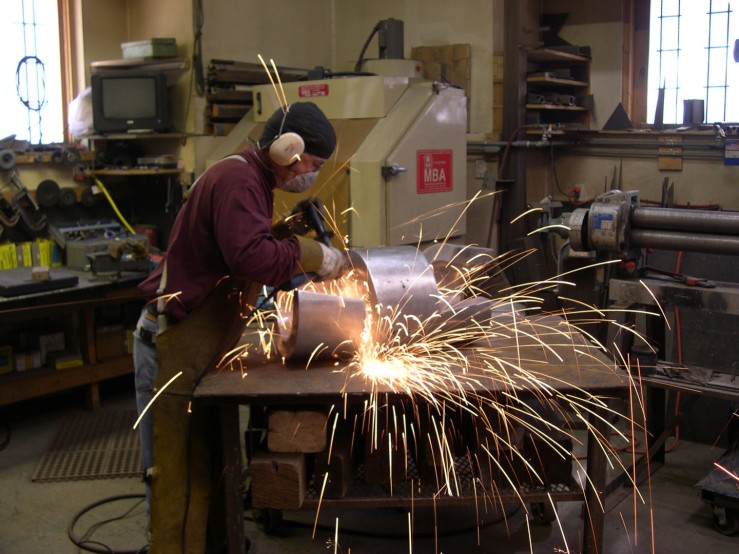
Frank Morbillo Sanding a Sculpture- Matthews Gallery Blog

Frank Morbillo sanding his sculpture Sprung

As we learned in his NEW HORIZONS show, sculptor Frank Morbillo is inspired by the way the elements carve the canyon lands of the American West. It’s fitting that his process is just as elemental. He bends and twists flat pieces of steel and bronze and then welds them into seamless three-dimensional forms, first creating smaller studies and working up to towering sculptures that possess the same gravitas as the rock formations he loves.
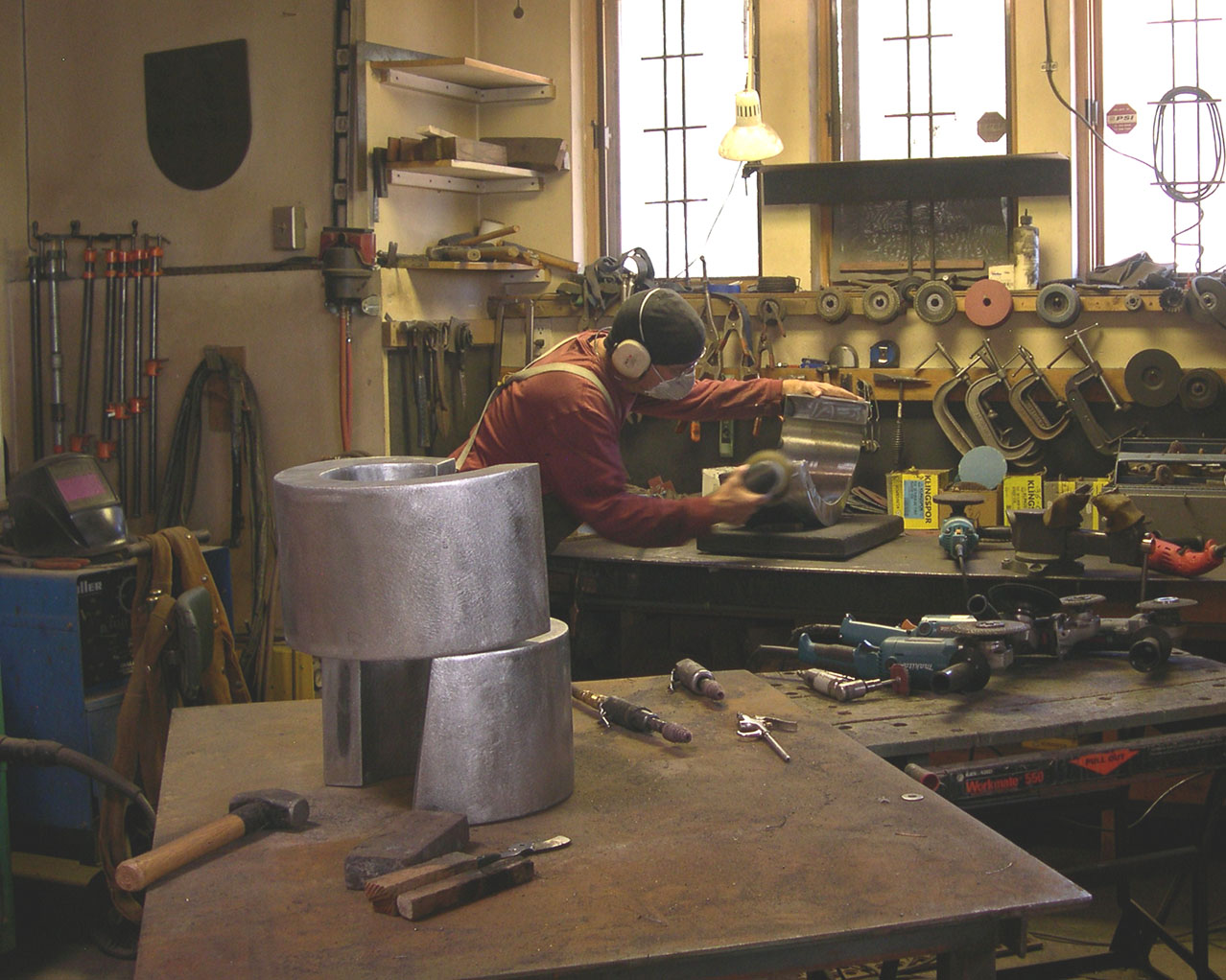
Witness the fiery birth of Frank’s sculpture Sprung and read quotes from the artist about his process and influences in this photo montage:

Process Photo of Sculptor Frank Morbillo's Sprung- Matthews Gallery blog

Fitting fabrication

“When you’re working with steel, you can work pretty inexpensively to generate an idea and get proportions down, and then make it a little bit bigger. Eventually this can go to the scale of the piece outside the Matthews Gallery.”

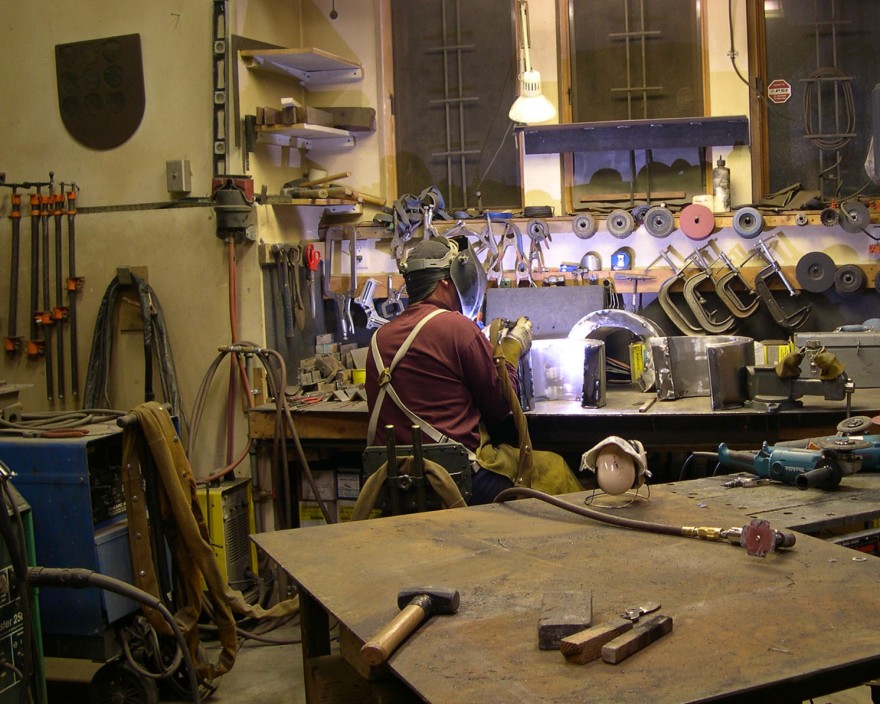
Frank Morbillo TIG Welding a Sculpture- Matthews Gallery Blog

TIG welding

“My background was in ceramics when I first started. For two years of college I thought my major was going to be ceramics, but in my sophomore year I took a blacksmithing class on forging and fabricating metal. I was like, ‘You can heat the stuff up and move it like clay? Oh my God!’”

Frank Morbillo Welding a Sculpture- Matthews Gallery blog

Welding

“You knock a piece of clay off the table and it breaks on the floor. You knock a piece of metal off and it dents the floor.”

fine sanding on Sprung-1

Fine sanding

“A lot of the pieces come from hiking canyons and experiencing the paths that you take in a canyon. If you look at a topo of a canyon, you can see its meandering course. When you’re down in a canyon and you see how it’s been eroded and shaped by water and wind, it takes on another shape.”

Frank Morbillo Adding a Patina to a Sculpture- Matthews Gallery blog

 Patina

“When I was in the foundry business doing patina work for different artists, we always used to talk about the translucency of bronze. They always wanted that, to where if you put this really nice golden brown patina over metal, you could see the metal coming through.”

Tesuque Artist Frank Morbillo with his Sculpture Sprung- Matthews Gallery blog

Almost there…

“One of the nice things about being out in nature is that all of the things we connect ourselves with are gone. Where does that take you? I think we need to do that still in our lives.”

See Frank’s finished sculpture here and learn more about the Tesuque sculptor on our Facebook, Twitter and Pinterest pages.