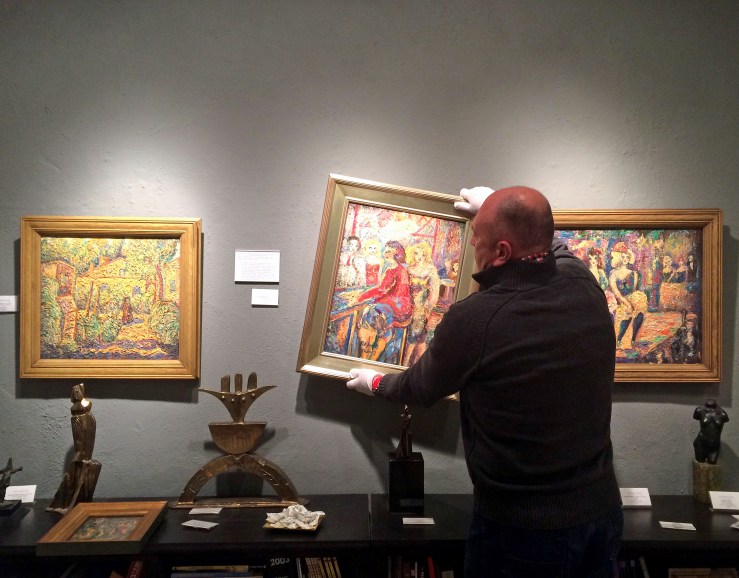
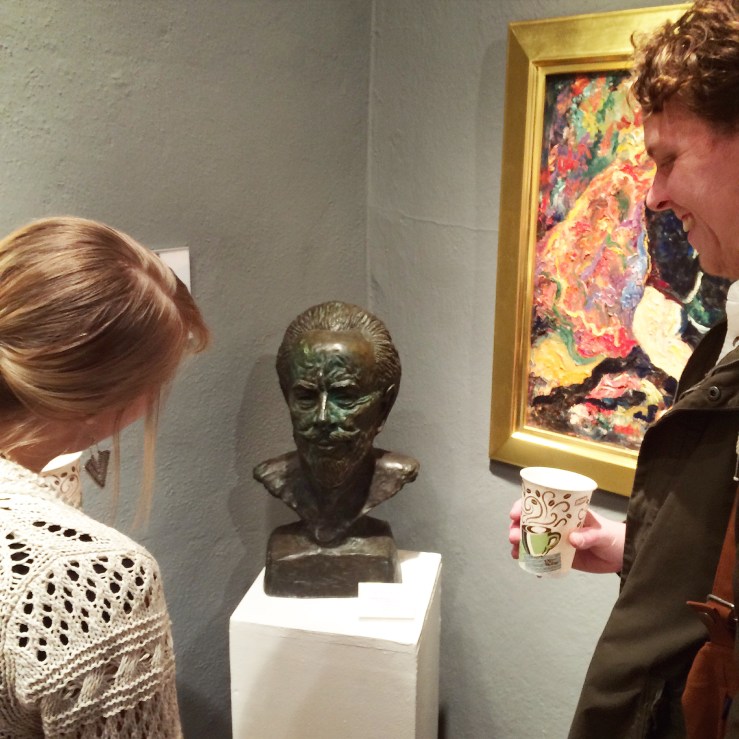
SPRING OF MODERNISM: Paul Burlin

Paul Burlin- New Mexico Modernist- Matthews Gallery Blog  As our SPRING OF MODERNISM exhibition approaches its closing date on March 31st, we’re sharing the incredible stories of 20th century artists who shook the foundations of the New Mexico art community. This week we have Paul Burlin, who battled blindness to create his magnum opus. 

Paul Burlin (1886-1969) was born in New York City and had a difficult childhood that he preferred not to discuss. He completed his early education in England before returning to New York at the age of twelve.

He left home at 16, and studied part-time at the National Academy of Art and the New York Art Students League from 1900 to 1912. During that time, he worked as an illustrator under Theodore Dreiser and frequented Alfred Stieglitz‘s 291 gallery. At 291, Burlin developed a taste for Picasso‘s ‘primitive’ artwork that lead him to study African tribal art and, later, the art and culture of the Southwest Pueblos.

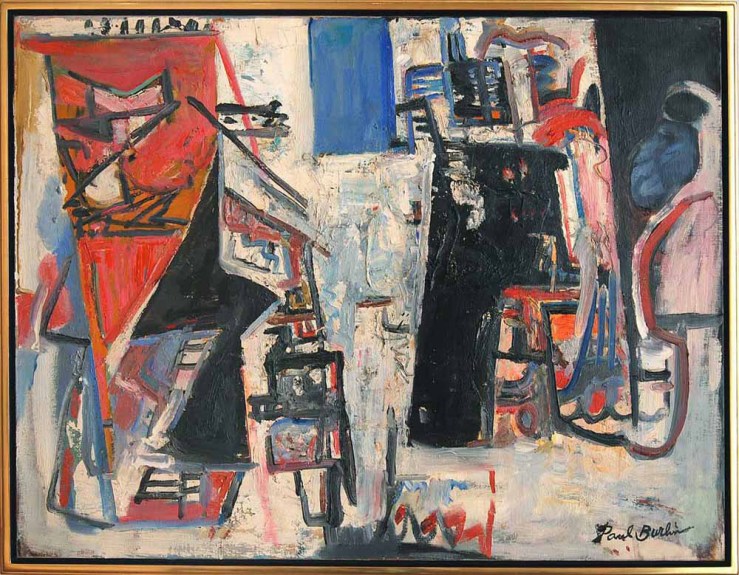
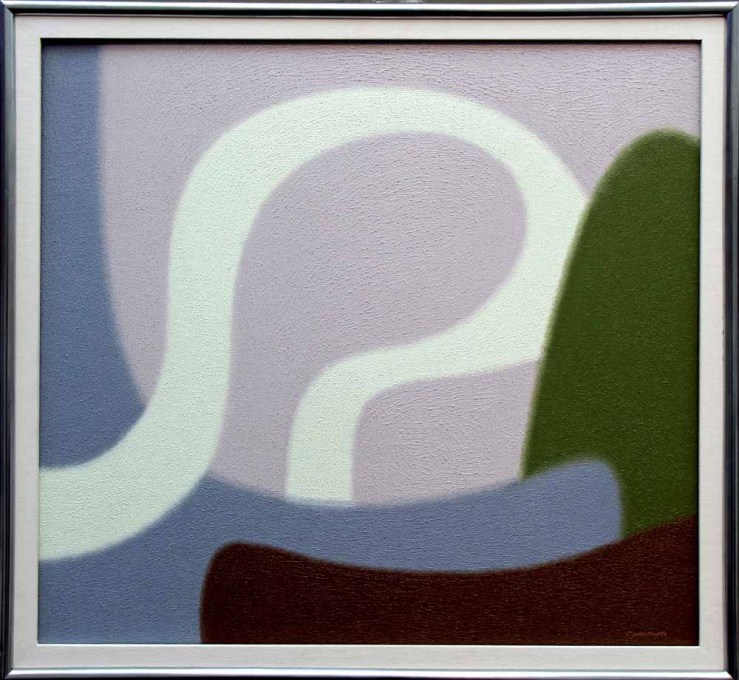
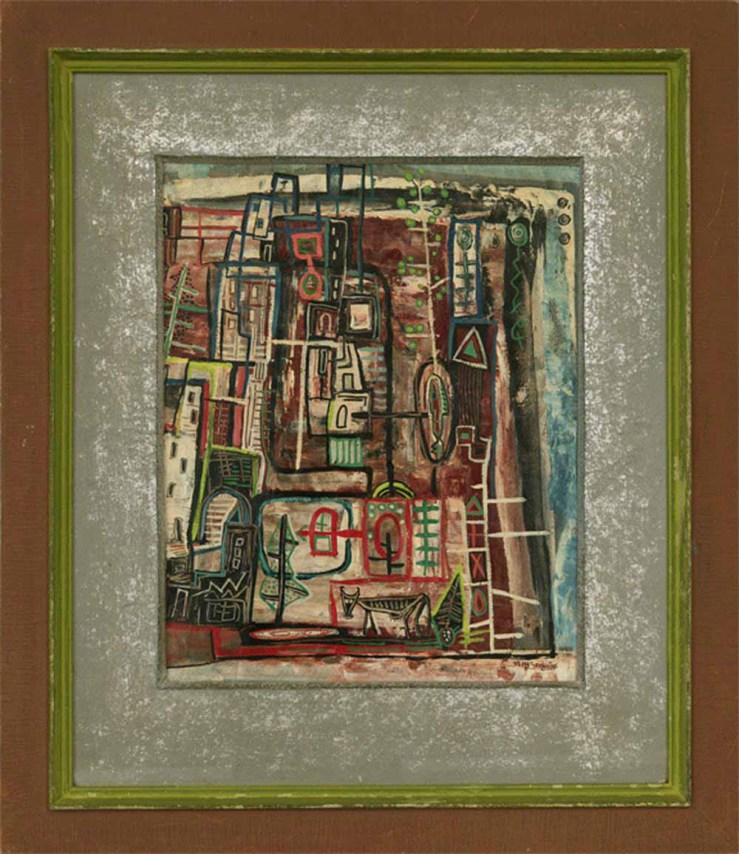
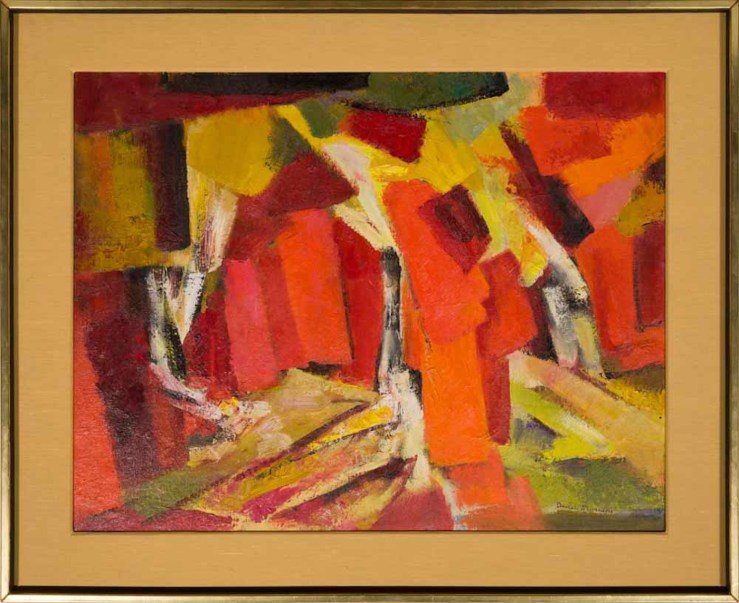
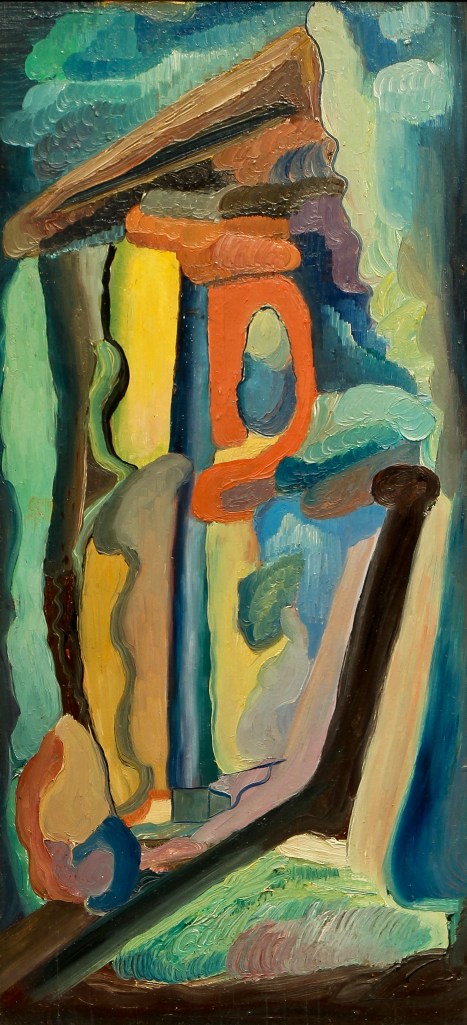
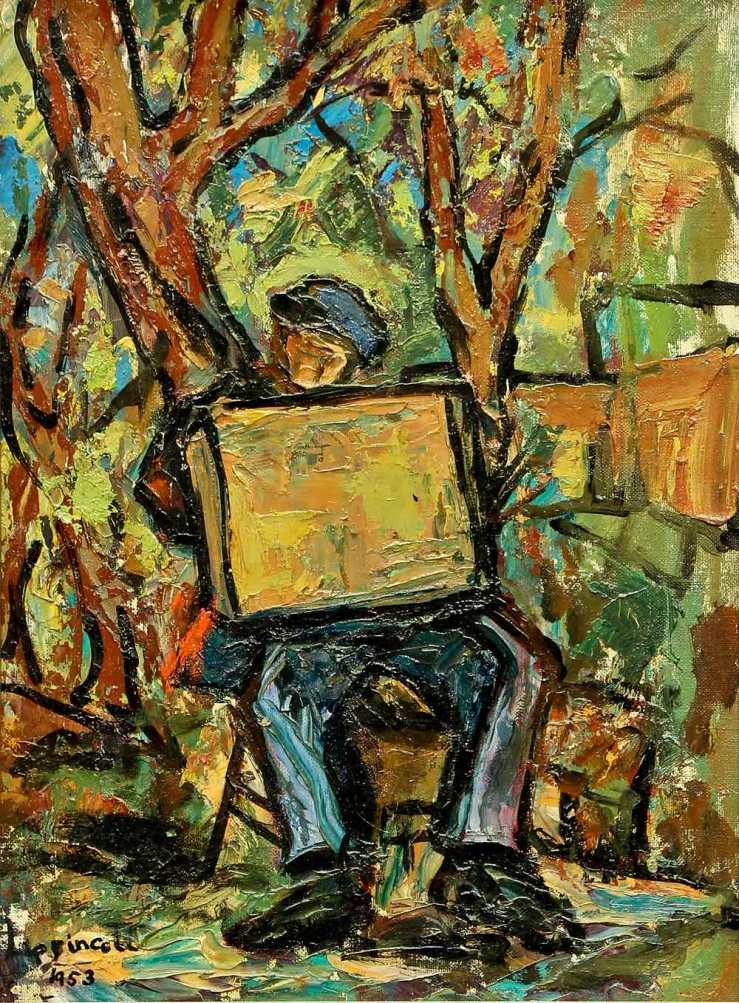
Paul Burlin- Untitled New 1951- Matthews Gallery Blog

Burlin visited New Mexico for the first time in 1910. Paintings from this visit were received warmly in New York and exhibited in 1911. As a result of his early success, he was the youngest artist (at 26 years old) to participate in the 1913 Armory Show.

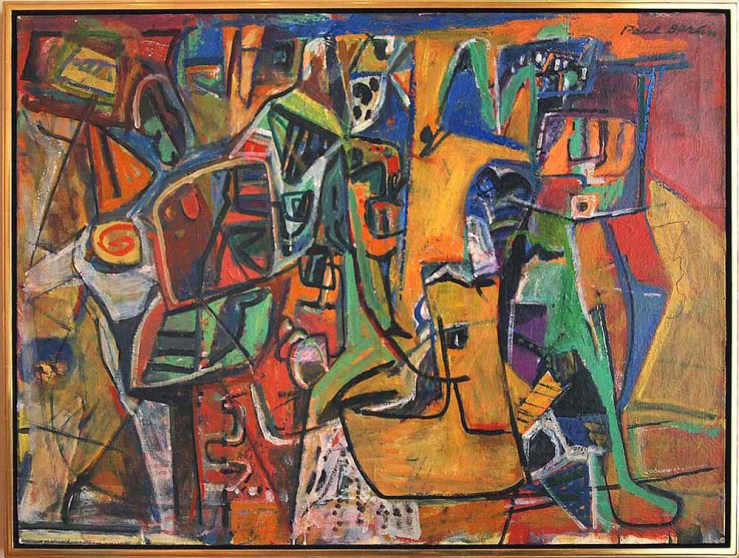
The same year, Burlin moved back to Santa Fe to develop a new body of work, and continued to exhibit in New York City. With the images and ideas of the Armory Show still prominent in his mind, Burlin was impressed and moved by what he described as the ‘primeval, erosive, forbidding character of the landscape.’ His early works in New Mexico were genre paintings of the Pueblo Indians in a realist style, but he soon developed a colorful abstract vocabulary ruled by symbols both ancient and modern.

Burlin’s time in New Mexico had a profound impact, not only on his own work, but on the development of modernism throughout the Southwest.  From University of New Mexico art historian Sharyn Udall:

Burlin was the first Armory Show participant to reach New Mexico, and that fact, coupled with his confident handling of local subject matter, made a definite impression on newcomers [Marsden] Hartley and B.J.O. Nordfeldt… It is clear, moreover, that Burlin’s stature as the first modernist painter in New Mexico was unquestioned; his was the pivotal role in introducing fauve and expressionist modes to the art of New Mexico (Udall 1984; 28).

Paul Burlin- Untitled Pivot 1952- Matthews Gallery Blog

Though he moved away from New Mexico in 1920—living in New York and Paris for the rest of his days—Burlin’s artistic evolution in the Land of Enchantment influenced his work for the rest of his life, as evidenced in these canvases from the 1950s. Not long after he made this work, Burlin began to lose his sight. His final series of paintings, completed while he was legally blind, were exhibited at the New York Museum of Modern Art in 1971, two years after Burlin’s death.

From Burlin:

We live in an age of treacherous, harrowing notions of mutability, death and decay…All of the old realities have dissolved…all rigidities of form disappear and enter into a new metamorphosis.  This metamorphosis of form and reality is manifested in shape and color, which destroy visual reality and…shape themselves into a reality of their own.

Learn more about Paul Burlin on our homepage, and connect with us on Facebook, Twitter and Pinterest for daily gallery news.

SPRING OF MODERNISM: The Circle

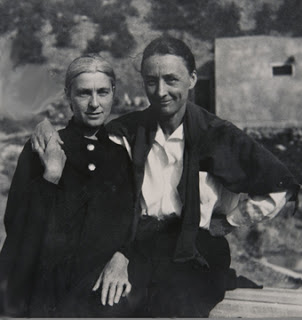
Mabel Dodge Luhan and Georgia O'Keeffe- Matthews Gallery BlogMabel Dodge Luhan and Georgia O’Keeffe

If you visit our SPRING OF MODERNISM show this month, two things will become abundantly clear about the 20th century artists in the exhibition. Firstly, they’re all linked, in one way or another, to the 1913 Armory Show in New York City. Secondly, they are all tied to each other. In fact, the modernists of the Santa Fe and Taos art colonies are so intertwined that we tried and failed to create a chart of their relationships. There are so many connections, it reminds us of Gertrude Stein’s Paris! Here’s just one line of the friendship chain, which begins with Stein herself:

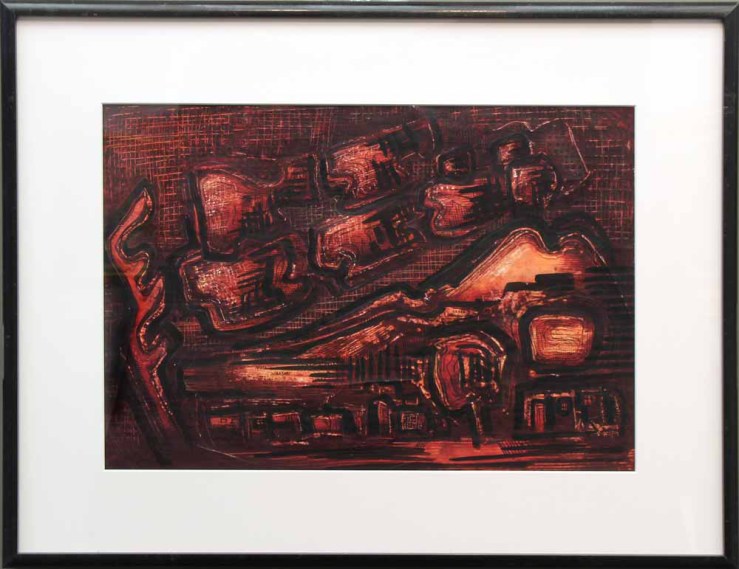
Jan Matulka- Surrealist Landscape- Matthews Gallery Blog
MATULKA
Jan Matulka (1890-1972) was born in Austria-Hungary, now the Czech Republic. He moved to New York City in 1907 and enrolled at the National Academy of Design soon after. A Joseph Pulitzer Traveling Scholarship enabled him to visit the Desert Southwest in 1917, where he was inspired by the cultures of the Pueblo Native American Tribes. He maintained studios in Paris and New York during the 1920s, befriending Gertrude Stein, Andre Lhote and Max Weber.
DASBURG
Andrew Dasburg (1887-1979) also knew Stein. He was born in Paris and emigrated to New York City in 1892. He studied at the New York Art Students League and spent time in Paris with Stein, Henri Matisse and Morgan Russell as a young man. In 1913, he exhibited Lucifer (above) at the Armory Show, and was later invited to New Mexico by Mabel Dodge Luhan. He moved to Taos in 1921, and was part of Georgia O’Keeffe and Alfred Stieglitz’s circle here.

 Cady Wells- Taos 1947- Matthews Gallery Blog Cady Wells, Taos 1947, Ink and Watercolor on Paper

WELLS

Cady Wells (1904-1954) knew Luhan and O’Keeffe and studied under Dasburg. He grew up in Southbridge, Massachussets and traveled extensively as a young man, studying music and the visual arts before deciding to become an artist in his late 20s. He moved to New Mexico in 1932, where he found an enthusiastic mentor in Dasburg and drew inspiration from the rich culture of the Desert Southwest. The Smithsonian American Art Museum writes:

Portraying the Southwestern landscape in watercolor, Wells moved through various modernist idiots. His early work incorporated gestural, calligraphic lines suggestive of Chinese ideograms. Later he investigated the structure of natural forms [and the] pattern-like appearance of the landscape. Influenced by Dasburg, Raymond Jonson and Georgia O’Keeffe, Wells developed a personal semi-abstract style that brought considerable praise from his peers.

 Raymond Jonson- Oil Number 12- Matthews Gallery BlogRaymond Jonson, Oil No. 12, 1958, Oil on Canvas

JONSON 

Wells’ friend Raymond Jonson (1891-1982) was born in Chariton, Iowa and grew up in Portland, Oregon. He attended the Chicago Academy of Fine Arts and the Chicago Art Institute as a young man, but his true artistic breakthrough came when he attended the 1913 Armory Show and saw the artwork of early abstractionist Wassily Kandinsky.
Jonson traveled to New Mexico for the first time in 1922, and moved here two years later. Here he founded the Atalaya Art School and took a teaching position at the University of New Mexico.
Along with his friends Emil Bisttram, Agnes Pelton and others, Jonson formed the Transcendental Painting Group (TPG) in 1938. The collective was inspired by early abstract artists like Wassily Kandinsky and Piet Mondrian, as well as Theosophy, Zen Buddhism and Dynamic Symmetry. The TPG only lasted a few years, disbanding in 1942 because of World War II. However, the collective’s influence endures in the Southwest and beyond. Some consider the group an heir to Russian Constructivism, Gino Severini and the Bauhaus.
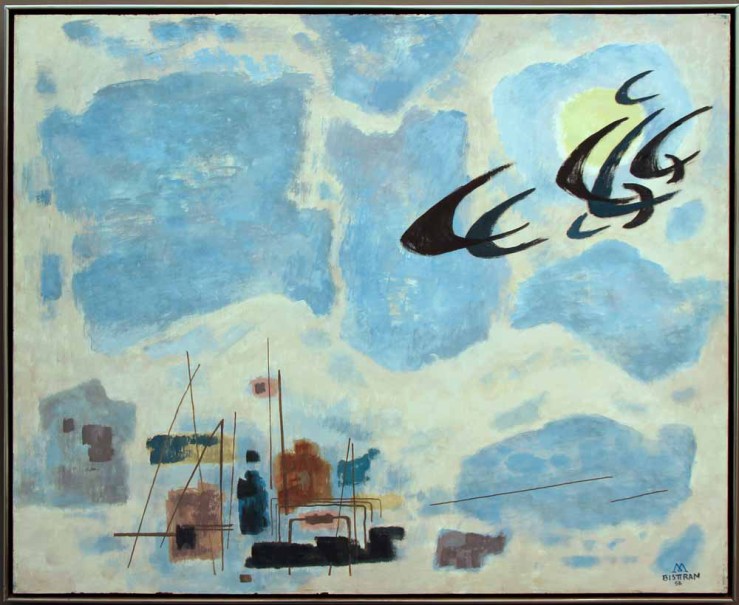
Emil Bisttram- After the Blizzard- Matthews Gallery Blog
BISTTRAM 
Jonson’s friend Emil Bisttram (1895-1976) was born in Hungary and immigrated to New York City with his family at 11. It wasn’t until his mid-30s that he visited Taos, but he fell in love with the area and would become a major player in the art colony when he moved there a year later.In 1933 Bisttram helped open the first modern art gallery in Taos and in 1938 he co-founded the Transcendental Painting Group. He promoted the ideas of the collective through the Emil Bisttram School for Transcendentalism, where Janet Lippincott was one of his students.
Janet Lippincott- Llano Ridge- Matthews Gallery Blog
LIPPINCOTT
Bisttram’s student Janet Lippincott (1918-2007) was born in New York City to a wealthy family, and spent part of her childhood in Paris. There she learned about the aesthetic innovations of Picasso and Matisse. Back in New York, she took classes at the New York Art Students League as a teenager.During World War II, Lippincott enlisted in the Women’s Army Corps and was wounded. She pursued art studies in Colorado and San Francisco on the GI Bill, and also attended the Emil Bisttram School for Transcendentalism in Taos in 1949 and the Alfred Morang Academy of Fine Art. In 1954, she moved to Santa Fe permanently and lived here for over five decades.Lippincott was considered part of a “second wave” of New Mexico modernists, who ventured to the Southwest after WWII. She is known as an abstract expressionist, but her early modernist influences in Paris stuck with her, as evidenced in her career-spanning series of figurative prints.

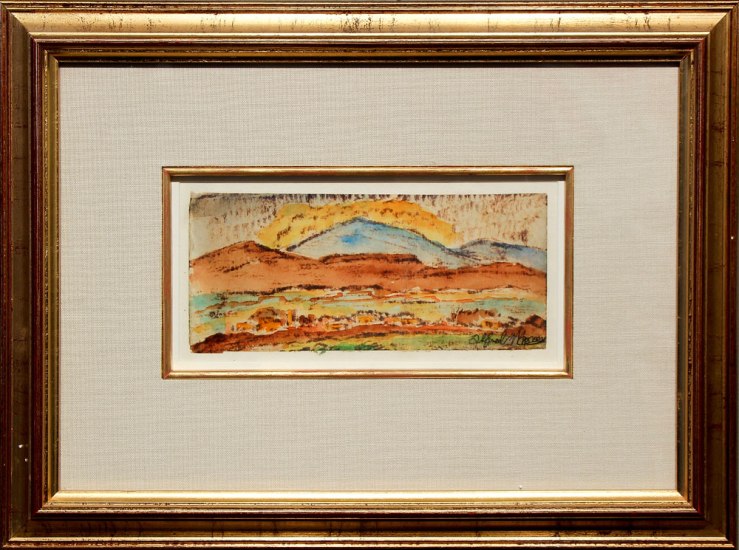
Alfred Morang- Blue Mountain Yellow Sky- Matthews Gallery Blog Alfred Morang, Blue Mountain, Yellow Sky, Ink and Watercolor on Paper

MORANG 

As a young man, Lippincott’s teacher Alfred Morang (1901-1958) suffered from tuberculosis. He left his home in Portland, Maine in 1937 and came to New Mexico to recover in a dryer climate. The reports vary, but when Morang got off the train he was met by Randall Davey or Raymond Jonson, two of the city’s most established modernist artists. Morang’s bohemian manner quickly charmed the Santa Fe art world, and the City Different became his permanent home.

Late in his life, Morang moved to a Canyon Road studio just behind Claude’s Bar. Just across the street was an artist and writer’s compound run by Agnes Sims.

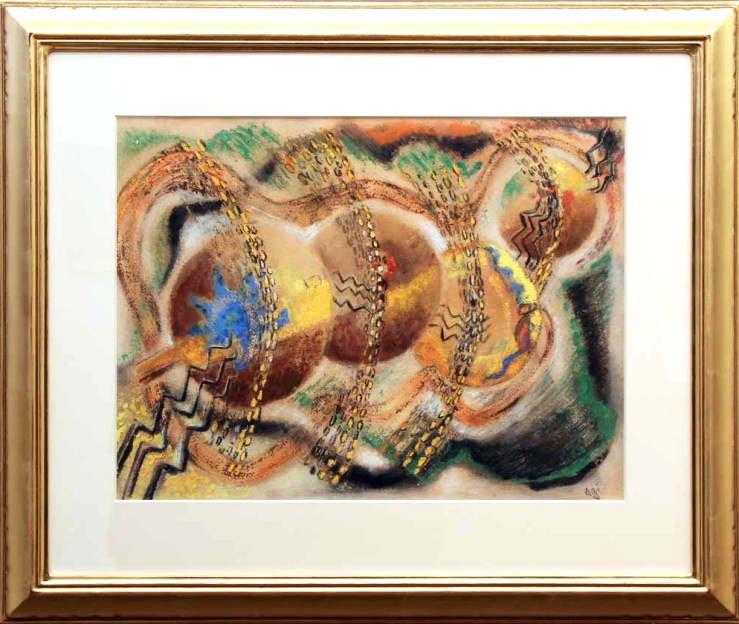
 Agnes Sims- Dance Rattles- Matthews Gallery BlogAgnes Sims, Dance Rattles, Watercolor on Paper

SIMS 

Morang’s Canyon Road neighbor Agnes Sims (1910-1990) was born in Devon, Pennsylvania. She managed a marionette theater and worked as a textile designer in Philadelphia before moving to Santa Fe in 1938 and founding a Canyon Road artist’s compound. In New Mexico, she took an interest in the ancient petroglyphs of New Mexico’s Native American Pueblos, and received a grant to study and sketch them. Her archaeological work inspired a series of paintings and sculptures in which she developed her own semi-abstract symbolism.

Sims’ longtime partner was the literary editor of Harper’s Bazaar, and helped popularize Truman Capote‘s work. Capote was friends (and sometime enemies) with Georgia O’Keeffe. And so the circle comes back around to Andrew Dasburg!

We could do this for ages, but you get the point. The New Mexico art community was a western frontier of avant-garde innovation, forged by a group of passionate friends whose efforts gave birth to the Land of Enchantment of today. And thank goodness for that!

Click here to see all of the artwork in our Spring of Modernism show, and connect with us on Facebook, Twitter and Flickr for daily gallery news.

NEW ARMORY: Modernism’s Western Frontier

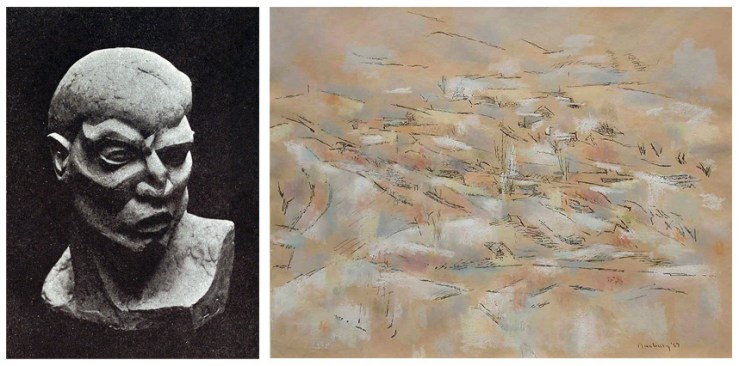
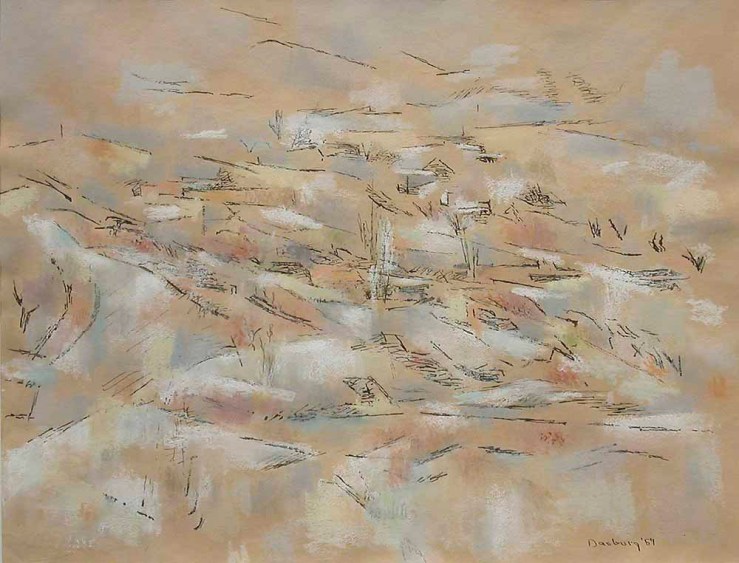
A severe sculpture by Andrew Dasburg, which appeared in the 1913 Armory Show, contrasts with his soft pastel snow scene that will appear in SPRING OF MODERNISM- Matthews Gallery Blog
A severe sculpture by Andrew Dasburg, which appeared in the 1913 Armory Show,
contrasts with his soft pastel snow scene that will appear in SPRING OF MODERNISM.
The 102nd annual Armory Show opens in New York City this weekend. Its history stretches back to 1913, when the exhibition introduced the European modernist movement to the United States. Featured artists included Pablo Picasso, Henri Matisse, Georges Braque, Vincent van Gogh Gogh and other Europeans. The show also included American artists such as Randall Davey, John Sloan, Paul Burlin, Andrew Dasburg, Edward Hopper, Marsden Hartley and more who had been influenced by the artistic revolution taking place across the Atlantic.
Not-so-coincidentally, we’re launching a modernism show of our own this Friday, and it features several New Mexico artists who participated in the original Armory show. During the first half of the 20th century, Davey, Sloan, Dasburg and a great variety of their East Coast contemporaries ventured to New Mexico and reshaped the Taos and Santa Fe art colonies into Western outposts for bold aesthetic innovation. The Taos Moderns, the Transcendental Painting Group (TPG) and other collectives engaged with new developments in the movement, gaining an influential presence on the international art stage.
Our SPRING OF MODERNISM exhibition will follow every twist and turn of New Mexico’s modernist movement through significant artworks by Davey, Dasburg, Max Weber, Doris Cross, Russell Cowles, Howard Schleeter, Rolph Scarlett, Paul Burlin, Cady Wells, Jan Matulka, Dorothy Brett and others. It features TPG mavericks Raymond Jonson, Emil Bisttram and William Lumpkins, Taos Moderns such as Beatrice Mandelman, and pivotal Santa Fe modernists including Alfred Morang and Janet Lippincott.
The scope of the show is as ambitious as its title suggests— we’re highlighting 50 transformative years of New Mexico modernist history. SPRING OF MODERNISM shows how New Mexico’s art community became one of the largest and most influential in the nation.
Look below for some of our favorite works from the exhibition, and check out a special preview on our website. Also, make sure to attend the opening on Friday, March 6 from 5-7 pm!
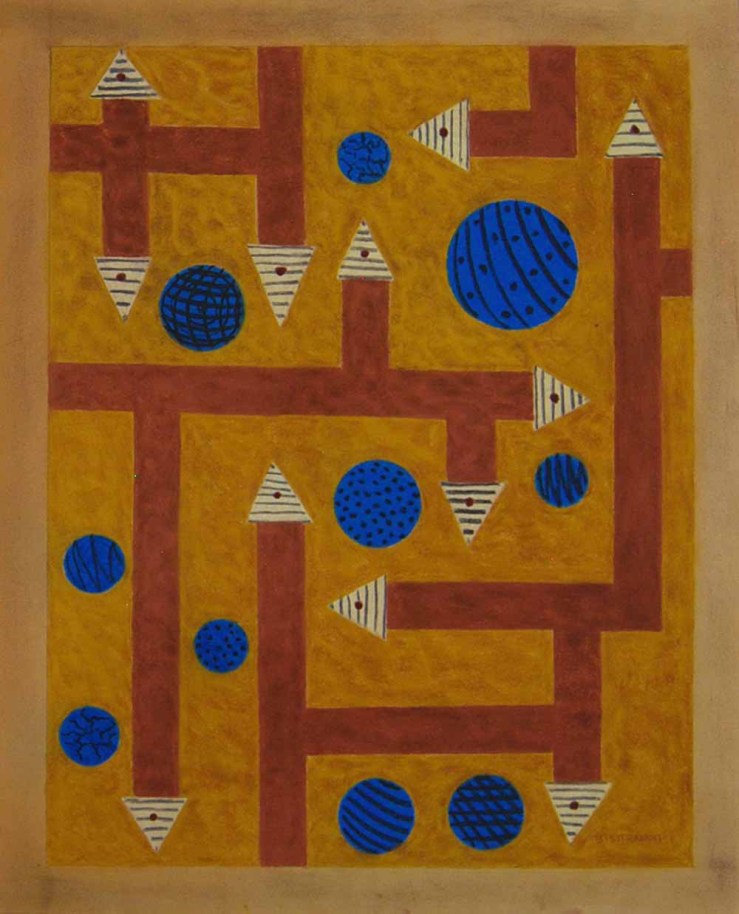
 Emil-Bisttram- Orbs and Arrows- Encaustic- Matthews Gallery Blog
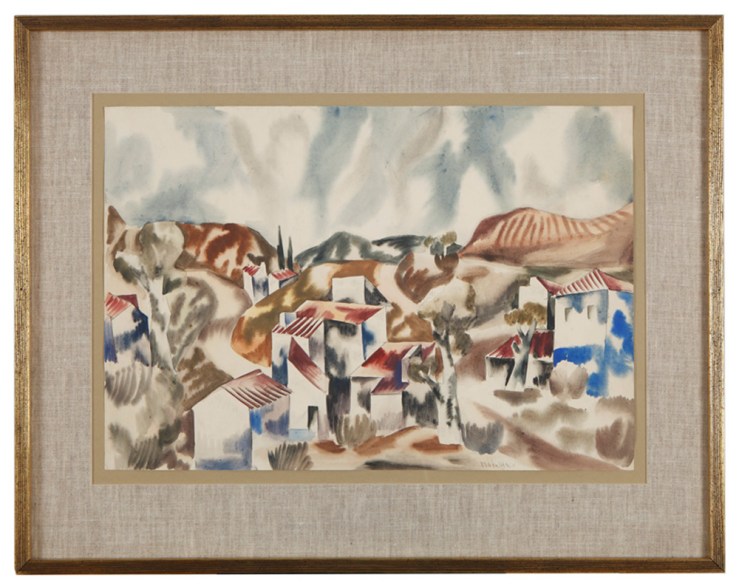
Jan Matulka -Landscape - 1923- Watercolor- Matthews Gallery Blog
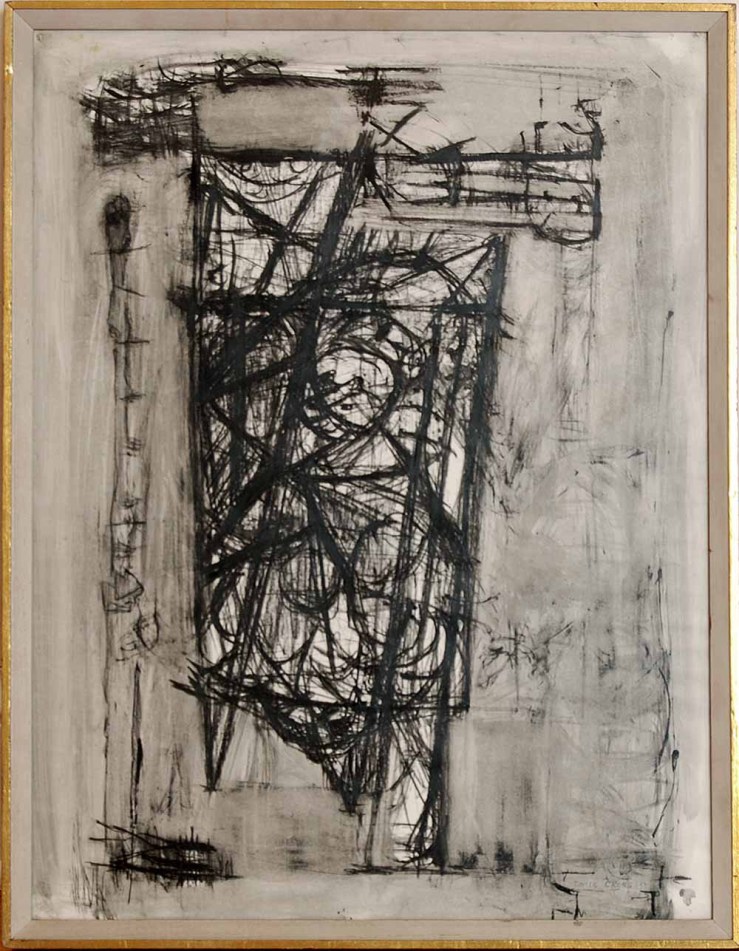
Doris Cross- Untitled- Mixed Media- Matthews Gallery Blog
Alfred Morang- Untitled Landscape- Matthews Gallery Blog
Howard-Schleeter- Pueblo- 1949- Gouache
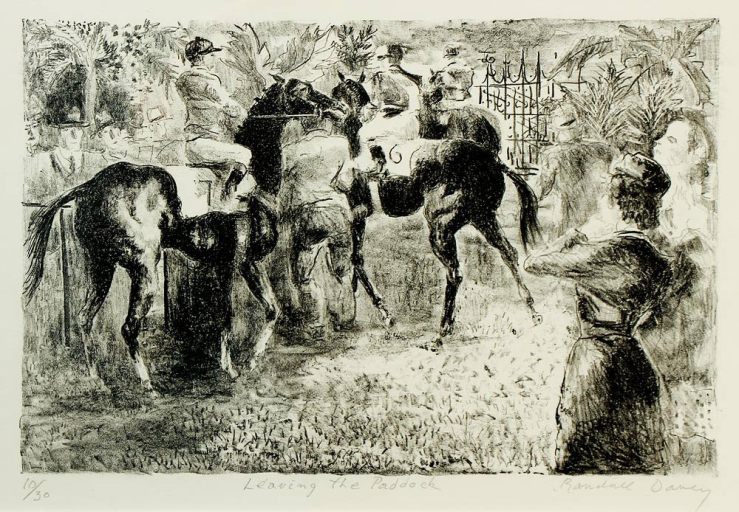
Randall Davey- Leaving Paddock- Lithograph
Beulah Stevenson- Place Of Drums- New Mexico - 1940-5- Matthews Gallery Blog
Paul Burlin- Look-No Fish- Oil on Canvas- 1949- Matthews Gallery Blog
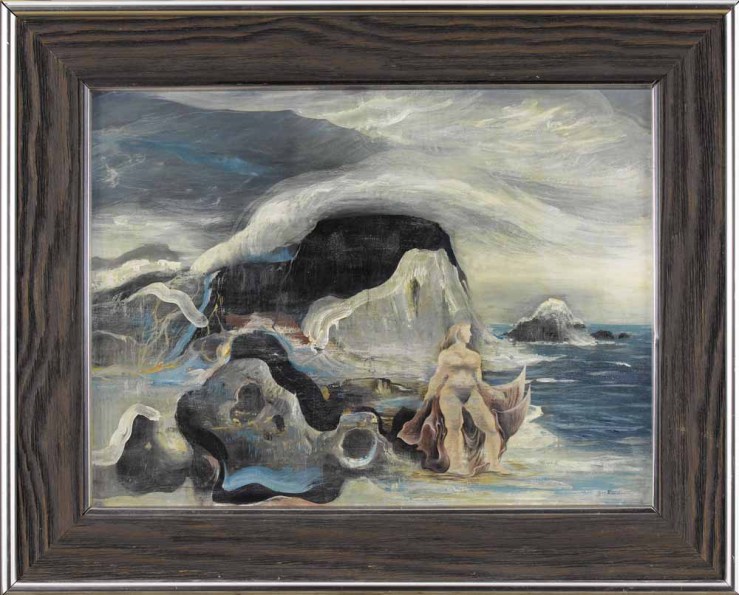
Thomas Benrimo- Nymph of the Sea- oil on board- 1949- Matthews Gallery Blog
Make sure to follow us on Facebook, Twitter and Instagram for more gallery news, and stayed tuned for information on our modernism-themed dinner at Coyote Cafe!

PICTORIALISM: From Stieglitz to Curtis

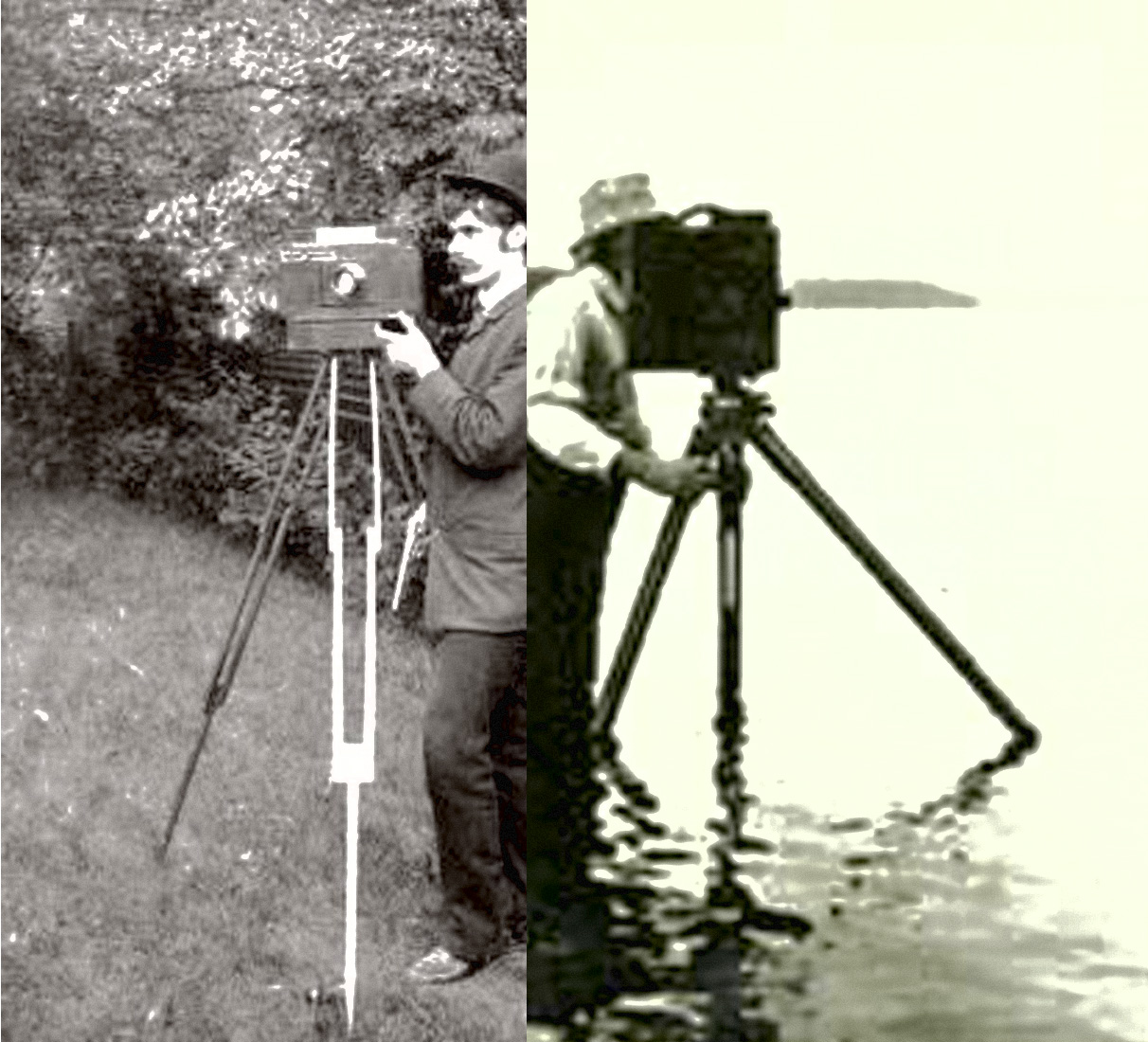
Alfred-Stieglitz-Edward-Curtis-Art2

It was 1901 in New York City, and photographer Alfred Stieglitz (1864-1946) was busy preparing an exhibition that would shake the foundations of the art world. He had worked for years—often to the point of physical exhaustion—to elevate photography to the stature of fine art. A series of juried photography shows, judged mostly by painters, had popularized the aesthetic of pictorialism. Pictorialist photographers approached their art like a painter or illustrator, playing with focus and exposure in innovative ways and even marking the surfaces of their images. The idea was to “make” an image rather than “take” it, projecting emotions into the scene and onto the viewer.

Stieglitz and his friends saw the need for yet another leap forward in this new era of photography. They would mount a show composed entirely of photographs, and judged only by photographers. Or rather, it would be judged by one photographer: Stieglitz himself. He put together the show in two months and dubbed it the Photo-Secession, intending to secede from old conceptions of both photography and fine art. The exhibition was an enormous success, and gave Stieglitz the momentum to launch a photography journal and gallery to promote his ideas.

Pictorialism- Alfred Stieglitz to Edward Curtis- Matthews Gallery Blog


From left: View of Stieglitz’s Little Galleries of the Photo Secession, which opened in 1905;
Edward S. Curtis in his adventure clothes.

Thousands of miles away in Seattle, Edward S. Curtis (1868-1952) was just beginning his photography career. Curtis grew up in Wisconsin and built his first camera when he was a teenager. At 17 he apprenticed in a photography studio in St. Paul, Minnesota, and when his family moved to Seattle in 1887, he bought a partnership in a portrait studio. Over the next few years, he began photographing Native American people of the Washington territory, some of them relatives of Chief Sealth and other important leaders. These early portraits and genre scenes inspired a 30-year adventure through the American West, during which Curtis and his team recorded the lives of over 80 tribes in photographs, writings, recordings and sketches.

Curtis’ expeditions, which he recorded in a series of volumes called The North American Indian, kept him far away from the epicenter of the American avant-garde where Stieglitz resided. “He was an outsider, too far removed from the photographic salons to court or count on ready shows and reviews that had instituted pictorialist photography,” writes Gerald Vizenor in an essay on Curtis. However, it’s this aesthetic that ties Stieglitz and Curtis together in art history.

“Curtis kept abreast of national, even international, trends in photography—and in the visual arts more generally,” writes Mick Gidley. “His early writings for Seattle magazines reveal that he absorbed much from Pictorialism in photography, including the example of Alfred Stieglitz, the founder of the Photo-Secession.” Curtis’ earliest photographs of Native peoples feature the soft focus and sepia tone of some classic pictorialist images, and present his subjects as stoic archetypes of a vanishing culture. In his many adventures, Curtis often posed his subjects and manipulated images to fit his vision of the tribes he was portraying. These techniques have earned Curtis praise as a pictorialist, but have also stirred up controversy. Curtis called himself an ethnologist, but the aesthetically powerful images he created didn’t always aim for scientific accuracy.

In the collection of photographs below, we’ve reunited Curtis with his pictorialist roots, placing some of his most iconic images among significant works by Stieglitz and his contemporaries. As you view the images, ponder Curtis’ position as an outsider during his lifetime, and his new place as a pictorialist in the art history books…

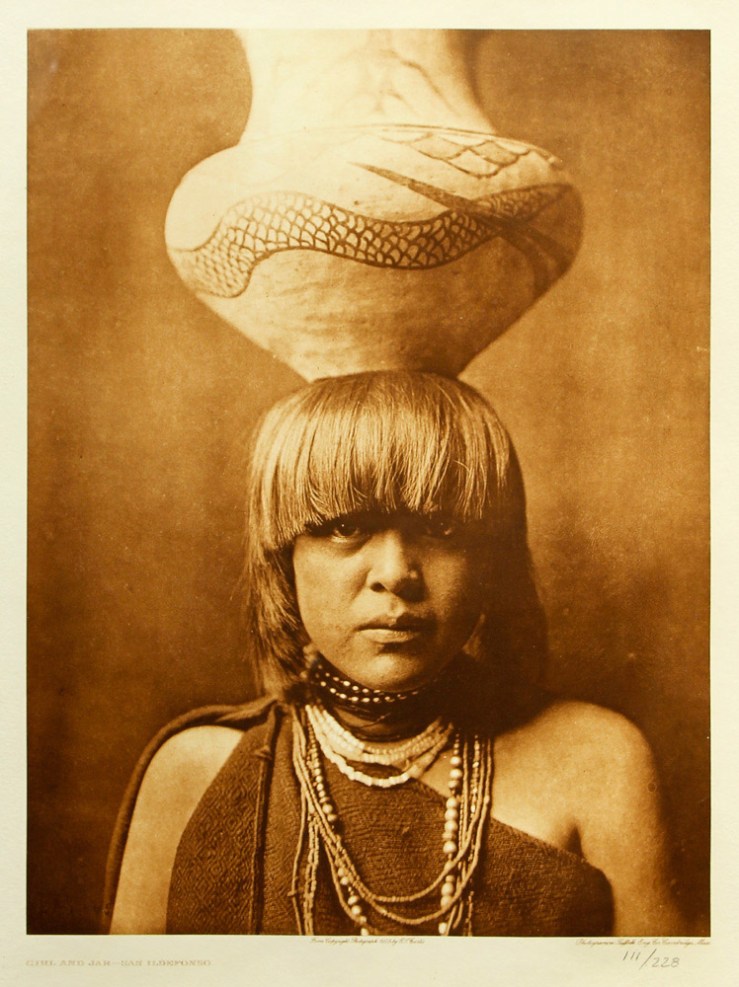
Edward S Curtis- Girl and Jar Photogravure- Matthews Gallery Blog

Edward S. Curtis, Girl and Jar, Photogravure

Adolph de Meyer- Marchesa Casati- 1912- Pictorialism- Matthews Gallery Blog

Adolph de Meyer, Marchesa Casati, 1912

Edward S Curtis- Apache Medicine-Man Photogravure- Matthews Gallery Blog

Edward S. Curtis, Apache Medicine-Man, Photogravure

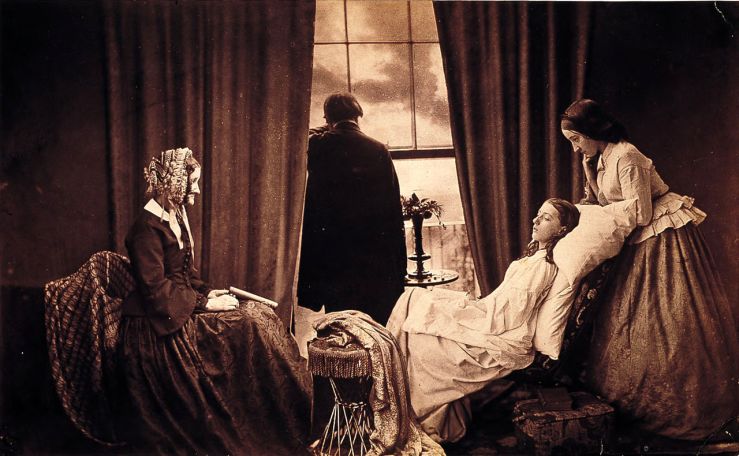
Henry Peach Robinson- Fading Away- 1858- Pictorialism- Matthews Gallery Blog

Henry Peach Robinson, Fading Away, 1858

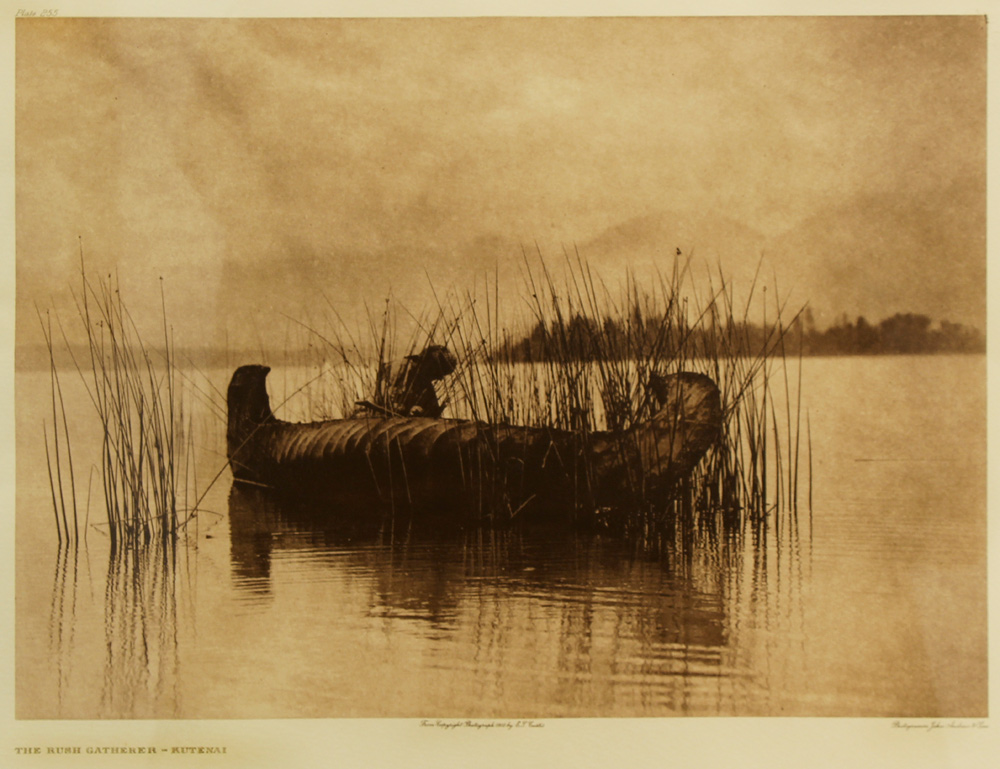
EdwardCurtis-Art-TheRushGatherer

Edward S. Curtis, The Rush Gatherer, Photogravure

Alvin Langdon Coburn- Spiderwebs- 1908- Pictorialism- Matthews Gallery Blog

Alvin Langdon Coburn, Spiderwebs, 1908

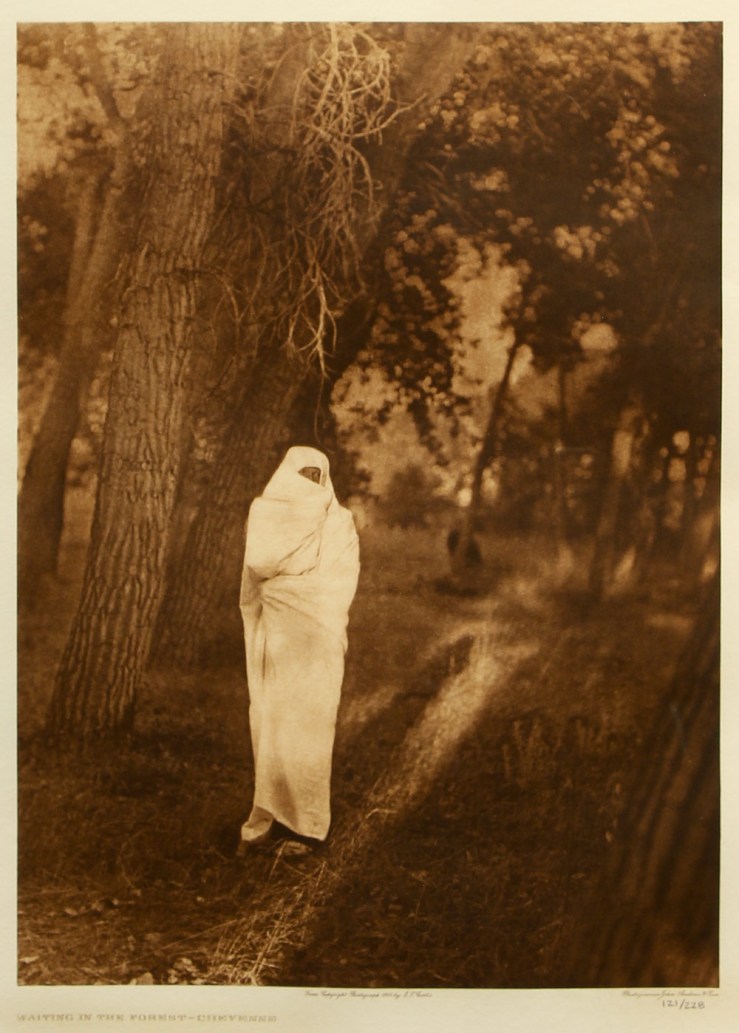
Edward S Curtis- Waiting the Forest-Cheyenne Photogravure- Matthews Gallery Blog

Edward S. Curtis, Waiting in the Forest— Cheyenne, Photogravure

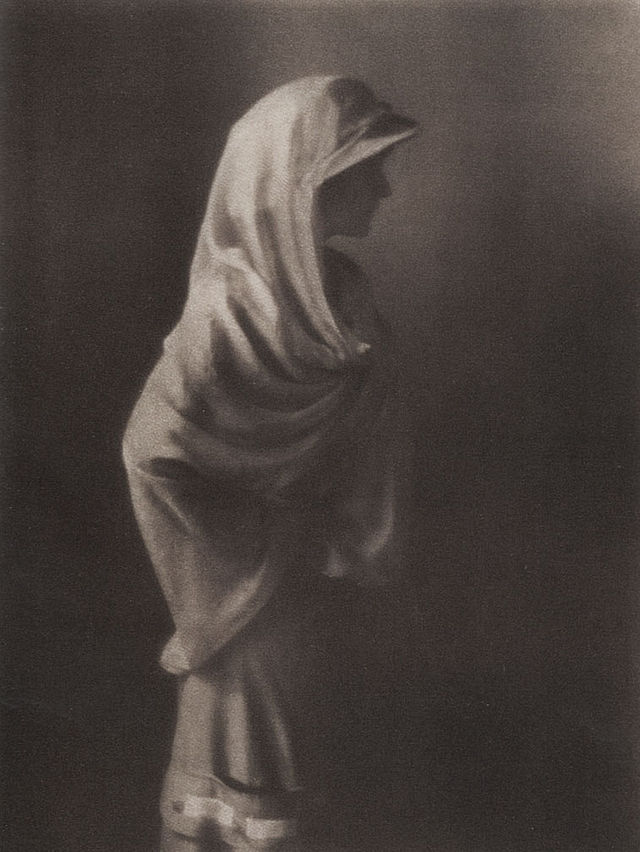
Paul Haviland- Doris Keane- 1912- Pictorialism- Matthews Gallery Blog

Paul Haviland, Doris Keane, 1912

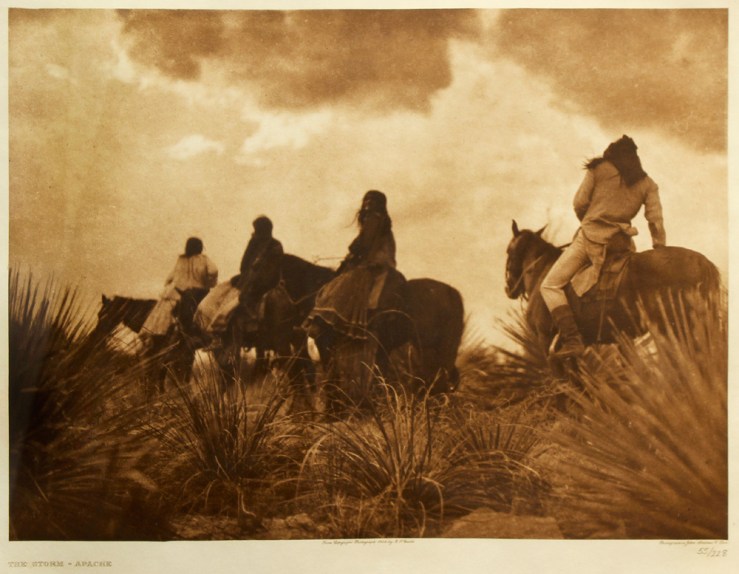
Edward S Curtis- The Storm-Apache Photogravure- Matthews Gallery Blog

Edward S. Curtis, The Storm-Apache, Photogravure

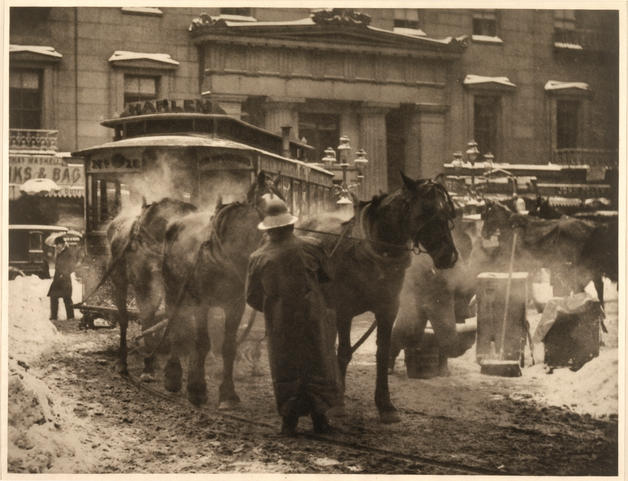
Alfred Stieglitz- The Terminal- 1893- Pictorialism- Matthews Gallery Blog

Alfred Stieglitz, The Terminal, 1893

Click here to learn more about Edward S. Curtis, his adventures and the rediscovery of his work in the 1970’s, and connect with us on Facebook, Twitter and Instagram for daily gallery news.

BIRTH OF AN ARTIST: Three Mentors of Eric Sloane

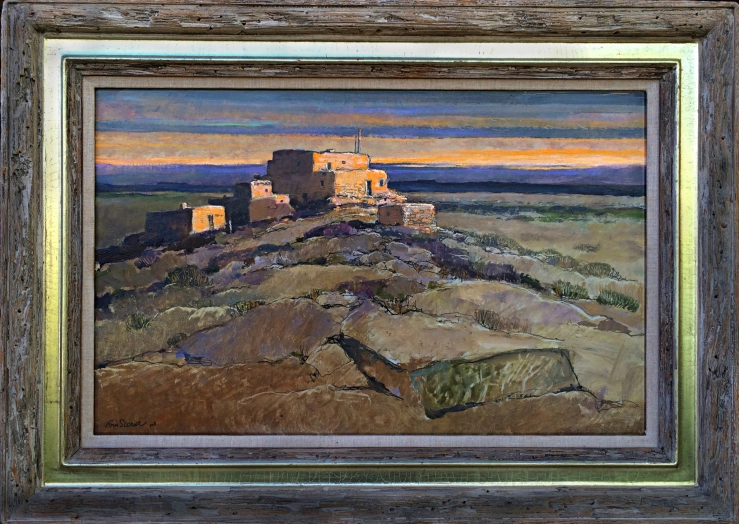
Eric Sloane- Hopi Country- Oil on Panel- Matthews Gallery Blog

PROLOGUE

When a historic artwork enters our collection, it’s the first clue in a grand investigation. A painting is a concrete piece of evidence that links to the artist’s evolutionary chain, leading us back through the years.

Eric Sloane’s Hopi Countrypictured above, helped us trace its creator from New Mexico to his hometown of New York City. Along the way we met three of Sloane’s mentors, who are all revered figures in American history.

Frederic W Goudy- Mentor to Eric Sloane- Matthews Gallery Blog

FREDERIC W. GOUDY

Eric Sloane was born Everard Jean Hinrichs in New York City in 1905. Meanwhile in Chicago, Sloane’s future mentor Frederic W. Goudy was experiencing a late-in-life rebirth. At 40 years old, he had quit his job as an accountant to open a publishing house called Village Press with his friend Will Ransom. He learned how to design typefaces and began building a portfolio.

“[Goudy started] almost from scratch at an age when most men are permanently set in their chosen vocations,” wrote Popular Science in 1942. Goudy’s new path would lead him from Chicago to Boston to New York, where he moved in next door to young Sloane.

As Goudy’s career took off with a series of hit typefaces—Kennerly Old Style, Goudy Old Style, Copperplate Gothic—young Sloane learned the tricks of the trade. Goudy would design 122 typefaces in his lifetime, topping Gutenberg and Garamond. His painting lessons for Sloane soon launched one of the great adventures of the budding artist’s life. But first, a scholarly interlude.

John Sloan- Mentor to Eric Sloane- Matthews Gallery Blog

JOHN SLOAN

Sloane changed his name while studying at the Art Students League of New York. He took the middle letters of “America” for his first name, and tweaked the surname of his mentor John Sloan. Sloan encouraged his students to adopt pseudonyms in order to sever ties with their earlier, less accomplished work. He was a passionate and sometimes volatile teacher who believed in art for art’s sake.  “I have nothing to teach you that will help you to make a living,” he would tell his students. Although he was a well-known artist who participated in groundbreaking exhibitions like the 1913 Armory Show, his artwork rarely sold.

Sloan’s circle came to be known for their realist depictions of poor neighborhoods in New York. Sloane never took to this subject matter, but finding a new name was transformative for the young artist. With his patriotic moniker and the skills he’d picked up from Goudy, he took off across the country in the summer of 1923, painting sings on barns and stores to make ends meet. Two years later he took another, longer adventure to New Mexico, one of Sloan’s favorite vacation spots.

Much like other students of Sloan, the light and colors of the New Mexico inspired Sloane to push his art in a new direction. He picked up oil painting and learned to capture the light, color and endless expanses of the High Desert, and returned to Long Island in 1927 with a new sense of purpose.

Wiley Post- Mentor to Artist Eric Sloane- Matthews Gallery Blog

WILEY POST 

Sloane grew up during the Golden Age of Aviation. By 1933, his fascination with aircrafts lead him to a job at the Half Moon Hotel, which was close to Long Island’s Roosevelt Field. The aviators who stayed at the inn became some of Sloane’s first patrons, paying him to make oil paintings of their planes. Aviator Wiley Post was so impressed by Sloane’s work that he offered to swap flying lessons for painting lessons.

Post had trained to be an aviator during World War I, but the war ended before he entered active duty. He worked as a parachutist for a flying circus and a barnstormer before becoming a private pilot for wealthy Oklahoma oilmen. The job earned him enough money to set out on a worldwide adventure, and he became the first pilot to fly solo around the globe.

Sloane was so inspired by his flights with Post that he began painting the sky, as seen from the cockpit of a plane. Amelia Earhart bought the first work in this new series, and one of Sloane’s largest cloud paintings is now in the permanent collection of the Smithsonian Air and Space Museum. At 28 years old, Sloane had grown from an eager student to a full-fledged master.

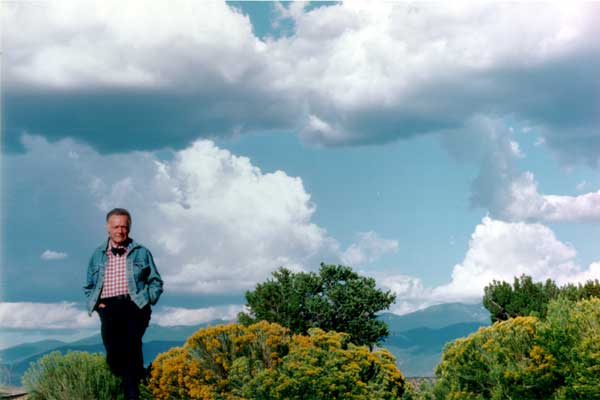
Artist Eric Sloane under a New Mexico Sky- Matthews Gallery Blog

EPILOGUE

Sloane started painting landscapes in the style of the Hudson River School, a mode that fit his fascination with turbulent weather. Beginning in the 1950’s, he took up residence in Taos for part of each year. He built a home in La Tierra, New Mexico in 1975. Sloane captured the light and color of the Land of Enchantment with boundless enthusiasm. Hopi Country features every brilliant hue in a Land of Enchantment sunset.

Over the course of his career, Sloane produced over 15,000 artworks and 38 illustrated books. He died of a heart attack in 1985 on the steps of New York’s Plaza Hotel, on his way to a luncheon in his honor. The event was a celebration for the release of his biography, ‘Eighty: An American Souvenir.’

It’s quite a tale, and it all unwound from a single oil painting on our wall! Learn more about Eric Sloane on our website, and make sure to connect with us on Facebook, Twitter and Flickr for daily gallery news.

MORANG AND FRIENDS: The Bohemians

Alfred Morang Art Exhibition- Matthews Gallery Blog

How did you get this many Morangs together?”

That’s the most frequent question we’ve received from Alfred Morang fans who’ve come to our show in the past few weeks. It’s common to see one or two works by the Santa Fe master in a gallery’s collection, but it’s quite a special experience to view 37 pieces in one place.

Truth is, we called our exhibition MORANG AND FRIENDS because we thought Morang’s contemporaries would dominate the show. It was only through a huge response from the Santa Fe community—private collectors, dealers, galleries—that it all came together. We’re so grateful to everyone involved for working with us, with special thanks to El Farol, Silver Sun Gallery, the Matt Kuhn Collection and our co-curator Paul Parker.

And what a show it was! As we take the paintings down today, we’re feeling quasi-nostalgic for the Santa Fe golden age that Morang’s diverse body of work evokes. For the last 21 days, we’ve been transported to a City Different full of wild saloons and drunken shootouts, free-flowing absinthe and spooky ghosts.

For our final blog post on the show, we thought it would be fitting to spotlight the colorful clique of bohemian artists who surrounded Morang during his time here in the 1930’s- 50’s. Morang was a brilliant art teacher who passed his knowledge to the next generation of Santa Fe artists. They ensured that his influence still ripples through the New Mexico art world today…

Portrait of Alfred Morang by Tommy Macaione- Matthews Gallery Blog

 TOMMY MACAIONE

This portrait of Alfred Morang appeared in the exhibition courtesy of the Matt Kuhn Collection. It was made by another colorful Santa Fe character, Thomas S. Macaione (1907-1992), also known as ‘El Diferente’. Macaione’s mature painting style was heavily influenced by Morang’s teachings, and they also had similar lifestyles. They lived as true bohemians, devoted to art above all else.

“[Macaione’s] passion for plein-air painting was not entirely appreciated at first in the town’s lingering Wild West atmosphere,” wrote the Santa Fe New Mexican in 2013. “Once, when painting a garden on Acequia Madre, he was scared off by the property owner, who fired a pistol in the air in his flowers’ defense.” A photograph of this bust appears on the final page of Walt Wiggins’ essential biography of Alfred Morang, A Neglected Master, along with a quote from Margaret Turner Williams:

 [Morang] died as he lived: alone. Yet he was never lonely, for he was a creator, and creators learn early in life to bridge the gap between the pain of loneliness and the peace of solitude.

With no material wealth, he was one of the richest human beings who ever lived. Everyone who knew him, and some who didn’t, feel a sense of loss at his passing.

Alfred Morang- Into Tomorrow- Matthews Gallery Blog

TRANSCENDENTAL PAINTING GROUP

A small group of New Mexico artists including Raymond Jonson, Emil Bisttram, and William Lumpkins formed the Transcendental Painting Group (TPG) in 1938. The collective was inspired by early abstract artists like Wassily Kandinsky and Piet Mondrian, as well as Theosophy, Zen Buddhism and Dynamic Symmetry. Their goal was to validate and promote abstract art by transcending their senses to explore spiritual realms. The group organized lectures, published articles and mounted exhibitions in New Mexico, San Francisco and New York. Alfred Morang was not a founding member of the group, but he acted as their press secretary for a number of years. An excerpt from Morang’s November 4, 1938 article “Transcendental Foundation Plans Extensive Activities” in the Santa Fe New Mexican:

It is deeply significant that in this time of readjustment in almost every stratum of life, a few people are intent upon an important branch of cultural development. In Santa Fe the founding of the ‘American Foundation for Transcendental Painting, Inc.’ marks the start of a new phase of American art. […] Briefly, transcendental painting is no school or ism. It is a phase of art that, out of many more or less isolated experiments, has evolved toward non-objective painting, the type of painting that is not dependent upon an object, in nature, but is deeply concerned with forms conceived by the imagination.

The TPG only lasted a few years, disbanding in 1942 because of World War II. However, the collective’s influence endures in the Southwest and beyond. Some consider the group an heir to Russian Constructivism and the Bauhaus. Morang completed a number of abstract works inspired by the group’s philosophy, including the oil painting above titled “Into Tomorrow“. Click here to see more.

Janet Lippincott- Alfred The Painter- Matthews Gallery Blog

JANET LIPPINCOTT

 “Alfred Morang was one of the few people who encouraged me in my abstract expressionism,” said Janet Lippincott (1918-2007), one of Morang’s  best-known pupils. Lippincott came to New Mexico in 1946 and studied at the Emil Bisttram School for Transcendentalism in Taos. Bisttram was a founding member of the Transcendental Painting Group (1938-1942), a collective of abstract painters with a spiritual, non-political approach to art, for which Morang served as press secretary. Santa Fean Magazine interviewed Lippincott for an article on Morang in their April 1978 issue:

He was an excellent painter and inspiring teacher “and he had a good mind,” Janet Lippincott says. She studied landscape painting with him for three months one summer, and she remembers that “he had something about him that could draw out the best you had in you.”

This portrait of Alfred Morang isn’t the only artwork by Lippincott that appeared in the show. Click here to see more.

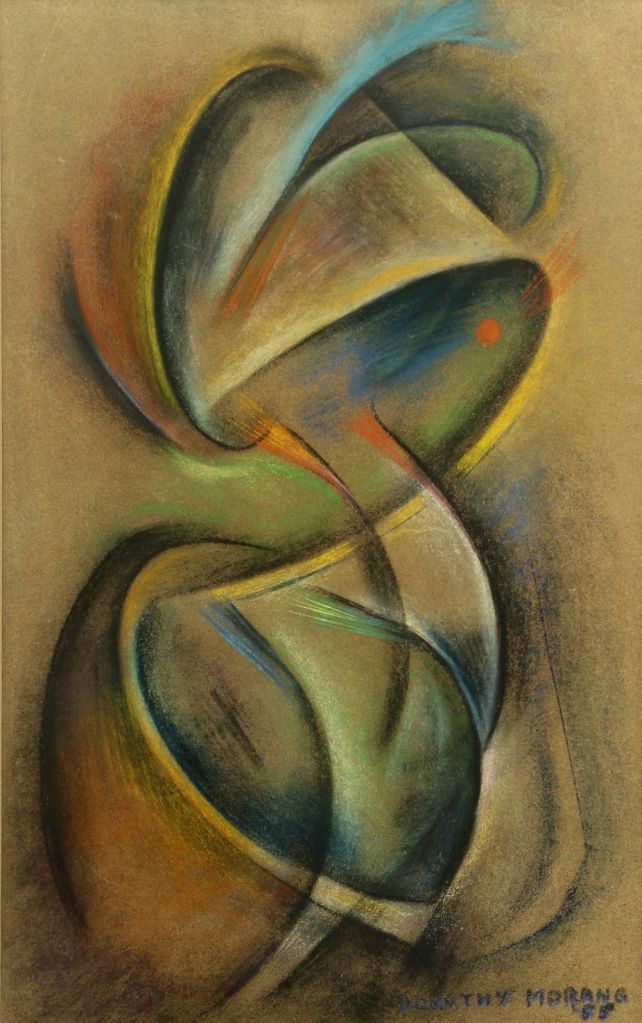
Dorothy Morang- Untitled Abstract 1935- Matthews Gallery Blog

DOROTHY MORANG

Dorothy Morang (1906-1994) was born in Richmond, Maine. She met Alfred in 1925, and they were married in 1930. They lived in Portland, Maine for a number of years, and moved to Santa Fe in 1937 to alleviate the symptoms of Alfred’s tuberculosis.

Dorothy and Alfred divorced in 1950, but she looked out for him for the rest of his life and arranged the transfer of his estate to a Morang relative after his death in 1958. Dorothy was an impressive painter in her own right—here she draws inspiration from the Transcendental Painting Group, for which her husband acted as press secretary. She worked for many years at the New Mexico Museum of Fine Arts, primarily as a curator. An excerpt from an oral history interview with Dorothy Morang by Sylvia Loomis in the Archives of American Art:

SYLVIA LOOMIS: Were you painting after you got to
Santa Fe?

DOROTHY MORANG: Yes, I started even more seriously. I’d been working quite steadily in Portland, Maine – Alfred and I lived there for about seven years before we came here – and I went on and worked very seriously with some criticism from Alfred and from Raymond Jonson, who was living in Santa Fe then. […] Alfred had also taken up writing, and he was very active, as you know, on radio, too, interviewing artists on the radio. He had an interview program for several years. He was extremely active.

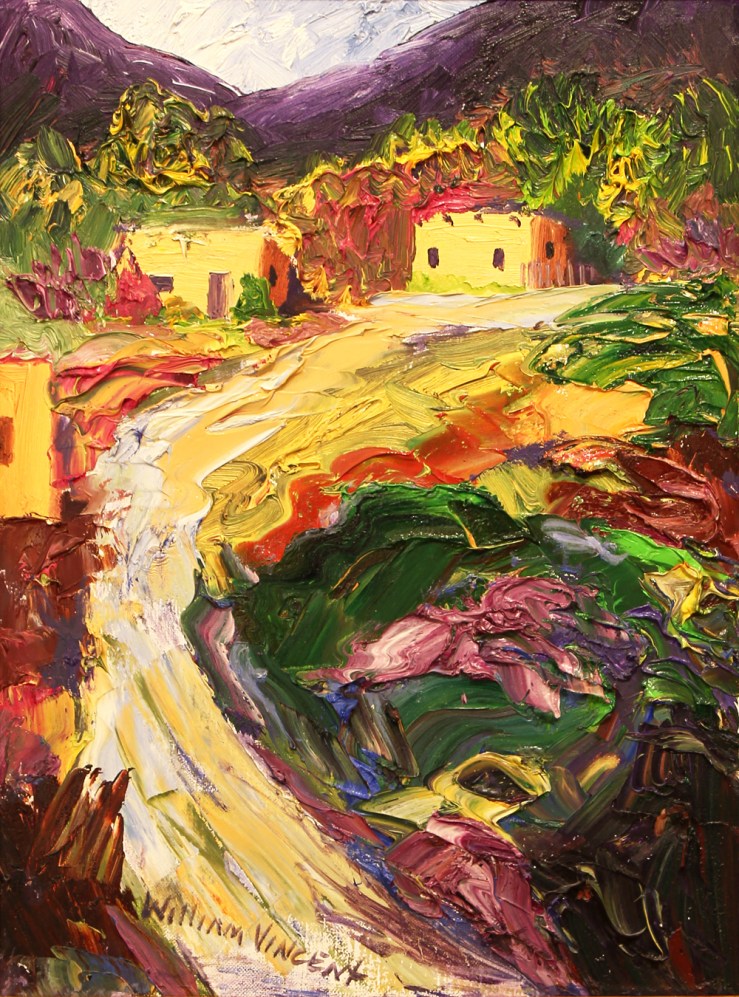
William Vincent Kirkpatrick- Upper Canyon Road- Matthews Gallery Blog

WILLIAM VINCENT KIRKPATRICK

“[Alfred Morang] taught half of us how to paint and the other half how to see,” remarked an unknown Santa Fe artists after Morang’s tragic death in 1958. The Morang School of Fine Art was instrumental in the development of a new generation of Santa Fe artists. At the time of Morang’s death, William Vincent Kirkpatrick (1939-2004), one of his star pupils, was studying at the Taos School  of Art. He returned to Santa Fe, rebuilt his master’s studio and worked on a series of canvases inspired by Morang’s vivid hues and painterly textures. Vincent Kirkpatrick also did a painting on the wall at El Farol near Morang’s series of murals, ensuring that their work would hang side-by-side for years to come!
Learn more about Alfred Morang and his contemporaries on the Matthews Gallery website, and make sure to connect with us on Facebook, Twitter and Instagram for daily gallery news. Also keep your eye out for our 2015 exhibition schedule, which will explore other corners of the Santa Fe art colony. Coming very soon!

MORANG AND FRIENDS: The Saloon

Wild Tales of a Legendary Santa Fe Tavern- Matthews Gallery Blog

Special announcement: We’ve officially extended our MORANG AND FRIENDS exhibition through Friday, January 2nd. Come trace the legacy of ‘Santa Fe’s Toulouse-Lautrec’! 

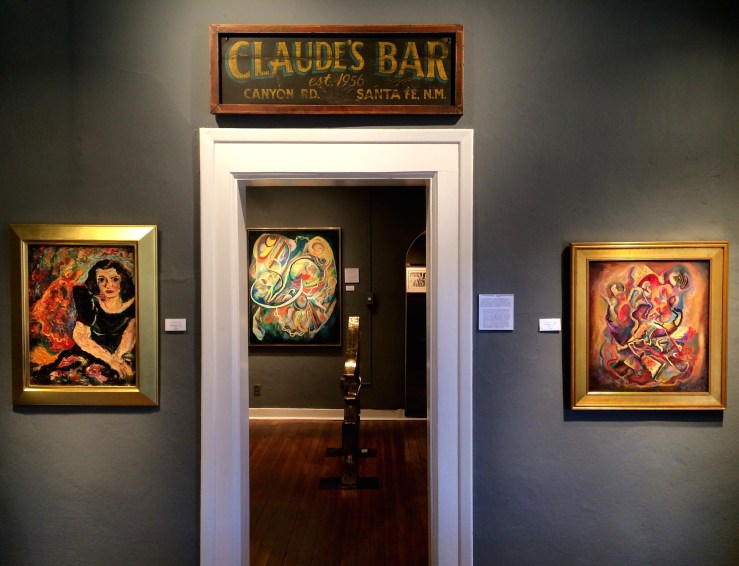
Cheryl Ingram strolls into Matthews Gallery and beams up at a sign that hangs high on the wall. “There it is, Claude’s Bar,” she says. Ingram is the co-owner of Silver Sun Gallery, which is just down the street from us. Her gallery once housed Claude’s Bar, and this Santa Fe relic is usually on display there. Ingram kindly lent it to us for our MORANG AND FRIENDS exhibition. Though Claude’s was established just two years before Alfred Morang’s death, he quickly took a liking to the tavern and its charismatic owner, Claude James. In fact, Claude’s was his last stop before the fire that ended his life in January, 1958.

About two decades after Morang’s death, Ingram and her business partner Deanna Olson arrived in Santa Fe. They were retired school teachers who had been traveling around the country selling handmade Native American jewelry. When they reached the City Different, they stuck around and founded Silver Sun. In the years since 1980 when they opened the business, they’ve become the keepers of countless stories about the infamous saloon that preceded them. As Ingram strolls around the gallery smiling at the colorful canvases, she can’t help but pass on some fascinating tales of Canyon Road.

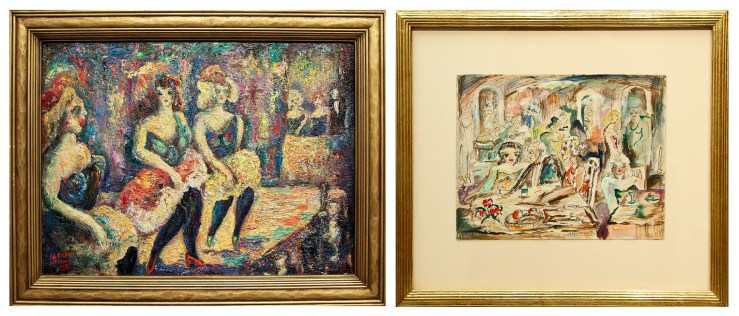
Artwork by Legendary Santa Fe Painter Alfred Morang- Matthews Gallery Blog

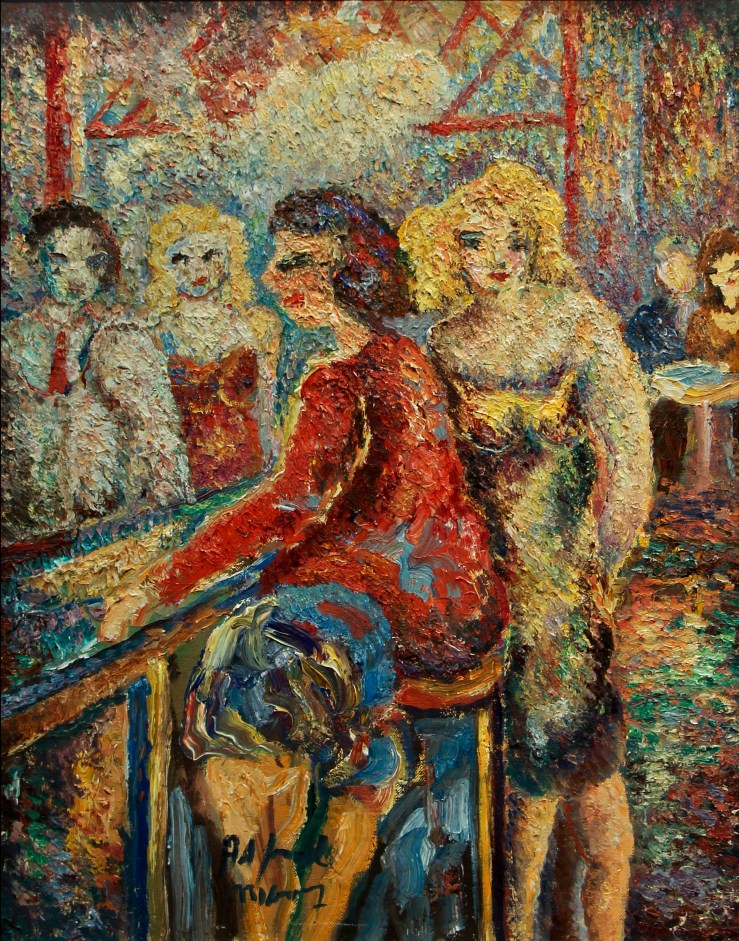
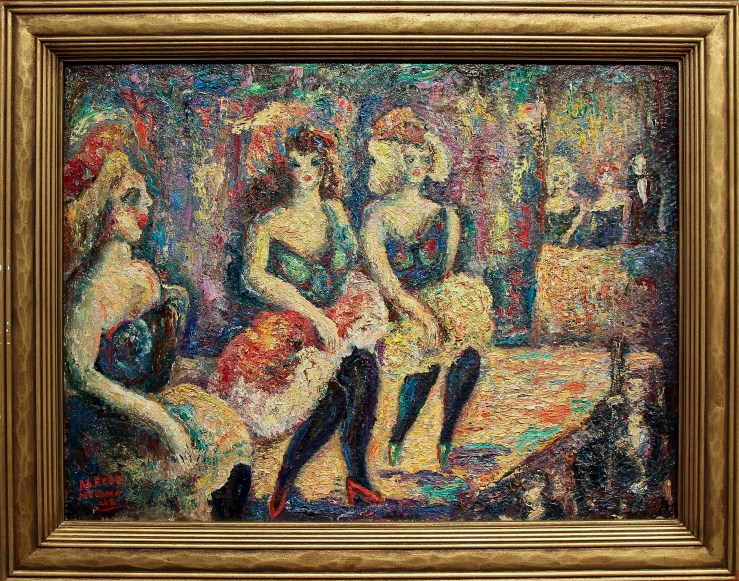
Ingram analyzes a painting of ladies dancing on a stage, concluding that it’s probably a view of El Farol. She and Lawrence linger by a watercolor of a bustling restaurant and try to identify where it might have been. She finally stops before a large painting titled ‘The Women at Claude’s’, and the stories really start rolling.

“Claude’s mother was French, and she married an editor at the New York Times whose last name was James,” Ingram says. In the 1950’s, Claude and her mother embarked on a road trip to California along Route 66. On their way back they took a detour to Santa Fe and never left.

Claude followed in her father’s footsteps and took a job as a journalist for the Santa Fe New Mexican. One year her house caught fire, killing her two corgis. A reporter snapped a photo of the dead dogs and published it in the paper the next day. Claude was so disturbed that she swore off journalism. She and her mother bought a building on Canyon Road’s 600 block and opened a bar and restaurant.

At first it was a fancy establishment where Claude’s mother hosted intellectuals from Paris, but later it was better known for midnight parties and wild bar brawls. “The Santa Fe police were always hoping it would burn down,” Ingram says. “Whenever they got a call about it, they were disappointed that there hadn’t been a fire.”

 Alfred Morang- The Women at Claude's- Matthews Gallery Blog Alfred Morang, The Women at Claude’s, Oil on Canvas

Ingram stares intently at ‘The Women at Claude’s’ and warm recognition spreads across her face. “Claude had dark hair, and she was short and squat like the woman in the center of the painting,” she says. In fact, with a little more analysis, Ingram concludes that the woman probably is Claude. “She’s standing behind the bar, so it very well may be Claude serving the clientele. That would be her lover behind her.”

Claude often tended bar barefoot with a pack of cigarettes folded into the sleeve of her shirt, Ingram says. She would throw patrons out of the bar “by the belt and shoulder” if they got too rowdy. “Canyon Road wasn’t paved then, so the landing was a little softer, but you didn’t mess with Claude,” Ingram says with a laugh.

As she continues, we flip our tape recorder on:

She was a handsome woman, but not a pretty woman. She was short but you didn’t mess with her.

A guy came into Silver Sun about 1982, looking for Claude’s Bar. I told him he was a little late, and he told me a story about Claude.

He said he had ordered a beer and Claude was working the bar. He noticed this pretty woman sitting at the other end of the bar. He tried to hit on her, and next thing he knew, his tie, shirt and coat were pulled across the bar. “You leave my woman alone,” Claude said. He was so upset, he didn’t finish the beer and left.

Each corner of the bar had its own persuasion. You had the gay men over here, the gay women over here, and the three piece suits were over there with the ladies of the night. Claude was like a teacher in the classroom: one corner did not mess with any of the other corners, or your fanny was out of there.

There was an ambiance that was going on in there that was truly Santa Fe of the period, and that’s why she was so popular. You were okay if you got in there. Even if you got stumbling drunk, someone would be there to protect you from some nasty politician or a cowboy with a gun.

There were honest-to-god cowboys who wore guns. A fight broke out between them and the gay guys once, and everyone had guns. There were two lines of guns, about ten or twelve feet apart, and they were drunk and shouting. That story came from a lady who was hiding under the bar. She was the barkeep on Saturday night. It looked like they were shooting around each other, trying to scare each other. One guy did take a hit in the fanny, however. When the cops got there, they just took the whole batch. The next day, the barkeep quit.

Towards about 1970 or 1971, there was a dance floor way in the back where a sculpture garden is now. A guy named Jimmy was up there playing—his wife told me this story—and looked past all the drunks to the door. Here was this lanky guy with a guitar case who saunters over to Jimmy. “Mind if I play along?” he says. Jimmy just had a cow. They played all the rest of the night together, and no one besides Jimmy recognized him. It was Jimi Hendrix. They were all too drunk.

Claude eventually lost interest in bar tending and hired someone else to manage the establishment. The saloon closed in the late 1970’s but its charismatic owner remains a legend among Santa Feans. It’s fascinating to hear Ingram’s tales, especially because they’re rare firsthand accounts. They’re all from people who have passed through Silver Sun over the years to pay tribute to Claude’s.

Since MORANG AND FRIENDS opened two weeks ago, we’ve had visits from many people with Santa Fe stories like these. We’d like to thank everyone who shared with us. Your words have helped inspire our upcoming exhibition schedule, which will delve into many corners of the Santa Fe art colony. Stay tuned!

For more gallery news, make sure to connect with us on Facebook, Twitter and Instagram.

MORANG AND FRIENDS: Alfred in Paris

Alfred Morang Portrait- Morang and Friends Exhibition- Matthews Gallery BlogAlfred Morang, 1952

“After Morang’s death, all of a sudden people started to realize that he was a great artist. People regretted that they didn’t pay enough attention to him,” Santa Fe art collector Paul Parker said at the end of our interview last week.

As Parker will tell you, Alfred Morang’s death in a Canyon Road fire in 1958 was the end of an era in Santa Fe. From his arrival in 1937, Morang had helped cultivate a vibrant art scene in the City Different. His house parties of the 1930’s and 40’s earned him a reputation as “one of Santa Fe’s… most colorful Bohemians,” as the Santa Fe New Mexican dubbed him in his obituary. Morang was a masterful painter who drew inspiration from the French Impressionists, and a talented teacher who passed his knowledge to the next generation of Santa Fe artists. He was a great writer, musician and radio broadcaster.

However, towards the end of Morang’s life, he and his wife Dorothy divorced and he became increasingly isolated. He spent most of his time fervently painting in his Canyon Road studio. Santa Fe artist Bill Tate had this recollection of a frigid winter in the 1950’s:

Oh my, it was cold! The snow was pouring down unmercifully and as I walked into Alfred’s tiny studio, I pushed paintings aside to make a path, then found them sliding in behind me as I penetrated the cache of completed canvases. It appeared that paintings were everywhere. There in the middle was Alfred, happily painting away, bundled up like a Siberian monk—galoshes, muffler, sweater, heavy top coat which came to his ankles, and a woman’s hat pulled snuggly down over his ears and neck.

The studio had a sky light, but where the glass was supposed to be, there was none. Alfred had hung an old muslin sheet over the opening to shut out the falling snow. Evidently Alfred had let the fire go out in the small space heater. Or maybe had forgotten to pay his gas bill. I don’t know. But it was awful. I had been there just a few minutes when the muslin partially ripped loose from the ceiling and began flopping in the wind. Snow dumped all over Alfred as well as the canvas.

Alfred never looked up, never stopped painting. His blue-cold hands kept mixing painting and dabbing it on the canvas. Occasionally, he would lean back to assess the effect, but throughout, he was totally oblivious to my presence… or the muslin that danced in the bitter breeze.

I attempted to speak, but only a chatter came out. I retreated to the warmth of my own studio. To the day he died, Alfred never knew I was there.

This somber image of an artist in the winter of his life is not how Parker likes to think of Morang. Soon after he first visited Santa Fe in the 1990’s Parker developed a fascination for the Santa Fe icon that has taken him on many adventures, including a national treasure hunt that inspired our latest exhibition. The artifacts Parker discovered will appear alongside artwork by Morang and his contemporaries in our December 12-26 exhibition MORANG AND FRIENDS, evoking an era full of crackling creativity. Morang stood at its warm heart.

In the story below, Parker captures the Santa Fe zeitgeist before and after Morang’s death, and travels to Paris to complete a mission in Morang’s memory:
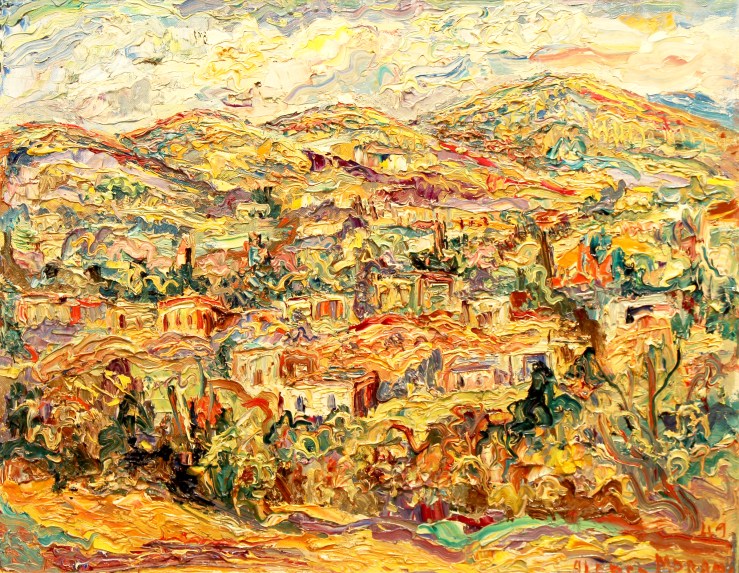
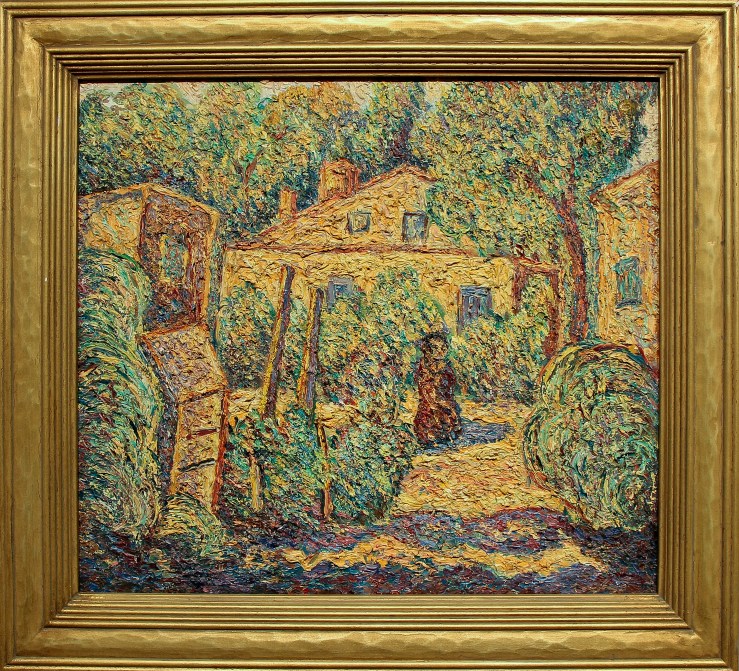
 Alfred Morang- Santa Fe Hillside 1949- Matthews Gallery Blog Alfred Morang, Untitled (Santa Fe Hillside) 1949, Oil on Canvas

HUNTING FOR ALFRED MORANG

by Paul Parker

I had been thinking about this mission for a long time and I finally find myself in the library seated in front of this antique microfilm viewer the size of a small refrigerator and I have loaded the reel containing the early 1958 issues of the Santa Fe New Mexican.

I was not sure why I had this unremitting need to know more about Alfred Morang. I had first seen his work painted on the adobe walls across from the bar in El Farol on Canyon Road and in Maria’s on Cordova, but I know the real inspiration came from my good friend Jim Parsons in Taos. Jim was an art dealer and appraiser forever and a friend and mentor for 20 years. When he mentioned that Alfred Morang was one of his favorites I knew I needed to pay attention. It was like Willy Wonka telling me about one of his favorite chocolate bars.

It helps that Alfred was such a compelling man, so well versed in music and literature as well as painting. He was the youngest person ever to perform a solo violin concert in the prestigious Jordan Hall in Boston. He was also an accomplished writer. The London Times once called him one of America’s leading non-political short story writers. Erskine Caldwell was a friend of his and he often visited Alfred and his wife Dorothy in Santa Fe.  Alfred’s short stories and poems were published alongside Frost, Poe and Mark Twain. I do know the main reason I am so drawn to him is that his art touches me. Behind that art is Alfred’s story, his life experience and that is what drove him to create the art that Jim and I and many others enjoy so much.

Alfred Morang- Untitled Portrait of a Woman 1950- Matthews Gallery BlogAlfred Morang, Untitled (Portrait of a Woman) 1950, Oil on Board

There is a very sad part to his story and it is that part that drew me to the library. Alfred Morang died in a fire in his Canyon Road apartment studio on a cold January night at the age of 56. I had wanted to come here to the library and read the January 29, 1958 issue of the Santa Fe New Mexican for some time. I wanted to know the details, I wanted to read what people said, I wanted to know what page it was on and how big the article was. I was scrolling through the microfilm and as I started approaching the day he died I realized I was reading the papers that he probably read unaware he only had days to live.

The closer I got to the issue of the paper I had come to see the more time I took reading the articles and I even started reading the ads. I lingered the longest on Tuesday’s edition dated January 28, 1958. That was the last paper Alfred could have read.

There was an article on that day that I am sure must have caught Alfred’s eye and the headline read, “French Ballet loses Backing”. Alfred never made it to Paris, but his heart was there. His heroes were the French Impressionists and he considered himself to be one of them. Monet and Bonnard were his favorites. The article explained that the French Education Ministry had withdrawn the government subsidy for the production of Francoise Sagan’s ballet “The Broken Date”. The ministry’s action followed a storm of protest. Apparently one dance was performed in a bathroom setting designed by painter Bernard Buffet and was described by some critics as scandalously erotic. I would like to have gone to Paris with Alfred and attended that performance. A French ballet with a bathroom setting designed by Bernard Buffet coupled with scandalously erotic, I am sure we both would have enjoyed that.

That Tuesday the Lensic was showing “Pal Joey” starring Rita Hayworth, Frank Sinatra and Kim Novak. Kaune’s was having a sale featuring Pork Chops at 59 cents a pound and Swanson’s Pot Pies at four for a dollar with your choice of chicken, turkey or beef. Cherry Motor’s at 607 Cerrillos Road had an ad for the new Rambler American for $1789. The ad proclaimed that one had been driven from New York to Los Angeles using only 80 gallons of gas averaging over 30 mpg. I remembered that time. One week before this ad ran I had celebrated my 12th birthday and becoming a teenager was in sight. Unlike today I was looking forward to getting older and that was the time I began thinking about cars. Chevrolet had just introduced the 283 V-8 a year earlier in the now iconic 1957 Chevy. The fuel economy push left over from the war was fading fast and the Plymouth Hemi and the “Little GTO” were on the horizon. The economical 6 cylinder Rambler American never had a chance.
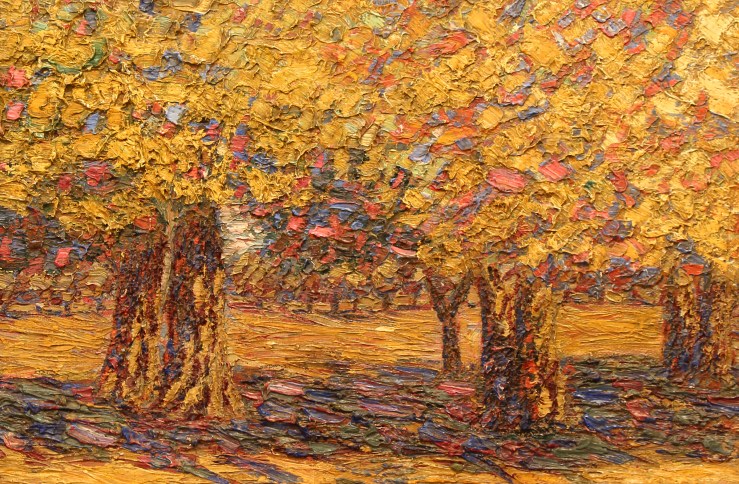
IMG_0474Alfred Morang, Pecan Grove, Oil on Panel

I read every bit of that Tuesday’s paper. It was as if I felt that Alfred would be okay as long as I did not turn the page, but I knew it was time to see what I had come to see. I took a last look at the classifieds and marveled at an ad for a 2-bedroom adobe with wall-to-wall carpet “close in” for $16,500 and then I hit the button and watched the microfilm reel turn slowly.

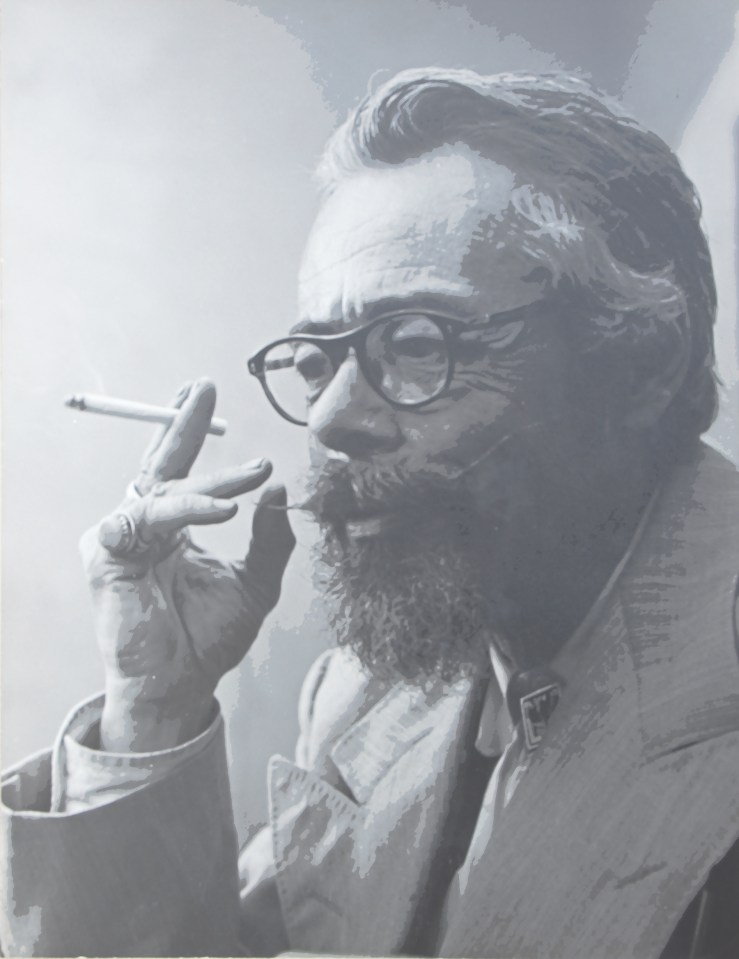
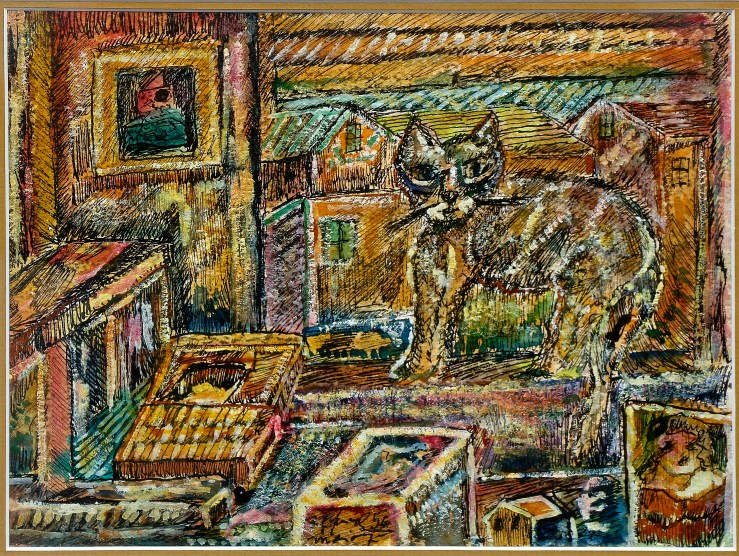
The first thing I saw positioned on the top left side of the front page of that Wednesday edition of the Santa Fe New Mexican was a large photograph of a cat crouching on the corner of a charred mattress. The rest of the bed was strewn with papers and tubes of paint. Underneath the right half of the photo was a caption “Mourning for Her Master…This lonely cat was found wandering through the charred ruins of the home of her master Alfred Morang who died in the fire early this morning. The cat is on the bed where he died.” Morang’s friends had commented on his love of cats and noted that he often went hungry himself so he could afford to feed them. Two other cats perished in the fire with him. Unfortunately I discovered that the cat on the mattress in the picture had to be put down because it had extensive lung damage. There was also a picture of Alfred. A cigarette in a holder was hanging from the corner of his mouth dangling over his scraggly beard and he was wearing a black hat with a brim that was tilted slightly to the left making him look decidedly like an artist and decidedly French. The story next to the photo read “Well Known Artist Dies In Home Fire… Alfred Morang, 56, one of Santa Fe’s best known and most colorful Bohemians died at about 1:30 am last night in a tragic fire at his home in the 600 block of Canyon Road.”  Friends reported they had last seen Alfred in Claude’s bar around midnight. His apartment was just up the alley out back.

Five days after the fire the New Mexican noted…“Funeral services were held Saturday at the Fairview Memorial Park Crematorium in Albuquerque for Alfred Morang, widely known Santa Fe artist, writer and critic who was burned to death early Wednesday morning in a fire at his home here. The body was escorted to Albuquerque by a group of close friends, including Randall Davey, Will Shuster, Harlan Lizer, Walter Dawley and William Currie. Alfred was transported in a Spanish Colonial coffin made by Abolonio Rodriguez, custodian of the art museum.”
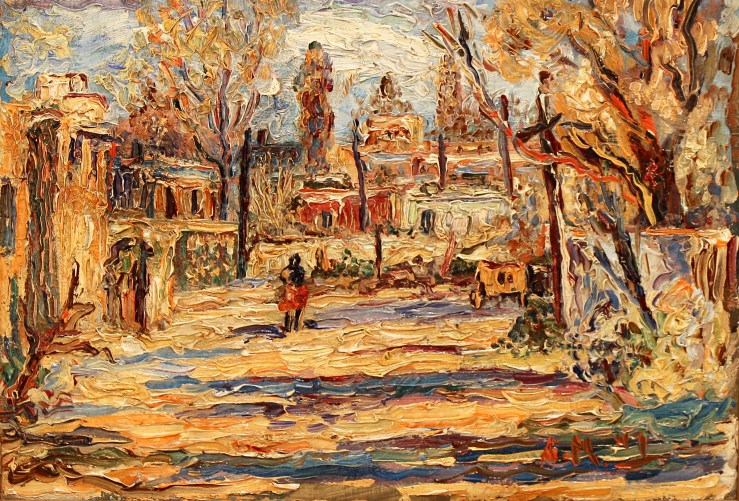
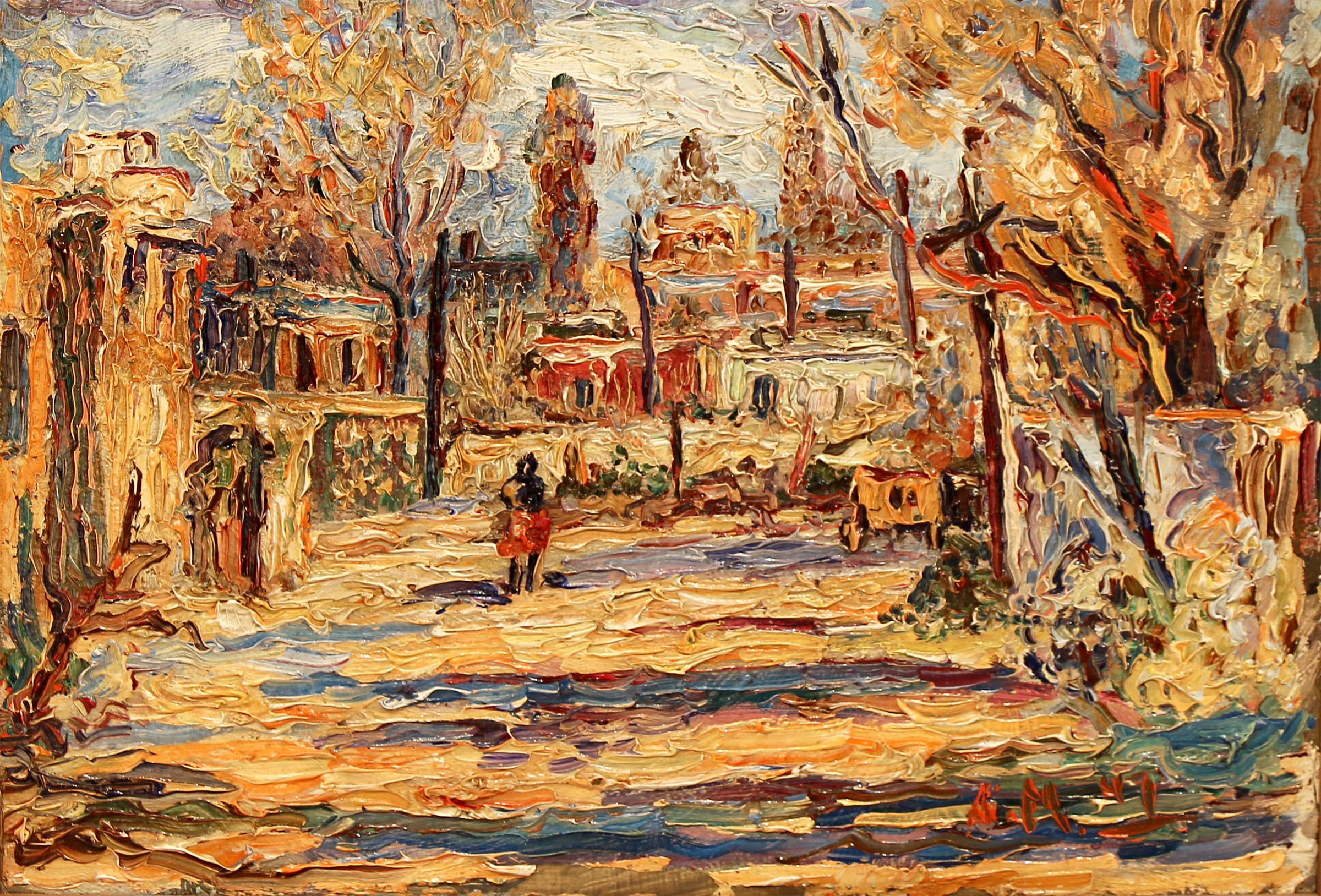
IMG_0505Alfred Morang, Guadalupe Plaza 1947, Oil on Board

Alfred was born in Ellsworth, Maine in 1901 and came to Santa Fe in 1937. Like many who came here he suffered from TB. He immediately became a fixture in the Santa Fe art scene. He wrote a weekly column for the newspaper and he produced a weekly radio program for 17 years on KVSF called “The World of Art with Alfred Morang.” Most of all he was famous for his enthusiasm for art and his ability to teach and many benefited from “The Morang School of Fine Art”.

Walt Wiggins authored a book published in 1979 appropriately titled “Alfred Morang…A Neglected Master”. Walt uncovered several quotes during his research for his book and my favorites include the following.  “When Alfred Morang’s life came to a tragic end in January of 1958 nothing before or since has so shaken the New Mexico art colony. Some say it was a sense of guilt that struck the community for not having shown a greater sense of appreciation for one who, by destiny, was different.” One Santa Fe artist reasoned, “Why shouldn’t Santa Fe be stunned with the loss of Alfred?  After all, he taught half of us how to paint and the other half how to see.”

The February 10th 1958 issue of the Santa Fe New Mexican carried the report of the local memorial service for Alfred in Lorraine Carr’s column “It Happened in Old Santa Fe”. Dr. Reginald Fisher, director of the Art Museum spoke first. “Friends this is not a funeral, we are simply gathered here for a creative expression of merit and appreciation of a spirit that has been active in an activity that we in Santa Fe like to call art. Alfred was an inventive, searching and daring spirit as French as Lautrec, yet he never saw Paris. Last week his restless spirit found peace.”

Painter and close friend Randall Davey was next. “I have known Alfred since he arrived back in 1937. He was a kind, a gentle and a humble soul and in all those years I never heard him speak unkindly of his fellow man. He was a great painter; many of you did not think so, because often he sold his work for a mere pittance through necessity. Nevertheless it was great art and the happiest work I have seen in New Mexico. He had a love and a delight for painting and I doubt that anyone will surpass him in this field.”

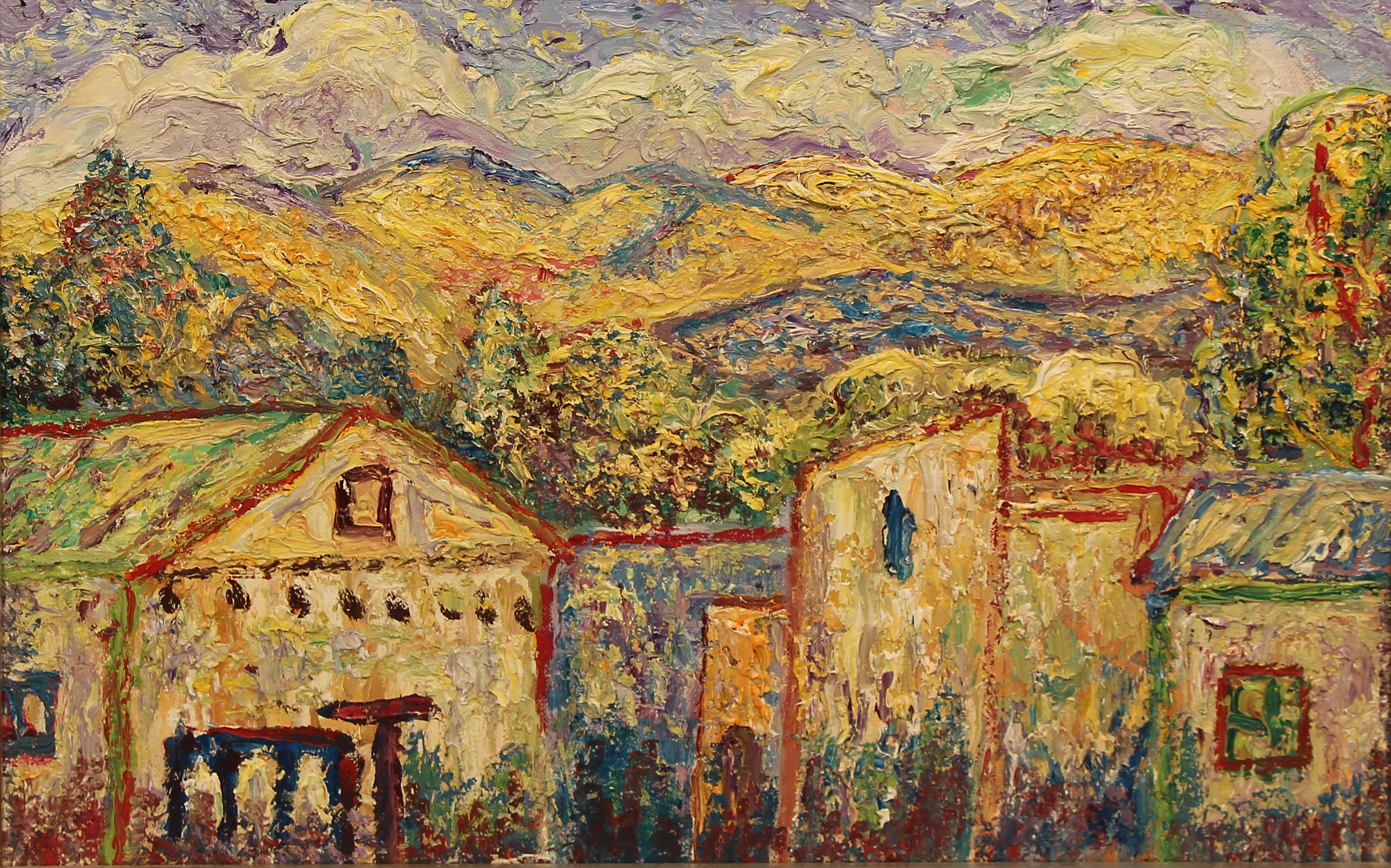
IMG_0495Alfred Morang, Untitled (Mountain Landscape), Oil on Board

I hope Alfred enjoyed himself on that Tuesday. I hope he spent some time with friends and some extra time petting his cats. I hope he wrote another poem and put the final touches on his most recent favorite painting before he headed down the alley to Claude’s that evening.

Claude James ran the well-known Canyon Road bar where he often spent time and, as legend has it, her rowdy spirit was just what was needed to run that place. I would love to have met Alfred there that fateful night for a few drinks. I’m sure we would have talked through the evening about art and life as we cast occasional glances at the ever present ladies that were often the subject of his paintings and when Claude said “It’s midnight, would you fellows like another one?”  I would nod and say, how about a couple of shots of your best cognac. I would love to take a sip, lean back and turn to him and say “Alfred I know you often say that you don’t believe in art for art’s sake, but you believe in art for people’s sake. Can you explain to me what you mean by that, and please…take your time?”

A few weeks after I finished writing this story I found myself engrossed in the details of planning a trip to Paris. I was not sure why, but suddenly it came flooding over me with incredible clarity. Human life really is very fragile and it really is all going to come to an end someday and we do not know when. I knew then I needed to go to Paris and I needed to go now. Unfortunately most people have that epiphany too late in life. They start thinking about the things they never got to do after it’s too late to do them. I knew then that this sudden obsession with Paris was a message from Alfred. Paris was his promised land, but he never made it there and I was going to go for both of us.

I told a friend in Santa Fe this story and he said, “You should do something for Alfred in Paris.” It was a great idea, but what would I do? I had been in Paris 5 days when I suddenly knew. I found an image of a Morang painting on my laptop. I printed it and wrote a bit on the back about Alfred and headed off to the Musee d’Orsay. This time as I enjoyed the paintings I was also searching for a repository for Alfred’s work and I finally found it. I can tell you that a fine example of the genius of Alfred Morang now has a home in Musee d’Orsay on the banks of the Seine and it will take a jackhammer to find it. He is close to Monet and Bonnard, the masters he so admired. Alfred, you finally made it.

Source: Bill Tate’s tale first appeared in the 1979 book Alfred Morang: A Neglected Master by Walt Wiggins.

MORANG AND FRIENDS: The Violin

Alfred Morang's Violin will appear in the Morang and Friends exhibition- Matthews Gallery Blog

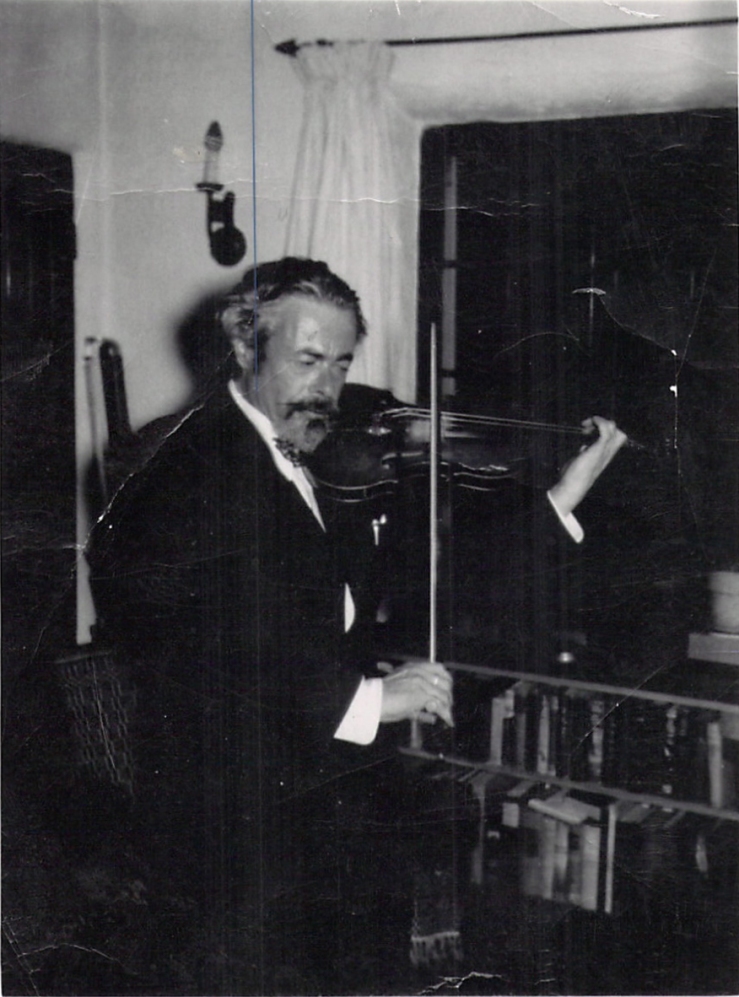
When Alfred Morang was a teenager he took to the nightclubs of Boston with his trusty violin. He had been a sickly child, bedridden and unable to attend school, but his mother and uncle recognized his fiery creativity and hired private music and painting tutors. Morang grew from a talented tot to a full-fledged young Renaissance Man, and his passionate musical performances earned him enough money to thrive. It was the beginning of a lifelong artistic journey.

A century later, Morang’s fiddle launched yet another adventure. Santa Fe art collector Paul Parker was researching Morang’s life when he came upon a letter by the artist’s longtime wife Dorothy. After Morang’s tragic death in a studio fire, Dorothy was having a hard time finding an heir to his worldly possessions. She’d finally contacted a distant relative, and was arranging the shipment of a few things collected from the ruins of Morang’s Canyon Road casita.

Santa Fe Artist Alfred Morang Playing the Violin- Matthews Gallery BlogAlfred Morang playing his violin

The letter was Parker’s first clue in a treasure hunt that spanned the nation and stretched to the farthest branches of the Morang family tree. At the end of the trail was a treasure trove that connected the dots of Morang’s life, from his early years as a celebrated musician and writer to his time as an iconic Santa Fe artist. Morang’s well-worn violin, blackened by the fire, is perhaps Parker’s most striking find. It will appear alongside Morang’s artwork in our December 12-26 exhibition MORANG AND FRIENDS.

We interviewed Parker about his search for the fascinating artifacts that will anchor our exhibition to this legendary Santa Fe master:

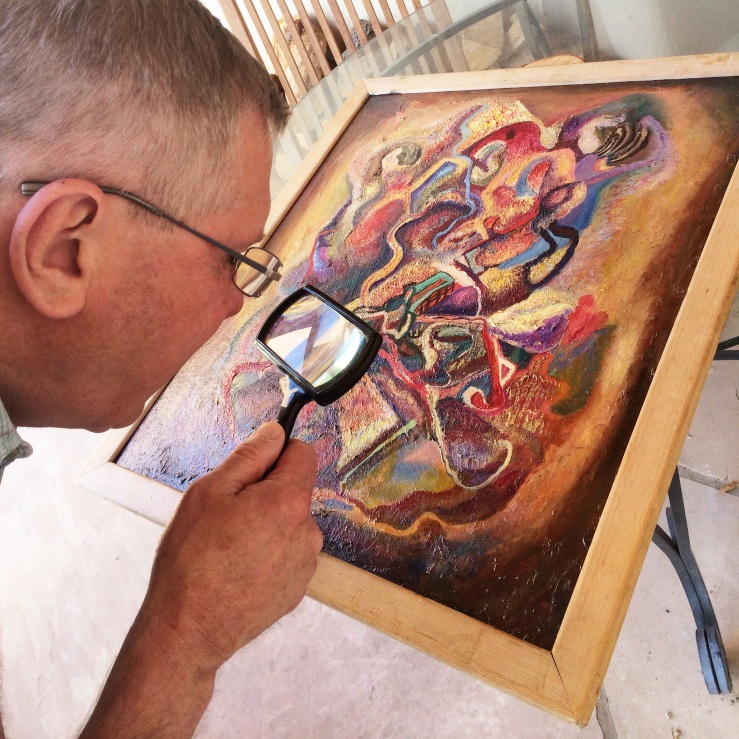
Paul Parker Inspects a Painting by Alfred Morang- Matthews Gallery Blog Paul Parker inspecting a painting by Alfred Morang


 How did you first get interested in Alfred Morang?

I came to Santa Fe in the 1990’s, and met Jim Parsons in Taos not long after. He had a little booth with a rack of prints and drawings and things, and he had a pile of books called The Art Fever. We hit it off and just talked and talked, and I bought a copy of his book. I took it home and read it, and realized who I was talking to.

There was a time when Jim Parsons was the most powerful person in the Western art business. Back in the day, he had a little art gallery in his Denver apartment. He convinced Philip Anschutz to start a Western art collection, which is now the largest and most prestigious collection of Western art in private hands in the world.

Jim was a giant Morang fan, and he showed me his work. I became instantly fascinated with Morang’s story. I had seen his paintings in El Farol but didn’t know anything about him until Jim told me.

Tell me about Morang’s childhood.

He was born in a little town called Ellsworth, Maine. There’s still a Morang Chevrolet in Ellsworth that his father owned with another partner. He and his mother had a very close relationship.

Even as a child, Morang was something of a polymath.

 Yes, he learned from Carrol S. Tyson and other American Impressionists. He was also the youngest-ever solo violinist to play at Jordan Hall in Boston. I mean, he was a very accomplished musician. His wife Dorothy was a member of the music conservancy in Boston. That’s where he met her.

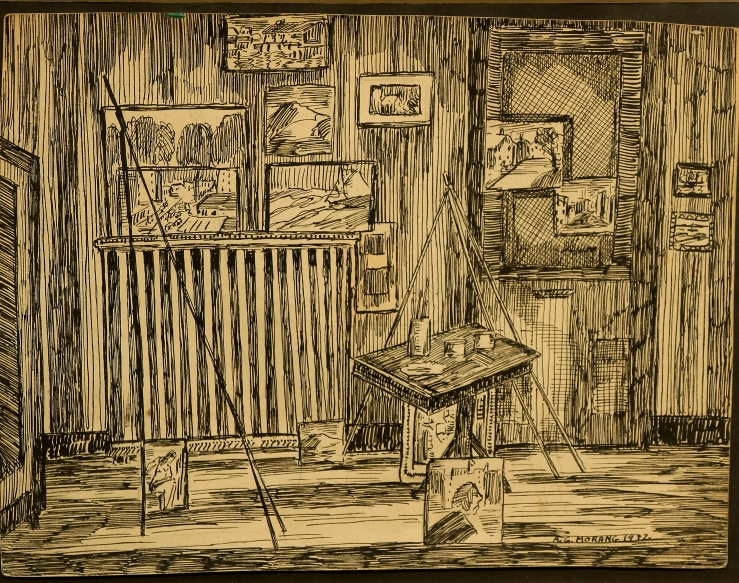
Alfred Morang- The Artist's Studio Portland Maine- Pen and Ink- Matthews Gallery Blog

Alfred Morang, Artist’s Studio-Portland, 1932, Pen and Ink


He and Dorothy lived in Portland, Maine before his tuberculosis forced them to move to Santa Fe in 1938. Morang had a successful a writing and painting career back East. What are your thoughts on his early work?

I’ve seen some of his work from back then. Like a lot of artists, when Morang came to New Mexico and saw the color and the light and everything, it inspired him. I think that’s the biggest thing.

It’s almost akin to my life. I thought I enjoyed art, but until I moved to Santa Fe, until I drove by 100 galleries every night on my way home and everybody that I associated with and talked to was in the business in some way, shape or form, something about that was really inspiring.

Artifacts of Santa Fe Artist Alfred Morang to Appear in December Exhibition- Matthews Gallery BlogSanta Fe New Mexican columnist Lorraine Carr covered Morang’s memorial service in February, 1958


How did you start hunting for the box of Morang’s possessions?

I was writing a story about Morang, and I went to the library to find out what the newspaper said when he died in 1958. I was reading all of the articles and eulogies and things, and I thought, ‘This is an amazing man.”

After I went to the library that day, I realized I needed more research, so I went to the New Mexico Museum of Art and searched their archives for anything I could find in Alfred Morang’s folder. That’s when I found Dorothy Morang’s folder, and saw her letter. It said that she had sent this box of Morang’s possessions away to Carrie Morang Robinson in Atlanta, Georgia. All I had was the name Carrie Morang Robinson and this address in Atlanta. I did my research and found out that she was deceased. I couldn’t find any relatives, and her former house had a different owner.

 That must have seemed like a dead-end.

Yeah, I made several phone calls and then just kind of gave up for a while. Then something hit me a couple months later and I said, “Damn it, I’m going to try again.”

I did some more research and tried to find Alfred’s relatives. Carrie Morang Robinson was the daughter of one of Alfred Morang’s uncles because she was a cousin and had the family name. I found one uncle’s name through the Morang Chevy dealership in Ellsworth, but then I ran into another dead-end.

A couple months later I got a Maine antiques publication, and there was something about ancestors in it. I got some other names of who Carrie Morang Robinson’s father might have been. I found some members of the Robinson family, and started researching them.

You were making some headway!

 I just start calling people again, and this woman whose name was Robinson came up. I called her, and she said, “Oh, our cousin Alfred. Our mother used to tell us about him.” I started telling her a little bit of the story, and she said, “You have to talk to Gwen.” I just lit up, because Gwen was Carrie Morang Robinson’s granddaughter and lived with her grandmother in the final years of her life. Now Gwen owns Carrie’s house.

I called Gwen up, and she had all of these family stories about Alfred, that he used to go through the woods with his violin and his cats following him. “Weird cousin Alfred” or something like that. She said, “Well, if my grandmother owned the box, it’s probably still up in the attic.” Then I got excited.

You were one step away. It must have been tantalizing. 

Well, Gwen was renting the house, so she told me she’d search for the stuff the next time she was in Atlanta. A month or two goes by, and I call her up again. She says, “We’ll be selling the house, so I’ll look for it then.” A long period of time goes by, and all of a sudden I hear the phone ring one day. “Well, I found your box,” she says. “I’ve got a couple more things—a violin and a painting.”

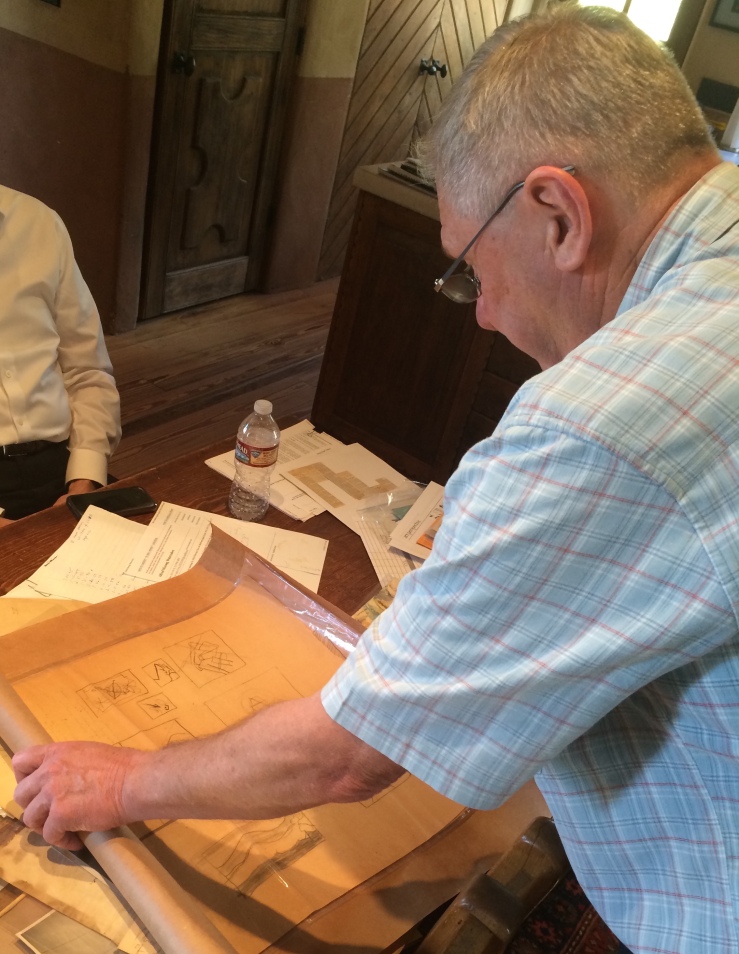
 Paul Parker Surveys Artifacts of Legendary Santa Fe Artist Alfred Morang- Matthews Gallery BlogParker surveys sketches and other artifacts of Alfred Morang


How did it feel when Morang’s artifacts finally arrived at your door? 

It was absolutely phenomenal. It was like the biggest Christmas ever. To see that violin and just to touch it. Talk about personal.

The box was full of many different short stories and manuscripts, which he submitted to radio stations to be read as radio plays. Many of these stories were never published, and might have been lost forever.

Did this elaborate hunt make you wonder why someone didn’t try to keep the artifacts in Santa Fe? 

Dorothy and Alfred got divorced in 1950, but even then Dorothy kind of watched out for him. When he died, she knew about this cousin Carrie Morang Robinson, who was the only rightful heir to his possessions. Dorothy stepped up to help contact her, and at the time it wasn’t a big deal to send them away.

One of the stories that Morang’s adopted daughter Claire LaTour has told me is that they didn’t know what to do with his ashes. They left them in a closet in the art museum after the last memorial service. Claire came back, and somebody flew her over Canyon Road and she dumped his ashes out the window of the airplane, which was a difficult task. She told me, “I was wearing a fur coat, and I always laughed that forever afterward I was brushing Alfred out of my coat.”

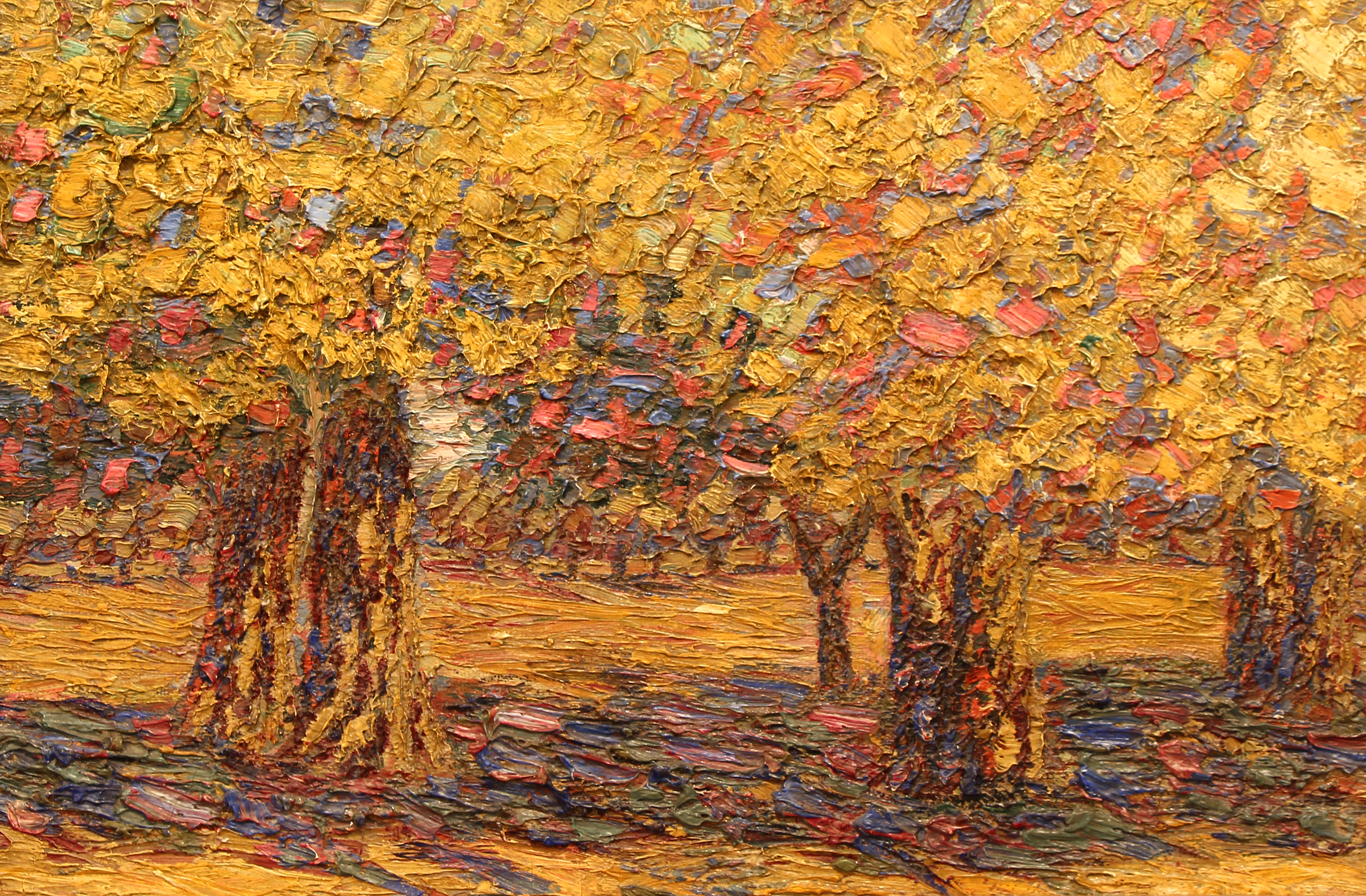
Alfred Morang- Autumn in the Park- Oil on Canvas- Matthews Gallery BlogAlfred Morang, Autumn in the Park, 1954, Oil on Canvas


Morang’s colorful personality often overshadows his artwork. Is that frustrating for you, as a big fan of his work ?

It’s the same frustration that I have now with van Gogh. I know from all my research that van Gogh was not a crazy man. He had epileptic fits that affected his life and personality, but he was a very brilliant man and definitely not insane.

It’s almost the same thing with Alfred. People like the story of a bohemian alcoholic, something that fits better with the story of Toulouse-Lautrec. He wasn’t an alcoholic. He couldn’t have done the things that he did if he were an alcoholic.

The greatest quote that I’ve ever heard about an artist is from Morang’s memorial service. It’s not attributed to anybody specifically, but an unknown artist said, “It’s no wonder that we in Santa Fe mourn the loss of Alfred, he taught half of us how to paint and the other half how to see.” After Morang’s death, all of a sudden people started to realize that he was a great artist. People regretted that they didn’t pay enough attention to him.

Coming up next week, Paul Parker digs up more mysteries of Alfred Morang’s life and travels to Paris to complete a mission in Morang’s memory. Make sure to connect with us on Facebook, Twitter and Instagram for daily updates on MORANG AND FRIENDS.

MORANG AND FRIENDS: The Fire

Santa Fe Master Alfred Morang- Matthews Gallery Blog

Alfred Morang’s life ended with a fire. That’s where the story of our upcoming exhibition begins.

It was a frigid January evening in 1958, and Morang was up late at Claude’s Tavern. The saloon was on Canyon Road’s 600 block, just down the street from Matthews Gallery. Its owner Claude was a burly woman known for ejecting unruly patrons by slinging them over her shoulder. She presided over a wild scene: legend has it someone once rode a horse straight through the bar.

Alfred Morang- Dancers at Midnight- Matthews Gallery Blog

This was a fitting final evening for Morang. Claude’s was one of his favorite haunts, a place that still captured the dwindling spirit of his legendary house parties of the 1930’s and 40’s. Back then, he and his wife Dorothy were the toast of the Santa Fe art colony. Morang was a revered painter, art teacher, art critic and radio personality. His impressionistic paintings of colorful soirées filled with dancing ‘Ladies of the Evening’ and skeletal gentlemen had earned him the nickname ‘Santa Fe’s Toulouse’.

Morang’s studio apartment was directly behind Claude’s, and he returned there around midnight. It was a tiny space so packed with canvases that you could barely navigate it. Sometimes the heating broke, and when it snowed Morang would haphazardly pin a muslin cloth over the open skylight.

At around 1:30 am, smoke filled the air. Here’s Santa Fe artist Drew Bacigalupa‘s account of what happened next:

I was in the neighborhood bar the night his house caught fire. An old army buddy from Chicago had come to town and wanted to down cognac while viewing local color. There wasn’t much to view. It was a bitterly cold night, the streets deserted, the bar almost empty and quite cheerless. My bachelor friend dredged up memories of a thousand other cafes in France and Germany while my thoughts strayed to demands at home. Three weary women at the other end of the long bar seemed to be nowhere waiting for nothing.

The sound of sirens startled us all. Fire engines skidded past the door, we could hear them screeching to a halt in a compound behind the bar. I knew Alfred’s small adobe casita was there.

Nothing could be done. The roof had already crashed in and flames leaped high in the sky. I was thinking how very, very strange it was to be standing beside this war comrade watching helplessly, just as we’d done in Europe, as property and life were devoured by fire. And even stranger—later—when stretcher carriers fled the still-blazing ruin and rested their burden on the frozen ground. For firelight, like streaks of red and yellow pigment, crawled erratically over the sad tableau. And looking up from the bearded profile on the stretcher, I saw the women from the bar had joined us. Harsh, bright colors spiraled over their tawdry dress and hennaed hair, highlighting them against the black night. They were exactly like his painting […] his Ladies of the Evening.

Alfred Morang- Mitzi Cat- Matthews Gallery Blog

The next morning, the Santa Fe New Mexican printed a photo of one of Morang’s cats perched sadly atop a blackened mattress. The caption read, “Mourning For Her Master… this lonely cat was found wandering through the charred ruins of the home of her master Alfred Morang. The cat is on the bed where he died.”
The Santa Fe art community was distraught. There was a sense of guilt among Morang’s closest friends, a grave regret that the masterful artist had received only a fraction of the recognition he deserved. “Why shouldn’t Santa Fe be stunned by the loss of Alfred?” said one local artist. “After all, he taught half of us how to paint; the other half how to see.”

Art luminaries Randall Davey and Will Shuster helped escort the body to Albuquerque for the funeral, and Davey spoke at the Santa Fe memorial service in early February. “He was a great painter; many of you did not think so because he sold his art for a mere pittance through necessity,” said Davey. “Nevertheless it was great art and the happiest work I have seen in New Mexico. He had a love and delight for painting and I doubt that anyone will surpass him in his field.”

Alfred Morang- Gormley Lane Santa Fe- Matthews Gallery Blog

Meanwhile, the City of Santa Fe was having a hard time finding Morang’s heirs. He and Dorothy had divorced in 1950, and he wasn’t close to any of his relatives. Morang’s ashes sat in a closet in the New Mexico Museum of Art for two years before they were scattered over Canyon Road. Eventually, Dorothy helped locate a distant family member to send a box of Morang’s possessions that had been plucked from the ashes of the deadly fire.

Decades after Morang’s death, local art scholar Paul Parker conducted a national search for that box, which had passed down through the Morang family. The ephemera he discovered—including a charred violin, sketches and extensive writings—will appear alongside artwork by Morang and other New Mexico modernists of the period in our December 12-26 exhibition MORANG & FRIENDS.

As the show approaches we’ll tell the story of Parker’s treasure hunt, and recount colorful chapters from the life of Alfred Morang. Make sure to subscribe to our blog, and connect with us on Facebook, Twitter and Instagram for additional updates on this exciting project.

Source: Drew Bacigalupa’s tale first appeared in the 1979 book Alfred Morang: A Neglected Master by Walt Wiggins