Seats are filling up for our free COLLECTOR’S FORUM workshops, which begin next Friday as part of the Santa Fe Gallery Association’s Art Matters lecture series. The events have already given us the opportunity to connect with art lovers of all stripes. As the news spreads from person to person, a network is forming with links to local art legends like Alfred Morang and Fremont Ellis.
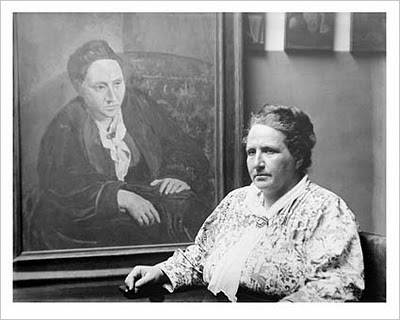
Gertrude Stein with Pablo Picasso’s famous portrait of her
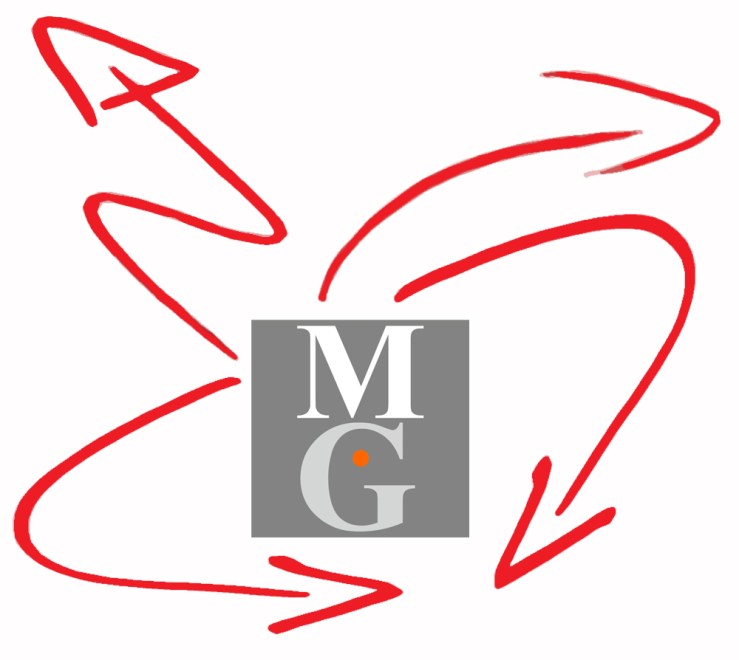
That’s why this lovely friendship map of Parisian modern artists and patrons from the early 20th century caught our eye on Twitter the other day. Celebrated salonniere Gertrude Stein is the spider at the center of the web, of course, with Pablo Picasso and Henri Matisse and Joseph Stellaand Henri-Pierre Roche entangled around her. Mabel Dodge and Marsden Hartley appear too, and their later New Mexico adventures tie this famous circle directly to our own rich cultural history. Forget six degrees of separation, we’re down to one!
The art world is beautifully interconnected, but that doesn’t mean it has to be exclusive. Our workshops are designed for anyone who’s ever considered dipping a toe into the art market, whether you have a full array of masterpieces or a virtual wish list of art treasures on Tumblr. We’ll cover every angle of the art business, including:
How the price of artwork is determined
How the primary art market differs from the secondary market
The importance of provenance
When conservation should be considered for an artwork and what is involved
How to insure your artwork
How to receive an accurate art appraisal
How to negotiate the purchase of art
The best strategies for buying or selling art at auction
The workshops will feature fascinating behind-the-scenes stories from our gallery, and tales of tricky art conservation projects from special guest Matt Horowitz. Shoot us an email to reserve your seat and become a link in the long chain of art connoisseurs, from the City of Light to the City Different!
It was Mark Rothko’s 111th birthday this Friday, and the occasion has us pondering one of the 20th century’s most polarizing art movements: abstract expressionism.
Three artworks by renowned abstract expressionists have recently landed on our walls. The first two are heavily impastoed oil paintings by Stanley Boxer, who resolutely clung to the far fringes of the movement. Determined to defy labels, he was furious when art critic Clement Greenberg called him a color field painter, and yet the arc of his creative explorations closely paralleled that of his abstract expressionist contemporaries:
In the manufacture of my art, I use anything and everything which gets the job done without any sentiment or sanctity as to medium. Then, too, I have deliberately made a practice of being “visionless”… this is, I go where my preceding art takes me, and never try to redirect the future as to what my art should look like. This is a general credo and foundation for everything I have ever done and stands firm in its solidity as this is written.
Boxer, who died in 2000, would have loved Grace Glueck’s New York Times review of a 2004 exhibition of his late works. She notes that he was “never part of a movement or trend,” but rather driven by paint’s “physical possibilities without script or program.”
Glueck ends the piece with a brief analysis of Boxer’s titles, lyrical lists of words that are jammed together in unbroken strings. The works in our collection, for example, have names that read like fragments of beat poems: Atriumofashreddednight and Crisppitchofsigh. Glueck writes, “As Boxer joked in his titles, these canvases, more than most, do not really lend themselves to verbal exposition. They live for the eye, to which they bring deep satisfaction.”
Boxer’s titles provide a link to Robert Motherwell, the other abstract expressionist represented in our collection. Unlike many “abex” artists who labeled their canvases using dates or arbitrary numbers, Boxer and Motherwell were unapologetic in their wordplay.
That’s where the similarity ends. While Boxer considered himself an isolated frontiersman of abstract painting, Motherwell was an eager icon of abstract expressionism. He coined the term ‘New York School’ to describe his revolutionary circle, which included Mark Rothko, Jackson Pollock and Willem de Kooning, and acted as a spokesperson for the movement in the world of academia.
If Boxer’s titles were little more than impressionistic quips, Motherwell, who was a scholar before he became a “serious artist” and wrote numerous essays on aesthetics, chose names that have inspired endless analysis. His most famous series of paintings, Elegies to the Spanish Republic, chronicles the Spanish Civil War in bold strokes of black and white and subtle passages of ochre, blue, green and red.
“Mainly, I use each color as simply symbolic: ochre for the earth, green for the grass, blue for the sky and sea,” Motherwell wrote. “I guess that black and white, which I use most often, tend to be protagonists.” In varying contexts, each color holds a universe of meanings. To fully understand the use of ochre in Motherwell’s Spanish Elegies, “You would have to know that a Spanish bull ring is made of sand of an ochre color,” the artist wrote. Other works that feature ochre, like Western Airor Personage, with Yellow Ochre and White, would naturally spark different associations.
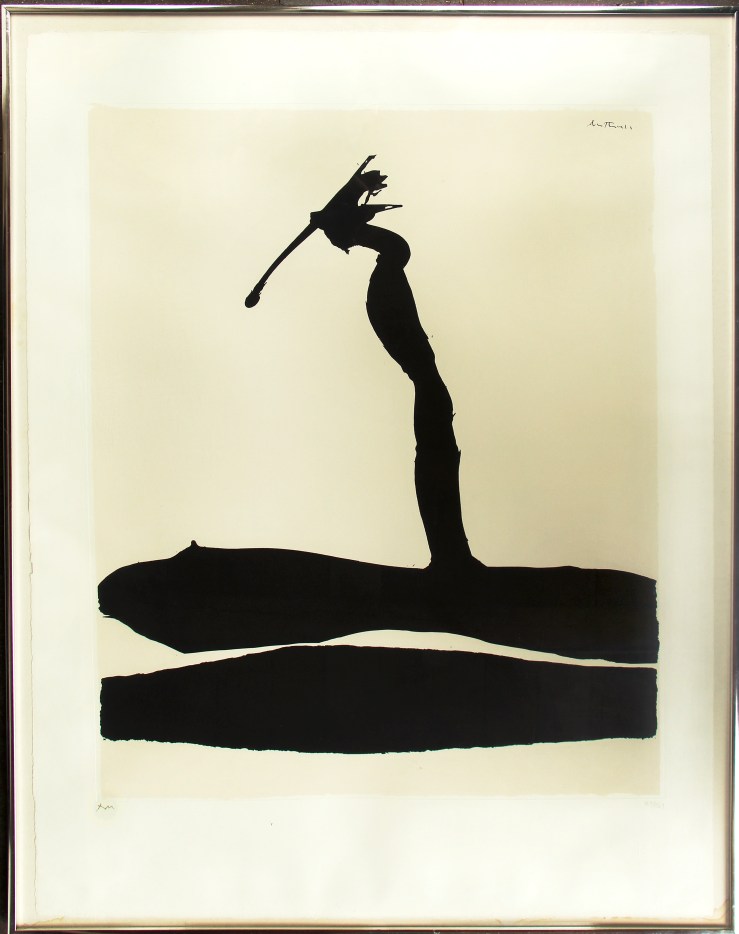
What to make of our Motherwell silkscreen, titled Africa 4? Motherwell completed the Africa suite in 1970, the same year he created his Basque and London suites. They were his first projects entirely devoted to silkscreens, and a divergence from the heavily layered nuances of his oil paintings. Here his black abstract forms stand crisply against their off-white backgrounds, although on closer inspection, their tumultuous edges still seem to weave in an out of focus.
“All my works [consist] of a dialectic between the conscious (straight lines, designed shapes, weighed color, abstract language) and the unconscious (soft lines, obscured shapes, automatism) resolved into a synthesis,” the artist wrote in 1944.
Motherwell first explored the concepts of automatism and the subconscious with a group of Parisian Surrealists, including Duchamp, Ernst and Masson, who had fled Europe during World War II. Their ideas would help shape the spiritual side of abstract expressionism, a spontaneous, intuitive element that Motherwell carefully balanced with his more intellectual inclinations.
Motherwell’s connection to the Surrealists lends us a potential clue to the significance of the ‘Africa’ title. In his 1946 essay ‘Beyond the Aesthetics‘, Motherwell discusses the life of French Symbolist poet Arthur Rimbaud, who helped inspire Surrealism. In the final decades of his life Rimbaud quit writing and set off on an African expedition, a leap of faith that Motherwell compares to the Surrealists’ break from Dada and formation of a new movement:
Like Rimbaud before them, the Surrealists abandoned the aesthetic altogether; it takes a certain courage to leave poetry for Africa (as Rimbaud did, fh). They revealed their insight as essentially moral in never forgetting for a moment that most living is a process of conforming to an established order which is inhuman in its drives and consequences. Their hatred sustained them through all the humiliating situations in which the modern artist find himself, and led them to conceptions beyond the reach of more passive souls. For them true ‘poetry’ was freedom from mechanical social responses. No wonder they loved the work of children and the insane – if not the creatures themselves.
Perhaps Motherwell’s Africa suite represents a similar journey, a leap into the unknown that is a clear break from previous adventures. Just as Rimbaud abandoned an intellectual pursuit for one centered on travel and action, and as the Surrealists broke from the societal battles of the Dadaists to explore dreamscapes, so Motherwell’s stark Africa forms landed him in a new realm of image-making. Perhaps he sought to prove that even the most distinctly divided blacks and whites could possess endless shades of grey.
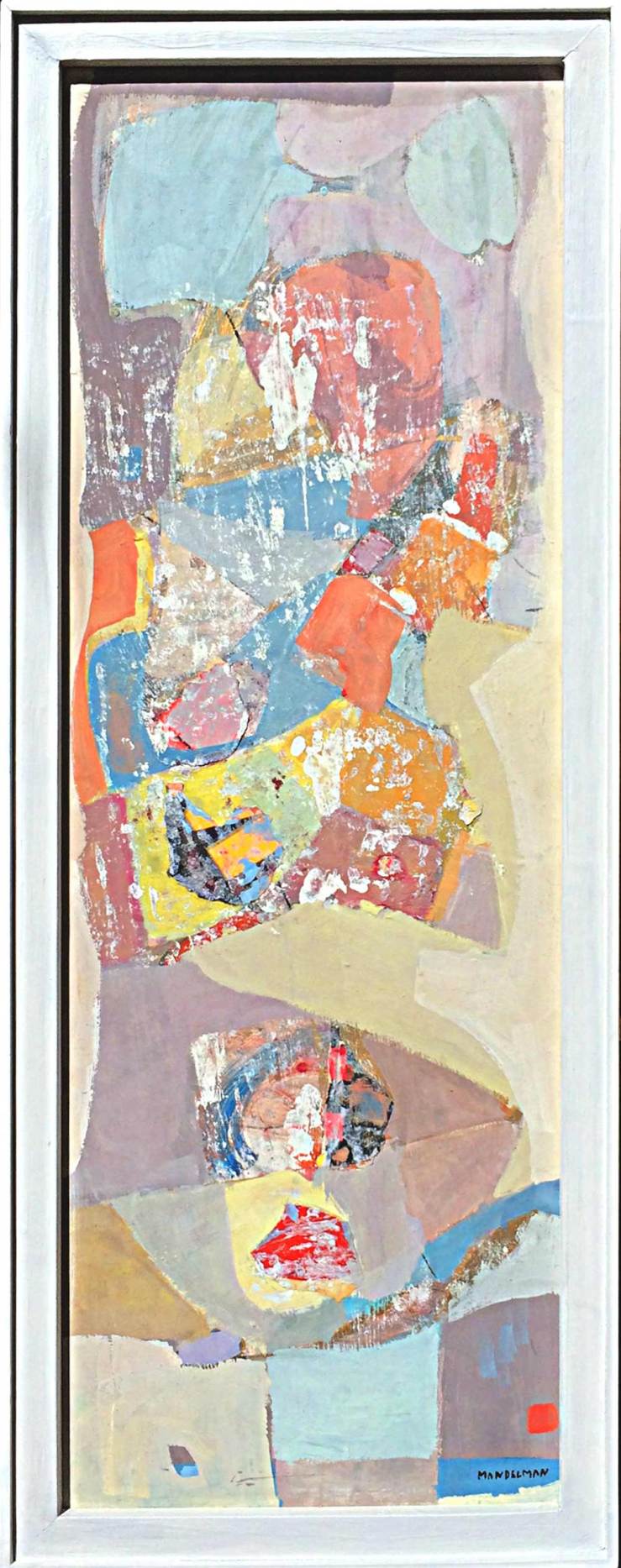
Beatrice Mandelman, Cool Wind c. 1950, Casein with Collage on Masonite Panel
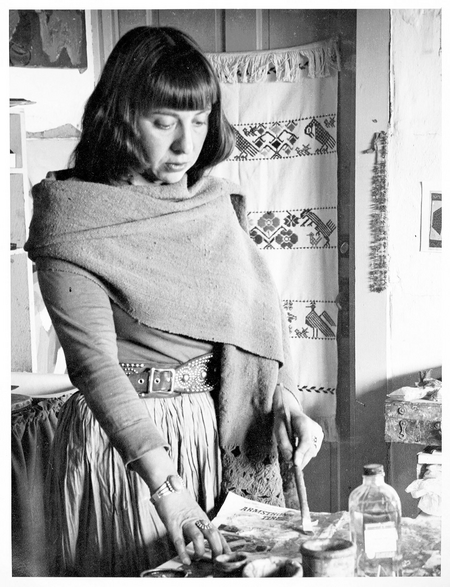
When John Sloan invited Beatrice Mandelman and Louis Ribak to visit Santa Fe in 1944, the two artists were on the rise among New York City’s avant-garde. They had ties to Hans Hoffman and Fernand Leger, and were often mentioned in the same breath as Jackson Pollock. Sloan, who had been summering in New Mexico for years, had a reputation for spiriting away his favorite artists to the Desert Southwest. During their trip the recently married duo took a train to Taos and decided to stay.
The move marked a radical change in Mandelman and Ribak’s artwork. “We had to start all over again,” Mandelman said. “We spent the first couple years painting landscapes.” They were known for their figurative paintings in New York, but in this radically different environment their focus shifted to pure abstraction. They were trailblazers for a new wave of artists called the Taos Moderns, a movement that enlivened the Taos art colony but enraged an older vanguard of academic painters with ties to the Taos Society of Artistsof the 1910’s and 20’s. To this tight clique of romanticists, the newcomers stuck out like colorful cacti—particularly Mandelman.
Beatrice Mandelman, 1950
“She worked with full abstraction at a time when most artists were not daring enough to do so,” writes David L. Witt in his book Taos Moderns, noting that Mandelman considered herself “the first of the second generation of artists in Taos.” The voice of a young, female abstract painter had never been part of the remote art community.
Far from the big city, Mandelman developed a new appreciation for the natural world and humanity’s relationship with it. By the late 1940’s she was developing an abstract symbol system to express her emotional responses to the landscape. Her elegant compositions didn’t mimic the lines or palette of the high desert, but they perfectly evoked the strong, solitary spirit of its inhabitants.
The mixed media painting in our collection was likely done in the 1950’s. Early in her experiments with abstraction Mandelman chose a muted palette, but here brighter colors poke through. This more expressive style was inspired by Henri Matisse and Mandelman’s former teacher Leger, and allowed her to explore the highs and lows of human experience with great vigor. Cool Wind‘s undercurrent of chilly blues and bright accents of orange and red call forth the sensation of a shiver passing up the spine.
As the evenings get cooler in Santa Fe, we’ve developed an ever-evolving passion for this piece and the innovative artist who created it. Learn more about Beatrice Mandelman on our website, and connect with us on Facebook, Twitter and Instagramfor daily gallery news.
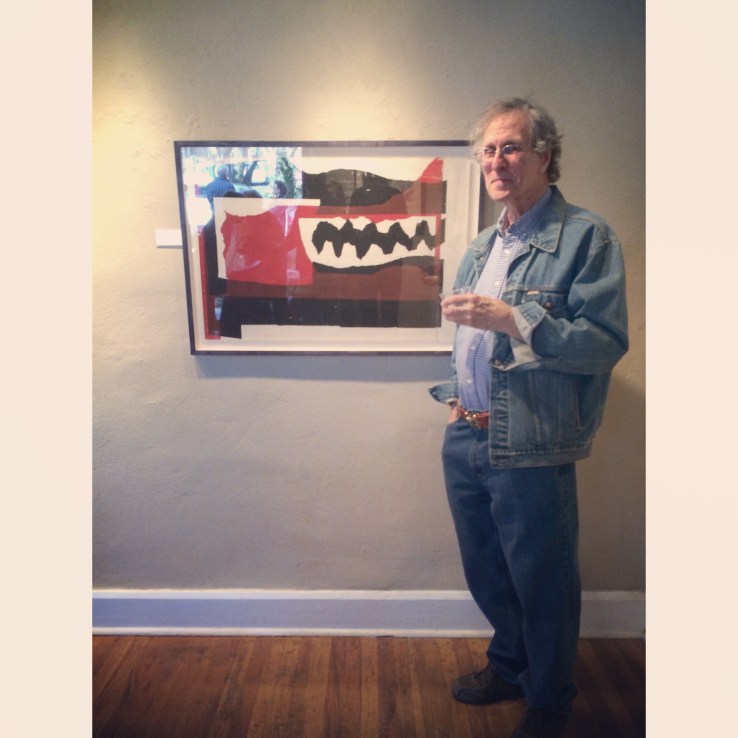
At last Friday’s opening of NEW MEXICO MODERNS: The Lumpkins Files, William Lumpkins Jr. was a quiet presence. He stood to the side surveying his father’s work or chatted softly with visitors, many of whom were family friends. One woman had known his dad, who died in 2000, through an art discussion group that met at local coffeehouses. “Whenever Bill spoke, we all had to lean in. He was such a lovely, gentle man,” she said.
Will’s father may have passed down his mild temperament, but both men are also legendary for their fierce artistic passion. Will has carefully preserved the artwork in The Lumpkins Files show for years, and meanwhile has developed his own artistic style. The jacket he wore to the show was emblazoned with intricate celtic knots and a dragonfly.
When we asked about his dad, the more colorful side of Will’s personality emerged. Here’s William Lumpkins’ son on his father’s never-before-seen artwork, and why he decided to release it more than 15 years after Lumpkins’ death.
What’s it like to see your dad’s work hanging in the gallery?
Well, his work was all around us growing up, so it’s not that strange. The gallery did an excellent job though.
When did you first bring the work to Matthews Gallery?
About a year and a half ago. I had shopped around and didn’t relate to anybody until I met Larry.
Where did you keep it for all these years?
I had it in a case between sheets of acid-free paper. When I was teaching at Virginia Commonwealth University, I was in charge of museology. It was a whole print and painting conservation training program. So my dad knew that I could take care of them. Watercolors in particular are a sensitive thing for archiving.
Why didn’t he want you to release them until now?
It didn’t have to do with the work. He said to me, ‘Okay, you wait until after you’re 70 because by then your personal artistic statement will be you. You won’t have to mimic me.’ So at 70, my artwork was me and I brought these out again.
Were you ever tempted to release them before that?
No, it just didn’t seem right until I started looking around recently. I trusted you guys.
One of the biggest surprises in this body of work was the watercolor from 1937. That’s one of the earliest Lumpkins pieces we’ve ever seen. Did you know it was in there?
I knew that the work spanned a lot of time. When Dad was closing down the studio, he picked these out because these were the ones that he really liked from different points in his career. He felt that they were significant, and that they weren’t typical. His typical work is pretty well-known, but these he wanted to hold out so that they’d be totally new.
What was your vision for this show?
I gave the work to Larry and said, ‘Do you what you think is best.’ I just want them to be out in the open where they can be seen. If people want them enough, if people like them a lot, that’s good.
Hear more from Will Lumpkins in this week’s Pasatiempo, and visit the showat Matthews Gallery through Friday, April 25. For more images from the opening, check out our photos page and connect with us on Facebookand Instagram.
There’s no supermarket for art like this. Finding and authenticating it is an elaborate process, and the treasure hunt often begins where you’d least expect it. If you’ve ever wondered about the value of that painting or print on your wall (or in your attic), we might be able to help.
We’ve been in the fine art business for over 15 years, and have assisted hundreds of clients in selling their historic and vintage art. Whether you own a Renoir lithograph or an exquisite painting by a little-known American modernist, a sculpture by Arnaldo Pomodoro or a watercolor by an anonymous 19th century artist, we’d be delighted to take a look at it.
We’re primarily interested in art from four categories: European, American, Southwest and Contemporary. It could be a single work or a collection within any price range. If you’re looking to sell or consign, we offer fair prices.
Click here to read the second part of this blog post.
Let’s be honest, the art establishment has always been a boy’s club, and women are most often honored in art history for overcoming gender-related cultural and societal obstacles. It’s easy to look past the artistic innovations of female artists when we’re sorting their work into a different category from that of their male contemporaries, or focusing solely on the glass ceilings they broke.
Of course, ignoring the gargantuan efforts of female creatives to gain respect and recognition in a male dominated world is a mistake as well, as is looking at innovation as a competition between artists of different genders.
Art history is an elaborate web of influence, and analyzing any artist’s place in it is a balancing act. One thing’s for sure: many women have formed vital links in the chain. Here’s why 5 female artists deserve recognition.
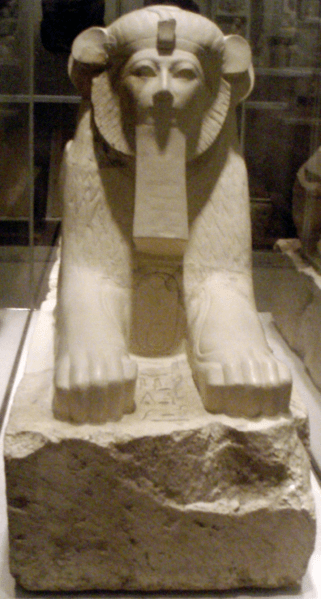
Sphinx of Hatshepsut
1. Queen Hatshepsut (1508-1458 BC)
The fifth pharaoh of Ancient Egypt’s 18th dynasty probably wasn’t an artist herself, but as one of the most successful Egyptian rulers ever, she had a huge influence on art history. In her 22-year reign Hatshepsut brought great wealth to the empire through new trade networks and expeditions, and she was very good at promoting her accomplishments through art. Her many building projects were the envy of her successors, and statuary from her reign abounds.
Statues representing Hatshepsut sometimes sport the ceremonial attire of a pharaoh (including a traditional false beard), but she’s most often depicted in the feminine clothing that she probably wore at court. As a skilled warrior, she took the lioness deity Sekhmet as a symbol of the throne.
After Hatshepsut’s death many statues of the ruler were defaced, and later pharaohs tried to take credit for her building projects, but her influence on subsequent Egyptian styles is undeniable. Work from her reign is in nearly every major museum collection, and has helped shape modern interpretations of Ancient Egyptian art.
Self portrait, Artemisia Gentileschi
2. Artemisia Gentileschi (1593-1656)
For years Italian Baroque painter Artemisia Gentileschi was mostly known for the events surrounding her rape as a teenager. She was assaulted by her private painting tutor Tassi, who said he would marry her but later reneged on the promise. Gentileschi’s father successfully sued Tassi for taking his daughter’s virginity in a publicly humiliating trial during which Gentileschi was tortured with thumbscrews and given a gynecological examination.
Soon after the court case Gentileschi married another painter and moved from Rome to Florence. It was the beginning of a stellar career, with coveted commissions from the Medici family and a spot as the first female in the Accademia delle Arti del Disegno.
Simplistic interpretations that relate Gentileschi’s work to her rape have dominated the attention of scholars, but the artist’s bold painting style and compositions make her one of the most innovative Baroque painters after Caravaggio. She took new angles on Bible stories to explore the complex emotional experiences of her subjects, and would often place a central figure in the extreme foreground to heighten the drama of her scenes and pull her viewers into the middle of the action.
Self portrait, Louise Elisabeth Vigee Le Brun
3. Louise Elisabeth Vigee Le Brun (1755-1842)
The French Neoclassical and Rococo painter was born in Paris and opened her own portrait studio in her early teens, scoring commissions from high profile nobles and rubbing elbows with masters of the day. When she lost her studio for lack of a license, she tricked the Academie de Saint Luc into showing her work and eventually gained official membership.
Vigee Le Brun is best known for her work as the portraitist of Marie Antoinette, who commissioned more than two dozen works from the artist. Her vivid, rosy depictions of the doomed queen in the Rococo style made Louise the most famous female painter of the 18th century. She’d ceded the title of royal court painter by the time of the French Revolution, but she still fled France during the conflict and took portrait commissions from nobles across Europe. However, the canvas that landed her on this list is a painting of the artist herself.
The self portrait, painted in 1787, was an image of Vigee Le Brun sporting a full, toothy grin. It was such a divergence from painting conventions thus far that it caused an uproar in the art world. “An affectation which artists, art-lovers and persons of taste have been united in condemning, and which finds no precedent among the Ancients, is that in smiling,” spewed one gossip columnist. “[Vigee Le Brun] shows her teeth.” The painting briefly made Louise’s smile as notorious as the Mona Lisa’s, and shattered a tradition that stretched back to the Greeks.
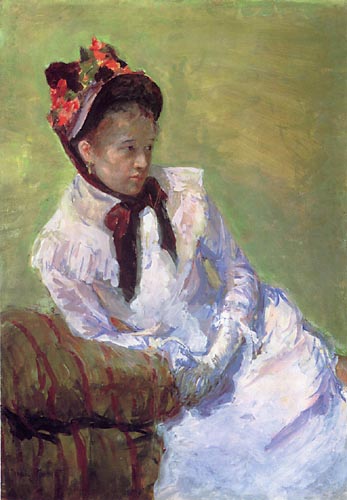
Self portrait, Mary Cassatt
4. Mary Cassatt (1844-1926)
Mary Cassatt was born in Allegheny City, Pennsylvania and attended the Pennsylvania Academy of Fine Arts, where most of the female students saw art not as a profession but as a privilege of high society. She left the Academy for Paris in 1866, frustrated with her teachers’ attitudes toward female artists and determined to study the masters on her own.
In France, Cassatt enlisted various private tutors and copied works in the Louvre to develop her skill. Impressionism was just beginning to rock the foundations of the Parisian art world, but it didn’t catch Cassatt’s fancy until after an unsuccessful stint in Chicago and a return to Paris in 1871. That’s when she met Edgar Degas, who introduced her to Impressionists and offered to show her work in one of their exhibitions.
Cassatt would become a hugely influential figure in the fledgling movement, and would later be named one of “les trois grandes dames” of Impressionism by art critic Gustave Geffroy.
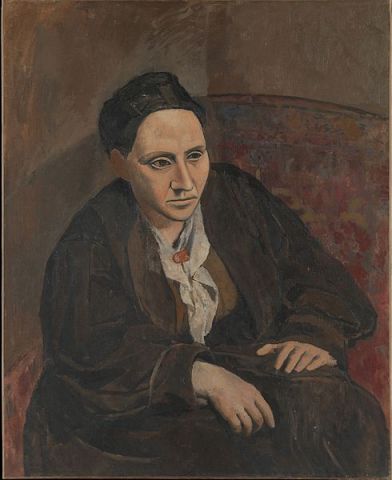
Portrait of Gertrude Stein, Pablo Picasso
Gertrude Stein (1874-1946)
“I always wanted to be historical from almost a baby on, I felt that way about it,” Gertrude Stein once declared. If anyone called into doubt the American modernist writer’s genius, Stein was the first to speak up about it.
Stein’s influence on the history of visual art is partly tied to her radical writing style, which helped define modernism and was crafted in close dialogue with the visual arts. Her significance also rests in her expansive art collection, which populated the walls of her Parisian home where influential modernists like Pablo Picasso, Henri Matisse, Ernest Hemingway and F. Scott Fitzgerald often congregated.
As the often stern den mother of the “Lost Generation” carefully curated her collection and cultivated close friendships with the artists she liked, she was shaping a radical revolution that would forever change the history of art.
Connect with us on Facebook and Twitter for more insight on the women who changed art history forever, and click here to read the second part of this blog post.
We’re very excited to announce the European Masters, American and Southwestern Art Auction, an online-only Matthews Gallery event running July 25-29. It’s our very first auction, and we’ve been working on it for more than a year. Of course, the works we’re putting on the block have stories behind them that are much older than that. Click here to browse the diverse catalogue, and read on to learn the legends behind four of the lots.
La Passagere du 54, Henri de Toulouse-Lautrec
Lautrec was on a steamship cruise from Le Havre to Bordeaux when a beautiful woman who was staying in cabin 54 caught his eye. He became infatuated with her but she was so aloof that he never got a chance to introduce himself. Lautrec refused to disembark until the ship reached Lisbon, where his friend Maurice Guibert finally dissuaded him from sailing on to Dakar, the mystery woman’s destination. The sketches he made of her on the boat would inspire La Passagere du 54.
Lithograph, on wove paper, Wittrock’s third (final) state, the full sheet, with green lettering.
This lithograph has one of the longest titles of any of Miró’s art works. In french it is: “Le chien aboyant à la lune reveille le coq le chant du coq picote le crane du fermier Catalan posé sur la table à coté du pourron”. In English: “The dog barking at the moon wakes the cock, the song of the cock pecks at the head of the Catalan farmer resting on the table by the flask of wine”. Joan Miró (1893-1983) was a leading pioneer and proponent of surrealism. His work has a childlike style that at its heart is a sophisticated play of color, line and forms. Miro was a consummate master printmaker and over his lifetime he completed more than 1,000 fine art prints.
Lithograph in colors, number 12 from the edition of 80.
Gauguin sailed from France to Tahiti in 1891 and didn’t return home until two years later. He went there in search of an untouched beauty far away from “everything that is artificial and conventional”. Upon his return to Europe, he carved a series of ten woodblocks to illustrate a written account of his travels called Noa Noa. The prints, which were only his second attempt at printmaking, are considered some of his most innovative work. “Gauguin’s current effort will tomorrow provoke a complete revolution in the art of printmaking,” wrote critics Julien Leclerq and Charles Morice. This is presumed to be a proof apart from the signed and numbered edition of 100 published by the artist’s son, Pola Gauguin in Copenhagen in 1921.
 Gertrude Stein with Pablo Picasso’s famous portrait of her







 MATTHEWS GALLERY BLOG