FOUR CENTURIES: Monnoyer’s Mark

Still life attributed to Jean-Baptiste Monnoyer- Matthews Gallery blog

We discovered this still life at the preview of a Santa Fe estate sale. It was tucked in a dark upstairs corner of the house, far from the Picasso print and treasure trove of art books on prominent display in the living room. Lawrence lingered for a while to take in the flamboyant bouquet with its rich rosy tones. There was an excited glint in his eye.

A few months later, the painting has found a home under the glowing lights of our European art room. We know a lot more about it now than when it first caught Lawrence’s fancy. It’s attributed to Jean-Baptiste Monnoyer (1636-1699), a 17th century Franco-Flemish painter who wielded his brush for Louis XIV. Its siblings hang in some of France and England’s most famous estates.

Our adobe art abode is a very different venue, but this 300-year-old artwork gives us the opportunity to transport gallery visitors across the sea and through the ages. Look below to chase Monnoyer through the palaces where he left his mark, and don’t miss the painting’s debut at our opening for FOUR CENTURIES: European Art from 1600 to 1950 on Friday, June 13 from 5-7 pm.

Hôtel Lambert- Site of artwork by Jean-Baptiste Monnoyer- Matthews Gallery Blog

Our first stop is the Hotel Lambert on the Ile Saint-Louis, site of Monnoyer’s first Parisian commission in 1650. The artist grew up in Lille, France and trained in Antwerp, but it was the lavish estates in and around Paris that claimed his considerable interior decorating talents. Monnoyer’s floral designs in the grand mansion would delight its many owners and guests for centuries to come, from a famous Polish political salon to Voltaire, Chopin, Balzac, Delacroix and Dali. Unfortunately, the Hotel Lambert was badly damaged in a 2013 fire and is under renovation.

Chateau de Marly- Site of artwork by Jean-Baptiste Monnoyer-  Matthews Gallery Blog


Artist Charles Le Brun, who painted a series of renowned ceiling frescoes at the Hotel Lambert, brought Monnoyer along for a commission at Louis XIV’s Chateau de Marly. The (relatively) small country estate was the king’s escape from the more rigid world of Versailles, and aristocrats fiercely battled for a chance to stay there. Alas, the twelve pavilions that flanked the water and their intricately adorned interiors are long gone, but the commission launched Monnoyer into a new stratosphere.

Palace of Versailles- Site of artwork by Jean-Baptiste Monnoyer- Matthews Gallery Blog

Monnoyer worked with Le Brun once again on the ornamentation of the Palace of Versailles. For this and other high profile royal projects, he developed a style that was far removed from his training in the subdued still life painting techniques of the Low Countries. The bold, ornamental approach is in full force in our still life, recalling the spectacular garlands of flowers he painted on the ceiling of the Queen’s pavilion at the Chateau de Vincennes. Monnoyer also made reference sketches and etchings for French tapestry workshops, greatly influencing European decorative styles for years to come.
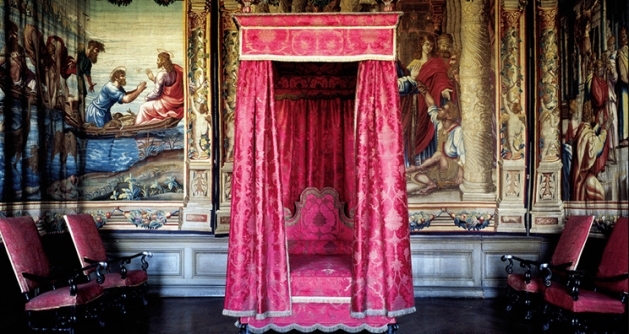
Boughton House- Site of artwork by Jean-Baptiste Monnoyer- Matthews Gallery Blog

A commission from the Montagu House in London drew Monnoyer away from Paris in 1690. He adorned dozens of panels with fruits and vegetables and painted several portraits, some of which now reside in the state rooms of Northamptonshire’s Boughton House. The artist remained in England until his death in 1699, but his distinctly French style lived on in the artwork of two of his sons.

Make sure to attend the opening of our FOUR CENTURIES exhibition on Friday, June 13 from 5-7 pm, and follow us on Facebook, Twitter and Tumblr for daily gallery news.

NEW RELEASE: Fremont Ellis of Los Cinco Pintores

Fremont Ellis- La Plata Mountains- Matthews Gallery Blog


In 1921, Fremont F. Ellis and his friends Jozef Bakos, Walter Mruk, Willard Nash and Will Shuster founded an avant garde art society that would change Santa Fe forever. The five men were in their early 20s, and most of them had recently migrated there from the East Coast. They chose a name inspired by their new life in the Southwest: Los Cinco Pintores (The Five Painters).

In December of that year, Los Cinco Pintores mounted their first group exhibition at Santa Fe’s Museum of Fine Arts. Their work was diverse in subject matter, but their rallying point was modernism and the art of early Taos painters Robert Henri and John Sloan of the Ashcan School.

“These men believe in color and are not afraid to use it,” wrote a critic who attended the inaugural show. “Upon entering the galleries, visitors are greeted with a great shout of color that’s almost stimulating.”

Fremont Ellis - Watercolors - Matthews Gallery Blog

Over the next few years, Los Cinco Pintores worked together to build a row of casitas along Camino del Monte Sol near Canyon Road. This earned them another nickname, “The Five Nuts in the Adobe Huts”. Meanwhile, word of their exploits had reached other artists back home.

By 1923 another group called the New Mexico Painters was exhibiting paintings of sweeping Southwestern landscapes across the Midwest and the East Coast. Artists like Randall Davey, Andrew Dasburg and Theodore Van Soelen settled in the area, and the Santa Fe Art Colony was born. The City Different has fostered a vibrant art community ever since.

Fremont Ellis- Watercolor Diptychs- Matthews Gallery Blog

These newly released works on paper are by Fremont Ellis (1897-1985), who was the last surviving member of Los Cinco Pintores. Ellis grew up in Montana and was inspired to become an artist at 14 when he saw Albert Bierstadt’s paintings on a trip to New York City. He worked as a photographer in California before settling in Santa Fe, and used his photographs of landscapes to inspire his painted compositions. This body of work holds the vigor and immediacy of the artist’s many outdoor adventures.

Learn more about Fremont Ellis on our website, and connect with us on Facebook, Twitter and Tumblr for daily gallery news. Also, don’t forget to mark your calendar for our exhibition NEW MEXICO MODERNS: The Lumpkins Files, opening next week!

LOR’S LORE: Introducing Artist Lor Roybal

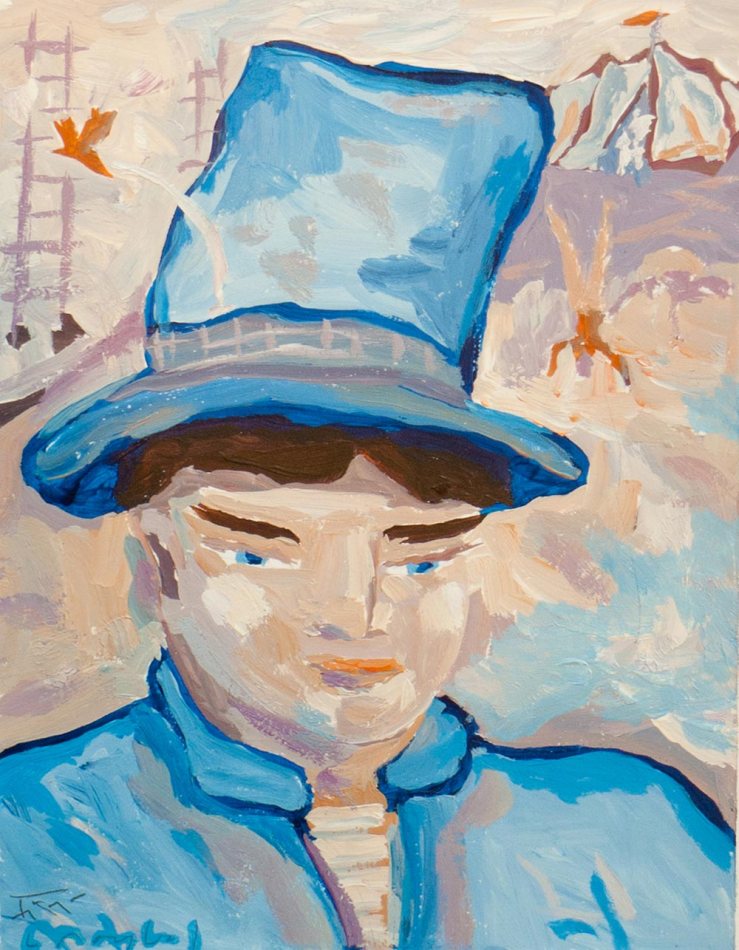
Lor Roybal- Dodge's Disbelief- Matthews Gallery

Lor Roybal, Dodge’s Disbelief, acrylic on paper
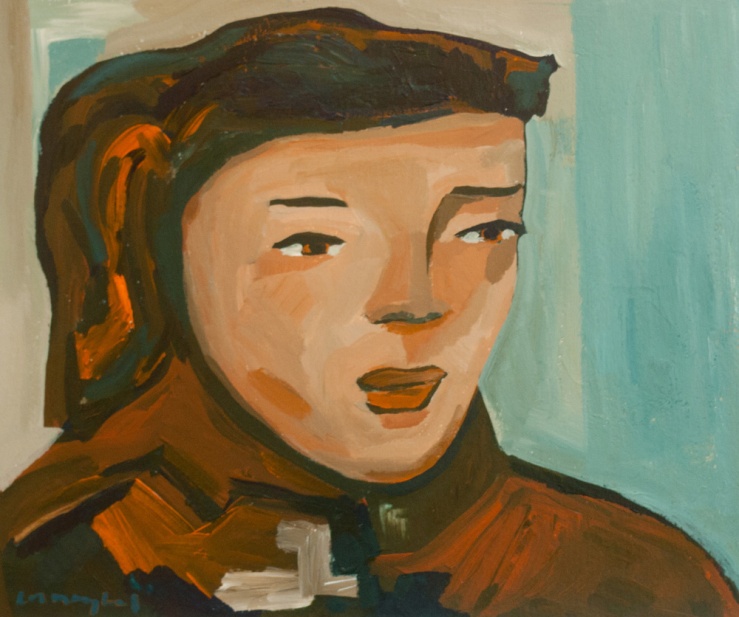
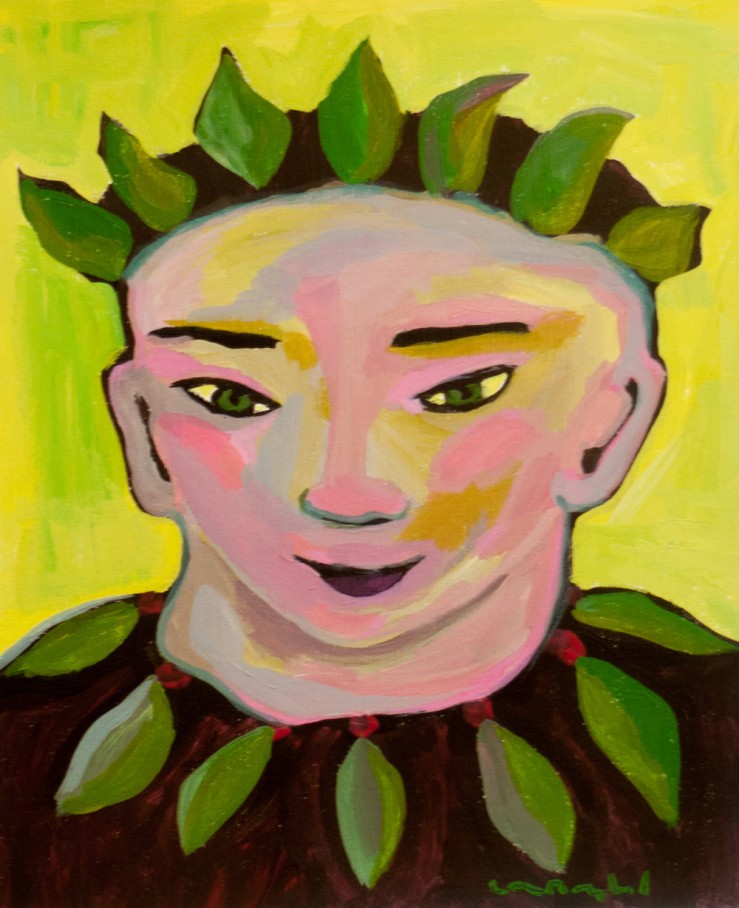
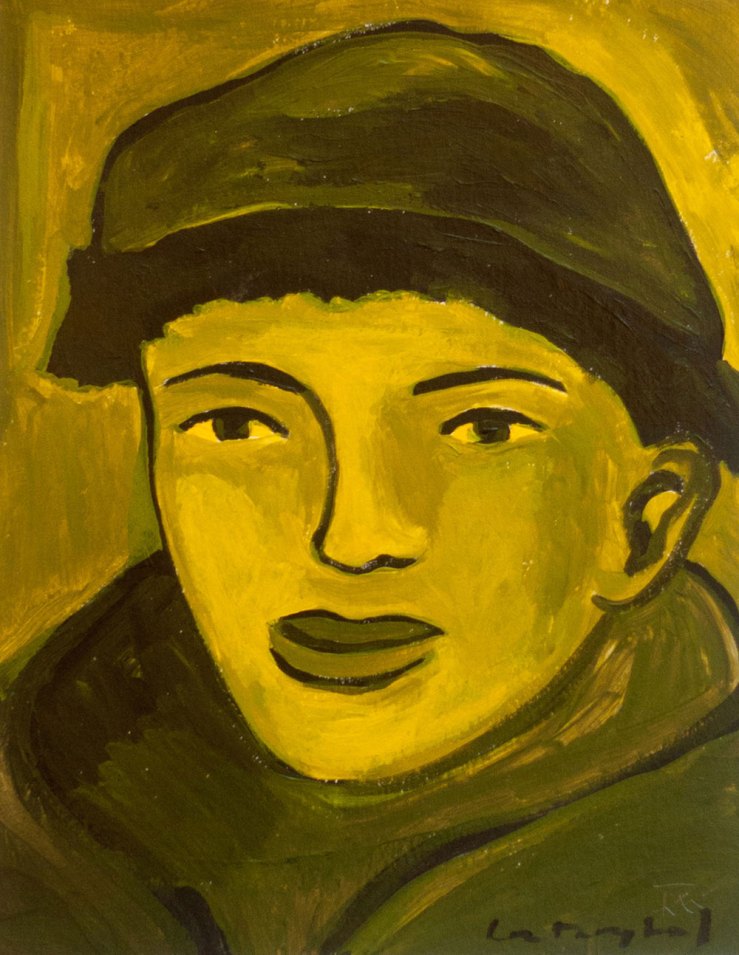
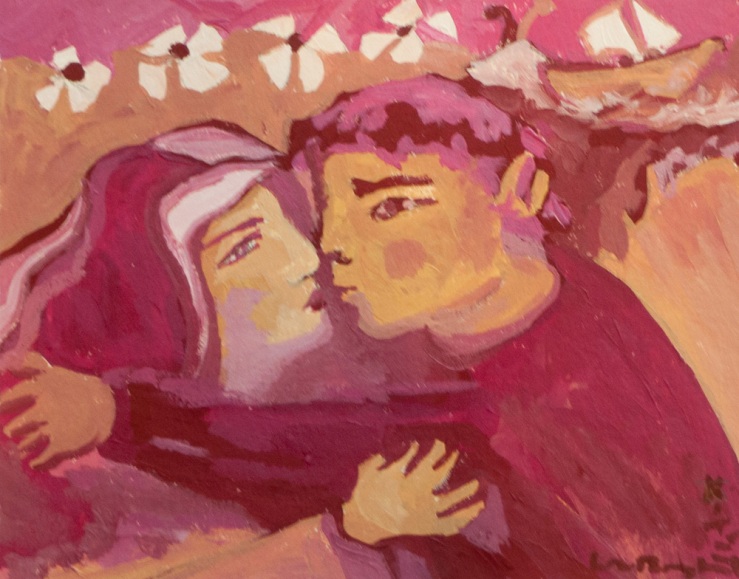
When Lor Roybal‘s big blue van pulls up in front of the gallery, we’re never quite sure what’s in store. She’s a blur of swirling textiles as she bursts through the door with something bright and colorful in tow. Her specialty is portraits, usually of characters from dreams or her vivid imagination. Sometimes she carries a box packed with miniature paintings and other times she holds a large frame in her hands. Once she brought by a loose stack of old sketches and wild free verse poems.

Lor is a familiar face in Santa Fe’s art community, but no one seems to know much about her. She lives somewhere along the Pecos River north of Santa Fe. Her two-room house is off the grid so she heats it using firewood in the winter. Her dog is her closest companion and painting is her favorite pastime. She is a scholar of art history.

“When I first started showing people my little paintings, I would say, ‘Here’s my treasure chest of gems,'” Lor once told us. There’s definitely something precious about Lor’s colorful faces. Each subject has a name and thorough biography. There are daring circus performers and pensive poets, gossipy grandmothers and mischievous little boys, cherubic elves and long-departed spirits. Some of the figures are intelligent riffs on other artists’ styles, from Picasso to Chagall to Renoir, but all possess a wild twist of Lor’s style.

Lor is now officially part of our stable, and we couldn’t be prouder to represent her. As you’ll see in her latest batch of acrylic paintings on paper, the artist is truly one-of-a-kind. Check out some of the work below, and connect with us on Facebook, Twitter and Pinterest for continued updates.

Lor Roybal- Posi- Matthews Gallery

Lor Roybal, Posi, acrylic on paper

Lor Roybal- Emiles Incredulity- Matthews Gallery blog

Lor Roybal, Emile’s Incredulity, acrylic on paper

Lor Roybal- Stendhals Boat- Matthews Gallery blog

Lor Roybal, Stendhal’s Boat, acrylic on paper

Lor Roybal- Young Clown Lujo- Matthews Gallery blog

Lor Roybal, Young Clown Lujo, acrylic on paper

BE OUR CURATOR: A Social (Media) Experiment

When we cooked up a full-fledged social media strategy for the gallery early last year, we had no idea what we were in for. Twelve months and countless posts, photos, tweets, likes and pins later, we’ve learned a lot. No offense to professors past, but engaging with our vibrant online community of aesthetes has been the best art course we’ve ever taken. It’s high time we thanked you for your passion, so pull out your CV and add “curator” to the list. Starting tomorrow, we’re giving you the opportunity to help us put together a very special show.

COLLECTOR’S CHOICE: 10 Artworks We Love will feature art chosen by online fans across all of our social media platforms. Keep an eye on Matthews Gallery’s Facebook, Twitter, Pinterest or other networks from Friday, January 17 through January 30 to vote on your favorite work in our collection. From January 31 through February 5, we’ll unveil your selections in the gallery and online.

Join us as we shatter the definition of an art curator and gallery show. There’s no one we’d rather collaborate with! Learn more about the show on the Matthews Gallery website.

ONE WORK OF ART: Jean-Pierre Jouffroy

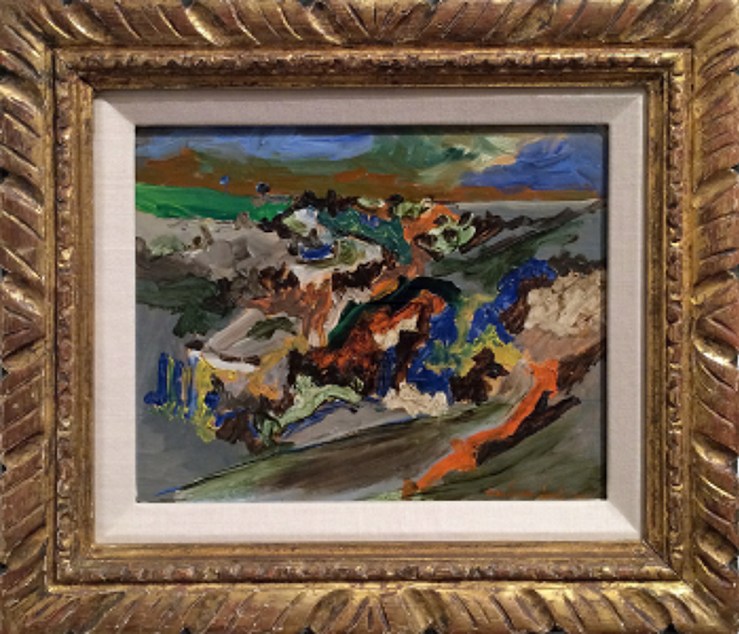
Jean-Pierre Jouffroy- Untitled Modernist Landscape- Matthews Gallery Blog
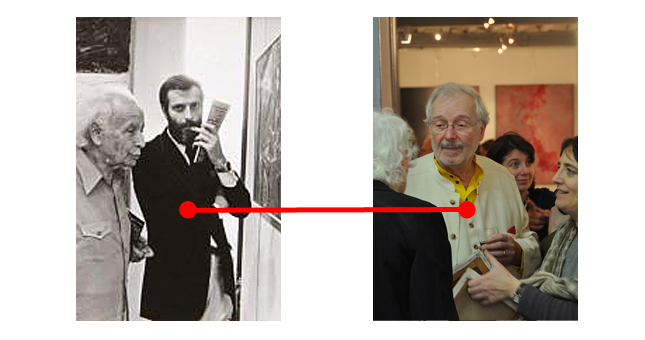
Two photographs.

Jean-Pierre Jouffroy - Matthews Gallery BlogOne shows a young artist with a determined look in his eyes, and the other an older gentleman at the opening of an 80-year retrospective of his artwork. What happened in the span between the shots?

Sometimes art by Picasso or Gauguin finds its way to our gallery, but other times we get our hands on an exquisite work that bears a name we’ve never heard before. Such was the case with this lovely 1940’s painting by a man named Jean-Pierre Jouffroy, which reminded us of the artwork of James Brooks and other lyrical abstractionists.

Thank goodness for Google. An image search of the artist’s name brought up these two photos, and some French-to-English translating revealed the fascinating story behind them.

Jean-Pierre Jouffroy was born in Paris in 1933. When he was 11 years old, he saw the work of Wassily Kandinsky and Nicolas de Staël in a gallery and fell in love with modernism. “As a young boy, I dreamed of covering the surface of the earth in paint,” Jouffroy recalls.

Early in his career, the artist created purely abstract work that was heavily influenced by Staël. Then, in the late 1950’s, Jouffroy had an artistic epiphany.

“An abstract painting always shows something, like it or not,” he explains. “The painting is the image of an internal battle. This fight is itself a metaphor for our relationships in the social sphere.” Based on this realization, Jouffroy decided to incorporate the visual vocabulary of abstraction into representational work.

The shift sent the artist on a journey that traced the innovations of modernists like Picasso and Cezanne in reverse. Just like those artists, Jouffroy was experimenting with abstracted figures and landscapes, but he was coming from a wholly nonrepresentational world that his predecessors never explored. In tributes to Cezanne, Gauguin, Manet and Braque, he brought great artists of the past into harmony with a movement they all, in one way or another, helped to inspire.

Jouffroy’s new explorations caught the eye of the art world, and he exhibited at Paris’ Museum of Modern Art, the Art Institute of Chicago and other renowned institutions. Though he was focused on figurative work, he was often associated with lyrical abstraction (as we suspected) because of his background, his loose brushwork and his inventive use of color.

Our Jouffroy painting represents an interesting phase in the artist’s evolution. Though it predates his representational work, it has undeniable elements of landscape. Perhaps it’s the first sign of the transformation that would send Jouffroy’s career in a spectacular new direction. You can see echoes of the work’s palette and brushwork throughout the artist’s retrospective at the Place du Colonel Fabien that opened in November.

Check out Jean-Pierre Jouffroy’s “Untitled (Modernist Landscape)” on our website, and connect with us on Facebook and Twitter for more gallery news.

NEW HORIZONS: Landscape Art Speaks

NEW HORIZONS- Focus on Landscapes- Matthews Gallery

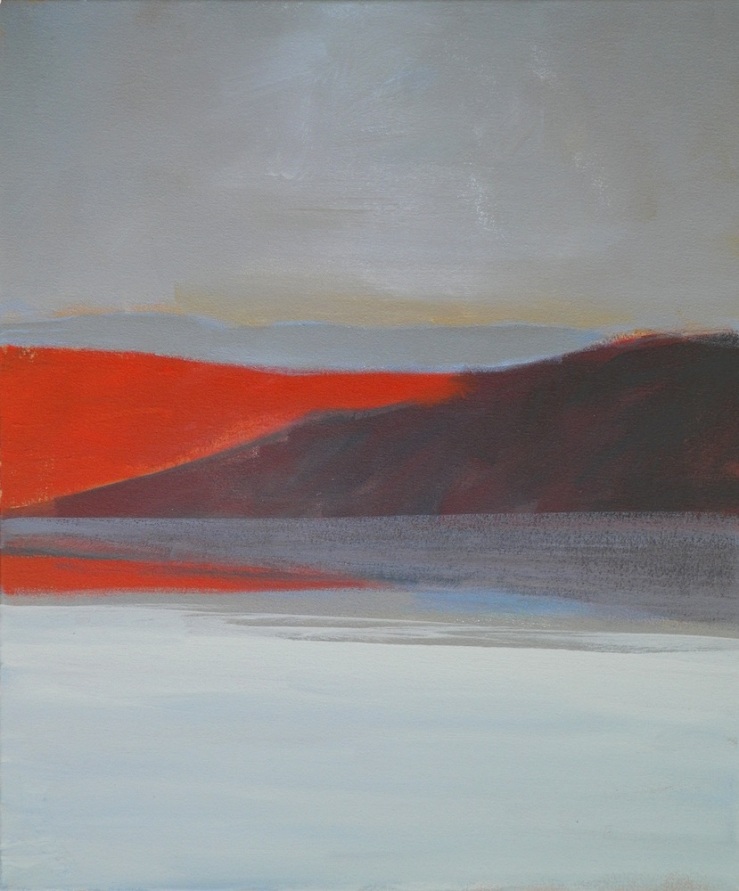
For our NEW HORIZONS: Focus on Landscapes show, running now through October 27, Tesuque sculptor Frank Morbillo‘s latest body of work engages with our diverse collection of contemporary landscape art. Throughout the exhibition, you’ll find observations by Morbillo and seven other artists, many of whom are inspired by the same severe desert expanses and infinite skies. Below is a selection of works and quotes from the show:

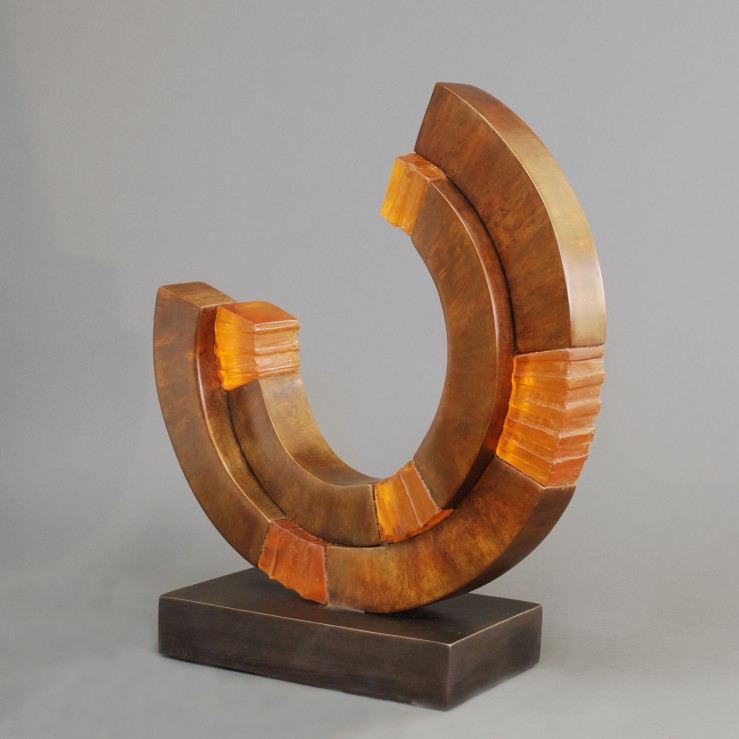
Sprung- Frank Morbillo- Matthews Gallery

Kate Rivers- Reflections- Matthews Gallery

PATTERN

Frank Morbillo finds patterns wherever he looks in the natural world.
Kate Rivers uses manufactured patterns to form fractured reflections of nature.

“What’s a pattern? Something that might be predictable. When I observe things, that’s what I see. As an artist, you take all of these different things and see how they work together.”

-Frank Morbillo

 “I’m using this history of text and image as something that is beautiful, and weaving the words together.”

-Kate Rivers

Frank Morbillo- Cool Encounter- Matthews Gallery

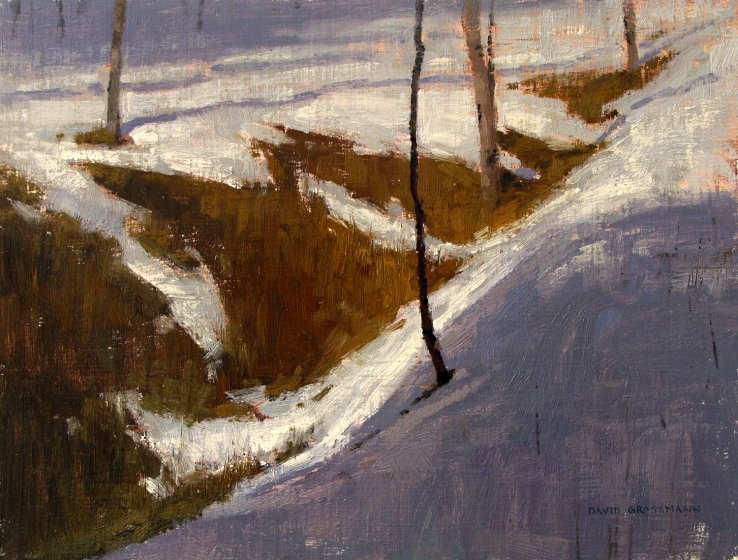
David Grossmann- Snow Rhythms- Matthews Gallery

RHYTHM

David Grossmann abstracts his landscapes to lay bare underlying rhythms.
Frank Morbillo traces the formation and disruption of natural rhythms.

“My paintings… are simplified rhythms of color, light, and shape. On the surface they are quiet whispers, but I hope that they convey a depth of emotion to anyone who takes the time to stop and listen.”

-David Grossmann

“Entropy is the introduction of chaos and disorder. That’s a root of what I’ve done over the years. You take something that could be highly organized, and understand that everything, all things, are subject to entropy. As much as we feel like we’ve created something that defies that, there’s no chance. Everything is subject to it.”

-Frank Morbillo

Frank Morbillo- Unraveling- Matthews Gallery

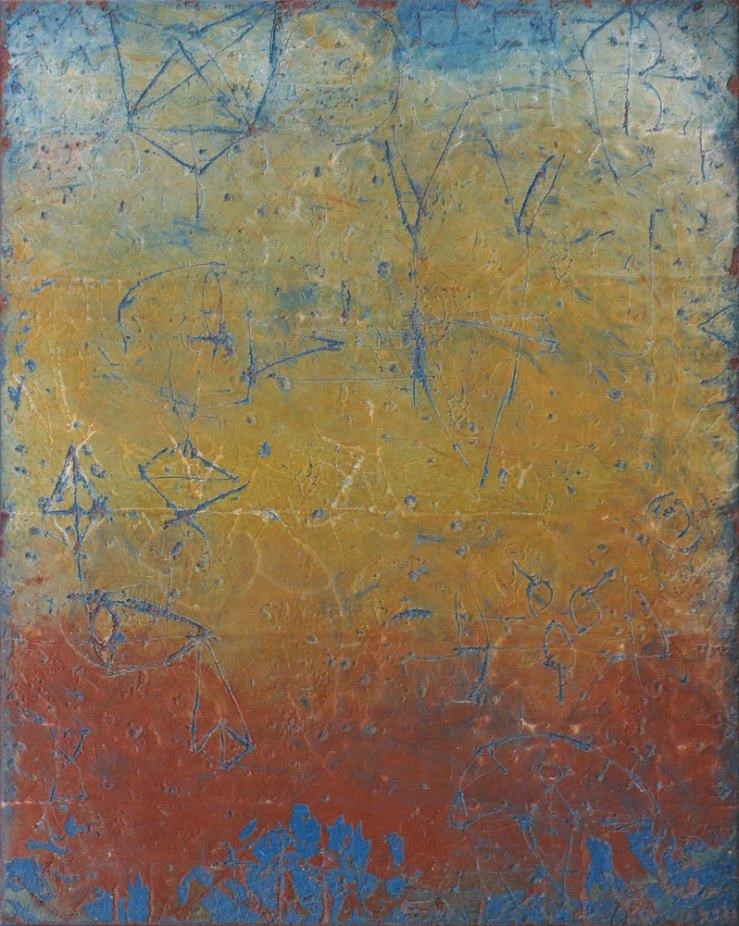
Terry Craig- Burning Questions- Matthews Gallery

TEXTURE

Terry Craig blends materials to mimic natural textures.
Frank Morbillo places materials with contrasting textures side-by-side.

“It took a long time… to develop the formulas and get the materials to do what I wanted them to do. You can scrape into it and get all sorts of these wonderful organic qualities.”
-Terry Craig

“Glass is a beautiful material that sets up this nice contrast with the metal. If you add texture to it, it takes on a different color. The light behaves differently going through it.”
-Frank Morbillo

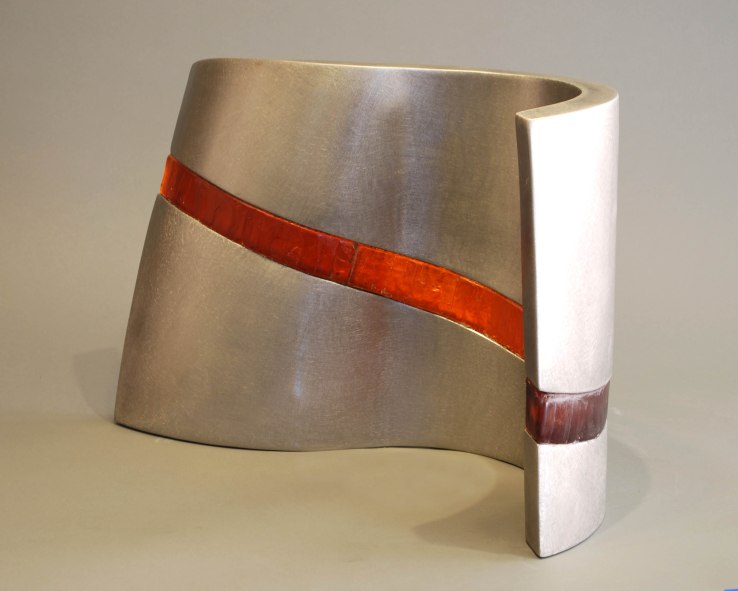
Frank Morbillo- Traverse II- Matthews Gallery

Jamie Chase- Two-Horizons- Matthews Gallery

COLOR

Jamie Chase uses multiple layers of paint to reveal and obscure different hues.
Frank Morbillo relies on the properties of glass to enhance his palette.

“There are so many narratives underneath the final painting. It starts out as something really dark or really dramatic in contrasting colors, and by the end it’s almost neutral colors, but there’s something moving under the surface.”
-Jamie Chase

“The glass introduced color into the work that really isn’t achievable in metal. The cobalt blues and reds and ambers have a quality that you can’t get with any of the metals.”
-Frank Morbillo

See NEW HORIZONS: Focus on Landscapes now through October 27 at Matthews Gallery. Connect with us on Facebook, Twitter and Pinterest to see more material from the show.

ONE WORK OF ART: Toulouse-Lautrec’s Heartbreak

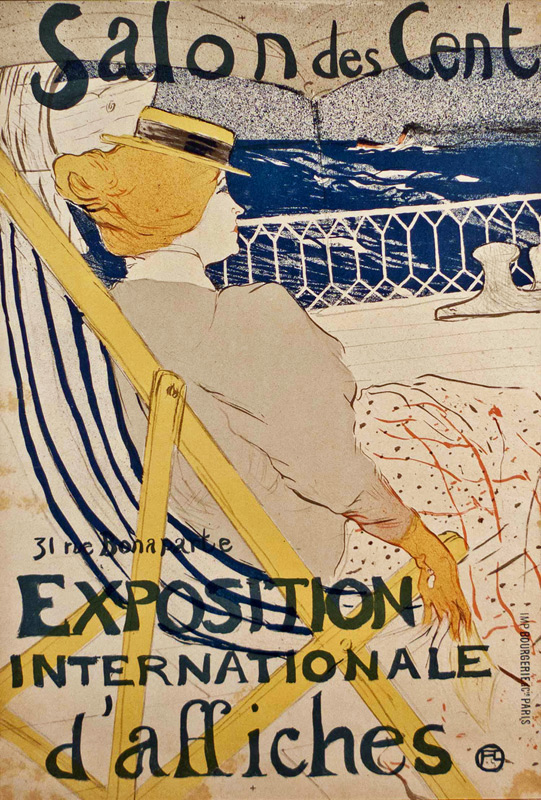
Henri de Toulouse-Lautrec- La Passagere du 54- Matthews Gallery

“Love is when the desire to be desired takes you so badly that you feel you could die of it,” said Henri de Toulouse-Lautrec. It’s a strange perspective on the matter, but not a surprising one when you consider the artist’s difficult life. His parents were nobles and first cousins, a pairing that probably gave Lautrec a rare congenital abnormality called osteogenesis imperfecta. He was particularly prone to bone fractures and broke both of his legs as a teen. Bedridden and bored, Lautrec’s only way to escape his misery was drawing.

By the time Lautrec moved to Paris to study art at 18, his legs had stopped growing and he struggled to support his regularly sized torso. He battled deep insecurities about his appearance, but never dropped an abrasive air of superiority. His first relationship with 17-year-old model Marie Charlet was short and tumultuous, and his second serious lover Suzanne Valadon attempted suicide.

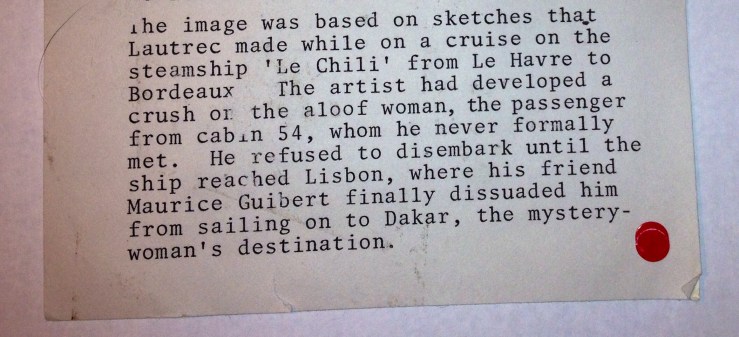
Lautrec immersed himself in the booze-soaked world of Paris’ cabarets and brothels to numb his pain, where he was inspired to produce some of the era’s most innovative images. Many of his works tell tales of longing and lost love, including our lithograph La Passagere du 54. Here’s a sad story from our archives about the 1895 boat voyage that inspired the print:

The story of Henri de Toulouse Lautrec's "La Passagere du 54"- Matthews Gallery blog

No wonder the woman on the poster is giving the viewer the cold shoulder. Most of Lautrec’s sketches must have been completed from this angle, as his haughty subject never gave him a second glance.

Lautrec’s artistic career only lasted a little over a decade, and though he gained considerable fame for his work, his romantic prospects never improved. He died at 36 from alcoholism and syphilis, but left behind a body of work that eternally capture the spirit of the City of Lights.

Do you agree with Lautrec’s definition of love? Sound off in the comments below, or through our Facebook, Twitter or Pinterest profiles.

MANY LIVES: Early and late works by famous artists

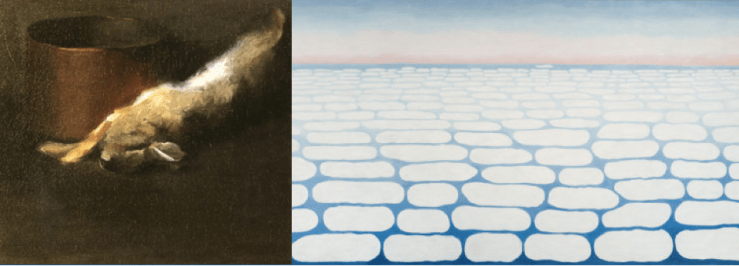
Early and Late Works: Georgia O'Keeffe's "Untitled (Dead Rabbit with Copper Pot)" (1908) and "Sky Above Clouds IV" (1965)

“When I look over the photographs Stieglitz took of me—some of them more than sixty years ago—I wonder who that person is,” said Georgia O’Keeffe. “It is as if in my one life I have lived many lives.”

Look through O’Keeffe’s diverse body of work, and you’ll see just what she meant. “Untitled (Dead Rabbit with Copper Pot)” is a humble realist work she painted as an art student in her early 20s.  She completed the abstracted, ephemeral landscape “Sky Above Clouds IV”, which is over 20 feet long, when she was almost 80. When they’re side-by-side it’s hard to believe that one artist created both.

The same is true for works that bookend any great artist’s career. Constant evolution is perhaps the most important ingredient to genius, as you’ll see in the images below. While you browse the early and late works of four legendary artists, ponder their differences. Does youthful enthusiasm and bold experimentation move you, or do you prefer a sure hand and a fully realized aesthetic? Join the conversation in the comments section below, or on our Facebook and Twitter pages.

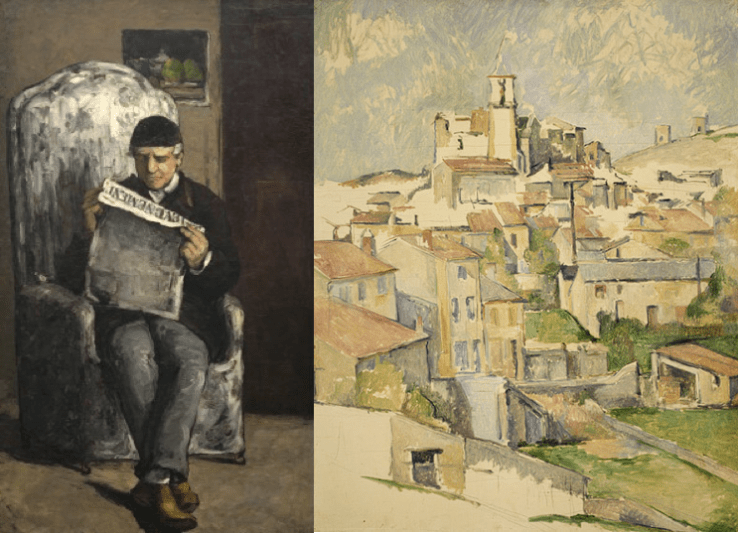
Early and Late Works: Paul Cezanne's "The Artist's Father, Reading 'L'Événement'" (1866) and "Gardanne" (1885-86)

Paul Cezanne painted “Artist’s Father, Reading ‘L’Événement'” when he was in his early 20s and still partially under the thumb of his disapproving parent. The paper his father is reading—a liberal publication that the old man wouldn’t have deigned to open—and the still life painting hanging in the background hint at the artist’s growing confidence in his chosen path. Flash forward to the radical perspectival experimentation of “Gardanne”, completed when Cezanne was in his late 40s. The multi-layered cityscape would later inspire Picasso and Braque in their development of Cubism.

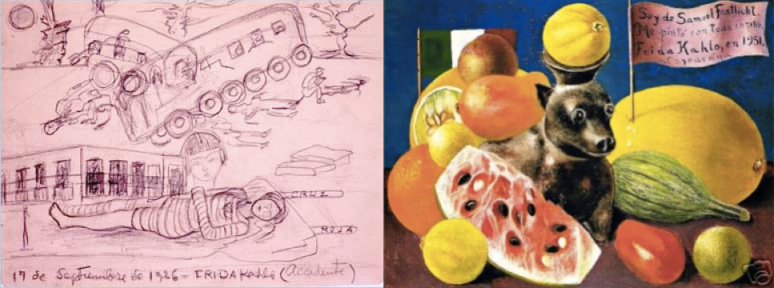
Early and Late Works: Frida Kahlo's "The Accident" (1926) and "Still Life" (1951)

When Frida Kahlo was 19 years old she was in a trolley crash that left her in a full body cast. A year after the accident she created the pencil sketch on the left, drawing from the tradition of Mexican ex-voto paintings that blend text and images. A lifetime later, Kahlo was still suffering from chronic pain caused by the accident and drawing influences from folk art, but she’d discovered a subtler way to express her suffering. She painted “Still Life 1951” just three years before her death, when her body was giving out and she no longer favored self portraiture. The fleshy, congealing watermelon nestled among fresh fruits says it all. “I hope the exit is joyful — and I hope never to return,” she wrote just before her death.

Early and Late Works: Pablo Picasso's "Les Saltimbanques" (1905) and "Untitled (From the 156 Suite, 16 mai 1971)"

“Les Saltimbanques” is a drypoint that Pablo Picasso created in his early 20s. The group of frolicking figures are characters from an opera-comique about a circus troupe. Countless artistic transformations later, Picasso etched out “Untitled (From the 156 Suite)“, an image that shows a tangle of prostitutes engaged in a very different acrobatic routine. Innocence is lost, but genius found.

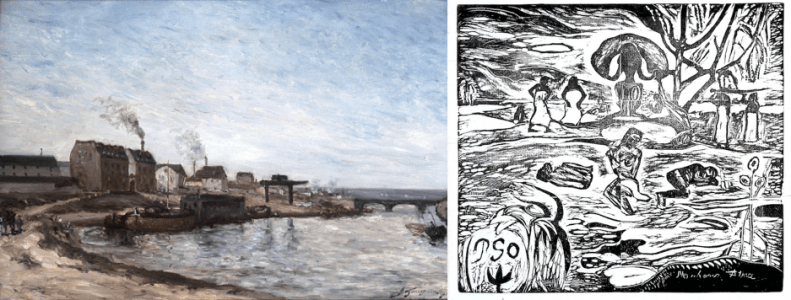
Early and Late Works: Paul Gauguin's "La Seine au Pont de Grenelle" (   ) and "Mahana Atua (The Day of God)" (   )

Paul Gauguin was a 27-year-old family man working as a stockbroker and hanging out at the Impressionists’ favorite cafes when he painted “La Seine au Pont de Grenelle”. By his mid-40s, he’d abandoned his family and job and exiled himself to Tahiti, where he drew inspiration for woodblock print “Mahana Atua (The Day of God)“. The artist learned from one revolutionary movement and then struck off on his own to inspire several others, from Primitivism to Symbolism.

How many lives can one artist live? What do you like better, the earlier or later work? Connect with us on Facebook, Twitter or Pinterest and sound off!

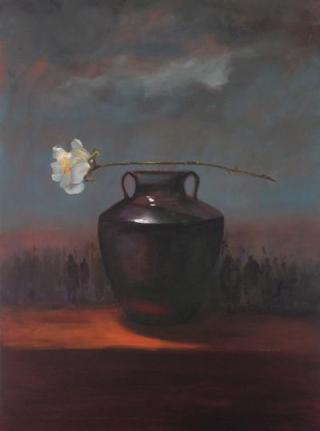
Diane White: Magical Realism

Diane White- Magical Realism- Matthews Gallery

As the reception for Diane White’s “Magical Realism” show begins, the artist stands alone in the middle of the Matthews Gallery’s front room, her shoulders squared and her hands clasped together. She looks around at the paintings she’s created over the past year and gives a little smile, but her posture doesn’t waver. She’s ready to greet her visitors.

One of the first folks through the door is Diane’s husband Steve, who’s just taken a stroll along Canyon Road and has something clutched in his hand. He presents it to Diane and she looks down inquisitively. It’s a small grey rock in the shape of a heart.

“Oh, thank you! Oh, that’s wonderful,” she says, beaming and leaning back to rest for a minute in Steve’s arms. “He’s my man.”

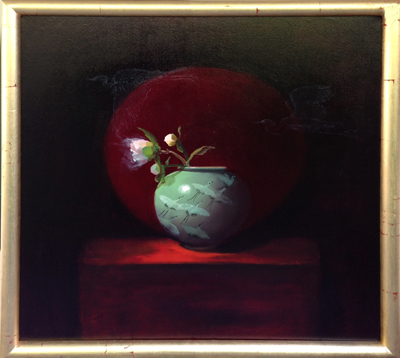
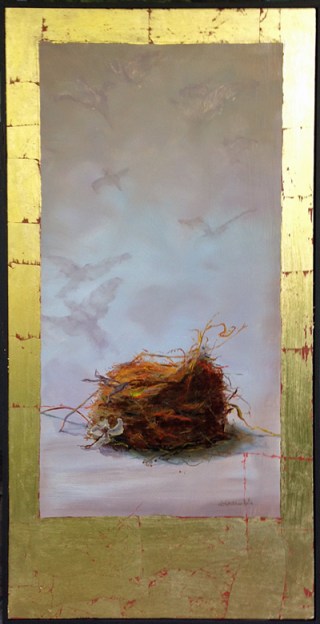
The moment reminds me of Diane’s work, which is imbued with equal measures of brave composure and romantic tenderness. The classically trained painter is inspired by magical realism, a literary genre that is rooted in the real world but incorporates magical characters and occurrences. In her impeccably detailed still lifes, glowing flowers hover above ceramic pots and ghostly birds rise from empty nests. The objects’ histories unfold around them, at first as subtle as a distant memories and then as vivid as a dreams.

With the heart rock pressed to her chest, Diane answered some questions about her new work, her process and her message:

White Majesty, Diane White, Matthews Gallery

What drew you to magical realism? 

I had a traditional still life that I was working on, and I was struck with the desire to do something else with it. It was steam coming out of a teapot with a dragon on it, and I made the steam into a dragon as well. Larry and Linda went, ‘What’s that?’ And I said, ‘Well, it just happened.’ That was five or six years ago.

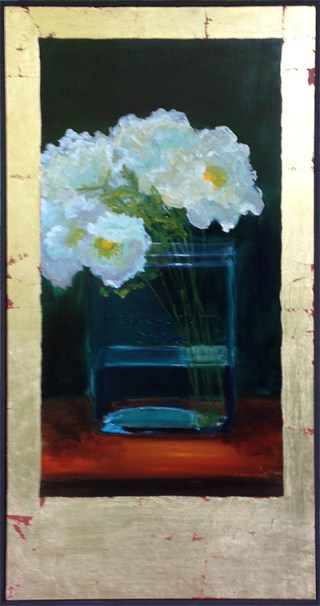
White Ruffled Tulips, Diane White, Magical Realism

What were you thinking about while you were working on this show? 

I don’t start with one thought process, I start with one piece that I’m painting and I focus on that. I don’t concentrate on a body of work. When you look at my work, they’re all very different. Some of them are aggressive with warriors in the background, and others have some angels. I just take it one painting at a time, and try to have them tell a story. Usually it’s an uplifting story—a lot of flight, a lot of action.

Dreams of Flying, Diane White, Matthews Gallery

Several of the paintings show intricate nests. What inspired you to use them in your work? 

I have done nests before, but probably not for three years.  I have horses now at my farm in Vermont, and I was out in this area with huge pine trees where they hang out when I found a nest that was made of horse hair. It had twigs and things too, but inside I could see the hair of the different horses. I thought, “I have to paint a nest.” It was so magical for me to find that.

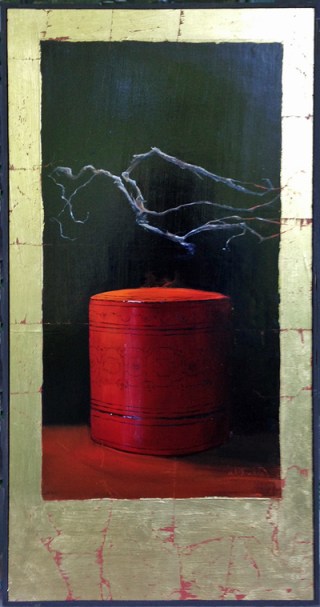
Spirit of the Red Box, Diane White, Matthews Gallery

 How do you strike a balance between the real elements in your paintings and the magical ones? 

I don’t want it to hit people in the face. I don’t want it to be Salvador Dali with a melting clock. I want it to be fairly subtle, and maybe something that the person looking at the painting discovers. On second glance you say, “Well, wait a minute. That’s not just steam. There’s something in there.” You kind of get involved with the painting.

Order of the Rose, Diane White, Matthews Gallery

 Sometimes you paint groups of figures in the backgrounds of your still lifes. Who are they? 

They’re the warriors in all of us, the strength. There’s usually beauty in my paintings—perhaps a flower—and there’s strength. I don’t make it try to be pretty, but I want it to be strong. They’re warriors, and that’s what we all have in us, this strength.

Learn more about Diane White’s August 16-29 “Magical Realism” exhibition here, and check out more photos from the opening reception here. Connect with us on Facebook, Twitter and Pinterest for more art news.
NEW TRADITIONS: Matthews Gallery Online Art Auction

History of the art auction- Matthews Gallery blog

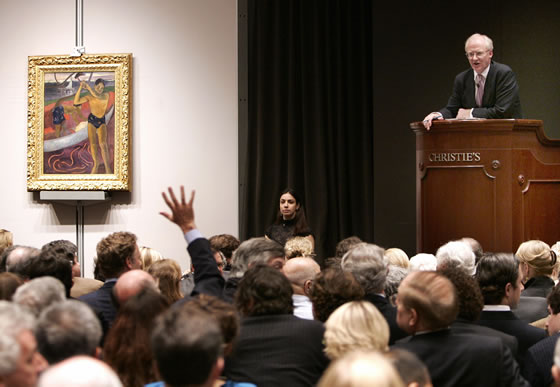
The world’s oldest auction house opened in Stockholm, Sweden in 1674. Art auctions in Great Britain gained popularity a few decades later when the Earl of Oxford’s collection appeared on the block in 1742. That particular sale featured the full range of odd and valuable items you might find in a dusty old castle, from a bust of an unknown bishop (five shillings) to a series of van Dyck paintings (165 guineas).

The beat of the auction mallet has marked the rhythm of the secondary market ever since. It’s a tradition that’s full of strange pageantry and heart pumping excitement. Auction kingpins Christie’s and Sotheby’s, which were both founded in mid-18th century England, often draw the ire of art world players for their tightly controlled sales. “They know exactly how many people will be bidding on a work and exactly who they are,” wrote art critic Jerry Saltz in 2012 after a version of Edvard Munch’s The Scream sold at Sotheby’s for $119.5 million. “In a gallery, works of art need only one person who wants to pay for them.”

Online auctions have meanwhile been swiftly democratizing the centuries-old process, and that’s where the Matthews Gallery decided to jump in. We launched the EUROPEAN MASTERS, AMERICAN AND SOUTHWESTERN ART AUCTION on July 25 and it runs through July 29. Come browse our virtual auktionsverk of art and, if you’re inspired, make a bid. You’ll find art by European modernists such as Pablo Picasso and Joan Miro, Southwestern legends including Emil Bisttram and Alfred Morang, and notable contemporary artists like Jamie Chase, Eric G. Thompson and Kate Rivers among the lots. Here are some notable pieces from the catalogue:

EUROPEAN MASTERS 

This slideshow requires JavaScript.

Click to see the works on our auction site:

HISTORIC SOUTHWESTERN ART

This slideshow requires JavaScript.

Click to see the works on our auction site:

  •  Untitled (Landscape #1), Emil Bisttram
  • Untitled (Landscape #2), Emil Bisttram
  • Untitled (Landscape #3), Emil Bisttram
  • Untitled (Santa Fe Landscape), Alfred Morang
  • Riders at Sundown, Gene Kloss
  • Return of the Wood Gatherers, Gene Kloss

CONTEMPORARY ART 

This slideshow requires JavaScript.

See more lots from the auction here, and connect with us on Facebook, Twitter and Pinterest for auction updates all week!