NEW LANDSCAPES, NEW VISTAS

New Landscapes New Vistas- Women Artists of New Mexico- Matthews GalleryNEW LANDSCAPES, NEW VISTAS: Women Artists of New Mexico
opens with a special reception on Friday, May 8 from 5-7 pm. 
We hope to see you there!

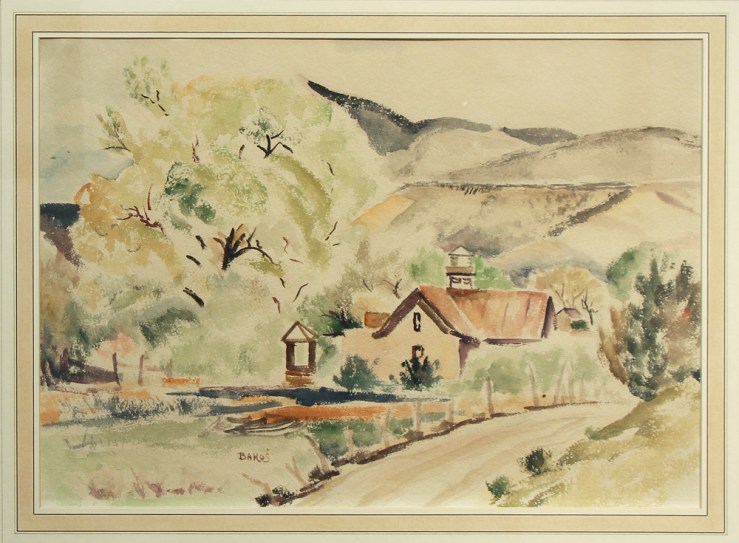
The history of women artists in New Mexico stretches back countless generations, to the early Pueblo artisans who developed innovative ceramics and weaving techniques. That’s just the starting point of our spring exhibition NEW LANDSCAPES, NEW VISTAS: Women Artists of New Mexico. From Native women potters to pioneers of New Mexico modernism, all the way up to trailblazing women artists of today, the May 8-31 show tells stories of incredible persistence and beauty in the Land of Enchantment.

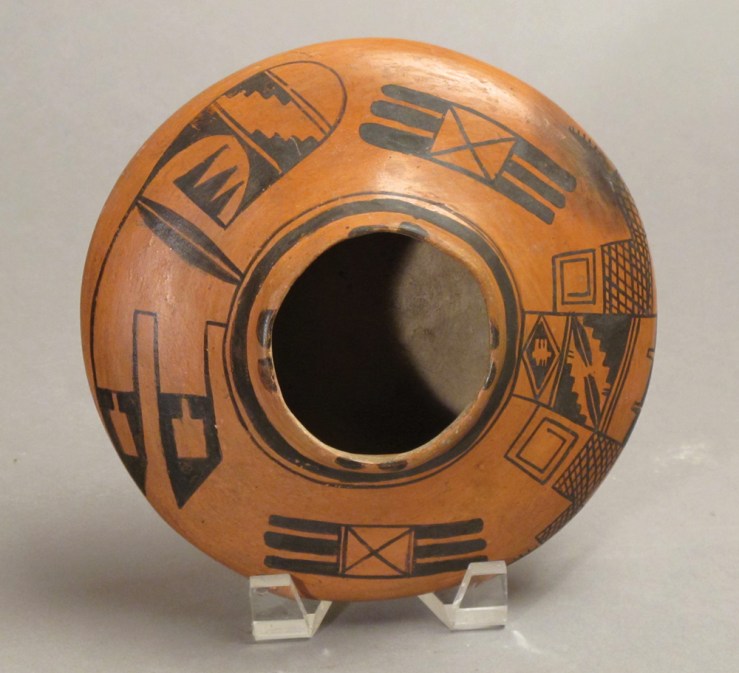
“The Southwest gave me a whole new language, new vistas to paint,” said Henriette Wyeth, who moved to Taos, New Mexico in 1939. At the beginning of the 20th century, the isolated Santa Fe and Taos art colonies offered a fresh start for women artists who had struggled to find recognition back East. In the same era, Maria Martinez of Northern New Mexico’s San Ildefonso Pueblo worked to combine various traditional Pueblo pottery styles and techniques, bringing the age-old tradition to new audiences.

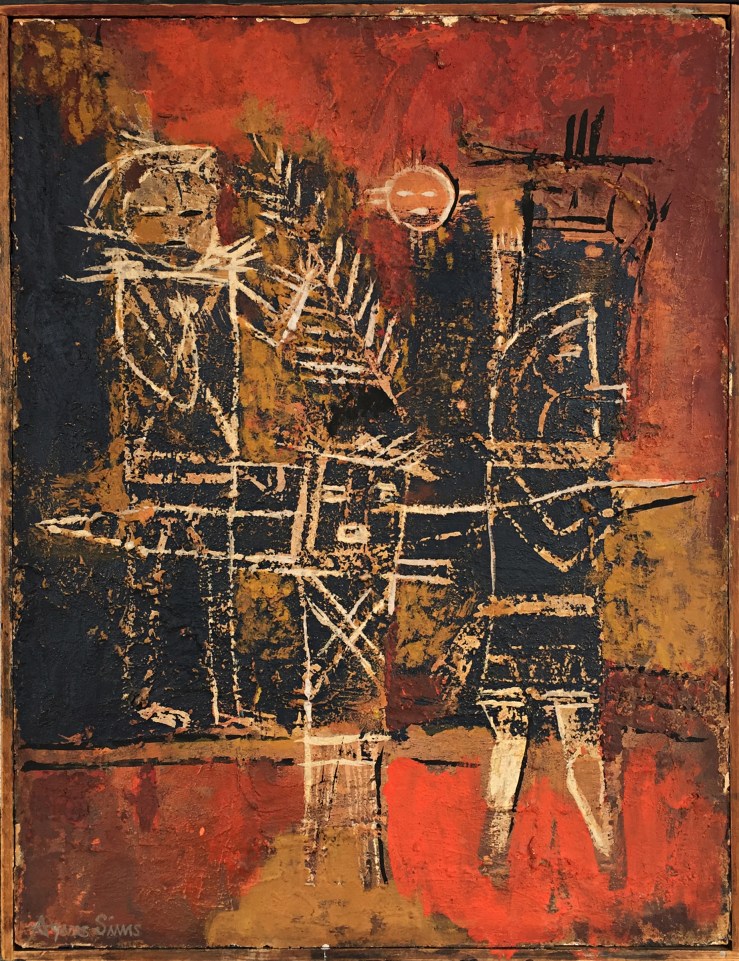
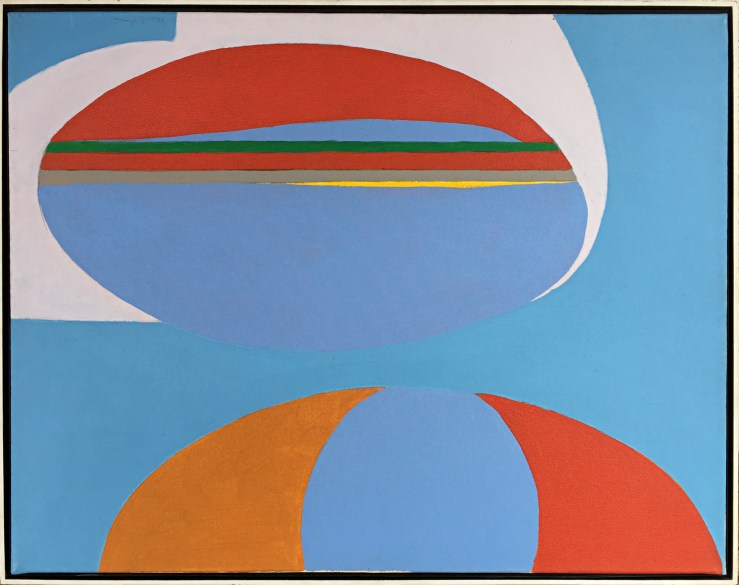
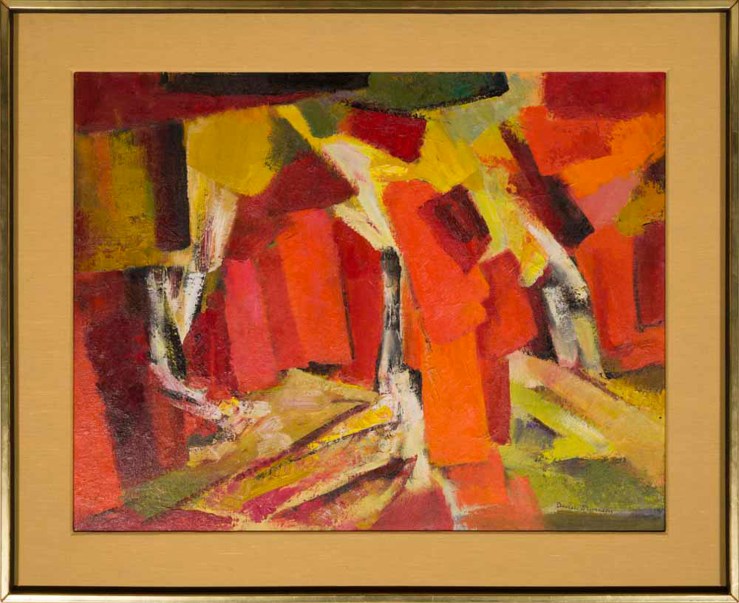
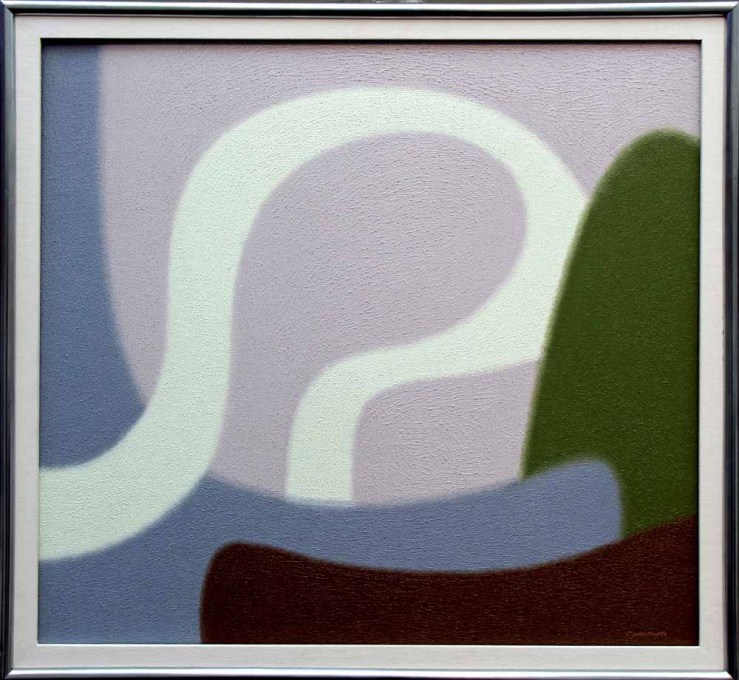
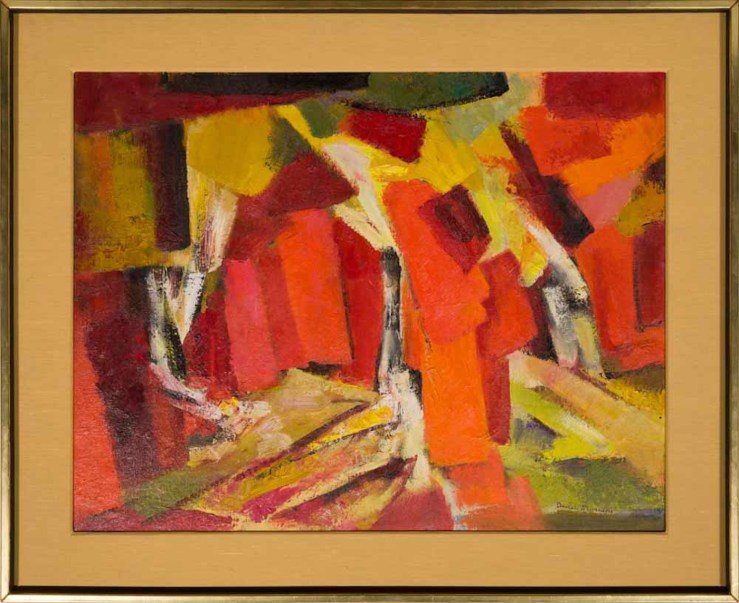
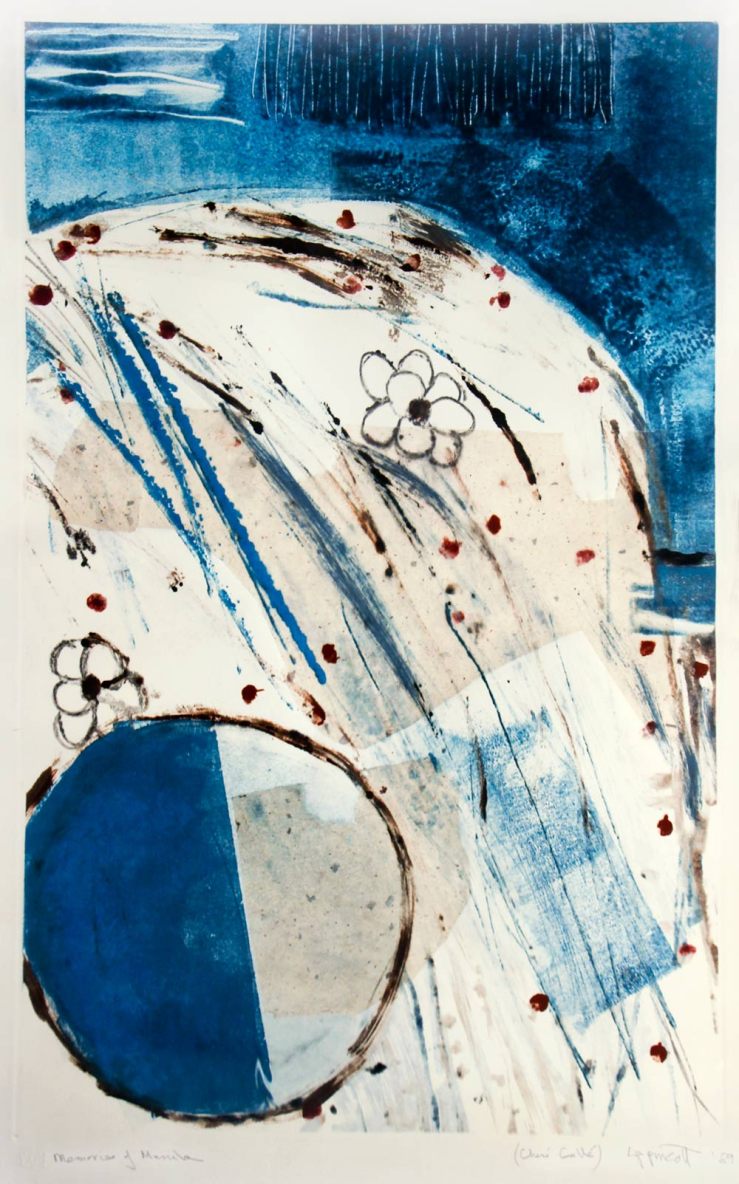
The efforts of Martinez and her contemporaries meshed well with inquisitive new transplants like Agnes Sims, who studied Pueblo petroglyphs and used them as inspiration for paintings and sculptures. Meanwhile, artists like Beatrice Mandelman and Janet Lippincott came to the Southwest to pave new paths, experimenting with abstraction. Dorothy Eugenie Brett, Doris Cross and Dorothy Morang became powerful voices among the Santa Fe and Taos avant-gardes, while arts champions such as Mabel Dodge Lujan and Mary Cabot Wheelwright acted as powerful patrons and creative muses.

Scroll down for a preview of the artwork, and follow our blog in the coming weeks for stories of women artists across New Mexico history.

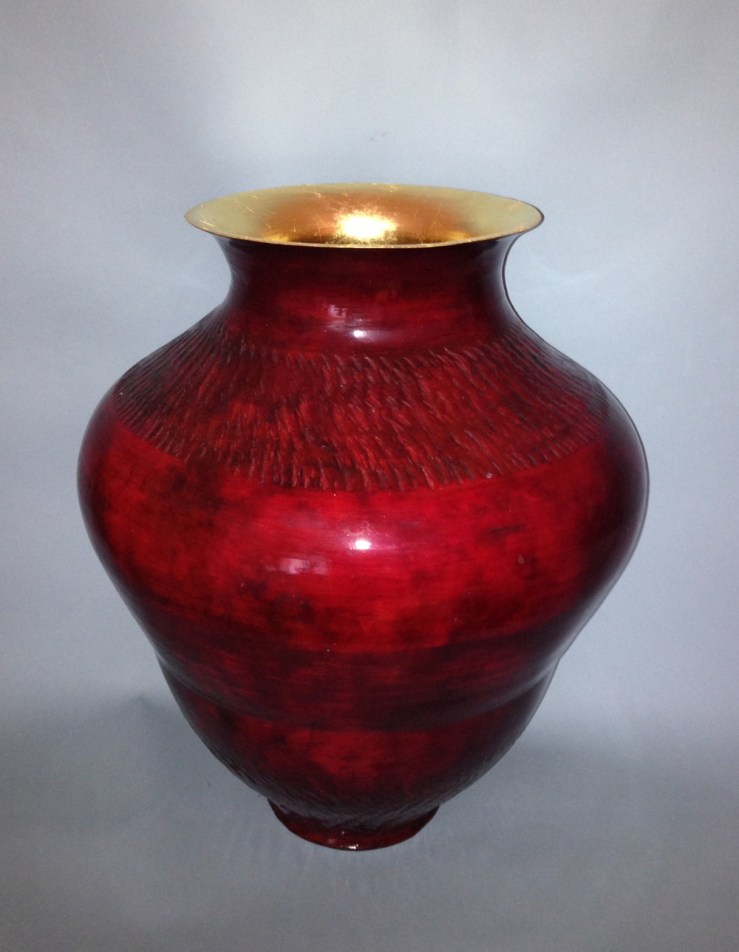
Nampeyo- Black Red Hopi Seed Jar Sculpture- Matthews Gallery

Nampeyo

Agnes Sims- Petroglyph- Matthews Gallery Blog

Agnes Sims


Beatrice Mandelman- Nova- Matthews Gallery blog

Beatrice Mandelman

Beulah Stevenson- Place of the Drums- Matthews Gallery blog

Beulah Stevenson


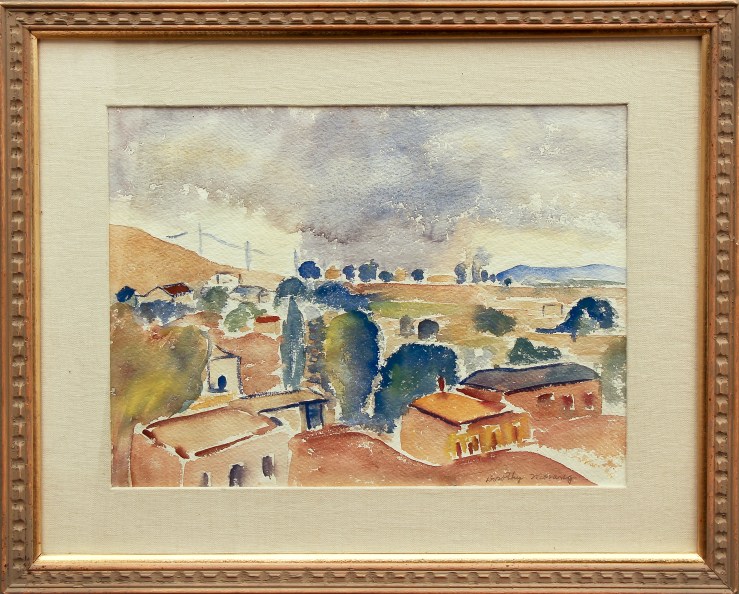
Dorothy Morang- Summer Storm- Matthews Gallery blog

Dorothy Morang


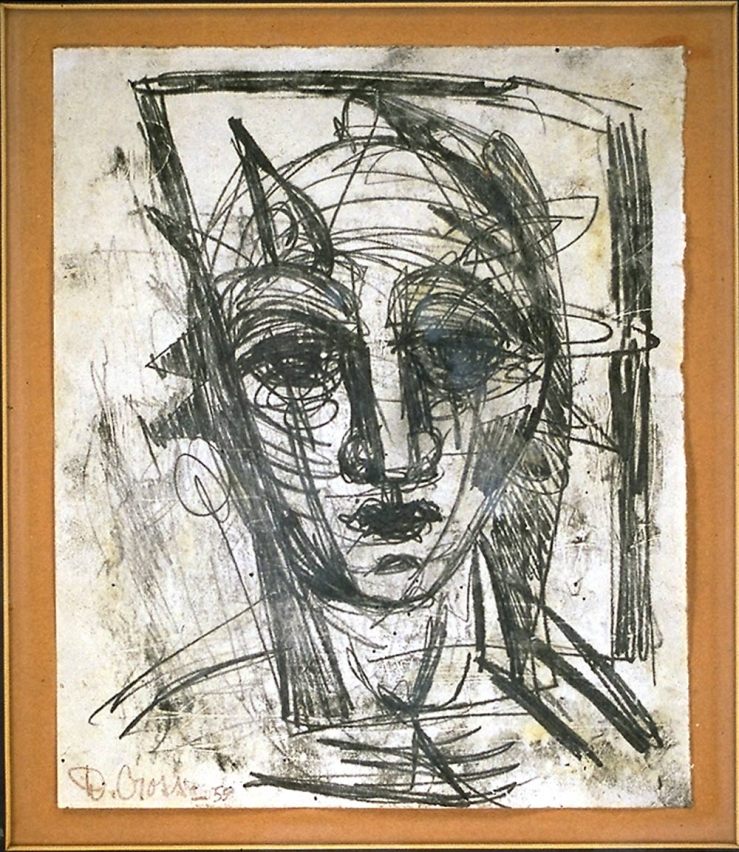
Doris Cross- Untitled Portrait- Matthews Gallery blog

 Doris Cross

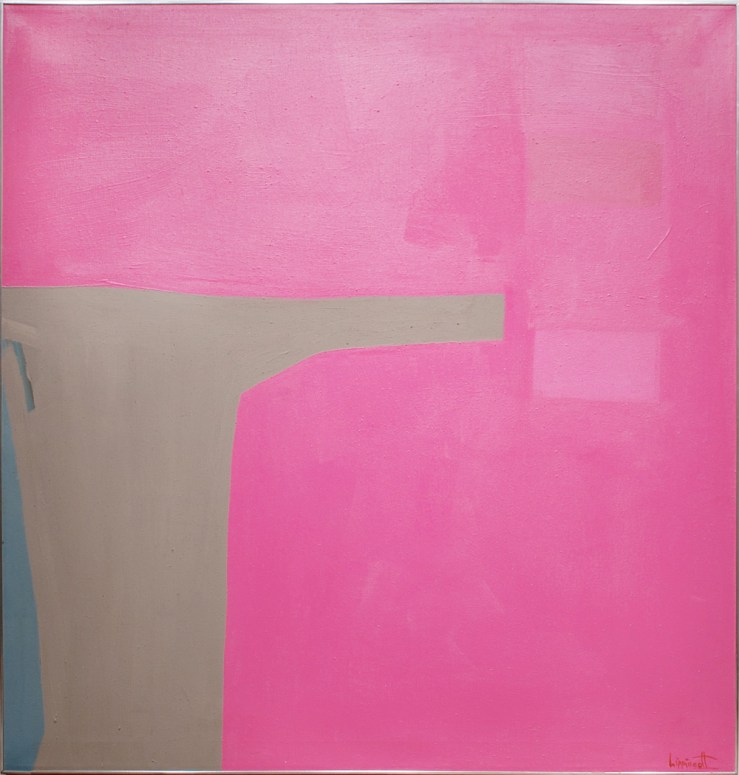
Janet Lippincott- The Edge- Matthews Gallery blog

Janet Lippincott

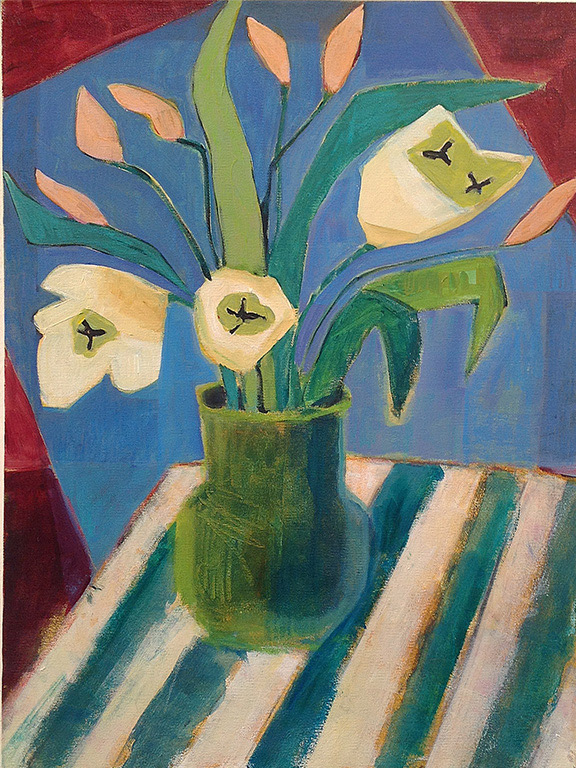
Annie OBrien Gonzales- Green Vase Ivory Tulips- Matthews Gallery blog

Annie O’Brien Gonzales

Heidi Loewen- Back to Egypt- Matthews Gallery Blog

Heidi Loewen

Learn more about NEW LANDSCAPES, NEW VISTAS on our homepage, and connect with us on Facebook, Twitter and Instagram for daily gallery news.

SPRING COLLECTOR’S FORUM: A Special Guest

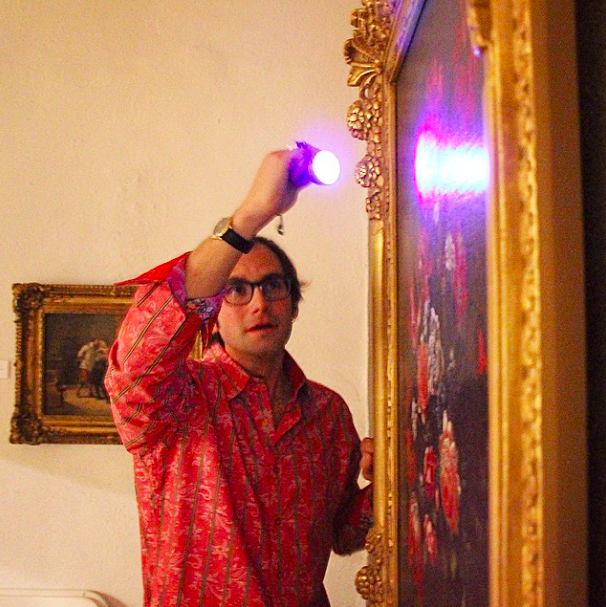
At our special COLLECTOR’S FORUM workshop last Friday, we presented an inside look at the art world to a room packed with collectors, artists and dealers. We also debuted a special live stream of the event, broadcasting to art lovers across the country and our friends on social media. Check out an edited recording of the event above.

Matthew Horowitz- Art Conservator- Matthews Gallery

One highlight of our workshop was a special appearance by Matthew Horowitz, head of conservation at Goldleaf Framemakers. Matt is a brilliant conservator who has collaborated with us before, and recently appeared in Fine Lifestyles Magazine and the Santa Fe New Mexican. Here’s an excerpt of Chris Quintana’s superb profile of Matt:

Matthew Horowitz had a prestigious job as an art restorer at Lowy Framing & Restoration in New York City, the nation’s oldest and largest fine arts services firm.

Recently he recalled lying on the floor of his empty Manhattan apartment and crying about leaving that life and career behind. But coming home to Santa Fe turned out to be a good decision for Horowitz, now 32.

He established an art restoration department at his father’s shop, Goldleaf Framemakers of Santa Fe. He now leads the team constructing Zozobra, the 50-foot-tall marionette burned every year at the beginning of Fiesta. And he is engaged to be married in June.

At Goldleaf Framemakers, where he works on restoring and cleaning damaged and dirty artwork, the smell of pungent lacquer and burned cigarettes wafts through the air. Music plays from a loudspeaker against the soundtrack of sanding and hammering…

Make sure to watch the video to learn more about art collecting and conservation, and let us know if you’d like to attend a future workshop! Connect with us on Facebook, Twitter and Instagram.

*Photo credit: Clyde Mueller/ The New Mexican

AN INSIDER’S GUIDE TO BOHEMIAN PARIS in

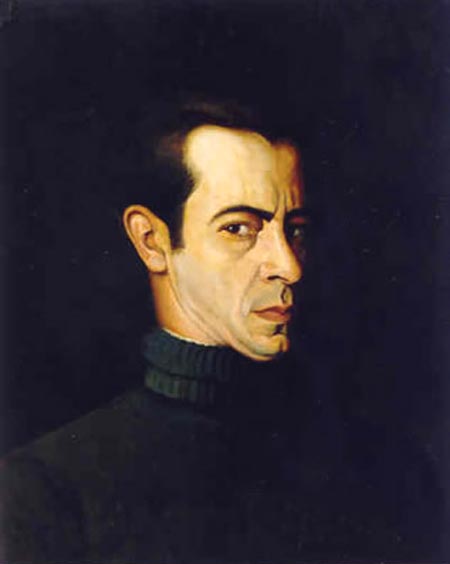
Dominican Artist Jaime Colson- Self-Portrait- Matthews Gallery Blog

Jaime Colson (1901-1975) was a teenager when he left his homeland of the Dominican Republic to study art in Spain. The talented young painter landed smack in the middle of the Spanish avant-garde, rubbing elbows with Salvador Dali and befriending Rafael Barradas and other artists. Colson lived there for six years and developed a surrealist style. His next move was to perhaps the only place that could be stranger than España surrealisto: 1920’s bohemian Paris.

Colson arrived in the City of Lights in 1924, at the height of Gertrude Stein‘s reign as a powerful salonnière and premiere champion of modernism. In Paris, Colson met Picasso and Braque, Juan Gris and Fernand Leger. He soaked up modernist innovations—and quite a lot of absinthe—like a sponge. Four years later, as a full-fledged Parisian, Colson painted the latest addition to our collection:

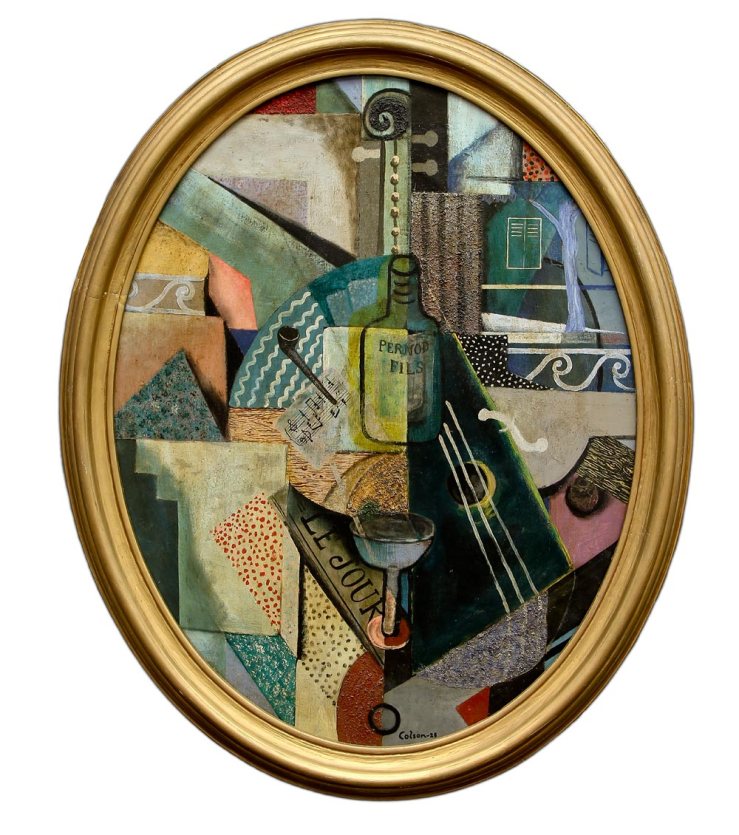
Jaime Colson- Cubist Still Life- Matthews Gallery Blog


Colson’s Cubist Still Life offers an essential review of the original vie bohème, a painted guide to the colorful, booze-soaked existence of the Lost Generation. Its skewed lines and wild patterns capture all the dynamism of a moveable feast, and the pall of the “green fairy” hangs over its heart. Without further ado, here are seven details that set the roaring scene…

Jaime Colson- Detail of Cubist Still Life- Matthews Gallery Blog

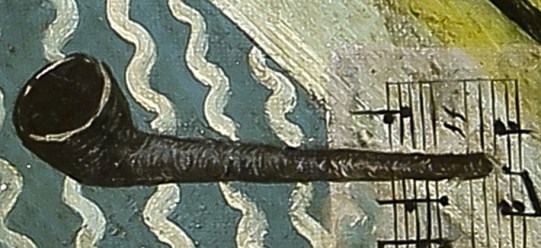
Colson painted Cubist Still Life in 1928, the same year Rene Magritte made his famous Ceci n’est pas une pipeThe pipe that appears near the center of the composition is at once an homage to Magritte’s French surrealism and a nod to Colson’s Spanish surrealist past.

Jaime Colson- Cubist Still Life Details- Matthews Gallery Blog

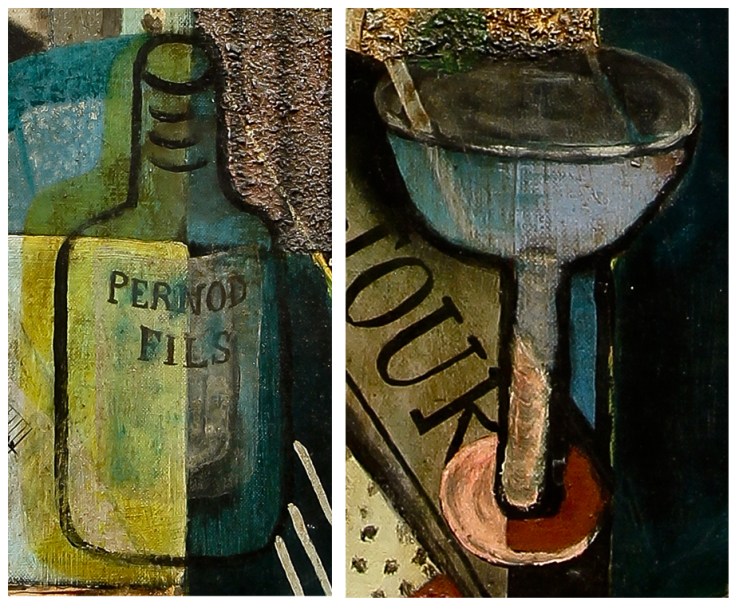
Pernod Fils was the reigning brand of absinthe in the late 1800s and early 1900s. The anise-flavored, bright green spirit was formulated in Switzerland, and its distillery in Pontarlier, France churned out as much as 30,000 liters of absinthe per day. Knock-offs abounded (Pernot, Perriot and Parrot among them), some of which contained toxic substances and were cheap enough to appeal to many a town drunk. In 1910, the French consumed 36 million liters of absinthe in a year, but by 1915 the drink had been demonized and banned.

After World War I, Pernod Fils introduced a new, lower-proof liqueur d’anise, which is the drink Colson would’ve encountered during his Paris years. However, the famous absinthe pictures by Picasso, Lautrec, van Gogh and the like hail from the golden age of the beverage, before the ban. Perhaps the ghostly bottle of Pernod Fils and the empty glass below it are Colson’s tribute to a madcap age that his contemporaries remembered with longing.

Jaime Colson- Cubist Still Life Details- Matthews Gallery Blog

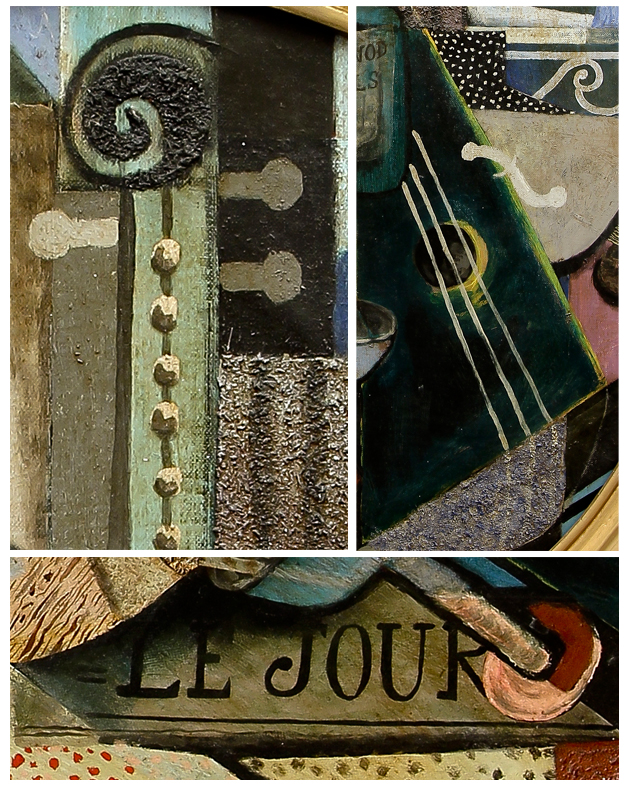
A cubistic guitar and a trompe-l’œil glimpse at the French newspaper Le Journal refer to modernist art forms Colson was exposed to in Paris. In 1912, Picasso began experimenting with collage, incorporating scraps of fabric and other materials into his oil paintings. Picasso’s Still Life with Chair-Caning, one of the first fine art collages ever made, is on an oval canvas and features a scrap of furniture material. Picasso’s close collaborator Braque soon followed suite, using glue to attach wood-grain papers to his cubist canvases. Colson replicates similar patterns and textures using oil paint in Cubist Still Life.

In late 1912, Picasso made artworks using clippings from Le Journaland also created three dimensional collages called art assemblages, including a cardboard guitar. These are Colson’s strongest references to his modernist contemporaries in the painting, directly addressing Picasso’s tendency to weave real-world events into his works and distort objects in groundbreaking ways.

Colson lived in Paris until 1934. After a short stint in Cuba and another stay in Europe, he returned to the Dominican Republic with a head full of revolutionary ideas. He began blending his European influences with Dominican subject matter, creating images of the rich central American culture the likes of which had never been seen before. Along with Yoryi Morel and Dario Suro, Colson is known as one of the founders of the modernist school of Dominican painting, and is considered one of the great Latin American masters of the 20th century.

Learn more about Jaime Colson on our homepage, and connect with us on Facebook, Twitter and Pinterest for daily gallery news.


THE QUINTESSENTIAL MODERNIST

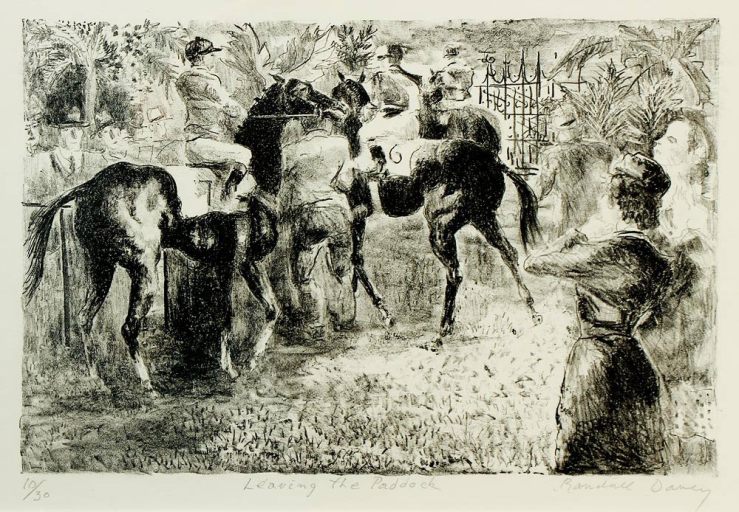
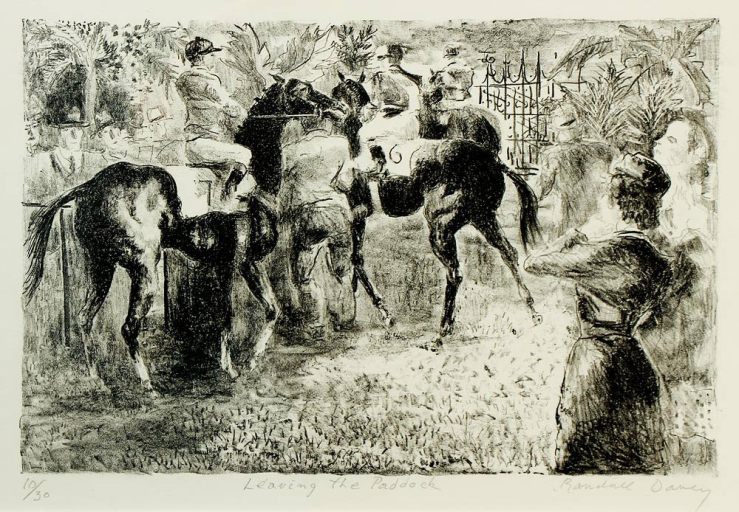
Randall Davey- Leaving the Paddock- Matthews Gallery Blog

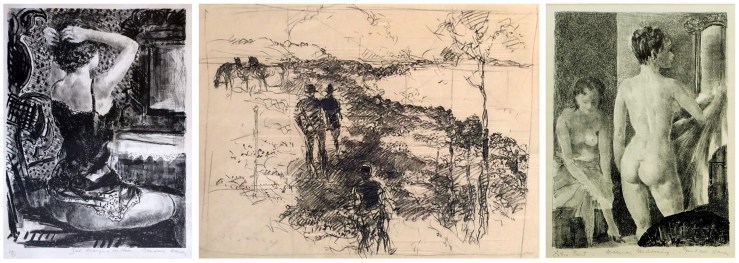
We’re ending our SPRING OF MODERNISM blog series with the tale of a pioneering artist who was the model of a New Mexico modernist. Randall Davey (1887-1964) was born in East Orange, New Jersey. His father was an architect, and he enrolled at Cornell for architecture in 1905. Three years later he dropped out and moved to New York to study art, to the consternation of his father.

At the New York School of Art, Davey forged a close friendship with teacher and Ashcan School artist Robert Henri. Henri was friends with the founders of the Taos Society of Artists, and worked hard to cultivate New Mexico’s budding reputation as an arts destination. In 1910, Davey exhibited with George Bellows and Stuart Davis and in 1913 his artwork was in the New York Armory Show, the most influential modern art exhibition in U.S. history.

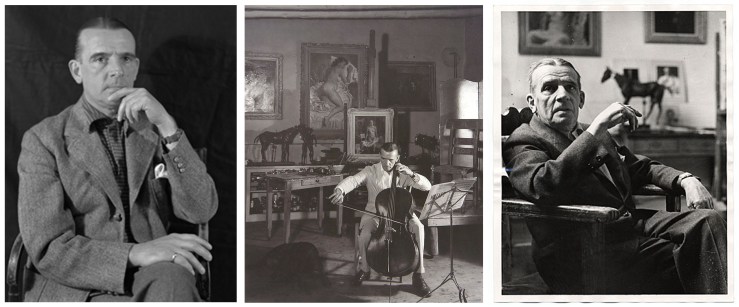
Portraits of Santa Fe Artist Randall Davey- Matthews Gallery Blog
Davey and artist John Sloan visited Santa Fe in the summer of 1919, and Davey fell in love with the Land of Enchantment. His art career in New York had stalled, and the Southwest adventure offered a fresh start. Davey bought an old mill on Upper Canyon Road and moved there permanently the next year. It was a path that had been calling him since his early days as an artist. Inspired by the metropolitan subject matter of the Impressionists, Davey developed a diverse oeuvre of still lifes, horse-racing and polo scenes, artistic nudes and landscapes.
Davey was a true Renaissance gentleman: he made paintings, prints and sculptures, played cello, built a polo field on Upper Canyon Road and was always dressed to the nines (even when he was painting in the hot sun).
Prints and a Drawing by Santa Fe Artist Randall Davey- Matthews Gallery Blog
The lifelong automobile enthusiast died in a car accident on a trip to California at 77 years old. After his death, his wife donated the Davey house and land to the Audubon Society. The Randall Davey House is still open for tours on Fridays, and stands as a tribute to an artist who helped make the Santa Fe art colony what it is today.
A Davey House docent visited the gallery for our SPRING OF MODERNISM opening, and kindly offered us a private tour. Keep your eye on the blog for photos from the tour and more information on Davey. Make sure to visit our exhibition before it closes on March 31st, and connect with us on Facebook, Twitter and Instagram for more gallery news.

SPRING OF MODERNISM: Paul Burlin

Paul Burlin- New Mexico Modernist- Matthews Gallery Blog  As our SPRING OF MODERNISM exhibition approaches its closing date on March 31st, we’re sharing the incredible stories of 20th century artists who shook the foundations of the New Mexico art community. This week we have Paul Burlin, who battled blindness to create his magnum opus. 

Paul Burlin (1886-1969) was born in New York City and had a difficult childhood that he preferred not to discuss. He completed his early education in England before returning to New York at the age of twelve.

He left home at 16, and studied part-time at the National Academy of Art and the New York Art Students League from 1900 to 1912. During that time, he worked as an illustrator under Theodore Dreiser and frequented Alfred Stieglitz‘s 291 gallery. At 291, Burlin developed a taste for Picasso‘s ‘primitive’ artwork that lead him to study African tribal art and, later, the art and culture of the Southwest Pueblos.

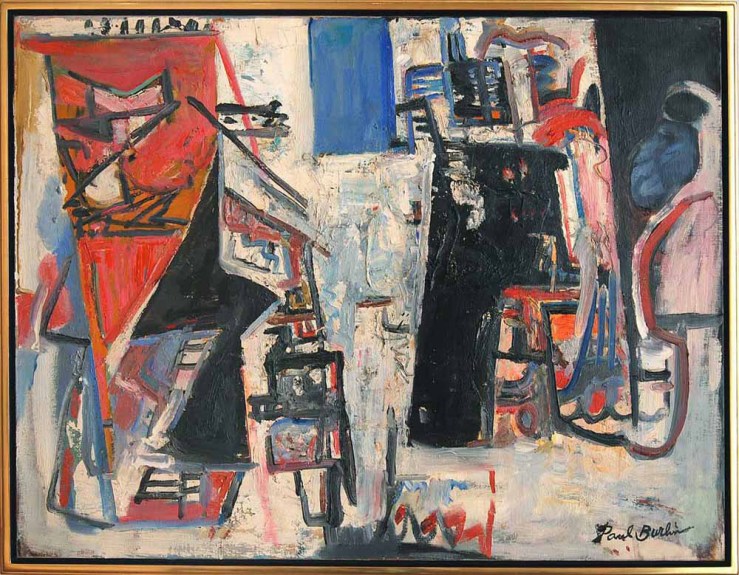
Paul Burlin- Untitled New 1951- Matthews Gallery Blog

Burlin visited New Mexico for the first time in 1910. Paintings from this visit were received warmly in New York and exhibited in 1911. As a result of his early success, he was the youngest artist (at 26 years old) to participate in the 1913 Armory Show.

The same year, Burlin moved back to Santa Fe to develop a new body of work, and continued to exhibit in New York City. With the images and ideas of the Armory Show still prominent in his mind, Burlin was impressed and moved by what he described as the ‘primeval, erosive, forbidding character of the landscape.’ His early works in New Mexico were genre paintings of the Pueblo Indians in a realist style, but he soon developed a colorful abstract vocabulary ruled by symbols both ancient and modern.

Burlin’s time in New Mexico had a profound impact, not only on his own work, but on the development of modernism throughout the Southwest.  From University of New Mexico art historian Sharyn Udall:

Burlin was the first Armory Show participant to reach New Mexico, and that fact, coupled with his confident handling of local subject matter, made a definite impression on newcomers [Marsden] Hartley and B.J.O. Nordfeldt… It is clear, moreover, that Burlin’s stature as the first modernist painter in New Mexico was unquestioned; his was the pivotal role in introducing fauve and expressionist modes to the art of New Mexico (Udall 1984; 28).

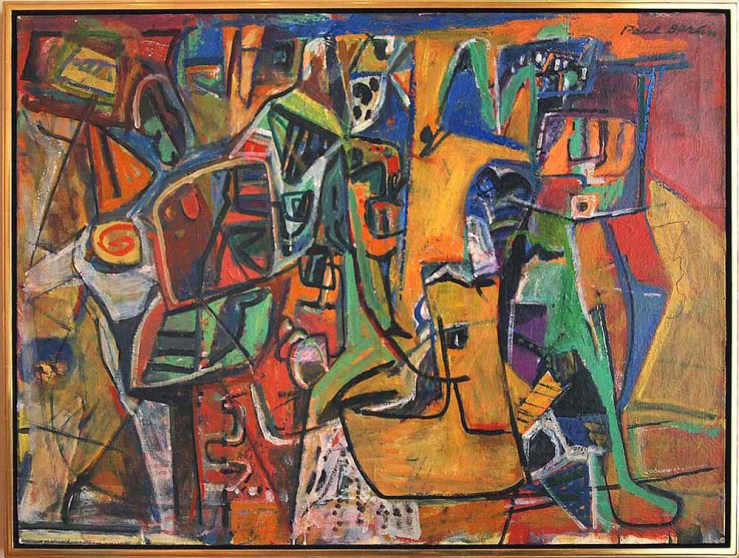
Paul Burlin- Untitled Pivot 1952- Matthews Gallery Blog

Though he moved away from New Mexico in 1920—living in New York and Paris for the rest of his days—Burlin’s artistic evolution in the Land of Enchantment influenced his work for the rest of his life, as evidenced in these canvases from the 1950s. Not long after he made this work, Burlin began to lose his sight. His final series of paintings, completed while he was legally blind, were exhibited at the New York Museum of Modern Art in 1971, two years after Burlin’s death.

From Burlin:

We live in an age of treacherous, harrowing notions of mutability, death and decay…All of the old realities have dissolved…all rigidities of form disappear and enter into a new metamorphosis.  This metamorphosis of form and reality is manifested in shape and color, which destroy visual reality and…shape themselves into a reality of their own.

Learn more about Paul Burlin on our homepage, and connect with us on Facebook, Twitter and Pinterest for daily gallery news.

SPRING OF MODERNISM: The Circle

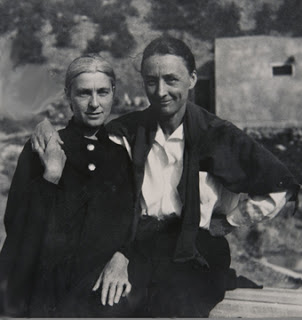
Mabel Dodge Luhan and Georgia O'Keeffe- Matthews Gallery BlogMabel Dodge Luhan and Georgia O’Keeffe

If you visit our SPRING OF MODERNISM show this month, two things will become abundantly clear about the 20th century artists in the exhibition. Firstly, they’re all linked, in one way or another, to the 1913 Armory Show in New York City. Secondly, they are all tied to each other. In fact, the modernists of the Santa Fe and Taos art colonies are so intertwined that we tried and failed to create a chart of their relationships. There are so many connections, it reminds us of Gertrude Stein’s Paris! Here’s just one line of the friendship chain, which begins with Stein herself:

Jan Matulka- Surrealist Landscape- Matthews Gallery Blog
MATULKA
Jan Matulka (1890-1972) was born in Austria-Hungary, now the Czech Republic. He moved to New York City in 1907 and enrolled at the National Academy of Design soon after. A Joseph Pulitzer Traveling Scholarship enabled him to visit the Desert Southwest in 1917, where he was inspired by the cultures of the Pueblo Native American Tribes. He maintained studios in Paris and New York during the 1920s, befriending Gertrude Stein, Andre Lhote and Max Weber.
DASBURG
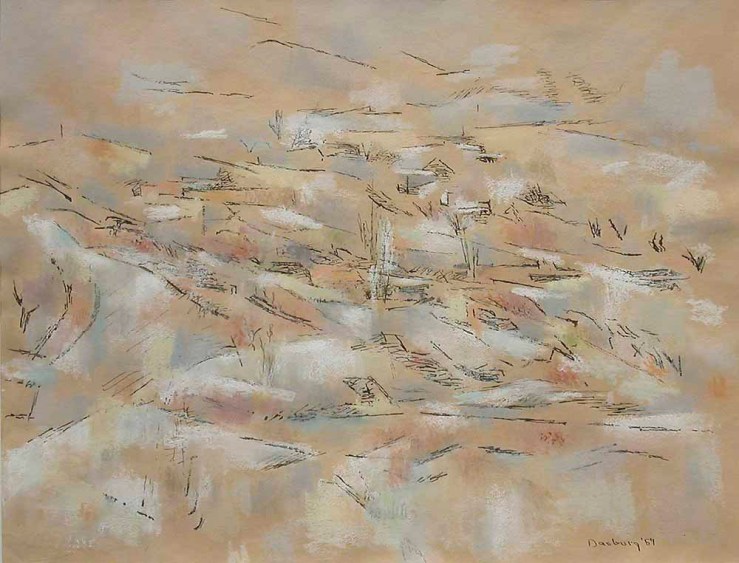
Andrew Dasburg (1887-1979) also knew Stein. He was born in Paris and emigrated to New York City in 1892. He studied at the New York Art Students League and spent time in Paris with Stein, Henri Matisse and Morgan Russell as a young man. In 1913, he exhibited Lucifer (above) at the Armory Show, and was later invited to New Mexico by Mabel Dodge Luhan. He moved to Taos in 1921, and was part of Georgia O’Keeffe and Alfred Stieglitz’s circle here.

 Cady Wells- Taos 1947- Matthews Gallery Blog Cady Wells, Taos 1947, Ink and Watercolor on Paper

WELLS

Cady Wells (1904-1954) knew Luhan and O’Keeffe and studied under Dasburg. He grew up in Southbridge, Massachussets and traveled extensively as a young man, studying music and the visual arts before deciding to become an artist in his late 20s. He moved to New Mexico in 1932, where he found an enthusiastic mentor in Dasburg and drew inspiration from the rich culture of the Desert Southwest. The Smithsonian American Art Museum writes:

Portraying the Southwestern landscape in watercolor, Wells moved through various modernist idiots. His early work incorporated gestural, calligraphic lines suggestive of Chinese ideograms. Later he investigated the structure of natural forms [and the] pattern-like appearance of the landscape. Influenced by Dasburg, Raymond Jonson and Georgia O’Keeffe, Wells developed a personal semi-abstract style that brought considerable praise from his peers.

 Raymond Jonson- Oil Number 12- Matthews Gallery BlogRaymond Jonson, Oil No. 12, 1958, Oil on Canvas

JONSON 

Wells’ friend Raymond Jonson (1891-1982) was born in Chariton, Iowa and grew up in Portland, Oregon. He attended the Chicago Academy of Fine Arts and the Chicago Art Institute as a young man, but his true artistic breakthrough came when he attended the 1913 Armory Show and saw the artwork of early abstractionist Wassily Kandinsky.
Jonson traveled to New Mexico for the first time in 1922, and moved here two years later. Here he founded the Atalaya Art School and took a teaching position at the University of New Mexico.
Along with his friends Emil Bisttram, Agnes Pelton and others, Jonson formed the Transcendental Painting Group (TPG) in 1938. The collective was inspired by early abstract artists like Wassily Kandinsky and Piet Mondrian, as well as Theosophy, Zen Buddhism and Dynamic Symmetry. The TPG only lasted a few years, disbanding in 1942 because of World War II. However, the collective’s influence endures in the Southwest and beyond. Some consider the group an heir to Russian Constructivism, Gino Severini and the Bauhaus.
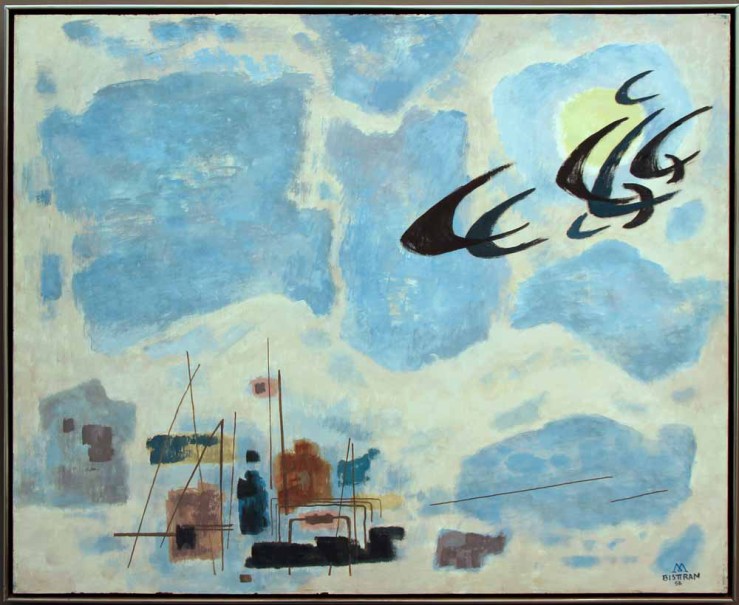
Emil Bisttram- After the Blizzard- Matthews Gallery Blog
BISTTRAM 
Jonson’s friend Emil Bisttram (1895-1976) was born in Hungary and immigrated to New York City with his family at 11. It wasn’t until his mid-30s that he visited Taos, but he fell in love with the area and would become a major player in the art colony when he moved there a year later.In 1933 Bisttram helped open the first modern art gallery in Taos and in 1938 he co-founded the Transcendental Painting Group. He promoted the ideas of the collective through the Emil Bisttram School for Transcendentalism, where Janet Lippincott was one of his students.
Janet Lippincott- Llano Ridge- Matthews Gallery Blog
LIPPINCOTT
Bisttram’s student Janet Lippincott (1918-2007) was born in New York City to a wealthy family, and spent part of her childhood in Paris. There she learned about the aesthetic innovations of Picasso and Matisse. Back in New York, she took classes at the New York Art Students League as a teenager.During World War II, Lippincott enlisted in the Women’s Army Corps and was wounded. She pursued art studies in Colorado and San Francisco on the GI Bill, and also attended the Emil Bisttram School for Transcendentalism in Taos in 1949 and the Alfred Morang Academy of Fine Art. In 1954, she moved to Santa Fe permanently and lived here for over five decades.Lippincott was considered part of a “second wave” of New Mexico modernists, who ventured to the Southwest after WWII. She is known as an abstract expressionist, but her early modernist influences in Paris stuck with her, as evidenced in her career-spanning series of figurative prints.

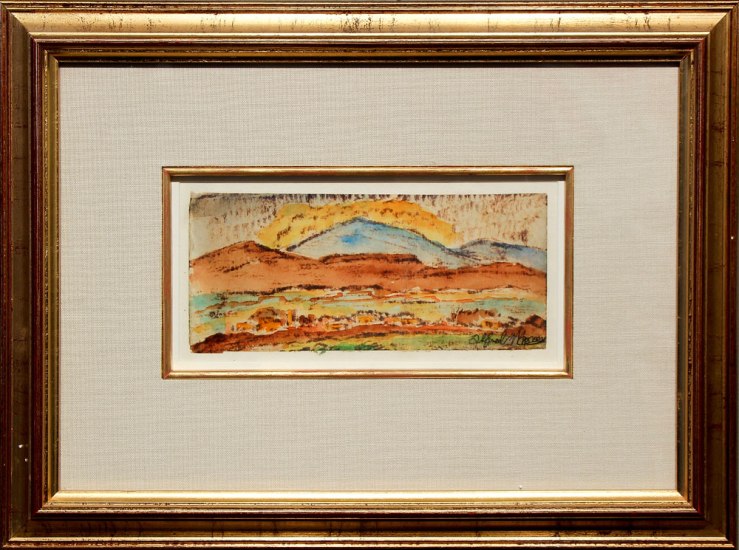
Alfred Morang- Blue Mountain Yellow Sky- Matthews Gallery Blog Alfred Morang, Blue Mountain, Yellow Sky, Ink and Watercolor on Paper

MORANG 

As a young man, Lippincott’s teacher Alfred Morang (1901-1958) suffered from tuberculosis. He left his home in Portland, Maine in 1937 and came to New Mexico to recover in a dryer climate. The reports vary, but when Morang got off the train he was met by Randall Davey or Raymond Jonson, two of the city’s most established modernist artists. Morang’s bohemian manner quickly charmed the Santa Fe art world, and the City Different became his permanent home.

Late in his life, Morang moved to a Canyon Road studio just behind Claude’s Bar. Just across the street was an artist and writer’s compound run by Agnes Sims.

 Agnes Sims- Dance Rattles- Matthews Gallery BlogAgnes Sims, Dance Rattles, Watercolor on Paper

SIMS 

Morang’s Canyon Road neighbor Agnes Sims (1910-1990) was born in Devon, Pennsylvania. She managed a marionette theater and worked as a textile designer in Philadelphia before moving to Santa Fe in 1938 and founding a Canyon Road artist’s compound. In New Mexico, she took an interest in the ancient petroglyphs of New Mexico’s Native American Pueblos, and received a grant to study and sketch them. Her archaeological work inspired a series of paintings and sculptures in which she developed her own semi-abstract symbolism.

Sims’ longtime partner was the literary editor of Harper’s Bazaar, and helped popularize Truman Capote‘s work. Capote was friends (and sometime enemies) with Georgia O’Keeffe. And so the circle comes back around to Andrew Dasburg!

We could do this for ages, but you get the point. The New Mexico art community was a western frontier of avant-garde innovation, forged by a group of passionate friends whose efforts gave birth to the Land of Enchantment of today. And thank goodness for that!

Click here to see all of the artwork in our Spring of Modernism show, and connect with us on Facebook, Twitter and Flickr for daily gallery news.

NEW ARMORY: Modernism’s Western Frontier

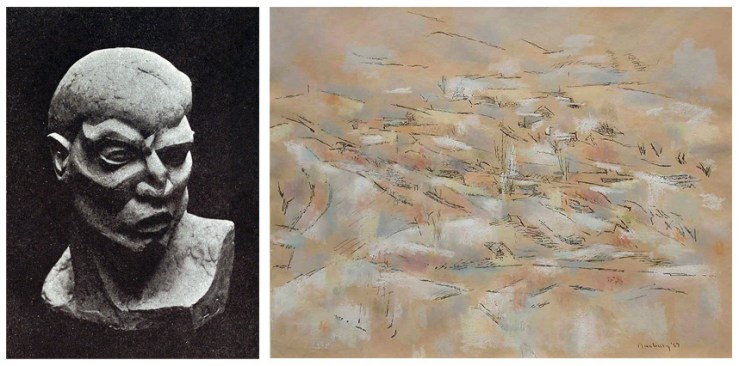
A severe sculpture by Andrew Dasburg, which appeared in the 1913 Armory Show, contrasts with his soft pastel snow scene that will appear in SPRING OF MODERNISM- Matthews Gallery Blog
A severe sculpture by Andrew Dasburg, which appeared in the 1913 Armory Show,
contrasts with his soft pastel snow scene that will appear in SPRING OF MODERNISM.
The 102nd annual Armory Show opens in New York City this weekend. Its history stretches back to 1913, when the exhibition introduced the European modernist movement to the United States. Featured artists included Pablo Picasso, Henri Matisse, Georges Braque, Vincent van Gogh Gogh and other Europeans. The show also included American artists such as Randall Davey, John Sloan, Paul Burlin, Andrew Dasburg, Edward Hopper, Marsden Hartley and more who had been influenced by the artistic revolution taking place across the Atlantic.
Not-so-coincidentally, we’re launching a modernism show of our own this Friday, and it features several New Mexico artists who participated in the original Armory show. During the first half of the 20th century, Davey, Sloan, Dasburg and a great variety of their East Coast contemporaries ventured to New Mexico and reshaped the Taos and Santa Fe art colonies into Western outposts for bold aesthetic innovation. The Taos Moderns, the Transcendental Painting Group (TPG) and other collectives engaged with new developments in the movement, gaining an influential presence on the international art stage.
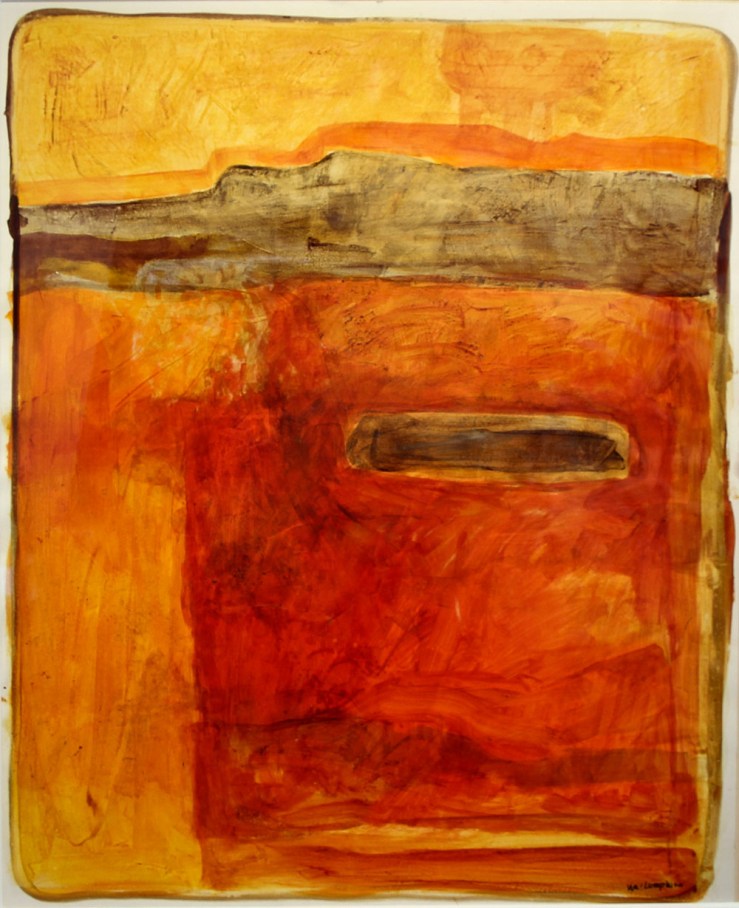
Our SPRING OF MODERNISM exhibition will follow every twist and turn of New Mexico’s modernist movement through significant artworks by Davey, Dasburg, Max Weber, Doris Cross, Russell Cowles, Howard Schleeter, Rolph Scarlett, Paul Burlin, Cady Wells, Jan Matulka, Dorothy Brett and others. It features TPG mavericks Raymond Jonson, Emil Bisttram and William Lumpkins, Taos Moderns such as Beatrice Mandelman, and pivotal Santa Fe modernists including Alfred Morang and Janet Lippincott.
The scope of the show is as ambitious as its title suggests— we’re highlighting 50 transformative years of New Mexico modernist history. SPRING OF MODERNISM shows how New Mexico’s art community became one of the largest and most influential in the nation.
Look below for some of our favorite works from the exhibition, and check out a special preview on our website. Also, make sure to attend the opening on Friday, March 6 from 5-7 pm!
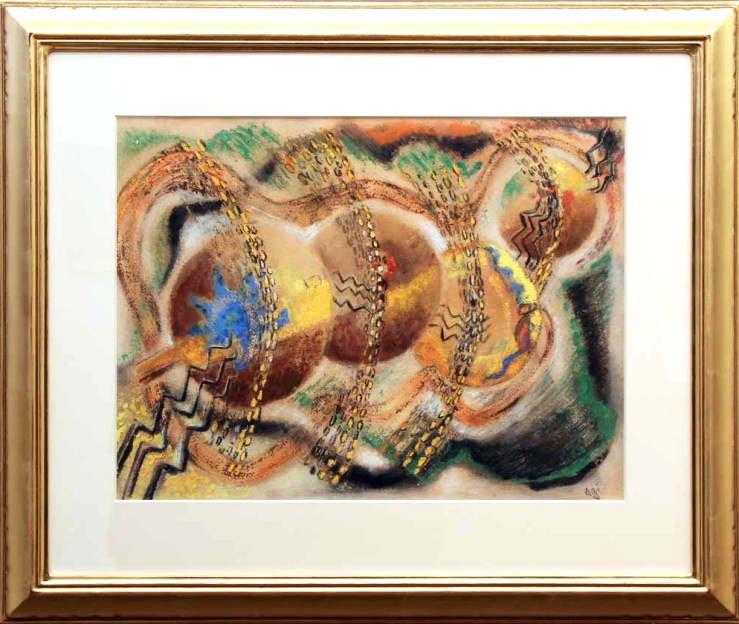
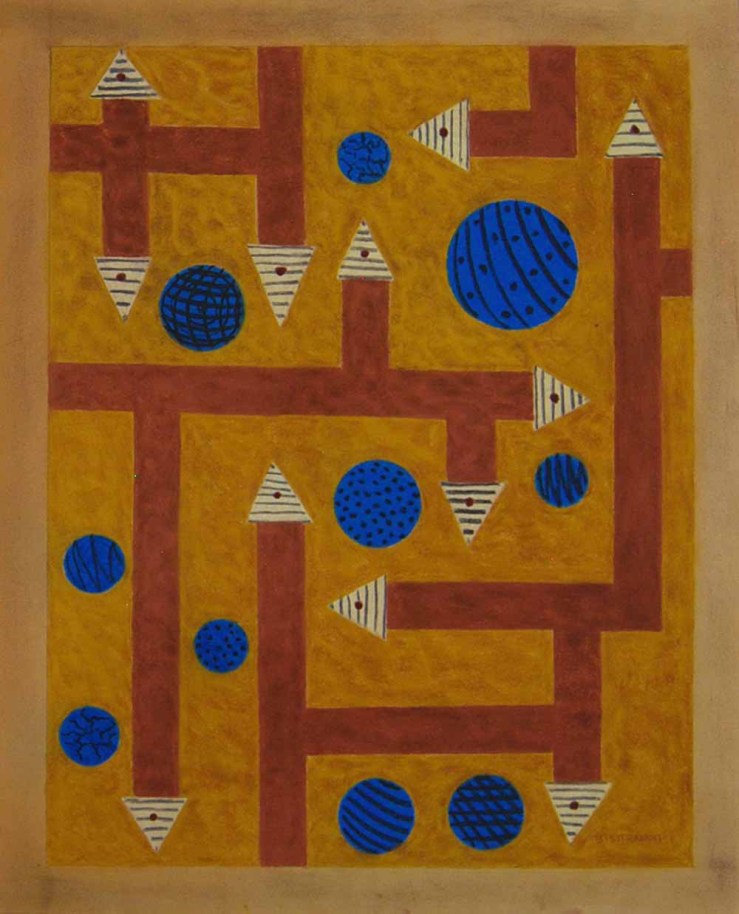
 Emil-Bisttram- Orbs and Arrows- Encaustic- Matthews Gallery Blog
Jan Matulka -Landscape - 1923- Watercolor- Matthews Gallery Blog
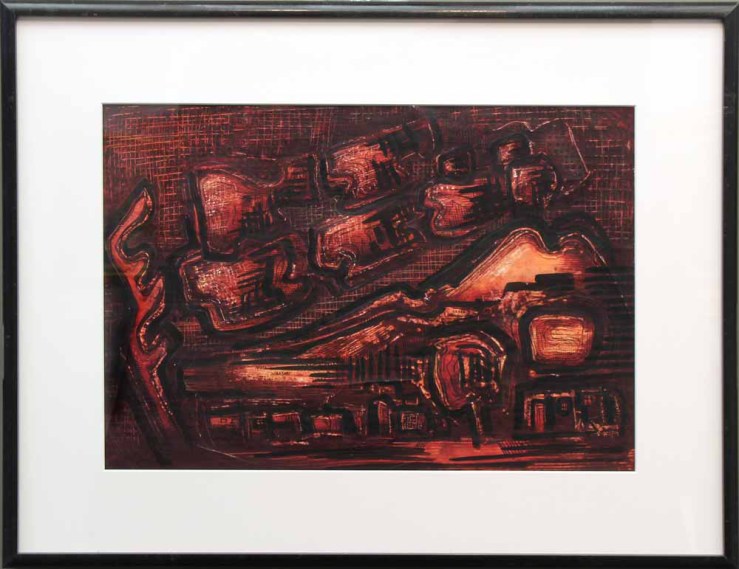
Doris Cross- Untitled- Mixed Media- Matthews Gallery Blog
Alfred Morang- Untitled Landscape- Matthews Gallery Blog
Howard-Schleeter- Pueblo- 1949- Gouache
Randall Davey- Leaving Paddock- Lithograph
Beulah Stevenson- Place Of Drums- New Mexico - 1940-5- Matthews Gallery Blog
Paul Burlin- Look-No Fish- Oil on Canvas- 1949- Matthews Gallery Blog
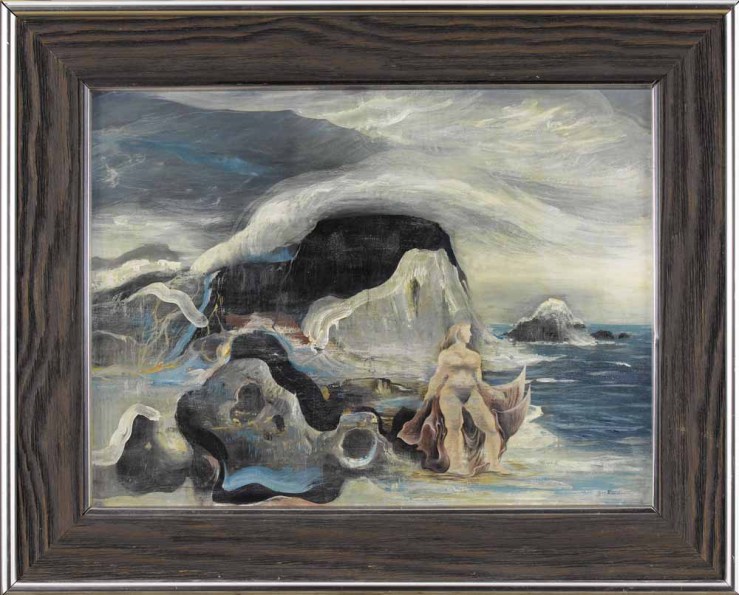
Thomas Benrimo- Nymph of the Sea- oil on board- 1949- Matthews Gallery Blog
Make sure to follow us on Facebook, Twitter and Instagram for more gallery news, and stayed tuned for information on our modernism-themed dinner at Coyote Cafe!

PICTORIALISM: From Stieglitz to Curtis

Alfred-Stieglitz-Edward-Curtis-Art2

It was 1901 in New York City, and photographer Alfred Stieglitz (1864-1946) was busy preparing an exhibition that would shake the foundations of the art world. He had worked for years—often to the point of physical exhaustion—to elevate photography to the stature of fine art. A series of juried photography shows, judged mostly by painters, had popularized the aesthetic of pictorialism. Pictorialist photographers approached their art like a painter or illustrator, playing with focus and exposure in innovative ways and even marking the surfaces of their images. The idea was to “make” an image rather than “take” it, projecting emotions into the scene and onto the viewer.

Stieglitz and his friends saw the need for yet another leap forward in this new era of photography. They would mount a show composed entirely of photographs, and judged only by photographers. Or rather, it would be judged by one photographer: Stieglitz himself. He put together the show in two months and dubbed it the Photo-Secession, intending to secede from old conceptions of both photography and fine art. The exhibition was an enormous success, and gave Stieglitz the momentum to launch a photography journal and gallery to promote his ideas.

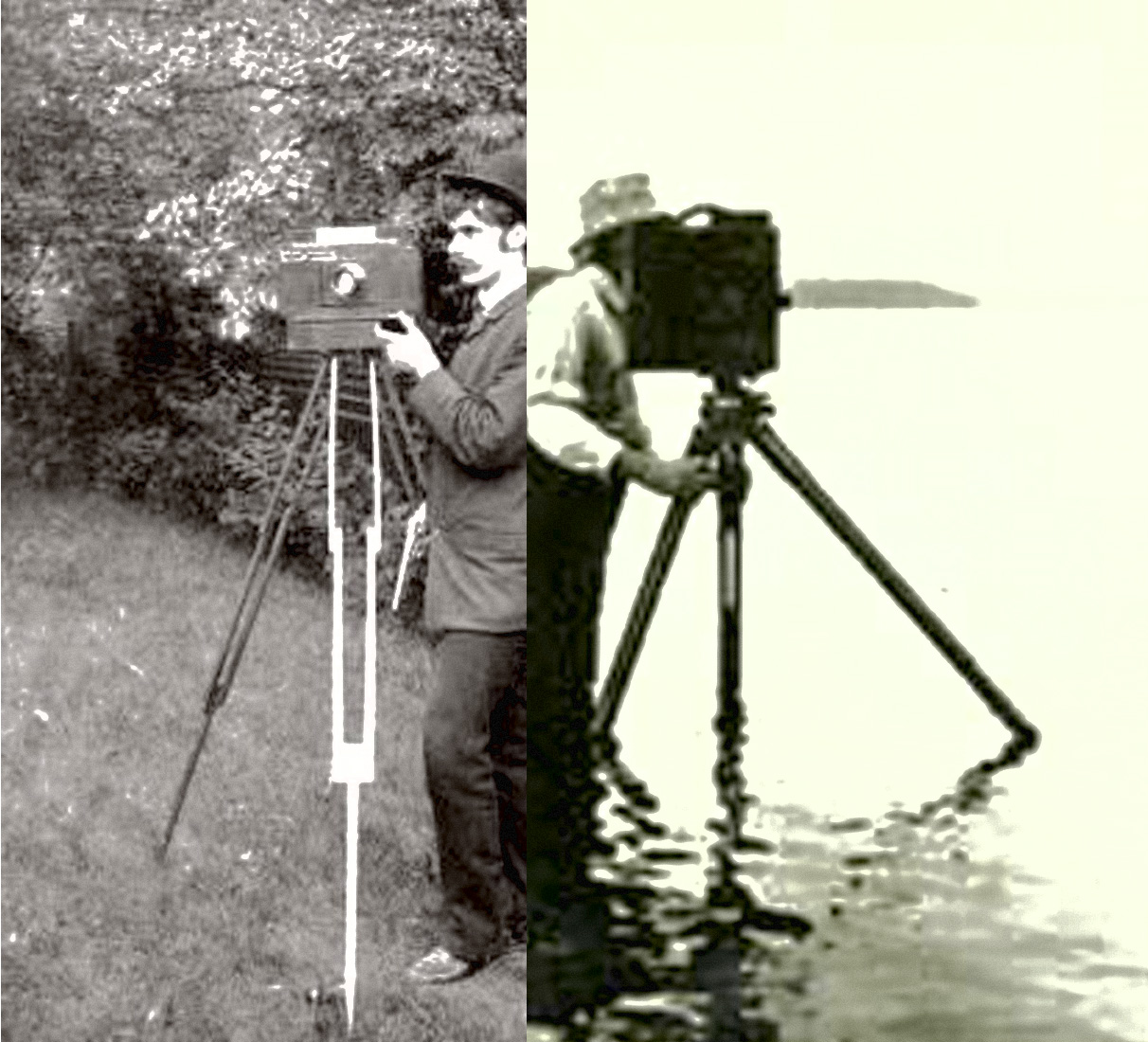
Pictorialism- Alfred Stieglitz to Edward Curtis- Matthews Gallery Blog


From left: View of Stieglitz’s Little Galleries of the Photo Secession, which opened in 1905;
Edward S. Curtis in his adventure clothes.

Thousands of miles away in Seattle, Edward S. Curtis (1868-1952) was just beginning his photography career. Curtis grew up in Wisconsin and built his first camera when he was a teenager. At 17 he apprenticed in a photography studio in St. Paul, Minnesota, and when his family moved to Seattle in 1887, he bought a partnership in a portrait studio. Over the next few years, he began photographing Native American people of the Washington territory, some of them relatives of Chief Sealth and other important leaders. These early portraits and genre scenes inspired a 30-year adventure through the American West, during which Curtis and his team recorded the lives of over 80 tribes in photographs, writings, recordings and sketches.

Curtis’ expeditions, which he recorded in a series of volumes called The North American Indian, kept him far away from the epicenter of the American avant-garde where Stieglitz resided. “He was an outsider, too far removed from the photographic salons to court or count on ready shows and reviews that had instituted pictorialist photography,” writes Gerald Vizenor in an essay on Curtis. However, it’s this aesthetic that ties Stieglitz and Curtis together in art history.

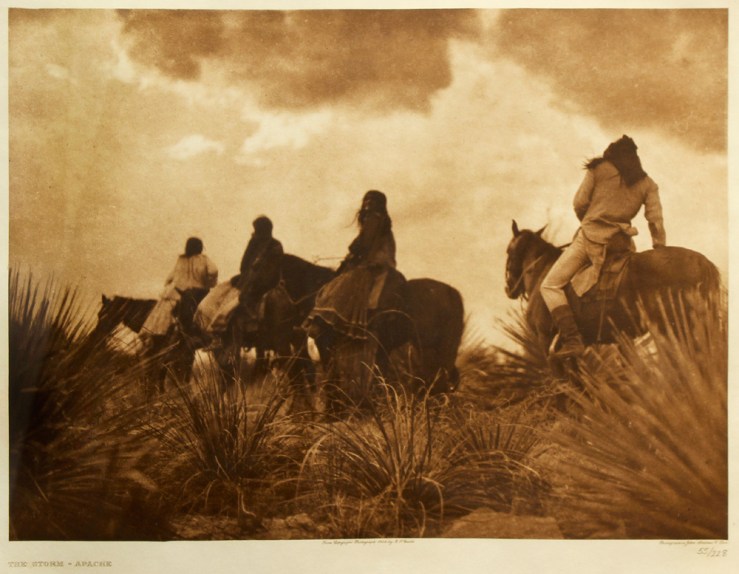
“Curtis kept abreast of national, even international, trends in photography—and in the visual arts more generally,” writes Mick Gidley. “His early writings for Seattle magazines reveal that he absorbed much from Pictorialism in photography, including the example of Alfred Stieglitz, the founder of the Photo-Secession.” Curtis’ earliest photographs of Native peoples feature the soft focus and sepia tone of some classic pictorialist images, and present his subjects as stoic archetypes of a vanishing culture. In his many adventures, Curtis often posed his subjects and manipulated images to fit his vision of the tribes he was portraying. These techniques have earned Curtis praise as a pictorialist, but have also stirred up controversy. Curtis called himself an ethnologist, but the aesthetically powerful images he created didn’t always aim for scientific accuracy.

In the collection of photographs below, we’ve reunited Curtis with his pictorialist roots, placing some of his most iconic images among significant works by Stieglitz and his contemporaries. As you view the images, ponder Curtis’ position as an outsider during his lifetime, and his new place as a pictorialist in the art history books…
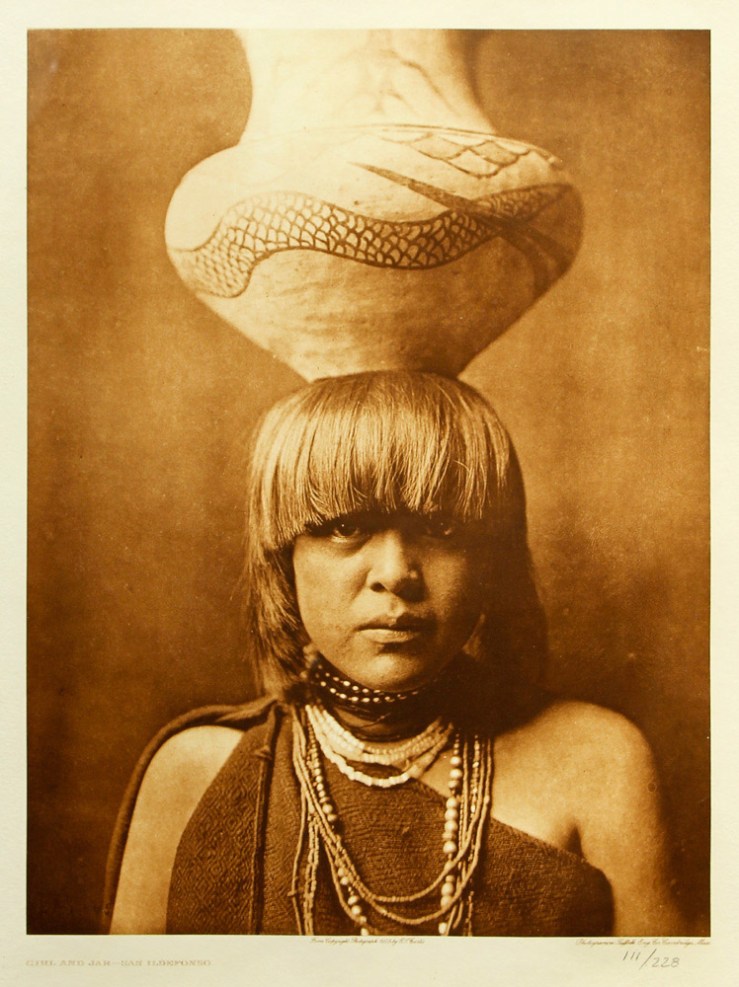
Edward S Curtis- Girl and Jar Photogravure- Matthews Gallery Blog

Edward S. Curtis, Girl and Jar, Photogravure

Adolph de Meyer- Marchesa Casati- 1912- Pictorialism- Matthews Gallery Blog

Adolph de Meyer, Marchesa Casati, 1912

Edward S Curtis- Apache Medicine-Man Photogravure- Matthews Gallery Blog

Edward S. Curtis, Apache Medicine-Man, Photogravure
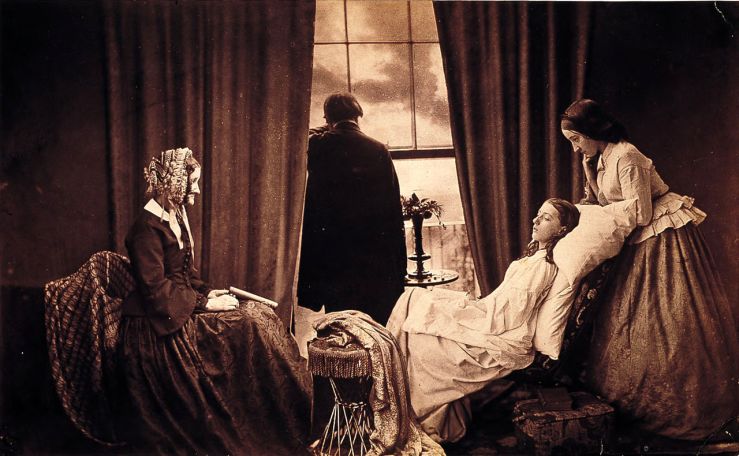
Henry Peach Robinson- Fading Away- 1858- Pictorialism- Matthews Gallery Blog

Henry Peach Robinson, Fading Away, 1858
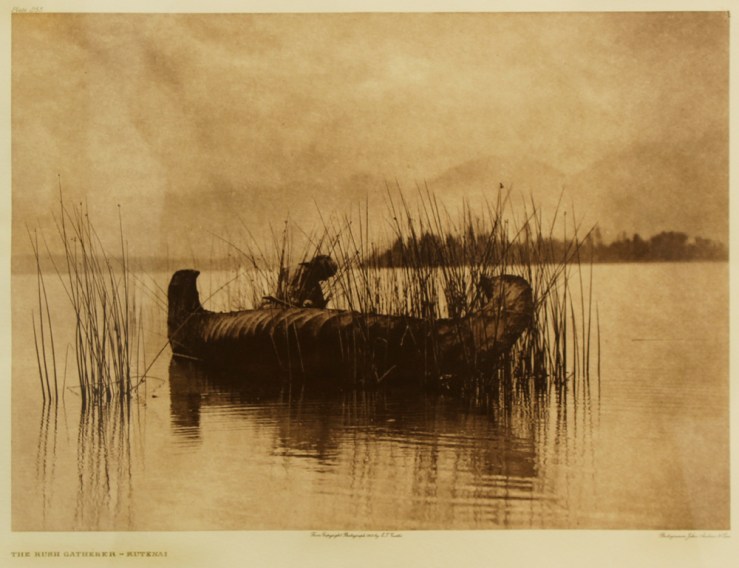
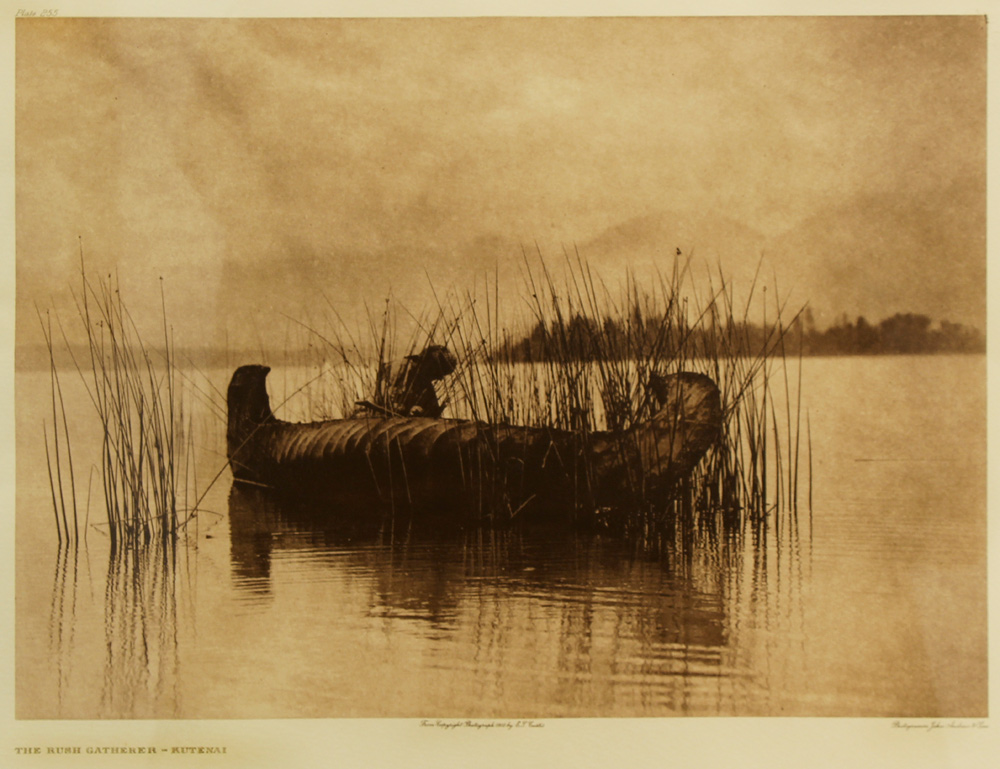
EdwardCurtis-Art-TheRushGatherer

Edward S. Curtis, The Rush Gatherer, Photogravure
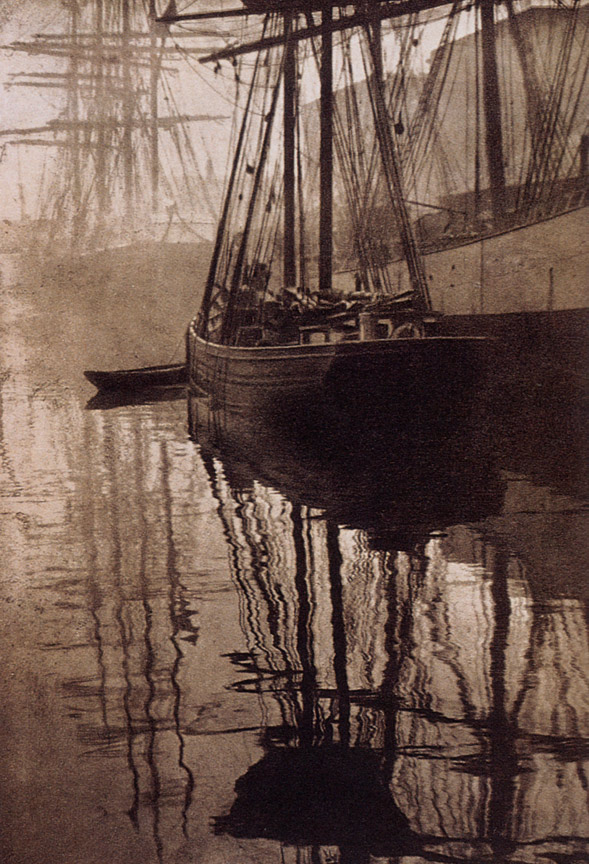
Alvin Langdon Coburn- Spiderwebs- 1908- Pictorialism- Matthews Gallery Blog

Alvin Langdon Coburn, Spiderwebs, 1908
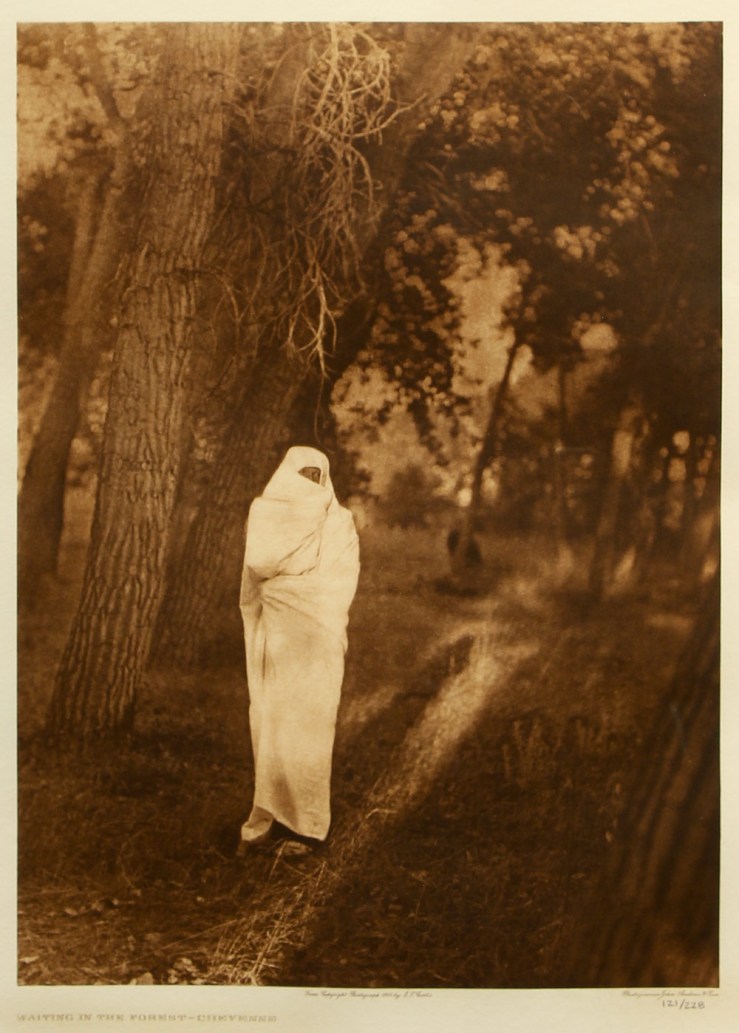
Edward S Curtis- Waiting the Forest-Cheyenne Photogravure- Matthews Gallery Blog

Edward S. Curtis, Waiting in the Forest— Cheyenne, Photogravure
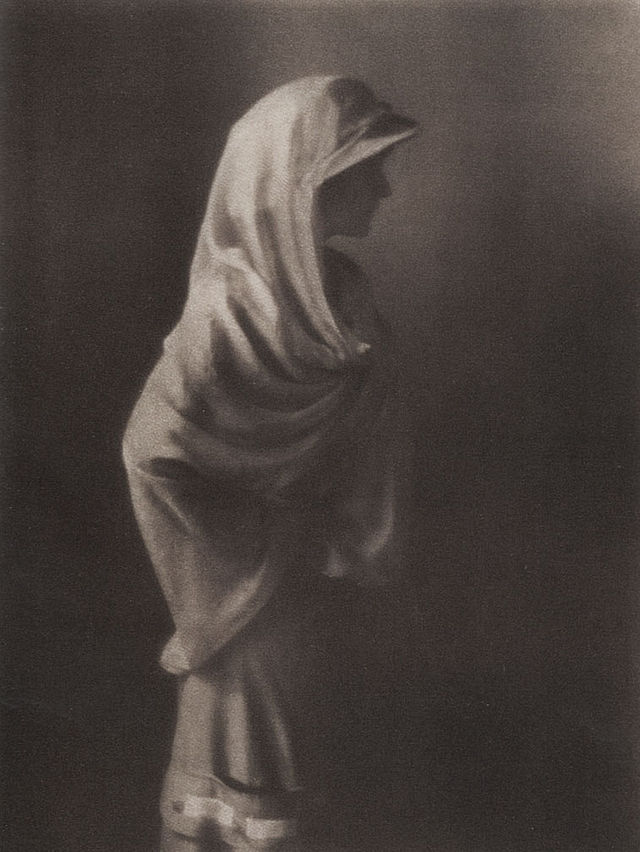
Paul Haviland- Doris Keane- 1912- Pictorialism- Matthews Gallery Blog

Paul Haviland, Doris Keane, 1912

Edward S Curtis- The Storm-Apache Photogravure- Matthews Gallery Blog

Edward S. Curtis, The Storm-Apache, Photogravure
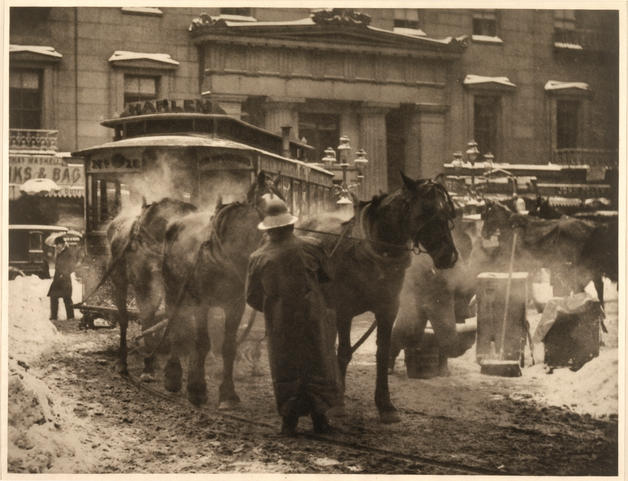
Alfred Stieglitz- The Terminal- 1893- Pictorialism- Matthews Gallery Blog

Alfred Stieglitz, The Terminal, 1893

Click here to learn more about Edward S. Curtis, his adventures and the rediscovery of his work in the 1970’s, and connect with us on Facebook, Twitter and Instagram for daily gallery news.
SPRING OF MODERNISM

We’ve had some unseasonably warm days after last weekend’s snowstorm, and it’s making us excited for the end of winter. It’s the perfect time to release our spring exhibition schedule, which is a period of exciting growth at Matthews Gallery.

In light of Georgia O’Keeffe Museum’s brilliant Modernism Made in New Mexico exhibition and New Mexico Museum of Art’s recent emphasis on Southwestern modernists, we’re declaring a ‘Spring of Modernism’ in Santa Fe. It begins with our exhibition of influential New Mexico modernists, and features women artists of new mexico, rare artifacts from legendary artists’ studios and much more. Check it out:

Spring of Modernism Show- New Mexico Modern Art- Matthews Gallery

Spring of Modernism: Seminal New Mexico Modernists
March 6-31, Opening Reception: Friday, March 6, 5-7 pm

Matthews Gallery declares a “new spring” of modernism, as this rich period in New Mexico art history returns to the spotlight. Featured artists include Emil Bisttram, William Lumpkins and Raymond Jonson of the Transcendental Painting Group, Alfred Morang and Randall Davey of the Santa Fe art colony, and Beatrice Mandelman of the Taos Art Colony.

Collectors Forum- Art Collecting Workshop- Matthews Gallery Blog

Collector’s Forum Workshop
April 17, 6:30 pm

We offer an inside look at art collecting for this special Art Matters event. The workshop is for anyone who’s ever considered buying, selling or caring for fine art and has questions about the inner workings of the art world. Forum participants will get an inside look at every step of the process from one of Santa Fe’s top galleries. The event is free but seating is limited, so give us a call if you’d like to participate – 505-992-2882. Read about our past Collector’s Forum workshops here and here.

New Landscapes New Vistas- New Mexico Women Artists Show- Matthews Gallery

New Landscapes, New Vistas: Women Artists of New Mexico 
May 8-31, Opening Reception: Friday, May 8, 5-7 pm

In the first half of the 20th century, a number of women artists who were frustrated by a lack of the recognition on the East Coast packed up and left everything behind. In New Mexico’s isolated art colonies, they found the freedom and social acceptance to excel. Matthews Gallery presents the stories and artwork of Janet Lippincott, Agnes Sims, Doris Cross and other women who found a powerful voice in the Land of Enchantment.

Artists Toolbox- Artwork and Artifacts of New Mexico Artists- Matthews Gallery
The Artist’s Toolkit: New Mexico Artists at Work 
June 4-10, Opening Reception: Friday, June 5, 5-7 pm

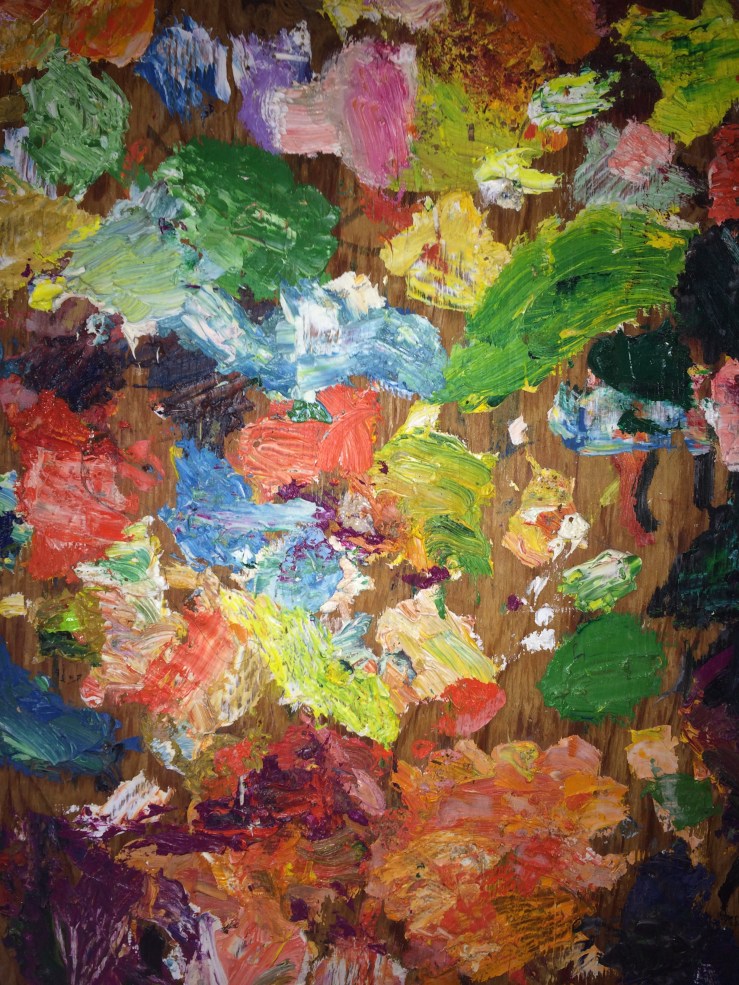
This special exhibition features rare artifacts of legendary New Mexico artists alongside their work, giving visitors insight into the complex process of conceptualizing, mixing and applying color. Visitors will get a once-in-a-lifetime opportunity to view Tommy Macaione’s paint palette, John McHugh’s brushes, Alfred Morang’s notes on color, Hilaire Hiler’s color wheel and other behind-the-scenes ephemera from Santa Fe private collections.
Widening the Horizon- New Mexico Landscape Show- Matthews Gallery Blog
Widening the Horizon: New Mexico Landscapes
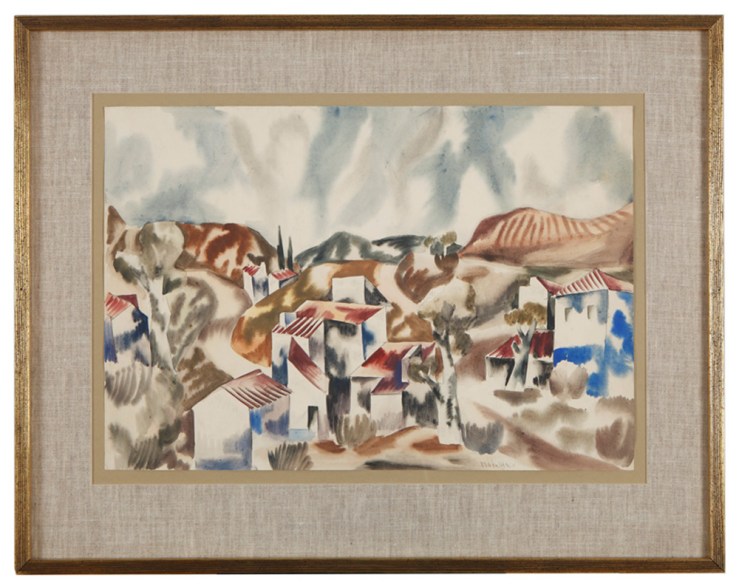
June 12-30, Opening Reception: Friday, June 12, 5-7 pm

New Mexico’s endless vistas offer an opportunity and a challenge to artists. Matthews Gallery looks back at legendary artists’ attempts to capture and reimagine the High Desert horizon, from early Santa Fe and Taos art colonists including Datus Myers and William Vincent Kirkpatrick, to modernists including William Lumpkins and Beatrice Mandelman, who evoked the spirit of the landscape through the language of abstraction.

Learn more about our exhibition schedule here, and connect with us on Facebook, Twitter and Pinterest for daily gallery news.

BIRTH OF AN ARTIST: Three Mentors of Eric Sloane

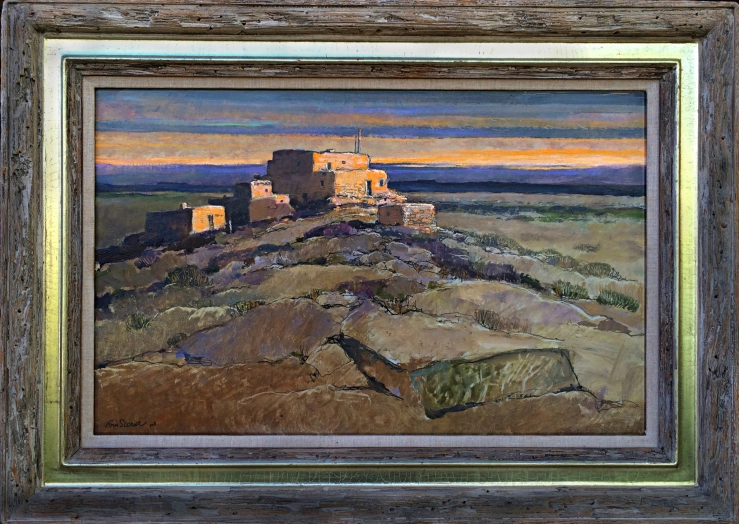
Eric Sloane- Hopi Country- Oil on Panel- Matthews Gallery Blog

PROLOGUE

When a historic artwork enters our collection, it’s the first clue in a grand investigation. A painting is a concrete piece of evidence that links to the artist’s evolutionary chain, leading us back through the years.

Eric Sloane’s Hopi Countrypictured above, helped us trace its creator from New Mexico to his hometown of New York City. Along the way we met three of Sloane’s mentors, who are all revered figures in American history.
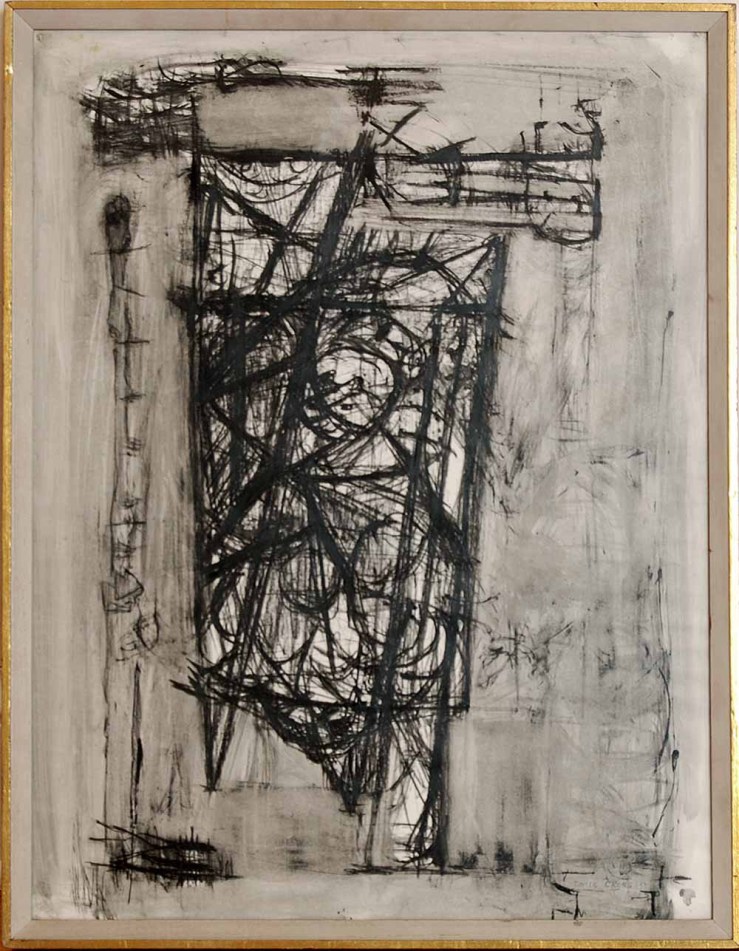
Frederic W Goudy- Mentor to Eric Sloane- Matthews Gallery Blog

FREDERIC W. GOUDY

Eric Sloane was born Everard Jean Hinrichs in New York City in 1905. Meanwhile in Chicago, Sloane’s future mentor Frederic W. Goudy was experiencing a late-in-life rebirth. At 40 years old, he had quit his job as an accountant to open a publishing house called Village Press with his friend Will Ransom. He learned how to design typefaces and began building a portfolio.

“[Goudy started] almost from scratch at an age when most men are permanently set in their chosen vocations,” wrote Popular Science in 1942. Goudy’s new path would lead him from Chicago to Boston to New York, where he moved in next door to young Sloane.

As Goudy’s career took off with a series of hit typefaces—Kennerly Old Style, Goudy Old Style, Copperplate Gothic—young Sloane learned the tricks of the trade. Goudy would design 122 typefaces in his lifetime, topping Gutenberg and Garamond. His painting lessons for Sloane soon launched one of the great adventures of the budding artist’s life. But first, a scholarly interlude.

John Sloan- Mentor to Eric Sloane- Matthews Gallery Blog

JOHN SLOAN

Sloane changed his name while studying at the Art Students League of New York. He took the middle letters of “America” for his first name, and tweaked the surname of his mentor John Sloan. Sloan encouraged his students to adopt pseudonyms in order to sever ties with their earlier, less accomplished work. He was a passionate and sometimes volatile teacher who believed in art for art’s sake.  “I have nothing to teach you that will help you to make a living,” he would tell his students. Although he was a well-known artist who participated in groundbreaking exhibitions like the 1913 Armory Show, his artwork rarely sold.

Sloan’s circle came to be known for their realist depictions of poor neighborhoods in New York. Sloane never took to this subject matter, but finding a new name was transformative for the young artist. With his patriotic moniker and the skills he’d picked up from Goudy, he took off across the country in the summer of 1923, painting sings on barns and stores to make ends meet. Two years later he took another, longer adventure to New Mexico, one of Sloan’s favorite vacation spots.

Much like other students of Sloan, the light and colors of the New Mexico inspired Sloane to push his art in a new direction. He picked up oil painting and learned to capture the light, color and endless expanses of the High Desert, and returned to Long Island in 1927 with a new sense of purpose.
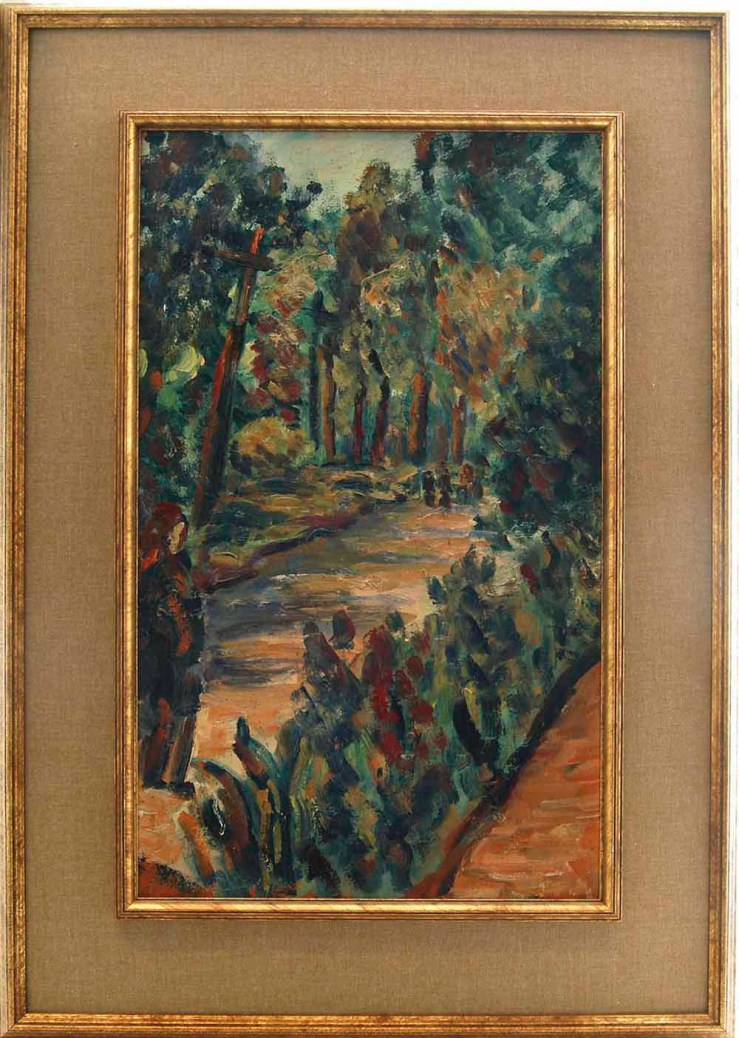
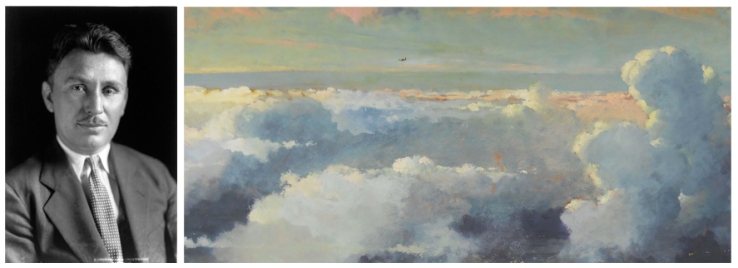
Wiley Post- Mentor to Artist Eric Sloane- Matthews Gallery Blog

WILEY POST 

Sloane grew up during the Golden Age of Aviation. By 1933, his fascination with aircrafts lead him to a job at the Half Moon Hotel, which was close to Long Island’s Roosevelt Field. The aviators who stayed at the inn became some of Sloane’s first patrons, paying him to make oil paintings of their planes. Aviator Wiley Post was so impressed by Sloane’s work that he offered to swap flying lessons for painting lessons.

Post had trained to be an aviator during World War I, but the war ended before he entered active duty. He worked as a parachutist for a flying circus and a barnstormer before becoming a private pilot for wealthy Oklahoma oilmen. The job earned him enough money to set out on a worldwide adventure, and he became the first pilot to fly solo around the globe.

Sloane was so inspired by his flights with Post that he began painting the sky, as seen from the cockpit of a plane. Amelia Earhart bought the first work in this new series, and one of Sloane’s largest cloud paintings is now in the permanent collection of the Smithsonian Air and Space Museum. At 28 years old, Sloane had grown from an eager student to a full-fledged master.

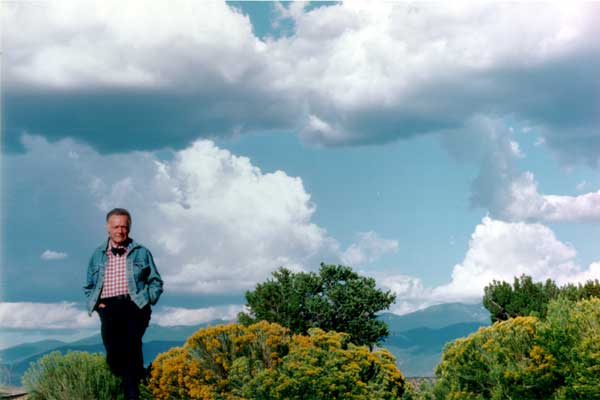
Artist Eric Sloane under a New Mexico Sky- Matthews Gallery Blog
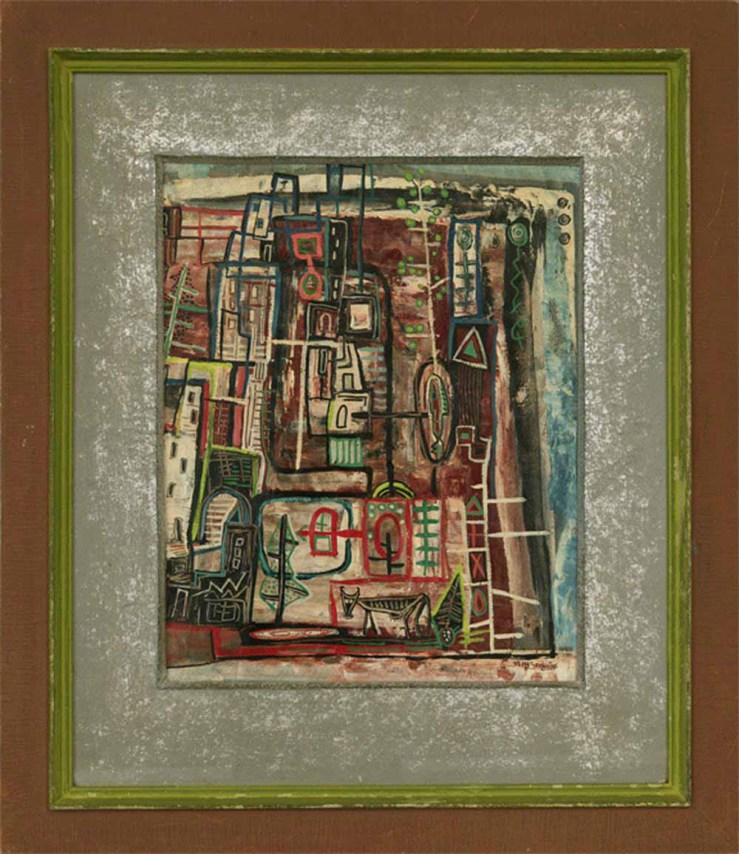
EPILOGUE

Sloane started painting landscapes in the style of the Hudson River School, a mode that fit his fascination with turbulent weather. Beginning in the 1950’s, he took up residence in Taos for part of each year. He built a home in La Tierra, New Mexico in 1975. Sloane captured the light and color of the Land of Enchantment with boundless enthusiasm. Hopi Country features every brilliant hue in a Land of Enchantment sunset.
Over the course of his career, Sloane produced over 15,000 artworks and 38 illustrated books. He died of a heart attack in 1985 on the steps of New York’s Plaza Hotel, on his way to a luncheon in his honor. The event was a celebration for the release of his biography, ‘Eighty: An American Souvenir.’
It’s quite a tale, and it all unwound from a single oil painting on our wall! Learn more about Eric Sloane on our website, and make sure to connect with us on Facebook, Twitter and Flickr for daily gallery news.