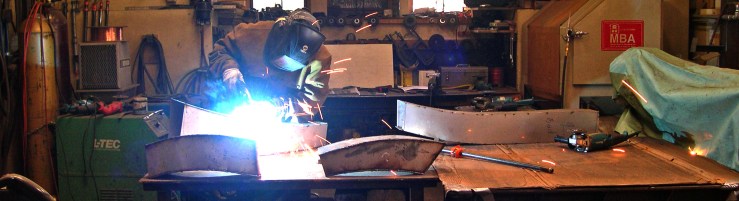
SCULPTOR’S PROCESS: Frank makes a fountain

Frank Morbillo- Sculptor- Matthews Gallery

It all started with a sculpture you may recognize if you’ve been to Matthews Gallery in the past few years. Frank Morbillo‘s ‘Complement’ was a fountain that stood outside our building for a time, enchanting Canyon Road tourists with its elegant lines and soothing sounds:
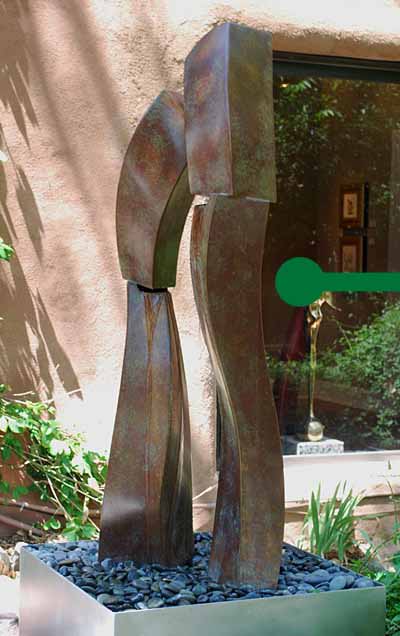
Frank Morbillo- Complement- Matthews Gallery

“It was inspired by the figure, a relationship between people or entities,” says Frank. “The two sides have a connection in terms of how the line of one complements the line of the other.”

Two gallery visitors who were particularly charmed by the sculpture kept it in mind as they built their new home. Nearing the end of construction, they got in touch with Frank and asked him to create a similar piece for their front entryway. Just like the two pillars of the sculpture, Frank says the commission was all about maintaining a carefully balanced dynamic.

“During the course of the commission, I am constantly sending images that are going back and forth between myself and my client,” the artist explains. “Six times throughout this process or more, we were exchanging information and tweaking and getting approval.”

Below you’ll see images from their correspondence, starting with a cardboard model and ending with the stainless steel fountain in its beautiful new space. Follow Frank on his artistic journey…
Frank Morbillo- Artist Process- Matthews Gallery Blog


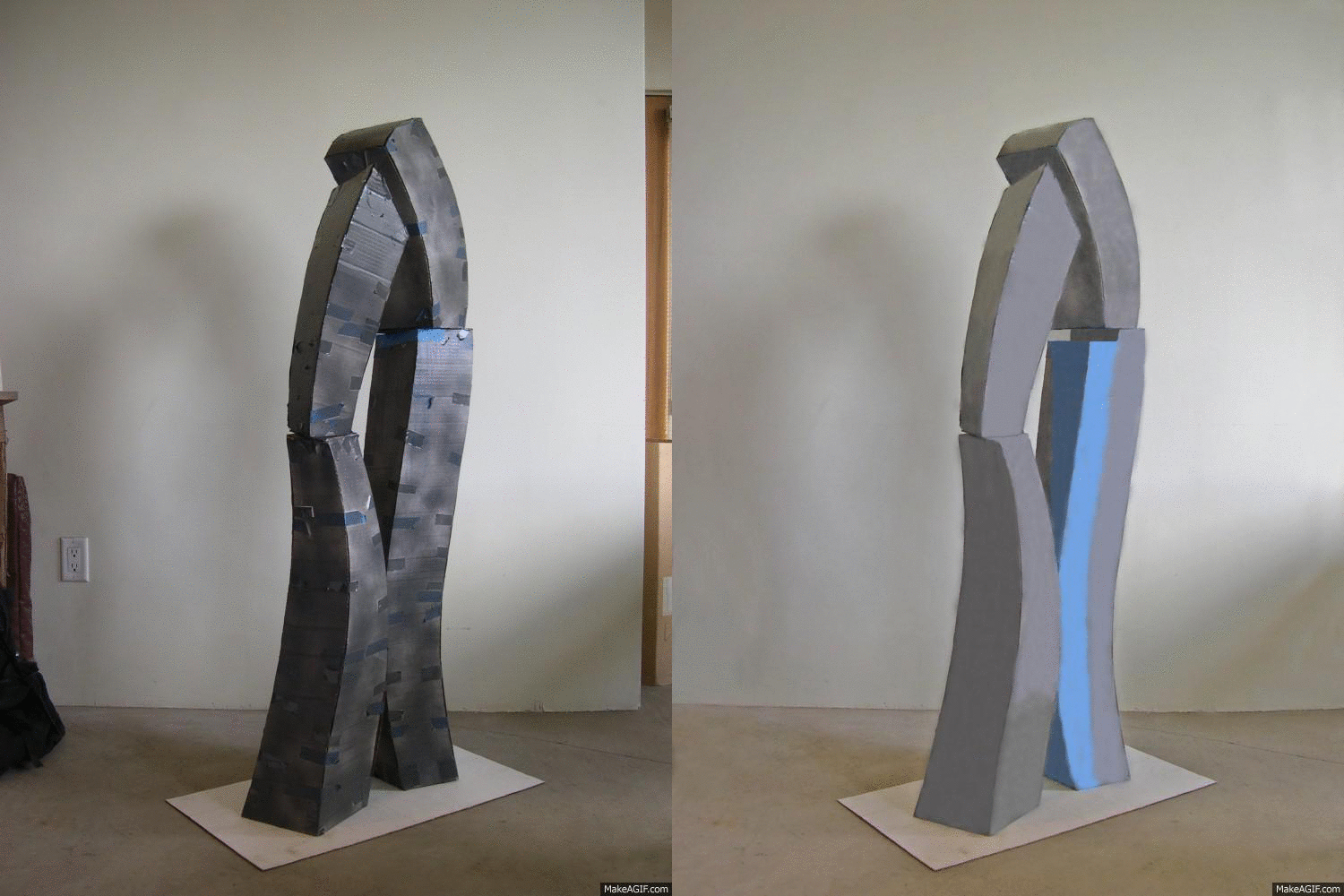
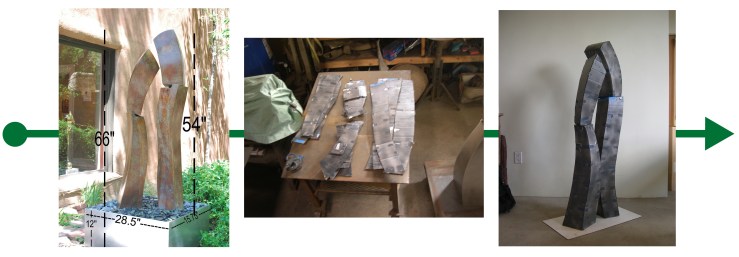
First, Frank marked up an image of the original sculpture (left). ‘Complement’ was larger than his clients wanted, so he adjusted the scale and used the new measurements to resize some cardboard cutouts from the original project (center). The new, smaller cardboard pieces came together to create a full-scale model of the new piece (right).

“When I’m building it in the studio, it’s important to have the model at the level that it’s going to be viewed. In the clients’ home, it’s going to be up a few steps from the ground level. I elevated it to make sure the proportions were working. I want there to be a good interaction of elements.”

“Different materials make the water flow differently. A rough material creates some surface tension, while a slick material will let the water run very fast.”
 Frank Morbillo- Sculpture Process- Matthews Gallery blog
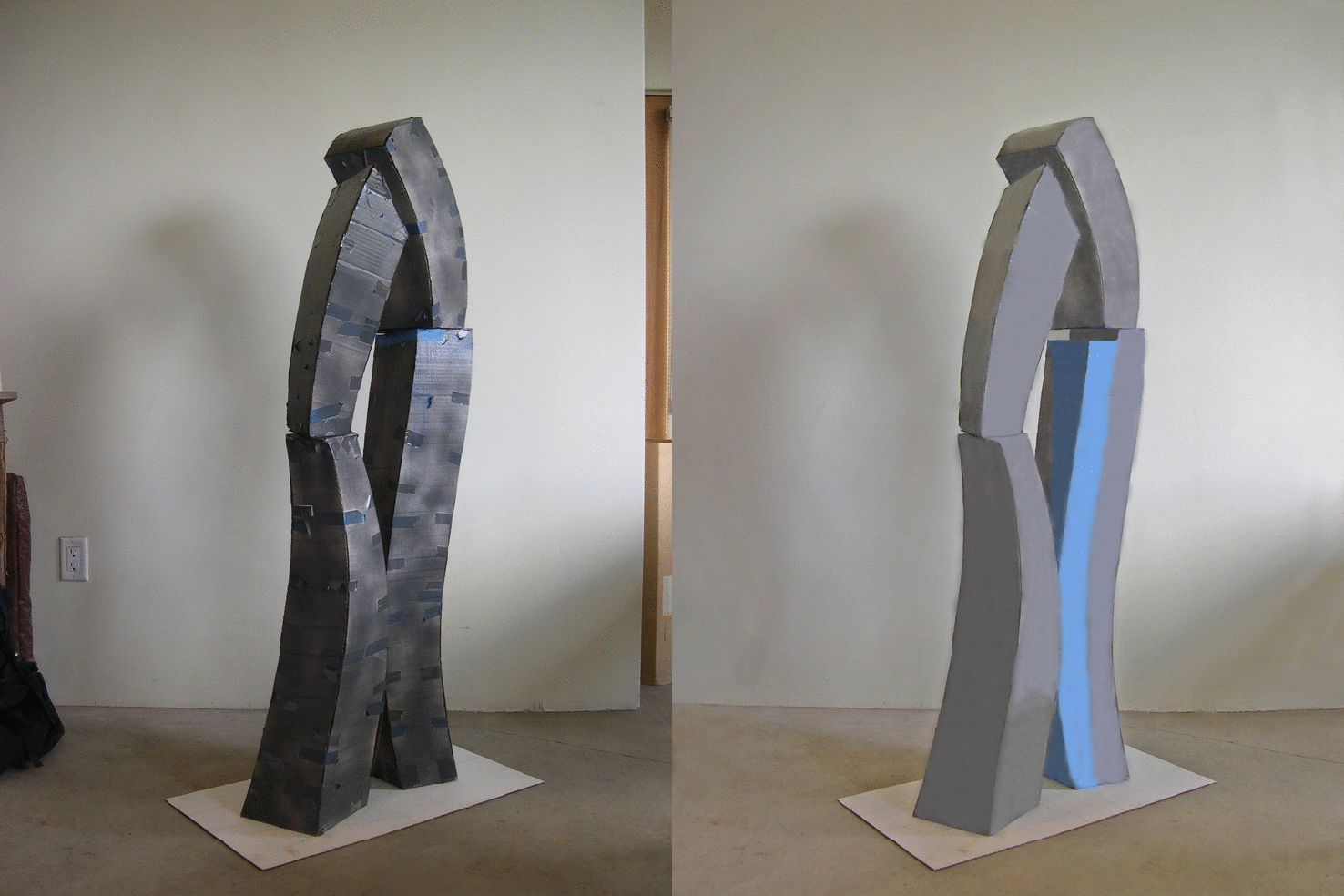
Next, Frank manipulated images of the cardboard model in Photoshop to show the flow of the fountain. The blue line you see on the edited photograph is where the water will fall on one side. The white piece of cardboard under the sculpture represents its base, which presented a unique problem.

“From the very beginning, I had to be very careful about water flow because I had a limited landing pad for the water to fall. The basin was much smaller and narrower than in the original sculpture.”
Frank Morbillo- Artist Process- Matthews Gallery Blog

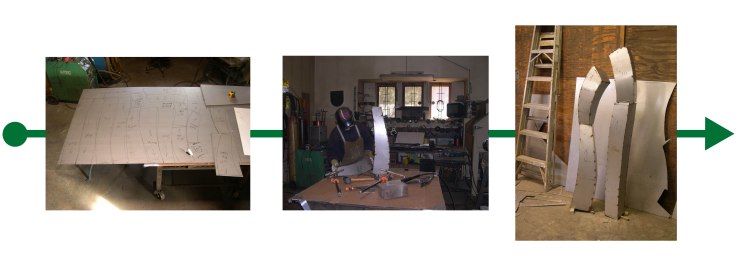
After tweaking the cardboard model, Frank took it apart and traced the pieces on stainless steel (left). He used tack welding to create a rough version of the piece (center and right). Tack welds allowed Frank to alter the form based on his client’s feedback.

 “The dark buttons going up the edge are the tack welds. The tack weld is very strong; a series of four down the side can hold it mostly in place. Once you’re at this step, you want to make sure that everything is right. Afterwards, there are several days worth of work to make the elements seamless.”
Frank Morbillo- Artist Process- Matthews Gallery Blog


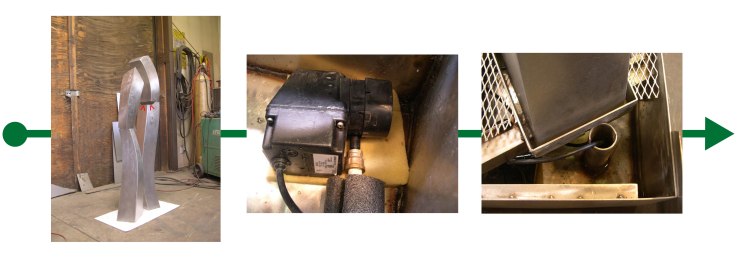
It took about a week to create the shiny sculpture you see on the left. The two red arrows mark openings for the water. Next Frank worked on the base of the sculpture, installing a pump and carefully feeding the electrical cord through a riser tube that holds it above the water (center and right).

“All of those edges have been welded and sanded. This is my first rough pass on putting the finish on the metal.”

“One of the things you look for is the pump’s capacity to go vertical. I size it at a slightly greater capacity than my need is going to be so that I’m sure the water will reach the top.”

“The water enhances and adds to the whole scheme of the project. By placing the pump on the foam pads, it reduces noise vibration from the pump, allowing the viewer to focus on the sound of the fountain.”
Frank Morbillo- Sculpture Process- Matthews Gallery Blog


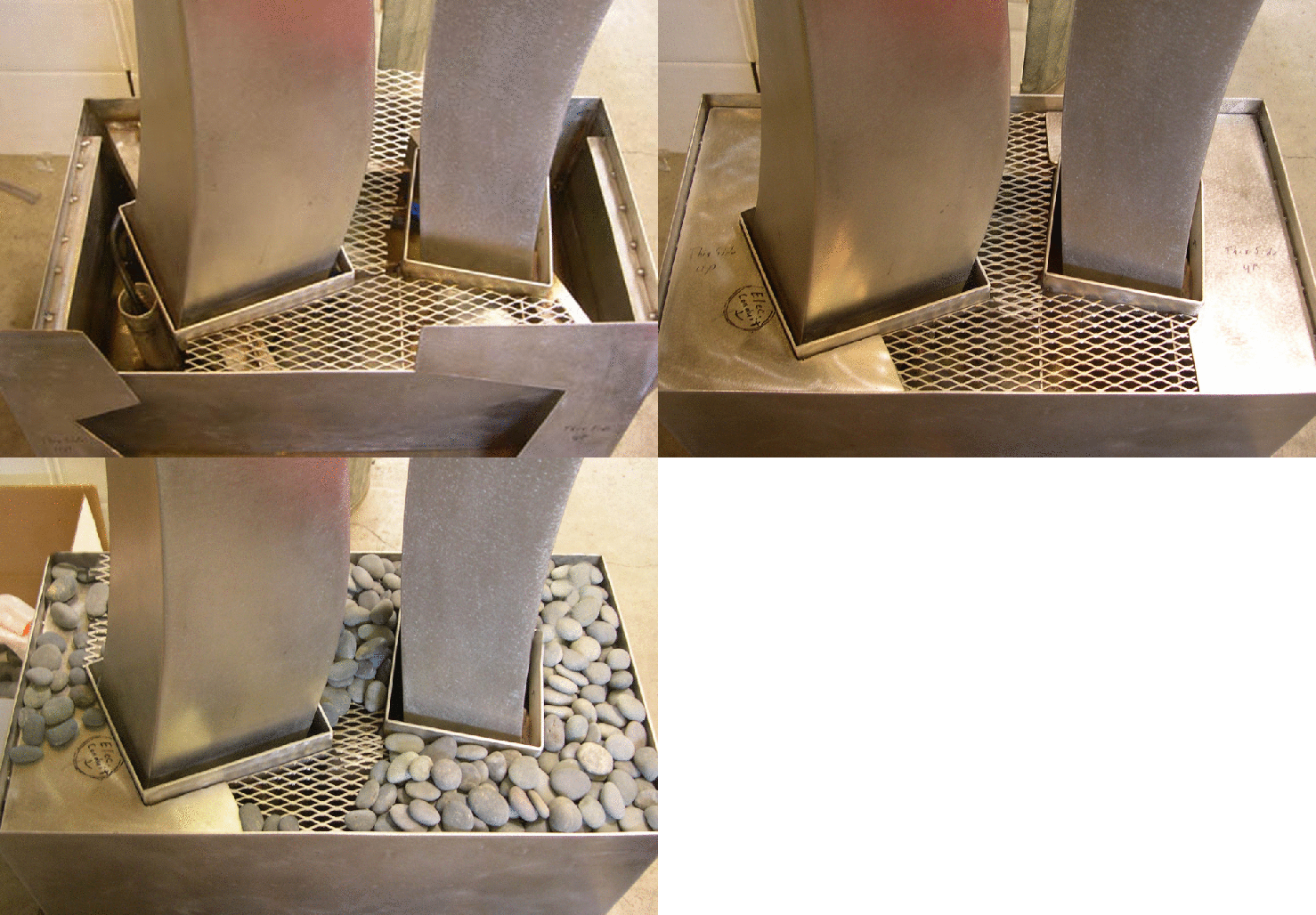
Frank cut mesh and steel plates to cover the base and prevent splashing. The slots you see around the sides of the sculpture are one of Frank’s latest innovations.

“Because of the size of the basin, I have less latitude with what the water does and how it falls. I knew I had to create a slot around the base of both sculptures so as the water falls it goes into this slot. It worked really well, and I learned something from it. It’s changed how I deal with water capture in a small basin.”

“In every sculpture project, there’s always the opportunity to say, ‘What can I do different in the future?’”
Frank Morbillo- Artist Process- Matthews Gallery Blog

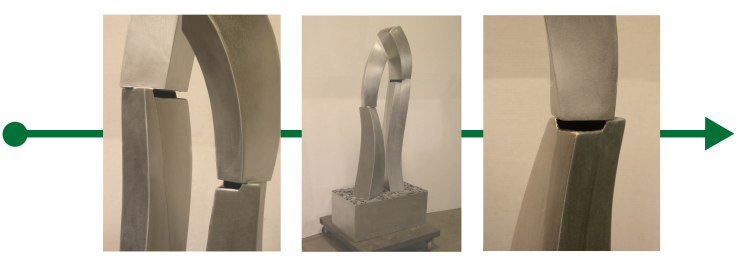
Careful tests of the water flow followed. Frank got the final approval from the client and shipped it.

“There’s a lot of structure in there that you’re not seeing that supports all of the different elements. When all of this is said and done, you don’t see any of that but it’s all happening because of it.”

“I took a good long look at it and liked what I was seeing in terms of how I thought it would look on site.”

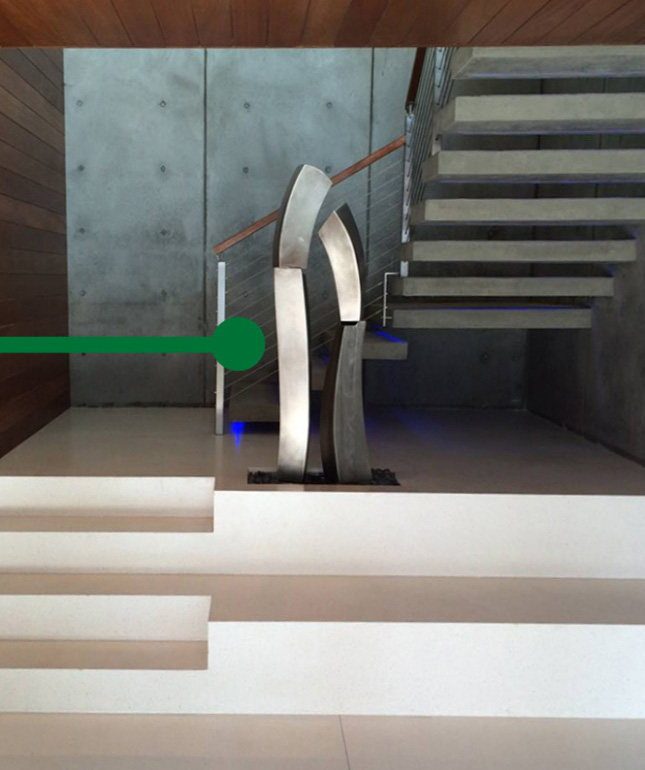
And PRESTO!
Frank-Morbillo-SculptureProcessFinal

Frank’s clients sent back images of the piece in its new home, and the sculptor couldn’t be happier.

 “The experience of walking up the steps and around the sculpture must be pretty awesome.”

“It’s interesting, the sculpture is the only thing with curves in the space. Everything else is really hard and geometric. That’s cool that it’s really different than anything else line-wise in the space.”

“When you can have fun going through the process of doing it, for me that’s where my thoughts go when I’m working. There’s a lot of opportunities to have fun.”

“When I saw the contemporary design of the house, I said, ‘Great project.’ I’m really happy that this sculpture became part of it.”

See more of Frank Morbillo’s artwork on the Matthews Gallery website, and connect with us on Twitter, Facebook and Instagram for daily gallery news.



THE STORYTELLER: From petroglyphs to pinewood

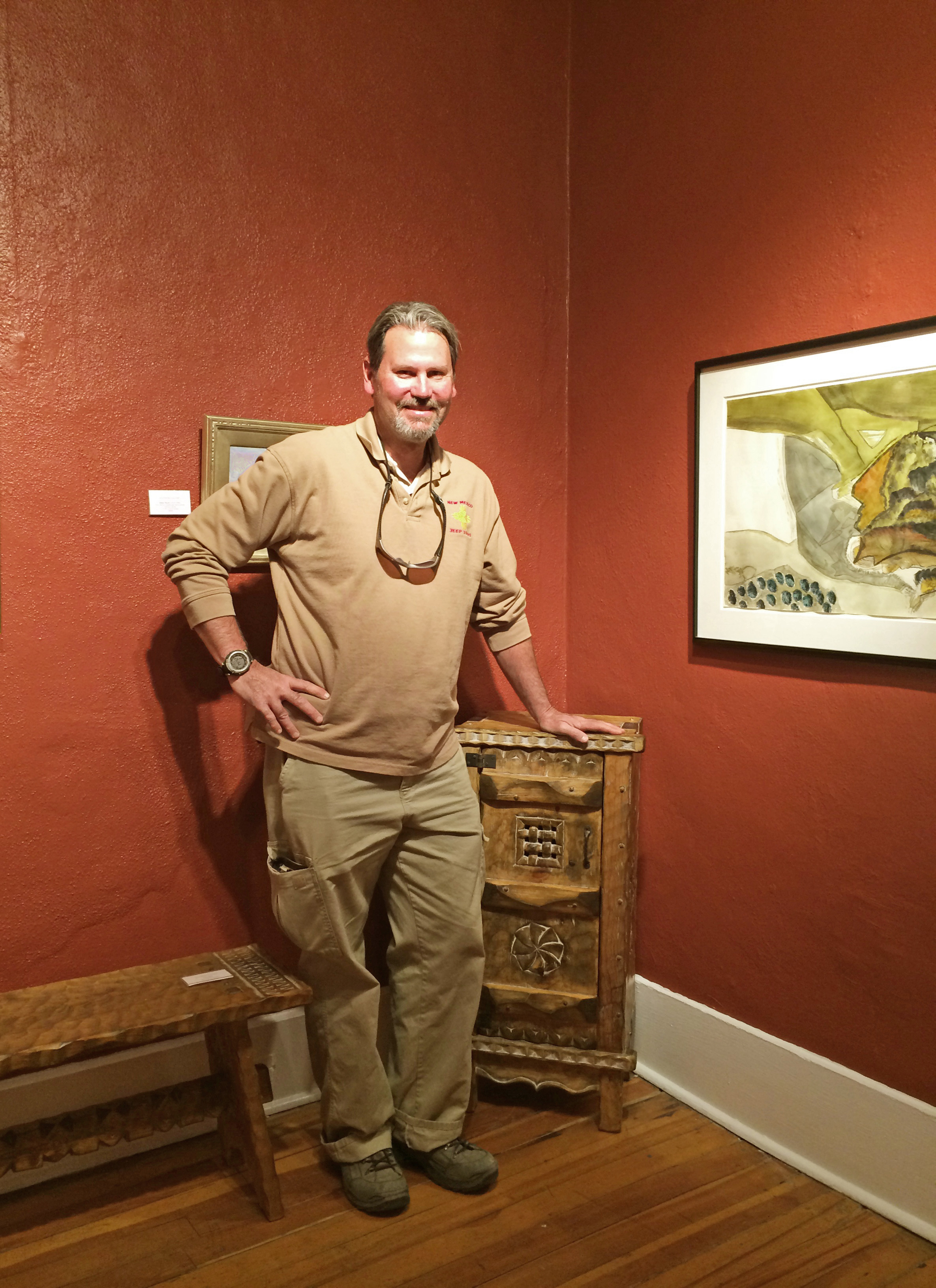
Roch Hart- Fine Furniture- Matthews Gallery

 Roch Hart with his pie safe “The Storytellers”

“Furniture is art,” says Roch Hart. It’s a credo the Albuquerque fine furniture maker repeats every time he brings a new creation to the gallery. In Hart’s case, it’s true: each hand-carved piece of sugar pine is as unique as a painting on our wall. This is nothing you’d find at IKEA.

Check out our blog post chronicling Roch’s journey from Spanish Colonial furniture enthusiast to bona fide sculptor, and then delight in the details of his latest creation. This pie safe, dubbed “The Storytellers“, holds quite a few tales…

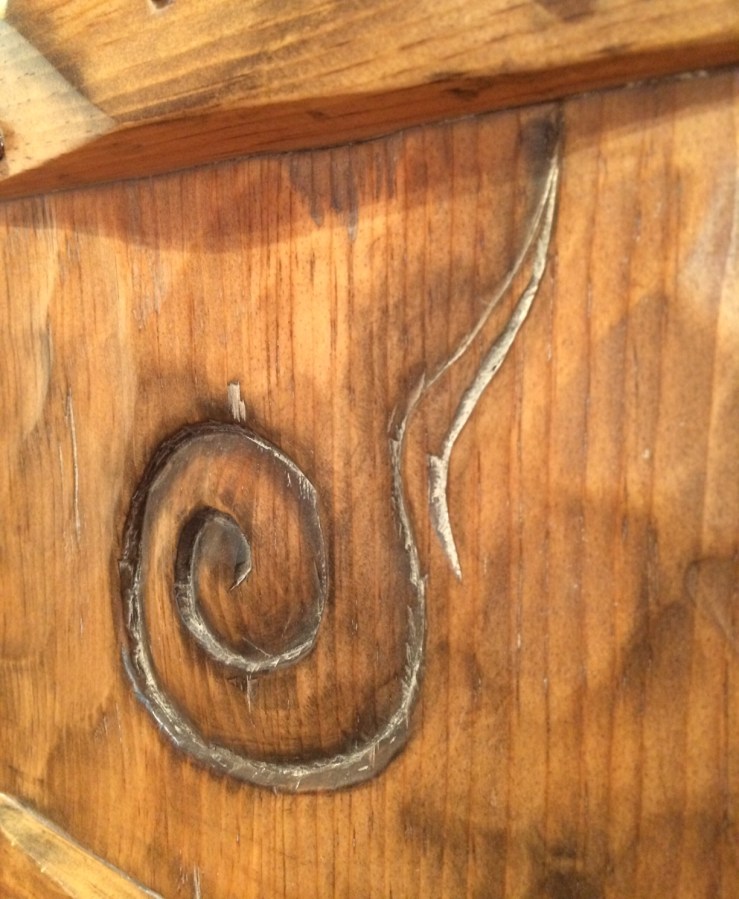
SPIRAL

Roch Hart- Fine Furniture Detail- Matthews Gallery

Hart often draws inspiration from New Mexico petroglyphs.

“A spiral can mean a lot of different things depending on its context, but here it represents eternity or travel,” Hart says. In particular, this symbol refers to a journey from the depths of the earth.

FACES

Roch Hart- Fine Furniture Detail- Matthews Gallery

These symbols on the sides of the pie safe tend to appear together in glyphs. The one on the left with its mouth shut tight is the “listener”, and the one on the right is the “storyteller”. It’s the yin-yang of cultures that depend on the voice to pass down vital knowledge.

The designs surrounding the faces also have an important meaning. Just like the Zia on the New Mexico state flag, they represent the sacred, pervasive number four: four compass directions, four seasons, four stages of a person’s life.

PATTERNS

Roch Hart- Fine Furniture Detail- Matthews Gallery

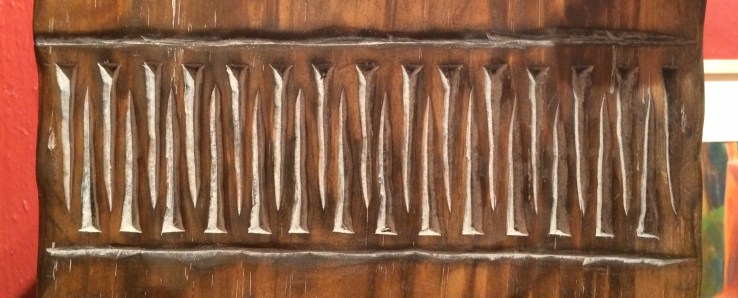
“This is mimicking the Navajo rugs,” explains Hart. “I thought it would be a great border for the faces.”

Hart uses white ash to make his patterns bolder, rubbing it into the cracks by hand atop a layer of shellac. The finishing touch is a light coat of wax.

JOINTS

Roch Hart- Fine Furniture Detail- Matthews Gallery

Near the beginning of his journey to furniture mastery, Hart visited the Nicolai Fechin House in Taos. Fechin was a Russian painter and carpenter who moved to New Mexico in 1923 and purchased a small adobe home that he would greatly expand over the years. The home is now a museum, and when Hart visited to study the furniture he had a chance encounter with Fechin’s daughter Eya. She taught him about the different joints that her father used, including the sliding dovetail joint pictured here.

“That changed my life,” Hart says.  “I looked at [Fechin’s work] and said, ‘I can do anything. Nobody told him what to do.'”

WINDOW

Roch Hart- Fine Furniture Detail- Matthews Gallery

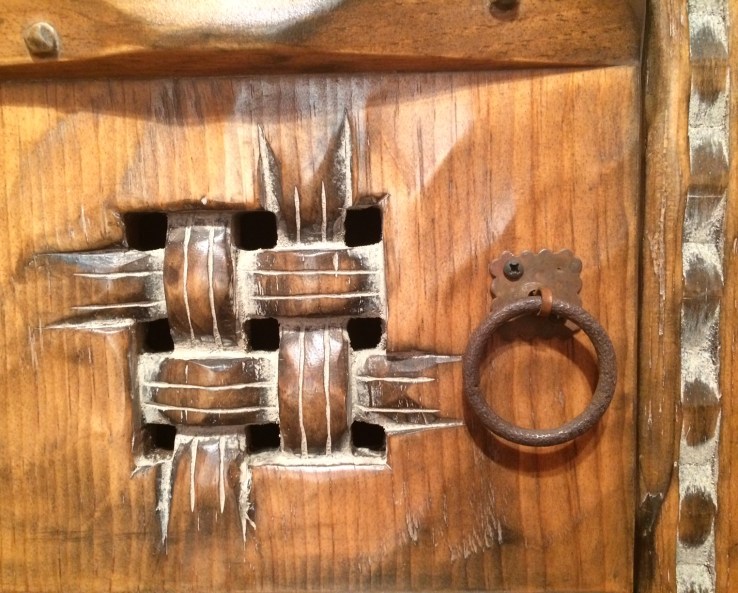
The grid Hart uses as a window for the pie safe doesn’t have an age-old legend behind it. It’s one of Hart’s signature designs that appears in many different manifestations in his work. Myriad influences come together in Hart’s exquisite furniture, but each piece is imbued with his unique sensibility.

See more of Roch’s creations on his artist page, and connect with us on Facebook, Twitter and Instagram for daily gallery updates. Also, check out our upcoming exhibition FOUR CENTURIES: European Art from 1600 to 1950, opening June 13!

FAMILIAR STRANGERS: Almost Lost

Familiar Strangers Found Photography Show- Matthews Gallery Blog

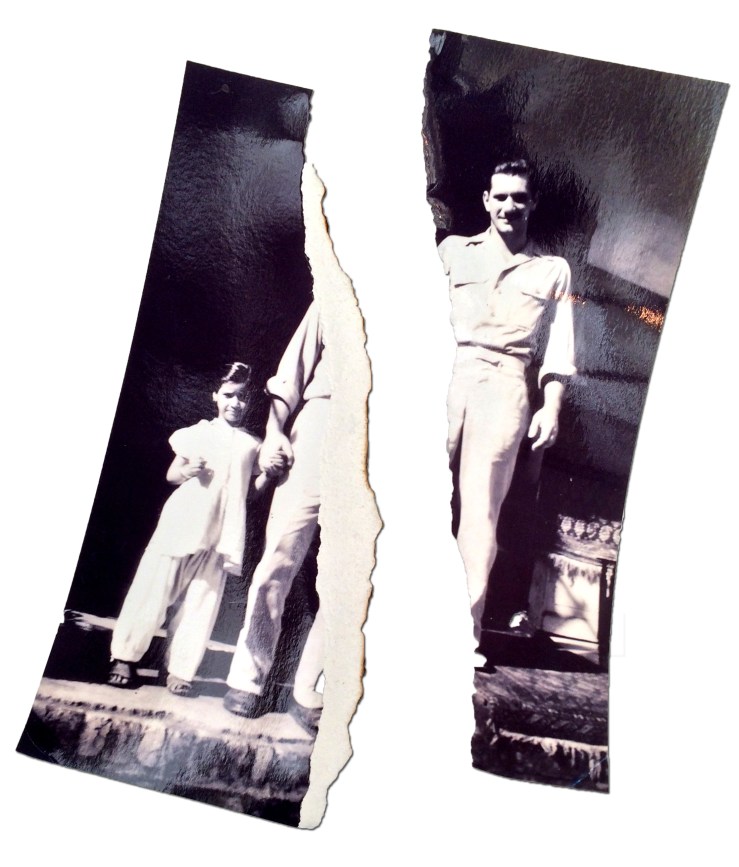
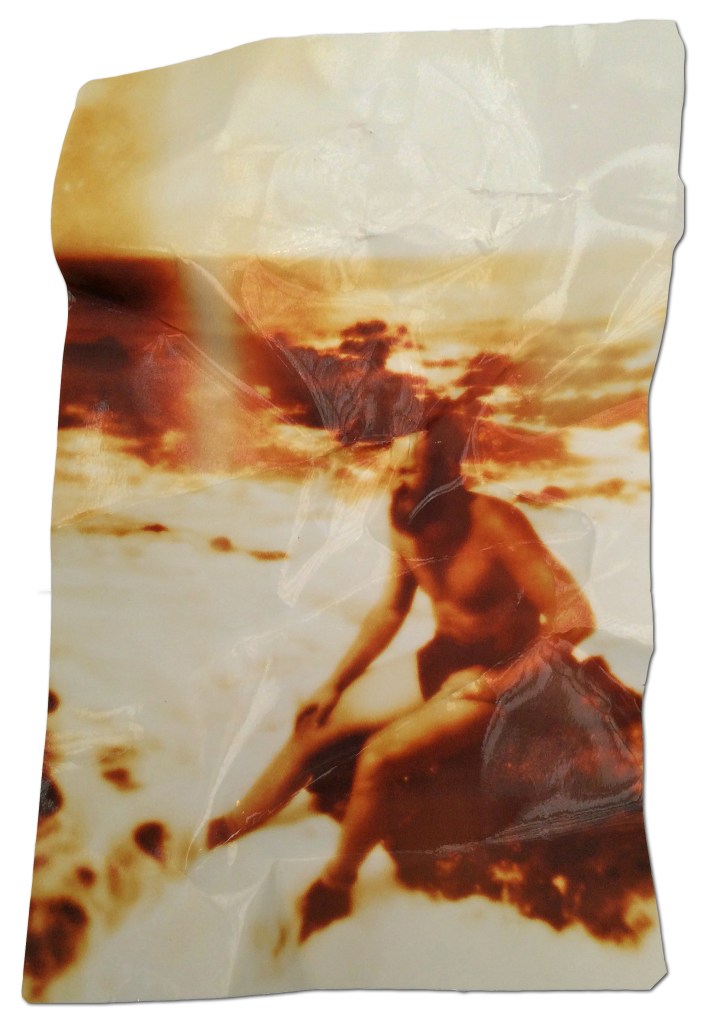
Editor’s Note: No original photographs were harmed in the making of this blog

The messages were all the same. “Why do found photographs hold allure for you?” we wrote to members of Flickr’s robust vernacular photography community. “What is it about anonymous photographers and their subjects that makes collecting these artworks special or important?” 

As we explained in our last blog post, we’ve been wearing many different hats as we prepare for the May 16 opening of FAMILIAR STRANGERS: Vernacular Photography. Judging by the diverse answers we received from this query, it seems longtime found photography fans follow a similar process.

“At the time they were taken, they meant something to the photographer,” writes Gary Moyer, who runs a Flickr Group called Found Photos. “It’s a shame to think they can’t live on in this digital age.” But although part of Moyer’s mission is to bring this ephemera to the virtual realm, he’s also charmed by the objects themselves. “The photos are real, something to hold in your hand,” he concludes. 

For John Van Noate, administrator of several vernacular photography groups, it’s more about the immediacy of the image. “They provide a slice of life unfiltered, unmediated,” he writes. “Life in the raw, so to speak.”

Dave Bass‘ interest in vernacular photography started with a childhood fascination for taking snapshots. “I still recall the anxiety felt when retrieving a processed roll from the drugstore and opening the package to discover my treasures,” he recalls. Hunting down “orphan” photos seemed like a natural extension of his passion, and over years of collecting he’s learned a lot about human nature from the pictures he’s found.

I truly believe that such photographs are authentic cultural artifacts that portray who we as humans were, who we have become, and where we will likely go,” Bass writes. He uses Flickr group Vernacular Photo to connect with like-minded folks across the world. 

All of these intrepid collectors’ answers did have one thing in common: a sense of loss, and a desire to subvert it. As Moyer puts it, “Each [photograph] represents a moment that is gone forever.” In a way, these collections preserve memories that would otherwise have vanished long ago. 

On that hopeful note, we leave you with an excerpt from Paul Jackson‘s correspondence. The UK resident runs the Flickr group Found Photographs, and has a lot to say about vernacular photos and the power of the online community to uncover their secrets. It’s enough to make you believe that nothing is lost forever. Attend our FAMILIAR STRANGERS exhibition, opening May 16 from 5-7 pm, to untangle more mysteries!

Familiar Strangers Found Photography Show- Matthews Gallery Blog

From Paul Jackson:

I went to art school here in the UK in the 1970s and my interest in vernacular photographs stems from then. In those days you could often buy old postcards and snapshots in charity shops for virtually nothing. Often just arranged in old shoe boxes. You can rarely do that now as these things have become very collectable.

I think it is a shame when dealers break up old photograph albums as all the clues that would help place these images in context get wiped away. You may be interested in some subsidiary groups we run on Flickr. One is called “What’s That Picture” where we invite people to post pre-1945 images that they want help identifying. Sometimes this is a tall order but the Flickr community acts a bit like a hive mind and we have had some astonishing successes. A lot of these can be found in another group “The Astonishing Power of Flickr“. Here many images that have been successfully identified have been posted and some other extraordinary events such as people recognising themselves or other serendipitous events have occurred. 

You ask what the allure is for me. Well, there is something awfully poignant about old snap shots/vernacular photographs. The lives of strangers’ births deaths marriages, love, hearth and home..all life is there and with the knowledge that all that life has probably by now slipped away. These things end up in sales almost always through a death and the death of someone who either has no remaining family, or a family that cannot or will not preserve these fragile family histories. It is a very sobering thought.

I am at a period in my life when I am beginning to realise that even my own family photographs and the ones of my parents and grandparents are going to be vulnerable to be “lost” when I die and it does make you dwell on the ephemeral nature of life, the impermanence of the structures we build around ourselves and how easily it can fade away.

One of my favourite quotes is the famous one in Blade Runner when Roy Batty the replicant is dying:

“I’ve… seen things you people wouldn’t believe… Attack ships on fire off the shoulder of Orion. I watched c-beams glitter in the dark near the Tannhäuser Gate. All those. moments will be lost in time, like tears in rain. Time… to die…”

Looking at so many old and found photographs I often think that “I’ve seen things you people wouldn’t believe” the person behind the camera has seen these things, lived that life..you know, we can sometimes almost taste it.


Familiar Strangers Found Photography Show- Matthews Gallery Show

FAMILIAR STRANGERS: Be a Voyeur, Detective, Surrealist, Humanist!

Found Photograph- Familiar Strangers Show- Matthews Gallery

  Untitled, Unknown

“A photograph is usually looked at—seldom looked into,” said Ansel Adams. When it comes to the pictures in our upcoming show, there’s no other option but to dig a little deeper.

FAMILIAR STRANGERS: Vernacular Photography, opening Friday, May 16, is not your typical Matthews Gallery show. The artists who created our collection of found photographs never got the recognition that Picasso, Toulouse-Lautrec or Renoir did, but there’s no denying their aesthetic sensibilities.

That’s what has kept us digging through estate sales, thrift shops, antique stores and attics for years. We’ve amassed quite the collection of vernacular photographs, also known as “found” or “orphan” photos, and we’re not alone in our scavenging habits. Our friends on social media understand the great allure of the hunt.

Looking at so many old and found photographs I often think that, ‘I’ve seen things you people wouldn’t believe,'” writes Paul Jackson, who maintains the Flickr group Found Photographs.  “The person behind the camera has seen these things, lived that life..you know, we can sometimes almost taste it.” We asked several other photo finders what they love about the pursuit, and they all had equally passionate answers.

Vernacular photography presents unique challenges to the viewer, asking us to shift between different roles to grasp what we’re seeing. Our first impulse is often voyeuristic. We can’t resist a peek at someone’s intimate moment, and we swiftly draw conclusions about what’s going on. In the image above a baton girl gawks open-mouthed at a band boy, but he looks resolutely away. Is this a tale of unrequited love?

Society often slaps us on the wrist for our voyeuristic tendencies. In his brilliant essay on found photography Dr. Barry Mauer of the University of Central Florida says this instinct is something we should indulge.

“At first sight, most of these pictures are hilarious or tragic or both,” writes Mauer. “Voyeurism allows me to experience these reactions from a comfortable distance.” However, Mauer cautions against stopping there. Voyeurism often comes hand-in-hand with judgment and categorization. Stereotyping these mysterious individuals cuts us off from a rich world of visual mysteries. Time to pull out the magnifying glass.

Found Photograph- Familiar Strangers Show- Matthews Gallery


Untitled, Unknown

If we act as detectives, this simple portrait holds a lot of hints about the bicyclist and her photographer. Did you notice the bandages on her knee and arm? If those are recent wounds, perhaps she’s just learning how to ride. It’s difficult to tie a forearm bandage on your own. Maybe the person behind the camera is her teacher and medic? On the other hand, the bags on the handlebars hint at a different adventure. One of them looks like a canteen. Could the other hold snacks for a picnic?

Teasing out these details is invigorating. To take it one step further, note the composition of the photograph. The front wheel is cut off and part of the path is visible behind the girl. This perspective, when combined with the subject’s bent posture and excited face, lends the photo a sense of forward movement. Our mysterious photographer has imbued a picture of a static bike with surprising dynamism. Was that his or her intention?

Found Photograph- Familiar Strangers Show- Matthews Gallery

Untitled, Unknown

Of course, in the end we’ll probably never know if our inferences are correct. Who better to help us surmount our fear of the unknown than the surrealists? André Breton and his friends were inspired rather than daunted by impenetrable mysteries. They sought out fragments of culture, watching films from between their fingers to try to catch discreet details and writing stories based on dreams they had about real experiences.

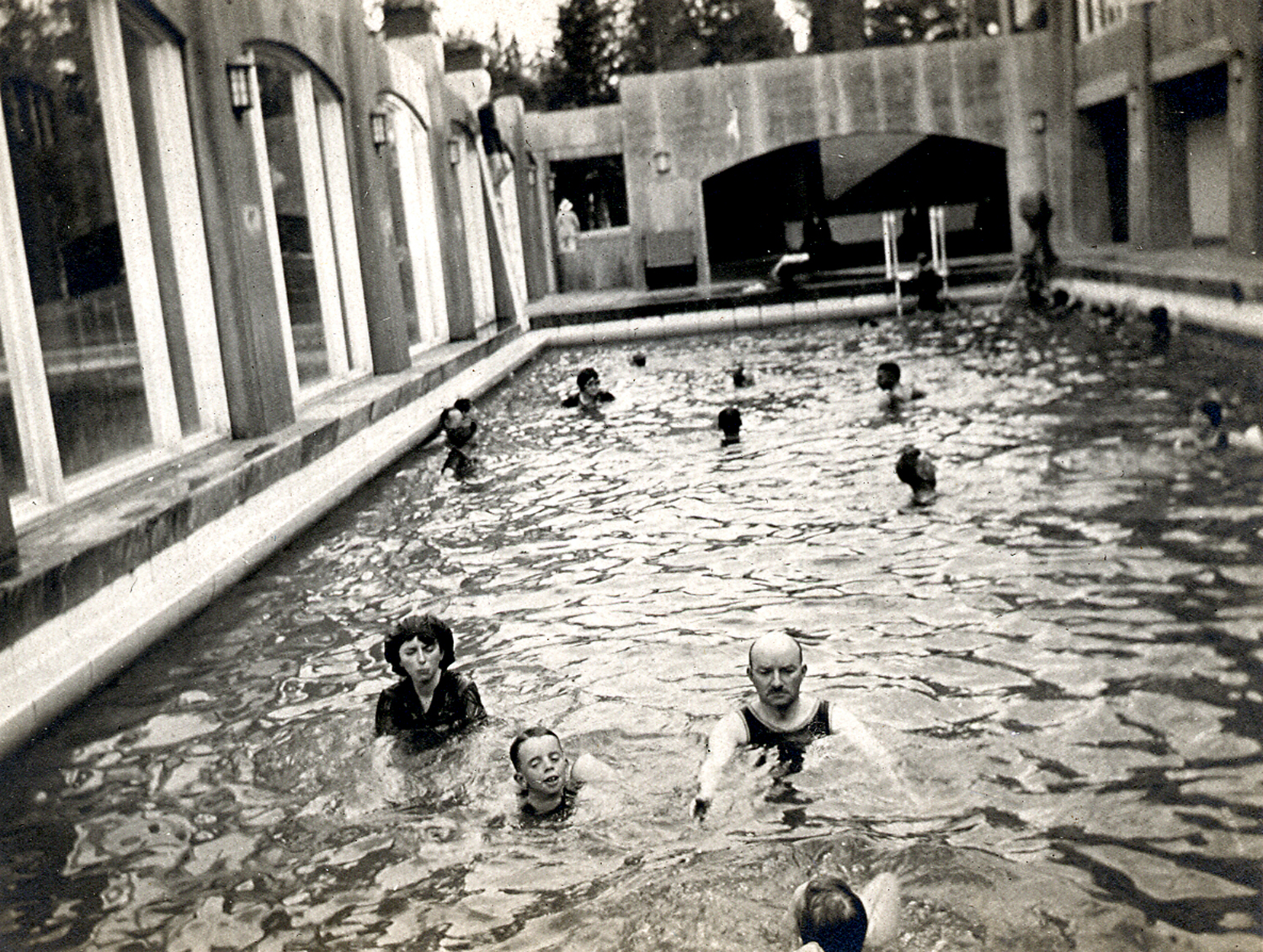
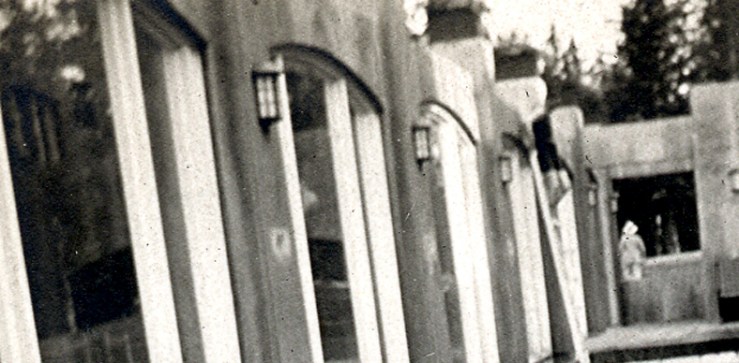
Both techniques allowed them to focus on details they otherwise would’ve ignored. In the photo above, our interest in the group in the foreground distracts from the odd figure standing in the far background. Cropping the photo brings up a whole array of new questions.

Found Photograph Detail- Familiar Strangers Show- Matthews Gallery

Detail of previous photo

In a broader context the entire photo is a fragment. The man in the foreground’s stern expression stands alone, isolated from what happened before or after. Perhaps he cracked a smile a moment later, but this short glimpse of his day at the pool has a foreboding air to it.

“The surrealists used fragmentation as a means to knowledge, discovering significance in the fragment that had been concealed in the contextualized whole,” Mauer writes. It’s not hard to trace the progression of this thinking to Marcel Duchamp’s use of found objects, or to the Dada artists’ repurposing of vernacular photos in collages (more on all of that in an upcoming blog post).

In the end analyzing and relating to the “characters” in these photographs helps develop our skills in another field: humanism. It’s amazing how connected we can feel to a person we’ll never meet, and how powerful our feelings of empathy and sympathy can be when we exercise them. Look long enough, and you’ll start to imagine that these familiar strangers are looking right back.

Step into the shoes of a voyeur, detective, surrealist and humanist at FAMILIAR STRANGERS: Vernacular Photography, opening Friday, May 16. Also, make sure to check out our fascinating interview with four found photography collectors and connect with us on Facebook, Twitter and Tumblr for more gallery news!

NEW RELEASE: Fremont Ellis of Los Cinco Pintores

Fremont Ellis- La Plata Mountains- Matthews Gallery Blog


In 1921, Fremont F. Ellis and his friends Jozef Bakos, Walter Mruk, Willard Nash and Will Shuster founded an avant garde art society that would change Santa Fe forever. The five men were in their early 20s, and most of them had recently migrated there from the East Coast. They chose a name inspired by their new life in the Southwest: Los Cinco Pintores (The Five Painters).

In December of that year, Los Cinco Pintores mounted their first group exhibition at Santa Fe’s Museum of Fine Arts. Their work was diverse in subject matter, but their rallying point was modernism and the art of early Taos painters Robert Henri and John Sloan of the Ashcan School.

“These men believe in color and are not afraid to use it,” wrote a critic who attended the inaugural show. “Upon entering the galleries, visitors are greeted with a great shout of color that’s almost stimulating.”

Fremont Ellis - Watercolors - Matthews Gallery Blog

Over the next few years, Los Cinco Pintores worked together to build a row of casitas along Camino del Monte Sol near Canyon Road. This earned them another nickname, “The Five Nuts in the Adobe Huts”. Meanwhile, word of their exploits had reached other artists back home.

By 1923 another group called the New Mexico Painters was exhibiting paintings of sweeping Southwestern landscapes across the Midwest and the East Coast. Artists like Randall Davey, Andrew Dasburg and Theodore Van Soelen settled in the area, and the Santa Fe Art Colony was born. The City Different has fostered a vibrant art community ever since.

Fremont Ellis- Watercolor Diptychs- Matthews Gallery Blog

These newly released works on paper are by Fremont Ellis (1897-1985), who was the last surviving member of Los Cinco Pintores. Ellis grew up in Montana and was inspired to become an artist at 14 when he saw Albert Bierstadt’s paintings on a trip to New York City. He worked as a photographer in California before settling in Santa Fe, and used his photographs of landscapes to inspire his painted compositions. This body of work holds the vigor and immediacy of the artist’s many outdoor adventures.

Learn more about Fremont Ellis on our website, and connect with us on Facebook, Twitter and Tumblr for daily gallery news. Also, don’t forget to mark your calendar for our exhibition NEW MEXICO MODERNS: The Lumpkins Files, opening next week!

NOT A POP ARTIST: Five Sides of Jim Dine

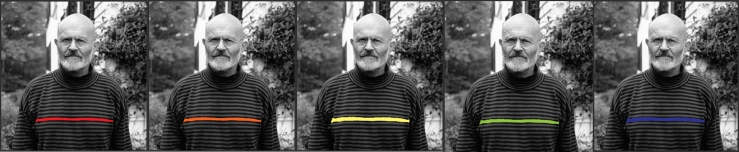
Jim Dine Rainbow- Matthews Gallery Blog


78-year-old artist Jim Dine has earned his place in any good post-war art history textbook. Picking exactly when to spotlight the artist must be a difficult task for scholars. The painter, sculptor, illustrator, printmaker, stage designer and performance artist has a way of diverging from the status quo and ending up at the forefront of new art movements. Just when things get established, he’s off on his own again.

A mixed media drawing  by Dine recently found its way to Matthews Gallery, so we took the opportunity to explore 5 manifestations of the chameleonic artist:

Fluxus Performer

Dine grew up in Cincinatti and got his BFA from Ohio University. When he arrived in New York in 1958, the art world was fixated on a type of work you couldn’t sell in a gallery. Some critics called them “wacky nightmares“, others described them as “a three-ringed circus with undertones of group therapy“, but Dine and his friends Claes Oldenberg, Allan Kaprow and John Cage dubbed their performance art pieces “Happenings”.

Happenings were designed to be as ephemeral and unpredictable as day-to-day life—but a little weirder. Battles between ballerinas and roller-skaters, reenactments of the Lincoln assassination, bikini stripteases and blue ice cream feasts were all passionately performed, often in rapid sequence. Whether you call it though-provoking or senseless, the Fluxus movement was one-of-a-kind. For Dine, all the world was a stage until…

Pop Progenitor

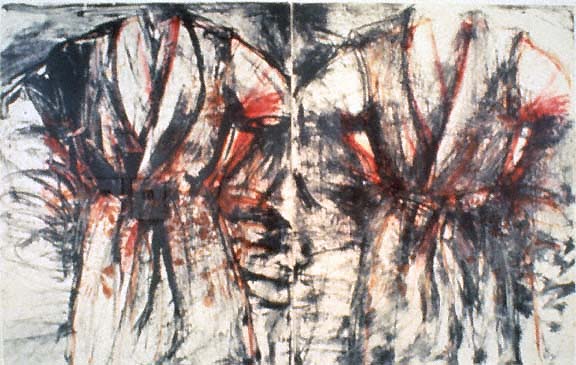
Jim Dine- Robe Diptych- Matthews Gallery Blog


Jim Dine, Red and Black Diptych Robe, 1980

In 1962, Dine’s paintings appeared alongside work by Andy Warhol, Roy Lichtenstein, Ed Ruscha and others in the Pasadena Art Museum’s show New Painting of Common Objects. Curated by Walter Hopps of Ferus Gallery (site of Warhol’s first solo show), the exhibition was a seminal moment for a new movement: Pop Art.

Dine’s inclusion in the exhibition made perfect sense at the time. He was experimenting with serial imagery of familiar objects and symbols like bathrobes, hearts and tools. However, the artist’s expressive style and often tender subject matter clashed with the postmodern angst of other Pop progenitors. Soon enough, he was plotting his escape…

Modernist

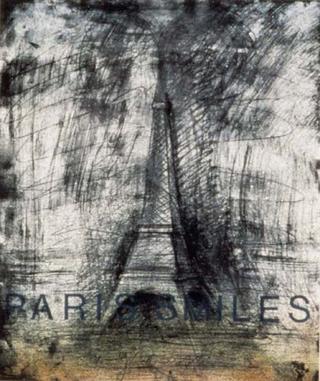
Jim Dine- Paris- Matthews Gallery Blog

Jim Dine, Paris Smiles in Darkness, 1976

Dine moved to London in 1967, a strange decision considering his controversial history with the United Kingdom. A year before his solo exhibition at London’s Fraser Gallery was raided by police and the owner was fined for showing “indecent” images.

The artist defiantly continued to his relationship with Fraser and used his time in Europe to study the work of Van Gogh, Picasso, Matisse and other modernists. In 1971 he returned to the United States, ready to chart a new course…

Neo-Expressionist

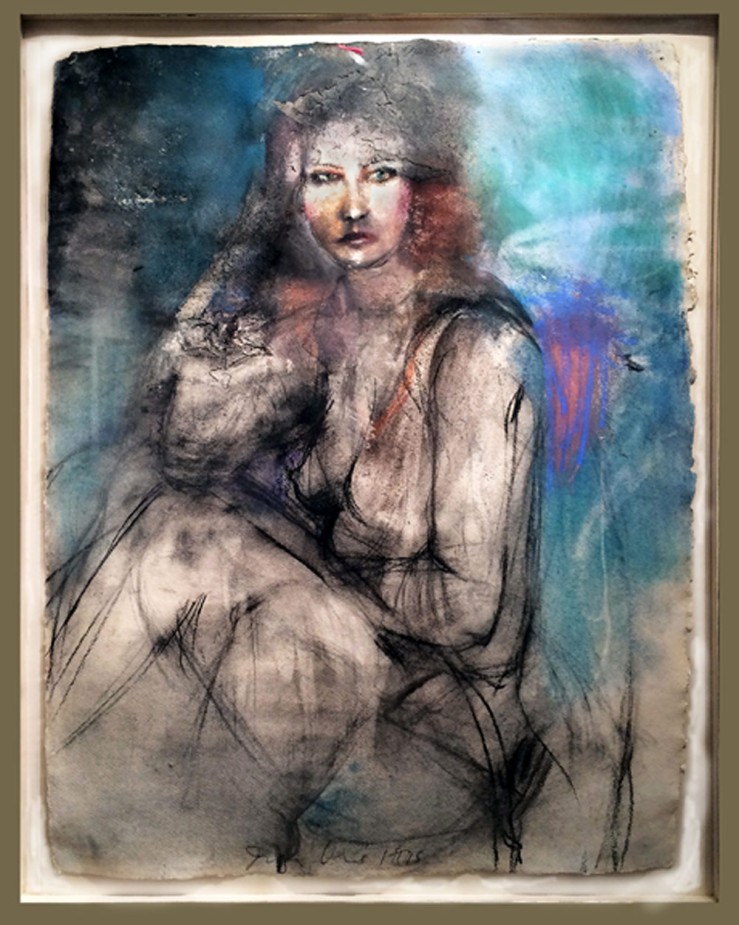
Jim Dine- A Lady Sitting Drawing- Matthews Gallery Blog

 Jim Dine, A Lady Sitting, Mixed Media, 1975

Minimalism was en vogue when Dine arrived in New York, but the artist wasn’t interested. Instead he focused on figure drawing, refining his skills in various mediums and earning a reputation as a master draftsman. The mixed media drawing in our collection is from this period. A stunningly realistic face painted in oil is framed by confident charcoal marks and a glowing crayon color field.

In the years to come Dine’s figurative work would mark him as a founder of Neo-Expressionism, but critics could never assign the artist a particular label for long…

Modern Individualist

2008_JimDine_23220011

Installation shot, Jim Dine: Poet Singing (The Flowering Sheets)

 Perhaps Dine’s artistic identity is best summed up by MoMA:

This commitment to a personally invested, image-dictated content and a continuing interest in the technical and expressive potential of every medium has characterized Dine’s work as a whole. Thus, Dine has often been out-of-step with the major movements of the post-World War II period and must be considered a modern individualist.

It’s a bit of a non-title, but Dine defies labels at every turn. The almost-octogenarian is still working his way into new chapters of art history.

Check out our website for more on Jim Dine, and connect with us on Facebook, Twitter and Flickr for to-the-minute gallery news.
BURST OF BRILLIANCE: Adolph Gottlieb’s Southwestern Epiphany

“It was like being at sea,” said Adolph Gottlieb. The artist had just spent a year in the Desert Southwest- from 1937 to 1938- and returned to his hometown of New York City with a radically altered style. “There’s… a tremendous clarity of light and at night the clouds seem very close,” he continued. This was a very different type of “sea” than the one that carried Gottlieb on his inaugural artistic journey. When he was 17 he dropped out of high school and caught a merchant ship to Europe. He spent two years there, including six months in Paris where he audited art classes and visited the Louvre every day. Back in New York, he studied at The Art Students League and befriended Barnett Newman, Mark Rothko and Milton Avery. Together they founded the abstract expressionism movement, working to develop color field painting and other innovations. They remained close until Gottlieb decided to strike out on his own to Tucson, Arizona. It was an endeavor that would markedly separate him from his contemporaries, even after his return to the East. Gottlieb’s New York friends called the style he had developed in Arizona simplistic, but the artist refused to look back. He distanced himself from his colleagues and focused on developing a Surrealist style. Experiments with automatism and surrealist biomorphism helped him create an abstract symbol system for his gridded Pictographs series. Finally, in the 1950’s, he started work on two series that would become his most well-known work. Both series are represented in our collection, and their very existence seems linked to the bare, elegant vistas of the Desert Southwest.

IMAGINARY LANDSCAPES

Around 1950-51… I was finally getting away from the pictographs and looking for something… So it was necessary to find other forms, a different changed concept. So finally after a certain period of transition I hit on dividing the canvas into two parts, which then became like an imaginary landscape… What I was really trying to do when I got away from the pictographs was to make this notion of the kind of polarity clearer and more extreme. So the most extreme thing that I could think of doing at the time was dividing the canvas in half, make two big divisions and put something in the upper division and something in the lower section.

The color and texture of the land mass in “Green Foreground” recalls Gottlieb’s sea simile. In this period the artist was consolidating surrealist and abstract expressionist theories by approaching the two movements as different sides of the same coin (hence a “polarity”). Our lithograph implies a fantastical landscape, but works just as well as a flat, wholly abstract composition. If we imagine ourselves exploring this terrain, it would look much like Gottlieb’s surroundings in the Southwest, albeit with a greener tint.

BURSTS

After doing the imaginary landscapes until say 1956, in ’57 I came out with the first Burst painting… There was a different type of space than I had ever used and it was a further clarification of what I was trying to do. The thing that was interesting that it was a return to a focal point, but it was a focal point with the kind of space that existed in traditional painting. Because this was like a solitary image or two images that were just floating in the canvas space. They had to hold the space and they also had to create all the movement – that took place within the rectangle.

Gottlieb’s Bursts are Imaginary Landscapes that have further dissolved into abstraction, though their compositions still root them somewhat in reality. In “Crimson Ground” two discs rise (or set) like a sun and moon from a monochrome tangle with the most ephemeral of horizon lines.

When I started doing the Bursts I began to do part of the painting horizontally. It was necessary to do that because I was working with a type of paint which had a particular viscosity, which flowed, and if it were on a vertical surface it would just run. If it were on a horizontal surface, I could control it… I was using a combination of brushes and knives, palette knives… and spatulas… I’ve tried everything, rollers, rags, I’ve put paint on with everything.

“Crimson Ground” isn’t a painting, but it still has a painterly quality to it. The edges of the discs are uneven and textured, and the forms below are as splattered as a Pollock drip painting. This further highlights the polarity between the surreal landscape and an abstract expressionist painting. One is focused on depth, the other focuses solely on the surface. Learn more about Adolph Gottlieb on our website, and connect with us on Facebook, Twitter and Pinterest for to-the-minute gallery updates!

HART & SOUL: Fine Furniture with New Mexican Roots

Roch-Hart-Southwestern-Furniture

Roch in our Southwestern Art Room with his hand crafted pie safe and bench

Roch Hart‘s first steps into fine furniture making were the result of a big dilemma.

“I fell in love with Spanish colonial furniture. I had to have it, but I couldn’t afford it,” he says. He had never learned a craft before, but he was determined to do something. He started by buying all the books he could find on building furniture.

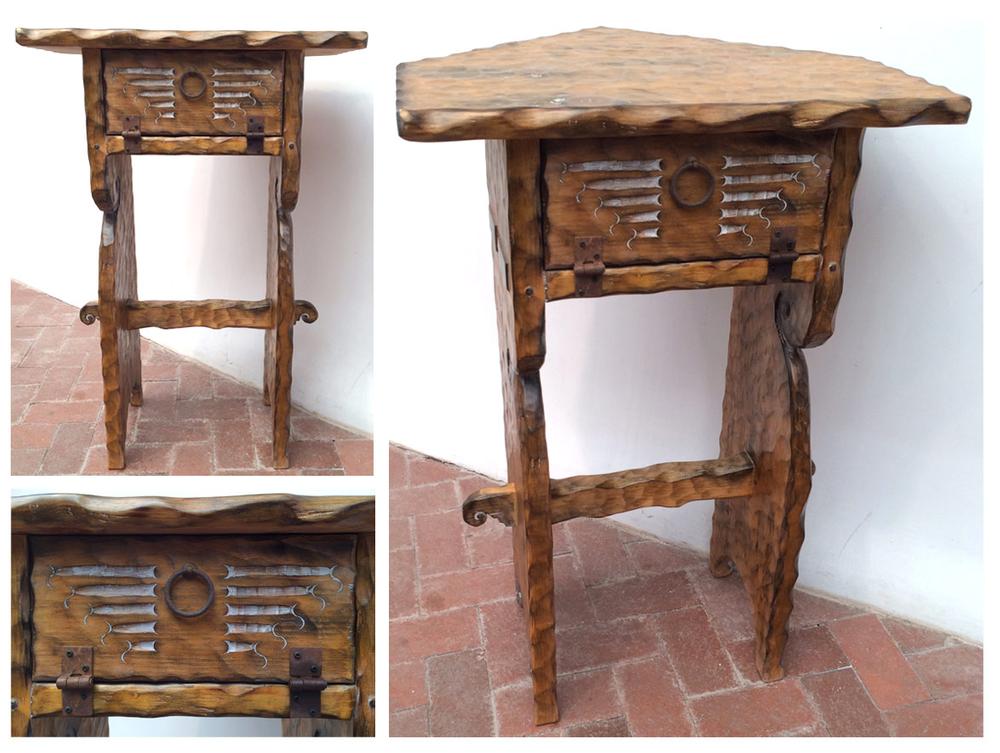
More than two decades later, Roch pulls up to Matthews Gallery in a big red jeep. He takes two impeccably hand crafted pieces of furniture from the trunk. One is a tall corner table emblazoned with a Cochiti Pueblo-inspired design, and the other is a pie safe with intricate latticework and a special type of dovetail joint in the door. Roch is the very first fine furniture maker to join our stable, and his mastery of the craft is truly spectacular. In a way, these beautiful objects are generations in the making.

Roch’s great grandmother came to Santa Fe in 1881. She was a single 16-year-old woman who braved the Old Santa Fe Trail, probably to escape an arranged marriage. Soon after her arrival she married a German man and they opened a mercantile near Canyon Road.

“She came from an aristocratic family. She had lots of money, but she chose the poor man’s way in,” Roch says. Her daughter, Roch’s grandma, grew up among the local tribespeople and learned their language and lifestyle. “My grandmother would go out and show me edible plants, and she could even butcher things,” Roch explains. “She could take a rabbit, take and a stick and ‘Bang!’ Then she would show you how to prepare it.”

She was also a great admirer of native art. She taught Roch about kachina dolls and paintings she collected. Roch’s mother took it one step further, trying her hand at retablo painting.

Roch took a different path, enrolling at New Mexico State University and then studying to be a police officer. He spent 20 years at the Albuquerque Police Department, but his love for New Mexico’s multicultural history always stuck with him.

Roch-Hart-Furniture-Corner-Table

Corner table with Cochiti design detail

When he got interested in furniture making in the early 1990’s, Roch started by studying the intricacies of the Spanish colonial style. He learned that a particularly sturdy joint, the mortise and tennen joint, was the only one Spanish colonists were legally allowed to use. He also discovered that the pervasiveness of trasteros (a Southwestern style cabinet) was due to a high colonial tax on closets.

“At the same time that I was learning all this, I realized I wanted to do something different,” Roch says. “I didn’t want to keep replicating colonial.” The budding craftsman’s big breakthrough came on a visit to the Nicolai Fechin House museum in Taos.

Fechin (1881-1955) was a Russian painter and craftsman who settled in New Mexico in 1927. He purchased a two-story adobe home and greatly expanded it over the next few years, carving intricate doors, windows and furniture pieces that were inspired by European and Native American aesthetics.

On that first visit to the museum, Hart was busy crawling on the floor and inspecting every angle of Fechin’s furniture when the artist’s daughter Eya appeared. They started talking, and she recognized his passion for the craft. “She had so much in-depth knowledge, and I didn’t even know who she was,” Hart says. She walked him through the house and pointed out different styles and techniques her father used.

“Fechin blew me away,” Hart says. “He took art and applied it to furniture. I had felt caged in by the things I was learning, but all of a sudden I realized I could do anything I want.” Just as Fechin had drawn from multiple influences in his work, Hart began to use styles and motifs from the different cultures around him.

Roch-Hart-Furniture-Pie-Safe

Pie safe with rosette detail 

Hart carries his latest works through the gallery to our freshly painted Southwestern art room, carefully placing two pieces in opposite corners. He’s eager to point out his stylistic choices. The rosettes on the sides of the pie safe are inspired by Native American metalworking techniques, his choice of joints was influenced by Fechin and the gridded design in the front is all his own. On the front of the corner table, a stepped carving bordered by elegant curves represents a Cochiti blessing.

“I incorporate my love for the Native arts, for the Spanish and for my European ancestry,” Hart says. “I try to tie a little bit of everything into every piece.” The works before us bear clear markings of the artist’s rich ancestry and influences, but they also hold a heaping dose of something else: Hart’s soul.

“I think furniture should be art,” Hart says. “It’s unique and really fits my love for Santa Fe and New Mexico.”

For more news about Roch Hart’s latest work, check out his artist page on our website and connect with Matthews Gallery on Facebook, Twitter and Pinterest.

LOR’S LORE: Introducing Artist Lor Roybal

Lor Roybal- Dodge's Disbelief- Matthews Gallery

Lor Roybal, Dodge’s Disbelief, acrylic on paper
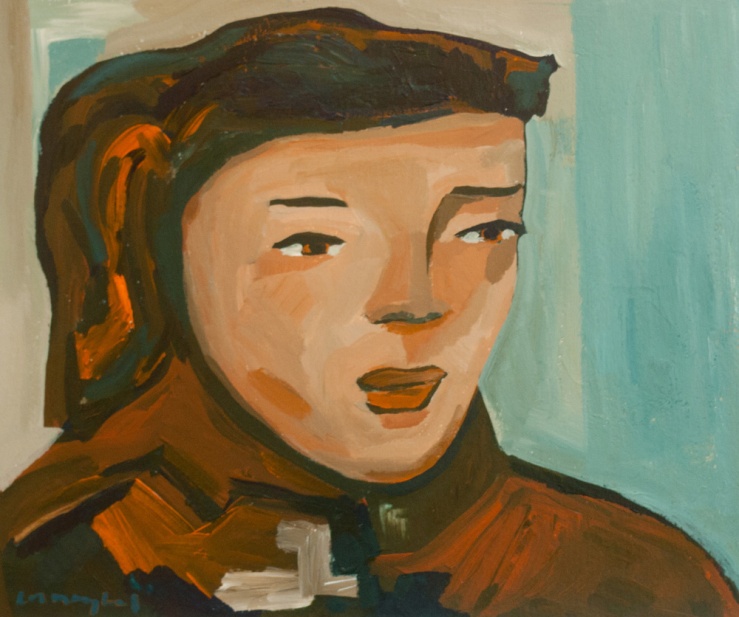
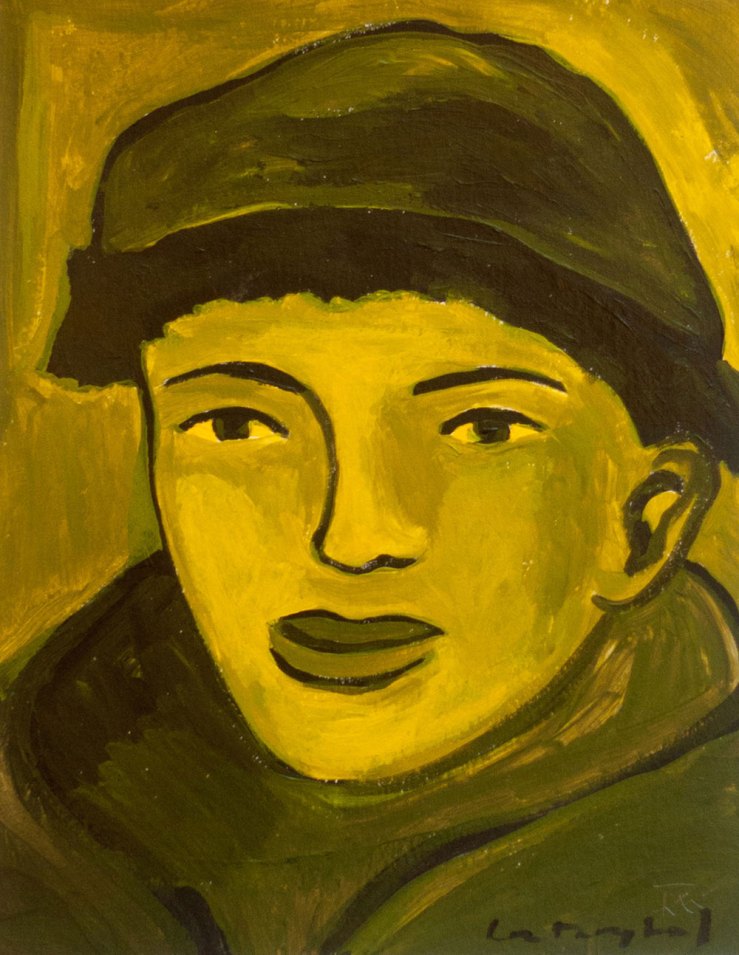
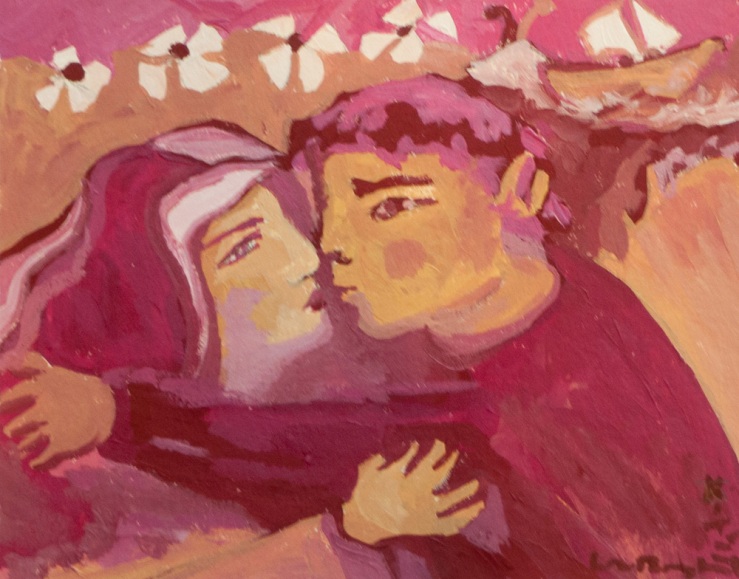
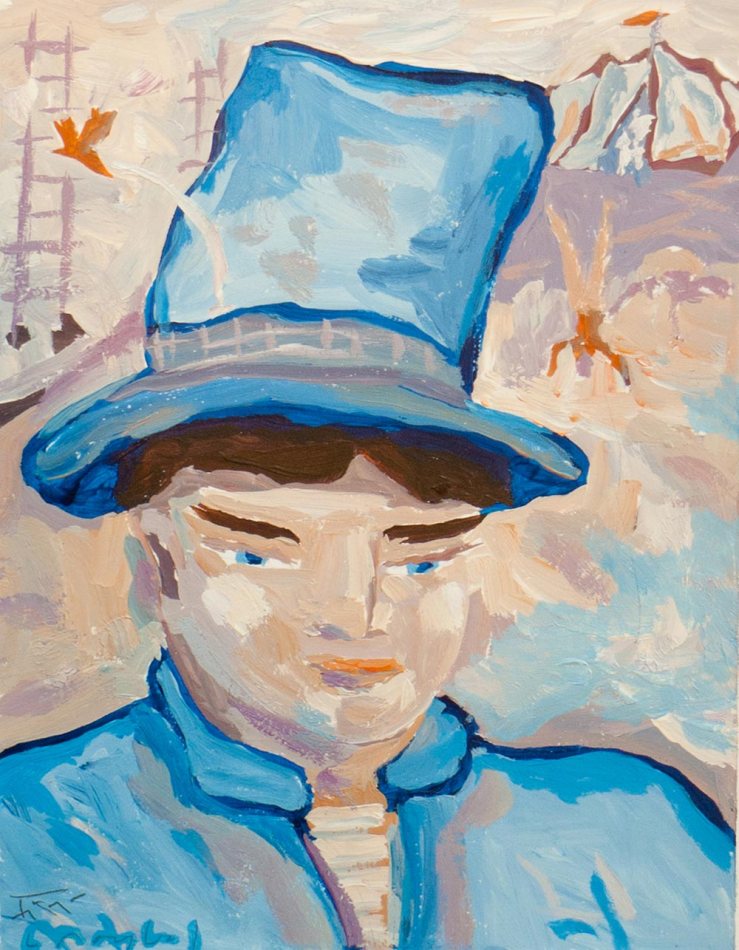
When Lor Roybal‘s big blue van pulls up in front of the gallery, we’re never quite sure what’s in store. She’s a blur of swirling textiles as she bursts through the door with something bright and colorful in tow. Her specialty is portraits, usually of characters from dreams or her vivid imagination. Sometimes she carries a box packed with miniature paintings and other times she holds a large frame in her hands. Once she brought by a loose stack of old sketches and wild free verse poems.

Lor is a familiar face in Santa Fe’s art community, but no one seems to know much about her. She lives somewhere along the Pecos River north of Santa Fe. Her two-room house is off the grid so she heats it using firewood in the winter. Her dog is her closest companion and painting is her favorite pastime. She is a scholar of art history.

“When I first started showing people my little paintings, I would say, ‘Here’s my treasure chest of gems,'” Lor once told us. There’s definitely something precious about Lor’s colorful faces. Each subject has a name and thorough biography. There are daring circus performers and pensive poets, gossipy grandmothers and mischievous little boys, cherubic elves and long-departed spirits. Some of the figures are intelligent riffs on other artists’ styles, from Picasso to Chagall to Renoir, but all possess a wild twist of Lor’s style.

Lor is now officially part of our stable, and we couldn’t be prouder to represent her. As you’ll see in her latest batch of acrylic paintings on paper, the artist is truly one-of-a-kind. Check out some of the work below, and connect with us on Facebook, Twitter and Pinterest for continued updates.

Lor Roybal- Posi- Matthews Gallery

Lor Roybal, Posi, acrylic on paper

Lor Roybal- Emiles Incredulity- Matthews Gallery blog

Lor Roybal, Emile’s Incredulity, acrylic on paper

Lor Roybal- Stendhals Boat- Matthews Gallery blog

Lor Roybal, Stendhal’s Boat, acrylic on paper

Lor Roybal- Young Clown Lujo- Matthews Gallery blog

Lor Roybal, Young Clown Lujo, acrylic on paper

From MoMA to Matthews: Gauguin’s Metamorphoses

Paul Gauguin - Mahana No Atua - Matthews Gallery Blog

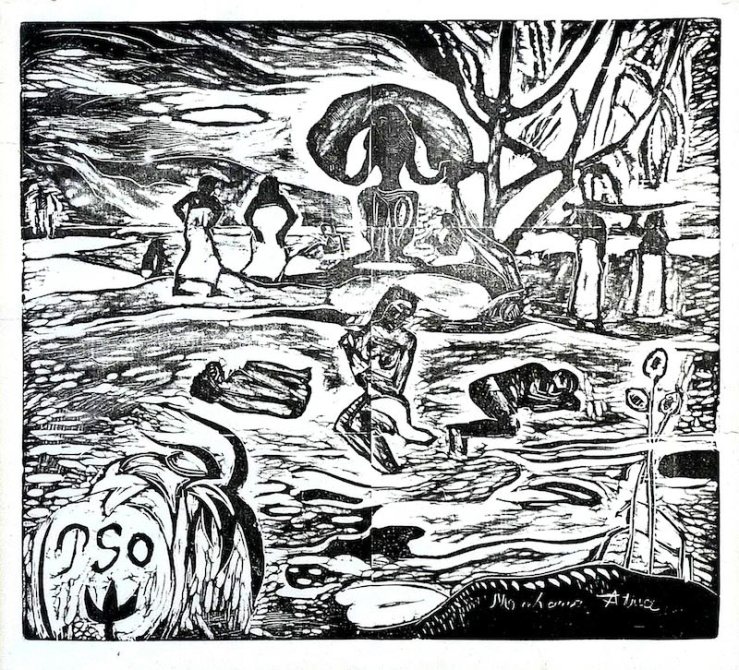
Paul Gauguin, The Day of God (Mahana No Atua), woodcut

There’s no record of what Paul Gauguin’s last lover Marie-Rose Vaeoho thought of him, but their courtship must have been rough. By the time Gauguin reached the Marquesan island of Hiva Oa in 1901, he had eczema, syphilis, malaria, tooth rot, a heart condition and a very bad liver. Local teen Marie-Rose gave birth to his daughter in September of 1902, and he died on May 8, 1903. Gauguin’s body was already rotting in the tropical heat during the burial.

This distasteful finale is an ill-fitting epilogue to Noa Noa, Gauguin’s fanciful (and mostly false) account of his early travels in Polynesia. The artist’s twilight years may have been ruled by destruction and decay, but he clung to themes of rebirth, transformation, divinity and utopia in his art and writing. The New York MoMA’s new exhibition Gauguin: Metamorphoses centers on woodblock prints and other works on paper that he produced between 1889 and the time of his death. At Matthews Gallery we have two Gauguin woodblock prints from the same period that he made to accompany his Noa Noa memoir.

From MoMA:

 These remarkable works on paper reflect Gauguin’s experiments with a range of mediums, [including] radically “primitive” woodcuts that extend from the sculptural gouging of his carved wood reliefs […]. Gauguin’s creative process often involved repeating and recombining key motifs from one image to another, allowing them to evolve and metamorphose over time and across mediums.

For Gauguin, the printmaking process was a natural extension of this mercurial philosophy. It allowed him to mirror and tweak imagery between prints and even in different runs of the same print.

 In New York, you can see several versions of Gauguin’s Noa Noa woodblock prints. In Santa Fe, come track the evolution of the series through two of our works. Here’s a peek—

Paul Gauguin- Mahana No Atua- Woodblock print and painting- Matthews Gallery Blog

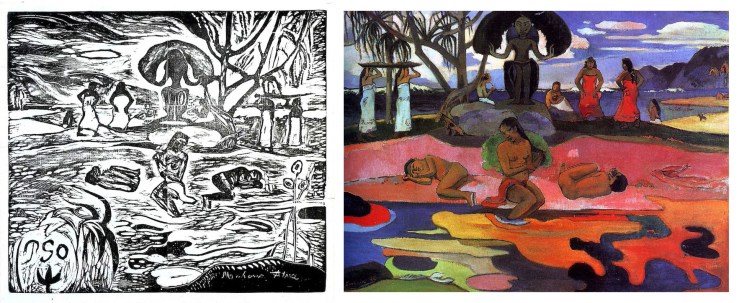
The Day of God (Mahana No Atua), our woodblock print and the painting

Our woodblock print and its oil counterpart were created around the same time and are close mirror images of each other. Both show three women on a shore with a Polynesian sculpture (based on carved Buddhist reliefs from Java) rising above them. In the painting, our eyes are drawn to the bright colors and wild abstract forms of the water. In the print, the women and the statue stand out as bold graphic elements, highlighting the symmetry of the composition.

Gauguin’s decision to reverse the composition from one work to the other brings up some interesting interpretive questions. The three women in the foreground may represent birth, life and death. If their positions can be so easily flipped, perhaps life’s course isn’t so linear either. Viewed together, the works form a loop that reflect Buddhist beliefs concerning rebirth.

Paul Gauguin- LUnivers Est Cree- 5 Versions- Matthews Gallery Blog

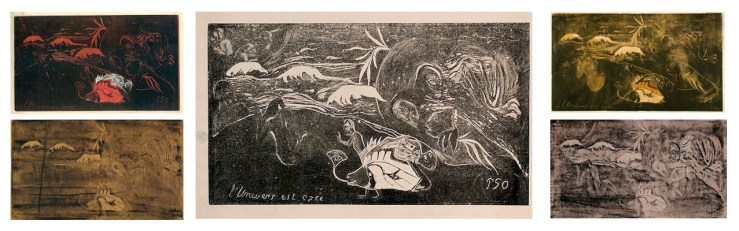
Five versions of Paul Gauguin’s L’Univers Est Cree, including ours (center)

We’ve written about our version of L’Univers Est Cree on the blog before, but Gauguin, his son Pola and artist Louis Roy made several print runs from the block. Some are crisply defined and others are murky with only a few details clearly in view. Some incorporate bright reds and yellows, while others are starkly monochrome.

When Gauguin presented his Noa Noa prints in a private studio show in Paris in 1894, he hung several versions of each print. The decision seems like the artist’s acknowledgment of his futile struggle to embrace a paradaisical version of his island experiences. As scholar Alaistar Wright puts it, the repeated, ever-changing images “allowed him to reflect on the impossibility of having any authentic experience in his dreamed-of Polynesian idyll.”

Visit us at Matthews Gallery to see Paul Gauguin’s incredible woodblock prints. To learn more, read our blog post about “L’Univers Est Cree” and listen to Lawrence’s accompanying podcast.  For daily gallery news, connect with us on Facebook, Twitter and Tumblr.