COLLECTOR’S FORUM: Join the Network

Get Connected- Collector's Forum Workshops- Matthews Gallery blog

Seats are filling up for our free COLLECTOR’S FORUM workshops, which begin next Friday as part of the Santa Fe Gallery Association’s Art Matters lecture series. The events have already given us the opportunity to connect with art lovers of all stripes. As the news spreads from person to person, a network is forming with links to local art legends like Alfred Morang and Fremont Ellis.
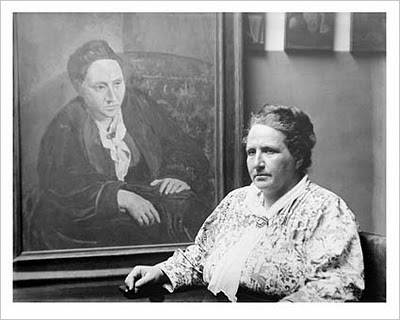
Gertrude Stein with her famous Picasso portrait- Matthews Gallery blogGertrude Stein with Pablo Picasso’s famous portrait of her

That’s why this lovely friendship map of Parisian modern artists and patrons from the early 20th century caught our eye on Twitter the other day. Celebrated salonniere Gertrude Stein is the spider at the center of the web, of course, with Pablo Picasso and Henri Matisse and Joseph Stella and Henri-Pierre Roche entangled around her. Mabel Dodge and Marsden Hartley appear too, and their later New Mexico adventures tie this famous circle directly to our own rich cultural history. Forget six degrees of separation, we’re down to one!

The art world is beautifully interconnected, but that doesn’t mean it has to be exclusive. Our workshops are designed for anyone who’s ever considered dipping a toe into the art market, whether you have a full array of masterpieces or a virtual wish list of art treasures on Tumblr. We’ll cover every angle of the art business, including:

  • How the price of artwork is determined
  • How the primary art market differs from the secondary market
  • The importance of provenance
  • When conservation should be considered for an artwork and what is involved
  • How to insure your artwork
  • How to receive an accurate art appraisal
  • How to negotiate the purchase of art
  • The best strategies for buying or selling art at auction

The workshops will feature fascinating behind-the-scenes stories from our gallery, and tales of tricky art conservation projects from special guest Matt Horowitz. Shoot us an email to reserve your seat and become a link in the long chain of art connoisseurs, from the City of Light to the City Different!

Learn more about COLLECTOR’S FORUM on our exhibition page, and connect with us on Facebook and Twitter for daily gallery news.
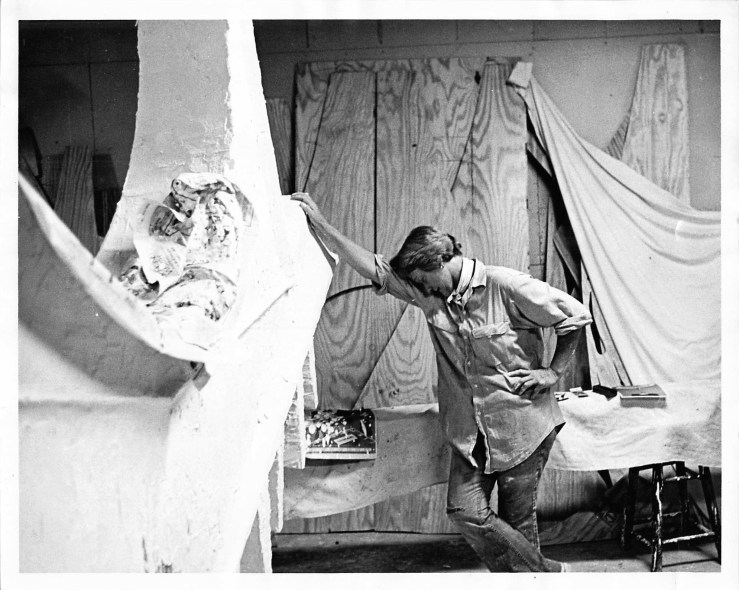
Hannah Holliday Stewart: Letter from Houston

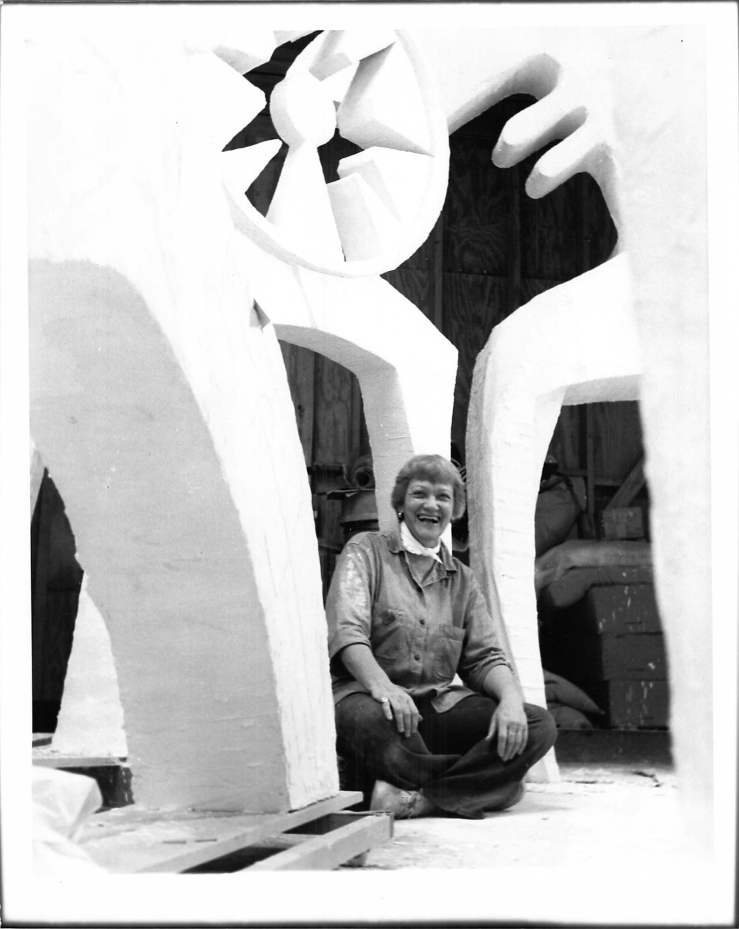
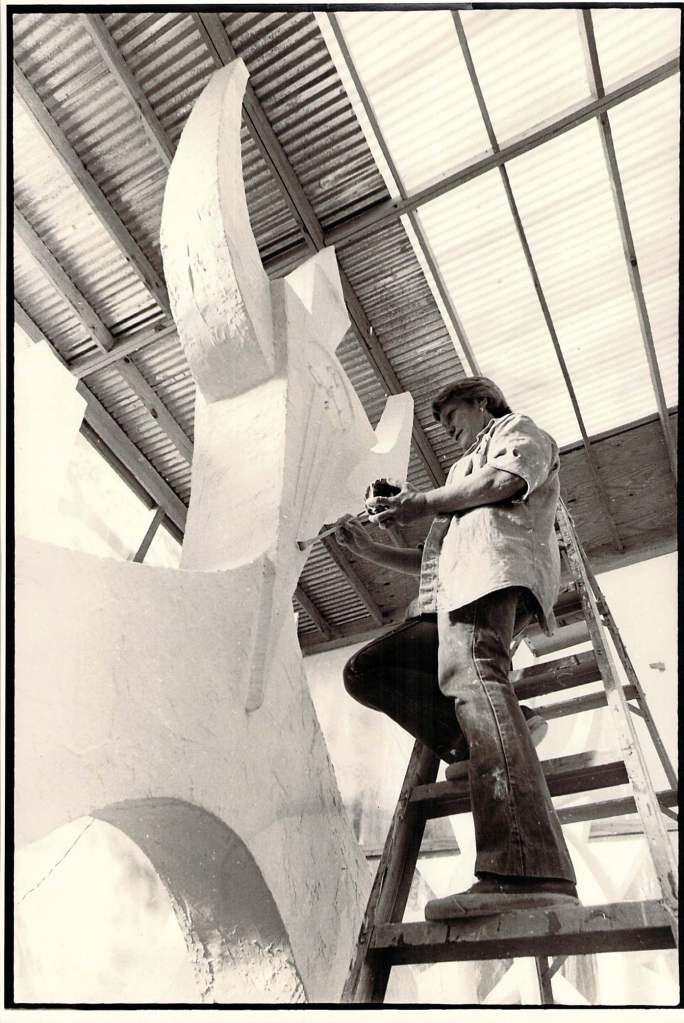
Hannah Holliday Stewart in her Houston Studio- Matthews Gallery

Our exhibition Hannah Holliday Stewart: An Artistic Legacy Rediscovered
begins with an opening reception on Friday, July 4 from 5-7 pm

“In a day in which so many things in Art are merely exercises in Media and devoid of any real significance, it is refreshing to discover an expression which transcends the cerebral prison of its own time and manifests itself in forms poetically germane to a more cosmic significance,” wrote Dayton Smith, with poetic flair of his own, in a typewritten statement dated March 22, 1991.

Smith was referring to the sculptures of his close friend Hannah Holliday Stewart (1924- 2010), whose monumental forms caught the eye of the nation in the 1970s and 80s. As chronicled in our last blog post, Smith and Stewart met in Houston in the late 1960s as Stewart’s career was taking off. He assisted Stewart in various ways for a number of years, and watched as the artist found success in galleries and museums across the country.

More from the note:

Her art mirrors a consciousness expanded beyond the pragmatic doctrinal limits of our milieu. Her commissions stand to prick our higher sensibilities in a world which, it would seem, affords little for the pursuit of what may be a neglected cosmic heritage. In an age in which “symmetry does not balance make” (but which, nevertheless seems to be the applied solution for everything), her bold compositions embody a superbly balanced abstract expression of form and function suggestive of the anthropomorphic with its attendant graces and imperfections.

More than two decades later, Smith admits with a chuckle that the write-up can be a bit “over the top”, but it survives as an illuminating statement about an artist whose cosmic creations were at times misunderstood. After we contacted him, Smith was inspired to return to the typewriter—or, keyboard—and draft another statement on Stewart’s work. His musings provide new insight into the life and artwork of the dynamic sculptor.

Hannah Holliday Stewart in her Houston studio- Matthews Gallery

From Dayton Smith:

Hannah Remembered

It can be said with clarity and confidence that the monumental sculptural work of Hannah Holliday Stewart is cosmic in scope and spiritual in dimension and process. At the peak of her production in the 1970s and ’80s, there emerged from her studio great plaster forms, many well over ten feet in height. These graceful mammoths, cast in bronze, would weigh hundreds to thousands of pounds, and command public spaces in Houston and other cities. A major exhibition of these large plasters was mounted in January 1976 at Contemporary Arts Museum Houston, and another in the ’80s at One Houston Center. In the 1990s, she established studios in Flagstaff, Arizona, and later in Birmingham, Alabama, and finally in Albuquerque.

Born in 1924 in Marion, Alabama to a prominent family, she studied art in Alabama and Georgia (BFA), and at Cranbrook Academy of Art in Michigan (MFA); studied ceramics in California with the legendary Bauhaus potter Marguerite Wildenhain; worked in foundries in Florida and Mexico; moved to Texas to teach at Museum of Fine Arts Houston, the University of Houston, and the University of St. Thomas. Her notable public works include Atropos Key, installed in 1972 on the hill at Houston’s Miller Outdoor Theatre in Hermann Park; Libertad, a smoothly elegant birdlike bronze at World Trade Center Houston; works in Samuels Park in Dallas and New Harmony in Indiana; and Passage, at University of St. Thomas Houston. Her public commissions are claimed as example of landmark achievement by women in the arts. Respected among Houston architects and adept in various media she developed sand-blasted and sand-cast relief panels for specific architectural settings. Her works of smaller scale are to be found in notable private collections.

Her studies in literature, mythology, metaphysics, esoteric philosophy, religion, science, astrology, dance and yoga suffuse her output, revealing in form and textures. Her earlier smaller works reflect ineffable humanity, humor, elegant charm and always superb craftsmanship. She was disciplined, intelligent and well-read, possessed of an intense work ethic, compassionate and understanding and encouraging of others, and an inspiring teacher, respected and loved by friends in business, academia and the arts. Whether attired in her usual studio denim or occasional Dior, she moved among interesting people and was an accomplished host and gourmet. Music was her creative keynote and the atmosphere mystical, always stimulating and, on occasion, convivial. On so many occasions when I would assist her in some project: photographing, gallery installation and lighting, foundry, studio, even building repair, I was aware that I was only facilitating much greater work. I think she really did come to ‘see’ the wind, and must have stood in awe of that which materialized from her consciousness and hands. I can still hear her warm southern voice and motto – Nil desperandum!, and her memory, towering as her work, is quite, quite treasured.

D.A. Smith
Public Broadcasting, University of Houston, retired

Make sure to attend the opening reception of our exhibition Hannah Holliday Stewart: An Artistic Legacy Rediscovered on Friday, July 4 from 5-7 pm. To learn more, check out our previous blog post and our Hannah Holliday Stewart artist page. For daily gallery news, connect with us on Facebook, Twitter and Pinterest.

Hannah Holliday Stewart in her Houston studio- Matthews Gallery

THE STORYTELLER: From petroglyphs to pinewood

Roch Hart- Fine Furniture- Matthews Gallery

 Roch Hart with his pie safe “The Storytellers”

“Furniture is art,” says Roch Hart. It’s a credo the Albuquerque fine furniture maker repeats every time he brings a new creation to the gallery. In Hart’s case, it’s true: each hand-carved piece of sugar pine is as unique as a painting on our wall. This is nothing you’d find at IKEA.

Check out our blog post chronicling Roch’s journey from Spanish Colonial furniture enthusiast to bona fide sculptor, and then delight in the details of his latest creation. This pie safe, dubbed “The Storytellers“, holds quite a few tales…

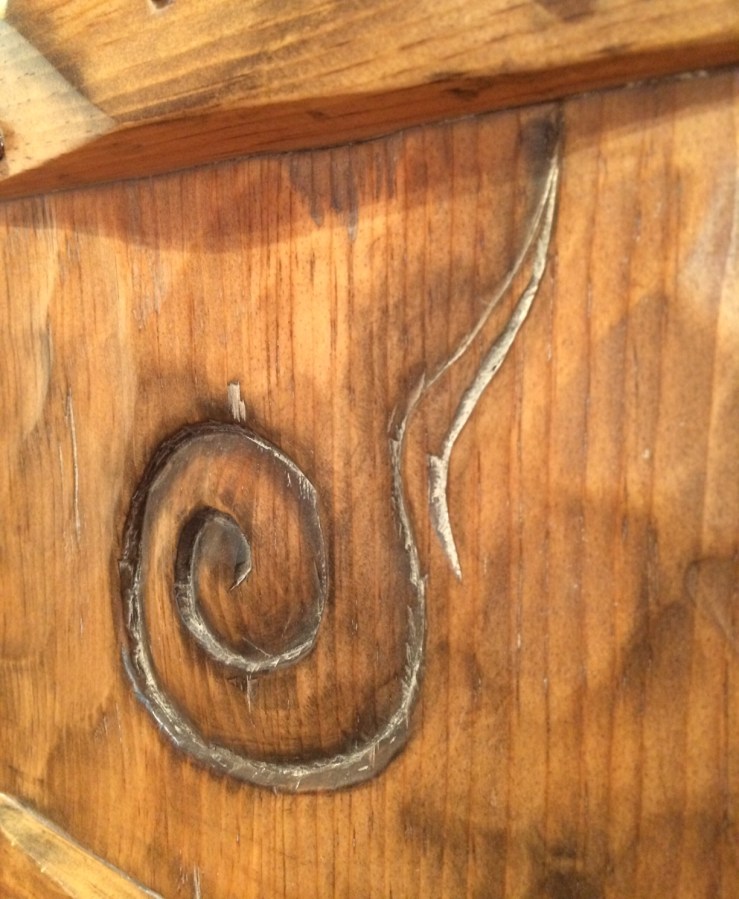
SPIRAL

Roch Hart- Fine Furniture Detail- Matthews Gallery

Hart often draws inspiration from New Mexico petroglyphs.

“A spiral can mean a lot of different things depending on its context, but here it represents eternity or travel,” Hart says. In particular, this symbol refers to a journey from the depths of the earth.

FACES

Roch Hart- Fine Furniture Detail- Matthews Gallery

These symbols on the sides of the pie safe tend to appear together in glyphs. The one on the left with its mouth shut tight is the “listener”, and the one on the right is the “storyteller”. It’s the yin-yang of cultures that depend on the voice to pass down vital knowledge.

The designs surrounding the faces also have an important meaning. Just like the Zia on the New Mexico state flag, they represent the sacred, pervasive number four: four compass directions, four seasons, four stages of a person’s life.

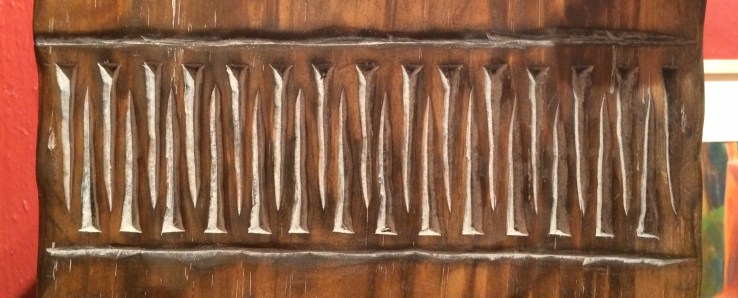
PATTERNS

Roch Hart- Fine Furniture Detail- Matthews Gallery

“This is mimicking the Navajo rugs,” explains Hart. “I thought it would be a great border for the faces.”

Hart uses white ash to make his patterns bolder, rubbing it into the cracks by hand atop a layer of shellac. The finishing touch is a light coat of wax.

JOINTS

Roch Hart- Fine Furniture Detail- Matthews Gallery

Near the beginning of his journey to furniture mastery, Hart visited the Nicolai Fechin House in Taos. Fechin was a Russian painter and carpenter who moved to New Mexico in 1923 and purchased a small adobe home that he would greatly expand over the years. The home is now a museum, and when Hart visited to study the furniture he had a chance encounter with Fechin’s daughter Eya. She taught him about the different joints that her father used, including the sliding dovetail joint pictured here.

“That changed my life,” Hart says.  “I looked at [Fechin’s work] and said, ‘I can do anything. Nobody told him what to do.'”

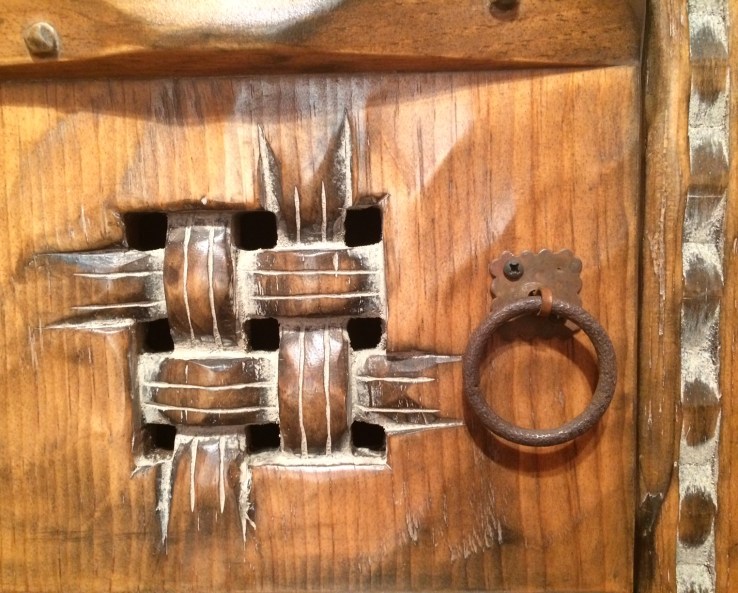
WINDOW

Roch Hart- Fine Furniture Detail- Matthews Gallery

The grid Hart uses as a window for the pie safe doesn’t have an age-old legend behind it. It’s one of Hart’s signature designs that appears in many different manifestations in his work. Myriad influences come together in Hart’s exquisite furniture, but each piece is imbued with his unique sensibility.

See more of Roch’s creations on his artist page, and connect with us on Facebook, Twitter and Instagram for daily gallery updates. Also, check out our upcoming exhibition FOUR CENTURIES: European Art from 1600 to 1950, opening June 13!

SHOOTING SPARKS: Frank Morbillo’s Elemental Process

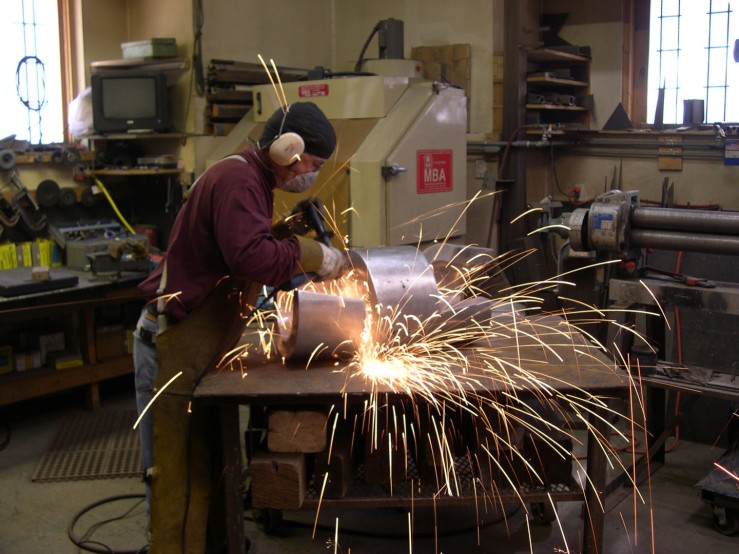
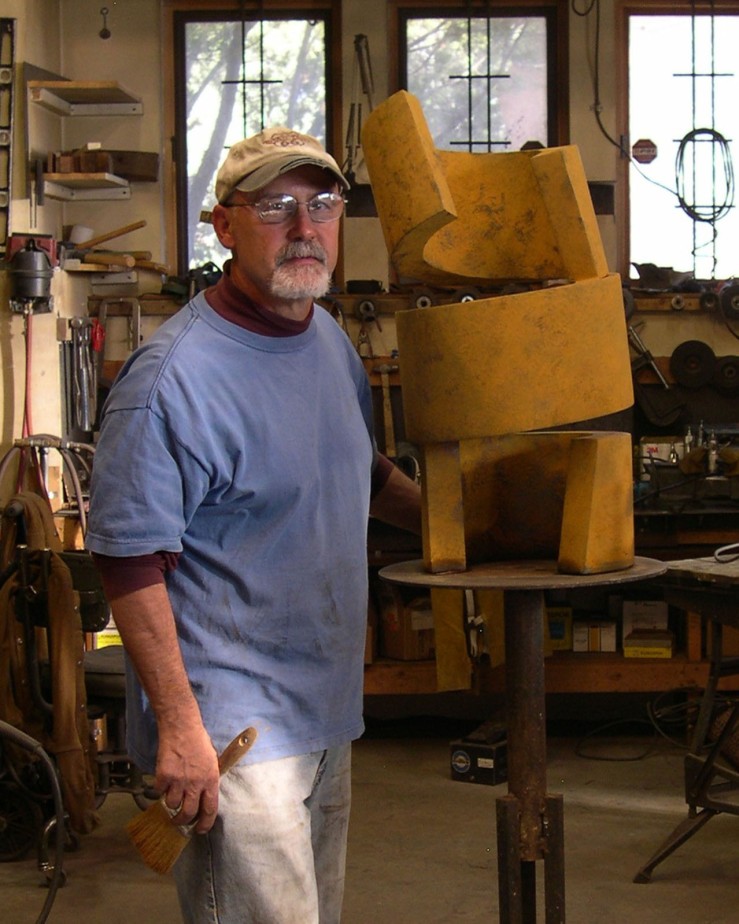
Frank Morbillo Sanding a Sculpture- Matthews Gallery Blog

Frank Morbillo sanding his sculpture Sprung

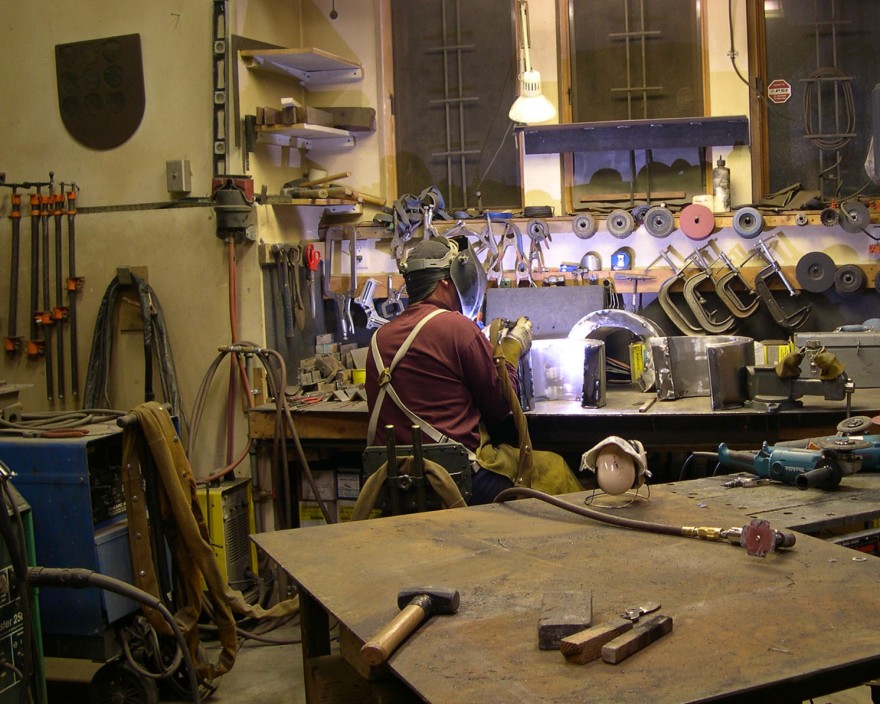
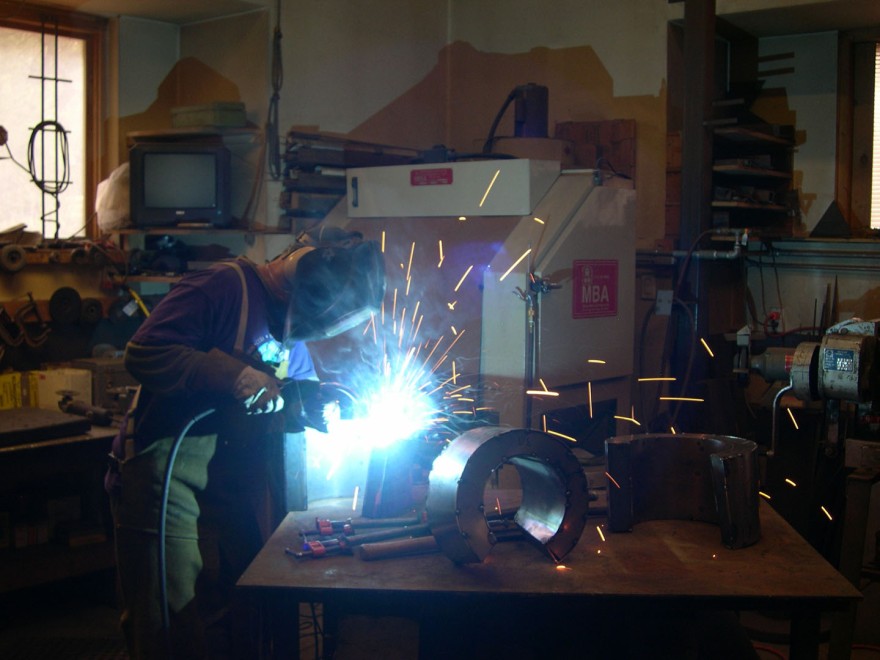
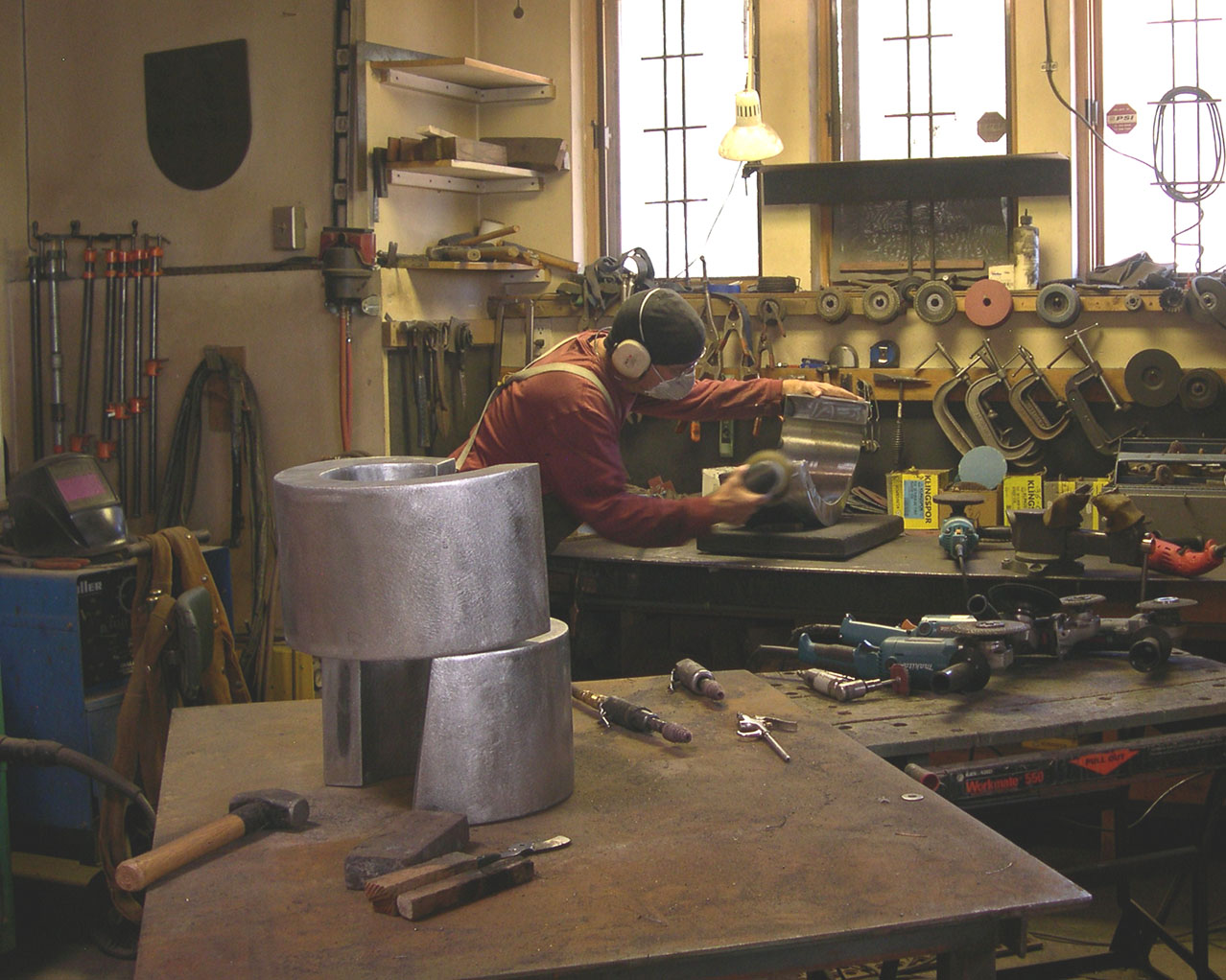
As we learned in his NEW HORIZONS show, sculptor Frank Morbillo is inspired by the way the elements carve the canyon lands of the American West. It’s fitting that his process is just as elemental. He bends and twists flat pieces of steel and bronze and then welds them into seamless three-dimensional forms, first creating smaller studies and working up to towering sculptures that possess the same gravitas as the rock formations he loves.

Witness the fiery birth of Frank’s sculpture Sprung and read quotes from the artist about his process and influences in this photo montage:

Process Photo of Sculptor Frank Morbillo's Sprung- Matthews Gallery blog

Fitting fabrication

“When you’re working with steel, you can work pretty inexpensively to generate an idea and get proportions down, and then make it a little bit bigger. Eventually this can go to the scale of the piece outside the Matthews Gallery.”

Frank Morbillo TIG Welding a Sculpture- Matthews Gallery Blog

TIG welding

“My background was in ceramics when I first started. For two years of college I thought my major was going to be ceramics, but in my sophomore year I took a blacksmithing class on forging and fabricating metal. I was like, ‘You can heat the stuff up and move it like clay? Oh my God!’”

Frank Morbillo Welding a Sculpture- Matthews Gallery blog

Welding

“You knock a piece of clay off the table and it breaks on the floor. You knock a piece of metal off and it dents the floor.”

fine sanding on Sprung-1

Fine sanding

“A lot of the pieces come from hiking canyons and experiencing the paths that you take in a canyon. If you look at a topo of a canyon, you can see its meandering course. When you’re down in a canyon and you see how it’s been eroded and shaped by water and wind, it takes on another shape.”

Frank Morbillo Adding a Patina to a Sculpture- Matthews Gallery blog

 Patina

“When I was in the foundry business doing patina work for different artists, we always used to talk about the translucency of bronze. They always wanted that, to where if you put this really nice golden brown patina over metal, you could see the metal coming through.”

Tesuque Artist Frank Morbillo with his Sculpture Sprung- Matthews Gallery blog

Almost there…

“One of the nice things about being out in nature is that all of the things we connect ourselves with are gone. Where does that take you? I think we need to do that still in our lives.”

See Frank’s finished sculpture here and learn more about the Tesuque sculptor on our Facebook, Twitter and Pinterest pages.

NEW TRADITIONS: Matthews Gallery Online Art Auction

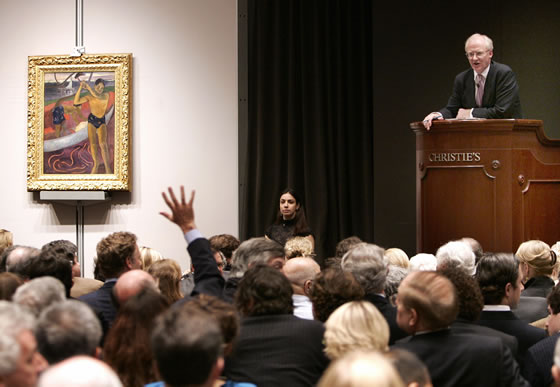
History of the art auction- Matthews Gallery blog

The world’s oldest auction house opened in Stockholm, Sweden in 1674. Art auctions in Great Britain gained popularity a few decades later when the Earl of Oxford’s collection appeared on the block in 1742. That particular sale featured the full range of odd and valuable items you might find in a dusty old castle, from a bust of an unknown bishop (five shillings) to a series of van Dyck paintings (165 guineas).

The beat of the auction mallet has marked the rhythm of the secondary market ever since. It’s a tradition that’s full of strange pageantry and heart pumping excitement. Auction kingpins Christie’s and Sotheby’s, which were both founded in mid-18th century England, often draw the ire of art world players for their tightly controlled sales. “They know exactly how many people will be bidding on a work and exactly who they are,” wrote art critic Jerry Saltz in 2012 after a version of Edvard Munch’s The Scream sold at Sotheby’s for $119.5 million. “In a gallery, works of art need only one person who wants to pay for them.”

Online auctions have meanwhile been swiftly democratizing the centuries-old process, and that’s where the Matthews Gallery decided to jump in. We launched the EUROPEAN MASTERS, AMERICAN AND SOUTHWESTERN ART AUCTION on July 25 and it runs through July 29. Come browse our virtual auktionsverk of art and, if you’re inspired, make a bid. You’ll find art by European modernists such as Pablo Picasso and Joan Miro, Southwestern legends including Emil Bisttram and Alfred Morang, and notable contemporary artists like Jamie Chase, Eric G. Thompson and Kate Rivers among the lots. Here are some notable pieces from the catalogue:

EUROPEAN MASTERS 

This slideshow requires JavaScript.

Click to see the works on our auction site:

HISTORIC SOUTHWESTERN ART

This slideshow requires JavaScript.

Click to see the works on our auction site:

  •  Untitled (Landscape #1), Emil Bisttram
  • Untitled (Landscape #2), Emil Bisttram
  • Untitled (Landscape #3), Emil Bisttram
  • Untitled (Santa Fe Landscape), Alfred Morang
  • Riders at Sundown, Gene Kloss
  • Return of the Wood Gatherers, Gene Kloss

CONTEMPORARY ART 

This slideshow requires JavaScript.

See more lots from the auction here, and connect with us on Facebook, Twitter and Pinterest for auction updates all week!