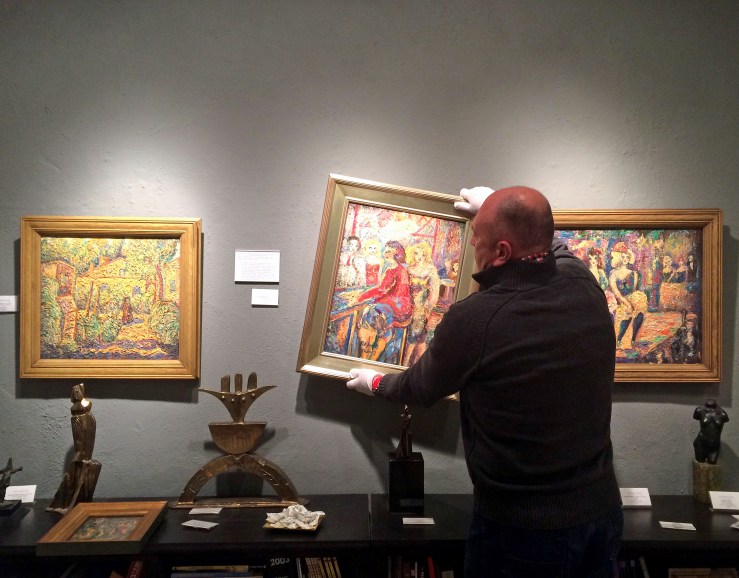
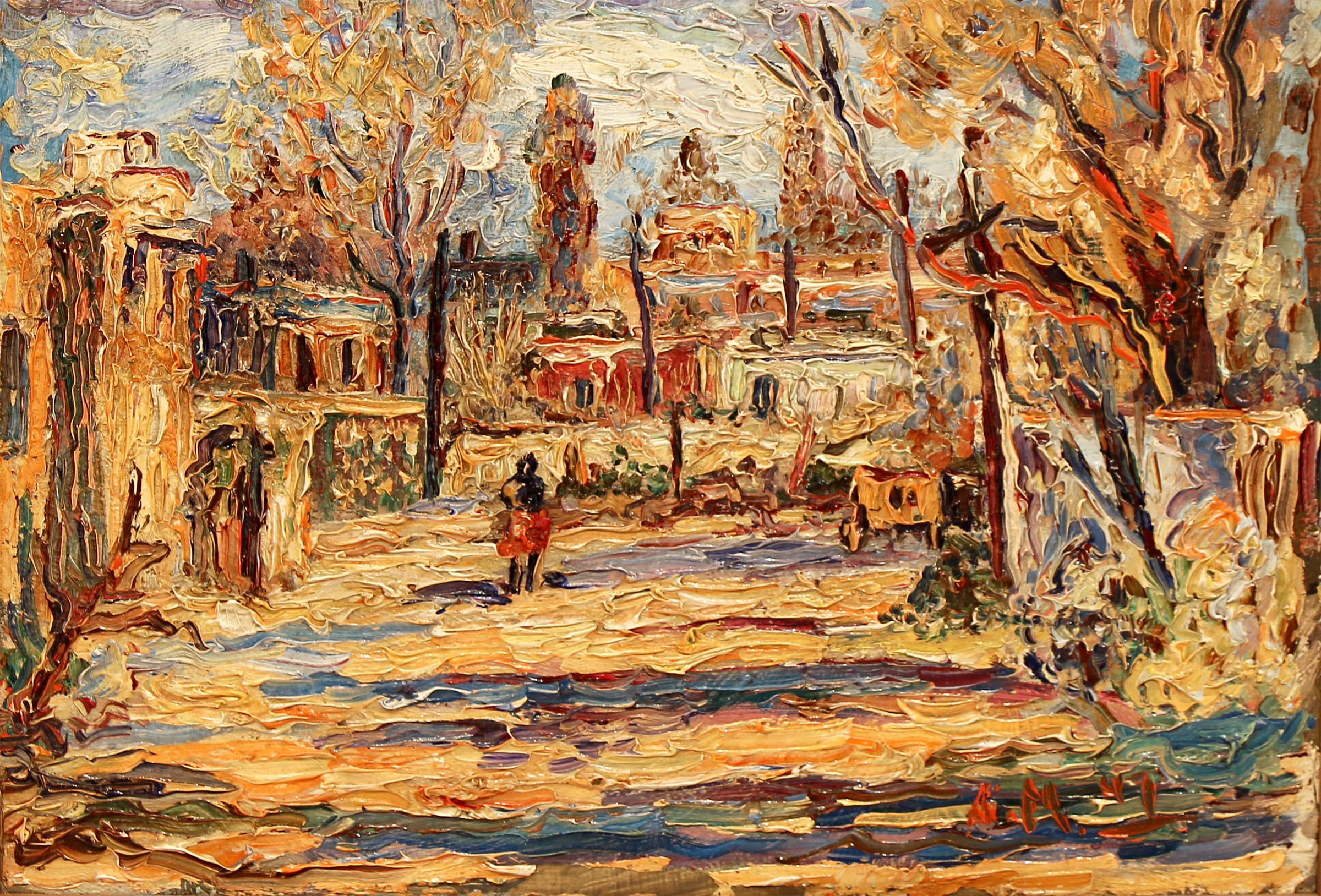
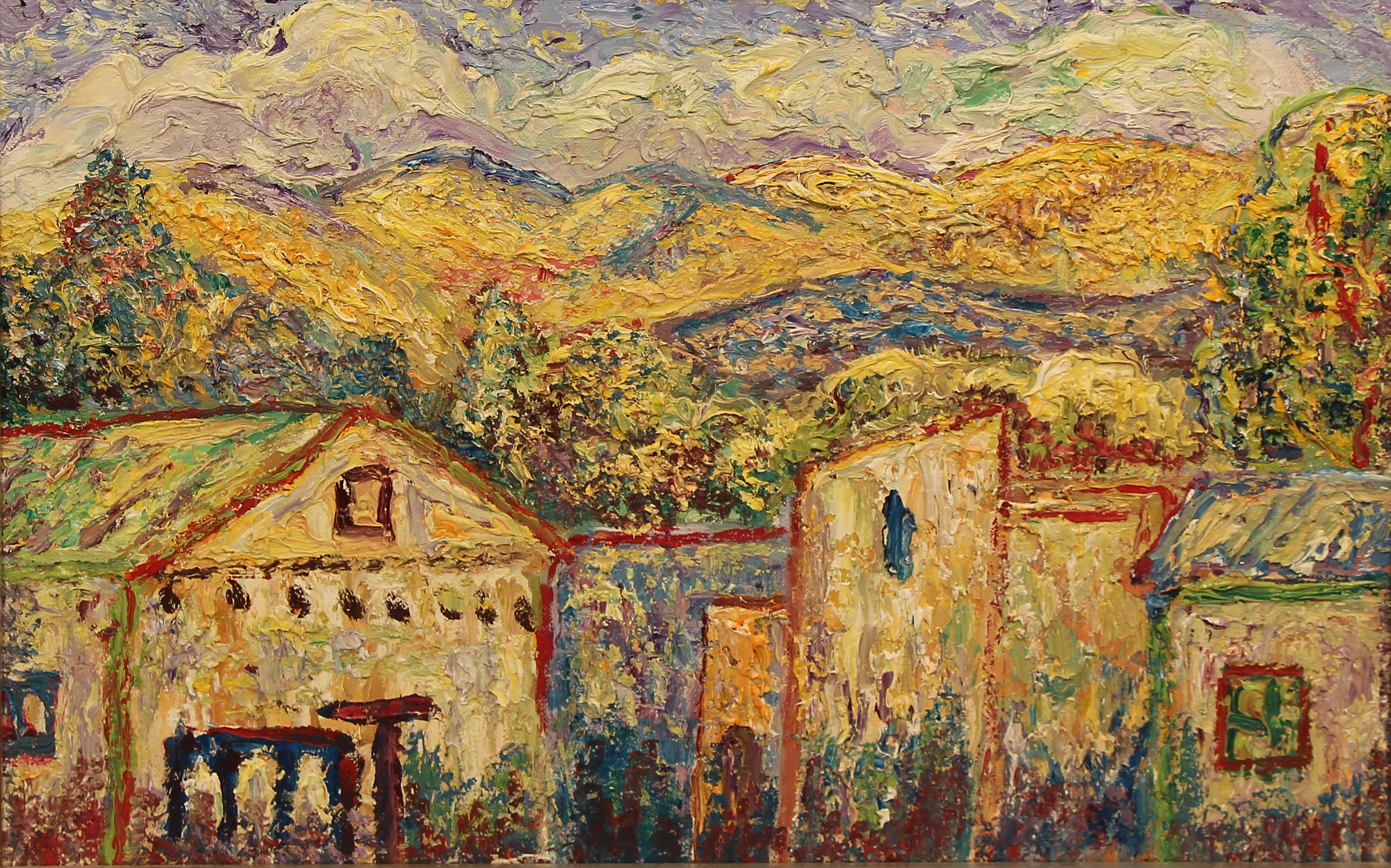
SPRING OF MODERNISM: Paul Burlin

Paul Burlin- New Mexico Modernist- Matthews Gallery Blog  As our SPRING OF MODERNISM exhibition approaches its closing date on March 31st, we’re sharing the incredible stories of 20th century artists who shook the foundations of the New Mexico art community. This week we have Paul Burlin, who battled blindness to create his magnum opus. 

Paul Burlin (1886-1969) was born in New York City and had a difficult childhood that he preferred not to discuss. He completed his early education in England before returning to New York at the age of twelve.

He left home at 16, and studied part-time at the National Academy of Art and the New York Art Students League from 1900 to 1912. During that time, he worked as an illustrator under Theodore Dreiser and frequented Alfred Stieglitz‘s 291 gallery. At 291, Burlin developed a taste for Picasso‘s ‘primitive’ artwork that lead him to study African tribal art and, later, the art and culture of the Southwest Pueblos.

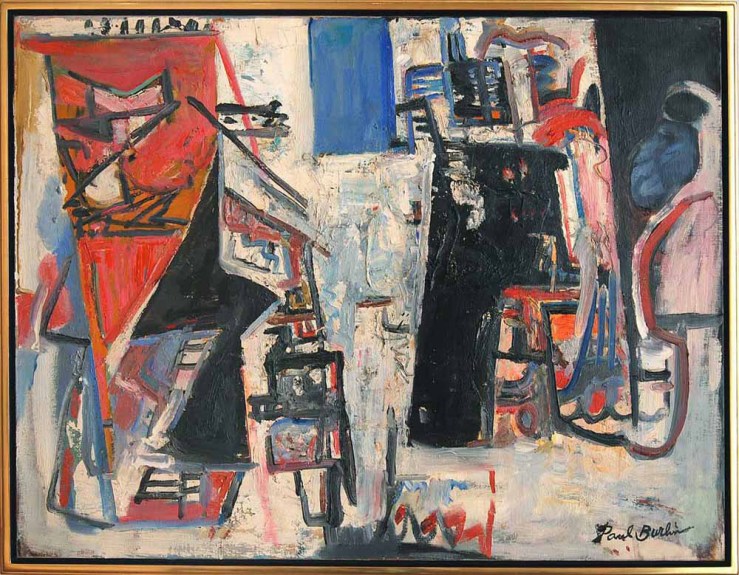
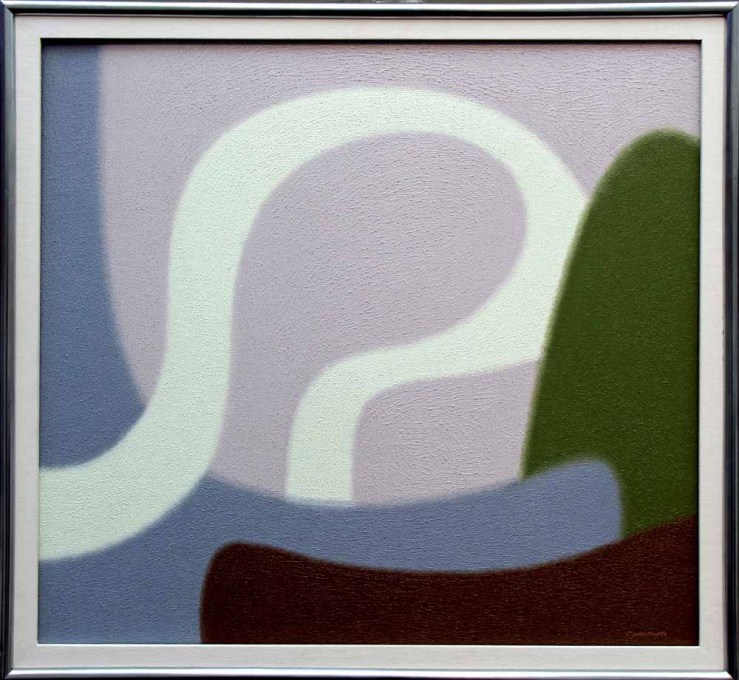
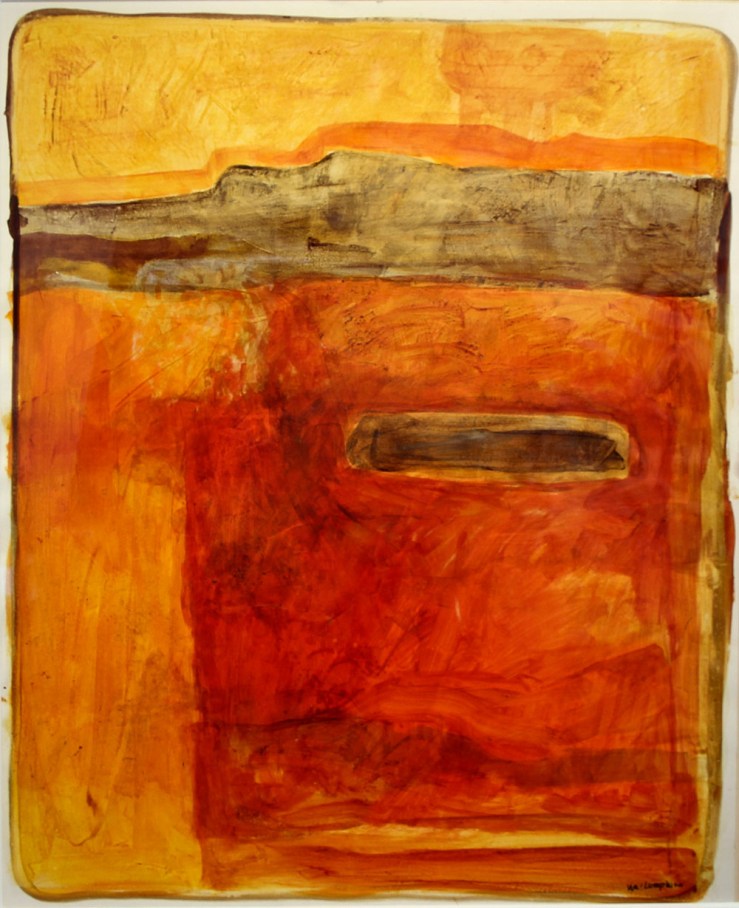
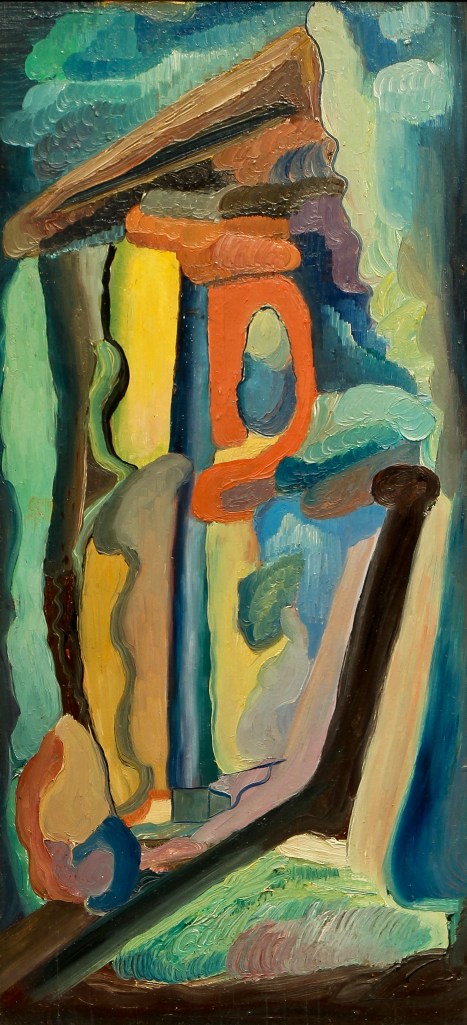
Paul Burlin- Untitled New 1951- Matthews Gallery Blog

Burlin visited New Mexico for the first time in 1910. Paintings from this visit were received warmly in New York and exhibited in 1911. As a result of his early success, he was the youngest artist (at 26 years old) to participate in the 1913 Armory Show.

The same year, Burlin moved back to Santa Fe to develop a new body of work, and continued to exhibit in New York City. With the images and ideas of the Armory Show still prominent in his mind, Burlin was impressed and moved by what he described as the ‘primeval, erosive, forbidding character of the landscape.’ His early works in New Mexico were genre paintings of the Pueblo Indians in a realist style, but he soon developed a colorful abstract vocabulary ruled by symbols both ancient and modern.

Burlin’s time in New Mexico had a profound impact, not only on his own work, but on the development of modernism throughout the Southwest.  From University of New Mexico art historian Sharyn Udall:

Burlin was the first Armory Show participant to reach New Mexico, and that fact, coupled with his confident handling of local subject matter, made a definite impression on newcomers [Marsden] Hartley and B.J.O. Nordfeldt… It is clear, moreover, that Burlin’s stature as the first modernist painter in New Mexico was unquestioned; his was the pivotal role in introducing fauve and expressionist modes to the art of New Mexico (Udall 1984; 28).

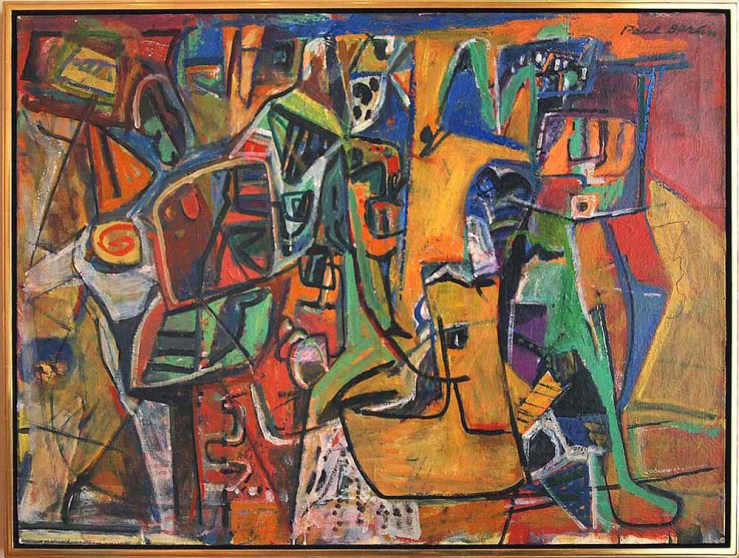
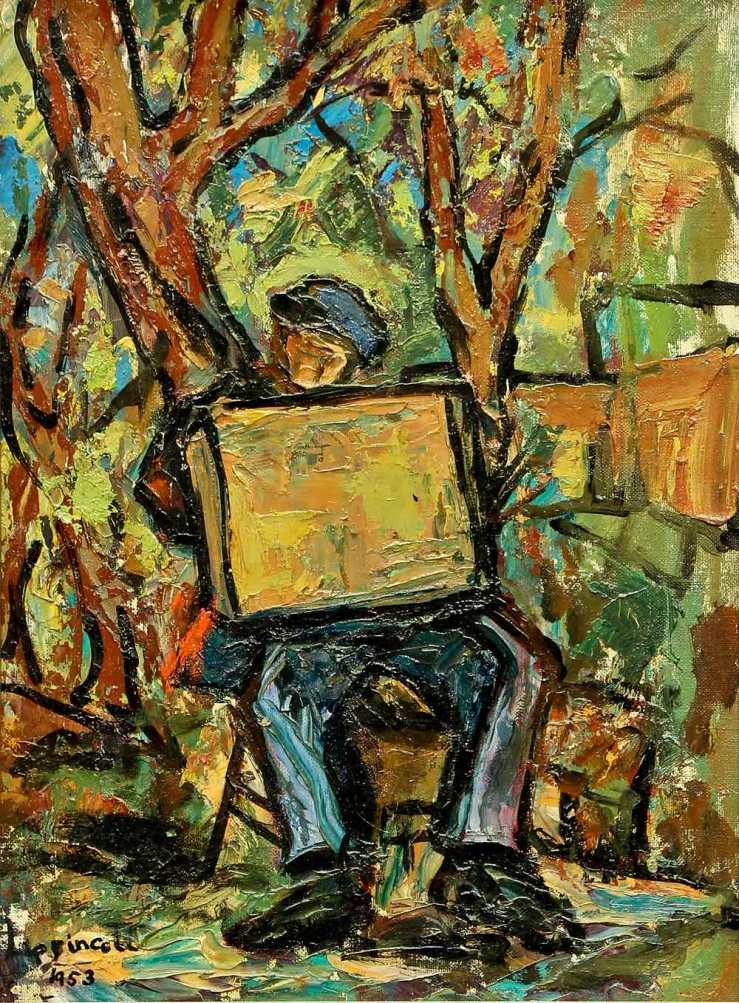
Paul Burlin- Untitled Pivot 1952- Matthews Gallery Blog

Though he moved away from New Mexico in 1920—living in New York and Paris for the rest of his days—Burlin’s artistic evolution in the Land of Enchantment influenced his work for the rest of his life, as evidenced in these canvases from the 1950s. Not long after he made this work, Burlin began to lose his sight. His final series of paintings, completed while he was legally blind, were exhibited at the New York Museum of Modern Art in 1971, two years after Burlin’s death.

From Burlin:

We live in an age of treacherous, harrowing notions of mutability, death and decay…All of the old realities have dissolved…all rigidities of form disappear and enter into a new metamorphosis.  This metamorphosis of form and reality is manifested in shape and color, which destroy visual reality and…shape themselves into a reality of their own.

Learn more about Paul Burlin on our homepage, and connect with us on Facebook, Twitter and Pinterest for daily gallery news.

SPRING OF MODERNISM: The Circle

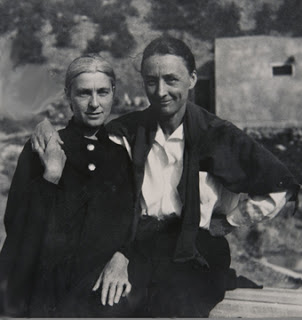
Mabel Dodge Luhan and Georgia O'Keeffe- Matthews Gallery BlogMabel Dodge Luhan and Georgia O’Keeffe

If you visit our SPRING OF MODERNISM show this month, two things will become abundantly clear about the 20th century artists in the exhibition. Firstly, they’re all linked, in one way or another, to the 1913 Armory Show in New York City. Secondly, they are all tied to each other. In fact, the modernists of the Santa Fe and Taos art colonies are so intertwined that we tried and failed to create a chart of their relationships. There are so many connections, it reminds us of Gertrude Stein’s Paris! Here’s just one line of the friendship chain, which begins with Stein herself:

Jan Matulka- Surrealist Landscape- Matthews Gallery Blog
MATULKA
Jan Matulka (1890-1972) was born in Austria-Hungary, now the Czech Republic. He moved to New York City in 1907 and enrolled at the National Academy of Design soon after. A Joseph Pulitzer Traveling Scholarship enabled him to visit the Desert Southwest in 1917, where he was inspired by the cultures of the Pueblo Native American Tribes. He maintained studios in Paris and New York during the 1920s, befriending Gertrude Stein, Andre Lhote and Max Weber.
DASBURG
Andrew Dasburg (1887-1979) also knew Stein. He was born in Paris and emigrated to New York City in 1892. He studied at the New York Art Students League and spent time in Paris with Stein, Henri Matisse and Morgan Russell as a young man. In 1913, he exhibited Lucifer (above) at the Armory Show, and was later invited to New Mexico by Mabel Dodge Luhan. He moved to Taos in 1921, and was part of Georgia O’Keeffe and Alfred Stieglitz’s circle here.

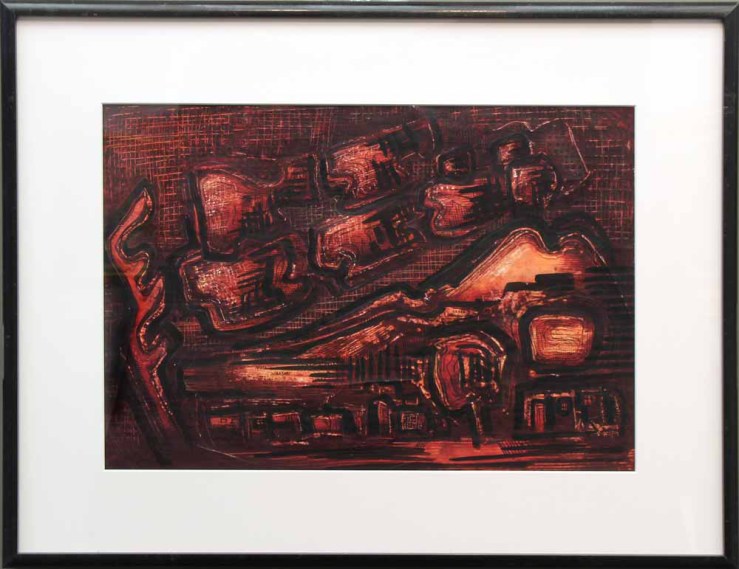
 Cady Wells- Taos 1947- Matthews Gallery Blog Cady Wells, Taos 1947, Ink and Watercolor on Paper

WELLS

Cady Wells (1904-1954) knew Luhan and O’Keeffe and studied under Dasburg. He grew up in Southbridge, Massachussets and traveled extensively as a young man, studying music and the visual arts before deciding to become an artist in his late 20s. He moved to New Mexico in 1932, where he found an enthusiastic mentor in Dasburg and drew inspiration from the rich culture of the Desert Southwest. The Smithsonian American Art Museum writes:

Portraying the Southwestern landscape in watercolor, Wells moved through various modernist idiots. His early work incorporated gestural, calligraphic lines suggestive of Chinese ideograms. Later he investigated the structure of natural forms [and the] pattern-like appearance of the landscape. Influenced by Dasburg, Raymond Jonson and Georgia O’Keeffe, Wells developed a personal semi-abstract style that brought considerable praise from his peers.

 Raymond Jonson- Oil Number 12- Matthews Gallery BlogRaymond Jonson, Oil No. 12, 1958, Oil on Canvas

JONSON 

Wells’ friend Raymond Jonson (1891-1982) was born in Chariton, Iowa and grew up in Portland, Oregon. He attended the Chicago Academy of Fine Arts and the Chicago Art Institute as a young man, but his true artistic breakthrough came when he attended the 1913 Armory Show and saw the artwork of early abstractionist Wassily Kandinsky.
Jonson traveled to New Mexico for the first time in 1922, and moved here two years later. Here he founded the Atalaya Art School and took a teaching position at the University of New Mexico.
Along with his friends Emil Bisttram, Agnes Pelton and others, Jonson formed the Transcendental Painting Group (TPG) in 1938. The collective was inspired by early abstract artists like Wassily Kandinsky and Piet Mondrian, as well as Theosophy, Zen Buddhism and Dynamic Symmetry. The TPG only lasted a few years, disbanding in 1942 because of World War II. However, the collective’s influence endures in the Southwest and beyond. Some consider the group an heir to Russian Constructivism, Gino Severini and the Bauhaus.
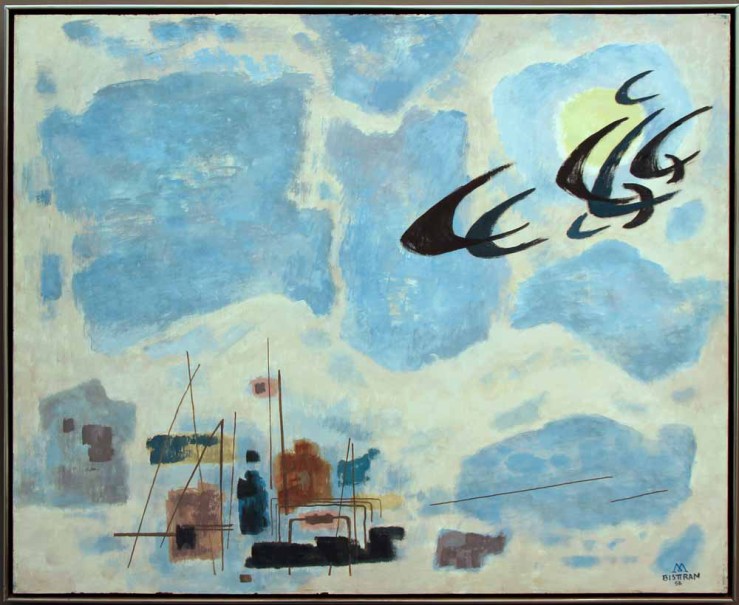
Emil Bisttram- After the Blizzard- Matthews Gallery Blog
BISTTRAM 
Jonson’s friend Emil Bisttram (1895-1976) was born in Hungary and immigrated to New York City with his family at 11. It wasn’t until his mid-30s that he visited Taos, but he fell in love with the area and would become a major player in the art colony when he moved there a year later.In 1933 Bisttram helped open the first modern art gallery in Taos and in 1938 he co-founded the Transcendental Painting Group. He promoted the ideas of the collective through the Emil Bisttram School for Transcendentalism, where Janet Lippincott was one of his students.
Janet Lippincott- Llano Ridge- Matthews Gallery Blog
LIPPINCOTT
Bisttram’s student Janet Lippincott (1918-2007) was born in New York City to a wealthy family, and spent part of her childhood in Paris. There she learned about the aesthetic innovations of Picasso and Matisse. Back in New York, she took classes at the New York Art Students League as a teenager.During World War II, Lippincott enlisted in the Women’s Army Corps and was wounded. She pursued art studies in Colorado and San Francisco on the GI Bill, and also attended the Emil Bisttram School for Transcendentalism in Taos in 1949 and the Alfred Morang Academy of Fine Art. In 1954, she moved to Santa Fe permanently and lived here for over five decades.Lippincott was considered part of a “second wave” of New Mexico modernists, who ventured to the Southwest after WWII. She is known as an abstract expressionist, but her early modernist influences in Paris stuck with her, as evidenced in her career-spanning series of figurative prints.

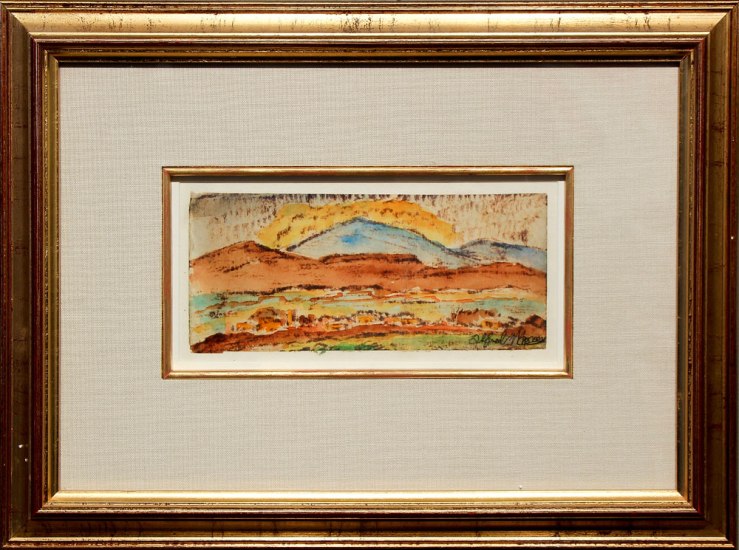
Alfred Morang- Blue Mountain Yellow Sky- Matthews Gallery Blog Alfred Morang, Blue Mountain, Yellow Sky, Ink and Watercolor on Paper

MORANG 

As a young man, Lippincott’s teacher Alfred Morang (1901-1958) suffered from tuberculosis. He left his home in Portland, Maine in 1937 and came to New Mexico to recover in a dryer climate. The reports vary, but when Morang got off the train he was met by Randall Davey or Raymond Jonson, two of the city’s most established modernist artists. Morang’s bohemian manner quickly charmed the Santa Fe art world, and the City Different became his permanent home.

Late in his life, Morang moved to a Canyon Road studio just behind Claude’s Bar. Just across the street was an artist and writer’s compound run by Agnes Sims.

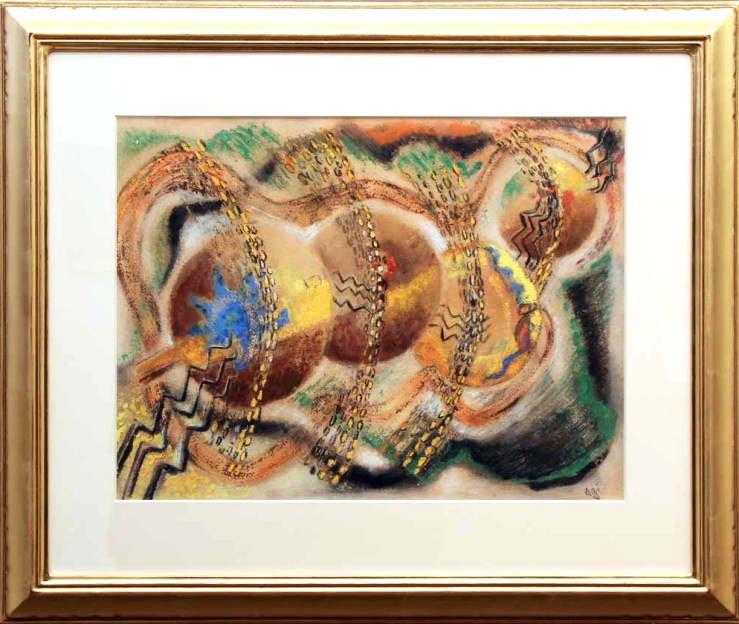
 Agnes Sims- Dance Rattles- Matthews Gallery BlogAgnes Sims, Dance Rattles, Watercolor on Paper

SIMS 

Morang’s Canyon Road neighbor Agnes Sims (1910-1990) was born in Devon, Pennsylvania. She managed a marionette theater and worked as a textile designer in Philadelphia before moving to Santa Fe in 1938 and founding a Canyon Road artist’s compound. In New Mexico, she took an interest in the ancient petroglyphs of New Mexico’s Native American Pueblos, and received a grant to study and sketch them. Her archaeological work inspired a series of paintings and sculptures in which she developed her own semi-abstract symbolism.

Sims’ longtime partner was the literary editor of Harper’s Bazaar, and helped popularize Truman Capote‘s work. Capote was friends (and sometime enemies) with Georgia O’Keeffe. And so the circle comes back around to Andrew Dasburg!

We could do this for ages, but you get the point. The New Mexico art community was a western frontier of avant-garde innovation, forged by a group of passionate friends whose efforts gave birth to the Land of Enchantment of today. And thank goodness for that!

Click here to see all of the artwork in our Spring of Modernism show, and connect with us on Facebook, Twitter and Flickr for daily gallery news.

SPRING OF MODERNISM

We’ve had some unseasonably warm days after last weekend’s snowstorm, and it’s making us excited for the end of winter. It’s the perfect time to release our spring exhibition schedule, which is a period of exciting growth at Matthews Gallery.

In light of Georgia O’Keeffe Museum’s brilliant Modernism Made in New Mexico exhibition and New Mexico Museum of Art’s recent emphasis on Southwestern modernists, we’re declaring a ‘Spring of Modernism’ in Santa Fe. It begins with our exhibition of influential New Mexico modernists, and features women artists of new mexico, rare artifacts from legendary artists’ studios and much more. Check it out:

Spring of Modernism Show- New Mexico Modern Art- Matthews Gallery

Spring of Modernism: Seminal New Mexico Modernists
March 6-31, Opening Reception: Friday, March 6, 5-7 pm

Matthews Gallery declares a “new spring” of modernism, as this rich period in New Mexico art history returns to the spotlight. Featured artists include Emil Bisttram, William Lumpkins and Raymond Jonson of the Transcendental Painting Group, Alfred Morang and Randall Davey of the Santa Fe art colony, and Beatrice Mandelman of the Taos Art Colony.

Collectors Forum- Art Collecting Workshop- Matthews Gallery Blog

Collector’s Forum Workshop
April 17, 6:30 pm

We offer an inside look at art collecting for this special Art Matters event. The workshop is for anyone who’s ever considered buying, selling or caring for fine art and has questions about the inner workings of the art world. Forum participants will get an inside look at every step of the process from one of Santa Fe’s top galleries. The event is free but seating is limited, so give us a call if you’d like to participate – 505-992-2882. Read about our past Collector’s Forum workshops here and here.

New Landscapes New Vistas- New Mexico Women Artists Show- Matthews Gallery

New Landscapes, New Vistas: Women Artists of New Mexico 
May 8-31, Opening Reception: Friday, May 8, 5-7 pm

In the first half of the 20th century, a number of women artists who were frustrated by a lack of the recognition on the East Coast packed up and left everything behind. In New Mexico’s isolated art colonies, they found the freedom and social acceptance to excel. Matthews Gallery presents the stories and artwork of Janet Lippincott, Agnes Sims, Doris Cross and other women who found a powerful voice in the Land of Enchantment.

Artists Toolbox- Artwork and Artifacts of New Mexico Artists- Matthews Gallery

The Artist’s Toolkit: New Mexico Artists at Work 
June 4-10, Opening Reception: Friday, June 5, 5-7 pm

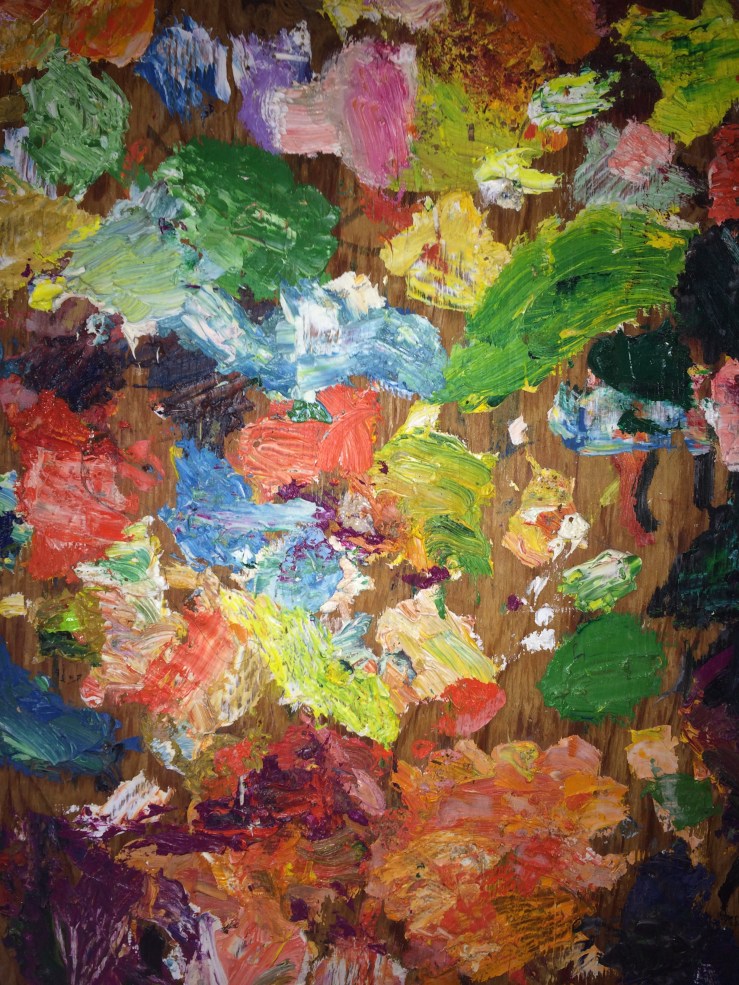
This special exhibition features rare artifacts of legendary New Mexico artists alongside their work, giving visitors insight into the complex process of conceptualizing, mixing and applying color. Visitors will get a once-in-a-lifetime opportunity to view Tommy Macaione’s paint palette, John McHugh’s brushes, Alfred Morang’s notes on color, Hilaire Hiler’s color wheel and other behind-the-scenes ephemera from Santa Fe private collections.

Widening the Horizon- New Mexico Landscape Show- Matthews Gallery Blog

Widening the Horizon: New Mexico Landscapes
June 12-30, Opening Reception: Friday, June 12, 5-7 pm

New Mexico’s endless vistas offer an opportunity and a challenge to artists. Matthews Gallery looks back at legendary artists’ attempts to capture and reimagine the High Desert horizon, from early Santa Fe and Taos art colonists including Datus Myers and William Vincent Kirkpatrick, to modernists including William Lumpkins and Beatrice Mandelman, who evoked the spirit of the landscape through the language of abstraction.

Learn more about our exhibition schedule here, and connect with us on Facebook, Twitter and Pinterest for daily gallery news.

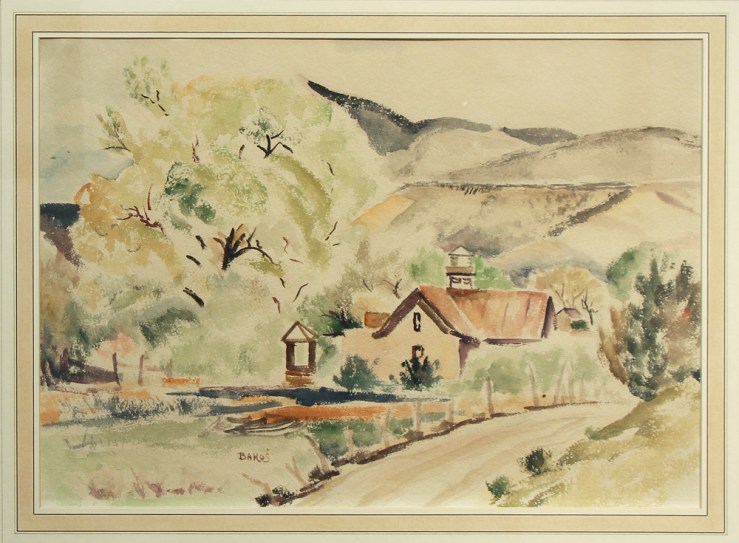
BIRTH OF AN ARTIST: Three Mentors of Eric Sloane

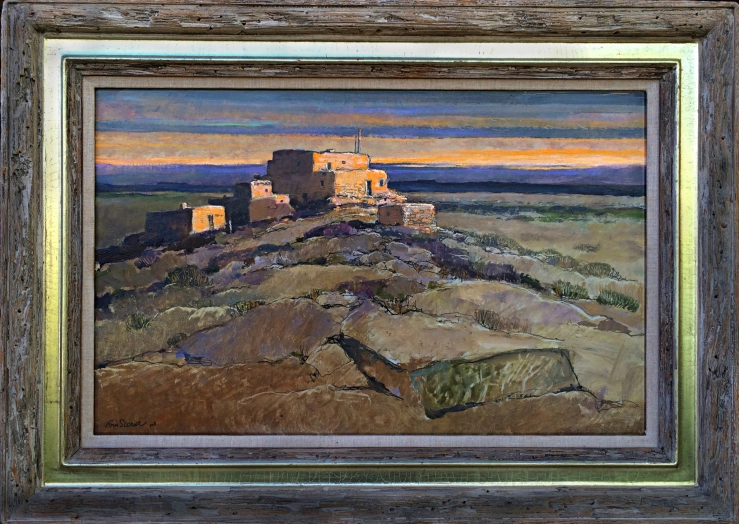
Eric Sloane- Hopi Country- Oil on Panel- Matthews Gallery Blog

PROLOGUE

When a historic artwork enters our collection, it’s the first clue in a grand investigation. A painting is a concrete piece of evidence that links to the artist’s evolutionary chain, leading us back through the years.

Eric Sloane’s Hopi Countrypictured above, helped us trace its creator from New Mexico to his hometown of New York City. Along the way we met three of Sloane’s mentors, who are all revered figures in American history.

Frederic W Goudy- Mentor to Eric Sloane- Matthews Gallery Blog

FREDERIC W. GOUDY

Eric Sloane was born Everard Jean Hinrichs in New York City in 1905. Meanwhile in Chicago, Sloane’s future mentor Frederic W. Goudy was experiencing a late-in-life rebirth. At 40 years old, he had quit his job as an accountant to open a publishing house called Village Press with his friend Will Ransom. He learned how to design typefaces and began building a portfolio.

“[Goudy started] almost from scratch at an age when most men are permanently set in their chosen vocations,” wrote Popular Science in 1942. Goudy’s new path would lead him from Chicago to Boston to New York, where he moved in next door to young Sloane.

As Goudy’s career took off with a series of hit typefaces—Kennerly Old Style, Goudy Old Style, Copperplate Gothic—young Sloane learned the tricks of the trade. Goudy would design 122 typefaces in his lifetime, topping Gutenberg and Garamond. His painting lessons for Sloane soon launched one of the great adventures of the budding artist’s life. But first, a scholarly interlude.

John Sloan- Mentor to Eric Sloane- Matthews Gallery Blog

JOHN SLOAN

Sloane changed his name while studying at the Art Students League of New York. He took the middle letters of “America” for his first name, and tweaked the surname of his mentor John Sloan. Sloan encouraged his students to adopt pseudonyms in order to sever ties with their earlier, less accomplished work. He was a passionate and sometimes volatile teacher who believed in art for art’s sake.  “I have nothing to teach you that will help you to make a living,” he would tell his students. Although he was a well-known artist who participated in groundbreaking exhibitions like the 1913 Armory Show, his artwork rarely sold.

Sloan’s circle came to be known for their realist depictions of poor neighborhoods in New York. Sloane never took to this subject matter, but finding a new name was transformative for the young artist. With his patriotic moniker and the skills he’d picked up from Goudy, he took off across the country in the summer of 1923, painting sings on barns and stores to make ends meet. Two years later he took another, longer adventure to New Mexico, one of Sloan’s favorite vacation spots.

Much like other students of Sloan, the light and colors of the New Mexico inspired Sloane to push his art in a new direction. He picked up oil painting and learned to capture the light, color and endless expanses of the High Desert, and returned to Long Island in 1927 with a new sense of purpose.

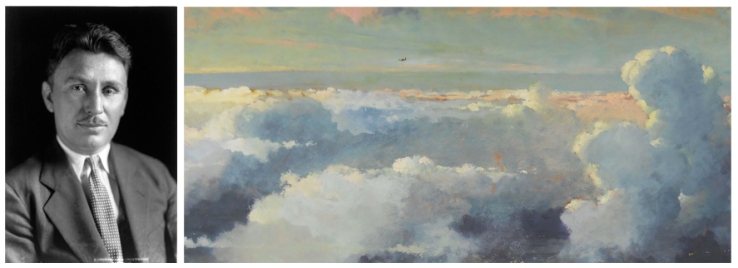
Wiley Post- Mentor to Artist Eric Sloane- Matthews Gallery Blog

WILEY POST 

Sloane grew up during the Golden Age of Aviation. By 1933, his fascination with aircrafts lead him to a job at the Half Moon Hotel, which was close to Long Island’s Roosevelt Field. The aviators who stayed at the inn became some of Sloane’s first patrons, paying him to make oil paintings of their planes. Aviator Wiley Post was so impressed by Sloane’s work that he offered to swap flying lessons for painting lessons.

Post had trained to be an aviator during World War I, but the war ended before he entered active duty. He worked as a parachutist for a flying circus and a barnstormer before becoming a private pilot for wealthy Oklahoma oilmen. The job earned him enough money to set out on a worldwide adventure, and he became the first pilot to fly solo around the globe.

Sloane was so inspired by his flights with Post that he began painting the sky, as seen from the cockpit of a plane. Amelia Earhart bought the first work in this new series, and one of Sloane’s largest cloud paintings is now in the permanent collection of the Smithsonian Air and Space Museum. At 28 years old, Sloane had grown from an eager student to a full-fledged master.

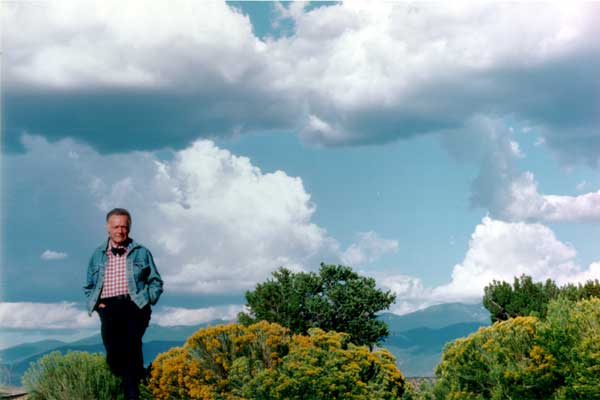
Artist Eric Sloane under a New Mexico Sky- Matthews Gallery Blog

EPILOGUE

Sloane started painting landscapes in the style of the Hudson River School, a mode that fit his fascination with turbulent weather. Beginning in the 1950’s, he took up residence in Taos for part of each year. He built a home in La Tierra, New Mexico in 1975. Sloane captured the light and color of the Land of Enchantment with boundless enthusiasm. Hopi Country features every brilliant hue in a Land of Enchantment sunset.

Over the course of his career, Sloane produced over 15,000 artworks and 38 illustrated books. He died of a heart attack in 1985 on the steps of New York’s Plaza Hotel, on his way to a luncheon in his honor. The event was a celebration for the release of his biography, ‘Eighty: An American Souvenir.’

It’s quite a tale, and it all unwound from a single oil painting on our wall! Learn more about Eric Sloane on our website, and make sure to connect with us on Facebook, Twitter and Flickr for daily gallery news.

MORANG AND FRIENDS: The Bohemians

Alfred Morang Art Exhibition- Matthews Gallery Blog

How did you get this many Morangs together?”

That’s the most frequent question we’ve received from Alfred Morang fans who’ve come to our show in the past few weeks. It’s common to see one or two works by the Santa Fe master in a gallery’s collection, but it’s quite a special experience to view 37 pieces in one place.

Truth is, we called our exhibition MORANG AND FRIENDS because we thought Morang’s contemporaries would dominate the show. It was only through a huge response from the Santa Fe community—private collectors, dealers, galleries—that it all came together. We’re so grateful to everyone involved for working with us, with special thanks to El Farol, Silver Sun Gallery, the Matt Kuhn Collection and our co-curator Paul Parker.

And what a show it was! As we take the paintings down today, we’re feeling quasi-nostalgic for the Santa Fe golden age that Morang’s diverse body of work evokes. For the last 21 days, we’ve been transported to a City Different full of wild saloons and drunken shootouts, free-flowing absinthe and spooky ghosts.

For our final blog post on the show, we thought it would be fitting to spotlight the colorful clique of bohemian artists who surrounded Morang during his time here in the 1930’s- 50’s. Morang was a brilliant art teacher who passed his knowledge to the next generation of Santa Fe artists. They ensured that his influence still ripples through the New Mexico art world today…

Portrait of Alfred Morang by Tommy Macaione- Matthews Gallery Blog

 TOMMY MACAIONE

This portrait of Alfred Morang appeared in the exhibition courtesy of the Matt Kuhn Collection. It was made by another colorful Santa Fe character, Thomas S. Macaione (1907-1992), also known as ‘El Diferente’. Macaione’s mature painting style was heavily influenced by Morang’s teachings, and they also had similar lifestyles. They lived as true bohemians, devoted to art above all else.

“[Macaione’s] passion for plein-air painting was not entirely appreciated at first in the town’s lingering Wild West atmosphere,” wrote the Santa Fe New Mexican in 2013. “Once, when painting a garden on Acequia Madre, he was scared off by the property owner, who fired a pistol in the air in his flowers’ defense.” A photograph of this bust appears on the final page of Walt Wiggins’ essential biography of Alfred Morang, A Neglected Master, along with a quote from Margaret Turner Williams:

 [Morang] died as he lived: alone. Yet he was never lonely, for he was a creator, and creators learn early in life to bridge the gap between the pain of loneliness and the peace of solitude.

With no material wealth, he was one of the richest human beings who ever lived. Everyone who knew him, and some who didn’t, feel a sense of loss at his passing.

Alfred Morang- Into Tomorrow- Matthews Gallery Blog

TRANSCENDENTAL PAINTING GROUP

A small group of New Mexico artists including Raymond Jonson, Emil Bisttram, and William Lumpkins formed the Transcendental Painting Group (TPG) in 1938. The collective was inspired by early abstract artists like Wassily Kandinsky and Piet Mondrian, as well as Theosophy, Zen Buddhism and Dynamic Symmetry. Their goal was to validate and promote abstract art by transcending their senses to explore spiritual realms. The group organized lectures, published articles and mounted exhibitions in New Mexico, San Francisco and New York. Alfred Morang was not a founding member of the group, but he acted as their press secretary for a number of years. An excerpt from Morang’s November 4, 1938 article “Transcendental Foundation Plans Extensive Activities” in the Santa Fe New Mexican:

It is deeply significant that in this time of readjustment in almost every stratum of life, a few people are intent upon an important branch of cultural development. In Santa Fe the founding of the ‘American Foundation for Transcendental Painting, Inc.’ marks the start of a new phase of American art. […] Briefly, transcendental painting is no school or ism. It is a phase of art that, out of many more or less isolated experiments, has evolved toward non-objective painting, the type of painting that is not dependent upon an object, in nature, but is deeply concerned with forms conceived by the imagination.

The TPG only lasted a few years, disbanding in 1942 because of World War II. However, the collective’s influence endures in the Southwest and beyond. Some consider the group an heir to Russian Constructivism and the Bauhaus. Morang completed a number of abstract works inspired by the group’s philosophy, including the oil painting above titled “Into Tomorrow“. Click here to see more.

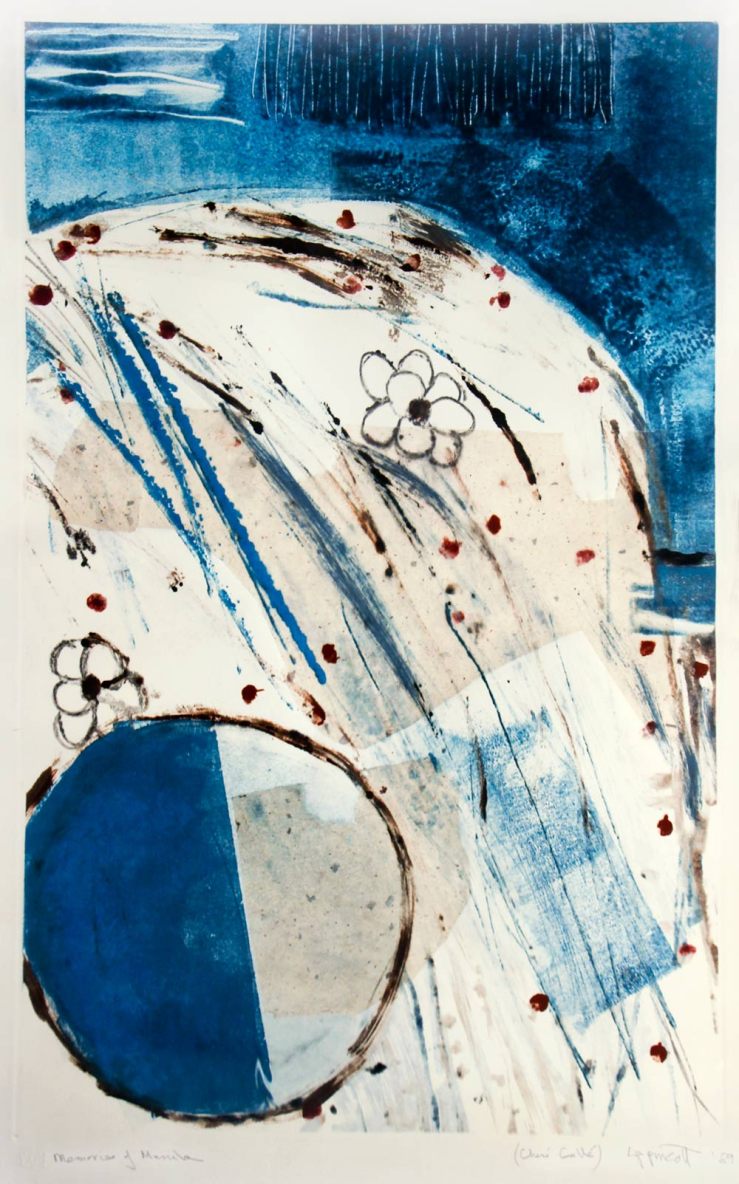
Janet Lippincott- Alfred The Painter- Matthews Gallery Blog

JANET LIPPINCOTT

 “Alfred Morang was one of the few people who encouraged me in my abstract expressionism,” said Janet Lippincott (1918-2007), one of Morang’s  best-known pupils. Lippincott came to New Mexico in 1946 and studied at the Emil Bisttram School for Transcendentalism in Taos. Bisttram was a founding member of the Transcendental Painting Group (1938-1942), a collective of abstract painters with a spiritual, non-political approach to art, for which Morang served as press secretary. Santa Fean Magazine interviewed Lippincott for an article on Morang in their April 1978 issue:

He was an excellent painter and inspiring teacher “and he had a good mind,” Janet Lippincott says. She studied landscape painting with him for three months one summer, and she remembers that “he had something about him that could draw out the best you had in you.”

This portrait of Alfred Morang isn’t the only artwork by Lippincott that appeared in the show. Click here to see more.

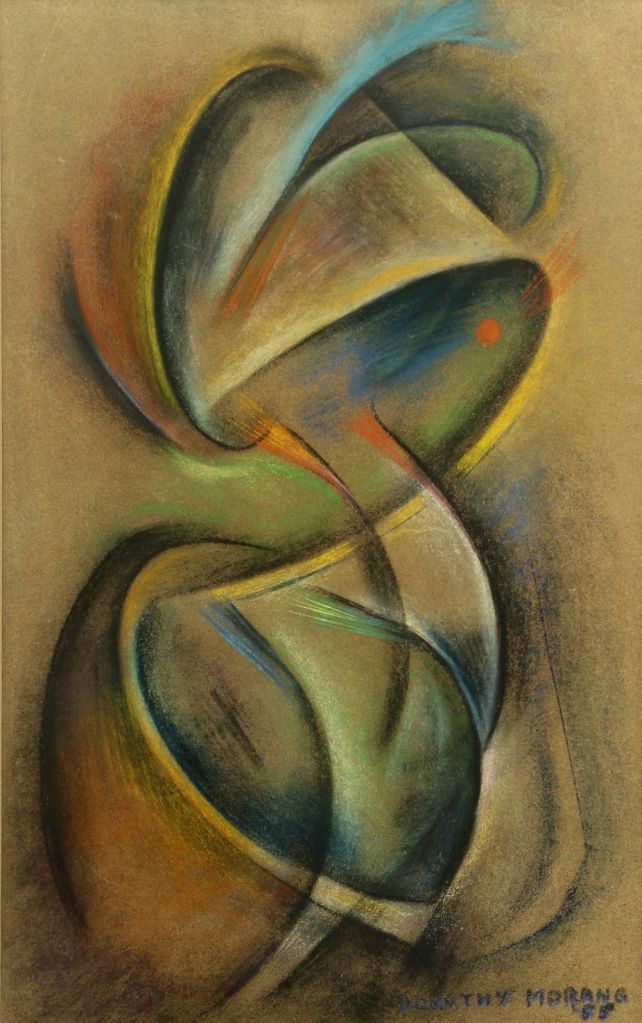
Dorothy Morang- Untitled Abstract 1935- Matthews Gallery Blog

DOROTHY MORANG

Dorothy Morang (1906-1994) was born in Richmond, Maine. She met Alfred in 1925, and they were married in 1930. They lived in Portland, Maine for a number of years, and moved to Santa Fe in 1937 to alleviate the symptoms of Alfred’s tuberculosis.

Dorothy and Alfred divorced in 1950, but she looked out for him for the rest of his life and arranged the transfer of his estate to a Morang relative after his death in 1958. Dorothy was an impressive painter in her own right—here she draws inspiration from the Transcendental Painting Group, for which her husband acted as press secretary. She worked for many years at the New Mexico Museum of Fine Arts, primarily as a curator. An excerpt from an oral history interview with Dorothy Morang by Sylvia Loomis in the Archives of American Art:

SYLVIA LOOMIS: Were you painting after you got to
Santa Fe?

DOROTHY MORANG: Yes, I started even more seriously. I’d been working quite steadily in Portland, Maine – Alfred and I lived there for about seven years before we came here – and I went on and worked very seriously with some criticism from Alfred and from Raymond Jonson, who was living in Santa Fe then. […] Alfred had also taken up writing, and he was very active, as you know, on radio, too, interviewing artists on the radio. He had an interview program for several years. He was extremely active.

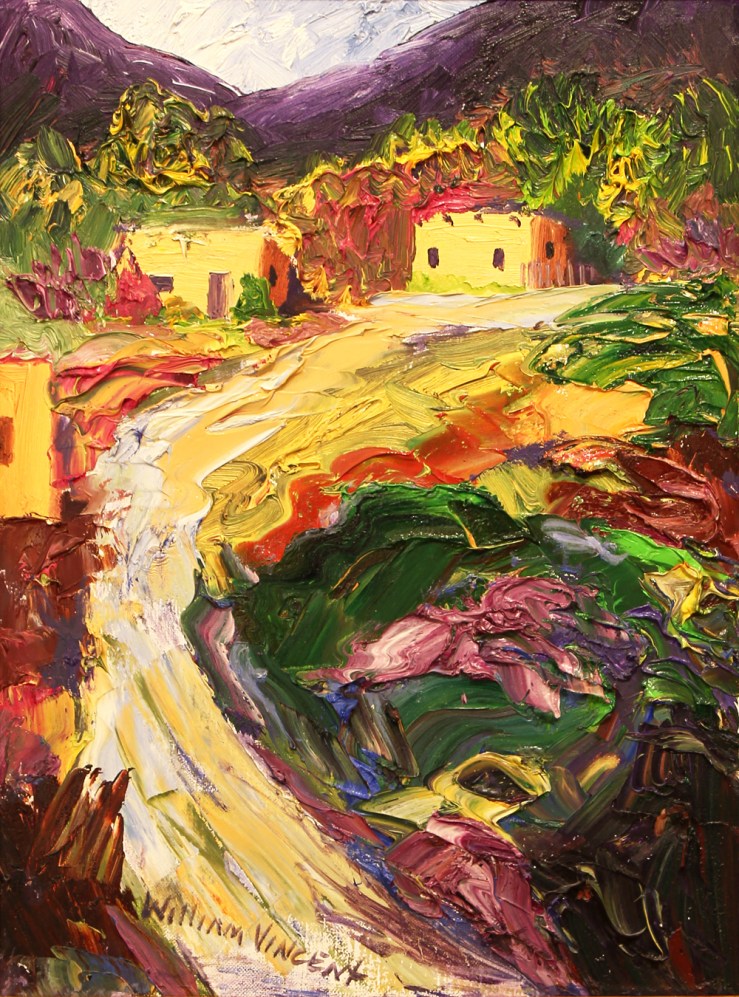
William Vincent Kirkpatrick- Upper Canyon Road- Matthews Gallery Blog

WILLIAM VINCENT KIRKPATRICK

“[Alfred Morang] taught half of us how to paint and the other half how to see,” remarked an unknown Santa Fe artists after Morang’s tragic death in 1958. The Morang School of Fine Art was instrumental in the development of a new generation of Santa Fe artists. At the time of Morang’s death, William Vincent Kirkpatrick (1939-2004), one of his star pupils, was studying at the Taos School  of Art. He returned to Santa Fe, rebuilt his master’s studio and worked on a series of canvases inspired by Morang’s vivid hues and painterly textures. Vincent Kirkpatrick also did a painting on the wall at El Farol near Morang’s series of murals, ensuring that their work would hang side-by-side for years to come!
Learn more about Alfred Morang and his contemporaries on the Matthews Gallery website, and make sure to connect with us on Facebook, Twitter and Instagram for daily gallery news. Also keep your eye out for our 2015 exhibition schedule, which will explore other corners of the Santa Fe art colony. Coming very soon!

MORANG AND FRIENDS: Ghost Stories

El Farol- A Toast to Morang- Matthews Gallery Blog

“There are ghosts at El Farol, there’s no question about it,” says Freda Keller with a playful smile. “There’s been a lot that’s happened over the years. In 1835 there were gunfights in the bar. People hear and see ghosts late at night.”

Keller is the general manager at Santa Fe’s oldest restaurant and cantina, and we’re on a hunt for a particular ghost. Alfred Morang (1901-1958) often haunted the establishment in his years among the living. This Thursday, El Farol and Matthews Gallery are throwing a special toast to his lingering spirit in the cantina, where Morang painted a series of stunning murals. The event will christen our December 12-26 exhibition MORANG AND FRIENDS, which features rare artwork and artifacts from the man who was known as Santa Fe’s Toulouse-Lautrec.

El Farol- A Toast to Morang- Matthews Gallery Blog

“The biggest thing with El Farol, the reason why it’s been around so long, is that it’s family driven,” Keller says. “I think the customers feel like they’re family, and obviously [Morang] did too. Being an artist and offering to do these murals, you would have to be part of the family of El Farol.”

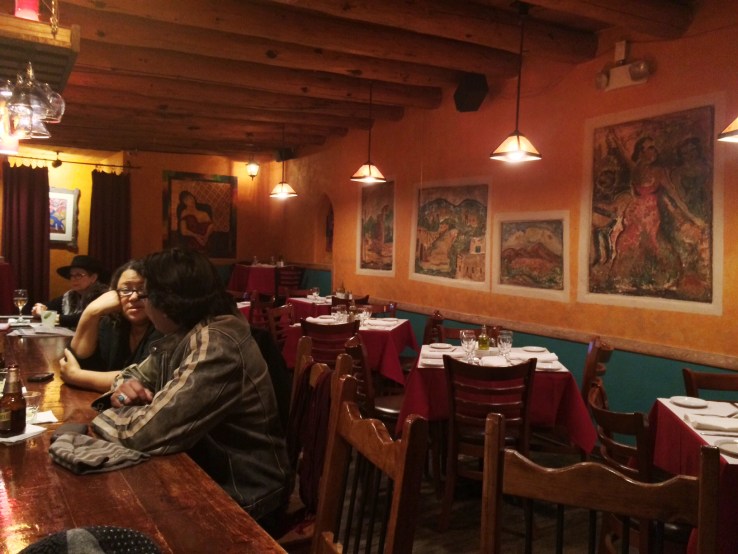
Like any proud clan, the El Farol staff is always happy to take guests on an art tour through their cozy rooms. In addition to Morang’s works, there are murals and paintings by Santa Fe legends William Vincent (a student of Morang), Stan Natchez, Sergio Moyano and Roland van Loon. Keller produces a little fact sheet that helps everyone keep the stories straight. Here’s the write-up on Morang:

El Farol- A Toast to Morang- Matthews Gallery Blog

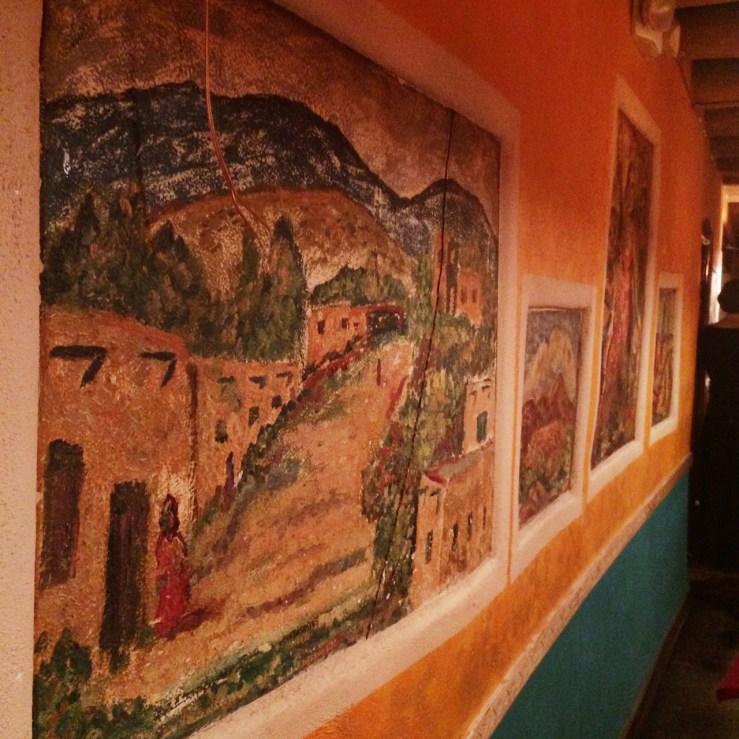
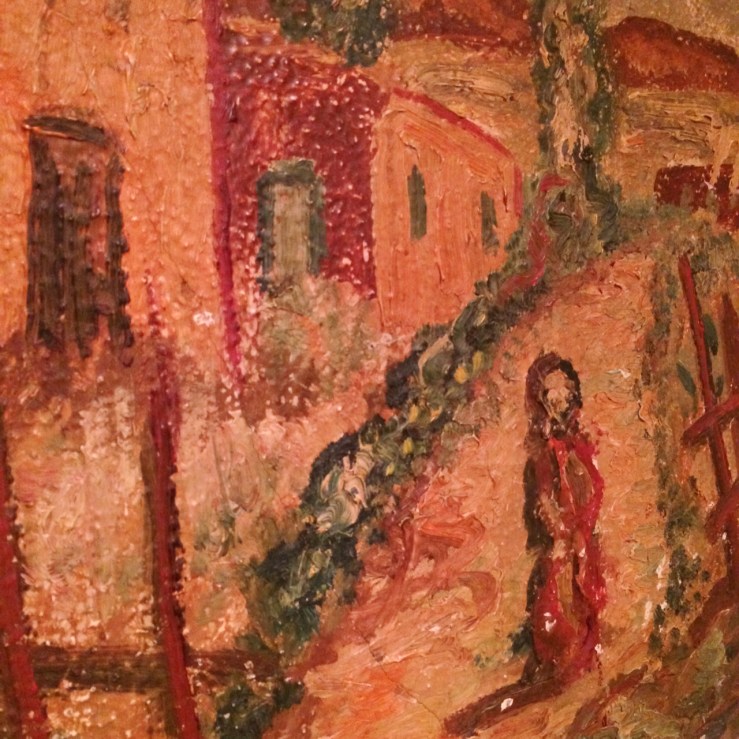
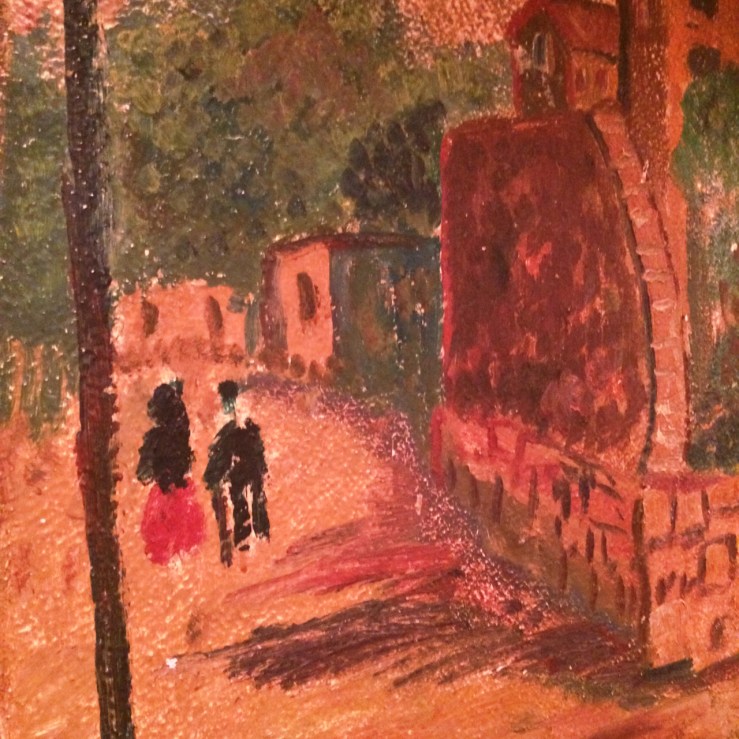
When you enter our rustic cantina, one of the first things to catch your eye will be the beautiful murals displayed throughout. The first artist to grace our walls was Alfred Morang.  On the long west wall of the bar and one behind the bar, are our oldest murals were painted between 1948 and 1952. Mr. Morang was already an established artist when he frequented El Farol during that period. He painted the murals to settle his tab at El Farol.  The scenes are of local landscapes and adobe homes in Santa Fe. We’ve chosen to reproduce our most famous mural of the flamenco dancer in the red dress accompanied by a guitarist as our poster for the 2004 Muralist dinner.  From 1968 to 1980 the owner at the time covered the murals with paneling.  When Bob Ward purchased El Farol in 1980 he removed the paneling to discover the beautiful murals beneath.  When David Salazar purchased El Farol in 1985 he was always mindful of the treasures on the walls.  Painting, re-stucco and remodeling were completed while protecting the murals.

Then comes the part of the tour that sends chills up our spines. Do you believe in ghosts? Maybe this will convince you:

On Easter morning in 1997 David and the staff were awakened by phone calls that El Farol had been burned.  The murals, though singed, had made it through the fire.

Morang died in a 1958 studio fire, so the news that some of his most notable works survived a blaze decades later is eerie to say the least. We walk over to the cantina to view the murals. When the hostess hears us mention Morang’s name, she lights up.

El Farol- A Toast to Morang- Matthews Gallery Blog

“That’s right, the murals still have burn marks on them from the fire,” she says, pointing out subtle passages of missing pigment that were lost to the flames. “They still don’t know how that fire started. They think someone may have set it.”

El Farol has long since been restored to its elegant Old West aesthetic, much as it was when Morang would stop by for a shot of cognac and draw inspiration for his impressionistic paintings of Santa Fe’s wild 1940’s nightlife. On Thursday at 6:30 PM, Keller will join the gallery staff to tell stories and toast the artist with a new “Alfred’s Special” cocktail.

El Farol- A Toast to Morang- Matthews Gallery Blog

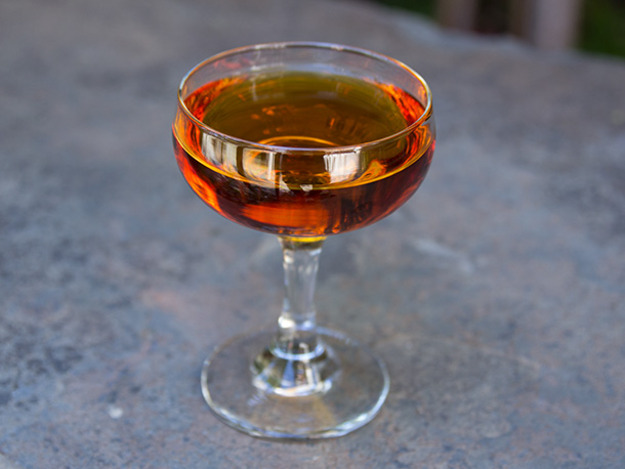
“I read up on Morang and learned that he was born in Maine, and how beautiful the landscapes are there,” says Keller. “He did a lot of painting there. His first inspiration was that landscape.” Keller selected a cocktail called Remember the Maine (with rye whiskey, Cherry Heering liqueur and a splash of absinthe) in honor of Morang’s home state. Come have a drink and time travel with us to a true Santa Fe golden age!

Learn more about our Toast to Morang event on the El Farol website and on our gallery homepage, and connect with us Facebook, Twitter and Instagram to learn more about Morang.

MORANG AND FRIENDS: Alfred in Paris

Alfred Morang Portrait- Morang and Friends Exhibition- Matthews Gallery BlogAlfred Morang, 1952

“After Morang’s death, all of a sudden people started to realize that he was a great artist. People regretted that they didn’t pay enough attention to him,” Santa Fe art collector Paul Parker said at the end of our interview last week.

As Parker will tell you, Alfred Morang’s death in a Canyon Road fire in 1958 was the end of an era in Santa Fe. From his arrival in 1937, Morang had helped cultivate a vibrant art scene in the City Different. His house parties of the 1930’s and 40’s earned him a reputation as “one of Santa Fe’s… most colorful Bohemians,” as the Santa Fe New Mexican dubbed him in his obituary. Morang was a masterful painter who drew inspiration from the French Impressionists, and a talented teacher who passed his knowledge to the next generation of Santa Fe artists. He was a great writer, musician and radio broadcaster.

However, towards the end of Morang’s life, he and his wife Dorothy divorced and he became increasingly isolated. He spent most of his time fervently painting in his Canyon Road studio. Santa Fe artist Bill Tate had this recollection of a frigid winter in the 1950’s:

Oh my, it was cold! The snow was pouring down unmercifully and as I walked into Alfred’s tiny studio, I pushed paintings aside to make a path, then found them sliding in behind me as I penetrated the cache of completed canvases. It appeared that paintings were everywhere. There in the middle was Alfred, happily painting away, bundled up like a Siberian monk—galoshes, muffler, sweater, heavy top coat which came to his ankles, and a woman’s hat pulled snuggly down over his ears and neck.

The studio had a sky light, but where the glass was supposed to be, there was none. Alfred had hung an old muslin sheet over the opening to shut out the falling snow. Evidently Alfred had let the fire go out in the small space heater. Or maybe had forgotten to pay his gas bill. I don’t know. But it was awful. I had been there just a few minutes when the muslin partially ripped loose from the ceiling and began flopping in the wind. Snow dumped all over Alfred as well as the canvas.

Alfred never looked up, never stopped painting. His blue-cold hands kept mixing painting and dabbing it on the canvas. Occasionally, he would lean back to assess the effect, but throughout, he was totally oblivious to my presence… or the muslin that danced in the bitter breeze.

I attempted to speak, but only a chatter came out. I retreated to the warmth of my own studio. To the day he died, Alfred never knew I was there.

This somber image of an artist in the winter of his life is not how Parker likes to think of Morang. Soon after he first visited Santa Fe in the 1990’s Parker developed a fascination for the Santa Fe icon that has taken him on many adventures, including a national treasure hunt that inspired our latest exhibition. The artifacts Parker discovered will appear alongside artwork by Morang and his contemporaries in our December 12-26 exhibition MORANG AND FRIENDS, evoking an era full of crackling creativity. Morang stood at its warm heart.

In the story below, Parker captures the Santa Fe zeitgeist before and after Morang’s death, and travels to Paris to complete a mission in Morang’s memory:
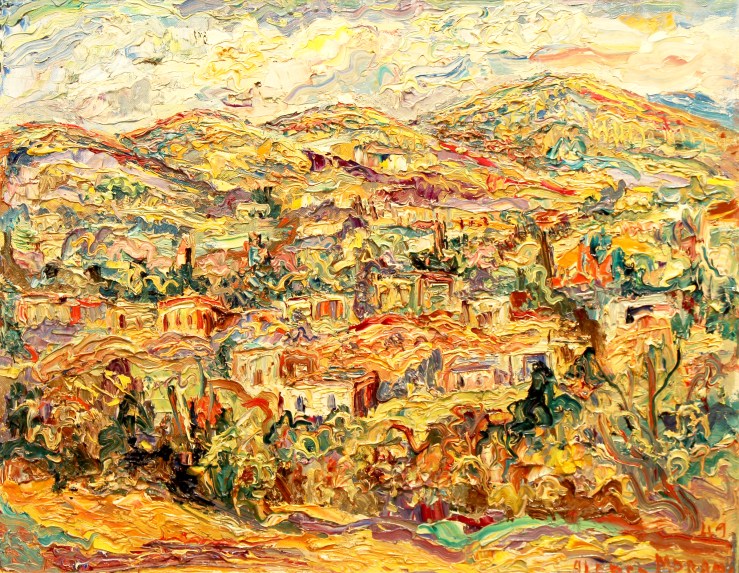
 Alfred Morang- Santa Fe Hillside 1949- Matthews Gallery Blog Alfred Morang, Untitled (Santa Fe Hillside) 1949, Oil on Canvas

HUNTING FOR ALFRED MORANG

by Paul Parker

I had been thinking about this mission for a long time and I finally find myself in the library seated in front of this antique microfilm viewer the size of a small refrigerator and I have loaded the reel containing the early 1958 issues of the Santa Fe New Mexican.

I was not sure why I had this unremitting need to know more about Alfred Morang. I had first seen his work painted on the adobe walls across from the bar in El Farol on Canyon Road and in Maria’s on Cordova, but I know the real inspiration came from my good friend Jim Parsons in Taos. Jim was an art dealer and appraiser forever and a friend and mentor for 20 years. When he mentioned that Alfred Morang was one of his favorites I knew I needed to pay attention. It was like Willy Wonka telling me about one of his favorite chocolate bars.

It helps that Alfred was such a compelling man, so well versed in music and literature as well as painting. He was the youngest person ever to perform a solo violin concert in the prestigious Jordan Hall in Boston. He was also an accomplished writer. The London Times once called him one of America’s leading non-political short story writers. Erskine Caldwell was a friend of his and he often visited Alfred and his wife Dorothy in Santa Fe.  Alfred’s short stories and poems were published alongside Frost, Poe and Mark Twain. I do know the main reason I am so drawn to him is that his art touches me. Behind that art is Alfred’s story, his life experience and that is what drove him to create the art that Jim and I and many others enjoy so much.

Alfred Morang- Untitled Portrait of a Woman 1950- Matthews Gallery BlogAlfred Morang, Untitled (Portrait of a Woman) 1950, Oil on Board

There is a very sad part to his story and it is that part that drew me to the library. Alfred Morang died in a fire in his Canyon Road apartment studio on a cold January night at the age of 56. I had wanted to come here to the library and read the January 29, 1958 issue of the Santa Fe New Mexican for some time. I wanted to know the details, I wanted to read what people said, I wanted to know what page it was on and how big the article was. I was scrolling through the microfilm and as I started approaching the day he died I realized I was reading the papers that he probably read unaware he only had days to live.

The closer I got to the issue of the paper I had come to see the more time I took reading the articles and I even started reading the ads. I lingered the longest on Tuesday’s edition dated January 28, 1958. That was the last paper Alfred could have read.

There was an article on that day that I am sure must have caught Alfred’s eye and the headline read, “French Ballet loses Backing”. Alfred never made it to Paris, but his heart was there. His heroes were the French Impressionists and he considered himself to be one of them. Monet and Bonnard were his favorites. The article explained that the French Education Ministry had withdrawn the government subsidy for the production of Francoise Sagan’s ballet “The Broken Date”. The ministry’s action followed a storm of protest. Apparently one dance was performed in a bathroom setting designed by painter Bernard Buffet and was described by some critics as scandalously erotic. I would like to have gone to Paris with Alfred and attended that performance. A French ballet with a bathroom setting designed by Bernard Buffet coupled with scandalously erotic, I am sure we both would have enjoyed that.

That Tuesday the Lensic was showing “Pal Joey” starring Rita Hayworth, Frank Sinatra and Kim Novak. Kaune’s was having a sale featuring Pork Chops at 59 cents a pound and Swanson’s Pot Pies at four for a dollar with your choice of chicken, turkey or beef. Cherry Motor’s at 607 Cerrillos Road had an ad for the new Rambler American for $1789. The ad proclaimed that one had been driven from New York to Los Angeles using only 80 gallons of gas averaging over 30 mpg. I remembered that time. One week before this ad ran I had celebrated my 12th birthday and becoming a teenager was in sight. Unlike today I was looking forward to getting older and that was the time I began thinking about cars. Chevrolet had just introduced the 283 V-8 a year earlier in the now iconic 1957 Chevy. The fuel economy push left over from the war was fading fast and the Plymouth Hemi and the “Little GTO” were on the horizon. The economical 6 cylinder Rambler American never had a chance.
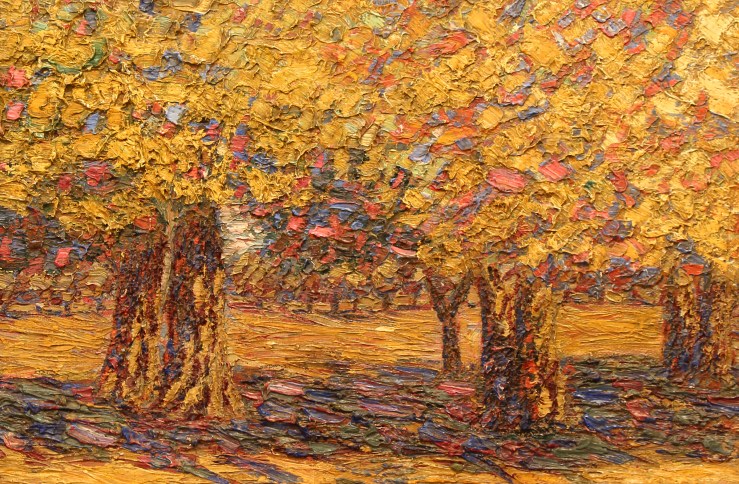
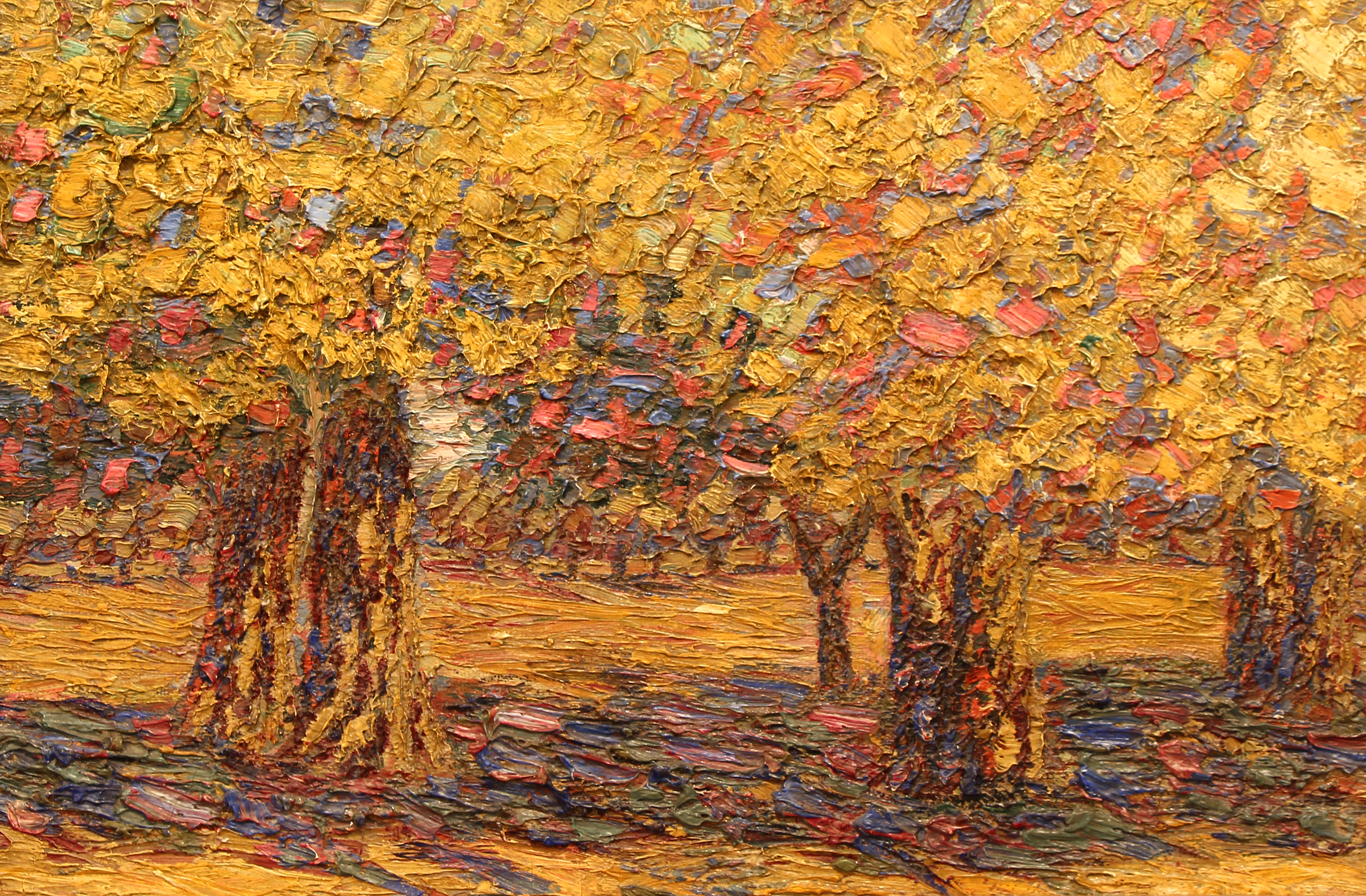
IMG_0474Alfred Morang, Pecan Grove, Oil on Panel

I read every bit of that Tuesday’s paper. It was as if I felt that Alfred would be okay as long as I did not turn the page, but I knew it was time to see what I had come to see. I took a last look at the classifieds and marveled at an ad for a 2-bedroom adobe with wall-to-wall carpet “close in” for $16,500 and then I hit the button and watched the microfilm reel turn slowly.

The first thing I saw positioned on the top left side of the front page of that Wednesday edition of the Santa Fe New Mexican was a large photograph of a cat crouching on the corner of a charred mattress. The rest of the bed was strewn with papers and tubes of paint. Underneath the right half of the photo was a caption “Mourning for Her Master…This lonely cat was found wandering through the charred ruins of the home of her master Alfred Morang who died in the fire early this morning. The cat is on the bed where he died.” Morang’s friends had commented on his love of cats and noted that he often went hungry himself so he could afford to feed them. Two other cats perished in the fire with him. Unfortunately I discovered that the cat on the mattress in the picture had to be put down because it had extensive lung damage. There was also a picture of Alfred. A cigarette in a holder was hanging from the corner of his mouth dangling over his scraggly beard and he was wearing a black hat with a brim that was tilted slightly to the left making him look decidedly like an artist and decidedly French. The story next to the photo read “Well Known Artist Dies In Home Fire… Alfred Morang, 56, one of Santa Fe’s best known and most colorful Bohemians died at about 1:30 am last night in a tragic fire at his home in the 600 block of Canyon Road.”  Friends reported they had last seen Alfred in Claude’s bar around midnight. His apartment was just up the alley out back.

Five days after the fire the New Mexican noted…“Funeral services were held Saturday at the Fairview Memorial Park Crematorium in Albuquerque for Alfred Morang, widely known Santa Fe artist, writer and critic who was burned to death early Wednesday morning in a fire at his home here. The body was escorted to Albuquerque by a group of close friends, including Randall Davey, Will Shuster, Harlan Lizer, Walter Dawley and William Currie. Alfred was transported in a Spanish Colonial coffin made by Abolonio Rodriguez, custodian of the art museum.”
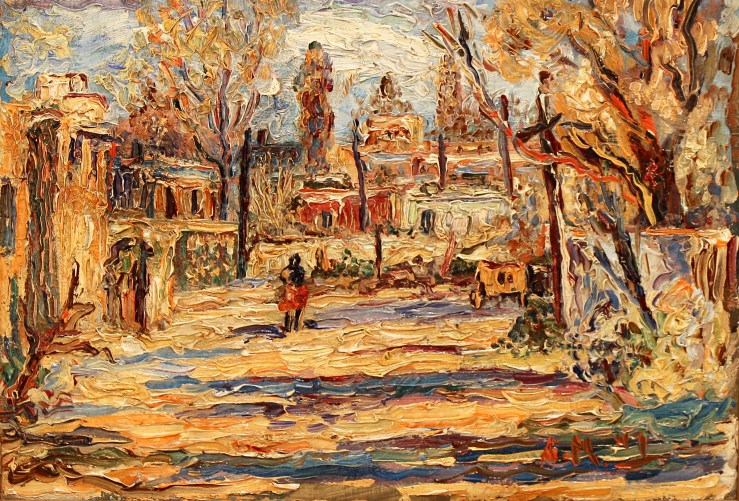
IMG_0505Alfred Morang, Guadalupe Plaza 1947, Oil on Board

Alfred was born in Ellsworth, Maine in 1901 and came to Santa Fe in 1937. Like many who came here he suffered from TB. He immediately became a fixture in the Santa Fe art scene. He wrote a weekly column for the newspaper and he produced a weekly radio program for 17 years on KVSF called “The World of Art with Alfred Morang.” Most of all he was famous for his enthusiasm for art and his ability to teach and many benefited from “The Morang School of Fine Art”.

Walt Wiggins authored a book published in 1979 appropriately titled “Alfred Morang…A Neglected Master”. Walt uncovered several quotes during his research for his book and my favorites include the following.  “When Alfred Morang’s life came to a tragic end in January of 1958 nothing before or since has so shaken the New Mexico art colony. Some say it was a sense of guilt that struck the community for not having shown a greater sense of appreciation for one who, by destiny, was different.” One Santa Fe artist reasoned, “Why shouldn’t Santa Fe be stunned with the loss of Alfred?  After all, he taught half of us how to paint and the other half how to see.”

The February 10th 1958 issue of the Santa Fe New Mexican carried the report of the local memorial service for Alfred in Lorraine Carr’s column “It Happened in Old Santa Fe”. Dr. Reginald Fisher, director of the Art Museum spoke first. “Friends this is not a funeral, we are simply gathered here for a creative expression of merit and appreciation of a spirit that has been active in an activity that we in Santa Fe like to call art. Alfred was an inventive, searching and daring spirit as French as Lautrec, yet he never saw Paris. Last week his restless spirit found peace.”

Painter and close friend Randall Davey was next. “I have known Alfred since he arrived back in 1937. He was a kind, a gentle and a humble soul and in all those years I never heard him speak unkindly of his fellow man. He was a great painter; many of you did not think so, because often he sold his work for a mere pittance through necessity. Nevertheless it was great art and the happiest work I have seen in New Mexico. He had a love and a delight for painting and I doubt that anyone will surpass him in this field.”

IMG_0495Alfred Morang, Untitled (Mountain Landscape), Oil on Board

I hope Alfred enjoyed himself on that Tuesday. I hope he spent some time with friends and some extra time petting his cats. I hope he wrote another poem and put the final touches on his most recent favorite painting before he headed down the alley to Claude’s that evening.

Claude James ran the well-known Canyon Road bar where he often spent time and, as legend has it, her rowdy spirit was just what was needed to run that place. I would love to have met Alfred there that fateful night for a few drinks. I’m sure we would have talked through the evening about art and life as we cast occasional glances at the ever present ladies that were often the subject of his paintings and when Claude said “It’s midnight, would you fellows like another one?”  I would nod and say, how about a couple of shots of your best cognac. I would love to take a sip, lean back and turn to him and say “Alfred I know you often say that you don’t believe in art for art’s sake, but you believe in art for people’s sake. Can you explain to me what you mean by that, and please…take your time?”

A few weeks after I finished writing this story I found myself engrossed in the details of planning a trip to Paris. I was not sure why, but suddenly it came flooding over me with incredible clarity. Human life really is very fragile and it really is all going to come to an end someday and we do not know when. I knew then I needed to go to Paris and I needed to go now. Unfortunately most people have that epiphany too late in life. They start thinking about the things they never got to do after it’s too late to do them. I knew then that this sudden obsession with Paris was a message from Alfred. Paris was his promised land, but he never made it there and I was going to go for both of us.

I told a friend in Santa Fe this story and he said, “You should do something for Alfred in Paris.” It was a great idea, but what would I do? I had been in Paris 5 days when I suddenly knew. I found an image of a Morang painting on my laptop. I printed it and wrote a bit on the back about Alfred and headed off to the Musee d’Orsay. This time as I enjoyed the paintings I was also searching for a repository for Alfred’s work and I finally found it. I can tell you that a fine example of the genius of Alfred Morang now has a home in Musee d’Orsay on the banks of the Seine and it will take a jackhammer to find it. He is close to Monet and Bonnard, the masters he so admired. Alfred, you finally made it.

Source: Bill Tate’s tale first appeared in the 1979 book Alfred Morang: A Neglected Master by Walt Wiggins.

COLLECTOR’S FORUM: Join the Network

Get Connected- Collector's Forum Workshops- Matthews Gallery blog

Seats are filling up for our free COLLECTOR’S FORUM workshops, which begin next Friday as part of the Santa Fe Gallery Association’s Art Matters lecture series. The events have already given us the opportunity to connect with art lovers of all stripes. As the news spreads from person to person, a network is forming with links to local art legends like Alfred Morang and Fremont Ellis.

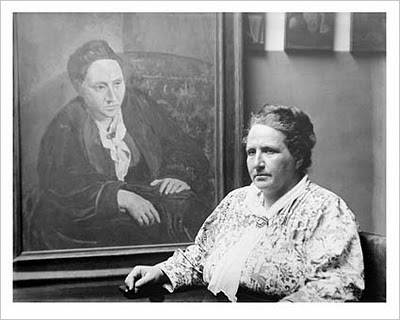
Gertrude Stein with her famous Picasso portrait- Matthews Gallery blogGertrude Stein with Pablo Picasso’s famous portrait of her

That’s why this lovely friendship map of Parisian modern artists and patrons from the early 20th century caught our eye on Twitter the other day. Celebrated salonniere Gertrude Stein is the spider at the center of the web, of course, with Pablo Picasso and Henri Matisse and Joseph Stella and Henri-Pierre Roche entangled around her. Mabel Dodge and Marsden Hartley appear too, and their later New Mexico adventures tie this famous circle directly to our own rich cultural history. Forget six degrees of separation, we’re down to one!

The art world is beautifully interconnected, but that doesn’t mean it has to be exclusive. Our workshops are designed for anyone who’s ever considered dipping a toe into the art market, whether you have a full array of masterpieces or a virtual wish list of art treasures on Tumblr. We’ll cover every angle of the art business, including:

  • How the price of artwork is determined
  • How the primary art market differs from the secondary market
  • The importance of provenance
  • When conservation should be considered for an artwork and what is involved
  • How to insure your artwork
  • How to receive an accurate art appraisal
  • How to negotiate the purchase of art
  • The best strategies for buying or selling art at auction

The workshops will feature fascinating behind-the-scenes stories from our gallery, and tales of tricky art conservation projects from special guest Matt Horowitz. Shoot us an email to reserve your seat and become a link in the long chain of art connoisseurs, from the City of Light to the City Different!

Learn more about COLLECTOR’S FORUM on our exhibition page, and connect with us on Facebook and Twitter for daily gallery news.

The Boundless Moment: All Together Now

Eric-Thompson-Artist-Family

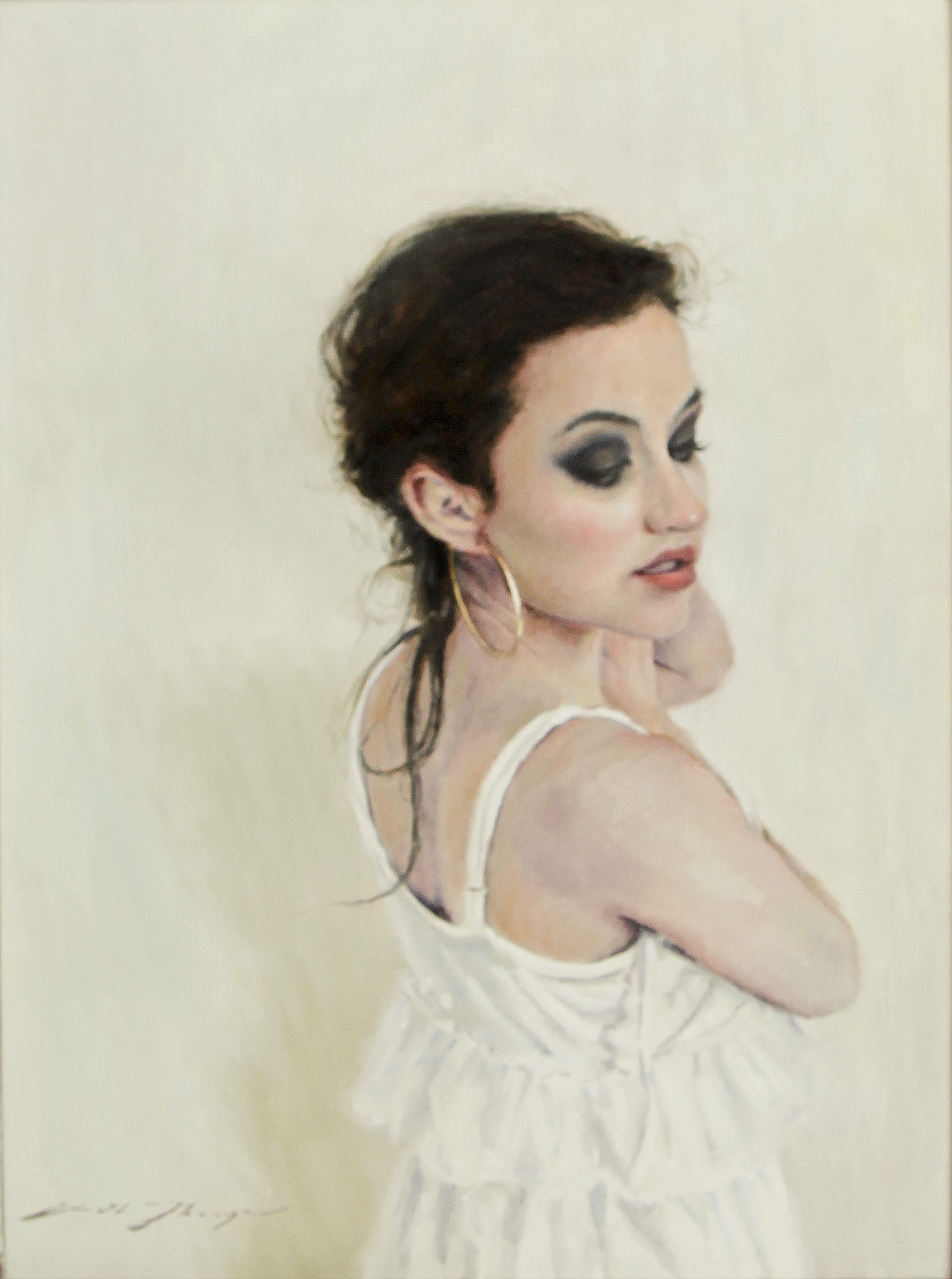
Eric G. Thompson’s ‘The Boundless Moment
opens Friday, August 15 from 5-7 pm
and closes August 28.

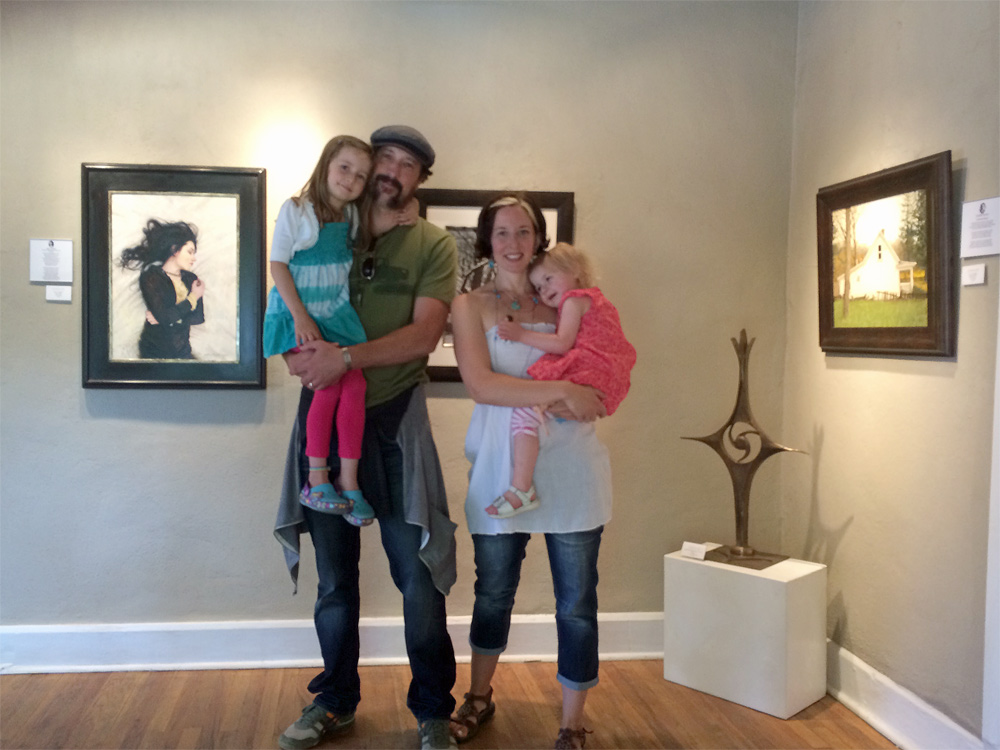
Eric and Hilary Thompson’s daughters dash around Matthews Gallery, exploring their father’s new solo exhibition ‘The Boundless Moment.’ They’ve just finished a long car ride from Salt Lake City but they’re bursting with energy.

Over the past year the children have grown alongside these canvases and panels, watching as thousands of brushstrokes transformed into rolling landscapes and rosy skin. Now these familiar images have magically appeared in our lofty, brightly lit space, sparking the girls’ curiosity. They stop before each work, craning their necks to get a good look.

The girls’ vivacity matches Hilary’s temperament. She keeps an eye on them as she chats and laughs with us. Eric is a quieter presence. He strolls around the gallery, analyzing the arrangement of the work and reading the legendary poems we paired with them. Eric likes to think of his paintings as ‘visual haikus,’ which inspired us to select writings by Frost, Dickinson, Lowell and others to display during the show.
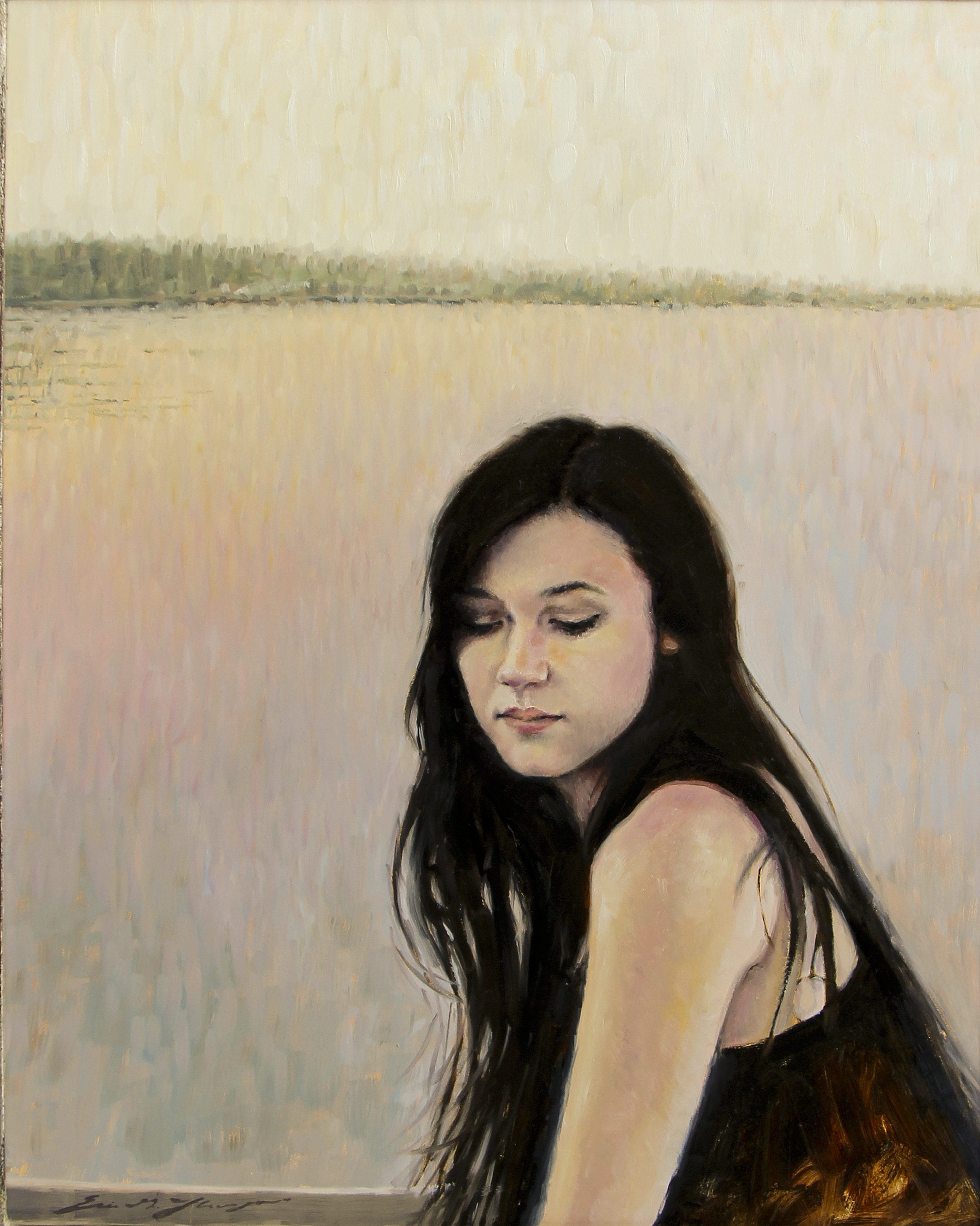
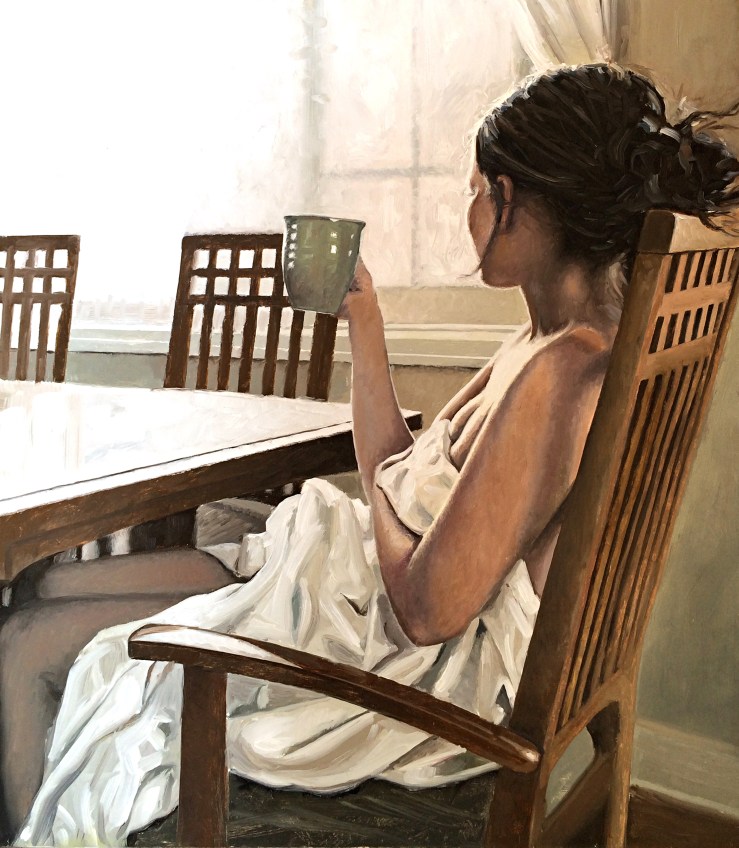
‘The Boundless Moment’ is something of a family act. Hilary was Eric’s model for the painting ‘Morning Cup,’ and wrote an accompanying poem that will debut at the opening reception. ‘The Chiseled Mother’ is a passionate meditation on parenthood and aging. As Eric cradles one of his daughters in his arms, you can tell that he’s just as inspired by the radiant spirit of his children. 

Read Hilary’s poem below, and make sure to attend Eric’s artist reception on Friday, August 15 from 5-7 pm.

Eric G. Thompson- Morning Cup- Matthews Gallery blog Eric G. Thompson, Morning Cup, Oil on Panel

From Hilary Thompson:

The Chiseled Mother

I honor this body
This matryoshka

The delicate lines of my eyes
Like tissue paper
Crinkled from sun beams
Washboards slow the momentum
of tears

These ears, these conches
That entombed the beeping screaming alarms
Echoing endlessly on exhausted drives home
Mercifully quieting with age

Eric G. Thompson- Waiting for a Song- Matthews Gallery blog


Eric G. Thompson, Waiting for a Song, Oil on Panel

This mouth
Which broadcasts comforts, screeches, praise
Fractures the tightrope of vexation

These beautiful, perfect arms
That embraced defeat
Carried a child to the surgeon’s knife
Willing arms
That waved, furrowed, aching
Sturdy farewells

This heart that beats out
The anthem of the womb
I Am
I Am
I Am

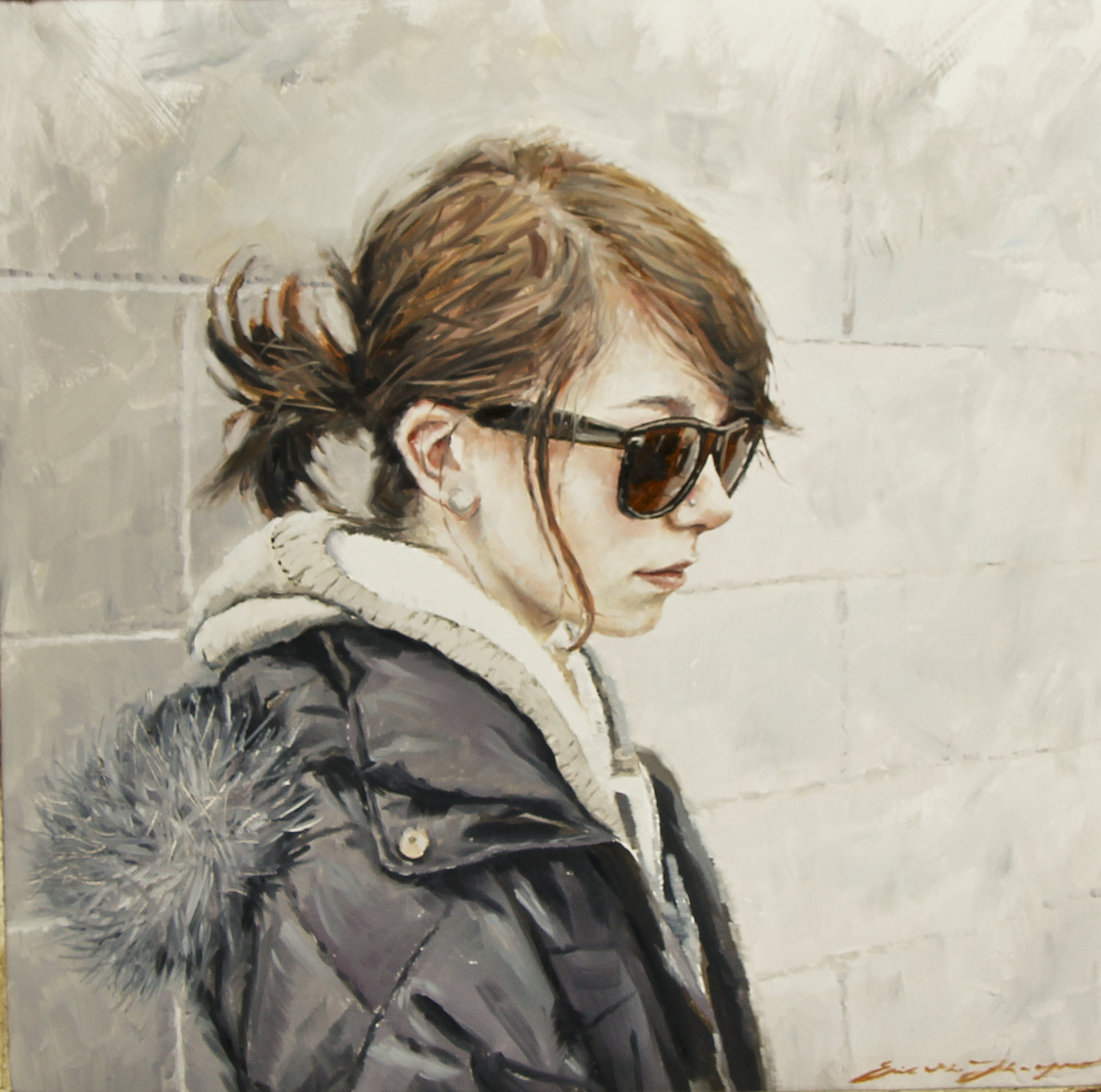
Eric-Thompson-Art-CoffeeshopGirl

Eric G. Thompson, Coffee Shop Girl, Oil on Panel

A womb
That is the definition of Creation
Bringing forth what does not exist
Into existence
Torn out of me
With upheaval and sanguine waves of nurture

These knees that caught me
When my frame buckled
Unable to support my grief

These marks, stretched
Yawning tiger stripes
Where my body gave room
Shimmer as silver reminders of a past shape

EricGThompson-Art-Evening

Eric G. Thompson, Evening, Oil on Panel

These feet
Planted.  Supporting.
Rooted even in motion, substantial
Pacing halls, hospital rooms
Threshing carpets bare-threaded

I am the red rock slot canyon
Worn smooth, fissured, curved
Sculpted
By this flawed life

This body is a shrine
A Holy place, a pilgrimage
A masterpiece painted stroke by stroke
By the breathtakingly exquisite nourishment
Of not getting what I want.

Breathe that in,
Chiseled edifice of the Mother,
Slather it like salve into your stripes,
You silver tiger.

 Connect with us on Facebook, Twitter and Instagram to learn more about Eric G. Thompson.

THE MATTHEWS GALLERY: Arc of Art History

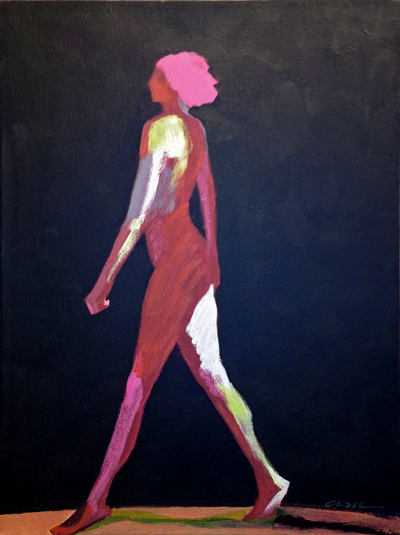
"Stride", Jamie Chase, Matthews Gallery
“Stride”

When Santa Fe visitors step into the Matthews Gallery, they often mention that something feels different. Our gallery location is in a historic adobe on Canyon road just like many of the other galleries so we have a hunch that the novelty they’re sensing is our devotion to carefully curating every wall of our gallery.

We show work from the 19th, 20th and 21st centuries. Our curatorial direction is to exhibit a variety of work from these eras that relate to the artistic development from impressionism to contemporary art. Here are some of the names that you won’t see anywhere else on Canyon Road—or even elsewhere in Santa Fe:
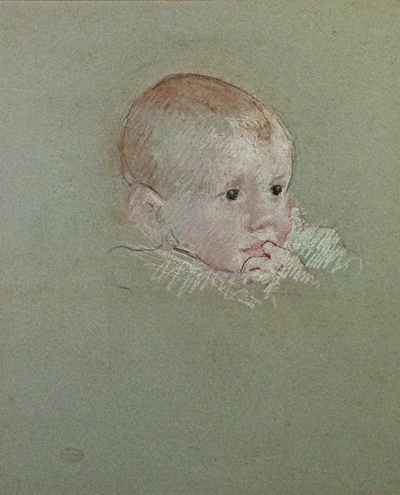
Head of Baby with Finger in Mouth, Mary Cassatt, Matthews Gallery
“Head of Baby with Finger in Mouth”, Mary Cassatt

Mary Cassatt (1844-1926) ~ The American painter and printmaker was refused entry to the Ecole des Beaux-Arts, so she studied the masters on her own at the Louvre. She would become a master herself, named one of “les trois grandes dames” of Impressionism by Gustave Geffroy.

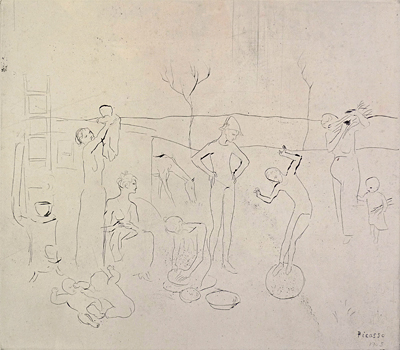
"Les Saltimbanque", Pablo Picasso, Matthews Gallery
“Les Saltimbanque” by Pablo Picasso

Pablo Picasso (1881-1973) ~ Several works by the most influential artist of the 20th century have passed through the Matthews Gallery. Our most notable current work by Picasso is “Les Saltimbanque”. The drypoint etching the artist created as a teenager shows the harlequin, a personal symbol that would recur in his work throughout his career.

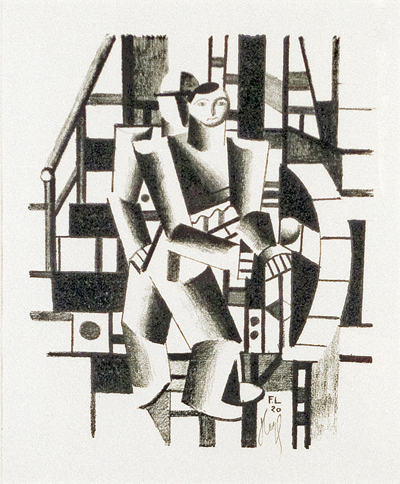
"Composition aux deux Personnages", Fernand Leger, Matthews Gallery
“Composition aux deux Personnages” by Fernand Leger

Fernand Leger (1881-1955) ~ The painter, sculptor and filmmaker’s lithograph “Composition aux deux Personnages” marked a shift in his oeuvre from Cubism to bold figurative works that would later identify him as a forerunner of Pop Art. As is the fate of all art movements, Picasso and Braque’s Cubism were irrevocably fractured.

"Blue Nude", Harold Frank, Matthews Gallery
“Blue Nude” by Harold Frank

Harold Frank (1917-1995) ~ Born in Southampton, England, Frank’s family moved to New York when he was a child. You can see influences from both shores in his colorful canvases that take cues from modernism and abstract expressionism.

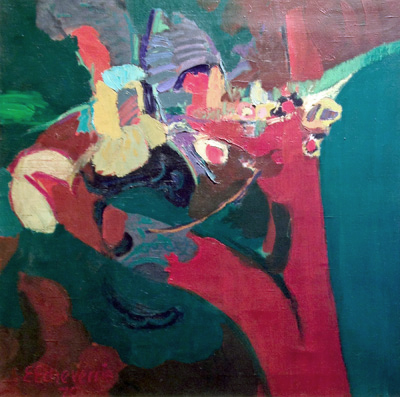
"Alic", Enrique Echeverria, Matthews Gallery
“Alic” by Enrique Echeverria

Enrique Echeverria (1923-1972) ~ Echeverria and his contemporaries brought the ideas of modern European art movements to Mexico and subverted the traditional figurative painting style. They became known as the Generacion de la Ruptura, the Rupture Generation.

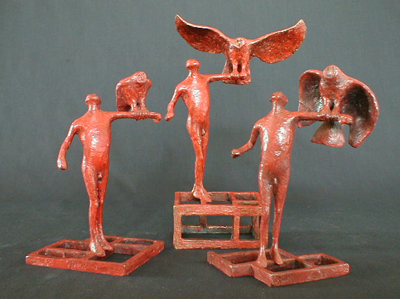
"Avian Keepers", Robert W. Hinds, Matthews Gallery
“Avian Keepers” by Robert W. Hinds

Robert W. Hinds (1924- present) ~ This World War II veteran was born a year after Echeverria. He had a successful graphics career for years before moving to Europe to study casting techniques in Italy and Bologna. Now he produces figurative bronze sculptures that are collected throughout the world.

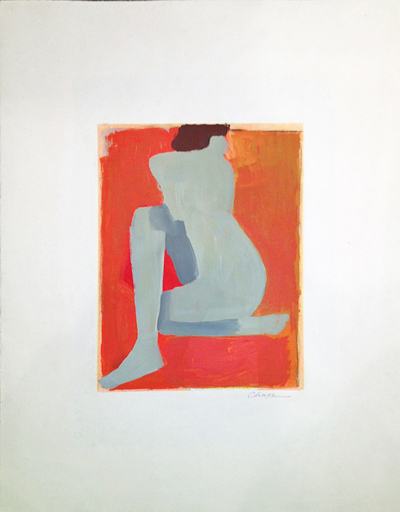
"Untitled Grey Nude on Orange", Jamie Chase, Matthews Gallery
“Untitled Grey Nude on Orange” by Jamie Chase

Jamie Chase (1954- present) ~ The painter and graphic novelist was born in California, and traveled to Europe to educate himself on the work of the masters. He moved to Santa Fe in 1980, where he’s now known for his non-objective paintings, abstract landscapes and abstracted figurative paintings.

Browse all of the artists we represent here, and follow our Facebook and Twitter accounts for updates on their work.