NEW ARMORY: Modernism’s Western Frontier

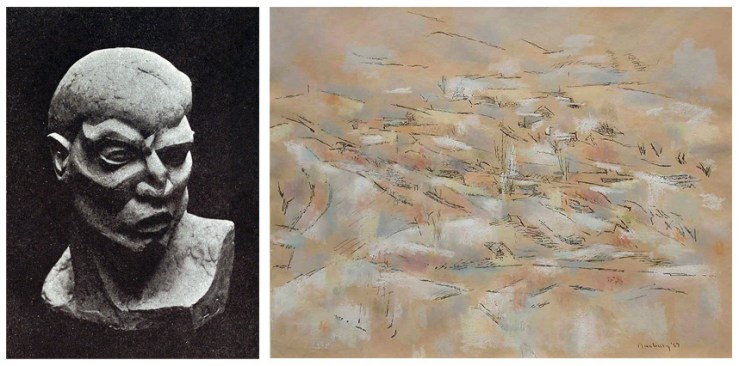
A severe sculpture by Andrew Dasburg, which appeared in the 1913 Armory Show, contrasts with his soft pastel snow scene that will appear in SPRING OF MODERNISM- Matthews Gallery Blog
A severe sculpture by Andrew Dasburg, which appeared in the 1913 Armory Show,
contrasts with his soft pastel snow scene that will appear in SPRING OF MODERNISM.
The 102nd annual Armory Show opens in New York City this weekend. Its history stretches back to 1913, when the exhibition introduced the European modernist movement to the United States. Featured artists included Pablo Picasso, Henri Matisse, Georges Braque, Vincent van Gogh Gogh and other Europeans. The show also included American artists such as Randall Davey, John Sloan, Paul Burlin, Andrew Dasburg, Edward Hopper, Marsden Hartley and more who had been influenced by the artistic revolution taking place across the Atlantic.
Not-so-coincidentally, we’re launching a modernism show of our own this Friday, and it features several New Mexico artists who participated in the original Armory show. During the first half of the 20th century, Davey, Sloan, Dasburg and a great variety of their East Coast contemporaries ventured to New Mexico and reshaped the Taos and Santa Fe art colonies into Western outposts for bold aesthetic innovation. The Taos Moderns, the Transcendental Painting Group (TPG) and other collectives engaged with new developments in the movement, gaining an influential presence on the international art stage.
Our SPRING OF MODERNISM exhibition will follow every twist and turn of New Mexico’s modernist movement through significant artworks by Davey, Dasburg, Max Weber, Doris Cross, Russell Cowles, Howard Schleeter, Rolph Scarlett, Paul Burlin, Cady Wells, Jan Matulka, Dorothy Brett and others. It features TPG mavericks Raymond Jonson, Emil Bisttram and William Lumpkins, Taos Moderns such as Beatrice Mandelman, and pivotal Santa Fe modernists including Alfred Morang and Janet Lippincott.
The scope of the show is as ambitious as its title suggests— we’re highlighting 50 transformative years of New Mexico modernist history. SPRING OF MODERNISM shows how New Mexico’s art community became one of the largest and most influential in the nation.
Look below for some of our favorite works from the exhibition, and check out a special preview on our website. Also, make sure to attend the opening on Friday, March 6 from 5-7 pm!
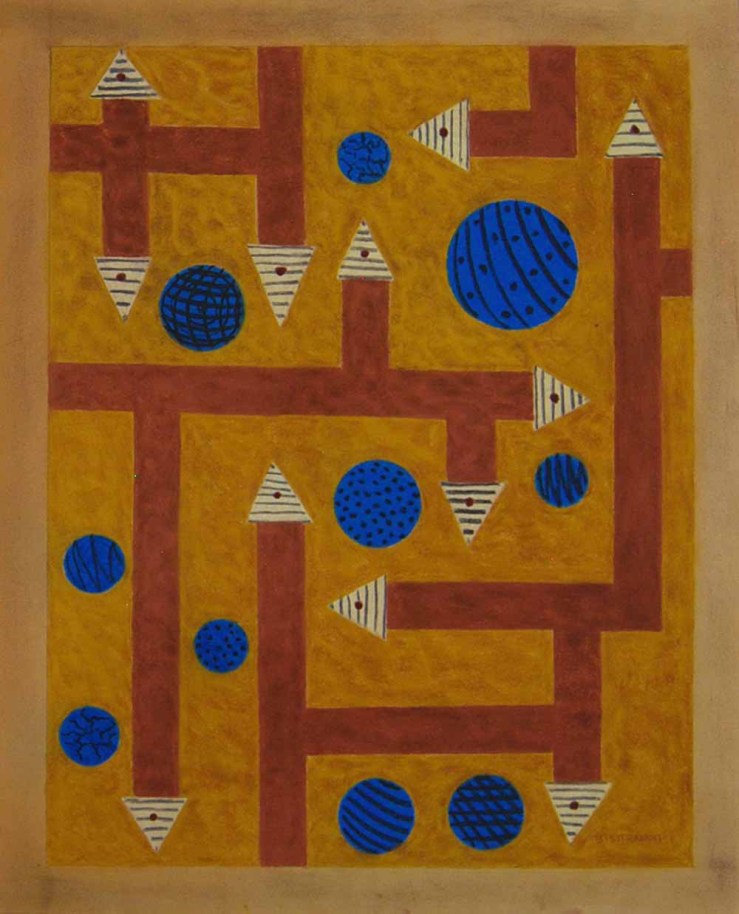
 Emil-Bisttram- Orbs and Arrows- Encaustic- Matthews Gallery Blog
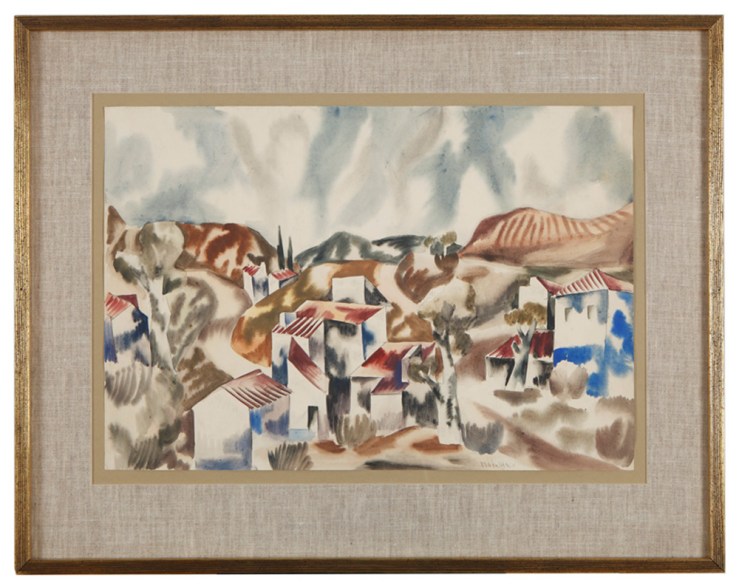
Jan Matulka -Landscape - 1923- Watercolor- Matthews Gallery Blog
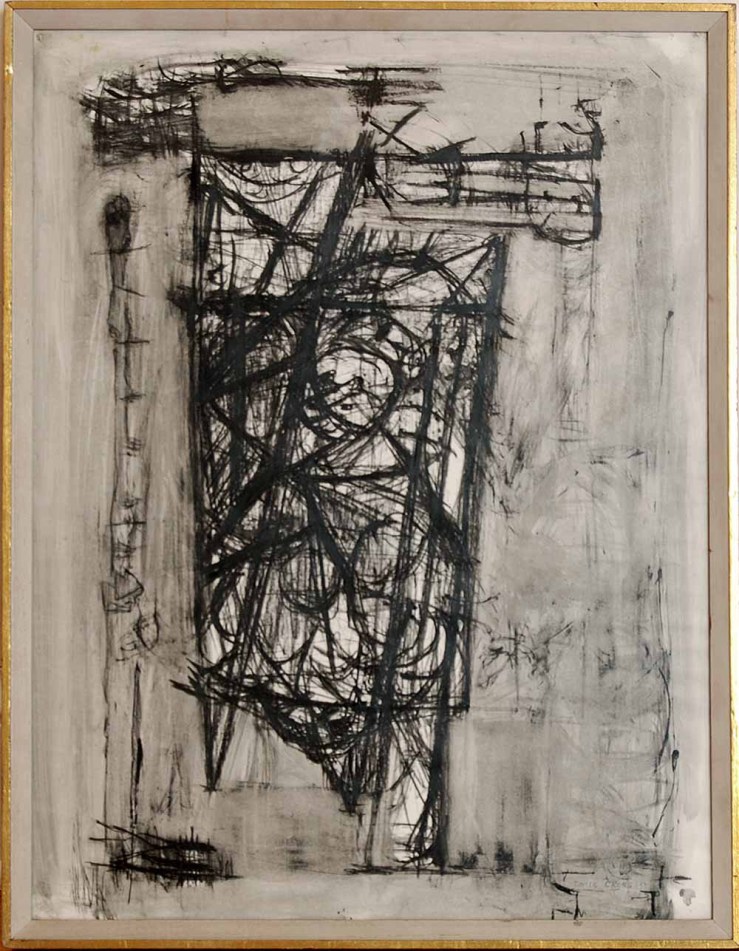
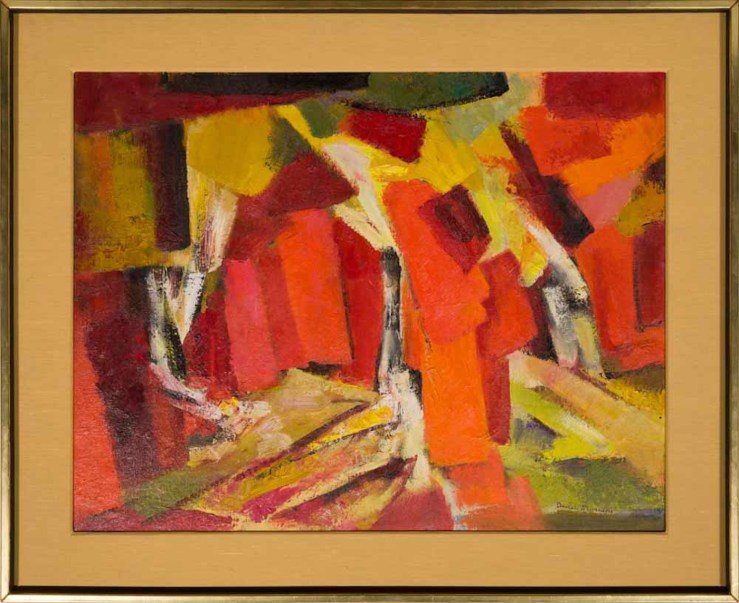
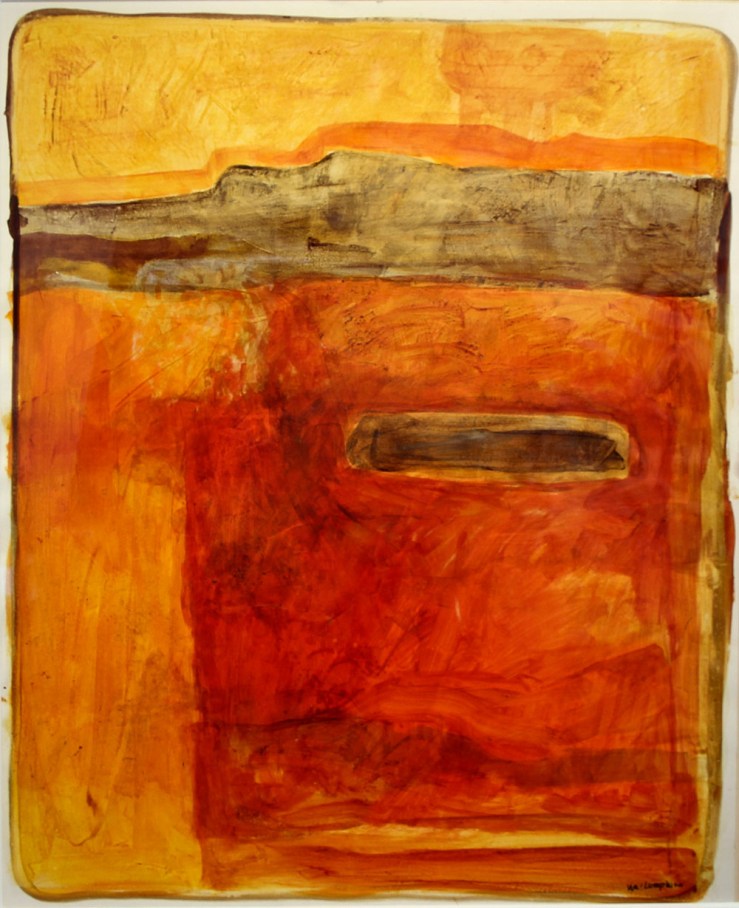
Doris Cross- Untitled- Mixed Media- Matthews Gallery Blog
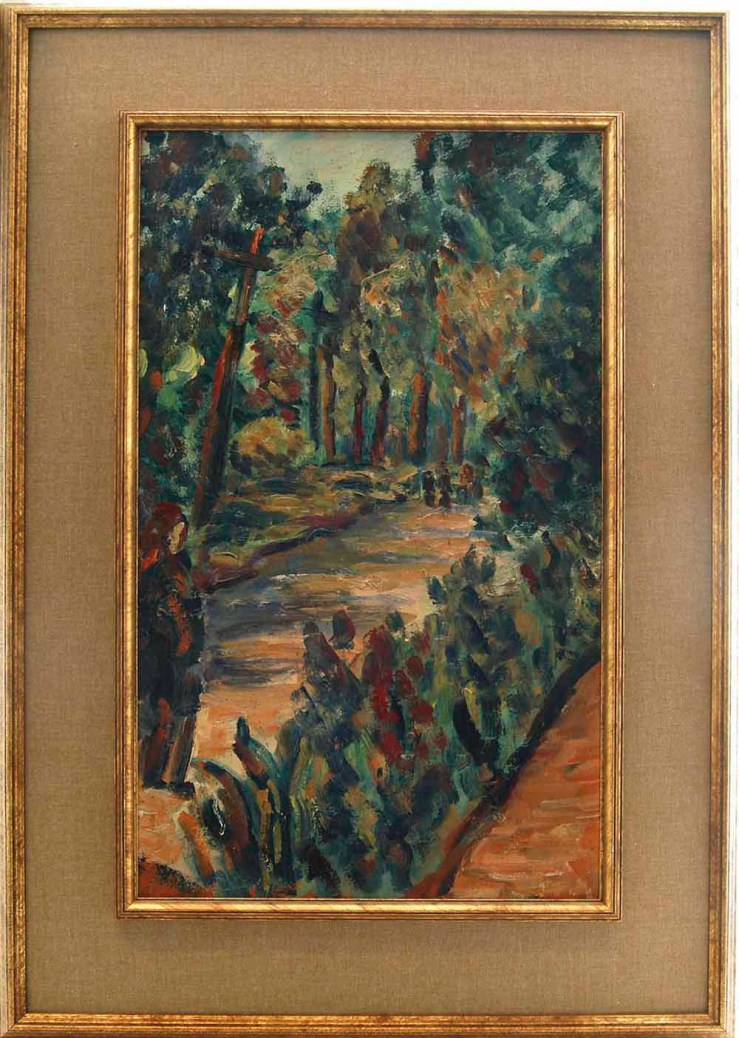
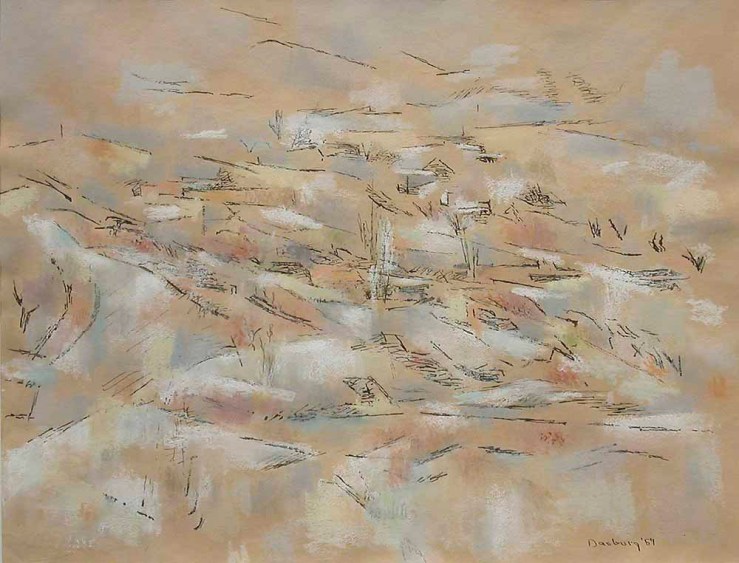
Alfred Morang- Untitled Landscape- Matthews Gallery Blog
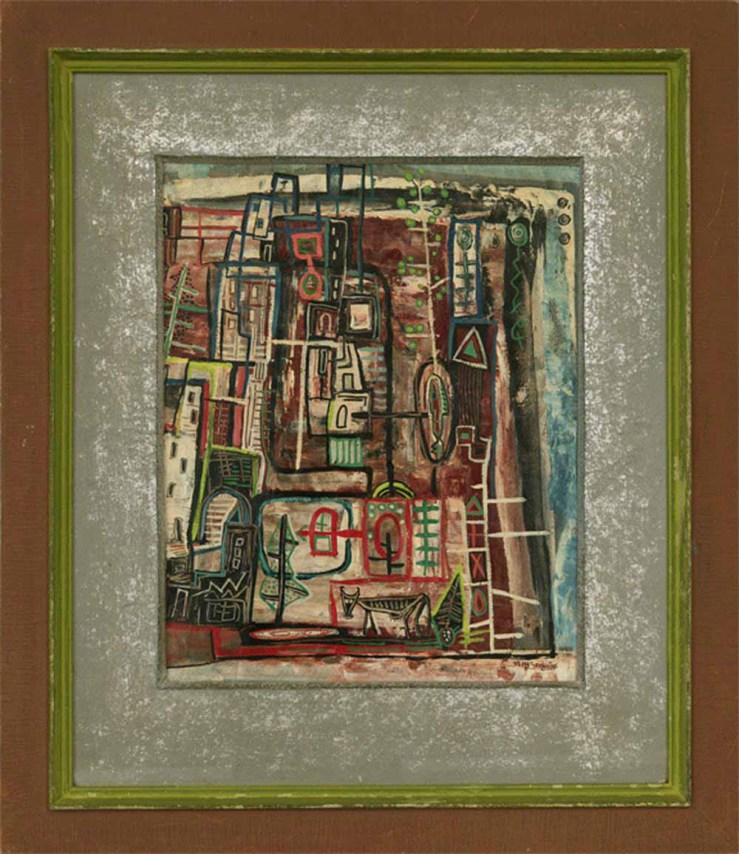
Howard-Schleeter- Pueblo- 1949- Gouache
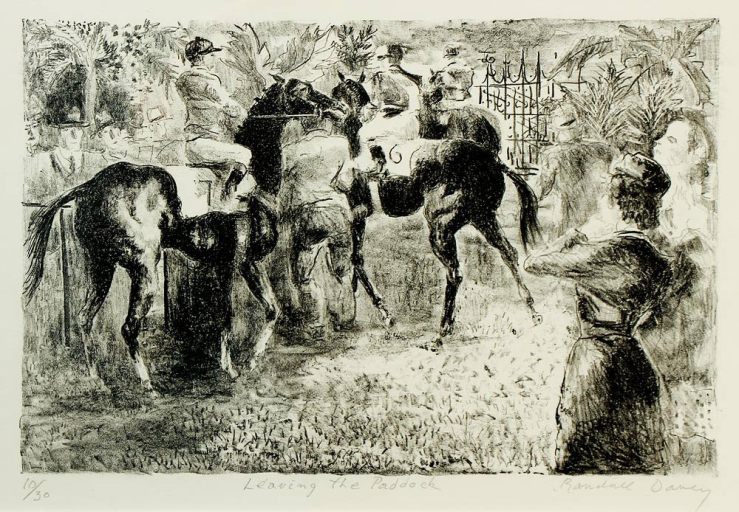
Randall Davey- Leaving Paddock- Lithograph
Beulah Stevenson- Place Of Drums- New Mexico - 1940-5- Matthews Gallery Blog
Paul Burlin- Look-No Fish- Oil on Canvas- 1949- Matthews Gallery Blog
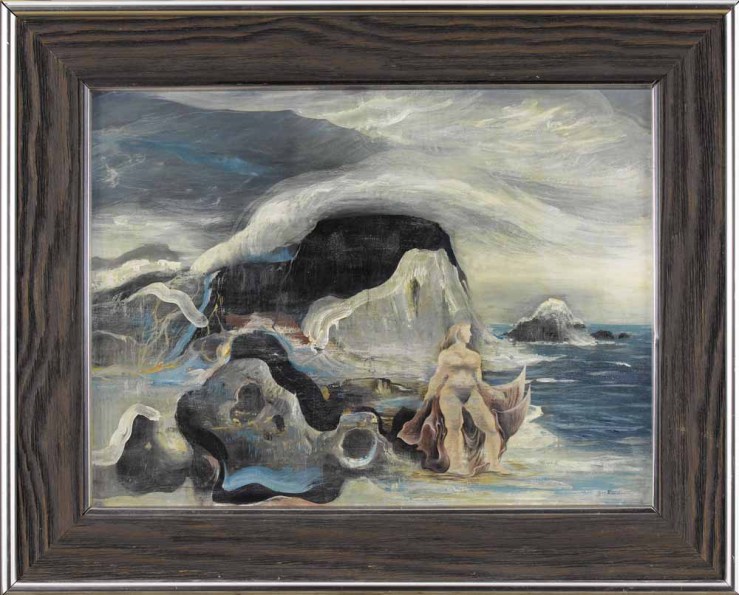
Thomas Benrimo- Nymph of the Sea- oil on board- 1949- Matthews Gallery Blog
Make sure to follow us on Facebook, Twitter and Instagram for more gallery news, and stayed tuned for information on our modernism-themed dinner at Coyote Cafe!

PICTORIALISM: From Stieglitz to Curtis

Alfred-Stieglitz-Edward-Curtis-Art2

It was 1901 in New York City, and photographer Alfred Stieglitz (1864-1946) was busy preparing an exhibition that would shake the foundations of the art world. He had worked for years—often to the point of physical exhaustion—to elevate photography to the stature of fine art. A series of juried photography shows, judged mostly by painters, had popularized the aesthetic of pictorialism. Pictorialist photographers approached their art like a painter or illustrator, playing with focus and exposure in innovative ways and even marking the surfaces of their images. The idea was to “make” an image rather than “take” it, projecting emotions into the scene and onto the viewer.

Stieglitz and his friends saw the need for yet another leap forward in this new era of photography. They would mount a show composed entirely of photographs, and judged only by photographers. Or rather, it would be judged by one photographer: Stieglitz himself. He put together the show in two months and dubbed it the Photo-Secession, intending to secede from old conceptions of both photography and fine art. The exhibition was an enormous success, and gave Stieglitz the momentum to launch a photography journal and gallery to promote his ideas.

Pictorialism- Alfred Stieglitz to Edward Curtis- Matthews Gallery Blog


From left: View of Stieglitz’s Little Galleries of the Photo Secession, which opened in 1905;
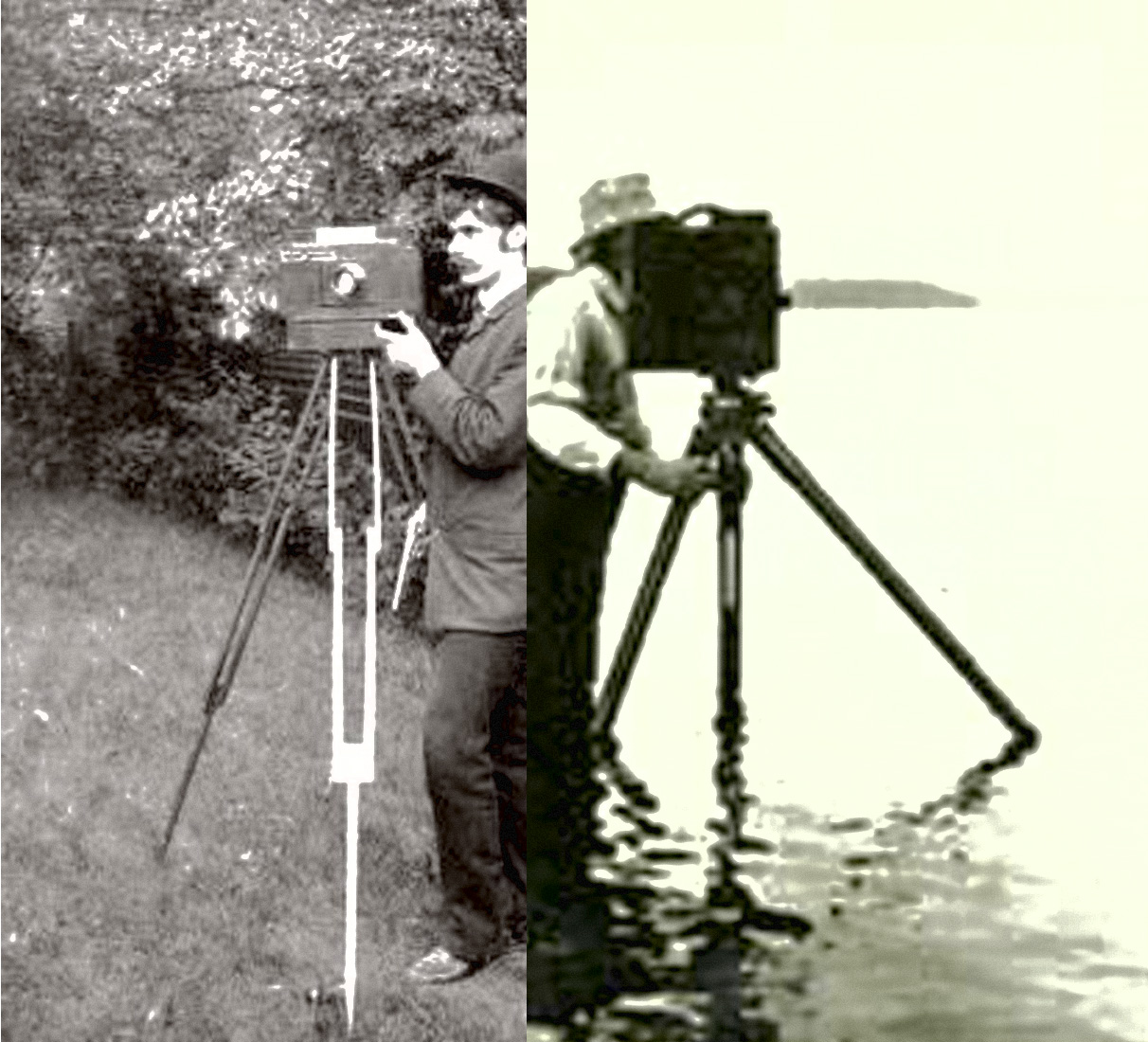
Edward S. Curtis in his adventure clothes.

Thousands of miles away in Seattle, Edward S. Curtis (1868-1952) was just beginning his photography career. Curtis grew up in Wisconsin and built his first camera when he was a teenager. At 17 he apprenticed in a photography studio in St. Paul, Minnesota, and when his family moved to Seattle in 1887, he bought a partnership in a portrait studio. Over the next few years, he began photographing Native American people of the Washington territory, some of them relatives of Chief Sealth and other important leaders. These early portraits and genre scenes inspired a 30-year adventure through the American West, during which Curtis and his team recorded the lives of over 80 tribes in photographs, writings, recordings and sketches.

Curtis’ expeditions, which he recorded in a series of volumes called The North American Indian, kept him far away from the epicenter of the American avant-garde where Stieglitz resided. “He was an outsider, too far removed from the photographic salons to court or count on ready shows and reviews that had instituted pictorialist photography,” writes Gerald Vizenor in an essay on Curtis. However, it’s this aesthetic that ties Stieglitz and Curtis together in art history.

“Curtis kept abreast of national, even international, trends in photography—and in the visual arts more generally,” writes Mick Gidley. “His early writings for Seattle magazines reveal that he absorbed much from Pictorialism in photography, including the example of Alfred Stieglitz, the founder of the Photo-Secession.” Curtis’ earliest photographs of Native peoples feature the soft focus and sepia tone of some classic pictorialist images, and present his subjects as stoic archetypes of a vanishing culture. In his many adventures, Curtis often posed his subjects and manipulated images to fit his vision of the tribes he was portraying. These techniques have earned Curtis praise as a pictorialist, but have also stirred up controversy. Curtis called himself an ethnologist, but the aesthetically powerful images he created didn’t always aim for scientific accuracy.

In the collection of photographs below, we’ve reunited Curtis with his pictorialist roots, placing some of his most iconic images among significant works by Stieglitz and his contemporaries. As you view the images, ponder Curtis’ position as an outsider during his lifetime, and his new place as a pictorialist in the art history books…

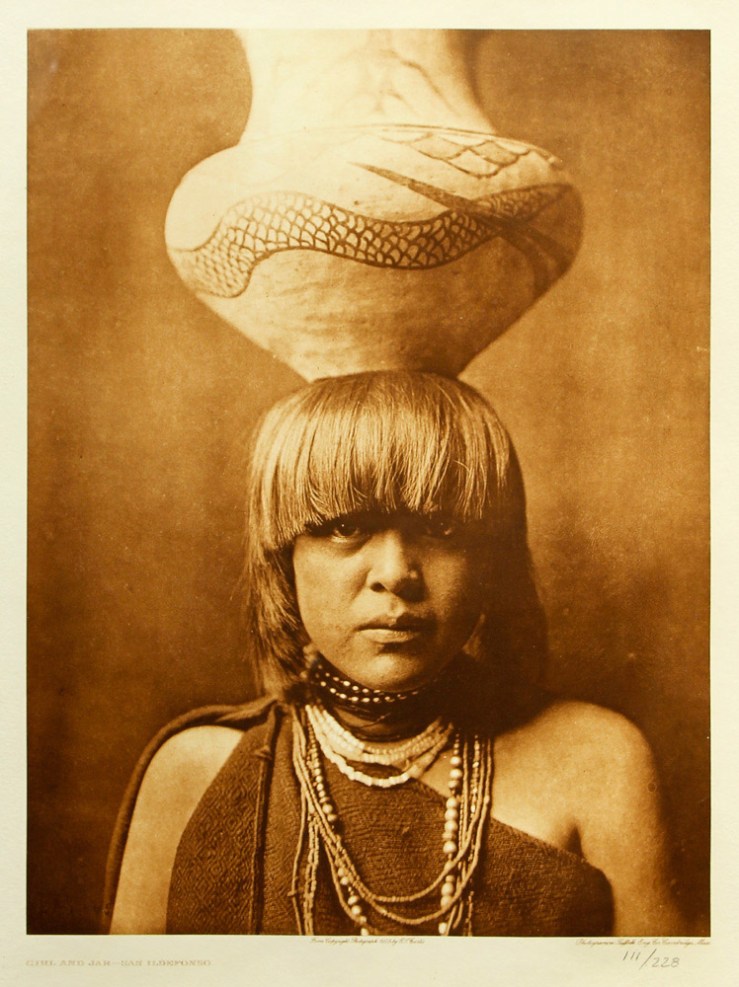
Edward S Curtis- Girl and Jar Photogravure- Matthews Gallery Blog

Edward S. Curtis, Girl and Jar, Photogravure

Adolph de Meyer- Marchesa Casati- 1912- Pictorialism- Matthews Gallery Blog

Adolph de Meyer, Marchesa Casati, 1912

Edward S Curtis- Apache Medicine-Man Photogravure- Matthews Gallery Blog

Edward S. Curtis, Apache Medicine-Man, Photogravure

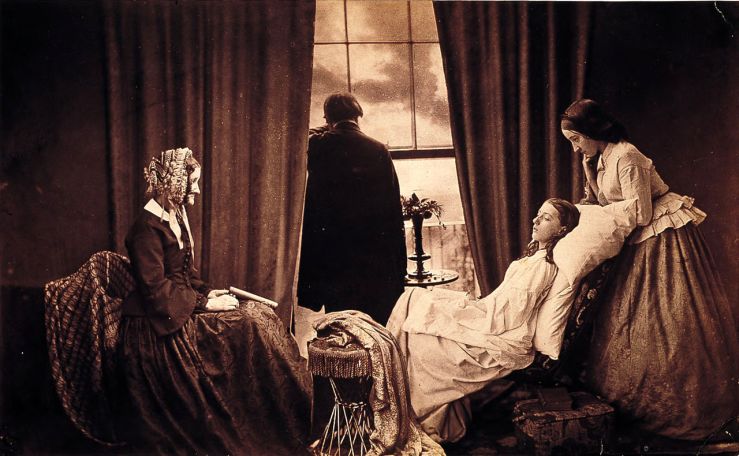
Henry Peach Robinson- Fading Away- 1858- Pictorialism- Matthews Gallery Blog

Henry Peach Robinson, Fading Away, 1858

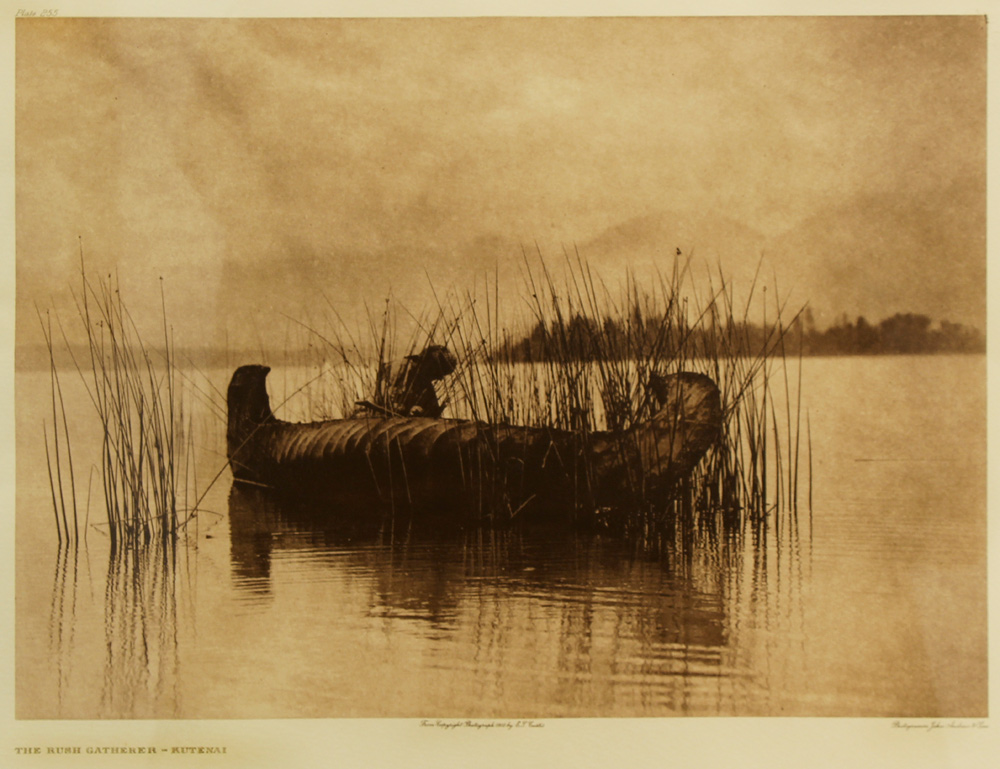
EdwardCurtis-Art-TheRushGatherer

Edward S. Curtis, The Rush Gatherer, Photogravure

Alvin Langdon Coburn- Spiderwebs- 1908- Pictorialism- Matthews Gallery Blog

Alvin Langdon Coburn, Spiderwebs, 1908

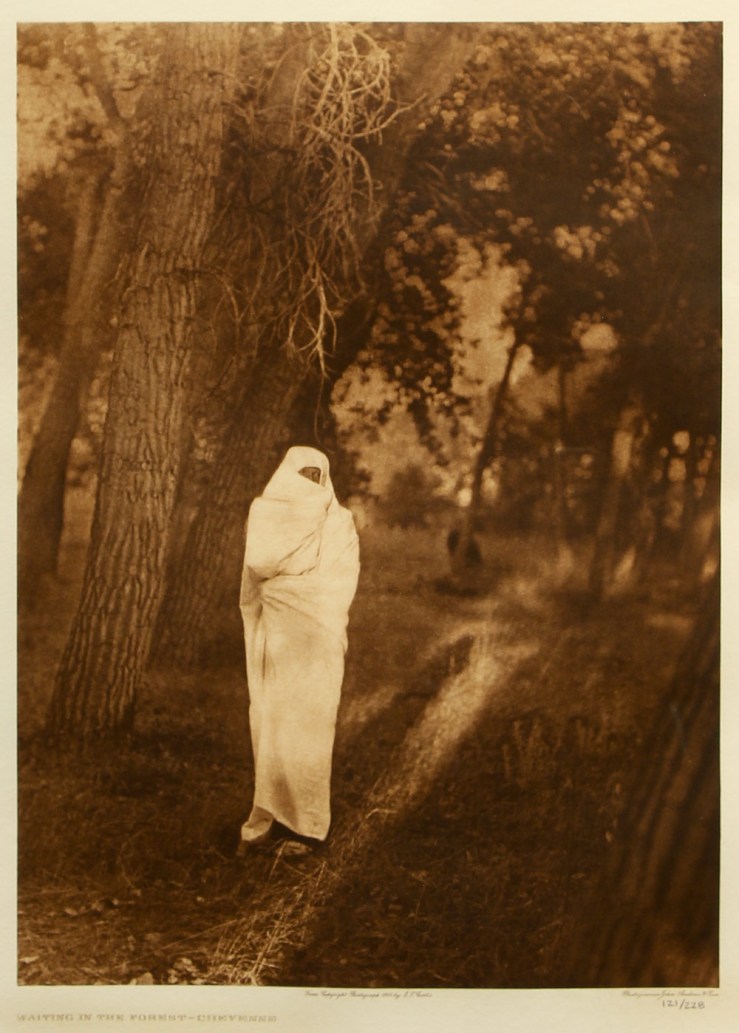
Edward S Curtis- Waiting the Forest-Cheyenne Photogravure- Matthews Gallery Blog

Edward S. Curtis, Waiting in the Forest— Cheyenne, Photogravure

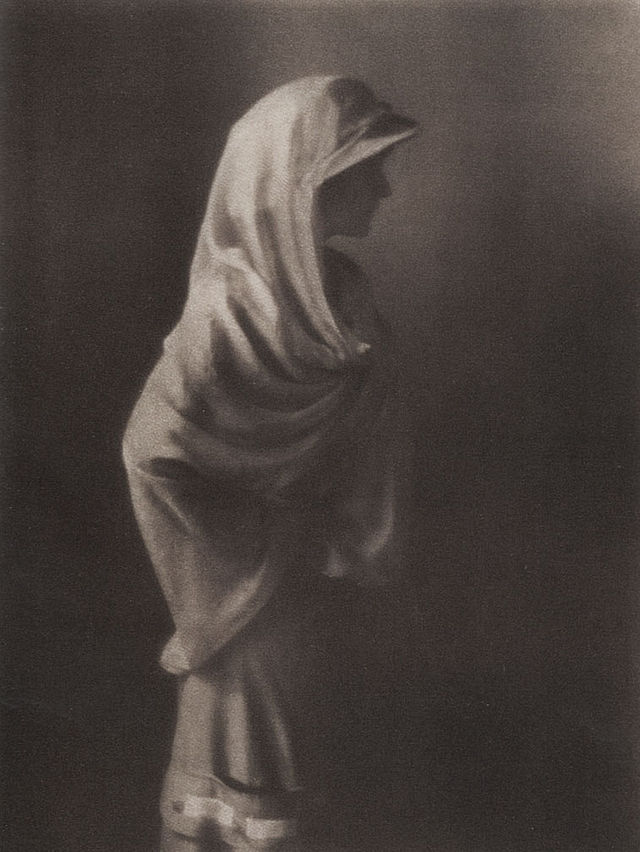
Paul Haviland- Doris Keane- 1912- Pictorialism- Matthews Gallery Blog

Paul Haviland, Doris Keane, 1912

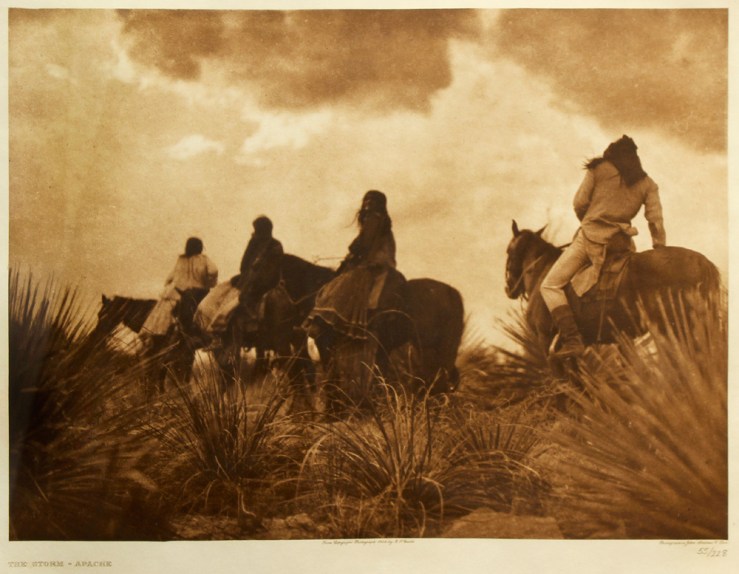
Edward S Curtis- The Storm-Apache Photogravure- Matthews Gallery Blog

Edward S. Curtis, The Storm-Apache, Photogravure

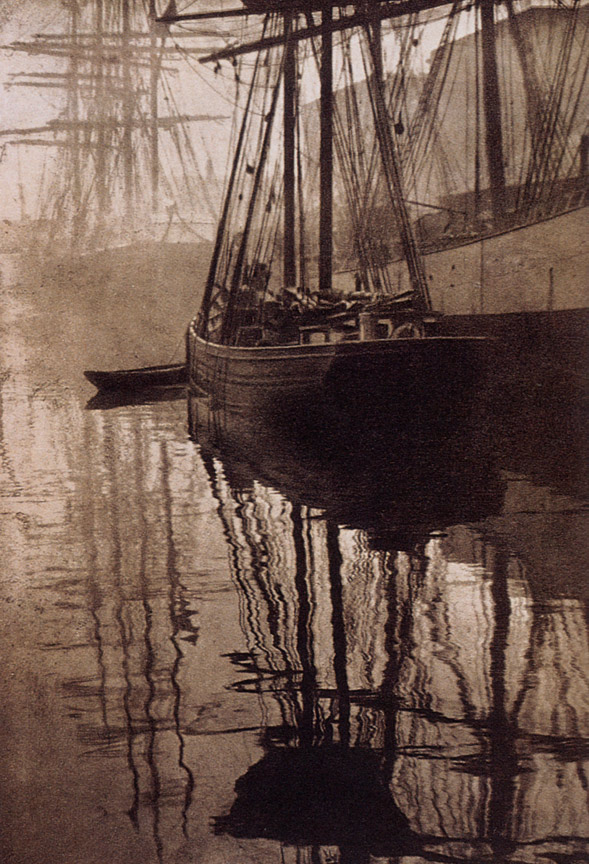
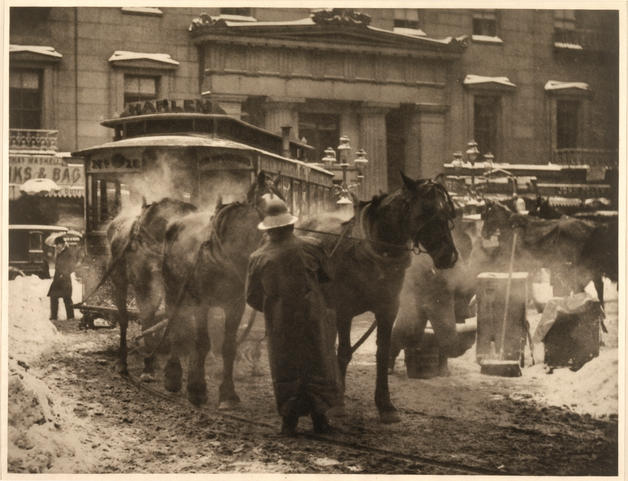
Alfred Stieglitz- The Terminal- 1893- Pictorialism- Matthews Gallery Blog

Alfred Stieglitz, The Terminal, 1893

Click here to learn more about Edward S. Curtis, his adventures and the rediscovery of his work in the 1970’s, and connect with us on Facebook, Twitter and Instagram for daily gallery news.

SPRING OF MODERNISM

We’ve had some unseasonably warm days after last weekend’s snowstorm, and it’s making us excited for the end of winter. It’s the perfect time to release our spring exhibition schedule, which is a period of exciting growth at Matthews Gallery.

In light of Georgia O’Keeffe Museum’s brilliant Modernism Made in New Mexico exhibition and New Mexico Museum of Art’s recent emphasis on Southwestern modernists, we’re declaring a ‘Spring of Modernism’ in Santa Fe. It begins with our exhibition of influential New Mexico modernists, and features women artists of new mexico, rare artifacts from legendary artists’ studios and much more. Check it out:

Spring of Modernism Show- New Mexico Modern Art- Matthews Gallery

Spring of Modernism: Seminal New Mexico Modernists
March 6-31, Opening Reception: Friday, March 6, 5-7 pm

Matthews Gallery declares a “new spring” of modernism, as this rich period in New Mexico art history returns to the spotlight. Featured artists include Emil Bisttram, William Lumpkins and Raymond Jonson of the Transcendental Painting Group, Alfred Morang and Randall Davey of the Santa Fe art colony, and Beatrice Mandelman of the Taos Art Colony.

Collectors Forum- Art Collecting Workshop- Matthews Gallery Blog

Collector’s Forum Workshop
April 17, 6:30 pm

We offer an inside look at art collecting for this special Art Matters event. The workshop is for anyone who’s ever considered buying, selling or caring for fine art and has questions about the inner workings of the art world. Forum participants will get an inside look at every step of the process from one of Santa Fe’s top galleries. The event is free but seating is limited, so give us a call if you’d like to participate – 505-992-2882. Read about our past Collector’s Forum workshops here and here.

New Landscapes New Vistas- New Mexico Women Artists Show- Matthews Gallery

New Landscapes, New Vistas: Women Artists of New Mexico 
May 8-31, Opening Reception: Friday, May 8, 5-7 pm

In the first half of the 20th century, a number of women artists who were frustrated by a lack of the recognition on the East Coast packed up and left everything behind. In New Mexico’s isolated art colonies, they found the freedom and social acceptance to excel. Matthews Gallery presents the stories and artwork of Janet Lippincott, Agnes Sims, Doris Cross and other women who found a powerful voice in the Land of Enchantment.

Artists Toolbox- Artwork and Artifacts of New Mexico Artists- Matthews Gallery

The Artist’s Toolkit: New Mexico Artists at Work 
June 4-10, Opening Reception: Friday, June 5, 5-7 pm

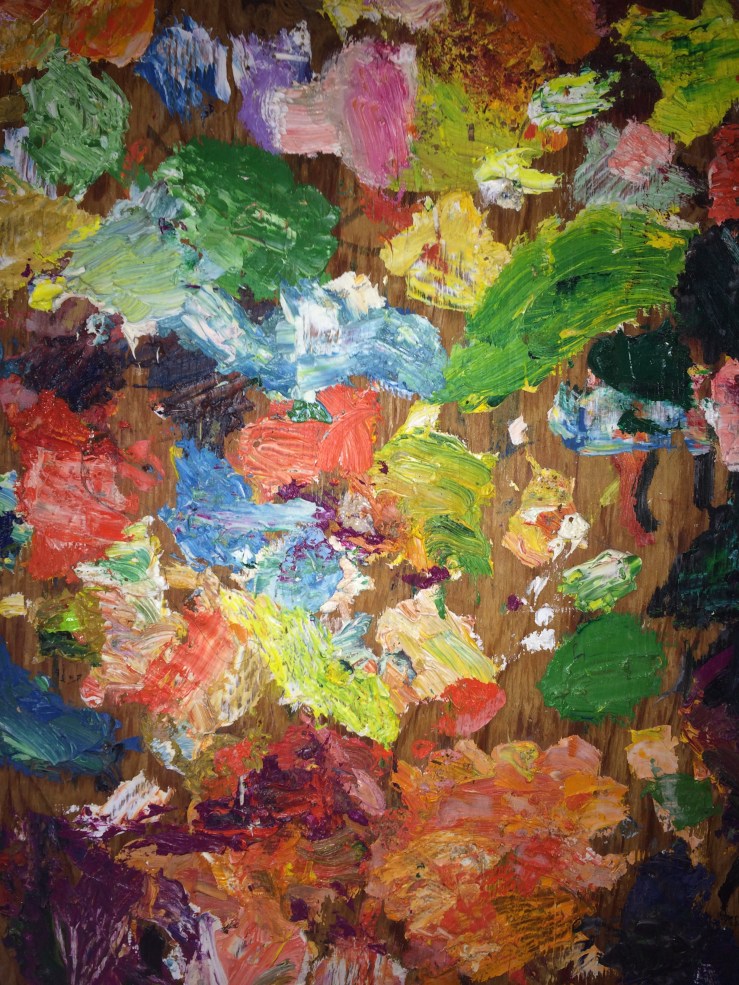
This special exhibition features rare artifacts of legendary New Mexico artists alongside their work, giving visitors insight into the complex process of conceptualizing, mixing and applying color. Visitors will get a once-in-a-lifetime opportunity to view Tommy Macaione’s paint palette, John McHugh’s brushes, Alfred Morang’s notes on color, Hilaire Hiler’s color wheel and other behind-the-scenes ephemera from Santa Fe private collections.

Widening the Horizon- New Mexico Landscape Show- Matthews Gallery Blog

Widening the Horizon: New Mexico Landscapes
June 12-30, Opening Reception: Friday, June 12, 5-7 pm

New Mexico’s endless vistas offer an opportunity and a challenge to artists. Matthews Gallery looks back at legendary artists’ attempts to capture and reimagine the High Desert horizon, from early Santa Fe and Taos art colonists including Datus Myers and William Vincent Kirkpatrick, to modernists including William Lumpkins and Beatrice Mandelman, who evoked the spirit of the landscape through the language of abstraction.

Learn more about our exhibition schedule here, and connect with us on Facebook, Twitter and Pinterest for daily gallery news.

New Mexico Connections: Hondius and Cowles

Cowles-Dasburg-Hondius-ArtistsFrom top: Cowles, Dasburg and Hondius 

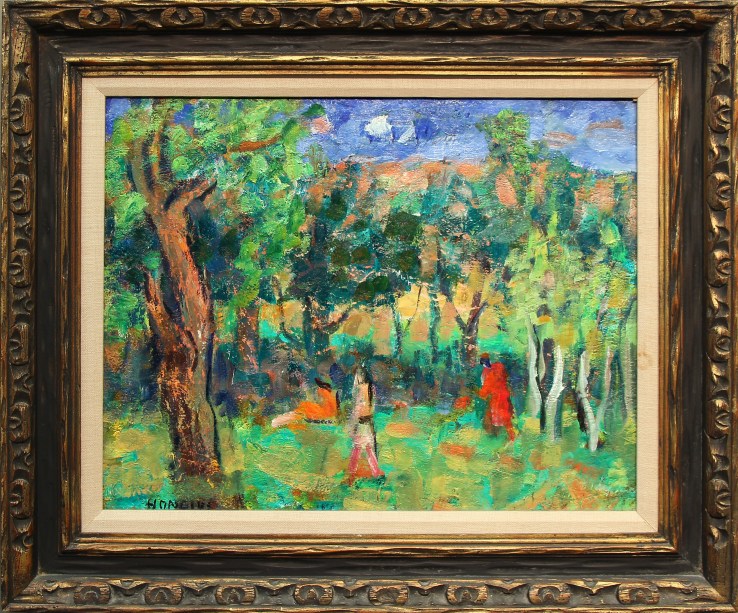
You’d be surprised at how often we find New Mexico links in the biographies of our historic artists, even if they never lived here. The latest paintings to appear on our walls are good examples. Gerrit Hondius and Russell Cowles were celebrated modern artists in New York: both exhibited at the Museum of Modern Art and the World’s Fair, and their works are now part of the permanent collections of numerous major museums. Their mutual friend Andrew Dasburg, whose career also took off in New York, would move to Santa Fe in 1921 and help usher in the region’s modernist period.

It goes to show that New Mexico was a major player in the American modernist movement, far beyond Georgia O’Keeffe’s significant contributions. Read on to learn more about these influential artists and their ties to the Land of Enchantment…

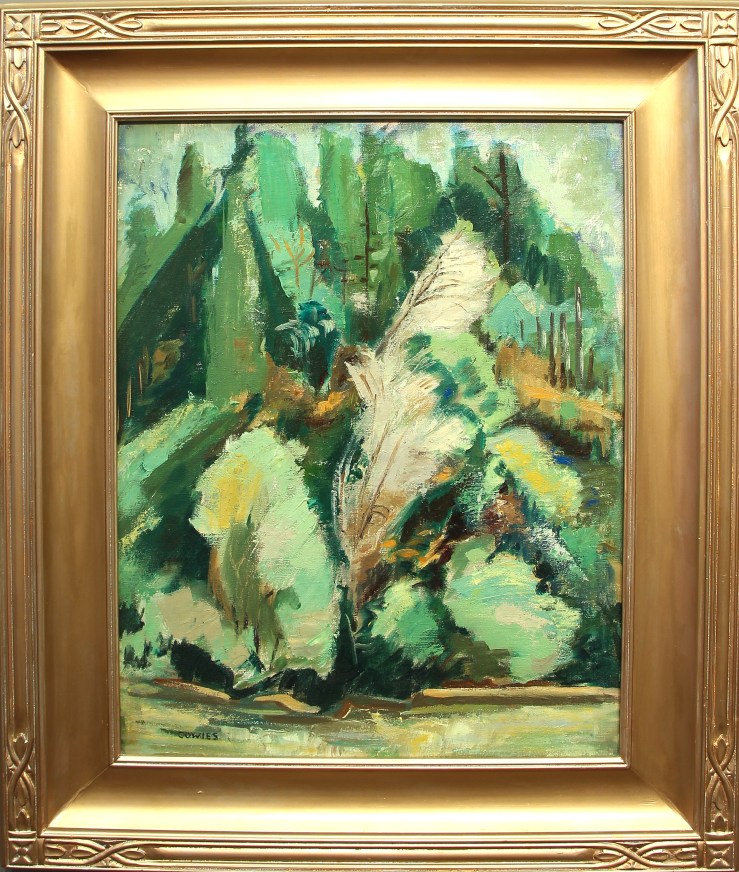
Russell Cowles- Untitled Modernist Landscape- Matthews Gallery Blog

Russell Cowles, Untitled (Modernist Landscape), Oil on Panel

“When an artist sees something he wants to paint, his first step should be to look- to look long and sensitively- to feel what nature has to say,” said Russell Cowles (1887-1979). Wherever the modernist set up his easel—from New Mexico to East Asia—he followed this philosophy with the passion of an artist and the intellectual focus of a scholar.

The Iowa-born artist graduated from Dartmouth College in 1909. He studied painting in Paris and Rome, drawing inspiration from the artwork of Cezanne and Gauguin. Cowles returned to the United States in 1920, exhibiting his artwork at the Metropolitan Museum of Art soon after. In 1925, he received a medal from the Art Institute of Chicago. These honors marked the beginning of a long and illustrious career that took Cowles as far as China to study with a master of Chinese painting, and Bali to experiment with abstract painting.

Cowles began living in Santa Fe for part of each year in 1930, and befriended John Marin, Andrew Dasburg, Marsden Hartley and other New Mexico modernists. He received a prize at the World’s Fair in New York City in 1937, and his artwork appeared in LIFE Magazine in 1948. He died in New York City in 1979.

Gerrit Hondius- Untitled Modernist Landscape- Matthews Gallery Blog

Gerrit Hondius, Untitled (Modernist Landscape), Oil on Panel

Gerrit Hondius (1891-1970) was born in the Netherlands and studied painting at the Royal Academy in The Hague. It was there that he developed a passion for Georges Rouault and the French expressionists, but he found a true match for his style and creative energy in New York City.

Hondius moved to New York in 1915, and studied at the Art Students League with Max Weber and Andrew Dasburg. He first caught the eye of the art world with a massive WPA mural in brilliant Fauvist and expressionist hues. In the mural, colorful city people tangled with masked figures, clowns and ballerinas, inviting Old World allegorical figures to frolic in the capital of New World modernity.

In the following years, Hondius split his time between New York and Provincetown, Massachusetts, and exhibited at the Whitney Museum of American Art, the World’s Fair, the Museum of Modern Art, Rockefeller Center and over fifty other venues across the United States and Europe. His artwork is in the permanent collections of the San Francisco Museum of Art, the Whitney Museum and other institutions across the world. His wife Paula donated his sketchbooks, letters and other personal effects to the Smithsonian Institution after his death.

Check out our website to learn more about Gerrit Hondius and Russell Cowles, and connect with us on Facebook, Twitter and Flickr for daily gallery news.

MORANG AND FRIENDS: The Saloon

Wild Tales of a Legendary Santa Fe Tavern- Matthews Gallery Blog

Special announcement: We’ve officially extended our MORANG AND FRIENDS exhibition through Friday, January 2nd. Come trace the legacy of ‘Santa Fe’s Toulouse-Lautrec’! 

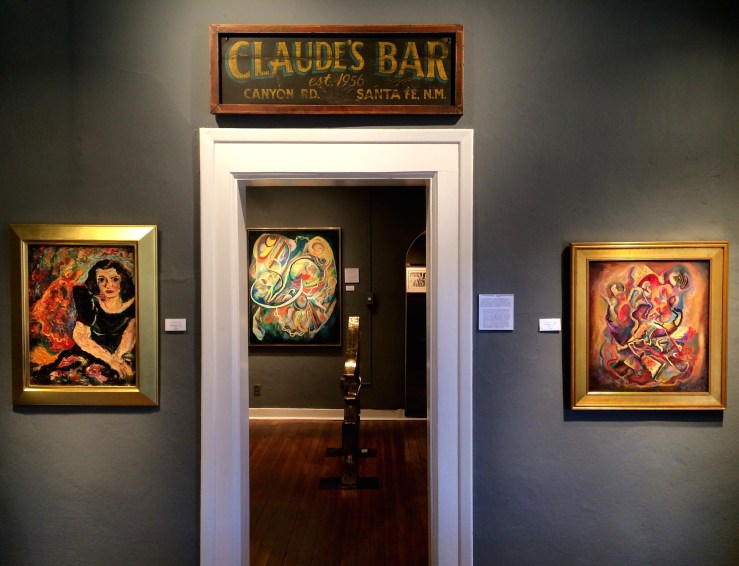
Cheryl Ingram strolls into Matthews Gallery and beams up at a sign that hangs high on the wall. “There it is, Claude’s Bar,” she says. Ingram is the co-owner of Silver Sun Gallery, which is just down the street from us. Her gallery once housed Claude’s Bar, and this Santa Fe relic is usually on display there. Ingram kindly lent it to us for our MORANG AND FRIENDS exhibition. Though Claude’s was established just two years before Alfred Morang’s death, he quickly took a liking to the tavern and its charismatic owner, Claude James. In fact, Claude’s was his last stop before the fire that ended his life in January, 1958.

About two decades after Morang’s death, Ingram and her business partner Deanna Olson arrived in Santa Fe. They were retired school teachers who had been traveling around the country selling handmade Native American jewelry. When they reached the City Different, they stuck around and founded Silver Sun. In the years since 1980 when they opened the business, they’ve become the keepers of countless stories about the infamous saloon that preceded them. As Ingram strolls around the gallery smiling at the colorful canvases, she can’t help but pass on some fascinating tales of Canyon Road.

Artwork by Legendary Santa Fe Painter Alfred Morang- Matthews Gallery Blog

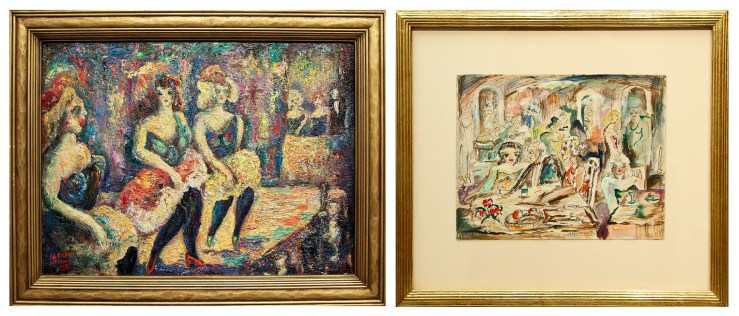
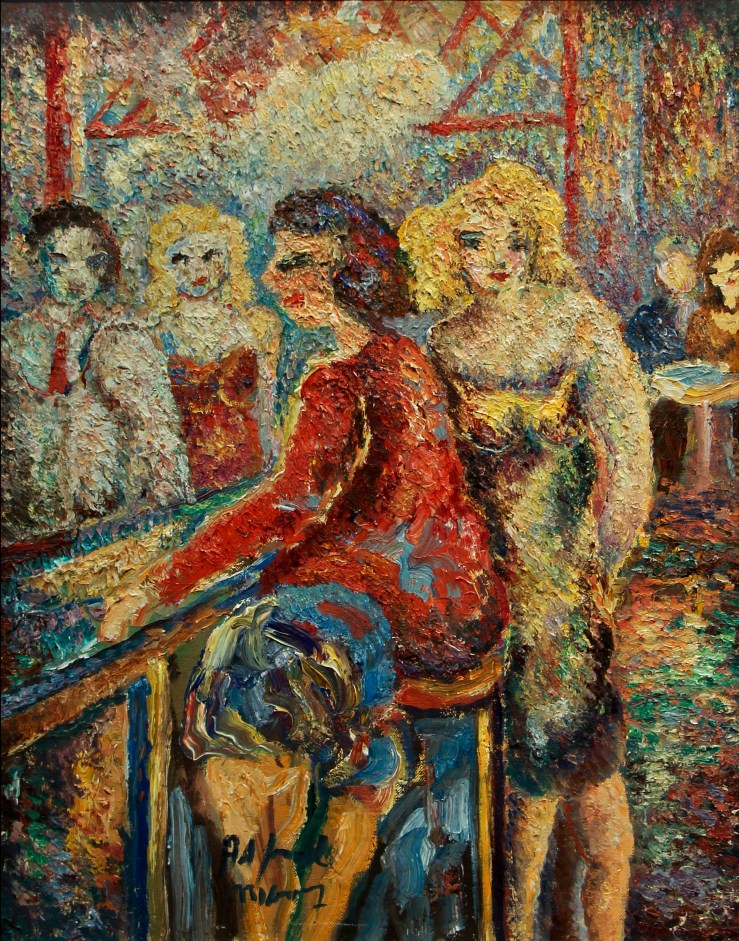
Ingram analyzes a painting of ladies dancing on a stage, concluding that it’s probably a view of El Farol. She and Lawrence linger by a watercolor of a bustling restaurant and try to identify where it might have been. She finally stops before a large painting titled ‘The Women at Claude’s’, and the stories really start rolling.

“Claude’s mother was French, and she married an editor at the New York Times whose last name was James,” Ingram says. In the 1950’s, Claude and her mother embarked on a road trip to California along Route 66. On their way back they took a detour to Santa Fe and never left.

Claude followed in her father’s footsteps and took a job as a journalist for the Santa Fe New Mexican. One year her house caught fire, killing her two corgis. A reporter snapped a photo of the dead dogs and published it in the paper the next day. Claude was so disturbed that she swore off journalism. She and her mother bought a building on Canyon Road’s 600 block and opened a bar and restaurant.

At first it was a fancy establishment where Claude’s mother hosted intellectuals from Paris, but later it was better known for midnight parties and wild bar brawls. “The Santa Fe police were always hoping it would burn down,” Ingram says. “Whenever they got a call about it, they were disappointed that there hadn’t been a fire.”

 Alfred Morang- The Women at Claude's- Matthews Gallery Blog Alfred Morang, The Women at Claude’s, Oil on Canvas

Ingram stares intently at ‘The Women at Claude’s’ and warm recognition spreads across her face. “Claude had dark hair, and she was short and squat like the woman in the center of the painting,” she says. In fact, with a little more analysis, Ingram concludes that the woman probably is Claude. “She’s standing behind the bar, so it very well may be Claude serving the clientele. That would be her lover behind her.”

Claude often tended bar barefoot with a pack of cigarettes folded into the sleeve of her shirt, Ingram says. She would throw patrons out of the bar “by the belt and shoulder” if they got too rowdy. “Canyon Road wasn’t paved then, so the landing was a little softer, but you didn’t mess with Claude,” Ingram says with a laugh.

As she continues, we flip our tape recorder on:

She was a handsome woman, but not a pretty woman. She was short but you didn’t mess with her.

A guy came into Silver Sun about 1982, looking for Claude’s Bar. I told him he was a little late, and he told me a story about Claude.

He said he had ordered a beer and Claude was working the bar. He noticed this pretty woman sitting at the other end of the bar. He tried to hit on her, and next thing he knew, his tie, shirt and coat were pulled across the bar. “You leave my woman alone,” Claude said. He was so upset, he didn’t finish the beer and left.

Each corner of the bar had its own persuasion. You had the gay men over here, the gay women over here, and the three piece suits were over there with the ladies of the night. Claude was like a teacher in the classroom: one corner did not mess with any of the other corners, or your fanny was out of there.

There was an ambiance that was going on in there that was truly Santa Fe of the period, and that’s why she was so popular. You were okay if you got in there. Even if you got stumbling drunk, someone would be there to protect you from some nasty politician or a cowboy with a gun.

There were honest-to-god cowboys who wore guns. A fight broke out between them and the gay guys once, and everyone had guns. There were two lines of guns, about ten or twelve feet apart, and they were drunk and shouting. That story came from a lady who was hiding under the bar. She was the barkeep on Saturday night. It looked like they were shooting around each other, trying to scare each other. One guy did take a hit in the fanny, however. When the cops got there, they just took the whole batch. The next day, the barkeep quit.

Towards about 1970 or 1971, there was a dance floor way in the back where a sculpture garden is now. A guy named Jimmy was up there playing—his wife told me this story—and looked past all the drunks to the door. Here was this lanky guy with a guitar case who saunters over to Jimmy. “Mind if I play along?” he says. Jimmy just had a cow. They played all the rest of the night together, and no one besides Jimmy recognized him. It was Jimi Hendrix. They were all too drunk.

Claude eventually lost interest in bar tending and hired someone else to manage the establishment. The saloon closed in the late 1970’s but its charismatic owner remains a legend among Santa Feans. It’s fascinating to hear Ingram’s tales, especially because they’re rare firsthand accounts. They’re all from people who have passed through Silver Sun over the years to pay tribute to Claude’s.

Since MORANG AND FRIENDS opened two weeks ago, we’ve had visits from many people with Santa Fe stories like these. We’d like to thank everyone who shared with us. Your words have helped inspire our upcoming exhibition schedule, which will delve into many corners of the Santa Fe art colony. Stay tuned!

For more gallery news, make sure to connect with us on Facebook, Twitter and Instagram.

MORANG AND FRIENDS: Ghost Stories

El Farol- A Toast to Morang- Matthews Gallery Blog

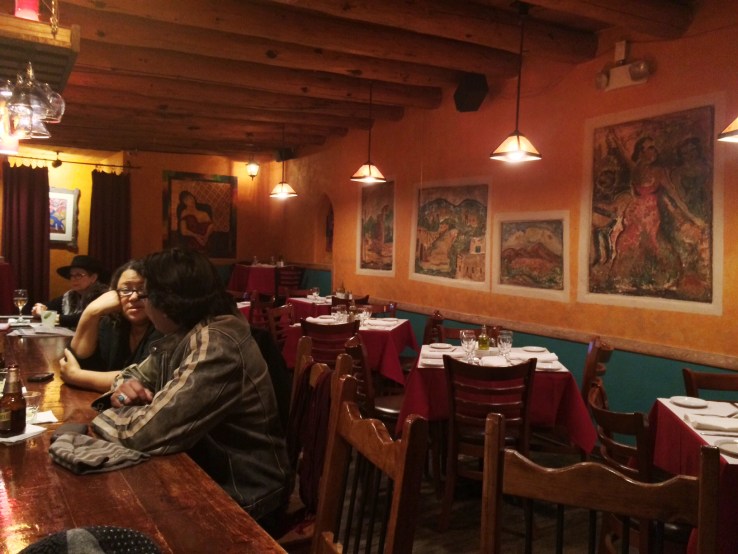
“There are ghosts at El Farol, there’s no question about it,” says Freda Keller with a playful smile. “There’s been a lot that’s happened over the years. In 1835 there were gunfights in the bar. People hear and see ghosts late at night.”

Keller is the general manager at Santa Fe’s oldest restaurant and cantina, and we’re on a hunt for a particular ghost. Alfred Morang (1901-1958) often haunted the establishment in his years among the living. This Thursday, El Farol and Matthews Gallery are throwing a special toast to his lingering spirit in the cantina, where Morang painted a series of stunning murals. The event will christen our December 12-26 exhibition MORANG AND FRIENDS, which features rare artwork and artifacts from the man who was known as Santa Fe’s Toulouse-Lautrec.

El Farol- A Toast to Morang- Matthews Gallery Blog

“The biggest thing with El Farol, the reason why it’s been around so long, is that it’s family driven,” Keller says. “I think the customers feel like they’re family, and obviously [Morang] did too. Being an artist and offering to do these murals, you would have to be part of the family of El Farol.”

Like any proud clan, the El Farol staff is always happy to take guests on an art tour through their cozy rooms. In addition to Morang’s works, there are murals and paintings by Santa Fe legends William Vincent (a student of Morang), Stan Natchez, Sergio Moyano and Roland van Loon. Keller produces a little fact sheet that helps everyone keep the stories straight. Here’s the write-up on Morang:

El Farol- A Toast to Morang- Matthews Gallery Blog

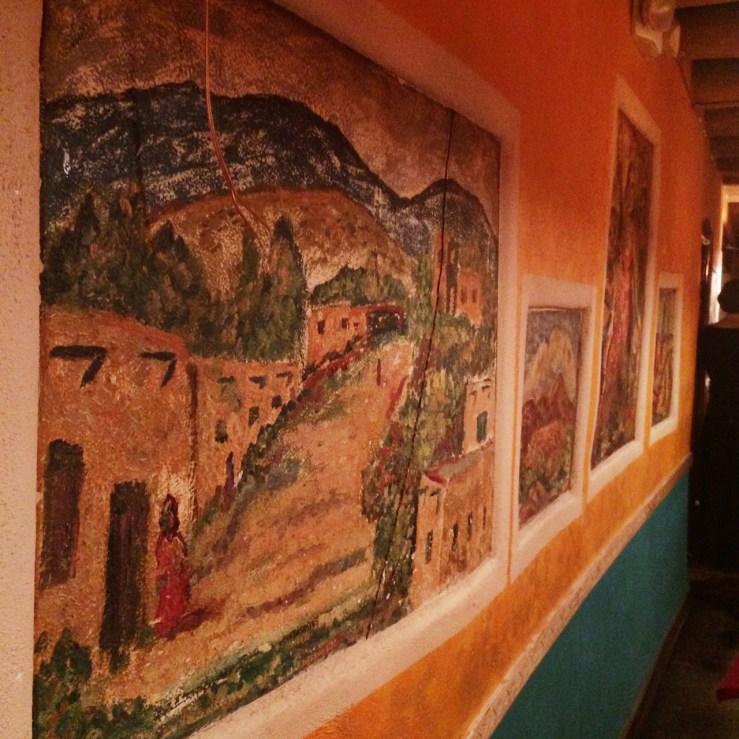
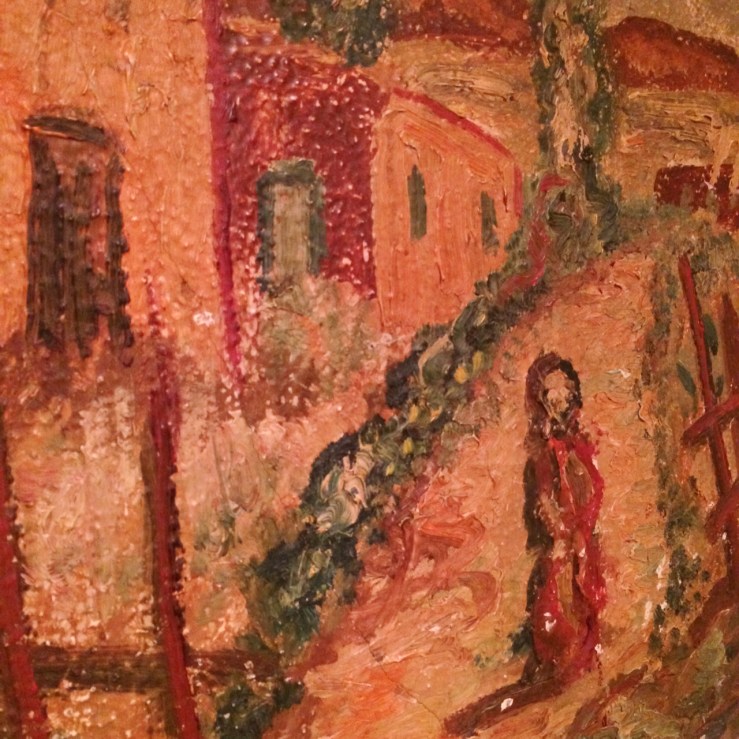
When you enter our rustic cantina, one of the first things to catch your eye will be the beautiful murals displayed throughout. The first artist to grace our walls was Alfred Morang.  On the long west wall of the bar and one behind the bar, are our oldest murals were painted between 1948 and 1952. Mr. Morang was already an established artist when he frequented El Farol during that period. He painted the murals to settle his tab at El Farol.  The scenes are of local landscapes and adobe homes in Santa Fe. We’ve chosen to reproduce our most famous mural of the flamenco dancer in the red dress accompanied by a guitarist as our poster for the 2004 Muralist dinner.  From 1968 to 1980 the owner at the time covered the murals with paneling.  When Bob Ward purchased El Farol in 1980 he removed the paneling to discover the beautiful murals beneath.  When David Salazar purchased El Farol in 1985 he was always mindful of the treasures on the walls.  Painting, re-stucco and remodeling were completed while protecting the murals.

Then comes the part of the tour that sends chills up our spines. Do you believe in ghosts? Maybe this will convince you:

On Easter morning in 1997 David and the staff were awakened by phone calls that El Farol had been burned.  The murals, though singed, had made it through the fire.

Morang died in a 1958 studio fire, so the news that some of his most notable works survived a blaze decades later is eerie to say the least. We walk over to the cantina to view the murals. When the hostess hears us mention Morang’s name, she lights up.

El Farol- A Toast to Morang- Matthews Gallery Blog

“That’s right, the murals still have burn marks on them from the fire,” she says, pointing out subtle passages of missing pigment that were lost to the flames. “They still don’t know how that fire started. They think someone may have set it.”

El Farol has long since been restored to its elegant Old West aesthetic, much as it was when Morang would stop by for a shot of cognac and draw inspiration for his impressionistic paintings of Santa Fe’s wild 1940’s nightlife. On Thursday at 6:30 PM, Keller will join the gallery staff to tell stories and toast the artist with a new “Alfred’s Special” cocktail.

El Farol- A Toast to Morang- Matthews Gallery Blog

“I read up on Morang and learned that he was born in Maine, and how beautiful the landscapes are there,” says Keller. “He did a lot of painting there. His first inspiration was that landscape.” Keller selected a cocktail called Remember the Maine (with rye whiskey, Cherry Heering liqueur and a splash of absinthe) in honor of Morang’s home state. Come have a drink and time travel with us to a true Santa Fe golden age!

Learn more about our Toast to Morang event on the El Farol website and on our gallery homepage, and connect with us Facebook, Twitter and Instagram to learn more about Morang.

Hannah Holliday Stewart: The Messengers

Hannah-Stewart-Blog1

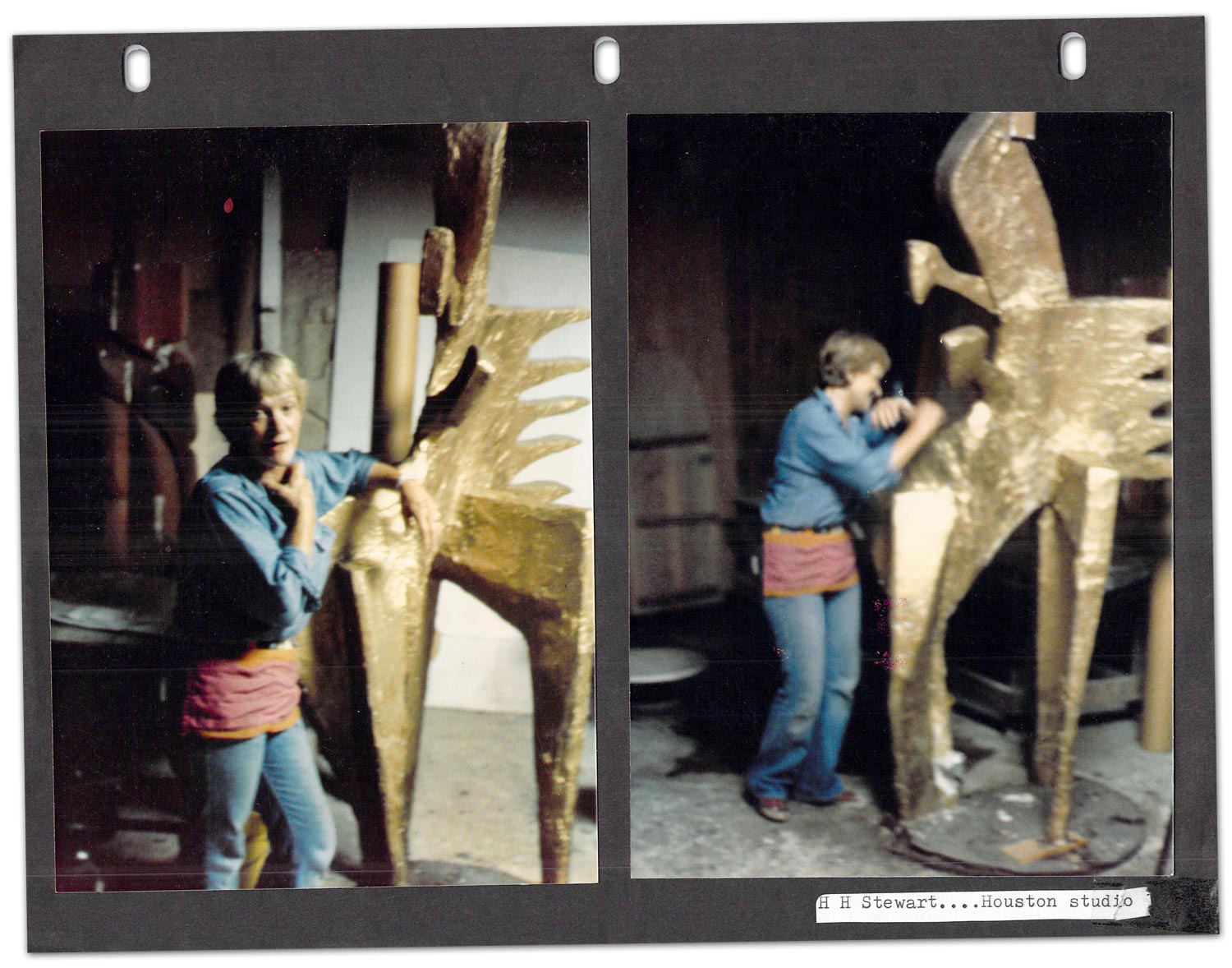
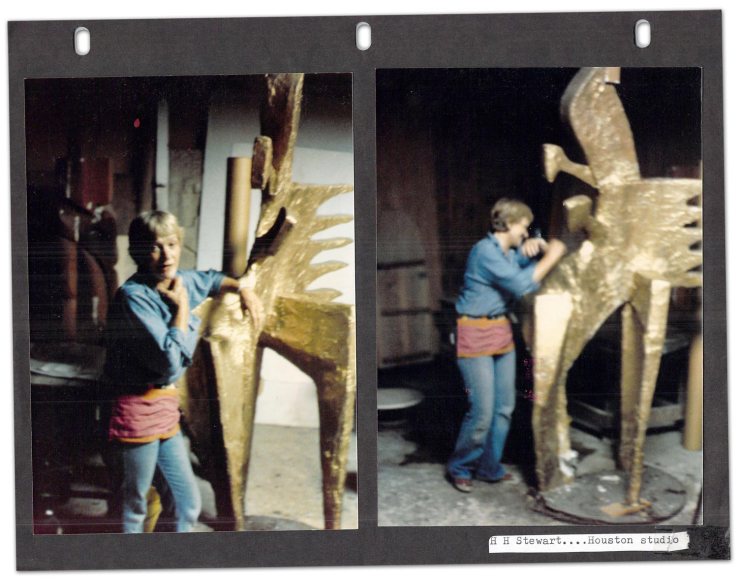
Candid shots of the secretive artist with her sculpture “Survivor“, Hannah Holliday Stewart archives

At last Friday’s opening for Hannah Holliday Stewart: An Artistic Legacy Rediscovered, art enthusiasts who saw the press coverage for the show came armed with a diverse array of questions.

“What was her family like?”

“Where did the full-scale models in those photos end up?”

“What’s ‘Ockum’s Razor‘ ?”

“Who’s Brad?”

Of course, the most frequent question was also Stewart’s most impenetrable mystery: why did the sculptor abruptly leave Houston, the launching point and epicenter of her nationally renowned artistic career? In our explorations of Stewart’s archives over the past few weeks, we’ve stirred up as many questions as answers.

Stewart was resolutely private, preferring to tightly focus on her artwork in interviews, exhibition materials and even her diaries. A catalog for her 1975-6 solo exhibition at the Houston Contemporary Arts Museum provides little more information on Stewart’s personal life than a birth year and a brief sketch of her educational history.

“Hannah was a very private person with a lot going on in her head,” close friend Dayton Smith told us. “I learned when to be around her and when not.”

Many of Stewart’s works, on the other hand, were always in the public eye. Kids lounged in the crook of her 11-foot sculpture in Hermann Park, students at St. Thomas University studied under her concrete-and-steel work on campus, and politicians were often photographed beside her “Libertad” fountain as they passed through the courtyard of Houston’s World Trade Center building.

For this week’s blog, we’re taking cues from Stewart’s ghost and focusing on the rich universe of her sculptures. Look below for new insight on five artworks, with behind-the-scenes materials from the artist’s files.
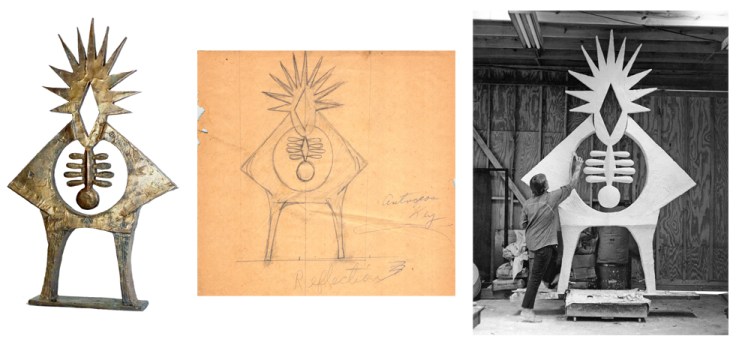
Hannah Stewart- Atropos Key Sculpture with Preparatory Sketch and Full-Scale Model- Matthews Gallery Blog


 Preparatory sketch for ‘Atropos Key’ and full-scale plaster model in Stewart’s studio

Atropos Key’ remains Hannah Holliday Stewart’s most well-known sculpture in Houston. Our maquette’s monumental counterpart stands on a hill in Hermann Park, measuring at 11 feet tall and 1,200 pounds. It debuted to much fanfare in 1972. From the Houston Chronicle’s August 11, 1972 edition:

“Out on the hill beyond Miller Theatre the blanket lollers who tune in to night concerts and shows from a horizontal position will have fresh ‘company.’ Overlooking the stage, now, is a bronze vertical figure.

‘Atropos Key,’ the title of which derived from one of the three fates in Greek mythology, was given to the city by Mrs. Patricia S. Woodward of Houston.

Strollers in the park may well stare at it and wonder what it all means…. Miss Stewart’s piece, in its new location, deserves the looking at, the ‘experiencing’ and the consideration of its meaning for you. Is it birth and, more encompassing than that, renewal?”
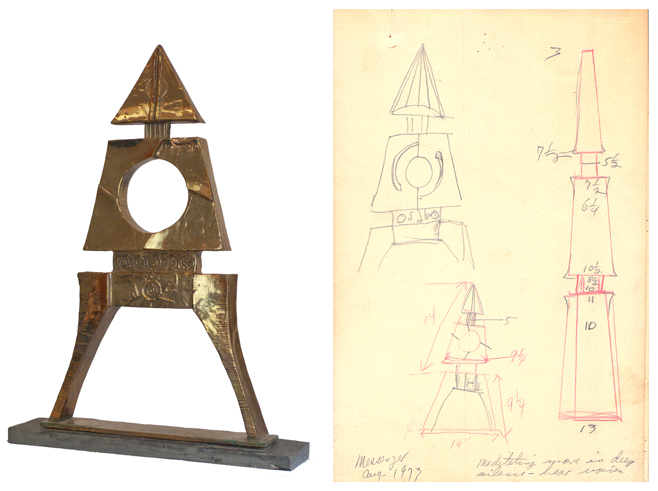
Hannah Stewart- Messenger Sculpture with Preparatory Sketch- Matthews Gallery BlogPreparatory sketch for ‘Messenger’ dated August 1973

Stewart’s ‘Messenger’ appeared on the cover of Houston Arts Magazine’s performing arts edition in October, 1982. Stewart was a fan of Russian composer Alexander Scriabin, and often listened to classical music in her studio.

A blurb inside the magazine traces the musical roots of ‘Messenger’:

“Sculptor Hannah Stewart… sees her work as an artist’s shorthand using symbols to communicate complex and abstract ideas— like a composer uses the symbols of musical notes to convey a spiritual idea in a sensuous form.

In Messenger… Stewart sees a parallel between the structure-strength-shapes interplay of her work and compositions played by Nathan Milstein and Bella Davidovich.”
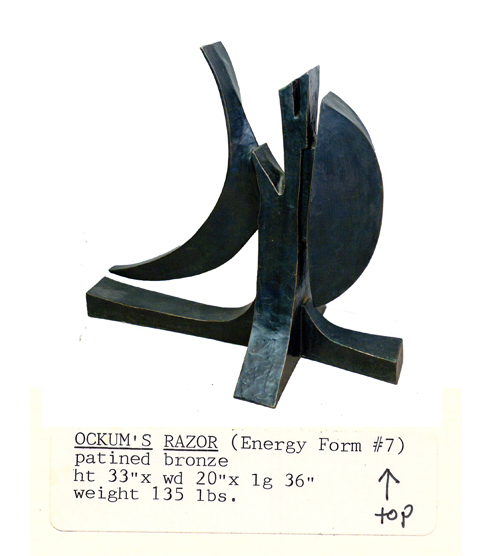
Hannah Holliday Stewart- Ockum's Razor Sculpture with Original Typewritten Label- Matthews Gallery BlogOriginal typewritten label for ‘Ockum’s Razor’

Stewart was known for her mythology-inspired artwork, but that was far from the only subject she explored.

“Her studies in literature, mythology, metaphysics, esoteric philosophy, religion, science, astrology, dance and yoga suffuse her output, revealing in form and textures,” wrote Stewart’s friend Dayton Smith in a letter to the gallery.

In ‘Ockum’s Razor’, Stewart turned to science for inspiration. The title refers to a problem-solving principle devised by 14th century logician and Franciscan friar William of Ockham (c. 1287-1347). The principle states that “Entities should not be multiplied unnecessarily.” In other words, the simplest path to an answer is the best one.
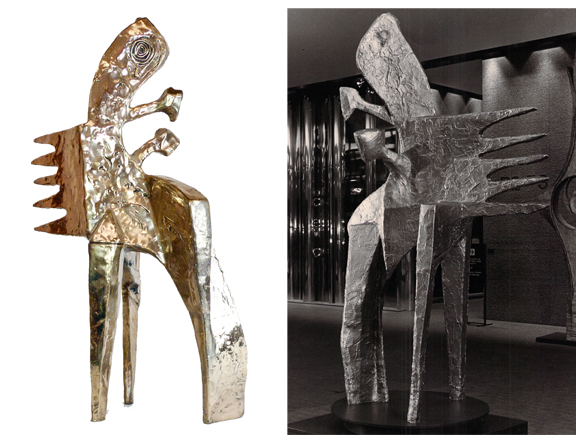
Hannah Holliday Stewart- Maquette and Full-Scale Survivor Sculptures- Matthews Gallery blog


 Maquette and full-scale versions of ‘Survivor’

An article about Stewart’s work appeared in the local paper of her childhood home of Birmingham in 1994. In the story, Stewart explains the inspiration for ‘Survivor‘. From the August 1, 1994 edition of the Birmingham Post-Herald:

“I was teaching welding at the university, and I’d go to the welding studio and talk to friends of mine, and there were a lot of men coming down from Detroit who’d lost their jobs, and they were so tense and angry about having to reform themselves, to learn to do welding or something else at the age of 55, after having been an auto worker. I reacted to that force within them, and the drastic changes people have to make to survive.”
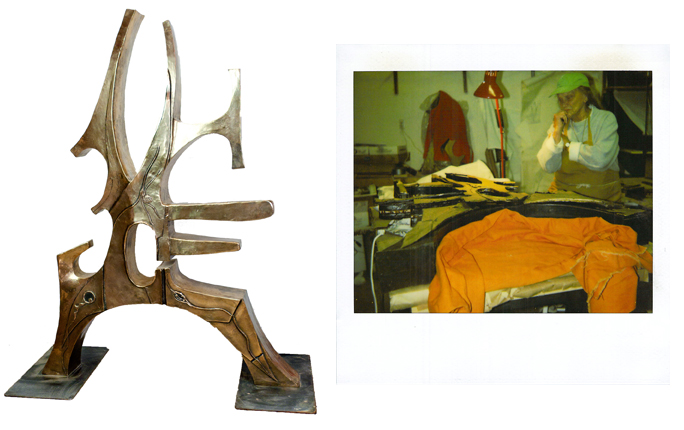
 Hannah Holliday Stewart- Einsteins Song and Polaroid of Hannah Holliday Stewart working on the sculpture in her studio- Matthews Gallery blog

Polaroid of Hannah Holliday Stewart in her Albuquerque studio working on ‘Einstein’s Song’

Stewart was 80 years old in the Polaroid above and still hard at work on her bronze forms, though she never exhibited again in her lifetime.

Here’s an excerpt from a typewritten artist statement Stewart wrote a year later:

“For me, the image should be an intellectual and emotional symbol plucked from the fringe of the imagination, it should suggest a classic truth and not be confused with social comment. The image at its most successful strikes a common chord of sensations in every viewer, and yet leaves each viewer with his/her own particular interpretation.”

See Hannah Holliday Stewart: An Artistic Legacy Rediscovered through July 18, and connect with us on Facebook, Twitter and Instagram for more information on the artist.
THE STORYTELLER: From petroglyphs to pinewood

Roch Hart- Fine Furniture- Matthews Gallery

 Roch Hart with his pie safe “The Storytellers”

“Furniture is art,” says Roch Hart. It’s a credo the Albuquerque fine furniture maker repeats every time he brings a new creation to the gallery. In Hart’s case, it’s true: each hand-carved piece of sugar pine is as unique as a painting on our wall. This is nothing you’d find at IKEA.
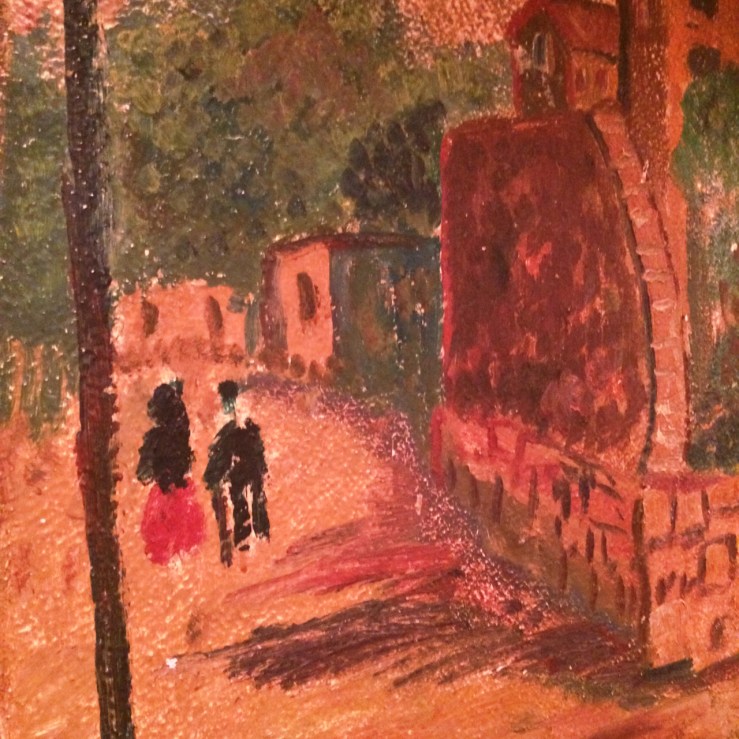
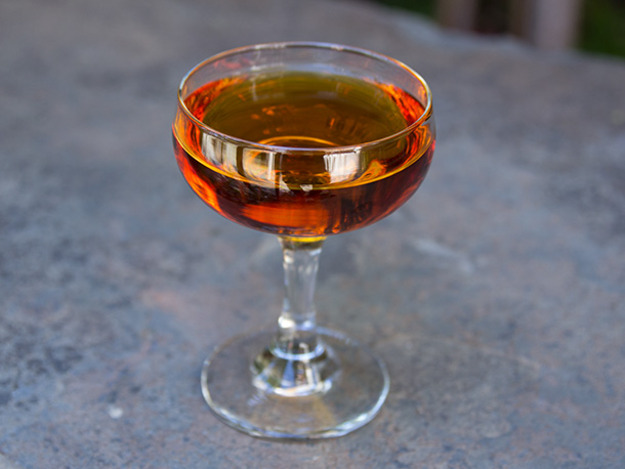
Check out our blog post chronicling Roch’s journey from Spanish Colonial furniture enthusiast to bona fide sculptor, and then delight in the details of his latest creation. This pie safe, dubbed “The Storytellers“, holds quite a few tales…

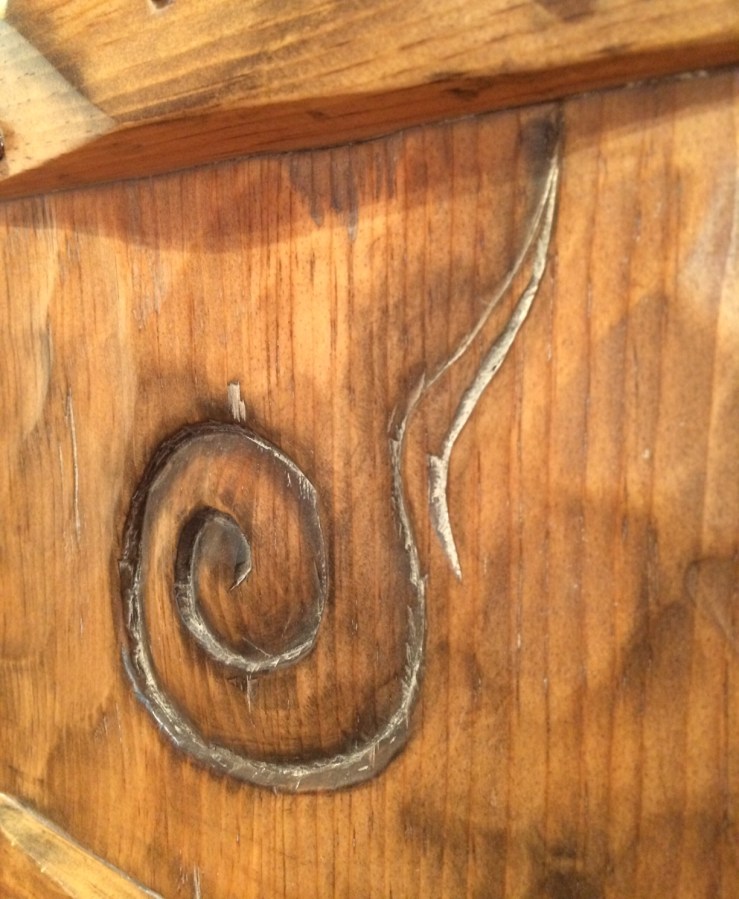
SPIRAL

Roch Hart- Fine Furniture Detail- Matthews Gallery

Hart often draws inspiration from New Mexico petroglyphs.

“A spiral can mean a lot of different things depending on its context, but here it represents eternity or travel,” Hart says. In particular, this symbol refers to a journey from the depths of the earth.

FACES

Roch Hart- Fine Furniture Detail- Matthews Gallery

These symbols on the sides of the pie safe tend to appear together in glyphs. The one on the left with its mouth shut tight is the “listener”, and the one on the right is the “storyteller”. It’s the yin-yang of cultures that depend on the voice to pass down vital knowledge.

The designs surrounding the faces also have an important meaning. Just like the Zia on the New Mexico state flag, they represent the sacred, pervasive number four: four compass directions, four seasons, four stages of a person’s life.

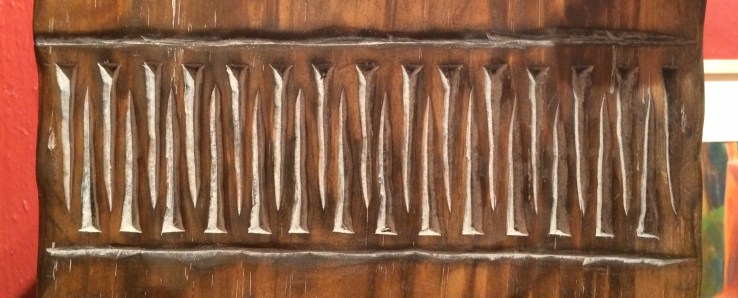
PATTERNS

Roch Hart- Fine Furniture Detail- Matthews Gallery

“This is mimicking the Navajo rugs,” explains Hart. “I thought it would be a great border for the faces.”

Hart uses white ash to make his patterns bolder, rubbing it into the cracks by hand atop a layer of shellac. The finishing touch is a light coat of wax.

JOINTS

Roch Hart- Fine Furniture Detail- Matthews Gallery

Near the beginning of his journey to furniture mastery, Hart visited the Nicolai Fechin House in Taos. Fechin was a Russian painter and carpenter who moved to New Mexico in 1923 and purchased a small adobe home that he would greatly expand over the years. The home is now a museum, and when Hart visited to study the furniture he had a chance encounter with Fechin’s daughter Eya. She taught him about the different joints that her father used, including the sliding dovetail joint pictured here.

“That changed my life,” Hart says.  “I looked at [Fechin’s work] and said, ‘I can do anything. Nobody told him what to do.'”

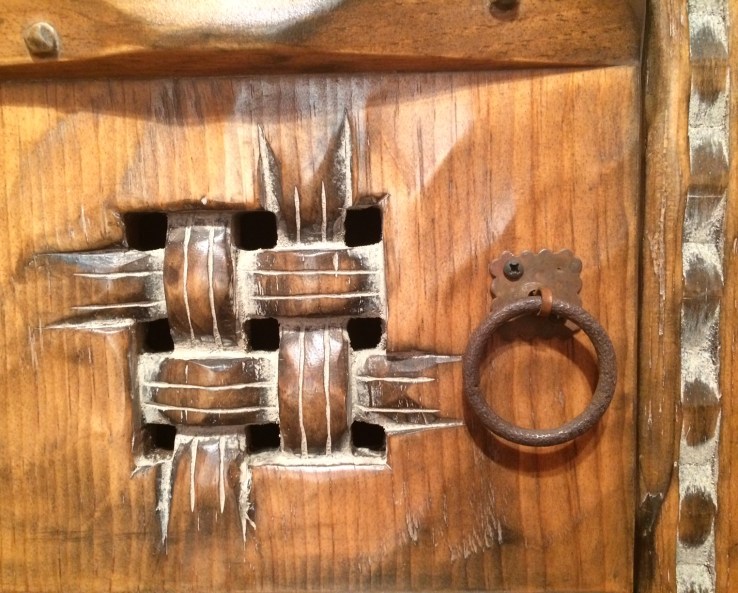
WINDOW

Roch Hart- Fine Furniture Detail- Matthews Gallery

The grid Hart uses as a window for the pie safe doesn’t have an age-old legend behind it. It’s one of Hart’s signature designs that appears in many different manifestations in his work. Myriad influences come together in Hart’s exquisite furniture, but each piece is imbued with his unique sensibility.

See more of Roch’s creations on his artist page, and connect with us on Facebook, Twitter and Instagram for daily gallery updates. Also, check out our upcoming exhibition FOUR CENTURIES: European Art from 1600 to 1950, opening June 13!

LOR’S LORE: Introducing Artist Lor Roybal

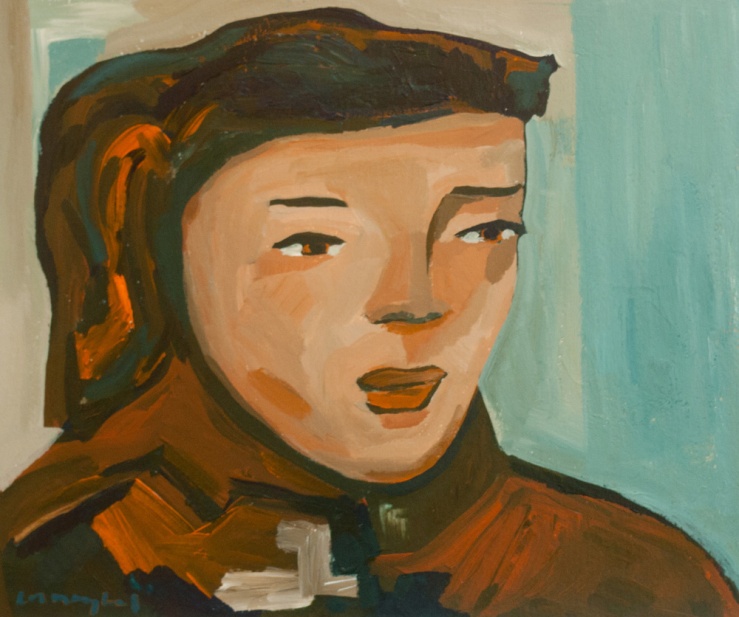
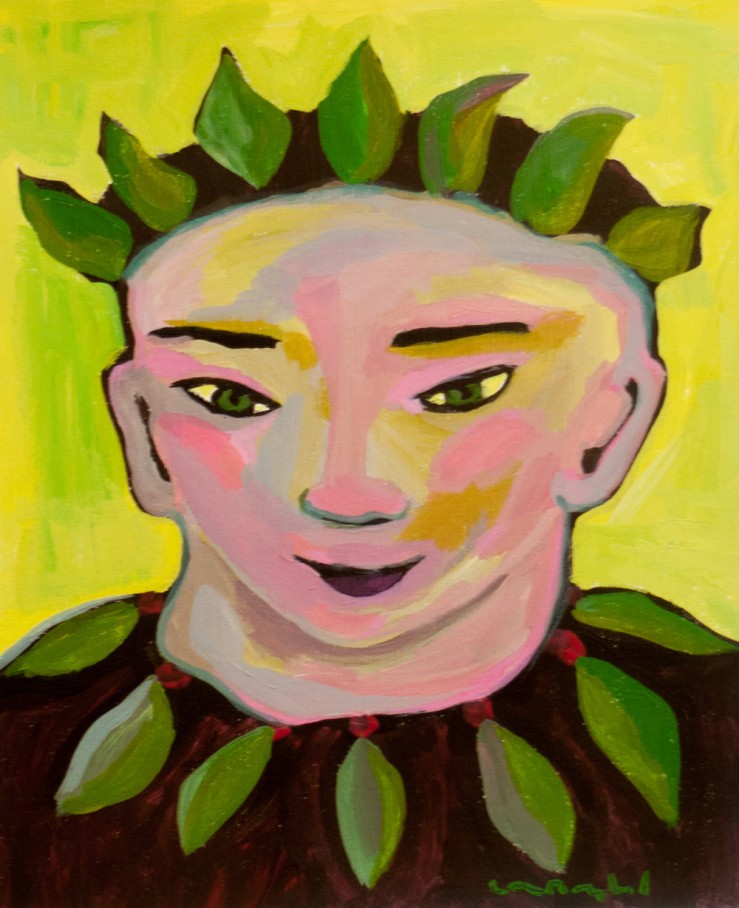
Lor Roybal- Dodge's Disbelief- Matthews Gallery

Lor Roybal, Dodge’s Disbelief, acrylic on paper
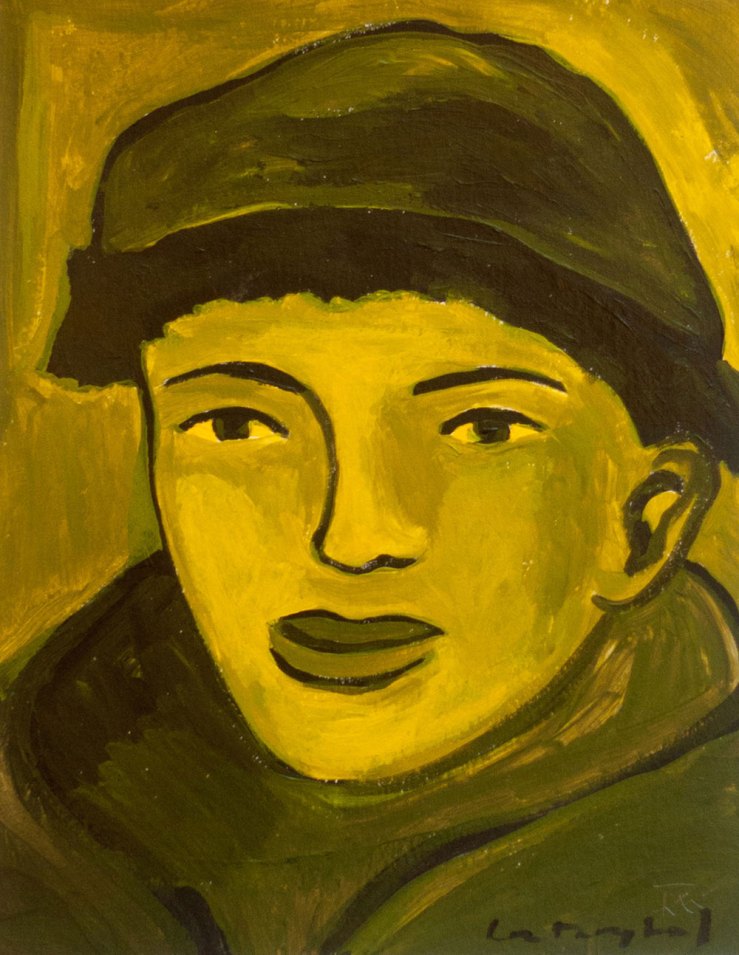
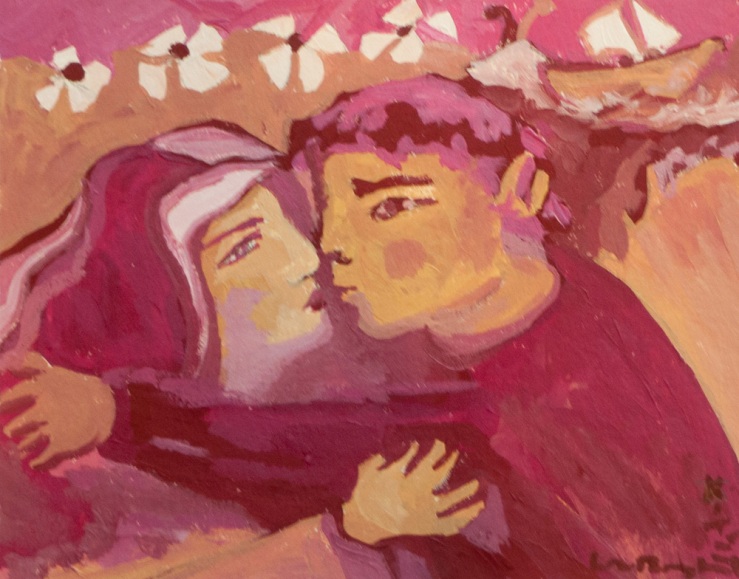
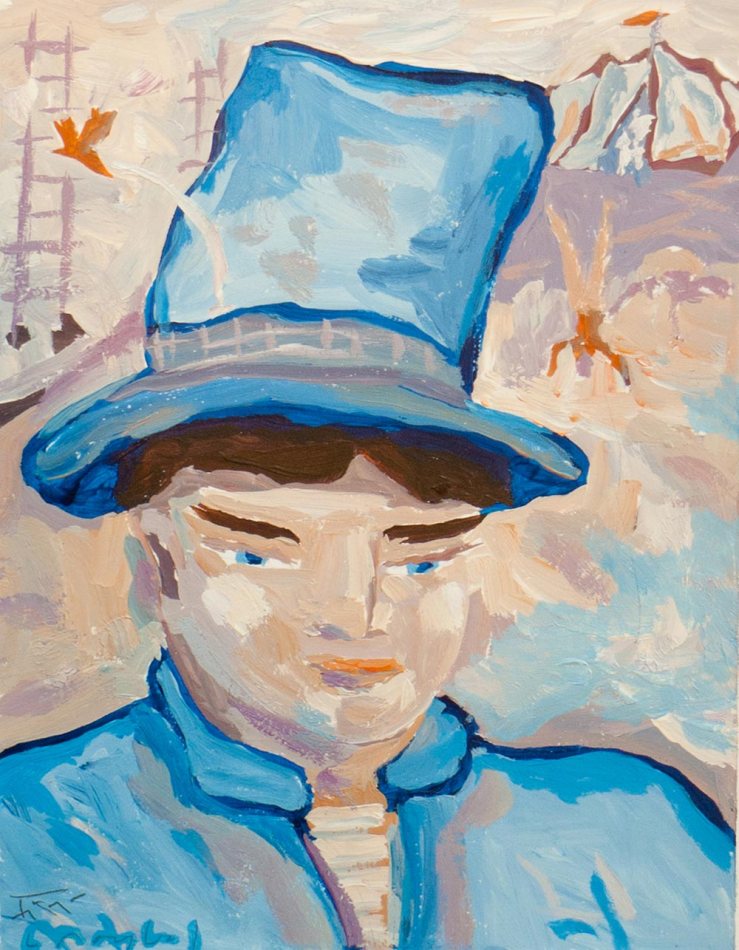
When Lor Roybal‘s big blue van pulls up in front of the gallery, we’re never quite sure what’s in store. She’s a blur of swirling textiles as she bursts through the door with something bright and colorful in tow. Her specialty is portraits, usually of characters from dreams or her vivid imagination. Sometimes she carries a box packed with miniature paintings and other times she holds a large frame in her hands. Once she brought by a loose stack of old sketches and wild free verse poems.

Lor is a familiar face in Santa Fe’s art community, but no one seems to know much about her. She lives somewhere along the Pecos River north of Santa Fe. Her two-room house is off the grid so she heats it using firewood in the winter. Her dog is her closest companion and painting is her favorite pastime. She is a scholar of art history.

“When I first started showing people my little paintings, I would say, ‘Here’s my treasure chest of gems,'” Lor once told us. There’s definitely something precious about Lor’s colorful faces. Each subject has a name and thorough biography. There are daring circus performers and pensive poets, gossipy grandmothers and mischievous little boys, cherubic elves and long-departed spirits. Some of the figures are intelligent riffs on other artists’ styles, from Picasso to Chagall to Renoir, but all possess a wild twist of Lor’s style.

Lor is now officially part of our stable, and we couldn’t be prouder to represent her. As you’ll see in her latest batch of acrylic paintings on paper, the artist is truly one-of-a-kind. Check out some of the work below, and connect with us on Facebook, Twitter and Pinterest for continued updates.

Lor Roybal- Posi- Matthews Gallery

Lor Roybal, Posi, acrylic on paper

Lor Roybal- Emiles Incredulity- Matthews Gallery blog

Lor Roybal, Emile’s Incredulity, acrylic on paper

Lor Roybal- Stendhals Boat- Matthews Gallery blog

Lor Roybal, Stendhal’s Boat, acrylic on paper

Lor Roybal- Young Clown Lujo- Matthews Gallery blog

Lor Roybal, Young Clown Lujo, acrylic on paper