SPRING OF MODERNISM

We’ve had some unseasonably warm days after last weekend’s snowstorm, and it’s making us excited for the end of winter. It’s the perfect time to release our spring exhibition schedule, which is a period of exciting growth at Matthews Gallery.

In light of Georgia O’Keeffe Museum’s brilliant Modernism Made in New Mexico exhibition and New Mexico Museum of Art’s recent emphasis on Southwestern modernists, we’re declaring a ‘Spring of Modernism’ in Santa Fe. It begins with our exhibition of influential New Mexico modernists, and features women artists of new mexico, rare artifacts from legendary artists’ studios and much more. Check it out:

Spring of Modernism Show- New Mexico Modern Art- Matthews Gallery

Spring of Modernism: Seminal New Mexico Modernists
March 6-31, Opening Reception: Friday, March 6, 5-7 pm

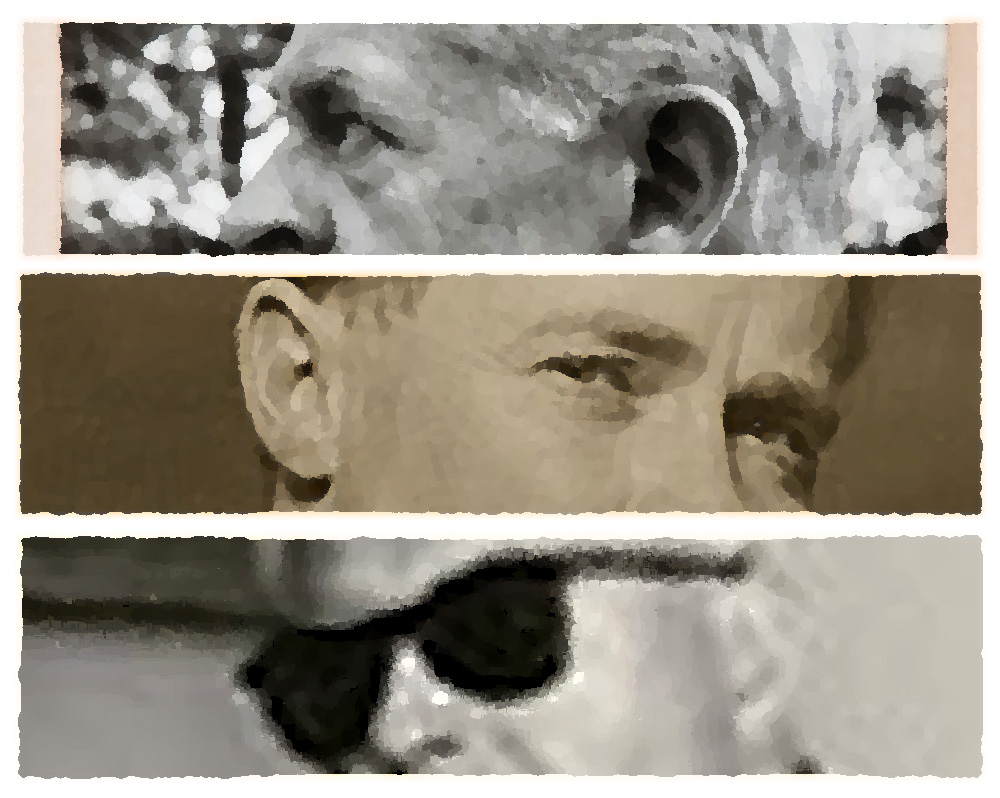
Matthews Gallery declares a “new spring” of modernism, as this rich period in New Mexico art history returns to the spotlight. Featured artists include Emil Bisttram, William Lumpkins and Raymond Jonson of the Transcendental Painting Group, Alfred Morang and Randall Davey of the Santa Fe art colony, and Beatrice Mandelman of the Taos Art Colony.

Collectors Forum- Art Collecting Workshop- Matthews Gallery Blog

Collector’s Forum Workshop
April 17, 6:30 pm

We offer an inside look at art collecting for this special Art Matters event. The workshop is for anyone who’s ever considered buying, selling or caring for fine art and has questions about the inner workings of the art world. Forum participants will get an inside look at every step of the process from one of Santa Fe’s top galleries. The event is free but seating is limited, so give us a call if you’d like to participate – 505-992-2882. Read about our past Collector’s Forum workshops here and here.

New Landscapes New Vistas- New Mexico Women Artists Show- Matthews Gallery

New Landscapes, New Vistas: Women Artists of New Mexico 
May 8-31, Opening Reception: Friday, May 8, 5-7 pm

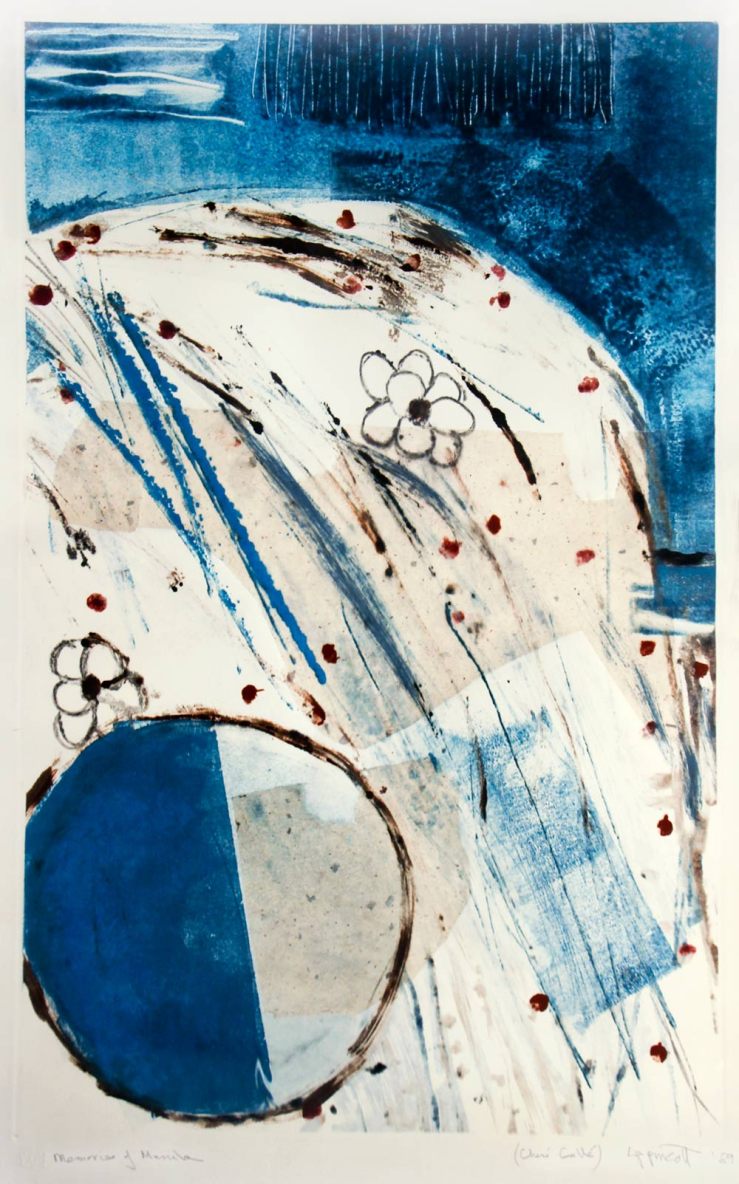
In the first half of the 20th century, a number of women artists who were frustrated by a lack of the recognition on the East Coast packed up and left everything behind. In New Mexico’s isolated art colonies, they found the freedom and social acceptance to excel. Matthews Gallery presents the stories and artwork of Janet Lippincott, Agnes Sims, Doris Cross and other women who found a powerful voice in the Land of Enchantment.

Artists Toolbox- Artwork and Artifacts of New Mexico Artists- Matthews Gallery

The Artist’s Toolkit: New Mexico Artists at Work 
June 4-10, Opening Reception: Friday, June 5, 5-7 pm

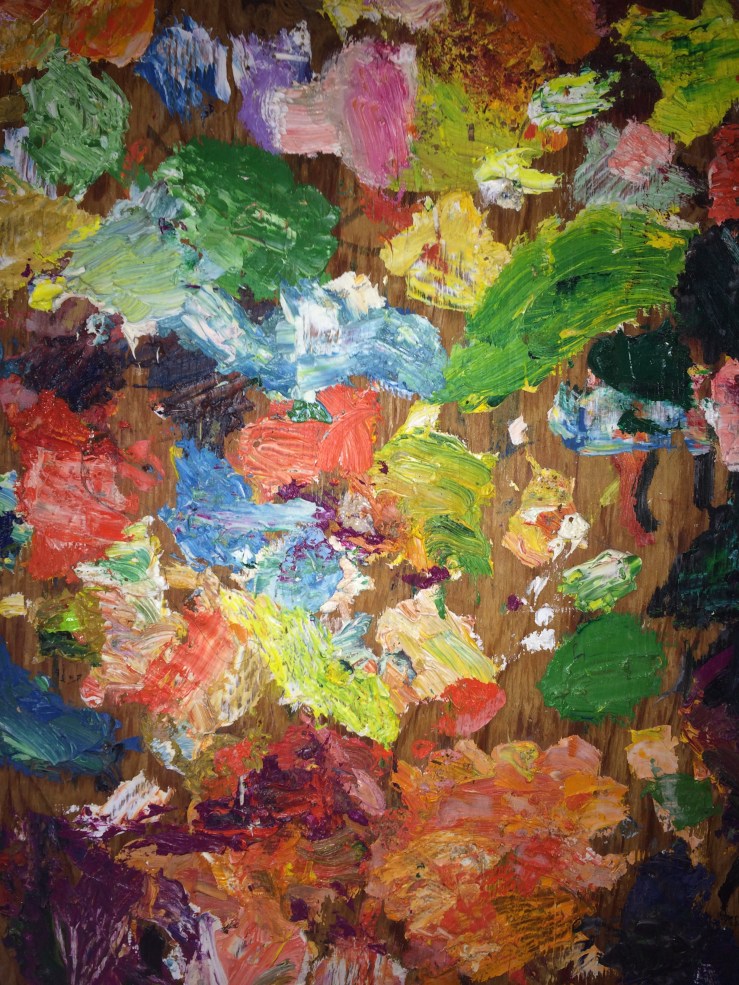
This special exhibition features rare artifacts of legendary New Mexico artists alongside their work, giving visitors insight into the complex process of conceptualizing, mixing and applying color. Visitors will get a once-in-a-lifetime opportunity to view Tommy Macaione’s paint palette, John McHugh’s brushes, Alfred Morang’s notes on color, Hilaire Hiler’s color wheel and other behind-the-scenes ephemera from Santa Fe private collections.

Widening the Horizon- New Mexico Landscape Show- Matthews Gallery Blog

Widening the Horizon: New Mexico Landscapes
June 12-30, Opening Reception: Friday, June 12, 5-7 pm

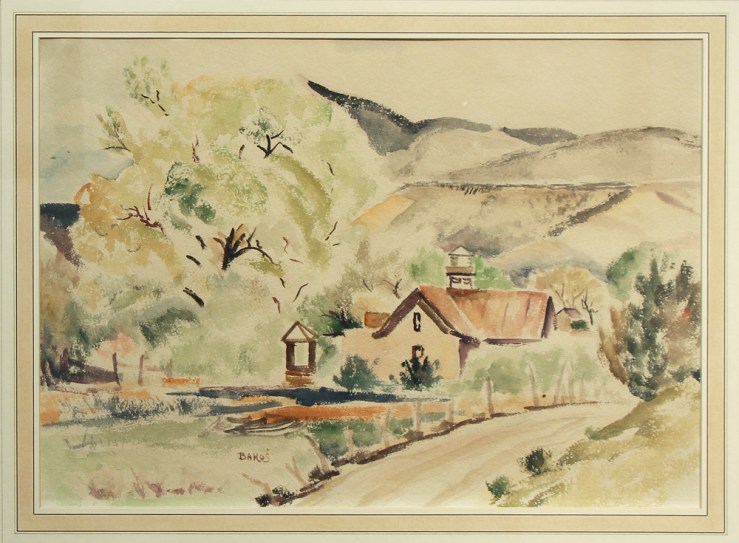
New Mexico’s endless vistas offer an opportunity and a challenge to artists. Matthews Gallery looks back at legendary artists’ attempts to capture and reimagine the High Desert horizon, from early Santa Fe and Taos art colonists including Datus Myers and William Vincent Kirkpatrick, to modernists including William Lumpkins and Beatrice Mandelman, who evoked the spirit of the landscape through the language of abstraction.

Learn more about our exhibition schedule here, and connect with us on Facebook, Twitter and Pinterest for daily gallery news.

New Mexico Connections: Hondius and Cowles

Cowles-Dasburg-Hondius-ArtistsFrom top: Cowles, Dasburg and Hondius 

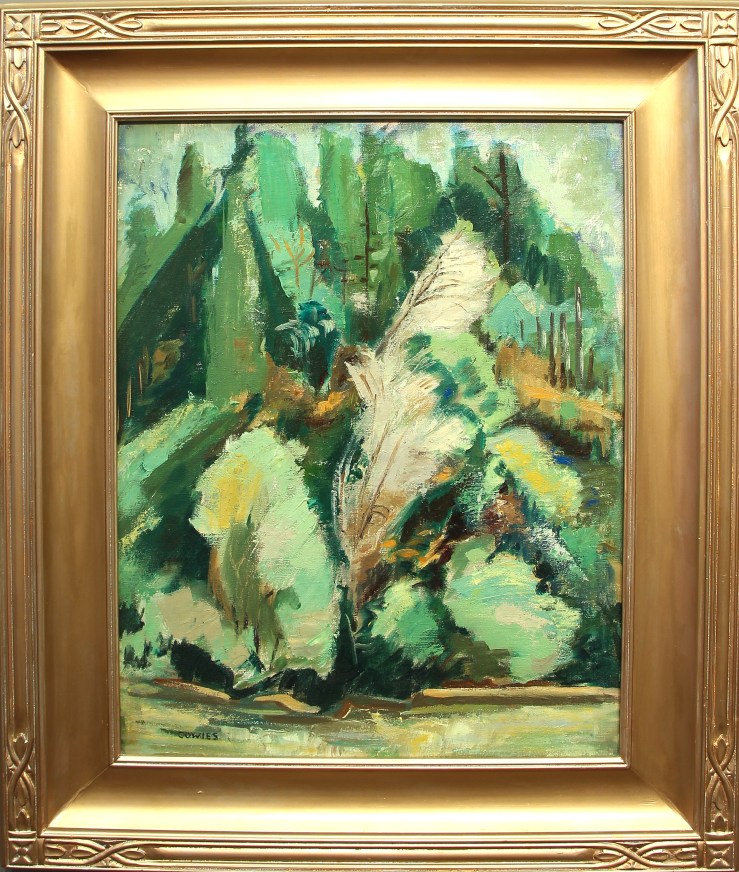
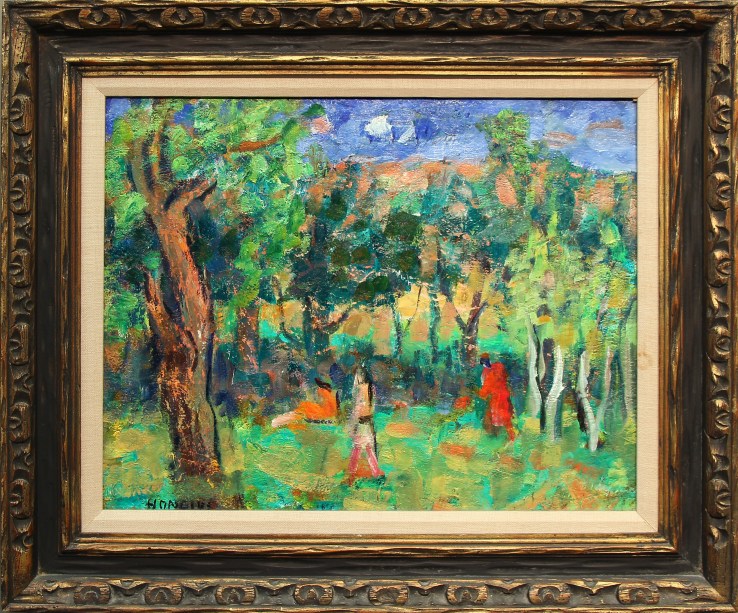
You’d be surprised at how often we find New Mexico links in the biographies of our historic artists, even if they never lived here. The latest paintings to appear on our walls are good examples. Gerrit Hondius and Russell Cowles were celebrated modern artists in New York: both exhibited at the Museum of Modern Art and the World’s Fair, and their works are now part of the permanent collections of numerous major museums. Their mutual friend Andrew Dasburg, whose career also took off in New York, would move to Santa Fe in 1921 and help usher in the region’s modernist period.

It goes to show that New Mexico was a major player in the American modernist movement, far beyond Georgia O’Keeffe’s significant contributions. Read on to learn more about these influential artists and their ties to the Land of Enchantment…

Russell Cowles- Untitled Modernist Landscape- Matthews Gallery Blog

Russell Cowles, Untitled (Modernist Landscape), Oil on Panel

“When an artist sees something he wants to paint, his first step should be to look- to look long and sensitively- to feel what nature has to say,” said Russell Cowles (1887-1979). Wherever the modernist set up his easel—from New Mexico to East Asia—he followed this philosophy with the passion of an artist and the intellectual focus of a scholar.

The Iowa-born artist graduated from Dartmouth College in 1909. He studied painting in Paris and Rome, drawing inspiration from the artwork of Cezanne and Gauguin. Cowles returned to the United States in 1920, exhibiting his artwork at the Metropolitan Museum of Art soon after. In 1925, he received a medal from the Art Institute of Chicago. These honors marked the beginning of a long and illustrious career that took Cowles as far as China to study with a master of Chinese painting, and Bali to experiment with abstract painting.

Cowles began living in Santa Fe for part of each year in 1930, and befriended John Marin, Andrew Dasburg, Marsden Hartley and other New Mexico modernists. He received a prize at the World’s Fair in New York City in 1937, and his artwork appeared in LIFE Magazine in 1948. He died in New York City in 1979.

Gerrit Hondius- Untitled Modernist Landscape- Matthews Gallery Blog

Gerrit Hondius, Untitled (Modernist Landscape), Oil on Panel

Gerrit Hondius (1891-1970) was born in the Netherlands and studied painting at the Royal Academy in The Hague. It was there that he developed a passion for Georges Rouault and the French expressionists, but he found a true match for his style and creative energy in New York City.

Hondius moved to New York in 1915, and studied at the Art Students League with Max Weber and Andrew Dasburg. He first caught the eye of the art world with a massive WPA mural in brilliant Fauvist and expressionist hues. In the mural, colorful city people tangled with masked figures, clowns and ballerinas, inviting Old World allegorical figures to frolic in the capital of New World modernity.

In the following years, Hondius split his time between New York and Provincetown, Massachusetts, and exhibited at the Whitney Museum of American Art, the World’s Fair, the Museum of Modern Art, Rockefeller Center and over fifty other venues across the United States and Europe. His artwork is in the permanent collections of the San Francisco Museum of Art, the Whitney Museum and other institutions across the world. His wife Paula donated his sketchbooks, letters and other personal effects to the Smithsonian Institution after his death.

Check out our website to learn more about Gerrit Hondius and Russell Cowles, and connect with us on Facebook, Twitter and Flickr for daily gallery news.

MORANG AND FRIENDS: The Saloon

Wild Tales of a Legendary Santa Fe Tavern- Matthews Gallery Blog

Special announcement: We’ve officially extended our MORANG AND FRIENDS exhibition through Friday, January 2nd. Come trace the legacy of ‘Santa Fe’s Toulouse-Lautrec’! 

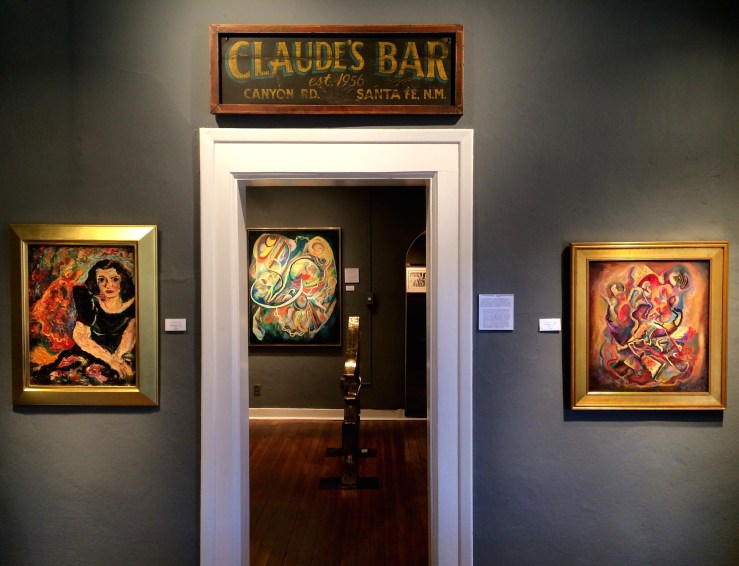
Cheryl Ingram strolls into Matthews Gallery and beams up at a sign that hangs high on the wall. “There it is, Claude’s Bar,” she says. Ingram is the co-owner of Silver Sun Gallery, which is just down the street from us. Her gallery once housed Claude’s Bar, and this Santa Fe relic is usually on display there. Ingram kindly lent it to us for our MORANG AND FRIENDS exhibition. Though Claude’s was established just two years before Alfred Morang’s death, he quickly took a liking to the tavern and its charismatic owner, Claude James. In fact, Claude’s was his last stop before the fire that ended his life in January, 1958.

About two decades after Morang’s death, Ingram and her business partner Deanna Olson arrived in Santa Fe. They were retired school teachers who had been traveling around the country selling handmade Native American jewelry. When they reached the City Different, they stuck around and founded Silver Sun. In the years since 1980 when they opened the business, they’ve become the keepers of countless stories about the infamous saloon that preceded them. As Ingram strolls around the gallery smiling at the colorful canvases, she can’t help but pass on some fascinating tales of Canyon Road.

Artwork by Legendary Santa Fe Painter Alfred Morang- Matthews Gallery Blog

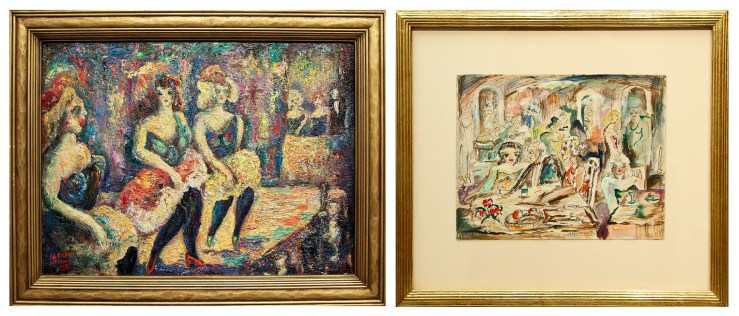
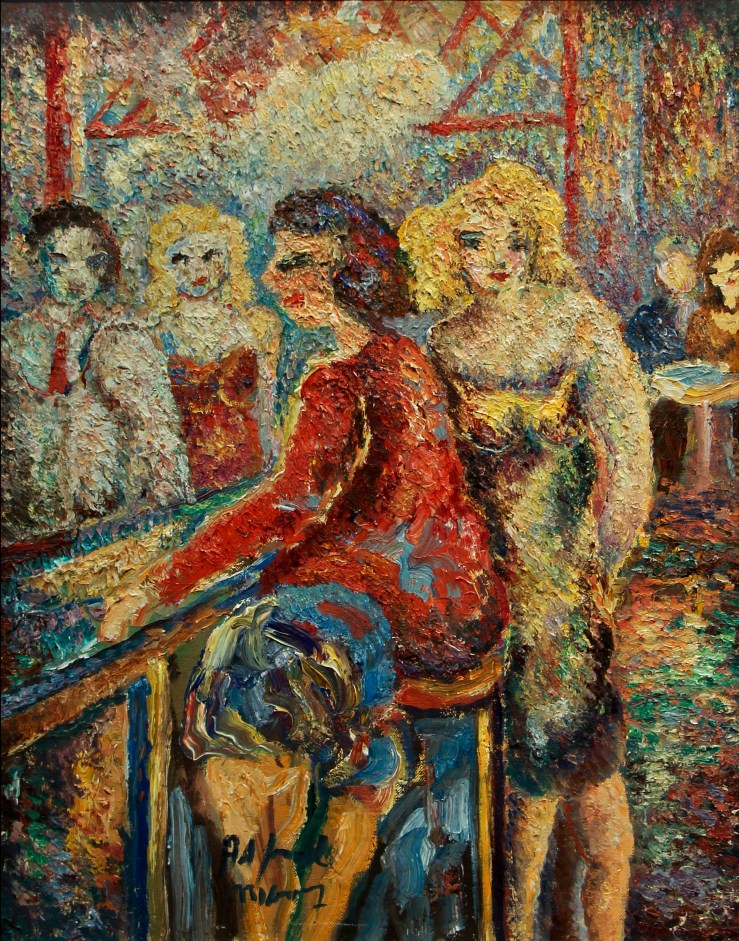
Ingram analyzes a painting of ladies dancing on a stage, concluding that it’s probably a view of El Farol. She and Lawrence linger by a watercolor of a bustling restaurant and try to identify where it might have been. She finally stops before a large painting titled ‘The Women at Claude’s’, and the stories really start rolling.

“Claude’s mother was French, and she married an editor at the New York Times whose last name was James,” Ingram says. In the 1950’s, Claude and her mother embarked on a road trip to California along Route 66. On their way back they took a detour to Santa Fe and never left.

Claude followed in her father’s footsteps and took a job as a journalist for the Santa Fe New Mexican. One year her house caught fire, killing her two corgis. A reporter snapped a photo of the dead dogs and published it in the paper the next day. Claude was so disturbed that she swore off journalism. She and her mother bought a building on Canyon Road’s 600 block and opened a bar and restaurant.

At first it was a fancy establishment where Claude’s mother hosted intellectuals from Paris, but later it was better known for midnight parties and wild bar brawls. “The Santa Fe police were always hoping it would burn down,” Ingram says. “Whenever they got a call about it, they were disappointed that there hadn’t been a fire.”

 Alfred Morang- The Women at Claude's- Matthews Gallery Blog Alfred Morang, The Women at Claude’s, Oil on Canvas

Ingram stares intently at ‘The Women at Claude’s’ and warm recognition spreads across her face. “Claude had dark hair, and she was short and squat like the woman in the center of the painting,” she says. In fact, with a little more analysis, Ingram concludes that the woman probably is Claude. “She’s standing behind the bar, so it very well may be Claude serving the clientele. That would be her lover behind her.”

Claude often tended bar barefoot with a pack of cigarettes folded into the sleeve of her shirt, Ingram says. She would throw patrons out of the bar “by the belt and shoulder” if they got too rowdy. “Canyon Road wasn’t paved then, so the landing was a little softer, but you didn’t mess with Claude,” Ingram says with a laugh.

As she continues, we flip our tape recorder on:

She was a handsome woman, but not a pretty woman. She was short but you didn’t mess with her.

A guy came into Silver Sun about 1982, looking for Claude’s Bar. I told him he was a little late, and he told me a story about Claude.

He said he had ordered a beer and Claude was working the bar. He noticed this pretty woman sitting at the other end of the bar. He tried to hit on her, and next thing he knew, his tie, shirt and coat were pulled across the bar. “You leave my woman alone,” Claude said. He was so upset, he didn’t finish the beer and left.

Each corner of the bar had its own persuasion. You had the gay men over here, the gay women over here, and the three piece suits were over there with the ladies of the night. Claude was like a teacher in the classroom: one corner did not mess with any of the other corners, or your fanny was out of there.

There was an ambiance that was going on in there that was truly Santa Fe of the period, and that’s why she was so popular. You were okay if you got in there. Even if you got stumbling drunk, someone would be there to protect you from some nasty politician or a cowboy with a gun.

There were honest-to-god cowboys who wore guns. A fight broke out between them and the gay guys once, and everyone had guns. There were two lines of guns, about ten or twelve feet apart, and they were drunk and shouting. That story came from a lady who was hiding under the bar. She was the barkeep on Saturday night. It looked like they were shooting around each other, trying to scare each other. One guy did take a hit in the fanny, however. When the cops got there, they just took the whole batch. The next day, the barkeep quit.

Towards about 1970 or 1971, there was a dance floor way in the back where a sculpture garden is now. A guy named Jimmy was up there playing—his wife told me this story—and looked past all the drunks to the door. Here was this lanky guy with a guitar case who saunters over to Jimmy. “Mind if I play along?” he says. Jimmy just had a cow. They played all the rest of the night together, and no one besides Jimmy recognized him. It was Jimi Hendrix. They were all too drunk.

Claude eventually lost interest in bar tending and hired someone else to manage the establishment. The saloon closed in the late 1970’s but its charismatic owner remains a legend among Santa Feans. It’s fascinating to hear Ingram’s tales, especially because they’re rare firsthand accounts. They’re all from people who have passed through Silver Sun over the years to pay tribute to Claude’s.

Since MORANG AND FRIENDS opened two weeks ago, we’ve had visits from many people with Santa Fe stories like these. We’d like to thank everyone who shared with us. Your words have helped inspire our upcoming exhibition schedule, which will delve into many corners of the Santa Fe art colony. Stay tuned!

For more gallery news, make sure to connect with us on Facebook, Twitter and Instagram.

MORANG AND FRIENDS: Alfred in Paris

Alfred Morang Portrait- Morang and Friends Exhibition- Matthews Gallery BlogAlfred Morang, 1952

“After Morang’s death, all of a sudden people started to realize that he was a great artist. People regretted that they didn’t pay enough attention to him,” Santa Fe art collector Paul Parker said at the end of our interview last week.

As Parker will tell you, Alfred Morang’s death in a Canyon Road fire in 1958 was the end of an era in Santa Fe. From his arrival in 1937, Morang had helped cultivate a vibrant art scene in the City Different. His house parties of the 1930’s and 40’s earned him a reputation as “one of Santa Fe’s… most colorful Bohemians,” as the Santa Fe New Mexican dubbed him in his obituary. Morang was a masterful painter who drew inspiration from the French Impressionists, and a talented teacher who passed his knowledge to the next generation of Santa Fe artists. He was a great writer, musician and radio broadcaster.

However, towards the end of Morang’s life, he and his wife Dorothy divorced and he became increasingly isolated. He spent most of his time fervently painting in his Canyon Road studio. Santa Fe artist Bill Tate had this recollection of a frigid winter in the 1950’s:

Oh my, it was cold! The snow was pouring down unmercifully and as I walked into Alfred’s tiny studio, I pushed paintings aside to make a path, then found them sliding in behind me as I penetrated the cache of completed canvases. It appeared that paintings were everywhere. There in the middle was Alfred, happily painting away, bundled up like a Siberian monk—galoshes, muffler, sweater, heavy top coat which came to his ankles, and a woman’s hat pulled snuggly down over his ears and neck.

The studio had a sky light, but where the glass was supposed to be, there was none. Alfred had hung an old muslin sheet over the opening to shut out the falling snow. Evidently Alfred had let the fire go out in the small space heater. Or maybe had forgotten to pay his gas bill. I don’t know. But it was awful. I had been there just a few minutes when the muslin partially ripped loose from the ceiling and began flopping in the wind. Snow dumped all over Alfred as well as the canvas.

Alfred never looked up, never stopped painting. His blue-cold hands kept mixing painting and dabbing it on the canvas. Occasionally, he would lean back to assess the effect, but throughout, he was totally oblivious to my presence… or the muslin that danced in the bitter breeze.

I attempted to speak, but only a chatter came out. I retreated to the warmth of my own studio. To the day he died, Alfred never knew I was there.

This somber image of an artist in the winter of his life is not how Parker likes to think of Morang. Soon after he first visited Santa Fe in the 1990’s Parker developed a fascination for the Santa Fe icon that has taken him on many adventures, including a national treasure hunt that inspired our latest exhibition. The artifacts Parker discovered will appear alongside artwork by Morang and his contemporaries in our December 12-26 exhibition MORANG AND FRIENDS, evoking an era full of crackling creativity. Morang stood at its warm heart.

In the story below, Parker captures the Santa Fe zeitgeist before and after Morang’s death, and travels to Paris to complete a mission in Morang’s memory:
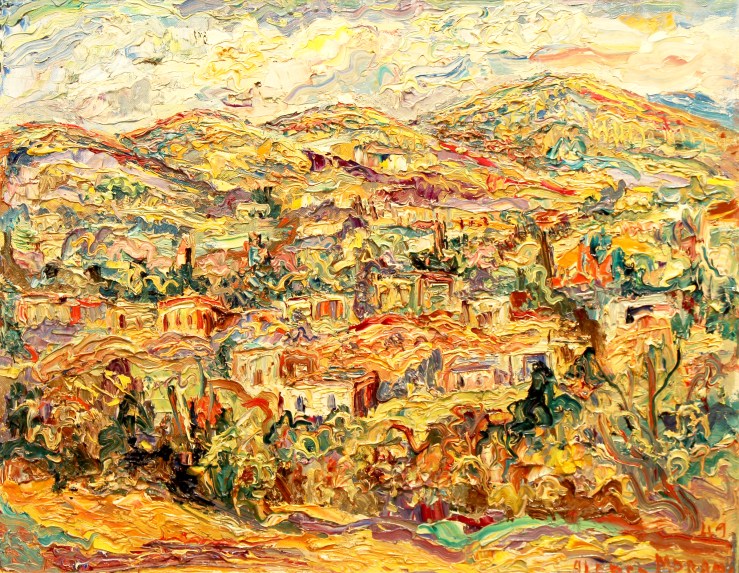
 Alfred Morang- Santa Fe Hillside 1949- Matthews Gallery Blog Alfred Morang, Untitled (Santa Fe Hillside) 1949, Oil on Canvas

HUNTING FOR ALFRED MORANG

by Paul Parker

I had been thinking about this mission for a long time and I finally find myself in the library seated in front of this antique microfilm viewer the size of a small refrigerator and I have loaded the reel containing the early 1958 issues of the Santa Fe New Mexican.

I was not sure why I had this unremitting need to know more about Alfred Morang. I had first seen his work painted on the adobe walls across from the bar in El Farol on Canyon Road and in Maria’s on Cordova, but I know the real inspiration came from my good friend Jim Parsons in Taos. Jim was an art dealer and appraiser forever and a friend and mentor for 20 years. When he mentioned that Alfred Morang was one of his favorites I knew I needed to pay attention. It was like Willy Wonka telling me about one of his favorite chocolate bars.

It helps that Alfred was such a compelling man, so well versed in music and literature as well as painting. He was the youngest person ever to perform a solo violin concert in the prestigious Jordan Hall in Boston. He was also an accomplished writer. The London Times once called him one of America’s leading non-political short story writers. Erskine Caldwell was a friend of his and he often visited Alfred and his wife Dorothy in Santa Fe.  Alfred’s short stories and poems were published alongside Frost, Poe and Mark Twain. I do know the main reason I am so drawn to him is that his art touches me. Behind that art is Alfred’s story, his life experience and that is what drove him to create the art that Jim and I and many others enjoy so much.

Alfred Morang- Untitled Portrait of a Woman 1950- Matthews Gallery BlogAlfred Morang, Untitled (Portrait of a Woman) 1950, Oil on Board

There is a very sad part to his story and it is that part that drew me to the library. Alfred Morang died in a fire in his Canyon Road apartment studio on a cold January night at the age of 56. I had wanted to come here to the library and read the January 29, 1958 issue of the Santa Fe New Mexican for some time. I wanted to know the details, I wanted to read what people said, I wanted to know what page it was on and how big the article was. I was scrolling through the microfilm and as I started approaching the day he died I realized I was reading the papers that he probably read unaware he only had days to live.

The closer I got to the issue of the paper I had come to see the more time I took reading the articles and I even started reading the ads. I lingered the longest on Tuesday’s edition dated January 28, 1958. That was the last paper Alfred could have read.

There was an article on that day that I am sure must have caught Alfred’s eye and the headline read, “French Ballet loses Backing”. Alfred never made it to Paris, but his heart was there. His heroes were the French Impressionists and he considered himself to be one of them. Monet and Bonnard were his favorites. The article explained that the French Education Ministry had withdrawn the government subsidy for the production of Francoise Sagan’s ballet “The Broken Date”. The ministry’s action followed a storm of protest. Apparently one dance was performed in a bathroom setting designed by painter Bernard Buffet and was described by some critics as scandalously erotic. I would like to have gone to Paris with Alfred and attended that performance. A French ballet with a bathroom setting designed by Bernard Buffet coupled with scandalously erotic, I am sure we both would have enjoyed that.

That Tuesday the Lensic was showing “Pal Joey” starring Rita Hayworth, Frank Sinatra and Kim Novak. Kaune’s was having a sale featuring Pork Chops at 59 cents a pound and Swanson’s Pot Pies at four for a dollar with your choice of chicken, turkey or beef. Cherry Motor’s at 607 Cerrillos Road had an ad for the new Rambler American for $1789. The ad proclaimed that one had been driven from New York to Los Angeles using only 80 gallons of gas averaging over 30 mpg. I remembered that time. One week before this ad ran I had celebrated my 12th birthday and becoming a teenager was in sight. Unlike today I was looking forward to getting older and that was the time I began thinking about cars. Chevrolet had just introduced the 283 V-8 a year earlier in the now iconic 1957 Chevy. The fuel economy push left over from the war was fading fast and the Plymouth Hemi and the “Little GTO” were on the horizon. The economical 6 cylinder Rambler American never had a chance.
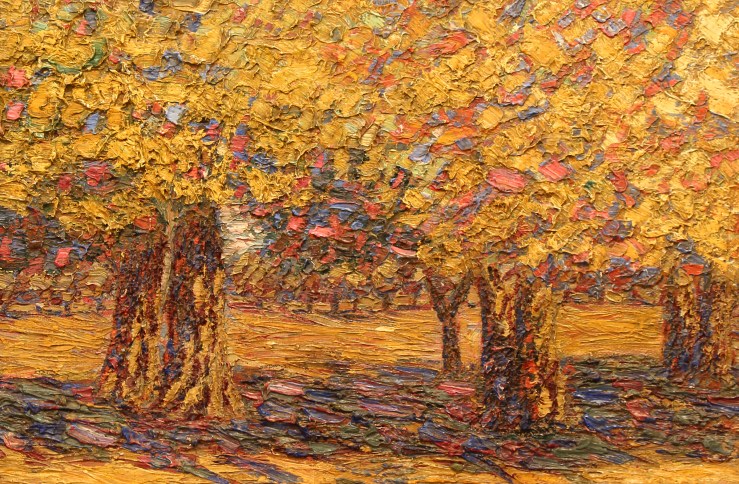
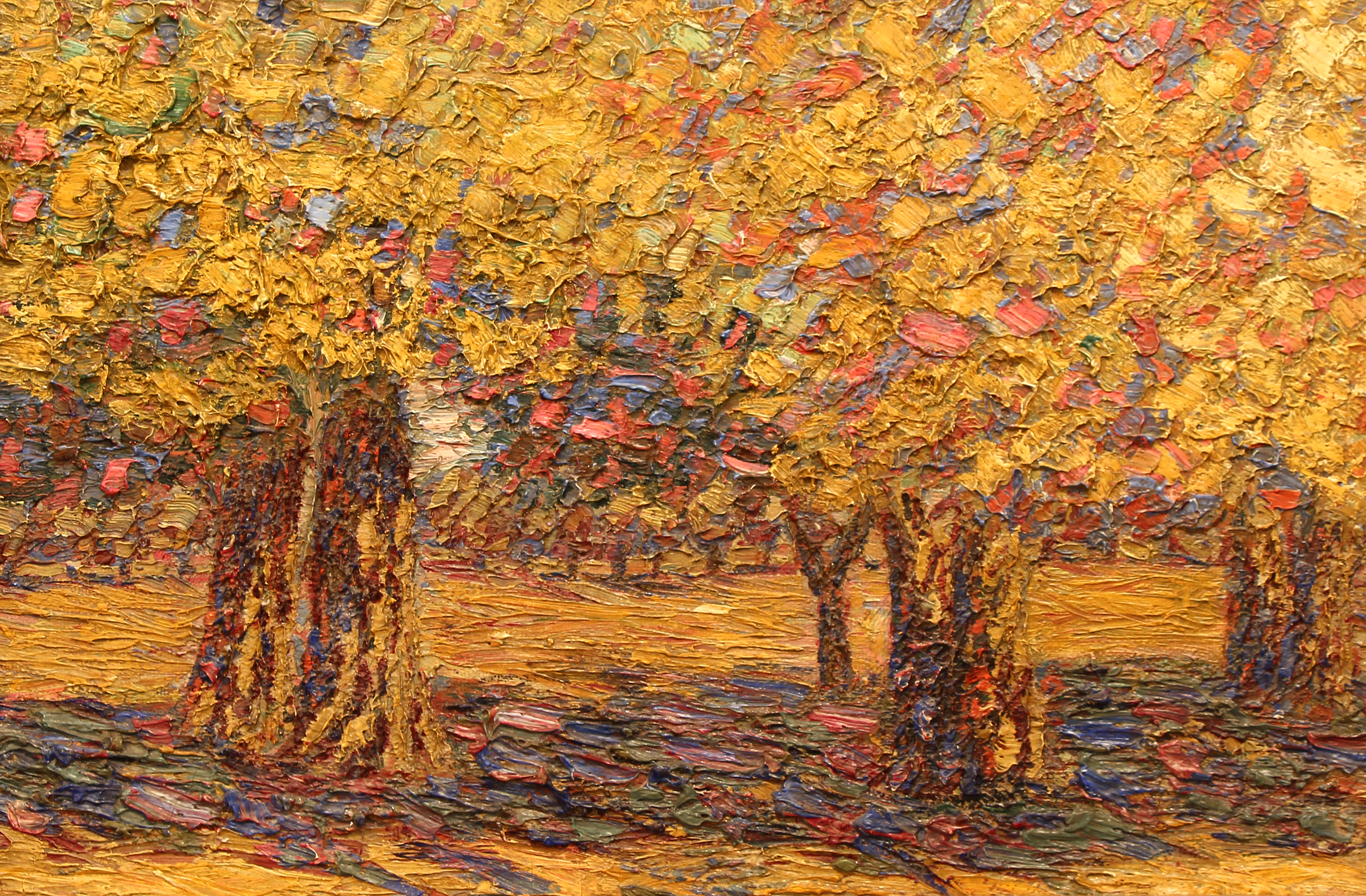
IMG_0474Alfred Morang, Pecan Grove, Oil on Panel

I read every bit of that Tuesday’s paper. It was as if I felt that Alfred would be okay as long as I did not turn the page, but I knew it was time to see what I had come to see. I took a last look at the classifieds and marveled at an ad for a 2-bedroom adobe with wall-to-wall carpet “close in” for $16,500 and then I hit the button and watched the microfilm reel turn slowly.

The first thing I saw positioned on the top left side of the front page of that Wednesday edition of the Santa Fe New Mexican was a large photograph of a cat crouching on the corner of a charred mattress. The rest of the bed was strewn with papers and tubes of paint. Underneath the right half of the photo was a caption “Mourning for Her Master…This lonely cat was found wandering through the charred ruins of the home of her master Alfred Morang who died in the fire early this morning. The cat is on the bed where he died.” Morang’s friends had commented on his love of cats and noted that he often went hungry himself so he could afford to feed them. Two other cats perished in the fire with him. Unfortunately I discovered that the cat on the mattress in the picture had to be put down because it had extensive lung damage. There was also a picture of Alfred. A cigarette in a holder was hanging from the corner of his mouth dangling over his scraggly beard and he was wearing a black hat with a brim that was tilted slightly to the left making him look decidedly like an artist and decidedly French. The story next to the photo read “Well Known Artist Dies In Home Fire… Alfred Morang, 56, one of Santa Fe’s best known and most colorful Bohemians died at about 1:30 am last night in a tragic fire at his home in the 600 block of Canyon Road.”  Friends reported they had last seen Alfred in Claude’s bar around midnight. His apartment was just up the alley out back.

Five days after the fire the New Mexican noted…“Funeral services were held Saturday at the Fairview Memorial Park Crematorium in Albuquerque for Alfred Morang, widely known Santa Fe artist, writer and critic who was burned to death early Wednesday morning in a fire at his home here. The body was escorted to Albuquerque by a group of close friends, including Randall Davey, Will Shuster, Harlan Lizer, Walter Dawley and William Currie. Alfred was transported in a Spanish Colonial coffin made by Abolonio Rodriguez, custodian of the art museum.”
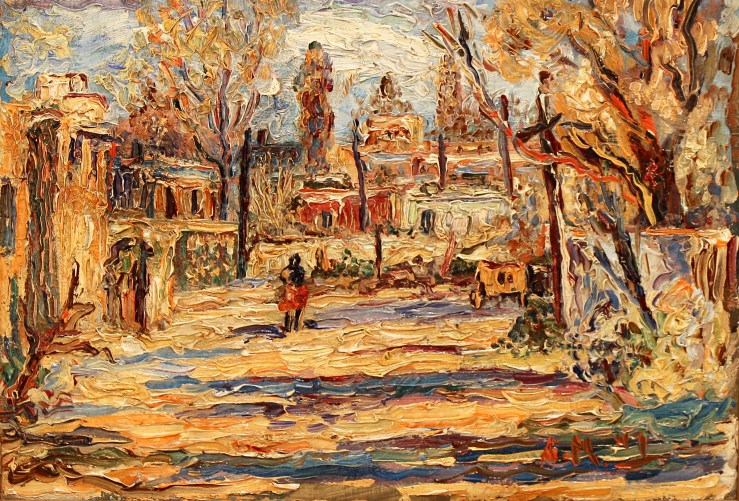
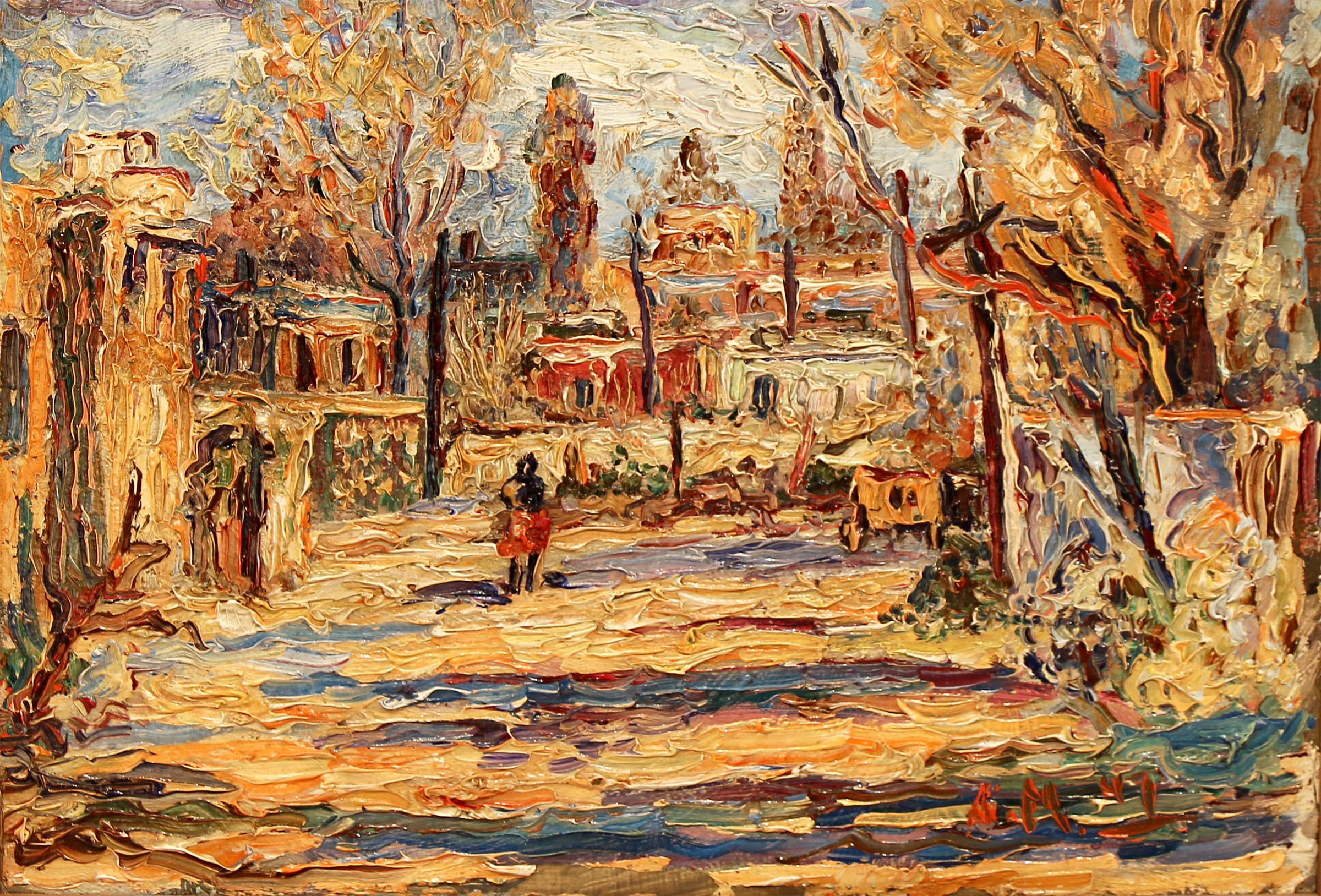
IMG_0505Alfred Morang, Guadalupe Plaza 1947, Oil on Board

Alfred was born in Ellsworth, Maine in 1901 and came to Santa Fe in 1937. Like many who came here he suffered from TB. He immediately became a fixture in the Santa Fe art scene. He wrote a weekly column for the newspaper and he produced a weekly radio program for 17 years on KVSF called “The World of Art with Alfred Morang.” Most of all he was famous for his enthusiasm for art and his ability to teach and many benefited from “The Morang School of Fine Art”.

Walt Wiggins authored a book published in 1979 appropriately titled “Alfred Morang…A Neglected Master”. Walt uncovered several quotes during his research for his book and my favorites include the following.  “When Alfred Morang’s life came to a tragic end in January of 1958 nothing before or since has so shaken the New Mexico art colony. Some say it was a sense of guilt that struck the community for not having shown a greater sense of appreciation for one who, by destiny, was different.” One Santa Fe artist reasoned, “Why shouldn’t Santa Fe be stunned with the loss of Alfred?  After all, he taught half of us how to paint and the other half how to see.”

The February 10th 1958 issue of the Santa Fe New Mexican carried the report of the local memorial service for Alfred in Lorraine Carr’s column “It Happened in Old Santa Fe”. Dr. Reginald Fisher, director of the Art Museum spoke first. “Friends this is not a funeral, we are simply gathered here for a creative expression of merit and appreciation of a spirit that has been active in an activity that we in Santa Fe like to call art. Alfred was an inventive, searching and daring spirit as French as Lautrec, yet he never saw Paris. Last week his restless spirit found peace.”

Painter and close friend Randall Davey was next. “I have known Alfred since he arrived back in 1937. He was a kind, a gentle and a humble soul and in all those years I never heard him speak unkindly of his fellow man. He was a great painter; many of you did not think so, because often he sold his work for a mere pittance through necessity. Nevertheless it was great art and the happiest work I have seen in New Mexico. He had a love and a delight for painting and I doubt that anyone will surpass him in this field.”

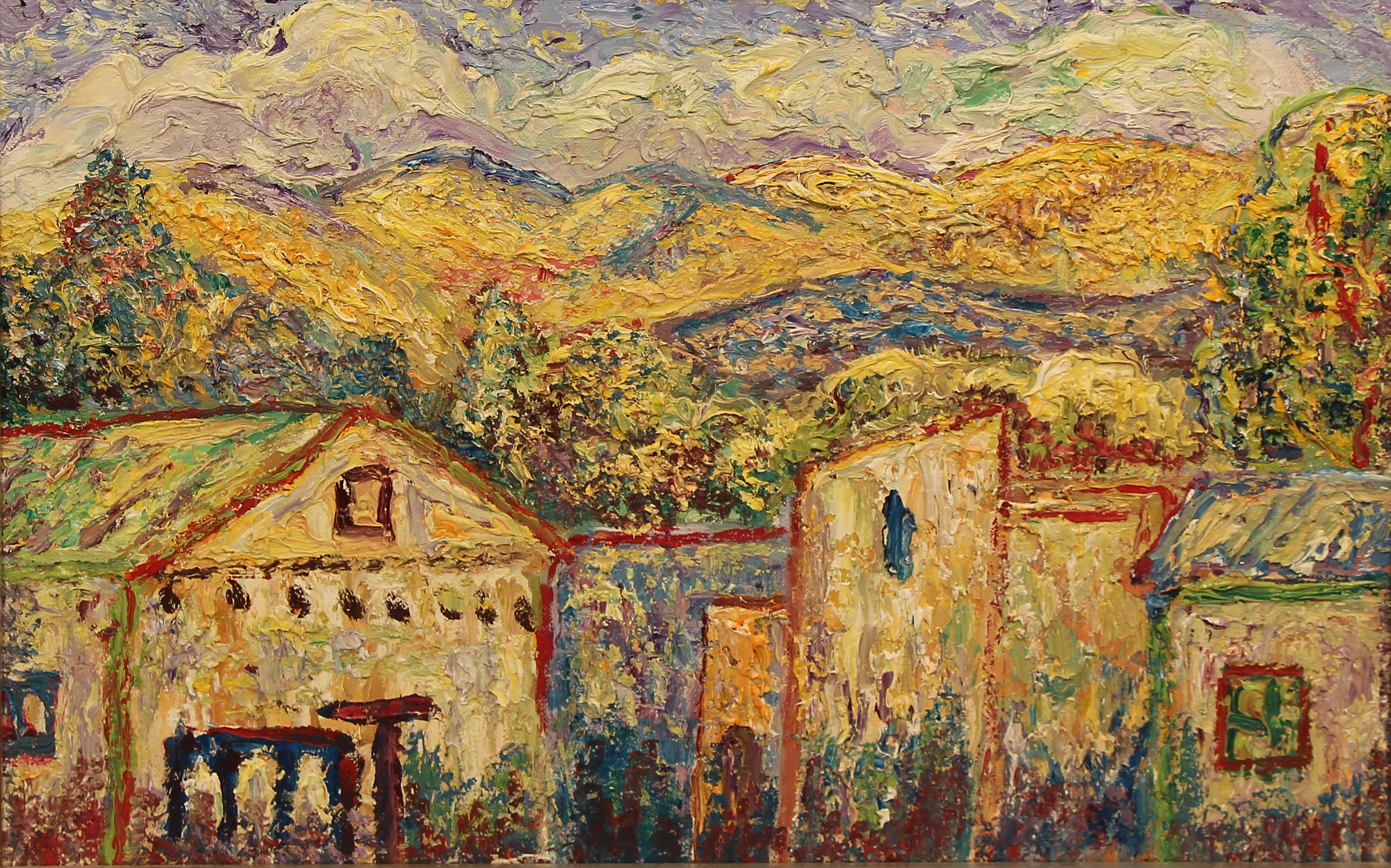
IMG_0495Alfred Morang, Untitled (Mountain Landscape), Oil on Board

I hope Alfred enjoyed himself on that Tuesday. I hope he spent some time with friends and some extra time petting his cats. I hope he wrote another poem and put the final touches on his most recent favorite painting before he headed down the alley to Claude’s that evening.

Claude James ran the well-known Canyon Road bar where he often spent time and, as legend has it, her rowdy spirit was just what was needed to run that place. I would love to have met Alfred there that fateful night for a few drinks. I’m sure we would have talked through the evening about art and life as we cast occasional glances at the ever present ladies that were often the subject of his paintings and when Claude said “It’s midnight, would you fellows like another one?”  I would nod and say, how about a couple of shots of your best cognac. I would love to take a sip, lean back and turn to him and say “Alfred I know you often say that you don’t believe in art for art’s sake, but you believe in art for people’s sake. Can you explain to me what you mean by that, and please…take your time?”

A few weeks after I finished writing this story I found myself engrossed in the details of planning a trip to Paris. I was not sure why, but suddenly it came flooding over me with incredible clarity. Human life really is very fragile and it really is all going to come to an end someday and we do not know when. I knew then I needed to go to Paris and I needed to go now. Unfortunately most people have that epiphany too late in life. They start thinking about the things they never got to do after it’s too late to do them. I knew then that this sudden obsession with Paris was a message from Alfred. Paris was his promised land, but he never made it there and I was going to go for both of us.

I told a friend in Santa Fe this story and he said, “You should do something for Alfred in Paris.” It was a great idea, but what would I do? I had been in Paris 5 days when I suddenly knew. I found an image of a Morang painting on my laptop. I printed it and wrote a bit on the back about Alfred and headed off to the Musee d’Orsay. This time as I enjoyed the paintings I was also searching for a repository for Alfred’s work and I finally found it. I can tell you that a fine example of the genius of Alfred Morang now has a home in Musee d’Orsay on the banks of the Seine and it will take a jackhammer to find it. He is close to Monet and Bonnard, the masters he so admired. Alfred, you finally made it.

Source: Bill Tate’s tale first appeared in the 1979 book Alfred Morang: A Neglected Master by Walt Wiggins.
Picasso: Past, Present and Future!

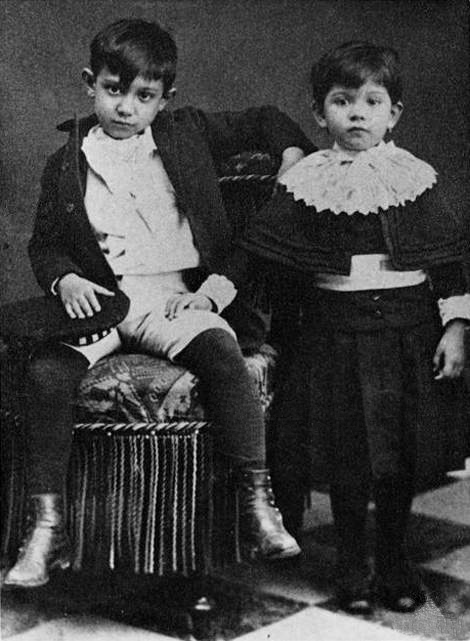
Pablo Picasso and sister Lola- Matthews Gallery blogPicasso and his sister Lola. He was about 8 years old
in this picture, and already had some swagger.

In the art world, it’s a holiday. Pablo Picasso was born in Málaga, Spain on October 25, 1881. In the 133 years since, the artist has irrevocably changed the way we look at art— and the world around it.

We’re frequently struck by the way Picasso would capture an artist’s attention and radically alter his or her course. Just look at this 1955 lithograph by Italian futurist Gino Severini, which is often mistaken for a Picasso by gallery visitors. French artist Jean-Pierre Jouffroy shifted from figurative artwork to pure abstraction after studying Picasso and his contemporaries, and Robert Motherwell‘s decision to become an artist hinged on a European tour of modern masterworks.

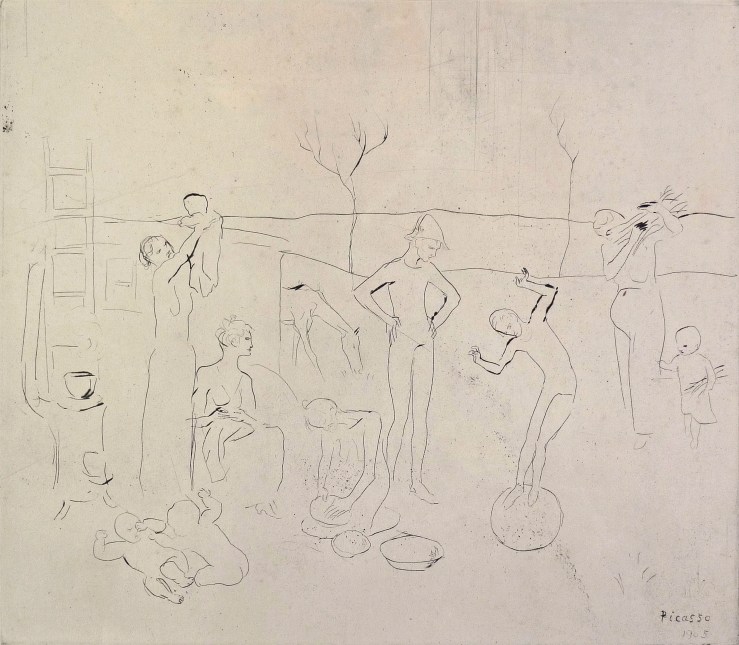
On this momentous day, we’re looking back at every Picasso that has passed through our gallery. Each one has a fascinating story… Pablo Picasso- Les Saltimbanque- Matthews Gallery blog Les Saltimbanques is the earliest work by Picasso we’ve ever exhibited. It’s a drypoint from 1905, when the artist was about 24. It was commissioned by legendary art dealer Ambroise Vollard, who gave Picasso his first gallery show in 1901. The frolicking figures are characters from an opera-comique about a circus troupe. An early appearance by the harlequin (far right) is notable, as the archetype would become one of Picasso’s most-used personal symbols.

Pablo Picasso- Personnages Masques et Femme Oiseau- Matthews Gallery blog

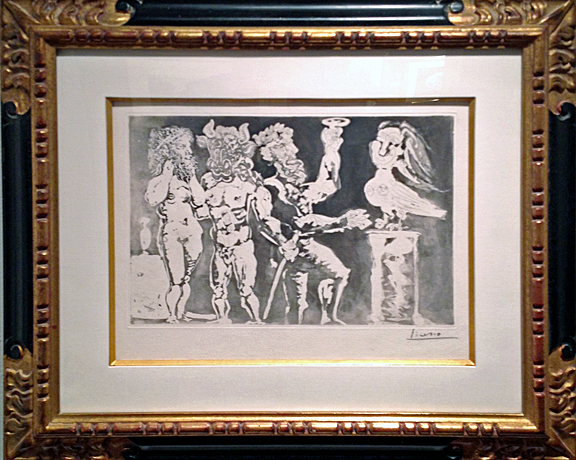
Fast forward to 1930. With the help of Vollard, Picasso had built his name into the first true global artistic brand. In yet another stroke of marketing genius, Vollard commissioned Picasso to create a series of 100 etchings—including several portraits of the dealer himself. The star of the Vollard Suite is the minotaur (second from left), another one of Picasso’s personal symbols. At the beginning of the series the minotaur is a virile beast, but by the end he is blind and weak, relying on a beautiful young muse to guide him. Completed in 1937, it’s the middle-aged Picasso’s meditation on his waning virility.

Pablo Picasso- Alex Maguy Gallery- Matthews Gallery blog

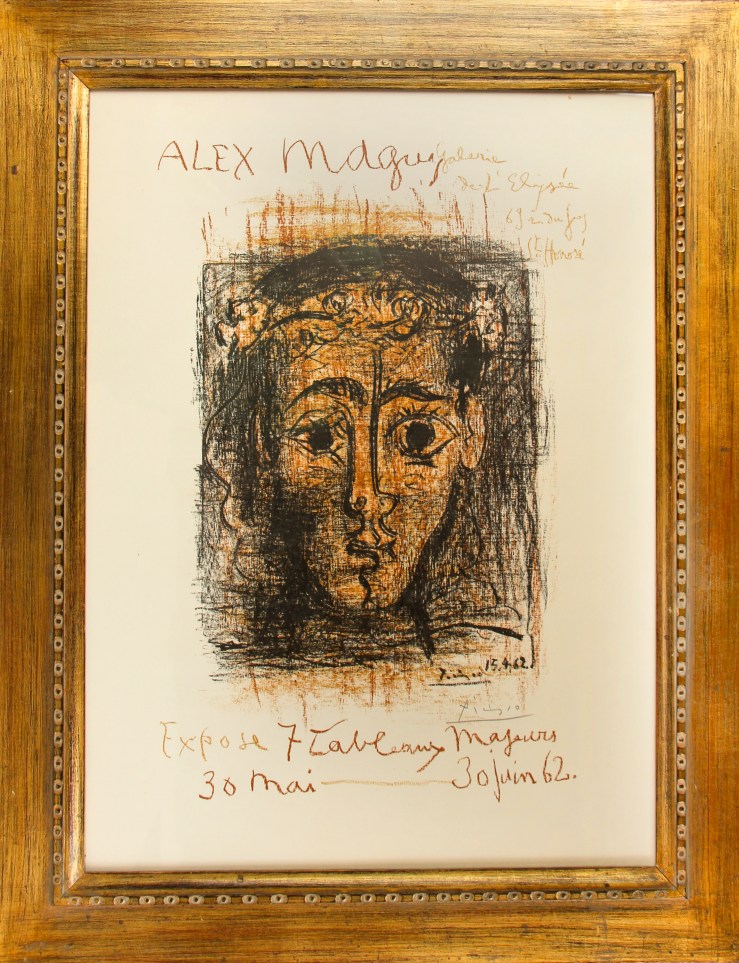
A youthful face peers from this offset lithograph Picasso designed for the Alex Maguy gallery in 1962. The exhibition was a retrospective of his artwork, but those captivating, wonder-filled eyes hardly hint at the darker themes the octogenarian turned to in his later years.

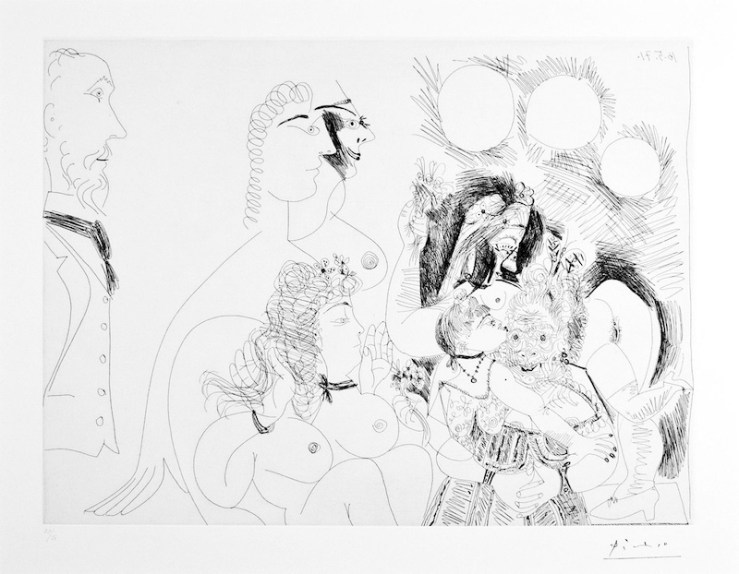
Pablo Picasso- 156 Suite- Matthews Gallery blog Picasso created the 156 Suite in 1971, not long before his death. Some consider the etchings to be his most personal series, a diary of a man struggling with impotence and pushing helplessly against the inevitable.

In contrast to our print from the Vollard Suite, women take the dominant role in these works. Models turn on artists, witch doctors stab at their patients and—in the case of this print—prostitutes tangle at a brothel while a man looks on, paralyzed. The gentleman is Degas, who appears in several prints in the series and with whom Picasso felt solidarity in his struggles.

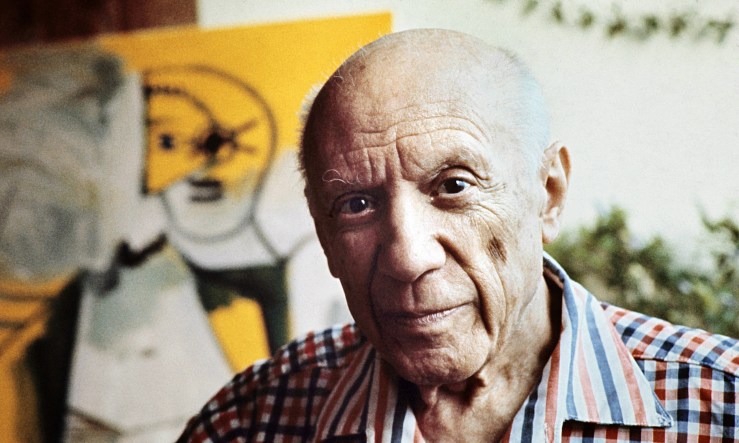
Pablo Picasso 1971- Matthews Gallery blog Check out our Twitter, Tumblr and Pinterest profiles today for more insight on Picasso, and learn more about all of the artwork in this post on our homepage.

COLLECTOR’S FORUM: Join the Network

Get Connected- Collector's Forum Workshops- Matthews Gallery blog

Seats are filling up for our free COLLECTOR’S FORUM workshops, which begin next Friday as part of the Santa Fe Gallery Association’s Art Matters lecture series. The events have already given us the opportunity to connect with art lovers of all stripes. As the news spreads from person to person, a network is forming with links to local art legends like Alfred Morang and Fremont Ellis.

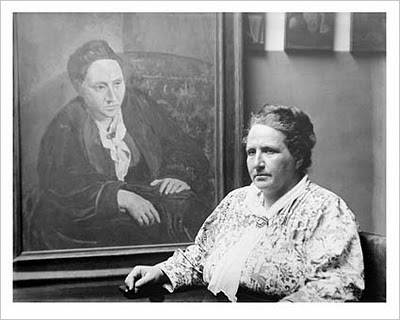
Gertrude Stein with her famous Picasso portrait- Matthews Gallery blogGertrude Stein with Pablo Picasso’s famous portrait of her

That’s why this lovely friendship map of Parisian modern artists and patrons from the early 20th century caught our eye on Twitter the other day. Celebrated salonniere Gertrude Stein is the spider at the center of the web, of course, with Pablo Picasso and Henri Matisse and Joseph Stella and Henri-Pierre Roche entangled around her. Mabel Dodge and Marsden Hartley appear too, and their later New Mexico adventures tie this famous circle directly to our own rich cultural history. Forget six degrees of separation, we’re down to one!

The art world is beautifully interconnected, but that doesn’t mean it has to be exclusive. Our workshops are designed for anyone who’s ever considered dipping a toe into the art market, whether you have a full array of masterpieces or a virtual wish list of art treasures on Tumblr. We’ll cover every angle of the art business, including:

  • How the price of artwork is determined
  • How the primary art market differs from the secondary market
  • The importance of provenance
  • When conservation should be considered for an artwork and what is involved
  • How to insure your artwork
  • How to receive an accurate art appraisal
  • How to negotiate the purchase of art
  • The best strategies for buying or selling art at auction

The workshops will feature fascinating behind-the-scenes stories from our gallery, and tales of tricky art conservation projects from special guest Matt Horowitz. Shoot us an email to reserve your seat and become a link in the long chain of art connoisseurs, from the City of Light to the City Different!

Learn more about COLLECTOR’S FORUM on our exhibition page, and connect with us on Facebook and Twitter for daily gallery news.

OUTSIDER/INSIDER: Abstract Expressionism at Matthews Gallery

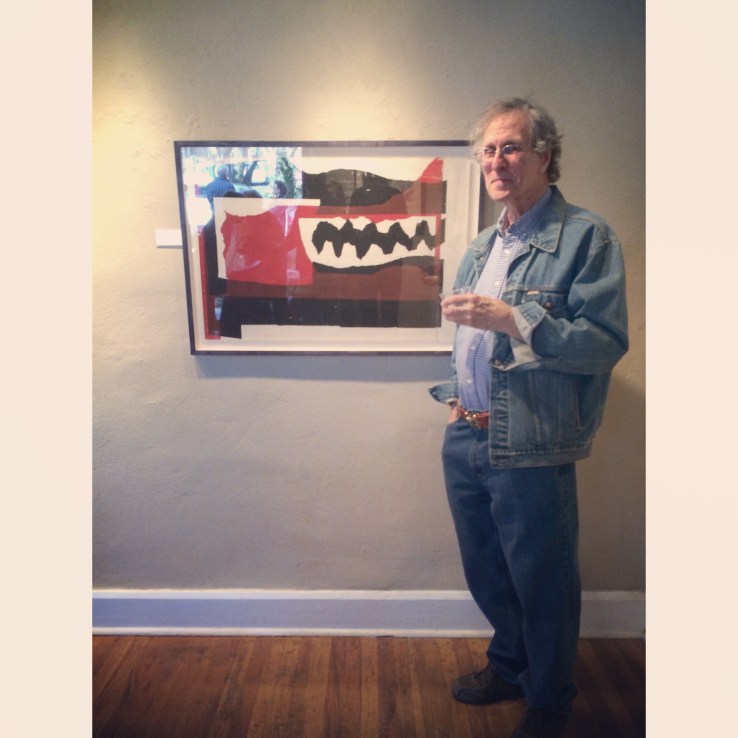
Stanley Boxer and Robert Motherwell at Matthews Gallery Boxer (left) and Motherwell

It was Mark Rothko’s 111th birthday this Friday, and the occasion has us pondering one of the 20th century’s most polarizing art movements: abstract expressionism.

Three artworks by renowned abstract expressionists have recently landed on our walls. The first two are heavily impastoed oil paintings by Stanley Boxer, who resolutely clung to the far fringes of the movement. Determined to defy labels, he was furious when art critic Clement Greenberg called him a color field painter, and yet the arc of his creative explorations closely paralleled that of his abstract expressionist contemporaries:

In the manufacture of my art, I use anything and everything which gets the job done without any sentiment or sanctity as to medium. Then, too, I have deliberately made a practice of being “visionless”… this is, I go where my preceding art takes me, and never try to redirect the future as to what my art should look like. This is a general credo and foundation for everything I have ever done and stands firm in its solidity as this is written.

Boxer, who died in 2000, would have loved Grace Glueck’s New York Times review of a 2004 exhibition of his late works. She notes that he was “never part of a movement or trend,” but rather driven by paint’s “physical possibilities without script or program.”

Abstract Paintings by Stanley Boxer- Matthews Gallery Blog Atriumofashreddednight  (top) and Crisppitchofsigh, Oil on Linen

Glueck ends the piece with a brief analysis of Boxer’s titles, lyrical lists of words that are jammed together in unbroken strings. The works in our collection, for example, have names that read like fragments of beat poems: Atriumofashreddednight and Crisppitchofsigh. Glueck writes, “As Boxer joked in his titles, these canvases, more than most, do not really lend themselves to verbal exposition. They live for the eye, to which they bring deep satisfaction.”

Boxer’s titles provide a link to Robert Motherwell, the other abstract expressionist represented in our collection. Unlike many “abex” artists who labeled their canvases using dates or arbitrary numbers, Boxer and Motherwell were unapologetic in their wordplay.

That’s where the similarity ends. While Boxer considered himself an isolated frontiersman of abstract painting, Motherwell was an eager icon of abstract expressionism. He coined the term ‘New York School’ to describe his revolutionary circle, which included Mark Rothko, Jackson Pollock and Willem de Kooning, and acted as a spokesperson for the movement in the world of academia.

If Boxer’s titles were little more than impressionistic quips, Motherwell, who was a scholar before he became a “serious artist” and wrote numerous essays on aesthetics, chose names that have inspired endless analysis. His most famous series of paintings, Elegies to the Spanish Republic, chronicles the Spanish Civil War in bold strokes of black and white and subtle passages of ochre, blue, green and red.

Mainly, I use each color as simply symbolic: ochre for the earth, green for the grass, blue for the sky and sea,” Motherwell wrote. “I guess that black and white, which I use most often, tend to be protagonists.” In varying contexts, each color holds a universe of meanings. To fully understand the use of ochre in Motherwell’s Spanish Elegies, “You would have to know that a Spanish bull ring is made of sand of an ochre color,” the artist wrote.  Other works that feature ochre, like Western Air or Personage, with Yellow Ochre and White, would naturally spark different associations. 

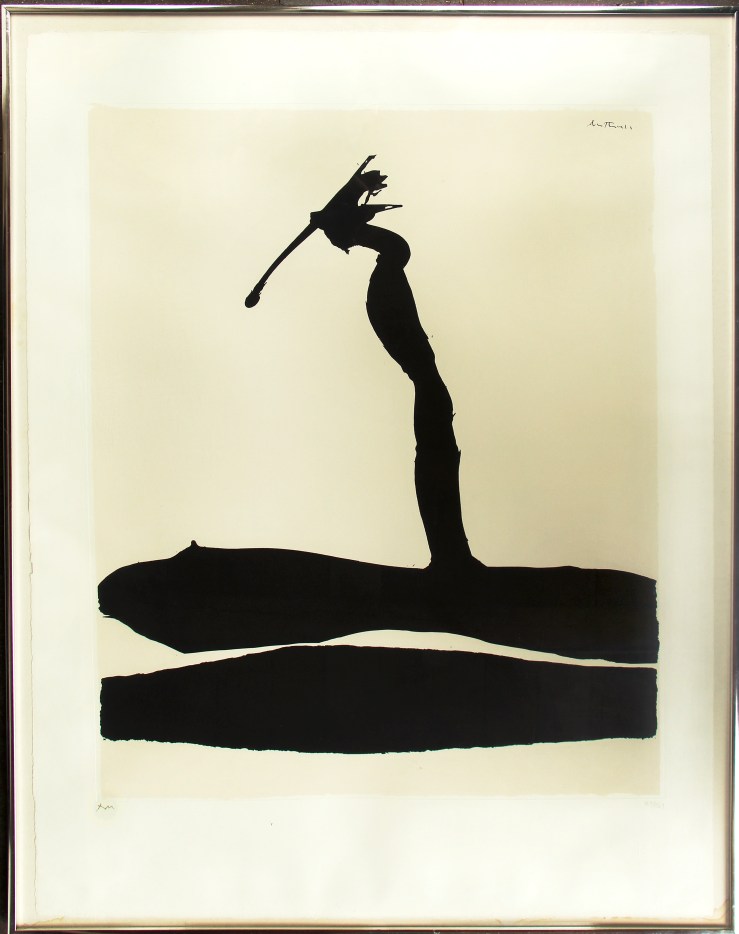
Robert Motherwell- Africa 4- Silkscreen- Matthews Gallery Blog Robert Motherwell, Africa 4, Silkscreen

What to make of our Motherwell silkscreen, titled Africa 4? Motherwell completed the Africa suite in 1970, the same year he created his Basque and London suites. They were his first projects entirely devoted to silkscreens, and a divergence from the heavily layered nuances of his oil paintings. Here his black abstract forms stand crisply against their off-white backgrounds, although on closer inspection, their tumultuous edges still seem to weave in an out of focus.

“All my works [consist] of a dialectic between the conscious (straight lines, designed shapes, weighed color, abstract language) and the unconscious (soft lines, obscured shapes, automatism) resolved into a synthesis,” the artist wrote in 1944.

Motherwell first explored the concepts of automatism and the subconscious with a group of Parisian Surrealists, including Duchamp, Ernst and Masson, who had fled Europe during World War II.  Their ideas would help shape the spiritual side of abstract expressionism, a spontaneous, intuitive element that Motherwell carefully balanced with his more intellectual inclinations.

Motherwell’s connection to the Surrealists lends us a potential clue to the significance of the ‘Africa’ title. In his 1946 essay ‘Beyond the Aesthetics‘, Motherwell discusses the life of French Symbolist poet Arthur Rimbaud, who helped inspire Surrealism. In the final decades of his life Rimbaud quit writing and set off on an African expedition, a leap of faith that Motherwell compares to the Surrealists’ break from Dada and formation of a new movement:

Like Rimbaud before them, the Surrealists abandoned the aesthetic altogether; it takes a certain courage to leave poetry for Africa (as Rimbaud did, fh). They revealed their insight as essentially moral in never forgetting for a moment that most living is a process of conforming to an established order which is inhuman in its drives and consequences. Their hatred sustained them through all the humiliating situations in which the modern artist find himself, and led them to conceptions beyond the reach of more passive souls. For them true ‘poetry’ was freedom from mechanical social responses. No wonder they loved the work of children and the insane – if not the creatures themselves.

Perhaps Motherwell’s Africa suite represents a similar journey, a leap into the unknown that is a clear break from previous adventures. Just as Rimbaud abandoned an intellectual pursuit for one centered on travel and action, and as the Surrealists broke from the societal battles of the Dadaists to explore dreamscapes, so Motherwell’s stark Africa forms landed him in a new realm of image-making. Perhaps he sought to prove that even the most distinctly divided blacks and whites could possess endless shades of grey.

Learn more about Stanley Boxer and Robert Motherwell on our website, and make sure to connect with us on Facebook, Twitter and Flickr for more gallery news.

ONE WORK OF ART: Beatrice Mandelman’s ‘Cool Wind’

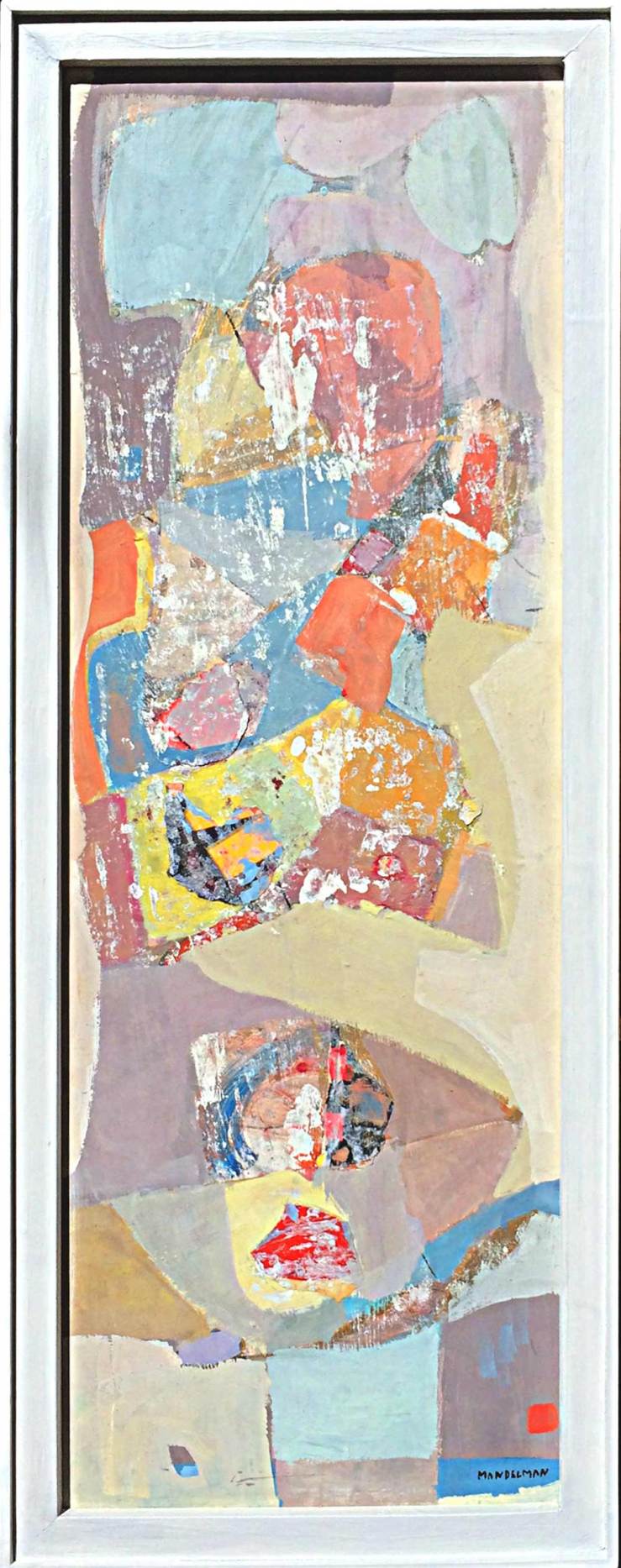
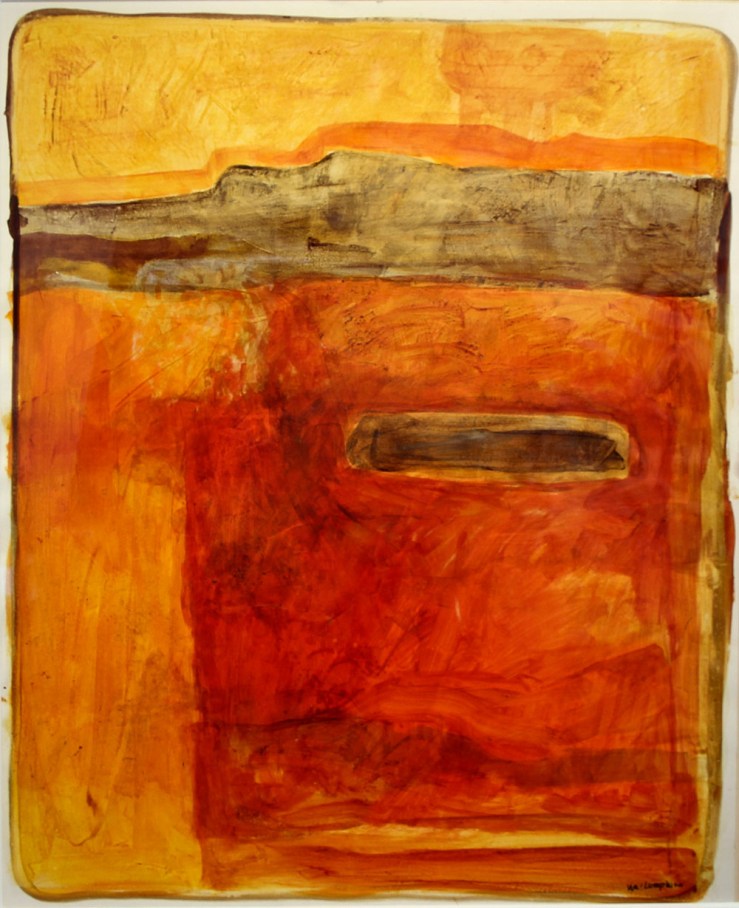
Beatrice Mandelman- Cool Wind circa 1950- Matthews Gallery

Beatrice Mandelman, Cool Wind c. 1950, Casein with Collage on Masonite Panel

When John Sloan invited Beatrice Mandelman and Louis Ribak to visit Santa Fe in 1944, the two artists were on the rise among New York City’s avant-garde. They had ties to Hans Hoffman and Fernand Leger, and were often mentioned in the same breath as Jackson Pollock. Sloan, who had been summering in New Mexico for years, had a reputation for spiriting away his favorite artists to the Desert Southwest. During their trip the recently married duo took a train to Taos and decided to stay.

The move marked a radical change in Mandelman and Ribak’s artwork. “We had to start all over again,” Mandelman said. “We spent the first couple years painting landscapes.” They were known for their figurative paintings in New York, but in this radically different environment their focus shifted to pure abstraction. They were trailblazers for a new wave of artists called the Taos Moderns, a movement that enlivened the Taos art colony but enraged an older vanguard of academic painters with ties to the Taos Society of Artists of the 1910’s and 20’s. To this tight clique of romanticists, the newcomers stuck out like colorful cacti—particularly Mandelman.

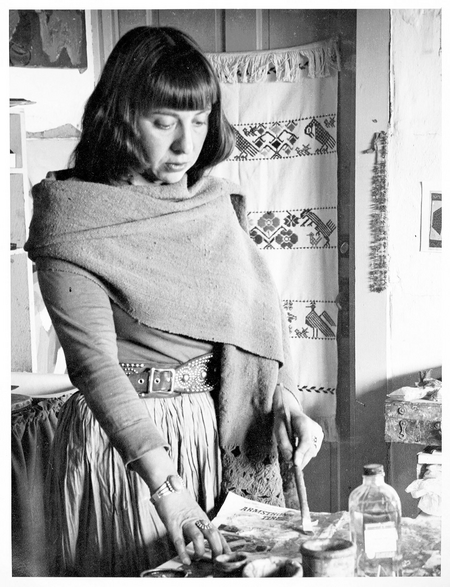
Portrait of Beatrice Mandelman in her Taos studio circa 1950- Matthews Gallery Beatrice Mandelman, 1950

“She worked with full abstraction at a time when most artists were not daring enough to do so,” writes David L. Witt in his book Taos Moderns, noting that Mandelman considered herself “the first of the second generation of artists in Taos.” The voice of a young, female abstract painter had never been part of the remote art community.

Far from the big city, Mandelman developed a new appreciation for the natural world and humanity’s relationship with it. By the late 1940’s she was developing an abstract symbol system to express her emotional responses to the landscape. Her elegant compositions didn’t mimic the lines or palette of the high desert, but they perfectly evoked the strong, solitary spirit of its inhabitants.

The mixed media painting in our collection was likely done in the 1950’s. Early in her experiments with abstraction Mandelman chose a muted palette, but here brighter colors poke through. This more expressive style was inspired by Henri Matisse and Mandelman’s former teacher Leger, and allowed her to explore the highs and lows of human experience with great vigor. Cool Wind‘s undercurrent of chilly blues and bright accents of orange and red call forth the sensation of a shiver passing up the spine.

As the evenings get cooler in Santa Fe, we’ve developed an ever-evolving passion for this piece and the innovative artist who created it. Learn more about Beatrice Mandelman on our website, and connect with us on Facebook, Twitter and Instagram for daily gallery news.

THE LUMPKINS LEGACY: Bill’s Last Request

William Lumpkins Jr- Matthews Gallery Art Opening

William Lumpkins Jr. next to his father’s serigraph “Abstract Landscape #3

At last Friday’s opening of NEW MEXICO MODERNS: The Lumpkins Files, William Lumpkins Jr. was a quiet presence. He stood to the side surveying his father’s work or chatted softly with visitors, many of whom were family friends. One woman had known his dad, who died in 2000, through an art discussion group that met at local coffeehouses. “Whenever Bill spoke, we all had to lean in. He was such a lovely, gentle man,” she said.

Will’s father may have passed down his mild temperament, but both men are also legendary for their fierce artistic passion. Will has carefully preserved the artwork in The Lumpkins Files show for years, and meanwhile has developed his own artistic style. The jacket he wore to the show was emblazoned with intricate celtic knots and a dragonfly.

When we asked about his dad, the more colorful side of Will’s personality emerged. Here’s William Lumpkins’ son on his father’s never-before-seen artwork, and why he decided to release it more than 15 years after Lumpkins’ death.

 What’s it like to see your dad’s work hanging in the gallery? 

Well, his work was all around us growing up, so it’s not that strange. The gallery did an excellent job though.

When did you first bring the work to Matthews Gallery?

About a year and a half ago. I had shopped around and didn’t relate to anybody until I met Larry.

Where did you keep it for all these years? 

I had it in a case between sheets of acid-free paper. When I was teaching at Virginia Commonwealth University, I was in charge of museology. It was a whole print and painting conservation training program. So my dad knew that I could take care of them. Watercolors in particular are a sensitive thing for archiving.

Why didn’t he want you to release them until now? 

It didn’t have to do with the work. He said to me, ‘Okay, you wait until after you’re 70 because by then your personal artistic statement will be you. You won’t have to mimic me.’ So at 70, my artwork was me and I brought these out again.

Were you ever tempted to release them before that? 

No, it just didn’t seem right until I started looking around recently. I trusted you guys.

One of the biggest surprises in this body of work was the watercolor from 1937. That’s one of the earliest Lumpkins pieces we’ve ever seen. Did you know it was in there?

I knew that the work spanned a lot of time. When Dad was closing down the studio, he picked these out because these were the ones that he really liked from different points in his career. He felt that they were significant, and that they weren’t typical. His typical work is pretty well-known, but these he wanted to hold out so that they’d be totally new.

What was your vision for this show? 

I gave the work to Larry and said, ‘Do you what you think is best.’ I just want them to be out in the open where they can be seen. If people want them enough, if people like them a lot, that’s good.

Hear more from Will Lumpkins in this week’s Pasatiempo, and visit the show at Matthews Gallery through Friday, April 25. For more images from the opening, check out our photos page and connect with us on Facebook and Instagram.

NEW RELEASE: Fremont Ellis of Los Cinco Pintores

Fremont Ellis- La Plata Mountains- Matthews Gallery Blog


In 1921, Fremont F. Ellis and his friends Jozef Bakos, Walter Mruk, Willard Nash and Will Shuster founded an avant garde art society that would change Santa Fe forever. The five men were in their early 20s, and most of them had recently migrated there from the East Coast. They chose a name inspired by their new life in the Southwest: Los Cinco Pintores (The Five Painters).

In December of that year, Los Cinco Pintores mounted their first group exhibition at Santa Fe’s Museum of Fine Arts. Their work was diverse in subject matter, but their rallying point was modernism and the art of early Taos painters Robert Henri and John Sloan of the Ashcan School.

“These men believe in color and are not afraid to use it,” wrote a critic who attended the inaugural show. “Upon entering the galleries, visitors are greeted with a great shout of color that’s almost stimulating.”

Fremont Ellis - Watercolors - Matthews Gallery Blog

Over the next few years, Los Cinco Pintores worked together to build a row of casitas along Camino del Monte Sol near Canyon Road. This earned them another nickname, “The Five Nuts in the Adobe Huts”. Meanwhile, word of their exploits had reached other artists back home.

By 1923 another group called the New Mexico Painters was exhibiting paintings of sweeping Southwestern landscapes across the Midwest and the East Coast. Artists like Randall Davey, Andrew Dasburg and Theodore Van Soelen settled in the area, and the Santa Fe Art Colony was born. The City Different has fostered a vibrant art community ever since.

Fremont Ellis- Watercolor Diptychs- Matthews Gallery Blog

These newly released works on paper are by Fremont Ellis (1897-1985), who was the last surviving member of Los Cinco Pintores. Ellis grew up in Montana and was inspired to become an artist at 14 when he saw Albert Bierstadt’s paintings on a trip to New York City. He worked as a photographer in California before settling in Santa Fe, and used his photographs of landscapes to inspire his painted compositions. This body of work holds the vigor and immediacy of the artist’s many outdoor adventures.

Learn more about Fremont Ellis on our website, and connect with us on Facebook, Twitter and Tumblr for daily gallery news. Also, don’t forget to mark your calendar for our exhibition NEW MEXICO MODERNS: The Lumpkins Files, opening next week!